
 ,
Moronkola Bridget Adekemi,
Fatoba Oolanrewaju Ojo,
Adekolurejo Ezekiel,
Agboola Olugbenga Ayodeji,
Oyesomi Aisha,
Petrik Leslie Felicia
,
Moronkola Bridget Adekemi,
Fatoba Oolanrewaju Ojo,
Adekolurejo Ezekiel,
Agboola Olugbenga Ayodeji,
Oyesomi Aisha,
Petrik Leslie Felicia
Acid mine drainage (AMD) wastewater generated from coal field mining activities going on in Mpumalanga Province in Republic South Africa contained toxic heavy metals which is harmful to human health and the environment, as it is required to be removed before discharged into the natural water body. The aim of this study is to remove toxic heavy metals (Hg, Th, Cr, Mn, Pb, As, Cd and Ba) from AMD using hydrazine (N2H2) as reductant. Chemical reduction method was used to remove the toxic heavy metals. Physicochemical analysis was carried out on the mine wastewater. Digestion method was also conducted on the acid mine wastewater. Quantification techniques used in this study are inductively coupled plasma optical emission spectroscopy (ICP-OES), ion chromatography (IC), X-ray diffraction (XRD), X-ray Fluorescence (XRF), transmission electron microscopy (TEM), FTIR and scanning electron microscopy energetic dispersion spectroscopy (SEM-EDS). The results of the maximum concentration and percent removal of heavy metals removed in the AMD using 1.0 M of N2H2 reductant solution are Hg (0.00019 mg/L, 82.49%), Th (3E-06 mg/L, 99.98%), Cr (0.0078 mg/L, 96.53%), Mn (22.31 mg/L, 82.54%), Pb (0.0004 mg/L, 89.04%), As (0.0009 mg/L, 98.32%), Cd (0.0028 mg/L, 99.09%), and Ba (0.0021 mg/L, 92.00%). The results of the maximum contact time of 120 minutes and percent removal of heavy metals removed in the AMD are Hg (0.00012 mg/L, 89.17%), Th (0.0014 mg/L, 92.49%), Cr (0.013 mg/L, 94.34%), Mn (10.53 mg/L, 91.68%), Pb (0.002 mg/L, 94.91%), As (0.005 mg/L, 90.93%), Cd (0.014 mg/L. 95.37%), and Ba (0.002 mg/L, 90.90%). The optimum concentration was 0.6 M NaBH4 reductant solution and contact time was 30 minutes. The concentration removal of the heavy metals in the treated AMD revealed that the maximum concentrations of some metals are within the WHO while the others are above WHO limits. In conclusion, N2H4 reductant removed most of the toxic heavy metals effectively in the AMD solution with brownish precipitate formed without generating sludge was identified to be Fe0 nanoparticles.
| Published in | American Journal of Applied Chemistry (Volume 14, Issue 2) |
| DOI | 10.11648/j.ajac.20261402.12 |
| Page(s) | 30-41 |
| Creative Commons |
This is an Open Access article, distributed under the terms of the Creative Commons Attribution 4.0 International License (http://creativecommons.org/licenses/by/4.0/), which permits unrestricted use, distribution and reproduction in any medium or format, provided the original work is properly cited. |
| Copyright |
Copyright © The Author(s), 2026. Published by Science Publishing Group |
AMD, Physicochemical Analysis, Digestion, Chemical Reduction, ICP-OES Quantification
Physicochemical Parameters | WHO Standard |
|---|---|
pH | 6.5-8.5 |
EC | ≤ 400 µScm |
TDS | 300–600 mg/L |
DO | |
Temperature | ≤ 25°C |
AMD | Acid Mine Drainage |
IC | Ion Chromatography |
ICP-OES | Inductively Coupled Plasma-Optical Emission Spectroscopy |
HTAR | Hydrazine Treated AMD Residue |
XRD | X-ray Diffraction |
XRF | X-ray Flourescence |
SEM-EDS | Scanning Electron Microscopy-Energy Dispersive Spectroscopy |
TEM | Transmission Electron Microscopy |
SAED | Selected Area Electron Dispersion |
FTIR | Fourier Transform Infrared Spectroscopy |
IR | Infrared |
N2H2 | Hydrazine |
| [1] | Skousen, J., Rose, A., Geidel, G., Foreman, J., Evans, R., & Hellier, W. (1999). Handbook of technologies for avoidance and remediation of acid mine drainage. National Mine Land Reclamation Center, West Virginia University, Morgantown, WV. |
| [2] | Skousen, J., Simmons, J., McDonald, L., & Ziemkiewicz, P. 2002. Acid-base accounting to predict post-mining drainage quality on surface mines. J. Environ. Qual. 31: 2034-2044. |
| [3] | Skousen, J. (2014). Overview of acid mine drainage treatment with chemicals. Acid mine drainage, rock drainage, and acid sulfate soils: Causes, assessment, prediction, prevention, and remediation, 325-337. |
| [4] | Retka, J., Rzepa, G., Bajda, T., & Drewniak, L. (2020). The use of mining waste materials for the treatment of acid and alkaline mine wastewater. Minerals, 10(12), 1061. |
| [5] | Alegbe, M. J., Ayanda, O. S., Ndungu, P., Nechaev, A., Fatoba, O. O., & Petrik, L. F. (2019). Physicochemical characteristics of acid mine drainage, simultaneous remediation and use as feedstock for value added products. Journal of Environmental Chemical Engineering, 7(3), 103097. |
| [6] | Alegbe, M. J., Moronkola, B. A., Osundiya, M. O., Adekolurejo, E., Ajewole, B. S., & Petrik, L. F. (2022). Synthesis of iron nanoparticles from acid mine drainage using hydrazine as reductant. Am. J. Chem, 12, 23-31. |
| [7] | Hatar, H., Rahim, S. A., Razi, W. M., & Sahrani, F. K. (2013, November). Heavy metals content in acid mine drainage at abandoned and active mining area. In AIP conference proceedings (Vol. 1571, No. 1, pp. 641-646). American Institute of Physics. |
| [8] | McCarthy, T. S. (2011). The impact of acid mine drainage in South Africa. South African Journal of Science, 107(5), 1-7. |
| [9] | Cheng, H., Hu, Y., Luo, J., Xu, B., & Zhao, J. (2009). Geochemical processes controlling fate and transport of arsenic in acid mine drainage (AMD) and natural systems. Journal of hazardous materials, 165(1-3), 13-26. |
| [10] | Menshikova, E., Osovetsky, B., Blinov, S., & Belkin, P. (2020). Mineral formation under the influence of mine waters (the Kizel Coal Basin, Russia). Minerals, 10(4), 364. |
| [11] | Sahoo, P. K., Tripathy, S., Panigrahi, M. K., & Equeenuddin, S. M. (2014). Geochemical characterization of coal and waste rocks from a high sulfur bearing coalfield, India: Implication for acid and metal generation. Journal of geochemical Exploration, 145, 135-147. |
| [12] | Aghaei, E., Wang, Z., Tadesse, B., Tabelin, C. B., Quadir, Z., & Alorro, R. D. (2021). Performance evaluation of Fe-Al bimetallic particles for the removal of potentially toxic elements from combined acid mine drainage-effluents from refractory gold ore processing. Minerals, 11(6), 590, 2021. |
| [13] | Ojonimi, T. I., Chanda, T. P., & Ameh, E. G. (2021). Acid mine drainage (AMD) contamination in coal mines and the need for extensive prediction and remediation: a review. Journal of Degraded and Mining Lands Management, 9(1), 3129-3136. |
| [14] | Kefeni, K. K., Msagati, T. A., & Mamba, B. B. (2017). Acid mine drainage: Prevention, treatment options, and resource recovery: A review. Journal of cleaner production, 151, 475-493, 2017. |
| [15] | Kefeni, K. K., Msagati, T. A., Nkambule, T. T., & Mamba, B. B. (2018). Synthesis and application of hematite nanoparticles for acid mine drainage treatment. Journal of Environmental Chemical Engineering, 6(2), 1865-1874. |
| [16] | Naidu, G., Ryu, S., Thiruvenkatachari, R., Choi, Y., Jeong, S., & Vigneswaran, S. (2019). A critical review on remediation, reuse, and resource recovery from acid mine drainage. Environmental pollution, 247, 1110-1124. |
| [17] | Naidu, T. S., Sheridan, C. M., & Van Dyk, L. D. (2021). Design of Acid Mine Drainage Remediation Plant. |
| [18] | Masindi, V., Akinwekomi, V., Maree, J. P., & Muedi, K. L. (2017). Comparison of mine water neutralisation efficiencies of different alkaline generating agents. Journal of environmental chemical engineering, 5(4), 3903-3913. |
| [19] | Trumm, D. 2010. Selection of active and passive treatment systems for AMD-flow charts for New Zealand conditions. New Zealand J. of Geology and Geophysics 53: 195-210. |
| [20] | Kalin, M., Fyson, A., & Wheeler, W. N. (2006). The chemistry of conventional and alternative treatment systems for the neutralization of acid mine drainage. Science of the total environment, 366(2-3), 395-408. |
| [21] | Kim, Y. S., Kim, D. H., Yang, J. S., & Baek, K., (2012). Adsorption characteristics of As (III) and As (V) on alum sludge from water purification facilities. Sep. Sci. Technol. 47(14–15), 2211–2217. |
| [22] | Sithole, N. T., & Ntuli, F. (2022). Evaluation of hydrazine, dimethylamine borane and glyoxylic acid as reducing agents in reductive precipitation. South African Journal of Chemical Engineering, 41, 17-25. |
| [23] | Chen, J. P., & Lim, L. L. (2002). Key factors in chemical reduction by hydrazine for recovery of precious metals. Chemosphere, 49(4), 363-370. |
| [24] | Mashifan, T., & Sithole, N. (2019). Reduction crystallization of heavy metals from acid treated phosphogypsum effluent utilizing hydrazine as a reducing reagent. In E3S Web of Conferences (Vol. 96, p. 01002). EDP Sciences. |
| [25] | Fanning, J. C., Brooks, B. C., Hoeglund, A. B., Pelletier, D. A., & Wadford, J. A. (2000). The reduction of nitrate and nitrite ions in basic solution with sodium borohydride in the presence of copper (II) ions. Inorganica Chimica Acta, 310(1), 115-119. |
| [26] | Manuel, J. R., & Clout, J. M. F. (2017). Goethite classification, distribution and properties with reference to Australian iron deposits. Proc. Iron Ore, 567-574. |
| [27] | WHO, Guidelines for drinking-water quality – 4th ed. World Health Organization, 2011. |
| [28] | Jaiswal, A., Banerjee, S., Mani, R., & Chattopadhyaya, M. C. (2013). Synthesis, characterization and application of goethite mineral as an adsorbent. Journal of Environmental Chemical Engineering, 1(3), 281-289. |
| [29] | Taleb, K., Markovski, J., Hristovski, K. D., Rajaković-Ognjanović, V. N., Onjia, A., & Marinković, A. (2016). Aminated glycidyl methacrylates as a support media for goethite nanoparticle enabled hybrid sorbents for arsenic removal: From copolymer synthesis to full-scale system modeling. Resource-Efficient Technologies, 2(1), 15-22. |
| [30] | Flores, R. G., Andersen, S. L. F., Maia, L. K. K., José, H. J., & Moreira, R. d. F. P. M. (2012). Recovery of iron oxides from acid mine drainage and their application as adsorbent or catalyst. Journal of Environmental Management, 111, 53-60. |
| [31] | Ghosh Chaudhuri, R., & Paria, S. (2012). Core/shell nanoparticles: classes, properties, synthesis mechanisms, characterization, and applications. Chemical reviews, 112(4), 2373-2433. |
| [32] | Yuvakkumar, R., Elango, V., Rajendran, V., & Kannan, N. (2011). Preparation and characterization of zero valent iron nanoparticles. Digest Journal of Nanomaterials and Biostructures, 6(4, October-December), 1771-1776, 2011. |
| [33] | Shaltout, A. A., Gomma, M. M., & Ali-Bik, M. W. (2012). Utilization of standardless analysis algorithms using WDXRF and XRD for Egyptian iron ore identification. X-Ray Spectrometry, 41(6), 355-362. |
| [34] | Donskoi, E., Manuel, J. R., Hapugoda, S., Poliakov, A., Raynlyn, T., Austin, P., & Peterson, M. (2022). Automated optical image analysis of goethitic iron ores. Mineral Processing and Extractive Metallurgy, 131(1), 14-24. |
| [35] | Lassoued, A., Dkhil, B., Gadri, A., & Ammar, S. (2017). Control of the shape and size of iron oxide (α-Fe2O3) nanoparticles synthesized through the chemical precipitation method. Results in physics, 7, 3007-3015. |
| [36] | Mohapatra, M., & Anand, S. (2010). Synthesis and applications of nano-structured iron oxides/hydroxides–a review. International Journal of Engineering, Science and Technology, 2(8). |
| [37] | Abdus-Salam, N., & Itiola, A. D. (2012). Potential application of termite mound for adsorption and removal of Pb (II) from aqueous solutions. Journal of the Iranian Chemical Society, 9(3), 373-382. |
| [38] | Salami, N & Adekola, F. A, (2002). A study of sorption of cadmium by goethite in aqueous solution, Bull. Chem. Soc. Ethiop. 16(2002) 1–7. |
| [39] | Li, M., Liu, H., Chen, T., Hayat, T., Alharbi, N. S., & Chen, C. (2017). Adsorption of Europium on Al-substituted goethite. Journal of Molecular Liquids, 236, 445-451. |
| [40] | Gotic, M, Music S, Popovic S, Sekovanic, L (2008). Investigation of factors influencing the precipitation of iron oxides from Fe(II) containing solutions, Croat. Chem. Acta 81(2008) 569–578. |
| [41] | Duhan, S., & Devi, S. (2010). Synthesis and structural characterization of iron oxide-silica nanocomposites prepared by the sol gel method. International Journal of Electronics Engineering, 2(1), 89-92. |
| [42] | Ristić, M., Opačak, I., & Musić, S. (2013). The synthesis and microstructure of goethite particles precipitated in highly alkaline media. Journal of alloys and compounds, 559, 49-56. |
| [43] | Ramirez-Muniz, K., Perez-Rodriguez, F., & Rangel-Mendez, R. (2018). Adsorption of arsenic onto an environmentally friendly goethite-polyacrylamide composite. Journal of Molecular Liquids, 264, 253-260. |
| [44] | Parida, K., & Das, J. (1996). Studies on ferric oxide hydroxides: II. Structural properties of goethite samples (α-FeOOH) prepared by homogeneous precipitation from Fe(NO3)3 solution in the presence of sulfate ions. Journal of colloid and interface science, 178(2), 586-593. |
APA Style
John, A. M., Adekemi, M. B., Ojo, F. O., Ezekiel, A., Ayodeji, A. O., et al. (2026). Chemical Removal of Toxic Heavy Metals in Acid Mine Drainage Using Hydrazine as Reductant. American Journal of Applied Chemistry, 14(2), 30-41. https://doi.org/10.11648/j.ajac.20261402.12
ACS Style
John, A. M.; Adekemi, M. B.; Ojo, F. O.; Ezekiel, A.; Ayodeji, A. O., et al. Chemical Removal of Toxic Heavy Metals in Acid Mine Drainage Using Hydrazine as Reductant. Am. J. Appl. Chem. 2026, 14(2), 30-41. doi: 10.11648/j.ajac.20261402.12
@article{10.11648/j.ajac.20261402.12,
  author = {Alegbe Mondat John and Moronkola Bridget Adekemi and Fatoba Oolanrewaju Ojo and Adekolurejo Ezekiel and Agboola Olugbenga Ayodeji and Oyesomi Aisha and Petrik Leslie Felicia},
  title = {Chemical Removal of Toxic Heavy Metals in Acid Mine Drainage Using Hydrazine as Reductant},
  journal = {American Journal of Applied Chemistry},
  volume = {14},
  number = {2},
  pages = {30-41},
  doi = {10.11648/j.ajac.20261402.12},
  url = {https://doi.org/10.11648/j.ajac.20261402.12},
  eprint = {https://article.sciencepublishinggroup.com/pdf/10.11648.j.ajac.20261402.12},
  abstract = {Acid mine drainage (AMD) wastewater generated from coal field mining activities going on in Mpumalanga Province in Republic South Africa contained toxic heavy metals which is harmful to human health and the environment, as it is required to be removed before discharged into the natural water body. The aim of this study is to remove toxic heavy metals (Hg, Th, Cr, Mn, Pb, As, Cd and Ba) from AMD using hydrazine (N2H2) as reductant. Chemical reduction method was used to remove the toxic heavy metals. Physicochemical analysis was carried out on the mine wastewater. Digestion method was also conducted on the acid mine wastewater. Quantification techniques used in this study are inductively coupled plasma optical emission spectroscopy (ICP-OES), ion chromatography (IC), X-ray diffraction (XRD), X-ray Fluorescence (XRF), transmission electron microscopy (TEM), FTIR and scanning electron microscopy energetic dispersion spectroscopy (SEM-EDS). The results of the maximum concentration and percent removal of heavy metals removed in the AMD using 1.0 M of N2H2 reductant solution are Hg (0.00019 mg/L, 82.49%), Th (3E-06 mg/L, 99.98%), Cr (0.0078 mg/L, 96.53%), Mn (22.31 mg/L, 82.54%), Pb (0.0004 mg/L, 89.04%), As (0.0009 mg/L, 98.32%), Cd (0.0028 mg/L, 99.09%), and Ba (0.0021 mg/L, 92.00%). The results of the maximum contact time of 120 minutes and percent removal of heavy metals removed in the AMD are Hg (0.00012 mg/L, 89.17%), Th (0.0014 mg/L, 92.49%), Cr (0.013 mg/L, 94.34%), Mn (10.53 mg/L, 91.68%), Pb (0.002 mg/L, 94.91%), As (0.005 mg/L, 90.93%), Cd (0.014 mg/L. 95.37%), and Ba (0.002 mg/L, 90.90%). The optimum concentration was 0.6 M NaBH4 reductant solution and contact time was 30 minutes. The concentration removal of the heavy metals in the treated AMD revealed that the maximum concentrations of some metals are within the WHO while the others are above WHO limits. In conclusion, N2H4 reductant removed most of the toxic heavy metals effectively in the AMD solution with brownish precipitate formed without generating sludge was identified to be Fe0 nanoparticles.},
 year = {2026}
}
TY  - JOUR
T1  - Chemical Removal of Toxic Heavy Metals in Acid Mine Drainage Using Hydrazine as Reductant
AU  - Alegbe Mondat John
AU  - Moronkola Bridget Adekemi
AU  - Fatoba Oolanrewaju Ojo
AU  - Adekolurejo Ezekiel
AU  - Agboola Olugbenga Ayodeji
AU  - Oyesomi Aisha
AU  - Petrik Leslie Felicia
Y1  - 2026/05/12
PY  - 2026
N1  - https://doi.org/10.11648/j.ajac.20261402.12
DO  - 10.11648/j.ajac.20261402.12
T2  - American Journal of Applied Chemistry
JF  - American Journal of Applied Chemistry
JO  - American Journal of Applied Chemistry
SP  - 30
EP  - 41
PB  - Science Publishing Group
SN  - 2330-8745
UR  - https://doi.org/10.11648/j.ajac.20261402.12
AB  - Acid mine drainage (AMD) wastewater generated from coal field mining activities going on in Mpumalanga Province in Republic South Africa contained toxic heavy metals which is harmful to human health and the environment, as it is required to be removed before discharged into the natural water body. The aim of this study is to remove toxic heavy metals (Hg, Th, Cr, Mn, Pb, As, Cd and Ba) from AMD using hydrazine (N2H2) as reductant. Chemical reduction method was used to remove the toxic heavy metals. Physicochemical analysis was carried out on the mine wastewater. Digestion method was also conducted on the acid mine wastewater. Quantification techniques used in this study are inductively coupled plasma optical emission spectroscopy (ICP-OES), ion chromatography (IC), X-ray diffraction (XRD), X-ray Fluorescence (XRF), transmission electron microscopy (TEM), FTIR and scanning electron microscopy energetic dispersion spectroscopy (SEM-EDS). The results of the maximum concentration and percent removal of heavy metals removed in the AMD using 1.0 M of N2H2 reductant solution are Hg (0.00019 mg/L, 82.49%), Th (3E-06 mg/L, 99.98%), Cr (0.0078 mg/L, 96.53%), Mn (22.31 mg/L, 82.54%), Pb (0.0004 mg/L, 89.04%), As (0.0009 mg/L, 98.32%), Cd (0.0028 mg/L, 99.09%), and Ba (0.0021 mg/L, 92.00%). The results of the maximum contact time of 120 minutes and percent removal of heavy metals removed in the AMD are Hg (0.00012 mg/L, 89.17%), Th (0.0014 mg/L, 92.49%), Cr (0.013 mg/L, 94.34%), Mn (10.53 mg/L, 91.68%), Pb (0.002 mg/L, 94.91%), As (0.005 mg/L, 90.93%), Cd (0.014 mg/L. 95.37%), and Ba (0.002 mg/L, 90.90%). The optimum concentration was 0.6 M NaBH4 reductant solution and contact time was 30 minutes. The concentration removal of the heavy metals in the treated AMD revealed that the maximum concentrations of some metals are within the WHO while the others are above WHO limits. In conclusion, N2H4 reductant removed most of the toxic heavy metals effectively in the AMD solution with brownish precipitate formed without generating sludge was identified to be Fe0 nanoparticles.
VL  - 14
IS  - 2
ER  -
Department of Chemistry, Lagos State University, Lagos, Nigeria; Enviromental and NanoSciences Group Chemistry Department, University of the Western Cape, Bellville, South Africa
Department of Chemistry, Lagos State University, Lagos, Nigeria
Enviromental and NanoSciences Group Chemistry Department, University of the Western Cape, Bellville, South Africa
Department of Chemistry, Lagos State University, Lagos, Nigeria; Department of Science Laboratory Technology, Ogun State Institute of Technology, Igbesa, Nigeria
Department of Chemistry, Lagos State University, Lagos, Nigeria; Department of Chemistry Education, Lagos State University of Education, Oto/Ijanikin, Nigeria
Department of Chemistry, Lagos State University, Lagos, Nigeria
Enviromental and NanoSciences Group Chemistry Department, University of the Western Cape, Bellville, South Africa
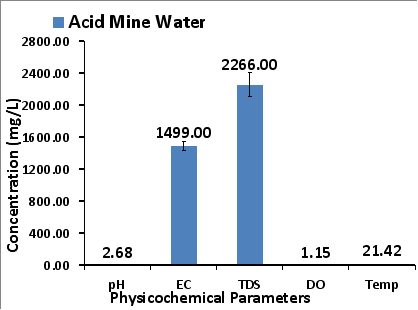
Figure 1. Physicochemical analysis of AMD wastewater.
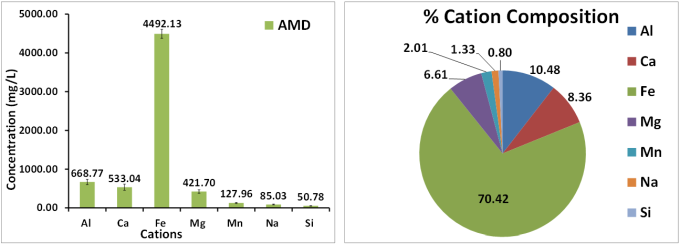
Figure 2. Cation Concentration (A) and% Cation Composition (B) in Acid mine wastewater.
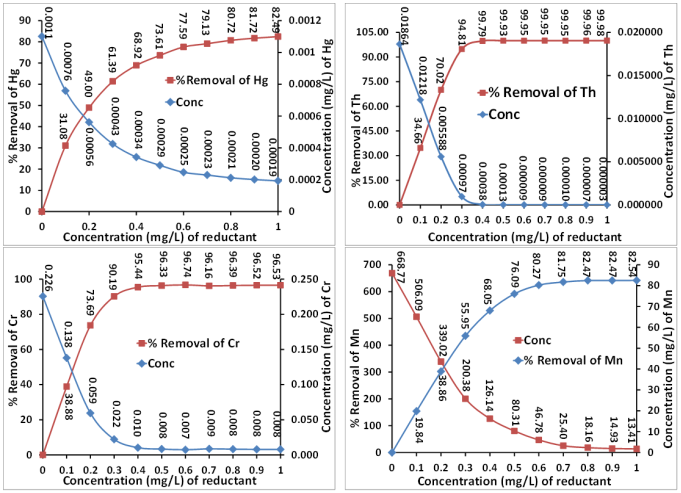
Figure 3. Anion Concentration and% Anion Composition in Acid mine wastewater.
Figure 3. Concentration Effect of Hydrazine removal of Hg, Th, Cr and Mn in AMD.
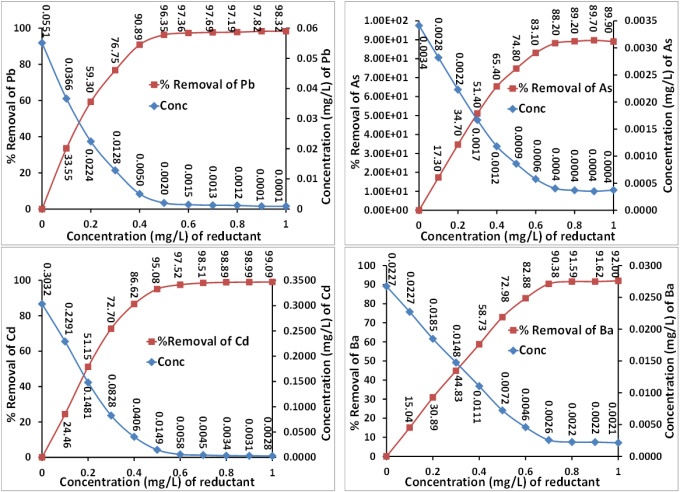
Figure 4. Concentration Effect of Hydrazine removal of Pb, As, Cd and Ba in AMD.
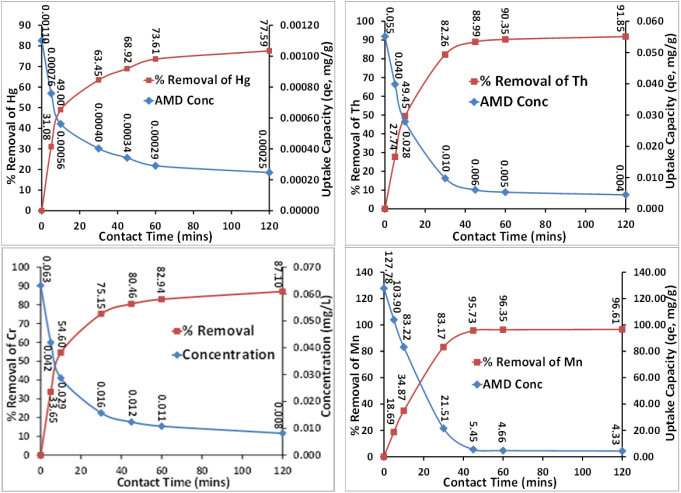
Figure 5. Contact Time Effect of Hydrazine removal of Hg, Th, Cr and Mn in AMD.
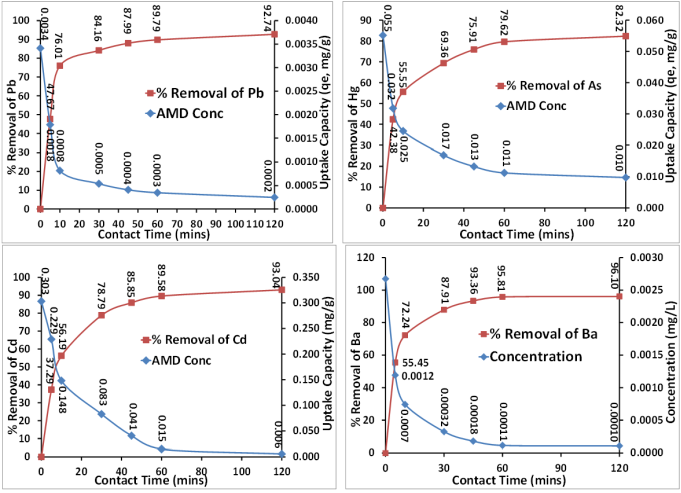
Figure 6. Contact Time Effect of Hydrazine removal of Pb, As, Cd and Ba in AMD.
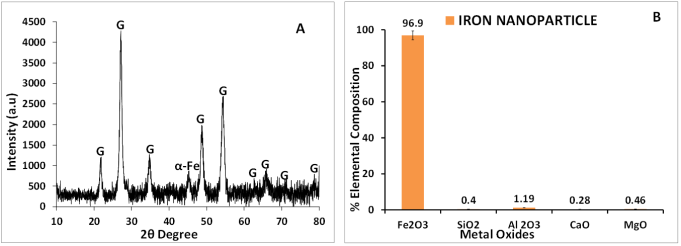
Figure 7. XRD spectrum analysis (A) and XRF elemental composition (B) of HTAR precipitate.
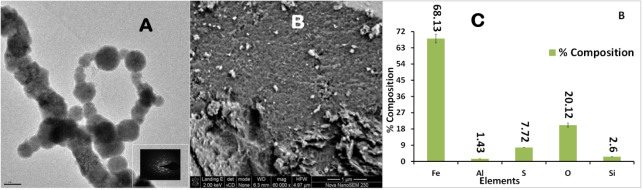
Figure 8. TEM-SAED (A), SEM image (B) o and SEM-EDS elemental composition (C) of HTAR precipitate.
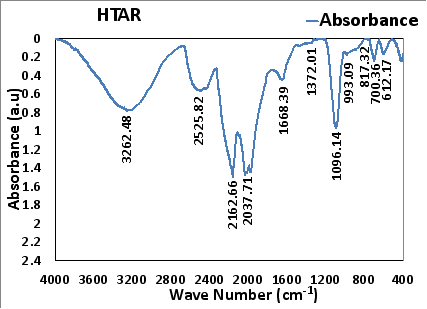
Figure 9. FTIR absorption bands of HTAR precipitate.

Information


 Share This Article
 Twitter
 Linked In
 Facebook
 Copy
Copy Download