Research Article | | Peer-Reviewed

Effect of Substitution of Soybean Meal by Treated Mucuna Pruriens Seeds Powder on Some Reproductive Performance in the Female Rabbit (Orytolagus cuniculus)

Received: 7 October 2025     Accepted: 19 November 2025     Published: 5 January 2026
Views:       Downloads:
Abstract

The increase in the prices of conventional ingredients leads to the increases of the cost of production. In order to maintain good production while having an adequate profit margin, this study was conducted to explore the use of an unconventional source of protein, which is powder treated seeds of Mucuna pruriens (M. pruruiens) var Cochinchinensi. It was used as a replacement of soybean meal on production performances in rabbits. For this purpose, thirty-two primiparous rabbits aged 4 months with an average weight of between 2-2.5 kg were divided into 4 groups (8 animals each) corresponding to 4 treatments following a completely randomized design. Each group was subdivided into 8 subgroups of one rabbit corresponding to a group repetition and subjected to the treatment for 60 days. Animals in group 1 received a ration not containing M. pruriens seeds powder. Those in group 2; 3 and 4 received a ration substituted for soybean meal respectively in the order of 25; 50 and 100% of soaked and boiled M. pruriens seeds powder. Growth characteristics, weight of the organs and some reproductive performances were evaluated. Result didn’t show any significant effect (p>0.05) on growth characteristics using soaked and boiled M. pruriens seeds powder; the weight of organ and reproductive parameters except prolificacy rate, stillbirth rate and weight at birth of pups. Serum levels of total protein, ASAT and FSH were not significantly affected (p>0.05) by the rate of incorporation of M. pruriens treated seeds powder regardless of the treatment considered. The incorporation of M. pruriens seeds powder in the diet increased the level of serum ALAT. However, a significant difference (p<0.05) was observed only in animals of group 3 compared to the others. The Estradiol level also increased with the level of substitution of M. pruriens seeds powder with a significant difference (p<0.05) between animals of batch fed the diet (R2) compared to those fed with the negative control diet (R1) and (R4). An inversed observation was made with the serum level of Urea, creatinine and LH with a significance difference (p<0.05) only between the group receiving the ration (R2) compared to the negative control ration (R1). We can recommend the incorporation of soaked and boiled M. pruriens var Cochinchinensi seeds in the ration of female rabbits at 100%.

Published in Animal and Veterinary Sciences (Volume 14, Issue 1)
DOI 10.11648/j.avs.20261401.11
Page(s) 1-11
Creative Commons

This is an Open Access article, distributed under the terms of the Creative Commons Attribution 4.0 International License (http://creativecommons.org/licenses/by/4.0/), which permits unrestricted use, distribution and reproduction in any medium or format, provided the original work is properly cited.

Copyright

Copyright © The Author(s), 2026. Published by Science Publishing Group

Keywords

Reproduction, Performance, M. Pruriens var Cochinchinensi Seeds Treated, Substitution, Soybean Meal, Rabbits

1. Introduction
Malnutrition is increasing in developing countries, despite scientific advances in the field of agri-food . This situation suggests that if no action is taken, several million Africans will continue to suffer from food shortages or starvation, especially a protein deficit . According to the Food and Agriculture Organization (FAO) and the World Health Organization (WHO), the required amount of animal protein per individual is 37 grams (gr)/habitant (hab)/day. However, in Central African countries like Cameroon, this value is only 11 g/capita/day . Based on this, the Cameroonian government has placed emphasis on breeding short-cycle species, including rabbits, poultry, fish, etc. However, raising these species faces a serious problem: the high cost of certain conventional protein ingredients, such as soybean meal and fish meal. These ingredients significantly increase the cost of feed by 60% , and consequently, the cost of production. Thus, exploring new sources of unconventional and inexpensive proteins is essential for improving animal production. Many studies have been conducted to use locally available plant proteins to completely or partially substitute conventional proteins: pigeon pea (Cajanus cajan (L.)) ; cowpea (Lablab purpureus (L.) Sweet) seeds ; Bambara groundnut (Vigna subterranea), and neem (Azadirachta indica) seeds .
Mucuna is an annual plant cultivated for its good fodder quality, its seeds, and its enormous capacity to fix atmospheric nitrogen in the soil. The genus Mucuna belongs to the Fabaceae family and includes about 150 species of annual and perennial plants. Generally, the genus Mucuna (Adans, 1763) has protein levels ranging from 22-35% Dry Matter (DM) , with an amino acid profile similar to other vegetables but deficient in sulfur amino acids, lysine, and methionine ; a relatively low lipid content (4-7% DM) and crude fiber content around 4% DM ; and a carbohydrate content between 50-70% DM . It also contains anti-nutritional factors such as L-Dopa (3.5-5.7%) that restrict its application.
Several approaches, such as fermentation, sprouting, soaking, heating, autoclaving, and genetic manipulation, have been practiced to eliminate anti-nutritional substances from plant products . Emenalom, OO et al recommend an inclusion of up to 25.0% of soaked and cooked seeds for finishing broilers . Iyayi, EA et al suggest 15.0% with Mucuna pruriens (M. pruriens) soaked in water , and Akimmutimi and Okwu suggested up to 10.0% inclusion of heated M. pruriens seeds . Fagbenro, OA; Fagbenro, OA et al; Ogunji, JO et al and Osuigwe, DI et al reported that Mucuna improved growth performance in catfish . Mang, YD et al reported that treating M. pruriens by soaking and boiling reduced antinutritional factors (tannin, phytate, and L-Dopamine) by 66.01%, 31.94%, and 83.70%, respectively . To our knowledge, many studies have reported on the effects of treated M. pruriens seeds on growth performance in broilers and fish. However, very few have focused on reproductive performance. Hence, the general objective of this work is to contribute to the research and valorization of available, local, and inexpensive non-conventional sources of protein with a view to improving livestock productivity. Specifically, it aims to evaluate the effect of substituting soybean meal with soaked, dehulled, and boiled M. pruriens var. Cochinchinensis seeds in rabbits on some growth and reproductive performance, as well as biochemical and hormonal parameters.
2. Materials and Methods
2.1. Experimental Location
This study takes place from February 1 to June 30, 2023 in Minkama Rabbit Farm (MRF), located in the Lekie Division, Obala subdivision-Cameroon.
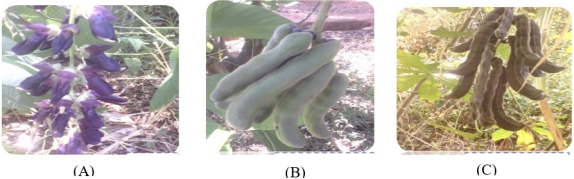
Figure 1. Flowers (A), Unripe and Ripe (B) Pods (C) of M. pruriens var Cochinchinensi.
2.2. Plant Material
The plant material used was M. pruriens var. Cochinchinensis seeds (Figure 1), which were harvested near our farm. The treatment process was performed as described by . The seeds were washed and soaked (1: 10 grams (gr)/milliliter (ml)) for 48 hours (hrs) at room temperature, with the water being replaced every 12 hours. After 48 hours of soaking, the seeds were manually pulped and subsequently boiled for 1 hour at 100°C. Finally, the seeds were crushed before being incorporated into the feed. A portion of the crushed material was sent to the laboratory of the Higher Institute of Agro-Food and Industry of the University of Ngaoundere (INSAI) for bromatological and chemical analysis. The bromatological analysis was carried out as described by . The bromatological and chemical composition of the M. pruriens var. Cochinchinensis seed powder is presented in Table 1. The levels of tannins, phytate, and L-Dopamine were determined using the methods described by , respectively.
Table 1. Bromatological and chemical composition of M. pruriens var. Cochinchinensi seeds.

Composition in%

Nature of the seed (n=3)

Improvement rate

Untreated

Treated

Humidity

6.01±0.3b

7.2±0.4 a

19.80

Crude protein

27.2±0.3b

31.5±0.3a

15.8

Total sugar

47.12±2.3b

51.2±0.2a

8.65

Crude lipid

7.4±0.5a

5.5±0.3b

25.67

Ash

4.8±2.0a

2.9±0.4b

39.58

Tannin

1.55±0.03a

0.50±0.02b

67.74

Phytate

1.45±0.06a

0.98±0.03b

32.41

L-Dopamine

5.90±0.3a

0.99±0.29b

83.22

(a and b) on the same line and for the same parameters, the values assigned the same letter do not differ significantly (p>0.05). n= 3
2.3. Animal Material
Thirty-Two 32 female’s rabbits and 4 males aged 4 months raised at the farm structure were used for the experiments.
2.4. Housing
The animals were housed in individual cages and arranged in batteries and made of wood and galvanized metal mesh. Each cage was equipped with a suitable 0.5-liter drinker and a feeder with a length of 1 meter for a minimum width of 60 cm and a height of at least 50 cm for each cage with a total of 4 hutches of 28 cages. The animals were raised at a natural nycthemeral rhythm (12h/12h) throughout the treatment period.
2.5. Feeding
During this study, animals received water and a feed without or with powder ad libitum. The constituents and characteristics of these feeds are summarized in Table 2.
Table 2. Bromatological and centesimal composition of experimental rations.
Different diets

Ingredients

R1 (0%)

R2 (25%)

R3 (50%)

R4 (100%)

Con

60

60

60

60

Pennisetum purpurum chopped dry

5

5

5

5

Fish flour

2

2

2

2

Soybean meal 44

22

16.5

11

00

Mucuna pruriens seeds powder

00

5.5

11

22

Shell

1

1

1

1

CMAV 10%

10

10

10

10

TOTAL

100

100

100

100

Calculated chemical composition

Crude protein (%)

19,016

18.82

18,91

19.42

Metabolizable energy (kcal/kg)

2980.30

2962.27

2980.40

2980.45

E/p

156.73

157,40

157.60

155,88

Legend: *Mineral nitrogen and vitamin complex (CMAV) 10%: Vit A: 3000000 IU, Vit D 3: 600000 IU, Vit E: 4000 mg, Vit K: 500 mg, Vit B1: 200 mg, Vit B2: 1000 mg, Vit B6: 400 mg, Vit B12: 4 mg, Iron: 8000 mg, Cu: 2000 mg, Zn: 10000 mg, Se: 20 mg, Mn: 14000 mg, Methionine: 200000 mg, Lysine: 78000 mg, PB= crude proteins, EM= metabolizable energy
R1 (0%): without M. prurien; R2 (25%): with treated M. prurien powder; R3 (50%) with treated M. pruren powder and R4 (100%): with treated M. prurien powder.
2.6. Experimental Design and Procedure
Thirty-two female rabbits, aged 4 months and weighing an average of 2-2.5 kilograms (kg), were divided into 4 groups (8 animals each) corresponding to 4 treatments following a completely randomized design. Each group was further subdivided into 8 subgroups of one rabbit corresponding to the group repetitions, and subjected to treatment for 60 days. The day after the 30th day, all these females were mated. In order to cancel out the male effect, each male mated two females from each batch. During the 8 weeks of experiment, food consumption and weight gain in the females were assessed weekly. Additionally, after birth, the young rabbits were weighted weekly. The day after the 8th week of treatment, 6 females per treatment were randomly selected and sacrificed according to the method described by . Blood was collected in tubes without anticoagulant and centrifuged at 3000 rpm at room temperature for 15 minutes. Serum was collected, aliquoted, and stored at -20°C for the determination of biochemical parameters (Total cholesterol, total serum proteins, Alanine Aminotransferase (ALAT), Aspartate Aminotransferase (ASAT), urea and creatinine) and hormonal parameters (Luteinizing Hormone (LH); Follicle-Stimulating Hormone (FSH) and Estradiol). Subsequently, the liver and kidneys were removed and weighed using a capacity balance 160gr and precision 103gr in order to calculate their relative weights (mg/100 gr body weight (bw)).
2.7. Data Collection
2.7.1. Food Consumption
Feed was weighed at the beginning of the week and distributed daily. Refusals from each experimental unit were weighed at the end of the week using an electronic scale with a capacity of 500 gr and a precision of 10-1 gr. Weekly feed consumption was calculated by taking the difference between the total quantity of feed served during the week and the refusals weighed at the end of the same week.
2.7.2. Live Weight and Weight Gain
Animals were weighed using an electronic scale with a capacity of 5000 gr and an accuracy of 0.1 gr, on the first day and every week thereafter. Every week, weight gain was obtained as the difference between two consecutive weekly live weights.
2.7.3. Consumption Index
The consumption index (CI) weekly was calculated by dividing the amount of food consumed during each week by the weight gain during the same week.
CI=Food consumption (g) Weekly weight gain (g)
2.7.4. Sampling, Weighing and Volume of Organs
When the animals were sacrificed, the kidneys and liver of each were collected, freed from fatty tissue and weighed using a scale with a capacity of 160 g and a precision of 10-3 g in order to calculate their relative weights (mg/100 gr bw). The relative weight (mg/100gr bw) of each organ was calculated using the following formula:
Relative weight (%) =Organ weight (g)Body weight (g) x100
2.8. Reproductive Characteristics
To determine reproductive performance, four sexually mature males, aged 8 months and weighing an average of 3-3.5 kg, were used to mate the females. To eliminate the male effect, each male mated with two females from each group. The following formulas were then used to determine the: Pregnancy rate; Average weight of the rabbits; Fertility rate; Prolificacy rate; Stillbirth rate and weaning rate at 14 days and Sex ratio (male):
Pregnancy rate (%) =number of paplated positive female Total number of mated females×100
Average weight of young rabbits (g) =Total weight of rabbits one week (g)Total number of rabbits per week
Fertility rate (%) =Number of females giving birth Total number of females giving birth×100
Prolificacy rate (%) =Number of rabbits born Total number of females having given birth×100
Stillbirth rate (%) =Number of rabbits dead at birth Total number of young rabbit at born×100
Weaning rateat 14 days (%) =Number of rabbits alive when weaned Total number of young rabbit at born×100
Sex ratio(male) =Total number of males born Total number of young rabit at born×100
2.9. Biochemical and Hormonal Parameters
Serum LH, FSH, and estradiol levels were determined using a commercial ELISA kit (Diagnosis Automation, Inc., Calabasas, USA). Meanwhile, the levels of total serum proteins, creatinine, urea, ASAT, and ALAT were measured using the Biochemical Kit provided by Calbiotech, Inc., following its designated protocol.
2.10. Ethical Consideration
The protocols used in this work in accordance with the Ethical committee of the Department of Animal Science of the University of Dschang (ECDAS-UDs 23/02/2015/UDs/FASA/DSAES) and in conform with the internationally accepted standard ethical guide lines for laboratory animal use and care according to the description of the European Community guidelines; EEC Directive86/609/EEC, of the 24th November 1986.
2.11. Statistical Analyses
Data analysis was performed using SPSS 21.0 software. A one-way analysis of variance (ANOVA) was conducted to test the effects of substituting soybean meal with treated M. pruriens var. Cochinchinensis seeds at different incorporation rates (0%, 25%, 50%, and 100%). Duncan's test was employed for mean separation when significant differences were identified. Results are expressed as the mean ± standard deviation (SD). The level of significance was set at p<0.05.
3. Results
3.1. Effects of the Substitution of Soybean Meal with Soaked and Boiled M. Pruriens Seeds Powder on Growth Performance in Rabbits
The effect of the substitution of soybean meal with soaked and boiled M. pruriens var Cochinchinensi seeds powder on weekly feed consumption, final live weight, weekly weight gain and weekly consumption index are summarized in Table 3.
Table 3. Effects of the substitution of soybean meal with seeds powder M. pruriens var Cochinchinensi soaked and boiled on growth performance in rabbits.

Growth characteristics

Treatments

P

R1 (0%) n=8

R2 (25%) n=8

R3 (50%) n=8

R4 (100%) n=8

Initial weight (gr)

2252.50±535.49

2220.00±478.19

2237.5±471.47

2182.00±522.84

0.30

Final weight (gr)

4477.75±348.09

4620.00±447.51

4530.00±523.70

4563.13±448.44

0.73

Weekly feed consumption (gr)

827.50±86.53

991.50±107.95

916.50±175.62

1048.00±186.76

0.13

Weekly weight gain (gr)

317.50±45.59

342.50±6.24

340.75±23.68

334.81±25.53

0.35

Weekly Consumption Index

3.75±0.95

4.50±1.95

3.50±1.00

4.25±0.95

0.35

a, b: means with the same letter on the same line are not significantly different (p>0.05); n=number of animals. R1 (0%): without M. pruriens; R2 (25%): with treated M. pruriens powder; R3 (50%) with treated M. pruriens powder and R4 (100%): with treated M. pruriens powder
It appears that the values for the growth characteristics (feed consumption, weight gain, and feed conversion ratio) generally increased in a non-significant (p>0.05) manner in the groups fed with M. pruriens seed powder compared to the control group. However, the values for final weight, feed consumption, and weekly weight gain were respectively highest in the groups fed rations R4 and R2.
3.2. Effects Soaked and Boiled M. Pruriens as the Substitution of Soybeans Meal in the Diet on the Weight of Organs in Rabbits
The effect of the substitution of soybean meal with seed powder of M. pruriens var Cochinchinensi soaked and boiled on organ weight in rabbits is summarized in Table 4.
Table 4. Effects of the substitution of soybean meal with seeds powder M. pruriens var Cochinchinensi soaked and boiled on the weight of organs in rabbits.

Organ weight

Treatments

p

R1 (0%) n=6

R2 (25%) n=6

R3 (50%) n=6

R4 (100%) n=6

Weight of organs (gr)

Heart

11.26±2.36

10.90±0.85

10.90±0.98

9.73±1.20

0.29

Liver

27.84±4.70

27.76±5.54

27.33±3.60

28.90±1.88

0.63

Kidney

10.50±0.43

10.26±1.02

9.83±0.50

10.20±1.5

0.08

Relative organ weight (%)

Heart

0.41±0.04

0.49±0.03

0.44±0.02

0.40±0.08

0.10

Liver

1.21±0.07

1.24±0.25

1.18±0.13

1.03±0.25

0.63

Kidney

0.38±0.06

0.46±0.04

0.40±0.04

0.37±0.06

0.23

a, b: means with the same letter on the same line are not significantly different (p>0.05). R1 (0%): without M. pruriens; R2 (25%): with treated M. pruriens powder; R3 (50%) with treated M. pruriens powder and R4 (100%): with treated M. pruriens powder; n=number of animals
It emerges from this table that: the values of the characteristics of weight and relative weight (heart, liver and kidney) were not significantly affected (p>0.05) by the incorporation level of the M. pruriens regardless of the treatment considered. However, the lowest values for heart, liver and kidney weight were recorded in animals of batch (R4) and (R3) respectively.
3.3. Effects of the Substitution of Soybean Meal with Seed Powder M. Pruriens Soaked and Boiled on Breeding Performance
The effects of substitution of soybean meal with soaked and boiled M. pruriens seeds on reproductive performance in rabbits are summarized in Table 5.
Table 5. Effects of the substitution of soybean meal with seed powder M. pruriens var Cochinchinensi soaked and boiled on reproductive characteristics in rabbits.

Reproductive characteristics

Treatments

R1 (0%) n=8

R2 (25%) n=8

R3 (50%) n=8

R4 (100%) n=8

p

Pregnancy rate (%)

100.00

100.00

100.00

100.00

0.00

Fertility (%)

100.00

100.00

100.00

100.00

0.00

Prolificity (%)

62.18±5.98b

60.62±3.60b

70.00±5.10a

71.56±3.12a

0.03

Stillbirth (%)

1.55±0.67b

3.51±0.75a

1.55±0.87b

2.29±0.42ab

0.04

Weaning (%) at 14 Days

100.00

100.00

100.00

100.00

0.00

Sex ratio (male)

44.49±11.10

54.16±21.76

59.64±11.38

43.05±13.88

0.17

Birth weight

6.55±0.67b

8.51±0.75a

8.56±1.13a

7.29±0.42ab

0.05

a, b: means with the same letter on the same line are not significantly different (p>0.05). R1 (0%): without M. pruriens; R2 (25%): with treated M. pruriens powder; R3 (50%) with treated M. pruriens powder and R4 (100%): with treated M. pruriens powder; n=number of animals.
The data in this table clearly show that the stillbirth rate was significantly higher (p<0.05) in the animals fed ration R2 compared to those in all other groups. Regarding prolificacy, the rate recorded in the groups fed rations R3 and R4 was significantly different (p<0.05) from that of batches R1 and R2. The highest value, though not significant (p>0.05), was recorded in the R4 batch. For the birth weight of the pups, the values recorded in the groups fed rations R2 and R3 were significantly different (p<0.05) from that of the R1 batch. The highest value was observed in the R3 batch, although this difference was not significant (p>0.05). Finally, the pregnancy rate, fertility rate, weaning rate, and sex ratio (male) were not significantly affected (p>0.05) by the incorporation of M. pruriens seed powder, regardless of the treatment considered.
3.4. Effects of the Substitution of Soybean Meal with Seeds Powder M. Pruriens Soaked and Boiled on Biochemical Parameters
The substitution of soybean meal with soaked and boiled M. pruriens seed powder on biochemical parameters in rabbits are summarized in Table 6.
Table 6. Effects of the substitution of soybean meal with soybean seeds powder M. pruriens var Cochinchinensi soaked and boiled on biochemical parameters in rabbits.

Biochemical parameters

Treatments

p

R1 (0%) n=6

R2 (25%) n=6

R 3 (50%) n=6

R4 (100%) n=6

Total protein (g/dl)

4.50±0.50

4.31±0.30

4.26±0.67

4.60±0.45

0.56

Urea (mg/dl)

16.00±0.54a

13.68±0.72b

14.90±2.38ab

14.93±2.05ab

0.03

Creatinine (mg/dl)

0.04±0.01a

0.02±0.01b

0.03±0.01ab

0.04±0.02a

0.01

ASAT (U/I)

140.00±37

150.67±35

170.38±59

170.4±47

0.69

ALAT (U/I)

32.33±4.90b

32.93±10.43b

52.20±13.75ab

54.39±4.00a

0.01

a, b: means with the same letter on the same line are not significantly different (p>0.05). R1 (0%): without M. pruriens; R2 (25%): with treated M. pruriens powder; R3 (50%) with treated M. pruriens powder and R4 (100%): with treated M. pruriens powder; n=animals.
It appears from the table that serum levels of total proteins and ASAT were not significantly affected ($p>0.05$) by the incorporation rate of M. pruriens, regardless of the specific treatment. However, the inclusion of M. pruriens in the ration increased the serum ALAT level. The significant difference (p<0.05) in ALAT was observed only when comparing animals in batch (R4) to those in batches (R1) and (R2). A contrasting result was found for serum urea and creatinine levels; a significant difference (p<0.05) occurred only when comparing the R2 ration group to the negative control group (R1).
3.5. Effects of the Substitution of Soybean Meal with Seeds Powder M. Pruriens Soaked and Boiled on Reproductive Hormones
The effects of soybean meal substitution with soaked and boiled M. pruriens seeds powder on reproductive hormones in rabbits are summarized in Table 7.
Table 7. Effects of the substitution of soybean meal with seeds powder M. pruriens var Cochinchinensi soaked and boiled on reproductive hormones in rabbits.

Reproductive hormones

Treatments

R1 (0%) n=6

R2 (25%) n=6

R3 (50%) n=6

R4 (100%) n=6

p

FSH (mlUmL-1)

4.30±0.46

4.11±0.24

4.60±0.39

4.06±0.61

0.56

LH (mlUmL-1)

12.00±0.54a

10.68±0.72b

10.93±2.05ab

10.90±2.38ab

0.03

Estradiol (pgmL-1)

24±0.21a

22±0.21b

24±0.22a

23±0.21ab

0.01

a, b: means with the same letter on the same line are not significantly different (p>0.05). R1 (0%): without M. pruriens; R2 (25%): with treated M. pruriens powder; R3 (50%) with treated M. pruriens powder and R4 (100%): with treated M. pruriens powder; n=animals.
It appears from the table that serum FSH levels were not significantly affected (p>0.05) by the rate of incorporation of M. pruriens regardless of the treatment considered. The incorporation of M. pruriens in the ration decreased the serum LH level. However, the significant difference (p<0.05) was observed only in animals of batch (R2) compared to those of batch (R1). The opposite was observed with the Estradiol level with a significant difference (p<0.05) only between animals of batch receiving ration (R2) compared to the control ration (R1) and (R3).
4. Discussion
In the present study, food consumption in rabbits was not significantly affected (p>0.05) by the inclusion of M. pruriens seed powder compared to the control. These results contradict those of , who reported that the incorporation rate of non-conventional protein ingredients should not exceed 20% in growing pigs, and Amaefule et al who reported that incorporating raw Cajanus cajan should not exceed 20% of the ration, as levels beyond this reduce ingestion and feed utilization efficiency . The improved ingestion and efficiency of feed use observed in our study likely resulted from the processing of the M. pruriens seed powder. This study shows that after treatment, phytochemical tests revealed that the level of antinutrients such as tannin, phytate, and L-Dopamine was reduced by 67.47%, 32.41%, and 83.22%, respectively. Mang et al similarly reported that treating M. pruriens by dehulling, soaking, and boiling reduced these antinutritional factors by 66.01%, 31.94%, and 83.70%, respectively . The reduction in the content of these antinutrients would explain the high substitution rate of our ingredient in the ration and the absence of adverse effects observed during this study. According to Tuleun, CD et al soaking and boiling M. pruriens seeds increases the digestibility of protein and carbohydrates compared to raw seeds .
Live weight, weight gain, and feed conversion ratio values recorded in does fed the different rations containing M. pruriens were also not significantly affected (p>0.05) compared to the control group. Similar results were observed by Luis, SF et al in broilers fed a ration containing 25% of soaked and boiled M. pruriens seed powder . As mentioned above, the treatment of M. pruriens seeds reduced antinutritional factors, which resulted in an increase in protein availability of approximately 13.6%, as shown by the results of the bromatological test. The increase in food consumption in rabbits fed rations containing M. pruriens would be due to the reduction of antinutritional factors, while the improvement in weight gain is due to the release of encapsulated proteins. Indeed, proteins help maintain and develop muscle mass, which promotes good body condition. The intake of certain amino acids is essential to ensure certain major functions on the body. An animal's growth is primarily determined by the quantity and quality of the feed it consumes. Furthermore, the evolution of weight gain in animals fed the M. pruriens-containing ration was generally above that of the control group throughout the trial period. This evolution is similar to that of Ognika, AJ et al who reported that a 10% incorporation of M. oleifera leaves as a protein source in rabbits increased weight gain . In the same vein, Eunice et al also reported that a 10% incorporation of cowpea (Vigna unguiculata) hulls significantly improved (p<0.05) growth parameters in young rabbits . The curve of the evolution of the feed consumption index for animals fed the M. pruriens ration was also generally above that of the control group throughout the trial period.
This study revealed that the incorporation of M. pruriens at any level had no significant effect (p>0.05) on the weight of organs such as the liver and kidney. The liver is the body's primary detoxification organ, containing many metabolizing enzymes that allow for degradation and purification via the urinary tract for hydrophilic compounds and biliary elimination for less water-soluble compounds. The kidney, due to urine formation, is the second key organ in the detoxification process and also possesses xenobiotic metabolism enzymes. The absence of a significant difference (p>0.05) in the weights of the detoxification organs in rabbits fed M. pruriens compared to the control suggests that the reduction of antinutritional factors in the treated seed powder mitigated potential toxicity. These values were lower in animals from batches fed 75% M. pruriens, suggesting that our ingredient, after treatment, lost its toxicity. The results for the serum levels of total protein and ASAT were not significantly affected (p>0.05) by the substitution rate of M. pruriens, regardless of the treatment considered. The incorporation of M. pruriens in the ration increased the serum ALAT level. However, a significant difference (p<0.05) was observed only in the R4 group compared to the other groups. The opposite was observed with the serum Urea and creatinine levels, with a significant difference (p<0.05) only between the group that received the R2 ration compared to the control group (R1).
It emerges from this study that, whatever the level of incorporation, no significant difference (p>0.05) for reproductive performance was observed in those fed diets containing M. pruriens, except for prolificacy rate, stillbirth rate, and birth weight of pups. The stillbirth rate, although not significant (p>0.05), generally decreased with the level of incorporation of treated M. pruriens seeds. Similar results were reported by Nkana, JGK et al in guinea pigs fed rations containing Arachis glabrata and Desmodium intortum . The low stillbirth rate observed in those fed treated M. pruriens seeds would be due to the treatment, which reduced the level of antinutritional factors (tannin, phytate, and L-Dopamine by 67.47%, 32.41%, and 83.22%, respectively). This resulted in an increase in available protein of around 13.6% and, consequently, an increase in food consumption and weight gain, which collectively contributed to improving the body condition of these animals. Indeed, Rashwan, AA et al reported that the mortality of young rabbits depends on the maternal qualities of the female rabbits and the weight of the young rabbits at birth . This agreed with our results because we recorded a prolificacy rate and birth weight of young that were significantly higher (p<0.05) in rabbits fed with treated M. pruriens (R4) compared to the control group (R1). These results corroborate those of Vondou, L et al who recorded an improvement in reproductive performance (average litter size = 6.0/mother; mean weight of young rabbits of 41.50±5gr and better milk production 1661±61gr) in those fed with A. indica compared to those fed only with soybean . On the other hand, no significant difference (p>0.05) was observed for the pregnancy rate, fertility, and sex ratio (male) in the M. pruriens-fed groups compared to the control group. These results are also in agreement with those of Eunice et al who reported that feeding guinea pigs Arachis glabrata and Desmodium intortum resulted in a significant improvement (p<0.05) in the fertility rate . The significant improvement (p<0.05) of the fertility rate observed during this study would be due to the presence of polyphenols and flavonoids in the treated seeds of Mucuna pruriens. These phytoestrogens (polyphenols and flavonoids) could have increased the stimulation of the endocrine system by increasing the level of sexual hormones and, by extension, super-ovulation, accompanied by an increase in the fertility rate and fecundity. Despite being non-significant (p>0.05), the FSH rate recorded in this study in R4 rabbits fed 100% treated M. pruriens seeds powder was higher compared to that of the 0% batch (R1). It generally emerges from this study that the incorporation of treated M. pruriens seeds powder in the ration did not significantly influence (p>0.05) the serum levels of LH and estradiol, except in the animals of the group fed the R2 ration compared to those of the control group (R1).
5. Conclusion
It can be concluded from the obtained results that the treated seed powder of the M. pruriens var. Cochinchinensis can safely replace 100% of the soybean meal for adult female rabbits without any adverse effects on their reproduction. Thus, we recommend the replacement of 100% soybean meal with soaked and boiled M. pruriens seed powder in the rabbits’ ration.
Abbreviations

MRF

Minkama Rabbit Farm

ALAT

Alanine Aminotransferase

ASAT

Aspartate Aminotransferase

LH.

Luteinizing Hormone

FSH

Follicle-Stimulating Hormone

FAO

Food and Agriculture Organization

WHO

World Health Organization

SPSS

Statistical Package for the Social Sciences

ANOVA

Analysis of Variance

DM

Dry Matter

gr

gram

Author Contributions
Herman Victor Ngoumtsop: Conceptualization, Formal analysis, Methodology, Visualization, Writing – original draft, Writing – review & editing
Narcisse Bertin Vemo: Conceptualization, Formal analysis, Methodology, Visualization, Writing – original draft, Writing – review & editing
Dorice Azafack Kana: Formal analysis, Writing – original draft
Sorelle Nienga Deutcheu: Formal analysis, Writing – original draft
Ferdinand Ngoula: Conceptualization, Methodology, Validation
Conflicts of Interest
The authors declare no conflicts of interest regarding the publication of this paper.
References
[1] FAO. The state of food security and nutrition in the world. 2018; ww.fao.org/publications/fr.
[2] FAO. Human vitamin and mineral requirements. Technical Workshop on Nutrient Risk Assessment May 2005.
[3] Etienne, VH. The evolution of food consumption patterns in the world. 2024;
[4] Defang, HF., Keambou, TC., Manjeli, Y., Teguia, A., & Pamo, TE. Influence of Leucaena leucocephala leaf flour on the growth performance of young rabbits. International Journal of Biological and Chemical Sciences. 2014; 8(4), 1430-1437.
[5] Amaefule, KU., Ibe, SN., Herbert, U., Ugwuen, MC. Performance of growing pigs fed raw pigeon pea (Cajanus cajan (L.) Millsp.) seed meal diets in the humid Tropics. Journal of Advanced Agricultural Technologies. 2016; Vol. 3(2).
[6] Verma, S., Ajit, V., Karl-Heinz, R., Annette, H., Gerhard, K., Ashok, S., Prakash, B., Britta, B., and Philipp, F. "Piriformospora indica, gen. et sp. nov., a new root-colonizing fungus." Mycologia. 1998; 90, no. 5 (1998): 896-903.
[7] Amaefule, KU., & Nwagbara, NN. The effect of processing on nutrient utilization of pigeon pea (Cajanus cajan) seed meal and pigeon pea seed meal-based diets by pullets. International Journal of Poultry Science. 2004; 3(8), 543-546.
[8] Costa, GEA., Queiroz-Monici, KS., Reis SMPM., Oliveira, AC. Chemical composition, dietary fiber and resistant starch contents of raw and cooked pea, common bean, chickpea and lentil legumes. J. Food Biochem. 2006; 94: 327-330.
[9] Mohan, V. R., Janardhanan, K. (1995). Chemical analysis and nutritional assessment of lesser-known pulses of the genus, Mucuna. Food chemistry, 52(3), 275-280.
[10] Ravindran, V., Hew, LI, & Bryden, WL. Influence of guanidination on apparent ileal amino acid digestibility in some protein sources for broilers. Poultry science. 1998; 77(6), 873-877.
[11] Ezeagu, I. E., Maziya-Dixon, B., & Tarawali, G. Seed characteristics and nutrient and antinutrient composition of 12 Mucuna accessions from Nigeria. Tropical and subtropical Agroecosystems. 2003; 1(2-3), 129-139.
[12] Pugalenthi, M., Vadivel, V., Siddhuraju, P. Alternative food/feed perspectives of an underutilized vegetable Mucuna pruriens var. utilis a review. Plant foods for human nutrition. 2005; 60, 201-218.
[13] Dahouda, M., Toleba, SS., Youssao, AKI., Hambuckers, A., Dangou-Sapoho R, Martin GB, et al. Nutrient digestibility of mucuna (Mucuna pruriens var. utilis) bean in guinea fowl (Numida meleagris, L): Effects of heat treatment and levels of incorporation in diets. British Poultry Science. 2009; 50: 564-572.
[14] Cassani, E., Cilia, R., Laguna, J., Barichella, M., Contin, M., Cereda, E., et al. Mucuna pruriens for parkinson’s disease: low-cost preparation method, laboratory measures and pharmacokinetics profile. Journal of the Neurological Science. 2016; 365: 175-180.
[15] Thakur, N., Kumar, P. Anti-nutritional factors, their adverse effects and need for adequate processing to reduce them in food. Agric International. 2017; 4: 56–60.
[16] Samtiya, M., Aluko, RE., Dhewa, T. Plant food anti-nutritional factors and their reduction strategies: an overview. Food Production, Processing and Nutrition. 2020; 2: 1-14.
[17] Emenalom, OO., Udediebie, ABI., Esonu, BO and Okeudo, NJ. (2008). Effect of cracked-soaked and cooked velvet beans (Mucuna pruriens) on the performance and organ characteristics of finish broilers. Niger Agric. J. 2020; 39 No. 2: 131-136.
[18] Iyayi, EA., Kluth, H., Rodehutscord, M. Effect of heat treatment on antinutrients and precaecal crude protein digestibility in broilers of four tropical crop seeds. International Journal of Food Science and Technology. 2008; 43: 610-616.
[19] Akinmutimi, AH., Okwu, ND. Effect of quantitative substitution of cooked Mucuna utilis seed meal for soybean meal in broiler finisher diet. International Journal of Poultry Science.2006; 5: 477-481.
[20] Fagbenro, OA. Use of soybean flour (dehulled, solvent‐extracted soybean) as a fish meal substitute in practical diets for African catfish, Clarias gariepinus (Burcell 1822): growth, feed utilization and digestibility. Journal of Applied Ichthyology. 2001; 17(2), 64-69.
[21] Fagbenro, OA., Akande, TT., Fapounda, OO. Use of Roselle (Hibiscus Sabdariffa) seed meal as a soybean meal replacer in practical diets for fingerlings of African Catfish (Clarias gariepinus). Proceeding of the third international conference on African fish and Fisheries, Cotonou, Benin, 10-14 November, Ed SnoeksJ, Laleye P, Vandewalle. 2003; Pp. 73-79.
[22] Ogunji, J. O., Wirth, M. Partial Replacement of Fish Meal with Some Alternative Protein Sources in the Diet of Tilapia Oreochromis niloticus (Linn). Isr. J. Aquac. –Bamidgeh. 2001; 53(1), 34-43.
[23] Osuigwe, DI. Effect of oxadiazon on Clarias gariepinus: I incubation period and hatching success. Nigeria Agricultural Journal. 2002; 33, 136-138.
[24] Mang, YD., Bouba Abdou, A., Njintang, SM., Brown, KE., Snow, NJ., Wadden, KP., Boyd, LA. Effect of dehulling and boiling on the physico-chemical, functional and pasting properties of two varieties of Mucuna bean (Mucuna pruriens L.) flours. Food Measure. 2015; 9, 435-447 (2015).
[25] AOAC. Official Methods of Analysis of the Association of Official Analytical Chemists. 1990; Vol. II, 15th ed. Sec.985.29.
[26] Bainbridge, Z., Tomlins, K., Willings, K. and Westby, A. Methods for Assessing Quality Characteristics of Non-Grain Starch Staple. Part 4 Advanced Methods. National Resources Institute, University of Greenwich, Chatham. 1996; 1, 43-79.
[27] Vaintraub, IA., Lapteva, NA. Colorimetric determination of phytate in unpurified extracts of seeds and the products of their processing. Analytical biochemistry. 1988; 175(1), 227-230.
[28] Takashi, H., Takahashi, I., SaijoMassaki, K., Tomohide, F., Tomoko, N., Yuji, M. Quantitative determination of L-dopa in dietary supplements containing Mucuna pruriens by high performance liquid chromatography. Chiba Prefecture Wei Yan Annual Report. 2011; 60: 53-56.
[29] Jourdain (1980). Poultry farming in tropical environments. (Edt) Jourdain International, Couloumiers, 43-45.
[30] Sherasia, P. L., Pandya, PR., Parnerkar, S., Murty, S., Devalia, BR. In vitro digestibility and methane production as affected by incorporation of different levels of solid state fermented biomass in total mixed rations. Indian Journal of Animal Nutrition. 2017; 34(4), 420-424.
[31] Tuleun, CD, Patrick, JP. Effect of duration of cooking Mucuna utilis seed on proximate analysis, levels of antinutritional factors and performance of broiler chickens. Nigerian Society for Animal Production. 2007; 34: 45-53.
[32] Luis, SF., Francisco, LS., Ronald SR., Carlos, SC. Mucuna pruriens seeds given in broiler diets on growth performance and carcass yield. Ecosistemas y Recursos. Agropecuarios. 2019; 6(16): 121-127.
[33] Ognika, AJ., Ngatse, SD., Ekou, DC., Bahouna, M., Akouango, P. Effects of Moringa oleifera on the growth performance of the rabbit Oryctolagus cuniculus. Journal of Applied Biosciences. 2021; 168(1), 17468-17476.
[34] Eunice, AA., Augustine, OA., Juliet, AO, Chika, EO., Charles, OO., Monday, EI., Mercy, CO & Francis BL. Nutrient digestibility, growth, carcass, and bio-marker traits of weaner rabbits fed diets containing graded levels of cowpea (Vigna unguiculata) hull meal, Journal of Applied Animal Research. 2021; 49: 1, 39-45,
[35] Nkana, JGK, Mweugang, NN, Germanus, SB, Semi, YA, Ntsafack, P., Awantu C.& Miegoue, Effect of some forage legumes on reproduction, growth and carcass in guinea pigs (Cavia porcellus L.). International Journal of Biological and Chemical Sciences. 2020; 14(2), 600-612.
[36] Rashwan, AA., Marai, IFM. Mortality in young rabbits: A Review. World Rabbit Science. 2000; 8(3), 111–124.
[37] Vondou, L., Sadjo, B., Ziebe, R., Goudoum, A et Madi, A. Effet des fanes de Arachis hypogaea et de feuillage de Azadirachta indica sur les performances de reproduction des lapines et la croissance des lapereaux en zone soudano-sahelienne du Cameroun. Journal of Applied Biosciences. 2022; Vol: 175, 2022.
Cite This Article
  • APA Style

    Ngoumtsop, H. V., Vemo, N. B., Kana, D. A., Deutcheu, S. N., Herve, T., et al. (2026). Effect of Substitution of Soybean Meal by Treated Mucuna Pruriens Seeds Powder on Some Reproductive Performance in the Female Rabbit (Orytolagus cuniculus). Animal and Veterinary Sciences, 14(1), 1-11. https://doi.org/10.11648/j.avs.20261401.11

    Copy | Download

    ACS Style

    Ngoumtsop, H. V.; Vemo, N. B.; Kana, D. A.; Deutcheu, S. N.; Herve, T., et al. Effect of Substitution of Soybean Meal by Treated Mucuna Pruriens Seeds Powder on Some Reproductive Performance in the Female Rabbit (Orytolagus cuniculus). Anim. Vet. Sci. 2026, 14(1), 1-11. doi: 10.11648/j.avs.20261401.11

    Copy | Download

    AMA Style

    Ngoumtsop HV, Vemo NB, Kana DA, Deutcheu SN, Herve T, et al. Effect of Substitution of Soybean Meal by Treated Mucuna Pruriens Seeds Powder on Some Reproductive Performance in the Female Rabbit (Orytolagus cuniculus). Anim Vet Sci. 2026;14(1):1-11. doi: 10.11648/j.avs.20261401.11

    Copy | Download

  • @article{10.11648/j.avs.20261401.11,
      author = {Herman Victor Ngoumtsop and Narcisse Bertin Vemo and Dorice Azafack Kana and Sorelle Nienga Deutcheu and Tchoffo Herve and Ferdinand Ngoula},
      title = {Effect of Substitution of Soybean Meal by Treated Mucuna Pruriens Seeds Powder on Some Reproductive Performance in the Female Rabbit (Orytolagus cuniculus)},
      journal = {Animal and Veterinary Sciences},
      volume = {14},
      number = {1},
      pages = {1-11},
      doi = {10.11648/j.avs.20261401.11},
      url = {https://doi.org/10.11648/j.avs.20261401.11},
      eprint = {https://article.sciencepublishinggroup.com/pdf/10.11648.j.avs.20261401.11},
      abstract = {The increase in the prices of conventional ingredients leads to the increases of the cost of production. In order to maintain good production while having an adequate profit margin, this study was conducted to explore the use of an unconventional source of protein, which is powder treated seeds of Mucuna pruriens (M. pruruiens) var Cochinchinensi. It was used as a replacement of soybean meal on production performances in rabbits. For this purpose, thirty-two primiparous rabbits aged 4 months with an average weight of between 2-2.5 kg were divided into 4 groups (8 animals each) corresponding to 4 treatments following a completely randomized design. Each group was subdivided into 8 subgroups of one rabbit corresponding to a group repetition and subjected to the treatment for 60 days. Animals in group 1 received a ration not containing M. pruriens seeds powder. Those in group 2; 3 and 4 received a ration substituted for soybean meal respectively in the order of 25; 50 and 100% of soaked and boiled M. pruriens seeds powder. Growth characteristics, weight of the organs and some reproductive performances were evaluated. Result didn’t show any significant effect (p>0.05) on growth characteristics using soaked and boiled M. pruriens seeds powder; the weight of organ and reproductive parameters except prolificacy rate, stillbirth rate and weight at birth of pups. Serum levels of total protein, ASAT and FSH were not significantly affected (p>0.05) by the rate of incorporation of M. pruriens treated seeds powder regardless of the treatment considered. The incorporation of M. pruriens seeds powder in the diet increased the level of serum ALAT. However, a significant difference (pM. pruriens seeds powder with a significant difference (pM. pruriens var Cochinchinensi seeds in the ration of female rabbits at 100%.},
     year = {2026}
    }
    

    Copy | Download

  • TY  - JOUR
    T1  - Effect of Substitution of Soybean Meal by Treated Mucuna Pruriens Seeds Powder on Some Reproductive Performance in the Female Rabbit (Orytolagus cuniculus)
    AU  - Herman Victor Ngoumtsop
    AU  - Narcisse Bertin Vemo
    AU  - Dorice Azafack Kana
    AU  - Sorelle Nienga Deutcheu
    AU  - Tchoffo Herve
    AU  - Ferdinand Ngoula
    Y1  - 2026/01/05
    PY  - 2026
    N1  - https://doi.org/10.11648/j.avs.20261401.11
    DO  - 10.11648/j.avs.20261401.11
    T2  - Animal and Veterinary Sciences
    JF  - Animal and Veterinary Sciences
    JO  - Animal and Veterinary Sciences
    SP  - 1
    EP  - 11
    PB  - Science Publishing Group
    SN  - 2328-5850
    UR  - https://doi.org/10.11648/j.avs.20261401.11
    AB  - The increase in the prices of conventional ingredients leads to the increases of the cost of production. In order to maintain good production while having an adequate profit margin, this study was conducted to explore the use of an unconventional source of protein, which is powder treated seeds of Mucuna pruriens (M. pruruiens) var Cochinchinensi. It was used as a replacement of soybean meal on production performances in rabbits. For this purpose, thirty-two primiparous rabbits aged 4 months with an average weight of between 2-2.5 kg were divided into 4 groups (8 animals each) corresponding to 4 treatments following a completely randomized design. Each group was subdivided into 8 subgroups of one rabbit corresponding to a group repetition and subjected to the treatment for 60 days. Animals in group 1 received a ration not containing M. pruriens seeds powder. Those in group 2; 3 and 4 received a ration substituted for soybean meal respectively in the order of 25; 50 and 100% of soaked and boiled M. pruriens seeds powder. Growth characteristics, weight of the organs and some reproductive performances were evaluated. Result didn’t show any significant effect (p>0.05) on growth characteristics using soaked and boiled M. pruriens seeds powder; the weight of organ and reproductive parameters except prolificacy rate, stillbirth rate and weight at birth of pups. Serum levels of total protein, ASAT and FSH were not significantly affected (p>0.05) by the rate of incorporation of M. pruriens treated seeds powder regardless of the treatment considered. The incorporation of M. pruriens seeds powder in the diet increased the level of serum ALAT. However, a significant difference (pM. pruriens seeds powder with a significant difference (pM. pruriens var Cochinchinensi seeds in the ration of female rabbits at 100%.
    VL  - 14
    IS  - 1
    ER  - 

    Copy | Download

Author Information
  • Abstract
  • Keywords
  • Document Sections

    1. 1. Introduction
    2. 2. Materials and Methods
    3. 3. Results
    4. 4. Discussion
    5. 5. Conclusion
    Show Full Outline
  • Abbreviations
  • Author Contributions
  • Conflicts of Interest
  • References
  • Cite This Article
  • Author Information