1. Introduction
Agriculture is central to Somalia, underpinning local livelihoods and food security while contributing significantly to the national economy, particularly in rural communities where most households depend on it for income and sustenance
| [1] | Ali, A. Y. S., Farow, M. A. A., & Mohamud, Z. A. (2025). Impact of agribusiness value chain components on agribusiness performance and livelihood outcomes: An integrated analysis using porter’s value chain and the sustainable livelihoods framework. Journal of Asian Scientific Research, 15(3), 476-509. https://doi.org/10.55493/5003.v15i3.5593 |
[1]
.
Agriculture plays a vital role in generating income, providing employment, supplying raw materials, and supporting exports, while also helping sustain the country’s ecological balance, which directly influences both cash crop production and food security
| [2] | Abdullah, A. A., & Arisoy, H. (2022). Agricultural Structure in Somalia. Eurasian Journal of Agricultural Economics 2 (1): 1-14. |
[2]
.
Nearly 60% of the population is directly engaged in agricultural activities such as livestock rearing, crop cultivation, and fishing to earn their livelihoods. However, Somali crop production is highly sensitive to climate change, as it depends largely on unpredictable rainfall patterns
| [3] | Nur, A. M., & Sheikh Ali, A. Y. (2025). Climate Change and Crop Production Vulnerability in Somalia: A VECM Analysis for Sustainable Agriculture. Research on World Agricultural Economy. https://doi.org/10.36956/rwae.v6i3.1815 |
[3]
.
Somalia has experienced recurrent droughts and famines driven by climate variability, conflict, and weak institutions, with major crises occurring in the 1970s, 1990s, and the past decade
| [4] | Hussein Ahmed, A., & Isse Ali, I. (2024). The Impact of Drought on Food Security in Somalia: A Comprehensive Review. Current Research in Environmental Science and Ecology Letters, 1(2), 01-09.
https://doi.org/10.33140/CRESEL.01.02.05 |
[4]
.
The 2010–2011 famine, which coincided with prolonged conflict following the collapse of the central government, resulted in substantial loss of life
| [5] | Seal, A., & Bailey, R. (2013). The 2011 Famine in Somalia: Lessons learnt from a failed response? Conflict and Health, 7(1), 22. https://doi.org/10.1186/1752-1505-7-22 |
| [6] | Warsame, A., Frison, S., & Checchi, F. (2023). Drought, armed conflict and population mortality in Somalia, 2014-2018: A statistical analysis. PLOS Global Public Health, 3(4), e0001136. https://doi.org/10.1371/journal.pgph.0001136 |
[5, 6]
.
Improved early warning systems and timely humanitarian interventions helped avert a comparable famine during the 2016–2017 crisis
| [7] | Funk, C., Shukla, S., Thiaw, W. M., Rowland, J., Hoell, A., McNally, A., Husak, G., Novella, N., Budde, M., Peters-Lidard, C., Adoum, A., Galu, G., Korecha, D., Magadzire, T., Rodriguez, M., Robjhon, M., Bekele, E., Arsenault, K., Peterson, P., … Verdin, J. (2019). Recognizing the Famine Early Warning Systems Network: Over 30 Years of Drought Early Warning Science Advances and Partnerships Promoting Global Food Security. Bulletin of the American Meteorological Society, 100(6), 1011-1027.
https://doi.org/10.1175/BAMS-D-17-0233.1 |
[7]
. Despite these efforts, food insecurity remains persistent and closely linked to environmental shocks, subsistence farming systems, and structural vulnerabilities
| [4] | Hussein Ahmed, A., & Isse Ali, I. (2024). The Impact of Drought on Food Security in Somalia: A Comprehensive Review. Current Research in Environmental Science and Ecology Letters, 1(2), 01-09.
https://doi.org/10.33140/CRESEL.01.02.05 |
[4]
.
Improving agricultural productivity is therefore widely recognized as a key pathway for poverty reduction, sustainable development, and food security across sub-Saharan Africa, including fragile contexts such as Somalia
| [8] | Ongoma, V., Brouziyne, Y., Bouras, E. H., & Chehbouni, A. (2025). Closing yield gap for sustainable food security in sub-Saharan Africa - progress, challenges, and opportunities. Frontiers in Agronomy, 7, 1572061.
https://doi.org/10.3389/fagro.2025.1572061 |
[8]
. To cope with food insecurity, farming households commonly produce staple foods for household consumption while also engaging in market-oriented cash crop production to generate income. In Somalia, most farmers are small-scale producers operating under subsistence farming systems, cultivating crops such as maize and cowpeas alongside cash crops, including sesame, lemon, bananas, and vegetables
| [9] | Abdullahi, A. A. (2023). Improvements of sesame production: Marketing and its export trends in Somalia. Conference: 8th International. 978-625-7480-21-5. |
| [10] | Abdullahi, A. A. (2025). Agriculture and Sustainability in Somalia: Challenges and Pathways to Sustainable Development. Selcuk Journal of Agriculture and Food Sciences, 39(2), 310-319. https://doi.org/10.15316/selcukjafsci.1344646 |
[9, 10]
. Cash crop production reflects increasing market participation among smallholders and is often associated with agricultural commercialization, input adoption, and greater integration into output markets
| [11] | Otekunrin, O. A., Momoh, S., & Ayinde, I. A. (2019). Smallholder Farmers’ Market Participation: Concepts and Methodological Approach from Sub-Saharan Africa. Current Agriculture Research Journal, 7(2), 139-157.
https://doi.org/10.12944/CARJ.7.2.02 |
[11]
. The underlying premise of promoting cash crops is that greater market participation enables households to specialize in higher-value crops and use their earnings to improve food access. However, recent empirical evidence from sub-Saharan Africa shows mixed outcomes. While market participation and commercialization can increase income and encourage technology adoption, income gains do not always translate into improved household food security due to exposure to food price volatility, climate shocks, pests, and limited access to markets and credit
| [12] | Aristide Ouedraogo, S., Zahonogo, P., & Mahama Al-Hassan, R. (2021). Market Participation of Smallholder Farmers and Food Crop Productivity: Evidence from Burkina Faso. International Journal of Agricultural Economics, 6(1), 12.
https://doi.org/10.11648/j.ijae.20210601.12 |
[12]
. Several studies emphasize that food security outcomes are influenced by a combination of socioeconomic, demographic, and environmental factors, including household size, education, asset ownership, farm size, access to irrigation, off-farm income, distance to markets, and credit availability
| [13] | Awoke, W., Eniyew, K., & Meseret, B. (2022). Analysis of Causes and Coping Strategies of Food Insecurity: The Case of Central and North Gondar Zone, Ethiopia. International Journal of Rural Management, 18(3), 429-448.
https://doi.org/10.1177/09730052211035296 |
| [14] | Mota, A. A., Lachore, S. T., & Handiso, Y. H. (2019). Assessment of food insecurity and its determinants in the rural households in Damot Gale Woreda, Wolaita zone, southern Ethiopia. Agriculture & Food Security, 8(1), 11.
https://doi.org/10.1186/s40066-019-0254-0 |
[13, 14]
. Understanding how cash and food crops are combined at the household level is, therefore, critical for designing effective agricultural and food security interventions. Despite the growing body of literature on agricultural commercialization in sub-Saharan Africa, there remains a limited understanding of how cash crop production affects household food security in fragile and conflict-affected contexts such as Somalia. In particular, empirical evidence from Lower Shabelle is scarce, and the mechanisms through which smallholder farmers balance cash crop production with food crop cultivation remain insufficiently explored. This gap highlights the need for context-specific analysis that captures both production decisions and household-level food security outcomes. Against this background, the objective of this study is to examine the effect of cash crop production on household food security in Somalia. Using data collected from 60 smallholder farmers across four villages in the Afgoye District of the Lower Shabelle region, the study addresses the following research questions: (I) Are there complementarities between cash crop and food crop production in enhancing household income and food security? (II) How do sesame and vegetable production affect the availability and accessibility of staple foods?. This study contributes to the existing literature in three main ways. First, it provides micro-level evidence from a fragile and post-conflict agricultural setting where market systems remain unstable. Second, it compares households engaged in both cash crop and food crop production within the same geographical context, allowing for a clearer understanding of production trade-offs. Third, it integrates household socioeconomic characteristics into the analysis to better explain the pathways linking cash crop production and household food security. This study is guided by the assumption that cash crop production influences household food security primarily through income generation. Increased income may improve food access by enhancing purchasing power. However, this relationship may be moderated by several factors, including land allocation decisions, household size, price volatility, access to irrigation, and reliance on food markets. Where staple crop production declines or income is unstable, commercialization may not necessarily lead to improved food security outcomes.
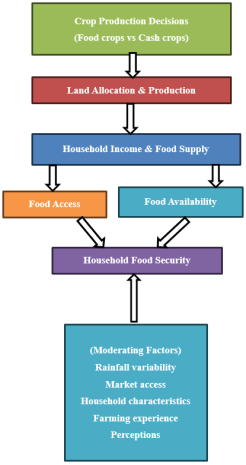
This study is guided by a conceptual framework that links crop production decisions to household food security outcomes. Smallholder farmers allocate limited land and resources between food crops (e.g., maize and cowpeas) and cash crops (e.g., sesame, vegetables, and fruit trees). This allocation influences both household food availability and income generation. Cash crop production contributes to household income, which can improve food access through market purchases. However, increased allocation of land to cash crops may reduce the area available for staple food production, potentially increasing vulnerability to food deficits. Therefore, the relationship between cash crop production and household food security is not linear but depends on multiple interacting factors. These relationships are further influenced by mediating factors such as household income sources, farmers’ experience, and perceptions of cash crop benefits, as well as external conditions including rainfall variability, market access, and resource constraints. As a result, household food security outcomes reflect a balance between production decisions, economic opportunities, and environmental conditions.
Figure 1 presents the conceptual framework guiding this study, illustrating how crop production decisions influence household food security through income generation and food access, while being shaped by environmental and household-level factors.
Figure 1. Conceptual framework linking crop production decisions and household food security.
2. Method and Materials
2.1. Description of the Study Site
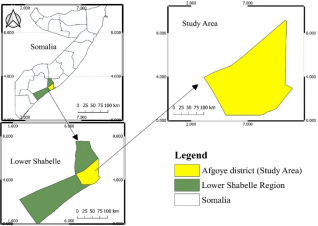
The study was conducted in Afgoye District (See
Figure 2), located in the Lower Shabelle region of Somalia, approximately 30 kilometers west of Mogadishu
| [16] | Ismaan, H. N., Mohamed Isse, M., Abdullahi Siad, S., & Islam, M. S. (2020). Evaluation of new Sesame varieties for growth and yield performance in summer season in Afgoi, Somalia. IOSR Journal of Agriculture and Veterinary Science (IOSR-JAVS), 13(5), 58-61. |
[16]
. The district is characterized by fertile alluvial soils and is traversed by the Shabelle River, which plays a central role in supporting agricultural production and local livelihoods. The area is classified as a riverine livelihood zone, making it suitable for both rain-fed and irrigated crop production
. Agriculture is the dominant economic activity in the district, with smallholder farmers primarily engaged in mixed farming systems. The main crops grown include maize, sorghum, cowpeas, sesame, fruit trees, and vegetables. Farming activities are influenced by two main cropping seasons: the Gu’ season (April to June), which is the primary rainy season, and the Deyr season (October to December), which is shorter and less reliable. Variability in rainfall, combined with limited access to inputs and infrastructure, significantly affects agricultural productivity and household food security in the region.
2.2. Sampling Procedure and Sample Size
The total population of Afgooye District was estimated at approximately 221,712 residents based on data from the Food Security and Nutrition Analysis Unit
. For this study, an accessible population was defined by selecting five villages: Balbaley, Shukurow, Bulo-Hartoy, Tajalaq, and Kurarey, where smallholder farming is the dominant livelihood activity, and households are actively engaged in both food and cash crop production. These villages were purposively selected to reflect the typical characteristics of the riverine farming system in Lower Shabelle, including mixed crop production, dependence on rainfall and irrigation, and exposure to climatic and market-related risks. From this accessible population, a total of 60 households were selected using simple random sampling, ensuring that each household had an equal probability of inclusion. Although the sample size is relatively small, it is appropriate for an exploratory case study conducted in a data-scarce and logistically constrained environment. The sample provides sufficient variation in household characteristics and farming practices to allow for both descriptive and inferential analysis.
2.3. Data Collection
Primary data were collected through a structured household survey conducted from July 2018 to March 2019. The questionnaire was administered through face-to-face interviews with household heads or primary decision-makers. The questionnaire consisted of three main sections. The first section captured socioeconomic and demographic characteristics of households, including age, gender, marital status, education level, and household size. These factors are considered important in influencing production decisions and coping strategies related to food insecurity. The second section focused on agricultural production, including crop types grown, land allocation between food and cash crops, and income sources derived from crop sales and other activities. This information was essential for analyzing the relationship between crop production patterns and household food security. The third section examined household food access and farmers’ perceptions of cash crop production. It included questions on food consumption sources, experiences of food shortages, and perceptions regarding the role of cash crops in improving income, welfare, and food security. The household was selected as the unit of analysis because food security outcomes and agricultural decisions are primarily made at the household level
| [19] | Hashmiu, I., Agbenyega, O., & Dawoe, E. (2022). Cash crops and food security: Evidence from smallholder cocoa and cashew farmers in Ghana. Agriculture & Food Security, 11(1), 12. https://doi.org/10.1186/s40066-022-00355-8 |
[19]
.
2.4. Measurement of Household Food Security
Household food security status was assessed using a structured food deficit indicator based on self-reported experiences of food shortages during the reference period. Households were classified as food secure if they reported no experience of food deficit, and food insecure if they reported experiencing food shortages. While this approach does not represent a comprehensive multidimensional food security index such as the Household Food Insecurity Access Scale (HFIAS) or the Food Insecurity Experience Scale (FIES), it captures the access dimension of food security, which is particularly relevant in market-dependent rural contexts. The use of this indicator was guided by data availability and field constraints. Nevertheless, the study acknowledges that this simplified measure may not fully capture all dimensions of food security. Future research may benefit from applying standardized multi-item indices, such as HFIAS or HDDS, to improve measurement precision and comparability across studies.
2.5. Data Analysis
The collected data were analyzed using the Statistical Package for the Social Sciences (SPSS). Both descriptive and inferential statistical techniques were applied. Descriptive statistics were used to summarize household characteristics, crop production patterns, and income sources. To examine relationships between variables, Chi-square tests were conducted to assess associations between income sources and household food deficit status. Binary logistic regression analysis was employed to evaluate the predictive effect of selected income variables on food deficit. In addition, Spearman correlation analysis was used to explore the relationship between farmers’ perceptions and household food security outcomes. These analytical approaches were selected to provide both descriptive insights and statistical evidence on the relationship between cash crop production and household food security.
3. Results
3.1. Socioeconomic Characteristics of Respondents
This part presents the background information of the respondents who participated in this study. In total, 60 respondents were interviewed from the five villages of the Afgoye district. The shape of the questionnaire in the demographic section is looked upon in terms of gender, age, marital status, and level of education (See
Table 1). In this study, men made up 56.7% of the respondents, while women made up the remaining 43.3%. This suggests that the agricultural sector is male-dominated.
Table 1 illustrates that most of the respondents aged 34–40 years old (26.7%), which was relatively greater than the percentage of respondents aged under 16 years old (1.7%), 16–24 years old (18.3%), 25–33 years old (20%), 41–50 years old (21.7%), and above 51 years old (11.7%). This means that most of the farmers in this survey were between the ages of 16 and 40 years, confirming earlier findings about the young age of Somalia’s population. Most participants in this study had lower levels of education; while 45% of farmers had never attended any kind of formal education, the remaining participants had informal education (43.3%), elementary education (10%), or secondary education (1.7%).
Table 1. Socioeconomic characteristics of respondents.
Gender | Frequency | Percent |
Male | 34 | 56.7 |
Female | 26 | 43.3 |
Age | | |
Under 16 | 1 | 1.7 |
16-24 | 11 | 18.3 |
25-33 | 12 | 20.0 |
34-40 | 16 | 26.7 |
41-50 | 13 | 21.7 |
>51 | 7 | 11.7 |
Educational level | | |
None | 27 | 45.0 |
Informal education | 26 | 43.3 |
Primary | 6 | 10.0 |
Secondary | 1 | 1.7 |
4. Marital status | | |
Single | 8 | 13.3 |
Married | 52 | 86.7 |
5. Experience (years) | | |
1-5 | 13 | 21.6 |
6-10 | 25 | 41.7 |
>10 | 22 | 36.7 |
Total | 60 | 100.0 |
3.2. Crop Production Patterns and Land Allocation
Analysis of data indicates that most farmers in the study (See
Table 2) are engaged in the production of major food crops such as maize and cowpeas, and economically important vegetables. The areas allocated by households to produce these crops vary and are often very small. The average household level area allocated for maize was around 2 ha, while cowpeas was 0.30-0.45 ha. For high-value crops such as vegetables, sesame, and lemon production, it ranged from 0.33 ha in Gu 2017 to 0.40 ha in Gu 2018 in the last four seasons.
Table 2. Area planted by crops Gu and Deyr season (2017-2018).
Crop type | Gu 2017 (ha) | Deyr 2017 (ha) | Gu 2018 (ha) | Deyr 2018 (ha) |
Maize | 1.91 | 1.76 | 2.07 | 2.03 |
Cowpea | 0.41 | 0.42 | 0.30 | 0.35 |
Sesame | 0.47 | 0.12 | 0.29 | 0.20 |
Lemon trees | 0.23 | 0.25 | 0.30 | 0.28 |
Tomato/pumpkin/other vegetables | 0.33 | 0.37 | 0.20 | 0.40 |
This suggests that farmers will first select staple food crops, followed by accompanying food crops and/or select a cash crop from among fruit trees, vegetables, cowpea, and sesame crops, which, except for cowpeas, were planted as cash crops in Somalia. The selection of crops will depend on whether they have more advantages than the existing cash crops. Interviews also showed that farmers adjusted their planting decisions based on weather conditions. For instance, farmers allocate more land to plant maize (food crops) if the average rainfall is favorable in the Gu’ season (main season); otherwise, farmers will choose to either reduce maize planting or switch to other crops such as sesame for its drought resistance. There was quite a difference in rainfall between 2017 and 2018 in Somalia, where seasonal rainfall was better in 2018 compared to 2017.
3.3. Household Food Security, Income Sources, and Farmers’ Perceptions
Table 3 shows the results of a survey that asked 60 families whether they experienced a food deficit or not. Food deficit means that the family does not have enough food to meet their nutritional needs. 35 families out of 60 (58.3%) experienced food deficit, and 25 families (41.7%) did not. This indicates that more than half of the families in the sample face food insecurity and struggle to afford enough food for their households.
Table 3. Household food security status and main sources of food (n = 60).
Indicator | Response | Frequency | Percent |
Food deficit status | Yes | 35 | 58.3 |
| No | 25 | 41.7 |
Food from own production | Yes | 36 | 60.0 |
| No | 24 | 40.0 |
Food purchased with own cash | Yes | 20 | 33.3 |
| No | 40 | 66.7 |
Food borrowed on credit | Yes | 22 | 36.7 |
| No | 38 | 63.3 |
The main source of food consumed by households in the last three months varied depending on whether they obtained food from their own production, purchasing with their own cash, or borrowing food on credit. According to
Table 3, 60% of the households consumed food from their own production, while 40% did not. This means that most of the households were self-sufficient in terms of food supply. But since most non-cereal crops are perishable, they are sold right after harvest, and only maize and cowpea are stored in drums to be consumed by the family or to be sold at a higher price in the lean season. On the other hand, only 33.3% of the households purchased food with their own cash, and 36.7% of the households borrowed food on credit, while 63.3% did not. This indicates that more than a third of the households faced some food insecurity or shortage and had to rely on external sources. while 66.7% did not. This suggests that most of the households had limited cash income or preferred to save their money for other purposes.
The result in
Table 4, shows the household’s main sources of cash income in the last three months for a sample of 60 households. It indicates whether the household’s earned income is from selling maize/sorghum, sesame, or lemon, or from self-employment or skilled/salary work. The most common source of cash income for the households was maize/sorghum sale, with 29 households (48.3%) reporting it. This indicates that most of the farmers in the areas are subsistence farmers, where the main source of their income is selling their major food crops. The least common source of cash income for the households was lemon sales, with only 7 households (11.7%) reporting it. This is indicative of the fact that cash crops were not an important source of household income in the riverine livelihood of the Shabelle region, but they have the potential role that diversifying crops could play in promoting farming, which would lead to a rise in income levels for the local population. Economic diversification may be seen as a way of minimizing risks and vulnerability at the household level. In contrast, about one-third of the households (30%) earned income from skilled/salary work, which could indicate a higher level of education or skill among those households. The results indicated that some poor household farmers with less diversified resources rely on the sale of their labor force to middle and better-off farmers, or sometimes work as crop sharing agreements, which common practice in riverine areas.
Table 4. Household income sources (n = 60).
A. Main sources of household cash income | | |
Source | Yes (%) | No (%) |
Maize/sorghum sale | 48.3 | 51.7 |
Sesame sale | 18.3 | 81.7 |
Lemon sale | 11.7 | 88.3 |
Self-employment | 18.3 | 81.7 |
Skilled / salary work | 30.0 | 70.0 |
Table 5. Main use of crop produce (n = 60).
Use of produce | Frequency | Percent |
Sale for money | 27 | 45.0 |
Exchange for other production | 6 | 10.0 |
Home consumption | 27 | 45.0 |
Total | 60 | 100.0 |
As shown in
Table 5, half of those surveyed (45%) reported spending much of their harvest on home consumption, followed by selling for debt payment (45%) and non-food items (10%). This indicates that farmers have utilized the extra income from their crops to enhance their food security. However, they remain vulnerable to weather and market-related shocks if they do not invest in productive assets and savings.
Farmers' perceptions of the benefits and risks of adopting new agricultural practices are crucial to the success of any intervention aimed at improving their livelihoods and environmental outcomes. However, their perception can be influenced by various factors such as the food security of their family, income generation and market demand, the availability of resources, the weather, and the soil type. As shown in
Table 6, there is disagreement among respondents about whether cash crop planting can promote farmers’ welfare, income, and reduce the problem of food shortage. 72% of respondents either agree or strongly agree that if farmers plant cash crops will improve their family’s welfare. Similarly, most of the respondents (68.3%) supported the notion that cash crop planting will improve farmers’ household income, as respondents agreed (38.3%) or strongly agreed (30.0%) with this idea, while 20.0% were neutral on the idea and 11.6% disagreed with it. Nevertheless, the interviewees were evenly split on whether growing cash crops would ease the food problem or not. The survey results show that most farmers acknowledge the importance of productivity for their profits, as more than half of them agree or strongly agree with the statement that productivity is a component that directly affects the farmer’s profits. On the other hand, 40% of respondents either disagreed (28.3%) or strongly disagreed (11.7%) with the notion that cash crop producers may help alleviate food scarcity once they plant it, compared to 36.7% who agreed or strongly agreed with this view. This may be connected to the fact that many subsistence farmers in Somalia had previously faced food insecurity problems due to a lack of rain, which had a severe impact on their families' ability to feed themselves and increased poverty.
According to
Table 7, at least 61.7% of the respondents agreed or strongly agreed with the statements on the profit factor, which means that farmers believe that if the productivity of their crops improves, they will earn extra income to support their household and buy farm inputs. On the other hand, only 10 out of 60 (16.7%) farmers disagree or strongly disagree with the statement, indicating that a minority of farmers do not see a strong connection between productivity and profits. The remaining 13 out of 60 (21.7%) farmers are neutral on the statement, meaning that they neither agree nor disagree with it. This implies that farmers are aware of the need to improve their productivity to increase their profitability.
Table 6. Farmers’ perceptions on cash cropping and household welfare (n = 60).
Response | Improve welfare | Improve income | Reduce food shortage |
Strongly agree | 40.0 | 30.0 | 16.7 |
Agree | 31.7 | 38.3 | 20.0 |
Neutral | 20.0 | 20.0 | 23.3 |
Disagree | 3.3 | 8.3 | 28.3 |
Strongly disagree | 5.0 | 3.3 | 11.7 |
Total | 100.0 | 100.0 | 100.0 |
Table 7. Perception of productivity–profit relationship (%) (n = 60).
Response | Percent |
Strongly agree | 35.0 |
Agree | 26.7 |
Neutral | 21.7 |
Disagree | 11.7 |
Strongly disagree | 5.0 |
Total | 100.0 |
3.4. Inferential Statistics
To further explore the relationships between household income sources, farmers’ perceptions, and food security outcomes, inferential statistical analyses were conducted. Chi-square tests, binary logistic regression, and Spearman correlation analysis were used to examine whether income-generating activities and perceptions related to cash cropping were associated with the likelihood of experiencing household food deficit.
3.4.1. Association Between Income Sources and Food Deficit
Chi-square tests were performed to determine whether household income sources were associated with the occurrence of food deficit (
Table 8). The results indicate that none of the examined income sources showed a statistically significant relationship with household food deficit status (p > 0.05). Although maize and sorghum sales produced the highest Chi-square statistic (χ² = 2.336, p = 0.126), the association was not statistically significant at the conventional 5% level. These results indicate that household income sources alone were not statistically associated with food deficit among the surveyed households. This suggests that other structural factors, such as variability in agricultural production, climatic conditions, or household consumption requirements, may play a more important role in shaping food security outcomes.
Table 8. Association between household income sources and food deficit (Chi-square tests, n = 60).
Income source | χ² | df | p-value |
Maize/sorghum sale | 2.336 | 1 | 0.126 |
Sesame sale | 0.080 | 1 | 0.778 |
Fruit sale | 1.478 | 1 | 0.224 |
Banana sale | 0.090 | 1 | 0.764 |
Lemon sale | 0.781 | 1 | 0.377 |
Vegetable sale | 0.170 | 1 | 0.681 |
Self-employment | 1.148 | 1 | 0.284 |
Salary work | 0.735 | 1 | 0.391 |
Gifts / Zakat | 1.054 | 1 | 0.305 |
Productive asset sale | 0.812 | 1 | 0.368 |
Other asset sale | 0.726 | 1 | 0.394 |
Other income | 0.781 | 1 | 0.377 |
3.4.2. Logistic Regression Analysis
To further examine whether household income sources could predict food deficit status, a binary logistic regression analysis was conducted (
Tables 9 and 10). The overall model was not statistically significant (χ² = 2.828, p = 0.587), indicating that the predictors included in the model did not significantly improve the prediction of food deficit compared with the constant-only model. The model explained between 4.6% and 6.2% of the variation in food deficit status (Cox & Snell R² = 0.046; Nagel kerke R² = 0.062). None of the individual predictors was statistically significant (p > 0.05). However, the negative coefficient observed for maize and sorghum sales suggests a possible protective tendency whereby households selling staple crops may experience a lower likelihood of food deficit.
Table 9. Logistic regression analysis of factors associated with household food deficit (n = 60).
Predictor | B | SE | Wald | p-value | Odds Ratio (Exp (B)) | Interpretation |
Maize/Sorghum sale | -0.688 | 0.621 | 1.227 | 0.268 | 0.502 | Slight reduction in food deficit risk |
Sesame sale | -0.190 | 0.741 | 0.066 | 0.798 | 0.827 | Weak negative effect |
Self-employment | 0.362 | 0.824 | 0.193 | 0.661 | 1.436 | Slight increase in food deficit risk |
Salary work | 0.146 | 0.658 | 0.049 | 0.825 | 1.157 | Weak positive effect |
Constant | 0.984 | 2.381 | 0.171 | 0.680 | 2.674 | — |
Table 10. Logistic regression model fit statistics.
Statistic | Value |
Sample size | 60 households |
Omnibus χ² | 2.828 |
Degrees of freedom | 4 |
p-value | 0.587 |
Cox & Snell R² | 0.046 |
Nagelkerke R² | 0.062 |
Overall classification accuracy | 58.3% |
3.4.3. Correlation Between Farmers’ Perceptions and Food Deficit
Spearman correlation analysis was conducted (See
Table 11) to examine the relationship between household food deficit and farmers’ perceptions of cash cropping. The results indicate that none of the perception variables were significantly correlated with food deficit status (p > 0.05). A statistically significant positive relationship was observed between farmers’ perceptions that cash crops improve household welfare and the belief that cash cropping generates indirect benefits for other agricultural activities (ρ = 0.275, p = 0.034). This finding suggests that farmers who perceive welfare benefits from cash cropping are also more likely to recognize broader indirect advantages of cash crop cultivation.
Table 11. Spearman correlation between household food deficit and farmers’ perceptions (n = 60).
Variable | Correlation with food deficit (ρ) | p-value | Interpretation |
Cash crop improvement promotes family welfare | -0.159 | 0.226 | Weak negative, not significant |
Cash crop production increases income | 0.094 | 0.474 | Very weak positive, not significant |
Cash crop production reduces food shortages | 0.039 | 0.767 | No relationship |
Indirect effects of cash cropping on other activities | -0.016 | 0.902 | No relationship |
Productivity–profit relationship | 0.069 | 0.601 | Very weak relationship |
Overall, the inferential results suggest that while households engage in a range of income-generating activities, the relationship between these activities and food security outcomes appears complex. Household food deficit may therefore be influenced by broader production conditions, environmental variability, and household-level resource constraints rather than income sources alone.
3.4.4. Reliability Analysis of Perception Variables
To assess the internal consistency of the perception-related items included in the questionnaire, Cronbach’s alpha reliability analysis was conducted (See
Table 12). The analysis was performed on both the full set of perception variables and selected subgroups of items to examine whether they represent a unified construct. The results indicate that the overall Cronbach’s alpha for the five perception items was relatively low (α = 0.310), suggesting weak internal consistency among the variables. Additional reliability tests conducted on subgroups of items also produced low alpha values (α = 0.361 for three items related to perceived benefits, and α = 0.255 for two items related to food shortage and productivity perceptions). These findings imply that the perception variables do not measure a single underlying construct but rather capture multiple dimensions of farmers’ perceptions regarding cash crop production and its implications. Therefore, the variables were treated and analyzed individually rather than being combined into a composite index. This approach is appropriate for exploratory studies where perception items reflect distinct conceptual aspects rather than a unified scale.
Table 12. Reliability analysis of perception variables (n = 60).
Scale / Group of Variables | Number of Items | Cronbach’s Alpha (α) |
All perception variables | 5 | 0.310 |
Perceived benefits of cash crops | 3 | 0.361 |
Food shortage & productivity perception | 2 | 0.255 |
4. Discussions
4.1. Land Use Decisions, Crop Choice, and Production Constraints
The findings show that land constraints play a central role in shaping smallholder farmers' crop production decisions in Afgoye. With average landholdings of about two hectares, most households prioritize staple food crops such as maize and cowpeas to meet their basic consumption needs. This pattern reflects a risk-averse strategy in an environment characterized by rainfall variability, limited irrigation, and weak safety nets. Similar evidence from across sub-Saharan Africa shows that small land sizes strongly encourage farmers to focus on food crops rather than specialize in cash crops, as diverting land away from staples increases exposure to food shortages
| [20] | Giller, K. E., Delaune, T., Silva, J. V., Van Wijk, M., Hammond, J., Descheemaeker, K., Van De Ven, G., Schut, A. G. T., Taulya, G., Chikowo, R., & Andersson, J. A. (2021). Small farms and development in sub-Saharan Africa: Farming for food, for income or for lack of better options? Food Security, 13(6), 1431-1454.
https://doi.org/10.1007/s12571-021-01209-0 |
[20]
. Seasonal rainfall variability further influences crop allocation decisions. In years with favorable Gu rainfall, farmers expand maize cultivation, while in drier seasons they shift toward more drought-tolerant crops such as sesame. This adaptive behavior is widely observed among smallholders managing climate risk with limited resources
| [21] | Douxchamps, S., Van Wijk, M. T., Silvestri, S., Moussa, A. S., Quiros, C., Ndour, N. Y. B., Buah, S., Somé, L., Herrero, M., Kristjanson, P., Ouedraogo, M., Thornton, P. K., Van Asten, P., Zougmoré, R., & Rufino, M. C. (2016). Linking agricultural adaptation strategies, food security and vulnerability: Evidence from West Africa. Regional Environmental Change, 16(5), 1305-1317. https://doi.org/10.1007/s10113-015-0838-6 |
[21]
. However, land scarcity constrains the ability of poorer households to expand cash crop production meaningfully, reinforcing reliance on staple crops for food security
| [22] | Harris, D., Mausch, K., & Chamberlin, J. (2024). Land and technology requirements for economically prosperous smallholder farming in sub-Saharan Africa: Evidence from Tanzania. Outlook on Agriculture, 53(2), 131-141.
https://doi.org/10.1177/00307270241248667 |
[22]
.
4.2. Cash Cropping, Household Income, and Food Security Outcomes
Although cash crop production contributes to household income, the results indicate that these income gains do not consistently translate into improved food security. More than half of the surveyed households experienced food deficits despite participating in cash crop markets. A key reason is that many farmers sell maize and sorghum, their main food crops, to meet immediate cash needs such as debt repayment or essential non-food expenses. This finding aligns with broader evidence showing that agricultural commercialization can increase income without necessarily reducing food insecurity, especially where income is seasonal, and markets are volatile
| [23] | Carletto, C., Corral, P., & Guelfi, A. (2017). Agricultural commercialization and nutrition revisited: Empirical evidence from three African countries. Food Policy, 67, 106-118.
https://doi.org/10.1016/j.foodpol.2016.09.020 |
[23]
. Recent studies also show that cash crop income alone is often insufficient to ensure food security unless it is accompanied by productivity gains, diversification, and reinvestment in farming systems
| [19] | Hashmiu, I., Agbenyega, O., & Dawoe, E. (2022). Cash crops and food security: Evidence from smallholder cocoa and cashew farmers in Ghana. Agriculture & Food Security, 11(1), 12. https://doi.org/10.1186/s40066-022-00355-8 |
[19]
.
In land-constrained contexts, households face a trade-off between selling food crops for income and retaining enough production for household consumption. As a result, commercialization may coexist with persistent food deficits, rather than resolve them.
4.3. Household Food Access Strategies and Vulnerability
The heavy reliance on own food production observed in this study highlights the continued importance of subsistence farming as a primary food access strategy. At the same time, a substantial proportion of households reported borrowing food on credit, indicating ongoing vulnerability and limited purchasing power. Dependence on food credit is a common coping mechanism among smallholder households facing seasonal shortages and unstable incomes
. Limited food purchases using cash further suggest that income constraints restrict market-based food access. These findings reflect a broader pattern in which smallholders rely on a combination of their own production, borrowing, and selective market purchases to manage food availability, particularly during lean periods. Without reliable income streams or storage capacity, households remain highly exposed to both climatic and market shocks
| [22] | Harris, D., Mausch, K., & Chamberlin, J. (2024). Land and technology requirements for economically prosperous smallholder farming in sub-Saharan Africa: Evidence from Tanzania. Outlook on Agriculture, 53(2), 131-141.
https://doi.org/10.1177/00307270241248667 |
[22]
.
4.4. Farmers’ Perceptions, Productivity, and Livelihood Expectations
Farmers’ perceptions provide important insights into how they understand the role of cash crops and how productivity can improve livelihoods. Most respondents believed that cash crop production improves household income and overall welfare, and a large majority recognized the direct link between productivity and profits. These perceptions are consistent with empirical evidence showing that productivity improvements can enhance income potential
| [25] | Marinus, W., Descheemaeker, K., Van De Ven, G. W. J., Vanlauwe, B., & Giller, K. E. (2023). Narrowing yield gaps does not guarantee a living income from smallholder farming-an empirical study from western Kenya. PLOS ONE, 18(4), e0283499. https://doi.org/10.1371/journal.pone.0283499 |
[25]
. However, farmers expressed mixed views on whether cash cropping reduces food shortages, reflecting their lived experience. This gap between expectations and outcomes suggests that while farmers recognize the income benefits of commercialization, they are also aware of its limits under conditions of land scarcity, climate risk, and weak market infrastructure. Similar patterns have been observed elsewhere in sub-Saharan Africa, where farmers value commercialization but remain cautious about its ability to guarantee food security
| [26] | Jayne, T. S., Muyanga, M., Wineman, A., Ghebru, H., Stevens, C., Stickler, M., Chapoto, A., Anseeuw, W., Van Der Westhuizen, D., & Nyange, D. (2019). Are medium‐scale farms driving agricultural transformation in sub‐Saharan Africa? Agricultural Economics, 50(S1), 75-95.
https://doi.org/10.1111/agec.12535 |
[26]
.
4.5. Implications for Agricultural Development and Food Security in Riverine Somalia
Taken together, the findings suggest that promoting cash crop production alone is unlikely to resolve food insecurity in riverine areas of southern Somalia. Instead, balanced food cash crop systems are needed, supported by investments in irrigation, extension services, improved storage, and productivity-enhancing inputs. Without such complementary interventions, income gains from cash crops are unlikely to translate into sustained improvements in household food security. The results also highlight the importance of addressing structural constraints, particularly land scarcity and climate variability, when designing agricultural development strategies in fragile contexts. Strengthening resilience through diversified production systems, improved market access, and institutional support is essential for enabling smallholder farmers to convert income opportunities into lasting food security gains.
4.6. Study Limitations
This study has several limitations. The findings of this study indicate that while smallholder farmers engage in both food and cash crop production, the relationship between these activities and household food security is not straightforward. The absence of statistically significant associations suggests that broader structural factors, including climatic variability, limited access to inputs, and market constraints, may play a more dominant role in shaping food security outcomes than income sources alone. The relatively small sample size (n = 60) limits generalizability. Data were collected in a conflict-affected setting, which posed logistical challenges. The study relies on self-reported survey data, and in addition, food security was measured using a simplified food deficit indicator rather than standard indices such as HFIAS or FIES. Finally, the cross-sectional design limits causal interpretation.
4.7. Conclusions
This study aimed to investigate the effect of cash crop production on food security improvements in the Riverine livelihood of the Afgoye areas of Somalia. The study used survey data collected from 60 farmers who were randomly selected from the target population. Most of the household farmers in the study area were subsistence farmers who grow maize, cowpea, sesame, vegetables, and fruit trees to provide a reliable source of food for their family or community, especially in times of crisis or scarcity. On the other hand, most farm households also buy some of their food from the market, for which cash income is needed. The study shows that the households in rural Somalia had limited and diverse sources of cash income in the last three to four seasons. The majority of the 60 households surveyed depended on maize/sorghum sale as their main source of income, while a few also earned incomes from sesame sale, lemon sale, self-employment, or skilled/salary work. These sources of income are crucial for households to afford necessities such as food, water, health care, and education. However, they are also vulnerable to fluctuations in market prices, weather conditions, and demand. Rural households in Somalia face high levels of poverty and food insecurity due to low and irregular income. The result suggests that the households in this sample faced similar challenges in accessing stable and sufficient income to meet their needs and wants.
Based on the findings of this study, we can draw some conclusions and recommendations for improving food security and livelihoods in riverine areas of Somalia. First, cash crop production can have positive effects on food security by increasing income and access to food markets. However, this requires adequate support from extension services, input suppliers, and market actors to ensure the quality and profitability of cash crops. Second, diversification of crops and livestock can enhance food security by reducing dependence on a single crop or source of income. This can also improve nutrition and resilience to shocks such as droughts or pests. Third, improving local variety crops and growing hybrids can increase yields and reduce losses due to diseases or pests. This can also reduce the need for expensive inputs such as fertilizers or pesticides. Fourth, strengthening the capacity of farmers' organizations and cooperatives can help them to access better markets, negotiate fair prices, and share information and resources. This can also increase their bargaining power and voice in policy-making processes. Fifth, promoting gender equality and women's empowerment can improve food security by increasing women's access to land, credit, education, and decision-making. This can also benefit their children's health and education outcomes. Finally, addressing the root causes of conflict and insecurity in Somalia can create a conducive environment for agricultural development and food security. This requires political dialogue, reconciliation, and peace-building efforts at all levels.
We also suggest that further research is needed to examine the potential impacts of cash crop production on other aspects of livelihoods, including social capital, gender relations, and environmental sustainability. Further research is needed to explore how much income each household earned from each source and how they spent their income on different items. The study does not show how the households coped with shocks or food shortages, nor how they diversified their livelihood strategies. These aspects could influence their resilience and adaptation to changing circumstances.
Author Contributions
Abdullahi Farah Ahmed: Conceptualization, Formal Analysis, Methodology, Writing – original draft
Yasin Sheikh Amir Sheikh Ibrahim: Methodology, Investigation, Data Curation, Software, Writing – review & editing
Mohamed Ali Muse: Investigation, Writing –review & editing
Shueib Adan Dirie: Formal Analysis, Visualization, Validation, Writing – review & editing
Ibrahim Mohamud Hassan: Data curation, Project administration, Writing – review & editing
Ibrahim Jamal Ahmed: Supervision, Validation, Writing – review & editing





 Share This Article
 Twitter
 Linked In
 Facebook
 Copy
Copy Download