Review Article | | Peer-Reviewed

A Clinical Assessment of Fracture Incidence in Zirconia Ceramic Crowns: A Systematic Review and Evaluation of Influencing Factors

Received: 10 December 2025     Accepted: 30 December 2025     Published: 27 January 2026
Views:       Downloads:
Abstract

This study utilized the PRISMA 2020 framework alongside the Newcastle-Ottawa Scale (NOS) assessment tool during the screening process to conduct a systematic review of the fracture rates of zirconia (ZrO2) ceramic crowns in clinical practice. The primary objective was to investigate the factors influencing to the failure of zirconia ceramic crowns. The literature search employed targeted keywords including veneered fixed dental prostheses, zirconia, and all-ceramic single crowns. Inclusion criteria encompassed randomized controlled trials (RCTs) and cohort studies with a minimum follow-up duration of three years and at least 20 cases. Non-clinical reports and those exclusively addressing long-span fixed dental prostheses were excluded from the analysis. Of the eleven high-quality reports selected, only three reported crown fracture rates consistent with the clinically recommended threshold of 4.4%. To mitigate fractures in ZrO2 ceramic crowns used in dental restorations, precision is essential in both research and clinical practice. Multiple factors influence fracture incidence in fixed dental prostheses, including ceramic material thickness, connector dimensions, pontic span, type of cementation, and ceramic surface treatment. Preventative strategies focus on reducing occlusal overload by narrowing the occlusal table, decreasing cusp inclination, modifying load direction, minimizing non-axial forces, and selecting lighter occlusal contacts. Additionally, the integration of screw access channels and mechanical circulation in implant-supported prostheses may lower average fracture loads. Lastly, ensuring the precise alignment of the screw access channel at the center of the occlusal surface is critical to avoid off-center occlusal contacts during subsequent evaluations and measurements.

Published in International Journal of Dental Medicine (Volume 12, Issue 1)
DOI 10.11648/j.ijdm.20261201.11
Page(s) 1-14
Creative Commons

This is an Open Access article, distributed under the terms of the Creative Commons Attribution 4.0 International License (http://creativecommons.org/licenses/by/4.0/), which permits unrestricted use, distribution and reproduction in any medium or format, provided the original work is properly cited.

Copyright

Copyright © The Author(s), 2026. Published by Science Publishing Group

Keywords

PRISMA 2020, Newcastle–Ottawa Scale, Fracture Rates, Fixed Dental Prostheses (FDPs), Zirconia (ZrO2), All-ceramic Single Crown, Endocrown

1. Introduction
The aesthetic properties of dental crowns have shown consistent improvement due to the ongoing development of modern crown materials. However, the initial iterations of crowns were extremely prone to fracturing and had a limited lifespan. Over the last two decades, a multitude of novel materials for dental crowns, including zirconium dioxide (ZrO2), has been formulated and suggested, prompting the initiation of several associated clinical trials. Nevertheless, the occurrence of chipping and fracturing in ceramic crowns is frequent, regardless of whether they are supported by a natural tooth or an implant. Consequently, this study systematically reviewed existing literature to identify the causative factors of ceramic crown failure, employing established methodological frameworks. The literature search followed the guidelines outlined in the Preferred Reporting Items for Systematic Reviews and Meta-Analyses (PRISMA) and underwent screening using the Newcastle–Ottawa Scale (NOS) . The present review focuses on the examination of factors that contribute to crown damage and fracture rates. The findings of this review could potentially serve as a valuable resource for the development of new ceramic materials suitable for crown construction, and also offer guidance for their clinical application.
2. Clinical Application and Material Properties of Dental Crowns
A crown is a form of dental prosthesis. Dental crowns are a type of protective covering used to safeguard the remaining natural tooth structure when it has been compromised by large cavities, or to protect the tooth structure after root canal treatment, or to address aesthetic defects caused by trauma. The Chairside Economical Restoration of Esthetic Ceramics (CEREC) is utilized when a natural tooth has a large defect that could cause traditional resin to easily fall out . During the restoration process, a dentist uses a digital intraoral scanner to capture images of the damaged tooth and to measure the size of the cavity. Software is used to create a shape that restores the three-dimensional structure of the tooth, and a cutting machine then grinds a ceramic block into that shape. As a result, the cut ceramic piece (endocrown or all-ceramic crown) fits almost perfectly into the cavity, restoring the overall structure of the tooth. A dental bridge consists of two or more connected prosthetic restorations that are used to replace missing teeth. When performing connected prosthetic restorations, the healthy teeth on either side of the prosthesis need to be prepared so that they can serve as supporting surfaces for the dental bridge. When a natural tooth is unable to function normally and is therefore removed, a dental implant can be used to replace the missing tooth and restore the chewing and biting functions of the tooth in that position. In this type of implant restoration, there are three components: the implant fixture, which is inserted into the jawbone and osseointegrated to provide support; the abutment, which connects the crown to the implant fixture; and the implant crown . Implants can be restored individually or used in pairs or more as supports for creating a bridge to replace multiple missing teeth.
Several decades ago, all dental crowns were made of metal, mainly gold or silver. In recent years, dental crowns have evolved into two types to meet the aesthetic demands of patients: veneering crowns (with metal, glass ceramic, or ceramic as the interior layer and porcelain as the exterior layer) and monolithic all-ceramic crowns. When designing a dental crown, the goal is to combine aesthetics and fracture resistance. Yttria-stabilized tetragonal zirconia polycrystal (Y-TZP) is a composite material created by adding Y2O3 to zirconia. The purpose of this process is to stabilize the 4% volume expansion that occurs when zirconia (ZrO2) shifts from the tetragonal phase to the monoclinic phase during high-temperature sintering and thus to reduce the likelihood of radial cracks developing . Y-TZP has higher mechanical strength and is less prone to cracking compared with LS2 but also is less transparent and thus mainly used in all-ceramic or veneering crowns and short-span bridges located in the posterior area. Common brands of Y-TZP include 3M Lava, Cereon, IPS e.max ZirCAD, and IPS e.max Ceram.
3. Introduction and Selection of Study Assessment Tools
In evidence-based medicine, the scoping literature review was conducted using the methodological frameworks identified in existing literature . The literature search decision-making process was guided by the updated statement and guidelines of the Preferred Reporting Items for Systematic Reviews and Meta-Analyses (PRISMA). The PRISMA guidelines are designed to enhance the transparency and accuracy of reporting systematic reviews and meta-analyses. Systematic reviews and meta-analyses are research methods used to synthesize and analyze the results of multiple studies on a particular topic, providing a comprehensive overview of the available evidence. By adhering to the PRISMA guidelines, researchers strive to improve the quality and transparency of reporting in systematic reviews and meta-analyses, facilitating audiences’ assessment of the reliability of the findings.
PRISMA 2020 is an updated version of the original PRISMA guidelines, providing a set of recommendations for reporting systematic reviews and meta-analyses. The primary goal of PRISMA is to improve the transparency and quality of reporting in these types of studies, thereby making it easier for audiences. PRISMA 2020 provides a checklist of items to be incorporated in the systematic review or meta-analysis report, encompassing elements such as the title, abstract, introduction, methods, results, discussion, and funding. It also includes a flow diagram outlining the process of study selection. The PRISMA Flow Diagram is a crucial element of the PRISMA guidelines. It illustrates the flow of information through the various phases of a systematic review or meta-analysis, beginning with the identification of records and progressing through screening, eligibility assessment, and inclusion of studies in the final analysis. The flow diagram is a visual representation of the study selection process, enabling audiences to comprehend the number of records identified, screened, and included or excluded at each stage.
In addition, numerous nations have established research centers within leading universities and institutions to assess randomized controlled trials (RCTs) and acquire high-quality evidence. The Critical Appraisal Skills Programme (CASP) tool for critical appraisal was established in Oxford in 1993 with the aim of aiding healthcare decision-makers in understanding scientific evidence . The CASP article review checklist comprises eight categories, including RCTs, systematic reviews, and case control studies . The Oxford Centre for Evidence-Based Medicine (CEBM) was founded by the University of Oxford and introduced the "Levels of Evidence" in 1998 . This framework classifies clinical issues into categories such as diagnosis, prognosis, benefits and harms of interventional treatment, and early diagnosis . The Scottish Intercollegiate Guidelines Network (SIGN 50) classifies clinical evidence into high to low categories, ranging from levels 1++ and 1+ to levels 2− to 4 . The academy also created a checklist for six primary categories of articles: systematic reviews and meta-analyses, RCTs, cohort studies, case control studies, studies of diagnostic accuracy, economic evaluation, and others . The Joanna Briggs Institute (JBI) in Australia has created an evidence-based practice database containing full-text literature, with a primary focus on nursing research. The database includes five types of articles and has established evidence levels for assessing the literature . The Jadad Quality Scale was developed in 1996 to evaluate the quality of randomized controlled trials (RCTs) and the effectiveness of blinding methods used in RCT studies . The updated version, introduced in 2001, includes eight indicators. The mentioned indicators evaluate the description of inclusion and exclusion criteria, the evaluation and description of adverse reactions, and the explanation of statistical analysis methods . However, Hempel and colleagues observed limitations in the Jadad scale and proposed the customization of specific quality criteria for assessing RCT and non-RCT articles, tailored to the research topic and field.
Upon reviewing the developmental history of the aforementioned scales and the assessed items, it was observed that no review tool appropriate for assessing the quality of nonrandomized studies, such as cohort studies and case–control studies, was accessible prior to the release of the Newcastle-Ottawa Scale (NOS) in 2009. The NOS was collaboratively developed through the Delphi process by scholars from Newcastle University in the United Kingdom and the University of Ottawa in Canada . Due to variations in the evaluation process, NOS utilizes only a single blind test question, which includes fewer blind test-related inquiries compared to the Jadad scale, resulting in a more objective assessment. The NOS consists of three parts: subject selection, comparability, and result measurement, with a total of eight questions. Each question addresses three or four evaluation criteria. A star is awarded for meeting only one or two of these criteria, and if a second control factor is present in the question, an additional star is awarded. The higher the number of stars awarded, the higher the quality of the article. The comparability section requires reviewers to assess the primary and secondary control factors after reading the article.
3.1. Identification and Screening of Existing Reports
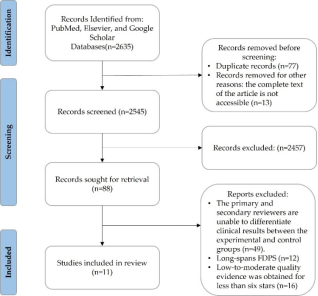
The study employed the PRISMA Flow Diagram to identify pertinent literature and utilized the Newcastle-Ottawa Scale (NOS) to screen the literature (Figure 1). This approach was designed to achieve a more comprehensive assessment of the literature in order to review the statistical findings related to the causes and fracture rates of zirconia crowns. The methodology employed in the study facilitated a comprehensive evaluation of the data, leading to a precise and thorough description of the experimental results, their interpretation, and the conclusions drawn from the analysis.
3.2. Inclusion and Exclusion Criteria for Reports
Several reports evaluating the functional performance of ceramic crowns have demonstrated that a chip or fracture rate of 4.4% after 5 years of use is considered acceptable . This indicates that fewer than 1 crown out of 20 could be chipped or fractured. If the report includes results for fewer than 20 dental crowns, there may be a significant increase in the failure rate, ranging from 10% to 30% , which exceeds the accepted clinical rate of 4.4%. As a result, articles with fewer than 20 crowns were excluded. Scherrer et al. proposed the potential application of the Weibull life prediction theory for projecting the longevity of a dental crown beyond 5 years, drawing on data collected over a 3-year period. Consequently, the inclusion criteria for this review necessitated: (1) a follow-up period exceeding 3 years for cohort studies or RCTs, (2) a minimum of 20 participants, and (3) explicit identification of cohorts in the study or the capacity to segregate the sample into an experimental and a control group.
Nonclinical research reports, including in vitro bench studies and animal studies, were excluded from the analysis due to the utilization of the NOS tool, which is designed specifically for assessing cohort studies. Moreover, long-span bridges spanning five or more adjacent fixed dental prostheses (FDPs) may impose excessive stress on the abutment and periodontal region. This load has the potential to directly induce stress fatigue and bridge fracture, or indirectly result in a fracture in the FDPs . Fractures in ceramic are more prone to occur in fixed dental prostheses (FDPs) that span more than five units. Consequently, the current study omitted articles that exclusively addressed long-span fixed dental prostheses (FDPs); however, articles containing information on three-, four-, or five-unit FDPs were retained for the review. If the randomized controlled trial (RCT) article does not explicitly define the experimental and control groups, or if the results cannot be differentiated by the reviewer between the experimental and control groups, they will also be omitted from the evaluation. Finally, articles written in languages other than English and those that did not meet the inclusion criteria were also excluded. The study employed the PRISMA Flow Diagram to identify pertinent literature and utilized the Newcastle-Ottawa Scale (NOS) to screen the literature. This approach was designed to achieve a more comprehensive assessment of the literature in order to review the statistical findings related to the causes and fracture rates of zirconia crowns. The methodology employed in the study facilitated a comprehensive evaluation of the data, leading to a precise and thorough description of the experimental results, their interpretation, and the conclusions drawn from the analysis.
4. Results of Systematic Review- The Incidence and Etiology of Crown Chips and Fractures
The current investigation employed the keywords "veneered fixed dental prostheses," "zirconia (ZrO2)," and "all-ceramic single crowns," as identified by Spitznagel et al. in their systematic review. The current investigation presents the term "endo-crown" and its associated terms "in-lay," "on-lay," and "over-lay," which denote a form of crown frequently employed for specific repair subsequent to endodontic therapy.
A search was conducted on electronic academic databases including PubMed, Elsevier, and Google Scholar, without utilizing the Boolean logic algorithm, resulting in the retrieval of 2635 records. The articles encompassed reports of randomized controlled trials (RCTs), cohort studies, short-term and multiyear case series, and bench research. After the elimination of 77 duplicate records and 13 articles with no full text available, two reviewers independently employed the NOS tool to evaluate the full text of 2545 records based on the inclusion criteria (refer to PRISMA Figure 1). Subsequently, it was determined that 88 full-text records satisfied the inclusion and exclusion criteria and were deemed suitable for methodological evaluation, whereas the remaining 2545 were excluded.
Some of the candidate articles appeared to classify experimental or control groups according to dental implants, abutments, or FDPs. However, they included crowns made from three different materials, leading to the exclusion of these long-term follow-up articles. Although a study conducted and published by Konstantinidis et al. did not meet the review criteria (as the FDPs investigated in that study had four to six units), we adopted their definition of control and experimental groups. In their study, the crown bonded to the implant (implant-retained crown) was designated as the experimental crown, while the crown bonded to the tooth (tooth-retained crown) was considered the control crown. This definition was utilized for all articles that did not explicitly specify experimental and control groups. The objective of this study was to broaden the range of articles eligible for inclusion. Following discussions between the primary and secondary reviewers, evidence of low-to-moderate quality, rated below six stars, was subsequently excluded. In the end, 11 articles receiving ratings of 7-9 stars were included in the final analysis (Table 1). In the process of selecting control factors for each candidate article, it was determined that the most commonly utilized control factors included a minimum ceramic thickness at the occlusal surface of 1.5–2.0 mm , good periodontal health , and the absence of evident bruxism (Table 2). Regrettably, despite the presence of 11 candidate articles following our final review (refer to Table 1), upon reevaluation using the same keywords, it was observed that these articles did not exhibit entirely consistent control factors. Consequently, we encountered difficulty in integrating these articles for the purpose of creating a forest plot or conducting a meta-analysis.
Figure 1. This study employed a systematic review following the PRISMA 2000 guidelines.
Esquivel-Upshaw et al. conducted a 5-year RCT to investigate the clinical survival of three-unit implant-supported fixed dental prostheses (FDPs). The study compared (i) veneered ceramic–ceramic (CC) FDPs, which consisted of pressable fluorapatite glass ceramic (IPS ZirPress, Ivoclar Vivadent, Schaan, Liechtenstein) veneered on Yttria-stabilized tetragonal zirconia polycrystals (Y-TZP) (IPS e.max ZirCAD, Ivoclar Vivadent, Schaan, Liechtenstein), with (ii) control veneered metal–ceramic (MC) FDPs, comprising Pd–Au–Ag alloy (Capricorn, Ivoclar Vivadent, Schaan, Liechtenstein) veneered on glass–ceramic (IPS InLine POM, Ivoclar Vivadent, Schaan, Liechtenstein). The 3- and 5-year follow-up results were published in 2014 and 2020, respectively. A total of 68 patients initially took part in the clinical study. The results at the 3-year mark indicated that fractures were initiated from the occlusal surface, and no pores were observed where stresses could have localized beneath the surface. A total of 7 fractures occurred in the MC FDPs, resulting in a fracture rate of 14.6%, while 6 fractures occurred in the CC FDPs, also resulting in a fracture rate of 14.6% (Table 3). Upon analysis, it was found that the distribution of fractures varied based on the veneer thickness (mm), radius of curvature of gingival embrasure (mm), and connector height (mm) as defined by Esquivel-Upshaw et al. . It was observed that multiple fractures occurred for each primary and secondary factor. The most adverse condition observed was a 1.5 mm thickness of CC veneer with a gingival embrasure radius of curvature of 0.75 mm, which resulted in 10 instances of fracture. At the conclusion of the 5-year follow-up, a total of 129 FDPs from 96 participants (with no participant having more than two FDPs) were examined, comprising 65 CCs and 64 MCs. A veneer fracture was identified in 27 FDPs (CC and MC fracture rates of 24.6% and 17.2%, respectively, as shown in Table 3). An examination of all the fracture samples indicated that the majority of the fractures originated from the occlusal surface. The fracture stress of CC FDPs was determined to be 37 ± 12 MPa, while that of MC FDPs was 44 ± 12 MPa. The researchers proposed a theory that a fracture of a posterior fixed all-ceramic restoration may result from various factors, such as insufficient prosthesis design, poor quality of porcelain layering, a mismatch in the coefficient of thermal expansion or cooling schedule between ZrO2 and the veneer material, or an intraoral loading orientation.
Table 1. Results of Newcastle–Ottawa Scale quality assessment of selected studies.

Article Resources

Selection

Comparability of cohorts on the basis of the design or analysis 1)

Outcome

Total Score

Representativeness of the exposed cohort

Selection of the non exposed cohort

Ascertainment of exposure

Demonstration that outcome of interest was not present at start of study

a) study controls *

b) study controls for any additional factor

Assessment of outcome

Was follow-up long enough for outcomes to occur (≥ 3years)

Adequacy of follow up of cohorts

Esquivel-pshaw et al.

3]

-

8

Sailer et al.

4]

9

Nicolaisen et al.

5]

9

Naenni et al.

36]

9

Esquivel-Upshaw et al.

37]

-

8

Pelaez et al.

1]

-

8

Gardell et al.

4]

9

Sulaiman et al.

38]

-

7

De Angelis et al.

37]

9

Monaco et al.

0]

-

7

Güncü et al.

1]

9

Table 2. First control factor or other control factors for each study.

Authors and year of article publication

First control factor or other control factors

Esquivel-Upshaw et al.

3] (2020)

(1) Control veneer ceramic thickness, connector radius of curvature, and connector height. (2) The absence of active caries, periodontal disease, or the depth of periodontal pockets should not exceed 4 mm. (3) The participant exhibits a deficiency of at least three teeth in the posterior region.

Sailer et al.

4] (2018)

(1) The participant does not have periodontal disease and shows no apparent signs of bruxism.

(2) The same treatment procedures are used for both types of FDPs after the clinical procedures.

for metal–ceramic reconstructions.

Nicolaisen et al.

5] (2016)

(1) The need to replace the second molar or the first molar.

(2) Medium to large dental fillings in teeth neighboring edentulous areas.

(3) The vertical dimensions of the treatment site allow for a 2 mm reduction in bite while maintaining a height of 4 mm.

(4) Bleeding should not occur during periodontal probing, and the depth of periodontal pockets should not exceed 4 mm.

Naenni et al.

36] (2015)

(1) The participants were periodontally healthy, as indicated by plaque indices and bleeding on probing below 20%.

(2) There are no apparent signs or symptoms of bruxism or clenching.

(3) The abutment teeth is in need of reconstruction.

(4) Inadequate remaining tooth structure.

Esquivel-Upshaw et al.

37] (2014)

(1) The absence of active caries, periodontal disease, or the depth of periodontal pockets should not exceed 4 mm.

(2) The participant exhibits a deficiency of at least three teeth in the posterior region.

(3) The presence of sufficient bone height (>6 mm) and width in the intended implant sites is essential.

(4) The interocclusal distance should be sufficient to accommodate the prosthesis, with a minimum of 6 mm.

(5) The combined thickness of the core framework and veneer ceramic is 2.0 mm.

Pelaez et al.

1] (2012)

(1) There is no high incidence of dental caries, no active periodontal disease, and no bruxism.

(2) Vital abutments or abutments with sufficient endodontic treatment; the abutments had not been previously fitted with crowns.

(3) Abutments free of periodontal disease, exhibiting no evidence of bone resorption or periapical pathology.

(4) The occlusion is stable, and the dentition in the opposing arch is natural.

Gardell et al.

4] (2021)

(1) Absence of high caries activity or active destructive periodontal disease.

(2) There is no documented history of recurrent fractures in dental fillings or other restorations.

(3) The tooth was prepared with an occlusal reduction of 1.5 to 2.0 mm, an axial reduction of 1.5 mm, and a cervical shape featuring a 120° chamfer with a depth of 1.0 mm.

Sulaiman et al.

38] (2020)

-

De Angelis et al.

39] (2020)

(1) Participants must be edentulous for at least 4 months and aged over 18 years.

(2) The full-mouth bleeding score is less than 15%.

(3) Absence of temporomandibular disorders, bruxism, clenching, or periodontal disease.

(4) Non-alcoholism and smoking fewer than 10 cigarettes per day.

(5) The software sets the tightness of interproximal and occlusal contacts at 25 μm.

Monaco et al.

0] (2017)

-

Güncü et al.

1] (2016)

(1) Loss of upper or lower premolar or molar in one quadrant, with a need for crown fabrication for the symmetrical vital or devital tooth in the same jaw. (2) There are no contraindications for implant treatment. (3) Low caries prevalence and natural dentition of opposing teeth. (4) There is no evidence of active bone resorption, furcation involvement, or periapical pathology. (5) The ZrO2 framework should have a thickness of at least 0.5 mm, while the veneer thickness layer should range from 1.0 to 2.0 mm.

Table 3. Crown chipping or fracture rates for each group in high-quality article.

First author

No. failures of experimental group (E)

Sample size of experimental group

Chipping or fracture rate (%)

No. failures of control group (C)

Sample size of control group

Chipping or fracture rate (%)

Materials and usage of dental crowns

Esquivel

3]

16

65

24.6

11

64

17.2

E- IPS ZirPress on IPS e.max ZirCAD / Veneered FDP

C-PdAuAg alloy on IPS INLine POM/ Veneered FDP

Sailer

4]

11

29

37.9

8

24

33.3

E- Cercon-Ceram-S on Ceron /Veneered FDP

C- Duceram-Plus on gold-alloy /Veneered FDP

Nicolaisen

5]

5

17

29.4

3

17

17.6

E- Vita VM9 on BeCe® CAD Zirkon+/ Veneered FDP

C- Vita VM13 on AuPt Alloy /Veneered FDP

Naenni

36]

8

18

44.4

4

18

22.2

E- IPS e.max ZirPress on IPS e.max ZirCAD / Veneered FDP

C- (1) IPS e.max Ceram ZirLiner, (2) IPS e.max Ceram

Margin, (3) IPS e.max Ceram Dentin, (4) Enamel on IPS

e.max ZirCAD/ Veneed FDP

Esquivel

37]

6

41

14.6

7

48

14.6

E- IPS ZirPress on IPS e.max ZirCAD / Veneered FDP

C- PdAuAg alloy on IPS INLine POM / Veneered FDP

Pelaez

1]

2

20

10.0

0

20

0.0

E- Lava Ceram on Lava/ Veneered FDP

C- Vita VM13 on CoCr alloy/Veneered FDP

Gardell*

4]

0

29

0.0

0

30

0.0

T- IPS e.max Ceram on IPS e.max CAD / posterior crown

C- Lava 3M / posterior crown

Sulaiman*

38]

416

77411

0.54

849

30036

2.83

E-ZrO2 / monolithic single crown

C-ZrO2 on ZrO2 / layered single crown

Sulaiman*

38]

320

16437

1.95

252

13060

1.93

E-ZrO2 / monolithic FDP

C-ZrO2 on ZrO2 / layered FDP

Sulaiman*

38]

72

5854

1.23

433

20712

2.09

E-ZrO2 / monolithic anterior restoration

C-ZrO2 on ZrO2 / layered anterior restoration

Sulaiman*

38]

664

87994

0.75

668

22384

2.98

E-ZrO2 / monolithic posterior restoration

C-ZrO2 on ZrO2 / layered posterior restoration

De Angelis*

39]

0

19

0.0

0

19

0.0

E-IPS e.max CAD/ implant-supported monolithic single crown

C-inCoris TZI/ implant-supported monolithic single crown

Monaco

0]

2

40

5.0

3

45

6.7

E- PoM on d.SIGN 91/veneered single crown

C-ZirPress on ZirCad/veneered single crown

Güncü

1]

2

24

8.3

1

24

4.2

E-Vita VM9 on Lava/implant-supported crown

C- Vita VM9 on Lava/nature tooth-supported crown

Utilizing the modified USPHS criteria, Sailer et al. carried out a 10-year RCT to examine the rates of technical and biological complications in three-to-five-unit CC FDPs (Cercon-Ceram-S, DeguDent, veneered on Zirconia, Cercon, DeguDent) and MC FDPs (Duceram-Plus, DeguDent, veneered on gold-alloy, DeguDent U, DeguDent). After excluding data related to patients who had discontinued, a total of 44 patients with 53 FDPs (29 CC and 24 MC FDPs) were available for analysis. The statistical findings indicated that there was no significant difference in the prevalence of minor chipping (Bravo level) at 10 years between the CC and MC FDPs, with rates of 37.9% and 33.3% respectively. Nevertheless, a significant fracture of the veneering ceramic at the Charlie level was exclusively observed in CC FDPs, with a prevalence of 13.8%. Up to the 10-year follow-up, two CC FDPs were found to have a fracture of the core framework, while none of the MC FDPs showed a main fracture. The fracture rates were 5.9% and 0%, respectively. The results of Pearson's chi-squared test showed no significant association between occlusal wear or roughness and the occurrence of veneer ceramic chipping in the CC FDPs. Sailer et al. discovered that the internal discrepancy within the CC FDP framework, encompassing the neck, axial, and occlusal regions, was notably greater than that within the MC FDP framework. Consequently, they deduced that the CAD database was insufficient for generating an appropriate anatomical foundation to support the veneering ceramic framework. Optimizing the software parameters through alignment with the core framework and veneering ceramics of each brand has the potential to enhance the resistance to chipping and marginal secondary caries in CC FDPs.
Nicolaisen et al. conducted a RCT to compare the 3-year clinical outcomes of 17 MC FDPs (Vita VM13, VITA Zahnfabrik) veneered on Au–Pt alloy (BioPontoStar, BE-GO) and 17 all-ceramic FDPs (CC FDPs; Vita VM9, VITA Zahnfabrik) veneered on Zirconia (BeCe CAD Zirkon+, BEGO) for the replacement of a posterior tooth. The veneering ceramic exhibited an average thickness ranging from 1.0 to 1.5 mm on the axial walls and 1.5 to 2.0 mm occlusally. Chipping of the ceramic veneer was observed in three cases within the MC FDP group and in five cases within the CC FDP group, resulting in chipping rates of 17.6% and 29.4%, respectively. The researchers reached the conclusion that the ruptures in the CC FDP were attributed to deficiencies in the veneer layering process or a discrepancy in the thermal expansion coefficients between the framework material and veneering ceramic. This discrepancy would have led to the creation of voids at the interface between the framework and veneering ceramic during the sintering process, resulting in inadequate support for the ceramic veneer and ultimately causing premature failure.
Naenni et al. adhered to the modified USPHS criteria and carried out a RCT to evaluate three-unit posterior FDPs; the average follow-up period was 36 months. In the initial clinical trial, 20 participants were recruited into both the experimental group, which involved a Y-TZP ZrO2 framework (IPS e.max ZirCAD, Ivoclar Vivadent AG) veneered with pressed ceramic (IPS e.max ZirPress Ivoclar Vivadent AG), and the control group, which involved a Y-TZP ZrO2 framework (IPS e.max ZirCAD, Ivoclar Vivadent AG) veneered with layered veneering ceramic (IPS e.max Ceram ZirLiner coated on the framework surface, after which IPS e.max Ceram Margin, IPS e.max Ceram Dentin, and Enamel were applied in layers onto the framework) (Table 3). The RCT spanned a duration of 3 years, with 36 patients (18 in each of the experimental and control groups) successfully completing the entire trial. The researchers noted comparable chipping outcomes after 3 years in the Y-TZP ZrO2 FDPs with pressed and layered veneering ceramic. However, the incidence of ceramic veneer chipping varied between the control group (n = 4; chipping rate = 22.2%) and the experimental group (n = 8; chipping rate = 44.4%). The authors documented that short-span posterior FDPs with a framework composed of Yttria-stabilized tetragonal zirconia polycrystals (Y-TZP ZrO2) exhibited a comparable survival rate after 3 years to those reported in other studies. They concluded that Y-TZP ZrO2 is a highly suitable and reliable material for FDP frameworks. The authors also highlighted that in the experimental group, the ceramics were uniformly pressed onto the ZrO2 framework. Although chips did occur, they were limited to the surface of the veneering ceramic, which can be polished and repaired. This is in contrast to occurring at the interface between the framework and the veneering ceramic, which would necessitate rebuilding the three-unit FDP.
In their RCT with an average follow-up period of 50 ± 2.4 months, Pelaez et al. conducted a comparison of the survival rates, as well as the biological and technical complications, between three-unit metal-ceramic (MC) posterior fixed dental prostheses (FDPs) [Co-Cr alloy (Heraenium Pw, Heraeus Kulzer) veneered by VITA VM13 (VITA Zahnfabrik; n = 20)] and FDPs with an all-ceramic [CC, ZrO2 framework (Lava, 3M) veneered with Lava Ceram (3M ESPE); n=20]. The researchers concluded that both forms of FDP exhibited satisfactory functionality. Following the RCT, it was noted that minor chipping of the veneering ceramic occurred in two of the CC FDPs, resulting in a chipping rate of 10%. Conversely, the MC group did not record any cases of chipping or fracture, as detailed in Table 3. According to the researchers, the main limitation of all-ceramic restorations compared to MC-based restorations is the decreased fracture resistance of CC FDPs, especially when located in the posterior region, where the connector is most vulnerable. After conducting a literature review, Pelaez provided multiple explanations for the vulnerability of ZrO2 restorations to chipping. These included the differences in thermal expansion coefficients between the veneer and the zirconia framework. The elastic strength of ceramic veneers is non-adjustable. When MC-based restorations are subjected to pressure from bruxism or chewing, they may be vulnerable to metal penetration. Plastic deformation occurs as a means of redistributing pressure. In contrast, ceramic-ceramic (CC) restorations demonstrate low elasticity, leading to restricted dispersion of pressure and deformation by the ceramic veneers. The ceramic facing is deficient in sufficient support. The bracket should be designed anatomically to offer sufficient support for the veneering ceramic and to minimize the risk of veneer chipping. The bond strength between the veneer ceramic and the ZrO2 framework is not sufficiently high. In such cases, the use of appropriate adhesives and advanced bonding methods has the potential to improve the bonding strength between the ceramic veneer and framework.
To our knowledge, the investigation carried out by Gardell et al. stands as the sole randomized controlled trial (RCT) that has executed double-blind testing to evaluate the clinical efficacy of lithium disilicate–based (LS2; IPS e.max CAD) and zirconium dioxide–based (ZrO2; Lava 3M ESPE) ceramic crowns in posterior dentition. The dentist conducting the RCT was unaware of which of the two crown materials the patient was receiving. Laboratory forms containing pre-randomized codes representing one of the two materials were utilized. In order to conduct a double-blind test, Gardell et al. implemented specific controls to ensure that the two materials, LS2 and ZrO2, had identical occlusal clearances ranging from 1.5 to 2.0 mm. In total, 43 patients underwent the placement of 59 crowns and were randomly allocated to either the LS2 group (n = 29) or the ZrO2 group (n = 30). Subsequently, their crowns were cemented using resin cement. The study included a three-year follow-up period with a mean duration of 40 months, during which the performance of the crowns was assessed using the modified CDA protocol. The researchers observed no instances of chipping or fractures in any of the crowns, resulting in a fracture rate of 0.0%. It was believed that in a double-blind RCT, each step must be executed with great precision. Consequently, the two clinicians and dental technicians involved in the project carried out two process calibrations prior to the commencement of the project. While dentists typically choose materials based on their preferences, ZrO2 is commonly used for lower occlusal spaces. However, it is important to note that ZrO2 is significantly less translucent than LS2, making it relatively easy to distinguish between the two materials with the naked eye. Nevertheless, Gardell et al. employed a blind selection process for the materials provided to the dentist, meaning that the dentist did not have the option to choose based on personal preferences. As a result, the experimental outcomes were deemed impartial.
Sulaiman et al. carried out a retrospective study that spanned several years and consisted of two stages. The study entailed gathering data on the usage of monolithic and layered ZrO2 crowns from two prominent dental laboratories that specialize in ceramic crown fabrication. The researchers monitored the frequency of crown remakes resulting from fractures since 2009. The findings from the first phase (2009–2014), which included 21,340 crowns, were released in 2015. The researchers carried out a comparative analysis of single crowns (SCs), veneered crowns, FDPs, and restorations made from ZrO2 ceramics (Bruxzir from Glidewell Laboratories, Katana HT from Kuraray Noritake, Zirlux from Henry Schein, and Zenostar from Ivoclar Vivadent AG; n = 136,944) and LS2 ceramic-glass (IPS e.max; n = 51,751). The results of the second phase (2010–2017) were published in 2020, covering 188,695 cases. Throughout the 7.5-year data collection period, the researchers noted relatively low fracture rates in restorations made from LS2 or ZrO2 ceramic materials. Furthermore, a lower fracture rate was observed in monolithic restorations in comparison to layered restorations, as depicted in Table 3. The fracture rate observed in the survey was relatively low, significantly lower than the criteria outlined by Schärer in 1996 . Schärer suggested that the survival rate of all-ceramic crowns over a 3- to 5-year period was 95%, with a corresponding fracture rate of 5%.
Sulaiman et al. carried out a retrospective investigation, enrolling a total of 77,411 monolithic ZrO2 single crowns (SCs), and observed 416 fractures, resulting in a fracture rate of 0.54%. The observed rate was lower than the fracture rates of layered ZrO2 SCs (2.83%) and monolithic FDPs (1.95%). The fracture rate in layered SCs (2.83%) was higher than that in layered FDPs (1.93%). In contrast, the fracture rates in monolithic anterior and posterior ZrO2-based restorations were lower (1.23% and 0.75%, respectively) than those in layered anterior and posterior ZrO2-based restorations (2.09% and 2.98%, respectively). Posterior monolithic ZrO2 restorations showed a reduced probability of fracturing in comparison to anterior restorations, whereas posterior layered ZrO2 restorations indicated an increased likelihood of fracturing compared to anterior ZrO2 restorations. Sulaiman et al. indicated that the fractures could have resulted from various factors such as the thickness of the ceramic material, connector dimensions, or pontic span of the FDP; the type of cement used; or the treatment of the ceramic surface prior to luting. The ZrO2 ceramic utilized in the evaluated FDPs in the study contains 3 mol% yttria and exhibits a bending strength ranging from 1000 to 1200 MPa, surpassing that of the newly developed 5 mol% yttria cubic zirconia with a translucent effect, which has a bending strength of 400 to 600 MPa. Hence, in order to reduce the likelihood of fracture in fixed dental prostheses (FDPs) over an extended period, dentists might consider specifying the necessary composition or brand of yttrium oxide during the fabrication of dental crowns and FDPs. The researchers observed a decrease in fracture rates in ZrO2 FDPs compared to those made with LS2. Additionally, ZrO2 FDPs required less tooth reduction and had smaller connector dimensions in comparison to FDPs made with LS2. The results of this study corroborated the findings of previous researchers, indicating that a fixed dental prosthesis (FDP) constructed from ZrO2 exhibits a longer lifespan (5–10 years) compared to an FDP made from LS2.
De Angelis et al. carried out a 3-year cross-sectional retrospective study to compare the clinical outcomes of two types of implant-supported monolithic crowns utilized for the replacement of a single missing posterior tooth: LS2 (IPS e.max; n = 19) and ZrO2 (inCoris TZI; Dentsply Sirona; n = 19). A subsequent examination identified a minor chip in an LS2 crown at 23 months, which could be readily remedied. No additional crowns sustained damage throughout the entire duration of the follow-up period. Consequently, we determined that the ultimate fracture rate in both the experimental and control groups was zero. De Angelis et al. concluded that the risk of ceramic crown fracture in dental implant restorations can be minimized by avoiding occlusal overloading. This can be achieved through measures such as narrowing the occlusal table, reducing cusp inclination, correcting the load direction, minimizing non-axial loads, and ensuring light occlusal contact. Furthermore, Mallmann et al. documented that the mean fracture load is reduced for three-unit implant-supported FDPs when screw access channels and mechanical circulation are employed, irrespective of the material utilized for the crown's framework. Consequently, in their retrospective study, De Angelis et al. positioned the screw entry channel as near to the center of the occlusal surface as feasible.
Monaco et al. carried out a 5-year RCT with an average follow-up period of 65.7 months. The trial involved the use of a single crown made of a reduced gold ceramic alloy (d.SIGN 91, Ivoclar Vivadent). A total of 40 teeth were veneered with overpressing ceramic (PoM, Ivoclar Vivadent; ZirPress, Ivoclar Vivadent), while 45 teeth were veneered with ZrO2 (ZirCad, Ivoclar Vivadent; CC) using pressable ceramic (ZirPress; Ivoclar Vivadent) and then implanted into the patient's premolars or molars. The study compared the service lives and clinical behaviors of these two types of dental crowns. The survival rate of the restorations was assessed using modified USPHS standards. It was observed that one CC crown experienced a core fracture, while one MC crown failed due to root fracture. Chip fractures were identified in the veneer ceramic of two MC crowns (chipping rate = 5.0%) and three CC crowns (6.7%). The researchers reached the conclusion that the 5-year survival rates of ZrO2-based and metal-based single crowns were comparable. No substantial disparities were observed in the aesthetic, functional, or biological results between the two groups. Therefore, the researchers reached the conclusion that crowns based on ZrO2, fabricated using over-pressing veneer technology, can serve as an effective alternative to metal-based restorations for treating posterior teeth. Furthermore, the researchers observed that ceramic chipping of the metal-based veneers took place in the marginal crest of the occlusion area. This occurrence may be attributed to the lack of supportive porcelain veneers in teeth subjected to greater masticatory forces or to internal defects introduced during occlusal adjustment. Monaco et al. also concluded that the adhesion between the ZrO2 framework and porcelain veneers exhibited greater strength compared to the cohesive strength of the porcelain itself. Consequently, enhancing the strength of the veneering porcelain may decrease the likelihood of chipping.
Due to the absence of a periodontal ligament surrounding dental implants, stress is directly transmitted to the bone, potentially resulting in greater occlusal stress on a single implant-supported crown compared to a single tooth-supported crown. The enduring stability of ZrO2 and its potential suitability as a substitute for alloy crowns in dental implant systems are subjects that merit sustained investigation. Güncü et al. conducted a comparative analysis of the 4-year clinical outcomes of implant-supported (Astra Tech Ossesospeed implants; Astra Tech AB, Mölndal, Sweden; n = 24) and natural-tooth-supported (n = 24) single-veneer ZrO2 crowns (LAVA, 3M ESPE, veneered with Vita VM9 from Vita Zahnfabrik, Bad Säckingen) in the posterior region. The study also included a CDA quality index assessment. The 4-year clinical follow-up study demonstrated comparable restorative and periodontal outcomes between the ZrO2 crowns supported by natural teeth and those supported by implants. Non-repairable cohesive failure of an implant-supported porcelain veneer was observed in one maxillary molar at the 2-year follow-up and in one mandibular molar at the 4-year follow-up. A similar failure of a tooth-supported veneer was noted in one mandibular molar at the 3-year follow-up. None of the patients in whom these failures occurred exhibited bruxism or had a ceramic restoration on the opposing tooth. Güncü et al. concluded that while veneering porcelain can offer aesthetic benefits at a thickness of 1.0–2.0 mm, its fracture toughness is 8 times lower than that of general ZrO2, which may be a primary factor contributing to fractures. In cases where aesthetics is not the primary consideration for a patient, monolithic ZrO2 crowns may be chosen for restorations in the molar region. Güncü et al. proposed that investigating the correlation between the thickness of veneer porcelain and fracture strength under applied tensile stress is necessary for designing core frameworks that are more appropriate and for minimizing the risk of chipping.
As previously indicated, the current investigation identified 11 high-quality research reports through the application of the NOS review criteria. Based on the mid- to long-term follow-up results (follow-up of ≥3 years; Table 3) of these articles, it was observed that the fracture rate in 10 of them exceeded the post-2010 clinical recommendation of 4.4% or the 5% threshold recommended by Schärer in 1996, irrespective of the crown's material or usage. Despite the ongoing development of new ceramic materials, there seems to be no improvement in the outcomes of clinical use. The fracture rates in both the experimental and control groups were lower than 4.4% in only three articles, as indicated in Table 3. Furthermore, it was observed that a higher number of crowns included in the clinical follow-up corresponded to a lower fracture rate, as evidenced in the extensive studies conducted by Sulaiman et al. . We utilized 4.4% as a significant threshold and compiled an overview of the factors contributing to crown fracture in each article, as well as the proposed remedies or potential future directions for development as suggested by each author. The recommendations outlined in this paragraph were derived from articles that reported fracture rates lower than 4.4%:
When conducting a randomized controlled trial (RCT) or retrospective study, it is essential to ensure precision at every step. Prior to commencing the project, members of the research group are required to conduct multistep calibrations . Sulaiman et al. have documented those fractures may arise due to various factors such as the thickness of the ceramic material, connector dimensions, pontic span of the fixed dental prosthesis (FDP), type of cement used, or the surface treatment of the ceramic prior to luting. The potential for ceramic crown fracture can be mitigated through measures such as minimizing occlusal overloading, including narrowing the occlusal table, decreasing cusp inclination, adjusting the load direction, reducing non-axial loads, and employing lighter occlusal contact in dental implant restorations . Irrespective of the crown framework material, the average fracture load can be reduced by employing screw access channels and mechanical circulation of the implant-supported fixed dental prosthesis (FDP) . The screw entry channel should be positioned as closely to the center of the occlusal surface as feasible, and any off-center occlusal contact should be avoided during subsequent examinations and measurements .
In the majority of articles that reported a fracture rate exceeding 4.4%, it was determined that computer-aided design (CAD) libraries were inadequate for generating anatomically supported frameworks suitable for FDPs with ceramic veneers . If the thermal expansion coefficient and fracture toughness value of the framework material do not align with those of the veneer ceramic, a gap will develop at the framework–veneer interface . Finally, inadequate support for the ceramic veneer in the area may result in premature crown failure following an extended period of normal chewing .
5. Conclusions
The global popularity of dental crowns made of ceramic materials is on the rise due to the aging population. Consequently, the durability of ceramic crowns has garnered attention as a subject of research. This study employed the PRISMA process and incorporated the Newcastle-Ottawa Scale (NOS) to conduct a review of reports focusing on fractures of zirconia ceramic crowns. The study revealed that this review method facilitates the acquisition of high-quality articles while considering primary and secondary control factors. Moreover, even if certain articles do not primarily address the topic of crown fracture, it is feasible to locate the requisite supporting data within the complete text of the article and its statistical charts.
The article suggests that the thickness of the ceramic material and the compatibility of materials between the implant and the abutment, as well as between the veneer ceramic and the framework material, are identified as the primary factors contributing to ceramic crown fractures. Hence, in future material development, it is imperative to create ceramic materials that are thinner than existing dental crowns and possess enhanced resistance to fracture. Simultaneously, our focus is on controlling the expansion coefficient of Zirconia, and veneer ceramics as part of our development efforts.
Abbreviations

PRISMA

Preferred Reporting Items for Systematic Reviews and Meta-Analyses

NOS

Newcastle-Ottawa Scale

RCTs

Randomized Controlled Trials

FDPs

Fixed Dental Prostheses

ZrO2

Zirconium Dioxide

CEREC

Chairside Economical Restoration of Esthetic Ceramics

Y-TZP

Yttria-Stabilized Tetragonal Zirconia Polycrystal

CASP

Critical Appraisal Skills Programme

CEBM

Oxford Centre for Evidence-Based Medicine

SIGN 50

Scottish Intercollegiate Guidelines Network

JBI

Joanna Briggs Institute

CC

Ceramic–Ceramic

MC

Metal–Ceramic

E

Number Failures of Experimental Group

C

Number Failures of Control Group

TZI

Translucent Zirconia Ceramic Blocks for inLab

CAD

Computer-Aided Design

Acknowledgments
This manuscript was edited by Wallace Academic Editing.
Author Contributions
Han Chao Chang: Conceptualization, Methodology, Writing – original draft
Grace S. C. Chiu: Formal Analysis, Writing – review & editing
Ting-Hsun Lan: Formal Analysis, Writing – review & editing
Funding
This work is not supported by any external funding.
Conflicts of Interest
The authors declare no conflicts of interest.
References
[1] Munn, Z., et al., Systematic review or scoping review? Guidance for authors when choosing between a systematic or scoping review approach. BMC Med Res Methodol, 2018. 18(1): p. 143.
[2] Page, M. J., et al., The PRISMA 2020 statement: an updated guideline for reporting systematic reviews. BMJ, 2021. 372: p. n71.
[3] Tawfik, G. M., et al., A step by step guide for conducting a systematic review and meta-analysis with simulation data. Trop Med Health, 2019. 47: p. 46.
[4] Norris, J. M., et al., A Modified Newcastle-Ottawa Scale for Assessment of Study Quality in Genetic Urological Research. Eur Urol, 2021. 79(3): p. 325-326.
[5] Wells, G., et al., The Newcastle-Ottawa Scale (NOS) for assessing the quality of nonrandomised studies in meta-analyses. 2009, Ottawa Hospital Research Institute.
[6] Xu, A., et al., Peri-Implantitis in Relation to Titanium Corrosion: Current Status and Future Perspectives. Journal of Bio- and Tribo-Corrosion, 2022. 8(2): p. 46.
[7] Smith, B. G. and J. E. Cardwell, One visit ceramic restorations made at the chairside: the CEREC machine. Restorative Dent, 1989. 5(3): p. 60-5.
[8] Bona, A. D., O. E. Pecho, and R. Alessandretti, Zirconia as a Dental Biomaterial. Materials (Basel), 2015. 8(8): p. 4978-4991.
[9] Larsson, C. and P. Vult von Steyern, Five-year follow-up of implant-supported Y-TZP and ZTA fixed dental prostheses. A randomized, prospective clinical trial comparing two different material systems. Int J Prosthodont, 2010. 23(6): p. 555-61.
[10] Zhang, Y., I. Sailer, and B. R. Lawn, Fatigue of dental ceramics. J Dent, 2013. 41(12): p. 1135-47.
[11] CASP. Establishment Of CASP. 2023; Available from:
[12] CASP. Critical Appraisal Checklists. 2023; Available from:
[13] CEMB. Our history. 2023; Available from:
[14] Burns, P. B., R. J. Rohrich, and K. C. Chung, The levels of evidence and their role in evidence-based medicine. Plast Reconstr Surg, 2011. 128(1): p. 305-310.
[15] Fearns, N., et al., User testing of a Scottish Intercollegiate Guideline Network public guideline for the parents of children with autism. BMC Health Serv Res, 2022. 22(1): p. 77.
[16] NHS. Scottish Intercollegiate Guidelines Network: A guideline developers' handbook (SIGB 50). 2011; Available from:
[17] JBI. JBI EBP Database Guide. 2023.
[18] Jadad, A. R., et al., Assessing the quality of reports of randomized clinical trials: is blinding necessary? Control Clin Trials, 1996. 17(1): p. 1-12.
[19] Oremus, M., et al., Interrater reliability of the modified Jadad quality scale for systematic reviews of Alzheimer's disease drug trials. Dement Geriatr Cogn Disord, 2001. 12(3): p. 232-6.
[20] Hempel, S., et al., AHRQ Methods for Effective Health Care, in Empirical Evidence of Associations Between Trial Quality and Effect Size. 2011, Agency for Healthcare Research and Quality (US): Rockville (MD).
[21] Dhima, M., et al., Practice-based clinical evaluation of ceramic single crowns after at least five years. J Prosthet Dent, 2014. 111(2): p. 124-30.
[22] Pjetursson, B. E., et al., A systematic review of the survival and complication rates of implant-supported fixed dental prostheses (FDPs) after a mean observation period of at least 5 years. Clin Oral Implants Res, 2012. 23 Suppl 6: p. 22-38.
[23] Wang, X., et al., A systematic review of all-ceramic crowns: clinical fracture rates in relation to restored tooth type. Int J Prosthodont, 2012. 25(5): p. 441-50.
[24] Gardell, E., C. Larsson, and P. V. von Steyern, Translucent Zirconium Dioxide and Lithium Disilicate: A 3-Year Follow-up of a Prospective, Practice-Based Randomized Controlled Trial on Posterior Monolithic Crowns. Int J Prosthodont, 2021. 34(2): p. 163-172.
[25] Laass, A., et al., Randomized Controlled Clinical Trial of All-Ceramic Single-Tooth Implant Reconstructions Using Modified Zirconia Abutments: Results at 5 Years After Loading. Int J Periodontics Restorative Dent, 2019. 39(1): p. 17-27.
[26] Matta, R. E., et al., Ten-year clinical performance of zirconia posterior fixed partial dentures. J Oral Rehabil, 2022. 49(1): p. 71-80.
[27] Scherrer, S. S., et al., Incidence of fractures and lifetime predictions of all-ceramic crown systems using censored data. Am J Dent, 2001. 14(2): p. 72-80.
[28] Alenezi, A. and S. Aloqayli, Technical complications with tooth-supported fixed dental prostheses (FDPs) of different span lengths: an up to 15-year retrospective study. BMC Oral Health, 2023. 23(1): p. 393.
[29] Schmitter, M., et al., Clinical performance of long-span zirconia frameworks for fixed dental prostheses: 5-year results. J Oral Rehabil, 2012. 39(7): p. 552-7.
[30] Spitznagel, F. A., et al., Clinical outcomes of all-ceramic single crowns and fixed dental prostheses supported by ceramic implants: A systematic review and meta-analyses. Clin Oral Implants Res, 2022. 33(1): p. 1-20.
[31] Pelaez, J., et al., A four-year prospective clinical evaluation of zirconia and metal-ceramic posterior fixed dental prostheses. Int J Prosthodont, 2012. 25(5): p. 451-8.
[32] Konstantinidis, I. K., et al., Prospective evaluation of zirconia based tooth- and implant-supported fixed dental prostheses: 3-year results. J Dent, 2015. 43(1): p. 87-93.
[33] Esquivel-Upshaw, J. F., et al., Factors influencing the survival of implant-supported ceramic-ceramic prostheses: A randomized, controlled clinical trial. J Dent, 2020. 103s: p. 100017.
[34] Sailer, I., et al., 10-year randomized trial (RCT) of zirconia-ceramic and metal-ceramic fixed dental prostheses. J Dent, 2018. 76: p. 32-39.
[35] Nicolaisen, M. H., et al., Comparison of Metal-Ceramic and All-Ceramic Three-Unit Posterior Fixed Dental Prostheses: A 3-Year Randomized Clinical Trial. Int J Prosthodont, 2016. 29(3): p. 259-64.
[36] Naenni, N., et al., A randomized controlled clinical trial of 3-unit posterior zirconia-ceramic fixed dental prostheses (FDP) with layered or pressed veneering ceramics: 3-year results. J Dent, 2015. 43(11): p. 1365-70.
[37] Esquivel-Upshaw, J. F., et al., Fracture analysis of randomized implant-supported fixed dental prostheses. J Dent, 2014. 42(10): p. 1335-42.
[38] Sulaiman, T. A., et al., Fracture rate of 188695 lithium disilicate and zirconia ceramic restorations after up to 7.5 years of clinical service: A dental laboratory survey. J Prosthet Dent, 2020. 123(6): p. 807-810.
[39] De Angelis, P., et al., Monolithic CAD-CAM lithium disilicate versus monolithic CAD-CAM zirconia for single implant-supported posterior crowns using a digital workflow: A 3-year cross-sectional retrospective study. J Prosthet Dent, 2020. 123(2): p. 252-256.
[40] Monaco, C., et al., Zirconia-based versus metal-based single crowns veneered with overpressing ceramic for restoration of posterior endodontically treated teeth: 5-year results of a randomized controlled clinical study. J Dent, 2017. 65: p. 56-63.
[41] Güncü, M. B., et al., Comparison of implant versus tooth-supported zirconia-based single crowns in a split-mouth design: a 4-year clinical follow-up study. Clin Oral Investig, 2016. 20(9): p. 2467-2473.
[42] Sulaiman, T. A., A. J. Delgado, and T. E. Donovan, Survival rate of lithium disilicate restorations at 4 years: A retrospective study. J Prosthet Dent, 2015. 114(3): p. 364-6.
[43] Schärer, P., All-ceramic crown systems: clinical research versus observation in supporting claims. Signature, 1996: p. 1.
[44] Mallmann, F., et al., Effect of screw-access hole and mechanical cycling on fracture load of 3-unit implant-supported fixed dental prostheses. J Prosthet Dent, 2018. 119(1): p. 124-131.
Cite This Article
  • APA Style

    Chang, H. C., Chiu, G. S. C., Lan, T. H. (2026). A Clinical Assessment of Fracture Incidence in Zirconia Ceramic Crowns: A Systematic Review and Evaluation of Influencing Factors. International Journal of Dental Medicine, 12(1), 1-14. https://doi.org/10.11648/j.ijdm.20261201.11

    Copy | Download

    ACS Style

    Chang, H. C.; Chiu, G. S. C.; Lan, T. H. A Clinical Assessment of Fracture Incidence in Zirconia Ceramic Crowns: A Systematic Review and Evaluation of Influencing Factors. Int. J. Dent. Med. 2026, 12(1), 1-14. doi: 10.11648/j.ijdm.20261201.11

    Copy | Download

    AMA Style

    Chang HC, Chiu GSC, Lan TH. A Clinical Assessment of Fracture Incidence in Zirconia Ceramic Crowns: A Systematic Review and Evaluation of Influencing Factors. Int J Dent Med. 2026;12(1):1-14. doi: 10.11648/j.ijdm.20261201.11

    Copy | Download

  • @article{10.11648/j.ijdm.20261201.11,
      author = {Han Chao Chang and Grace S. C. Chiu and Ting Hsun Lan},
      title = {A Clinical Assessment of Fracture Incidence in Zirconia Ceramic Crowns: A Systematic Review and Evaluation of Influencing Factors},
      journal = {International Journal of Dental Medicine},
      volume = {12},
      number = {1},
      pages = {1-14},
      doi = {10.11648/j.ijdm.20261201.11},
      url = {https://doi.org/10.11648/j.ijdm.20261201.11},
      eprint = {https://article.sciencepublishinggroup.com/pdf/10.11648.j.ijdm.20261201.11},
      abstract = {This study utilized the PRISMA 2020 framework alongside the Newcastle-Ottawa Scale (NOS) assessment tool during the screening process to conduct a systematic review of the fracture rates of zirconia (ZrO2) ceramic crowns in clinical practice. The primary objective was to investigate the factors influencing to the failure of zirconia ceramic crowns. The literature search employed targeted keywords including veneered fixed dental prostheses, zirconia, and all-ceramic single crowns. Inclusion criteria encompassed randomized controlled trials (RCTs) and cohort studies with a minimum follow-up duration of three years and at least 20 cases. Non-clinical reports and those exclusively addressing long-span fixed dental prostheses were excluded from the analysis. Of the eleven high-quality reports selected, only three reported crown fracture rates consistent with the clinically recommended threshold of 4.4%. To mitigate fractures in ZrO2 ceramic crowns used in dental restorations, precision is essential in both research and clinical practice. Multiple factors influence fracture incidence in fixed dental prostheses, including ceramic material thickness, connector dimensions, pontic span, type of cementation, and ceramic surface treatment. Preventative strategies focus on reducing occlusal overload by narrowing the occlusal table, decreasing cusp inclination, modifying load direction, minimizing non-axial forces, and selecting lighter occlusal contacts. Additionally, the integration of screw access channels and mechanical circulation in implant-supported prostheses may lower average fracture loads. Lastly, ensuring the precise alignment of the screw access channel at the center of the occlusal surface is critical to avoid off-center occlusal contacts during subsequent evaluations and measurements.},
     year = {2026}
    }
    

    Copy | Download

  • TY  - JOUR
    T1  - A Clinical Assessment of Fracture Incidence in Zirconia Ceramic Crowns: A Systematic Review and Evaluation of Influencing Factors
    AU  - Han Chao Chang
    AU  - Grace S. C. Chiu
    AU  - Ting Hsun Lan
    Y1  - 2026/01/27
    PY  - 2026
    N1  - https://doi.org/10.11648/j.ijdm.20261201.11
    DO  - 10.11648/j.ijdm.20261201.11
    T2  - International Journal of Dental Medicine
    JF  - International Journal of Dental Medicine
    JO  - International Journal of Dental Medicine
    SP  - 1
    EP  - 14
    PB  - Science Publishing Group
    SN  - 2472-1387
    UR  - https://doi.org/10.11648/j.ijdm.20261201.11
    AB  - This study utilized the PRISMA 2020 framework alongside the Newcastle-Ottawa Scale (NOS) assessment tool during the screening process to conduct a systematic review of the fracture rates of zirconia (ZrO2) ceramic crowns in clinical practice. The primary objective was to investigate the factors influencing to the failure of zirconia ceramic crowns. The literature search employed targeted keywords including veneered fixed dental prostheses, zirconia, and all-ceramic single crowns. Inclusion criteria encompassed randomized controlled trials (RCTs) and cohort studies with a minimum follow-up duration of three years and at least 20 cases. Non-clinical reports and those exclusively addressing long-span fixed dental prostheses were excluded from the analysis. Of the eleven high-quality reports selected, only three reported crown fracture rates consistent with the clinically recommended threshold of 4.4%. To mitigate fractures in ZrO2 ceramic crowns used in dental restorations, precision is essential in both research and clinical practice. Multiple factors influence fracture incidence in fixed dental prostheses, including ceramic material thickness, connector dimensions, pontic span, type of cementation, and ceramic surface treatment. Preventative strategies focus on reducing occlusal overload by narrowing the occlusal table, decreasing cusp inclination, modifying load direction, minimizing non-axial forces, and selecting lighter occlusal contacts. Additionally, the integration of screw access channels and mechanical circulation in implant-supported prostheses may lower average fracture loads. Lastly, ensuring the precise alignment of the screw access channel at the center of the occlusal surface is critical to avoid off-center occlusal contacts during subsequent evaluations and measurements.
    VL  - 12
    IS  - 1
    ER  - 

    Copy | Download

Author Information