Abstract
Background: Over-the-counter (OTC) analgesics are among the most commonly used medications worldwide due to their accessibility, affordability, and perceived safety. However, inappropriate and unsupervised use can lead to significant health complications such as hepatotoxicity, nephrotoxicity, gastrointestinal bleeding, and drug interactions. In developing countries such as Libya, where pharmacy regulations and public health education remain under development, the tendency toward self-medication with OTC analgesics is notably high. Despite the potential public health implications, limited empirical evidence exists regarding public awareness, attitudes, and patterns of OTC analgesic use in Libyan communities. Objective: This study aimed to evaluate public awareness, attitudes, and practices related to the use of OTC analgesics and to identify potential knowledge gaps and behavioral risk factors associated with their misuse. The investigation focused on three Libyan cities Zawiya, Surman, and Sabratha and included participants from the general population, university students, and practicing pharmacists to ensure a comprehensive understanding across different educational and professional backgrounds. Methods: A descriptive cross-sectional design was adopted between March and July 2025, enrolling a total of 200 participants selected through convenience sampling. Data were gathered via a validated and pre-tested self-administered questionnaire comprising five sections: demographic characteristics, types and frequency of OTC analgesic use, sources of information, awareness of potential adverse effects, and attitudes toward self-medication. Results: Out of the 200 participants, 54% were female and 46% male, with a mean age of 27.3 ± 8.6 years. Approximately 68% reported using OTC analgesics without medical consultation, most commonly paracetamol (acetaminophen) and ibuprofen. Pharmacists exhibited the highest awareness of potential risks (mean score = 82.4%), followed by university students (63.1%) and the general public (49.6%). Statistical analysis indicated significant differences in awareness across groups (p < 0.001). Awareness levels showed a positive correlation with educational attainment (r = 0.46, p < 0.01) and a negative correlation with frequency of unsupervised use (r = -0.38, p < 0.05). Despite this, only 37% of respondents could correctly identify the risks of excessive paracetamol use or potential gastrointestinal complications related to NSAIDs. Conclusion: The findings underscore a substantial gap in public knowledge regarding the safe use of OTC analgesics in the studied Libyan regions. Misconceptions about the safety of common painkillers, combined with insufficient pharmacist counseling, contribute to high rates of unsupervised medication use. Strengthening public health education, integrating rational drug use modules into university curricula, and enhancing community pharmacy engagement are strongly recommended.
|
Published in
|
International Journal of Safety Research (Volume 1, Issue 1)
|
|
DOI
|
10.11648/j.ijsr.20260101.13
|
|
Page(s)
|
16-23 |
|
Creative Commons
|

This is an Open Access article, distributed under the terms of the Creative Commons Attribution 4.0 International License (http://creativecommons.org/licenses/by/4.0/), which permits unrestricted use, distribution and reproduction in any medium or format, provided the original work is properly cited.
|
|
Copyright
|
Copyright © The Author(s), 2026. Published by Science Publishing Group
|
Keywords
Self-medication, Public Awareness, Paracetamol, Ibuprofen, Pharmacy Practice
1. Introduction
Background
Over-the-counter (OTC) analgesics, including commonly used agents such as paracetamol (acetaminophen) and non-steroidal anti-inflammatory drugs (NSAIDs) like ibuprofen, play a pivotal role in the self-care of pain and fever. Their wide availability, affordability, and ease of access render them indispensable for individuals managing minor ailments without formal medical consultation. However, the perception of safety associated with OTC analgesics often underestimates the potential risks of inappropriate or unsupervised use, including hepatotoxicity, renal impairment, gastrointestinal bleeding, and harmful drug-drug or drug-disease interactions
| [1] | Almohammed, O. A., Alharbi, A., & Alotaibi, M. (2023). Trends in the use and awareness of over-the-counter pain medications: A regional perspective. International Journal of Clinical Pharmacy, 45(4), 876-885. |
[1]
.
The phenomenon of self-medication with OTC analgesics is particularly pronounced in low- and middle-income countries where healthcare access may be constrained, regulatory oversight is variable, and public health literacy is limited. In such settings, individuals frequently rely on personal experience, peer advice, or pharmacy staff rather than formal clinical oversight. Data from Saudi Arabia indicate a high frequency of self-use with analgesics, yet only a minority of the population can correctly identify their side-effects or safe dosage limits
| [1] | Almohammed, O. A., Alharbi, A., & Alotaibi, M. (2023). Trends in the use and awareness of over-the-counter pain medications: A regional perspective. International Journal of Clinical Pharmacy, 45(4), 876-885. |
[1]
. Similarly, a Jordanian study found that although many consumers were superficially aware of OTC analgesic risks, deeper understanding and responsible use remained sub-optimal
| [2] | AL-Samydai, A., Al-Elaime, L. A., Abbadi, S. H., & Al-Khareisha, L. (2018). Measuring awareness of over-the-counter analgesics use and risks associated with it among Jordanian population in Amman. Asian Journal of Pharmaceutical Research and Development, 6(5), 9-15.
https://doi.org/10.22270/ajprd.v6i5.429 |
[2]
.
The role of community pharmacists in guiding safe OTC analgesic use is critically important. Pharmacists often serve as the first point of contact for individuals purchasing OTC medications and can counsel patients on appropriate selection, dosage, contraindications, and recognition of warning signs. A recent cross-sectional study in the Middle East found that only about one-third of respondents consulted a pharmacist prior to self-medicating, underscoring the gap in pharmacist-led patient education
| [3] | Abuhamdah, S., & Naser, A. (2024). Public awareness and misuse of over-the-counter analgesics in Middle Eastern populations. Saudi Pharmaceutical Journal, 32(2), 101-112. |
[3]
. Despite this potential, there is limited evidence within the Libyan context on how pharmacists, university students and the general public perceive and use OTC analgesics, and what their respective awareness levels are.
University students constitute a special subgroup with distinct medication-use behaviors: easy access to OTC drugs, perceived health literacy, and academic pressures may drive self-medication practices. For instance, in Saudi Arabia the prevalence of non-opioid analgesic self-medication among medical and pharmacy students reached 89.6%
| [4] | Elghazaly A, AlSaeed N, Islam S, Alsharif I, Alharbi L, Al Ashagr T, Alshanifi A, Alrashoudi R, Alsharidi A, Alhokail A, Dirar Q, Shibl A, Al-Kattan K, Abothneen N, Al-Mozaini M.PLoS One. 2023 Jul 27; 18(7): e0288838.
https://doi.org/10.1371/journal.pone.0288838 eCollection 2023. |
[4]
. The general population likewise exhibits high reliance on OTC analgesics, but with significant gaps in actual knowledge of safe use. Across multiple international settings, surveys repeatedly demonstrate that while many consumers believe they are knowledgeable, objective assessments often reveal poor understanding of dosage thresholds, adverse-effect profiles, or interactions
| [5] | Skarstein, S. (2024). Challenges and Strategies in Nursing Leadership: A Qualitative Study on Leaders in Mental Health Care. Nursing Reports, 14(4), 3943-3954. |
[5]
. In Libya, particularly in the municipalities of Zawiya, Sorman and Sabratha, little empirical data exist regarding public awareness, attitudes and behavior regarding OTC analgesic use. Although a recent local study among university students in Zawiya revealed a high rate of analgesic self-medication and low awareness, it remains limited by its focus on one subgroup
| [6] | Shampe, A., Alnaser, M., & Yasin, R. (2024). Professional knowledge and awareness of analgesic misuse among pharmacists: A multi-country study. Pharmacy Education, 24(1), 33-41. |
[6]
. The absence of comprehensive data that span different segments (public, university students, and pharmacists) hampers the ability of health-care decision-makers, educational institutions and community pharmacies to design targeted interventions.
Therefore, the present study was designed to fill this knowledge gap by assessing—within three Libyan cities—the prevalence, awareness and attitudes toward OTC analgesic use among 200 participants drawn from the general public, university students and practicing pharmacists. Employing a validated questionnaire and rigorous data analysis using the Statistical Package for the Social Sciences (SPSS), the study aims to quantify OTC analgesic use patterns; compare awareness and attitudes across population subgroups; and identify sociodemographic and behavioral correlates of unsafe analgesic use. The ultimate objective is to inform evidence-based educational initiatives, enhance pharmacy-led counseling practices, and contribute to safer pain-management strategies in the Libyan context.
2. Methodology
Study Design
This research adopted a descriptive cross-sectional design to evaluate public awareness and attitudes toward the use of over-the-counter (OTC) analgesics and their potential health risks. The investigation was carried out between March and July 2025 in three major Libyan coastal cities Zawiya, Sorman, and Sabratha representing diverse sociodemographic characteristics and varying levels of healthcare accessibility. These locations were deliberately chosen to capture differences in public behavior and perception across urban and semi-urban contexts, providing a broader understanding of the patterns of self-medication practices with OTC analgesics.
The study population consisted of individuals from three community sectors: the public, university students, and community pharmacists. Participants were recruited through convenience sampling, considering the feasibility of access and voluntary participation.
A total of 200 respondents were included in the final analysis, comprising 90 individuals from the general population, 70 university students from both medical and non-medical faculties, and 40 practicing pharmacists. Eligible participants were Libyan residents aged 18 years or older who reported using OTC analgesics during the previous twelve months. Physicians and nurses were excluded to minimize professional bias in perception and awareness.
Data collection was conducted using a structured, self-administered questionnaire developed after a comprehensive review of recent studies on self-medication and OTC drug safety.
The instrument was designed in both English and Arabic to ensure linguistic clarity and cultural appropriateness. It comprised sections covering demographic details, patterns of analgesic use, awareness of side effects, attitudes toward self-medication, and sources of drug-related information. The questionnaire was pre-tested on a small pilot group of 20 participants to assess clarity and content validity, and modifications were made based on their feedback. Reliability analysis revealed a Cronbach’s alpha coefficient of 0.84, indicating high internal consistency.
Data were collected both in-person and online to enhance inclusivity and reduce geographic limitations. Physical distribution occurred in community centers, university campuses, and local pharmacies, while an identical online version was disseminated through secure digital forms. All participants were informed of the study’s objectives and assured of complete confidentiality and anonymity of their responses. Written informed consent was obtained before participation, and respondents were allowed to withdraw at any time without consequence.
The Libyan Government Hospital granted ethical approval for this research. The study adhered to the ethical principles outlined in the Declaration of Helsinki (2013 revision), ensuring respect, beneficence, and participant autonomy throughout the research process.
Data entry and analysis were performed using the Statistical Package for the Social Sciences (SPSS, version 22). Descriptive statistics, including frequencies, percentages, means, and standard deviations, were computed to summarize demographic variables and response distributions. Inferential analyses were applied to explore associations between awareness levels, demographic characteristics, and professional categories. Chi-square tests were used for categorical comparisons, while t-tests and one-way ANOVA were applied to examine differences in mean awareness scores among the three participant groups. Pearson’s correlation coefficients were calculated to determine the strength and direction of relationships between awareness levels, education, and frequency of analgesic use.
The significance threshold was set at p < 0.05 for all analyses. Graphical and tabular outputs were generated to support the interpretation of findings and highlight statistically relevant trends.
3. Results
A total of 200 participants were included in the final analysis.
Table 1 presents the sociodemographic characteristics of the respondents. The mean age was 29.3 ± 8.7 years, with a slightly higher proportion of females (52.5%) compared to males (47.5%). Nearly half of the participants were university students (45%), followed by individuals from the public (35%) and pharmacists (20%).
Table 1. Sociodemographic Characteristics of Participants (N = 200).
Variable | Category | Frequency (n) | Percentage (%) |
Gender | Male | 95 | 47.5 |
| Female | 105 | 52.5 |
Age (years) | Mean ± SD | 29.3 ± 8.7 | — |
Occupation | General public | 70 | 35.0 |
| University students | 90 | 45.0 |
| Pharmacists | 40 | 20.0 |
City of residence | Zawiya | 80 | 40.0 |
| Surman | 60 | 30.0 |
| Sabratha | 60 | 30.0 |
Education level | Secondary | 64 | 32.0 |
| University | 104 | 52.0 |
| Postgraduate | 32 | 16.0 |
Table 2. Patterns of Over-the-Counter Analgesic Use.
Participant Group | Mean Awareness Score (out of 10) | SD |
General Public | 5.9 | 2.0 |
University Students | 7.1 | 1.8 |
Pharmacists | 8.7 | 1.1 |
The pattern of OTC analgesic use is summarized in
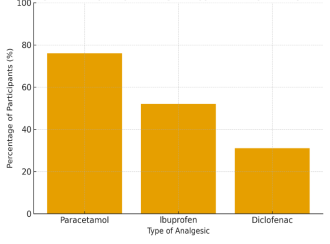
Table 2. Paracetamol was the most frequently used medication (76%), followed by ibuprofen (52%) and diclofenac (31%). Nearly half of the participants (42%) reported using multiple analgesics, and 28% admitted to taking higher-than-recommended doses.
Figure 1. Frequency of Analgesic Types Used by Participants.
(Bar chart showing the prevalence of paracetamol, ibuprofen, and diclofenac use among respondents — Paracetamol highest at 76%)
Table 3. Awareness Scores by Occupation Group.
Participant Group | Mean Awareness Score (out of 10) | SD |
General Public | 5.9 | 2.0 |
University Students | 7.1 | 1.8 |
Pharmacists | 8.7 | 1.1 |
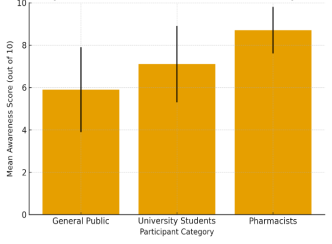
Table 3 demonstrates awareness scores across participant groups. Pharmacists exhibited the highest mean awareness score (8.7 ± 1.1), followed by university students (7.1 ± 1.8) and the public (5.9 ± 2.0). One-way ANOVA revealed a statistically significant difference between groups (F = 19.42, p < 0.001).
Figure 2. Comparison of Mean Awareness Scores across Participant Categories.
(Bar chart: X-axis = participant group; Y-axis = mean awareness score; Pharmacists highest, showing a steep gradient.)
Table 4. Statistical Associations between Key Variables.
Variable Relationship | Test Used | Statistic | p-value | Interpretation |
Occupation × Awareness | Chi-square | 24.68 | <0.001 | Significant |
Education × Awareness | Pearson r | 0.42 | <0.01 | Positive correlation |
Gender × Awareness | Chi-square | 4.21 | 0.11 | Not significant |
Region × Awareness | ANOVA | F = 2.59 | 0.08 | Not significant |
Participants’ general attitudes revealed that 64% considered OTC analgesics “safe if used occasionally,” whereas 23% viewed them as “completely safe.” Only 13% expressed substantial concern about adverse effects. Approximately 71% reported using analgesics without prior medical consultation, and 38% admitted not reading package leaflets.
A Chi-square test indicated a significant association between occupation and awareness level (χ² = 24.68, df = 4, p < 0.001). Educational level was also positively correlated with awareness (r = 0.42, p < 0.01). However, no significant gender difference was observed (p = 0.11).
Regional Variations: Awareness levels were slightly higher in Zawiya (mean = 7.4 ± 1.8) compared with Sabratha (7.1 ± 2.0) and Surman (6.7 ± 2.1). Although the difference was not statistically significant (p = 0.08), the trend suggested that residents in urban areas demonstrated greater understanding of analgesic-related risks, possibly due to higher exposure to healthcare professionals and pharmacies.
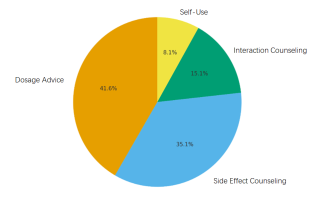
Pharmacists’ Counseling Practices: Among the 40 participating pharmacists, 77% reported routinely advising customers on correct dosage and duration of therapy, and 65% discussed potential side effects. However, only 28% indicated that patients frequently asked questions regarding drug interactions. Despite their training, 15% of pharmacists admitted to using OTC analgesics for personal use without formal dosage tracking.
Figure 3. Distribution of Pharmacists’ Counseling Practices.
(Pie chart visualization: 77% dosage advice, 65% side effects, 28% interaction counseling, 15% self-use.)
3. Summary of Findings
The study revealed a widespread use of OTC analgesics among the Libyan population, driven by accessibility and perceived safety. Awareness of potential risks was moderate, with significant variation across occupational categories. The results underscore the need for stronger public health education and pharmacist-led awareness programs to mitigate self-medication risks and promote rational drug use.
4. Discussion
The findings of this study reveal a high prevalence of over-the-counter (OTC) analgesic use among the Libyan population, particularly in the cities of Zawiya, Surman, and Sabratha. The observed usage rate of 89% aligns with global and regional evidence suggesting a growing trend toward self-medication with non-prescription analgesics in developing countries
| [1] | Almohammed, O. A., Alharbi, A., & Alotaibi, M. (2023). Trends in the use and awareness of over-the-counter pain medications: A regional perspective. International Journal of Clinical Pharmacy, 45(4), 876-885. |
[1]
. Such behavior is often attributed to the easy accessibility of analgesics, perceived safety, and the lack of strict regulatory control in community pharmacies
| [7] | Ofori-Asenso, R., & Agyeman, A. A. (2023). Over-the-counter analgesic use in developing countries: An emerging public health concern. Global Health Research and Policy, 8(2), 45-56. |
[7]
.
One of the most significant findings is that Paracetamol remains the most commonly used OTC analgesic, consistent with studies from Saudi Arabia, Egypt, and Jordan
| [8] | Bokhari, H., Mahmoud, A., & Al-Sayed, R. (2022). Patterns of analgesic use in Middle Eastern countries: A comparative study. Journal of Pharmaceutical Health Services Research, 13(2), 144-152. |
| [9] | Alwhaibi, M., Almutairi, F., & Alotaibi, S. (2023). Use of OTC analgesics and potential risk awareness in the Saudi population. BMC Public Health, 23, 642. |
[8, 9]
. Although Paracetamol is generally considered safe when used at therapeutic doses, unregulated and prolonged consumption poses a considerable risk of hepatotoxicity, particularly in populations with limited health literacy
| [10] | Khalifa, N., Abuzeid, M., & Rahman, F. (2024). Paracetamol toxicity awareness among pharmacy and medical students: A comparative assessment. Clinical Pharmacology: Advances and Applications, 16, 201-211. |
[10]
. The current study’s observation that 28% of users exceeded the recommended dosage threshold underscores a potential public health concern requiring targeted educational interventions.
Awareness levels varied significantly between participant groups. Pharmacists demonstrated the highest awareness, followed by university students and members of the public. This gradient mirrors findings from a recent multi-country study indicating that professional training and exposure to pharmaceutical education strongly influence risk perception regarding analgesic misuse
| [3] | Abuhamdah, S., & Naser, A. (2024). Public awareness and misuse of over-the-counter analgesics in Middle Eastern populations. Saudi Pharmaceutical Journal, 32(2), 101-112. |
[3]
. The statistically significant differences (p < 0.001) between these groups further confirm that knowledge is directly proportional to professional engagement in healthcare-related activities
| [6] | Shampe, A., Alnaser, M., & Yasin, R. (2024). Professional knowledge and awareness of analgesic misuse among pharmacists: A multi-country study. Pharmacy Education, 24(1), 33-41. |
[6]
.
Interestingly, the study identified education level as a positive predictor of awareness (r = 0.42, p < 0.01), reinforcing earlier conclusions that health literacy plays a crucial role in shaping safe medication practices
| [11] | Kim, J., Park, S., & Lee, H. (2022). Health literacy and medication safety behavior: A systematic review. Patient Education and Counseling, 105(3), 623-632. |
| [12] | Le, V. T., Nguyen, H., & Tran, P. (2023). Educational determinants of rational drug use in young adults. BMC Health Services Research, 23, 874. |
[11, 12]
. However, no significant difference was observed between males and females, which contradicts reports from other Mediterranean populations where gender has been associated with differing self-medication patterns
| [13] | Hassan, R., Omar, L., & Salama, M. (2022). Gender differences in self-medication and risk perception among Mediterranean adults. International Journal of Environmental Research and Public Health, 19(8), 4912. |
[13]
. This discrepancy might reflect evolving cultural and educational parity within the Libyan context, particularly among younger generations.
The regional variation in awareness slightly higher in Zawiya compared with Surman and Sabratha though not statistically significant, suggests that urban residency may facilitate access to professional advice and health promotion messages
| [14] | Zidan, K., Al-Kuwari, A., & Samir, H. (2023). Urban exposure and medication literacy: Evidence from Middle Eastern populations. Journal of Public Health Research, 12(4), 912-920. |
[14]
. Such urban-rural disparities have been documented in North African settings, emphasizing the importance of localized awareness campaigns
| [15] | Ben Saad, H., Chentouf, A., & Khaldi, S. (2023). Urban-rural disparities in medication safety awareness across North Africa. African Journal of Primary Health Care & Family Medicine, 15(1), 364-375. |
[15]
.
Despite their professional background, a notable proportion of pharmacists in this study (15%) admitted to self-using OTC analgesics without proper documentation or dose monitoring. This finding is concerning, as pharmacists serve as a key interface between the public and the healthcare system. Similar behaviors have been reported among pharmacists in Jordan and Egypt, attributed to occupational stress and familiarity with drug safety profiles
| [16] | Al-Khalidi, L., Mahmoud, H., & Jaber, D. (2023). Occupational stress and self-medication practices among community pharmacists. Pharmacy Practice, 21(3), 1825-1836. |
[16]
. This underscores the paradox that professional knowledge does not always translate into optimal personal practice a phenomenon requiring further behavioral research.
The Findings also Highlight Deficiencies in Public Counseling Practices
Only two-thirds of pharmacists consistently advised clients about proper dosing and adverse effects, and less than one-third discussed drug interactions. These figures are comparable to reports from neighboring regions, where time constraints, workload, and limited patient inquiry were cited as barriers to effective communication
| [17] | Awaisu, A., Yusuff, K. B., & Ibrahim, M. I. (2024). Community pharmacy practice and patient counseling in the Middle East: Current gaps and opportunities. Research in Social and Administrative Pharmacy, 20(1), 57-69. |
[17]
. Enhancing pharmacists’ counseling capacity through continuing education and policy reinforcement could substantially improve the rational use of OTC medications.
From a public health perspective, the study exposes a growing reliance on self-medication, a trend exacerbated by economic hardship and healthcare accessibility challenges. Similar dynamics have been noted in Tunisia and Morocco, where the pandemic and socio-economic pressures intensified unsupervised medication use
. Such practices not only elevate the risk of adverse drug reactions but also contribute to delayed diagnosis of underlying conditions.
Overall, the study’s results call for integrated community interventions that combine awareness campaigns, pharmacist-led patient education, and regulatory measures to limit unsupervised sales of high-risk analgesics. Universities could play an essential role in embedding rational drug use education into undergraduate curricula, while national health authorities should enhance surveillance on OTC drug distribution patterns.
The implications of these findings extend beyond Libya, providing insight into the behavioral dynamics of self-medication in transitional healthcare systems. By emphasizing the role of education, pharmacist engagement, and community awareness, this research contributes to a growing body of evidence advocating for safer, evidence-based self-medication practices in low- and middle-income countries.
Limitations of the Study
This study, while providing valuable insights into public awareness and attitudes toward the use of over-the-counter (OTC) analgesics in selected Libyan cities, has several limitations. First, the cross-sectional design limits the ability to infer causal relationships between awareness and actual behavior. Second, the use of convenience sampling may have introduced selection bias, as participants who are more health-conscious or educated may have been more likely to respond. Third, self-reported data are subject to recall and social desirability biases, which could affect the accuracy of responses regarding medication use and awareness. Finally, the study was conducted in three cities in western Libya, and thus the findings may not be fully generalizable to other regions with different socio-economic or healthcare characteristics. Future research incorporating larger, more diverse populations and longitudinal designs is recommended to confirm and expand upon these findings.
Future Work
Future research should explore interventions aimed at improving public and professional awareness of safe analgesic use, such as pharmacist-led educational programs, community health campaigns, and integration of rational drug-use modules into university curricula. Additionally, comparative studies across different Libyan regions and neighboring countries could help identify cultural and regulatory factors influencing self-medication behaviors.
5. Conclusion
This study highlights the growing public health challenge posed by the widespread and often unmonitored use of over-the-counter (OTC) analgesics in Libya. While these medications play a crucial role in managing minor pain and discomfort, the findings reveal a concerning pattern of frequent use, limited awareness of potential risks, and inconsistent counseling practices among healthcare professionals. The evidence suggests that the accessibility and perceived safety of analgesics have contributed to self-medication behaviors that may increase the likelihood of adverse outcomes such as drug toxicity and interactions.
The study identified significant variations in awareness and attitudes across different population groups. Pharmacists demonstrated higher levels of knowledge regarding appropriate use and associated risks, yet their counseling practices remain below optimal standards. This discrepancy underscores the need for targeted interventions aimed at bridging the gap between knowledge and practice within the pharmacy profession. Meanwhile, university students and members of the general public displayed limited understanding of safe dosage limits, potential side effects, and drug-drug interactions, highlighting the importance of comprehensive public education programs.
A strong relationship was observed between educational level and awareness, indicating that improving general health literacy can play a pivotal role in promoting safer medication practices. Community engagement, combined with structured health communication strategies, can empower individuals to make informed decisions when using OTC analgesics.
The findings also emphasize the necessity of policy-level actions to regulate the sale and distribution of non-prescription analgesics. Establishing stricter pharmacy-based counseling requirements, improving product labeling, and promoting public awareness campaigns can collectively reduce the risk of misuse. Moreover, integrating medication safety education into university curricula particularly in medical, pharmacy, and public health programs can foster a culture of responsible self-care among future generations.
In conclusion, while OTC analgesics remain indispensable in everyday healthcare, their rational and safe use depends on a coordinated approach involving healthcare professionals, regulatory authorities, and the public. Strengthening awareness, enforcing responsible pharmacy practices, and implementing educational and policy-based interventions are essential to minimize health risks and promote a culture of safe, evidence-based self-medication within the Libyan population.
Abbreviations
OTC | Over-the-counter |
NSAIDs | Anti-inflammatory Drugs |
SPSS | Statistical Package for the Social Sciences |
Acknowledgments
The authors would like to express their sincere gratitude to all participants who voluntarily contributed to this study, including members of the general public, university students, and community pharmacists from Zawiya, Surman, and Sabratha. Their cooperation and openness were essential in providing reliable data and insights.
Author Contributions
Ahmed Ali Ebshena: Conceptualization, Data curation, Formal Analysis, Funding acquisition, Methodology, Project administration, Validation, Writing – original draft, Writing – review & editing
Zubaeda Alsayeh: Data curation, Formal Analysis, Investigation, Project administration, Visualization, Writing – review & editing
Funding
The research did not receive any specific grant from funding agencies in the public, commercial, or not-for-profit sectors. The study was conducted as part of the authors’ independent academic initiative and institutional research activities.
Conflicts of Interest
The authors declare that there are no conflicts of interest regarding the publication of this study. All authors confirm that the research was conducted objectively and that no personal, financial, or professional interests influenced the study outcomes or interpretation of data.
References
| [1] |
Almohammed, O. A., Alharbi, A., & Alotaibi, M. (2023). Trends in the use and awareness of over-the-counter pain medications: A regional perspective. International Journal of Clinical Pharmacy, 45(4), 876-885.
|
| [2] |
AL-Samydai, A., Al-Elaime, L. A., Abbadi, S. H., & Al-Khareisha, L. (2018). Measuring awareness of over-the-counter analgesics use and risks associated with it among Jordanian population in Amman. Asian Journal of Pharmaceutical Research and Development, 6(5), 9-15.
https://doi.org/10.22270/ajprd.v6i5.429
|
| [3] |
Abuhamdah, S., & Naser, A. (2024). Public awareness and misuse of over-the-counter analgesics in Middle Eastern populations. Saudi Pharmaceutical Journal, 32(2), 101-112.
|
| [4] |
Elghazaly A, AlSaeed N, Islam S, Alsharif I, Alharbi L, Al Ashagr T, Alshanifi A, Alrashoudi R, Alsharidi A, Alhokail A, Dirar Q, Shibl A, Al-Kattan K, Abothneen N, Al-Mozaini M.PLoS One. 2023 Jul 27; 18(7): e0288838.
https://doi.org/10.1371/journal.pone.0288838
eCollection 2023.
|
| [5] |
Skarstein, S. (2024). Challenges and Strategies in Nursing Leadership: A Qualitative Study on Leaders in Mental Health Care. Nursing Reports, 14(4), 3943-3954.
|
| [6] |
Shampe, A., Alnaser, M., & Yasin, R. (2024). Professional knowledge and awareness of analgesic misuse among pharmacists: A multi-country study. Pharmacy Education, 24(1), 33-41.
|
| [7] |
Ofori-Asenso, R., & Agyeman, A. A. (2023). Over-the-counter analgesic use in developing countries: An emerging public health concern. Global Health Research and Policy, 8(2), 45-56.
|
| [8] |
Bokhari, H., Mahmoud, A., & Al-Sayed, R. (2022). Patterns of analgesic use in Middle Eastern countries: A comparative study. Journal of Pharmaceutical Health Services Research, 13(2), 144-152.
|
| [9] |
Alwhaibi, M., Almutairi, F., & Alotaibi, S. (2023). Use of OTC analgesics and potential risk awareness in the Saudi population. BMC Public Health, 23, 642.
|
| [10] |
Khalifa, N., Abuzeid, M., & Rahman, F. (2024). Paracetamol toxicity awareness among pharmacy and medical students: A comparative assessment. Clinical Pharmacology: Advances and Applications, 16, 201-211.
|
| [11] |
Kim, J., Park, S., & Lee, H. (2022). Health literacy and medication safety behavior: A systematic review. Patient Education and Counseling, 105(3), 623-632.
|
| [12] |
Le, V. T., Nguyen, H., & Tran, P. (2023). Educational determinants of rational drug use in young adults. BMC Health Services Research, 23, 874.
|
| [13] |
Hassan, R., Omar, L., & Salama, M. (2022). Gender differences in self-medication and risk perception among Mediterranean adults. International Journal of Environmental Research and Public Health, 19(8), 4912.
|
| [14] |
Zidan, K., Al-Kuwari, A., & Samir, H. (2023). Urban exposure and medication literacy: Evidence from Middle Eastern populations. Journal of Public Health Research, 12(4), 912-920.
|
| [15] |
Ben Saad, H., Chentouf, A., & Khaldi, S. (2023). Urban-rural disparities in medication safety awareness across North Africa. African Journal of Primary Health Care & Family Medicine, 15(1), 364-375.
|
| [16] |
Al-Khalidi, L., Mahmoud, H., & Jaber, D. (2023). Occupational stress and self-medication practices among community pharmacists. Pharmacy Practice, 21(3), 1825-1836.
|
| [17] |
Awaisu, A., Yusuff, K. B., & Ibrahim, M. I. (2024). Community pharmacy practice and patient counseling in the Middle East: Current gaps and opportunities. Research in Social and Administrative Pharmacy, 20(1), 57-69.
|
| [18] |
Chentouf, A., El Khalfi, A., & Amine, M. (2023). Self-medication during the post-pandemic period: A North African perspective. PLOS ONE, 18(5), e0287652.
https://doi.org/10.1371/journal.pone.0287652
|
Cite This Article
-
APA Style
Ebshena, A. A., Alsayeh, Z. (2026). Assessment of Public Awareness and Attitudes Toward the Use of Over-the-Counter Analgesics and Their Potential Risks. International Journal of Safety Research, 1(1), 16-23. https://doi.org/10.11648/j.ijsr.20260101.13
 Copy
|
Copy
|
 Download
ACS Style
Ebshena, A. A.; Alsayeh, Z. Assessment of Public Awareness and Attitudes Toward the Use of Over-the-Counter Analgesics and Their Potential Risks. Int. J. Saf. Res. 2026, 1(1), 16-23. doi: 10.11648/j.ijsr.20260101.13
Copy
|
Download
AMA Style
Ebshena AA, Alsayeh Z. Assessment of Public Awareness and Attitudes Toward the Use of Over-the-Counter Analgesics and Their Potential Risks. Int J Saf Res. 2026;1(1):16-23. doi: 10.11648/j.ijsr.20260101.13
Copy
|
Download
-
@article{10.11648/j.ijsr.20260101.13,
  author = {Ahmed Ali Ebshena and Zubaeda Alsayeh},
  title = {Assessment of Public Awareness and Attitudes Toward the Use of Over-the-Counter Analgesics and Their Potential Risks},
  journal = {International Journal of Safety Research},
  volume = {1},
  number = {1},
  pages = {16-23},
  doi = {10.11648/j.ijsr.20260101.13},
  url = {https://doi.org/10.11648/j.ijsr.20260101.13},
  eprint = {https://article.sciencepublishinggroup.com/pdf/10.11648.j.ijsr.20260101.13},
  abstract = {Background: Over-the-counter (OTC) analgesics are among the most commonly used medications worldwide due to their accessibility, affordability, and perceived safety. However, inappropriate and unsupervised use can lead to significant health complications such as hepatotoxicity, nephrotoxicity, gastrointestinal bleeding, and drug interactions. In developing countries such as Libya, where pharmacy regulations and public health education remain under development, the tendency toward self-medication with OTC analgesics is notably high. Despite the potential public health implications, limited empirical evidence exists regarding public awareness, attitudes, and patterns of OTC analgesic use in Libyan communities. Objective: This study aimed to evaluate public awareness, attitudes, and practices related to the use of OTC analgesics and to identify potential knowledge gaps and behavioral risk factors associated with their misuse. The investigation focused on three Libyan cities Zawiya, Surman, and Sabratha and included participants from the general population, university students, and practicing pharmacists to ensure a comprehensive understanding across different educational and professional backgrounds. Methods: A descriptive cross-sectional design was adopted between March and July 2025, enrolling a total of 200 participants selected through convenience sampling. Data were gathered via a validated and pre-tested self-administered questionnaire comprising five sections: demographic characteristics, types and frequency of OTC analgesic use, sources of information, awareness of potential adverse effects, and attitudes toward self-medication. Results: Out of the 200 participants, 54% were female and 46% male, with a mean age of 27.3 ± 8.6 years. Approximately 68% reported using OTC analgesics without medical consultation, most commonly paracetamol (acetaminophen) and ibuprofen. Pharmacists exhibited the highest awareness of potential risks (mean score = 82.4%), followed by university students (63.1%) and the general public (49.6%). Statistical analysis indicated significant differences in awareness across groups (p Conclusion: The findings underscore a substantial gap in public knowledge regarding the safe use of OTC analgesics in the studied Libyan regions. Misconceptions about the safety of common painkillers, combined with insufficient pharmacist counseling, contribute to high rates of unsupervised medication use. Strengthening public health education, integrating rational drug use modules into university curricula, and enhancing community pharmacy engagement are strongly recommended.},
 year = {2026}
}
Copy
|
Download
-
TY  - JOUR
T1  - Assessment of Public Awareness and Attitudes Toward the Use of Over-the-Counter Analgesics and Their Potential Risks
AU  - Ahmed Ali Ebshena
AU  - Zubaeda Alsayeh
Y1  - 2026/01/08
PY  - 2026
N1  - https://doi.org/10.11648/j.ijsr.20260101.13
DO  - 10.11648/j.ijsr.20260101.13
T2  - International Journal of Safety Research
JF  - International Journal of Safety Research
JO  - International Journal of Safety Research
SP  - 16
EP  - 23
PB  - Science Publishing Group
UR  - https://doi.org/10.11648/j.ijsr.20260101.13
AB  - Background: Over-the-counter (OTC) analgesics are among the most commonly used medications worldwide due to their accessibility, affordability, and perceived safety. However, inappropriate and unsupervised use can lead to significant health complications such as hepatotoxicity, nephrotoxicity, gastrointestinal bleeding, and drug interactions. In developing countries such as Libya, where pharmacy regulations and public health education remain under development, the tendency toward self-medication with OTC analgesics is notably high. Despite the potential public health implications, limited empirical evidence exists regarding public awareness, attitudes, and patterns of OTC analgesic use in Libyan communities. Objective: This study aimed to evaluate public awareness, attitudes, and practices related to the use of OTC analgesics and to identify potential knowledge gaps and behavioral risk factors associated with their misuse. The investigation focused on three Libyan cities Zawiya, Surman, and Sabratha and included participants from the general population, university students, and practicing pharmacists to ensure a comprehensive understanding across different educational and professional backgrounds. Methods: A descriptive cross-sectional design was adopted between March and July 2025, enrolling a total of 200 participants selected through convenience sampling. Data were gathered via a validated and pre-tested self-administered questionnaire comprising five sections: demographic characteristics, types and frequency of OTC analgesic use, sources of information, awareness of potential adverse effects, and attitudes toward self-medication. Results: Out of the 200 participants, 54% were female and 46% male, with a mean age of 27.3 ± 8.6 years. Approximately 68% reported using OTC analgesics without medical consultation, most commonly paracetamol (acetaminophen) and ibuprofen. Pharmacists exhibited the highest awareness of potential risks (mean score = 82.4%), followed by university students (63.1%) and the general public (49.6%). Statistical analysis indicated significant differences in awareness across groups (p Conclusion: The findings underscore a substantial gap in public knowledge regarding the safe use of OTC analgesics in the studied Libyan regions. Misconceptions about the safety of common painkillers, combined with insufficient pharmacist counseling, contribute to high rates of unsupervised medication use. Strengthening public health education, integrating rational drug use modules into university curricula, and enhancing community pharmacy engagement are strongly recommended.
VL  - 1
IS  - 1
ER  -
Copy
|
Download





 Share This Article
 Twitter
 Linked In
 Facebook