Abstract
This study explored residents’ awareness, behaviors, and key factors affecting sustainable waste management in Mogadishu, Somalia. Guided by the Theory of Planned Behavior, it examined how awareness of waste management principles influences household waste handling practices and identified factors that facilitate or hinder this process. A descriptive quantitative research design was used, employing structured questionnaires administered to residents. Data were analyzed with descriptive statistics and non-parametric tests in SPSS version 27. The results showed moderate awareness of health and environmental risks associated with improper waste disposal, along with a limited understanding of environmentally safe disposal methods and waste categorization. Significant differences were found across education levels in awareness of safe disposal methods (χ² (4) = 17.295, p = 0.002) and knowledge of recyclable waste (χ² (4) = 16.877, p = 0.002). Additionally, familiarity with local waste management rules (ρ = 0.394, p < 0.01) and regular waste separation routines (ρ = 0.469, p < 0.01) showed strong positive correlations with actual waste management behaviors. Although many residents reported practicing proper waste disposal, consistent implementation remained difficult, revealing a persistent gap between knowledge and action. Access to reliable waste collection services, community support, and educational programs emerged as crucial enablers of sustainable waste management. Overall, the study emphasizes the need for combined educational, institutional, and infrastructural strategies to enhance sustainable waste management and advance Sustainable Development Goals 3, 11, and 12.
Keywords
Awareness-to-Action, Somalia, Waste, Management, Sustainable Development Goals
1. Introduction
Rapid urbanization and population growth have made municipal solid waste management (MSWM) one of the most pressing environmental and public health challenges facing cities worldwide. With urban populations increasing, municipal solid waste is projected to rise from 2.1 billion tonnes in 2023 to 3.8 billion tonnes by 2050
| [1] | Kaza S, Yao LC, Bhada-Tata P, Van Woerden F. What a Waste 2.0: A Global Snapshot of Solid Waste Management to 2050. Washington, DC: World Bank; 2018.
https://doi.org/10.1596/978-1-4648-1329-0 |
| [2] | UNEP. Global Waste Management Outlook 2024. UNEP/International Solid Waste Association. 2024. |
| [3] | Zhang Z, Chen Z, Zhang J, Liu Y, Chen L, Yang M, et al. Municipal solid waste management challenges in developing regions: A comprehensive review and future perspectives for Asia and Africa. Sci Total Environ. 2024
https://doi.org/10.1016/j.scitotenv.2024.172794 |
[1-3]
.
In low- and middle-income countries, the challenge is particularly acute due to limited infrastructure, weak regulatory enforcement, and insufficient public engagement in sustainable waste practices. Studies across African urban local authorities show that inadequate financing, poor institutional coordination, and weak enforcement mechanisms significantly constrain effective waste management
| [4] | Adebuason R. Assessing Challenges to Solid Waste Management in Urban Local Authorities in Uganda: A Case Study of Arua Municipality. Am J Public Policy Adm. 2024 Jun 10; 9(3): 37-70. https://doi.org/10.47672/ajppa.2095 |
| [5] | Ahmed IJ, Ahmed MA, Ahmed AJ, Jim’alle DA, Hassan ASM, Afyare AAA. Examining Challenges of Sustainable Waste Management and Community Engagement in Hamar Jajab District, Mogadishu, Somalia. J Geosci Environ Prot. 2025; 13(09): 250-66. https://doi.org/10.4236/gep.2025.139012 |
| [6] | Atem PG. Effective Waste Management in Urban Centres in South Sudan. J Environ. 2025 Feb 2; 5(1): 1-16.
https://doi.org/10.47941/je.2488 |
[4-6]
.
Poorly managed waste contributes directly to environmental degradation, disease outbreaks, flooding, and greenhouse gas emissions, undermining both human well-being and urban resilience and posing direct risks to community safety and public health
| [2] | UNEP. Global Waste Management Outlook 2024. UNEP/International Solid Waste Association. 2024. |
| [7] | Shibrain NM, Mofadel HIA, Kheiry MA, Salih NKM, Elhabib MA. Impact of Solid Waste Management on Environment and Community Safety in Khartoum locality, Sudan. Direct Res J Public Health Environ Technol. 2025 Jan 7; 10(1): 7-13.
https://doi.org/10.26765/DRJPHET604482902 |
[2, 7]
.
Environmental pollution caused by poor solid waste management is a global problem, especially in low-income countries
| [8] | Ferronato N, Torretta V. Waste Mismanagement in Developing Countries: A Review of Global Issues. Int J Environ Res Public Health. 2019 Mar 24; 16(6): 1060.
https://doi.org/10.3390/ijerph16061060 |
[8]
.
Mismanagement of solid waste poses a global threat to environmental quality, social inclusion, and economic sustainability
,
with recent global assessments emphasizing its growing contribution to climate change and greenhouse gas emissions
| [2] | UNEP. Global Waste Management Outlook 2024. UNEP/International Solid Waste Association. 2024. |
| [10] | Ahmad Kamal N, Stephen AS, Shin S, Ramli RR. The Establishment of Greenhouse Gas (GHGs) Emission Inventory for Strategizing the Solid Waste Management in Selangor, Malaysia. Pol J Environ Stud. 2025 Jan 28; 3 4(3): 2253-62.
https://doi.org/10.15244/pjoes/166169 |
[2, 10]
.
Poor waste handling has led to environmental damage and health risks. By 2020, the world produced 2.24 billion tons of solid waste, averaging 0.79 kg per person per day
| [3] | Zhang Z, Chen Z, Zhang J, Liu Y, Chen L, Yang M, et al. Municipal solid waste management challenges in developing regions: A comprehensive review and future perspectives for Asia and Africa. Sci Total Environ. 2024
https://doi.org/10.1016/j.scitotenv.2024.172794 |
| [11] | Karaca AE, Dincer I, Nitefor M. A unique biomass-based integrated energy system for cleaner production of multiple energy outputs for sustainable communities. Sustain Cities Soc. 2023 Feb; 89: 104330. https://doi.org/10.1016/j.scs.2022.104330 |
[3, 11]
. As cities continue to grow, the amount of municipal solid waste is expected to increase dramatically, placing greater pressure on waste management systems and the environment
| [2] | UNEP. Global Waste Management Outlook 2024. UNEP/International Solid Waste Association. 2024. |
[2]
.
There is a particular need to focus on developing and transition countries, where the unsustainable management of solid waste remains prevalent
| [12] | Hoornweg D, Bhada-Tata P. What a Waste: A Global Review of Solid Waste Management. World Bank, Washington, DC; 2012. https://doi.org/10.1596/17388 |
[12]
. These global numbers underscore the rapid growth of waste generation, which is also evident in Somalia, where environmental and public health issues associated with inadequate waste management have worsened. Empirical studies from Mogadishu indicate widespread reliance on informal disposal practices and limited access to organized collection services
, reflecting challenges observed across Somali urban areas
. Previous studies show that while community members have moderate awareness of waste-related environmental hazards, their actual participation in waste separation, recycling, and cleanup efforts remains low. This reveals a significant knowledge-to-action gap, a disconnect between what people know about sustainable waste management and the actions they take daily. Understanding this gap requires moving beyond awareness as a standalone solution. Behavioral theories such as the Theory of Planned Behavior (TPB) emphasize that human action is shaped not only by knowledge and attitudes, but also by subjective norms and perceived behavioral control
. In urban waste management contexts, this means that even well-informed residents may struggle to practice sustainable behaviors if they lack access to waste collection services, disposal facilities, or community and institutional support. Recent review evidence confirms that awareness-driven interventions fail when not supported by reliable collection systems, inclusive governance, and enabling infrastructure
| [3] | Zhang Z, Chen Z, Zhang J, Liu Y, Chen L, Yang M, et al. Municipal solid waste management challenges in developing regions: A comprehensive review and future perspectives for Asia and Africa. Sci Total Environ. 2024
https://doi.org/10.1016/j.scitotenv.2024.172794 |
| [8] | Ferronato N, Torretta V. Waste Mismanagement in Developing Countries: A Review of Global Issues. Int J Environ Res Public Health. 2019 Mar 24; 16(6): 1060.
https://doi.org/10.3390/ijerph16061060 |
| [11] | Karaca AE, Dincer I, Nitefor M. A unique biomass-based integrated energy system for cleaner production of multiple energy outputs for sustainable communities. Sustain Cities Soc. 2023 Feb; 89: 104330. https://doi.org/10.1016/j.scs.2022.104330 |
| [16] | Miezah K, Obiri-Danso K, Kádár Z, Fei-Baffoe B, Mensah MY. Municipal solid waste characterization and quantification as a measure towards effective waste management in Ghana. Waste Manag. 2015 Dec; 46: 15-27.
https://doi.org/10.1016/j.wasman.2015.09.009 |
[3, 8, 11, 16]
. In many developing cities, the informal sector often compensates for municipal service gaps, shaping household waste behavior and disposal choices
.
By integrating behavioral theory with empirical evidence from the Hamar Jajab District, this research aims to provide context-specific insights that can inform urban policy, community-based interventions, and environmental education programs. In doing so, the study contributes to the growing body of evidence supporting integrated waste management approaches aligned with Sustainable Development Goal (SDG) 11 (Sustainable Cities and Communities) and SDG 12 (Responsible Consumption and Production), while addressing the practical realities of cities in fragile contexts.
Accordingly, the study is guided by the following objectives. The main objective is to examine how waste management awareness is translated into actual practices and to identify strategies for strengthening sustainable waste management actions in Hamar Jajab District, Mogadishu, Somalia. Specifically, the study seeks to assess the level of residents’ awareness and understanding of sustainable waste management principles in Hamar Jajab District, analyze the relationship between waste management awareness and residents’ actual waste handling and disposal behaviors, and identify the key enabling and limiting factors that influence the transition from awareness to sustained waste management action.
2. Materials and Methods
2.1. Research Design and Study Area
This study adopted a descriptive quantitative research design to examine how awareness of sustainable waste management is translated into actual practices in Hamar Jajab District, Mogadishu, Somalia. The descriptive approach enabled an objective assessment of existing levels of awareness, attitudes, and waste management behaviors among residents, while the quantitative design allowed for systematic measurement of relationships between key variables. This design was considered appropriate for identifying patterns, associations, and variations across socio-demographic groups and for empirically examining the knowledge-action gap in urban waste management. The study was conducted from July to November 2025. The study was grounded in the Theory of Planned Behavior (TPB) developed by
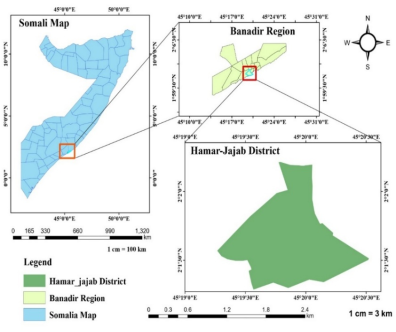
, which explains human behavior as a function of behavioral intention influenced by three key determinants: attitude toward the behavior, subjective norms, and perceived behavioral control. In this study, awareness-related items represented the attitudinal component of TPB, community support items reflected subjective norms, and enabling factors, such as the availability of waste collection services and disposal facilities, were treated as indicators of perceived behavioral control. Behavioral outcomes were measured through self-reported waste handling practices, thereby ensuring theoretical consistency and conceptual alignment between the TPB constructs and the empirical variables used in the analysis. The study was conducted in Hamar Jajab District, one of the densely populated urban districts of Mogadishu, Somalia. The district is characterized by mixed residential and commercial activities, limited formal waste collection services, and a high reliance on informal waste disposal practices. Its central location and socio-economic diversity make it a representative setting for examining urban waste management challenges, community behaviors, and awareness-to-action. The geographical context of the study area is illustrated in
Figure 1.
Figure 1. Map of the study area, Hamar Jajab District. Source: Primary data.
2.2. Study Population and Sample Size
The target population for this study consisted of 300 residents of Hamar Jajab District. The target population included individuals of varying ages, genders, educational backgrounds, and socio-economic statuses, reflecting the diverse composition of the district. The sample size for the study was determined using Slovin’s formula, which is commonly applied in social science research when population variability is unknown. Slovin’s formula was considered appropriate due to the absence of reliable population variance estimates and the exploratory nature of the study. The formula is expressed as: Where: = sample size, = total population, and = margin of error (level of precision). In this study, the target population () of 300 individuals was considered. A margin of error (e) of 0.05 (5%) was selected to balance statistical rigor with the practical constraints of time, accessibility, and resources. Substituting the values into Slovin’s formula: Substituting the values into Slovin’s formula:
Due to practical constraints on accessibility and time within the study area, a final sample of 172 respondents was considered statistically adequate and operationally feasible. This sample size was sufficient for conducting non-parametric statistical analyses. A convenience sampling technique was employed due to the absence of a comprehensive household sampling frame. Respondents were selected based on their availability and willingness to participate. Efforts were made to ensure representation across different age groups, genders, education levels, and socio-economic categories to capture a balanced community perspective.
2.3. Data Collection Methods and Data Analysis
Data were collected using structured questionnaires. The questionnaire was developed based on constructs derived from the Theory of Planned Behavior and supported by relevant municipal waste management literature. Items were structured to capture awareness, perceived enabling conditions, and self-reported behavioral practices. Before full deployment, the instrument was reviewed for clarity and contextual relevance, and minor wording adjustments were made to improve comprehensibility. Data collection took place in households, public spaces, community centers, and waste management sites within the district. Participants were informed about the study's purpose, data collection procedures, and confidentiality measures before participating. Verbal informed consent was obtained from all respondents. The study adhered to standard ethical research principles, ensuring voluntary participation, anonymity, and confidentiality of all responses.
Given the ordinal nature of Likert-scale responses and the exploratory design of the study, non-parametric tests were selected as they do not require assumptions of normal distribution. Data analysis was conducted using SPSS version 27. Descriptive statistics, including frequencies, percentages, means, and standard deviations, were used to summarize respondents’ socio-demographic characteristics and overall response patterns. The internal consistency of the Likert-scale items was assessed using Cronbach’s Alpha. Due to the ordinal nature of Likert-scale responses and the exploratory design of the study, non-parametric statistical tests were applied, as they do not require assumptions of normal distribution. The Kruskal-Wallis H test was used to examine differences in awareness and waste management practices across educational levels. Spearman’s rank correlation coefficient was employed to assess the strength and direction of relationships between socio-demographic variables (age, gender, income, and education) and waste management behaviors. All statistical tests were conducted at a 5% level of significance (p < 0.05).
Although convenience sampling limits statistical generalizability, it was considered appropriate given the absence of a comprehensive sampling frame and operational constraints within the study area. The study, therefore, prioritizes analytical insight into awareness-behavior relationships rather than population-level generalization.
3. Results
3.1. Demographic Data
A total of N=172 respondents participated in the study (See
Table 1), representing diverse demographic backgrounds within Hamar Jajab District. The age distribution reveals a focus on the core economically active population, as nearly 69% of the sample falls within the 25-49 age brackets, with the 25-34 category being the dominant group (41.3%). This youthful structure indicates that the findings are heavily representative of the opinions and behaviors of young and middle-aged adults, who are typically the most active in both household waste management and community initiatives. In terms of gender, the composition is relatively balanced but shows a slight majority of female participants (54.1%), which is consistent with the direct involvement of women in daily household waste handling processes. Furthermore, the majority of respondents are married (58.1%), underscoring that the survey largely captures the perspectives and constraints experienced by multi-person household units rather than individuals. Educationally, the largest groups possess Secondary (34.9%) and Primary (33.1%) education levels, indicating that over two-thirds of the community have basic to moderate formal education. Overall, the demographic profile describes a sample that is young-to-middle-aged, domestically responsible, and possessing mid-level education, suggesting that the findings on the awareness-to-action transition will be heavily influenced by infrastructural and social factors that support family-centric, easily digestible intervention strategies.
Table 1. Demographic data.
Variable | Category | Frequency | Percent |
Age (years) | 19-24 | 29 | 16.9 |
25-34 | 71 | 41.3 |
35-49 | 48 | 27.9 |
50+ | 24 | 14.0 |
Gender | Female | 93 | 54.1 |
Male | 79 | 45.9 |
Marital Status | Divorced | 22 | 12.8 |
Married | 100 | 58.1 |
Single | 50 | 29.1 |
Educational Level | Informal Education | 30 | 17.4 |
Primary | 57 | 33.1 |
Secondary | 60 | 34.9 |
Bachelor Degree | 22 | 12.8 |
Post-graduate | 3 | 1.7 |
3.2. Awareness and Understanding of Sustainable Waste Management
The analysis of residents’ awareness and understanding of sustainable waste management principles in Hamar Jajab District indicates a mixed but moderate level of knowledge (See
Table 2). Most respondents (41.9%) strongly agreed, and 22.7% agreed that they understand the health risks associated with improper waste disposal, yielding a mean of 2.92 (SD = 1.338), suggesting moderate awareness of the health implications of poor waste handling. However, awareness of environmentally safe household waste disposal methods appears lower, with 40.7% disagreeing and only 13.4% strongly agreeing, reflected in a mean of 2.41 (SD = 1.139). Similarly, understanding the difference between recyclable and non-recyclable waste shows that 39.5% of respondents disagreed, while only 13.4% strongly agreed, indicating limited knowledge (mean = 2.69, SD = 1.322). Awareness of the environmental impacts of poor waste management is also moderate, with 35.5% disagreement versus 22.1% strong agreement (mean = 2.41, SD = 1.288). Notably, respondents demonstrated higher familiarity with local rules or guidelines on waste management, with 47.7% agreeing and 36.0% strongly agreeing (mean = 2.42, SD = 1.427). Overall, these findings suggest that while residents possess basic awareness of the risks and regulations, there are substantial gaps in understanding safe disposal methods and recyclable waste management.
Table 2. Assessing the level of residents’ awareness and understanding.
Statement | Strongly Disagree | Disagree | Neutral | Agree | Strongly Agree | Mean/ St. Deviation |
I understand the health risks associated with improper waste disposal | 12 (7.0%) | 31 (18.0%) | 18 (10.5%) | 39 (22.7%) | 72 (41.9%) | 2.92 (1.338) |
I am aware of environmentally safe methods for household waste disposal | 10 (5.8%) | 70 (40.7%) | 32 (18.6%) | 37 (21.5%) | 23 (13.4%) | 2.41 (1.139) |
I know the difference between recyclable and non-recyclable waste | 26 (15.1%) | 68 (39.5%) | 25 (14.5%) | 30 (17.4%) | 23 (13.4%) | 2.69 (1.322) |
I am aware of the environmental impacts of poor waste management in my community | 11 (6.4%) | 61 (35.5%) | 12 (7.0%) | 50 (29.1%) | 38 (22.1%) | 2.41 (1.288) |
I am familiar with local rules or guidelines related to waste management | 3 (1.7%) | 3 (1.7%) | 22 (12.8%) | 82 (47.7%) | 62 (36.0%) | 2.42 (1.427) |
Note: Mean values reflect the full Likert scale (5 = Strongly Disagree to 1 = Strongly Agree). Lower mean scores do not imply the absence of agreement but indicate the influence of neutral and disagreeing responses within the sample. |
3.3. Waste Management Awareness and Actual Waste Handling and Disposal Behaviors
According to
Table 3, the relationship between awareness and actual waste disposal behavior shows that knowledge alone does not always translate into consistent practice. A significant proportion of respondents reported applying their knowledge of waste management in daily practices, with 44.8% agreeing and 40.7% strongly agreeing (mean = 2.56, SD = 1.476). Regular separation of household waste was slightly higher, with 39.0% strongly agreeing and 31.4% agreeing (mean = 2.72, SD = 1.366). Despite awareness, 34.3% of respondents remained neutral on whether their knowledge influences their behavior, reflecting a potential knowledge-action gap (mean = 2.94, SD = 1.180). Encouragingly, 36.6% agreed, and 34.3% strongly agreed that they avoid dumping waste in unauthorized areas (mean = 2.77, SD = 1.484). Nonetheless, over half of the participants (51.7%) strongly agreed that, despite knowing proper practices, they find it difficult to apply them consistently (mean = 2.73, SD = 1.427). These results suggest that while awareness of waste management principles exists, behavioral adoption is influenced by other factors such as convenience, habits, or contextual limitations.
Table 3. Analyzing the relationship between waste management and actual disposal behaviors.
Statement | Strongly Disagree | Disagree | Neutral | Agree | Strongly Agree | Mean/ St. Deviation |
I apply my knowledge of waste management in my daily waste disposal practices | 6 (3.5%) | 4 (2.3%) | 15 (8.7%) | 77 (44.8%) | 70 (40.7%) | 2.56 (1.476) |
I regularly separate household waste according to recommended practices | 7 (4.1%) | 22 (12.8%) | 22 (12.8%) | 54 (31.4%) | 67 (39.0%) | 2.72 (1.366) |
My awareness of waste management issues influences my waste disposal behavior | 18 (10.5%) | 35 (20.3%) | 59 (34.3%) | 24 (14.0%) | 36 (20.9%) | 2.94 (1.180) |
I avoid dumping waste in unauthorized or open areas | 17 (9.9%) | 7 (4.1%) | 26 (15.1%) | 63 (36.6%) | 59 (34.3%) | 2.77 (1.484) |
Despite knowing proper waste management practices, I find it difficult to apply them consistently | 1 (0.6%) | 8 (4.7%) | 9 (5.2%) | 65 (37.8%) | 89 (51.7%) | 2.73 (1.427) |
Note: Mean values reflect the full Likert scale (5 = Strongly Disagree to 1 = Strongly Agree). Lower mean scores do not imply the absence of agreement but indicate the influence of neutral and disagreeing responses within the sample. |
3.4. Identifying Key Enabling and Limiting Factors
Table 4. Identifying key enabling and limiting factors that influence the transition.
Statement | Strongly Disagree | Disagree | Neutral | Agree | Strongly Agree | Mean/ St. Deviation |
The availability of regular waste collection services encourages me to manage waste properly | 3 (1.7%) | 4 (2.3%) | 19 (11.0%) | 63 (36.6%) | 83 (48.3%) | 2.76 (1.413) |
Community support motivates me to practice proper waste management | 2 (1.2%) | 0 (0.0%) | 20 (11.6%) | 67 (39.0%) | 83 (48.3%) | 2.73 (1.423) |
Lack of waste disposal facilities limits my ability to apply proper waste management practices | 1 (0.6%) | 9 (5.2%) | 15 (8.7%) | 63 (36.6%) | 84 (48.8%) | 2.72 (1.400) |
Local authorities play an important role in enabling sustainable waste management actions | 7 (4.1%) | 16 (9.3%) | 29 (16.9%) | 46 (26.7%) | 74 (43.0%) | 2.88 (1.324) |
Educational programs help transform waste management awareness into actual practice | 19 (11.0%) | 13 (7.6%) | 20 (11.6%) | 26 (15.1%) | 94 (54.7%) | 3.39 (1.235) |
Notes: Percentages in parentheses represent valid percentages. Mean values reflect the full Likert scale (5 = Strongly Disagree to 1 = Strongly Agree). Lower mean scores do not imply the absence of agreement but indicate the influence of neutral and disagreeing responses within the sample. |
Several enabling and limiting factors play a critical role in the translation of awareness into sustained waste management action. As shown in
Table 4, the availability of regular waste collection services strongly encouraged proper waste management, with 48.3% of respondents strongly agreeing and 36.6% agreeing (mean = 2.76, SD = 1.413). Similarly, community support was identified as a motivating factor, with 48.3% strongly agreeing and 39.0% agreeing (mean = 2.73, SD = 1.423). Conversely, the lack of waste disposal facilities was seen as a significant limiting factor, with 48.8% strongly agreeing and 36.6% agreeing that it hinders their ability to manage waste effectively (mean = 2.72, SD = 1.400). The role of local authorities was acknowledged, with 43.0% strongly agreeing and 26.7% agreeing that authorities facilitate sustainable practices (mean = 2.88, SD = 1.324). Educational programs emerged as the most influential factor in bridging awareness and action, with 54.7% strongly agreeing and 15.1% agreeing that these programs transform knowledge into practice (mean = 3.39, SD = 1.235). Collectively, these findings highlight that external support mechanisms, structured programs, and adequate infrastructure are pivotal in enabling residents to translate awareness into consistent waste management behaviors.
3.5. Reliability Test
Internal consistency was assessed using Cronbach’s alpha. This test measures the internal consistency of a set of scale items; this research employed Cronbach’s coefficient alpha to indicate the reliability of the data. The Cronbach’s coefficient alpha can take a value between 0 and 1, with values closer to 1 indicating greater reliability of the scale for our variable. As shown in
Table 5, the Cronbach’s alpha was 0.800.
Table 5. Reliability of the data.
Reliability Statistics |
Cronbach's Alpha | N of Items |
0.800 | 15 |
3.6. Inferential Statistics
The Kruskal-Wallis H test was conducted to examine whether respondents’ educational levels influenced their awareness and understanding of sustainable waste management. As shown in the
Table 6, significant differences were observed for Q2, awareness of environmentally safe methods for household waste disposal (χ²(4) = 17.295, p = 0.002), and Q3, knowledge of the difference between recyclable and non-recyclable waste (χ²(4) = 16.877, p = 0.002), indicating that education level affects respondents’ technical knowledge in these areas. Conversely, no significant differences were found for Q1, understanding of health risks associated with improper waste disposal (χ²(4) = 1.718, p = 0.787), Q4, awareness of environmental impacts of poor waste management (χ²(4) = 6.515, p = 0.164), and Q5, familiarity with local rules or guidelines related to waste management (χ²(4) = 0.466, p = 0.977), suggesting that awareness of general health risks, environmental impacts, and local regulations is relatively consistent across different educational levels.
Table 6. Inferential Statistics.
Survey Statement | Kruskal-Wallis H | df | p-value | Significance |
Q1. Health risks | 1.718 | 4 | 0.787 | No Sig. |
Q2. Safe methods | 17.295 | 4 | 0.002 | Significant |
Q3. Recyclable/non-recyclable | 16.877 | 4 | 0.002 | Significant |
Q4. Environmental impacts | 6.515 | 4 | 0.164 | No Sig. |
Q5. Local rules | 0.466 | 4 | 0.977 | No Sig. |
3.7. Demographic Factors and Community Waste Engagement Perceptions
The Spearman’s rho correlation analysis was conducted to examine the relationships between respondents’ demographic characteristics (age, gender, marital status, and educational level) and their awareness, attitudes, and practices regarding sustainable waste management. The results indicate several significant associations (See
Table 7). Age was positively correlated with regularly separating household waste (ρ = 0.193, p = 0.011) and awareness of regular waste collection services (ρ = 0.086, p = 0.264, not significant), suggesting that older respondents are slightly more likely to engage in proper waste separation practices. Gender showed a significant negative correlation with community support as a motivating factor (ρ = -0.312, p < 0.01), indicating that males and females perceive community encouragement differently. Marital status was significantly correlated with educational level (ρ = 0.150, p = 0.049) and several practices, such as avoiding dumping waste in unauthorized areas (ρ = 0.376, p < 0.01), highlighting that marital and family responsibilities may influence daily waste behaviors. Educational level was significantly associated with technical knowledge items, including knowledge of recyclable versus non-recyclable waste (ρ = 0.240, p = 0.002) and awareness programs transforming practice (ρ = 0.178, p = 0.019), suggesting that higher education enhances understanding and application of proper waste management practices. Furthermore, strong positive correlations were observed among key behavioral items: applying waste management knowledge in daily practices correlated with regularly separating household waste (ρ = 0.244, p < 0.01) and avoiding dumping waste in unauthorized areas (ρ = 0.251, p < 0.01), while community support was significantly associated with several enabling factors, including availability of collection services (ρ = 0.235, p < 0.01) and lack of facilities (ρ = 0.491, p < 0.01). Overall, these results indicate that demographic factors, awareness, and community and institutional support are interrelated and collectively influence sustainable waste management practices among respondents in Hamar Jajab District.
Table 7. Associations between Demographic Factors and Community.
Variable Pair | Spearman’s Rho (ρ) | Significance (p) | Interpretation |
Age ↔ Regularly separating household waste | .193* | .011 | Weak positive correlation. Older respondents are slightly more likely to separate waste properly. |
Age ↔ Community support as motivation | .043 | .571 | No meaningful correlation. Age does not significantly affect perception of community support. |
Gender ↔ Community support as motivation | -.312** | .000 | Strong negative correlation. Females and males perceive community encouragement differently. |
Gender ↔ Role of local authorities in SWM | -.025 | .749 | No meaningful correlation. Gender does not significantly affect perception of authority involvement. |
Marital Status ↔ Avoid dumping waste in unauthorized areas | -.207** | .007 | Moderate negative correlation. Married respondents tend to avoid improper disposal more than singles. |
Marital Status ↔ Educational programs transform awareness into practice | -.140 | .066 | Weak negative correlation. Not statistically significant; marital status has little effect. |
Education Level ↔ Knowledge of recyclable vs non-recyclable waste | .240** | .002 | Moderate positive correlation. Higher education increases understanding of proper waste categorization. |
Education Level ↔ Awareness programs transforming practice | .178* | .019 | Weak positive correlation. More educated respondents are slightly more likely to apply waste management knowledge. |
Understanding health risks ↔ Avoiding unauthorized dumping | .220** | .010 | Moderate positive correlation. Greater awareness of health risks encourages proper disposal. |
Awareness of safe methods ↔ Daily application of waste management knowledge | .344** | .000 | Strong positive correlation. Awareness of safe practices is associated with consistent application in daily life. |
Community support ↔ Availability of waste collection services | .235** | .002 | Moderate positive correlation. Communities with better support perceive collection services as enabling proper waste management. |
Lack of waste disposal facilities ↔ Community support | .491** | .000 | Strong positive correlation. Where facilities are lacking, community support becomes more crucial for proper practices. |
4. Discussions
This study examined how waste management awareness is translated into actual practices in Hamar Jajab District, Mogadishu, and identified the key factors influencing this transition. The findings reveal that while residents demonstrate moderate awareness of waste-related health risks and environmental concerns, this awareness does not consistently translate into sustained waste management behaviors. This pattern reflects a well-documented knowledge-action gap in municipal solid waste management, particularly in low-income and fragile urban contexts.
4.1. Awareness Versus Practical Understanding of Waste Management
The results show relatively high awareness of the health risks associated with improper waste disposal, with most respondents acknowledging the negative consequences of poor waste handling. Similar patterns observed in developing urban contexts suggest that awareness without institutional support rarely produces sustained behavioral transformation
| [3] | Zhang Z, Chen Z, Zhang J, Liu Y, Chen L, Yang M, et al. Municipal solid waste management challenges in developing regions: A comprehensive review and future perspectives for Asia and Africa. Sci Total Environ. 2024
https://doi.org/10.1016/j.scitotenv.2024.172794 |
| [8] | Ferronato N, Torretta V. Waste Mismanagement in Developing Countries: A Review of Global Issues. Int J Environ Res Public Health. 2019 Mar 24; 16(6): 1060.
https://doi.org/10.3390/ijerph16061060 |
[3, 8]
. However, this study found notably lower levels of awareness regarding environmentally safe disposal methods and the differentiation between recyclable and non-recyclable waste. These gaps suggest that while residents understand why waste mismanagement is harmful, they are less informed about how to manage waste sustainably in practice. The significant association between education level and technical knowledge items, such as awareness of safe disposal methods and recyclable waste categorization, further supports this interpretation. Education has been consistently identified as a key determinant of waste sorting and recycling behavior, particularly in contexts where formal environmental education is limited
| [18] | Tanjung A, Rachman I, Matsumoto T. The impact of environmental education, knowledge, and facility on pre-service teachers’ intention toward waste separation and recycling on campus: teacher education institution in Indonesia case study. J Mater Cycles Waste Manag. 2024 Nov; 26(6): 3917-27.
https://doi.org/10.1007/s10163-024-02043-0 |
[18]
. The absence of significant educational differences in awareness of health risks and local regulations suggests that basic waste-related information may be disseminated informally within the community, while more technical knowledge requires structured learning opportunities.
4.2. The Persistence of the Knowledge-action Gap
Despite moderate levels of awareness, many respondents reported difficulty in consistently applying proper waste management practices. Although a large proportion indicated that they apply their knowledge in daily waste disposal and avoid dumping waste in unauthorized areas, over half of the respondents acknowledged that maintaining these practices is challenging. This finding aligns with recent empirical evidence demonstrating that awareness alone is insufficient to drive consistent pro-environmental behavior in the absence of enabling conditions
| [3] | Zhang Z, Chen Z, Zhang J, Liu Y, Chen L, Yang M, et al. Municipal solid waste management challenges in developing regions: A comprehensive review and future perspectives for Asia and Africa. Sci Total Environ. 2024
https://doi.org/10.1016/j.scitotenv.2024.172794 |
[3]
. From a behavioral perspective, this result is consistent with the Theory of Planned Behavior, which emphasizes that behavior is influenced not only by attitudes and knowledge but also by perceived behavioral control
. In the context of Hamar Jajab District, residents may possess positive attitudes toward proper waste management yet lack the perceived or actual ability to act due to infrastructural constraints, time limitations, or competing livelihood priorities. Similar patterns have been observed in African cities where residents express willingness to manage waste responsibly, but are constrained by irregular collection services and limited disposal options
| [19] | Kalina M, Makwetu N, Tilley E. “The rich will always be able to dispose of their waste”: a view from the frontlines of municipal failure in Makhanda, South Africa. Environ Dev Sustain. 2023 May 9; 26(7): 17759-82.
https://doi.org/10.1007/s10668-023-03363-1 |
[19]
. While awareness levels were moderate, the high proportion of respondents reporting difficulty in sustaining proper waste practices suggests structural barriers beyond individual intention. This reinforces the argument that behavioral change in fragile urban environments requires supportive infrastructure and institutional reliability. Awareness alone, without accessible disposal facilities and consistent collection services, is unlikely to produce long-term behavioral transformation.
4.3. Role of Enabling and Limiting Factors
The findings clearly indicate that structural and institutional factors play a decisive role in shaping waste management behavior. Regular waste collection services emerged as a strong enabling factor, reinforcing evidence that service reliability is one of the most important predictors of household waste behavior
| [20] | Ferronato N, Portugal Alarcón GP, Guisbert Lizarazu EG, Torretta V. Assessment of municipal solid waste collection in Bolivia: Perspectives for avoiding uncontrolled disposal and boosting waste recycling options. Resources, Conservation and Recycling. 2021 Apr; 167: 105234.
https://doi.org/10.1016/j.resconrec.2020.105234 |
[20]
. When collection services are consistent and accessible, residents are more likely to adopt and sustain proper disposal practices. Community support was also identified as a significant motivator, particularly in the context of limited formal infrastructure. This finding reflects the importance of social norms and collective responsibility in shaping environmental behavior, especially in settings where municipal systems are weak. Previous studies have shown that community cohesion and peer influence can partially compensate for service gaps, encouraging compliance with shared norms even in resource-constrained environments
. Conversely, the lack of waste disposal facilities was identified as a major limiting factor, highlighting the structural nature of the knowledge-action gap. The strong correlation between lack of facilities and reliance on community support suggests that residents adapt their behavior based on available resources, rather than awareness alone. This underscores the importance of aligning awareness campaigns with tangible infrastructure investments. Educational programs were perceived as the most influential factor in transforming awareness into action. This finding supports growing evidence that targeted, practical education, particularly when combined with demonstrations and community engagement, can significantly enhance waste management behavior
| [18] | Tanjung A, Rachman I, Matsumoto T. The impact of environmental education, knowledge, and facility on pre-service teachers’ intention toward waste separation and recycling on campus: teacher education institution in Indonesia case study. J Mater Cycles Waste Manag. 2024 Nov; 26(6): 3917-27.
https://doi.org/10.1007/s10163-024-02043-0 |
[18]
. Educational interventions that focus on practical skills, such as waste separation and safe disposal, may therefore be more effective than general awareness campaigns.
4.4. Influence of Demographic Characteristics
The observed associations between demographic factors and waste management practices further enrich the interpretation of the results. Older and married respondents were more likely to engage in proper disposal practices, possibly reflecting greater household responsibility and risk aversion. Gender differences in perceptions of community support suggest that men and women experience waste management responsibilities differently, which may influence how interventions are received and adopted. Similar gendered patterns have been reported in household waste studies across developing regions, where women often bear primary responsibility for daily waste handling
| [19] | Kalina M, Makwetu N, Tilley E. “The rich will always be able to dispose of their waste”: a view from the frontlines of municipal failure in Makhanda, South Africa. Environ Dev Sustain. 2023 May 9; 26(7): 17759-82.
https://doi.org/10.1007/s10668-023-03363-1 |
[19]
. Education level was consistently associated with both technical knowledge and the perceived effectiveness of educational programs, reinforcing the role of formal learning in enhancing perceived behavioral control. These findings suggest that waste management interventions should be sensitive to demographic differences and tailored to household roles and responsibilities.
4.5. Implications for Sustainable Waste Management in Fragile Urban Contexts
Taken together, the findings suggest that bridging the gap between awareness and action in Hamar Jajab District requires an integrated approach that combines education, infrastructure, and community engagement. In fragile urban contexts such as Mogadishu, where municipal capacity is constrained, interventions that rely solely on awareness-raising are unlikely to achieve sustained behavioral change. Instead, strengthening waste collection services, expanding access to disposal facilities, and supporting community-based initiatives are critical for enabling residents to act on their knowledge. By empirically demonstrating how awareness, behavior, and enabling conditions interact at the household level, this study contributes to the growing body of evidence on sustainable waste management in developing and post-conflict urban settings. To the authors’ knowledge, this study is among the first empirical assessments of the knowledge-action gap in a Somali urban district, and the findings underscore the need for policies that move beyond information dissemination toward creating supportive environments that make sustainable waste management both feasible and routine.
5. Conclusion and Recommendation
This study demonstrates that while residents of Hamar Jajab District possess moderate awareness of the health and environmental risks associated with improper waste disposal, this awareness does not consistently translate into sustained waste management practices. The findings highlight a clear knowledge-action gap, particularly in relation to technical knowledge of safe disposal methods and the differentiation of recyclable and non-recyclable waste. Although many respondents reported positive waste behaviors, a substantial proportion acknowledged difficulty maintaining these practices consistently. The results further indicate that socio-demographic factors, especially education, influence levels of technical understanding and behavioral application. These findings confirm that awareness alone is insufficient without enabling structural conditions. Improving the reliability and public communication of waste collection services should therefore be prioritized. Expanding access to convenient and well-managed disposal facilities is also essential. Targeted and practical educational initiatives focusing on waste separation and safe disposal methods should be developed, particularly for residents with lower formal education levels. Strengthening collaboration between local authorities and community leaders can reinforce positive social norms. Together, these integrated measures can help bridge the knowledge-action gap and support more sustainable urban waste management in Mogadishu.
Abbreviations
MSWM | Municipal Solid Waste Management |
UNEP | United Nations Environment Programme |
TPB | Theory of Planned Behavior |
SDG | Sustainable Development Goal |
Acknowledgments
We gratefully acknowledge the faculty of Agriculture and Environmental Science at Somali National University, as well as the technical staff and students, for their valuable support throughout this experiment.
Data Availability Statement
The data that support the findings of this study are available from the corresponding author upon reasonable request.
Author Contributions
Ayub Abdulkadir Hussein: Conceptualization, Methodology, Formal Analysis, Writing – original draft.
Maymun Abdullahi Mohamed: Investigation, Writing – review & editing.
Khadra Hussein Ali: Methodology, Investigation, Data Curation.
Ibrahim Jamal Ahmed: Supervision, Project Administration, Writing – review & editing.
Abdikhaliq Elmi Abdulle: Software, Data Curation, Writing – review & editing.
Abdirahman Jamal Ahmed: Formal Analysis, Visualization, Validation, Writing – review & editing.
Ayan Da’ud Mohamed: Validation, Writing – review & editing
Hibo Abdinasir Mohamud: Data Curation, Supervision.
Conflicts of Interest
The authors declare that they have no known competing financial interests or personal relationships that could appear to influence the work reported in this paper. We also assert that this article is original, has not been published before, and is not under consideration for publication elsewhere.
References
| [1] |
Kaza S, Yao LC, Bhada-Tata P, Van Woerden F. What a Waste 2.0: A Global Snapshot of Solid Waste Management to 2050. Washington, DC: World Bank; 2018.
https://doi.org/10.1596/978-1-4648-1329-0
|
| [2] |
UNEP. Global Waste Management Outlook 2024. UNEP/International Solid Waste Association. 2024.
|
| [3] |
Zhang Z, Chen Z, Zhang J, Liu Y, Chen L, Yang M, et al. Municipal solid waste management challenges in developing regions: A comprehensive review and future perspectives for Asia and Africa. Sci Total Environ. 2024
https://doi.org/10.1016/j.scitotenv.2024.172794
|
| [4] |
Adebuason R. Assessing Challenges to Solid Waste Management in Urban Local Authorities in Uganda: A Case Study of Arua Municipality. Am J Public Policy Adm. 2024 Jun 10; 9(3): 37-70.
https://doi.org/10.47672/ajppa.2095
|
| [5] |
Ahmed IJ, Ahmed MA, Ahmed AJ, Jim’alle DA, Hassan ASM, Afyare AAA. Examining Challenges of Sustainable Waste Management and Community Engagement in Hamar Jajab District, Mogadishu, Somalia. J Geosci Environ Prot. 2025; 13(09): 250-66.
https://doi.org/10.4236/gep.2025.139012
|
| [6] |
Atem PG. Effective Waste Management in Urban Centres in South Sudan. J Environ. 2025 Feb 2; 5(1): 1-16.
https://doi.org/10.47941/je.2488
|
| [7] |
Shibrain NM, Mofadel HIA, Kheiry MA, Salih NKM, Elhabib MA. Impact of Solid Waste Management on Environment and Community Safety in Khartoum locality, Sudan. Direct Res J Public Health Environ Technol. 2025 Jan 7; 10(1): 7-13.
https://doi.org/10.26765/DRJPHET604482902
|
| [8] |
Ferronato N, Torretta V. Waste Mismanagement in Developing Countries: A Review of Global Issues. Int J Environ Res Public Health. 2019 Mar 24; 16(6): 1060.
https://doi.org/10.3390/ijerph16061060
|
| [9] |
Gupta N, Yadav KK, Kumar V. A review on the current status of municipal solid waste management in India. J Environ Sci. 2015 Nov; 37: 206-17.
https://doi.org/10.1016/j.jes.2015.01.034
|
| [10] |
Ahmad Kamal N, Stephen AS, Shin S, Ramli RR. The Establishment of Greenhouse Gas (GHGs) Emission Inventory for Strategizing the Solid Waste Management in Selangor, Malaysia. Pol J Environ Stud. 2025 Jan 28; 3 4(3): 2253-62.
https://doi.org/10.15244/pjoes/166169
|
| [11] |
Karaca AE, Dincer I, Nitefor M. A unique biomass-based integrated energy system for cleaner production of multiple energy outputs for sustainable communities. Sustain Cities Soc. 2023 Feb; 89: 104330.
https://doi.org/10.1016/j.scs.2022.104330
|
| [12] |
Hoornweg D, Bhada-Tata P. What a Waste: A Global Review of Solid Waste Management. World Bank, Washington, DC; 2012.
https://doi.org/10.1596/17388
|
| [13] |
Ahmed AA. Solid Waste Disposal Practices among Hamerweyne, Mogadishu-Somalia. Prog J Multidiscip Stud. 2024 Jan 4; 4(4): 34-51.
https://doi.org/10.71016/tp/b64fjc55
|
| [14] |
Yusuf AM. Construction Waste Management in Borama, Somalia. 2022; 09(01). International Research Journal of Engineering and Technology (IRJET). Available from:
https://www.irjet.net/archives/V9/i1/IRJET-V9I110.pdf
|
| [15] |
Ajzen I. The theory of planned behavior. Organizational Behavior and Human Decision Processes 1991 Dec; 50(2): 179-211.
https://doi.org/10.1016/0749-5978(91)90020-T
|
| [16] |
Miezah K, Obiri-Danso K, Kádár Z, Fei-Baffoe B, Mensah MY. Municipal solid waste characterization and quantification as a measure towards effective waste management in Ghana. Waste Manag. 2015 Dec; 46: 15-27.
https://doi.org/10.1016/j.wasman.2015.09.009
|
| [17] |
Wilson DC, Velis C, Cheeseman C. Role of informal sector recycling in waste management in developing countries. Habitat Int. 2006 Dec; 30(4): 797-808.
https://doi.org/10.1016/j.habitatint.2005.09.005
|
| [18] |
Tanjung A, Rachman I, Matsumoto T. The impact of environmental education, knowledge, and facility on pre-service teachers’ intention toward waste separation and recycling on campus: teacher education institution in Indonesia case study. J Mater Cycles Waste Manag. 2024 Nov; 26(6): 3917-27.
https://doi.org/10.1007/s10163-024-02043-0
|
| [19] |
Kalina M, Makwetu N, Tilley E. “The rich will always be able to dispose of their waste”: a view from the frontlines of municipal failure in Makhanda, South Africa. Environ Dev Sustain. 2023 May 9; 26(7): 17759-82.
https://doi.org/10.1007/s10668-023-03363-1
|
| [20] |
Ferronato N, Portugal Alarcón GP, Guisbert Lizarazu EG, Torretta V. Assessment of municipal solid waste collection in Bolivia: Perspectives for avoiding uncontrolled disposal and boosting waste recycling options. Resources, Conservation and Recycling. 2021 Apr; 167: 105234.
https://doi.org/10.1016/j.resconrec.2020.105234
|
Cite This Article
-
APA Style
Hussein, A. A., Mohamed, M. A., Ali, K. H., Ahmed, I. J., Abdulle, A. E., et al. (2026). From Awareness-to-Action: Strengthening Waste Management Practices: Insights from Hamar Jajab District. Journal of Energy, Environmental & Chemical Engineering, 11(1), 38-48. https://doi.org/10.11648/j.jeece.20261101.14
 Copy
|
Copy
|
 Download
ACS Style
Hussein, A. A.; Mohamed, M. A.; Ali, K. H.; Ahmed, I. J.; Abdulle, A. E., et al. From Awareness-to-Action: Strengthening Waste Management Practices: Insights from Hamar Jajab District. J. Energy Environ. Chem. Eng. 2026, 11(1), 38-48. doi: 10.11648/j.jeece.20261101.14
Copy
|
Download
AMA Style
Hussein AA, Mohamed MA, Ali KH, Ahmed IJ, Abdulle AE, et al. From Awareness-to-Action: Strengthening Waste Management Practices: Insights from Hamar Jajab District. J Energy Environ Chem Eng. 2026;11(1):38-48. doi: 10.11648/j.jeece.20261101.14
Copy
|
Download
-
@article{10.11648/j.jeece.20261101.14,
  author = {Ayub Abdulkadir Hussein and Maymun Abdullahi Mohamed and Khadra Hussein Ali and Ibrahim Jamal Ahmed and Abdikhaliq Elmi Abdulle and Abdirahman Jamal Ahmed and Ayan Da’ud Mohamed and Hibo Abdinasir Mohamud},
  title = {From Awareness-to-Action: Strengthening Waste Management Practices: Insights from Hamar Jajab District},
  journal = {Journal of Energy, Environmental & Chemical Engineering},
  volume = {11},
  number = {1},
  pages = {38-48},
  doi = {10.11648/j.jeece.20261101.14},
  url = {https://doi.org/10.11648/j.jeece.20261101.14},
  eprint = {https://article.sciencepublishinggroup.com/pdf/10.11648.j.jeece.20261101.14},
  abstract = {This study explored residents’ awareness, behaviors, and key factors affecting sustainable waste management in Mogadishu, Somalia. Guided by the Theory of Planned Behavior, it examined how awareness of waste management principles influences household waste handling practices and identified factors that facilitate or hinder this process. A descriptive quantitative research design was used, employing structured questionnaires administered to residents. Data were analyzed with descriptive statistics and non-parametric tests in SPSS version 27. The results showed moderate awareness of health and environmental risks associated with improper waste disposal, along with a limited understanding of environmentally safe disposal methods and waste categorization. Significant differences were found across education levels in awareness of safe disposal methods (χ² (4) = 17.295, p = 0.002) and knowledge of recyclable waste (χ² (4) = 16.877, p = 0.002). Additionally, familiarity with local waste management rules (ρ = 0.394, p < 0.01) and regular waste separation routines (ρ = 0.469, p < 0.01) showed strong positive correlations with actual waste management behaviors. Although many residents reported practicing proper waste disposal, consistent implementation remained difficult, revealing a persistent gap between knowledge and action. Access to reliable waste collection services, community support, and educational programs emerged as crucial enablers of sustainable waste management. Overall, the study emphasizes the need for combined educational, institutional, and infrastructural strategies to enhance sustainable waste management and advance Sustainable Development Goals 3, 11, and 12.},
 year = {2026}
}
Copy
|
Download
-
TY  - JOUR
T1  - From Awareness-to-Action: Strengthening Waste Management Practices: Insights from Hamar Jajab District
AU  - Ayub Abdulkadir Hussein
AU  - Maymun Abdullahi Mohamed
AU  - Khadra Hussein Ali
AU  - Ibrahim Jamal Ahmed
AU  - Abdikhaliq Elmi Abdulle
AU  - Abdirahman Jamal Ahmed
AU  - Ayan Da’ud Mohamed
AU  - Hibo Abdinasir Mohamud
Y1  - 2026/03/04
PY  - 2026
N1  - https://doi.org/10.11648/j.jeece.20261101.14
DO  - 10.11648/j.jeece.20261101.14
T2  - Journal of Energy, Environmental & Chemical Engineering
JF  - Journal of Energy, Environmental & Chemical Engineering
JO  - Journal of Energy, Environmental & Chemical Engineering
SP  - 38
EP  - 48
PB  - Science Publishing Group
SN  - 2637-434X
UR  - https://doi.org/10.11648/j.jeece.20261101.14
AB  - This study explored residents’ awareness, behaviors, and key factors affecting sustainable waste management in Mogadishu, Somalia. Guided by the Theory of Planned Behavior, it examined how awareness of waste management principles influences household waste handling practices and identified factors that facilitate or hinder this process. A descriptive quantitative research design was used, employing structured questionnaires administered to residents. Data were analyzed with descriptive statistics and non-parametric tests in SPSS version 27. The results showed moderate awareness of health and environmental risks associated with improper waste disposal, along with a limited understanding of environmentally safe disposal methods and waste categorization. Significant differences were found across education levels in awareness of safe disposal methods (χ² (4) = 17.295, p = 0.002) and knowledge of recyclable waste (χ² (4) = 16.877, p = 0.002). Additionally, familiarity with local waste management rules (ρ = 0.394, p < 0.01) and regular waste separation routines (ρ = 0.469, p < 0.01) showed strong positive correlations with actual waste management behaviors. Although many residents reported practicing proper waste disposal, consistent implementation remained difficult, revealing a persistent gap between knowledge and action. Access to reliable waste collection services, community support, and educational programs emerged as crucial enablers of sustainable waste management. Overall, the study emphasizes the need for combined educational, institutional, and infrastructural strategies to enhance sustainable waste management and advance Sustainable Development Goals 3, 11, and 12.
VL  - 11
IS  - 1
ER  -
Copy
|
Download

 ,
Maymun Abdullahi Mohamed
,
Maymun Abdullahi Mohamed


 Share This Article
 Twitter
 Linked In
 Facebook