
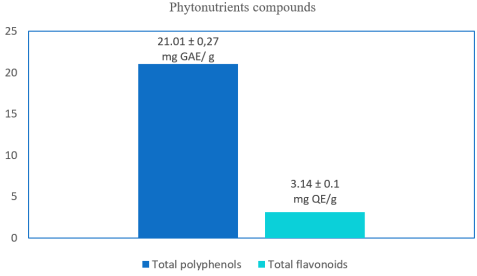
Balanites aegyptiaca is a perennial tropical plant belonging to the Balanitaceae family. It is mainly used for its leaves and fruit. The fruit contains edible pulp that is an important food source for humans. Although this fruit is used by local populations for its therapeutic properties, few studies have been conducted on the nutritional potential and phytonutrients composition of the fruit pulp. The aim of this study is to contribute to the promotion of this local plant resource in the diet of populations in northern region of Côte d'Ivoire by the biochemical characterizing and determination of nutritional potential of its pulp. 200g of Balanites aegyptiaca fruit were purchased from three markets in the city of Korhogo. The fruit was carefully sorted to remove damaged fruit, post-harvest plant debris, and other foreign matter. The fruit was then washed and drained. The different parts were separated manually into the outer layer (pericarp), pulp (mesocarp), and inner layer (endocarp). The pulp was extracted using a stainless steel knife and then ground using a blender. The moisture, fat, ash, crude fibers, protein, and carbohydrate (by difference) contents were determined using the AOAC methods. The mineral content was determined by spectrometry. Total phenolics content and total flavonoids were determined using standard spectrophotometric methods. Results of biochemical analysis show that the moisture content of fruit pulp is 36.4% and amounts of fat is 0.2%. Ash content and crude fibers content are 6% and 1.35% respectively and protein content is moderate (4.54%). Total carbohydrates are the components present in large quantities in the pulp (51.51%). The caloric intake gave a value of 226.0 Kcal/100g. The pulp of the Balanites aegyptiaca fruit is rich in minerals such as potassium (505.2 mg/100g), magnesium (3.4 mg/100g), zinc (1.6 mg/100g), sodium (14 mg/100g), and phosphorus (11.5 mg/100g). Calcium and iron are presents in low contents (< 0,14 mg/100g). The Na/K ratio obtained in this work is about 0.03. Results of phytonutrients composition of Balanites aegyptiaca fruit pulp indicate that the pulp is particularly rich in total polyphenols (21.01 mg GAE/g ± 0.27), while moderate amounts of flavonoids (3.14 mg QE/g ± 0.10).
| Published in | Journal of Food and Nutrition Sciences (Volume 14, Issue 2) |
| DOI | 10.11648/j.jfns.20261402.15 |
| Page(s) | 144-150 |
| Creative Commons |
This is an Open Access article, distributed under the terms of the Creative Commons Attribution 4.0 International License (http://creativecommons.org/licenses/by/4.0/), which permits unrestricted use, distribution and reproduction in any medium or format, provided the original work is properly cited. |
| Copyright |
Copyright © The Author(s), 2026. Published by Science Publishing Group |
Desert Date, Balanites aegyptiaca, Fruit Pulp, Phytonutrients Compounds, Nutritional Value, Côte d’Ivoire
Parameters | Content (Mean ± SD) |
|---|---|
Proteins (%) | 4,55 ± 0,09 |
Lipids (%) | 0,2 ± 0,00 |
Carbohydrates (%) | 51,51 ± 1,57 |
Moisture (%) | 36,4 ± 1,41 |
Ash (%) | 6,00 ± 0,28 |
Crude Fibers (%) | 1,35 ± 0,21 |
Energy value (Kcal/100g) | 226,00 ± 5,93 |
Mineral | Content (Mean ± SD) (mg/100g DM) |
|---|---|
Calcium (Ca) | < 0,14 ± 0,00 |
Potassium (K) | 505,2 ± 0,00 |
Magnésium (Mg) | 3,4 ± 0,00 |
Iron (Fe) | < 0,14 ± 0,00 |
Zinc (Zn) | 1,6 ± 0,00 |
Sodium (Na) | 14 ± 0,00 |
Phosphore (P) | 11,5 ±0,00 |
Sodium/ Potassium (Na/K) | 0,03 |
Kcal | Kilocalories |
GAE | Gallic Acid Equivalent |
QE | Quercetin Equivalent |
Meq | Milliequivalents |
P | Protein |
L | Lipid |
TC | Total Carbohydrates |
EV | Energy Value |
W/V | Weight/ Volume |
| [1] | Aremu M 0, Andrew C, Oko O J, Odoh R, Ambo I A., Hikon B N. Nutrient, Antinutrient and Sugar Contents in Desert Date (Balanites aegyptiaca (L.) Del) Seed and Pulp. International Journal of Sciences. 2021; 10(7): 12-21. |
| [2] | Ouedraogo A, Nikiema P A, Nikiema M E M, Yameogo G J, Sourabie P B, Bassave B R H, Nikiema O, Goumbri W B F, Barro N. Phytochemicals properties and antimicrobial activities of Carica papayaand Balanites aegyptiaca’ seeds aqueous infusion and decoction extracts. Journal of Drug Delivery and Therapeutics. 2024; 14(2): 46-52 |
| [3] | Akakpo D M A, Pedanou C L E, Donou-Housode M, Assob adjo A E, Agbangla C. Usage et importance socio-économique du dattier du désert Balanites aegyptiaca (L.) Delile au Bénin. Bulletin de la Recherche Agronomique du Bénin [Uses andsocio-economic importance of the desert date palm Balanites aegyptiaca (L.) Delile. in Benin. Bulletin of Agricultural Research in Benin].2023; 33(02): 39-54. |
| [4] | Ajayi A I, and Folorunso A F. Evaluation of the toxicologique status of Balanites aegyptiaca seed oil. Advances in Life Science and Technology. 2013; 10: 33-42. |
| [5] | Wakawa A I, Sambo A B, Yusuf S. Phytochemistry and proximate composition of root, stem bark, leaf fruit of desert date, Balanites aegyptiaca. The Journal of Phytopharmacology. 2018; 7(6): 464-470. |
| [6] | Murthy H N, Yadav G G, Dewir Y H, Ibrahim A. Phytochemicals and Biological Activity of Desert Date (Balanites aegyptiaca (L.) Delile). Plants. 2021; 10: 32. |
| [7] | Abdel-Farid I B and El-Sayed M A-R. Phytochemical Analysis of the Desert Date Balanites aegyptiaca. Egyptian Journal of Botany. 2021; 61(1); 95-103. |
| [8] | Okia C A, Agea J G, Kwetegyeka J P, Okiror P, Kimondo J, Teklehaimanot Z and Obua J. Nutritional value of commonly consumed desert date tree products. African Crop Science Journal. 2013; 21, (s3): 657 – 667. |
| [9] | AOAC. Association of official analytical chemists, Offcial methods of analysis, 19th ed., Washington. 2012. |
| [10] | Atwater W O. & Benedict F G. A new respiratory calorimeter and experiments on the conservation of energy in human body II. Physical Review. 1902. 9: 214-251. |
| [11] | CEAEQ. Determination of metals. Argon plasma ionization mass spectrometry method. MA 200 – Met 1.2, Rev 4. Quebec, p. 24. 2013. |
| [12] | Singleton V I, Orthofer R, and Lamuela-Raventos R-M. Analysis of total phenols and other oxydant substrates and antioxydants by means of Folin-ciocalteu reagent. Methods Enzymology. 1999; 299: 152-178. |
| [13] | Meda A, Lamien C E, Romito M, Millogo J, and Nacoulma O G. Determination of total phenolic, flavonoid and proline contents in Burkina Faso honeys as well as well as their radical scavenging activity. Food Chemistry. 2005; 91: 571-577. |
| [14] | Aremu M O, Atolaiye B O, Pennap G R I, & Ashikaa B T. Proximate and amino acid composition of mequite bean (Prosopis africana) protein concentrate. Indian J. Botanical Res. 2007. 3(1): 97–102. |
| [15] | Sagna M B, Diallo A, Sarr P S, Ndiaye O, Goffner D and Guisse A. Biochemical composition and nutritional value of Balanites aegyptiaca (L.) Del fruit pulps from Northern Ferlo in Senegal. African Journal of Biotechnology. 2014; 13(2): 336-342. |
| [16] | Betty Tabiri, Jacob K. Agbenorhevi, Faustina D. Wireko-Manu, Elsa I. Ompouma. Watermelon Seeds as Food: Nutrient Composition, Phytochemicals and Antioxidant Activity. International Journal of Nutrition and Food Sciences. 2016; 5(2): 139-144. |
| [17] | Karaye I U, Ladan M. U, Adili I. S, Shehu A, Lawal H M and Sahabi M H. Phytochemistry and Proximate Composition of Fruit Pulp and Seed of Desert Date, Balanites aegyptiaca (Del.). International journal of science for global sustainability. 2020; 6(2): pp 109-117. |
| [18] | Datti Y, Yahya A T, Koki I B, Lado U A, Musbahu L, Shuaibu M M, Ahmad U U, Adamu G A, Umar A and Nura T. Determination of the proximate and mineral contents of desert date kernel (balanites aegyptiaca linn.) and the physical and chemical characteristics of the kernel oil available in kano state, nigeria. FUDMA Journal of Sciences (FJS); 2020. 4(2): pp 250-259. |
| [19] | Hassan L G, Umar K J, Sa’idu I and Folorunsho F A. Proximate, Mimeral and Anti Nutritional Factors of Daniella oliveri Seeds Kernel. Chemclass Journal, 2008, 5: 31-36. |
| [20] | Adeyeye E L. Determination of Chemical Composition of the Nutritionally valuable parts of male and female Common West African Fresh Water Crab Sudananautes africanus. International Journal of Food Science and Nutrition. 2002, 53: 887-892. |
| [21] | Onibon V O, Abulude F O, and Lawal L O. Nutritional and Antinutritional Composition of some Nigerian Fruits. Journal of Food Technology. 2007, 5(2): 120-122. |
| [22] | Oluyemi E A, Akilua A A, Adenuya A A and Adebayo M B. Mineral Contents of Some Commonly Consumed Nigerian Foods. Science Focus. 2006, 11: 153- 157. |
| [23] | Abitogun A S, Borokini F B and Ashogbon A O. Nutritional and chemical composition of ripe and unripe Vitexglandifolia. Journal of Research in National Development, 2010, 8(1): 1-8. |
| [24] | Yusuf A A, Mofio B M and Ahmed A B. Proximate and Mineral Composition ofTamarindusindica (Linn.) 1753 Seeds. Science World Journal, 2007, 2(1): 1-4. |
| [25] | Umar K J, Hassan L G, Dangoggo S M. and Ladan M. Nutritional Compositions of Water Spinach (Ipomoea aquatic Forsk) Leaves. Journal of Applied Sciences, 2007, 7(6): 803-809. |
| [26] | Abdelaziz S M, Lemine F M M, Tfeil, H O, Filali-Maltouf A., & Boukhary A O M S. Phytochimie, activité antioxydante et usages ethnobotaniques des fruits de Balanites aegyptiaca (L.) Del. de la zone aride de Mauritanie, Afrique du Nord-Ouest [Phytochemistry, antioxidant activity and ethnobotanical uses of the fruits of Balanites aegyptiaca (L.) Del. from the arid zone of Mauritania Northwest Africa]. Plants, (2020), 9(3): 401. |
APA Style
Bamba, M. S., Oulai, D. P. P., Kodjo, N. F. (2026). A Study to Assess the Biochemical Composition and Nutritional Potential of Desert Date Balanites aegyptiaca Fruit Pulp of Northern Region (Korhogo, Côte d’Ivoire). Journal of Food and Nutrition Sciences, 14(2), 144-150. https://doi.org/10.11648/j.jfns.20261402.15
ACS Style
Bamba, M. S.; Oulai, D. P. P.; Kodjo, N. F. A Study to Assess the Biochemical Composition and Nutritional Potential of Desert Date Balanites aegyptiaca Fruit Pulp of Northern Region (Korhogo, Côte d’Ivoire). J. Food Nutr. Sci. 2026, 14(2), 144-150. doi: 10.11648/j.jfns.20261402.15
@article{10.11648/j.jfns.20261402.15,
  author = {Mandoué Stéphanie Bamba and Dehegnan Penan Patricia Oulai and Noelle Françoise Kodjo},
  title = {A Study to Assess the Biochemical Composition and Nutritional Potential of Desert Date Balanites aegyptiaca Fruit Pulp of Northern Region (Korhogo, Côte d’Ivoire)},
  journal = {Journal of Food and Nutrition Sciences},
  volume = {14},
  number = {2},
  pages = {144-150},
  doi = {10.11648/j.jfns.20261402.15},
  url = {https://doi.org/10.11648/j.jfns.20261402.15},
  eprint = {https://article.sciencepublishinggroup.com/pdf/10.11648.j.jfns.20261402.15},
  abstract = {Balanites aegyptiaca is a perennial tropical plant belonging to the Balanitaceae family. It is mainly used for its leaves and fruit. The fruit contains edible pulp that is an important food source for humans. Although this fruit is used by local populations for its therapeutic properties, few studies have been conducted on the nutritional potential and phytonutrients composition of the fruit pulp. The aim of this study is to contribute to the promotion of this local plant resource in the diet of populations in northern region of Côte d'Ivoire by the biochemical characterizing and determination of nutritional potential of its pulp. 200g of Balanites aegyptiaca fruit were purchased from three markets in the city of Korhogo. The fruit was carefully sorted to remove damaged fruit, post-harvest plant debris, and other foreign matter. The fruit was then washed and drained. The different parts were separated manually into the outer layer (pericarp), pulp (mesocarp), and inner layer (endocarp). The pulp was extracted using a stainless steel knife and then ground using a blender. The moisture, fat, ash, crude fibers, protein, and carbohydrate (by difference) contents were determined using the AOAC methods. The mineral content was determined by spectrometry. Total phenolics content and total flavonoids were determined using standard spectrophotometric methods. Results of biochemical analysis show that the moisture content of fruit pulp is 36.4% and amounts of fat is 0.2%. Ash content and crude fibers content are 6% and 1.35% respectively and protein content is moderate (4.54%). Total carbohydrates are the components present in large quantities in the pulp (51.51%). The caloric intake gave a value of 226.0 Kcal/100g. The pulp of the Balanites aegyptiaca fruit is rich in minerals such as potassium (505.2 mg/100g), magnesium (3.4 mg/100g), zinc (1.6 mg/100g), sodium (14 mg/100g), and phosphorus (11.5 mg/100g). Calcium and iron are presents in low contents (Balanites aegyptiaca fruit pulp indicate that the pulp is particularly rich in total polyphenols (21.01 mg GAE/g ± 0.27), while moderate amounts of flavonoids (3.14 mg QE/g ± 0.10).},
 year = {2026}
}
TY  - JOUR
T1  - A Study to Assess the Biochemical Composition and Nutritional Potential of Desert Date Balanites aegyptiaca Fruit Pulp of Northern Region (Korhogo, Côte d’Ivoire)
AU  - Mandoué Stéphanie Bamba
AU  - Dehegnan Penan Patricia Oulai
AU  - Noelle Françoise Kodjo
Y1  - 2026/04/02
PY  - 2026
N1  - https://doi.org/10.11648/j.jfns.20261402.15
DO  - 10.11648/j.jfns.20261402.15
T2  - Journal of Food and Nutrition Sciences
JF  - Journal of Food and Nutrition Sciences
JO  - Journal of Food and Nutrition Sciences
SP  - 144
EP  - 150
PB  - Science Publishing Group
SN  - 2330-7293
UR  - https://doi.org/10.11648/j.jfns.20261402.15
AB  - Balanites aegyptiaca is a perennial tropical plant belonging to the Balanitaceae family. It is mainly used for its leaves and fruit. The fruit contains edible pulp that is an important food source for humans. Although this fruit is used by local populations for its therapeutic properties, few studies have been conducted on the nutritional potential and phytonutrients composition of the fruit pulp. The aim of this study is to contribute to the promotion of this local plant resource in the diet of populations in northern region of Côte d'Ivoire by the biochemical characterizing and determination of nutritional potential of its pulp. 200g of Balanites aegyptiaca fruit were purchased from three markets in the city of Korhogo. The fruit was carefully sorted to remove damaged fruit, post-harvest plant debris, and other foreign matter. The fruit was then washed and drained. The different parts were separated manually into the outer layer (pericarp), pulp (mesocarp), and inner layer (endocarp). The pulp was extracted using a stainless steel knife and then ground using a blender. The moisture, fat, ash, crude fibers, protein, and carbohydrate (by difference) contents were determined using the AOAC methods. The mineral content was determined by spectrometry. Total phenolics content and total flavonoids were determined using standard spectrophotometric methods. Results of biochemical analysis show that the moisture content of fruit pulp is 36.4% and amounts of fat is 0.2%. Ash content and crude fibers content are 6% and 1.35% respectively and protein content is moderate (4.54%). Total carbohydrates are the components present in large quantities in the pulp (51.51%). The caloric intake gave a value of 226.0 Kcal/100g. The pulp of the Balanites aegyptiaca fruit is rich in minerals such as potassium (505.2 mg/100g), magnesium (3.4 mg/100g), zinc (1.6 mg/100g), sodium (14 mg/100g), and phosphorus (11.5 mg/100g). Calcium and iron are presents in low contents (Balanites aegyptiaca fruit pulp indicate that the pulp is particularly rich in total polyphenols (21.01 mg GAE/g ± 0.27), while moderate amounts of flavonoids (3.14 mg QE/g ± 0.10).
VL  - 14
IS  - 2
ER  -
Department of Biochemistry-Genetic, Peleforo Gon Coulibaly University, Korhogo, Côte d’Ivoire
Department of Biochemistry-Genetic, Peleforo Gon Coulibaly University, Korhogo, Côte d’Ivoire
Department of Biochemistry-Genetic, Peleforo Gon Coulibaly University, Korhogo, Côte d’Ivoire

Information



 Share This Article
 Twitter
 Linked In
 Facebook
 Copy
Copy Download