Research Article | | Peer-Reviewed

A Structural Analysis of the Film "National Treasure (Kokuho)" Using the PlantUML C4 Model

Received: 31 October 2025     Accepted: 18 November 2025     Published: 24 December 2025
Views:       Downloads:
Abstract

This paper presents a comprehensive structural analysis of the film "National Treasure" (Kokuho, 2025) directed by Lee Sang-il, employing the PlantUML C4 model as an innovative analytical framework. The study examines the intricate multi-layered human relationships, artistic inheritance systems, and social hierarchical structures within the kabuki world depicted in the film through the four abstraction levels of the C4 model, revealing the intrinsic structure of this cinematic work. The C4 model, originally developed for software architecture visualization, offers significant academic value when applied to film analysis by enabling integrated analysis from macro to micro perspectives, facilitating the visualization of complex narrative structures, establishing reproducible analytical methods, and promoting interdisciplinary approaches. This methodology bridges system engineering concepts with humanities research, providing unique insights particularly suited for analyzing films that reflect contemporary society's systematization and networking. The analysis proceeds through four hierarchical levels examining the film's context within post-war Japanese society, organizational structures of kabuki families and yakuza organizations, relationships among major characters including the adopted son Kikuo performing as onnagata and the legitimate heir Shunsuke performing as tachiyaku under strict master Hanjiro Hanai, and the internal psychological systems of each character. The analysis reveals that the film possesses a multi-layered structure spanning from social contexts to personal emotions, effectively expressing the universal theme of conflict between bloodline and talent. The lengthy narrative employs transformation rituals through makeup scenes and spans fifty years to address generational succession issues. The film's commercial success demonstrates its appeal through exceptional casting, universal themes, visual perfection of kabuki scenes, and positive word-of-mouth effects. This research demonstrates the applicability of the C4 model to film analysis while clarifying the artistic value and social significance of "National Treasure." The findings contribute to establishing objective, reproducible methods in film studies and suggest future directions for comparative analysis with other performing arts films and international reception studies.

Published in Languages, Literatures and Cultures (Volume 1, Issue 1)
DOI 10.11648/j.llc.20250101.12
Page(s) 6-15
Creative Commons

This is an Open Access article, distributed under the terms of the Creative Commons Attribution 4.0 International License (http://creativecommons.org/licenses/by/4.0/), which permits unrestricted use, distribution and reproduction in any medium or format, provided the original work is properly cited.

Copyright

Copyright © The Author(s), 2025. Published by Science Publishing Group

Keywords

Film Analysis, PlantUML C4 Model, Kabuki, Structural Analysis, Lee Sang-il, Yoshizawa Ryo, Social Hierarchy

1. Introduction
1.1. Research Background
The film "National Treasure," based on Shuichi Yoshida's novel Kokuho , depicts the conflict between bloodline and talent set against the world of kabuki theater. Director Lee Sang-il's cinematic adaptation , with its lengthy running time of 175 minutes, portrays the social structure of the entertainment industry in Japan from the post-war period through the high economic growth era.
1.2. Research Purpose
This study aims to systematically analyze the human relationships, organizational structures, and social systems in the film "National Treasure" by applying the abstraction levels of the PlantUML C4 model. Through this approach, we seek to clarify the intrinsic structure and thematic significance of the work.
1.3. Research Methodology
1.3.1. Significance of Applying the C4 Model to Film Analysis
The C4 model (Context, Container, Component, Code) is a conceptual framework originally developed for software architecture visualization . However, its application to film analysis offers the following academic significance:
1. Realization of Multi-layered Structural Analysis
Traditional film analysis tends to separate plot-level analysis from social context analysis . The C4 model enables integrated analysis from macro to micro levels through its four abstraction levels, Application of the C4 model eliminates subjectivity in film analysis and provides objective analytical methods that can be verified and reproduced by other researchers. This contributes to enhancing the scientific nature of film studies. allowing systematic comprehension of the relationship between a film's social significance and personal emotions.
2. Visualization of Relationships
By hierarchically organizing the interactions between character relationships, organizational structures, and social systems in films, complex narrative structures can be clearly visualized. This method is particularly effective for gaining a bird's-eye view of relationships between characters in ensemble dramas and long-form works.
3. Establishment of Reproducible Analytical Methods
Application of the C4 model eliminates subjectivity in film analysis and provides objective analytical methods that can be verified and reproduced by other researchers. This contributes to enhancing the scientific nature of film studies.
4. Promotion of Interdisciplinary Approaches
By introducing concepts from systems engineering into humanities research, insights can be gained from perspectives different from traditional film theory. This approach is particularly suitable for analyzing films that reflect contemporary society's systematization and networking.
1.3.2. Analytical Procedure
In this study, we apply the four abstraction levels of the C4 model to film analysis and systematically elucidate the structure of the work:
1. Context Level: Analysis of the film's social and cultural context
2. Container Level: Analysis of organizational and group structures within the work
3. Component Level: Analysis of characters and their relationships
4. Code Level: Analysis of individual behaviors, emotions, and motivations
At each level, diagrams are created using PlantUML notation to visualize the structure.
2. Structural Analysis of the Film "National Treasure" Using the C4 Model
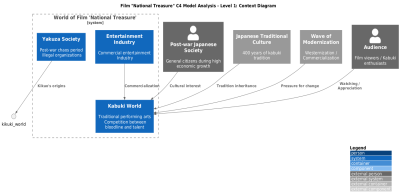
Figure 1. C4 Model Analysis - Level 1: Context Diagram.
@startuml
!include https://raw.githubusercontent.com/plantuml-stdlib/C4-PlantUML/master/C4_Context.puml
!include https://raw.githubusercontent.com/plantuml-stdlib/C4-PlantUML/master/C4_Container.puml
!include https://raw.githubusercontent.com/plantuml-stdlib/C4-PlantUML/master/C4_Component.puml
LAYOUT_WITH_LEGEND()
title Film "National Treasure" C4 Model Analysis - Level 1: Context Diagram
Person_Ext(audience, "Audience", "Film viewers / Kabuki enthusiasts")
Person_Ext(society, "Post-war Japanese Society", "General citizens during high economic growth")
System_Boundary(movie_system, "World of Film 'National Treasure'") {
System(kabuki_world, "Kabuki World", "Traditional performing arts\n Competition between bloodline and talent")
System(yakuza_world, "Yakuza Society", "Post-war chaos period\n Illegal organizations")
System(entertainment, "Entertainment Industry", "Commercial entertainment\n Industry")
}
System_Ext(tradition, "Japanese Traditional Culture", "400 years of kabuki tradition")
System_Ext(modernization, "Wave of Modernization", "Westernization / Commercialization")
Rel(audience, kabuki_world, "Watching / Appreciation")
Rel(society, kabuki_world, "Cultural interest")
Rel(tradition, kabuki_world, "Tradition inheritance")
Rel(modernization, kabuki_world, "Pressure for change")
Rel(yakuza_world, kikuki_world, "Kikuo's origins")
Rel(entertainment, kabuki_world, "Commercialization")
@enduml
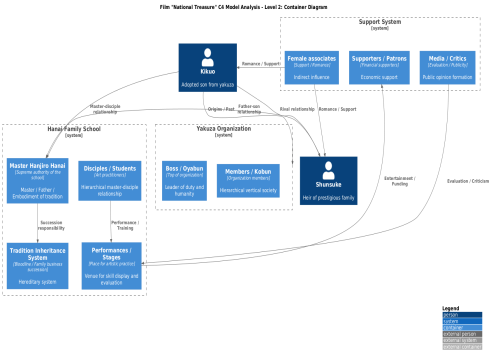
Figure 2. C4 Model Analysis - Level 2: Container Diagram.
@startuml
!include https://raw.githubusercontent.com/plantuml-stdlib/C4-PlantUML/master/C4_Container.puml
LAYOUT_WITH_LEGEND()
title Film "National Treasure" C4 Model Analysis - Level 2: Container Diagram
Person(kikuo, "Kikuo", "Adopted son from yakuza")
Person(shunsuke, "Shunsuke", "Heir of prestigious family")
System_Boundary(hanai_family, "Hanai Family School") {
Container(master, "Master Hanjiro Hanai", "Supreme authority of the school", "Master / Father / Embodiment of tradition")
Container(disciples, "Disciples / Students", "Art practitioners", "Hierarchical master-disciple relationship")
Container(performances, "Performances / Stages", "Place for artistic practice", "Venue for skill display and evaluation")
Container(tradition_sys, "Tradition Inheritance System", "Bloodline / Family business succession", "Hereditary system")
}
System_Boundary(yakuza_org, "Yakuza Organization") {
Container(boss, "Boss / Oyabun", "Top of organization", "Leader of duty and humanity")
Container(members, "Members / Kobun", "Organization members", "Hierarchical vertical society")
}
System_Boundary(support_sys, "Support System") {
Container(patrons, "Supporters / Patrons", "Financial supporters", "Economic support")
Container(media, "Media / Critics", "Evaluation / Publicity", "Public opinion formation")
Container(women, "Female associates", "Support / Romance", "Indirect influence")
}
Rel(kikuo, master, "Master-disciple relationship")
Rel(shunsuke, master, "Father-son relationship")
Rel(kikuo, shunsuke, "Rival relationship")
Rel(master, tradition_sys, "Succession responsibility")
Rel(kikuo, yakuza_org, "Origins / Past")
Rel(performances, patrons, "Entertainment / Funding")
Rel(disciples, performances, "Performance / Training")
Rel(media, performances, "Evaluation / Criticism")
Rel(women, kikuo, "Romance / Support")
Rel(women, shunsuke, "Romance / Support")
@enduml
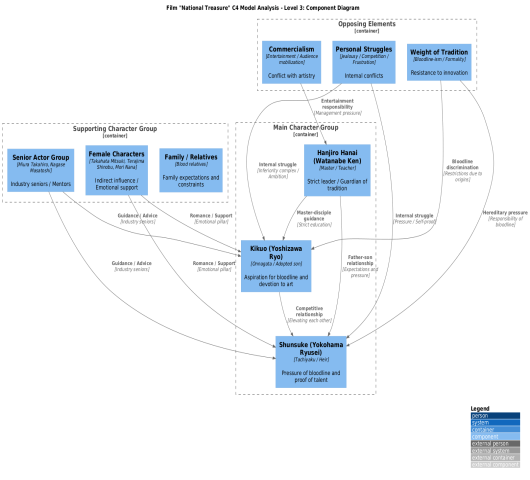
Figure 3. C4 Model Analysis - Level 3: Component Diagram.
@startuml
!include https://raw.githubusercontent.com/plantuml-stdlib/C4-PlantUML/master/C4_Component.puml
LAYOUT_WITH_LEGEND()
title Film "National Treasure" C4 Model Analysis - Level 3: Component Diagram
Container_Boundary(main_characters, "Main Character Group") {
Component(kikuo_comp, "Kikuo (Yoshizawa Ryo)", "Onnagata / Adopted son", "Aspiration for bloodline and devotion to art")
Component(shunsuke_comp, "Shunsuke (Yokohama Ryusei)", "Tachiyaku / Heir", "Pressure of bloodline and proof of talent")
Component(hanjiro_comp, "Hanjiro Hanai (Watanabe Ken)", "Master / Teacher", "Strict leader / Guardian of tradition")
}
Container_Boundary(supporting_characters, "Supporting Character Group") {
Component(women_group, "Female Characters", "Takahata Mitsuki, Terajima Shinobu, Mori Nana", "Indirect influence / Emotional support")
Component(senior_actors, "Senior Actor Group", "Miura Takahiro, Nagase Masatoshi", "Industry seniors / Mentors")
Component(family_members, "Family / Relatives", "Blood relatives", "Family expectations and constraints")
}
Container_Boundary(antagonist_forces, "Opposing Elements") {
Component(tradition_pressure, "Weight of Tradition", "Bloodline-ism / Formality", "Resistance to innovation")
Component(commercial_pressure, "Commercialism", "Entertainment / Audience mobilization", "Conflict with artistry")
Component(personal_conflicts, "Personal Struggles", "Jealousy / Competition / Frustration", "Internal conflicts")
}
Rel(kikuo_comp, shunsuke_comp, "Competitive relationship", "Elevating each other")
Rel(hanjiro_comp, kikuo_comp, "Master-disciple guidance", "Strict education")
Rel(hanjiro_comp, shunsuke_comp, "Father-son relationship", "Expectations and pressure")
Rel(women_group, kikuo_comp, "Romance / Support", "Emotional pillar")
Rel(women_group, shunsuke_comp, "Romance / Support", "Emotional pillar")
Rel(senior_actors, kikuo_comp, "Guidance / Advice", "Industry seniors")
Rel(senior_actors, shunsuke_comp, "Guidance / Advice", "Industry seniors")
Rel(tradition_pressure, kikuo_comp, "Bloodline discrimination", "Restrictions due to origins")
Rel(tradition_pressure, shunsuke_comp, "Hereditary pressure", "Responsibility of bloodline")
Rel(commercial_pressure, hanjiro_comp, "Entertainment responsibility", "Management pressure")
Rel(personal_conflicts, kikuo_comp, "Internal struggle", "Inferiority complex / Ambition")
Rel(personal_conflicts, shunsuke_comp, "Internal struggle", "Pressure / Self-proof")
@enduml
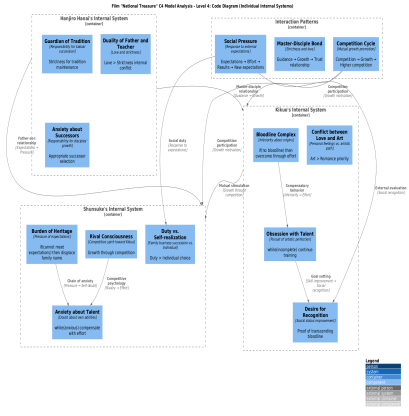
Figure 4. C4 Model Analysis - Level 4: Code Diagram (Individual Internal Systems).
@startuml
!include https://raw.githubusercontent.com/plantuml-stdlib/C4-PlantUML/master/C4_Component.puml
LAYOUT_WITH_LEGEND()
title Film "National Treasure" C4 Model Analysis - Level 4: Code Diagram (Individual Internal Systems)
Container_Boundary(kikuo_inner, "Kikuo's Internal System") {
Component(blood_complex, "Bloodline Complex", "Inferiority about origins", "if(no bloodline) then overcome through effort")
Component(talent_drive, "Obsession with Talent", "Pursuit of artistic perfection", "while(incomplete) continue training")
Component(love_conflict, "Conflict between Love and Art", "Personal feelings vs. artistic path", "Art > Romance priority")
Component(recognition_desire, "Desire for Recognition", "Social status improvement", "Proof of transcending bloodline")
}
Container_Boundary(shunsuke_inner, "Shunsuke's Internal System") {
Component(heritage_burden, "Burden of Heritage", "Pressure of expectations", "if(cannot meet expectations) then disgrace family name")
Component(talent_anxiety, "Anxiety about Talent", "Doubt about own abilities", "while(anxious) compensate with effort")
Component(rivalry_motivation, "Rival Consciousness", "Competitive spirit toward Kikuo", "Growth through competition")
Component(duty_vs_self, "Duty vs. Self-realization", "Family business succession vs. Individual", "Duty > Individual choice")
}
Container_Boundary(hanjiro_inner, "Hanjiro Hanai's Internal System") {
Component(tradition_guardian, "Guardian of Tradition", "Responsibility for kabuki succession", "Strictness for tradition maintenance")
Component(father_teacher, "Duality of Father and Teacher", "Love and strictness", "Love > Strictness internal conflict")
Component(succession_worry, "Anxiety about Successors", "Responsibility for disciples' growth", "Appropriate successor selection")
}
Container_Boundary(interaction_patterns, "Interaction Patterns") {
Component(competition_loop, "Competition Cycle", "Mutual growth promotion", "Competition → Growth → Higher competition")
Component(master_disciple, "Master-Disciple Bond", "Strictness and love", "Guidance → Growth → Trust relationship")
Component(social_pressure, "Social Pressure", "Response to external expectations", "Expectations → Effort → Results → New expectations")
}
Rel(blood_complex, talent_drive, "Compensatory behavior", "Inferiority → Effort")
Rel(talent_drive, recognition_desire, "Goal setting", "Skill improvement → Social recognition")
Rel(heritage_burden, talent_anxiety, "Chain of anxiety", "Pressure → Self-doubt")
Rel(rivalry_motivation, talent_anxiety, "Competitive psychology", "Rivalry → Effort")
Rel(kikuo_inner, shunsuke_inner, "Mutual stimulation", "Growth through competition")
Rel(hanjiro_inner, kikuo_inner, "Master-disciple relationship", "Guidance → Growth")
Rel(hanjiro_inner, shunsuke_inner, "Father-son relationship", "Expectations → Pressure")
Rel(competition_loop, kikuo_inner, "Competition participation", "Growth motivation")
Rel(competition_loop, shunsuke_inner, "Competition participation", "Growth motivation")
Rel(social_pressure, recognition_desire, "External evaluation", "Social recognition")
Rel(social_pressure, duty_vs_self, "Social duty", "Response to expectations")
@enduml
2.1. Level 1: Context - Social Context
The film "National Treasure" unfolds within the larger context of post-war Japanese society [2, 5]. The main stakeholders are as follows:
1. Kabuki World: Traditional performing arts preservation and succession system
2. Yakuza Society: Illegal organizations during the post-war chaos period
3. General Society: Japanese society during the high economic growth period
4. Audience: Consumer demographic that enjoys performing arts
2.2. Level 2: Container - Organizational Structure
2.2.1. The Hanai Family School
As a prestigious kabuki family from the Kamigata region [13, 14], it has the following hierarchical structure:
1. Master: Hanjiro Hanai (Ken Watanabe)
2. Heir: Shunsuke (Ryusei Yokohama)
3. Adopted Son: Kikuo (Ryo Yoshizawa)
4. Associates: Disciples, collaborators, patrons
2.2.2. Yakuza Organization
The organization from which Kikuo originates:
1. Organizational Structure: Vertical hierarchical system
2. Values: Duty, humanity, blood relations
3. Social Position: Outsider group
2.3. Level 3: Component - Character Relationships
2.3.1. Relationships Among Main Characters
Kikuo (Ryo Yoshizawa)
1. Attributes: From yakuza origins, adopted son, onnagata performer
2. Function: Aspiration for bloodline, pursuit of art
3. Relationship: Competitive coexistence with Shunsuke
4. Shunsuke (Ryusei Yokohama)
5. Attributes: From prestigious family, legitimate heir, tachiyaku performer
6. Function: Embodiment of bloodline, acceptance of pressure
7. Relationship: Mutual recognition with Kikuo
8. Hanjiro Hanai (Ken Watanabe)
9. Attributes: Master, teacher, father
10. Function: Succession of tradition, nurturing of disciples
11. Relationship: Strict leader
2.3.2. Positioning of Female Characters
Mitsuki Takahata, Shinobu Terajima, Nana Mori
1. Function: Support system in male-centered society
2. Relationship: Exercise of indirect influence
2.4. Level 4: Code - Individual Behaviors and Emotions
2.4.1. Kikuo's Internal Conflict
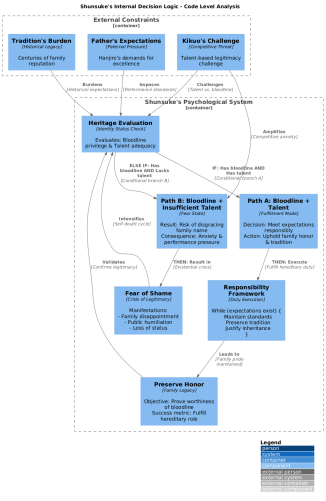
Figure 5. C4 Model Analysis - Level 4: Code - Shunsuke's Internal Decision Logic - Code Level Analysis Ontainer_Boundary(Shunsuke_Logic, "Shunsuke's Psychological System".
@startuml
!include https://raw.githubusercontent.com/plantuml-stdlib/C4-PlantUML/master/C4_Component.puml
LAYOUT_WITH_LEGEND()
title Shunsuke's Internal Decision Logic - Code Level Analysis
Container_Boundary(shunsuke_logic, "Shunsuke's Psychological System") {
Component(heritage_assessment, "Heritage Evaluation", "Identity Status Check", "Evaluates: Bloodline privilege & Talent adequacy")
Component(blood_and_talent, "Path A: Bloodline + Talent", "Fulfillment Mode", "Decision: Meet expectations responsibly\nAction: Uphold family honor & tradition")
Component(blood_no_talent, "Path B: Bloodline + Insufficient Talent", "Fear State", "Result: Risk of disgracing family name\nConsequence: Anxiety & performance pressure")
Component(responsibility_system, "Responsibility Framework", "Duty Execution", "While (expectations exist) {\n Maintain standards\n Preserve tradition\n Justify inheritance\n}")
Component(honor_goal, "Preserve Honor", "Family Legacy", "Objective: Prove worthiness of bloodline\nSuccess metric: Fulfill hereditary role")
Component(shame_state, "Fear of Shame", "Crisis of Legitimacy", "Manifestations:\n- Family disappointment\n- Public humiliation\n- Loss of status")
}
Container_Boundary(external_pressures, "External Constraints") {
Component(father_expectations, "Father's Expectations", "Paternal Pressure", "Hanjiro's demands for excellence")
Component(tradition_weight, "Tradition's Burden", "Historical Legacy", "Centuries of family reputation")
Component(rival_kikuo, "Kikuo's Challenge", "Competitive Threat", "Talent-based legitimacy challenge")
}
' Decision flow
Rel(heritage_assessment, blood_and_talent, "IF: Has bloodline AND Has talent", "Conditional branch A")
Rel(heritage_assessment, blood_no_talent, "ELSE IF: Has bloodline AND Lacks talent", "Conditional branch B")
' Path A: Success route
Rel(blood_and_talent, responsibility_system, "THEN: Execute", "Fulfill hereditary duty")
Rel(responsibility_system, honor_goal, "Leads to", "Family pride maintained")
' Path B: Crisis route
Rel(blood_no_talent, shame_state, "THEN: Result in", "Existential crisis")
' External pressures
Rel(father_expectations, heritage_assessment, "Imposes", "Performance standards")
Rel(tradition_weight, heritage_assessment, "Burdens", "Historical expectations")
Rel(rival_kikuo, heritage_assessment, "Challenges", "Talent vs. bloodline")
' Feedback loops
Rel(honor_goal, heritage_assessment, "Validates", "Confirms legitimacy")
Rel(shame_state, heritage_assessment, "Intensifies", "Self-doubt cycle")
' Rivalry dynamic
Rel(rival_kikuo, blood_no_talent, "Amplifies", "Competitive anxiety")
@enduml
2.4.2. Shunsuke's Pressure
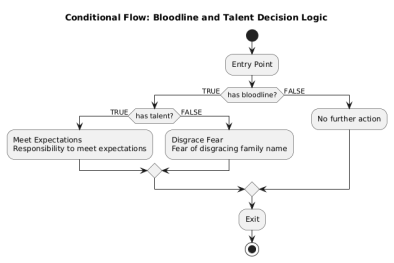
Figure 6. C4 Model Analysis - Level 4: Code - Bloodline and Talent Decision Logic.

@startuml
!include https://raw.githubusercontent.com/plantuml-stdlib/C4-PlantUML/master/C4_Component.puml
title Conditional Flow: Bloodline and Talent Decision Logic
Container_Boundary(decision_system, "Decision System") {
Component(entry, "Entry Point", "Start evaluation")
Component(bloodline_check, "Bloodline Check", "has bloodline?")
Component(talent_check, "Talent Check", "has talent?")
Component(meet_expectations, "Meet Expectations", "Responsibility to meet expectations")
Component(disgrace_fear, "Disgrace Fear", "Fear of disgracing family name")
Component(exit, "Exit", "End process")
}
Rel(entry, bloodline_check, "Start")
Rel(bloodline_check, talent_check, "TRUE", "has bloodline")
Rel(talent_check, meet_expectations, "TRUE", "has talent")
Rel(talent_check, disgrace_fear, "FALSE", "lacks talent")
Rel(meet_expectations, exit, "Complete")
Rel(disgrace_fear, exit, "Complete")
Rel(bloodline_check, exit, "FALSE", "no bloodline")
@enduml
3. Analysis of Cinematic Techniques
3.1. Visual Composition
The film emphasizes the ritualistic nature of transformation by extensively using makeup scenes. This is a technique for visually expressing the fluidity of social identity.
3.2. Temporal Structure
The story spanning fifty years provides an important temporal scale for addressing issues of generational succession . The historical context of the high economic growth period highlights the conflict between tradition and modernization.
4. Thematic Considerations
4.1. Binary Opposition of Bloodline and Talent
The film "National Treasure" develops around the central theme of opposition between bloodline (innate conditions) and talent (acquired effort) . The relationship between Kikuo and Shunsuke functions as a personified structure of this opposition.
4.2. The Question of Authenticity in Performing Arts
The film raises fundamental questions about whether the definition of "authenticity" in traditional performing arts like kabuki is determined by bloodline or by the perfection of artistic skill .
4.3. Fixation and Fluidity of Social Hierarchy
The film examines the possibilities and limitations of social mobility in post-war Japanese society through the specialized social space of the entertainment industry [1, 5].
5. Reception Analysis
5.1. Factors of Commercial Success
The film "National Treasure" surpassing 3.2 billion yen in box office revenue can be attributed to the following factors:
1. Casting: Ryo Yoshizawa's acting ability and beauty
2. Thematic nature: Appeal as a universal human drama
3. Visual perfection: Cinematic beauty of kabuki scenes
4. Word-of-mouth effect: Spread of positive reviews on social media
5.2. Critical Evaluation
Despite the lengthy runtime of nearly three hours, the film has received high praise from both critics and audiences . This is due to the fusion of densely-crafted human drama and visual spectacle .
6. Conclusion
Through the analysis of the film "National Treasure" using the PlantUML C4 model , the following insights were obtained:
1. Structural Multilayering:
The film possesses a multi-layered structure spanning from social contexts to personal emotions.
2. Sophistication of Character Relationships:
The relationships among main characters demonstrate not simple opposition but mutually dependent complexity.
3. Universality of Theme:
The opposition between bloodline and talent holds universal significance as an issue of meritocracy versus hereditary systems in contemporary society.
4. Effectiveness of Cinematic Techniques:
Visual expression and temporal structure effectively convey thematic meaning.
This research demonstrates the applicability of the C4 model to film analysis while clarifying the artistic value and social significance of "National Treasure."
Future research topics include comparative analysis with other performing arts films and investigation of international reception.
Copyright and Usage Permission
Information about the film "National Treasure" cited in this paper is the copyrighted material of the Film "National Treasure" Production Committee and is limited to academic citation purposes.
Copyrights for images, dialogue, music, etc. from the film belong to their respective rights holders.
1. Film "National Treasure": © 2025 Film "National Treasure" Production Committee
2. Original Novel "Kokuho": © Shuichi Yoshida, Asahi Shimbun Publications
3. This Paper: © 2025 Osamu Okumura
The content of this paper was created for academic research purposes, and commercial use is prohibited. If you wish to cite or reprint, please contact the author.
Author Contributions
Osamu Okumura is the sole author. The author read and approved the final manuscript.
Conflicts of Interest
The author declares no conflicts of interest.
References
[1] Yoshida, Shuichi. Kokuho. Asahi Bunko, Asahi Shimbun Publications.
[2] Film "National Treasure" Production Committee. Film "National Treasure" Press Sheet. 2025.
[3] Toyo Keizai Online. "Background of the Big Hit of 'National Treasure' Starring Ryo Yoshizawa." June 2025.
[4] Diamond Online. "Ryo Yoshizawa's Face That You Want to Keep Watching Forever." June 2025.
[5] Yahoo! News. "Film 'National Treasure' Director Lee Sang-il Interview." June 2025.
[6] Brown, Simon. The C4 model for visualising software architecture. Leanpub, 2023.
[7] Brown, Simon. "The C4 Model for Software Architecture." InfoQ, June 25, 2018.
[8] C4-PlantUML. GitHub repository. plantuml-stdlib/C4-PlantUML, 2024.
[9] "C4 model." Wikipedia, accessed November 10, 2025.
[10] Ryan, Michael, and Melissa Lenos. Translated by Yoichi Umemoto. Revised and Expanded Edition: Film Analysis - Introduction to Film Analysis. Film Art Inc., August 2025.
[11] Uchida, Tatsuru. New Edition: Structural Analysis of Films. Shobunsha Library, May 2025.
[12] Sasaki, Yusuke. "Introduction to Image Expression/Analysis (01) Introduction - Intrinsic Analysis and Extrinsic Analysis." note, May 2025.
[13] Hashimoto, Yoshitaka (Interview). "One Piece and Hatsune Miku: Why Does Shochiku Create Innovative Kabuki?" Nippon Foundation Journal, March 2023.
[14] Nagayama, Keiichi. "Successor Selection and Training System in Kabuki." Keio University, 2022.
[15] General Incorporated Association for the Preservation of Traditional Kabuki (ed.). Kabuki Yearbook: Performance Records 2022. March 2023.
Cite This Article
  • APA Style

    Okumura, O. (2025). A Structural Analysis of the Film "National Treasure (Kokuho)" Using the PlantUML C4 Model. Languages, Literatures and Cultures, 1(1), 6-15. https://doi.org/10.11648/j.llc.20250101.12

    Copy | Download

    ACS Style

    Okumura, O. A Structural Analysis of the Film "National Treasure (Kokuho)" Using the PlantUML C4 Model. Lang. Lit. Cult. 2025, 1(1), 6-15. doi: 10.11648/j.llc.20250101.12

    Copy | Download

    AMA Style

    Okumura O. A Structural Analysis of the Film "National Treasure (Kokuho)" Using the PlantUML C4 Model. Lang Lit Cult. 2025;1(1):6-15. doi: 10.11648/j.llc.20250101.12

    Copy | Download

  • @article{10.11648/j.llc.20250101.12,
      author = {Osamu Okumura},
      title = {A Structural Analysis of the Film "National Treasure (Kokuho)" Using the PlantUML C4 Model},
      journal = {Languages, Literatures and Cultures},
      volume = {1},
      number = {1},
      pages = {6-15},
      doi = {10.11648/j.llc.20250101.12},
      url = {https://doi.org/10.11648/j.llc.20250101.12},
      eprint = {https://article.sciencepublishinggroup.com/pdf/10.11648.j.llc.20250101.12},
      abstract = {This paper presents a comprehensive structural analysis of the film "National Treasure" (Kokuho, 2025) directed by Lee Sang-il, employing the PlantUML C4 model as an innovative analytical framework. The study examines the intricate multi-layered human relationships, artistic inheritance systems, and social hierarchical structures within the kabuki world depicted in the film through the four abstraction levels of the C4 model, revealing the intrinsic structure of this cinematic work. The C4 model, originally developed for software architecture visualization, offers significant academic value when applied to film analysis by enabling integrated analysis from macro to micro perspectives, facilitating the visualization of complex narrative structures, establishing reproducible analytical methods, and promoting interdisciplinary approaches. This methodology bridges system engineering concepts with humanities research, providing unique insights particularly suited for analyzing films that reflect contemporary society's systematization and networking. The analysis proceeds through four hierarchical levels examining the film's context within post-war Japanese society, organizational structures of kabuki families and yakuza organizations, relationships among major characters including the adopted son Kikuo performing as onnagata and the legitimate heir Shunsuke performing as tachiyaku under strict master Hanjiro Hanai, and the internal psychological systems of each character. The analysis reveals that the film possesses a multi-layered structure spanning from social contexts to personal emotions, effectively expressing the universal theme of conflict between bloodline and talent. The lengthy narrative employs transformation rituals through makeup scenes and spans fifty years to address generational succession issues. The film's commercial success demonstrates its appeal through exceptional casting, universal themes, visual perfection of kabuki scenes, and positive word-of-mouth effects. This research demonstrates the applicability of the C4 model to film analysis while clarifying the artistic value and social significance of "National Treasure." The findings contribute to establishing objective, reproducible methods in film studies and suggest future directions for comparative analysis with other performing arts films and international reception studies.},
     year = {2025}
    }
    

    Copy | Download

  • TY  - JOUR
    T1  - A Structural Analysis of the Film "National Treasure (Kokuho)" Using the PlantUML C4 Model
    AU  - Osamu Okumura
    Y1  - 2025/12/24
    PY  - 2025
    N1  - https://doi.org/10.11648/j.llc.20250101.12
    DO  - 10.11648/j.llc.20250101.12
    T2  - Languages, Literatures and Cultures
    JF  - Languages, Literatures and Cultures
    JO  - Languages, Literatures and Cultures
    SP  - 6
    EP  - 15
    PB  - Science Publishing Group
    UR  - https://doi.org/10.11648/j.llc.20250101.12
    AB  - This paper presents a comprehensive structural analysis of the film "National Treasure" (Kokuho, 2025) directed by Lee Sang-il, employing the PlantUML C4 model as an innovative analytical framework. The study examines the intricate multi-layered human relationships, artistic inheritance systems, and social hierarchical structures within the kabuki world depicted in the film through the four abstraction levels of the C4 model, revealing the intrinsic structure of this cinematic work. The C4 model, originally developed for software architecture visualization, offers significant academic value when applied to film analysis by enabling integrated analysis from macro to micro perspectives, facilitating the visualization of complex narrative structures, establishing reproducible analytical methods, and promoting interdisciplinary approaches. This methodology bridges system engineering concepts with humanities research, providing unique insights particularly suited for analyzing films that reflect contemporary society's systematization and networking. The analysis proceeds through four hierarchical levels examining the film's context within post-war Japanese society, organizational structures of kabuki families and yakuza organizations, relationships among major characters including the adopted son Kikuo performing as onnagata and the legitimate heir Shunsuke performing as tachiyaku under strict master Hanjiro Hanai, and the internal psychological systems of each character. The analysis reveals that the film possesses a multi-layered structure spanning from social contexts to personal emotions, effectively expressing the universal theme of conflict between bloodline and talent. The lengthy narrative employs transformation rituals through makeup scenes and spans fifty years to address generational succession issues. The film's commercial success demonstrates its appeal through exceptional casting, universal themes, visual perfection of kabuki scenes, and positive word-of-mouth effects. This research demonstrates the applicability of the C4 model to film analysis while clarifying the artistic value and social significance of "National Treasure." The findings contribute to establishing objective, reproducible methods in film studies and suggest future directions for comparative analysis with other performing arts films and international reception studies.
    VL  - 1
    IS  - 1
    ER  - 

    Copy | Download

Author Information
  • Independent Researcher, Tokyo, Japan

  • Abstract
  • Keywords
  • Document Sections

    1. 1. Introduction
    2. 2. Structural Analysis of the Film "National Treasure" Using the C4 Model
    3. 3. Analysis of Cinematic Techniques
    4. 4. Thematic Considerations
    5. 5. Reception Analysis
    6. 6. Conclusion
    Show Full Outline
  • Author Contributions
  • Conflicts of Interest
  • References
  • Cite This Article
  • Author Information