Antibiotic resistance has become an alarming issue in recent years, and the poultry industry is seeking alternatives in broiler feed to enhance growth and produce safe meat to meet consumer demand. Turmeric is one of the natural feed additives with the potential to improve broiler health and productivity. The present study was conducted to evaluate feed intake, weight gain, and feed conversion efficiency under different dietary treatment levels. A total of one hundred twelve (112) day-old chicks were used and divided into four treatment groups: T1, T2, T3, and T4, containing 0%, 0.5%, 0.75%, and 1% turmeric powder, respectively. Each treatment was replicated three times with seven birds per replicate in a completely randomized experimental design. A significant effect of turmeric powder on feed intake was observed (P < 0.05), whereas non-significant effects were observed on weight gain, body weight, feed conversion ratio, and feed efficiency at different levels of Curcuma longa powder supplementation. The experimental flocks were uniform and showed low variability in five parameters; however, the coefficient of variation (CV) for feed efficiency ratio was slightly higher at approximately 2.94%. The results of this experiment suggest that supplementation with 0.75% turmeric powder enhances feed intake in broiler chickens.
This is an Open Access article, distributed under the terms of the Creative Commons Attribution 4.0 International License (http://creativecommons.org/licenses/by/4.0/), which permits unrestricted use, distribution and reproduction in any medium or format, provided the original work is properly cited.
Poultry production has become a profitable business for rural farmers and commercially operated business stakeholders because of higher demand of poultry meat. Specially broiler meat is the major source of animal protein and high demand in cuisine and restaurant for processing fast food and meat products for human consumption. Broiler production increased remarkably due to its faster growth rate, low production cost and high demand for meat and achieved popularity as an alternative of beef and pork with approximately 70 billion broilers slaughtered annually in the world
[13]
Mace JL and Knight A (2022) The impacts of colony cages on the welfare of chickens farmed for meat. Animals. 12(21): 2988.
. Effective broiler production highly relies upon scientific management and economic feeding, optimal growth, lower morbidity and mortality. Poultry feed cost characterizes approximately 65-70% of overall production cost of poultry revealing the necessity of feed improvisation
[2]
Al-Jaleel RAA (2012) Use of turmeric (Curcuma longa) on the performance and some physiological traits on the broiler diets. Iraqi J Vet Med. 36(1): 51-57.
A wide range of feed additives were utilized in poultry ration for the maximization of growth rate in broiler chickens. Utilization of antibiotics and hormones in feed not only increases the production cost but also inclusion of antibiotic residue in meat and develops antibiotic resistance in microbes
[18]
Raghdad A and Al-Jaleel A (2012) Use of turmeric (Curcuma longa) on the performance and some physiological traits on the broiler diets. Iraqi J Vet Med. 36(1): 51-57.
. Based on health consciousness people are likely to use of natural herbs as an alternative of antibiotic growth promoters. In recent years phyto biotics have gained priority as a feed additive in poultry production. These have potential medicinal properties and without containing any harmful residue act as best alternative of antibiotic growth promoters
[19]
Rahman S, Mostofa M, Fatema MN, Latif MA and Afrin S (2014) Effect of neem leaves, turmeric and cinnamon extract as a growth promoter in broilers. Bangladesh Res Publ J. 10(1): 7-13.
[19]
. Turmeric (Curcuma longa) is derived from such perennial herbs comprising with an active component named curcumin and the range of 2 to 5% of the turmeric contained by curcumin
[6]
Bagchi A (2012) Extraction of curcumin. J Environ Sci Toxicol Food Technol. 1(3): 15-23.
Mashhadani HE (2015) Effect of different levels of turmeric (Curcuma longa) supplementation on broiler performance, carcass characteristic and bacterial count. Egypt Poult Sci J. 35(1): 25-39.
[24]
Wuthi-Udomler M, Grisanapan W, Luanratana O and Caichompoo W (2000) Anti-fungal activities of plant extracts. Southeast Asian J Trop Med Public Health. 31(1): 178-182.
[6, 14, 24]
. Curcumin is well-known for its antibacterial, anti-inflammatory, and antioxidant activities, which is considered as a supplementary diet for a wide range animal species, incorporating broiler chickens
[9]
Hossain ME, Adhikary K, Akter N, Bhowmik P, Sultan MN, Islam S and Das GB (2022) Fish oil, Azadirachta indica and Curcuma longa improve feed efficiency and meat quality of the broiler chicken.
. Moreover, it had been documented for the for-metabolism enhancement, digestibility of nutrients and helps in the inhibition of anorexia and biliary disorders in human being and domestic animals
[4]
Al-Sultan SI and Gameel AA (2004) Histopathological changes in the livers of broiler chicken supplemented with turmeric (Curcuma longa). Int J Poult Sci. 3(5): 333-336.
Chattopadhyay I, Biswas K, Bandyopadhyay U and Banerjee RK (2004) Turmeric and curcumin: Biological actions and medicinal applications. Curr Sci. 87: 44-53.
[4, 7]
.
Although, the Turmeric has known to have different features which has a beneficiary impact to animals and poultry but there is a significance to conduct experiment on inclusion of dietary turmeric in poultry ration to gain optimum productivity, feed conversion efficiency and growth performance, therefore the present study aimed to evaluate how dietary turmeric rhizome powder affects growth performance, feed utilization, and overall efficiency in broiler chickens.
2. Materials and Methods
2.1. Study Area
The study was carried at Late. Prof. Lawal Abdu Saulawa Livestock farm of the Department of Animal Science, Federal University Dutsinma, Katsina state. The farm is located within latitude 12°27'18' North 7°29'29' East and 605 meters above sea level, in the Northern guinea Savanna zone with an average annual rainfall of about 700mm/annum. The mean annual temperature ranges between 29-31°C.
2.2. Experimental Birds
For this present experiment, a total of one hundred and twelve (112) day old broilers chicks (Olam chicks) were procured from Danhassan Agro ventures Katsina. The birds were divided into four 4 treatments with 28 chicks per treatment T1, T2, T3 and T4 respectively. Each treatment contains four replicates with 7 birds per replicate.
2.3. Experimental Diet and Treatment
Table 1. Feed Ingredients of Experimental diet.
Feed Ingredients
Starter Diet
Finisher Diet
Maize
54
57
SBFF
35
32
Fish meal
2.65
2.30
Soya oil
4.0
2.50
Dicalcium phosphate (DCP)
1.50
1.50
Premix
0.25
0.25
Limestone
2.0
2.0
Methionine (ME)
0.20
2.0
Lysine (L)
0.20
0.20
Salt
0.20
0.25
Total
100
100
Fat content in g/kg
35.20
35.04
Crude fibre in g/kg (CF)
36.59
35.10
Crude protein (CP)
22.40
20.80
Metabolizable Energy (ME)
3010
2897
Two types of broiler diet were formulated to feed the birds 1. broiler starter CP-22.4%, ME-3010Kcal/kg and 2. broiler finisher CP-20.8% and ME-2897Kcal/kg. Feed ingredients, maize, soya bean meal, soyabean oil, fish meal was purchased from Wednesday market Dutsinma, whereas the micro-nutrients molecule (lysine, methionine, salt and premix) were procured from the school livestock farm. Turmeric Rhizomes were purchased from central market Katsina. The rhizomes were shade dried at room temperature, grounded and added to the feed at varying inclusion levels as the treatments, (0%, 0.5%, 0.75% and 1%) to T1, T2, T3 and T4 respectively.
2.4. Data Collection
The data collected for these experiments were initial weight, final weight, feed intake, daily weight gain, and FCR. Average initial weight was measured and recorded at week one after another by which weekly weight gain and feed intake were measured and recorded to evaluate the feed intake and weight gain. Mortality was also recorded as it occurs. Feed conversion ratio is the measure of the ratio of the total feed intake that was used by the chicken to gain weight. It was calculated by dividing the total feed intake by the total weight gained by the chicken.
The feed conversion efficiency (FCE) of different treatment groups was calculated by procuring the following formula:
3. Data Analysis
The data collected in the experiment was subjected to statistical analysis using R, analysed with a software program R 4.5.1. The least significant Difference (LSD) test was applied to compare the difference means.
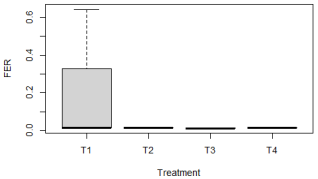
Figure 5. FER of Broiler in different treatment level.
4.1. Body Weight
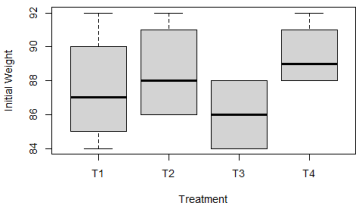
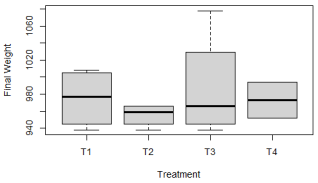
The average initial and final body weight of broiler chicken under various treatment groups have been demonstrated in Table 2. Initial average body weight of the control group (T1) and the three treatment groups (T2, T3 and T4) were 87.5g, 88.5g, 86.0g and 89.5g per bird recorded respectively in Table 2. The table demonstrating the final weight of broiler for four different treatments groups were 975.0g, 955.5g, 987.0g and 973.0g per bird after 4 weeks of age. It is observed in Table 2 that T3 indicates highest average final weight compared to others while T2 detected least final weight numerically. However, statistically p>0.05, depicts that there is no significant differences in body weight among the treatments with supplementation of turmeric rhizome powder. Many studies provided with non-significant result where they were agreed with the present study result
[12]
Kichu M, Nizamuddin, Zuyie R, Rutsa M, Savino N and Singh R (2023) Influence of turmeric based diet on the performance of broiler chicken. Asian J Anim Sci. 17: 21-30.
Nouzarian R, Tabeidian SA, Toghyani M, Ghalamkari G and Toghyani M (2011) Effect of turmeric powder on performance, carcass traits, humoral immune responses and serum metabolites in broiler chickens. J Anim Feed Sci. 20: 389-400.
Wang D, Huang H, Zhou L, Li W and Zhou H (2015) Effects of dietary supplementation with turmeric rhizome extract on growth performance, carcass characteristics, antioxidant capability and meat quality of Wenchang broiler chickens. Ital J Anim Sci. 14.
. On the contrary, researcher documented that increased body weight in broiler with supplementation of 0.5% turmeric within four weeks of age
[16]
Mondal M, Yeasmin T, Karim R, Siddiqui MN, Raihanun-Nabi SM, Sayed M and Siddiky M (2015) Effect of dietary supplementation of turmeric (Curcuma longa) powder on the growth performance and carcass traits of broiler chicks. SAARC J Agric. 13: 188-199.
. The significant impact depends on antioxidant activity which enhance the protein synthesis through bird enzymatic system with utilization of 0.5% turmeric. Similar statement provided by other researchers that use of turmeric increased the body weight of broiler
[11]
Sarkar, Chandan & Mostofa, Mahbub & Sikder, Dr Mahmudul & Ansari, Wahedul & Ahamed, Mostakin & Parvej, Md & Hasan, Muhammad. (2015) Efficacy of Kalo Jeera seeds (Nigella sativa) and Thankuni (Centella asiatica) supplementation on the growth performance of broiler chicken. International Journal of Scientific Reports. 1. 196.
Mashhadani HE (2015) Effect of different levels of turmeric (Curcuma longa) supplementation on broiler performance, carcass characteristic and bacterial count. Egypt Poult Sci J. 35(1): 25-39.
[11, 14]
.
4.2. Weight Gain
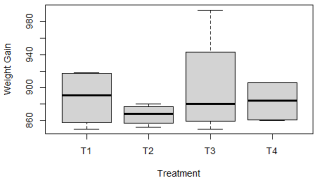
Estimated weight gain in various treatment groups 887.5g, 867.0g, 901.0g and 883.5g for T1, T2, T3 and T4 respectively depicted in Table 2. Numerically the highest increased weight observed in T3 with inclusion of 0.75% turmeric powder whereas less weight gain in T2. In view of statistically non-significant due to p value greater than 0.05. Related studies on poultry demonstrated the non-significant impact of turmeric supplements
[21]
Rangsaz N and Ahangaran MG (2011) Evaluation of turmeric extract on performance indices impressed by induced aflatoxicosis in broiler chickens. Toxicol Ind Health. 27: 956-960.
. On contrast, previous researchers found the significant effect of turmeric on weight gain of broiler
[1]
Abou-Elkhair R, Ahmed HA and Selim S (2014) Effects of black pepper (Piper nigrum), turmeric powder (Curcuma longa) and coriander seeds (Coriandrum sativum) and their combinations as feed additives on growth performance, carcass traits, some blood parameters and humoral immune response of broiler chickens. Asian-Australas J Anim Sci. 27: 847-854.
Hosseini-Vashan SJ, Golian A, Yaghobfar A, Zarban A, Afzali N and Esmaeilinasab P (2012) Antioxidant status, immune system, blood metabolites and carcass characteristic of broiler chickens fed turmeric rhizome powder under heat stress. 11: 16118-16125.
Mondal M, Yeasmin T, Karim R, Siddiqui MN, Raihanun-Nabi SM, Sayed M and Siddiky M (2015) Effect of dietary supplementation of turmeric (Curcuma longa) powder on the growth performance and carcass traits of broiler chicks. SAARC J Agric. 13: 188-199.
. The improvement of body weight gain influenced by the supplementation of turmeric powder which is because of increased intestinal villi length and reduction of intestinal PH
[22]
Sieo CC, Abdullah N, Tan WS and Ho YW (2005) Influence of beta-glucanase producing Lactobacillus strains on intestinal characteristics and feed passage rate of broiler chickens. Poult Sci. 84: 734-741.
. In addition, turmeric stimulates the digestive enzyme secretion and efficiently enhanced absorption of nutrient and impact on growth performance
[5]
Arslan M, Ul Haq A, Ashraf M, Iqbal J and Mund MD (2017) Effect of turmeric (Curcuma longa) supplementation on growth performance, immune response, carcass characteristics and cholesterol profile in broilers. Veterinaria. 66(1): 16-20.
[5]
.
4.3. Feed Intake
Table 2 develops the average feed intake during the whole period for different treatment groups 9260g, 8500g, 9500g, 8760g and 9005g per bird for T1, T2, T3 and T4 separately. In numerical illustration highest feed intake was observed in T3 followed by T1, T4 and T2 respectively. Higher feed intake occurred during the supplementation of turmeric. Statically, P<0.05, so there is a significant impact on feed intake in various levels of treatments. The result of the present study agreed with the previous experiment where significant differences observed
[10]
Hosseini-Vashan SJ, Golian A, Yaghobfar A, Zarban A, Afzali N and Esmaeilinasab P (2012) Antioxidant status, immune system, blood metabolites and carcass characteristic of broiler chickens fed turmeric rhizome powder under heat stress. 11: 16118-16125.
Rajput N, Muhammah N, Yan R, Zhong X and Wang T (2013) Effect of dietary supplementation of curcumin on growth performance, intestinal morphology and nutrients utilization of broiler chicks. J Poult Sci. 50: 44-52.
. However, earlier researcher depicted non-significant effect of feed intake in broiler
[16]
Mondal M, Yeasmin T, Karim R, Siddiqui MN, Raihanun-Nabi SM, Sayed M and Siddiky M (2015) Effect of dietary supplementation of turmeric (Curcuma longa) powder on the growth performance and carcass traits of broiler chicks. SAARC J Agric. 13: 188-199.
Nouzarian R, Tabeidian SA, Toghyani M, Ghalamkari G and Toghyani M (2011) Effect of turmeric powder on performance, carcass traits, humoral immune responses and serum metabolites in broiler chickens. J Anim Feed Sci. 20: 389-400.
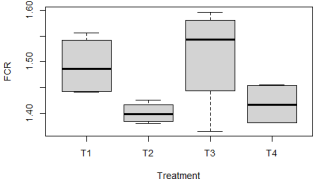
Regarding FCR, the average feed conversion efficiency in varying levels of treatment groups up to 4 weeks of age demonstrated 1.492, 1.401, 1.512, 1.417, 1.46 for T1, T2, T3 and T4 respectively in Table 2. Feed conversion ratio in different dietary treatments was not statistically significant p>0.05. The best FCR (1.401) observed in T2. FCR was lowest in 0.5% followed by 1%, 0% and 0.75% of turmeric supplementation indicating best feed conversion due to peak antioxidant activity of turmeric on 0.5% treatment. Similar studies reported that feeding turmeric powder to broiler, there is no significant effect on FCR at feeding 0.4 and 0.8% range
[25]
Yaghobfar A, Hosseini-Vashan SJ, Golian A, Nassiri MR and Raji R (2011) Evaluation of turmeric powder in diets-based soybean oil on performance, energy and protein efficiency ratio and immune system of broiler chicks. Proc First Int Conf, Babylon and Razi Universities.
[25]
. Moreover, other researchers indicated that addition of turmeric on broiler feed didn’t show significant difference on FCR
[8]
Fallah R and Mirzaei E (2016) Effect of dietary inclusion of turmeric and thyme powders on performance, blood parameters and immune system of broiler chickens. J Livest Sci. 7: 180-186.
[10]
Hosseini-Vashan SJ, Golian A, Yaghobfar A, Zarban A, Afzali N and Esmaeilinasab P (2012) Antioxidant status, immune system, blood metabolites and carcass characteristic of broiler chickens fed turmeric rhizome powder under heat stress. 11: 16118-16125.
. In contrast, there is a significant difference on FCR depending on turmeric supplementation
[18]
Raghdad A and Al-Jaleel A (2012) Use of turmeric (Curcuma longa) on the performance and some physiological traits on the broiler diets. Iraqi J Vet Med. 36(1): 51-57.
. In this research feed efficiency ratio is higher in 0% turmeric treatment. Conversely, few experiments suggested that utilization of turmeric in broiler feed enhance the feed conversion efficiency of bird
[3]
Al-Kassie GAM, Mohseen AM and Abd-Al-Jaleel RA (2011) Modification of productive performance and physiological aspects of broilers on the addition of a mixture of cumin and turmeric to the diet. Res Opin Anim Vet Sci. 1: 31-34.
[16]
Mondal M, Yeasmin T, Karim R, Siddiqui MN, Raihanun-Nabi SM, Sayed M and Siddiky M (2015) Effect of dietary supplementation of turmeric (Curcuma longa) powder on the growth performance and carcass traits of broiler chicks. SAARC J Agric. 13: 188-199.
Rajput N, Muhammah N, Yan R, Zhong X and Wang T (2013) Effect of dietary supplementation of curcumin on growth performance, intestinal morphology and nutrients utilization of broiler chicks. J Poult Sci. 50: 44-52.
Turmeric contains natural medicinal attributes which help to enhance the growth productivity and health status of broiler. The present study depicted that there was a significant impact on feed intake during the use of turmeric in broiler diet. Highest feed intake observed in T3 and lowest in T2. Average mean of feed intake in different groups was 9005g. The flocks were uniform and showed the low variability in five different parameters while in FER the CV is little bit higher than at 2.94. Inclusion of turmeric in dietary supplementation of broiler chicken has a non-significant effect on body weight. It is also revealed that utilization of turmeric in broiler diet there is no significant impact on body weight gain. Feed conversion efficiency highest in T2. It is suggested that inclusion of 0.75% turmeric powder effects on feed intake and feed conversion efficiency in broiler chicken.
Abbreviations
FCR
Feed Conversion Ratio
FCE
Feed Conversion Efficiency
Author Contributions
Md Rafiqul Islam Razib: Conceptualization, Resources, Writing – original draft, Software, Formal Analysis, Writing – review & editing
Muhammad Ibrahim Salisu: Data curation, Methodology, Resources
Conflicts of Interest
The author declares no conflicts of interest.
References
[1]
Abou-Elkhair R, Ahmed HA and Selim S (2014) Effects of black pepper (Piper nigrum), turmeric powder (Curcuma longa) and coriander seeds (Coriandrum sativum) and their combinations as feed additives on growth performance, carcass traits, some blood parameters and humoral immune response of broiler chickens. Asian-Australas J Anim Sci. 27: 847-854.
Al-Jaleel RAA (2012) Use of turmeric (Curcuma longa) on the performance and some physiological traits on the broiler diets. Iraqi J Vet Med. 36(1): 51-57.
Al-Kassie GAM, Mohseen AM and Abd-Al-Jaleel RA (2011) Modification of productive performance and physiological aspects of broilers on the addition of a mixture of cumin and turmeric to the diet. Res Opin Anim Vet Sci. 1: 31-34.
[4]
Al-Sultan SI and Gameel AA (2004) Histopathological changes in the livers of broiler chicken supplemented with turmeric (Curcuma longa). Int J Poult Sci. 3(5): 333-336.
Arslan M, Ul Haq A, Ashraf M, Iqbal J and Mund MD (2017) Effect of turmeric (Curcuma longa) supplementation on growth performance, immune response, carcass characteristics and cholesterol profile in broilers. Veterinaria. 66(1): 16-20.
[6]
Bagchi A (2012) Extraction of curcumin. J Environ Sci Toxicol Food Technol. 1(3): 15-23.
Chattopadhyay I, Biswas K, Bandyopadhyay U and Banerjee RK (2004) Turmeric and curcumin: Biological actions and medicinal applications. Curr Sci. 87: 44-53.
[8]
Fallah R and Mirzaei E (2016) Effect of dietary inclusion of turmeric and thyme powders on performance, blood parameters and immune system of broiler chickens. J Livest Sci. 7: 180-186.
[9]
Hossain ME, Adhikary K, Akter N, Bhowmik P, Sultan MN, Islam S and Das GB (2022) Fish oil, Azadirachta indica and Curcuma longa improve feed efficiency and meat quality of the broiler chicken.
Hosseini-Vashan SJ, Golian A, Yaghobfar A, Zarban A, Afzali N and Esmaeilinasab P (2012) Antioxidant status, immune system, blood metabolites and carcass characteristic of broiler chickens fed turmeric rhizome powder under heat stress. 11: 16118-16125.
Kichu M, Nizamuddin, Zuyie R, Rutsa M, Savino N and Singh R (2023) Influence of turmeric based diet on the performance of broiler chicken. Asian J Anim Sci. 17: 21-30.
Mashhadani HE (2015) Effect of different levels of turmeric (Curcuma longa) supplementation on broiler performance, carcass characteristic and bacterial count. Egypt Poult Sci J. 35(1): 25-39.
[15]
Mehala C and Moorthy M (2008) Production performance of broilers fed with Aloe vera and (Curcuma longa) turmeric. Int J Poult Sci. 7(9): 852-856.
Mondal M, Yeasmin T, Karim R, Siddiqui MN, Raihanun-Nabi SM, Sayed M and Siddiky M (2015) Effect of dietary supplementation of turmeric (Curcuma longa) powder on the growth performance and carcass traits of broiler chicks. SAARC J Agric. 13: 188-199.
Nouzarian R, Tabeidian SA, Toghyani M, Ghalamkari G and Toghyani M (2011) Effect of turmeric powder on performance, carcass traits, humoral immune responses and serum metabolites in broiler chickens. J Anim Feed Sci. 20: 389-400.
Raghdad A and Al-Jaleel A (2012) Use of turmeric (Curcuma longa) on the performance and some physiological traits on the broiler diets. Iraqi J Vet Med. 36(1): 51-57.
Rahman S, Mostofa M, Fatema MN, Latif MA and Afrin S (2014) Effect of neem leaves, turmeric and cinnamon extract as a growth promoter in broilers. Bangladesh Res Publ J. 10(1): 7-13.
[20]
Rajput N, Muhammah N, Yan R, Zhong X and Wang T (2013) Effect of dietary supplementation of curcumin on growth performance, intestinal morphology and nutrients utilization of broiler chicks. J Poult Sci. 50: 44-52.
Rangsaz N and Ahangaran MG (2011) Evaluation of turmeric extract on performance indices impressed by induced aflatoxicosis in broiler chickens. Toxicol Ind Health. 27: 956-960.
Sieo CC, Abdullah N, Tan WS and Ho YW (2005) Influence of beta-glucanase producing Lactobacillus strains on intestinal characteristics and feed passage rate of broiler chickens. Poult Sci. 84: 734-741.
Wang D, Huang H, Zhou L, Li W and Zhou H (2015) Effects of dietary supplementation with turmeric rhizome extract on growth performance, carcass characteristics, antioxidant capability and meat quality of Wenchang broiler chickens. Ital J Anim Sci. 14.
Wuthi-Udomler M, Grisanapan W, Luanratana O and Caichompoo W (2000) Anti-fungal activities of plant extracts. Southeast Asian J Trop Med Public Health. 31(1): 178-182.
[25]
Yaghobfar A, Hosseini-Vashan SJ, Golian A, Nassiri MR and Raji R (2011) Evaluation of turmeric powder in diets-based soybean oil on performance, energy and protein efficiency ratio and immune system of broiler chicks. Proc First Int Conf, Babylon and Razi Universities.
Razib, M. R. I., Salisu, M. I. (2026). Effects of Dietary Turmeric (Curcuma longa) Rhizome Powder on Growth Performance and Feed Efficiency in Broiler Chickens. Science Discovery Agriculture, 1(1), 62-67. https://doi.org/10.11648/j.sda.20260101.17
Razib, M. R. I.; Salisu, M. I. Effects of Dietary Turmeric (Curcuma longa) Rhizome Powder on Growth Performance and Feed Efficiency in Broiler Chickens. Sci. Discov. Agric.2026, 1(1), 62-67. doi: 10.11648/j.sda.20260101.17
@article{10.11648/j.sda.20260101.17,
  author = {Md Rafiqul Islam Razib and Muhammad Ibrahim Salisu},
  title = {Effects of Dietary Turmeric (Curcuma longa) Rhizome Powder on Growth Performance and Feed Efficiency in Broiler Chickens},
  journal = {Science Discovery Agriculture},
  volume = {1},
  number = {1},
  pages = {62-67},
  doi = {10.11648/j.sda.20260101.17},
  url = {https://doi.org/10.11648/j.sda.20260101.17},
  eprint = {https://article.sciencepublishinggroup.com/pdf/10.11648.j.sda.20260101.17},
  abstract = {Antibiotic resistance has become an alarming issue in recent years, and the poultry industry is seeking alternatives in broiler feed to enhance growth and produce safe meat to meet consumer demand. Turmeric is one of the natural feed additives with the potential to improve broiler health and productivity. The present study was conducted to evaluate feed intake, weight gain, and feed conversion efficiency under different dietary treatment levels. A total of one hundred twelve (112) day-old chicks were used and divided into four treatment groups: T1, T2, T3, and T4, containing 0%, 0.5%, 0.75%, and 1% turmeric powder, respectively. Each treatment was replicated three times with seven birds per replicate in a completely randomized experimental design. A significant effect of turmeric powder on feed intake was observed (P Curcuma longa powder supplementation. The experimental flocks were uniform and showed low variability in five parameters; however, the coefficient of variation (CV) for feed efficiency ratio was slightly higher at approximately 2.94%. The results of this experiment suggest that supplementation with 0.75% turmeric powder enhances feed intake in broiler chickens.},
 year = {2026}
}
TY  - JOUR
T1  - Effects of Dietary Turmeric (Curcuma longa) Rhizome Powder on Growth Performance and Feed Efficiency in Broiler Chickens
AU  - Md Rafiqul Islam Razib
AU  - Muhammad Ibrahim Salisu
Y1  - 2026/03/26
PY  - 2026
N1  - https://doi.org/10.11648/j.sda.20260101.17
DO  - 10.11648/j.sda.20260101.17
T2  - Science Discovery Agriculture
JF  - Science Discovery Agriculture
JO  - Science Discovery Agriculture
SP  - 62
EP  - 67
PB  - Science Publishing Group
UR  - https://doi.org/10.11648/j.sda.20260101.17
AB  - Antibiotic resistance has become an alarming issue in recent years, and the poultry industry is seeking alternatives in broiler feed to enhance growth and produce safe meat to meet consumer demand. Turmeric is one of the natural feed additives with the potential to improve broiler health and productivity. The present study was conducted to evaluate feed intake, weight gain, and feed conversion efficiency under different dietary treatment levels. A total of one hundred twelve (112) day-old chicks were used and divided into four treatment groups: T1, T2, T3, and T4, containing 0%, 0.5%, 0.75%, and 1% turmeric powder, respectively. Each treatment was replicated three times with seven birds per replicate in a completely randomized experimental design. A significant effect of turmeric powder on feed intake was observed (P Curcuma longa powder supplementation. The experimental flocks were uniform and showed low variability in five parameters; however, the coefficient of variation (CV) for feed efficiency ratio was slightly higher at approximately 2.94%. The results of this experiment suggest that supplementation with 0.75% turmeric powder enhances feed intake in broiler chickens.
VL  - 1
IS  - 1
ER  -
Department of Animal Husbandry, University of Debrecen, Debrecen, Hungary;Department of Animal Science, Federal University Dutsin-ma, Dutsin Wai, Nigeria
Razib, M. R. I., Salisu, M. I. (2026). Effects of Dietary Turmeric (Curcuma longa) Rhizome Powder on Growth Performance and Feed Efficiency in Broiler Chickens. Science Discovery Agriculture, 1(1), 62-67. https://doi.org/10.11648/j.sda.20260101.17
Razib, M. R. I.; Salisu, M. I. Effects of Dietary Turmeric (Curcuma longa) Rhizome Powder on Growth Performance and Feed Efficiency in Broiler Chickens. Sci. Discov. Agric.2026, 1(1), 62-67. doi: 10.11648/j.sda.20260101.17
@article{10.11648/j.sda.20260101.17,
  author = {Md Rafiqul Islam Razib and Muhammad Ibrahim Salisu},
  title = {Effects of Dietary Turmeric (Curcuma longa) Rhizome Powder on Growth Performance and Feed Efficiency in Broiler Chickens},
  journal = {Science Discovery Agriculture},
  volume = {1},
  number = {1},
  pages = {62-67},
  doi = {10.11648/j.sda.20260101.17},
  url = {https://doi.org/10.11648/j.sda.20260101.17},
  eprint = {https://article.sciencepublishinggroup.com/pdf/10.11648.j.sda.20260101.17},
  abstract = {Antibiotic resistance has become an alarming issue in recent years, and the poultry industry is seeking alternatives in broiler feed to enhance growth and produce safe meat to meet consumer demand. Turmeric is one of the natural feed additives with the potential to improve broiler health and productivity. The present study was conducted to evaluate feed intake, weight gain, and feed conversion efficiency under different dietary treatment levels. A total of one hundred twelve (112) day-old chicks were used and divided into four treatment groups: T1, T2, T3, and T4, containing 0%, 0.5%, 0.75%, and 1% turmeric powder, respectively. Each treatment was replicated three times with seven birds per replicate in a completely randomized experimental design. A significant effect of turmeric powder on feed intake was observed (P Curcuma longa powder supplementation. The experimental flocks were uniform and showed low variability in five parameters; however, the coefficient of variation (CV) for feed efficiency ratio was slightly higher at approximately 2.94%. The results of this experiment suggest that supplementation with 0.75% turmeric powder enhances feed intake in broiler chickens.},
 year = {2026}
}
TY  - JOUR
T1  - Effects of Dietary Turmeric (Curcuma longa) Rhizome Powder on Growth Performance and Feed Efficiency in Broiler Chickens
AU  - Md Rafiqul Islam Razib
AU  - Muhammad Ibrahim Salisu
Y1  - 2026/03/26
PY  - 2026
N1  - https://doi.org/10.11648/j.sda.20260101.17
DO  - 10.11648/j.sda.20260101.17
T2  - Science Discovery Agriculture
JF  - Science Discovery Agriculture
JO  - Science Discovery Agriculture
SP  - 62
EP  - 67
PB  - Science Publishing Group
UR  - https://doi.org/10.11648/j.sda.20260101.17
AB  - Antibiotic resistance has become an alarming issue in recent years, and the poultry industry is seeking alternatives in broiler feed to enhance growth and produce safe meat to meet consumer demand. Turmeric is one of the natural feed additives with the potential to improve broiler health and productivity. The present study was conducted to evaluate feed intake, weight gain, and feed conversion efficiency under different dietary treatment levels. A total of one hundred twelve (112) day-old chicks were used and divided into four treatment groups: T1, T2, T3, and T4, containing 0%, 0.5%, 0.75%, and 1% turmeric powder, respectively. Each treatment was replicated three times with seven birds per replicate in a completely randomized experimental design. A significant effect of turmeric powder on feed intake was observed (P Curcuma longa powder supplementation. The experimental flocks were uniform and showed low variability in five parameters; however, the coefficient of variation (CV) for feed efficiency ratio was slightly higher at approximately 2.94%. The results of this experiment suggest that supplementation with 0.75% turmeric powder enhances feed intake in broiler chickens.
VL  - 1
IS  - 1
ER  -





 Share This Article
 Twitter
 Linked In
 Facebook
 Copy
Copy Download