Abstract
Artificial intelligence (AI) is increasingly integrated into environmental management to address challenges related to climate change, biodiversity loss, pollution control, and sustainable resource use. This study systematically reviews recent scientific literature and policy reports to evaluate both the environmental benefits and ecological costs associated with AI technologies. Using a comparative analytical framework, the research assesses AI applications in environmental monitoring, predictive modelling, and operational optimization alongside the environmental impacts of AI infrastructure, including energy consumption, water use, electronic waste generation, and critical mineral extraction. The findings indicate that AI significantly enhances environmental decision-making by improving forecasting accuracy, optimizing resource efficiency, and enabling real-time ecosystem monitoring. However, these advantages are counterbalanced by substantial environmental burdens arising from energy-intensive data centers, growing e-waste streams, and resource-intensive hardware production. The study identifies a clear sustainability paradox in which AI-driven environmental solutions may inadvertently intensify ecological pressures. To mitigate these risks, the paper recommends the development of energy-efficient algorithms, transition to renewable-powered data centers, implementation of circular economy practices for AI hardware, responsible sourcing of critical minerals, and the integration of environmental accountability into AI governance frameworks. The results emphasize that without sustainable design and policy oversight, AI expansion may undermine environmental progress. Conversely, when aligned with sustainability principles, AI can serve as a powerful tool for advancing global environmental resilience and long-term planetary health.
|
Published in
|
Science Discovery Environment (Volume 1, Issue 1)
|
|
DOI
|
10.11648/j.sdenv.20260101.17
|
|
Page(s)
|
73-84 |
|
Creative Commons
|

This is an Open Access article, distributed under the terms of the Creative Commons Attribution 4.0 International License (http://creativecommons.org/licenses/by/4.0/), which permits unrestricted use, distribution and reproduction in any medium or format, provided the original work is properly cited.
|
|
Copyright
|
Copyright © The Author(s), 2026. Published by Science Publishing Group
|
Keywords
Artificial Intelligence (AI), Global Environmental Challenges, Global Warming, Substantial Electronic Waste
1. Introduction
Artificial Intelligence (AI) has rapidly become one of the defining technologies of the 21st century, offering transformative potential across every sector of society. However, its environmental costs especially its carbon footprint is emerging as a critical global concern. The rapid expansion of energy-intensive data centers, reliance on fossil fuel-based electricity, and demand for rare earth materials are all contributing to a growing environmental burden. These challenges underscore the need for an urgent and coordinated response to ensure that AI development aligns with global sustainability goals
. AI, or Artificial Intelligence, is a broad term used to describe technologies that can process information and imitate how humans think or make decisions. Early versions of AI have existed since the 1950s, but the technology has developed rapidly in recent years. This progress is mainly due to the increase in computer power and the vast amount of data available, which are both essential for training AI systems
| [2] | Halevy, A., Norvig, P., & Pereira, F. (2009). The unreasonable effectiveness of data. IEEE Intelligent Systems, 24(2), 8–12.
https://doi.org/10.1109/MIS.2009.36 |
| [3] | Hazarika, I. (2020). Artificial intelligence: opportunities and implications for the health workforce. International Health, 12(4), 241–245. https://doi.org/10.1093/inthealth/ihaa007 |
[2, 3]
. There are high hopes that artificial intelligence (AI) can help tackle some of the world’s most pressing environmental challenges. From monitoring deforestation and tracking wildlife populations to optimizing energy use and predicting natural disasters, AI is emerging as a powerful tool in the fight against climate change. Already, the technology is being used to map destructive sand dredging and chart methane emissions. One of the most potent greenhouse gases contributing to global warming. Yet, while AI offers immense potential for protecting the planet, it also raises an uncomfortable paradox: the very systems designed to save the environment may themselves be contributing to its degradation
.
Artificial Intelligence (AI) refers to a broad range of technologies capable of processing information, recognizing patterns, and performing tasks that mimic aspects of human thinking. While early forms of AI have existed since the 1950s, the technology has advanced rapidly in recent years, driven by major improvements in computing power and the exponential growth of data. These developments have allowed AI systems to learn from vast datasets, enabling applications across almost every sector from healthcare and education to environmental management
| [6] | J. A. Puppim de Oliveira, C. J. C.(2017), Jabbour Environmental management, climate change, CSR, and governance in clusters of small firms in developing countries: toward an integrated analytical framewor Bus. Soc. 56(1), 130-151,
https://doi.org/10.1177/0007650315575470 |
| [7] | Y. Shang, D. Han, G. Gozgor, M. K. Mahalik, B. K. Sahoo,(2022), The impact of climate policy uncertainty on renewable and non-renewable energy demand in the United States Renew. Energy, 197, 654-667,
https://doi.org/10.1016/j.renene.2022.07.159 |
[6, 7]
. The growing enthusiasm around Artificial Intelligence (AI) and its environmental applications stems from its remarkable ability to process and analyse vast amounts of data. AI can detect patterns, anomalies, and correlations within datasets, and use historical information to make accurate predictions about future outcomes
| [8] | Igual, L., &Seguí, S. (2024). Supervised learning. In Introduction to Data Science: A Python Approach to Concepts, Techniques and Applications (pp. 67–97). Springer International Publishing
https://doi.org/10.1007/978-3-031-48137-2_4 |
[8]
. These capabilities make AI an invaluable tool for environmental monitoring and management, enabling governments, industries, and individuals to make more sustainable and informed decisions
| [9] | Jiang, F., Jiang, Y., Zhi, H., Dong, Y., Li, H., Ma, S., Wang, Y., Dong, Q., Shen, H., & Wang, Y. (2017). Artificial intelligence in healthcare: past, present and future. Stroke and Vascular Neurology, 2(4), 230–243.
https://doi.org/10.1136/svn-2017-000101 |
| [10] | Jobin, A., Ienca, M., &Vayena, E. (2019). The global landscape of AI ethics guidelines. Nature Machine Intelligence, 1, 389–399. https://doi.org/10.1038/s42256-019-0088-2 |
[9, 10]
. While Artificial Intelligence (AI) offers powerful tools for environmental protection, its development and deployment also pose significant environmental challenges. One of the primary concerns is the high energy consumption associated with training and operating large AI models. These processes require massive computational power, often relying on data centres that consume vast amounts of electricity much of which is still generated from non-renewable sources. This contributes to increased carbon emissions and exacerbates climate change
| [11] | Jones, K., Patel, N., Levy, M., Storeygard, A., Balk, D., Gittleman, J., &Daszak, P. (2008). Global trends in emerging infectious diseases. Nature, 451(7181), 990–993.
https://doi.org/10.1038/nature06536 |
| [12] | Kandlhofer, M., Weixelbraun, P., Menzinger, M., Steinbauer-Wagner, G., &Kemenesi, Á. (2023). Education and Awareness for Artificial Intelligence. In International Conference on Informatics in Schools: Situation, Evolution, and Perspectives (pp. 3–12). Springer Nature Switzerland.
https://doi.org/10.1007/978-3-031-44900-0_1 |
[11, 12]
.
Another issue is the water footprint of AI infrastructure. Data centres use substantial quantities of water for cooling servers, leading to water scarcity in certain regions. Furthermore, the production of AI hardware, including servers, chips, and sensors, depends on critical minerals and rare earth elements, the extraction of which can result in habitat destruction, soil degradation, and pollution. Additionally, AI systems generate electronic waste (e-waste) when outdated hardware is discarded. The rapid pace of technological advancement accelerates this cycle, contributing to waste management and recycling challenges
| [13] | Kavanagh, J., & Rich, M. (2018). Truth Decay: An Initial Exploration of the Diminishing Role of Facts and Analysis in American Public Life. RAND Corporation.
https://doi.org/10.7249/RR2314 |
[13]
. In summary, although AI holds great promise for advancing sustainability, its current lifecycle from hardware manufacturing to energy-intensive computation presents environmental costs that must be addressed to ensure AI’s contribution to a truly sustainable future
| [14] | Kirkpatrick, J., Pascanu, R., Rabinowitz, N., Veness, J., Desjardins, G., Rusu, A. A.,...&Hadsell, R. (2017). Overcoming catastrophic forgetting in neural networks. Proceedings of the National Academy of Sciences, 114(13), 3521–3526.
https://doi.org/10.1073/pnas.1611835114 |
[14]
.
Additionally, AI enhances operational efficiency across sectors, reducing resource waste and optimizing environmental performance. For instance, the United Nations Environment Programme (UNEP) employs AI to detect methane emissions from oil and gas installations a critical step in mitigating greenhouse gas release. Innovations such as this foster optimism that AI can contribute significantly to addressing elements of the triple planetary crisis
: climate change, biodiversity and nature loss, and pollution and waste
| [15] | Kordzadeh, N., &Ghasemaghaei, M. (2022). Algorithmic bias: review, synthesis, and future research directions. European Journal of Information Systems, 31(3), 388–409.
https://doi.org/10.1080/0960085X.2021.1927212 |
| [16] | Larsson, S., & Heintz, F. (2020). Transparency in artificial intelligence. Internet Policy Review, 9(2).
https://doi.org/10.14763/2020.2.1469 |
[15, 16]
.
2. The Effect of AI on Climate Change
Artificial Intelligence (AI) has a complex and dual role in influencing climate change
| [17] | Lin, X., Liu, J., Hao, J., Wang, K., Zhang, Y., Li, H.,...& Tan, X. (2020). Collinear holographic data storage technologies. Opto-Electronic Advances, 3(3), 190004.
https://doi.org/10.29026/oea.2020.190004 |
[17]
. On one hand, it offers significant opportunities for mitigation and adaptation, while on the other, it contributes directly and indirectly to greenhouse gas emissions. A strategy for Greening Artificial Intelligence has shown in
Table 1 and Dual Role of Artificial Intelligence in Climate Change has shown in
Table 2.
2.1. Positive Impacts (Mitigation and Adaptation)
1) Energy Optimization: AI can optimize energy consumption in buildings, industries, and transportation systems. For example, smart grids and AI-controlled heating, ventilation, and cooling systems reduce unnecessary energy use, lowering carbon emissions.
2) Climate Modelling and Prediction: AI algorithms can process vast climate datasets to improve weather forecasts, predict extreme events, and model climate trends, enabling better planning for adaptation and disaster management.
3) Sustainable Resource Management: AI helps monitor deforestation, track biodiversity loss, and manage agricultural practices more efficiently, reducing environmental degradation and emissions.
4) Decarbonization of Industries: AI can optimize manufacturing processes, reduce waste, and improve supply chain efficiency, indirectly lowering greenhouse gas emissions
| [18] | Rolnick, D., Donti, P. L., Kaack, L. H., Kochanski, K., Lacoste, A., Sankaran, K., Ross, A. S., Milojevic-Dupont, N., Jaques, N., Waldman-Brown, A., Luccioni, A., Maharaj, T., Sherwin, E. D., Mukkavilli, S. K., Kording, K. P., Gomes, C. P., & Bengio, Y. (2022). Tackling climate change with machine learning. ACM Computing Surveys, 55(2), 1–96.
https://doi.org/10.1145/3485128 |
[18]
.
Table 1. Strategies for Greening Artificial Intelligence.
Challenge | AI-Based Solution | Expected Environmental Benefit |
High computational energy demand | Use of energy-efficient model architectures (e.g., TinyML, pruning, quantization) | Reduced carbon footprint from model training and inference |
Fossil fuel dependence of data centres | Transition to renewable-powered data centres | Reduction in indirect CO₂ emissions |
Hardware-related emissions | Recycling, modular design, and green electronics manufacturing | Lower environmental degradation and waste |
Unregulated expansion of AI | Establishment of AI sustainability policies and emission audits | Encourages responsible and transparent AI use |
Lack of awareness | AI literacy programs emphasizing sustainability | Promotes eco-conscious innovation and usage |
2.2. Negative Impacts (Contribution to Emissions)
1) High Energy Consumption: Training large AI models requires massive computational power. Data centres hosting AI systems consume huge amounts of electricity, often sourced from fossil fuels, which increases carbon emissions. For instance, a single AI model can produce emissions comparable to several cars over their lifetime.
2) Resource Extraction and Manufacturing: The hardware required for AI, including servers and GPUs, relies on mining rare earth elements and other materials, which can lead to environmental degradation and additional emissions.
3) Indirect Behavioural Effects: AI applications may unintentionally increase emissions. For example, AI-powered autonomous vehicles could encourage more driving, reducing reliance on public transport or cycling, thereby increasing greenhouse gas output
| [19] | Little, R. J., & Rubin, D. B. (2019). Statistical Analysis with Missing Data (3rd ed.). John Wiley & Sons.
https://doi.org/10.1002/9781119482260 |
| [20] | Macrae, C. (2022). Learning from the failure of autonomous and intelligent systems: Accidents, safety, and sociotechnical sources of risk. Risk Analysis, 42(9), 1999–2025.
https://doi.org/10.1111/risa.13850 |
[19, 20]
.
Table 2. Dual Role of Artificial Intelligence in Climate Change.
Aspect | Positive Impacts (Mitigation & Adaptation) | Negative Impacts (Contribution to Emissions) |
Energy | AI optimizes energy use in buildings, industries, and transport through smart grids and automated systems. | Data centres and model training consume large amounts of energy, often from fossil fuels. |
Climate Forecasting | AI enhances accuracy of weather prediction and climate modelling for better disaster preparedness. | High computational demand for complex simulations increases energy footprint. |
Resource Management | Supports forest monitoring, precision agriculture, and biodiversity tracking. | Production and disposal of AI hardware contribute to e-waste and emissions. |
Industry & Supply Chains | Improves efficiency, reduces material waste, and promotes decarbonisation. | Encourages consumption and automation that may increase material demand. |
Human Behaviour | Promotes sustainable urban planning and energy-saving habits through AI-assisted apps. | Encourages high-tech lifestyles (e.g., autonomous transport, e-commerce) that indirectly raise emissions. |
AI’s impact on climate change is therefore dual-faceted. If harnessed responsibly, it can significantly support climate mitigation, adaptation, and sustainability efforts. However, without careful regulation, energy-efficient design, and ethical deployment, AI itself could exacerbate climate-related challenges. Ensuring AI contributes positively to climate action requires a combination of green infrastructure, renewable energy adoption, and policy oversight
.
3. The Effect of AI on Biodiversity
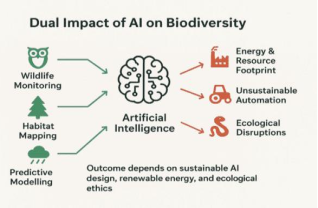
Figure 1. The Effect of AI on Biodiversity.
Artificial Intelligence (AI) has the potential to significantly influence biodiversity by offering tools for conservation and monitoring, while also posing indirect risks through environmental impacts. The effects of AI on biodiversity are illustrated in
Figure 1 [23].
3.1. Positive Impacts (Biodiversity Conservation and Monitoring)
1) Wildlife Monitoring: AI-powered drones, camera traps, and acoustic sensors can automatically identify species, track population trends, and detect illegal activities like poaching or logging. This enables faster and more accurate conservation actions.
2) Habitat Mapping and Protection: AI can analyse satellite imagery and environmental data to identify critical habitats, monitor deforestation, and detect habitat fragmentation, helping governments and organizations implement targeted protection measures.
3) Predictive Modelling: AI algorithms can predict the impacts of climate change, pollution, or land-use changes on ecosystems, guiding conservation planning and mitigating species loss.
4) Sustainable Resource Management: AI supports precision agriculture, fisheries management, and ecosystem management, reducing human pressures on natural habitats and promoting biodiversity-friendly practices
| [24] | Rubin, O., Errett, N., Upshur, R., & Baekkeskov, E. (2021). The challenges facing evidence-based decision-making in the initial response to COVID-19. Scandinavian Journal of Public Health, 49(7), 790–796.
https://doi.org/10.1177/140349482199722 |
[24]
.
3.2. Negative Impacts (Indirect Risks to Biodiversity)
1) Environmental Footprint of AI Infrastructure: The energy-intensive operations of AI data centres, along with the extraction of rare earth elements for hardware, contribute to habitat destruction, pollution, and carbon emissions, all of which threaten biodiversity.
2) Encouragement of Unsustainable Practices: AI-driven industrial efficiencies or automation may inadvertently increase resource exploitation, such as overfishing or intensive agriculture, which can harm ecosystems.
3) Unintended Ecological Consequences: AI interventions in ecosystems for instance, automated species relocation or pest control may have unpredictable effects, potentially disrupting existing ecological balances.
Table 3. Dual Role of AI in Biodiversity.
Aspect | Positive Impacts (Conservation & Monitoring) | Negative Impacts (Indirect Risks to Biodiversity) |
Wildlife Management | AI-powered drones and camera traps monitor species and detect poaching or illegal logging in real time. | Surveillance infrastructure may disturb sensitive habitats or wildlife behaviour. |
Habitat Mapping | AI processes satellite and sensor data to identify and protect critical habitats. | Data centre energy demand indirectly contributes to habitat degradation. |
Predictive Modelling | Models forecast the effects of climate change, pollution, or land use on ecosystems. | Overreliance on algorithms may overlook local ecological nuances. |
Resource Management | AI promotes sustainable agriculture, fishing, and forestry practices. | Industrial automation may drive overexploitation of natural resources. |
Ecosystem Intervention | AI assists in restoration and pest control through precision interventions. | Poorly designed interventions may disrupt ecological balance. |
Table 4. Sustainable Integration Strategies for AI and Biodiversity.
Challenge | Sustainable AI Approach | Biodiversity Benefit |
High energy consumption of AI systems | Power AI operations with renewable energy sources | Reduces carbon emissions that harm ecosystems |
Resource-intensive hardware production | Use recycled materials and eco-efficient hardware | Minimizes habitat loss from mining and manufacturing |
Risk of overexploitation via automation | Establish AI governance frameworks for sustainable use | Prevents overfishing, deforestation, and land degradation |
Limited local data for training | Incorporate indigenous knowledge and local biodiversity data | Improves accuracy and ethical alignment with ecosystems |
Lack of oversight | Create interdisciplinary AI-ecology ethics committees | Ensures safe and ecologically balanced interventions |
AI is a powerful tool for biodiversity conservation, offering unprecedented capabilities for monitoring, predicting, and managing ecosystems. Dual Role of AI in Biodiversity as shown in
Table 3 and Sustainable Integration Strategies for AI and Biodiversity as shown in
Table 4. However, its deployment must be carefully managed to avoid indirect environmental harms that could undermine biodiversity. Integrating energy-efficient AI systems, sustainable hardware practices, and ethical ecological oversight will be critical to maximizing AI’s positive contributions while minimizing its negative impacts
.
4. The Effect of AI on Nature Loss, Pollution, and Waste
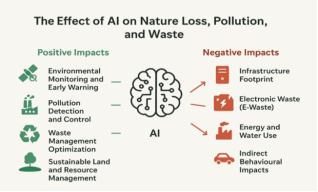
Artificial Intelligence (AI) interacts with environmental systems in complex ways, influencing natural habitats, pollution levels, and waste generation. While AI can support sustainable practices, its infrastructure and applications also pose significant environmental challenges as shown in
Figure 2.
Figure 2. The Effect of AI on Nature Loss, Pollution, and Waste.
4.1. Positive Impacts (Mitigation of Nature Loss, Pollution, and Waste)
1) Environmental Monitoring and Early Warning: AI can analyze satellite imagery and sensor data to track deforestation, desertification, and habitat degradation, enabling timely conservation interventions.
2) Pollution Detection and Control: AI algorithms help identify sources of air, water, and soil pollution. For instance, AI systems can detect industrial emissions, chemical spills, or illegal dumping, supporting regulatory compliance and remediation.
3) Waste Management Optimization: AI improves recycling and waste management systems by automating sorting, predicting waste generation trends, and enhancing resource recovery, reducing landfill use and environmental contamination.
4) Sustainable Land and Resource Management: AI supports precision agriculture, sustainable forestry, and smart urban planning, minimizing overexploitation of natural resources and protecting ecosystems
| [26] | Sass, J., Bartschke, A., Lehne, M., Essenwanger, A., Rinaldi, E., Rudolph, S.,...&Thun, S. (2020). The German Corona Consensus Dataset (GECCO): a standardized dataset for COVID-19 research in university medicine and beyond. BMC Medical Informatics and Decision Making, 20, 341.
https://doi.org/10.1186/s12911-020-01374-w |
[26]
.
4.2. Negative Impacts (Contribution to Nature Loss, Pollution, and Waste)
1) Infrastructure Footprint: Data centres, GPUs, and other AI hardware require significant raw materials and energy. Mining for rare earth elements and constructing electronic components can destroy natural habitats and ecosystems.
2) Electronic Waste (E-Waste): AI systems generate considerable e-waste as hardware becomes obsolete. E-waste often contains hazardous substances like lead, mercury, and cadmium, which contaminate soil and water.
3) Energy and Water Use: AI’s energy-intensive operations contribute to greenhouse gas emissions, indirectly accelerating climate-related habitat loss. Cooling systems for data centres also consume large volumes of water, affecting local ecosystems.
4) Indirect Behavioural Impacts: Some AI-driven technologies, such as autonomous vehicles or industrial automation, may increase resource consumption or pollution indirectly by encouraging greater use of energy-intensive services.
AI has the potential to monitor, predict, and mitigate environmental degradation, helping reduce nature loss, pollution, and waste. However, without sustainable infrastructure, energy-efficient algorithms, and responsible deployment, AI itself can exacerbate environmental harm. To ensure that AI contributes positively, policymakers, researchers, and industry must integrate circular economy practices, renewable energy adoption, and ecological safeguards into the lifecycle of AI technologies
.
5. AI’s Potential for the Environment
AI holds significant promise for addressing some of the world’s most pressing environmental challenges. Its strength lies in detecting patterns, identifying anomalies, and using historical data to predict future outcomes with remarkable accuracy. These capabilities make AI invaluable for monitoring environmental conditions and supporting data-driven decision-making that promotes sustainability. For instance, the United Nations Environment Programme (UNEP) employs AI to detect methane leaks from oil and gas installations a critical source of greenhouse gases that drive climate change. Through such applications, AI can enhance efficiency, reduce waste, and help governments, industries, and individuals make more planet-friendly choices. These advances have raised hopes that AI could contribute to tackling the triple planetary crisis of climate change, biodiversity loss, and pollution and waste
| [28] | Shaelou, S. L., & Razmetaeva, Y. (2023). Challenges to fundamental human rights in the age of artificial intelligence systems: Shaping the digital legal order while upholding rule of law principles and European values. ERA Forum, 24(3), 567–587.
https://doi.org/10.1007/s12027-023-00777-2 |
[28]
. Overview of AI’s Environmental Applications as shown in
Table 5 and Challenges and Opportunities of AI for the Environment as shown in
Table 6.
Table 5. Overview of AI’s Environmental Applications.
Environmental Domain | AI Application | Key Benefit | Example Use Case |
Climate Change Mitigation | Energy optimization, carbon footprint analysis | Reduces greenhouse gas emissions | AI-controlled smart grids and HVAC systems |
Biodiversity Conservation | Automated species detection, habitat mapping | Monitors and protects ecosystems | AI-based camera traps and acoustic sensors |
Pollution Control | Air/water quality prediction, emission tracking | Enables faster pollution detection and mitigation | AI models predicting air quality from satellite data |
Waste Management | Smart sorting, recycling prediction | Increases recycling efficiency and reduces landfill waste | AI-powered robotic recycling systems |
Agriculture & Land Use | Precision farming, soil health analytics | Optimizes input use and minimizes land degradation | AI-assisted irrigation and crop disease detection |
Water Management | Flood forecasting, leak detection | Conserves water and protects infrastructure | AI-enabled flood early warning systems |
Disaster Response | Predictive analytics, damage assessment | Improves preparedness and recovery | AI models mapping post-disaster damage using satellite imagery |
Table 6. Challenges and Opportunities of AI for the Environment.
Challenge | AI Opportunity | Expected Outcome |
High energy demand for computation | Development of green AI and renewable-powered data centers | Reduced carbon footprint |
Lack of high-quality environmental data | AI-driven remote sensing and data integration | Enhanced monitoring accuracy |
Risk of bias in environmental models | Transparent and inclusive AI governance | Reliable, equitable environmental decisions |
E-waste from hardware | Circular design and material recovery | Lower environmental degradation |
Limited policy frameworks | AI-informed sustainability policy design | Stronger environmental governance |
6. Environmental Problems Associated with AI Infrastructure
Despite its potential benefits, AI’s growing environmental footprint is a serious concern. Most large-scale AI systems are hosted in data centres, including those operated by cloud service providers. These facilities consume vast resources and contribute significantly to pollution and waste. The production of electronic components is resource-intensive; manufacturing a 2 kg computer requires approximately 800 kg of raw materials. Furthermore, the microchips that power AI rely on rare earth elements, whose extraction often involves environmentally destructive mining practices (UNEP, Navigating New Horizons, 2023). Data centres also generate substantial electronic waste (e-waste) containing hazardous materials such as mercury and lead. Improper disposal of these substances contaminates soil and water systems. In addition, the cooling systems used to regulate data centre temperatures consume enormous volumes of water both during construction and operation. Recent estimates suggest that global AI infrastructure could soon consume six times more water than Denmark, a country of six million people. This poses a serious challenge in a world where nearly one-quarter of humanity lacks access to safe drinking water. Energy consumption is another major issue. The International Energy Agency (IEA) reports that a single ChatGPT query uses nearly ten times more electricity than a standard Google Search. In Ireland, data centres could account for up to 35% of national energy use by 2026. The number of data centres worldwide has increased from about 500,000 in 2012 to over 8 million today, underscoring the growing environmental burden of AI. Most large-scale Artificial Intelligence (AI) deployments operate within data centres, including those managed by major cloud service providers. These facilities, while essential for processing and storing vast amounts of data, impose a significant environmental burden. The production of electronic components used in data centres is highly resource-intensive; for example, manufacturing a 2 kg computer requires approximately 800 kg of raw materials. Moreover, the microchips that power AI systems depend on rare earth elements, the extraction of which is frequently associated with environmentally destructive mining practices (Navigating New Horizons, 2023).
A second major concern involves electronic waste (e-waste) generated by data centres. Outdated or obsolete hardware often contains hazardous substances such as mercury and lead, posing serious risks to soil and water quality when improperly disposed of.
Third, data centres consume substantial volumes of water, both during their construction and for cooling systems once operational. According to recent estimates, global AI-related infrastructure could soon require six times more water than the entire nation of Denmark, which has a population of around six million people. This presents a significant sustainability issue in a world where approximately one-quarter of humanity already lacks access to clean water and sanitation. Environmental Problems Associated with AI Infrastructure as shown in
Table 7.
Table 7. Environmental Problems Associated with AI Infrastructure.
Category | Specific Issue | Environmental Impact | Underlying Cause / Example |
Energy Consumption | High power demand from training and operating AI models | Increases greenhouse gas emissions and dependence on fossil fuels | Large data centers require constant power for computation and cooling |
Water Use | Heavy use of water for cooling servers | Depletes local freshwater resources and affects aquatic ecosystems | Cooling systems in hyperscale data centers consume millions of liters annually |
Material Extraction | Mining of rare earth elements and metals (e.g., lithium, cobalt) | Causes habitat destruction, soil and water pollution | Production of GPUs, processors, and batteries for AI hardware |
Electronic Waste (E-Waste) | Rapid obsolescence of hardware | Releases toxic substances like lead and cadmium into the environment | Discarded chips, servers, and sensors lacking proper recycling |
Carbon Footprint | Indirect emissions from electricity generation and supply chains | Contributes to climate change and air pollution | Energy used for AI computation, manufacturing, and logistics |
Land Use | Construction of large-scale data centers and infrastructure | Leads to loss of natural habitats and biodiversity | Expansion of industrial and data center facilities in ecologically sensitive areas |
Noise & Heat Pollution | Continuous operation of cooling and power systems | Affects nearby communities and micro-climates | Mechanical noise and waste heat from server farms |
Supply Chain Impacts | Unsustainable production and transport of components | Adds emissions and environmental degradation globally | Long-distance sourcing of metals, chips, and equipment |
End-of-Life Disposal | Poor recycling systems for AI equipment | Increases landfill burden and contaminates soil/water | Inadequate global e-waste management standards |
Finally, the energy demands of AI systems contribute heavily to greenhouse gas emissions. Powering data centres relies predominantly on electricity produced from fossil fuels, releasing large quantities of carbon dioxide. The International Energy Agency (IEA) reports that a single query made through ChatGPT consumes nearly ten times more electricity than a standard Google Search. In Ireland, a major technology hub, the IEA projects that data centres could account for up to 35% of national energy use by 2026.
Driven in part by the rapid expansion of AI technologies, the number of data centres worldwide has surged from approximately 500,000 in 2012 to over 8 million today, and this growth trajectory is expected to continue. These trends underscore the urgent need for strategies that mitigate the environmental footprint of AI infrastructure, including cleaner energy sources, improved cooling technologies, and sustainable materials management
| [29] | Silva, M., Flood, C., Goldenberg, A., & Singh, D. (2022). Regulating the Safety of Health-Related Artificial Intelligence. Healthcare Policy, 17(4), 63–77.
https://doi.org/10.12927/hcpol.2022.26824 |
| [30] | Smidt, H., &Jokonya, O. (2021). The challenge of privacy and security when using technology to track people in times of COVID-19 pandemic. Procedia Computer Science, 181, 1018–1026. https://doi.org/10.1016/j.procs.2021.01.281 |
[29, 30]
.
7. AI as an Environmental Wildcard
AI’s environmental impact remains unpredictable, leading many researchers to label it a wildcard technology. While the immediate impacts of data centres are measurable, the indirect or long-term consequences of AI applications are harder to foresee. AI systems influence social and behavioural patterns in complex ways. For example, the introduction of AI-powered self-driving cars might make personal transportation more convenient, encouraging greater car ownership and reducing the use of public transit or cycling. This behavioural shift could ultimately increase greenhouse gas emissions, counteracting sustainability efforts.
Artificial Intelligence (AI) is often described as a wildcard in the context of environmental sustainability. While the direct environmental impacts of AI infrastructure such as data centres are increasingly understood, the broader and long-term effects of AI-based applications on the planet remain highly uncertain. This uncertainty arises because AI technologies interact with complex social, economic, and behavioural systems, making their ultimate environmental consequences difficult to predict.
Some experts caution that AI innovations may produce unintended consequences that counteract sustainability goals. For instance, the proliferation of AI-powered self-driving vehicles could inadvertently encourage greater private car usage by offering increased convenience and comfort, thereby reducing reliance on public transportation and cycling. Such behavioural shifts could lead to higher greenhouse gas emissions, offsetting potential efficiency gains. Moreover, researchers highlight the potential for higher-order effects—indirect consequences that emerge from how AI systems are used and perceived. One such concern is the use of AI to generate or amplify misinformation about climate change, potentially undermining public trust in scientific evidence and weakening societal motivation for climate action.
In this sense, AI functions as an environmental wildcard: its future impact could either accelerate sustainability and decarbonization or, conversely, exacerbate existing environmental challenges. The direction it takes will largely depend on governance frameworks, ethical deployment, and the alignment of AI development with global sustainability objectives. Moreover, AI can produce higher-order effects—unintended outcomes that affect social perceptions and decision-making. One such risk is the use of AI to generate climate misinformation, potentially misleading the public and weakening global climate action. Thus, while AI could accelerate environmental solutions, it could also unintentionally deepen ecological crises if not properly governed
| [31] | Sundar, S. (2020). Rise of machine agency: A framework for studying the psychology of human – AI interaction (HAII). Journal of Computer-Mediated Communication, 25(1), 74–88. https://doi.org/10.1093/jcmc/zmz026 |
[31]
.
8. Mitigating the Environmental Fallout from AI
Addressing the environmental consequences of Artificial Intelligence (AI) requires coordinated global action, guided by standardized frameworks and transparent governance. According to the United Nations Environment Programme (UNEP), five key strategies can help mitigate AI’s environmental footprint and ensure its sustainable integration into society.
First, countries should establish standardized methodologies for assessing and reporting the environmental impacts of AI. Currently, there is a significant lack of reliable, comparable data on the carbon, water, and material footprints of AI systems. Such standardized measurement systems would enable more accurate evaluations of AI’s sustainability and inform evidence-based policymaking.
Second, with UNEP’s technical support, governments can implement regulations requiring companies to disclose the direct environmental consequences of AI-driven products and services. Mandatory transparency and accountability mechanisms would help ensure that the environmental costs of AI development are not hidden or underestimated.
Third, technology companies can enhance the efficiency of AI algorithms, thereby reducing computational and energy demands. They can also adopt sustainable practices, such as recycling water used for cooling and reusing hardware components, to minimize waste and resource depletion.
Fourth, governments and industries can work together to “green” data centres by transitioning to renewable energy sources, improving energy management systems, and offsetting unavoidable carbon emissions. This step is essential to curb the rapidly growing energy intensity of AI infrastructure
| [32] | Susskind, D. (2021). A world without work: Technology, automation and how we should respond. New Technology, Work and Employment, 36(1), 114-117.
https://doi.org/10.1111/ntwe.12186 |
| [33] | Syed, R., Ulbricht, M., Piotrowski, K., &Krstic, M. (2023). A Survey on Fault-Tolerant Methodologies for Deep Neural Networks. PomiaryAutomatykaRobotyka, 27(2), 89–98.
https://doi.org/10.14313/PAR_248/89 |
[32, 33]
.
Finally, countries should integrate AI-related policies into broader environmental and sustainability frameworks, ensuring that AI development aligns with national and international climate goals.
UNEP has emphasized its commitment to helping the global community navigate the environmental challenges posed by emerging technologies. To this end, it has expanded its efforts in strategic foresight a systematic approach to anticipating and preparing for future risks. These efforts culminated in the publication of Navigating New Horizons: A Global Foresight Report on Planetary Health and Human Wellbeing (2023), produced in collaboration with the International Science Council. The report identified eight major global shifts accelerating the triple planetary crisis of climate change, biodiversity loss, and pollution and waste, and called for proactive governance to ensure AI serves as a tool for planetary health rather than harm. To ensure AI contributes positively to planetary health, UNEP recommends five main strategies for reducing its environmental impact:
1) Establish standardized assessment frameworks to measure the environmental footprint of AI. Reliable data on energy, water, and material usage is essential for setting benchmarks and accountability mechanisms.
2) Mandate corporate transparency, requiring companies to disclose the environmental impacts of their AI products and services.
3) Improve algorithmic and system efficiency by optimizing code, recycling cooling water, and reusing hardware components.
4) Promote green data centres that run on renewable energy, use energy-efficient technologies, and offset their carbon emissions.
5) Integrate AI governance into broader environmental policy frameworks, ensuring that AI development aligns with national and global sustainability goals.
UNEP’s ongoing foresight work, exemplified in Navigating New Horizons: A Global Foresight Report on Planetary Health and Human Wellbeing (2023), emphasizes the need to anticipate and manage emerging technological risks. Produced in collaboration with the International Science Council, the report identifies eight major global shifts intensifying the triple planetary crisis and underscores the importance of steering AI toward ecological responsibility and human well-being
| [34] | Syrowatka, A., Kuznetsova, M., Alsubai, A., Beckman, A., Bain, P., Craig, K. & Bates, D. (2021). Leveraging artificial intelligence for pandemic preparedness and response: a scoping review to identify key use cases npj Digital Medicine, 4(1), 96. https://doi.org/10.1038/s41746-021-00459-8 |
[34]
.
9. Electronic Waste (E-waste) Generated by AI
Artificial Intelligence (AI) technologies, while transformative, significantly contribute to the global problem of electronic waste (e-waste). E-waste includes discarded electronic devices such as servers, GPUs, CPUs, sensors, and other hardware essential for AI computations. Line Graph Growth of AI-Related E-Waste (2015–2030, projected) as shown in
Table 8.
Table 8. Shows that how AI expansion correlates with rising e-waste.
Year | Estimated Global AI-Related E-Waste (Million Tons) |
2015 | 0.5 |
2020 | 1.4 |
2025 | 3.0 |
2030 (Projected) | 5.2 |
9.1. Sources of AI-related E-Waste
1) Data Centres: Large-scale AI systems are primarily hosted in data centres, which contain thousands of servers and networking equipment. As AI models grow in size and complexity, older servers and GPUs are frequently replaced, generating substantial e-waste.
2) Hardware Acceleration: AI applications rely on specialized hardware, such as graphics processing units (GPUs) and tensor processing units (TPUs), which have short operational life spans. Rapid technological upgrades further accelerate disposal.
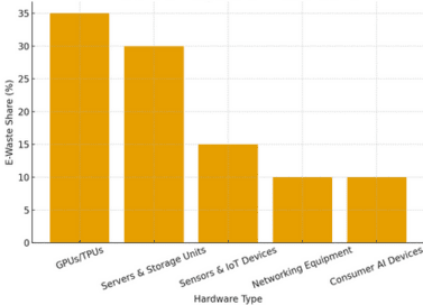
3) Edge Devices and IOT Sensors: AI-driven Internet of Things (IOT) devices, drones, and smart sensors deployed in environmental monitoring, autonomous vehicles, and industrial applications eventually reach the end of life, adding to the e-waste burden. The Bar chart showing the AI Hardware Lifecycle and E-Waste Volume as shown in
Figure 3.
Figure 3. AI Hardware Lifecycle and E-Waste Volume.
9.2. Environmental and Health Impacts
1) Hazardous Substances: E-waste often contains heavy metals (lead, mercury, cadmium), flame retardants, and toxic chemicals, which can leach into soil and water, causing environmental contamination.
2) Energy and Resource Loss: Discarded AI hardware contains rare earth elements and other valuable metals. Without proper recycling, these materials are lost, increasing the need for environmentally destructive mining.
3) Indirect Contribution to Climate Change: Improper e-waste disposal, including incineration, releases greenhouse gases and persistent organic pollutants (POPs) that contribute to climate and ecological risks.
9.3. Mitigation Strategies
1) Circular Economy Practices: Extending the lifecycle of AI hardware through repair, refurbishment, and component reuse can significantly reduce e-waste.
2) Responsible Recycling: Developing formal e-waste recycling infrastructure ensures safe recovery of metals and prevents environmental contamination.
3) Sustainable Hardware Design: Manufacturers can design AI hardware to be modular, energy-efficient, and recyclable, reducing both e-waste and energy consumption.
4) Policy and Regulation: Governments can mandate e-waste management practices for AI infrastructure, including take-back schemes and producer responsibility programs
| [35] | Theis, T., & Wong, H. (2017). The end of Moore’s law: A new beginning for information technology. Computing in Science & Engineering, 19(2), 41–50.
https://doi.org/10.1109/MCSE.2017.29 |
[35]
.
10. Conclusions
1) AI stands at the crossroads of opportunity and risk. Its unparalleled data-processing power can be harnessed to monitor ecosystems, predict environmental trends, and guide sustainable policies. Yet, the same technology poses serious environmental challenges through energy-intensive computation, resource extraction, and electronic waste. The future of AI’s relationship with the environment depends on how humanity chooses to govern and deploy it. With clear regulations, technological innovation, and ethical foresight, AI can evolve from being a potential environmental threat into a critical ally in the fight for a sustainable planet.
2) Addressing AI’s carbon footprint requires systemic, multi-level solutions. Governments must establish clear regulatory frameworks that promote transparency, energy efficiency, and environmental accountability across the AI lifecycle. Technology companies, in turn, need to design low-carbon algorithms, utilize renewable energy, and invest in green infrastructure for data processing and storage. International organizations such as the United Nations Environment Programme (UNEP) and the International Energy Agency (IEA) play a vital role in fostering global cooperation, standardizing impact assessments, and encouraging equitable access to sustainable technologies.
3) Equally important is the integration of AI governance with climate and environmental policy. By embedding sustainability principles into the design, deployment, and disposal phases of AI technologies, the world can significantly reduce the sector’s carbon intensity. Continued research into energy-efficient AI models, circular hardware economies, andcarbon-neutral data systems will be essential in the coming decade.
4) Ultimately, the trajectory of AI’s environmental impact will depend on collective human choices. If guided by foresight, ethics, and sustainability, AI can transition from being a contributor to the climate crisis into a powerful catalyst for global decarbonization and ecological resilience. The challenge ahead lies not in slowing innovation, but in ensuring that innovation itself becomes environmentally intelligent.
5) As AI adoption accelerates worldwide, the generation of e-waste is an emerging environmental challenge. Addressing this issue requires a combination of technological innovation, policy intervention, and sustainable consumption practices to ensure that AI’s benefits do not come at the cost of environmental and human health.
Abbreviations
AI | Artificial Intelligence |
UNEP | United Nations Environment Programme |
IEA | International Energy Agency |
CO2 | Carbon Dioxide |
E-waste | Electronic Waste |
GPU | Graphics Processing Unit |
TPU | Tensor Processing Unit |
IoT | Internet of Things |
HVAC | Heating, Ventilation, and Air Conditioning |
POPs | Persistent Organic Pollutants |
GDP | Gross Domestic Product (If Mentioned Elsewhere) |
ML | Machine Learning |
CPU | Central Processing Unit |
Acknowledgments
The author is deeply grateful to Almighty God and my parents for the wisdom, grace, and strength to complete this manuscript. Special thanks are extended to Dr. M. Sasidhar- Principal, Dr. K. SaiManoj- CEO, Sri K. Rama MohanaRao- Secretary and Correspondent, Sri K. Lakshmi Karthik- President, and Sri K. Ramesh Babu- Industrialist and Chairman of Amrita Sai Institute of Science and Technology, whose Candor, patience, understanding, and constant encouragement have been a source of inspiration throughout this challenging journey of writing the manuscript. The author also gratefully acknowledges the support and cooperation of all the members of the S&H and CRT departments.
Author Contributions
Ravuri Hema Krishna is the sole author. The author read and approved the final manuscript.
Funding
This research did not receive any specific grant from funding agencies in the public, commercial, or not-for-profit sectors.
Conflicts of Interest
No potential conflicts of interest was reported by the author.
References
| [1] |
Hanegraaff, W. (2013). Western Esotericism: A Guide for the Perplexed. Bloomsbury Publishing.
https://doi.org/10.5040/9781472543660
|
| [2] |
Halevy, A., Norvig, P., & Pereira, F. (2009). The unreasonable effectiveness of data. IEEE Intelligent Systems, 24(2), 8–12.
https://doi.org/10.1109/MIS.2009.36
|
| [3] |
Hazarika, I. (2020). Artificial intelligence: opportunities and implications for the health workforce. International Health, 12(4), 241–245.
https://doi.org/10.1093/inthealth/ihaa007
|
| [4] |
Hoff, K., & Bashir, M. (2015). Trust in automation: Integrating empirical evidence on factors that influence trust. Human Factors, 57(3), 407–434.
https://doi.org/10.1177/0018720814547570
|
| [5] |
Hulten, G. (2018). Building Intelligent Systems: A Guide to Machine Learning Engineering. Apress.
https://doi.org/10.1007/978-1-4842-3125-6
|
| [6] |
J. A. Puppim de Oliveira, C. J. C.(2017), Jabbour Environmental management, climate change, CSR, and governance in clusters of small firms in developing countries: toward an integrated analytical framewor Bus. Soc. 56(1), 130-151,
https://doi.org/10.1177/0007650315575470
|
| [7] |
Y. Shang, D. Han, G. Gozgor, M. K. Mahalik, B. K. Sahoo,(2022), The impact of climate policy uncertainty on renewable and non-renewable energy demand in the United States Renew. Energy, 197, 654-667,
https://doi.org/10.1016/j.renene.2022.07.159
|
| [8] |
Igual, L., &Seguí, S. (2024). Supervised learning. In Introduction to Data Science: A Python Approach to Concepts, Techniques and Applications (pp. 67–97). Springer International Publishing
https://doi.org/10.1007/978-3-031-48137-2_4
|
| [9] |
Jiang, F., Jiang, Y., Zhi, H., Dong, Y., Li, H., Ma, S., Wang, Y., Dong, Q., Shen, H., & Wang, Y. (2017). Artificial intelligence in healthcare: past, present and future. Stroke and Vascular Neurology, 2(4), 230–243.
https://doi.org/10.1136/svn-2017-000101
|
| [10] |
Jobin, A., Ienca, M., &Vayena, E. (2019). The global landscape of AI ethics guidelines. Nature Machine Intelligence, 1, 389–399.
https://doi.org/10.1038/s42256-019-0088-2
|
| [11] |
Jones, K., Patel, N., Levy, M., Storeygard, A., Balk, D., Gittleman, J., &Daszak, P. (2008). Global trends in emerging infectious diseases. Nature, 451(7181), 990–993.
https://doi.org/10.1038/nature06536
|
| [12] |
Kandlhofer, M., Weixelbraun, P., Menzinger, M., Steinbauer-Wagner, G., &Kemenesi, Á. (2023). Education and Awareness for Artificial Intelligence. In International Conference on Informatics in Schools: Situation, Evolution, and Perspectives (pp. 3–12). Springer Nature Switzerland.
https://doi.org/10.1007/978-3-031-44900-0_1
|
| [13] |
Kavanagh, J., & Rich, M. (2018). Truth Decay: An Initial Exploration of the Diminishing Role of Facts and Analysis in American Public Life. RAND Corporation.
https://doi.org/10.7249/RR2314
|
| [14] |
Kirkpatrick, J., Pascanu, R., Rabinowitz, N., Veness, J., Desjardins, G., Rusu, A. A.,...&Hadsell, R. (2017). Overcoming catastrophic forgetting in neural networks. Proceedings of the National Academy of Sciences, 114(13), 3521–3526.
https://doi.org/10.1073/pnas.1611835114
|
| [15] |
Kordzadeh, N., &Ghasemaghaei, M. (2022). Algorithmic bias: review, synthesis, and future research directions. European Journal of Information Systems, 31(3), 388–409.
https://doi.org/10.1080/0960085X.2021.1927212
|
| [16] |
Larsson, S., & Heintz, F. (2020). Transparency in artificial intelligence. Internet Policy Review, 9(2).
https://doi.org/10.14763/2020.2.1469
|
| [17] |
Lin, X., Liu, J., Hao, J., Wang, K., Zhang, Y., Li, H.,...& Tan, X. (2020). Collinear holographic data storage technologies. Opto-Electronic Advances, 3(3), 190004.
https://doi.org/10.29026/oea.2020.190004
|
| [18] |
Rolnick, D., Donti, P. L., Kaack, L. H., Kochanski, K., Lacoste, A., Sankaran, K., Ross, A. S., Milojevic-Dupont, N., Jaques, N., Waldman-Brown, A., Luccioni, A., Maharaj, T., Sherwin, E. D., Mukkavilli, S. K., Kording, K. P., Gomes, C. P., & Bengio, Y. (2022). Tackling climate change with machine learning. ACM Computing Surveys, 55(2), 1–96.
https://doi.org/10.1145/3485128
|
| [19] |
Little, R. J., & Rubin, D. B. (2019). Statistical Analysis with Missing Data (3rd ed.). John Wiley & Sons.
https://doi.org/10.1002/9781119482260
|
| [20] |
Macrae, C. (2022). Learning from the failure of autonomous and intelligent systems: Accidents, safety, and sociotechnical sources of risk. Risk Analysis, 42(9), 1999–2025.
https://doi.org/10.1111/risa.13850
|
| [21] |
Margetts, H. (2022). Rethinking AI for good governance. Daedalus, 151(2), 360–371.
https://doi.org/10.1162/daed_a_01922
|
| [22] |
Matsuzaka, Y., & Yashiro, R. (2022). Applications of Deep Learning for Drug Discovery Systems with BigData. Biomed Informatics, 2(4), 603–624.
https://doi.org/10.3390/biomedinformatics2040039
|
| [23] |
Mittelstadt, B., Allo, P., Taddeo, M., Wachter, S., & Floridi, L. (2016). The ethics of algorithms: Mapping the debate. Big Data & Society, 3(2).
https://doi.org/10.1177/2053951716679679
|
| [24] |
Rubin, O., Errett, N., Upshur, R., & Baekkeskov, E. (2021). The challenges facing evidence-based decision-making in the initial response to COVID-19. Scandinavian Journal of Public Health, 49(7), 790–796.
https://doi.org/10.1177/140349482199722
|
| [25] |
Russell, S., & Norvig, P. (2021). Artificial Intelligence: A Modern Approach (4th ed.). Pearson.
https://doi.org/10.1016/C2020-0-02690-0
|
| [26] |
Sass, J., Bartschke, A., Lehne, M., Essenwanger, A., Rinaldi, E., Rudolph, S.,...&Thun, S. (2020). The German Corona Consensus Dataset (GECCO): a standardized dataset for COVID-19 research in university medicine and beyond. BMC Medical Informatics and Decision Making, 20, 341.
https://doi.org/10.1186/s12911-020-01374-w
|
| [27] |
Shin, D., & Park, Y. (2019). Role of fairness, accountability, and transparency in algorithmic affordance. Computers in Human Behavior, 98, 277–284.
https://doi.org/10.1016/j.chb.2019.04.019
|
| [28] |
Shaelou, S. L., & Razmetaeva, Y. (2023). Challenges to fundamental human rights in the age of artificial intelligence systems: Shaping the digital legal order while upholding rule of law principles and European values. ERA Forum, 24(3), 567–587.
https://doi.org/10.1007/s12027-023-00777-2
|
| [29] |
Silva, M., Flood, C., Goldenberg, A., & Singh, D. (2022). Regulating the Safety of Health-Related Artificial Intelligence. Healthcare Policy, 17(4), 63–77.
https://doi.org/10.12927/hcpol.2022.26824
|
| [30] |
Smidt, H., &Jokonya, O. (2021). The challenge of privacy and security when using technology to track people in times of COVID-19 pandemic. Procedia Computer Science, 181, 1018–1026.
https://doi.org/10.1016/j.procs.2021.01.281
|
| [31] |
Sundar, S. (2020). Rise of machine agency: A framework for studying the psychology of human – AI interaction (HAII). Journal of Computer-Mediated Communication, 25(1), 74–88.
https://doi.org/10.1093/jcmc/zmz026
|
| [32] |
Susskind, D. (2021). A world without work: Technology, automation and how we should respond. New Technology, Work and Employment, 36(1), 114-117.
https://doi.org/10.1111/ntwe.12186
|
| [33] |
Syed, R., Ulbricht, M., Piotrowski, K., &Krstic, M. (2023). A Survey on Fault-Tolerant Methodologies for Deep Neural Networks. PomiaryAutomatykaRobotyka, 27(2), 89–98.
https://doi.org/10.14313/PAR_248/89
|
| [34] |
Syrowatka, A., Kuznetsova, M., Alsubai, A., Beckman, A., Bain, P., Craig, K. & Bates, D. (2021). Leveraging artificial intelligence for pandemic preparedness and response: a scoping review to identify key use cases npj Digital Medicine, 4(1), 96.
https://doi.org/10.1038/s41746-021-00459-8
|
| [35] |
Theis, T., & Wong, H. (2017). The end of Moore’s law: A new beginning for information technology. Computing in Science & Engineering, 19(2), 41–50.
https://doi.org/10.1109/MCSE.2017.29
|
Cite This Article
-
APA Style
Krishna, R. H. (2026). Environmental Effects of Artificial Intelligence on the Planet Earth: Mitigation Pathways for a Greener Future. Science Discovery Environment, 1(1), 73-84. https://doi.org/10.11648/j.sdenv.20260101.17
 Copy
|
Copy
|
 Download
ACS Style
Krishna, R. H. Environmental Effects of Artificial Intelligence on the Planet Earth: Mitigation Pathways for a Greener Future. Sci. Discov. Environ. 2026, 1(1), 73-84. doi: 10.11648/j.sdenv.20260101.17
Copy
|
Download
AMA Style
Krishna RH. Environmental Effects of Artificial Intelligence on the Planet Earth: Mitigation Pathways for a Greener Future. Sci Discov Environ. 2026;1(1):73-84. doi: 10.11648/j.sdenv.20260101.17
Copy
|
Download
-
@article{10.11648/j.sdenv.20260101.17,
  author = {Ravuri Hema Krishna},
  title = {Environmental Effects of Artificial Intelligence on the Planet Earth: Mitigation Pathways for a Greener Future},
  journal = {Science Discovery Environment},
  volume = {1},
  number = {1},
  pages = {73-84},
  doi = {10.11648/j.sdenv.20260101.17},
  url = {https://doi.org/10.11648/j.sdenv.20260101.17},
  eprint = {https://article.sciencepublishinggroup.com/pdf/10.11648.j.sdenv.20260101.17},
  abstract = {Artificial intelligence (AI) is increasingly integrated into environmental management to address challenges related to climate change, biodiversity loss, pollution control, and sustainable resource use. This study systematically reviews recent scientific literature and policy reports to evaluate both the environmental benefits and ecological costs associated with AI technologies. Using a comparative analytical framework, the research assesses AI applications in environmental monitoring, predictive modelling, and operational optimization alongside the environmental impacts of AI infrastructure, including energy consumption, water use, electronic waste generation, and critical mineral extraction. The findings indicate that AI significantly enhances environmental decision-making by improving forecasting accuracy, optimizing resource efficiency, and enabling real-time ecosystem monitoring. However, these advantages are counterbalanced by substantial environmental burdens arising from energy-intensive data centers, growing e-waste streams, and resource-intensive hardware production. The study identifies a clear sustainability paradox in which AI-driven environmental solutions may inadvertently intensify ecological pressures. To mitigate these risks, the paper recommends the development of energy-efficient algorithms, transition to renewable-powered data centers, implementation of circular economy practices for AI hardware, responsible sourcing of critical minerals, and the integration of environmental accountability into AI governance frameworks. The results emphasize that without sustainable design and policy oversight, AI expansion may undermine environmental progress. Conversely, when aligned with sustainability principles, AI can serve as a powerful tool for advancing global environmental resilience and long-term planetary health.},
 year = {2026}
}
Copy
|
Download
-
TY  - JOUR
T1  - Environmental Effects of Artificial Intelligence on the Planet Earth: Mitigation Pathways for a Greener Future
AU  - Ravuri Hema Krishna
Y1  - 2026/02/14
PY  - 2026
N1  - https://doi.org/10.11648/j.sdenv.20260101.17
DO  - 10.11648/j.sdenv.20260101.17
T2  - Science Discovery Environment
JF  - Science Discovery Environment
JO  - Science Discovery Environment
SP  - 73
EP  - 84
PB  - Science Publishing Group
UR  - https://doi.org/10.11648/j.sdenv.20260101.17
AB  - Artificial intelligence (AI) is increasingly integrated into environmental management to address challenges related to climate change, biodiversity loss, pollution control, and sustainable resource use. This study systematically reviews recent scientific literature and policy reports to evaluate both the environmental benefits and ecological costs associated with AI technologies. Using a comparative analytical framework, the research assesses AI applications in environmental monitoring, predictive modelling, and operational optimization alongside the environmental impacts of AI infrastructure, including energy consumption, water use, electronic waste generation, and critical mineral extraction. The findings indicate that AI significantly enhances environmental decision-making by improving forecasting accuracy, optimizing resource efficiency, and enabling real-time ecosystem monitoring. However, these advantages are counterbalanced by substantial environmental burdens arising from energy-intensive data centers, growing e-waste streams, and resource-intensive hardware production. The study identifies a clear sustainability paradox in which AI-driven environmental solutions may inadvertently intensify ecological pressures. To mitigate these risks, the paper recommends the development of energy-efficient algorithms, transition to renewable-powered data centers, implementation of circular economy practices for AI hardware, responsible sourcing of critical minerals, and the integration of environmental accountability into AI governance frameworks. The results emphasize that without sustainable design and policy oversight, AI expansion may undermine environmental progress. Conversely, when aligned with sustainability principles, AI can serve as a powerful tool for advancing global environmental resilience and long-term planetary health.
VL  - 1
IS  - 1
ER  -
Copy
|
Download





 Share This Article
 Twitter
 Linked In
 Facebook