
The value distribution theory was introduced by R. Nevanlinna who was the famous Finnish mathematician, Since then, the value distribution theory has not only led to a new field of mathematics, but has also been applied in various fields of mathematics and has made many advances. The value distribution theory of Nevanlinna has played an important role in the study of the growth characteristics of functions, uniqueness, and type of functions. The uniqueness of complex meromorohic functions is a new and original version of the uniqueness of holomorphic functions, which is the core part of the theory of value distributions. Therefore uniqueness of complex meromorphic functions is an outstanding problem in Nevanlinna value distribution theory. There is a lot of research on the uniqueness of two meromorphic functions sharing four values on annuli. In this paper, we have showed uniqueness of functions that are meromorphic on an annulus. For detail, we show uniqueness of two functions that are transcendental meromorphic on an annulus, share for small different functions and satisfy additional condition for characteristic functions, which is an improvement and extension of the results obtained by N. Wu, Q. Ge in 2015 and by D. W. Meng, S. Y. Liu and N. Lu in 2020.
| Published in | Science Discovery Mathematics (Volume 1, Issue 1) |
| DOI | 10.11648/j.sdmath.20260101.15 |
| Page(s) | 43-47 |
| Creative Commons |
This is an Open Access article, distributed under the terms of the Creative Commons Attribution 4.0 International License (http://creativecommons.org/licenses/by/4.0/), which permits unrestricted use, distribution and reproduction in any medium or format, provided the original work is properly cited. |
| Copyright |
Copyright © The Author(s), 2026. Published by Science Publishing Group |
Uniqueness, Meromorphic Function, Sharing Value, Small Function
 and
and  defined in a region
  , it is said that two functions
  is equivalent to
  , and is denoted by
  if
if  .
.  and
and  be meromorphic functions defined in a region, and let
  be a complex number or small function for
  and
and  . We denote the set of points that
  by
by  (
(  ) counting (ignoring) multiplicities.
 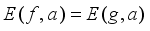 (
( 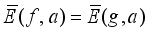 ) means that
  and
and  share
share  considering multiplicities (or ignoring multiplicities).
 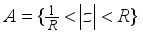 (
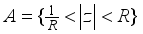
(  ) be an annulus in complex plane and
  be a interger value function whose support is discrete subset of
  , and
, and  are meromorphic functions on the annlus. Then for a positive interger, we define the counting function of
  as follows;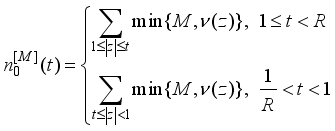
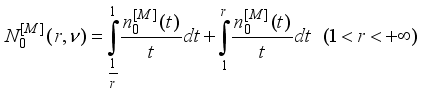 .
.  if
if  . In particular, we call
  the counting function of
  when
when  is number of zeros of
  in
in  . And we call
 , and call
 , where
  .
.  that is nonconstant meromorphic on
  , it is said that is transcendental on
  provide with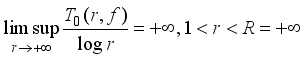
 .
.  on
on  , we have that
  .
.  is said that it is small for the meromorphic function
  on
on  , which is defined as follows:
  , except for set
  such that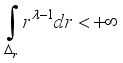
 ;
;  , except for set
  such that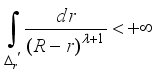
 .
.  ) of
) of  and
and  on
on  by
by 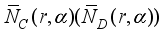 .
.  and
and  share IM if
 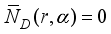 , or if
  .
.  instead of notions

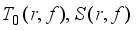 and so on.
  and
and  in the complex plane
  , can’t have the same inverse images of five different values in
  . This is just the first result for uniqueness of meromorphic functions.
  (
(  )
)  and
and  be two functions that are transcendental meromorphic on an annulus
 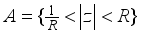 (
(  ), and
 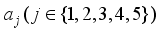 be five different complex values of
  .
.  for
for 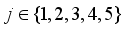 , then it implies that
  .
.  as follows:
  and
and  be two functions that are transcendental meromorphic on an annulus
 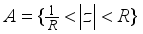 (
(  ), and let
  be five different small functions for
  and
and  .
.  for
for 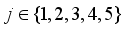 , then
  .
.  and
and  be two functions that are transcendental meromorphic on an annulus
 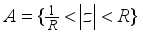 (
(  ), and let
  be five different small functions for
  and
and  .
.  for
for 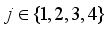 and
and 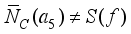
 , where
  is the counting function of the common zeros of
  and
and  (ignoring multiplicities) on
  and
and  is reduced one of
  .
.  and
and  be two functions that are transcendental meromorphic on an annulus
 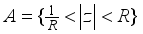 (
(  ), and let
  be five different small functions for
  and
and  .
.  for
for 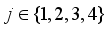 and
and 
 is the counting function of the different zeros of
  and
and  (ignoring multiplicities) on
  and
and  is reduced one of
  .
.  and
and  be two functions that are transcendental meromorphic on an annulus
 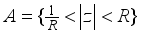 (
(  ), and let
  be five different small functions for
  and
and  .
.  for
for 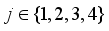 and
and  ,
,  .
.  by
by  yields the same result.
  and
and  be two functions that are transcendental meromorphic on an annulus
 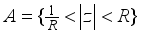 (
(  ), and let
  be five different small functions for
  and
and  .
.  for
for 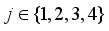 and
and 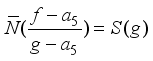
 .
.  be a nonconstant function that is meromorphic on an annulus
 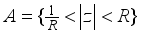 (
(  ). Then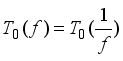

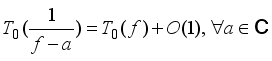 .
.  be a nonconstant function that is meromorphic on an annulus
 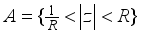 (
(  ) and
) and  . Then, for
  ,
, 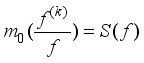 .
.  be a nonconstant function that is meromorphic on an annulus
 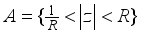 (
(  ), and
 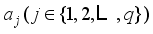 be different values of
  . Then
 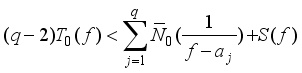 .
.  and
and  be two nonconstant functions that is meromorphic on an annulus
 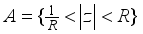 (
(  ) and share
  IM. Then we have
 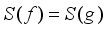 .
.  , we get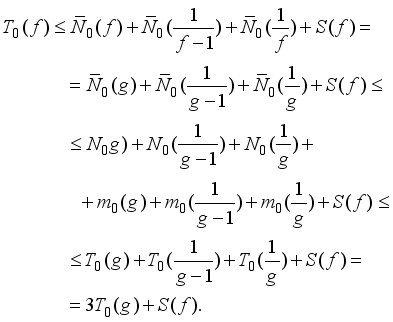
 with
with  we obtain
  .
.  (
(  ), it implies that
 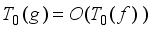 .
. 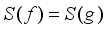 .
.  and
and  be transcendental meromorphic functions on annulus
 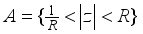 (
(  ) and let
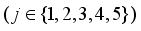 be five different small functions for
  and
and  . And let
  and
and  share
share 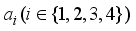 IM.
IM. 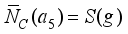 , from Lemma 2.4 we have
  , which is contradiction to the supposition that
  is a transcendental meromorphic function. Thus we get
 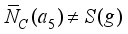 . Therefore, from Theorem C, we obtain
  . (End).
  only come from of zeros of
  and poles of
  . We distinguish the following distinct cases.
  be a zero of
  and not a zero of
  .
.  .
.  be a
be a  -order zero of
  and
and  -order zero of
  .
.  .
.  be a pole of
  and not a zero of
  .
. 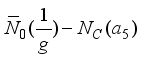 .
.  is not greater than
  .
.  .
. 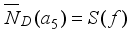 , we have
  . (End).
 | [1] | T. B. Cao, H. X. Yi, Uniqueness theorems of meromorphic functions sharing sets IM on annuli, Acta Math. Sinica, 54 (2011), 623–632. |
| [2] | T. B. Cao, H. X. Yi and H. Y. Xu, On the multiple values and uniqueness of meromorphic functions on annuli, Comput. Math. Appl., 58 (2009), 1457–1465 |
| [3] | A. Y. Khrystiyanyn, A. A. Kondratyuk, On the Nevanlinna theory for meromorphic functions on annuli. I, Mat. Stud., 23 (2005), 19-30. |
| [4] | A. Y. Khrystiyanyn, A. A. Kondratyuk, On the Nevanlinna theory for meromorphic functions on annuli. II, Mat. Stud., 24 (2005), 57-68. |
| [5] | A. A. Kondratyuk, I. Laine, Meromorphic functions in multiply connected domains, Fourier series methods in complex analysis, Univ. Joensuu, 2006. |
| [6] | R. Korhonen, Nevanlinna theory in an annulus, value distribution theory and related topics, Adv. Complex Anal. Appl., 3 (2004), 167-179. |
| [7] | H. F. Liu, Z. Q. Mao, Meromorphic functions in the unit disc that share slowly growing functions in an angular domain, Comput. Math. Appl., 62 (2011), 4539-4546 |
| [8] | D. W. Meng, S. Y. Liu and N. Lu, On the uniqueness of meromorphic functions that share small functions on annuli, AIMS Mathematics, 5(4), 3223-3230. |
| [9] | R. Nevanlinna, Eindentig keitss¨atze in der theorie der meromorphen funktionen, Acta. Math., 48(1926), 367-391. |
| [10] | N. Wu, Q. Ge, On uniqueness of meromorphic functions sharing five small functions on annuli, Bull. Iranian Math. Soc., 41 (2015), 713-722. |
| [11] | H. Y. Xu, Z. J. Wu, The shared set and uniqueness of meromorphic functions on annuli, Abstr. Appl. Anal., 2013 (2013), 1-10. |
| [12] | H. Y. Xu, Z. X. Xuan, The uniqueness of analytic functions on annuli sharing some values, Abstr. Appl. Anal., 2012 (2012), 309-323. |
| [13] | J. H. Zheng, On uniqueness of meromorphic functions with shared values in some angular domains, Canad J. Math., 47 (2004), 152-160. |
| [14] | Si, D. Q., Unicity of meromorphic functions sharing some small function. Int. J. Math. 23(9) (2012) |
| [15] | Si D. Q, Tran A. H., Nguyen T. T. H., Ha H. G., Meromorphic functions having the same inverse images of four values on annuli, Bull. Iran. Math. Soc. 44 (2018), 19-41 |
APA Style
Pak, D. Y., Choe, P. (2026). Uniqueness of Meromorphic Functions for Four Small Functions on Annuli. Science Discovery Mathematics, 1(1), 43-47. https://doi.org/10.11648/j.sdmath.20260101.15
ACS Style
Pak, D. Y.; Choe, P. Uniqueness of Meromorphic Functions for Four Small Functions on Annuli. Sci. Discov. Math. 2026, 1(1), 43-47. doi: 10.11648/j.sdmath.20260101.15
@article{10.11648/j.sdmath.20260101.15,
  author = {Du Yong Pak and Pyongil Choe},
  title = {Uniqueness of Meromorphic Functions for Four Small Functions on Annuli},
  journal = {Science Discovery Mathematics},
  volume = {1},
  number = {1},
  pages = {43-47},
  doi = {10.11648/j.sdmath.20260101.15},
  url = {https://doi.org/10.11648/j.sdmath.20260101.15},
  eprint = {https://article.sciencepublishinggroup.com/pdf/10.11648.j.sdmath.20260101.15},
  abstract = {The value distribution theory was introduced by R. Nevanlinna who was the famous Finnish mathematician, Since then, the value distribution theory has not only led to a new field of mathematics, but has also been applied in various fields of mathematics and has made many advances. The value distribution theory of Nevanlinna has played an important role in the study of the growth characteristics of functions, uniqueness, and type of functions. The uniqueness of complex meromorohic functions is a new and original version of the uniqueness of holomorphic functions, which is the core part of the theory of value distributions. Therefore uniqueness of complex meromorphic functions is an outstanding problem in Nevanlinna value distribution theory. There is a lot of research on the uniqueness of two meromorphic functions sharing four values on annuli. In this paper, we have showed uniqueness of functions that are meromorphic on an annulus. For detail, we show uniqueness of two functions that are transcendental meromorphic on an annulus, share for small different functions and satisfy additional condition for characteristic functions, which is an improvement and extension of the results obtained by N. Wu, Q. Ge in 2015 and by D. W. Meng, S. Y. Liu and N. Lu in 2020.},
 year = {2026}
}
TY  - JOUR
T1  - Uniqueness of Meromorphic Functions for Four Small Functions on Annuli
AU  - Du Yong Pak
AU  - Pyongil Choe
Y1  - 2026/03/26
PY  - 2026
N1  - https://doi.org/10.11648/j.sdmath.20260101.15
DO  - 10.11648/j.sdmath.20260101.15
T2  - Science Discovery Mathematics
JF  - Science Discovery Mathematics
JO  - Science Discovery Mathematics
SP  - 43
EP  - 47
PB  - Science Publishing Group
UR  - https://doi.org/10.11648/j.sdmath.20260101.15
AB  - The value distribution theory was introduced by R. Nevanlinna who was the famous Finnish mathematician, Since then, the value distribution theory has not only led to a new field of mathematics, but has also been applied in various fields of mathematics and has made many advances. The value distribution theory of Nevanlinna has played an important role in the study of the growth characteristics of functions, uniqueness, and type of functions. The uniqueness of complex meromorohic functions is a new and original version of the uniqueness of holomorphic functions, which is the core part of the theory of value distributions. Therefore uniqueness of complex meromorphic functions is an outstanding problem in Nevanlinna value distribution theory. There is a lot of research on the uniqueness of two meromorphic functions sharing four values on annuli. In this paper, we have showed uniqueness of functions that are meromorphic on an annulus. For detail, we show uniqueness of two functions that are transcendental meromorphic on an annulus, share for small different functions and satisfy additional condition for characteristic functions, which is an improvement and extension of the results obtained by N. Wu, Q. Ge in 2015 and by D. W. Meng, S. Y. Liu and N. Lu in 2020.
VL  - 1
IS  - 1
ER  -
Department of Mathematics, University of Science, Pyongyang, DPR Korea

Information



 Share This Article
 Twitter
 Linked In
 Facebook
 Copy
Copy Download