Abstract
Background: Pregnant women are the most vulnerable groups for poor food consumption, particularly for those in resource limiting settings like Ethiopia. Furthermore, there is a scarcity of evidence on food consumption in these population groups and study area. Thus, this study aimed to assess adequate food consumption score and associated factors among pregnant women in Injibara Town, North west Ethiopia. A community based cross-sectional study was conducted from October 7 to November 09, 2024, among 383 pregnant women in Injibara Town. A multistage sampling technique followed by Systematic random sampling technique was used to select study participants. Data were collected using an interviewer-administered questionnaire on Kobo Toolbox and exported to SPSS version 26 for analysis. Binary logistic regression was employed to explore associations between dependent and independent variables. Finally adjusted odds ratio with 95% Confidence Interval at p-value < 0.05 was considered as statistically significant. The result showed that nearly three fifth (58.9%, 95% CI: 54.2%-64.1) of the study participants had adequate food consumption score. Pregnant women who were followed ANC Three times [AOR = 0.46, 95% CI: 0.238, 0.89], prim gravida [AOR = 1.745, 95% CI: 1.036, 2.939], poor wealth status [AOR = 0.269, 95% CI: 0.125, 0.577], middle wealth status [AOR = 0.46, 95% CI: 0.251, 0.843], and skip meal [AOR = 0.288, 95% CI: 0.137, 0.604] were significantly associated with adequate food consumption score. This study revealed that the overall consumption of adequate food during pregnancy was below the World Food Program recommendation. Strengthening antenatal care Services, give special attention to multi grvida women, addressing socioeconomic barriers and reducing meal skipping are recommended to improve adequate food consumption.
Keywords
Ethiopia, Food Consumption Score, Injibara Town, Pregnant Women
1. Introduction
Food Consumption Score (FCS) is a composite score based on dietary diversity, food frequency, and the relative nutritional importance of the food consumed. It serves as an indicator for the balanced food consumption, composite score of dietary diversity, food frequency, and the relative nutritional significance of various food groups. High food consumption increases the possibility that a pregnant woman achieves nutrient adequacy. FCS measures the adequacy of pregnant women's food consumption. A high FCS increases the probability that a pregnant woman's food intake is adequate, whereas a low FCS indicates that her food consumption is inadequate
| [1] | WFP. Food consumption scores nutritional analysis. Technical guidance note 2024.. |
[1]
.
All stages of the life cycle require proper nutrition and a healthy diet; however, nutritional needs are highest among pregnant and lactating mothers because of the increased metabolic demand for the majority of nutrients
| [2] | Workneh, F., et al., Dietary perspectives and practices during pregnancy in rural Amhara region of Ethiopia: an exploratory qualitative study. Current Developments in Nutrition, 2023: p. 100079. |
[2]
. A woman's life is at its most crucial during pregnancy, as she requires the best nourishment needed to sustain the growing fetus. The fetal growth, the development of the mother's tissues during pregnancy
| [3] | Tieu, J., et al., Dietary advice interventions in pregnancy for preventing gestational diabetes mellitus. Cochrane Database of Systematic Reviews, 2017(1). |
[3]
and the production of breast milk raises the need for nutrients
| [4] | Lowensohn, R. I., D. D. Stadler, and C. Naze, Current concepts of maternal nutrition. Obstetrical & gynecological survey, 2016. 71(7): p. 413-426. |
[4]
. However, pregnant women in low and middle-income countries such as, Ethiopia typically consume diets based on a limited number of staple foods, mostly cereals, resulting in gaps between their food intake and the nutritional requirements for various nutrients
| [5] | Tyagi, S., Assessment of maternal dietary intake during pregnancy and its relation with nutritional status of infants at birth. Human Nutrition & Metabolism, 2023. 31: p. 200180. |
| [6] | Tariku, Y. and K. Baye, Pregnant Mothers Diversified Dietary Intake and Associated Factors in Southwest Ethiopia: A Cross‐Sectional Study. Journal of Nutrition and Metabolism, 2022. 2022(1): p. 4613165. |
[5, 6]
.
Nutrition problems are still highly prevalent, especially in pregnant women and children
| [7] | Hailu, S., et al., Iodine deficiency and associated factors among school children: a cross-sectional study in Ethiopia. Archives of Public Health, 2016. 74: p. 1-7. |
[7]
. Globally, around 20 million babies are born underweight each year
| [8] | Organization, W. H., Mobilizing ambitious and impactful commitments for mainstreaming nutrition in health systems: nutrition in universal health coverage: global nutrition summit. 2020. |
[8]
, and 800,000 neonatal deaths each year are caused by mothers who eat inadequately, resulting in small for gestational age births
| [9] | Bhutta, Z. A., et al., Evidence-based interventions for improvement of maternal and child nutrition: what can be done and at what cost? The lancet, 2013. 382(9890): p. 452-477. |
[9]
. About one million neonates die on the first day and in the first week of life due to poor food intake of the mothers before and during pregnancy, as linked with increasing trends in maternal anemia, mortality, and adverse birth outcomes
| [10] | Weldehaweria, N. B., et al., Dietary diversity and related factors among lactating women visiting public health facilities in Aksum town, Tigray, Northern Ethiopia. Bmc Nutrition, 2016. 2: p. 1-9. |
[10]
. In Ethiopia, there are 401 maternal deaths for every 100,000 live births and while the neonatal mortality rate is 28 per 1000 live births
| [11] | Tilahun, A. G. and A. M. Kebede, Maternal minimum dietary diversity and associated factors among pregnant women, Southwest Ethiopia, 2021. BMC nutrition, 2021. 7: p. 1-10. |
[11]
, and approximately 22% of women are thin, 24% anemic, and 8% obese
| [12] | Bekele, Y. A. and G. A. Fekadu, Factors associated with unintended pregnancy in Ethiopia; further analysis of the 2016 Ethiopian demographic health survey data. BMC Pregnancy and Childbirth, 2021. 21: p. 1-7. |
[12]
due to inadequate dietary intake respectively
| [13] | Hirvonen, K. and A. Wolle, Consumption, production, market access and affordability of nutritious foods in the SNNPR Region of Ethiopia. 2019: Intl Food Policy Res Inst. |
[13]
.
Inadequate maternal food intake and poor nutritional quality of diet have a negative impact on birth weight and fetal development
| [14] | Tsegaye, D., D. Tamiru, and T. Belachew, Factors associated with dietary practice and nutritional status of pregnant women in rural communities of Illu aba Bor zone, Southwest Ethiopia. Nutrition and Dietary Supplements, 2020: p. 103-112. |
| [15] | Nana, A. and T. Zema, Dietary practices and associated factors during pregnancy in northwestern Ethiopia. BMC pregnancy and childbirth, 2018. 18: p. 1-8. |
[14, 15]
. An increased risk of fetal morbidity and mortality, post-natal growth retardation, and impaired physical and cognitive development is associated with inadequate food intake during pregnancy. During pregnancy inadequate diets lacking in calories and micronutrients have been linked to stunted fetal development, premature birth, and a higher chance of cardiovascular disease in the future
| [16] | Zelalem, A., et al., Effect of nutrition education on pregnancy specific nutrition knowledge and healthy dietary practice among pregnant women in Addis Ababa. Clinics in Mother and Child Health, 2017. 14(3): p. 265. |
[16]
.
Socioeconomic and demographic factors, obstetric and pregnancy-related factors, dietary related factors and attitude were the main factors that had a big impact on pregnant women’s adequate food consumption score [
17-19].
In Ethiopia, much effort has been made by the government through expanding Ante Natal Care (ANC), delivering the service free of charge and increasing number of trained health professionals and health extension workers
| [20] | Institute, E. P. H., Ethiopia national food consumption survey. Ethiopian Public Health Institute, 2013. |
[20]
. But the prevalence of adequate food consumption in Ethiopia was below World Food Program (WFP) recommendation.
Even though some studies conducted in Ethiopia on FCS among pregnant women consider only food prepared and consumed at home, this study considers foods prepared and consumed at home and outside of the home. There is also a scarcity of evidence for adequate food consumption score in these population groups and study area.
Therefore, this study aimed to assess adequate food consumption score of pregnant women in Injibara Town, Amhara Region, North-west Ethiopia
The findings will provide valuable information for policymakers, program planners, NGOs, and health offices to design or refine nutrition interventions and will serve as a foundation for future research in this area.
2. Methods and Materials
2.1. Study Design, Area and Period
Community based cross-sectional study design was applied among pregnant women in Injibara Town, Amhara Region, North -West Ethiopia, 2024. Injibara town is the capital of the administrative center of Awi Nationality Administration. It is located about 447 km North-west of Addis Ababa and 118 southwest of Bahir Dar a city of Amhara National Regional State. Injibara is located at 10°57′N 36°56′E, in Banja Shekudad Wereda at an elevation of 2,560 meters (8,400 feet) above sea level. Injibara town has a total population of 46,745, of which 23,466 are females, and women of reproductive age were about 11,048
| [21] | CSA, C., Federal Democratic Republic of Ethiopia population projection of Ethiopia for all regions at wereda level from 2014–2017, (August 2013). Ethiopia: Addis Ababa, 2014. |
[21]
. At the time of study there were 1,814 pregnant women in the Town. The town has five kebeles and its weather condition is Dega. There are one general hospital, one public health center, and five health posts in the town, which provide maternal and other health services to the population of the town and the surrounding area. The study was conducted from October 7 to November 09/2024.
2.2. Population
2.2.1. Source Population
All pregnant women living in Injibara Town were the source population.
2.2.2. Study Population
All pregnant women who live in selected kebeles in Injibara Town were considered as the study population.
2.3. Inclusion Criteria
All pregnant women who were lived in the selected kebeles for at least six month
2.4. Sample Size Determination and Sampling Procedure
2.4.1. Sample Size Determination
The sample size was computed based on a single population proportion formula assuming;
1) The prevalence (p) = adequate food consumption score among pregnant women at Shegaw Motta Hospitals (81.5%)
| [17] | Ambaw MB, Shitaye G, Taddele M, Aderaw Z. Level of food consumption score and associated factors among pregnant women at SHEGAW MOTTA hospital, Northwest Ethiopia. BMC public health. 2021; 21: 1-9. |
[17]
.
2) Z α/2 = 1.96 at confidence level of 95%
3) D = 5% margin of error.
n==231.6
By using the design effect of 1.5, it becomes 347.4, and after considering 10% non-response, it becomes 383. So, the final sample size was 383
| [18] | Fite, M. B., et al., Factors associated with food consumption score among pregnant women in Eastern Ethiopia: a community-based study. Journal of Health, Population and Nutrition, 2022. 41(1): p. 6. |
| [22] | Alemayehu, M. S. and E. M. Tesema, Dietary practice and associated factors among pregnant women in Gondar town north west, Ethiopia, 2014. Int J Nutr Food Sci, 2015. 4(6): p. 707-712. |
| [23] | Birhan, M., et al., Level of food consumption score and associated factors among pregnant women at Shegaw Motta Hospital, Northwest Ethiopia. medRxiv, 2020: p. 2020.04. 22.20076034. |
| [24] | Ambaw, M. B., et al., Level of food consumption score and associated factors among pregnant women at SHEGAW MOTTA hospital, Northwest Ethiopia. BMC public health, 2021. 21: p. 1-9. |
[18, 22-24]
.
2.4.2. Sampling Technique and Procedure
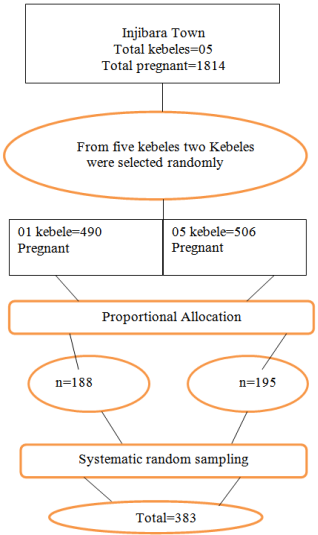
A multistage sampling technique was conducted. Injibara town has five kebeles, with a total of 1814 pregnant women
| [25] | Tafasa, S. M., et al., Dietary diversity, undernutrition and associated factors among pregnant women in Gindeberet district, Oromia, Ethiopia: a cross-sectional study. BMC nutrition, 2023. 9(1): p. 115. |
[25]
. Then kebeles 01 and 05 were selected by the lottery method by taking 30 % of the total town kebeles. The numbers of pregnant women in each kebeles are 490 and 506, respectively. Then the study participants from two kebeles were allocated proportionally. The list of all study participants were obtained from the enumeration of all households having pregnant women in selected kebeles. The study participants were selected using a systematic random sampling technique.
The interval K value was determined by dividing the number of units in the study population (N) by the desired sample size (n) (K = N/n = interval size). For each Kebele, the value of K (interval or Kth value) is two. The first respondent was selected by the lottery method, and then every respondent was chosen based on the interval until the desired sample size is attained.
Where n= total sample size to be selected, N= Total study population, Ni = total target population in each kebele, ni = required sample size from each kebele. The overall sampling procedure is presented in
Figure 1.
Figure 1. Diagrammatic representation of sampling procedure.
2.5. Study Variables
2.5.1. Dependent Variable
Food consumption score (adequate/inadequate)
2.5.2. Independent Variables
Socio-demographic variables: age, maternal education, maternal occupation, marital status, husband education, husband occupation, family size. Wealth status
Obstetric factors: ANC follow up, number of ANC visit, parity, gravidity, trimester, history of still birth
Maternal Knowledge
Maternal Attitude
Maternal dietary habit: meal per day, habit of eating snack, meal skip, fasting, avoid certain food, history of craving and aversion
2.6. Operational Definitions
Food consumption score: To determine pregnant women’s food consumption score; pregnant women were asked to recall all foods consumed in the last seven days before the interview and Each food item was assigned a score of 0 to 7, based on number of days it was consumed, then multiplied by standard weight and then summed up. If the score was greater than forty-two, she was considered as had adequate food consumption score, otherwise she was considered as inadequate food consumption score
| [1] | WFP. Food consumption scores nutritional analysis. Technical guidance note 2024.. |
[1]
.
Knowledge: pregnant women were considered to be knowledgeable if she correctly answered greater than or equal to 14 of the total knowledge assessing questions otherwise she was considered as poor knowledge
| [17] | Ambaw MB, Shitaye G, Taddele M, Aderaw Z. Level of food consumption score and associated factors among pregnant women at SHEGAW MOTTA hospital, Northwest Ethiopia. BMC public health. 2021; 21: 1-9. |
[17]
.
Attitude: pregnant women were considered to be favorable attitude if she answered greater than median value of the total 20 attitudes relating questions, otherwise she was considered as unfavorable attitude
| [19] | Belay, J. K., et al., Food consumption score and predictors among pregnant women attending antenatal care services in health centers of Addis Ababa, Ethiopia: Using ordinal logistic regression model. Plos one, 2024. 19(6): p. e0306169. |
[19]
.
Wealth index: The composite indicator of socioeconomic status, which was computed by the application of principal component analysis (PCA)
| [18] | Fite, M. B., et al., Factors associated with food consumption score among pregnant women in Eastern Ethiopia: a community-based study. Journal of Health, Population and Nutrition, 2022. 41(1): p. 6. |
[18]
. Household asset data were prepared for analysis; categorical variable options were converted into binary variables. The binary variables were coded to 0 and 1. From total wealth index assessing question, only five variables were passed, the rest are dropped as, their frequency greater than 95% and their communality scores were less than 50%. Kind of toilet facility, the main material of the dwelling floor, main material of the exterior walls, Source of Drinking water, household that have chickens were considered for wealth index construction. Finally, the index was developed by categorizing the sum of components into three equal parts and the parts were ranked from poor to rich.
2.7. Data Collection Tool and Procedure
2.7.1. Data Collection Tool
Data were collected using an interviewer-administered questionnaire that was developed based on the World Food Program's (WFP) standardized food frequency questions. Maternal knowledge, maternal attitude on food consumption and maternal dietary habit, was evaluated using questions adapted from previous research
| [18] | Fite, M. B., et al., Factors associated with food consumption score among pregnant women in Eastern Ethiopia: a community-based study. Journal of Health, Population and Nutrition, 2022. 41(1): p. 6. |
| [23] | Birhan, M., et al., Level of food consumption score and associated factors among pregnant women at Shegaw Motta Hospital, Northwest Ethiopia. medRxiv, 2020: p. 2020.04. 22.20076034. |
[18, 23]
. In addition to this, a data collection tool was adapted from EMDHS 2019 to collect data on household assets. The questionnaire includes socio demographic factors; obstetrics related factors, knowledge, attitude, dietary habit, household assets, and food consumption questions.
2.7.2. Data Collection Procedure
Data were collected through face-to-face interviews using the Kobo Toolbox application on mobile phones. Four BSc nursing students served as data collectors under the supervision of a nutritionist.
To assess maternal knowledge of food consumption, participants were asked knowledge-assessing questions. Responses were categorized as either “0” for incorrect answers indicating lack of awareness, or “1” for correct answers indicating awareness. Scores below 14 were categorized as having poor knowledge and those scoring Greater than or equal to 14 were categorized as having good knowledge.
To assess household wealth status, data were prepared for analysis; categorical variable options were converted into binary variables. The binary variables were coded to 0 and 1. From the total wealth index assessing question, only five variables were passed; the rest are dropped as their frequency greater than 95%; their communality scores were less than 50%. Kind of toilet facility, the main material of the dwelling floor, main material of the exterior walls, Source of Drinking water, household that have chickens were considered for wealth index construction. Finally, the index was developed by categorizing the sum of components into three equal parts and the parts were ranked from poor to rich.
The attitude of the study participants towards the consumption of food was measured using 4 item Likert scale questions, the response ranges from strongly disagree to strongly agree. It was considered positive attitude when respondents scored above the median.
To assess food consumption score, participants were asked to recall all foods consumed in the last seven days prior to the interview. Each food item was assigned a score of 0 to 7, based on the number of days it was consumed. Consumption frequencies with the same food group were multiplied by a standardized food group weight (
Table 1) (The weights for each group of food are based on the nutrient density analysis. Higher or lower weights are assigned in terms of caloric density and macro- and micronutrient content. The highest weight was attached to foods with relatively high energy, good quality protein, and a wide range of micronutrients that can be easily absorbed). The weighted score were then summed to determine the overall food composition of each pregnant woman. Finally if the score was greater than forty-two, she was considered as had adequate food consumption score, otherwise she was considered as inadequate food consumption score.
Table 1.
World Food Program (WFP) food groups with each standard weight | [1] | WFP. Food consumption scores nutritional analysis. Technical guidance note 2024.. |
Food items | Food groups | Weight |
Rice, oats, wheat, maize, millet, barley, maize porridge, teff (injera), pasta, bread and other cereals. Potato and sweet potatoes | Main staples | 2 |
|
Beans, chickpea, Peas, groundnuts, soya beans, lentils, almonds, linseeds | Pulses | 3 |
Cabbage, chills, pumpkin, onion, tomato, carrot, kale | Vegetables | 1 |
Banana, orange, apple, mango, papaya, lemon, avocado, peach, watermelon, grapefruit, tangerine, pineapple | Fruit | 1 |
Beef, goat, poultry, pork, eggs and fish | Meat and fish | 4 |
Milk, yogurt and other diary | Milk | 4 |
Oils, fats and butter (Oils, fats and butter (Vegetable oil, sunflower oil, palm oil, coconut oil, olive oil, sesame oil, butter, Include also deeply fried snacks (e.g., potato chips, doughnuts, Samosas, etc.) | Oil | 0.5 |
Sugar and sugar products (Sugar and sugar products; honey, candy, cakes, jam/marmalade, biscuits/cookies, chocolate, cakes, pastries, condensed milk, fruit juice), sugary drinks (including soda and very sugary tea ((with one tablespoon or more)) , ice cream) | Sugar | 0.5 |
2.8. Data Quality Assurance
To ensure data quality, due emphasis was given to questionnaire design and development. Two-day training was given for the data collectors and supervisor on the contents of the questionnaire, interviewing technique, and purpose of the study. The questionnaires were pretested with 5% of the sample size in Gimjabet town to ensure their validity. Prior to analysis, the data was cleaned up and cross-checked. The principal investigator and the supervisor were closely monitoring the process throughout the data collection period and make any necessary corrections.
2.9. Data Processing and Analysis Technique
The data were collected using the Kobo Toolbox, and then exported into SPSS 26 statistical software for analysis. Descriptive statistical analysis was used to summarize the characteristics of the pregnant women. A binary logistic regression model was used to assess the relationship between dependent and independent variables. Independent variables with a p-value <0.25 in the bi-variable logistic regression analysis were imputed in the multivariable logistic regression analysis. The adjusted odds ratio (AOR) with a 95% confidence interval was used as a measure of the strength of the association. Variables with a p-value<0.05 from the multivariable analysis were considered to have a significant association with the outcome variable. The household wealth index was determined using principal component analysis (PCA) in SPSS by considering household assets. Model fitness was assessed using the Hosmer-Lemeshow goodness-of-fit test. The pearsons chi-square in Hosmer-Lemeshow test was p=0.76. Multicollinearity among independent variables was checked using collinearity statistics, where variance inflation factors (VIF) greater than 10 indicated the presence of multicollinearity. Then the results were presented using frequencies, summary measures, tables, and figures.
3. Results
3.1. Socio-Demographic Characteristics of the Study Participants
Out of the total 383 pregnant women, 380 participated in this study yielding a response rate of 99.2%. The mean (
SD) age of participants was 27.7 (±3.24) years, with, 336 (88.4%) aged between 25 -34 years. Regarding education, 338 (88.9%) of pregnant women attend formal education. Nearly three-fifth, 223 (58.7%) of pregnant women were housewives. Concerning their husbands’, 375(98.7%) attend formal education. Based on the principal component analysis (PCA) wealth index, 159 (41.8%) of participants were classified as middle (
Table 2).
Table 2. Socio-demographic and economic characteristics of pregnant women.
Variable | N (%) |
Age in year |
18-24 | 31 (8.2) |
25-34 | 336 (88.4) |
35-49 | 13 (3.4) |
Maternal educational |
Non formal education | 42 (11.1) |
Attend formal education | 338 (88.9) |
Maternal occupation |
House wife | 223 (58.7) |
Merchant | 81 (21.3) |
Government employee | 65 (17.1) |
Private employee | 11 (2.9) |
Marital status |
Married | 378 (99.5) |
Divorced | 2 (0.5) |
Husband education |
Non formal education | 5 (1.3) |
Attend formal education | 375 (98.7) |
Husband occupation |
Farmer | 14 (3.7) |
Daily laborer | 40 (10.7) |
Government employee | 126 (33.2) |
Private employee | 23 (6.1) |
Merchant | 177 (46.6) |
Family size |
<5 | 303 (79.7) |
>=5 | 77 (20.3) |
Wealth status |
Poor | 93 (24.5) |
Middle | 159 (41.8) |
Rich | 128 (33.7) |
3.2. Obstetric Characteristics of Study Participants
Among the study participants, 208 (54.7%) were multigravida. Regarding parity, 172 (45.3%) were nulliparous. About 349 (91.8%) had started ANC visits and 199 (52.4%) attended ANC for four or more time (
Table 3).
Table 3. Obstetric characteristics of pregnant women (n=380).
variable | N(%) |
Gravidity |
Primgravid | 172(45.3) |
Multigravid | 208(54.7) |
Parity |
Nullparious | 172(45.3) |
Paraone | 53(13.9) |
Multipara | 155(40.8) |
Stillbirth |
Yes | 3(0.8) |
No | 377(99.2) |
ANC |
Yes | 349(91.8) |
No | 31(8.2) |
Number of ANC visit |
1-2 | 92(24.2) |
3 | 58(15.3) |
>=4 | 199(52.4) |
Trimesters |
First | 29(7.6) |
Second | 189(49.7) |
Third | 162(42.6) |
3.3. Knowledge and Attitude of Food Consumption
A total of 181 (47.6%) of study participants had good knowledge about food consumption, while 176 (46.3%) had a favorable attitude towards it (
Table 4).
Table 4. knowledge and attitude of food consumption among pregnant women (n=380).
Variable | N(%) |
Maternalknowledge |
good | 181(47.6) |
poor | 199(52.4) |
MaternalAttitude |
Favorable | 176(46.3) |
Unfavorable | 204(53.7) |
3.4. Dietary Habits of the Study Participants
A total of 291 (76.6%) ate three meals per day. Around 322 (84.7%) of respondents did not regularly eat snacks. A total of, 304 (80%) reported skipping at least one regular meals per day. About 368 (96.8%) fasted during the current pregnancy (
Table 5).
Table 5. Dietary habit of pregnant women (n=380).
Variable | Frequency(%) |
Mealperday |
<=3 | 348(91.6) |
>3 | 32(8.4) |
Eatsnack |
Yes | 58(15.3) |
No | 322(84.7) |
Skipmeal |
Yes | 304(80) |
No | 76(20) |
Fasting |
Yes | 368(96.8) |
No | 12(3.2) |
Avoidcertainfood |
Yes | 250(65.8) |
No | 130(34.2) |
Historyofcravingfood |
Yes | 174(45.8) |
No | 206(54.2) |
3.5. Food Consumption Score
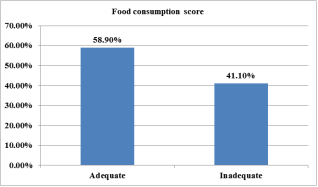
This study found that 58.9% [95% CI: 54.1%-63.5%] of participants had adequate food consumption (
Figure 2).
Figure 2. Food consumption score among pregnant women (n=380).
3.6. Factors Associated with Adequate Food Consumption Score
In the bivariable analysis (p-value < 0.25), significant variables were maternal education, number of ANC visit, gravidity, meal skip, snack, knowledge, and wealth status. However, in the multivariable analysis, number of ANC visit, gravidity, skipping meals and wealth status remained statistically significant.
Participants who attended ANC for three times were 54% less likely to have an adequate food consumption score compared to those who attended ANC for four or more times [AOR = 0.46, 95% CI 0.238, 0.89]. Participants who skip meals were 71.2% less likely to have an adequate food consumption score than those who did not skip meals [AOR = 0.288, 95% CI: 0.137, 0.604]. Participants who had first pregnancy were 1.75 times more likely to have adequate food consumption score than those who had multiple pregnancy [AOR = 1.745, 95% CI: 1.036, 2.939]. Participants from poor wealth status were 73.1% less likely to have an adequate food consumption score compared to those who were rich wealth status [AOR = 0.269, 95% CI: 0.125, 0.577]. Participants from middle wealth status were 54% less likely to have an adequate food consumption score compared to those who were rich wealth status [AOR = 0.46, 95% CI: 0.251, 0.843] (
Table 6).
Table 6. Factors associated with adequate food consumption score among pregnant women (n=380).
Variable | Food consumption score | COR(95%CI) | AOR (95%CI) | P-value |
Adequate | Inadequate |
Maternal Education |
Non formal education | 13 | 29 | 0.27(0.135,0.538) | 0.925(0.376,2.271) | 0.864 |
Attend formal education | 211 | 127 | 1 | 1 | |
Number of ANC visit |
1-2 | 60 | 32 | 0.889(0.527,1.498) | 0.686(0.381,1.237) | 0.21 |
3 | 28 | 30 | 0.442(0.244,0.802) | 0.46(0.238,0.89) | 0.021** |
>=4 | 135 | 64 | 1 | 1 | |
Eat snack |
No | 180 | 142 | 0.403(0.213,0.765) | 0.81(0.377,1.737) | 0.588 |
Yes | 44 | 14 | 1 | 1 | |
Skip Meal |
No | 63 | 13 | 1 | 1 | |
Yes | 161 | 143 | 0.232(0.123,0.44) | 0.288(0.137,0.604) | 0.001** |
Gravidity |
Prim gravida | 114 | 58 | 1.751(1.154,2.658) | 1.745(1.036,2.939) | 0.036** |
Multi gravida | 110 | 98 | 1 | 1 | |
Knowledge |
Poor | 92 | 107 | 0.319(0.208,0.491) | 0.755(0.432,1.321) | 0.325 |
Good | 132 | 49 | 1 | 1 | |
Wealth status |
Poor | 37 | 56 | 0.202(0.113,0.362) | 0.269(0.125,0.577) | 0.001** |
Middle | 89 | 70 | 0.389(0.233,0.651) | 0.46(0.251,0.843) | 0.012** |
Rich | 98 | 30 | 1 | 1 | |
** Statistically significant, 1 reference category
4. Discussion
This study aimed to assess the adequate food consumption score and associated factors among pregnant women in Injibara Town, Amhara Region, Northwest Ethiopia. The results of this study have shown nearly three-fifths (58.9%, 95% CI: 54.1%-63.5) of the study participants had adequate food consumption score. Adequate food consumption score was associated with wealth status, number of ANC follow-up, gravidity and skipping meals.
This finding is in parallel with a study done in Eastern, Ethiopia district of harmia(54.6%)
| [18] | Fite, M. B., et al., Factors associated with food consumption score among pregnant women in Eastern Ethiopia: a community-based study. Journal of Health, Population and Nutrition, 2022. 41(1): p. 6. |
[18]
and the study done in Bangladesh (58%)
| [27] | WFP. Food consumption scores vulnerability assessment and mapping 2019. |
[27]
. However, it is higher than the study done in Addis Ababa, Ethiopia (51.2 %). The reason for the discrepancy between the study conducted in Addis Ababa, Ethiopia (51.2%) and this study is that the study in Addis Ababa was conducted in the fasting season when there is a decreased consumption of animal-source food
| [19] | Belay, J. K., et al., Food consumption score and predictors among pregnant women attending antenatal care services in health centers of Addis Ababa, Ethiopia: Using ordinal logistic regression model. Plos one, 2024. 19(6): p. e0306169. |
[19]
.
Furthermore, the finding has showed that the percentage of adequate food consumption score was lower than studies from, Food consumption coverage in Ethiopia (77%)
| [28] | WFP. Food Consumption Score and Nutritional Quality Analysis Technical guidance note 2015. |
[28]
, Uganda (69%)
| [29] | Olatona, F. A., et al., Dietary habits, diversity, and predictors among pregnant women attending primary health care centers for antenatal care in Lagos, Nigeria. Journal of Family Medicine and Primary Care, 2021. 10(8): p. 3076-3083. |
[29]
and Nigeria (80.3%)
| [30] | Alamirew, S. K., et al., Dietary behaviour and sociocultural determinants of dietary diversity among rural women of reproductive age: A case of Amhara Region, Ethiopia. Nutrients, 2023. 15(15): p. 3369. |
[30]
. The reason for this discrepancy might be; For example, The Food consumption coverage in Ethiopia (77%) report incorporated both the urban and rural parts of the country with a large sample size while our study included only the urban participants. In Ethiopia, pregnant women avoid foods due to cultural and religious reasons, and this might explain the discrepancy between the current study and study from Nigeria where religion and culture has lesser influence over their food choice. In Ethiopia food intake during pregnancy are shaped by restrictions on essential foods considered unacceptable in society, rooted in religious, cultural, historical, and social norms. Animal source foods (such as meat, dairy, and eggs), were the most commonly prohibited foods
| [31] | Tsegaye, D., D. Tamiru, and T. Belachew, Food-related taboos and misconceptions during pregnancy among rural communities of Illu Aba Bor zone, Southwest Ethiopia. A community based qualitative cross-sectional study. BMC pregnancy and childbirth, 2021. 21: p. 1-9. |
| [32] | Debela, B. G., et al., Food taboo practices and associated factors among pregnant women in Ethiopia: a systematic review and meta-analysis. Scientific Reports, 2023. 13(1): p. 4376. |
[31, 32]
. This restriction impacts the adequacy of Food consumption score. A recent systematic review in Ethiopia found that around 34.22% of pregnant women are restricted from consuming essential foods due to cultural taboos, with the prevalence varying significantly by region
| [33] | Walle, B. M., et al., Food Consumption, Dietary Diversity and Associated Factors in Pregnant Women Receiving Ante-Natal Care in East Gojjam Zone, Amhara, Ethiopia. Journal of Health and Environmental Research, 2021. 7(4): p. 206-213. |
[33]
.
The finding of this study is also lower than a study conducted in Shegaw Motta, Ethiopia (81.5%)
| [17] | Ambaw MB, Shitaye G, Taddele M, Aderaw Z. Level of food consumption score and associated factors among pregnant women at SHEGAW MOTTA hospital, Northwest Ethiopia. BMC public health. 2021; 21: 1-9. |
[17]
and study carried out in the Amhara region's East Gojjam Zone(80.3%)
| [34] | Fikadu, T., D. Tamiru, and B. W. Ademe, Food consumption score and the Nexus of maternal nutritional status among pregnant women in Gamo Zone, South Ethiopia. Frontiers in Nutrition, 2025. 12: p. 1498599. |
[34]
. The reason for this discrepancy might be, since the study was at institutional level; pregnant women may have gotten knowledge about proper food consumption during ANC visit from health professionals. Receiving nutritional information and counseling will have good knowledge and understanding to increase consumption of adequate food
| [23] | Birhan, M., et al., Level of food consumption score and associated factors among pregnant women at Shegaw Motta Hospital, Northwest Ethiopia. medRxiv, 2020: p. 2020.04. 22.20076034. |
[23]
. This study was lower than study conducted in Arba Minch Health and Demographic Surveillance site in Southern Ethiopia (76.96%)
| [35] | Madhavi, L. and H. Singh, Nutritional status of rural pregnant women. Religion, 2011. 2: p. 0-05. |
[35]
, the possible reason for this might be that it was conducted during the main harvest season. During winter seasons, food access, including fresh product and staple foods, increases due to harvest time.
Concerning factors associated with adequate food consumption score, this study showed that when the wealth status of the study participants increased, their consumption of adequate food improved. This was also observed in previous studies conducted in eastern Ethiopia
| [18] | Fite, M. B., et al., Factors associated with food consumption score among pregnant women in Eastern Ethiopia: a community-based study. Journal of Health, Population and Nutrition, 2022. 41(1): p. 6. |
[18]
, Arba Minch Health and Demographic Surveillance site in Southern Ethiopia
| [35] | Madhavi, L. and H. Singh, Nutritional status of rural pregnant women. Religion, 2011. 2: p. 0-05. |
[35]
Addis Ababa, Ethiopia
| [19] | Belay, J. K., et al., Food consumption score and predictors among pregnant women attending antenatal care services in health centers of Addis Ababa, Ethiopia: Using ordinal logistic regression model. Plos one, 2024. 19(6): p. e0306169. |
[19]
and Bangladesh
| [27] | WFP. Food consumption scores vulnerability assessment and mapping 2019. |
[27]
. The possible reason for this might be the fact that those pregnant women from the wealthiest class may have better purchasing power for a diversified diet, which could be more likely to afford to have adequate food as compared to pregnant women from a lower wealth status. Therefore, it is important to give special attention to pregnant mothers with low socioeconomic status through strengthening sustainable income-generating activities and saving strategies to improve the wealth status of pregnant women.
Number of attending ANC follow-up during pregnancy was significantly associated with consumption of adequate food. When number of ANC visit increase, it makes pregnant women understand their specific food needs during different stage of pregnancy, leading to increased consumption of wider range of food. At first ANC visit, all pregnant women should receive nutritional advice to consume well-balanced and more diversified food during perinatal period and similarly pregnant women who attend regular ANC utilization exhibits good knowledge and practice of the nutritional status during pregnancy
| [36] | Cheng, Y., et al., Assessment of dietary intake among pregnant women in a rural area of western China. BMC Public Health, 2009. 9: p. 1-9. |
| [37] | Haddrill, R., et al., Understanding delayed access to antenatal care: a qualitative interview study. BMC pregnancy and childbirth, 2014. 14: p. 1-14. |
[36, 37]
. Numerous women do not begin ANC early enough to exploit all chances for ANC, perhaps due to lack of knowing or content or misconceptions of the intention and worth of ANC, the proper period of time to get ANC, and/or absence of assistance from a partner
| [38] | Coelho, N. d. L. P., et al., Dietary patterns in pregnancy and birth weight. Revista de saude publica, 2015. 49: p. 1-10. |
[38]
. When pregnant women increase attendance of ANC follow-ups, they get more nutritional information from health professionals about consumption of adequate food.
The odds of having adequate food consumption score was higher among study participants who had first pregnancies. The possible reason for this might be, as the number of pregnancies increased, maternal choice for a healthy and adequate food decreased
| [39] | Kuche, D., et al., Nutritional status and associated factors among pregnant women in Wondo Genet District, Southern Ethiopia. J Food Sci Eng, 2015. 5(2): p. 85-94. |
| [40] | Fikadu, T., D. Tamiru, and B. W. Ademe, Determinants of breakfast skipping among pregnant women from South Ethiopia Gamo Zone: a case-control study. Scientific Reports, 2024. 14(1): p. 22127. |
[39, 40]
. This might be due to economic factors; multigravida women may face economic challenges that affect their ability to prioritize healthy eating habits and access to nutritious foods.
The odds of having adequate food consumption score was higher among study participants who did not skip meals. A similar finding was observed from a study done in Addis Ababa, Ethiopia
| [19] | Belay, J. K., et al., Food consumption score and predictors among pregnant women attending antenatal care services in health centers of Addis Ababa, Ethiopia: Using ordinal logistic regression model. Plos one, 2024. 19(6): p. e0306169. |
[19]
. The frequency of meals affects nutrient adequacy; an increase in meals per day can improve nutrient adequacy
| [41] | Aizawa, M., et al., Skipping breakfast during pregnancy and hypertensive disorders of pregnancy in Japanese women: the Tohoku medical megabank project birth and three-generation cohort study. Nutrition Journal, 2022. 21(1): p. 71. |
[41]
, so skipping meals regularly for different reasons is not advisable to have a better pregnancy outcome
| [41] | Aizawa, M., et al., Skipping breakfast during pregnancy and hypertensive disorders of pregnancy in Japanese women: the Tohoku medical megabank project birth and three-generation cohort study. Nutrition Journal, 2022. 21(1): p. 71. |
[41]
. Therefore, it is important to give a special attention to pregnant mothers who skip their meal.
4.1. Strength of the Study
The study had the following strength: this study assessed pregnant women’s food consumption score by including foods consumed both inside and outside of the home according to updated 2024 WFP Food consumption scores nutritional analysis technical guidance note. Since the study is community-based, it represents the whole pregnant women in the community, and the findings may be generalized to the general population of pregnant women.
4.2. Limitation of the Study
The information on food consumption relies on the memory of the women subjected to recall bias. The data collection was done based on past feeding practice, which might be social desirable bias. Further research is needed to examine this aspect.
5. Conclusion
This study revealed that the overall consumption of adequate food consumption score during pregnancy was below the WFP recommendation. Number of ANC visit, wealth status, number of pregnancy and meal skipping were significant predictors of adequate food consumption score.
6. Recommendations
Based on the findings of the study, the following recommendations were forwarded
For pregnant women
1) Pregnant women should avoid skipping meals regularly
2) Multi gravida women should consume a wide variety of foods, including fruit, vegetable, whole grain, lean protein and healthy fats.
For Injibara Town Health Office
Intensive activities should be done to Strengthening Antenatal Care (ANC) Services
For the other sectors
The Agriculture sector should addressing socioeconomic barriers (including wealth status) through strengthening sustainable income-generating activities and saving strategies
For researchers
Future researches are encouraged to investigate on food consumption nutrient quality analysis (FCS-N) among pregnant women
Abbreviations
ANC | Antenatal Care |
AOR | Adjusted Odds Ratio |
CI | Confidence Interval |
EMDHS | Ethiopian Mini Demographic and Health Survey |
FCS | Food Consumption Score |
PCA | Principal Component Analysis |
SPSS | Statistical Package for Social Sciences |
WFP | World Food Program |
Acknowledgments
First, we would like to thank Department of Public health College of Medicine and Health Sciences Injibara University for giving me a chance to do this research. we would like to acknowledge Injibara Town Health Center for their cooperation in providing all the necessary data on the target population, which is important for this research report, data collectors, supervisor and Injibara Town (kebeles 01 and 05) communities for their cooperation during the data collection.
Author Contributions
Shashitu Tadele Zeleke: Conceptualization, Writing – original draft, Writing – review & editing
Assefa Andargie Kassa: Methodology, Software
Abebaw Molla: Data curation, Software
Betelhem Mekuriaw Anagaw: Methodology
Daniel Mulat Eshetu: Software, Formal analysis
Atirsaw Assefa Melikamu: Data curation, Validation
Mahider Awoke Belay: Resources, Methodology
Bahru Zemenu Wubetu: Formal analysis, Investigation
Betigist Bekele: Resources, Project administration
Mulatu Kassahun: Investigation, Project administration
Data Availability Statement
The dataset used and/or analyzed during the current study are available from the corresponding author upon reasonable request.
Conflicts of Interest
The authors declare no conflicts of interest.
References
| [1] |
WFP. Food consumption scores nutritional analysis. Technical guidance note 2024..
|
| [2] |
Workneh, F., et al., Dietary perspectives and practices during pregnancy in rural Amhara region of Ethiopia: an exploratory qualitative study. Current Developments in Nutrition, 2023: p. 100079.
|
| [3] |
Tieu, J., et al., Dietary advice interventions in pregnancy for preventing gestational diabetes mellitus. Cochrane Database of Systematic Reviews, 2017(1).
|
| [4] |
Lowensohn, R. I., D. D. Stadler, and C. Naze, Current concepts of maternal nutrition. Obstetrical & gynecological survey, 2016. 71(7): p. 413-426.
|
| [5] |
Tyagi, S., Assessment of maternal dietary intake during pregnancy and its relation with nutritional status of infants at birth. Human Nutrition & Metabolism, 2023. 31: p. 200180.
|
| [6] |
Tariku, Y. and K. Baye, Pregnant Mothers Diversified Dietary Intake and Associated Factors in Southwest Ethiopia: A Cross‐Sectional Study. Journal of Nutrition and Metabolism, 2022. 2022(1): p. 4613165.
|
| [7] |
Hailu, S., et al., Iodine deficiency and associated factors among school children: a cross-sectional study in Ethiopia. Archives of Public Health, 2016. 74: p. 1-7.
|
| [8] |
Organization, W. H., Mobilizing ambitious and impactful commitments for mainstreaming nutrition in health systems: nutrition in universal health coverage: global nutrition summit. 2020.
|
| [9] |
Bhutta, Z. A., et al., Evidence-based interventions for improvement of maternal and child nutrition: what can be done and at what cost? The lancet, 2013. 382(9890): p. 452-477.
|
| [10] |
Weldehaweria, N. B., et al., Dietary diversity and related factors among lactating women visiting public health facilities in Aksum town, Tigray, Northern Ethiopia. Bmc Nutrition, 2016. 2: p. 1-9.
|
| [11] |
Tilahun, A. G. and A. M. Kebede, Maternal minimum dietary diversity and associated factors among pregnant women, Southwest Ethiopia, 2021. BMC nutrition, 2021. 7: p. 1-10.
|
| [12] |
Bekele, Y. A. and G. A. Fekadu, Factors associated with unintended pregnancy in Ethiopia; further analysis of the 2016 Ethiopian demographic health survey data. BMC Pregnancy and Childbirth, 2021. 21: p. 1-7.
|
| [13] |
Hirvonen, K. and A. Wolle, Consumption, production, market access and affordability of nutritious foods in the SNNPR Region of Ethiopia. 2019: Intl Food Policy Res Inst.
|
| [14] |
Tsegaye, D., D. Tamiru, and T. Belachew, Factors associated with dietary practice and nutritional status of pregnant women in rural communities of Illu aba Bor zone, Southwest Ethiopia. Nutrition and Dietary Supplements, 2020: p. 103-112.
|
| [15] |
Nana, A. and T. Zema, Dietary practices and associated factors during pregnancy in northwestern Ethiopia. BMC pregnancy and childbirth, 2018. 18: p. 1-8.
|
| [16] |
Zelalem, A., et al., Effect of nutrition education on pregnancy specific nutrition knowledge and healthy dietary practice among pregnant women in Addis Ababa. Clinics in Mother and Child Health, 2017. 14(3): p. 265.
|
| [17] |
Ambaw MB, Shitaye G, Taddele M, Aderaw Z. Level of food consumption score and associated factors among pregnant women at SHEGAW MOTTA hospital, Northwest Ethiopia. BMC public health. 2021; 21: 1-9.
|
| [18] |
Fite, M. B., et al., Factors associated with food consumption score among pregnant women in Eastern Ethiopia: a community-based study. Journal of Health, Population and Nutrition, 2022. 41(1): p. 6.
|
| [19] |
Belay, J. K., et al., Food consumption score and predictors among pregnant women attending antenatal care services in health centers of Addis Ababa, Ethiopia: Using ordinal logistic regression model. Plos one, 2024. 19(6): p. e0306169.
|
| [20] |
Institute, E. P. H., Ethiopia national food consumption survey. Ethiopian Public Health Institute, 2013.
|
| [21] |
CSA, C., Federal Democratic Republic of Ethiopia population projection of Ethiopia for all regions at wereda level from 2014–2017, (August 2013). Ethiopia: Addis Ababa, 2014.
|
| [22] |
Alemayehu, M. S. and E. M. Tesema, Dietary practice and associated factors among pregnant women in Gondar town north west, Ethiopia, 2014. Int J Nutr Food Sci, 2015. 4(6): p. 707-712.
|
| [23] |
Birhan, M., et al., Level of food consumption score and associated factors among pregnant women at Shegaw Motta Hospital, Northwest Ethiopia. medRxiv, 2020: p. 2020.04. 22.20076034.
|
| [24] |
Ambaw, M. B., et al., Level of food consumption score and associated factors among pregnant women at SHEGAW MOTTA hospital, Northwest Ethiopia. BMC public health, 2021. 21: p. 1-9.
|
| [25] |
Tafasa, S. M., et al., Dietary diversity, undernutrition and associated factors among pregnant women in Gindeberet district, Oromia, Ethiopia: a cross-sectional study. BMC nutrition, 2023. 9(1): p. 115.
|
| [26] |
Ahmed, E., I. Jahan, and A. I. Md, Food security status and food consumption among urban and rural pregnant women of Jashore District in Bangladesh. EPRA International Journal of Multidisciplinary Research, 2019. 5(10): p. 151-158.
|
| [27] |
WFP. Food consumption scores vulnerability assessment and mapping 2019.
|
| [28] |
WFP. Food Consumption Score and Nutritional Quality Analysis Technical guidance note 2015.
|
| [29] |
Olatona, F. A., et al., Dietary habits, diversity, and predictors among pregnant women attending primary health care centers for antenatal care in Lagos, Nigeria. Journal of Family Medicine and Primary Care, 2021. 10(8): p. 3076-3083.
|
| [30] |
Alamirew, S. K., et al., Dietary behaviour and sociocultural determinants of dietary diversity among rural women of reproductive age: A case of Amhara Region, Ethiopia. Nutrients, 2023. 15(15): p. 3369.
|
| [31] |
Tsegaye, D., D. Tamiru, and T. Belachew, Food-related taboos and misconceptions during pregnancy among rural communities of Illu Aba Bor zone, Southwest Ethiopia. A community based qualitative cross-sectional study. BMC pregnancy and childbirth, 2021. 21: p. 1-9.
|
| [32] |
Debela, B. G., et al., Food taboo practices and associated factors among pregnant women in Ethiopia: a systematic review and meta-analysis. Scientific Reports, 2023. 13(1): p. 4376.
|
| [33] |
Walle, B. M., et al., Food Consumption, Dietary Diversity and Associated Factors in Pregnant Women Receiving Ante-Natal Care in East Gojjam Zone, Amhara, Ethiopia. Journal of Health and Environmental Research, 2021. 7(4): p. 206-213.
|
| [34] |
Fikadu, T., D. Tamiru, and B. W. Ademe, Food consumption score and the Nexus of maternal nutritional status among pregnant women in Gamo Zone, South Ethiopia. Frontiers in Nutrition, 2025. 12: p. 1498599.
|
| [35] |
Madhavi, L. and H. Singh, Nutritional status of rural pregnant women. Religion, 2011. 2: p. 0-05.
|
| [36] |
Cheng, Y., et al., Assessment of dietary intake among pregnant women in a rural area of western China. BMC Public Health, 2009. 9: p. 1-9.
|
| [37] |
Haddrill, R., et al., Understanding delayed access to antenatal care: a qualitative interview study. BMC pregnancy and childbirth, 2014. 14: p. 1-14.
|
| [38] |
Coelho, N. d. L. P., et al., Dietary patterns in pregnancy and birth weight. Revista de saude publica, 2015. 49: p. 1-10.
|
| [39] |
Kuche, D., et al., Nutritional status and associated factors among pregnant women in Wondo Genet District, Southern Ethiopia. J Food Sci Eng, 2015. 5(2): p. 85-94.
|
| [40] |
Fikadu, T., D. Tamiru, and B. W. Ademe, Determinants of breakfast skipping among pregnant women from South Ethiopia Gamo Zone: a case-control study. Scientific Reports, 2024. 14(1): p. 22127.
|
| [41] |
Aizawa, M., et al., Skipping breakfast during pregnancy and hypertensive disorders of pregnancy in Japanese women: the Tohoku medical megabank project birth and three-generation cohort study. Nutrition Journal, 2022. 21(1): p. 71.
|
Cite This Article
-
APA Style
Zeleke, S. T., Kassa, A. A., Molla, A., Anagaw, B. M., Eshetu, D. M., et al. (2026). Food Consumption Score and Associated Factors Among Pregnant Women in Injibara Town, Northwest Ethiopia፡
A Community Based Crss-Sectional Study. Science Discovery Public Health, 1(1), 1-11. https://doi.org/10.11648/j.sdph.20260101.11
 Copy
|
Copy
|
 Download
ACS Style
Zeleke, S. T.; Kassa, A. A.; Molla, A.; Anagaw, B. M.; Eshetu, D. M., et al. Food Consumption Score and Associated Factors Among Pregnant Women in Injibara Town, Northwest Ethiopia፡
A Community Based Crss-Sectional Study. Sci. Discov. Public Health 2026, 1(1), 1-11. doi: 10.11648/j.sdph.20260101.11
Copy
|
Download
AMA Style
Zeleke ST, Kassa AA, Molla A, Anagaw BM, Eshetu DM, et al. Food Consumption Score and Associated Factors Among Pregnant Women in Injibara Town, Northwest Ethiopia፡
A Community Based Crss-Sectional Study. Sci Discov Public Health. 2026;1(1):1-11. doi: 10.11648/j.sdph.20260101.11
Copy
|
Download
-
@article{10.11648/j.sdph.20260101.11,
  author = {Shashitu Tadele Zeleke and Assefa Andargie Kassa and Abebaw Molla and Betelhem Mekuriaw Anagaw and Daniel Mulat Eshetu and Atirsaw Assefa Melikamu and Mahider Awoke Belay and Bahru Zemenu Wubetu and Betigist Bekele and Mulatu Kassahun},
  title = {Food Consumption Score and Associated Factors Among Pregnant Women in Injibara Town, Northwest Ethiopia፡
A Community Based Crss-Sectional Study},
  journal = {Science Discovery Public Health},
  volume = {1},
  number = {1},
  pages = {1-11},
  doi = {10.11648/j.sdph.20260101.11},
  url = {https://doi.org/10.11648/j.sdph.20260101.11},
  eprint = {https://article.sciencepublishinggroup.com/pdf/10.11648.j.sdph.20260101.11},
  abstract = {Background: Pregnant women are the most vulnerable groups for poor food consumption, particularly for those in resource limiting settings like Ethiopia. Furthermore, there is a scarcity of evidence on food consumption in these population groups and study area. Thus, this study aimed to assess adequate food consumption score and associated factors among pregnant women in Injibara Town, North west Ethiopia. A community based cross-sectional study was conducted from October 7 to November 09, 2024, among 383 pregnant women in Injibara Town. A multistage sampling technique followed by Systematic random sampling technique was used to select study participants. Data were collected using an interviewer-administered questionnaire on Kobo Toolbox and exported to SPSS version 26 for analysis. Binary logistic regression was employed to explore associations between dependent and independent variables. Finally adjusted odds ratio with 95% Confidence Interval at p-value < 0.05 was considered as statistically significant. The result showed that nearly three fifth (58.9%, 95% CI: 54.2%-64.1) of the study participants had adequate food consumption score. Pregnant women who were followed ANC Three times [AOR = 0.46, 95% CI: 0.238, 0.89], prim gravida [AOR = 1.745, 95% CI: 1.036, 2.939], poor wealth status [AOR = 0.269, 95% CI: 0.125, 0.577], middle wealth status [AOR = 0.46, 95% CI: 0.251, 0.843], and skip meal [AOR = 0.288, 95% CI: 0.137, 0.604] were significantly associated with adequate food consumption score. This study revealed that the overall consumption of adequate food during pregnancy was below the World Food Program recommendation. Strengthening antenatal care Services, give special attention to multi grvida women, addressing socioeconomic barriers and reducing meal skipping are recommended to improve adequate food consumption.},
 year = {2026}
}
Copy
|
Download
-
TY  - JOUR
T1  - Food Consumption Score and Associated Factors Among Pregnant Women in Injibara Town, Northwest Ethiopia፡
A Community Based Crss-Sectional Study
AU  - Shashitu Tadele Zeleke
AU  - Assefa Andargie Kassa
AU  - Abebaw Molla
AU  - Betelhem Mekuriaw Anagaw
AU  - Daniel Mulat Eshetu
AU  - Atirsaw Assefa Melikamu
AU  - Mahider Awoke Belay
AU  - Bahru Zemenu Wubetu
AU  - Betigist Bekele
AU  - Mulatu Kassahun
Y1  - 2026/02/28
PY  - 2026
N1  - https://doi.org/10.11648/j.sdph.20260101.11
DO  - 10.11648/j.sdph.20260101.11
T2  - Science Discovery Public Health
JF  - Science Discovery Public Health
JO  - Science Discovery Public Health
SP  - 1
EP  - 11
PB  - Science Publishing Group
UR  - https://doi.org/10.11648/j.sdph.20260101.11
AB  - Background: Pregnant women are the most vulnerable groups for poor food consumption, particularly for those in resource limiting settings like Ethiopia. Furthermore, there is a scarcity of evidence on food consumption in these population groups and study area. Thus, this study aimed to assess adequate food consumption score and associated factors among pregnant women in Injibara Town, North west Ethiopia. A community based cross-sectional study was conducted from October 7 to November 09, 2024, among 383 pregnant women in Injibara Town. A multistage sampling technique followed by Systematic random sampling technique was used to select study participants. Data were collected using an interviewer-administered questionnaire on Kobo Toolbox and exported to SPSS version 26 for analysis. Binary logistic regression was employed to explore associations between dependent and independent variables. Finally adjusted odds ratio with 95% Confidence Interval at p-value < 0.05 was considered as statistically significant. The result showed that nearly three fifth (58.9%, 95% CI: 54.2%-64.1) of the study participants had adequate food consumption score. Pregnant women who were followed ANC Three times [AOR = 0.46, 95% CI: 0.238, 0.89], prim gravida [AOR = 1.745, 95% CI: 1.036, 2.939], poor wealth status [AOR = 0.269, 95% CI: 0.125, 0.577], middle wealth status [AOR = 0.46, 95% CI: 0.251, 0.843], and skip meal [AOR = 0.288, 95% CI: 0.137, 0.604] were significantly associated with adequate food consumption score. This study revealed that the overall consumption of adequate food during pregnancy was below the World Food Program recommendation. Strengthening antenatal care Services, give special attention to multi grvida women, addressing socioeconomic barriers and reducing meal skipping are recommended to improve adequate food consumption.
VL  - 1
IS  - 1
ER  -
Copy
|
Download

 ,
Assefa Andargie Kassa
,
Assefa Andargie Kassa


 Share This Article
 Twitter
 Linked In
 Facebook