2. Materials and Methods
2.1. Description of the Study Area
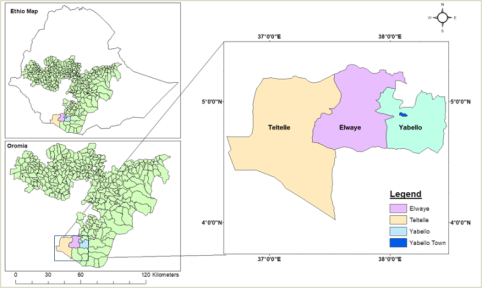
Figure 1. Map of the study area.
The study was carried out during the main cropping season of 2023, (from mid-March to early June) at three districts viz. Yabello, Elwaye and Teltelle of the Borana zone. The assessed districts were selected purposively based on common bean production potential. Throughout the assessment of major common bean foliar diseases, seventy-five common bean fields were assessed. The districts are characterized by the following variables; Yabello district is found at 570km from capital city Addis Ababa, to the southern part of the country with an altitude range of 1490-1800masl and 04051'.1789''N, 038006'223''E latitude and longitude respectively. Its soil feature is mostly known as sandy and has an annual maximum and minimum temperature of 26.3°C and 14.5°C respectively, with maximum and minimum annual rain fall of 700mm and 400mm. Teltelle district is located 670km from Addis Ababa and it is located at an altitude range of 1356-1560masl, 037022'528"E, and 0503'505"N longitude and latitude respectively. Its soil is vertisoil and has an annual maximum and minimum temperature of 28.3°C and 16.7°C respectively. Elwaye district is found at about 606km from Addis Ababa to southern; it is located at an altitude range 1405-1570masl, 037054'499"E longitude and 04057'662''N latitude. Its soil is characterized as sandy texture and has an annual average maximum and minimum temperature of 27.33 and 14.63°C.
2.2. Sampling Methods and Sample Size
The fields were assessed within 4-7km distance interval based on the availability of common bean fields within kebele’s. From each district four kebeles were purposively selected for the assessment of major foliar diseases of common bean. Based on this, twenty six, twenty two and twenty seven farmers’ fields from Yabello, Elwaye and Teltelle districts were assessed respectively. The fields were randomly selected from each kebele’s and the variation in the number of fields assessed between each district was because of the presence/absence of common bean fields within a specified distance interval. In each fields, the assessment was made at five points in a ‘W’ shape fashion by using a 1m
2 size quadrat, to represent five replications per field.
| [41] | Tizazu Degu, Tesfaye Alemu, Asnake Desalegn, Berhanu Amsalu and Alemayehu Assefa, 2023. Association of cropping practices, cropping areas, and foliar diseases of common bean (Phaseolus vulgaris L.) in Ethiopia. Journal of Agriculture and Food Research, V. 14. |
[41]
also used ‘W’ shape assessment fashion to sample the diseased plant parts per field and to evaluate the severity of the diseases and incidences per field.
The quadrat was pointed with the assumption of 10m apart within a field to assess the foliar disease of common bean in each field. To categorize the infected and uninfected plants per field, common bean plants in each quadrat were counted and recorded. Subsequently, the number of healthy and infected leaves of plants within the quadrat was recorded. Then the samples of infected common bean tissues were collected across the study area with simple random sampling methods. During sample collection infected common bean plants were selected, among the plants found in a quadrat and the infected plant parts were cut from the mother plant by scissors. In general, the samples were collected from early infected common bean plant parts packed in paper bags and labeled with codes such as district and kebele name, field, and quadrat number. The collected samples were brought to the Jimma University College of Agriculture and Veterinary Medicine, plant pathology laboratory, and the disease diagnosis under laboratory conditions was done. GPS was used for geographical data such as elevation, latitude and longitude, and distance measurement.
2.3. Measurement of Disease Variables
The fundamental disease measurement variables include disease incidence, severity, percent disease severity index, and disease prevalence over the assessed field. As indicators of incidence, the percentage of infected plants per field or the percentage of diseased leaves per plant can also be calculated. By evaluating the disease condition of plant units in one or more sample units, disease incidence is calculated
| [23] | Madden L. V., and Hughes G, 1999. Sampling for plant disease incidence. Phytopathology 89: 1088-1103. |
[23]
. Hence, for each disease symptom in the quadrat the disease incidence per farm was determined with the help of the following formula:
Disease Severity
Disease severity was rated on five randomly selected plants per quadrat in each field using a 1- 9 scoring scale of
| [7] | CIAT, Centro International de Agricultura Tropical, 1987. Standard system for the evaluation of bean germplasm. CIAT, California, Colombia. |
[7]
. [1-Plants with no visible disease symptoms, 3-Plants with 1-15% of the leaf area with lesions, 5-Plants with 16-40% of the leaf area with lesions, 7-Plants with 41-70% of the leaf area with lesions and 9-Lesions of leaves with 71-100%, associated with early loss of the leaves and plant death]. Then, the severity grades obtained were converted into percent severity index (PSI) for analysis based on
| [43] | Wheeler B. E. J, 1969. An introduction to plant diseases. An Introduction to plant diseases. |
[43]
following formula:
The disease prevalence (DP) shows how much the disease is spread over the production area. It is used to describe the number of fields with particular disease in the assessed fields and expressed as percentage. Therefore, the prevalence of common bean diseases across the study area was calculated using the formula suggested by
| [8] | Cooke B. M., 2006. Disease assessment and yield loss. In The Epidemiology of Plant Diseases (pp. 43-80). Dordrecht: Springer Netherlands. |
[8]
.
2.4. Assessment of Agronomic and Cultural Practices
Agricultural practices are essential strategies that must be applied to agricultural fields/processes to attain better agricultural products. In addition to disease data, crop growth stages, cropping systems, weeding practices/frequency and infestation levels, land preparation frequency, common bean cultivars grown, seed sources, and previous crops grown, practices of using inputs such as fertilizers and pesticides, availability of the crop rotation were observed for each field. Then, for all these variables the farmers were interviewed and the obtained information’s were scored. Also, the crop growth stage was recorded as flowering, and pod forming. The study area farmers were operating common bean weeding operations from one hand weeding practice up to three times hand weeding.
Isolation and Identification of the Pathogens
The samples collected from the farmer’s field were cultured and isolation of the pathogen was done at Jimma University College of Agriculture and Veterinary Medicine, Plant Pathology Laboratory. To facilitate the sample culturing, collected leaves were cut into small pieces (1cm x 1cm) along the lesion border by sterilized scissors and disinfected with 1% sodium hypochlorite solution and sterilized distilled water (SDW). Subsequently, the disinfected plant tissues were incubated on prepared Potato dextrose agar (PDA) media. The media was boiled and sterilized with pressurized steam heat sterilizer autoclave to sterilize at 121°C temperature. After sterilized, it was poured evenly to the Petri dishes prepared for culturing the samples in the safety cabinet. The disinfected plant tissues were cultured with the help of forceps on poured media and then the petridish were sealed with parafilm tape and labeled with necessary information kept at room temperature.
The identification of the pathogen was done by taking fungal conidia from a matured (aged) colony. From each Petri dish incubated with fungus, the conidia were taken with an inoculation loop and placed on a microscopic slide. Then, it was covered with a cover slide and observed under compound microscope at a 40x magnification point. Then, the conidial morphology such as shape, presence or absence of septation, size, and spore formation was observed. In addition to microscopic characterization the colony growth, elevation and pigmentations were recorded from the cultured isolates.
2.5. Data Collection
Field survey for common bean foliar disease was carried out in the main rainy season of the study area. Common bean foliar diseases prevalence, incidence and severity were scored from the assessed field using quadrats per field and the plants per quadrats were counted and classified in to healthy and infected plants. The cultural and environmental factors that contribute in disease development such as weeding frequency, tillage frequency (as two or three times plough), altitude ranges, crop cultivars, crop rotation with maize, tef, on fallow land and without rotation, crop stages as flowering and pod filling, and seed sources (purchased or saved) were separately recorded from the assessed fields.
2.6. Data Analysis
Descriptive statistics was used to describe the data obtained from survey (distribution and relative importance of foliar diseases common bean severity across the surveyed areas). A summary of the incidence and severity of recorded diseases were presented for each independent variable and variable class. Disease severity was classified into distinct groups of binomial qualitative data as described by
| [6] | Chemeda Fininsa and Yuen Jonathan, 2001. Association of bean rust and common bacterial blight epidemics with cropping systems in Hararghe highlands Eastern Ethiopia. International Journal of Pest Management, 47(3): 211-219. |
[6]
. Contingency tables of the disease severity and independent variables were built to represent the bivariate distribution of the fields according to data classifications. Thus, the binary variable classes <50 and ≥50% were set for disease severity. The associations of mean disease severity with cultural practices and environmental factors were analyzed using a logistic regression model
| [45] | Yuen Jonathan, Twengström Eva and Sigvald Roland, 1996. Calibration and verification of risk algorithms using logistic regression. European J. Plant Path. 102: 847–854. |
[45]
. The logistic regression model allows the evaluation of the importance of multiple independent variables that affect the response variable. The significance of each independent variable was tested in two different ways. In the first, the independent variable alone association with disease severity was tested in a single variable model. It consisted of a testing of the deviance reduction attributed to a variable when it first enters into model. In the second, the association of the independent variable with disease severity was evaluated when enter last in to the model with all independent variables. The deviance and likelihood ratio statistics analysis were used to compare the single and multiple variable models. To determine whether the frequency distributions of two variables were independent or associated, Chi-square (X
2) tests were used
| [26] | McCullagh Peter. 2019. Generalized linear models. Routledge. |
[26]
. All collected data was entered into the computer and managed by using Excel and the collected data was analyzed using SAS software version 9.3.
3. Results and Discussion
3.1. Field Survey Results
All the assessed fields of common bean were cultivated in a sole cropping system and planted in broadcast. The common bean foliar diseases infected 82.67% of the total assessed fields and the maximum overall foliar disease prevalence was scored from the Elwaye (86.36%) district, while the minimum diseases prevalence (77.78%) was scored from the Teltelle district. The differences in disease prevalence among the districts, as well as farmer’s fields may be a result of the varied cultural practices applied to the crop farm by the producers. Most farmers of the study area prepare their farms for common bean cultivation through two different cultivation frequencies viz., twice (26.67%) or three (73.33%) times plough. However, in some areas about four times tillage during land preparation before planting practiced and helps to reduces common bean diseases intensity such as angular leaf spot
| [16] | Getachew Gudero and Habtamu Terefa, 2018. Distribution and Relative Importance of Common Bean Angular Leaf Spot in Subsistence Farming Systems in Southern Ethiopia. Pest Mgt. J. Eth., 21: 35-55. |
[16]
. The other farming practices that affect the disease distribution is crop rotation and in the study area, the common bean is mostly cultivated in rotation with different crops, such as Maize, tef, and on fallow land. However, some farmers cultivate common beans without rotation (repeat the common bean on the same farms). The survey result indicated that most farmers rotate their fields with cereal crops (tef (45.33%) and Maize (12%)) and fallow (37.33%), while few of them do not follow crop rotation practices (5.33%). The overall disease predominance was high in fields with no crop rotation. In most of the assessed fields, the plant densities observed were highly condensed and it was seen as a major factor for foliar disease development and epidemics. The fields with highly dense plants were more infected with foliar diseases than the fields with low plant density.
| [2] | Aytenfsu Misganaw, Habtamu Terefe and Getachew Ayana, 2019. Distribution and Association of Common Bean Angular Leaf Spot (Phaeoisariopsis griseola) with biophysical factors in southern and south western Ethiopia. East African Journal of Sciences 13(1): 51–64. |
[2]
reported that crop density had a strong association with disease incidence and the incidence mean is higher in highly dense common beans than in sparsely populated common beans. A dense population could increase relative humidity and competition for similar resources, which could make host plants weak and susceptible to the pathogen to enhance the development of high disease incidence. A low plant population is supposed to decrease the canopy enclosure and may increase the free circulation of air under the crop canopy.
Among the assessed fields, the maximum numbers of common bean fields were found at flowering (58.67%) and the fields found at the podding crop growth stage were 41.33%. The maximum mean disease incidence and severity were recorded in fields where the common bean was at the podding stage. Nearly all surveyed fields had similar sowing periods and the similarity is due to the nature of the study areas' rainy periods. Moreover, the main cropping season (starting from sowing to harvesting of the crops) in the study area ranges from mid-March to early June
| [29] | Mitiku Adisu, Gudina Legese, Kassahun Ture Beketie and Emmanuel Garbolino, 2022. Rainfall variability and trends in the Borana zone of southern Ethiopia. Journal of Water and Climate Change. 13(8): 3132-3137. |
[29]
. As a result, common bean growers in the study area followed constant sowing from mid-March to the end of March.
The study area farmers practiced different hand-weeding frequencies, and as the scored field survey data indicated about 49.3% of fields were weeded with once-hand weeding, 28% of fields were weeded twice with hand weeding, and 22% of fields were three-hand weeded. The highest weed infestations occurred on the fields with a once hand-weeded field (low weeding frequency) and the low infestation of weeds occurred on three times hand-weeded fields (high weeding frequency). The fields infested with high weeds were highly exposed to disease compared to fields with low weed infestation (
Table 1). The mean foliar disease of common bean incidence was higher in highly infested fields with weeds than in weed-free fields of common bean. The result is in parallel with the finding of
| [2] | Aytenfsu Misganaw, Habtamu Terefe and Getachew Ayana, 2019. Distribution and Association of Common Bean Angular Leaf Spot (Phaeoisariopsis griseola) with biophysical factors in southern and south western Ethiopia. East African Journal of Sciences 13(1): 51–64. |
[2]
who reported high weed infestation could reduce crop vigour and promote disease development through competition for available resources that render crops susceptible to both foliar and soil-borne pathogens. Similarly,
| [41] | Tizazu Degu, Tesfaye Alemu, Asnake Desalegn, Berhanu Amsalu and Alemayehu Assefa, 2023. Association of cropping practices, cropping areas, and foliar diseases of common bean (Phaseolus vulgaris L.) in Ethiopia. Journal of Agriculture and Food Research, V. 14. |
[41]
reported that common bean diseases are associated with weeding levels and the diseases were mostly infecting the fields with weedy (no weeded) than moderate weed levels (once weeded) and light weeds (twice weeded). It is also reported, that weed modifies the microclimate and increases canopy humidity which would assist in epidemic development
| [17] | Gosaye Eshetu, Yekedem Bimrew and Hassen Shifa, 2018. Association of Chocolate Spot and Faba Bean Rust Epidemics with Climate Change Resilient Cultural Practices in Bale Highlands, Ethiopia. Advances in Agriculture. 13 p. |
[17]
.
The assessed fields were found in a range of 1300masl-1693masl altitudes and grouped into two classes i.e., the fields found at an altitude range of 1501-1693masl and 1300-1500masl. Among the assessed fields about 48% of fields were found under 1300-1500masl, and 52% of the fields were found at an altitude range of 1501-1693masl. The highest 1693masl and lowest 1300masl elevations were found at Yabello and Teltelle districts respectively. The common bean foliar diseases prevalence was high (83.33%) in altitudes ranged 1300-1500masl compared to the 1501-1693masl altitude range (
Table 1).
The common bean cultivars used by farmers in the study area were mostly local cultivar (known with the name of
Aca) (81.33%), while a few farmers used different unknown varieties (18.67%) for their production. The seeds of common beans were obtained from savings (40%) and bought from a local market (60%). Among the common bean cultivars used, fields sown with unknown cultivars were 100% infected and 78% of fields sown with local cultivars were infected by different diseases. In the study area, as the information identified from the interviewed farmers stated, none of the farmers applied any pest management practices to common bean fields to manage the disease and other pests. Also,
| [2] | Aytenfsu Misganaw, Habtamu Terefe and Getachew Ayana, 2019. Distribution and Association of Common Bean Angular Leaf Spot (Phaeoisariopsis griseola) with biophysical factors in southern and south western Ethiopia. East African Journal of Sciences 13(1): 51–64. |
[2]
reported that none of the common bean growers used pesticides to manage the common bean disease, and then more than 40% of growers applied cultural practices such as rouging of diseased plants to management of the disease. Similarly, land tillage frequency influences the prevalence of the disease and it was highly epidemic on fields with less than two tillage/ploughed frequencies (95%) and fewer epidemics on fields ploughed three times (75%).
Table 1. Assessed independent variables and variable class frequency with overall foliar disease prevalence.
Variable | Variable class | Assessed fields | Disease prevalence per variable class | Variable | Variable class | Assessed fields | Disease prevalence per variable class |
District | Elwaye | 22 | 86.36 | Weeding frequency | Low | 17 | 23.53 |
Teltelle | 27 | 77.78 | Medium | 21 | 100.00 |
Yabello | 26 | 84.62 | High | 37 | 100.00 |
Previous crop | Common bean | 4 | 100.00 | Altitude category | 1501-1693masl | 39 | 82.05 |
Fallow | 28 | 75.00 | 1300-1500masl | 36 | 83.33 |
Maize | 9 | 88.89 | Tillage frequency | Two times | 20 | 95.00 |
tef | 34 | 85.29 | Three times | 55 | 75 |
Crop growth stage | Pod forming | 31 | 93.55 | Cultivar name | cultivar (Aca) | 61 | 78.69 |
Flowering | 44 | 75.00 | Unknown | 14 | 100.00 |
Soil type | Vertisoil | 24 | 87.50 | Seed source | Farmer saved | 30 | 90.00 |
Sandy | 51 | 80.39 | Purchased | 45 | 77.78 |
Plant population | High | 55 | 90.00 |
Low | 20 | 80.00 |
In the study area, several common bean foliar diseases were identified. However, the recorded diseases were concurrent on some fields, i.e., there was a case in which more than one disease type was scored from the same fields as well as the same quadrats during the same cropping season.
| [25] | Mark A. U., Karen A. C., Francisco E. G., Timothy G. P., Jim H., Juan M. O., Kelvin K., Sieglinde S. S., Scott B. 2023. Dry beans (Phaseolus vulgaris L.) as a vital component of sustainable agriculture and food security. A review. Legume Science. https://doi.org/10.1002/leg3.155 |
[25]
also, reported that in many common bean production of the world it is very common to see 2-3 diseases on common bean simultaneously. Thus, the identified diseases have different intensities and prevalence from location to location and also among the disease types. The overall foliar disease's prevalence in the districts was, 86.36%, 84.62%, and 77.78% at Elwaye, Yabello, and Teltelle respectively. In the majority of assessed fields, angular leaf spot (ALS) and common bacterial blight (CBB) were the most prevalent diseases of the common bean and they were highly devastated throughout the study areas. Following this, ALS, CBB, and anthracnose were the major foliar diseases of the common bean among the identified diseases from the study area.
Among the infected fields by different diseases (82.67%), ALS was observed on 96.77% of infected fields, CBB was observed on 88.71% of infected fields and anthracnose was on 72.58%, common bean mosaic virus on 24.2% and common bean rust 16.12% fields. The variation might be due to the availability of necessary growth factors for each disease causal agent. Thus, among the major factors, temperatures and humidity conditions of the study area are more favorable for ALS and CBB compared to the other diseases observed. ALS is mostly epidemic in areas with humid and warm, as well as in dry-wet weather conditions
| [37] | Scheuermann K. K., Raimondi J. V., Rubens M., Alexander de Andrade, and Ester W, 2012. Magnaporthe oryzae genetic diversity and its outcomes on the search for durable resistance. The Molecular Basis of Plant Genetic Diversity, 15: 331-356. |
[37]
. The distribution of ALS in all areas might be due to environmental conditions that favor the development of the disease and due to the presence of diversified causative pathogens across different common bean-growing areas
| [2] | Aytenfsu Misganaw, Habtamu Terefe and Getachew Ayana, 2019. Distribution and Association of Common Bean Angular Leaf Spot (Phaeoisariopsis griseola) with biophysical factors in southern and south western Ethiopia. East African Journal of Sciences 13(1): 51–64. |
[2]
.
Moreover, the prevalence of each disease from the total of seventy-five assessed fields were 80%, 73.33%, 60%, 20%, and 13.33%, for ALS, CBB, Anthracnose, common bean mosaic virus, and common bean leaf rust respectively.
Table 2. Major common bean diseases distribution in Borana zone during 2023 main cropping season.
Districts | Infected fields by each disease | Disease prevalence of each disease |
Angular leaf spot | Common bacterial blight | Anthracnose | Angular leaf spot | Common bacterial blight | Anthracnose |
Elwaye | 19 | 17 | 13 | 86.36 | 77.27 | 59.09 |
Teltelle | 19 | 19 | 14 | 70.37 | 70.37 | 51.85 |
Yabello | 22 | 19 | 18 | 84.62 | 73.08 | 69.23 |
Total | 60 | 55 | 45 | 80 | 73.33 | 60 |
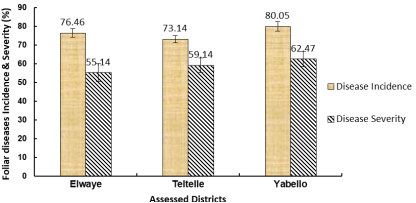
The overall identified foliar diseases mean incidence and severity score from the three assessed districts expresses, that the highest disease intensity was scored from Yabello followed by Elwaye (
Figure 2). The highest foliar diseases severity percentage (62.47%) was scored in Yabello, while the lowest disease severity percentage (55.14%) was scored from Elwaye district (
Figure 2). Then, it was highly prevalent and severely damaged the crop in Yabello compared to other assessed districts.
Figure 2. Assessed districts with scored common bean foliar diseases mean incidence and severity percentage.
Among the identified foliar diseases, ALS was the most prevalent, compare to the other identified foliar diseases. Angular leaf spot mean disease incidence and severity score range is presented in
Table 3. The CBB prevalence was also high at Elwaye, followed by Yabello and low at Teltelle with 77.27%, 73.08%, and 70.37% respectively. The mean prevalence of the CBB of the common bean in the surveyed area was 73.33%. The CBB means incidence score was in the range of 24.11 to 98.71% in all surveyed areas. Both the minimum and maximum common bacterial blight incidence percentage was recorded in Teltelle. The mean disease severity of CBB at Teltelle ranges from 41.11-98.89%. The maximum and minimum severity was observed in Teltelle (
Table 3). Also,
| [34] | Ochichi P. B., Muthomi J. W., and Wagacha, J. M, 2018. Occurrence of fungal and bacterial diseases of common bean (Phaseolus vulgaris) in western Kenya. RUFORUM Working Document Series. 17(1): 767-772. |
[34]
reported ALS occurrence on common beans in the range of 26.7 to 90%, CBB occurrence in a range of 48.3 to 86.7% and anthracnose 0 to 15% disease severity index.
Among the major diseases identified CBB was a disease with a wide range of weather conditions that infects the crop and is distributed throughout the field. Its development could be favored by a temperature that is optimum for pathogen development and below the optimum for growth of the host plant
| [19] | Juroszek P. and Tiedemann A. V, 2011. Potential strategies and future requirements for plant disease management under a changing climate. Plant Pathology 60: 100-112. |
[19]
, and each pathogen has an optimum temperature for growth. Correspondingly, differences between agroecological zones affect infection and the development of disease due to variable environmental factors such as soil types
| [32] | Mwang’ombe A., Wagara I., Kimenju J., and Buruchara R, 2007. Occurrence and Severity of Angular leaf spot of common bean in Kenya as Influenced by Geographical Location, Altitude and Agroecological Zones. Plant Path. Jour., 6(3): 235-241. |
[32]
. The soil varies in its structure, moisture content, pH and fertility, while disease heaviness varies due to the suitability of the pathogen to these variations. The resistance levels of the common bean genotypes may be improved when temperatures rise and soil moisture content decreases because of the utilization of resources into the host drought resistance mechanisms such as reduced stomata size
| [18] | Hailu N., Fininsa C., Tana T., and Mamo G, 2017. Effect of temperature and moisture on growth of common bean and its resistance reaction against common bacterial blight (Xanthomonas axonopodis pv. phaseoli strains). J. of Plant Path. and Micr. 8: 419. |
[18]
.
In the study area, common bean anthracnose was the third common bean disease detected, next to angular leaf spot and common bacterial blight in terms of intensity and distribution. Its prevalence was high at Yabello, followed by Elwaye and Teltelle with prevalence percentages of 69.23%, 59.09%, and 51.85% respectively. The overall mean prevalence of common bean anthracnose disease distribution over the surveyed area was 60.05%. The common bean anthracnose’s mean disease incidence recorded was in the range of 24.11-98.71% in all surveyed areas. Both the minimum and maximum incidence percentage of anthracnose was recorded in the Teltelle district. Also, the mean anthracnose disease severity ranges from 45.56-98.89% (
Table 3).
Table 3. Major common bean diseases incidence, percent severity index mean and its range in Borana during 2023 main cropping season.
Disease | Variables | Elwaye | Yabello | Teltelle |
Range | Mean | Range | Mean | Range | Mean |
Angular leaf spot | Incidence | 54.77 - 94.67 | 79.79 | 61.33 - 92.29 | 82.39 | 61.33 - 99.43 | 76.25 |
Severity Index% | 45.56 - 83.33 | 59.92 | 43.33 - 98.89 | 69.82 | 45.56 - 94.44 | 70.29 |
Common bacterial blight | Incidence | 51.46 - 79.67 | 66.05 | 40.27 - 84.43 | 61.36 | 24.11 - 98.71 | 65.05 |
Severity Index% | 43.33 - 74.44 | 56.86 | 41.11 - 94.67 | 59.39 | 41.11 - 98.89 | 63.19 |
Anthracnose | Incidence | 42.58 - 73.00 | 59.52 | 43.0 - 79.6 | 62.21 | 24.11 - 98.71 | 67.82 |
Severity Index% | 50.00 - 78.89 | 61.48 | 45.56 - 94.44 | 65.75 | 45.56 - 98.89 | 64.9 |
The priority of common bean foliar diseases varies based on the level of their distribution, including disease severity, incidence, and prevalence in specific locations. Consequently, ALS was found to have a wider distribution and higher epidemics, being recorded in all assessed districts and kebeles and having high disease intensity over the other scored diseases. ALS is epidemic and extensively scattered in all common bean growing areas studied regardless of agro ecology, altitude, sowing date, cropping system, growth stage, weed and crop density
| [2] | Aytenfsu Misganaw, Habtamu Terefe and Getachew Ayana, 2019. Distribution and Association of Common Bean Angular Leaf Spot (Phaeoisariopsis griseola) with biophysical factors in southern and south western Ethiopia. East African Journal of Sciences 13(1): 51–64. |
[2]
.
3.2. Distribution and Relative Importance of Angular Leaf Spot (ALS)
The incidence and severity of the common bean ALS was very highly significant (P<0.001) among the assessed fields. ALS incidence was varied from 0 to 100% among the assessed fields. The incidence of 100% indicates that the disease infects every plant that exists in the sampled area/quadrat. Correspondingly,
| [42] | Tizazu Degu, Wasihun Yaregal, Tesfaye Gudisa, 2020. Status of Common Bean (Phaseolus vulgaris L.) Diseases in Metekel Zone, North West Ethiopia. J. Plant Pathology & Microbiology. 11(5): 494. |
[42]
reported that the highest common bean ALS incidence score of 96.3% followed by 86.8% happened in Mandura. The scored mean incidence of angular leaf spot in each districts ranged from 54.77%-99.43%. Following this, the maximum mean of angular leaf spot incidence was scored from Teltelle (61.33-99.43%). The result is supported by
| [1] | Abay Guta, 2023. Screening of Red Small Common Bean Genotypes for Resistance to Angular Leaf Spot and Cercospora Leaf Spot Disease of Common Bean at Bako Area. Journal of Plant Sciences. 11(6): 182-191. |
[1]
findings that the mean final ALS incidence ranged from 21.33% to 92.33%. The ALS severity scores per quadrat was ranged from 1 to 9, a severity scale score. The maximum mean disease percent severity index range was recorded from Yabello (43.33-98.89%), followed by Teltelle (45.56-94.44%) areas, while the lowest (45.56-83.33%) range of mean disease severity index was obtained from Elwaye district (
Table 5). Also,
| [1] | Abay Guta, 2023. Screening of Red Small Common Bean Genotypes for Resistance to Angular Leaf Spot and Cercospora Leaf Spot Disease of Common Bean at Bako Area. Journal of Plant Sciences. 11(6): 182-191. |
[1]
reported that the mean final ALS severity on a common bean ranged from 15% to 61.7%.
In the study area, as the analyzed data indicated, the overall mean incidence of ALS was 79.48% across the surveyed districts. However, spatial distribution and relative importance of ALS was varied across assessed districts. Among the fields scored with ALS, only ten (16.67%) fields had less than 75% disease incidence and the rest of fifty (83.33%) fields had more than 75% disease incidence. This revealed that the common bean ALS is highly devastated throughout the fields. The result is supported by the findings of
| [21] | Kijana R., Abang M., Edema R., Mukankusi C., and Buruchara R, 2017. Prevalence of Angular Leaf Spot Disease and Sources of Resistance in Common Bean in Eastern Democratic Republic of Congo. African Crop Science Journal, 25(1): 109 – 122. |
[21]
that the incidence of ALS varied from 75 to 100% among the sampled fields, with over 98% of the assessed fields having more than 75% ALS incidence. Based on disease severity recorded, only five (8.33) fields had less than 50% severity and the other 55 (91.67%) fields had more than 50% disease severity.
An angular leaf spot (ALS) epidemic was varied between each independent variable and their class categories. The assessed districts were tested as specific independent variables and grouped into three class variables. The highest number of fields infected per district was observed in Yabello and the lowest field infected with ALS was observed in Teltelle district. Among the common bean fields surveyed in three districts, the least mean incidence (76.25%) was recorded in Teltelle district and the highest mean disease incidence (82.39%) was observed in the Yabello district. The least ALS mean disease severity index (59.92%) was recorded in Elwaye district and the highest mean severity index (70.29%) was recorded in Teltelle (
Table 4). The findings of the current disease assessment showed that common bean ALS was observed across the three surveyed districts, with varying degrees of incidence and severity. The variations in disease epidemics across the locations are due to ranges of altitude and other associated weather conditions
| [14] | Fekede Girma, Chemeda Fininsa, Habtamu Terefe and Berhanu Amsalu, 2022. Distribution of common bacterial blight and anthracnose diseases and factors influencing epidemic development in major common bean growing areas in Ethiopia. Acta Agric. Scand. Sect. B Soil Plant Sci, 72(1): 685–699. |
[14]
.
Table 4. Prevalence, incidence and severity (mean ± SE) of common bean angular leaf spot for different independent variables.
Variable | Variable class | Prevalence% | Incidence (%) | PSI (%) |
Districts | Yabello | 84.62 | 82.39±1.44 | 69.82±4.40 |
Elwaye | 86.36 | 79.40±2.78 | 59.92±3.71 |
Teltelle | 70.37 | 76.65±3.38 | 70.29±3.94 |
Previous crop | Common bean | 100 | 75.59±5.61 | 65.00±6.44 |
Fallow | 75 | 80.19±1.93 | 56.53±1.93 |
Maize | 88.89 | 74.62±7.86 | 56.13±7.00 |
tef | 79.41 | 80.91±1.73 | 51.07±3.35 |
Crop growth stage | Flowering | 75 | 76.27±1.99 | 48.24±2.91 |
Pod forming | 93.55 | 83.59±2.28 | 62.75±3.33 |
Soil type | Vertisoil | 79.17 | 76.35±3.92 | 54.66±4.13 |
Sandy | 80.39 | 80.87±1.37 | 54.46±2.92 |
Weeding frequency | Low | 100 | 80.67±2.62 | 64.2±2.69 |
Medium | 90.47 | 79.21±3.29 | 52.95±3.32 |
High | 23.53 | 73.55±2.12 | 36.95±4.18 |
Altitude | 1300-1500masl | 88.89 | 77.04±2.61 | 57.91±2.98 |
1501-1693masl | 71.79 | 82.18±1.39 | 50.65±3.74 |
Tillage frequency | Two times | 95.00 | 81.48±1.69 | 68.67±3.35 |
Three times | 74.55 | 82.30±1.15 | 66.71±2.13 |
Cultivar used | Local (Aca) | 75.41 | 81.42±1.15 | 67.42±1.86 |
Unknown | 100 | 84.05±1.85 | 69.24±4.90 |
Plant population | High | 80.00 | 82.63±2.623 | 63.47±2.06 |
Low | 80.00 | 81.90±1.00 | 63.19±4.14 |
Seed source | Farmer saved | 86.67 | 75.91±3.00 | 52.99±3.59 |
Purchased | 75.55 | 82.14±1.39 | 55.69±3.19 |
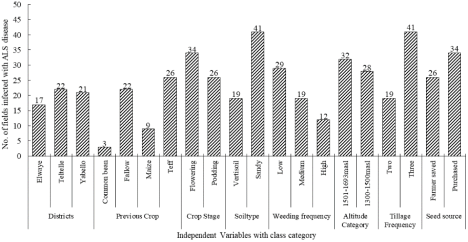
Figure 3. Number of fields infected with ALS per independent variables with class category.
Among the fields infected by angular leaf spot (ALS), about 53.33% were found at an altitude of 1501-1693masl, while 46.67% were found under an altitude range of 1300-1500masl. The highest ALS severity mean (57.91%) was scored from an altitude ranging from 1501-1693masl and the mean angular leaf spot disease severity of common bean fields found at an altitude of 1300-1500masl was 50.65%. As the assessed data revealed, the common bean ALS was highly prevalent at an altitude range between 1501 and 1693masl. Among the fields infected with ALS, large numbers of fields were found at an altitude of 1501-1693masl.
| [32] | Mwang’ombe A., Wagara I., Kimenju J., and Buruchara R, 2007. Occurrence and Severity of Angular leaf spot of common bean in Kenya as Influenced by Geographical Location, Altitude and Agroecological Zones. Plant Path. Jour., 6(3): 235-241. |
[32]
stated that the common bean ALS is more prevalent in areas with an altitude range of below 1600masl and less prevalent in areas above 2000masl. Moreover, the highest ALS could occur in an altitude range of 1201-1600masl.
3.3. Association of Common Bean Angular Leaf Spot with Cultural Practices
The analysis of common bean ALS associations with different independent variables recorded during disease assessment is presented in
Table 5. Thus, the independent variables showed varied association responses to ALS incidence and severity.
| [46] | Zewde Tamire, Fininsa Chemeda, Sakhuja K. Parshotum. and Seid Ahmed, 2007. Association of white rot (Sclerotium cepivorum) of garlic with environmental factors and cultural practice in the North Shewa highlands of Ethiopia. Crop Protection, 26(10): 1566-1573. |
[46]
reported that understanding the association of disease intensity with independent variables such as cropping systems, crop combinations and management practices helps to identify the most important variables and sustainable management options. Among the independent variables observed from the field survey, districts, previous crops, crop growth stages, weeding frequency, land preparation, and crop cultivar were highly significant (p<0.001) and associated with angular leaf spot mean severity. However, seed source and altitude category showed a non-significant association with ALS mean percent severity index when entered first into the regression model. When all variables entered last into the regression model, independent variables were very highly (P<0.001) significant in association with ALS of common bean mean severity, except seed source, which showed a highly significant association. This finding is also in line with the finding reported by
| [41] | Tizazu Degu, Tesfaye Alemu, Asnake Desalegn, Berhanu Amsalu and Alemayehu Assefa, 2023. Association of cropping practices, cropping areas, and foliar diseases of common bean (Phaseolus vulgaris L.) in Ethiopia. Journal of Agriculture and Food Research, V. 14. |
[41]
who stated that frequency of weeding is significantly associated with the occurrence of ALS, bean anthracnose, halo blight, floury leaf spot, bean mosaic virus, Cercospora leaf spot, and Ascochyta blight.
Table 5. Logistic Regression Model for bean Angular leaf spot (ALS) severity (%) and Likelihood Ratio Test on independent variables in Borana 2023 main cropping season.
Independent variable | Degree freedom | ALS Severity, Likelihood ratio test |
Variable first entered in the model | Variable last entered in the model |
Deviance reduction | Pr>X2 | Deviance reduction | Pr>X2 |
District | 2 | 495.15 | <.0001 | 617.89 | <.0001 |
Previous crop | 3 | 1081.38 | <.0001 | 474.51 | <.0001 |
Crop growth stage | 1 | 263.18 | <.0001 | 161.16 | <.0001 |
Altitude | 1 | 112.02 | 0.888 | 252.98 | <.0001 |
Land preparation | 1 | 406.41 | <.0001 | 620.33 | <.0001 |
Seed source | 1 | 86.27 | 0.6732 | 9.32 | 0.2000 |
Crop cultivar | 1 | 878.50 | <.0001 | 202.19 | <.0001 |
Weed frequency | 2 | 983.04 | <.0001 | 5485.74 | <.0001 |
Soil type | 1 | 604.53 | <.0001 | 162.81 | <.0001 |
Pr=Probability of an X2 value exceeding the deviance reduction, X2=Chi-square
Seed source was continued as an insignificant variable in both the first and last entered regression models and altitude was insignificant in first entering. Among the evaluated independent variables previous crop (X
2=1081.38, df=3), nature of the disease occurrence (X
2=1093.1, df=1), weed frequency (X
2=983.04, df=2), soil type (X
2=604.53, df=1) and districts (X
2=495.15, df=2) were the most important variables in association with disease severity, while seed source (X
2=86.27) and altitude (X
2=112.02) associations were slight with disease severity when entered first and last into the model. The logistic regression model used in the analysis of the survey data confirmed that districts, previous crops, altitude ranges, land preparation, bean cultivars, crop growth stages, and weed infestation levels were highly associated with angular leaf spot (
Table 5). These variables had significant contributions to the development of epidemics with varying levels alone or in combination.
Crop Growth Stage and Angular Leaf Spot (ALS)
The crop growth stage was observed during the assessment and the maximum number of infected fields with angular leaf spot disease from the flowering stage (
Figure 3). The crop growth stage is one of the independent factors that affect the prevalence of ALS on common beans. Among the sixty common bean fields infected with ALS 28% (17 fields) of the fields were at the pod forming stage, while 72% (43 fields) were at the flowering stage. The crop found at pod-forming growth stages was highly significantly (p<0.001) associated with ALS severity and incidence in the multiple variable model. The mean severity value of angular leaf spot disease at the flowering and pod-forming stages was 48.25% and 62.75% respectively. The mean incidence value of ALS at the flowering and pod-forming stages was 76.27% and 83.59% respectively. This shows that the common bean ALS severity and incidence were higher when the crop reached pod pod-filling stage than at the flowering stage.
| [2] | Aytenfsu Misganaw, Habtamu Terefe and Getachew Ayana, 2019. Distribution and Association of Common Bean Angular Leaf Spot (Phaeoisariopsis griseola) with biophysical factors in southern and south western Ethiopia. East African Journal of Sciences 13(1): 51–64. |
[2]
also reported that ALS incidence and severity are doubled at pod filling stages compared to the flowering stage. This could imply that at this crop growth stage, the plant is highly exposed (susceptible) to the disease, and when it coincides with favorable weather variables; the disease would be highly devastating. The highest ALS prevalence was recorded in common bean fields found at pod pod-forming stage. The ALS causing pathogen can colonize intercellular spaces of the common bean leaf and other aerial plant parts palisade cells, resulting in angular lesions
| [30] | Monda E. O., Sanders F. E., and Hick A, 2001. Infection and colonization of bean leaf by Phaeoisariopsis griseola. Plant pathology, 50(1): 103-110. |
[30]
. Generally, the disease prevalence was high on the fields with the crops at flowering and pod setting stages. This result is supported by findings of
| [35] | Patterson D. T., Duke O. S., and Hoagland E. R, 1978. Effect of irradiance during growth on adaptive photosynthetic characteristics of velvet leaf and cotton. Plant Physiology. 61: 402-405. |
[35]
the maximum disease development by
Phaeoisariopsis griseola occurs between flowering and pod setting. In common bean production flowering and pod setting is a period characterized by an increase in the photosynthetic rate. The occurrence of ALS at these stages of plant development reduces the net assimilation rate through a sink effect in which the causal pathogen diverts carbon fluxes from the growing seed for its own growth
| [13] | Farrar J. F, 1992. Beyond Photosynthesis: The translocation and respiration of diseased leaves. In pests and pathogens: plant responses to foliar attack. BIOS Sci. Publication Oxford, UK. P. G. Ayres, ed. UK. 107-124. |
[13]
. As a result, seeds borne by infected plants are few, shrivelled and often discoloured. Since the seed yield of common bean is influenced by the number of pods per plant, number of seeds per pod and average seed weight, reducing any of these yield components will lead to lower yields with an additional negative effect on seed quality
| [39] | Stenglein S., Ploper L. D., Vizgarra O., and Balatti P, 2003. Angular leaf spot: A disease caused by the fungus Phaeoisariopsis griseola (Sacc.) Ferraris on Phaseolus vulgaris L. Adv. Appl. Microbiology. 52: 209-243. |
[39]
.
Cropping history and Angular Leaf Spot (ALS)
The cropping history affects the ALS of common bean development and severity. It was highly severing the field with no crop rotation (
Table 4). In the fields without crop rotation, the assessed common bean fields were entirely infected by the disease. The result is in line with
| [24] | Mahasi J. M, Vanlauwe B, Mursoy R. C, Mbehero P, and Mukalama J, 2011. A sustainable approach to increased soybean production in Western Kenya. Afr. Crop Science conference proceedings. 10: 111-116. |
[24]
report that continuous cropping of the same plant without crop rotation can lead to disease persistence in the area. However, among the assessed fields, the land previously covered by tef had a large percentage and the land previously covered by the common bean field is the minimum. The prior cultivated crop tef occupies 43.33%, fallow 36.67%, maize 15%, and common bean 5%. Accordingly, 96% of fields covered by tef in the previous cropping season had a greater than 50% severity index, while only about 4% of tef fields were severed with less than 50%. Similarly, about 92% of prior tef fields had greater than 75% ALS incidence percentage and 8% had less than 75% ALS incidence percentage. Crop management is one of the major factors of disease development on the crop in the field and it includes, cropping system, weeding, application of fertilizers and pesticides, tillage frequency, and system
| [36] | Sanyang S. F., Yaouba A., Kinge T. R., and Tankou C. M, 2019. Survey of Cultural Practices and Assessment of Some Foliar Fungi Diseases of Common Bean (Phaseolus vulgaris L.) in the Western Highlands of Cameroon. J. Adv. in Biology & Biotech. 22(1): 1-15. |
[36]
.
In addition, in the study area farmers cultivate tef mostly in the short rainy season of the study area (Mid-September to early November), after they harvest common beans in June during the main cropping season. During this cropping season, the farmers plough only once for sowing of tef. This may create a conducive condition for the pathogens that had over-seasoning features and re-emerge from over seasoning in the soil.
| [41] | Tizazu Degu, Tesfaye Alemu, Asnake Desalegn, Berhanu Amsalu and Alemayehu Assefa, 2023. Association of cropping practices, cropping areas, and foliar diseases of common bean (Phaseolus vulgaris L.) in Ethiopia. Journal of Agriculture and Food Research, V. 14. |
[41]
reported that some previous crop grown affected the probabilities of occurrences of most common bean diseases except common bean angular leaf spot and anthracnose. Mostly previous crop influences the chance of bacterial blight, halo blight, floury leaf spot, web blight, bean mosaic virus, and Cercospora leaf spot occurrence. The second large number of fields from the assessed disease was recorded on fallow/uncultivated land in the previous season. On the previously fallow land, about 90% of the bean crop was severed highly and had greater than 50%, while only 9% of the fallow land had less than 50% angular leaf spot disease severity score. The incidence level of the disease on the fallow land followed by common bean is also high and about 77% of the assessed farms registered greater than 75% incidence of angular leaf spot and 23% of farms/fields had less than 75% incidence level. In the field with no rotation (Common bean followed by Common bean) disease severity index was higher than the fields with rotation practices and 100% of the fields with no rotation had a severity index of greater than 50% (
Table 4).
Angular Leaf Spot association with weeding practices
Common bean fields having good weed management had low ALS incidence and severity, while a field with high weed infestations (low management) had the highest ALS incidence and severity (
Table 4). In the study area in all common bean fields weeds and unwanted plants were removed with hand hoeing methods i.e., they didn’t practice the herbicides for common bean crops to remove weeds. The disease incidence and percent severity index of the fields infested highly with weed was 80.67% and 64.2% respectively, while the incidence and severity of the disease on the fields with low weed infestation were 73.55% and 36.95% respectively. Fields with highly infested by weeds increase ALS severity by 20.52% on average, compared to low weed fields
| [44] | Yimer Sultan, Seid Ahmed, Chemeda Fininsa, Nigussie Tadesse, Aladdin Hamwieh and Douglas R. Cook, 2018. Distribution and factors influencing chickpea wilt and root rot epidemics in Ethiopia. Crop Protection, 106: 150-155. |
[44]
. Crops highly infested with weeds may have high relative humidity and warmness of the microclimate beneath the crop canopy, and this could favour the onset, infection, and development of ALS
| [11] | Ddamulira G., Mukankusi C., Mildred O., Richard E., Sseruwagi P., and Gepts P, 2012. Distribution and Variability of Pseudocercospora griseolain Uganda. Journal of Agricultural Science, 6(6): 16-29. |
[11]
. Regarding fertilizer and pesticide applications, the interviewed farm owners responded no fertilizer and pesticides were applied to common beans in the study area. Land preparation is one of the most important factors that influence ALS development and distribution. For soil loosening to common bean production mostly they use two and three times tillage frequencies.
Angular Leaf Spot and tillage practices association
The severity of ALS was high on fields of common beans ploughed less than three times (
Table 4). This may occur as a result of not well-decomposed plant debris and disturbing other biotic factors.
| [22] | Kyomugisha P., Kato F., Amongi W., Akankunda T., Ssekamate A., and Mukankusi Cm, 2023. Response of Common Bean Genotypes To Prevalent Pseudocercospora Griseola Races Causing Angular Leaf Spot In Uganda. Afr. J. of Food Agric. Nutrition and Development. 23(6): 23704-23723. |
[22]
reported that
Phaeoisariopsis griseola can survive as spores in infected common bean residue left on the soil surface, although it does not persist for long when the remains of infected common beans are covered up in the soil and decompose. Low tillage frequency, dependency on local seed and continuous sole cropping season after season influence the build-up of primary inoculum from common bean debris and infected seeds, which can cause a primary infection by ALS on common beans
| [16] | Getachew Gudero and Habtamu Terefa, 2018. Distribution and Relative Importance of Common Bean Angular Leaf Spot in Subsistence Farming Systems in Southern Ethiopia. Pest Mgt. J. Eth., 21: 35-55. |
[16]
. Absence or low tillage practice might result in low degradation of common bean debris and disease severity and incidence rise.
Phaeoisariopsis griseola is distinguished to survive on infected crop debris over two winters and the stroma that forms in lesions allows the pathogen to remain dormant until environmental conditions are favourable for sporulation
| [5] | Celetti J. M., Melzer S. M., and Boland J. G, 2006. Angular leaf spot of snap beans. Ministry of Agriculture Food and Rural Affairs Ontario, Canada. |
[5]
. However, land preparation alone is not an independent factor in influencing angular leaf spot establishment, but four times tillage during land preparation before planting reduces angular leaf spot severity by 54.94% compared to twice prepare common bean fields
| [16] | Getachew Gudero and Habtamu Terefa, 2018. Distribution and Relative Importance of Common Bean Angular Leaf Spot in Subsistence Farming Systems in Southern Ethiopia. Pest Mgt. J. Eth., 21: 35-55. |
[16]
. Though, none of the farmers prepared their farms four times before planting common beans in the study area (Borana). In addition, the study confirmed that farmers were practicing bean-to-bean cropping patterns and depended heavily on uncertified seeds of local varieties obtained from their farm savings and purchased from local markets. The obtained result is supported by
| [33] | Mwaniki A. W, 2002. Assessment of bean production constraints and seed quality and health of improved common bean seed. PhD diss., University of Nairobi, Kenya. |
[33]
reports that the consequences of using their seed and additional germplasm obtained from informal markets are high in angular leaf spot inoculum accumulation and significantly contribute to the development of the disease in the field.
The ALS severity was highly observed in fields sown unknown common bean cultivars (69.24%) and bought from the market (55.69%). The overall F-value of the regression model was 18.94 with <.0001 the corresponding p-value. As the p-value of the regression model shows the independent variables and ALS severity (dependent variable) were statistically significant. The fitness of the model was also satisfactory with the value of R2=69.63%. That is the variation of the ALS severity index was explained by the independent variables listed. A multiple regression model indicated that independent variables, district, cultivar, nature of disease occurrence, plant population, altitude, crop growth stage, and weed management significantly contributed to the ALS percent severity index. ALS percent severity index (PSI) was generally high (mean =66.67%) and varied significantly among districts (P=0.004), altitude (P=0.002), crop growth stage (p=0.002), cultivar (p=0.020) and weed management (0.024).





 Share This Article
 Twitter
 Linked In
 Facebook
 Copy
Copy Download