3. Literature Review
3.1. Trauma Amongst Social Workers
The existence of trauma among social workers is estimated to be approximately 40% among practicing social workers, even higher among child protective workers at 46.6% . The aftermath of trauma can impact one’s core beliefs and significantly affect one’s physical, emotional, and spiritual well-being leading to psychological destress
| [3] | Lanius, R., Terpou, B., & McKinnon, M. (2020). The sense of self in the aftermath of trauma: lessons from the default mode network in posttraumatic stress disorder. European Journal of Psychotraumathology, 11: 1807703.
https://doi.org/10.1080/20008198.2020.1807703 |
| [11] | Whittenbury, K., Clark, S. L., Brooks, M., Murphy, T., Turner, M. J., & Fawcett, H. (2025). Strengths for helping professionals exposed to secondary trauma: A scoping review. Trauma, Violence, & Abuse, 26(2), 251–264.
https://doi.org/10.1177/15248380241309371 |
[3, 11]
. Prolonged exposure to trauma can lead to post-traumatic stress disorder (PTSD), which may alter brain function and reduce resting states. Individuals with a history of childhood abuse often experience decreased functional connectivity and poorer responses to social stress. This can result in feelings of hypervigilance, hyperarousal, anxiety, depression, threat-related responses, and defensive responses to perceived stimuli
| [3] | Lanius, R., Terpou, B., & McKinnon, M. (2020). The sense of self in the aftermath of trauma: lessons from the default mode network in posttraumatic stress disorder. European Journal of Psychotraumathology, 11: 1807703.
https://doi.org/10.1080/20008198.2020.1807703 |
[3]
. Being aware of one’s emotions and being able to delay feelings of sadness, happiness, fear, or even anger is important to one’s well-being. Individuals who have endured trauma may be drawn to reckless behaviors to “feel alive.” Therefore, it is important for those who have suffered trauma to seek past and present-centered therapies to understand and address their trauma-related disorders effectively.
Trauma is a persuasive and complex phenomenon that can impact every psychosocial and neurosensory function within an individual’s dimension to impact their overall functioning . It affects how one interacts with others, forming attachments, expressing emotions, and processing psychological manifestations. Individuals with exposure to long-term trauma are far more likely to engage in risk-taking behaviors, impulsive behaviors, and reckless spending, while being less inclined to engage in effective self-care. Therefore, effective intervention must focus on emotional regulation, serotonin balance, and reduction of irritability . Individuals who have experienced one or more forms of trauma may be drawn to enter the profession to assist others who have faced similar situations and, therefore, must be diligent in caring for themselves. Social workers play a vital role in teaching self-care, empowerment, and the value of overcoming trauma to achieve the best version of oneself. Social workers with histories of trauma can use their experiences to empower resilience in others.
The need for additional skills in self-care tools is well supported in the literature that outlines the ability of practitioners to engage in effective self-care, fosters motivation, satisfaction, and engagement, and protects them against burnout and stress Therefore, periods of relaxation, or reduced arousal, can improve positive emotion by engaging in diverse activities such as meditation, music, or physical activity. The need to solidify these skills in the first Social Work course and reiterate them throughout the curriculum grants students a strong foundation of fundamental skills to safeguard against secondary trauma, burnout, and vicarious trauma.
Finding the ability to sustain social work professionals in practice through effective, supportive and ethical supervision is imperative to protecting and advocating for vulnerable individuals throughout society. It is important well-trained, experienced professional social workers are sustained over the long-term maintaining their own well-being. This however, can only be achieved when importance is placed on organizational support, resilience, quality education, self-care and retention
| [15] | Cook, L. (2024). Strengthening the workforce: Retention in social work. Research in Practice. Wales, England. |
[15]
. The first of these steps beginning in the undergraduate classroom when students begin their educational journey.
3.2. Need for Self-care in the Classroom
Social workers carry the complex burden of providing ethical services to those under their professional care with empathy and compassion. Failing to engage in quality self-care can have significant consequences for the practitioner, their loved ones, and the individuals they serve
| [8] | Ratcliff, M. (2024). Social workers, burnout, and self-care. Delaware Journal of Public Health, 10(1): 26–29. |
[8]
. With higher demands in social work, practitioners find themselves overwhelmed, overworked, and emotionally fatigued. In recent years, it has become increasingly evident in both undergraduate and graduate classrooms that students need self-care tools, as evidenced by their reflections:
“Self-care was placed last on the list of the many things I need to do. I treated it as a reward to myself, and that would happen whenever I had the time. I realized that I never really took the time to make time for myself. Treating it as an award was not enough, especially not for my mental health. I realized that when I did not take time out to care for myself and my overall well-being, I began not giving my best at anything I was trying to accomplish. It had started affecting my role as a wife, a mom, and a student. I became frustrated and struggled to focus on simple tasks. I knew that placing myself on the back burner would no longer work.”
“Looking back at the beginning of the semester, I started with a positive attitude and mindset and believed everything would go well. I soon found out, however, that this would be one of the semesters I was challenged emotionally, physically, and spiritually. At first, I thought it was just a phase and would soon get over it, but I did not know that I was falling and did not know how to get out. I felt suffocated and did not think I deserved to be in school. During this time, I wanted to drop out of school, but I knew I could not. I endured it all and never thought of going to a counselor’s office because I have never been to it, or these feelings never lasted this long. One thing they helped me throughout this period was when I would do self-check-ins for my Child Abuse and Neglect online class. I learned how important it was to take care of our mental, physical, and emotional health to prevent burnout, especially as a social worker. During this time, I started writing about my feelings and what I could do to not drown in self-criticism. I learned to accept myself and decided to set up challenges for myself to do. I tried writing journals, but those did not work out well. So, I opted to take walks around campus with one of my friends and talk about life; I tried to forget about schoolwork for some time and just think about how I could improve my self-esteem. This went down when the incident took place on campus. It shook me so much, but not as much as my friend who knew the victim. It was hard trying to process what was happening, so we decided to continue our walks on campus and talk about the good things we appreciated about the victim, and it helped a lot.”
While the importance of self-care is emphasized in the social work curriculum, practical applications are rarely taught. To empower and prepare students for long-term practice, the author began integrating self-care instructional videos into both online and in-person classrooms. This initiative encouraged students to engage with self-care tools actively. The instructional videos highlighted and demonstrated self-care in five key areas: emotional, spiritual, mental, physical, and professional. Once students reviewed the instructional tools (such as breathing tools, exercise videos, etc.), they were asked to provide a short reflection and application to professional practice.
3.3. Trauma Amongst Social Work Students
Trauma amongst undergraduate and graduate students has become more prevalent in this author’s classroom in recent years. For this article, trauma will be defined as the actual or threatened risk to life, severe injury (physical, emotional, or mental), or the experience of sexual violence
| [5] | Muldoon, O., Haslam, A., Haslam, C., Cruwys, T., Kearns, M., & Jetten, J. (2020). The social psychology of responses to trauma: social identity pathways associated with divergent traumatic responses. European Review of Social Psychology, 30(1). https://doi.org/10.1080/10463283.2020.1711628 |
[5]
. As students’ complete assignments and exercises in undergraduate and graduate courses, they are often prompted to reflect on personal experiences, family dynamics, and past trauma. The statements below mirror self-reflective comments that this professor sees in critical reflective assignments:
“I was always super close with my papaw. My brother and I did everything with him. My family always hunted behind our house at the time. Moreover, on one very cold November morning, the worst day of my life happened. My dad and brother got up that morning to go hunting with my papaw and cousin. Every morning that my brother would go hunting and I didn’t, I would get up and go sleep with my mom for the rest of the morning. While my papaw was walking to the stand that morning, he was shot. I wasn’t back to sleep yet so I heard it and I stupidly said, “dang they already got one, that was fast.” I really struggled with that part for so long. I hated myself for saying that, but I had no clue what had just happened. I remember my mom getting a phone call, and she got out of bed. I didn’t hear what was said on the phone, but she left the house immediately. I ended up falling asleep. I didn’t think anything other than her going to see the deer that I thought they had just shot. But later on, my mom woke up and I could tell that she was crying. She started by telling me there had been an accident. Then she told me that my papaw got shot…....”
‘There have honestly been many traumatic things that occurred in my life, yet there is one that started it all for me. Growing up, I had a brother who suffered from bipolar disorder and used drugs and alcohol. For some reason, I wanted to be like my brother, probably because of the negative attention he got, and it seemed intriguing. Almost as if he were doing things that others weren’t doing, and that was interesting to me. So, I followed my big brother and started doing drugs like he did. Within weeks of my using, in June, 2010, my brother shot and killed himself in his backyard. I still remember the day so vividly and the effect it had on my body.”
3.4. Called to Serve
Universities, particularly faith-based universities, often guide students in “Finding Their Calling.” Many students select the major of social work with altruistic motives. When questioned on why they selected social work, they report a desire “to help others” or “to make a genuine difference.” Fifty to sixty percent of students entering social work report that their childhood trauma, which included emotional problems, sickness, death/loss within their family, child maltreatment, or substance abuse issues, directly impacted their decision to enter social work. Although rare, some students report selecting the profession due to feeling they have the skill set necessary, such as being a good listener or being very tolerant
.
Through a well-designed curriculum at a faith-based institution, students are encouraged, supported, and empowered to find their calling and make a lasting impact on the world around them. In faith-based schools of social work schools, professors serve alongside their students in many ways, including experiential learning trips, service-learning, and disaster relief opportunities. Through these experiences, students have the opportunity to take classroom knowledge and apply it to firsthand service in a plethora of ways.
In addition to faith-based practices, service experiences and innovate learning techniques student attending this faith-based university participating in this study are taught from a transformational approach. The fundamental of this teaching philosophy places importance on understanding one’s emotions on how they directly impact their learning experience. Additionally, this learning approach places an emphasis on the necessity for a safe space within the learning environment that allows learners to navigate their learning experience with curiosity, exploration, support and empowerment to transform to a better version of themselves. Transformational teaching places value on learning is a lifelong process, commitment involving informal and formal learning including engagement, analysis and research
| [13] | Wolff, L., Shephard, K., Belluigi, D., Pedro, V., Rieckmann, M., Skarstein, F., Cheah, S. Transformational learning, teaching, and action in the most challenging times. (2022). (7).
https://doi.org/10.3389/feduc.2022.1041914 |
| [14] | Mudd-Fegett, K. N. (2024). Transformational Teaching: Learning that Extends Beyond the Walls of the Classroom. Mudd, K., Mudd-Fegett, K. Transformational Learning in Social Work and Human Services Education. IGI Publishing. |
[13, 14]
.
4. Methodology
4.1. Introduction to Research
Preparing students to deliver services to clients facing complex personal and environmental challenges, often involving significant experiences of trauma, is a challenging task for social work educators. However, a less recognized issue within social work education is preparing students to manage their trauma. Trauma can profoundly affect the student’s well-being, learning processes, and future professional practice.
This exploratory mixed-methods research project, utilizing a convenience sample, examined the existence, impact, and long-term effects of personal trauma among recent graduates of a School of Social Work. By illuminating the prevalence and impact of individual trauma among social work students and alumni, this research seeks to inform the development of more effective educational strategies and support systems, ultimately enhancing the resilience and effectiveness of future social work professionals.
4.2. Research Design
This study employed a mixed-methods research design to examine the existence, impact, and long-term effects of trauma among social work graduates from a faith-based university. A convenience sample of alumni from the years 2019- 2024 was identified using an internal database, resulting in 1207 potential participants. The quantitative component involved a thirteen-question survey distributed via SurveyMonkey, while the qualitative component consisted of eleven open-ended questions administered through narrative-style interviews. Participants were initially contacted by email, with follow-up reminders sent over four weeks. The survey allowed participants to respond anonymously or as self-identified, with the final question inviting them to engage in a follow-up interview for deeper insights into their professional experiences.
4.3. Participants/Sample Description
Potential participants were identified as graduating from the Faith-Based Social Work program between the years 2019- 2024. The names and emails of 1207 Master of Social Work (MSW) research participants were obtained from the internal database of the School of Social Work. The ages of the alumni at the time they entered the social work program ranged from 20 to 63, with 51.7% of the students being 21 to 29 years of age. Fifty-five percent of the alumni identified their area of focus as advanced generalist, while nearly 33% identified as clinical. The names and emails of 248 Bachelor of Social Work (BSW) research participants were also obtained from the internal database of the School of Social Work. The ages of the alumni at the time they entered the BSW social work program ranged from 18 to 59, with 36% of the students being between 20 to 23 years of age.
It is important to note that emails within the database may not have been updated by students; therefore, this could impact the sample size. Alumni are asked to provide their email upon graduation; however, if they do not, it can hinder our ability to communicate with all alumni.
4.4. Data Collection
A survey was sent to all social work graduates within the identified five-year timeframe from the faith-based school of social work. An invitation to participate in the survey was sent to alumni using the email addresses on file. Each participant received a link through SurveyMonkey and was asked to complete a thirteen-question survey, with the final question inviting them to engage in an online interview. In total, 1207 invitations were sent to both undergraduate and graduate alumni on September 5, 2024. The link was sent to all potential participants on three separate occasions over a four-week time period. Participants were given the option to complete the survey anonymously or self-identify if desired.
To identify participants for the qualitative portion of this research project, participants were asked on the written survey to provide their email addresses if they would be willing to engage in a narrative interview with the interviewer regarding the impact of trauma. Eleven participants agreed to participate in online interviews. Participant responses were documented using numerical coding rather than their names to protect their identity. Research participants were asked eight open-ended, narrative-style interview questions. Participants were provided the opportunity to provide in-depth responses. All interviews were completed over the phone, allowing participants to select the date and time for the interview.
4.5. Research Instruments
Below are the survey instruments that were used during data collection.
Quantitative Survey questions are outlined below:
1) What is the highest level of school you completed or the highest degree you have received?
2) How long have you been employed as a professional social worker?
3) What area of social work do you currently practice within?
4) What do you find most fulfilling about your current position?
5) What do you find most overwhelming about your current position?
6) What self-care techniques do you currently practice?
7) What led you to the field of social work?
8) Have you personally been impacted by some form of trauma?
9) What would you say this trauma falls under?
10) How do you feel this trauma impacts your practice?
11) If you experienced this trauma, how do you feel this personally impacted your life?
12) What steps have you taken to address this trauma?
13) Are you willing to engage in a narrative interview regarding your trauma? If so, please provide your email address.
Qualitative Survey questions are outlined below:
The survey questions are outlined below:
1) Tell me more about yourself….
2) What social work practice are you currently employed in?
3) How long have you been employed in the social work profession?
4) Tell me, what do you find most fulfilling about your current position?
5) Tell me what you find most overwhelming about your current position.
6) Tell me what self-care techniques you currently practice.
7) Tell me what led you to the field of social work.
8) Tell me about how you feel trauma impacts your practice.
9) Tell me how personal trauma has impacted your practice.
10) Tell me how personal has impacted your life.
11) Tell me the steps you have taken to address your personal trauma.
4.6. Data Analysis Procedures
This study utilized a mixed-methods approach to explore the impact of the underlying trauma among social work alumni from a faith-based university. Data was collected using an online survey and follow-up qualitative interviews. The survey was distributed via SurveyMonkey to alumni of a faith-based university, and responses were exported into SPSS (Statistical Package for the Social Sciences) for quantitative analysis.
Before analysis, raw survey responses were cleaned and recoded to group variables meaningfully for interpretation. Demographic information (current field of social work, length of employment, and what type of self-care is currently used) and trauma-related responses were categorized to facilitate comparisons across participant characteristics. Descriptive statistics were computed, including frequencies, means, and standard deviations, to provide an overview of participant backgrounds and to identify patterns in responses related to personal trauma history, perceived impact on professional functioning, and motivations for entering the field of social work.
To gain deeper insight into participants' lived experiences, a purposive sample of eleven participants volunteered for follow-up qualitative interviews. These interviews were conducted by telephone and followed a semi-structured format, allowing for flexibility in exploring emergent topics while ensuring consistency across interviews. Each interview was audio-recorded with participant consent and transcribed for analysis.
Qualitative data were analyzed using thematic analysis. Transcripts were read multiple times to ensure familiarity with the content, and initial codes were developed based on repeated ideas or significant statements. These codes were then grouped into broader categories, leading to the identification of key themes. Themes were reviewed and refined through an iterative process, with attention given to how participants described the intersection of their personal trauma history and their professional identity as social workers.
The integration of both quantitative and qualitative findings allowed for a comprehensive understanding of the extent to which underlying trauma may influence the motivations, experiences, and perceived effectiveness of practitioners in the social work profession.
4.7. Ethical Considerations
This study was designed to prioritize the protection, dignity, and autonomy of all participants throughout both the quantitative and qualitative phases. Ethical considerations included informed consent, voluntary participation with the right to withdraw, confidentiality and anonymity; data security and storage, minimization of harm and emotional risks, and Institutional Review Board (IRB) Approval. Details on ethical considerations included:
4.7.1. Informed Consent
All participants were provided with information about the purpose, procedures, potential risks, and benefits of the study. For the survey portion, informed consent was embedded at the beginning of the online questionnaire, and participants indicated consent by proceeding with the survey. For the qualitative interviews, participants were provided with a detailed consent form outlining their rights and the voluntary nature of participation. Participants were informed that they could withdraw at any time without penalty.
4.7.2. Voluntary Participation and Right to Withdraw
Participation in both the survey and interview was entirely voluntary. Survey respondents had the option to complete the survey anonymously or to self-identify if they wished to participate in the interview portion. Those who chose to participate in interviews were reminded that they could decline to answer any questions or stop the interview at any point.
4.7.3. Confidentiality and Anonymity
To maintain confidentiality, all survey responses were stored in a secure, password-protected online platform. Identifying information was only collected from participants who volunteered for the follow-up interview. During the interviews, any personal or professional identifiers were either excluded or later redacted during transcription to protect participants' privacy.
4.7.4. Data Security and Storage
All electronic data, including survey responses and interview transcripts, were stored on encrypted, password-protected servers accessible only to the research team. Data will be retained for a specified period (as approved by the Institutional Review Board), after which it will be permanently deleted.
4.7.5. Minimization of Harm and Emotional Risk
Given the focus on trauma, special attention was given to minimizing potential psychological distress. Survey and interview questions were carefully worded to avoid triggering content, and participants were encouraged to skip any questions they found uncomfortable. Interviewers were trained to conduct trauma-informed conversations and to respond sensitively if a participant became emotionally distressed.
4.7.6. Institutional Review Board (IRB) Approval
This study was reviewed and approved by the Institutional Review Board (IRB) of the affiliated faith-based university, ensuring that all procedures adhered to ethical research standards and guidelines for research involving human subjects.
4.8. Results
4.8.1. Quantitative Results
The survey was sent to 1207 graduates, with 99 participants completing the quantitative survey. The overall response rate was 12.19% for the project. Of the research participants who participated in this study, 89.9% reported their highest level of education was Master of Social Work, 9.1% reported a Bachelor of Social Work, and 1.0% reported a Doctorate of Social Work. When looking at the area of practice for participants, 54.54% responded that they were practitioners in the area of “therapy/private practice/mental health/clinical practice,” 5.05% of participants identified themselves as “medical social workers,” and 10% of participants identified as practicing in the area of “addiction.” Additionally, 9.09% of participants identified working in family-focused practice areas. This allows one to see the broad spectrum of practice areas for research participants.
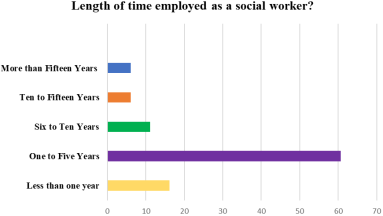
A significant finding was that approximately 80% of participants responded that they had been practicing between more than one year. This would indicate the vast majority of participants of this study obtained employment upon graduating from this faith-based university and have maintained employment. This speaks highly of their education within this program and their satisfaction within the profession of social work.
Figure 1. Length of Employment.
(i). Key Patterns Found in Quantitative Research
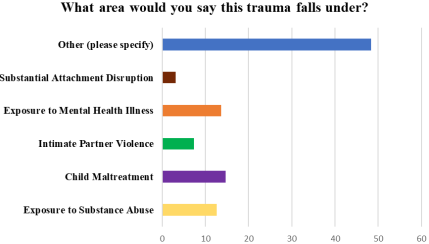
Figure 2. Area Trauma Falls Under.
Perhaps the most significant finding of the research is that 85.86% of research study participants reported that they had been impacted by some form of trauma. Below is a graph that visually outlines “areas” for this trauma:
The coding below assists in identifying specific traumatic events/pattern of events that participants within this study have experienced. Participants have consistently indicated throughout this study the impact of their underlying trauma has had both of them personally as well as their professional practice. This particular finding outlines specific areas/events in which this trauma falls for deeper understanding.
Additional coding on the above question resulted in the following results in the “other” category:
Area Trauma Falls Under:
Grief/ Loss (2)
Learning to Drive (1)
Viewing/ Witnessing Death (3)
Parental Substance Abuse (1)
Sexual Abuse/ Trauma (8)
Substance Abuse (10)
IPV (10)
Exposure to Mental Illness (8)
Religious Trauma (4)
Divorce/ Custody Issues (3)
Natural Disaster (1)
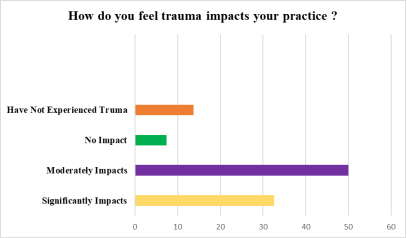
Fifty percent of the research participants responded that they feel trauma “moderately impacts” their practice. Thirty-three percent of research participants reported that they feel that trauma “significantly impacts” their practice.
Figure 3. Trauma Impacts Your Practice.
When participants were asked to share their frustrations about their current social work positions, 14.14% of respondents identified the lack of finances or funds as the leading source of dissatisfaction. This was closely followed by issues related to clients at 13.13%, work-related challenges at 11.11%, and time-related concerns (including the need for time off work) at 9.09%. Additionally, trauma-related issues (including secondary trauma) accounted for 9.09% of frustration. Personal family matters were cited by 14.14%, frustrations concerning paperwork at 11.11%, and a lack of appropriate resources at 6.06%. To explore potential ways to address these frustrations, participants were asked about the self-care techniques they regularly employ. The most notable response was spending time with loved ones and family, chosen by 24.24% of participants, followed by taking time off or going on vacation at 17.17%. Other noteworthy self-care practices included reading and exercise at 13.13%, with therapy being mentioned by 10.10% of respondents.
(ii). What Led You to the Field of Social Work
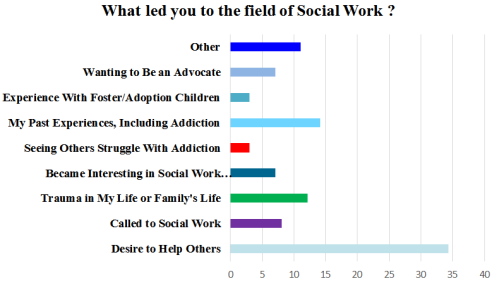
Participants were asked to identify what led them to the field of social work. For this particular question, participants were given the opportunity to write in their response. Participant responses varied from feeling a divine calling (8.08%) to the largest area of participants responding they felt the desire to help others (34.34%). Additionally, responses include past trauma including past addiction (14.14%), seeing loved one’s struggle with addiction (3.03%), experiencing personal trauma (12.12%), learning of social work in another course/occupation (7.07%) and lastly wanting to be an advocate (11.11%). Each of the identified reasons that have led participants to the field of social work is identifiable, personal and within the profession most often referred to as our “calling”.
When speaking of trauma, all participants reported that they deal with traumatized individuals in their professional practice. In this study, 54% of participants reported that at least 90% of their clients had endured at least one form of significant trauma. Participants spoke of various forms of trauma in practice, including child maltreatment, substance abuse, and loss of loved ones. Participants spoke of the significance this trauma plays in long-term treatment and success of treatment, as well as exposure to secondary trauma in practice for them personally as practitioners due to their own trauma. Below are the identified themes in this research.
Figure 4. Led You to Field of Social Work.
(iii). What Self-care Techniques Do You Currently Practice
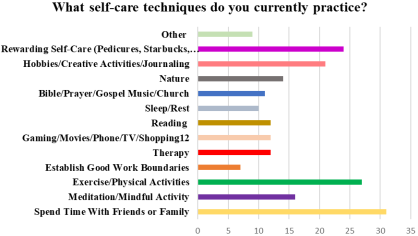
Participants were asked to identify what self-care techniques they currently practice. Again, participants were asked to write in their response and therefore were given the freedom to discuss techniques in which they find most helpful. One particular area of interest is 24% of participants reported they “reward” themselves as their form of self-care, however did not clarify what these acts include. Additional results indicated the largest number of participants (31%) identified their preferred self-care technique as time with loved ones/pets. When exploring physical or mindful activities these would include the following; exercise (27%), meditation (16%), therapy (12%) and nature (14%).
Figure 5. Self-Care Techniques.
4.8.2. Qualitative Research Findings
Narrative interviews were conducted with eleven alumni who expressed a desire to discuss their trauma in more detail. These participants provided their email addresses in the final question of a quantitative survey and consented to be contacted by the researcher to arrange interviews focused on the impact of their personal experiences with trauma. All participants expressed a desire to speak via a scheduled telephone call. Participant responses were documented using numerical coding rather than their names to protect their identity. Research participants were asked eight open-ended, narrative-style interview questions. Participants were provided the opportunity to provide in-depth responses. Nine of the eleven individuals indicated that over 90% of their clients are directly impacted by trauma. The reported trauma included child maltreatment, substance abuse, loss of a loved one, domestic violence, and/or natural disaster.
All interviews were completed over the phone, allowing participants to select the date and time for the interview. All participants for this research portion identified their highest level of education as having a Master of Social Work. Of these participants, eight identified themselves as a therapist or working in clinical practice; one individual worked in policy (macro level of practice), one in substance abuse, and one in post-adoption services. Participants had varying years of practice that are outlined in the following: one year (two participants), two years (three participants), three years (one participant), four years (four participants), and five years (one participant).
During these narrative interviews, the following forms of self-care techniques were specifically noted to be used regularly by these individuals:
1) individual therapy
2) quiet time
3) medication
4) journaling
5) use of supervision
Your own personal trauma that you feel directly impacts your professional practice:
1) very public figure that is her “pain point” and her clients have access to it
2) it impacts the amount of practice I do
3) clients are more willing to open up due to self-disclosure
4) leads to feelings of overwhelmed, burned out, unsuccessful
5) greatly impacted, attempted suicide
6) makes me more humble
7) relate to them personally
8) it can be very taxing
Tell me how well prepared you felt to address the trauma of others in practice:
1) did not feel prepared to help clients
2) felt “book smart” but did not have practical skills, I did not have skills to address personal trauma
3) wish we had more “real-world” applications
4) did not prepare self through classes
5) did not realize all the trauma I was living with and therefore could not help others
6) felt unprepared
7) always more to learn
8) have more training on traumatic topics
Identified Themes from Qualitative Research
The following themes were identified through the above qualitative research results. Each theme will be discussed and applied directly to lead improvements across the undergraduate and graduate curriculum.
(a). Existence of Personal Trauma
All participants reported the existence of personal trauma that was at various stages of being addressed. Nine of the eleven participants reported that they had actively engaged in therapy. Participants spoke of their trauma in various stages of healing. However, all echoed that their trauma is a lifelong process that they manage by diligently engaging in healthy behaviors. Numerous participants reported that the existence of their trauma led them to Social Work practice and allowed them to empathize with those whom they serve.
1) “Allows me to hear my clients and meet them where they are…”
2) “Clients more receptive to services I after I engaged in brief self-disclosure about my own trauma.”
3) “It definitely makes me humbler. If someone as a therapist, has gone through something traumatic that is similar to that of their client, there is a connection there.”
(b). Need for Self-Care
Participants overwhelmingly narrated that the self-care practices they engaged in regularly were imperative to the services they provided to their clients. These self-care practices included attending personal therapy, reading, and spending time with loved ones. Several participants also spoke of the need to engage in spiritual practices to sustain their professional practices, including engaging in organized religion, praying to a higher power, and meditation. Participants spoke of the need to increase knowledge and skill-building in all courses surrounding self-care across the curriculum. Although self-care is discussed, proper techniques and practical skills still need to be taught and are crucial to sustainability in practice. One participant specifically discussed the lack of knowledge regarding unhealthy forms of self-care that release short-term adrenaline boosts, such as cell phones, shopping, or caffeine. These forms of self-care are inefficient in long-term well-being and sustaining overall good mental health.
1) “Without sufficient self-care, I feel overwhelmed, burnt out, unsuccessful, anxious, and like a failure.”
2) “So many ongoing self-care practices!”
3) “Having support individuals to debrief.”
4) “Aware of limitations, triggers, and learn to advocate for myself.”
5) “Taking care of self is taking care of your clients.”
Specific statements provided during research by participants in response to the research questions of what they find most rewarding about their career include;
1) “Seeing my patients before and after transplant and the drastic positive changes in their lives.”
2) “Working with the whole family as a system.”
3) “Helping with the recovery of patients with mental illness.”
4) “Being part of the change process.”
5) “Helping clients successfully reintegrate back into their communities.”
6) “Giving people hope and support when they do not have anyone else.”
7) “Making a difference with others and helping them see and work towards their potential.”
8) “Being in the journey with clients, especially when they have their 'aha” moment.”
9) “I help those at the end of their lives.”
(c). How to Best Address Personal Trauma
Participants overwhelmingly expressed the existence of trauma as outlined above. Participants denied having the skills or knowledge to properly address their personal trauma before entering professional social work practice. Participants expressed the desire to have additional skills and knowledge in trauma throughout the social work curriculum to address personal trauma to better prepare themselves against secondary trauma and burnout in practice.
(d). Additional Knowledge on Impact of Trauma
Participants expressed the desire to understand the impact of trauma on their direct practice, specifically urban trauma such as gang, school violence, bullying, active shooter, and any trauma that extends beyond child maltreatment or the loss of a loved one. Participants expressed course curriculum had a narrow focus, which ill-prepared them for practice. Participants expressed the desire for increased interactive learning situations such as labs, simulations, and increased realistic case scenarios.
(e). Additional Knowledge of on Direct Self-Care Skills
Participants expressed a lack of knowledge regarding direct self-care techniques. Although participants acknowledged that self-care is interwoven into the learning curriculum, there is a lack of direct skills. Therefore, students lack understanding of how to apply self-care techniques, leading to exhaustion, burnout, and secondary trauma. Participants express the desire for additional knowledge of how to specifically apply self-care to practice to ensure physical, emotional, spiritual, and mental well-being.
Compassion fatigue, or the outcome of work-related stress, is widely experienced amongst social work professional and is a significant threat to individuals’ overall mental, physical and emotional wellbeing. Therefore, making mindfulness an essential part of self-care within practice is imperative to one’s health. These techniques can include therapy, journaling, yoga, exercise and spiritual practices
. Safeguarding students with the knowledge of compassion fatigue, secondary trauma and essential self-care skills are imperative to their longevity in practice.





 Share This Article
 Twitter
 Linked In
 Facebook
 Copy
Copy Download