Research Article | | Peer-Reviewed

Phosphorus Adsorption Characteristics of Soils in the Four Selected Agroecological Zones of Southern Highlands of Tanzania

Received: 17 August 2026     Accepted: 28 August 2026     Published: 18 September 2026
Views:       Downloads:
Abstract

The Southern Highland Zone constitutes Tanzania’s principal agricultural belt, accounting for approximately fifty percent of the nation’s food supply. Most of the soil of the region’s agroecozones is strongly acidic, causing poor crop yields and inefficient fertilizer utilization. Phosphorus (P) sorption characteristics were investigated across acidic soils to assess their implications for P availability and soil fertility management. Surface soil samples (0-30) cm sampling depth obtained from the unlimed and limed plots of study sites were analyzed for P-sorption dynamics. The P-sorption data were fitted to the Freundlich isotherms to estimate sorption capacities and heterogeneity of adsorption sites. The results on Freundlich P-adsorption capacity (KF) in mg/Kg of soil recorded 1433.0±131.0 and 1396.6±141.7, 971.0±222.4 and 883.3±269.5, 1644.2±26.3 and 1595.7±43.0, 1055.4±62.3 and 1001.9±105.5; standard phosphorus requirement (SPR) in mg/Kg of soil 223.0±5.8 and 205.1±13.2, 122.8±17.7 and 104.7±18.4, 235.4±5.0 and 221.6±3.0, 113.3±19.0 and 97.9±13 for unlimed and limed experimental plots at Mbimba, Kifyulilo, Igeri and Uyole respectively. These results revealed strong P adsorption trends. Liming substantially reduced P-sorption capacities and heterogeneity of adsorption sites in the soil, increased equilibrium P concentration, indicating improved P availability through charge neutralization and reduced activity of iron (Fe) and aluminum (Al) sesquioxides. The SPR computed values indicated that the external addition of phosphorus according to national recommendations provide suboptimal fertilization of phosphorus in the Southern Highlands of Tanzania. These findings highlight that managing soil acidity through liming is essential to minimize P-adsorption and enhance fertilizer use efficiency in low-P tropical soils.

Published in American Journal of Agriculture and Forestry (Volume 14, Issue 5)
DOI 10.11648/j.ajaf.20261405.11
Page(s) 229-240
Creative Commons

This is an Open Access article, distributed under the terms of the Creative Commons Attribution 4.0 International License (http://creativecommons.org/licenses/by/4.0/), which permits unrestricted use, distribution and reproduction in any medium or format, provided the original work is properly cited.

Copyright

Copyright © The Author(s), 2026. Published by Science Publishing Group

Keywords

Phosphorus Adsorption, Phosphorus Fixation, Sesquioxides, Variable Charge

1. Introduction
Phosphorus (P) is one of the 17 essential nutrients required for plants to complete life cycles . However, (P) deficiency is among the most widespread constraints to crop productivity in the tropics, particularly in regions with highly weathered and acidic soils . Despite the application of P fertilizers, crop response remains poor because much of the applied P is rapidly fixed rendering it unavailable for plant uptake.
Phosphorus fixation is a fundamental process governing the availability, mobility and fate in the acidic soil settings . P- fixation is exhibited through precipitation or adsorption reactions. In the highly weathered acidic soils (pH<5.5) variable charge minerals like iron and aluminum oxy (hydroxides) and Al3+, Fe3+ are predominant chemical species . The precipitation reactions result into insoluble compounds such as variscite and strengite, and the adsorption reactions occur on the surfaces of Fe and Al sesquioxides like ferrihydrite, goethite, and hematite . The soil pH and the point of zero charge (PZC) catalyses the sorption reactions, largely by driving the dynamics of orthophosphate and sesquioxides species . Generally, ligand exchange chemisorption exhibits the orthophosphate and mineral surface charge is sorption pattern in such soils. These reactions are often irreversible at constant pH, but may become partially reversible with changes in pH .
The acidity in the southern highlands of Tanzania is primarily casued by the nature of the parent material such as colluvial/alluvial desposits formed from grinitic/gneiss rocks, high rainfall that wash out the exchangeable base cations and fertilizer management practices . Eventually, creating the potential P-sorption sites which reduce the fertilizer use efficiencies and posing serious economic challenges to smallscale farmers who are already facing limited input access .
Understanding the sorption characteristics of phosphorus in acidic soils is critical for sustainable soil fertility management, improving crops productivity and maximizing environmental conservation . Thus, P-sorption studies are essential in designing sustainable soil fertility and nutrient management strategies in the tropics . Although extensive work has been done on P-sorption in the tropics, no study has been conducted to quantitatively assess how lime chemical reaction in acid soils influence P-sorption dynamics of the P-source fertilizers in the Southern Highlands of Tanzania. This knowledge gap limits the fertility optimization using intergrated management strategies. The research findings are required to inform on ways to reduce P- fixation, improving P- Phytoavailability and crop productivity in acid characterized agroecosystems . This study deploys quantitative evaluation model approach using the Freundlich isotherms to characterize the P-sorption properties in the soils, guide P-fertilizer recommendations using standard phosphorus requirement metric, and inform liming strategies . The effectiveness of lime in reducing exchangeable acidity, altering surface charge properties, and influencing P availability is broadly reported by various scholars . Various factors influence the effectiveness of lime including soil mineralogy, type and content of organic matter, and management history, which is reported to vary across the agroecological zones of the Southern Highlands of Tanzania .
The low phosphorus levels in the soils of the Highlands of Tanzania replenish suboptimal amounts to support plant growth and best yields . Land managers recommend the use of high P-formulation fertilizers to address the low-P problems in the agroecosystems . However, farmers continue obtaining low yields. This challenging scenario created scientific enthusiasm for investigating options that can enhance phosphorus use efficiency in the agroecological zones of the Southern Highlands of Tanzania. The study was therefore conducted to characterize the P- sorption behaviour of acidic soils under limed and unlimed conditions in the study areas. The results of this work are expected to provide a basis for refining phosphorus use recommendations, improving the soil fertility management practices, and environmental conservation via integrating four aspects of fertilizer management (i) right type, (ii) the right amount, (iii) right placement, and (iv) right timing known as the 4R stewardship principles required to be known and followed by farmers towards enhancing sustainable crop productivity in the agroecosystems.
The specific objectives are to:
1) Quantify the P-sorption characteristics of the soils of four representative agroecological zones of Southern Highlands of Tanzania
2) Evaluate the of effect agricultural liming on the soil chemical characteristics soils in four representative agroecological zones of Southern Highlands of Tanzania.
2. Materials and Methods
2.1. Study Area
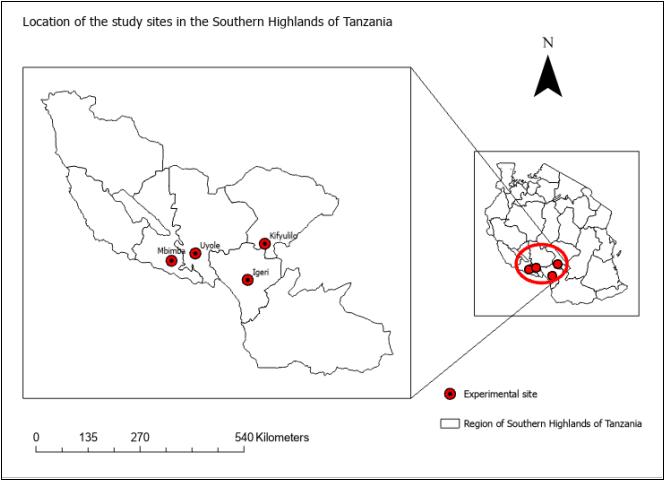
This study was conducted in four regions of the Southern Highlands of Tanzania, specifically in districts of Mbozi, Njombe, Mbeya, and Mufindi) for Songwe, Njombe, Mbeya and Iringa regions respectively. The study sites were located in villages of Mbimba, Uyole, Kifyulilo, and Igeri (Table 1 and Figure 1) in the four representative agroecological zone of Southern Highlands of Tanzania. The sites have been under continuous maize-legume rotations under conventional tillage, with a history of P-fertilization without lime application in the past five years. The experimental sites cover the 10.5% of the agroecological zones of Tanzania. Table 1 provides the details to the characteristics of the Agroecological zones of Southern Highlands of Tanzania. field descriptions book was used to describe the sites in weather, geomorphic features like landforms, land use, soil temperature and moisture regimes. In addition, Garmin etrex 10GPS device was used to determine the coordinates of the site sites.
Table 1. Description of the location, altitude, precipitation, landforms, land use, and soil classification of the study sites in the Southern Highland Zone of Tanzania.

Site name

Latitude Longitude

Altitude (masl)

Precipitation (mm)

landform

Land use

USDA Soil Taxonomy

Mbimba

-9.08835, 32.95329

1592

1300-1800

Flat plain

Cultivation

clayed, mixed, superactive, isothermic Ultic Hapludalf

Igeri

-9.53057, 34.72591

2023

1200-2100

Inclined plain

Cultivation

clayey, mixed, semiactive, isothermic Typic Hapludult

Kifyulilo

-8.69118, 35.12511

1848

1000-1700

Inclined plain

Cultivation

Fine, mixed, active, isothermic Typic Paleudult

Uyole

-8.91611, 33.50793

1770

100-1500

Alluvial fan

Cultivation

Pumiceous, mixed, superactive, isothermic, Typic Hapludand

Figure 1. Location of study sites in the representative acid affected agroecological zones of the Southern Highlands of Tanzania. Map’s shapefiles were obtained from national bureau of statistics, Tanzania.
2.2. Field Work
The study sites were located on farms belonging to the Tanzania Agricultural Research Institute - Uyole Center. These research farms represent the agroecological zones of the Southern Highlands of Tanzania, specifically in soils, landscapes, landforms, climate, and ecological conditions. The criteria used to select the location of the pedons included landscape analysis, expert knowledge and soil reconnaissance survey, and review of maize suitability studies reports. Then, ten subsamples were collected at a depth of 0-30cm using random soil sampling technique in unlimed and lime plots, mixed and processed through the quartering method to obtain one composite soil sample weighting 500g for each experimental plot in each site. The unlimed soil samples represent the baseline condition of the soil in the study sites. Two composite samples were collected in each site. Total of eight composite soil samples were submitted to Tanzania Tea Research Institute (TRIT) laboratory for analysis. The calcitic lime consisted of 94.96% ECCE and 40% Ca content was applied to the experimental plot one year before the soil sampling was executed.
2.3. Laboratory Work
The collected soils were air dried, and ground to pass through a 2-mm sieve, the eight samples were analysed for required parameters. The soil samples were replicated three times and the chemical analysis was conducted. Chemical properties measured were Bray-1 Available phosphorus (ppm) . The exchangeable Ca2+ were determined by atomic absorption spectrophotometer , following ammonium acetate extraction method. CEC was determined by saturating soil with neutral 1 M NH4OAc (ammonium acetate) and the adsorbed ammonium ions (NH4+) were displaced by using 1 M KCl and then determined by Kjeldahl distillation method for estimation of CEC of the soil ). Soil pH was measured in water at a ratio of 1:2.5 soil-water and soil- KCl, . The determination of soil organic carbon was done using by the Walkley and Black wet oxidation method . Exchangeable acidity was extracted using unbuffered 1M KCl and quantified by titration method using 0.05M NaOH. Exchangeable Al3+ was quantified by titration method using 0.05M HCl . Iron was determined by DTPA extraction method and quantification by AAS according to the standard atomic adsorption procedures .
Phosphorus adsorption
Eight 1.25g soil samples were measured and placed in 50mls centrifuge tubes. This was done in triplicate. Twenty-five mills of 0.04M KCl supporting electrolyte containing KH2PO4, P equilibrating solution at the rate of 0, 2, 4, 6, 8, 10, 20 and 40 (mg/l) were measured using a pipette and transferred into the centrifuge tubes, starting from the lowest to the highest concentrations. To avoid any source of contamination the pipette was rinsed in deionised water between dilutions. The centrifuge tubes were fastened tightly, put into the shaker and shaken horizontally for 24 hours at 150 oscillations per minute to acquire the equilibration of the system at 25oC . Then, the samples were centrifuged at 1500rpm for 10 minutes. The supernatant was filtered using Whatman 42 paper. The dilution series was prepared and appropriate aliquot (0.04 KCl) was made, followed by addition of color development reagent. The mixture was left to stand to 20 minutes to allow color development. Finally, the absorbance was measured at 880 nm using a UV- visible spectrophotometer. The absorbances were computed into equilibrium P (mg/l) using the linear equation developed from the phosphorus standards provided in Environmental soil and water chemistry laboratory handbook . Then, the amount of adsorbed P (mg/Kg soil) was computed by the equation (1).
QmgPKgsoil=Initial concentration(mgl)-equilibrium concentrationmgl*0.025lKg of soil(1)
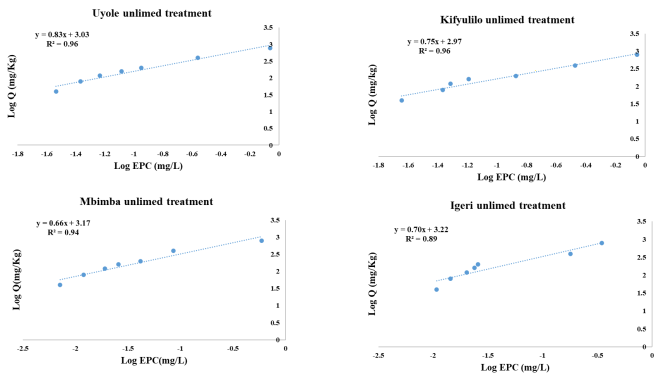
The mean value of adsorbed P (mg/Kg) was computed from the three replications and used to plot Q (mg/Kg) in y-axis against equilibrium concentration in mg/l on the x-axis. The data from this plot was used to fit the Freundlich models equation (2) to describes P-adsorption characteristics in the study sites. The Freundlich model was linearized by log transforming equation (3). The Freundlich parameters KF and n determined and used to explain the P-sorption characteristics of the study sites. Where, n explains the heterogeneity of energies associated with phosphorus and soil interaction, and KF explains P-adsorption capacities of the soil in the study sites.
Q=KFCn(2)
Log Q=LogKF+nlogc(3)
2.4. Statistical Tools
The JMP Pro 13 statistical software was used to run the inferential statistical analysis. The ANOVA, Tukey’s Krama HSD, t-test tools at α=5% were used to test the significance of treatment effect of lime on soil chemical properties, comparing treatment effects across the study sites and difference between the Freundlich adsorption parameters of the limed and unlimed soils in the study sites. The continuous data, linear relationship of the soil properties prompted the use of Pearson’s correlation analysis to determine the relationship between the Freundlich adsorption parameters and the soil properties in the study sites. The Pearson’s r ranges from −1 to +1, was used to determine the negative and positive correlations.
3. Results and Discussion
The statistical results indicate significant effects of lime on soil chemical properties across the study sites. The effects of lime were observed on soil pH, available phosphorus, exchangeable Calcium, exchangeable acidity, and exchangeable Aluminum properties (Table 2). Also, the results show significant effect of lime on the soil organic carbon, cation exchange capacity and Fe content across the sites (Table 3).
Percentage increase of soil pH recorded 17.20, 6.70, 6.90, and 6.07 for Mbimba, Igeri, Kifyulilo, and Uyole respectively. This increase in soil pH is explained by the action of CaCO3 following its dissolution, the action of Ca2+ in displacing the acidic cations (Al3+ and H+) from the colloidal surface and releasing them into the solution . In the soil systems with pH<5.5 this reaction results in the formation and precipitation of gibbsite . The hydrogen ion displaced from the colloidal surface reacts with CO3- from calcite dissolution forming water and carbon dioxide . The calcite effect on soil pH corresponded with improving soil fertility attributes like available phosphorus and cation exchange capacity . The decrease in adsorption sites (positively charged surfaces on ferrihydrites, goethite, lepidocrocites, and hematite) as a result of lime application and the control of phosphorus fixation through precipitation of gibbsite, variscite, and strengite account for the increased available phosphorus . According to Landon (1991), an increase in CEC also shows that lime is improving the soils' ability to hold onto positive cations, such as Ca2+, Mg2+, Zn2+, Cu2+, and other nutrients that are vital for plants growth and development.
Table 2. The lime effects on selected soil chemical properties across sites in the Southern Highland Zone of Tanzania.

Site

Trt

pHw

Bray I - P mg/kg

Exch. Ca Cmol/kg

Exch.Acidity Cmol/Kg

Exch. Al Cmol/Kg

Mbimba

Unlimed

5.06d

2.82c

5.14bc

2.30a

1.95a

Limed

5.93bc

11.15b

17.10a

1.16b

0.92b

Igeri

Unlimed

5.23d

3.38bc

1.43c

0.58c

0.49c

Limed

5.58bcd

4.27bc

2.07c

0.17e

0.16e

Kifyulilo

Unlimed

5.51cd

3.98bc

6.12bc

0.27d

0.32d

Limed

5.89bc

6.00bc

9.97b

0.12ef

0.09ef

Uyole

Unlimed

6.1ab

19.21a

4.35bc

0.07f

0.02f

Limed

6.47a

26.54a

7.97b

0.05f

0.02f

Site

***

***

***

***

***

Lime

*

ns

Ns

***

***

Site*Lime

*

*

***

***

***

Cv (%)

3.29

28.50

29.81

5.28

5.4

P value

***

***

***

***

***

Note: The means followed by different letters are significantly different at P≤0.05
Table 3. The effects of lime on soil selected soil chemical properties across sites in the Southern Highlands zone of Tanzania.

Property

Mbimba

Igeri

Kifyulilo

Uyole

HSD (0.05)

Unlimed

Limed

LSD (0.05)

SOC (%)

2.11b

3.22b

3.73a

2.00b

0.22

3.21a

2.52b

1.0614379

CEC (cmolc kg-1)

30.78a

28.62b

26.63c

28.63b

0.22

24.68b

26.28a

1.06

Fe (ppm)

250.78a

178.00b

153.10b

320.61a

0.220

178.00a

147.05a

1.06

Note: The means followed by different letters are significantly different at P≤0.05
The decrease in exchangeable acidity and exchangeable aluminum recorded 49.6 & 52.8%, 70.7& 67.3%, 55.6% &71.9%, 28.6% & 0 for Mbimba, Igeri, Kifyulilo, and Uyole respectively (Table 2). This demonstrates the potential effects of lime in neutralizing soil acidity, preventing excessive aluminum levels which harm root development, reduces the plant's ability to absorb nutrients and water, leading to low yield or crop failure . These results are consistent with the findings of who reported a decrease in exchangeable acidity, exchangeable aluminum, an increase in available phosphorus, exchangeable bases, and CEC in the soils of the Highlands of Ethiopia following lime application. Similarly, reported the increase of soil pH from 5.8 to 6.5 due to lime application in the soils of western Kenya. Generally, these findings substantiate the rationale of integrating lime into fertility programs as a sustainable approach for improving soil fertility and enhancing crop yield in the agro ecosystems of sub-Saharan Africa.
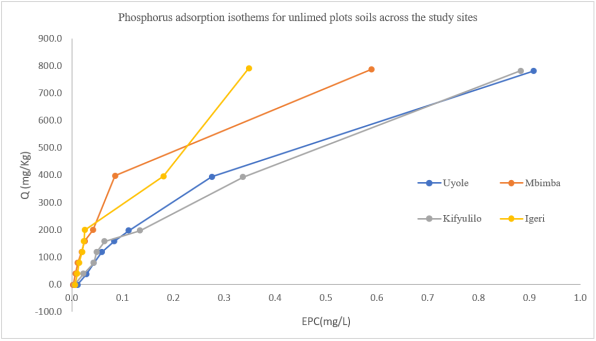
Figure 2. Adsorption isotherms of the unlimed soils of the study sites in the representative agroecological zones of Southern Highlands of Tanzania.
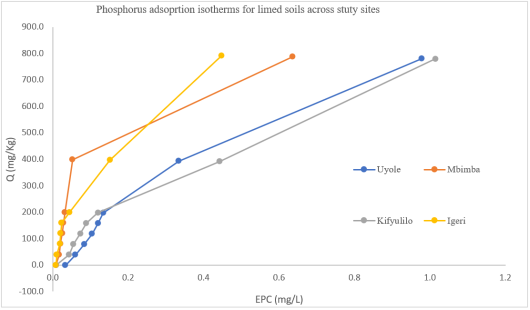
The adsorption data fit the Freundlich isotherms quite well, suggesting that this empirical model sufficiently explains the phosphorus sorption of both limed and unlimed soils throughout the study sites. Figures 2 & 3 and 4 & 5 show that the coefficient of determination (R2), which measures how well the model explains p-sorption, varied from 0.74 to 0.95. The metric scores show how well the Freundlich model captures the variation in sorption surfaces and the adsorption capacities present in tropical soils that have undergone significant weathering. The consistently higher phosphorus adsorption observed in unlimed soils compared to limed soils can be attributed to the strong influence of soil pH on sorption processes (Figures 2 & 3). According to , when the soil pH values are below the point of zero charge (PZC) of Fe and Al oxides, the mineral surface sites are predominantly positively charged. These positive charges enhance the electrostatic attraction, driving ligand exchange reactions with negatively charged phosphate ions . Liming reduces surface charge density by increasing soil pH, thereby decreasing the number of active adsorption sites and lowering phosphorus sorption capacities of the soils . Similarly, the findings from previous works conducted in East Africa, including , reported reduced phosphorus sorption with lime application in the acidic soils of Kenya. These findings demonstrate the potential of soil chemical amendments in managing phosphorus dynamics, towards enhancing nutrient availability and fertilizer use efficiency in acid soils of the tropics
Figure 3. Adsorption isotherms of the limed soils of the study sites in the representative agroecological zones of Southern Highlands of Tanzania.
The Freundlich adsorption coefficients (KF) between unlimed and lime plot decreasing patterns recorded 2.5%, 2.9%,9.0%, and 5.1% for Mbimba, Igeri, Kifyulilo, and Uyole sites respectively (Table 4). This variation depicts the effects of liming in phosphorus sorption capacities of the soils in the study sites. Low Freundlich adsorption coefficient reflects the low p sorption capacity of the soils. The differences between sites are largely attributed to mineralogical and chemical species composition in respective study sites . The highest KF values at Igeri suggest a stronger phosphorus sorption potential relative to the other sites, while the lowest values at Kifyulilo reflect weaker sorption capacity. This trend is likely due to the gradient in the concentrations of reactive Al and Fe sesquioxides in the study sites . However, statistically there was insignificant difference in p-sorption behavior due to lime application in the study sites. This observation suggests that within the experimental timeframe, liming did not exert a pronounced effect on phosphorus sorption capacities .
Figure 4. The Freundlich linear model graphs of unlimed soils in the Southern Highland Zones of Tanzania.
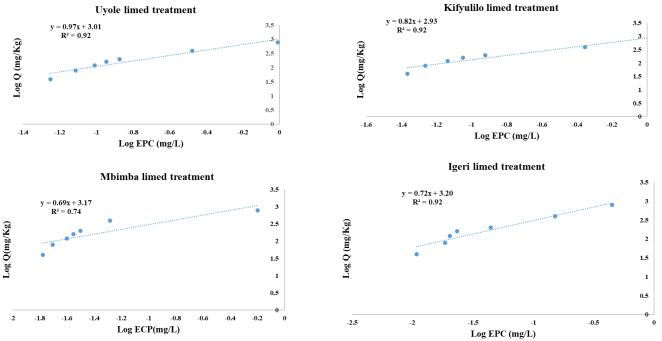
Nevertheless, consistent trend of slightly lower KF values in limed plots compared to unlimed plots have been observed across the study sites (Table 4). This trend suggests that lime reduces the number of adsorption sites through the reaction of Al3+ and, or Fe3+ with orthophosphates to form the secondary minerals precipitates like gibbsite, strengite, and variscite . These precipitates can occlude or transform reactive sites and lower P adsorption potential of the sesquioxides surfaces . These results demonstrate the multiple potentials of lime in improving soil pH, reducing Al toxicity and inadvertently diminishing P sorption capacity by altering the soil mineral matrix (Table 4). Overall, the findings of this study indicate that in addition to the lime potential for acid mitigation through soil chemical interactions and influences on nutrient availability. The site-specific variation in KF values presents empirical evidence of lime governing P dynamics in the acidic soils.
Table 4. Freundlich adsorption parameters of the soils of the study sites in the Southern Highlands of Tanzania.
Site

Trt

KF

p-value

n

P-value

Mbimba

Unlimed

1433.0 ± 131.0

0.758

0.66± 0.05

0.7197

Limed

1396.6 ± 141.7

0.69 ± 0.02

Igeri

Unlimed

1644.2± 26.3

0.171

0.70 ± 0.01

0.102

Limed

1595.7 ± 43.0

0.72 ± 0.02

Kifyulilo

Unlimed

971.0± 222.4

0.6859

0.75 ± 0.05

0.5022

Limed

883.3± 269.5

0.82 ± 0.08

Uyole

Unlimed

1055.5 ± 62.3

0.492

0.83 ± 0.03

0.0042

Limed

1001.9 ± 105.5

0.97 ± 0.03

Figure 5. Freundlich linear model graphs of limed soils in the Southern Highlands of Tanzania.
The Freundlich heterogeneity index (n) indicates important information into the distribution and strength of adsorption sites in soils. The variation between lime and unlimed plot on the heterogeneity of adsorption sites recorded 4.5%, 2.9%, 9.3%, and 16.9% for Mbimba, Igeri, Kifyulilo and Uyole respectively (Table 4). The unlimed plots generally recorded lower values compared to the limed plots. Lower n values indicate the heterogeneity of adsorptions sites in the soil systems, and higher values indicate the uniformity of adsorption sites. As observed at Uyole, Igeri, Kifyulilo, and Mbimba, reflect superior heterogeneity on relative scale of adsorption sites and stronger phosphorus fixation. This condition is commonly linked to the presence of Al³⁺, Fe³⁺, and their sesquioxides such as hematite, goethite, lepidocrocite, and maghemite in acidic soils . The non-significant increase in n values across the study sites under limed treatment suggests that lime application did not reduce the heterogeneity of adsorption sites by neutralizing soil acidity and decreasing the number of positively charged surfaces, thereby limiting P fixation.
The lack of significant differences in n values at Igeri, Kifyulilo, and Mbimba may reflect site-specific soil mineralogical and chemical characteristics that buffer or minimize the effect of lime on P adsorption heterogeneity . Nonetheless, the overall trend of higher n values in limed plots supports the role of liming in improving phosphorus availability by moderating the abundance of reactive Al3+ and Fe3+ sites. Collectively, the results highlight that the effectiveness of lime in modifying adsorption site heterogeneity is not uniform across landscapes but is instead strongly influenced by the underlying soil properties at each site. These findings agree with findings of earlier works which showed that liming enhances P fertilizer use efficiency in highly weathered tropical soils by reducing fixation and improving nutrient availability
Table 5. Freundlich phosphorus buffering capacity and standard phosphorus requirements of the study sites in Southern Highlands of Tanzania.

Site

Trt

PBC (L/Kg)

P-value

SPR (mg/Kg)

P-value

Mbimba

Unlimed

1634.6±148.5

0.7294

223.0 ± 5.8

0.097

Limed

1588.37 ± 156.5

205.1 ± 13.2

Igeri

Unlimed

1866.0± 31.0

0.1104

235.4 ± 5

0.0165

Limed

1803.9 ± 42.5

221.6± 3.0

Kifyulilo

Unlimed

1078.48 ±228.2

0.6035

122.8 ±17.7

0.2859

Limed

965.3± 264.5

104.7 ± 18.4

Uyole

Unlimed

1121.6 ± 91.8

0.3956

113.3 ± 19.0

0.311

Limed

1039.5± 118.1

97.9 ± 13.0

The result of standard phosphorus requirement (SPR) varied between the unlimed and lime plots. The variation indicates decreasing patterns scores which recorded 8.8%, 5.9%, 14.7%, and 13.4% for Mbimba, Igeri, Kifyulilo, and Uyole respectively (Table 5). SPR represents the amount of P needed to overcome soil P adsorption and maintain the adequate concentration in the soil solution for plant uptake. The findings of this study consistently show that unlimed soils recorded higher SPR values than limed soils (Table 5). These findings can be substantiated by stronger P-fixing conditions due to the abundance of active Al³⁺ and Fe³⁺ oxides and hydroxides in acidic environments . The lower SPR values in limed soils reflect the reduction of sorption sites following pH increase, and decrease in the external phosphorus requirement . The standard phosphorus requirement (SPR) is a metric of external P input needed to achieve adequate P concentrations solution required to support crop growths .
Table 6. Comparison of the phosphorus requirements and existing recommendations in the agroecological zones of Southern Highlands of Tanzania.

Site

Trt

P requirements Kg /ha

Existing P recommendation (Kg/ha)

Mbimba

Unlimed

421.77

25

Mbimba

Lime

402.62

25

Igeri

Unlimed

483.64

10

Igeri

Lime

452.61

10

Kifyulilo

Unlimed

216.50

20

Kifyulilo

Lime

191.98

20

Uyole

Unlimed

203.95

25

Uyole

Lime

158.17

25

The significant differences observed at Igeri and Mbimba, but not at Uyole and Kifyulilo, suggest that the influence of liming on phosphorus requirements is highly site-specific, depending on soil mineralogy and sorption characteristics . These findings reinforce earlier evidence that liming corrects soil acidity, whose effect is reflected in reduced phosphorus fixation and improving fertilizer use efficiency . Importantly, the site-specific variability highlights the need for tailored P-fertilizer management strategies to match the sorption behavior of different soils (Table 6).
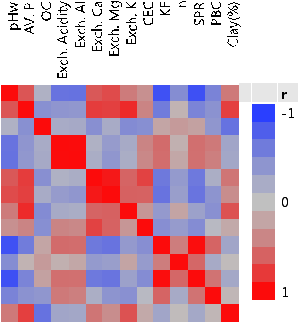
The results of correlation analysis revealed strong relationships between soil sorption parameters and selected soil properties, highlighting the influence of soil chemical environment on phosphorus dynamics (Figure 6). The negative correlations of KF, phosphorus buffering capacity (PBC) and SPR with soil pH, available P, and exchangeable Ca and Mg suggest that soils with higher pH and greater base cation content exhibit lower P sorption capacity . This correlation can be attributed to the neutralizing effect of Ca and Mg on soil acidity, which reduces the activity of Al and Fe oxides the primary P-sorbing components in acidic tropical soils Similarly, increased soil pH enhanced negative surface charges on colloids, resulting into decrease P fixation and increased P availability .
Figure 6. The heatmap on correlation coefficients of soil properties and the Freundlich Adsorption properties across the study sites.

Conversely, the positive correlations of adsorption parameters with exchangeable acidity, exchangeable Al, and Al saturation reinforce the role of Al in controlling P sorption in these highly weathered soils. High levels of exchangeable Al increase the availability of reactive surfaces and binding sites for phosphate ions, leading to greater KF, n, and SPR values. Consistently, the earlier studies demonstrated that P sorption capacity increases with exchangeable acidity and Al concentrations . The alignment of these results with previous studies underscores the general principle that soil acidity and Al chemistry are dominant drivers of P sorption in strongly weathered soils of the tropics. Generally, these correlations imply that management practices that raise soil pH and reduce exchangeable Al such as liming can substantially decrease P sorption and improve P availability, thereby enhancing fertilizer use efficiency.
4. Conclusions
The study exhibited clearly contrast in the phosphorus adsorption patterns within and across the four sites. The standard phosphorus requirements (SPR) provided the laboratory-controlled conditions empirical evidence that suggest for the need of the field- based evaluation of the existing P-fertilizer recommendations in acidic soils agroecosystems. Additionally, application of lime did not cause significant statistical difference in P adsorption within the study sites. However, consistently lime application lowered P-sorption in acidic soils across the study sites in Southern Highlands of Tanzania. The potential of lime in reducing external phosphorus requirement and optimizing other soil chemical properties offers a farmer an opportunity to improve efficiency and minimize production costs due to fertilization programs. Therefore, future research needs to examine the long-term effect of liming on P-sorption dynamics in the Southern Highlands of Tanzania.
Abbreviations

TARI

Tanzania Agricultural Research Institute

ISU

Iowa State University

KF

Freundlich Adsorption Capacity

SPR

Standard Phosphorus Requirement

PZC

Point of Zero Charge

USDA

United States Department of Agriculture

GPS

Global Positioning System

TRIT

Tea Research Institute of Tanzania

ECCE

Effective Calcium Carbonate Equivalence

PSD

Particle Size Distribution

NSS

National Soil Survey

CEC

Cation Exchange Capacity

TARI

Tanzania Agricultural Research Institute

ISU

Iowa State University

KF

Freundlich Adsorption Capacity

SPR

Standard Phosphorus Requirement

Acknowledgments
The authors acknowledge Doc Scholtes funding, Dr. Charles Lee Burras for his guidance in planning and execution of the experiments, Tanzania Tear Research Institute (TRIT) for providing laboratory space for running p-adsorption experiments, Tanzania Agricultural Research (TARI), Uyole center for providing field sites for collecting soil samples that were used for the p-adsorption study. Iowa State University, Department of Agronomy for supporting the movement during the execution of the experiments in Tanzania.
Author Contributions
Johnson Godlove Mtama: Conceptualization, Data curation, Formal Analysis, Investigation, Methodology, Project administration, Resources, Supervision, Validation, Visualization, Writing – original draft, Writing – review & editing
Francis Akitwine: Data curation, Visualization, Writing – review & editing
Rebecca Alice Wokibula: Data curation, Visualization, Writing – review & editing
Charles Lee Burras: Methodology, Resources, Validation, Visualization, Writing – review & editing
Funding
This work is supported by Doc Scholtes funding.
Data Availability Statement
The raw data supporting conclusions of this article will be made available by the authors, without undue reservation
Conflicts of Interest
The authors declare no conflicts of interest.
References
[1] P. Marschner, Marschner's Mineral Nutrition of Higher Plants, 3 ed., Elsevier, 2012.
[2] P. I. Massawe, "Constrains, Production Systems and Roles of Phosphorus in Rice Production in Tanzania," Asian Journal of Soil Science and Plant Nutrition, pp. 1-10, 2017.
[3] P. C. Smithson and K. E. Giller, "Appropriate farm management for alleviating N and P deficiencies in low-nutrient soils of the tropics," plant and Soil, vol. 245, pp. 169-180, 2002.
[4] S. S. Mahdi, M. A. Talat, M. Dar, A. Hamid and L. Ahmad, "Soil Phosporus Fixation Chemistry and Role of Phosphate Solubilizing Bacteria in Enhancing it Efficiency for Sustainable Cropping A review.," Journal of Pure and Applied Microbiology, vol. 6, no. 4, pp. 1905-1911, 2012.
[5] P. A. Sanchez and G. Uehara, "Management considerations for Acid Soils with High Phosphorus Fixation," in The Role of Phosphorus in Agriculture, Madison, ASA-CSSA-SSSA, 1980, pp. 471-514.
[6] M. T. Iqbal, "Acid tolerance mechanisms in soil grown plants," Malaysian Journal of Soil Science, pp. 1-21, 2012.
[7] L. R. Alleoni, M. A. Cambri, E. F. Caires and F. J. Garbuio, "Acidity and Aluminum Speciation as Affected by Surface Liming in Tropical No-Till Soils," Soil Science Society of America, pp. 1010-1017, 2010.
[8] P. S. Bindraban, C. O. Dimkpa and R. Pandey, "Exploring phosphorus fertilizers and fertilization stratergies for improved human and environmental health.," Biology and Fertility of Soils, vol. 56, pp. 299-317, 2020.
[9] G. Nziguheba, S. Zingore, J. Kihara, R. Merckx, S. Njoroge and A. Otinga, "Phosphorus in smallholder farming systems of sub-Saharan Africa: Implications for agricultural intensification.," Nutr Cycl Agroecosyst, pp. 321-340, 2016.
[10] Y. Arai and D. L. Sparks, "Phosphate Reaction Dynamics in Soil and Soil Components: A Multiscale Approach.," Advances in Agronomy, pp. 135-179, 2007.
[11] P. A. Sanchez, Properties and management of soils in the tropics., New York: Cambridge university press, 2019.
[12] S. Goldberg and G. Sposito, "On the mechanism of specific phosphote adsoprtion by hydroxylated mineral surface: A Review.," Communications in Soil Science and Plant Analysis, pp. 801-821, 1985.
[13] J. G. Mtama, B. M. Msanya and C. L. Burras, "Pedology at Four Reprentative Sites of Southern Highland of Tanzania.," American Journal of Agriculture and Forestry, pp. 111-121, 2018.
[14] N. K. Fageria and V. C. Baligar, "Amelioration of soil acidity of tropical Oxisols by liming for sustainable crop production," in Advances in Agronomy, Elsevier, 2008, pp. 345-399.
[15] J. Zheng, W. N. Mmari, T. Nishigaki, M. M. Kilasara and S. Funakawa, "Nitrogen availability to maize as affected by fertilizer application and soil types in the Tanzanian highlands," Nutrient Cycling in Agroecosystems, vol. 112, pp. 197-213.
[16] B. Ayenew, A. M. Tadesse, K. Kibret and A. Malese, "Phosphorus status and adsorption characteristics of acid soil from Cheha and Dinsho districts, Southern highlands of Ethiopia," Environmental System Research, vol. 7, no. 17, pp. 1-14, 2018.
[17] M. D. Compos, J. A. Antonangelo and L. R. Alleoni, "Phosphorus sorption index in humid tropical soils.," Soil & Tillage Research, pp. 110-118, 2016.
[18] K. Mbene, A. S. Tening, C. E. Suh, N. N. Fomenky and V. B. Che, "Phosphorus fixation and its relationship with physicochemical properties of soils on the astern flank of Mount Cameroon.," African Journal of Research, vol. 12, no. 36, pp. 2742-2753, 2017.
[19] M. A. Tabatabai, D. L. Sparks, R. J. Bartlett, P. R. Bloom, C. E. Clapp, V. P. Evangelou and T. M. Young, Chemical Processes in Soils, Madison: Soil Science Society of America, Inc., 2005.
[20] P. J. Schoeneberger, D. A. Wysocki, E. C. Benham and Soil Survey Staff, Field book for describing and sampling soils., Lincoln: Natural Resource Conservation Service, National Soil Survey Center, 2012.
[21] J. Murphy and J. P. Riley, "A modified single solution method for determination of phosphate in natural waters," Analytica Chimica Acta, vol. 27, pp. 31-36, 1962.
[22] F. S. Watanable and S. R. Olsen, "Test of an Ascorbic Acid Method for Determining Phophorus in Water and NaHCO3 Extracts from Soil," Soil Science Society of America Journal, vol. 29, no. 6, pp. 677-678, 1965.
[23] G. W. Thomas, "Exchangeable Cations," in Methods of Soil Analysis, 1982.
[24] H. D. Chapman, "Cation Exchange Capacity," in Methods of Soil Analysis, 1965.
[25] E. O. McLean, "Soil pH and Lime Requirements," in Methods of Soil Analysis: Part 2 Chemical and Microbiological Properties, Second Edition ed., 1982.
[26] D. W. Nelson and L. E. Sommers, "Total Carbon, Organic Carbon, and Organic Matter," in Methods of Soil Analysis: Part 2 Chemical and Microbiological Properties, Second Edition ed., 1982.
[27] TANZANIA AGRICULTURAL RESEARCH INSTITUTE, Nation Soil Sevice Laboratory Procedures for Routine Soil Analyis, Tanga: Ministry of Agriculture, 2016.
[28] Soil Survey Staff, Soil Taxonomy: A Basic System of Soil Classification for Making and Interpreting Soil Surveys, Second Edition ed., Washington, DC: United States Department of Agriculture Natural Resources Conservation Service, 1999.
[29] H. Moazed, Y. Hoseini, A. A. Naseri and F. Abbasi, "Determining Phosphorus Adsorption Isotherm in Soil and its Relation to Soil Characteristics," International Journal of Soil Science, vol. 5, no. 3, pp. 131-139, 2010.
[30] M. Thompson and F. Rivas, Environmental Soil and Water Chemistry Labotory Handbook, Ames: Agronomy Department, Iowa State University, 2022.
[31] A. Buni, "Effects of Liming Acidic Soils on Imroving Soil Properties and Yield of Haricot Bean," Environmental & Analytical Toxicology, 2014.
[32] T. Ameyu, "A Review on the potential effect of lime on soil properties and crop productivity improvements," Journal of Environment and Earth Science, pp. 17-23, 2019.
[33] A. Nduwumuremyi, "Soil Acidification and Lime Quality: Sources of Soil Acidity, Effects on Plant Nutrients, Efficiency of Lime and Liming Requirements," Journal of Agriculture and Allied Sciences, pp. 26-34, 2013.
[34] J. R. Okalebo, C. O. Othieno, K. W. Ndungu-Magiroi and M. N. Kifuko-Koech, "Potential for agricultural lime on improved soil health and agricultural production in Kenya.," in African Crop Science Conference Proceedings, 2009.
[35] M. K. Miyittah, F. W. Tsyawo, K. K. Kumah, C. D. Stanley and J. E. Rechcigl, "Suitability of Two Methods for Determination of Point of Zero Charge (PZC) of Adsorbents in Soils," Communications in Soil Science and Plant Analysis, 2015.
[36] E. Hanyabui, S. O. Apori, K. A. Frimpong, L. Atiah, T. Abindaw, M. Ali, Y. Asiamah and J. Byalebeka, "Phosphorus sorption in tropical soils," AIMs Agriculture and Food, vol. 5, no. 4, pp. 599-616, 2020.
[37] P. O. Kisinyo, C. O. Othieno, S. O. Gudu, J. R. Okalebo, P. A. Opala, J. K. Maghanga, W. K. Ng'etich, J. J. Agalo, R. W. Opile, J. A. Kisinyo and B. O. Ogola, "Phosphorus Sorption and Lime Requirements of Maize Growing Acid Soils of Kenya," Sustainable Agriculture Research, vol. 2, no. 2, pp. 116-123, 2013.
[38] Z. Wolde and W. Haile, "Phosphorus Sorption Isotherms and External Phosphorus Requirements of Some of Southern Ethiopia," African Crop Science Journal, pp. 89-99, 2015.
[39] F. Hadgu, H. Gebrekidan, K. Kibret and B. Yitaferu, "Study of phosporus adsorption and its relationship with soil properties, analyzed with Langmuir and Freundlich models.," Agriculrture, Forestry and Fisheries, vol. 3, no. 1, pp. 40-51, 2014.
Cite This Article
  • APA Style

    Mtama, J. G., Akitwine, F., Wokibula, R. A., Burras, C. L. (2026). Phosphorus Adsorption Characteristics of Soils in the Four Selected Agroecological Zones of Southern Highlands of Tanzania. American Journal of Agriculture and Forestry, 14(5), 229-240. https://doi.org/10.11648/j.ajaf.20261405.11

    Copy | Download

    ACS Style

    Mtama, J. G.; Akitwine, F.; Wokibula, R. A.; Burras, C. L. Phosphorus Adsorption Characteristics of Soils in the Four Selected Agroecological Zones of Southern Highlands of Tanzania. Am. J. Agric. For. 2026, 14(5), 229-240. doi: 10.11648/j.ajaf.20261405.11

    Copy | Download

    AMA Style

    Mtama JG, Akitwine F, Wokibula RA, Burras CL. Phosphorus Adsorption Characteristics of Soils in the Four Selected Agroecological Zones of Southern Highlands of Tanzania. Am J Agric For. 2026;14(5):229-240. doi: 10.11648/j.ajaf.20261405.11

    Copy | Download

  • @article{10.11648/j.ajaf.20261405.11,
      author = {Johnson Godlove Mtama and Francis Akitwine and Rebecca Alice Wokibula and Charles Lee Burras},
      title = {Phosphorus Adsorption Characteristics of Soils in the Four Selected Agroecological Zones of Southern Highlands of Tanzania},
      journal = {American Journal of Agriculture and Forestry},
      volume = {14},
      number = {5},
      pages = {229-240},
      doi = {10.11648/j.ajaf.20261405.11},
      url = {https://doi.org/10.11648/j.ajaf.20261405.11},
      eprint = {https://article.sciencepublishinggroup.com/pdf/10.11648.j.ajaf.20261405.11},
      abstract = {The Southern Highland Zone constitutes Tanzania’s principal agricultural belt, accounting for approximately fifty percent of the nation’s food supply. Most of the soil of the region’s agroecozones is strongly acidic, causing poor crop yields and inefficient fertilizer utilization. Phosphorus (P) sorption characteristics were investigated across acidic soils to assess their implications for P availability and soil fertility management. Surface soil samples (0-30) cm sampling depth obtained from the unlimed and limed plots of study sites were analyzed for P-sorption dynamics. The P-sorption data were fitted to the Freundlich isotherms to estimate sorption capacities and heterogeneity of adsorption sites. The results on Freundlich P-adsorption capacity (KF) in mg/Kg of soil recorded 1433.0±131.0 and 1396.6±141.7, 971.0±222.4 and 883.3±269.5, 1644.2±26.3 and 1595.7±43.0, 1055.4±62.3 and 1001.9±105.5; standard phosphorus requirement (SPR) in mg/Kg of soil 223.0±5.8 and 205.1±13.2, 122.8±17.7 and 104.7±18.4, 235.4±5.0 and 221.6±3.0, 113.3±19.0 and 97.9±13 for unlimed and limed experimental plots at Mbimba, Kifyulilo, Igeri and Uyole respectively. These results revealed strong P adsorption trends. Liming substantially reduced P-sorption capacities and heterogeneity of adsorption sites in the soil, increased equilibrium P concentration, indicating improved P availability through charge neutralization and reduced activity of iron (Fe) and aluminum (Al) sesquioxides. The SPR computed values indicated that the external addition of phosphorus according to national recommendations provide suboptimal fertilization of phosphorus in the Southern Highlands of Tanzania. These findings highlight that managing soil acidity through liming is essential to minimize P-adsorption and enhance fertilizer use efficiency in low-P tropical soils.},
     year = {2026}
    }
    

    Copy | Download

  • TY  - JOUR
    T1  - Phosphorus Adsorption Characteristics of Soils in the Four Selected Agroecological Zones of Southern Highlands of Tanzania
    AU  - Johnson Godlove Mtama
    AU  - Francis Akitwine
    AU  - Rebecca Alice Wokibula
    AU  - Charles Lee Burras
    Y1  - 2026/09/18
    PY  - 2026
    N1  - https://doi.org/10.11648/j.ajaf.20261405.11
    DO  - 10.11648/j.ajaf.20261405.11
    T2  - American Journal of Agriculture and Forestry
    JF  - American Journal of Agriculture and Forestry
    JO  - American Journal of Agriculture and Forestry
    SP  - 229
    EP  - 240
    PB  - Science Publishing Group
    SN  - 2330-8591
    UR  - https://doi.org/10.11648/j.ajaf.20261405.11
    AB  - The Southern Highland Zone constitutes Tanzania’s principal agricultural belt, accounting for approximately fifty percent of the nation’s food supply. Most of the soil of the region’s agroecozones is strongly acidic, causing poor crop yields and inefficient fertilizer utilization. Phosphorus (P) sorption characteristics were investigated across acidic soils to assess their implications for P availability and soil fertility management. Surface soil samples (0-30) cm sampling depth obtained from the unlimed and limed plots of study sites were analyzed for P-sorption dynamics. The P-sorption data were fitted to the Freundlich isotherms to estimate sorption capacities and heterogeneity of adsorption sites. The results on Freundlich P-adsorption capacity (KF) in mg/Kg of soil recorded 1433.0±131.0 and 1396.6±141.7, 971.0±222.4 and 883.3±269.5, 1644.2±26.3 and 1595.7±43.0, 1055.4±62.3 and 1001.9±105.5; standard phosphorus requirement (SPR) in mg/Kg of soil 223.0±5.8 and 205.1±13.2, 122.8±17.7 and 104.7±18.4, 235.4±5.0 and 221.6±3.0, 113.3±19.0 and 97.9±13 for unlimed and limed experimental plots at Mbimba, Kifyulilo, Igeri and Uyole respectively. These results revealed strong P adsorption trends. Liming substantially reduced P-sorption capacities and heterogeneity of adsorption sites in the soil, increased equilibrium P concentration, indicating improved P availability through charge neutralization and reduced activity of iron (Fe) and aluminum (Al) sesquioxides. The SPR computed values indicated that the external addition of phosphorus according to national recommendations provide suboptimal fertilization of phosphorus in the Southern Highlands of Tanzania. These findings highlight that managing soil acidity through liming is essential to minimize P-adsorption and enhance fertilizer use efficiency in low-P tropical soils.
    VL  - 14
    IS  - 5
    ER  - 

    Copy | Download

Author Information