Formulation of a good research question is a determinant to the quality and contribution of the research. Designing of questions in a study helps to define the scope of inquiry in terms of design, methodology and the like. On the other hand, formulating the research question can be frustrating and challenging for some researchers. As a result, it can deteriorate the quality of research. The study used Google Scholars and Research Gate to perform systematic literature reviews from journal articles. The study used Google Scholar and Research Gate to perform systematic literature review of journal articles. The search was conducted over two months, focusing on keywords including “features of good research questions,” “criteria for developing a good research question,” and “formulation of research question”. Keywords, databases and Boolean operator strategies (OR/AND) were utilised to target the relevant studies. A total of 30 journal articles were initially retrieved from the databases. The inclusion criteria included: (1) Peer-reviewed journals, (2) English language publications, (3) papers discussing criteria to be considered when developing research questions, (4) articles published between 2011 and 2025. Exclusion criteria were based on duplication and articles that did not address how to develop research questions. As a result, 22 articles were excluded, and only 8 articles were used for analysis. Furthermore, thematic analysis was employed to analyse the selected articles. Each article was examined carefully and relevant sections was manually coded. The results indicated that the acronym (FINER) to represent feasibility (F), interesting (I), novel (N), ethical (E), relevant (R) are the most essential criteria that should be taken into consideration while formulating research questions. Other criteria are manageable, appropriate, publishable and systematic. To make meaningful and impactful research, there is a need to consider essential criteria for developing quality questions.
This is an Open Access article, distributed under the terms of the Creative Commons Attribution 4.0 International License (http://creativecommons.org/licenses/by/4.0/), which permits unrestricted use, distribution and reproduction in any medium or format, provided the original work is properly cited.
Research Question, Feasibility, Interesting, Novel, Ethical, Relevant
1. Introduction
Developing research questions is an essential thing to consider before starting research
[15]
Ratan, S., Anand, T., & Ratan, J. (2019). Formulation of research question – Stepwise approach. Journal of Indian Association of Pediatric Surgeons, 24(1), 15.
. The complexity of societal structures, cultural phenomena and human behaviour requires clear, precise and thoughtful questioning. With a focus on well researchable and articulated questions, researchers will be able to identify the gap, theoretical and practical contributions to social issues. Moreover, research questions facilitate the selection of design methodology and provide the overview on the analysis of the whole study
[17]
Van Der Waldt, G. (2025). Formulating research questions in social science research. The Journal for Transdisciplinary Research in Southern Africa, 21(1).
Regardless of the importance of developing quality questions, it has often been a challenge and difficult for the researcher to frame appropriate research questions from an investing idea
[4]
Dhir, S. K., & Gupta, P. (2021). Formulation of research questions and composing study outcomes and objectives. Indian Pediatrics, 58(6), 584–588.
. Eventually, overly ambitious questions have been resulting in unfocused research, hindering the creation of clear hypotheses, objectives, and data collection strategies
[17]
Van Der Waldt, G. (2025). Formulating research questions in social science research. The Journal for Transdisciplinary Research in Southern Africa, 21(1).
. Thus, building awareness to the researchers on common pitfalls when formulating research questions can reduce unnecessary mistakes, and it increases the quality of a research vacuum
[1]
Alvesson, M., & Sandberg, J. (2024). Constructing research questions: Doing interesting research. SAGE Publications Limited.
[1]
.
In order to fix the realised gap, criteria for developing research questions need to be maintained. Therefore, the study sought to identify criteria for crafting robust research questions in social science inquiry. A systematic literature was conducted to analyse 30 articles published from google scholar and research gate, between the year of 2011 and 2025. Drawing from the analysis, the study discovered five (5) criteria that researchers have to consider in formulating research questions: These factors are feasibility, interest, novel, ethical and relevant. Other criteria are manageable, appropriate, publishable and systematic. Thus, before developing a research question, essential criteria must be well observed for the quality of the research.
2. Conceptual Background
This section provides information on the root about the meaning and the origin of social science research questions and its relevant components. Also, a variety of information provided in this part dates back on the potentiality and genesis of a research question while informing the researchers, academicians, policy makers and social science pioneers about the necessities, usefulness and credibility with research questions in their field.
3. Research Question
Research question refers to a concise, open ended and clear question that guides research for a literature review, project and paper. It lays down the foundations to guide the researcher in conducting the entire research step by step
[12]
Muszynski, M. (2023). Research questions. San José State University Writing Center.
. Not all questions we ask are good questions, instead it is a specific, goal-oriented query and clearly related to the research problem to be addressed
[14]
Nassaji, H. (2019). Good research questions. Language Teaching Research, 23(3), 283–286.
. Research questions are formulated based on the nature of the research, which is categorically divided into quantitative and qualitative research
[2]
Barroga, E., & Matanguihan, G. J. (2022). A practical guide to writing quantitative and qualitative research questions and hypotheses in scholarly articles. Journal of Korean Medical Science, 37(16), e121.
Quantitative research questions are classified into descriptive, comparative and relationships research questions. When research questions and hypotheses are not carefully developed, they often result in unethical studies and undesirable outcomes
[2]
Barroga, E., & Matanguihan, G. J. (2022). A practical guide to writing quantitative and qualitative research questions and hypotheses in scholarly articles. Journal of Korean Medical Science, 37(16), e121.
. The descriptive type of question begins with ‘what is…?’ or ‘what are…?’ to quantify response to one or more variables. Comparative often use words such as ‘compare’ when involving two or more groups for some outcome variable, but sometimes it can be written as what is the difference in (dependent variable) between (group 1) and (group 2), this mostly occurred when it involves two groups. Furthermore, it can be replaced with the word ‘between’ and with ‘among ‘when extended into three or more groups. Relationship types of questions often use words such as ‘trend’, ‘relate’, ‘association’ and ‘relationship’ when dealing with the trend between or among two or more variables
[5]
Doody, O., & Bailey, M. E. (2016). Setting a research question, aim and objective. Nurse Researcher, 23(4), 19–23.
Qualitative research questions are classified into contextual, descriptive, evaluation, explanatory, exploratory, generative, ideological, ethnographic, phenomenological, grounded theory and qualitative case study questions. Ethnographic research questions provide clarifications on people, activities, their associations and consequences of their actions in a particular setting. Phenomenological research questions often investigate a particular phenomenon that has impacted individuals. Ground theory questions focus on assessing how the phenomenon is influenced by its contextual situation using several sources of data to answer “Why” and “How”
[2]
Barroga, E., & Matanguihan, G. J. (2022). A practical guide to writing quantitative and qualitative research questions and hypotheses in scholarly articles. Journal of Korean Medical Science, 37(16), e121.
. Contextual type of question describes the nature or form of what exists. Explanatory is often used to examine the associations between what exists. Evaluative is used to appraise the effectiveness of what exists. Generative provides new strategies, ideas and aiding development of new theories. Ideology extends or advances the ideology of a position. Exploratory often makes an inquiry to an area where there is insufficient knowledge. Descriptive provides a description about a phenomenon
[5]
Doody, O., & Bailey, M. E. (2016). Setting a research question, aim and objective. Nurse Researcher, 23(4), 19–23.
Qualitative research is dominated by questions like what why, who and how, as the questions think to explore the naturalistic approach aimed at understanding phenomena related to people's lives, experiences, and behaviours, including aspects of health, organisational dynamics, social movements, and interpersonal relationships
[3]
Cypress, B. S. (2015). Qualitative research: The “what,” “why,” “who,” and “how”! Dimensions of Critical Care Nursing, 34(6), 356–361.
. Additionally, researchers aspiring to qualitative research questions must be confined with Qualitative theoretical perspectives like constructivist-interpretive, critical, post positivist, post structural/postmodern, and feminist approaches. It aims to explore individuals' experiences with phenomena in specific contexts, such as illness, addiction, loss, disability, and end-of-life; all of these depend on quality and not number.
Moreover, characteristics of a sound research question should meet the FINERMARPS criteria, which stand for feasible, interesting, novel, ethical, relevance, manageable, appropriate, potential value, systematic and suitability for publication. A research question may be structured depending on the intended outcome
[15]
Ratan, S., Anand, T., & Ratan, J. (2019). Formulation of research question – Stepwise approach. Journal of Indian Association of Pediatric Surgeons, 24(1), 15.
. Researchers have formulated a proper guide on how to develop a good research question, commonly expressed through the acronym PICOT, which stands for population, intervention, comparator, outcome and time frame, and FINER, which stands for feasible, interesting, novel, ethical and relevant
[6]
Fandino, W. (2019). Formulating a good research question: Pearls and pitfalls. Indian Journal of Anaesthesia, 63(8), 611.
. The criteria for developing effective research questions has been presented into multiple perspectives. While some authors emphasise manageable, appropriate, publishable and systematic, others focus on feasibility, interest, novel, ethical and relevant. This creates an ongoing debate over which criteria exactly should be considered when someone is developing research questions. Thus, this underscores the need for systematic literature review on the most crucial criteria for crafting robust research questions in social sciences.
4. Methods
The study used Google Scholar and ResearchGate to perform systematic literature review of journal articles. The search was conducted over two months, focusing on keywords including “features of good research questions,” “criteria for developing a good research question,” and “formulation of research question”. Keywords, databases and Boolean operator strategies (OR/AND) were utilised to target the relevant studies. A total of 30 journal articles were initially retrieved from the databases. The inclusion criteria included: (1) Peer-reviewed journals, (2) English language publications, (3) papers discussing criteria to be considered when developing research questions, (4) articles published between 2011 and 2025. Exclusion criteria were based on duplication and articles that did not address how to develop research questions. As a result, 22 articles were excluded, and only 8 articles were used for analysis. Furthermore, thematic analysis was employed to analyse the selected articles. Each article was examined carefully and relevant sections was manually coded. Related codes were clustered into broader groups, which were then used to identify the main themes. Themes that appeared most frequently across reviewed studies were highlighted to give a comprehensive understanding of the criteria for crafting robust research question in social science research. Reliability was carefully considered by reviewing the codes multiple times to maintain consistency throughout the analysis.
Table 1. Summary of Inclusion and Exclusion Criteria.
Inclusion Criteria
Exclusion Criteria
Article published between 2011-2025 and English Language publications
Article published before 2011 and Non-English language publications
Papers discussing criteria to be considered when developing research questions
Papers that do not discuss criteria in formulating research questions
Peered-reviewed Journal
Non-peered- reviewed Journal
Source: Authors, 2025
5. Ethical Considerations
Ethical principles are critical to guiding every step of the research process to ensure high-quality work
[7]
Hasan, N., Rana, R. U., Chowdhury, S., Dola, A. J., & Rony, M. K. K. (2021). Ethical considerations in research. Journal of Nursing Research, Patient Safety and Practice, 1(1), 20–25.
. Although human participants were not involved, as the study relied on secondary data, the researcher strictly adhered to ethical standards, including proper citation of all sources, avoiding the use of unpublished data without permission, and preventing plagiarism.
6. Results
Based on the analysis done on the extant studies, the following are criteria to be considered for developing quality research questions. Moreover, this section provides the summarisation of the factors in Table 1 for more clarifications.
Feasible
Feasibility means that any research to be conducted should be within the ability of the researcher to carry out. It should cover the appropriate methodology, time, fund and right number of subjects to reach the conclusions
[16]
Covvey, J. R., McClendon, C., & Gionfriddo, M. R. (2023). Back to the basics: Guidance for formulating good research questions. Research in Social and Administrative Pharmacy. Advance online publication.
. One has to have access to statistics, documents, people and gadgets. One should be having an ability to integrate the concepts of the RQ to the indicators, variables and observables phenomena. Furthermore, one should make sure that the data collection and proceedings of projects can be completed within limited time and resources available to the investigator
[15]
Ratan, S., Anand, T., & Ratan, J. (2019). Formulation of research question – Stepwise approach. Journal of Indian Association of Pediatric Surgeons, 24(1), 15.
Van Der Waldt, G. (2025). Formulating research questions in social science research. The Journal for Transdisciplinary Research in Southern Africa, 21(1).
. The research question should be formulated by prioritizing measurable outcomes, achievable sample size, guarantees adequate funding, adequacy of research design, recruits target population strategically, opt for appropriate and affordable frame time
[6]
Fandino, W. (2019). Formulating a good research question: Pearls and pitfalls. Indian Journal of Anaesthesia, 63(8), 611.
The research question should always be developed based upon the interest of the researcher and to the broader academic and professional community
[16]
Covvey, J. R., McClendon, C., & Gionfriddo, M. R. (2023). Back to the basics: Guidance for formulating good research questions. Research in Social and Administrative Pharmacy. Advance online publication.
Van Der Waldt, G. (2025). Formulating research questions in social science research. The Journal for Transdisciplinary Research in Southern Africa, 21(1).
. The research question should engage the interest of principal investigators, present different perspectives of the problem and attract the attention of the readers
[6]
Fandino, W. (2019). Formulating a good research question: Pearls and pitfalls. Indian Journal of Anaesthesia, 63(8), 611.
Majid, U. (2017). Research fundamentals: The research question, outcomes, and background. The Undergraduate Research in Natural and Clinical Science and Technology (URNCST) Journal, 1(2), 1–7.
Copying and pasting of questions reduce the quality and attraction of the research. It may aim at refuting or confirming the already established findings, establish facts or find new aspects of the established facts. The question has to be formulated in a simple and clear manner. The complexity of the question can confuse the research process
[15]
Ratan, S., Anand, T., & Ratan, J. (2019). Formulation of research question – Stepwise approach. Journal of Indian Association of Pediatric Surgeons, 24(1), 15.
. The researcher's question should bring new knowledge to the field, whether by introducing a new angle to an existing issue or filling a gap in the literature
[16]
Covvey, J. R., McClendon, C., & Gionfriddo, M. R. (2023). Back to the basics: Guidance for formulating good research questions. Research in Social and Administrative Pharmacy. Advance online publication.
Van Der Waldt, G. (2025). Formulating research questions in social science research. The Journal for Transdisciplinary Research in Southern Africa, 21(1).
. A good research question should generate new hypotheses, provide different findings, resolve a gap in the existing literature and improve methodological flaws of existing studies
[6]
Fandino, W. (2019). Formulating a good research question: Pearls and pitfalls. Indian Journal of Anaesthesia, 63(8), 611.
This is a mandatory and foremost requirement to be observed during the entire process of research work, to get clearance from relevant authorities before beginning research on the question. Indeed, the RQ should not be harmful to the participants in the research, maintain privacy and confidentiality, and provide the room for the participants to withdraw from research
[16]
Covvey, J. R., McClendon, C., & Gionfriddo, M. R. (2023). Back to the basics: Guidance for formulating good research questions. Research in Social and Administrative Pharmacy. Advance online publication.
Ratan, S., Anand, T., & Ratan, J. (2019). Formulation of research question – Stepwise approach. Journal of Indian Association of Pediatric Surgeons, 24(1), 15.
. The research question should not harm the participants but remain ethical in terms of informed consent and confidentiality
[17]
Van Der Waldt, G. (2025). Formulating research questions in social science research. The Journal for Transdisciplinary Research in Southern Africa, 21(1).
. A good research question should comply with the local ethical committee, guarantees safety and reversibility of side effects and safeguards the main principles of ethical research
[13]
Willis, L. D. (2023). Formulating the research question and framing the hypothesis. Respiratory Care, 68(8), 1180-1185.
The question preferably should develop or arise from issues raised in the current literature, situation or in practice. It should provide a clear direction of the research in relation to a respective field of study. For instance, making analysis of professional practices or academic assumptions, filling a gap in knowledge, monitoring a development in practices, testing theories and comparing different approaches within a specific population are some of the relevant RQs
[15]
Ratan, S., Anand, T., & Ratan, J. (2019). Formulation of research question – Stepwise approach. Journal of Indian Association of Pediatric Surgeons, 24(1), 15.
. The research should be relevant to academic issues, current social and addressing pressing gaps in knowledge
[16]
Covvey, J. R., McClendon, C., & Gionfriddo, M. R. (2023). Back to the basics: Guidance for formulating good research questions. Research in Social and Administrative Pharmacy. Advance online publication.
Van Der Waldt, G. (2025). Formulating research questions in social science research. The Journal for Transdisciplinary Research in Southern Africa, 21(1).
. A good research question should generate new knowledge, stimulate further research, contribute to improving clinical research and provide accurate answers to a specific research question
[6]
Fandino, W. (2019). Formulating a good research question: Pearls and pitfalls. Indian Journal of Anaesthesia, 63(8), 611.
Table 2. A Framework for Writing Effective Research Questions-FINER.
Feasible
1) Will the study meet the sample size requirement?
2) Will the recruitment strategies reach the intended population?
3) Does the study have the relevant expertise?
4) Will the funding cover the costs of the study?
5) Are the study objectives too broad (scope creep) for the study?
Interesting
1) Is the research question interesting to the researcher?
2) Is the research question aligned with the researcher’s motivations?
Novel
1) Does the research question have a degree of novelty?
2) Does it advance the current literature?
3) Does it address some shortcomings of the literature?
4) Does it explore an innovative topic?
Ethical
1) Can the research study obtain ethical approval?
2) Does the research study impose unnecessary harm to participants?
Relevant
1) Is the research question relevant to the literature?
2) Does it contribute to knowledge, clinical practice, or policy?
Source: Adopted from Majid
[10]
Majid, U. (2017). Research fundamentals: The research question, outcomes, and background. The Undergraduate Research in Natural and Clinical Science and Technology (URNCST) Journal, 1(2), 1–7.
The research question should be manageable in terms of scope and complicity. It should be calculated that the study will be completed within a given time
[17]
Van Der Waldt, G. (2025). Formulating research questions in social science research. The Journal for Transdisciplinary Research in Southern Africa, 21(1).
. For instance, can you assess the behaviour change of a student before enrolled into primary school up to tertiary level?
Appropriate
The research question should be formulated to reflect the study field and integrate primarily with the objective and method (e.g., quantitative, qualitative or mixed method) planned to be used for data collection and analysis
[17]
Van Der Waldt, G. (2025). Formulating research questions in social science research. The Journal for Transdisciplinary Research in Southern Africa, 21(1).
. Example, what are appropriate methods used for monitoring and evaluation of effective implementation of Public Employee Performance Management Information System (PEPMIS).
Publishable
The research question should be disseminated after the completion and add value in the body of knowledge or professional practices
[17]
Van Der Waldt, G. (2025). Formulating research questions in social science research. The Journal for Transdisciplinary Research in Southern Africa, 21(1).
. The appropriate selection of journal or publisher is very necessary to influence the significant impact of the study in health and community practices
[8]
Kishore, J., Vasundhra, S., & Anand, T. (2011). Formulation of a research question. Indian Journal of Medical Specialties.
. For instance, are the findings on the influence of emotional intelligence on job satisfaction among the selected local government authorities in Tanzania enough to contribute to academic or policy makers?
Systematic
The research question should follow a systematic approach to ensure a clear and logical flow of inquiry
[17]
Van Der Waldt, G. (2025). Formulating research questions in social science research. The Journal for Transdisciplinary Research in Southern Africa, 21(1).
. A well-defined set of rules should be clearly followed when structuring research, with specific steps arranged in a defined sequence. Even though research is organised and follows a set process, creative thinking is still essential when formulating research questions and interpreting data. In fact, it is unacceptable to assume something is true or to draw conclusions without evidence
[8]
Kishore, J., Vasundhra, S., & Anand, T. (2011). Formulation of a research question. Indian Journal of Medical Specialties.
. For instance, how can a systematic approach used for the effective implementation of strategic human resource management impact organisational performance in higher learning institutions?
Table 3. Summary of criteria for developing research questions.
S/N
Criteria
Authors
1
Feasible
Covvey et al. (2023); DHIR et al. (2018); Willis (2023); Waldt (2025); Fandino (2019); Doody and Bailey (2016); Majid (2017);
2
Interesting
Covvey et al. (2023); Ratan et al. (2018); Willis (2023); Waldt (2025); Fandino (2019); Doody and Bailey (2016); Majid (2017)
3
Novel
Covvey et al. (2023); Ratan et al. (2018); Willis (2023); Waldt (2025); Fandino (2019); Doody and Bailey (2016); Majid (2017)
4
Ethical
Covvey et al. (2023); Ratan et al. (2018); Willis (2023); Waldt (2025); Fandino (2019); Doody and Bailey (2016); Majid (2017)
5
Relevant
Covvey et al. (2023); Ratan et al. (2018); Willis (2023); Waldt (2025); Fandino (2019); Doody and Bailey (2016); Majid (2017)
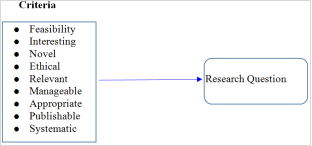
Figure 1. The criteria for developing research questions.
The conceptual framework provides an overview of the criteria for developing an effective research question
8. Conclusion
The study aimed to examine the criteria for crafting robust research questions in social science inquiry. Nine criteria were identified through a systematic literature review. The five criteria among the nine seemed to be emphasised and most frequently cited in the reviewed studies and directly linked to quality formulation of research questions as compared to the other. These factors include feasible, interesting, novel, ethical and relevant. The other factors are manageable, appropriate, publishable and systematic. This study contributes to the quality formulation of research questions which result in valuable and trusted research work.
Abbreviations
FINER
Feasible, Interesting, Novel, Ethical and Relevant
FINERMARPS
Feasible, Interesting, Novel, Ethical, Relevance, Manageable, Appropriate, Potential Value, Systematic and Suitability for Publication
PICOT
Population, Intervention, Comparator, Outcome and Time Frame,
RQ
Research Question
PEPMIS
Public Employees’ Performance Management Information System
Author Contributions
Teddy Boniface Mbwaga: Conceptualization, Data curation, Formal Analysis, Investigation, Methodology, Software, Validation, Visualization, Writing – original draft
Deonatus Hatari Deogratias: Writing – review & editing
Funding
This research did not receive any funding.
Data Availability Statement
The data presented in this study are available on request from the author.
Conflicts of Interest
The authors declare no conflicts of interest.
References
[1]
Alvesson, M., & Sandberg, J. (2024). Constructing research questions: Doing interesting research. SAGE Publications Limited.
[2]
Barroga, E., & Matanguihan, G. J. (2022). A practical guide to writing quantitative and qualitative research questions and hypotheses in scholarly articles. Journal of Korean Medical Science, 37(16), e121.
Hasan, N., Rana, R. U., Chowdhury, S., Dola, A. J., & Rony, M. K. K. (2021). Ethical considerations in research. Journal of Nursing Research, Patient Safety and Practice, 1(1), 20–25.
Majid, U. (2017). Research fundamentals: The research question, outcomes, and background. The Undergraduate Research in Natural and Clinical Science and Technology (URNCST) Journal, 1(2), 1–7.
Ratan, S., Anand, T., & Ratan, J. (2019). Formulation of research question – Stepwise approach. Journal of Indian Association of Pediatric Surgeons, 24(1), 15.
Covvey, J. R., McClendon, C., & Gionfriddo, M. R. (2023). Back to the basics: Guidance for formulating good research questions. Research in Social and Administrative Pharmacy. Advance online publication.
Van Der Waldt, G. (2025). Formulating research questions in social science research. The Journal for Transdisciplinary Research in Southern Africa, 21(1).
Mbwaga, T. B., Deogratias, D. H. (2026). Criteria for Crafting Robust Research Questions in Social Science Inquiry. American Journal of Applied Scientific Research, 12(1), 19-24. https://doi.org/10.11648/j.ajasr.20261201.13
Mbwaga, T. B.; Deogratias, D. H. Criteria for Crafting Robust Research Questions in Social Science Inquiry. Am. J. Appl. Sci. Res.2026, 12(1), 19-24. doi: 10.11648/j.ajasr.20261201.13
Mbwaga TB, Deogratias DH. Criteria for Crafting Robust Research Questions in Social Science Inquiry. Am J Appl Sci Res. 2026;12(1):19-24. doi: 10.11648/j.ajasr.20261201.13
@article{10.11648/j.ajasr.20261201.13,
  author = {Teddy Boniface Mbwaga and Deonatus Hatari Deogratias},
  title = {Criteria for Crafting Robust Research Questions in Social Science Inquiry},
  journal = {American Journal of Applied Scientific Research},
  volume = {12},
  number = {1},
  pages = {19-24},
  doi = {10.11648/j.ajasr.20261201.13},
  url = {https://doi.org/10.11648/j.ajasr.20261201.13},
  eprint = {https://article.sciencepublishinggroup.com/pdf/10.11648.j.ajasr.20261201.13},
  abstract = {Formulation of a good research question is a determinant to the quality and contribution of the research. Designing of questions in a study helps to define the scope of inquiry in terms of design, methodology and the like. On the other hand, formulating the research question can be frustrating and challenging for some researchers. As a result, it can deteriorate the quality of research. The study used Google Scholars and Research Gate to perform systematic literature reviews from journal articles. The study used Google Scholar and Research Gate to perform systematic literature review of journal articles. The search was conducted over two months, focusing on keywords including “features of good research questions,” “criteria for developing a good research question,” and “formulation of research question”. Keywords, databases and Boolean operator strategies (OR/AND) were utilised to target the relevant studies. A total of 30 journal articles were initially retrieved from the databases. The inclusion criteria included: (1) Peer-reviewed journals, (2) English language publications, (3) papers discussing criteria to be considered when developing research questions, (4) articles published between 2011 and 2025. Exclusion criteria were based on duplication and articles that did not address how to develop research questions. As a result, 22 articles were excluded, and only 8 articles were used for analysis. Furthermore, thematic analysis was employed to analyse the selected articles. Each article was examined carefully and relevant sections was manually coded. The results indicated that the acronym (FINER) to represent feasibility (F), interesting (I), novel (N), ethical (E), relevant (R) are the most essential criteria that should be taken into consideration while formulating research questions. Other criteria are manageable, appropriate, publishable and systematic. To make meaningful and impactful research, there is a need to consider essential criteria for developing quality questions.},
 year = {2026}
}
TY  - JOUR
T1  - Criteria for Crafting Robust Research Questions in Social Science Inquiry
AU  - Teddy Boniface Mbwaga
AU  - Deonatus Hatari Deogratias
Y1  - 2026/02/11
PY  - 2026
N1  - https://doi.org/10.11648/j.ajasr.20261201.13
DO  - 10.11648/j.ajasr.20261201.13
T2  - American Journal of Applied Scientific Research
JF  - American Journal of Applied Scientific Research
JO  - American Journal of Applied Scientific Research
SP  - 19
EP  - 24
PB  - Science Publishing Group
SN  - 2471-9730
UR  - https://doi.org/10.11648/j.ajasr.20261201.13
AB  - Formulation of a good research question is a determinant to the quality and contribution of the research. Designing of questions in a study helps to define the scope of inquiry in terms of design, methodology and the like. On the other hand, formulating the research question can be frustrating and challenging for some researchers. As a result, it can deteriorate the quality of research. The study used Google Scholars and Research Gate to perform systematic literature reviews from journal articles. The study used Google Scholar and Research Gate to perform systematic literature review of journal articles. The search was conducted over two months, focusing on keywords including “features of good research questions,” “criteria for developing a good research question,” and “formulation of research question”. Keywords, databases and Boolean operator strategies (OR/AND) were utilised to target the relevant studies. A total of 30 journal articles were initially retrieved from the databases. The inclusion criteria included: (1) Peer-reviewed journals, (2) English language publications, (3) papers discussing criteria to be considered when developing research questions, (4) articles published between 2011 and 2025. Exclusion criteria were based on duplication and articles that did not address how to develop research questions. As a result, 22 articles were excluded, and only 8 articles were used for analysis. Furthermore, thematic analysis was employed to analyse the selected articles. Each article was examined carefully and relevant sections was manually coded. The results indicated that the acronym (FINER) to represent feasibility (F), interesting (I), novel (N), ethical (E), relevant (R) are the most essential criteria that should be taken into consideration while formulating research questions. Other criteria are manageable, appropriate, publishable and systematic. To make meaningful and impactful research, there is a need to consider essential criteria for developing quality questions.
VL  - 12
IS  - 1
ER  -
Mbwaga, T. B., Deogratias, D. H. (2026). Criteria for Crafting Robust Research Questions in Social Science Inquiry. American Journal of Applied Scientific Research, 12(1), 19-24. https://doi.org/10.11648/j.ajasr.20261201.13
Mbwaga, T. B.; Deogratias, D. H. Criteria for Crafting Robust Research Questions in Social Science Inquiry. Am. J. Appl. Sci. Res.2026, 12(1), 19-24. doi: 10.11648/j.ajasr.20261201.13
Mbwaga TB, Deogratias DH. Criteria for Crafting Robust Research Questions in Social Science Inquiry. Am J Appl Sci Res. 2026;12(1):19-24. doi: 10.11648/j.ajasr.20261201.13
@article{10.11648/j.ajasr.20261201.13,
  author = {Teddy Boniface Mbwaga and Deonatus Hatari Deogratias},
  title = {Criteria for Crafting Robust Research Questions in Social Science Inquiry},
  journal = {American Journal of Applied Scientific Research},
  volume = {12},
  number = {1},
  pages = {19-24},
  doi = {10.11648/j.ajasr.20261201.13},
  url = {https://doi.org/10.11648/j.ajasr.20261201.13},
  eprint = {https://article.sciencepublishinggroup.com/pdf/10.11648.j.ajasr.20261201.13},
  abstract = {Formulation of a good research question is a determinant to the quality and contribution of the research. Designing of questions in a study helps to define the scope of inquiry in terms of design, methodology and the like. On the other hand, formulating the research question can be frustrating and challenging for some researchers. As a result, it can deteriorate the quality of research. The study used Google Scholars and Research Gate to perform systematic literature reviews from journal articles. The study used Google Scholar and Research Gate to perform systematic literature review of journal articles. The search was conducted over two months, focusing on keywords including “features of good research questions,” “criteria for developing a good research question,” and “formulation of research question”. Keywords, databases and Boolean operator strategies (OR/AND) were utilised to target the relevant studies. A total of 30 journal articles were initially retrieved from the databases. The inclusion criteria included: (1) Peer-reviewed journals, (2) English language publications, (3) papers discussing criteria to be considered when developing research questions, (4) articles published between 2011 and 2025. Exclusion criteria were based on duplication and articles that did not address how to develop research questions. As a result, 22 articles were excluded, and only 8 articles were used for analysis. Furthermore, thematic analysis was employed to analyse the selected articles. Each article was examined carefully and relevant sections was manually coded. The results indicated that the acronym (FINER) to represent feasibility (F), interesting (I), novel (N), ethical (E), relevant (R) are the most essential criteria that should be taken into consideration while formulating research questions. Other criteria are manageable, appropriate, publishable and systematic. To make meaningful and impactful research, there is a need to consider essential criteria for developing quality questions.},
 year = {2026}
}
TY  - JOUR
T1  - Criteria for Crafting Robust Research Questions in Social Science Inquiry
AU  - Teddy Boniface Mbwaga
AU  - Deonatus Hatari Deogratias
Y1  - 2026/02/11
PY  - 2026
N1  - https://doi.org/10.11648/j.ajasr.20261201.13
DO  - 10.11648/j.ajasr.20261201.13
T2  - American Journal of Applied Scientific Research
JF  - American Journal of Applied Scientific Research
JO  - American Journal of Applied Scientific Research
SP  - 19
EP  - 24
PB  - Science Publishing Group
SN  - 2471-9730
UR  - https://doi.org/10.11648/j.ajasr.20261201.13
AB  - Formulation of a good research question is a determinant to the quality and contribution of the research. Designing of questions in a study helps to define the scope of inquiry in terms of design, methodology and the like. On the other hand, formulating the research question can be frustrating and challenging for some researchers. As a result, it can deteriorate the quality of research. The study used Google Scholars and Research Gate to perform systematic literature reviews from journal articles. The study used Google Scholar and Research Gate to perform systematic literature review of journal articles. The search was conducted over two months, focusing on keywords including “features of good research questions,” “criteria for developing a good research question,” and “formulation of research question”. Keywords, databases and Boolean operator strategies (OR/AND) were utilised to target the relevant studies. A total of 30 journal articles were initially retrieved from the databases. The inclusion criteria included: (1) Peer-reviewed journals, (2) English language publications, (3) papers discussing criteria to be considered when developing research questions, (4) articles published between 2011 and 2025. Exclusion criteria were based on duplication and articles that did not address how to develop research questions. As a result, 22 articles were excluded, and only 8 articles were used for analysis. Furthermore, thematic analysis was employed to analyse the selected articles. Each article was examined carefully and relevant sections was manually coded. The results indicated that the acronym (FINER) to represent feasibility (F), interesting (I), novel (N), ethical (E), relevant (R) are the most essential criteria that should be taken into consideration while formulating research questions. Other criteria are manageable, appropriate, publishable and systematic. To make meaningful and impactful research, there is a need to consider essential criteria for developing quality questions.
VL  - 12
IS  - 1
ER  -





 Share This Article
 Twitter
 Linked In
 Facebook
 Copy
Copy Download