Research Article | | Peer-Reviewed

In Vitro Antibacterial Activity and Phytochemical Characterization of Ricinus Communis and Cajanus Cajan Leaf Extracts Against the Causal Agent of Bacterial Wilt

Received: 20 February 2026     Accepted: 10 May 2026     Published: 10 June 2026
Views:       Downloads:
Abstract

Bacterial wilt caused by the Ralstonia solanacearum species complex is a major crop constraint. However, considering the limitations of conventional control methods and the environmental challenges associated with the excessive use of synthetic pesticides, exploring plant-based biopesticides appears to be a promising alternative strategy for sustainable management. It is in this context that the present study was initiated to evaluate the in vitro antibacterial potential and characterize the phytochemical profile of aqueous extracts and fermented leaf extracts from Cajanus cajan and two varieties of Ricinus communis against Ralstonia solanacearum species complex. The extracts were prepared from the leaves and then tested using the agar diffusion method to assess their antibacterial activity, compared with the reference biopesticide NECO 50 EC and chloramphenicol. Qualitative phytochemical sorting was also performed to identify the main groups of secondary metabolites present in the extracts and fermented extracts. Most of the tested aqueous extracts and fermented extracts exhibited antibacterial activity after 24 h of incubation, except for R. communis var. zanzibarensis aqueous extract. The best antimicrobial activities were obtained using the biopesticide NECO 50 EC (22,01 mm) and chloramphenicol (27,98 mm). Fermented extract of C. cajan showed consistent inhibition of bacterial growth at all concentrations, with diameters ranging from 9 to 14 mm. However, the antibacterial activity of the extracts was unstable over time, unlike on the positive controls, whose effect was constant. Phytochemical sorting revealed several groups of bioactive compounds in the aqueous extracts, whereas the fermented extracts contained only polyphenols. The antibacterial potential of C. cajan and R. communis extracts against the Ralstonia solanacearum species complex was demonstrated, in line with their richness in secondary metabolites. However, the temporal instability of their activity highlights the need for further research to explore their potential use in sustainable agriculture.

Published in American Journal of BioScience (Volume 14, Issue 3)
DOI 10.11648/j.ajbio.20261403.13
Page(s) 64-72
Creative Commons

This is an Open Access article, distributed under the terms of the Creative Commons Attribution 4.0 International License (http://creativecommons.org/licenses/by/4.0/), which permits unrestricted use, distribution and reproduction in any medium or format, provided the original work is properly cited.

Copyright

Copyright © The Author(s), 2026. Published by Science Publishing Group

Keywords

Cajanus Cajan, Ricinus Communis, Aqueous Extracts and Fermented Extracts, Biopesticides, Ralstonia Solanacearum

1. Introduction
Market gardening plays a strategic role in food security, nutrition, and income generation for many families in tropical and subtropical countries. In West Africa, they are crucial pillar of peri-urban and rural agricultural systems. However, the sustainability of these production systems is severely compromised by numerous biotic constraints, among which soil-borne diseases play a major role . One of these constraints is bacterial wilt, caused by the Ralstonia solanacearum species complex (RSSC), which affects a wide range of vegetable species, including tomatoes (Solanum lycopersicum L.), a crop of major economic importance . This highly polyphagous soil-borne bacterium is characterized by remarkable ecological adaptability, high genetic diversity, and high virulence, making it particularly difficult to control. In Côte d'Ivoire, bacterial wilt is widespread in all tomato-producing areas, with disease incidence reaching 100%, resulting in severe economic losses and, in some cases, the total abandonment of infested plots by producers . In confronting this devastating disease, genetic control remains one of the most widely adopted and potentially effective strategies against bacterial wilt . This approach focuses on identifying resistant genotypes by testing and evaluating genetic resource collections. However, while it is possible to develop varieties that show stable resistance under specific local environmental conditions, this resistance frequently diminishes over time and across different regions . The instability of resistance can be attributed to the considerable phenotypic (virulence and aggressiveness) and genotypic variability among RSSC strains, as well as agro-pedoclimatic differences that impact disease development and the complex interactions between the plant and its environment . These limitations highlight the need to develop complementary, integrated, and sustainable strategies to strengthen the resilience of market gardening systems in the face of this disease. In this context, exploring alternative, environmentally friendly control methods is a priority. The use of plant-based biopesticides, particularly extracts from plants rich in bioactive secondary metabolites, is attracting growing interest due to their biodegradability, low toxicity to human-being and ecosystems, and broad spectrum of activity against crop pests . Plant extracts are obtained from various plant parts (leaves, roots, flowers,) using different extraction processes and solvents, and can be found in many forms such as liquid, solid, or oil . These extracts contain a variety of phytochemical compounds, such as polyphenols, flavonoids, tannins, alkaloids, quinones, coumarins, and terpenes, which are known for their antimicrobial properties and their role in plant defenses mechanisms against phytopathogenic agents . Numerous studies reported the effectiveness of these extracts in combating various pathogens, including strains of the Ralstonia solanacearum complex . Nevertheless, the biological activity of plant extracts remains highly dependent on the chemical composition of the plant species used, harvesting conditions, and preparation methods, which warrants further comparative work to identify the most promising plants . Based on all said above, the present study aims to evaluate the in vitro antibacterial activity and characterize the phytochemical profile of two types of plant extracts of two varieties, Ricinus communis and Cajanus cajan, in controlling bacterial wilt in tomatoes.
2. Materials and Methods
2.1. Materials
2.1.1. Plant Material
The plant material used consisted mainly of fresh leaves of Ricinus communis var carmentica, Ricinus communis var zanzibarensis and Cajanus cajan. These leaves were harvested during the vegetative phase of the plants on an experimental plot located at the Scientific and Innovation Centre of Félix HOUPHOUËT-BOIGNY University, Abidjan, Côte d'Ivoire.
2.1.2. Bacterial Material
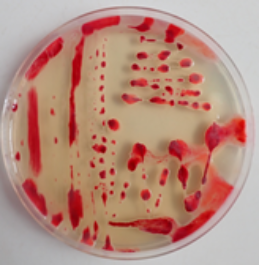
The bacterial strain used in this study is a virulent isolate of Ralstonia solanacearum species complex (RSSC), coded 2201 (Figure 1) and belonging to Phylotype 1 and Sequevar 31. This strain was isolated from chilli pepper plants (Capsicum annuum L.) showing typical bacterial wilt symptoms. These plants, naturally infested by RSSC, were collected from Songon in southern Côte d'Ivoire. The isolate underwent preliminary characterization and was stored at - 80°C under cryogenic conditions until use.
Figure 1. Strain 2201 on modified Kelman medium after 72 h of incubation at 28°C.
2.1.3. Reference Biopesticide Used
The biopesticide NECO 50 EC was selected as the reference product in the evaluation of antibacterial activity against Ralstonia solanacearum. This biopesticide, formulated from extracts of aromatic plants known for their antibacterial properties, was supplied by the Industrial Research Unit (URI) on biopesticides, based at the Scientific and Innovation Center of the Félix HOUPHOUËT-BOIGNY University. It was used as a positive control in the antibacterial activity of various plant extracts from Ricinus communis var. carmentica, Ricinus communis var. zanzibarensis and Cajanus cajan.
2.2. Methods
2.2.1. Preparation of the Bacterial Inoculum
The strain of Ralstonia solanacearum belonging to the species complex (Ralstonia solanacearum species complex, RSSC) coded 2201 (Phylotype 1 and Sequevar 31), previously stored at - 80°C, was reactivated by transfer to modified Kelman culture medium. After incubation for 72 hours (h) at 28 °C, a pure culture was transferred to Casamino Peptone Glucose culture medium and incubated at 28 °C for 24 h to obtain active bacterial biomass. Bacterial cells from 24 h old cultures were harvested by scraping with a sterile spatula and then placed in 5 ml of sterile distilled water. The bacterial suspension obtained was homogenized and adjusted to a final concentration of 10⁸ CFU/ml (Colony-Forming Units per millilitre), based on the optical density measured at 600 nanometer (nm) using a spectrophotometer.
2.2.2. Preparation of Plant Solutions
All plant solutions were prepared at a stock concentration of 100 mg/ml. This choice was based on practical and methodological considerations. This concentration is commonly used in scientific literature to evaluate the antibacterial activity of plant extracts. It is also easy to prepare (100 mg of extract dissolved in 1 mL of solvent), which reduces the risk of handling errors and improves the reproducibility of experimental tests. This concentration allows easy serial dilutions (1/2, 1/4, 1/8), facilitating the determination of an appropriate concentration range for identifying inhibition thresholds, especially the minimum inhibitory concentration.
(i). Preparation of Aqueous Extracts
The aqueous extracts were prepared according to the methodologies described by Jourdan et al , with some modifications. The leaves of R. communis var zanzibarensis, R. communis var carmentica and C. cajan were harvested, carefully washed in running water to remove impurities, and then cut into fragments of uniform size. The explants obtained were then dried in the open air at room temperature for a period of three weeks until a constant mass was obtained. After drying, the leaves were finely ground using a mortar to obtain a homogeneous powder. For each plant species, 100 g of leaf powder was subjected to aqueous extraction by mechanical grinding using a blender (Blender BLG-451, capacity 1.5 l) in 1 l of sterile distilled water. The grinding operation was repeated three times, at a rate of 5 minutes per cycle, in order to optimize the release of water-soluble compounds. The resulting ground material was filtered successively through a clean cloth to remove large plant debris, then twice through cotton wool to remove any remaining fine particles. The filtrates obtained were then concentrated by drying in an oven at 40°C for 72 h and then weighed to determine the mass of the dry extracts. The dry extracts were stored at 4°C, protected from light, until use. For the test, aliquots of dry extracts were reconstituted in sterile distilled water to obtain a stock solution of aqueous extract at a concentration of 100 mg/ml (weight/volume).
(ii). Preparation of Fermented Aqueous Extracts
The fermented aqueous extracts were prepared using 1 kg of fresh leaves from each plant species. These leaves were first washed and chopped using a sterile knife, then macerated in 10 l of sterile distilled water. Maceration was carried out in airtight containers, kept away from light, for a period of seven (7) days at room temperature (25 ± 2° C) to promote the fermentation process. At the end of the maceration period, the mixture was filtered using a sterile fine-mesh cloth to remove plant residues. The filtrate obtained constituted the fermented aqueous extract stock solution, corresponding to a concentration of 100 mg/ml, used for the tests.
2.2.3. In Vitro Evaluation of the Antibacterial Activity of Plant Solutions
The antibacterial activity of the aqueous extracts of two varieties of R. communis and C. cajan was evaluated in vitro using the agar diffusion method, in accordance with the protocol described by Ambrosio et al. . Sterilized cellulose discs with a diameter of 6 mm were impregnated with 20 µl of plant extract solutions and NECO 50 EC biopesticide, prepared at different concentrations to be tested (25, 50, and 100%). The different concentrations tested (50% and 25%) were obtained through successive dilutions of the stock solution. A concentration of 100 mg/mL corresponds to the initial concentration of the solution. Sterile distilled water was used as a negative control. The impregnated discs were placed aseptically using sterile forceps on the surface of the CPG culture medium seeded with RSSC. The bacterial inoculation was carried out by evenly spreading 200 µl of a bacterial suspension at 10⁸ CFU/ml on each Petri dish containing CPG medium, using a sterile rake. After a short drying time under the heat flow of a Bunsen burner flame, the Petri dishes were incubated at 28 °C. For each product and each concentration tested, three independent replicates were performed, with three Petri dishes per concentration and two discs per dish. The biopesticide NECO 50 EC (2,5%) and chloramphenicol (1%) were used as positive controls. The entire experiment was repeated three times independently. After 24, 48, 72, and 96 h of incubation at 28°C, antibacterial activity was assessed by measuring the diameters of the bacterial growth inhibition zones. The measurements were taken using a ruler graduated along two perpendicular axes drawn on the back of each Petri dish through the center of the disc. The inhibition diameters were interpreted in accordance with the scale proposed by Ponce et al , defining the following categories: resistant (-) for a diameter < 8 mm; sensitive (+) for a diameter between 9 and 14 mm; very sensitive (++) for a diameter between 15 and 19 mm; and extremely sensitive (+++) for a diameter ≥ 20 mm.
2.2.4. Qualitative Phytochemical Screening of Aqueous Extracts and Fermented Extract
Phytochemical screening was performed to qualitatively identify the main groups of bioactive compounds present in plant extracts and fermented plant extracts, in accordance with the method described by Bekro et al. . The families of secondary metabolites sought included flavonoids, alkaloids, saponins, sterols and terpenes, polyphenols, catechin tannins and quinones.
(i). Detection of Flavonoids
Flavonoids were detected using the magnesia reaction. To do so, 0,4 mg of each aqueous extract and fermented extract were dissolved in 2 ml of distilled water, then evaporated to dryness using a sand bath heater. The residue obtained was taken up in 5 ml of hydrochloric alcohol diluted to ½. The addition of 2 to 3 fragments of magnesium to this latter suspension instantly caused a slight release of heat, followed 1 minute later by a colour change ranging from red to orange. The intensity of the colour was enhanced by the addition of three drops of isoamyl alcohol. This colour change indicated the presence of flavonoids.
(ii). Detection of Alkaloids
Alkaloids were detected using Dragendorff's reagent (potassium iodo-bismuthate) and Bouchardat's reagent (potassium iodo-iodide). Six milliliters of solution (composed of 1,2 mg of extract and 6 ml of distilled water) were evaporated to dryness. The residue obtained was then dissolved in 6 ml of 60° alcohol. The addition of 2 drops of each reagent to the alcoholic solution revealed the presence of alkaloids through the appearance of characteristic precipitates.
(iii). Search for Saponins
Saponins were detected using the foaming test. Ten milliliters of solution (comprising 2 mg of extract and 10 ml of distilled water) were placed in a test tube and vigorously shaken for 15 seconds before being left to stand for a further 15 minutes. The presence of stable foam after this time was interpreted as a positive indicator of the presence of saponins.
(iv). Identification of Sterols and Terpenes
Sterols and terpenes were identified using the Liebermann-Burchard reaction. To achieve this, 5 ml of solution (comprising 1 mg of extract and 5 ml of distilled water) from each extract was evaporated until dry, after which the residue was diluted with 1 ml of hot acetic anhydride. Gradually adding 0,5 ml of concentrated sulphuric acid allowed the characteristic colourations associated with these compounds to be observed.
(v). Detection of Polyphenols
Polyphenols were detected using the ferric chloride reaction. A drop of 2% FeCl₃ solution was added to 2 ml of each extract and purine solution (composed of 0,4 mg of extract and 2 ml of distilled water). The appearance of a dark colour (blue, green or black) was considered to indicate a positive result.
(vi). Detection of Catechin Tannins
Catechin tannins were detected using Stiasny's reagent. One milligram of each extract and purine was dissolved in 5 milliliters of distilled water and evaporated to dryness. Next, 15 ml of Stiasny's reagent was added to the residues and the mixture was placed in a water bath at 80°C for 30 minutes. The formation of a precipitate confirmed the presence of catechin tannins.
(vii). Identification of Quinones
Quinones were detected using the Bornstädt reaction. To achieve this, 2 ml of a solution containing 0,4 mg of extract in 2 ml of distilled water were evaporated to dryness. The residue was then treated with 5 ml of 1:5 diluted hydrochloric acid and heated in a water bath for 30 minutes. Once cooled, 20 ml of chloroform and 0.5 ml of diluted ammonia were added. The appearance of a characteristic colour in the ammonia phase confirmed the presence of quinone substances.
2.3. Statistical Analyses
The in vitro control tests were repeated three times. The collected data were entered and organized using Microsoft Excel 2021 software, and then subjected to statistical analysis using R software (version 4.4.3). Examining the normality of the distributions revealed that the data did not satisfy the normality assumption required for parametric tests. Therefore, a nonparametric statistical approach was adopted, and the Kruskal-Wallis test was used. When significant differences were detected (p < 0.05), multiple post hoc comparisons were performed using Dunn's test, with the p-values adjusted according to the Holm method. Homogeneous groups were identified using the clidlist function of the FSA package.
3. Results
3.1. In Vitro Influences of Aqueous Extracts on Bacterial Growth
The results of the control tests with various products are recorded in Tables 1 & 2. RSSC showed to be highly sensitive to the biopesticide NECO 50 EC (22.01 mm) and to chloramphenicol (27.97 mm). Furthermore, no inhibition diameter was observed when the bacteria used in the study were confronted with aqueous extracts of R. communis var. Zanzibarensis. However, RSSC showed sensitivity to the 50% and 100% aqueous extracts of R. communis var. Carmentica (9.25 mm and 12.5 mm, respectively) and the 100% aqueous extract of C. cajan (11.08 mm). Of the three fermented extracts tested, C. cajan purine was the only one to record inhibition diameters between 9 and 14 mm at all concentrations. This observation highlights the sensitivity of the RSSC strain to this purine at all tested concentrations. Additionally, the RSSC strain exhibited sensitivity to the purines of R. communis var. Zanzibarensis and R. communis var. Carmentica at concentrations of 25% and 50%, respectively. The results also show a reduction in inhibition diameters to 0 mm after 48 hours of incubation for all fermented plant extracts and aqueous extracts concentrations tested. The value of 0 mm recorded after 48, 72 and 96 hours of incubation indicates that the bacteria tested are resistant to the aqueous extracts and fermented plant extracts tested. However, the inhibition diameters obtained with the NECO 50 EC biopesticide and chloramphenicol remained unchanged over 96 hours of incubation. This observation highlights the extreme sensitivity of the RSSC strain to these two products throughout the incubation period. In addition, the antimicrobial activity of aqueous extracts and fermented extracts is very different 24 hours after incubation. For aqueous extracts, this activity is divided into three main statistical groups (a, b, and c). NECO 50 EC and chloramphenicol are grouped in group “a”, confirming their high efficacy and their role as reliable references (Table 1). For fermented extracts, the statistical groups show a graduation from “a” to “d”. NECO 50 EC and chloramphenicol also belong to group “a” in this case, while the negative control (sterile distilled water) belongs to the weakest group, confirming the absence of activity (Table 2).
Table 1. Inhibition diameters of aqueous extracts tested according to concentrations and incubation time.

Average inhibition diameters (mm)

Product

Concentration (%)

24 h

48 h

72 h

96 h

Chlo

1

27,97 ± 3,51a

27,97 ± 3,51a

27,97 ± 3,51a

27,97 ± 3,51a

EDS

0

0 ± 0c

0 ± 0b

0 ± 0b

0 ± 0b

Eca

25

5,37 ± 2,37c

0 ± 0b

0 ± 0b

0 ± 0b

50

7,37 ± 1,43b

0 ± 0b

0 ± 0b

0 ±0b

100

11,08 ±1,48b

0 ± 0b

0 ± 0b

0 ± 0b

Err

25

7,62 ± 2,87b

0 ± 0b

0 ± 0b

0 ± 0b

50

9,25 ± 1,32b

0 ± 0b

0 ±0b

0 ±0b

100

12,5 ± 1,27b

0 ±0b

0 ± 0b

0 ± 0b

Erv

25

0 ± 0c

0 ± 0b

0 ± 0b

0 ± 0b

50

0 ± 0c

0 ±0b

0 ±0b

0 ±0b

100

0 ± 0c

0 ± 0b

0 ± 0b

0 ± 0b

NECO

2,5

22,01± 3,14a

22,01± 3,14a

22,01± 3,14a

22,01± 3,14a

The statistical difference of the assigned averages of the same letters is not significant at the 5% level.
Eca: Aqueous extract of Cajanus cajan; Err: Aqueous extract of Ricinus communis var Carmentica; Erv: Aqueous extract of Ricinus communis var Zanzibarensis
Table 2. Inhibition diameters of p fermented extract tested according to concentrations and incubation time.

Average inhibition diameters (mm)

Product

Concentration (%)

24 h

48 h

72 h

96 h

Chlo

1

27,97 ± 3,51a

27,97 ± 3,51a

27,97 ± 3,51a

27,97 ± 3,51a

EDS

0

0 ± 0d

0 ± 0b

0 ± 0b

0 ± 0b

NECO

2,5

5 ± 3,36c

22,01± 3,14a

22,01± 3,14a

22,01± 3,14a

Prr

25

9,12 ± 3,58bc

0 ± 0b

0 ± 0b

0 ± 0b

50

7,62 ± 3,14c

0 ±0b

0 ±0b

0 ±0b

100

10,25 ± 1,89bc

0 ± 0b

0 ± 0b

0 ± 0b

Pca

25

11,58 ± 2,21b

0 ± 0b

0 ± 0b

0 ± 0b

50

12,79 ± 3,16b

0 ±0b

0 ±0b

0 ±0b

100

9,91 ± 3,97bc

0 ± 0b

0 ± 0b

0 ± 0b

Prv

25

8,91 ± 1,42c

0 ± 0b

0 ± 0b

0 ± 0b

50

7,25 ± 1,26c

0 ±0b

0 ±0b

0 ±0b

100

22,01± 3,14ab

0 ± 0b

0 ± 0b

0 ± 0b

The statistical difference of the assigned averages of the same letters is not significant at the 5% level.
Prr: fermented extract of Ricinus communis var Carmentica; Prv: fermented extract of Ricinus communis var Zanzibarensis; Pca fermented extract of Cajanus cajan
3.2. Tri-phytochemical Profile of Aqueous Extracts and Plant Purines Studied
Table 3. Chemical profile of the aqueous extracts and liquid manures studied.

Product

Alcal

Polyph

Tan caté

Flavon

Sapon

Quin

St et Ter

Eca

++

++

+

++

++

+

++

Err

++

++

+

++

+

+

++

Erv

+

++

+

++

+

+

+

Pca

-

++

-

-

-

-

-

Prr

-

+

-

-

-

-

-

Prv

-

+

-

-

-

-

-

Alcal: alkaloids; Polyph: polyphénols; Tan Caté: catechin tannins; Flavon: flavonoids; Sapon: saponins; Quin: quinones; St and Ter: sterols and terpenes
Eca: Aqueous extract of Cajanus cajan; Err: Aqueous extract of Ricinus communis var Carmentica; Erv: Aqueous extract of Ricinus communis var Zanzibarensis; Prr: fermented extract of Ricinus communis var Carmentica; Prv: fermented extract of Ricinus communis var Zanzibarensis; Pca: fermented extract of Cajanus cajan
Tri-phytochemical analysis of the aqueous extracts and fermented plant extracts enabled the qualitative characterization of the main groups of secondary metabolites, indicating their presence or absence depending on the plant material used. All the results obtained are presented in Table 3. Phytochemical screening revealed the widespread presence of alkaloids, polyphenols, catechin tannins, flavonoids, saponins, quinones, sterols and terpenes in the three aqueous extracts analyzed. However, the distribution of these chemical groups varied between the aqueous extracts, with differences in terms of relative abundance. C. cajan extract was particularly rich in polyphenols and flavonoids, indicating a high concentration of potentially bioactive phenolic compounds. The two R. communis varieties had broadly similar phytochemical profiles for most of the studied compounds, except for alkaloids, sterols and terpenes, which varied in abundance depending on the variety. In contrast, the phytochemical analysis of fermented extracts revealed a more limited profile characterized exclusively by the presence of polyphenols in all three fermented plant extracts evaluated. Of these, fermented extract from C. cajan had the highest polyphenol content.
4. Discussion
Plant extracts are natural products. In recent years, they have become established as an effective, environmentally friendly way of controlling crop pathogens . This study aimed to characterize and evaluate the in vitro antibacterial potential of two types of plant extracts of two varieties, R. communis and Cajanus cajan, in controlling bacterial wilt in tomatoes. This approach aims to promote local resources and contribute to the cultivation of sustainable, economically accessible agriculture for farmers. The products tested during this study were found to be effective in inhibiting the in vitro growth of the RSSC strain. The largest zones were recorded with the positive controls (NECO and chloramphenicol). However, no inhibition diameter was observed with the aqueous extract of R. communis var. zanzibarensis. Of all the plant products tested, C. cajan fermented extract was the only one to record inhibition zones of between 9 and 14 mm at all concentrations tested. This could be explained by the mode of action of the extracts depending on the target microorganism, extract type, and concentration . Additionally, the variability in efficacy observed during this study may be due to the specific chemical composition of each extract . Furthermore, inhibition tests have demonstrated the stability of the inhibitory action of the NECO 50 EC biopesticide and chloramphenicol over time, as well as the antibacterial instability of the tested extracts and purines. This instability could be linked to the bacteria's ability to circumvent the effect of these products. Brown et al. demonstrated in their study that RSSC can implement ingenious survival strategies in hostile environments. One such strategy is the efflux pump system. RSSC uses this broad-spectrum system to actively expel antimicrobial compounds from its cells. This enables it to reduce the intracellular concentration and toxic effect of compounds contained in plant extracts or fermented extract. Furthermore, the stability of a product's effect on a pathogen depends on the stability of its active molecules, as any alteration to these molecules results in a loss of antimicrobial activity . The stability of the action of the biopesticide NECO 50 EC and chloramphenicol is thought to be linked to their controlled formulation, chemical stability, and standardization. In contrast, the instability of the extracts and fermented extracts tested could be attributed to their complex nature, sensitivity to environmental conditions (pH, temperature, and light), and low standardization. Additionally, the loss of volatile bioactive compounds over time could explain the instability of the action of the various plant extracts tested. Certain bioactive compounds, such as terpenes, which are known for their antimicrobial activity, evaporate when exposed to air, heat, or prolonged incubation . Phytochemical analysis carried out during this study revealed the presence of alkaloids, tannins, quinones, flavonoids, polyphenols, sterols, terpenes, and saponins in all leaf extracts from the two varieties of R. communis and C. cajan tested. The study also highlighted the unique presence of polyphenols in all the extracts tested. These results are similar to those reported by Oke . This author demonstrated in his work that C. cajan leaf extracts contain tannins, alkaloids, terpenes, and saponins. However, these results differ from those of Saraka et al. . The latter showed that aqueous extracts of R. communis leaves do not contain flavonoids, tannins, alkaloids or quinones. This difference could be attributed to variability in the nature of the chemical compounds present in an extract. The chemical profile of the tested fermented extracts showed that they contained only polyphenols. This result is thought to be due to the nature of the compounds in the plant extracts, which depends on the type of plant, the part of the plant used, when it was harvested and how the extract was prepared . Furthermore after 24 h, the antimicrobial activity of the liquid manure is no more effective than that of the aqueous extracts. This result could be linked to the fact that the antimicrobial activity after 24 hours is due to the most active compounds, such as polyphenols. This could also be explained by the high concentration and potent action of polyphenols, as well as the low activity or rapid degradation of certain compounds in the aqueous extracts. Additionally, despite the chemical diversity of the aqueous extracts, it is possible that the full expression of the synergy of these compounds requires more time.
5. Conclusion
This study aimed to determine the chemical composition and antibacterial activity of aqueous extracts and fermented obtained from the leaves of Cajanus cajan and two varieties of Ricinus communis, and their effect on the in vitro growth of the Ralstonia solanacearum species complex. It appears that all the aqueous extracts and liquid manures tested exhibit antibacterial activity against the R. solanacearum species complex, with the exception of the aqueous extract of R. communis var. zanzibarensis. All the aqueous extracts and liquid manures tested contained secondary metabolites (chemical compounds) with antibacterial properties. However, the antibacterial activity of these products is both unstable and comparable over time. This study also showed that greater chemical diversity does not necessarily imply greater biological superiority. Further studies on the stability and kinetics of the efficacy of these products in plants, as well as improvements to their stability and the isolation of active compounds, could help to clarify the causes of the observed instability of their antibacterial activity. Greenhouse evaluations could also be helpful.
Abbreviations

C. Cajanus

Cajanus Cajan

CPG

Casamino Peptone Glucose Culture Medium

CFU

Colony-Forming Units per Millilitre

h

Hours

Kg

Kilogramm

mg

Milligram

ml

Milliliter

l

Liter

L.

Linné

R. communis

Ricinus Communis

RSSC

Ralstonia Solanacearum Species Complex

Acknowledgments
The authors would like to express their deepest gratitude to the African Center of Excellence in Climate Change, Biodiversity, and Sustainable Agriculture, as well as to all the resource persons and institutions whose technical and logistical support contributed to the successful implementation of this study.
Author Contributions
Guefala Marie Elodie Yéo: Writing – original draft, Conceptualization, Formal analysis, Methodology, Investigation, Writing – review & editing
Brahima Camara: Conceptualization, Funding acquisition, Supervision, Methodology
Seydou Tuo: Visualization, Supervision
Noel Klinnanga Kone: Data curation, Investigation
Arsene Nahangnon Soro: Data curation, Formal analysis
Aya Carine N’guessan: Supervision, Methodology
Daouda Kone: Funding acquisition, Supervision
Funding
This work was funded by the African Center of Excellence on Climate Change, Biodiversity, and Sustainable Agriculture.
Data Availability Statement
The authors state that all data used in preparing this article can be made available by the corresponding authors upon a reasonable and justified request.
Conflicts of Interest
The authors declare no conflicts of interest.
References
[1] Yarou, B. B., Silvie, P., Assogba, K. F., Mensah, A., Alabi, T. & Verheggen, F., Francis, F. Plantes pesticides et protection des cultures maraichères en Afrique de l’Ouest (synthèse bibliographique), Biotechnologie Agronomie Société et Environnement. 2017, 21(4), 288‑304.
[2] N’guessan, A. C., Camara, B., Amari. L. N. D. G. E., Doumouya, M., Pakora, G. A., Abo, K. & Koné, D. Efficacy of the Biopesticide NECO in the control of Ralstonia solancearum, causal agent of tomato bacterial wilt in Côte d’Ivoire. Journal of Advances in Agriculture. 2020, (11), 138‑145.
[3] Fondio L., N’Tamon L. N., Hala F. N. & Dijdji H. A. Evaluation agronomique de six cultivars d’aubergine africaine (Solanum spp.) de la nouvelle collection des plantes légumières du CNRA, Agronomie Africaine. 2008, (20) 1, 69‑79.
[4] Lebeau, A., Daunay, M.-C., Fray, A., Palloix, A., Wang, J.-F., Dintinger, J., Chiroleu, F., Wicker, E. & Prior, P. Bacterial Wilt Resistance in Tomato, Pepper, and Eggplant: Genetic Resources Respond to Diverse Strains in the Ralstonia solanacearum Species Complex. Bacteriology. 2011, (101) 1, 4‑171.
[5] Prior, P. & Fegan M. Recent developments in the phylogeny and classification of Ralstonia solanacearum. International Symposium on Tomato Diseases. 2004, 695-14, 127‑136.
[6] Toukam, M. S. G. Diversité de Ralstonia Solanacearum au Cameroun et bases génétiques de la résistance chez le piment (Capsicum Annuum) et les Solanacées [ Diversity of Ralstonia solanacearum in Cameroon and the genetic basis of resistance in chili peppers (Capsicum annuum) and Solanaceae]. Ph. D. Thesis, AgroParisTech, France, 2010.
[7] Wainwrigh, H., C. & Cherotich, N. Biopesticides and their commercialisation in Africa. In Proceedings of the First International Conference on Pesticidal Plants. Egerton University and ICIPE, Nairobi, Kenya; 2013, pp. 189‑191.
[8] Sekher, F. & Dahdi, K. Effet des extraits de quelques plantes spontanées dans la lutte biologique contre Brevicoryne brassicae dans la région de Ouargla [Effect of extracts from certain wild plants on the biological control of Brevicoryne brassicae in the Ouargla région]. Master. Memoire, UNIVERSITE Kasdi Merbah - OUARGLA, Algérie, 2023.
[9] Cowan, M. M. Plant Products as Antimicrobial Agents. Clinical Microbiology Reviews. 199(12) 4, 564‑582.
[10] Das, K., Tiwari, R. K. & Shrivastava, D. K. Techniques for evaluation of medicinal plant products as antimicrobial agent: Current methods and future trends. Journal of Medicinal Plants Research. 2010, (4) 2, 104‑111.
[11] Deberdt, P., Perrin, B., Coranson-Beaudu, R., Duyck, P.-F. & Wicker E. Effect of Allium fistulosum Extract on Ralstonia solanacearum Populations and Tomato Bacterial Wilt. Plant Disease. 2012, (96) 5, 687‑692.
[12] Traoré, O., Sawadogo, Y., Boro, F. & Wonni, I. Effects of four plants and solarization on bacterial wilt of tomato caused by Ralstonia solanacearum E. F. Smith in Burkina Faso. African Journal of Plant Science. 2023, (17) 9, 85‑92.
[13] Kasmi, M., Aourach, M., Boukari, E. M., Barrijal, S. & Essalmani, H. Efficacité des extraits aqueux des plantes aromatiques et médicinales contre la pourriture grise de la tomate au Maroc. Comptes Rendus Biologiqes. 2017, (8), 386‑393.
[14] Jourand, P., Mateille T., Fargette M. & Rapior, S. Nematostatic activity of aqueous extracts of West African Crotalaria species. Nematology. 2004, (6) 5, 765‑771.
[15] Ambrosio, C. M. S., Ikeda, N. Y., Miano, A. C., Saldaña, E., Moreno, A. M., Stashenko, E., Contreras-Castillo, C. J. & Da Gloria, E. M. Unraveling the selective antibacterial activity and chemical composition of citrus essential oils. Scientific Reports. 2019, (9) 17719.
[16] Ponce, A. G., Fritz, R., Valle, D. C. & Roura, S. I. Antimicrobial activity of essential oils on the native microflora of organic Swiss chard. LWT - Food Science and Technology. 2003, (36) 7, 679‑684.
[17] Bekro, Y.-A., Mamyrbekova, J. A., Boua, B. B., Tra, B. F. T. & Ehile, E. E. Étude ethnobotanique et screening phytochimique de Caesalpinia benthamiana (Baill.) Herend. et Zarucchi (Caesalpiniaceae) [ Ethnobotanical study and phytochemical screening of Caesalpinia benthamiana (Baill.) Herend. et Zarucchi (Caesalpiniaceae)]. Science Nature. 2007, (4) 2, 217‑225. /
[18] Sharif, M. Status and Utilization of Medicinal Plants in Rangamati of Bangladesh. Research Journal of Agriculture and Biological Sciences. 2006, 2(6): 268-273.
[19] Fertout-Mouri, N., Latreche, A., Mehdadi, Z. & Bengherraz, Z. Antibacterial activity of four extracts of Teucrium polium L. of Tessala mount (western Algeria). Bulletin de la Société royale des Sciences de Liège., (85), 253‑262, 2016.
[20] Sarker, S. D., Latif, Z. & Gray, A. I. Natural products isolation, Humana Press. In Methods in Biotechnology, 2nd Ed, Humana Press Inc, Totowa, New jersey; 2005, p 1-25.
[21] Brown, D. G., Swanson, J. K. & Allen, C. Two host-induced Ralstonia solanacearum genes, acrA and dinF, encode multidrug efflux pumps and contribute to bacterial wilt virulence. Applied and environmental microbiology. 2007, (73) 9, 2777‑2786.
[22] Boukoufi, C. Stabilité et dégradation des médicaments: intérêts des conditionnements nanostructures inspirés de l’agroalimentaire [ Stability and degradation of medicines: the benefits of nanostructured packaging inspired by the food industry]. Doctorat These, Université de Lorraine, France, 2022.
[23] Houdkova. M., Albarico, G., Doskocil, I., Tauchen, J., Urbanova, K., Tulin, E. E., Kokoska, L. Vapors of Volatile Plant-Derived Products Significantly Affect the Results of Antimicrobial, Antioxidative and Cytotoxicity Microplate-Based Assays., Molecules. 2020, (25) 24, 6004.
[24] Oke, D. G. Proximate and Phytochemical Analysis of Cajanus Cajan (Pigeon Pea) Leaves. Chemical Science Transactions. 2014, 3(3), 1172-1178.
[25] Saraka I. A., Abo K., Coulibaly K., & Zirihi G. N. Étude Phytochimique et activité antifongique d’extraits de quelques Euphorbiaceae médicinales utilisées chez les Baoulés du District de Yamoussoukro (Côte d’Ivoire) [Phytochemical study and antifungal activity of extracts from selected medicinal Euphorbiaceae used by the Baoulé people in the Yamoussoukro District (Ivory Coast)]. European Scientific Journal. 2018(14) 30, p. 256.
[26] Tekwu, E. M., Askun, T., Kuete, V., Nkengfack, A. E., Nyasse, B., Etoa, F.-X., Beng, V. P. Antibacterial activity of selected Cameroonian dietary spices ethno-medically used against strains of Mycobacterium tuberculosis. Journal of Ethnopharmacology. 2012, 142(2), p. 374‑382.
Cite This Article
  • APA Style

    Yeo, G. M. E., Camara, B., Tuo, S., Kone, N. K., Soro, A. N., et al. (2026). In Vitro Antibacterial Activity and Phytochemical Characterization of Ricinus Communis and Cajanus Cajan Leaf Extracts Against the Causal Agent of Bacterial Wilt. American Journal of BioScience, 14(3), 64-72. https://doi.org/10.11648/j.ajbio.20261403.13

    Copy | Download

    ACS Style

    Yeo, G. M. E.; Camara, B.; Tuo, S.; Kone, N. K.; Soro, A. N., et al. In Vitro Antibacterial Activity and Phytochemical Characterization of Ricinus Communis and Cajanus Cajan Leaf Extracts Against the Causal Agent of Bacterial Wilt. Am. J. BioScience 2026, 14(3), 64-72. doi: 10.11648/j.ajbio.20261403.13

    Copy | Download

    AMA Style

    Yeo GME, Camara B, Tuo S, Kone NK, Soro AN, et al. In Vitro Antibacterial Activity and Phytochemical Characterization of Ricinus Communis and Cajanus Cajan Leaf Extracts Against the Causal Agent of Bacterial Wilt. Am J BioScience. 2026;14(3):64-72. doi: 10.11648/j.ajbio.20261403.13

    Copy | Download

  • @article{10.11648/j.ajbio.20261403.13,
      author = {Guefala Marie Elodie Yeo and Brahima Camara and Seydou Tuo and Noel Klinnanga Kone and Arsene Nahangnon Soro and Aya Carine N’Guessan and Daouda Kone},
      title = {In Vitro Antibacterial Activity and Phytochemical Characterization of Ricinus Communis and Cajanus Cajan Leaf Extracts Against the Causal Agent of Bacterial Wilt},
      journal = {American Journal of BioScience},
      volume = {14},
      number = {3},
      pages = {64-72},
      doi = {10.11648/j.ajbio.20261403.13},
      url = {https://doi.org/10.11648/j.ajbio.20261403.13},
      eprint = {https://article.sciencepublishinggroup.com/pdf/10.11648.j.ajbio.20261403.13},
      abstract = {Bacterial wilt caused by the Ralstonia solanacearum species complex is a major crop constraint. However, considering the limitations of conventional control methods and the environmental challenges associated with the excessive use of synthetic pesticides, exploring plant-based biopesticides appears to be a promising alternative strategy for sustainable management. It is in this context that the present study was initiated to evaluate the in vitro antibacterial potential and characterize the phytochemical profile of aqueous extracts and fermented leaf extracts from Cajanus cajan and two varieties of Ricinus communis against Ralstonia solanacearum species complex. The extracts were prepared from the leaves and then tested using the agar diffusion method to assess their antibacterial activity, compared with the reference biopesticide NECO 50 EC and chloramphenicol. Qualitative phytochemical sorting was also performed to identify the main groups of secondary metabolites present in the extracts and fermented extracts. Most of the tested aqueous extracts and fermented extracts exhibited antibacterial activity after 24 h of incubation, except for R. communis var. zanzibarensis aqueous extract. The best antimicrobial activities were obtained using the biopesticide NECO 50 EC (22,01 mm) and chloramphenicol (27,98 mm). Fermented extract of C. cajan showed consistent inhibition of bacterial growth at all concentrations, with diameters ranging from 9 to 14 mm. However, the antibacterial activity of the extracts was unstable over time, unlike on the positive controls, whose effect was constant. Phytochemical sorting revealed several groups of bioactive compounds in the aqueous extracts, whereas the fermented extracts contained only polyphenols. The antibacterial potential of C. cajan and R. communis extracts against the Ralstonia solanacearum species complex was demonstrated, in line with their richness in secondary metabolites. However, the temporal instability of their activity highlights the need for further research to explore their potential use in sustainable agriculture.},
     year = {2026}
    }
    

    Copy | Download

  • TY  - JOUR
    T1  - In Vitro Antibacterial Activity and Phytochemical Characterization of Ricinus Communis and Cajanus Cajan Leaf Extracts Against the Causal Agent of Bacterial Wilt
    AU  - Guefala Marie Elodie Yeo
    AU  - Brahima Camara
    AU  - Seydou Tuo
    AU  - Noel Klinnanga Kone
    AU  - Arsene Nahangnon Soro
    AU  - Aya Carine N’Guessan
    AU  - Daouda Kone
    Y1  - 2026/06/10
    PY  - 2026
    N1  - https://doi.org/10.11648/j.ajbio.20261403.13
    DO  - 10.11648/j.ajbio.20261403.13
    T2  - American Journal of BioScience
    JF  - American Journal of BioScience
    JO  - American Journal of BioScience
    SP  - 64
    EP  - 72
    PB  - Science Publishing Group
    SN  - 2330-0167
    UR  - https://doi.org/10.11648/j.ajbio.20261403.13
    AB  - Bacterial wilt caused by the Ralstonia solanacearum species complex is a major crop constraint. However, considering the limitations of conventional control methods and the environmental challenges associated with the excessive use of synthetic pesticides, exploring plant-based biopesticides appears to be a promising alternative strategy for sustainable management. It is in this context that the present study was initiated to evaluate the in vitro antibacterial potential and characterize the phytochemical profile of aqueous extracts and fermented leaf extracts from Cajanus cajan and two varieties of Ricinus communis against Ralstonia solanacearum species complex. The extracts were prepared from the leaves and then tested using the agar diffusion method to assess their antibacterial activity, compared with the reference biopesticide NECO 50 EC and chloramphenicol. Qualitative phytochemical sorting was also performed to identify the main groups of secondary metabolites present in the extracts and fermented extracts. Most of the tested aqueous extracts and fermented extracts exhibited antibacterial activity after 24 h of incubation, except for R. communis var. zanzibarensis aqueous extract. The best antimicrobial activities were obtained using the biopesticide NECO 50 EC (22,01 mm) and chloramphenicol (27,98 mm). Fermented extract of C. cajan showed consistent inhibition of bacterial growth at all concentrations, with diameters ranging from 9 to 14 mm. However, the antibacterial activity of the extracts was unstable over time, unlike on the positive controls, whose effect was constant. Phytochemical sorting revealed several groups of bioactive compounds in the aqueous extracts, whereas the fermented extracts contained only polyphenols. The antibacterial potential of C. cajan and R. communis extracts against the Ralstonia solanacearum species complex was demonstrated, in line with their richness in secondary metabolites. However, the temporal instability of their activity highlights the need for further research to explore their potential use in sustainable agriculture.
    VL  - 14
    IS  - 3
    ER  - 

    Copy | Download

Author Information
  • UFR Biosciences University of Félix HOUPHOUËT-BOIGNY, Abidjan, Côte d’Ivoire

  • UFR Biosciences University of Félix HOUPHOUËT-BOIGNY, Abidjan, Côte d’Ivoire;Biodiversity and Sustainable Agriculture (Wascal/CEA-CCBAD), Wascal/African Center of Excellence on Climate Change, Abidjan, Côte d’Ivoire

  • UFR Biosciences University of Félix HOUPHOUËT-BOIGNY, Abidjan, Côte d’Ivoire;Biodiversity and Sustainable Agriculture (Wascal/CEA-CCBAD), Wascal/African Center of Excellence on Climate Change, Abidjan, Côte d’Ivoire

  • Department of Plant Biology, Péléforo Gon COULIBALY University, Korhogo, Côte d'Ivoire

  • UFR Biosciences University of Félix HOUPHOUËT-BOIGNY, Abidjan, Côte d’Ivoire

  • Department of Plant Biology, Péléforo Gon COULIBALY University, Korhogo, Côte d'Ivoire

  • UFR Biosciences University of Félix HOUPHOUËT-BOIGNY, Abidjan, Côte d’Ivoire;Biodiversity and Sustainable Agriculture (Wascal/CEA-CCBAD), Wascal/African Center of Excellence on Climate Change, Abidjan, Côte d’Ivoire