
This study evaluates Cassava Peel Ash (CPA) and Potato Peel Ash (PPA) as eco-friendly supplementary cementitious materials (SCMs) in concrete. CPA was produced via controlled calcination at 246°C for 180 minutes, and PPA at 450°C for 275 minutes. Chemical analysis confirmed the presence of reactive oxides (SiO2, K2O, CaO), though predominantly crystalline silica due to relatively low calcination temperatures limits full pozzolanic reactivity. Granite aggregate met standard requirements for specific gravity (2.44), Aggregate Impact Value (24.41%), and Aggregate Crushing Value (8.54%). Sand exhibited excessive water absorption (12.83%) and silt content (4%), requiring corrective measures. XRD analysis confirmed dominant crystalline phases—notably quartz—in both ashes, with CPA showing greater pozzolanic promise due to lower graphite content. Slump tests showed that 5% combined CPPA replacement improved workability; higher dosages reduced slump significantly. At 28 days, 5% CPPA achieved 78.4% of control mix compressive strength, satisfying ASTM C618 thresholds. Strength declined at 10% (68%) and fell below structural limits at 15% and 20% replacement levels. Economic analysis showed CPA (₦1,500/kg) is costlier than PPA (₦800/kg), suggesting PPA as the more economical option for non-structural applications. Taguchi optimization identified an optimal mix of 92.5% cement, 12.5% CPA, and 12.5% PPA. These findings support limited use of agro-waste ashes as cement substitutes, particularly at 5% replacement, to promote sustainable and cost-effective construction.
| Published in | American Journal of Civil Engineering (Volume 14, Issue 4) |
| DOI | 10.11648/j.ajce.20261404.17 |
| Page(s) | 294-303 |
| Creative Commons |
This is an Open Access article, distributed under the terms of the Creative Commons Attribution 4.0 International License (http://creativecommons.org/licenses/by/4.0/), which permits unrestricted use, distribution and reproduction in any medium or format, provided the original work is properly cited. |
| Copyright |
Copyright © The Author(s), 2026. Published by Science Publishing Group |
Cassava Peel Ash (CPA), Potato Peel Ash (PPA), Supplementary Cementitious Materials, Concrete, Pozzolanic Reactivity, Sustainable Construction, ASTM C618, Compressive Strength
Pos. [°2Th.] | Height [cts] | FWHM [°2Th.] | d-spacing [Å] | Rel. Int. [%] |
|---|---|---|---|---|
20.99 | 57.20 | 0.1574 | 4.2328 | 63.13 |
23.96 | 31.98 | 0.2362 | 3.7146 | 35.29 |
26.51 | 85.28 | 0.1378 | 3.3625 | 94.13 |
26.77 | 89.92 | 0.1181 | 3.3298 | 99.26 |
29.49 | 34.43 | 0.2362 | 3.0289 | 38.00 |
36.52 | 90.60 | 0.1181 | 2.4603 | 100.00 |
50.24 | 23.35 | 0.2362 | 1.8162 | 25.77 |
Pos. [°2Th.] | Height [cts] | FWHM [°2Th.] | d-spacing [Å] | Rel. Int. [%] |
|---|---|---|---|---|
26.73 | 64.29 | 0.1574 | 3.3357 | 100.00 |
29.99 | 14.73 | 0.9446 | 2.9796 | 22.92 |
Replacement Level (%) | Slump Value (mm) | Workability Class |
|---|---|---|
0 (Control) | 13 | Low (Stiff) |
5 | 42 | Moderate |
10 | 35 | Moderate |
15 | 15 | Low |
20 | 7 | Very Low (Dry) |
Replacement (%) | 7-Day (N/mm2) | 14-Day (N/mm2) | 28-Day (N/mm2) | % of Control (28d) |
|---|---|---|---|---|
0 (Control) | 13.3 | 18.4 | 23.2 | 100% |
5 | 11.1 | 13.9 | 18.2 | 78.4% ✓ |
10 | 12.0 | 12.7 | 15.8 | 68.1% ~ |
15 | 8.3 | 9.5 | 11.1 | 47.8% ✗ |
20 | 7.4 | 6.8 | 6.4 | 27.6% ✗ |
Material | Weight (kg) | Unit Rate (₦/kg) | Total Cost (₦) |
|---|---|---|---|
Cement (100% control) | 60 | 220 | 13,200 |
Cement (90%, blended) | 54 | 220 | 11,880 |
Cassava Peel Ash (CPA) | 5.6 | 1,500 | 8,400 |
Potato Peel Ash (PPA) | 5.6 | 800 | 4,480 |
Total (cement + CPA) | — | — | 20,280 |
Total (cement + PPA) | — | — | 16,360 |
CPA | Cassava Peel Ash |
PPA | Potato Peel Ash |
| [1] | Abdalla, T. A., Koteng, D. O., Shitote, S. M., and Matallah, M. (2022). Mechanical and durability properties of concrete incorporating silica fume and a high volume of sugarcane bagasse ash. Results in Engineering. |
| [2] | Adeleke, B. K., Garba, M., Alfa, N. M., & Dahiru, D. D. (2020). Effect of Sorghum Flour on the Properties of Concrete. Journal of Environmental Technology, 2(1), 125–129. |
| [3] | Adesina, A. & Olubajo, O. O. (2020). Characterisation of agricultural ashes and their use as supplementary cementitious materials. Construction and Building Materials. |
| [4] | Adewumi, J. B. & Akinwumi, I. I. (2017). Effects of cassava peel ash on properties of concrete. Construction and Building Materials, 142, 612–620. |
| [5] | Agbi, G. G. & Uguru, H. (2021). Assessing the impact of cassava starch on the structural properties of sandcrete blocks produced from recycled paper. Saudi Journal of Engineering Technology, 6(5), 99–103. |
| [6] | Ahmed, A. (2019). Chemical Reactions in Pozzolanic Concrete. Modern Approaches on Material Science, 1(4), 128–133. |
| [7] | Ajamu, S. O., Fajobi, M. A., & Oke, B. O. (2012). Effect of Cassava Peel Ash as a Partial Replacement for Cement in Concrete. International Journal of Engineering and Technology, 2(8), 1313–1320. |
| [8] | Akindahunsi, A. A. (2019). Investigation into the use of extracted starch from cassava and maize as admixture on the creep of concrete. Construction and Building Materials, 214, 659–667. |
| [9] | Akpokodje, O. I., Agbi, G. G., & Uguru, H. (2020). Evaluation of Cassava Effluent as Organic Admixture in Concrete Production for Farm Structures. Turkish Journal of Agricultural Engineering Research, 271–282. |
| [10] | Alaneme, G. U. & Mbadike, E. M. (2019). Modelling of the mechanical properties of concrete with cement ratio partially replaced by aluminium waste and sawdust ash using artificial neural network. SN Applied Sciences, 1(1), 5–14. |
| [11] | Amu, O. O., Ogunniyi, S. A., & Oladeji, O. O. (2011). Geotechnical properties of lateritic soil stabilized with sugarcane straw ash. American Journal of Scientific and Industrial Research, 2(2), 323–331. |
| [12] | ASTM C143/C143M-15a (2015). Standard Test Method for Slump of Hydraulic-Cement Concrete. ASTM International. |
| [13] | ASTM C618-19 (2019). Standard Specification for Coal Fly Ash and Raw or Calcined Natural Pozzolan for Use in Concrete. ASTM International. |
| [14] | Chu, S. H. (2019). Effect of paste volume on fresh and hardened properties of concrete. Construction and Building Materials, 218, 284–294. |
| [15] | Daramola, M. O., Adewuyi, A. P., & Adebayo, G. B. (2018). Characterization of Cassava Peel Ash as a Supplementary Cementitious Material. Silicon, 10, 2547–2553. |
| [16] | Ettu, L. O., Njoku, F. O., & Opara, H. N. (2013). Strength of ternary blended cement concrete containing fly ash and groundnut shell ash. International Journal of Engineering Science Invention, 2(10), 38–42. |
| [17] | Faqe, H., Dabaghh, H., & Mohammed, A. (2020). Natural Admixture as an Alternative for Chemical Admixture in Concrete Technology: A Review. Journal of the University of Duhok, 32(2), 301–308. |
| [18] | Fidel, H. C., Choquechambi, Y. O., Rina, L., & Yampara, T. (2023). Effect of Added Potato Peel Ash on Clay Soils. Research Square Platform LLC. |
| [19] | Grace, M. A., Mansur, P., & Mustapha, B. J. (2021). Effect of Cassava Peel Ash Blended Cement on Setting Time and Density of Concrete. International Journal of Advances in Engineering and Management, 3(10), 224–227. |
| [20] | Gupta, C. K., Sachan, A. K., & Kumar, R. (2022). Utilization of sugarcane bagasse ash in mortar and concrete: A review. Materials Today: Proceedings, 65, 798–807. |
| [21] | Ibiyeye, A. (2018). Effects and suitability of Cassava starch as an admixture in cement paste and concrete. Undergraduate Dissertation. |
| [22] | Iqbal, M., et al. (2019). XRD characterisation of agro-waste ashes for construction material applications. |
| [23] | Kannur, P. P. & Chore, H. S. (2021). Cassava peel as a building material admixture. Construction Materials Journal. |
| [24] | Lazorenko, G., et al. (2022). Advances in admixture application for concrete: A review. Construction and Building Materials. |
| [25] | Mehta, P. K. & Monteiro, P. J. M. (2014). Concrete: Microstructure, Properties and Materials (4th ed.). McGraw-Hill Education. |
| [26] | Mohammed, A., et al. (2022). Admixtures in concrete: Classification and performance. Engineering Reviews. |
| [27] | Neville, A. M. (2011). Properties of Concrete (5th ed.). Pearson Education. |
| [28] | Ogunbode, E. B., et al. (2017). Performance of potato peel ash in blended cement concrete. Construction and Building Materials. |
| [29] | Okafor, F. O. (2004). Effects of aggregate grading on concrete quality. Nigerian Journal of Engineering. |
| [30] | Oluwabusayo, T., et al. (2020). Cassava peel waste management and valorization for construction materials. Waste Management. |
| [31] | Olutoge, F. A., et al. (2012). Cassava peel ash: Properties and use as pozzolan in concrete. Construction and Building Materials. |
| [32] | Onyelowe, K. C., et al. (2020). Innovative use of agro-waste in concrete and soil stabilization applications. Geomechanics and Engineering. |
| [33] | Onikeku, O., et al. (2019). Evaluation of characteristics of blended cassava peel ash concrete. AIMS Materials Science. |
| [34] | Oyedepo, O. J., et al. (2014). XRD analysis of agricultural biomass ashes. Journal of Applied Sciences. |
| [35] | Oyekan, G. L. & Kamiyo, O. M. (2011). Effects of granite aggregate on concrete strength. Journal of Civil Engineering and Construction Technology. |
| [36] | Rukayat, A., et al. (2021). XRD characterization of sweet potato peel ash and application in concrete. Materials Science Forum. |
| [37] | Schmidt, W., et al. (2019). Admixture performance in concrete: Standards and practice. Cement and Concrete Composites. |
| [38] | Shetty, M. S. (2005). Concrete Technology: Theory and Practice. S. Chand & Company. |
APA Style
Olayinka, I. A., Akinrole, S. I., Wasiu, J. (2026). Utilization of Agricultural Waste Ashes from Cassava and Potato as Eco-Friendly Cement Substitutes in Concrete Mixtures. American Journal of Civil Engineering, 14(4), 294-303. https://doi.org/10.11648/j.ajce.20261404.17
ACS Style
Olayinka, I. A.; Akinrole, S. I.; Wasiu, J. Utilization of Agricultural Waste Ashes from Cassava and Potato as Eco-Friendly Cement Substitutes in Concrete Mixtures. Am. J. Civ. Eng. 2026, 14(4), 294-303. doi: 10.11648/j.ajce.20261404.17
@article{10.11648/j.ajce.20261404.17,
  author = {Ibrahim Abdulrazaq Olayinka and Salimon Idris Akinrole and John Wasiu},
  title = {Utilization of Agricultural Waste Ashes from Cassava and Potato as Eco-Friendly Cement Substitutes in Concrete Mixtures},
  journal = {American Journal of Civil Engineering},
  volume = {14},
  number = {4},
  pages = {294-303},
  doi = {10.11648/j.ajce.20261404.17},
  url = {https://doi.org/10.11648/j.ajce.20261404.17},
  eprint = {https://article.sciencepublishinggroup.com/pdf/10.11648.j.ajce.20261404.17},
  abstract = {This study evaluates Cassava Peel Ash (CPA) and Potato Peel Ash (PPA) as eco-friendly supplementary cementitious materials (SCMs) in concrete. CPA was produced via controlled calcination at 246°C for 180 minutes, and PPA at 450°C for 275 minutes. Chemical analysis confirmed the presence of reactive oxides (SiO2, K2O, CaO), though predominantly crystalline silica due to relatively low calcination temperatures limits full pozzolanic reactivity. Granite aggregate met standard requirements for specific gravity (2.44), Aggregate Impact Value (24.41%), and Aggregate Crushing Value (8.54%). Sand exhibited excessive water absorption (12.83%) and silt content (4%), requiring corrective measures. XRD analysis confirmed dominant crystalline phases—notably quartz—in both ashes, with CPA showing greater pozzolanic promise due to lower graphite content. Slump tests showed that 5% combined CPPA replacement improved workability; higher dosages reduced slump significantly. At 28 days, 5% CPPA achieved 78.4% of control mix compressive strength, satisfying ASTM C618 thresholds. Strength declined at 10% (68%) and fell below structural limits at 15% and 20% replacement levels. Economic analysis showed CPA (₦1,500/kg) is costlier than PPA (₦800/kg), suggesting PPA as the more economical option for non-structural applications. Taguchi optimization identified an optimal mix of 92.5% cement, 12.5% CPA, and 12.5% PPA. These findings support limited use of agro-waste ashes as cement substitutes, particularly at 5% replacement, to promote sustainable and cost-effective construction.},
 year = {2026}
}
TY  - JOUR
T1  - Utilization of Agricultural Waste Ashes from Cassava and Potato as Eco-Friendly Cement Substitutes in Concrete Mixtures
AU  - Ibrahim Abdulrazaq Olayinka
AU  - Salimon Idris Akinrole
AU  - John Wasiu
Y1  - 2026/08/22
PY  - 2026
N1  - https://doi.org/10.11648/j.ajce.20261404.17
DO  - 10.11648/j.ajce.20261404.17
T2  - American Journal of Civil Engineering
JF  - American Journal of Civil Engineering
JO  - American Journal of Civil Engineering
SP  - 294
EP  - 303
PB  - Science Publishing Group
SN  - 2330-8737
UR  - https://doi.org/10.11648/j.ajce.20261404.17
AB  - This study evaluates Cassava Peel Ash (CPA) and Potato Peel Ash (PPA) as eco-friendly supplementary cementitious materials (SCMs) in concrete. CPA was produced via controlled calcination at 246°C for 180 minutes, and PPA at 450°C for 275 minutes. Chemical analysis confirmed the presence of reactive oxides (SiO2, K2O, CaO), though predominantly crystalline silica due to relatively low calcination temperatures limits full pozzolanic reactivity. Granite aggregate met standard requirements for specific gravity (2.44), Aggregate Impact Value (24.41%), and Aggregate Crushing Value (8.54%). Sand exhibited excessive water absorption (12.83%) and silt content (4%), requiring corrective measures. XRD analysis confirmed dominant crystalline phases—notably quartz—in both ashes, with CPA showing greater pozzolanic promise due to lower graphite content. Slump tests showed that 5% combined CPPA replacement improved workability; higher dosages reduced slump significantly. At 28 days, 5% CPPA achieved 78.4% of control mix compressive strength, satisfying ASTM C618 thresholds. Strength declined at 10% (68%) and fell below structural limits at 15% and 20% replacement levels. Economic analysis showed CPA (₦1,500/kg) is costlier than PPA (₦800/kg), suggesting PPA as the more economical option for non-structural applications. Taguchi optimization identified an optimal mix of 92.5% cement, 12.5% CPA, and 12.5% PPA. These findings support limited use of agro-waste ashes as cement substitutes, particularly at 5% replacement, to promote sustainable and cost-effective construction.
VL  - 14
IS  - 4
ER  -
Department of Civil Engineering, Edo State University, Iyamho, Nigeria
Department of Civil Engineering, Edo State University, Iyamho, Nigeria
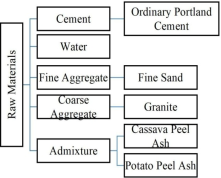
Figure 1. Mater ials Used in this research.
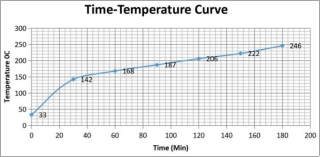
Figure 2. Graph of (Cassava Peel Ash).
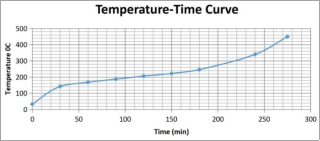
Figure 3. Graph of (Potato Peel Ash).
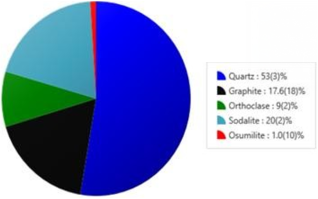
Figure 4. Oxide Composition of Cassava Ash.
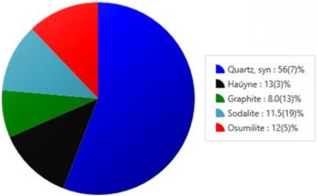
Figure 5. Oxide composition of Potato Ash.
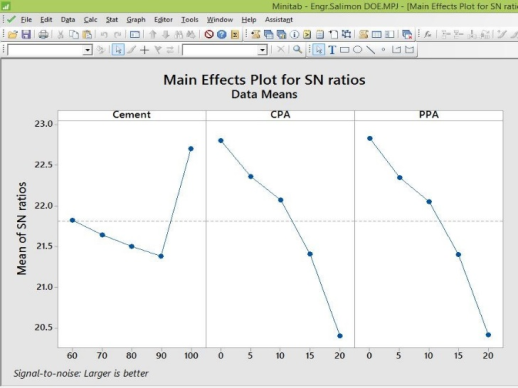
Figure 6. Particle Size Distribution.
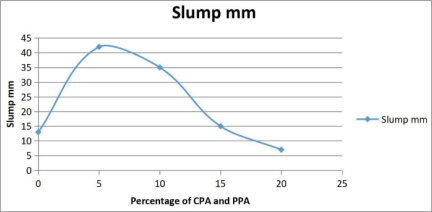
Figure 7. Slump Test Result.
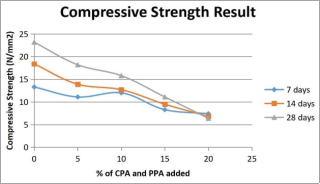
Figure 8. Compressive Strength of Concrete for 7, 14 and 28 Days.

Information



 Share This Article
 Twitter
 Linked In
 Facebook
 Copy
Copy Download