Abstract
Demagnetization faults in brushless DC (BLDC) motors are a significant reliability concern in modern electric drive systems, particularly in electric vehicles and industrial automation, as they can reduce motor performance, decrease efficiency, increase torque ripple, and compromise operational reliability. Early and accurate detection of demagnetization faults is therefore essential to ensure the safe and reliable operation of BLDC motors. This literature review aims to provide a comprehensive overview of existing demagnetization fault detection techniques, evaluate their effectiveness, identify their limitations, and highlight potential research directions for developing reliable diagnostic approaches. The review systematically examines findings from 80 peer-reviewed research publications covering the fundamental causes, mechanisms, and effects of permanent magnet demagnetization in BLDC motors. Various fault detection methodologies are analyzed, including motor current signature analysis (MCSA), back-electromotive force (BEMF) monitoring, vibration analysis, electromagnetic signal analysis, and data-driven approaches based on machine learning and artificial intelligence. The reviewed techniques are comparatively evaluated in terms of detection accuracy, sensitivity to operating conditions, sensor requirements, computational complexity, and suitability for real-time implementation. The review highlights that conventional signal-based methods provide useful diagnostic information but may exhibit limitations under variable operating conditions, load disturbances, and measurement noise. In contrast, machine learning and artificial intelligence techniques offer promising capabilities for automated fault identification and classification, although their performance depends on data quality, feature extraction, and model generalization. Furthermore, sensor dependency, limited benchmark datasets, and computational constraints remain important challenges. This review concludes that integrating multiple signal-based features with adaptive machine learning algorithms can improve the robustness and reliability of demagnetization fault diagnosis. Future research should focus on multi-sensor data fusion, standardized experimental datasets, real-time implementation, and intelligent diagnostic frameworks suitable for diverse operating conditions in electric vehicle and industrial drive applications.
Keywords
BLDC Motor, Demagnetization Fault, Permanent Magnet, Fault Detection, Machine Learning,
Motor Current Signature Analysis, Condition Monitoring
1. Introduction
1.1. Background and Motivation
Brushless DC (BLDC) motors have become ubiquitous in modern electromechanical systems due to their high efficiency, excellent power density, superior torque characteristics, and maintenance-free operation
| [1] | Sharma, V. K., Usman, A., & Rajpurohit, B. S. (2020). Demagnetization Fault Diagnosis in BLDC Motor Using Low-Cost Hall Effect Sensors. In Advances in Smart Grid and Renewable Energy (pp. 295-305). Springer.
https://doi.org/10.1007/978-981-15-4775-1_32 |
[1]
. The permanent magnets (PMs) mounted on the rotor are fundamental to the motor's electromagnetic performance, providing the excitation flux necessary for electromechanical energy conversion. However, these permanent magnets are susceptible to demagnetization a gradual or sudden loss of magnetic flux density which can severely compromise motor performance and lead to catastrophic system failures if undetected
| [2] | Kang, D.-H., Kim, H.-K., & Hur, J. (2015). Irreversible demagnetization diagnosis of IPM-type BLDC motor using BEMF harmonic characteristics based on space harmonics. In 2015 IEEE Energy Conversion Congress and Exposition (ECCE) (pp. 6806-6812). IEEE.
https://doi.org/10.1109/ECCE.2015.7310634 |
| [3] | Usman, A., & Rajpurohit, B. S. (2020). Characteristic Analysis of Partial Demagnetization Faults in Surface Mounted BLDC Motors. In 2020 IEEE Industry Applications Society Annual Meeting (pp. 1-8). IEEE.
https://doi.org/10.1109/IAS44978.2020.9334844 |
[2, 3]
.
Demagnetization faults are particularly critical in high-performance applications such as electric vehicles, aerospace actuators, industrial robotics, and renewable energy systems, where reliability and continuous operation are paramount
| [4] | Faiz, J., & Mazaheri-Tehrani, E. (2017). A novel demagnetization fault detection of brushless DC motors based on current time-series features. In 2017 IEEE 11th International Symposium on Diagnostics for Electrical Machines, Power Electronics and Drives (SDEMPED) (pp. 456-462). IEEE.
https://doi.org/10.1109/DEMPED.2017.8062350 |
[4]
. The consequences of demagnetization extend beyond reduced torque output, encompassing increased power consumption, elevated operating temperatures, augmented torque ripple, and potential damage to drive electronics
| [5] | Farooq, J. A., Djerdir, A., & Miraoui, A. (2008). Analytical Modeling Approach to Detect Magnet Defects in Permanent-Magnet Brushless Motors. IEEE Transactions on Magnetics, 44(12), 4599-4604.
https://doi.org/10.1109/TMAG.2008.2001751 |
| [6] | Usman, A., Sharma, V. K., & Rajpurohit, B. S. (2020). Harmonic Analysis of a BLDC Motor Under Demagnetization Fault Conditions. In 2020 IEEE 9th Power India International Conference (PIICON) (pp. 1-6). IEEE.
https://doi.org/10.1109/PIICON49524.2020.9113068 |
[5, 6]
. Early detection and diagnosis of demagnetization faults are therefore essential for implementing predictive maintenance strategies, preventing unexpected downtime, and optimizing lifecycle costs and
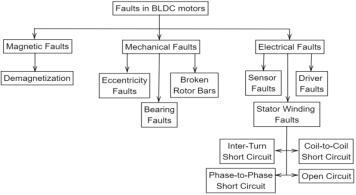
Figure 1 shown the faults in BLDC motors.
1.2. Scope and Objectives
This literature review aims to provide a comprehensive and critical analysis of demagnetization fault detection methodologies in BLDC motors. The specific objectives are:
1) To identify and classify the root causes and physical mechanisms of demagnetization in permanent magnets
2) To analyze the electromagnetic, thermal, and mechanical effects of demagnetization on motor performance
3) To evaluate traditional signal-based detection methods including MCSA, BEMF analysis, and analytical modeling
4) To examine modern detection techniques employing advanced signal processing and sensor fusion
5) To assess artificial intelligence and machine learning approaches for automated fault diagnosis
6) To compare the advantages, limitations, and practical applicability of different detection methodologies
7) To identify current research gaps and propose future directions for advancing demagnetization detection capabilities
1.3. Review Methodology
This review synthesizes findings from 80 peer-reviewed publications spanning conference proceedings, journal articles, and patents published between 2008 and 2024. The literature was systematically searched across multiple academic databases including IEEE Xplore, Science Direct, and Google Scholar using keywords such as "demagnetization," "BLDC motor," "permanent magnet," "fault detection," and "condition monitoring." Papers were selected based on relevance, methodological rigor, citation impact, and contribution to the field. The review emphasizes recent advances (2020-2024) while acknowledging foundational work that established key detection principles.
2. Demagnetization Faults in BLDC Motors: Causes and Effects
2.1. Root Causes of Demagnetization
Demagnetization in permanent magnets occurs through multiple physical mechanisms, often acting synergistically to degrade magnetic performance. The literature identifies four primary categories of demagnetization causes:
2.1.1. Thermal Demagnetization
Thermal stress represents the most prevalent cause of irreversible demagnetization in BLDC motors
| [7] | Demagnetization Fault Detection Research of Brushless DC Motor Based on Machine Learning. (2022). In 2022 5th World Conference on Mechanical Engineering and Intelligent Manufacturing (WCMEIM) (pp. 684-688). IEEE.
https://doi.org/10.1109/wcmeim56910.2022.10021516 |
| [8] | Zhang, M., Li, W., & Tang, H. (2023). Demagnetization Fault Diagnosis of the Permanent Magnet Motor for Electric Vehicles Based on Temperature Characteristic Quantity. IEEE Transactions on Transportation Electrification, 9(1), 1084-1094. https://doi.org/10.1109/TTE.2022.3200927 |
[7, 8]
. Permanent magnets, particularly rare-earth materials such as neodymium-iron-boron (NdFeB), exhibit temperature-dependent coercivitythe material's resistance to demagnetization. When operating temperatures exceed the magnet's maximum working temperature or approach the Curie temperature, the magnetic domains lose alignment, resulting in permanent flux reduction
| [2] | Kang, D.-H., Kim, H.-K., & Hur, J. (2015). Irreversible demagnetization diagnosis of IPM-type BLDC motor using BEMF harmonic characteristics based on space harmonics. In 2015 IEEE Energy Conversion Congress and Exposition (ECCE) (pp. 6806-6812). IEEE.
https://doi.org/10.1109/ECCE.2015.7310634 |
[2]
. Sources of excessive thermal stress include:
a. Prolonged operation under high load conditions, b. Inadequate cooling system design or failure, c. Electrical faults (short circuits, overcurrent) generating excessive heat, d. Ambient temperature extremes in harsh operating environments, e. Thermal cycling leading to cumulative degradation
| [7] | Demagnetization Fault Detection Research of Brushless DC Motor Based on Machine Learning. (2022). In 2022 5th World Conference on Mechanical Engineering and Intelligent Manufacturing (WCMEIM) (pp. 684-688). IEEE.
https://doi.org/10.1109/wcmeim56910.2022.10021516 |
[7]
.
Studies by Zhang et al. (2023) demonstrated that temperature rise patterns can serve as diagnostic indicators, with neural network models achieving accurate demagnetization detection based on thermal characteristic quantities in electric vehicle traction motors
| [8] | Zhang, M., Li, W., & Tang, H. (2023). Demagnetization Fault Diagnosis of the Permanent Magnet Motor for Electric Vehicles Based on Temperature Characteristic Quantity. IEEE Transactions on Transportation Electrification, 9(1), 1084-1094. https://doi.org/10.1109/TTE.2022.3200927 |
[8]
.
2.1.2. Mechanical Damage and Manufacturing Defects
Physical damage to permanent magnets during manufacturing, assembly, or operation constitutes another significant demagnetization mechanism
| [1] | Sharma, V. K., Usman, A., & Rajpurohit, B. S. (2020). Demagnetization Fault Diagnosis in BLDC Motor Using Low-Cost Hall Effect Sensors. In Advances in Smart Grid and Renewable Energy (pp. 295-305). Springer.
https://doi.org/10.1007/978-981-15-4775-1_32 |
| [3] | Usman, A., & Rajpurohit, B. S. (2020). Characteristic Analysis of Partial Demagnetization Faults in Surface Mounted BLDC Motors. In 2020 IEEE Industry Applications Society Annual Meeting (pp. 1-8). IEEE.
https://doi.org/10.1109/IAS44978.2020.9334844 |
[1, 3]
. Mechanical causes include: a. Impact damage during motor assembly or transportation, b. centrifugal forces at high rotational speeds causing magnet cracking or detachment, c. Vibration-induced fatigue leading to magnet fragmentation, d. Manufacturing defects such as improper magnetization, material in homogeneities, or bonding failures, e. Corrosion of magnet surfaces in humid or chemically aggressive environments
| [3] | Usman, A., & Rajpurohit, B. S. (2020). Characteristic Analysis of Partial Demagnetization Faults in Surface Mounted BLDC Motors. In 2020 IEEE Industry Applications Society Annual Meeting (pp. 1-8). IEEE.
https://doi.org/10.1109/IAS44978.2020.9334844 |
[3]
Sharma et al. (2020) investigated mechanical demagnetization patterns and developed diagnostic methods using low-cost Hall effect sensors to detect broken or damaged magnet segments
| [1] | Sharma, V. K., Usman, A., & Rajpurohit, B. S. (2020). Demagnetization Fault Diagnosis in BLDC Motor Using Low-Cost Hall Effect Sensors. In Advances in Smart Grid and Renewable Energy (pp. 295-305). Springer.
https://doi.org/10.1007/978-981-15-4775-1_32 |
[1]
.
2.1.3. Electrical Stress and Armature Reaction
Strong armature reaction fields during transient conditions (start-up, braking, and fault events) can locally exceed the magnet's coercive force, causing partial demagnetization
| [5] | Farooq, J. A., Djerdir, A., & Miraoui, A. (2008). Analytical Modeling Approach to Detect Magnet Defects in Permanent-Magnet Brushless Motors. IEEE Transactions on Magnetics, 44(12), 4599-4604.
https://doi.org/10.1109/TMAG.2008.2001751 |
[5]
. Electrical stress mechanisms include: a. Short-circuit currents generating intense demagnetizing fields, b. Inverter switching transients producing high-frequency flux pulsations, c. Load surges and regenerative braking creating reverse magnetic fields, d. Unbalanced phase currents intensifying localized demagnetization
Analytical and finite element method (FEM) studies have quantified the demagnetizing field distributions during fault conditions, establishing thresholds for irreversible demagnetization
| [5] | Farooq, J. A., Djerdir, A., & Miraoui, A. (2008). Analytical Modeling Approach to Detect Magnet Defects in Permanent-Magnet Brushless Motors. IEEE Transactions on Magnetics, 44(12), 4599-4604.
https://doi.org/10.1109/TMAG.2008.2001751 |
| [10] | Athanasopoulos, D. K., Karagkounis, P. D., & Kappatou, J. C. (2014). Demagnetization faults analysis in a BLDC motor for diagnostic purposes. In 2014 International Conference on Elec
trical Machines (ICEM) (pp. 2471-2477). IEEE.
https://doi.org/10.1109/ICELMACH.2014.6960437 |
[5, 10]
.
2.1.4. Cascading Effects from Other Faults
Recent research has revealed that stator winding faults can accelerate rotor demagnetization through secondary electromagnetic effects
| [3] | Usman, A., & Rajpurohit, B. S. (2020). Characteristic Analysis of Partial Demagnetization Faults in Surface Mounted BLDC Motors. In 2020 IEEE Industry Applications Society Annual Meeting (pp. 1-8). IEEE.
https://doi.org/10.1109/IAS44978.2020.9334844 |
| [11] | Kang, D.-H., Kim, H.-K., Park, J.-K., & Hur, J. (2016). Demagnetization Detection for IPM-type BLDCMs According to Irreversible Demagnetization Patterns and Pole-Slot Coefficients. Journal of Power Electronics, 16(1), 48-57.
https://doi.org/10.6113/JPE.2016.16.1.48 |
[3, 11]
. Inter-turn short circuits in stator windings create unbalanced magnetic fields that subject rotor magnets to asymmetric thermal and electromagnetic stresses, progressively degrading magnet performance. This fault interaction complicates diagnosis, as symptoms of combined faults may obscure individual fault signatures
| [3] | Usman, A., & Rajpurohit, B. S. (2020). Characteristic Analysis of Partial Demagnetization Faults in Surface Mounted BLDC Motors. In 2020 IEEE Industry Applications Society Annual Meeting (pp. 1-8). IEEE.
https://doi.org/10.1109/IAS44978.2020.9334844 |
[3]
.
2.2. Electromagnetic Effects of Demagnetization
Demagnetization fundamentally alters the electromagnetic characteristics of BLDC motors, producing measurable changes in electrical and magnetic quantities:
2.2.1. Back-EMF Reduction and Harmonic Distortion
The back-electromotive force (BEMF) is directly proportional to the rotor magnetic flux. Demagnetization causes: a. Amplitude reduction in phase BEMF waveforms proportional to flux loss
| [4] | Faiz, J., & Mazaheri-Tehrani, E. (2017). A novel demagnetization fault detection of brushless DC motors based on current time-series features. In 2017 IEEE 11th International Symposium on Diagnostics for Electrical Machines, Power Electronics and Drives (SDEMPED) (pp. 456-462). IEEE.
https://doi.org/10.1109/DEMPED.2017.8062350 |
| [6] | Usman, A., Sharma, V. K., & Rajpurohit, B. S. (2020). Harmonic Analysis of a BLDC Motor Under Demagnetization Fault Conditions. In 2020 IEEE 9th Power India International Conference (PIICON) (pp. 1-6). IEEE.
https://doi.org/10.1109/PIICON49524.2020.9113068 |
[4, 6]
, b. Changes in BEMF harmonic content, particularly increases in specific harmonic orders related to pole-slot combinations
| [2] | Kang, D.-H., Kim, H.-K., & Hur, J. (2015). Irreversible demagnetization diagnosis of IPM-type BLDC motor using BEMF harmonic characteristics based on space harmonics. In 2015 IEEE Energy Conversion Congress and Exposition (ECCE) (pp. 6806-6812). IEEE.
https://doi.org/10.1109/ECCE.2015.7310634 |
| [12] | Usman, A., & Rajpurohit, B. S. (2022). Development of an online condition monitoring based system for the partial demagnetization fault diagnosis of SPM‐type BLDC motor. Energy Conversion and Economics, 3(3), 172-185.
https://doi.org/10.1049/enc2.12054 |
[2, 12]
, c. Total harmonic distortion (THD) increases detectable through spectral analysis
| [6] | Usman, A., Sharma, V. K., & Rajpurohit, B. S. (2020). Harmonic Analysis of a BLDC Motor Under Demagnetization Fault Conditions. In 2020 IEEE 9th Power India International Conference (PIICON) (pp. 1-6). IEEE.
https://doi.org/10.1109/PIICON49524.2020.9113068 |
[6]
, d. Phase asymmetry in BEMF when demagnetization affects individual poles non-uniformly
| [12] | Usman, A., & Rajpurohit, B. S. (2022). Development of an online condition monitoring based system for the partial demagnetization fault diagnosis of SPM‐type BLDC motor. Energy Conversion and Economics, 3(3), 172-185.
https://doi.org/10.1049/enc2.12054 |
[12]
.
Kang et al. (2015) developed space-harmonic models to predict BEMF harmonic characteristics under irreversible demagnetization, demonstrating that harmonic patterns vary systematically with demagnetization severity and location
| [2] | Kang, D.-H., Kim, H.-K., & Hur, J. (2015). Irreversible demagnetization diagnosis of IPM-type BLDC motor using BEMF harmonic characteristics based on space harmonics. In 2015 IEEE Energy Conversion Congress and Exposition (ECCE) (pp. 6806-6812). IEEE.
https://doi.org/10.1109/ECCE.2015.7310634 |
[2]
. Usman and Rajpurohit (2020) conducted extensive harmonic analysis showing that specific harmonic orders (5th, 7th, 11th) exhibit heightened sensitivity to demagnetization in surface-mounted BLDC motors
| [6] | Usman, A., Sharma, V. K., & Rajpurohit, B. S. (2020). Harmonic Analysis of a BLDC Motor Under Demagnetization Fault Conditions. In 2020 IEEE 9th Power India International Conference (PIICON) (pp. 1-6). IEEE.
https://doi.org/10.1109/PIICON49524.2020.9113068 |
[6]
.
2.2.2. Phase Current Alterations
To maintain torque output despite reduced flux, BLDC motors draw increased stator currents, creating distinctive current signatures
| [9] | Zhao, X., & Ge, W. (2012). Detection of Rotor Demagnetization Fault on Brushless DC Motor. Micromotors, 45(2), 26-29.
https://doi.org/10.3969/j.issn.1007-449x.2012.02.009 |
| [13] | Li, Z. X., Yang, G. L., Fan, Y. M., & Li, J. H. (2021). Irreversible demagnetization mechanism of permanent magnets during electromagnetic buffering. Defence Technology, 17(3), 763-774. |
[9, 13]
: a. Elevated RMS current magnitudes across all phases, b. Current asymmetry between phases when demagnetization is localized, c. Modified current harmonic spectra with characteristic sideband components, d. Changes in current extrema (peak values) during commutation intervals
| [13] | Li, Z. X., Yang, G. L., Fan, Y. M., & Li, J. H. (2021). Irreversible demagnetization mechanism of permanent magnets during electromagnetic buffering. Defence Technology, 17(3), 763-774. |
[13]
.
Motor current signature analysis (MCSA) exploits these changes for fault detection. Zhao and Ge (2012) demonstrated that FFT analysis of stator currents reveals characteristic frequency components at specific harmonics related to rotor pole number and demagnetization patterns
.
2.2.3. Torque Degradation and Ripple
Demagnetization directly impacts torque production through multiple mechanisms
| [5] | Farooq, J. A., Djerdir, A., & Miraoui, A. (2008). Analytical Modeling Approach to Detect Magnet Defects in Permanent-Magnet Brushless Motors. IEEE Transactions on Magnetics, 44(12), 4599-4604.
https://doi.org/10.1109/TMAG.2008.2001751 |
| [10] | Athanasopoulos, D. K., Karagkounis, P. D., & Kappatou, J. C. (2014). Demagnetization faults analysis in a BLDC motor for diagnostic purposes. In 2014 International Conference on Elec
trical Machines (ICEM) (pp. 2471-2477). IEEE.
https://doi.org/10.1109/ICELMACH.2014.6960437 |
[5, 10]
: a. Reduced average electromagnetic torque proportional to flux loss, c. Increased torque ripple due to flux asymmetry between poles, d. Modified torque constant (Kt) detectable through torque-current measurements, e. Cogging torque alterations affecting smooth operation
| [10] | Athanasopoulos, D. K., Karagkounis, P. D., & Kappatou, J. C. (2014). Demagnetization faults analysis in a BLDC motor for diagnostic purposes. In 2014 International Conference on Elec
trical Machines (ICEM) (pp. 2471-2477). IEEE.
https://doi.org/10.1109/ICELMACH.2014.6960437 |
[10]
.
Athanasopoulos et al. (2014) performed comprehensive FEM analysis quantifying torque degradation under various demagnetization scenarios, establishing relationships between fault severity and torque characteristics useful for diagnostic purposes
| [10] | Athanasopoulos, D. K., Karagkounis, P. D., & Kappatou, J. C. (2014). Demagnetization faults analysis in a BLDC motor for diagnostic purposes. In 2014 International Conference on Elec
trical Machines (ICEM) (pp. 2471-2477). IEEE.
https://doi.org/10.1109/ICELMACH.2014.6960437 |
[10]
.
2.3. Thermal and Mechanical Consequences
Beyond electromagnetic effects, demagnetization produces secondary thermal and mechanical symptoms:
2.3.1. Temperature Rise
Reduced flux efficiency forces motors to operate at higher currents, increasing copper losses and generating additional heat
| [7] | Demagnetization Fault Detection Research of Brushless DC Motor Based on Machine Learning. (2022). In 2022 5th World Conference on Mechanical Engineering and Intelligent Manufacturing (WCMEIM) (pp. 684-688). IEEE.
https://doi.org/10.1109/wcmeim56910.2022.10021516 |
| [8] | Zhang, M., Li, W., & Tang, H. (2023). Demagnetization Fault Diagnosis of the Permanent Magnet Motor for Electric Vehicles Based on Temperature Characteristic Quantity. IEEE Transactions on Transportation Electrification, 9(1), 1084-1094. https://doi.org/10.1109/TTE.2022.3200927 |
[7, 8]
. This creates a positive feedback loop where temperature rise accelerates further demagnetization. Temperature monitoring at strategic locations (stator windings, bearing housings, motor frame) provides fault indicators, as demonstrated by Zhang et al. (2023) using thermal characteristic quantities for neural network-based diagnosis
| [8] | Zhang, M., Li, W., & Tang, H. (2023). Demagnetization Fault Diagnosis of the Permanent Magnet Motor for Electric Vehicles Based on Temperature Characteristic Quantity. IEEE Transactions on Transportation Electrification, 9(1), 1084-1094. https://doi.org/10.1109/TTE.2022.3200927 |
[8]
.
2.3.2. Vibration and Acoustic Signatures
Flux asymmetry and increased torque ripple manifest as altered vibration patterns and acoustic emissions
| [14] | Kang, D.-Y., Kim, H.-K., & Hur, J. (2015). Fault Detection of Irreversible Demagnetization Based on Space Harmonics According to Equivalent Magnetizing Distribution. IEEE Transactions on Magnetics, 51(11), 1-4.
https://doi.org/10.1109/TMAG.2015.2439716 |
[14]
. Demagnetization changes: a. Radial force distributions causing unbalanced magnetic pull, b. Vibration frequency spectra with characteristic components at multiples of rotational frequency, c. Acoustic noise levels and tonal characteristics, d. Bearing load distributions potentially accelerating mechanical wear
| [14] | Kang, D.-Y., Kim, H.-K., & Hur, J. (2015). Fault Detection of Irreversible Demagnetization Based on Space Harmonics According to Equivalent Magnetizing Distribution. IEEE Transactions on Magnetics, 51(11), 1-4.
https://doi.org/10.1109/TMAG.2015.2439716 |
[14]
.
Vibration-based condition monitoring can complement electrical signature analysis for comprehensive fault detection, though practical implementation requires careful sensor placement and signal processing to isolate demagnetization signatures from other vibration sources and
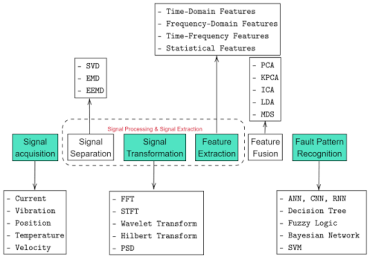
Figure 2 Different faults detection methods in BLDC motors.
3. Traditional Detection Methods
3.1. Motor Current Signature Analysis (MCSA)
Motor current signature analysis represents one of the most widely adopted techniques for demagnetization detection due to its non-invasive nature and compatibility with existing motor drive systems
| [9] | Zhao, X., & Ge, W. (2012). Detection of Rotor Demagnetization Fault on Brushless DC Motor. Micromotors, 45(2), 26-29.
https://doi.org/10.3969/j.issn.1007-449x.2012.02.009 |
| [15] | Han, L., Fu, X., Tian, S., et al. (2022). Demagnetization Fault Detection Research of Brushless DC Motor Based on Machine Learning. In 2022 5th World Conference on Mechanical Engineering and Intelligent Manufacturing (WCMEIM) (pp. 684-688). IEEE.
https://doi.org/10.1109/WCMEIM56910.2022.10021516 |
[9, 15]
. MCSA exploits the fact that demagnetization alters stator current characteristics in predictable ways.
3.1.1. Principles and Implementation
MCSA typically involves:
1) Current acquisition: Measuring stator phase currents using current sensors or shunt resistors
2) Signal preprocessing: Filtering, detrending, and windowing to prepare signals for spectral analysis
3) Feature extraction: Computing Fast Fourier Transform (FFT) to obtain frequency spectra
4)
Fault indicator calculation: Identifying characteristic frequency components and computing diagnostic indices
The fundamental principle relies on the appearance of specific harmonic components and sidebands in the current spectrum when demagnetization occurs. For a BLDC motor with p pole pairs operating at mechanical frequency f
m, demagnetization introduces current components at frequencies in equation (
1):
where k and n are integers related to the spatial harmonic order and rotor slot effects
| [9] | Zhao, X., & Ge, W. (2012). Detection of Rotor Demagnetization Fault on Brushless DC Motor. Micromotors, 45(2), 26-29.
https://doi.org/10.3969/j.issn.1007-449x.2012.02.009 |
| [15] | Han, L., Fu, X., Tian, S., et al. (2022). Demagnetization Fault Detection Research of Brushless DC Motor Based on Machine Learning. In 2022 5th World Conference on Mechanical Engineering and Intelligent Manufacturing (WCMEIM) (pp. 684-688). IEEE.
https://doi.org/10.1109/WCMEIM56910.2022.10021516 |
[9, 15]
.
3.1.2. Diagnostic Indices
Researchers have proposed various MCSA-based diagnostic indices:
1)
Harmonic amplitude ratios: Comparing specific harmonic magnitudes to fundamental component
2)
Sideband component analysis: Monitoring sideband peaks around fundamental and harmonic frequencies
| [15] | Han, L., Fu, X., Tian, S., et al. (2022). Demagnetization Fault Detection Research of Brushless DC Motor Based on Machine Learning. In 2022 5th World Conference on Mechanical Engineering and Intelligent Manufacturing (WCMEIM) (pp. 684-688). IEEE.
https://doi.org/10.1109/WCMEIM56910.2022.10021516 |
[15]
3)
Total harmonic distortion (THD): Quantifying overall spectral distortion
| [6] | Usman, A., Sharma, V. K., & Rajpurohit, B. S. (2020). Harmonic Analysis of a BLDC Motor Under Demagnetization Fault Conditions. In 2020 IEEE 9th Power India International Conference (PIICON) (pp. 1-6). IEEE.
https://doi.org/10.1109/PIICON49524.2020.9113068 |
[6]
4)
Current asymmetry indices: Measuring differences between phase current characteristics
| [16] | Fico, V. M., Rodriguez Vazquez, A. L., & Prats, M. (2019). Failure Detection by Signal Similarity Measurement of Brushless DC Motors. Energies, 12(7), 1364.
https://doi.org/10.3390/EN12071364 |
[16]
Zhao and Ge (2012) demonstrated successful demagnetization detection using FFT peaks in stator current spectra combined with torque constant estimation across different speed regimes
.
3.1.3. Limitations
Despite widespread adoption, MCSA faces several challenges:
1)
Operating point sensitivity: Current signatures vary significantly with load and speed, potentially masking fault indicators or causing false alarms
| [10] | Athanasopoulos, D. K., Karagkounis, P. D., & Kappatou, J. C. (2014). Demagnetization faults analysis in a BLDC motor for diagnostic purposes. In 2014 International Conference on Elec
trical Machines (ICEM) (pp. 2471-2477). IEEE.
https://doi.org/10.1109/ICELMACH.2014.6960437 |
| [15] | Han, L., Fu, X., Tian, S., et al. (2022). Demagnetization Fault Detection Research of Brushless DC Motor Based on Machine Learning. In 2022 5th World Conference on Mechanical Engineering and Intelligent Manufacturing (WCMEIM) (pp. 684-688). IEEE.
https://doi.org/10.1109/WCMEIM56910.2022.10021516 |
[10, 15]
2) Low sensitivity to minor demagnetization: Small flux losses may not produce detectable current changes above noise levels
3)
Topology dependence: Optimal diagnostic frequencies and indices depend on motor pole-slot combinations
| [12] | Usman, A., & Rajpurohit, B. S. (2022). Development of an online condition monitoring based system for the partial demagnetization fault diagnosis of SPM‐type BLDC motor. Energy Conversion and Economics, 3(3), 172-185.
https://doi.org/10.1049/enc2.12054 |
[12]
4)
Load variation effects: Changing load conditions alter current magnitudes and spectra, complicating threshold-based detection
| [15] | Han, L., Fu, X., Tian, S., et al. (2022). Demagnetization Fault Detection Research of Brushless DC Motor Based on Machine Learning. In 2022 5th World Conference on Mechanical Engineering and Intelligent Manufacturing (WCMEIM) (pp. 684-688). IEEE.
https://doi.org/10.1109/WCMEIM56910.2022.10021516 |
[15]
3.2. Back-EMF and Harmonic Analysis
Back-EMF monitoring provides direct insight into rotor flux conditions, making it a natural choice for demagnetization detection
| [2] | Kang, D.-H., Kim, H.-K., & Hur, J. (2015). Irreversible demagnetization diagnosis of IPM-type BLDC motor using BEMF harmonic characteristics based on space harmonics. In 2015 IEEE Energy Conversion Congress and Exposition (ECCE) (pp. 6806-6812). IEEE.
https://doi.org/10.1109/ECCE.2015.7310634 |
| [4] | Faiz, J., & Mazaheri-Tehrani, E. (2017). A novel demagnetization fault detection of brushless DC motors based on current time-series features. In 2017 IEEE 11th International Symposium on Diagnostics for Electrical Machines, Power Electronics and Drives (SDEMPED) (pp. 456-462). IEEE.
https://doi.org/10.1109/DEMPED.2017.8062350 |
| [12] | Usman, A., & Rajpurohit, B. S. (2022). Development of an online condition monitoring based system for the partial demagnetization fault diagnosis of SPM‐type BLDC motor. Energy Conversion and Economics, 3(3), 172-185.
https://doi.org/10.1049/enc2.12054 |
[2, 4, 12]
.
3.2.1. BEMF Measurement Techniques
Several approaches exist for BEMF acquisition:
1)
Direct measurement during freewheeling: Measuring terminal voltage of non-excited phases during six-step commutation intervals
| [17] | Yu, Y., Chen, Q., Liu, P., et al. (2022). Demagnetization Fault Detection and Location in PMSM Based on Correlation Coefficient of Branch Current Signals. Energies, 15(8), 2952.
https://doi.org/10.3390/en15082952 |
[17]
2)
Sensorless estimation: Reconstructing BEMF from measured currents and voltages using motor models
| [18] | Kim, D.-H., Im, J.-H., Zia, U., et al. (2020). Online Detection of Irreversible Demagnetization Fault with Non-excited Phase Voltage in Brushless DC Motor Drive System. In 2020 IEEE Energy Conversion Congress and Exposition (ECCE) (pp. 4262-4267). IEEE.
https://doi.org/10.1109/ECCE44975.2020.9235654 |
[18]
3)
Dedicated sensing circuits: Employing voltage dividers or differential amplifiers to isolate BEMF components
| [4] | Faiz, J., & Mazaheri-Tehrani, E. (2017). A novel demagnetization fault detection of brushless DC motors based on current time-series features. In 2017 IEEE 11th International Symposium on Diagnostics for Electrical Machines, Power Electronics and Drives (SDEMPED) (pp. 456-462). IEEE.
https://doi.org/10.1109/DEMPED.2017.8062350 |
[4]
3.2.2. Harmonic-Based Diagnosis
Kang et al. (2015, 2016) developed sophisticated harmonic analysis methods for demagnetization detection in interior permanent magnet (IPM) type BLDC motors
| [2] | Kang, D.-H., Kim, H.-K., & Hur, J. (2015). Irreversible demagnetization diagnosis of IPM-type BLDC motor using BEMF harmonic characteristics based on space harmonics. In 2015 IEEE Energy Conversion Congress and Exposition (ECCE) (pp. 6806-6812). IEEE.
https://doi.org/10.1109/ECCE.2015.7310634 |
| [12] | Usman, A., & Rajpurohit, B. S. (2022). Development of an online condition monitoring based system for the partial demagnetization fault diagnosis of SPM‐type BLDC motor. Energy Conversion and Economics, 3(3), 172-185.
https://doi.org/10.1049/enc2.12054 |
[2, 12]
. Their approach: a. Models demagnetization patterns using equivalent magnetizing distributions, b. Predicts BEMF harmonic changes based on space-harmonic theory, c. Accounts for pole-slot coefficient effects on harmonic content, d. Establishes diagnostic thresholds based on harmonic amplitude ratios
| [2] | Kang, D.-H., Kim, H.-K., & Hur, J. (2015). Irreversible demagnetization diagnosis of IPM-type BLDC motor using BEMF harmonic characteristics based on space harmonics. In 2015 IEEE Energy Conversion Congress and Exposition (ECCE) (pp. 6806-6812). IEEE.
https://doi.org/10.1109/ECCE.2015.7310634 |
| [12] | Usman, A., & Rajpurohit, B. S. (2022). Development of an online condition monitoring based system for the partial demagnetization fault diagnosis of SPM‐type BLDC motor. Energy Conversion and Economics, 3(3), 172-185.
https://doi.org/10.1049/enc2.12054 |
[2, 12]
.
Usman and Rajpurohit (2020) performed extensive harmonic analysis demonstrating that specific harmonic orders (particularly 5th, 7th, and 11th) exhibit heightened sensitivity to demagnetization severity
| [6] | Usman, A., Sharma, V. K., & Rajpurohit, B. S. (2020). Harmonic Analysis of a BLDC Motor Under Demagnetization Fault Conditions. In 2020 IEEE 9th Power India International Conference (PIICON) (pp. 1-6). IEEE.
https://doi.org/10.1109/PIICON49524.2020.9113068 |
[6]
. Their FEM-validated studies showed that THD of BEMF increases monotonically with demagnetization percentage, providing a quantitative fault severity indicator.
3.2.3. Advantages and Constraints
BEMF-based methods offer several advantages:
1) Direct relationship to rotor flux enables intuitive fault interpretation
2) Relatively immune to stator resistance and inductance variations
3) Can detect early-stage demagnetization through subtle harmonic changes
| [4] | Faiz, J., & Mazaheri-Tehrani, E. (2017). A novel demagnetization fault detection of brushless DC motors based on current time-series features. In 2017 IEEE 11th International Symposium on Diagnostics for Electrical Machines, Power Electronics and Drives (SDEMPED) (pp. 456-462). IEEE.
https://doi.org/10.1109/DEMPED.2017.8062350 |
| [12] | Usman, A., & Rajpurohit, B. S. (2022). Development of an online condition monitoring based system for the partial demagnetization fault diagnosis of SPM‐type BLDC motor. Energy Conversion and Economics, 3(3), 172-185.
https://doi.org/10.1049/enc2.12054 |
[4, 12]
However, limitations include:
1) Measurement complexity in conventional six-step commutation requiring precise timing
2) Speed dependency of BEMF magnitude complicating threshold setting
3) Need for motor-specific calibration to establish healthy baseline characteristics
| [12] | Usman, A., & Rajpurohit, B. S. (2022). Development of an online condition monitoring based system for the partial demagnetization fault diagnosis of SPM‐type BLDC motor. Energy Conversion and Economics, 3(3), 172-185.
https://doi.org/10.1049/enc2.12054 |
[12]
3.3. Analytical and Finite Element Modeling
Model-based approaches use electromagnetic theory and numerical simulation to predict fault signatures and establish diagnostic criteria
| [3] | Usman, A., & Rajpurohit, B. S. (2020). Characteristic Analysis of Partial Demagnetization Faults in Surface Mounted BLDC Motors. In 2020 IEEE Industry Applications Society Annual Meeting (pp. 1-8). IEEE.
https://doi.org/10.1109/IAS44978.2020.9334844 |
| [5] | Farooq, J. A., Djerdir, A., & Miraoui, A. (2008). Analytical Modeling Approach to Detect Magnet Defects in Permanent-Magnet Brushless Motors. IEEE Transactions on Magnetics, 44(12), 4599-4604.
https://doi.org/10.1109/TMAG.2008.2001751 |
| [11] | Kang, D.-H., Kim, H.-K., Park, J.-K., & Hur, J. (2016). Demagnetization Detection for IPM-type BLDCMs According to Irreversible Demagnetization Patterns and Pole-Slot Coefficients. Journal of Power Electronics, 16(1), 48-57.
https://doi.org/10.6113/JPE.2016.16.1.48 |
[3, 5, 11]
.
3.3.1. Analytical Models
Farooq et al. (2008) pioneered analytical modeling for magnet defect detection, developing gradient-based methods to locate demagnetized regions from measured BEMF waveforms
| [5] | Farooq, J. A., Djerdir, A., & Miraoui, A. (2008). Analytical Modeling Approach to Detect Magnet Defects in Permanent-Magnet Brushless Motors. IEEE Transactions on Magnetics, 44(12), 4599-4604.
https://doi.org/10.1109/TMAG.2008.2001751 |
[5]
. Their approach: a. Represents the air-gap flux distribution using Fourier series expansion, b. Incorporates localized flux reduction to model partial demagnetization, c. Derives analytical expressions for BEMF and current signatures, d. Employs inverse problem techniques to identify demagnetization location and severity
| [5] | Farooq, J. A., Djerdir, A., & Miraoui, A. (2008). Analytical Modeling Approach to Detect Magnet Defects in Permanent-Magnet Brushless Motors. IEEE Transactions on Magnetics, 44(12), 4599-4604.
https://doi.org/10.1109/TMAG.2008.2001751 |
[5]
.
Analytical models provide physical insight and computational efficiency but require simplifying assumptions (linear magnetic materials, negligible saturation, idealized geometries) that may limit accuracy for complex motor topologies.
3.3.2. Finite Element Analysis (FEM)
FEM provides high-fidelity electromagnetic simulation accounting for nonlinear materials, saturation effects, and complex geometries
| [3] | Usman, A., & Rajpurohit, B. S. (2020). Characteristic Analysis of Partial Demagnetization Faults in Surface Mounted BLDC Motors. In 2020 IEEE Industry Applications Society Annual Meeting (pp. 1-8). IEEE.
https://doi.org/10.1109/IAS44978.2020.9334844 |
| [10] | Athanasopoulos, D. K., Karagkounis, P. D., & Kappatou, J. C. (2014). Demagnetization faults analysis in a BLDC motor for diagnostic purposes. In 2014 International Conference on Elec
trical Machines (ICEM) (pp. 2471-2477). IEEE.
https://doi.org/10.1109/ICELMACH.2014.6960437 |
| [11] | Kang, D.-H., Kim, H.-K., Park, J.-K., & Hur, J. (2016). Demagnetization Detection for IPM-type BLDCMs According to Irreversible Demagnetization Patterns and Pole-Slot Coefficients. Journal of Power Electronics, 16(1), 48-57.
https://doi.org/10.6113/JPE.2016.16.1.48 |
[3, 10, 11]
. Typical FEM-based diagnostic workflows:
1) Healthy motor simulation: Establishing baseline electromagnetic characteristics
2) Fault injection: Modeling various demagnetization patterns (uniform, localized, partial)
3) Signature extraction: Computing currents, BEMF, torque, and flux distributions
4)
Sensitivity analysis: Quantifying relationships between fault parameters and observable signatures
| [3] | Usman, A., & Rajpurohit, B. S. (2020). Characteristic Analysis of Partial Demagnetization Faults in Surface Mounted BLDC Motors. In 2020 IEEE Industry Applications Society Annual Meeting (pp. 1-8). IEEE.
https://doi.org/10.1109/IAS44978.2020.9334844 |
| [10] | Athanasopoulos, D. K., Karagkounis, P. D., & Kappatou, J. C. (2014). Demagnetization faults analysis in a BLDC motor for diagnostic purposes. In 2014 International Conference on Elec
trical Machines (ICEM) (pp. 2471-2477). IEEE.
https://doi.org/10.1109/ICELMACH.2014.6960437 |
[3, 10]
Usman and Rajpurohit (2020) employed hybrid analytical-numerical models combining magnetic equivalent circuits (MEC), electrical equivalent circuits (EEC), and FEM to study combined stator inter-turn faults and demagnetization effects
| [3] | Usman, A., & Rajpurohit, B. S. (2020). Characteristic Analysis of Partial Demagnetization Faults in Surface Mounted BLDC Motors. In 2020 IEEE Industry Applications Society Annual Meeting (pp. 1-8). IEEE.
https://doi.org/10.1109/IAS44978.2020.9334844 |
[3]
. Their comprehensive approach enabled disambiguation of concurrent faults through multi-signal analysis.
3.3.3. Practical Implementation Challenges
Model-based methods face deployment challenges:
1)
Computational cost: FEM simulations require significant computing resources, limiting real-time applicability
| [10] | Athanasopoulos, D. K., Karagkounis, P. D., & Kappatou, J. C. (2014). Demagnetization faults analysis in a BLDC motor for diagnostic purposes. In 2014 International Conference on Elec
trical Machines (ICEM) (pp. 2471-2477). IEEE.
https://doi.org/10.1109/ICELMACH.2014.6960437 |
[10]
2) Parameter sensitivity: Accurate models require precise knowledge of material properties and dimensions
3)
Validation requirements: Experimental validation across operating conditions necessary to ensure model fidelity
| [3] | Usman, A., & Rajpurohit, B. S. (2020). Characteristic Analysis of Partial Demagnetization Faults in Surface Mounted BLDC Motors. In 2020 IEEE Industry Applications Society Annual Meeting (pp. 1-8). IEEE.
https://doi.org/10.1109/IAS44978.2020.9334844 |
[3]
4)
Offline nature: Most modeling approaches serve diagnostic development rather than online monitoring
| [10] | Athanasopoulos, D. K., Karagkounis, P. D., & Kappatou, J. C. (2014). Demagnetization faults analysis in a BLDC motor for diagnostic purposes. In 2014 International Conference on Elec
trical Machines (ICEM) (pp. 2471-2477). IEEE.
https://doi.org/10.1109/ICELMACH.2014.6960437 |
[10]
3.4. Hall Sensor-Based Detection
Hall effect sensors, commonly used for rotor position sensing in BLDC drives, can be repurposed for demagnetization detection
| [1] | Sharma, V. K., Usman, A., & Rajpurohit, B. S. (2020). Demagnetization Fault Diagnosis in BLDC Motor Using Low-Cost Hall Effect Sensors. In Advances in Smart Grid and Renewable Energy (pp. 295-305). Springer.
https://doi.org/10.1007/978-981-15-4775-1_32 |
| [12] | Usman, A., & Rajpurohit, B. S. (2022). Development of an online condition monitoring based system for the partial demagnetization fault diagnosis of SPM‐type BLDC motor. Energy Conversion and Economics, 3(3), 172-185.
https://doi.org/10.1049/enc2.12054 |
[1, 12]
.
3.4.1. Detection Principles
Hall sensors generate voltage signals proportional to magnetic flux density. Demagnetization causes:
1) Reduced Hall sensor output amplitudes
2) Altered switching sequences in digital Hall sensors
3) Modified signal symmetry between sensor outputs
| [1] | Sharma, V. K., Usman, A., & Rajpurohit, B. S. (2020). Demagnetization Fault Diagnosis in BLDC Motor Using Low-Cost Hall Effect Sensors. In Advances in Smart Grid and Renewable Energy (pp. 295-305). Springer.
https://doi.org/10.1007/978-981-15-4775-1_32 |
[1]
Sharma et al. (2020) developed low-cost demagnetization diagnosis using existing Hall sensors, demonstrating detection of broken magnet patterns through analysis of Hall signal sequences
| [1] | Sharma, V. K., Usman, A., & Rajpurohit, B. S. (2020). Demagnetization Fault Diagnosis in BLDC Motor Using Low-Cost Hall Effect Sensors. In Advances in Smart Grid and Renewable Energy (pp. 295-305). Springer.
https://doi.org/10.1007/978-981-15-4775-1_32 |
[1]
. Their method requires no additional hardware, leveraging sensors already present in most BLDC drive systems.
3.4.2. Limitations
Hall sensor approaches are constrained by:
1) Limited spatial resolution: Typically, only 3 sensors provide coarse rotor position information
2) Sensitivity to sensor placement: Detection capability depends strongly on sensor positioning relative to demagnetized poles
3)
Temperature effects: Hall sensor characteristics drift with temperature, requiring compensation
| [1] | Sharma, V. K., Usman, A., & Rajpurohit, B. S. (2020). Demagnetization Fault Diagnosis in BLDC Motor Using Low-Cost Hall Effect Sensors. In Advances in Smart Grid and Renewable Energy (pp. 295-305). Springer.
https://doi.org/10.1007/978-981-15-4775-1_32 |
[1]
3.5. Torque Constant Estimation
The torque constant (Kt) relates motor current to produced torque. Demagnetization reduces Kt proportionally to flux loss, enabling detection through Kt estimation
| [9] | Zhao, X., & Ge, W. (2012). Detection of Rotor Demagnetization Fault on Brushless DC Motor. Micromotors, 45(2), 26-29.
https://doi.org/10.3969/j.issn.1007-449x.2012.02.009 |
| [10] | Athanasopoulos, D. K., Karagkounis, P. D., & Kappatou, J. C. (2014). Demagnetization faults analysis in a BLDC motor for diagnostic purposes. In 2014 International Conference on Elec
trical Machines (ICEM) (pp. 2471-2477). IEEE.
https://doi.org/10.1109/ICELMACH.2014.6960437 |
[9, 10]
.
3.5.1. Estimation Methods
Torque constant can be estimated through:
1) Direct torque measurement: Using dynamometers or torque transducers (requires test bench)
2) Power-based estimation: Computing Kt from measured electrical power and mechanical speed
3)
Current-speed relationship: Analyzing steady-state current-speed characteristics under known loads
Zhao and Ge (2012) combined MCSA with torque constant estimation for comprehensive demagnetization detection across different speed regimes
.
3.5.2. Practical Constraints
Torque-based methods face implementation challenges:
1) Direct torque measurement requires expensive sensors not typically available in field installations
2) Power-based estimation suffers from measurement uncertainties and efficiency variations
3) Steady-state operation requirements limit applicability in dynamic duty cycles
4. Modern Signal-Based Detection Techniques
Recent research has advanced beyond traditional FFT-based MCSA toward sophisticated signal processing methods that improve robustness, sensitivity, and real-time capability.
4.1. Time-Domain Feature Extraction
4.1.1. Current Extrema and Autoregressive Features
Han et al. (2022) proposed a novel time-series approach representing BLDC six-step current waveforms using extrema (maximum and minimum values) combined with autoregressive (AR) model coefficients
| [15] | Han, L., Fu, X., Tian, S., et al. (2022). Demagnetization Fault Detection Research of Brushless DC Motor Based on Machine Learning. In 2022 5th World Conference on Mechanical Engineering and Intelligent Manufacturing (WCMEIM) (pp. 684-688). IEEE.
https://doi.org/10.1109/WCMEIM56910.2022.10021516 |
[15]
. Their method:
1) Segments current waveforms into windows corresponding to commutation intervals
2) Extracts peak current values and fits AR models to capture dynamic characteristics
3) Computes K-means distances in feature space for classification
4) Applies majority voting across windows to suppress noise and load oscillation effects
| [15] | Han, L., Fu, X., Tian, S., et al. (2022). Demagnetization Fault Detection Research of Brushless DC Motor Based on Machine Learning. In 2022 5th World Conference on Mechanical Engineering and Intelligent Manufacturing (WCMEIM) (pp. 684-688). IEEE.
https://doi.org/10.1109/WCMEIM56910.2022.10021516 |
[15]
This approach achieved superior performance compared to conventional FFT-based MCSA, demonstrating 95%+ detection accuracy across varying load conditions. The time-domain representation proves more robust to operating point variations than frequency-domain methods
| [15] | Han, L., Fu, X., Tian, S., et al. (2022). Demagnetization Fault Detection Research of Brushless DC Motor Based on Machine Learning. In 2022 5th World Conference on Mechanical Engineering and Intelligent Manufacturing (WCMEIM) (pp. 684-688). IEEE.
https://doi.org/10.1109/WCMEIM56910.2022.10021516 |
[15]
.
4.1.2. Current Asymmetry Indicators
Fico et al. (2019) developed signal similarity measurement techniques to detect partial demagnetization through current asymmetry analysis
| [16] | Fico, V. M., Rodriguez Vazquez, A. L., & Prats, M. (2019). Failure Detection by Signal Similarity Measurement of Brushless DC Motors. Energies, 12(7), 1364.
https://doi.org/10.3390/EN12071364 |
[16]
. Their method computes correlation coefficients between phase currents and reference healthy signatures, with demagnetization causing measurable correlation reductions. The approach requires establishing healthy baseline signatures but provides intuitive fault indicators validated in simulations and laboratory tests
| [16] | Fico, V. M., Rodriguez Vazquez, A. L., & Prats, M. (2019). Failure Detection by Signal Similarity Measurement of Brushless DC Motors. Energies, 12(7), 1364.
https://doi.org/10.3390/EN12071364 |
[16]
.
4.2. Branch Current Analysis and Correlation
For motor topologies providing access to branch currents (star-point or individual phase measurements), correlation-based methods offer enhanced localization capabilities
| [19] | Sergakis, A., Salinas, M., Gkiolekas, N., & Gyftakis, K. N. (2025). A Review of Condition Monitoring of Permanent Magnet Synchronous Machines: Techniques, Challenges and Future Directions. Energies, 18(5), 1177. |
[19]
.
4.2.1. Correlation Coefficient Analysis
Yu et al. (2022) proposed demagnetization detection and localization using correlation coefficients of branch current signals
| [19] | Sergakis, A., Salinas, M., Gkiolekas, N., & Gyftakis, K. N. (2025). A Review of Condition Monitoring of Permanent Magnet Synchronous Machines: Techniques, Challenges and Future Directions. Energies, 18(5), 1177. |
[19]
. Their methodology:
1) Measures branch currents for all motor phases
2) Computes cross-correlation coefficients between current pairs
3) Analyzes correlation patterns to identify demagnetized poles
4) Estimates fault severity from correlation coefficient magnitudes
| [19] | Sergakis, A., Salinas, M., Gkiolekas, N., & Gyftakis, K. N. (2025). A Review of Condition Monitoring of Permanent Magnet Synchronous Machines: Techniques, Challenges and Future Directions. Energies, 18(5), 1177. |
[19]
The correlation approach exploits the fact that demagnetization breaks the symmetry of current distributions, creating characteristic correlation patterns that vary with fault location. Experimental validation demonstrated successful localization of demagnetized poles in permanent magnet synchronous motors (PMSM), with extension to BLDC motors straightforward
| [19] | Sergakis, A., Salinas, M., Gkiolekas, N., & Gyftakis, K. N. (2025). A Review of Condition Monitoring of Permanent Magnet Synchronous Machines: Techniques, Challenges and Future Directions. Energies, 18(5), 1177. |
[19]
.
4.2.2. Advantages for Fault Localization
Branch current correlation provides superior localization compared to conventional MCSA because:
1) Spatial information is preserved through multi-channel measurements
2) Correlation patterns uniquely map to specific pole demagnetization
3) The method remains effective across varying operating conditions
| [19] | Sergakis, A., Salinas, M., Gkiolekas, N., & Gyftakis, K. N. (2025). A Review of Condition Monitoring of Permanent Magnet Synchronous Machines: Techniques, Challenges and Future Directions. Energies, 18(5), 1177. |
[19]
Limitations include the requirement for branch current access, which may necessitate modified motor or inverter designs.
4.3. Sensorless Online Voltage Monitoring
4.3.1. Non-Excited Phase Voltage Analysis
Kim et al. (2020) developed online irreversible demagnetization detection using non-excited phase voltage monitoring during BLDC motor operation
| [18] | Kim, D.-H., Im, J.-H., Zia, U., et al. (2020). Online Detection of Irreversible Demagnetization Fault with Non-excited Phase Voltage in Brushless DC Motor Drive System. In 2020 IEEE Energy Conversion Congress and Exposition (ECCE) (pp. 4262-4267). IEEE.
https://doi.org/10.1109/ECCE44975.2020.9235654 |
[18]
. During six-step commutation, the non-excited phase voltage reflects the BEMF directly. Their method:
1) Measures terminal voltage of the floating (non-excited) phase
2) Extracts BEMF amplitude and harmonic content
3) Compares against healthy baseline characteristics
4) Triggers fault alarms when deviations exceed thresholds
| [18] | Kim, D.-H., Im, J.-H., Zia, U., et al. (2020). Online Detection of Irreversible Demagnetization Fault with Non-excited Phase Voltage in Brushless DC Motor Drive System. In 2020 IEEE Energy Conversion Congress and Exposition (ECCE) (pp. 4262-4267). IEEE.
https://doi.org/10.1109/ECCE44975.2020.9235654 |
[18]
This sensorless approach requires no additional hardware beyond voltage measurement circuits typically present in motor drives, enabling cost-effective online monitoring
| [18] | Kim, D.-H., Im, J.-H., Zia, U., et al. (2020). Online Detection of Irreversible Demagnetization Fault with Non-excited Phase Voltage in Brushless DC Motor Drive System. In 2020 IEEE Energy Conversion Congress and Exposition (ECCE) (pp. 4262-4267). IEEE.
https://doi.org/10.1109/ECCE44975.2020.9235654 |
[18]
.
4.3.2. Implementation Considerations
Practical implementation requires:
1) Precise synchronization of voltage sampling with commutation states
2) Compensation for inverter voltage drops and switching transients
3) Adaptive thresholding to accommodate speed and load variations
| [18] | Kim, D.-H., Im, J.-H., Zia, U., et al. (2020). Online Detection of Irreversible Demagnetization Fault with Non-excited Phase Voltage in Brushless DC Motor Drive System. In 2020 IEEE Energy Conversion Congress and Exposition (ECCE) (pp. 4262-4267). IEEE.
https://doi.org/10.1109/ECCE44975.2020.9235654 |
[18]
Kang et al. (2015) developed related methods based on space-harmonic theory and equivalent magnetizing distributions, providing theoretical foundations for voltage-based demagnetization detection
| [14] | Kang, D.-Y., Kim, H.-K., & Hur, J. (2015). Fault Detection of Irreversible Demagnetization Based on Space Harmonics According to Equivalent Magnetizing Distribution. IEEE Transactions on Magnetics, 51(11), 1-4.
https://doi.org/10.1109/TMAG.2015.2439716 |
[14]
.
4.4. Vibration-Based Detection
Mechanical vibration signatures change with demagnetization due to altered electromagnetic force distributions and increased torque ripple
| [20] | Fan, W., & Qiao, P. (2011). Vibration-based damage identification methods: a review and comparative study. Structural health monitoring, 10(1), 83-111. |
[20]
.
4.4.1. Accelerometer-Based Monitoring
Vibration-based detection typically employs:
1) Accelerometers: Mounted on motor frame or bearing housings to capture radial and axial vibrations
2) Time-frequency analysis: Wavelet transforms or short-time Fourier transforms (STFT) to extract transient features
3) Statistical features: RMS, kurtosis, crest factor computed from vibration signals
4)
Spectral analysis: Identifying characteristic frequency components related to electromagnetic forces
| [20] | Fan, W., & Qiao, P. (2011). Vibration-based damage identification methods: a review and comparative study. Structural health monitoring, 10(1), 83-111. |
[20]
4.4.2. Challenges and Opportunities
Vibration-based methods face challenges:
1) Multiple vibration sources: Mechanical imbalance, bearing defects, and misalignment produce overlapping signatures
2) Sensor placement sensitivity: Vibration characteristics vary strongly with measurement location
3)
Environmental noise: External vibrations and structural resonances complicate signal interpretation
| [20] | Fan, W., & Qiao, P. (2011). Vibration-based damage identification methods: a review and comparative study. Structural health monitoring, 10(1), 83-111. |
[20]
Despite these challenges, vibration analysis provides complementary information to electrical signatures, enabling multi-signal fusion approaches for improved diagnostic reliability.
4.5. Flux Linkage Estimation Using Disturbance Observers
4.5.1. Observer-Based Approaches
Advanced model-based observers estimate rotor flux linkage in real-time, enabling direct quantification of demagnetization severity
| [22] | Figueiredo, J., Santos, C. P., & Moreno, J. C. (2018). Automatic recognition of gait patterns in human motor disorders using machine learning: A review. Medical engineering & physics, 53(1), 1-12. |
[22]
. Sliding-mode disturbance observers:
1) Model motor dynamics including flux linkage as a state variable
2) Treat demagnetization-induced flux reduction as a disturbance
3) Estimate the disturbance using robust observer techniques
4) Compensate for parameter mismatch (stator resistance, inductance)
| [22] | Figueiredo, J., Santos, C. P., & Moreno, J. C. (2018). Automatic recognition of gait patterns in human motor disorders using machine learning: A review. Medical engineering & physics, 53(1), 1-12. |
[22]
Recent work (2023) demonstrated that sliding-mode observers can extract flux linkage changes with minimal parameter sensitivity, providing quantitative demagnetization degree estimation online
| [22] | Figueiredo, J., Santos, C. P., & Moreno, J. C. (2018). Automatic recognition of gait patterns in human motor disorders using machine learning: A review. Medical engineering & physics, 53(1), 1-12. |
[22]
. This approach bridges model-based and signal-based methods, combining physical insight with real-time capability.
4.5.2. Advantages and Limitations
Observer-based flux estimation offers:
1) Direct quantification of flux loss (demagnetization percentage)
2) Robustness to parameter variations through adaptive mechanisms
3) Online operation compatible with motor control systems
| [22] | Figueiredo, J., Santos, C. P., & Moreno, J. C. (2018). Automatic recognition of gait patterns in human motor disorders using machine learning: A review. Medical engineering & physics, 53(1), 1-12. |
[22]
Limitations include:
1) Model dependency requiring accurate motor parameter knowledge
2) Validation primarily on IPM motors; broader BLDC applicability requires further study
3) Computational complexity potentially limiting implementation on low-cost microcontrollers
| [22] | Figueiredo, J., Santos, C. P., & Moreno, J. C. (2018). Automatic recognition of gait patterns in human motor disorders using machine learning: A review. Medical engineering & physics, 53(1), 1-12. |
[22]
5. Machine Learning and Artificial Intelligence Approaches
The proliferation of computational power and the availability of motor operational data have catalyzed the adoption of machine learning (ML) and artificial intelligence (AI) for automated demagnetization detection
| [7] | Demagnetization Fault Detection Research of Brushless DC Motor Based on Machine Learning. (2022). In 2022 5th World Conference on Mechanical Engineering and Intelligent Manufacturing (WCMEIM) (pp. 684-688). IEEE.
https://doi.org/10.1109/wcmeim56910.2022.10021516 |
| [15] | Han, L., Fu, X., Tian, S., et al. (2022). Demagnetization Fault Detection Research of Brushless DC Motor Based on Machine Learning. In 2022 5th World Conference on Mechanical Engineering and Intelligent Manufacturing (WCMEIM) (pp. 684-688). IEEE.
https://doi.org/10.1109/WCMEIM56910.2022.10021516 |
| [21] | Omar, M., Sayed, E., Abdalmagid, M., Bilgin, B., Bakr, M. H., & Emadi, A. (2022). Review of machine learning applications to the modeling and design optimization of switched reluctance motors. IEEE Access, 10, 130444-130468. |
[7, 15, 21]
.
5.1. Supervised Learning Methods
5.1.1. Neural Networks
Artificial neural networks (ANNs) have been extensively applied to motor fault diagnosis, including demagnetization detection
| [7] | Demagnetization Fault Detection Research of Brushless DC Motor Based on Machine Learning. (2022). In 2022 5th World Conference on Mechanical Engineering and Intelligent Manufacturing (WCMEIM) (pp. 684-688). IEEE.
https://doi.org/10.1109/wcmeim56910.2022.10021516 |
| [8] | Zhang, M., Li, W., & Tang, H. (2023). Demagnetization Fault Diagnosis of the Permanent Magnet Motor for Electric Vehicles Based on Temperature Characteristic Quantity. IEEE Transactions on Transportation Electrification, 9(1), 1084-1094. https://doi.org/10.1109/TTE.2022.3200927 |
[7, 8]
. Han et al. (2022) employed neural networks with time-series current features (extrema + AR coefficients), achieving high classification accuracy
| [15] | Han, L., Fu, X., Tian, S., et al. (2022). Demagnetization Fault Detection Research of Brushless DC Motor Based on Machine Learning. In 2022 5th World Conference on Mechanical Engineering and Intelligent Manufacturing (WCMEIM) (pp. 684-688). IEEE.
https://doi.org/10.1109/WCMEIM56910.2022.10021516 |
[15]
. Zhang et al. (2023) developed neural network models using temperature characteristic quantities for demagnetization diagnosis in electric vehicle traction motors
| [8] | Zhang, M., Li, W., & Tang, H. (2023). Demagnetization Fault Diagnosis of the Permanent Magnet Motor for Electric Vehicles Based on Temperature Characteristic Quantity. IEEE Transactions on Transportation Electrification, 9(1), 1084-1094. https://doi.org/10.1109/TTE.2022.3200927 |
[8]
. Their approach:
1) Monitors temperature at multiple motor locations (windings, bearings, frame)
2) Extracts thermal features including temperature rise rates and spatial distributions
3) Trains neural networks to classify healthy vs. demagnetized conditions
4) Validates on dynamometer test data across varying drive cycles
| [8] | Zhang, M., Li, W., & Tang, H. (2023). Demagnetization Fault Diagnosis of the Permanent Magnet Motor for Electric Vehicles Based on Temperature Characteristic Quantity. IEEE Transactions on Transportation Electrification, 9(1), 1084-1094. https://doi.org/10.1109/TTE.2022.3200927 |
[8]
The temperature-based approach proves particularly valuable for electric vehicles where thermal monitoring is already implemented for battery and motor protection.
5.1.2. Support Vector Machines (SVM)
Support vector machines offer advantages for motor fault classification when training data is limited
| [21] | Omar, M., Sayed, E., Abdalmagid, M., Bilgin, B., Bakr, M. H., & Emadi, A. (2022). Review of machine learning applications to the modeling and design optimization of switched reluctance motors. IEEE Access, 10, 130444-130468. |
[21]
. SVMs:
1) Find optimal decision boundaries in high-dimensional feature spaces
2) Provide good generalization with relatively small training sets
3) Handle nonlinear classification through kernel functions
| [21] | Omar, M., Sayed, E., Abdalmagid, M., Bilgin, B., Bakr, M. H., & Emadi, A. (2022). Review of machine learning applications to the modeling and design optimization of switched reluctance motors. IEEE Access, 10, 130444-130468. |
[21]
Applications to demagnetization detection combine SVMs with features extracted from current signatures, vibration signals, or hybrid multi-signal inputs.
5.1.3. Random Forests and Ensemble Methods
Ensemble learning techniques combine multiple classifiers to improve robustness and accuracy. Random forests:
1) Train multiple decision trees on bootstrap samples of training data
2) Aggregate predictions through voting or averaging
3) Provide feature importance rankings useful for sensor selection
| [21] | Omar, M., Sayed, E., Abdalmagid, M., Bilgin, B., Bakr, M. H., & Emadi, A. (2022). Review of machine learning applications to the modeling and design optimization of switched reluctance motors. IEEE Access, 10, 130444-130468. |
[21]
Ensemble methods demonstrate superior performance in noisy operating environments where individual classifiers may produce inconsistent results.
5.2. Unsupervised and Semi-Supervised Learning
5.2.1. One-Class Classification
One-class support vector machines (OC-SVM) address the practical challenge that fault data is often scarce or unavailable during system deployment
| [23] | Walch, D., Blechinger, C., Schellenberger, M., et al. (2024). Detection of Demagnetization Faults in Electric Motors by Analyzing Inverter Based Current Data Using Machine Learning Techniques. Machines, 12(7), 468.
https://doi.org/10.3390/machines12070468 |
[23]
. Walch et al. (2024) applied OC-SVM to demagnetization detection using inverter phase current spectra
| [23] | Walch, D., Blechinger, C., Schellenberger, M., et al. (2024). Detection of Demagnetization Faults in Electric Motors by Analyzing Inverter Based Current Data Using Machine Learning Techniques. Machines, 12(7), 468.
https://doi.org/10.3390/machines12070468 |
[23]
. Their approach:
1) Trains OC-SVM on healthy motor data only
2) Learns a decision boundary enclosing normal operating conditions
3) Detects demagnetization as anomalies falling outside the learned boundary
4) Achieves high precision without requiring labeled fault examples
| [23] | Walch, D., Blechinger, C., Schellenberger, M., et al. (2024). Detection of Demagnetization Faults in Electric Motors by Analyzing Inverter Based Current Data Using Machine Learning Techniques. Machines, 12(7), 468.
https://doi.org/10.3390/machines12070468 |
[23]
The method demonstrated 98%+ precision on experimental data, offering practical advantages for industrial deployment where collecting comprehensive fault data is difficult
| [23] | Walch, D., Blechinger, C., Schellenberger, M., et al. (2024). Detection of Demagnetization Faults in Electric Motors by Analyzing Inverter Based Current Data Using Machine Learning Techniques. Machines, 12(7), 468.
https://doi.org/10.3390/machines12070468 |
[23]
.
5.2.2. Clustering and Anomaly Detection
Unsupervised clustering techniques (K-means, DBSCAN, hierarchical clustering) identify natural groupings in motor operational data:
1) Healthy operation forms tight clusters in feature space
2) Demagnetization causes data points to migrate to distinct regions
3) Anomaly detection algorithms flag observations with low cluster membership probabilities
| [15] | Han, L., Fu, X., Tian, S., et al. (2022). Demagnetization Fault Detection Research of Brushless DC Motor Based on Machine Learning. In 2022 5th World Conference on Mechanical Engineering and Intelligent Manufacturing (WCMEIM) (pp. 684-688). IEEE.
https://doi.org/10.1109/WCMEIM56910.2022.10021516 |
[15]
Han et al. (2022) employed K-means distances as features for supervised classification, demonstrating that clustering-based features enhance detection robustness
| [15] | Han, L., Fu, X., Tian, S., et al. (2022). Demagnetization Fault Detection Research of Brushless DC Motor Based on Machine Learning. In 2022 5th World Conference on Mechanical Engineering and Intelligent Manufacturing (WCMEIM) (pp. 684-688). IEEE.
https://doi.org/10.1109/WCMEIM56910.2022.10021516 |
[15]
.
5.3. Deep Learning Architectures
5.3.1. Convolutional Neural Networks (CNN)
CNNs excel at learning hierarchical feature representations from raw or minimally processed signals:
1) 1D CNNs: Process time-series current or vibration signals directly, learning optimal filters automatically
2) 2D CNNs: Analyze time-frequency representations (spectrograms, scalograms) as images
3)
Transfer learning: Leverage pre-trained networks for improved performance with limited training data
| [21] | Omar, M., Sayed, E., Abdalmagid, M., Bilgin, B., Bakr, M. H., & Emadi, A. (2022). Review of machine learning applications to the modeling and design optimization of switched reluctance motors. IEEE Access, 10, 130444-130468. |
[21]
CNN-based approaches eliminate manual feature engineering, automatically discovering discriminative patterns for demagnetization detection.
5.3.2. Recurrent Neural Networks (RNN) and LSTM
Recurrent architectures capture temporal dependencies in sequential motor data:
1) Long Short-Term Memory (LSTM): Models long-range dependencies in current or temperature time series
2) Gated Recurrent Units (GRU): Provides computational efficiency with comparable performance
3)
Bidirectional variants: Process sequences in forward and backward directions for enhanced context
| [21] | Omar, M., Sayed, E., Abdalmagid, M., Bilgin, B., Bakr, M. H., & Emadi, A. (2022). Review of machine learning applications to the modeling and design optimization of switched reluctance motors. IEEE Access, 10, 130444-130468. |
[21]
RNN-based methods prove particularly effective for detecting gradual demagnetization progression over time.
5.3.3. Autoencoders
Autoencoders learn compressed representations of healthy motor operation:
1) Encoder network compresses input signals to low-dimensional latent space
2) Decoder network reconstructs original signals from latent representation
3) Reconstruction error serves as anomaly indicator
4) Demagnetization causes increased reconstruction error
| [21] | Omar, M., Sayed, E., Abdalmagid, M., Bilgin, B., Bakr, M. H., & Emadi, A. (2022). Review of machine learning applications to the modeling and design optimization of switched reluctance motors. IEEE Access, 10, 130444-130468. |
[21]
Variational autoencoders (VAE) extend this concept with probabilistic latent representations, enabling uncertainty quantification in fault detection.
5.4. Feature Engineering for ML-Based Detection
Effective ML-based diagnosis requires thoughtful feature engineering. Commonly used features include:
5.4.1. Statistical Features
1) Time-domain statistics: Mean, standard deviation, RMS, skewness, kurtosis, crest factor
2) Distribution parameters: Histogram characteristics, percentiles
3)
Trend indicators: Slope, intercept of linear fits to time series
| [15] | Han, L., Fu, X., Tian, S., et al. (2022). Demagnetization Fault Detection Research of Brushless DC Motor Based on Machine Learning. In 2022 5th World Conference on Mechanical Engineering and Intelligent Manufacturing (WCMEIM) (pp. 684-688). IEEE.
https://doi.org/10.1109/WCMEIM56910.2022.10021516 |
[15]
5.4.2. Frequency-Domain Features
1) Spectral amplitudes: Magnitudes at specific harmonic frequencies
2) Spectral ratios: Relative amplitudes of harmonics to fundamental
3) Spectral entropy: Quantifying frequency distribution regularity
4)
Band power: Energy content in defined frequency bands
| [23] | Walch, D., Blechinger, C., Schellenberger, M., et al. (2024). Detection of Demagnetization Faults in Electric Motors by Analyzing Inverter Based Current Data Using Machine Learning Techniques. Machines, 12(7), 468.
https://doi.org/10.3390/machines12070468 |
[23]
5.4.3. Time-Frequency Features
1) Wavelet coefficients: Multi-resolution decomposition capturing transient phenomena
2) Wavelet energy: Energy distribution across scales and time
3)
Spectrogram features: Statistical measures computed from time-frequency representations
| [20] | Fan, W., & Qiao, P. (2011). Vibration-based damage identification methods: a review and comparative study. Structural health monitoring, 10(1), 83-111. |
[20]
5.4.4. Model-Based Features
1) Autoregressive coefficients: Parameters of AR, ARMA, or ARMAX models
2) Residuals: Prediction errors from model fitting
3)
Extrema and envelope: Peak values, envelope characteristics
| [15] | Han, L., Fu, X., Tian, S., et al. (2022). Demagnetization Fault Detection Research of Brushless DC Motor Based on Machine Learning. In 2022 5th World Conference on Mechanical Engineering and Intelligent Manufacturing (WCMEIM) (pp. 684-688). IEEE.
https://doi.org/10.1109/WCMEIM56910.2022.10021516 |
[15]
5.5. Challenges in ML-Based Detection
Despite promising results, ML approaches face several challenges:
5.5.1. Training Data Requirements
Supervised learning demands labeled datasets spanning diverse operating conditions and fault severities. Collecting comprehensive fault data requires:
1) Accelerated life testing to induce demagnetization
2) Controlled fault injection (difficult with permanent magnets)
3) Operation across representative speed, load, and temperature ranges
| [21] | Omar, M., Sayed, E., Abdalmagid, M., Bilgin, B., Bakr, M. H., & Emadi, A. (2022). Review of machine learning applications to the modeling and design optimization of switched reluctance motors. IEEE Access, 10, 130444-130468. |
| [23] | Walch, D., Blechinger, C., Schellenberger, M., et al. (2024). Detection of Demagnetization Faults in Electric Motors by Analyzing Inverter Based Current Data Using Machine Learning Techniques. Machines, 12(7), 468.
https://doi.org/10.3390/machines12070468 |
[21, 23]
Data scarcity motivates semi-supervised and transfer learning approaches.
5.5.2. Generalization and Transfer
Models trained on specific motor types may not generalize to different designs, ratings, or applications. Challenges include:
1) Topology variations (surface-mounted vs. interior magnets, pole-slot combinations)
2) Rating differences (power, voltage, speed ranges)
3) Application-specific duty cycles and operating profiles
| [23] | Walch, D., Blechinger, C., Schellenberger, M., et al. (2024). Detection of Demagnetization Faults in Electric Motors by Analyzing Inverter Based Current Data Using Machine Learning Techniques. Machines, 12(7), 468.
https://doi.org/10.3390/machines12070468 |
[23]
Transfer learning and domain adaptation techniques aim to improve cross-motor generalization.
5.5.3. Real-Time Implementation
Deep learning models with millions of parameters may exceed computational capabilities of embedded motor controllers. Practical deployment requires:
1) Model compression (pruning, quantization, knowledge distillation)
2) Hardware acceleration (GPUs, FPGAs, dedicated AI accelerators)
3) Edge computing architectures balancing latency and computational resources
| [21] | Omar, M., Sayed, E., Abdalmagid, M., Bilgin, B., Bakr, M. H., & Emadi, A. (2022). Review of machine learning applications to the modeling and design optimization of switched reluctance motors. IEEE Access, 10, 130444-130468. |
[21]
5.5.4. Interpretability and Trust
Black-box ML models provide limited physical insight compared to model-based methods. Enhancing interpretability through:
1) Attention mechanisms highlighting important signal regions
2) Feature importance analysis identifying critical sensors
3) Physics-informed neural networks incorporating electromagnetic constraints
| [21] | Omar, M., Sayed, E., Abdalmagid, M., Bilgin, B., Bakr, M. H., & Emadi, A. (2022). Review of machine learning applications to the modeling and design optimization of switched reluctance motors. IEEE Access, 10, 130444-130468. |
[21]
6. Comparative Analysis of Detection Techniques
6.1. Performance Metrics
Detection methods are evaluated using multiple performance criteria:
6.1.1. Diagnostic Accuracy
1) Sensitivity (Recall): Probability of detecting demagnetization when present (true positive rate)
2) Specificity: Probability of correctly identifying healthy condition (true negative rate)
3) Precision: Proportion of positive detections that are correct
4)
F1-Score: Harmonic mean of precision and recall
| [15] | Han, L., Fu, X., Tian, S., et al. (2022). Demagnetization Fault Detection Research of Brushless DC Motor Based on Machine Learning. In 2022 5th World Conference on Mechanical Engineering and Intelligent Manufacturing (WCMEIM) (pp. 684-688). IEEE.
https://doi.org/10.1109/WCMEIM56910.2022.10021516 |
| [23] | Walch, D., Blechinger, C., Schellenberger, M., et al. (2024). Detection of Demagnetization Faults in Electric Motors by Analyzing Inverter Based Current Data Using Machine Learning Techniques. Machines, 12(7), 468.
https://doi.org/10.3390/machines12070468 |
[15, 23]
6.1.2. Fault Severity Quantification
1) Ability to estimate demagnetization percentage
2) Correlation between diagnostic indices and actual flux loss
3) Linearity and monotonicity of severity indicators
| [22] | Figueiredo, J., Santos, C. P., & Moreno, J. C. (2018). Automatic recognition of gait patterns in human motor disorders using machine learning: A review. Medical engineering & physics, 53(1), 1-12. |
[22]
6.1.3. Localization Capability
1) Ability to identify which rotor poles are demagnetized
2) Spatial resolution of localization
3) Accuracy of localization under varying operating conditions
| [19] | Sergakis, A., Salinas, M., Gkiolekas, N., & Gyftakis, K. N. (2025). A Review of Condition Monitoring of Permanent Magnet Synchronous Machines: Techniques, Challenges and Future Directions. Energies, 18(5), 1177. |
[19]
6.1.4. Robustness
1) Insensitivity to operating point (speed, load) variations
2) Tolerance to measurement noise and sensor uncertainties
3) Stability across temperature and environmental conditions
| [15] | Han, L., Fu, X., Tian, S., et al. (2022). Demagnetization Fault Detection Research of Brushless DC Motor Based on Machine Learning. In 2022 5th World Conference on Mechanical Engineering and Intelligent Manufacturing (WCMEIM) (pp. 684-688). IEEE.
https://doi.org/10.1109/WCMEIM56910.2022.10021516 |
[15]
6.1.5. Real-Time Capability
1) Computational latency from measurement to detection
2) Compatibility with motor control cycle times (typically 50-100 μs)
3) Memory and processing requirements
| [18] | Kim, D.-H., Im, J.-H., Zia, U., et al. (2020). Online Detection of Irreversible Demagnetization Fault with Non-excited Phase Voltage in Brushless DC Motor Drive System. In 2020 IEEE Energy Conversion Congress and Exposition (ECCE) (pp. 4262-4267). IEEE.
https://doi.org/10.1109/ECCE44975.2020.9235654 |
[18]
6.1.6. Cost and Complexity
1) Sensor requirements (additional hardware costs)
2) Installation and calibration effort
3) Computational resource demands
| [1] | Sharma, V. K., Usman, A., & Rajpurohit, B. S. (2020). Demagnetization Fault Diagnosis in BLDC Motor Using Low-Cost Hall Effect Sensors. In Advances in Smart Grid and Renewable Energy (pp. 295-305). Springer.
https://doi.org/10.1007/978-981-15-4775-1_32 |
| [23] | Walch, D., Blechinger, C., Schellenberger, M., et al. (2024). Detection of Demagnetization Faults in Electric Motors by Analyzing Inverter Based Current Data Using Machine Learning Techniques. Machines, 12(7), 468.
https://doi.org/10.3390/machines12070468 |
[1, 23]
6.2. Comparative Summary
The following table synthesizes the comparative strengths and limitations of major detection approaches in
Table 1:
6.3. Method Selection Guidelines
Optimal detection method selection depends on application requirements:
6.3.1. For Early Detection and High Sensitivity
1) BEMF harmonic analysis
| [2] | Kang, D.-H., Kim, H.-K., & Hur, J. (2015). Irreversible demagnetization diagnosis of IPM-type BLDC motor using BEMF harmonic characteristics based on space harmonics. In 2015 IEEE Energy Conversion Congress and Exposition (ECCE) (pp. 6806-6812). IEEE.
https://doi.org/10.1109/ECCE.2015.7310634 |
| [6] | Usman, A., Sharma, V. K., & Rajpurohit, B. S. (2020). Harmonic Analysis of a BLDC Motor Under Demagnetization Fault Conditions. In 2020 IEEE 9th Power India International Conference (PIICON) (pp. 1-6). IEEE.
https://doi.org/10.1109/PIICON49524.2020.9113068 |
| [12] | Usman, A., & Rajpurohit, B. S. (2022). Development of an online condition monitoring based system for the partial demagnetization fault diagnosis of SPM‐type BLDC motor. Energy Conversion and Economics, 3(3), 172-185.
https://doi.org/10.1049/enc2.12054 |
[2, 6, 12]
2) Branch current correlation
| [19] | Sergakis, A., Salinas, M., Gkiolekas, N., & Gyftakis, K. N. (2025). A Review of Condition Monitoring of Permanent Magnet Synchronous Machines: Techniques, Challenges and Future Directions. Energies, 18(5), 1177. |
[19]
3) Flux observers with high-resolution flux estimation
| [22] | Figueiredo, J., Santos, C. P., & Moreno, J. C. (2018). Automatic recognition of gait patterns in human motor disorders using machine learning: A review. Medical engineering & physics, 53(1), 1-12. |
[22]
Table 1. The comparative strengths and limitations of major detection approaches.
Method | Primary Signals | Key Advantages | Major Limitations | Representative Studies |
MCSA (FFT-based) | Stator currents | Non-invasive; leverages existing sensors; established theoretical foundation | Operating-point sensitive; low sensitivity to minor faults; requires motor-specific calibration | Zhao & Ge 2012 ; Athanasopoulos et al. 2014 | [10] | Athanasopoulos, D. K., Karagkounis, P. D., & Kappatou, J. C. (2014). Demagnetization faults analysis in a BLDC motor for diagnostic purposes. In 2014 International Conference on Elec
trical Machines (ICEM) (pp. 2471-2477). IEEE.
https://doi.org/10.1109/ICELMACH.2014.6960437 |
[10] |
BEMF Harmonic Analysis | Back-EMF voltages | Direct flux indicator; sensitive to early demagnetization; physically interpretable | Measurement complexity; speed-dependent; requires precise commutation timing | Kang et al. 2015, 2016 | [2] | Kang, D.-H., Kim, H.-K., & Hur, J. (2015). Irreversible demagnetization diagnosis of IPM-type BLDC motor using BEMF harmonic characteristics based on space harmonics. In 2015 IEEE Energy Conversion Congress and Exposition (ECCE) (pp. 6806-6812). IEEE.
https://doi.org/10.1109/ECCE.2015.7310634 | | [12] | Usman, A., & Rajpurohit, B. S. (2022). Development of an online condition monitoring based system for the partial demagnetization fault diagnosis of SPM‐type BLDC motor. Energy Conversion and Economics, 3(3), 172-185.
https://doi.org/10.1049/enc2.12054 |
[2, 12] | [6] | Usman, A., Sharma, V. K., & Rajpurohit, B. S. (2020). Harmonic Analysis of a BLDC Motor Under Demagnetization Fault Conditions. In 2020 IEEE 9th Power India International Conference (PIICON) (pp. 1-6). IEEE.
https://doi.org/10.1109/PIICON49524.2020.9113068 |
[6] |
Analytical/FEM Modeling | Simulated signatures | Provides physical insight; enables fault localization; supports diagnostic development | Computationally intensive; requires accurate parameters; primarily offline | Farooq et al. 2008 | [5] | Farooq, J. A., Djerdir, A., & Miraoui, A. (2008). Analytical Modeling Approach to Detect Magnet Defects in Permanent-Magnet Brushless Motors. IEEE Transactions on Magnetics, 44(12), 4599-4604.
https://doi.org/10.1109/TMAG.2008.2001751 |
[5] | [3] | Usman, A., & Rajpurohit, B. S. (2020). Characteristic Analysis of Partial Demagnetization Faults in Surface Mounted BLDC Motors. In 2020 IEEE Industry Applications Society Annual Meeting (pp. 1-8). IEEE.
https://doi.org/10.1109/IAS44978.2020.9334844 |
[3] |
Hall Sensor-Based | Hall sensor outputs | No additional hardware; simple implementation; low cost | Limited spatial resolution; sensor placement critical; temperature sensitivity | Sharma et al. 2020 | [1] | Sharma, V. K., Usman, A., & Rajpurohit, B. S. (2020). Demagnetization Fault Diagnosis in BLDC Motor Using Low-Cost Hall Effect Sensors. In Advances in Smart Grid and Renewable Energy (pp. 295-305). Springer.
https://doi.org/10.1007/978-981-15-4775-1_32 |
[1] |
Time-Domain Current Features | Current extrema, AR coefficients | Robust to operating variations; real-time capable; superior to FFT under load changes | Requires windowing and segmentation; feature engineering needed | Han et al. 2022 | [15] | Han, L., Fu, X., Tian, S., et al. (2022). Demagnetization Fault Detection Research of Brushless DC Motor Based on Machine Learning. In 2022 5th World Conference on Mechanical Engineering and Intelligent Manufacturing (WCMEIM) (pp. 684-688). IEEE.
https://doi.org/10.1109/WCMEIM56910.2022.10021516 |
[15] |
Branch Current Correlation | Multi-phase branch currents | Excellent localization; effective across conditions; spatial information preserved | Requires branch current access; modified hardware; increased sensor count | Yu et al. 2022 | [19] | Sergakis, A., Salinas, M., Gkiolekas, N., & Gyftakis, K. N. (2025). A Review of Condition Monitoring of Permanent Magnet Synchronous Machines: Techniques, Challenges and Future Directions. Energies, 18(5), 1177. |
[19] |
Sensorless Voltage Monitoring | Non-excited phase voltage | No extra sensors; online operation; cost-effective | Commutation timing critical; inverter effects must be compensated; speed-dependent | Kim et al. 2020 | [18] | Kim, D.-H., Im, J.-H., Zia, U., et al. (2020). Online Detection of Irreversible Demagnetization Fault with Non-excited Phase Voltage in Brushless DC Motor Drive System. In 2020 IEEE Energy Conversion Congress and Exposition (ECCE) (pp. 4262-4267). IEEE.
https://doi.org/10.1109/ECCE44975.2020.9235654 |
[18] | [14] | Kang, D.-Y., Kim, H.-K., & Hur, J. (2015). Fault Detection of Irreversible Demagnetization Based on Space Harmonics According to Equivalent Magnetizing Distribution. IEEE Transactions on Magnetics, 51(11), 1-4.
https://doi.org/10.1109/TMAG.2015.2439716 |
[14] |
Vibration Analysis | Accelerometer signals | Complementary to electrical methods; detects mechanical effects; multi-fault capability | Multiple vibration sources; sensor placement critical; environmental noise | Various studies | [20] | Fan, W., & Qiao, P. (2011). Vibration-based damage identification methods: a review and comparative study. Structural health monitoring, 10(1), 83-111. |
[20] |
Flux Observer | | Quantifies flux loss directly; robust to parameter mismatch; online operation | Model-dependent; primarily validated on IPM; computational complexity | SM observer studies 2023 | [22] | Figueiredo, J., Santos, C. P., & Moreno, J. C. (2018). Automatic recognition of gait patterns in human motor disorders using machine learning: A review. Medical engineering & physics, 53(1), 1-12. |
[22] |
Neural Networks | Various (current, temperature, etc.) | Automated feature learning; handles nonlinear relationships; high accuracy | Requires labeled training data; black-box nature; generalization challenges | Han et al. 2022 | [15] | Han, L., Fu, X., Tian, S., et al. (2022). Demagnetization Fault Detection Research of Brushless DC Motor Based on Machine Learning. In 2022 5th World Conference on Mechanical Engineering and Intelligent Manufacturing (WCMEIM) (pp. 684-688). IEEE.
https://doi.org/10.1109/WCMEIM56910.2022.10021516 |
[15] | [8] | Zhang, M., Li, W., & Tang, H. (2023). Demagnetization Fault Diagnosis of the Permanent Magnet Motor for Electric Vehicles Based on Temperature Characteristic Quantity. IEEE Transactions on Transportation Electrification, 9(1), 1084-1094. https://doi.org/10.1109/TTE.2022.3200927 |
[8] |
One-Class SVM | Inverter current spectra (FFT) | Trains on healthy data only; high precision; no fault data needed | Robustness to operational variability requires validation; threshold tuning | Walch et al. 2024 | [23] | Walch, D., Blechinger, C., Schellenberger, M., et al. (2024). Detection of Demagnetization Faults in Electric Motors by Analyzing Inverter Based Current Data Using Machine Learning Techniques. Machines, 12(7), 468.
https://doi.org/10.3390/machines12070468 |
[23] |
6.3.2. For Cost-Constrained Implementations
1) Hall sensor-based detection using existing position sensors
| [1] | Sharma, V. K., Usman, A., & Rajpurohit, B. S. (2020). Demagnetization Fault Diagnosis in BLDC Motor Using Low-Cost Hall Effect Sensors. In Advances in Smart Grid and Renewable Energy (pp. 295-305). Springer.
https://doi.org/10.1007/978-981-15-4775-1_32 |
[1]
2) Sensorless voltage monitoring
| [18] | Kim, D.-H., Im, J.-H., Zia, U., et al. (2020). Online Detection of Irreversible Demagnetization Fault with Non-excited Phase Voltage in Brushless DC Motor Drive System. In 2020 IEEE Energy Conversion Congress and Exposition (ECCE) (pp. 4262-4267). IEEE.
https://doi.org/10.1109/ECCE44975.2020.9235654 |
[18]
3) MCSA using drive system current sensors
6.3.3. For Real-Time Online Monitoring
1) Time-domain current feature extraction
| [15] | Han, L., Fu, X., Tian, S., et al. (2022). Demagnetization Fault Detection Research of Brushless DC Motor Based on Machine Learning. In 2022 5th World Conference on Mechanical Engineering and Intelligent Manufacturing (WCMEIM) (pp. 684-688). IEEE.
https://doi.org/10.1109/WCMEIM56910.2022.10021516 |
[15]
2) Sensorless voltage monitoring
| [18] | Kim, D.-H., Im, J.-H., Zia, U., et al. (2020). Online Detection of Irreversible Demagnetization Fault with Non-excited Phase Voltage in Brushless DC Motor Drive System. In 2020 IEEE Energy Conversion Congress and Exposition (ECCE) (pp. 4262-4267). IEEE.
https://doi.org/10.1109/ECCE44975.2020.9235654 |
[18]
3) Lightweight ML classifiers (OC-SVM)
| [23] | Walch, D., Blechinger, C., Schellenberger, M., et al. (2024). Detection of Demagnetization Faults in Electric Motors by Analyzing Inverter Based Current Data Using Machine Learning Techniques. Machines, 12(7), 468.
https://doi.org/10.3390/machines12070468 |
[23]
6.3.4. For Fault Localization
1) Branch current correlation
| [19] | Sergakis, A., Salinas, M., Gkiolekas, N., & Gyftakis, K. N. (2025). A Review of Condition Monitoring of Permanent Magnet Synchronous Machines: Techniques, Challenges and Future Directions. Energies, 18(5), 1177. |
[19]
2) Analytical/FEM modeling with spatial resolution
| [5] | Farooq, J. A., Djerdir, A., & Miraoui, A. (2008). Analytical Modeling Approach to Detect Magnet Defects in Permanent-Magnet Brushless Motors. IEEE Transactions on Magnetics, 44(12), 4599-4604.
https://doi.org/10.1109/TMAG.2008.2001751 |
[5]
3) Hall sensor sequence analysis
| [1] | Sharma, V. K., Usman, A., & Rajpurohit, B. S. (2020). Demagnetization Fault Diagnosis in BLDC Motor Using Low-Cost Hall Effect Sensors. In Advances in Smart Grid and Renewable Energy (pp. 295-305). Springer.
https://doi.org/10.1007/978-981-15-4775-1_32 |
[1]
6.3.5. For Robustness Across Operating Conditions
1) Time-domain features with adaptive windowing
| [15] | Han, L., Fu, X., Tian, S., et al. (2022). Demagnetization Fault Detection Research of Brushless DC Motor Based on Machine Learning. In 2022 5th World Conference on Mechanical Engineering and Intelligent Manufacturing (WCMEIM) (pp. 684-688). IEEE.
https://doi.org/10.1109/WCMEIM56910.2022.10021516 |
[15]
2) ML methods trained on diverse operational data
| [21] | Omar, M., Sayed, E., Abdalmagid, M., Bilgin, B., Bakr, M. H., & Emadi, A. (2022). Review of machine learning applications to the modeling and design optimization of switched reluctance motors. IEEE Access, 10, 130444-130468. |
[21]
3) Multi-signal fusion combining electrical and mechanical indicators
7. Challenges and Research Gaps
Despite significant progress, several challenges and research gaps persist in demagnetization fault detection
7.1. Operating Point Sensitivity
Many detection methods exhibit reduced reliability when operating conditions (speed, load, temperature) vary significantly from calibration or training conditions
| [10] | Athanasopoulos, D. K., Karagkounis, P. D., & Kappatou, J. C. (2014). Demagnetization faults analysis in a BLDC motor for diagnostic purposes. In 2014 International Conference on Elec
trical Machines (ICEM) (pp. 2471-2477). IEEE.
https://doi.org/10.1109/ICELMACH.2014.6960437 |
| [15] | Han, L., Fu, X., Tian, S., et al. (2022). Demagnetization Fault Detection Research of Brushless DC Motor Based on Machine Learning. In 2022 5th World Conference on Mechanical Engineering and Intelligent Manufacturing (WCMEIM) (pp. 684-688). IEEE.
https://doi.org/10.1109/WCMEIM56910.2022.10021516 |
[10, 15]
. Electrical signatures, particularly current harmonics, change substantially with load, potentially masking fault indicators or triggering false alarms. Addressing this challenge requires:
1) Adaptive thresholding compensating for operating point
2) Normalization techniques removing load and speed dependencies
3) Segmentation strategies analyzing signatures within specific operating regimes
| [15] | Han, L., Fu, X., Tian, S., et al. (2022). Demagnetization Fault Detection Research of Brushless DC Motor Based on Machine Learning. In 2022 5th World Conference on Mechanical Engineering and Intelligent Manufacturing (WCMEIM) (pp. 684-688). IEEE.
https://doi.org/10.1109/WCMEIM56910.2022.10021516 |
[15]
7.2. Distinguishing Concurrent Faults
Real-world motor failures often involve multiple simultaneous faults (e.g., stator inter-turn faults combined with demagnetization)
| [3] | Usman, A., & Rajpurohit, B. S. (2020). Characteristic Analysis of Partial Demagnetization Faults in Surface Mounted BLDC Motors. In 2020 IEEE Industry Applications Society Annual Meeting (pp. 1-8). IEEE.
https://doi.org/10.1109/IAS44978.2020.9334844 |
| [11] | Kang, D.-H., Kim, H.-K., Park, J.-K., & Hur, J. (2016). Demagnetization Detection for IPM-type BLDCMs According to Irreversible Demagnetization Patterns and Pole-Slot Coefficients. Journal of Power Electronics, 16(1), 48-57.
https://doi.org/10.6113/JPE.2016.16.1.48 |
[3, 11]
. Fault interactions complicate diagnosis because:
1) Signatures of different faults may overlap in frequency domain
2) Secondary effects (e.g., inter-turn faults accelerating demagnetization) obscure root causes
3) Diagnostic indices designed for single faults may produce ambiguous results
| [3] | Usman, A., & Rajpurohit, B. S. (2020). Characteristic Analysis of Partial Demagnetization Faults in Surface Mounted BLDC Motors. In 2020 IEEE Industry Applications Society Annual Meeting (pp. 1-8). IEEE.
https://doi.org/10.1109/IAS44978.2020.9334844 |
[3]
Hybrid modeling approaches coupling electromagnetic and thermal analysis can help disambiguate concurrent faults, but require increased computational resources and comprehensive fault libraries
| [3] | Usman, A., & Rajpurohit, B. S. (2020). Characteristic Analysis of Partial Demagnetization Faults in Surface Mounted BLDC Motors. In 2020 IEEE Industry Applications Society Annual Meeting (pp. 1-8). IEEE.
https://doi.org/10.1109/IAS44978.2020.9334844 |
| [11] | Kang, D.-H., Kim, H.-K., Park, J.-K., & Hur, J. (2016). Demagnetization Detection for IPM-type BLDCMs According to Irreversible Demagnetization Patterns and Pole-Slot Coefficients. Journal of Power Electronics, 16(1), 48-57.
https://doi.org/10.6113/JPE.2016.16.1.48 |
[3, 11]
.
7.3. Lack of Standardized Datasets and Benchmarks
ML-based methods suffer from the absence of standardized, publicly available datasets spanning diverse motor types, fault severities, and operating conditions
| [21] | Omar, M., Sayed, E., Abdalmagid, M., Bilgin, B., Bakr, M. H., & Emadi, A. (2022). Review of machine learning applications to the modeling and design optimization of switched reluctance motors. IEEE Access, 10, 130444-130468. |
| [23] | Walch, D., Blechinger, C., Schellenberger, M., et al. (2024). Detection of Demagnetization Faults in Electric Motors by Analyzing Inverter Based Current Data Using Machine Learning Techniques. Machines, 12(7), 468.
https://doi.org/10.3390/machines12070468 |
[21, 23]
. This gap hinders:
1) Fair comparison of competing algorithms
2) Validation of generalization capabilities
3) Reproducibility of published results
4) Technology transfer from research to industry
Establishing community-driven benchmark datasets and evaluation protocols would accelerate progress, similar to initiatives in other ML application domains.
7.4. Limited Validation Under Industrial Conditions
Many proposed detection methods are validated primarily through:
1) Simulation studies (FEM, analytical models)
2) Laboratory experiments under controlled conditions
3) Limited operating point coverage
| [10] | Athanasopoulos, D. K., Karagkounis, P. D., & Kappatou, J. C. (2014). Demagnetization faults analysis in a BLDC motor for diagnostic purposes. In 2014 International Conference on Elec
trical Machines (ICEM) (pp. 2471-2477). IEEE.
https://doi.org/10.1109/ICELMACH.2014.6960437 |
| [14] | Kang, D.-Y., Kim, H.-K., & Hur, J. (2015). Fault Detection of Irreversible Demagnetization Based on Space Harmonics According to Equivalent Magnetizing Distribution. IEEE Transactions on Magnetics, 51(11), 1-4.
https://doi.org/10.1109/TMAG.2015.2439716 |
[10, 14]
Comprehensive validation under realistic industrial conditions including:
1) Thermal cycling and ambient temperature extremes
2) Mechanical vibration and shock
3) Electrical noise and supply voltage variations
4) Long-term operation and gradual degradation
remains scarce in the literature. Field trials and industrial partnerships are needed to assess practical robustness and reliability.
7.5. Real-Time Implementation Constraints
Embedded motor controllers typically operate on resource-constrained microcontrollers with limited processing power, memory, and energy budgets. Deploying advanced detection algorithms faces challenges:
1) Deep learning models may require excessive computational resources
| [21] | Omar, M., Sayed, E., Abdalmagid, M., Bilgin, B., Bakr, M. H., & Emadi, A. (2022). Review of machine learning applications to the modeling and design optimization of switched reluctance motors. IEEE Access, 10, 130444-130468. |
[21]
2) High sampling rates needed for accurate signal capture increase data volume
3) Real-time constraints demand low-latency processing (< 1 ms for control integration)
4) Research on model compression, efficient algorithms, and hardware acceleration is essential for practical deployment.
7.6. Sensor Requirements and Cost
Many high-performance detection methods require:
1) Additional sensors (accelerometers, temperature sensors, Hall sensors) increasing system cost
2) Modified motor or inverter designs to access branch currents
3) High-resolution, high-bandwidth measurement systems
| [19] | Sergakis, A., Salinas, M., Gkiolekas, N., & Gyftakis, K. N. (2025). A Review of Condition Monitoring of Permanent Magnet Synchronous Machines: Techniques, Challenges and Future Directions. Energies, 18(5), 1177. |
| [20] | Fan, W., & Qiao, P. (2011). Vibration-based damage identification methods: a review and comparative study. Structural health monitoring, 10(1), 83-111. |
[19, 20]
For cost-sensitive applications (consumer appliances, low-power motors), detection methods must leverage existing sensors without additional hardware. Sensorless and minimally invasive approaches warrant further development
| [18] | Kim, D.-H., Im, J.-H., Zia, U., et al. (2020). Online Detection of Irreversible Demagnetization Fault with Non-excited Phase Voltage in Brushless DC Motor Drive System. In 2020 IEEE Energy Conversion Congress and Exposition (ECCE) (pp. 4262-4267). IEEE.
https://doi.org/10.1109/ECCE44975.2020.9235654 |
| [23] | Walch, D., Blechinger, C., Schellenberger, M., et al. (2024). Detection of Demagnetization Faults in Electric Motors by Analyzing Inverter Based Current Data Using Machine Learning Techniques. Machines, 12(7), 468.
https://doi.org/10.3390/machines12070468 |
[18, 23]
.
7.7. Interpretability of ML-Based Methods
Black-box ML models provide limited physical insight, hindering:
1) Root cause analysis and failure mode understanding
2) Diagnostic confidence assessment and uncertainty quantification
3) Regulatory acceptance in safety-critical applications
| [21] | Omar, M., Sayed, E., Abdalmagid, M., Bilgin, B., Bakr, M. H., & Emadi, A. (2022). Review of machine learning applications to the modeling and design optimization of switched reluctance motors. IEEE Access, 10, 130444-130468. |
[21]
Physics-informed machine learning integrating electromagnetic principles with data-driven approaches offers a promising direction for enhancing interpretability while maintaining ML performance advantages.
8. Recent Advances and Emerging Trends
8.1. Sensorless Online Detection
Recent work emphasizes sensorless methods leveraging signals already available in motor drive systems without additional hardware
| [14] | Kang, D.-Y., Kim, H.-K., & Hur, J. (2015). Fault Detection of Irreversible Demagnetization Based on Space Harmonics According to Equivalent Magnetizing Distribution. IEEE Transactions on Magnetics, 51(11), 1-4.
https://doi.org/10.1109/TMAG.2015.2439716 |
| [18] | Kim, D.-H., Im, J.-H., Zia, U., et al. (2020). Online Detection of Irreversible Demagnetization Fault with Non-excited Phase Voltage in Brushless DC Motor Drive System. In 2020 IEEE Energy Conversion Congress and Exposition (ECCE) (pp. 4262-4267). IEEE.
https://doi.org/10.1109/ECCE44975.2020.9235654 |
[14, 18]
. Key advances include:
1)
Non-excited phase voltage monitoring: Exploiting BEMF information during six-step commutation intervals for online demagnetization detection
| [18] | Kim, D.-H., Im, J.-H., Zia, U., et al. (2020). Online Detection of Irreversible Demagnetization Fault with Non-excited Phase Voltage in Brushless DC Motor Drive System. In 2020 IEEE Energy Conversion Congress and Exposition (ECCE) (pp. 4262-4267). IEEE.
https://doi.org/10.1109/ECCE44975.2020.9235654 |
[18]
2)
Observer-based flux estimation: Using sliding-mode or Luenberger observers to estimate rotor flux linkage from measured currents and voltages, enabling direct flux loss quantification
| [22] | Figueiredo, J., Santos, C. P., & Moreno, J. C. (2018). Automatic recognition of gait patterns in human motor disorders using machine learning: A review. Medical engineering & physics, 53(1), 1-12. |
[22]
3)
Model-based residual generation: Comparing measured motor responses to model predictions, with residuals indicating demagnetization
| [14] | Kang, D.-Y., Kim, H.-K., & Hur, J. (2015). Fault Detection of Irreversible Demagnetization Based on Space Harmonics According to Equivalent Magnetizing Distribution. IEEE Transactions on Magnetics, 51(11), 1-4.
https://doi.org/10.1109/TMAG.2015.2439716 |
[14]
These approaches reduce system cost and complexity while enabling continuous condition monitoring integrated with motor control.
8.2. Inverter Signal-Based Detection
Walch et al. (2024) pioneered the use of inverter phase current spectra for demagnetization detection
| [23] | Walch, D., Blechinger, C., Schellenberger, M., et al. (2024). Detection of Demagnetization Faults in Electric Motors by Analyzing Inverter Based Current Data Using Machine Learning Techniques. Machines, 12(7), 468.
https://doi.org/10.3390/machines12070468 |
[23]
. Their method:
1) Analyzes FFT of currents at the inverter input (DC link or AC phases)
2) Trains one-class SVM on healthy motor data only
3) Achieves 98%+ precision without requiring fault training examples
4) Eliminates need for motor-side sensors by leveraging inverter measurements
| [23] | Walch, D., Blechinger, C., Schellenberger, M., et al. (2024). Detection of Demagnetization Faults in Electric Motors by Analyzing Inverter Based Current Data Using Machine Learning Techniques. Machines, 12(7), 468.
https://doi.org/10.3390/machines12070468 |
[23]
This approach offers significant practical advantages for systems where motor access is limited or cost constraints prohibit additional sensing.
8.3. Hybrid Modeling and Multi-Physics Simulation
Advanced diagnostic development increasingly employs hybrid models coupling multiple physical domains
| [3] | Usman, A., & Rajpurohit, B. S. (2020). Characteristic Analysis of Partial Demagnetization Faults in Surface Mounted BLDC Motors. In 2020 IEEE Industry Applications Society Annual Meeting (pp. 1-8). IEEE.
https://doi.org/10.1109/IAS44978.2020.9334844 |
| [11] | Kang, D.-H., Kim, H.-K., Park, J.-K., & Hur, J. (2016). Demagnetization Detection for IPM-type BLDCMs According to Irreversible Demagnetization Patterns and Pole-Slot Coefficients. Journal of Power Electronics, 16(1), 48-57.
https://doi.org/10.6113/JPE.2016.16.1.48 |
[3, 11]
:
1)
El
ectromagnetic-thermal coupling: Simulating temperature rise due to demagnetization and thermal feedback on magnet properties
| [7] | Demagnetization Fault Detection Research of Brushless DC Motor Based on Machine Learning. (2022). In 2022 5th World Conference on Mechanical Engineering and Intelligent Manufacturing (WCMEIM) (pp. 684-688). IEEE.
https://doi.org/10.1109/wcmeim56910.2022.10021516 |
| [8] | Zhang, M., Li, W., & Tang, H. (2023). Demagnetization Fault Diagnosis of the Permanent Magnet Motor for Electric Vehicles Based on Temperature Characteristic Quantity. IEEE Transactions on Transportation Electrification, 9(1), 1084-1094. https://doi.org/10.1109/TTE.2022.3200927 |
[7, 8]
2)
Electromechanical coupling: Analyzing vibration and acoustic signatures resulting from electromagnetic force imbalances
| [20] | Fan, W., & Qiao, P. (2011). Vibration-based damage identification methods: a review and comparative study. Structural health monitoring, 10(1), 83-111. |
[20]
3)
Multi-fault interaction models: Representing cascading effects where stator faults accelerate rotor demagnetization
| [3] | Usman, A., & Rajpurohit, B. S. (2020). Characteristic Analysis of Partial Demagnetization Faults in Surface Mounted BLDC Motors. In 2020 IEEE Industry Applications Society Annual Meeting (pp. 1-8). IEEE.
https://doi.org/10.1109/IAS44978.2020.9334844 |
| [11] | Kang, D.-H., Kim, H.-K., Park, J.-K., & Hur, J. (2016). Demagnetization Detection for IPM-type BLDCMs According to Irreversible Demagnetization Patterns and Pole-Slot Coefficients. Journal of Power Electronics, 16(1), 48-57.
https://doi.org/10.6113/JPE.2016.16.1.48 |
[3, 11]
These comprehensive models enable multi-signal diagnostic strategies exploiting complementary information from electrical, thermal, and mechanical domains.
8.4. Edge Computing and Distributed Intelligence
Emerging architectures distribute diagnostic computation across edge devices:
1) Motor-mounted smart sensors: Integrating sensing, signal processing, and ML inference in compact modules
2) Fog computing layers: Performing intermediate processing at local controllers or gateways
3)
Cloud integration: Aggregating fleet-wide data for transfer learning and anomaly detection
| [21] | Omar, M., Sayed, E., Abdalmagid, M., Bilgin, B., Bakr, M. H., & Emadi, A. (2022). Review of machine learning applications to the modeling and design optimization of switched reluctance motors. IEEE Access, 10, 130444-130468. |
[21]
Edge AI accelerators and efficient neural network architectures enable sophisticated diagnostics while meeting real-time constraints.
8.5. Digital Twin and Predictive Maintenance
Digital twin technology creates virtual replicas of physical motors, enabling:
1) Real-time state estimation: Combining sensor data with physics-based models to estimate unmeasured quantities (flux, temperature distributions)
2) Degradation prediction: Forecasting remaining useful life based on observed demagnetization progression
3)
Maintenance optimization: Scheduling interventions based on predicted failure probabilities rather than fixed intervals
| [22] | Figueiredo, J., Santos, C. P., & Moreno, J. C. (2018). Automatic recognition of gait patterns in human motor disorders using machine learning: A review. Medical engineering & physics, 53(1), 1-12. |
[22]
Integration of demagnetization detection with broader predictive maintenance frameworks maximizes system availability and minimizes lifecycle costs.
9. Future Research Directions
Based on identified gaps and emerging trends, the following research directions warrant priority:
9.1. Robust Multi-Signal Fusion
Developing fusion frameworks that combine electrical (current, voltage, BEMF), thermal (temperature distributions), and mechanical (vibration
| [24] | Shekhar, P. R., Sumithra, G., & Meganathan, D. (2025). Cost-effective non-invasive vibration analysis for detecting eccentricity faults in BLDC motors using microwave radar-based software PLL and RDWT. Electrical Engineering, 107(11), 14765-14778. |
| [25] | Raja Shekhar, P., & Meganathan, D. (2024). Non-invasive vibration analysis with RDWT, UWB radar, and software PLL for open-phase and multiple bearing faults diagnosis in BLDC motor. Electrical Engineering, 106(5), 5723-5737. |
[24, 25]
, acoustic) signatures can:
1) Improve detection sensitivity through complementary information
2) Enable disambiguation of concurrent faults
3) Enhance robustness across operating conditions
4) Provide redundancy for safety-critical applications
Optimal sensor selection, feature-level vs. decision-level fusion strategies, and uncertainty quantification in fused diagnostics require investigation.
9.2. Standardized Benchmark Datasets
Establishing community-driven benchmark datasets encompassing:
1) Multiple motor topologies (surface-mounted, interior magnets, various pole-slot combinations)
2) Diverse power ratings and applications (automotive, industrial, aerospace)
3) Comprehensive operating condition coverage (speed, load, temperature ranges)
4) Various demagnetization severities and patterns (uniform, localized, gradual, sudden)
5) Ground truth fault labels and severity quantifications
would enable fair algorithm comparison, reproducibility, and accelerated ML method development.
9.3. Adaptive and Self-Learning Algorithms
Algorithms that adapt to individual motor characteristics and evolving operating conditions offer practical advantages:
1) Online learning: Continuously updating diagnostic models as new data becomes available
2) Transfer learning: Leveraging knowledge from related motors to reduce calibration requirements
3) Active learning: Strategically requesting labels for informative samples to minimize labeling effort
4)
Few-shot learning: Achieving reliable detection with minimal fault examples
| [21] | Omar, M., Sayed, E., Abdalmagid, M., Bilgin, B., Bakr, M. H., & Emadi, A. (2022). Review of machine learning applications to the modeling and design optimization of switched reluctance motors. IEEE Access, 10, 130444-130468. |
| [23] | Walch, D., Blechinger, C., Schellenberger, M., et al. (2024). Detection of Demagnetization Faults in Electric Motors by Analyzing Inverter Based Current Data Using Machine Learning Techniques. Machines, 12(7), 468.
https://doi.org/10.3390/machines12070468 |
[21, 23]
These approaches address data scarcity and enable personalized diagnostics tailored to specific installations.
9.4. Localization and Quantification
While detection (binary healthy/faulty classification) has received substantial attention, precise localization (identifying which poles are demagnetized) and quantification (estimating flux loss percentage) remain challenging:
1)
High-resolution spatial mapping: Combining branch current correlation with space-harmonic analysis to locate demagnetized regions
| [19] | Sergakis, A., Salinas, M., Gkiolekas, N., & Gyftakis, K. N. (2025). A Review of Condition Monitoring of Permanent Magnet Synchronous Machines: Techniques, Challenges and Future Directions. Energies, 18(5), 1177. |
[19]
2)
Model inversion techniques: Using measured signatures to inversely estimate demagnetization patterns
| [5] | Farooq, J. A., Djerdir, A., & Miraoui, A. (2008). Analytical Modeling Approach to Detect Magnet Defects in Permanent-Magnet Brushless Motors. IEEE Transactions on Magnetics, 44(12), 4599-4604.
https://doi.org/10.1109/TMAG.2008.2001751 |
[5]
3) Tomographic reconstruction: Applying inverse problem methods from medical imaging to electromagnetic fault diagnosis
Accurate localization and quantification enable targeted repairs and informed maintenance decisions.
9.5. Physics-Informed Machine Learning
Integrating electromagnetic principles with data-driven learning can enhance:
1) Generalization: Incorporating physical constraints improves extrapolation beyond training data
2) Data efficiency: Physics-based priors reduce training data requirements
3) Interpretability: Model outputs align with physical quantities (flux, torque, losses)
4)
Robustness: Physical consistency constraints prevent spurious predictions
| [21] | Omar, M., Sayed, E., Abdalmagid, M., Bilgin, B., Bakr, M. H., & Emadi, A. (2022). Review of machine learning applications to the modeling and design optimization of switched reluctance motors. IEEE Access, 10, 130444-130468. |
[21]
Architectures such as physics-informed neural networks (PINNs) and neural ordinary differential equations (Neural ODEs) offer promising frameworks.
9.6. Validation Under Industrial Conditions
Comprehensive validation campaigns encompassing:
1) Long-term field trials across diverse applications
2) Thermal cycling and environmental stress testing
3) Combined fault scenarios and fault progression studies
4) Large-scale fleet data collection and analysis
are essential for transitioning research prototypes to industrial-grade diagnostic systems. Partnerships between academia and industry can facilitate access to realistic operating conditions and accelerate technology maturation.
9.7. Integration with Motor Control and Protection
Seamless integration of diagnostics with motor control and protection systems enables:
1) Fault-tolerant control: Adjusting control strategies to maintain performance under demagnetization
2) Graceful degradation: Limiting operating ranges to prevent further damage
3) Prognostic-based control: Optimizing control to maximize remaining useful life
4)
Coordinated protection: Triggering protective actions based on diagnostic confidence levels
| [22] | Figueiredo, J., Santos, C. P., & Moreno, J. C. (2018). Automatic recognition of gait patterns in human motor disorders using machine learning: A review. Medical engineering & physics, 53(1), 1-12. |
[22]
Co-design of diagnostics and control systems can yield synergistic benefits beyond standalone implementations.
10. Conclusion
Demagnetization fault detection in BLDC motors has evolved significantly from traditional MCSA and BEMF analysis to sophisticated signal processing, model-based observers, and artificial intelligence methods. The reviewed literature demonstrates substantial progress in detection sensitivity, robustness, and real-time capability, with recent innovations in sensorless online monitoring, inverter signal analysis, and machine learning-based anomaly detection showing particular promise.
Traditional methods including motor current signature analysis, back-EMF harmonic monitoring, and analytical/FEM modeling provide physically interpretable fault indicators and have established theoretical foundations. However, they face limitations in operating point sensitivity, sensor requirements, and real-time implementation constraints. Modern signal-based techniques employing time-domain feature extraction, branch current correlation, and flux observers offer improved robustness and online capability, though often at increased computational or hardware complexity.
Machine learning and artificial intelligence approaches, particularly one-class classification and deep learning architectures, demonstrate high detection accuracy and the ability to learn complex fault patterns from data. These methods reduce reliance on manual feature engineering and can adapt to diverse motor types and operating conditions. However, challenges remain in training data requirements, generalization across motors, real-time deployment on resource-constrained hardware, and interpretability for safety-critical applications.
Key research gaps include the need for robust multi-signal fusion frameworks, standardized benchmark datasets, adaptive self-learning algorithms, precise fault localization and quantification methods, physics-informed machine learning approaches, and comprehensive validation under industrial conditions. Addressing these gaps will advance demagnetization detection from laboratory demonstrations to reliable, field-deployable diagnostic systems.
Future research should prioritize:
1) Multi-signal fusion combining electrical, thermal, and mechanical signatures for enhanced sensitivity and robustness
2) Standardized datasets enabling fair algorithm comparison and reproducibility
3) Adaptive algorithms that personalize diagnostics to individual motors and evolving conditions
4) Localization and quantification methods for targeted maintenance decisions
5) Physics-informed ML integrating electromagnetic principles with data-driven learning
6) Industrial validation through field trials and long-term fleet monitoring
7) Control integration enabling fault-tolerant operation and prognostic-based optimization
As BLDC motors proliferate across electric vehicles, renewable energy systems, industrial automation, and aerospace applications, reliable demagnetization detection becomes increasingly critical for ensuring safety, maximizing efficiency, and optimizing maintenance. The convergence of advanced sensing, computational intelligence, and electromagnetic modeling promises to deliver next-generation diagnostic systems capable of early fault detection, accurate severity assessment, and seamless integration with motor control and protection, ultimately enhancing the reliability and sustainability of electric drive systems.
Abbreviations
BLDC | Brushless DC |
MCSA | Motor Current Signature Analysis |
BEMF | Back-Electromotive Force |
PMs | Permanent Magnets |
THD | Total Harmonic Distortion |
FFT | Fast Fourier Transform |
STFT | Short-Time Fourier Transforms |
ML | Machine Learning |
AI | Artificial Intelligence |
ANNs | Artificial Neural Networks |
SVM | Support Vector Machines |
OC-SVM | One-class Support Vector Machines |
CNN | Convolutional Neural Networks |
RNN | Recurrent Neural Networks |
LSTM | Long Short-Term Memory |
GRU | Gated Recurrent Units |
VAE | Variational Autoencoders |
PINNs | Physics-Informed Neural Networks |
ODEs | Ordinary Differential Equations |
Author Contributions
Raja Shekhar Patti: Conceptualization, Data curation, Formal Analysis, Investigation, Methodology, Visualization, Writing – original draft
Meganathan Deivasigamani: Supervision, Writing – review & editing
Conflicts of Interest
The authors declare no conflicts of interest.
References
| [1] |
Sharma, V. K., Usman, A., & Rajpurohit, B. S. (2020). Demagnetization Fault Diagnosis in BLDC Motor Using Low-Cost Hall Effect Sensors. In Advances in Smart Grid and Renewable Energy (pp. 295-305). Springer.
https://doi.org/10.1007/978-981-15-4775-1_32
|
| [2] |
Kang, D.-H., Kim, H.-K., & Hur, J. (2015). Irreversible demagnetization diagnosis of IPM-type BLDC motor using BEMF harmonic characteristics based on space harmonics. In 2015 IEEE Energy Conversion Congress and Exposition (ECCE) (pp. 6806-6812). IEEE.
https://doi.org/10.1109/ECCE.2015.7310634
|
| [3] |
Usman, A., & Rajpurohit, B. S. (2020). Characteristic Analysis of Partial Demagnetization Faults in Surface Mounted BLDC Motors. In 2020 IEEE Industry Applications Society Annual Meeting (pp. 1-8). IEEE.
https://doi.org/10.1109/IAS44978.2020.9334844
|
| [4] |
Faiz, J., & Mazaheri-Tehrani, E. (2017). A novel demagnetization fault detection of brushless DC motors based on current time-series features. In 2017 IEEE 11th International Symposium on Diagnostics for Electrical Machines, Power Electronics and Drives (SDEMPED) (pp. 456-462). IEEE.
https://doi.org/10.1109/DEMPED.2017.8062350
|
| [5] |
Farooq, J. A., Djerdir, A., & Miraoui, A. (2008). Analytical Modeling Approach to Detect Magnet Defects in Permanent-Magnet Brushless Motors. IEEE Transactions on Magnetics, 44(12), 4599-4604.
https://doi.org/10.1109/TMAG.2008.2001751
|
| [6] |
Usman, A., Sharma, V. K., & Rajpurohit, B. S. (2020). Harmonic Analysis of a BLDC Motor Under Demagnetization Fault Conditions. In 2020 IEEE 9th Power India International Conference (PIICON) (pp. 1-6). IEEE.
https://doi.org/10.1109/PIICON49524.2020.9113068
|
| [7] |
Demagnetization Fault Detection Research of Brushless DC Motor Based on Machine Learning. (2022). In 2022 5th World Conference on Mechanical Engineering and Intelligent Manufacturing (WCMEIM) (pp. 684-688). IEEE.
https://doi.org/10.1109/wcmeim56910.2022.10021516
|
| [8] |
Zhang, M., Li, W., & Tang, H. (2023). Demagnetization Fault Diagnosis of the Permanent Magnet Motor for Electric Vehicles Based on Temperature Characteristic Quantity. IEEE Transactions on Transportation Electrification, 9(1), 1084-1094.
https://doi.org/10.1109/TTE.2022.3200927
|
| [9] |
Zhao, X., & Ge, W. (2012). Detection of Rotor Demagnetization Fault on Brushless DC Motor. Micromotors, 45(2), 26-29.
https://doi.org/10.3969/j.issn.1007-449x.2012.02.009
|
| [10] |
Athanasopoulos, D. K., Karagkounis, P. D., & Kappatou, J. C. (2014). Demagnetization faults analysis in a BLDC motor for diagnostic purposes. In 2014 International Conference on Elec
trical Machines (ICEM) (pp. 2471-2477). IEEE.
https://doi.org/10.1109/ICELMACH.2014.6960437
|
| [11] |
Kang, D.-H., Kim, H.-K., Park, J.-K., & Hur, J. (2016). Demagnetization Detection for IPM-type BLDCMs According to Irreversible Demagnetization Patterns and Pole-Slot Coefficients. Journal of Power Electronics, 16(1), 48-57.
https://doi.org/10.6113/JPE.2016.16.1.48
|
| [12] |
Usman, A., & Rajpurohit, B. S. (2022). Development of an online condition monitoring based system for the partial demagnetization fault diagnosis of SPM‐type BLDC motor. Energy Conversion and Economics, 3(3), 172-185.
https://doi.org/10.1049/enc2.12054
|
| [13] |
Li, Z. X., Yang, G. L., Fan, Y. M., & Li, J. H. (2021). Irreversible demagnetization mechanism of permanent magnets during electromagnetic buffering. Defence Technology, 17(3), 763-774.
|
| [14] |
Kang, D.-Y., Kim, H.-K., & Hur, J. (2015). Fault Detection of Irreversible Demagnetization Based on Space Harmonics According to Equivalent Magnetizing Distribution. IEEE Transactions on Magnetics, 51(11), 1-4.
https://doi.org/10.1109/TMAG.2015.2439716
|
| [15] |
Han, L., Fu, X., Tian, S., et al. (2022). Demagnetization Fault Detection Research of Brushless DC Motor Based on Machine Learning. In 2022 5th World Conference on Mechanical Engineering and Intelligent Manufacturing (WCMEIM) (pp. 684-688). IEEE.
https://doi.org/10.1109/WCMEIM56910.2022.10021516
|
| [16] |
Fico, V. M., Rodriguez Vazquez, A. L., & Prats, M. (2019). Failure Detection by Signal Similarity Measurement of Brushless DC Motors. Energies, 12(7), 1364.
https://doi.org/10.3390/EN12071364
|
| [17] |
Yu, Y., Chen, Q., Liu, P., et al. (2022). Demagnetization Fault Detection and Location in PMSM Based on Correlation Coefficient of Branch Current Signals. Energies, 15(8), 2952.
https://doi.org/10.3390/en15082952
|
| [18] |
Kim, D.-H., Im, J.-H., Zia, U., et al. (2020). Online Detection of Irreversible Demagnetization Fault with Non-excited Phase Voltage in Brushless DC Motor Drive System. In 2020 IEEE Energy Conversion Congress and Exposition (ECCE) (pp. 4262-4267). IEEE.
https://doi.org/10.1109/ECCE44975.2020.9235654
|
| [19] |
Sergakis, A., Salinas, M., Gkiolekas, N., & Gyftakis, K. N. (2025). A Review of Condition Monitoring of Permanent Magnet Synchronous Machines: Techniques, Challenges and Future Directions. Energies, 18(5), 1177.
|
| [20] |
Fan, W., & Qiao, P. (2011). Vibration-based damage identification methods: a review and comparative study. Structural health monitoring, 10(1), 83-111.
|
| [21] |
Omar, M., Sayed, E., Abdalmagid, M., Bilgin, B., Bakr, M. H., & Emadi, A. (2022). Review of machine learning applications to the modeling and design optimization of switched reluctance motors. IEEE Access, 10, 130444-130468.
|
| [22] |
Figueiredo, J., Santos, C. P., & Moreno, J. C. (2018). Automatic recognition of gait patterns in human motor disorders using machine learning: A review. Medical engineering & physics, 53(1), 1-12.
|
| [23] |
Walch, D., Blechinger, C., Schellenberger, M., et al. (2024). Detection of Demagnetization Faults in Electric Motors by Analyzing Inverter Based Current Data Using Machine Learning Techniques. Machines, 12(7), 468.
https://doi.org/10.3390/machines12070468
|
| [24] |
Shekhar, P. R., Sumithra, G., & Meganathan, D. (2025). Cost-effective non-invasive vibration analysis for detecting eccentricity faults in BLDC motors using microwave radar-based software PLL and RDWT. Electrical Engineering, 107(11), 14765-14778.
|
| [25] |
Raja Shekhar, P., & Meganathan, D. (2024). Non-invasive vibration analysis with RDWT, UWB radar, and software PLL for open-phase and multiple bearing faults diagnosis in BLDC motor. Electrical Engineering, 106(5), 5723-5737.
|
| [26] |
Fu, Z., Liu, X., & Liu, J. (2021). Research on the fault diagnosis of dual-redundancy BLDC motor. Energy Reports, 7, 17-22.
|
| [27] |
Solís, R., Torres, L., & Pérez, P. (2022). Review of methods for diagnosing faults in the stators of BLDC motors. Processes, 11(1), 82.
|
Cite This Article
-
APA Style
Patti, R. S., Deivasigamani, M. (2026). Literature Review: Demagnetization Fault Detection in Brushless DC Motors. American Journal of Electromagnetics and Applications, 14(2), 24-40. https://doi.org/10.11648/j.ajea.20261402.11
 Copy
|
 Download
ACS Style
Patti, R. S.; Deivasigamani, M. Literature Review: Demagnetization Fault Detection in Brushless DC Motors. Am. J. Electromagn. Appl. 2026, 14(2), 24-40. doi: 10.11648/j.ajea.20261402.11
Copy
|
Download
AMA Style
Patti RS, Deivasigamani M. Literature Review: Demagnetization Fault Detection in Brushless DC Motors. Am J Electromagn Appl. 2026;14(2):24-40. doi: 10.11648/j.ajea.20261402.11
Copy
|
Download
-
@article{10.11648/j.ajea.20261402.11,
  author = {Raja Shekhar Patti and Meganathan Deivasigamani},
  title = {Literature Review: Demagnetization Fault Detection in Brushless DC Motors},
  journal = {American Journal of Electromagnetics and Applications},
  volume = {14},
  number = {2},
  pages = {24-40},
  doi = {10.11648/j.ajea.20261402.11},
  url = {https://doi.org/10.11648/j.ajea.20261402.11},
  eprint = {https://article.sciencepublishinggroup.com/pdf/10.11648.j.ajea.20261402.11},
  abstract = {Demagnetization faults in brushless DC (BLDC) motors are a significant reliability concern in modern electric drive systems, particularly in electric vehicles and industrial automation, as they can reduce motor performance, decrease efficiency, increase torque ripple, and compromise operational reliability. Early and accurate detection of demagnetization faults is therefore essential to ensure the safe and reliable operation of BLDC motors. This literature review aims to provide a comprehensive overview of existing demagnetization fault detection techniques, evaluate their effectiveness, identify their limitations, and highlight potential research directions for developing reliable diagnostic approaches. The review systematically examines findings from 80 peer-reviewed research publications covering the fundamental causes, mechanisms, and effects of permanent magnet demagnetization in BLDC motors. Various fault detection methodologies are analyzed, including motor current signature analysis (MCSA), back-electromotive force (BEMF) monitoring, vibration analysis, electromagnetic signal analysis, and data-driven approaches based on machine learning and artificial intelligence. The reviewed techniques are comparatively evaluated in terms of detection accuracy, sensitivity to operating conditions, sensor requirements, computational complexity, and suitability for real-time implementation. The review highlights that conventional signal-based methods provide useful diagnostic information but may exhibit limitations under variable operating conditions, load disturbances, and measurement noise. In contrast, machine learning and artificial intelligence techniques offer promising capabilities for automated fault identification and classification, although their performance depends on data quality, feature extraction, and model generalization. Furthermore, sensor dependency, limited benchmark datasets, and computational constraints remain important challenges. This review concludes that integrating multiple signal-based features with adaptive machine learning algorithms can improve the robustness and reliability of demagnetization fault diagnosis. Future research should focus on multi-sensor data fusion, standardized experimental datasets, real-time implementation, and intelligent diagnostic frameworks suitable for diverse operating conditions in electric vehicle and industrial drive applications.},
 year = {2026}
}
Copy
|
Download
-
TY  - JOUR
T1  - Literature Review: Demagnetization Fault Detection in Brushless DC Motors
AU  - Raja Shekhar Patti
AU  - Meganathan Deivasigamani
Y1  - 2026/11/16
PY  - 2026
N1  - https://doi.org/10.11648/j.ajea.20261402.11
DO  - 10.11648/j.ajea.20261402.11
T2  - American Journal of Electromagnetics and Applications
JF  - American Journal of Electromagnetics and Applications
JO  - American Journal of Electromagnetics and Applications
SP  - 24
EP  - 40
PB  - Science Publishing Group
SN  - 2376-5984
UR  - https://doi.org/10.11648/j.ajea.20261402.11
AB  - Demagnetization faults in brushless DC (BLDC) motors are a significant reliability concern in modern electric drive systems, particularly in electric vehicles and industrial automation, as they can reduce motor performance, decrease efficiency, increase torque ripple, and compromise operational reliability. Early and accurate detection of demagnetization faults is therefore essential to ensure the safe and reliable operation of BLDC motors. This literature review aims to provide a comprehensive overview of existing demagnetization fault detection techniques, evaluate their effectiveness, identify their limitations, and highlight potential research directions for developing reliable diagnostic approaches. The review systematically examines findings from 80 peer-reviewed research publications covering the fundamental causes, mechanisms, and effects of permanent magnet demagnetization in BLDC motors. Various fault detection methodologies are analyzed, including motor current signature analysis (MCSA), back-electromotive force (BEMF) monitoring, vibration analysis, electromagnetic signal analysis, and data-driven approaches based on machine learning and artificial intelligence. The reviewed techniques are comparatively evaluated in terms of detection accuracy, sensitivity to operating conditions, sensor requirements, computational complexity, and suitability for real-time implementation. The review highlights that conventional signal-based methods provide useful diagnostic information but may exhibit limitations under variable operating conditions, load disturbances, and measurement noise. In contrast, machine learning and artificial intelligence techniques offer promising capabilities for automated fault identification and classification, although their performance depends on data quality, feature extraction, and model generalization. Furthermore, sensor dependency, limited benchmark datasets, and computational constraints remain important challenges. This review concludes that integrating multiple signal-based features with adaptive machine learning algorithms can improve the robustness and reliability of demagnetization fault diagnosis. Future research should focus on multi-sensor data fusion, standardized experimental datasets, real-time implementation, and intelligent diagnostic frameworks suitable for diverse operating conditions in electric vehicle and industrial drive applications.
VL  - 14
IS  - 2
ER  -
Copy
|
Download





 Share This Article
 Twitter
 Linked In
 Facebook