
 ,
Adouko Edith Agbo,
Jean Simon Yao,
Yapi Guillaume Yaye,
Christophe Kouame,
Allico Joseph Djaman
,
Adouko Edith Agbo,
Jean Simon Yao,
Yapi Guillaume Yaye,
Christophe Kouame,
Allico Joseph Djaman
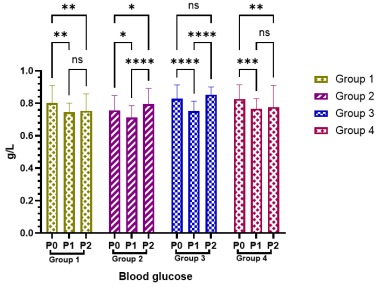
In Cote d’Ivoire, there is an imbalance between food intake and nutritional needs among school-aged children. Studies have indicated that dietary diversification could provide a solution. A study was therefore conducted to evaluate the impact of dietary diversification on the lipid and carbohydrate profiles of children in school canteens in the Nawa region. This study was conducted during October 2017 to May 2018 in school canteens of 12 localities in the Nawa region (Cote d’Ivoire). It included 240 school-aged children, 6 -12 years old, divided into four groups of 60. Four types of meals were offered, one for each of the four groups: rice with tomato sauce and fish, sweet potato stew enriched with green soybeans, sweet potato stew enriched with white cowpea, and sweet potato stew enriched with cowpea and soybeans. Blood samples were taken at the beginning, mid-term, and the end of the study. The blood tests measured were triglycerides, cholesterol (total, HDL, LDL), and blood glucose using the COBAS c311 analyzer. The results revealed that blood glucose (0.75 - 1.10 g/L), total cholesterol (1.06 - 2.50 g/L), and triglyceride (0.30 - 1.34 g/L) levels remained normal in children during the experimental period, with the exception of blood glucose in phase 2 of group 4. This value was significantly lower (P < 0.05), ranging from 0.72 to 0.68 g/L, compared to group 1 (control). In contrast, groups 2 and 3 experienced significant increases (P < 0.05) (from 0.75 to 0.79 g/L and from 0.83 to 0.85 g/L, respectively), compared to group 1 (control). Furthermore, in all children across the different groups, regardless of the sampling period, a decrease in HDL-c and LDL-c levels was observed, with the exception of the last sampling phase (P2) for group 4, which showed significantly increased HDL-c and LDL-c levels, respectively (from 0.29 to 0.65 g/L and from 0.63 to 1.47 g/L). A normalization of the lipid and carbohydrate profile was observed in the children who consumed the different meals offered during the study. The meal based on sweet potato, soybeans, and cowpea could be chosen as a means of dietary diversification in school canteens to improve school-aged children lipid and carbohydrate status.
| Published in | American Journal of Life Sciences (Volume 14, Issue 4) |
| DOI | 10.11648/j.ajls.20261404.12 |
| Page(s) | 110-117 |
| Creative Commons |
This is an Open Access article, distributed under the terms of the Creative Commons Attribution 4.0 International License (http://creativecommons.org/licenses/by/4.0/), which permits unrestricted use, distribution and reproduction in any medium or format, provided the original work is properly cited. |
| Copyright |
Copyright © The Author(s), 2026. Published by Science Publishing Group |
Cowpea, Sweet Potato, Soybeans, Lipid-carbohydrate Profile, Children
Parameters studied | Reference values |
|---|---|
Total cholesterol | 1.06 - 2.50 g/L |
HDL-c | 0.40 - 0.80 g/L |
LDL-c | 1.01 - 1.60 g/L |
Triglycerides | 0.30 - 1.34 g/L |
Blood glucose | 0.75 - 1.10 g/L |
Lipid parameters (Reference value) | Phases | Group 1 (n = 60) | Group 2 (n = 60) | Group 3 (n = 60) | Group 4 (n = 60) |
|---|---|---|---|---|---|
T-chl (1.06 - 2.50 g/L) | P0 | 1.29 ± 0.29 ns | 1.17 ± 0.21 ns | 1.19 ± 0.25 ns | 0.99 ± 0.32ns |
P1 | 1.24 ± 0.31 ns | 1.19 ± 0.24 ns | 1.17 ± 0.31 ns | 1.17 ± 0.29* | |
P2 | 1.26 ± 0.25 ns | 1.20 ± 0.27 ns | 1.20 ± 0.26 ns | 2.48 ± 12.11** | |
HDL-c (0.40 - 0.60 g/L) | P0 | 0.32 ± 0.07 ns | 0.29 ± 0.05 ns | 0.30 ± 0.06 ns | 0.25 ± 0.08ns |
P1 | 0.31 ± 0.08 ns | 0.30 ± 0.06 ns | 0.29 ± 0.08 ns | 0.29 ± 0.07* | |
P2 | 0.31 ± 0.06 ns | 0.30 ± 0.07 ns | 0.30 ± 0.06 ns | 0.61 ± 2.38* | |
LDL-c (1.06 - 1.50 g/L) | P0 | 0.74 ± 0.20 ns | 0.67 ± 0.16 ns | 0.68 ± 0.21 ns | 0.55 ± 0.24ns |
P1 | 0.70 ± 0.27 ns | 0.67 ± 0.24 ns | 0.66 ± 0.34 ns | 0.63 ± 0.25* | |
P2 | 0.71 ± 0.18 ns | 0.69 ± 0.21 ns | 0.71 ± 0.20 ns | 1.47 ± 9.10* | |
TG (0.30 - 1.34 g/L) | P0 | 1.15 ± 0.06 ns | 1.02 ± 0.05 ns | 1.08 ± 0.06 ns | 1.05 ± 0.07 ns |
P1 | 1.12 ± 0.07 ns | 1.11 ± 0.10 ns | 1.09 ± 0.15 ns | 1.21 ± 0.09 ns | |
P2 | 1.16 ± 0.05 ns | 1.03 ± 0.06 ns | 0.98 ± 0.05 * | 1.07 ± 0.06 ns |
HDL-c | High-Density Lipoprotein Cholesterol |
LDL-c | Low-Density Lipoprotein |
COBAS c311 | Comprehensive Biochemical Analysis Clinical 311 |
TG | Triglycerides |
Chl-T | Cholesterol Total |
| [1] | Pourafshar, S., Rosentrater, K. A., & Krishnan, P. Malnutrition, a global problem. American Society of Agricultural and Biological Engineers. 2010. |
| [2] | UNICEF, World Health Organization, & The World Bank. Levels and trends in child malnutrition: UNICEF/WHO/The World Bank Group joint child malnutrition estimates: key findings of the 2012 edition. Nutrition and Food Safety. 2012. |
| [3] |
WHO. In Global Nutrition Report 2016: From Promise to Impact: Ending Malnutrition by 2030. Washington, DC. 2016.
https://data.unicef.org/wp-content/uploads/2016/06/130565-1.pdf (Accessed on February 4, 2020). |
| [4] | Bleyere, M. N., Kokore, B. A., Konan, A. B. & Yapo, P. A. Prevalence of child malnutrition through their anthropometric indices in school canteens of Abidjan (Côte d’Ivoire). Pakistan Journal of Nutrition. 2013, 12(1), 60-70. |
| [5] | N’go, P., Azzaoui, F., Ahami, A., Aboussaleh, Y., Lachheb, A. & Hamrani, A. Socioeconomic, Environmental, and Nutritional Determinants of Academic Failure: The Case of Children Living in the Cocoa-Growing Region of Soubre (Ivory Coast). Antropo. 2012, 28, 63-70. |
| [6] | Agbo, E., Mahyao, A., Konan, A. D., Coulibaly, L., Kouassi, A., Kehlenbeck, K. & Kouame, C. Production, consumption, and nutrition survey in a cocoa farming area in the Nawa region. Report. ICRAF, Abidjan, 2014, p 137. |
| [7] | Agbo, A. E., Kouame, C., N’Doua, N. D., Kouassi, A. & Brou K. Assessment of Cocoa Producers’ Children Nutritional Status in the Nawa Region, Côte d’Ivoire. Journal of Food and Nutrition Research. 2017, 5(8), 606- 613. |
| [8] | Owade, J. O., Abong, G., Okoth, M. & Mwangombe, A. W. A review of the contribution of cowpea leaves to food and nutrition security in East Africa. In Food Science and Nutrition. 2020, 8(1), 36- 47. |
| [9] | Sun, H., Mu, T., Xi, L., Zhang, M. & Chen, J. Sweet potato (Ipomoea batatas L.) leaves as nutritional and functional foods. Food Chemistry. 2014, 156, 380-389. |
| [10] | Lokuruka, M. Soybean nutritional properties: The good and the bad about soy foods consumption: a review. African Journal of Food, Agriculture, Nutrition and Development. 2010, 10(4), 1-21. |
| [11] | Frota, K. D. M. G., Lopes, L. A. R., Silva, I. C. V. & Areas, J. A. G. Nutritional quality of the protein of Vigna unguiculata L. Walp and its protein isolate. Revista Ciencia Agronomica, Journal of Agricultural Science. 2017, 48(5), 792-798. |
| [12] | Moloto, M. R., Phan, A. D. T., Shai, J. L., Sultanbawa, Y. & Sivakumar, D. Comparison of phenolic compounds, carotenoids, amino acid composition, in vitro antioxidant and anti-diabetic activities in the leaves of seven cowpea (Vigna unguiculata) Cultivars. Foods. 2020, 9(9), 1285. |
| [13] | Szternel, L., Krintus, M., Bergmann, K., Derezinski, T. & Sypniewska, G. Association between fasting glucose concentration, lipid profile and 25(OH)D status in children aged 9 - 11. Nutrients. 2018, 10, 1359. |
| [14] | Ye, Z., Cao, C., Li, R., Cao, P., Li, Q. & Liu, Y. Lipid composition modulates the intestine digestion rate and serum lipid status of different edible oils: a combination of in vitro and in vivo studies. Food and Function. 2019, 10(3), 1490-1503. |
| [15] | Miller, M., Stone, N. J., Ballantyne, C., Bittner, V., Criqui, M. H., Ginsberg, H. N., Goldberg A. C. & Howard, W. J. Triglycerides and cardiovascular disease a scientific statement from the american heart association. Journal of the american heart association. 2011, 123(20), 2292- 2333. |
| [16] | Fantini, J. & Barrantes, F. J. How cholesterol interacts with membrane proteins: an exploration of cholesterol-binding sites including CRAC, CARC, and tilted domains. Frontiers in physiology. 2013, 4, 31. |
| [17] | Peng, K., Li, X., Wang, Z., Li, M. & Yang, Y. Association of low-density lipoprotein cholesterol levels with the risk of mortality and cardiovascular events: a meta-analysis of cohort studies with 1,232,694 participants. Med. (Baltim). Systematic Review and Meta-Analysis. 2022, 101(48), 132003. |
| [18] | Gencer, B., Marston, N. A., Im, K., Cannon, C. P., Sever, P., Keech, A., Braunwald, E., Giugliano, R. P. & Sabatine, M. S., Efficacy and safety of lowering LDL cholesterol in older patients: a systematic review and meta-analysis of randomised controlled trials. Lancet. 2020, 396(10263), 1637-1643. |
| [19] | Zielinski, K., Kalinczuk, Ł., Chmielak, Z., Mintz, G. S., Dąbrowski, M., Pręgowski, J., Swierczewski, M., Kowalik, I., Demkow, M., Hryniewiecki, T., Michałowska, I. & Witkowski, A. Additive Value of High-Density Lipoprotein Cholesterol and C-Reactive Protein Level Assessment for Prediction of 2-year Mortality After Transcatheter Aortic Valve Implantation. The American Journal of Cardiology. 2020, 126, 66-72. |
| [20] | DeFronzo, R. A., Hompesch, M., Kasichayanula, S., Liu, X., Hong, Y., Pfister, M., Morrow, L. A., Leslie, B. R., Boulton, D. W., Ching, A., LaCreta F. P. & Griffen, S. C. Characterization of renal glucose reabsorption in response to dapagliflozin in healthy subjects and subjects with type 2 diabetes. Diabetes care. 2013, 36, 3169-3176. |
| [21] | Pistrosch, F., Natali, A. & Hanefeld, M. Is hyperglycemia a cardiovascular risk factor. Diabetes care. 2011, 34(2), 128-131. |
| [22] | Mohammed, O., Kassaw, M., Befekadu, E., Egzeabher, L. G., Tolcha, Y., Challa, F., Kebede, A., Ashebir, G., Meles, M., Hassen, F., Zerfu, B., Abera, D., Belay, A., Aboneh, F., Hailu, D., Abebe, W., Desta, K., Wolde, M. & Tsegaye, A. Serum Lipid Profile and Electrolytes Reference Intervals for apparently healthy children and Adolescents in Addis Ababa, Ethiopia. Journal of Clinical Laboratory Analysis. 2024, 38, 25116. |
| [23] | Filardi, T., Panimolle, F., Crescioli, C., Lenzi, A. & Morano, S. Gestational diabetes mellitus: the Impact of carbohydrate quality in diet. Nutrients. 2019, 11, 1549. |
| [24] | Kullmann, S., Kleinridders, A., Small, D. M., Fritsche, A., Haring, H. U., Preissl, H. & Heni, M. Central nervous pathways of insulin action in the control of metabolism and food intake. Lancet diabetes endocrinol. 2020, 8, 524-534. |
| [25] | Thomas, D. D., Corkey, B. E., Istfan, N. W. & Apovian C. M. Hyperinsulinemia: An early indicator of metabolic dysfunction. Journal of the Endocrine Society. 2019, 3 (9), 1727-1747. |
| [26] | Patel, H., Royall, P. G., Gaisford, S., Edward, C. H., Warren, F. J., Flanagan, B. M., Ellis, P. R. & Butterworth, P. J. Structural and enzyme kinetic studies of retrograded starch: inhibition of α-amylase and consequences for intestinal digestion of starch, Carbohydrate Polymers. 2017, 164, 154-161. |
| [27] | Larasati, M. D., Rahayu, D., Yuniarti, S. & Ambarwati, R. Assessing dietary diversity Score as a predictor of Blood Glucose Levels and nutritional status among diabetic Patients. Optimal Control Applications and Methods. 2nd International Conference on Obstetricians Participating in Training for Innovative Measures to Advance Leadership. 2025, p 1-8. |
| [28] | Srijita D. Sweet potatoes for diabetes mellitus: a systematic review. Pharmacophore. 2015, 6(1), 60-72. |
| [29] | Capra, M. E., Biasucci, G., Banderali, G. & Pederiva, C. Nutritional treatment of hypertriglyceridemia in childhood: from healthy-heart counselling to life-saving Diet. Nutrients. 2023, 15, 1088. |
| [30] | Lartey, A., Marquis, G. S., Aryeetey, R. & Nti, H. Lipid profile and dyslipidemia among school-age children in urban Ghana. British medical central public health. 2018, 18, 320. |
| [31] | Haider, N., Abbas, U., Arif, H. E., Uqaili, A. A., Khowaja, M. A., Hussain M. & Khan, M. From plate to profile: investigating the influence of dietary habits and inactive lifestyle on lipid profile in medical students at clerkship. Molecular and Cell Biology. 2024, 10, 71. |
| [32] | Lampropoulou, M., Chaini, M., Rigopoulos, N., Evangeliou, A., Papadopoulou-Legbelou, K., Koutelidakis, A. E. Association between serum lipid levels in Greek children with dyslipidemia and mediterranean diet adherence, dietary habits, lifestyle and family focioeconomic factors. Nutrients. 2020, 12, 1600. |
| [33] | Pereira, P., Arruda, I., Cavalcanti, A. & Ada, D. S. Lipid profile of school children from Recife, PE. Brazilian Archives of Cardiology. 2010, 95, 606-613. |
| [34] | Rinaldi, A., de Oliveira, E., Moreto, F., Gabriel, G., Corrente, J. & Burini R. Dietary intake and blood lipid profile in overweight and obese schoolchildren. Molecular and Cell Biology. 2012, 5, 598-604. |
| [35] | Duncan, M. S., Vasan, R. S. & Xanthakis, V. Trajectories of blood lipid concentrations over the adult life course and risk of cardiovascular disease and all-cause mortality: observations from the Framingham study over 35 years. Journal of the American Heart Association. 2019, 8, 11433. |
| [36] | Jennifer, G., Robinson, M. D., Rosenson, R. S., Farnier, M., Chaudhari, U., Sasiela, W. J., Merlet, L., Miller, K. M. S., &. Kastelein, J. P. Safety of very low low-density lipoprotein cholesterol levels with alirocumab: pooled Data from randomized Trials. Journal of the american college of cardiology. 2017, 69 (5), 471-482. |
| [37] | Delisle, H., Ntandou, G., Sodjinou, R., Couillard, C. & Despres, J. P. At risk serum cholesterol profile at both ends of the nutrition spectrum in west african adults. The Benin Study. Nutrients. 2013, 5, 1366-1383. |
| [38] | Ebtehaj, S., Gruppen, E. G., Bakker, S. J., Dullaart, R. P. & Tietge, U. J. HDL (high-density lipoprotein) cholesterol efflux capacity is associated with incident cardio vascular disease in the general population: a case-control study from the prevend cohort. Arteriosclerosis thrombosis and vascular biology. 2019, 39(9), 1874-1883. |
| [39] | Garcia-Gil, M., Reyes, C., Ramos, R., Sanchez-Santos, M. T., Prieto-Alhambra, D., Spector, T. D., Hart D. J. & Arden N. K. Serum lipid levels and risk of hand osteoarthritis: the chingford prospective cohort study. International Journal of Scientific Reports. 2017, 7(1), 3147. |
APA Style
Allico, M. J. M., Agbo, A. E., Yao, J. S., Yaye, Y. G., Kouame, C., et al. (2026). Dietary Diversification Impact on Lipid and Carbohydrate Profiles of School-aged Children in Nawa Region (Cote d’Ivoire). American Journal of Life Sciences, 14(4), 110-117. https://doi.org/10.11648/j.ajls.20261404.12
ACS Style
Allico, M. J. M.; Agbo, A. E.; Yao, J. S.; Yaye, Y. G.; Kouame, C., et al. Dietary Diversification Impact on Lipid and Carbohydrate Profiles of School-aged Children in Nawa Region (Cote d’Ivoire). Am. J. Life Sci. 2026, 14(4), 110-117. doi: 10.11648/j.ajls.20261404.12
@article{10.11648/j.ajls.20261404.12,
  author = {Mousso Jean Maurel Allico and Adouko Edith Agbo and Jean Simon Yao and Yapi Guillaume Yaye and Christophe Kouame and Allico Joseph Djaman},
  title = {Dietary Diversification Impact on Lipid and Carbohydrate Profiles of School-aged Children in Nawa Region (Cote d’Ivoire)},
  journal = {American Journal of Life Sciences},
  volume = {14},
  number = {4},
  pages = {110-117},
  doi = {10.11648/j.ajls.20261404.12},
  url = {https://doi.org/10.11648/j.ajls.20261404.12},
  eprint = {https://article.sciencepublishinggroup.com/pdf/10.11648.j.ajls.20261404.12},
  abstract = {In Cote d’Ivoire, there is an imbalance between food intake and nutritional needs among school-aged children. Studies have indicated that dietary diversification could provide a solution. A study was therefore conducted to evaluate the impact of dietary diversification on the lipid and carbohydrate profiles of children in school canteens in the Nawa region. This study was conducted during October 2017 to May 2018 in school canteens of 12 localities in the Nawa region (Cote d’Ivoire). It included 240 school-aged children, 6 -12 years old, divided into four groups of 60. Four types of meals were offered, one for each of the four groups: rice with tomato sauce and fish, sweet potato stew enriched with green soybeans, sweet potato stew enriched with white cowpea, and sweet potato stew enriched with cowpea and soybeans. Blood samples were taken at the beginning, mid-term, and the end of the study. The blood tests measured were triglycerides, cholesterol (total, HDL, LDL), and blood glucose using the COBAS c311 analyzer. The results revealed that blood glucose (0.75 - 1.10 g/L), total cholesterol (1.06 - 2.50 g/L), and triglyceride (0.30 - 1.34 g/L) levels remained normal in children during the experimental period, with the exception of blood glucose in phase 2 of group 4. This value was significantly lower (P < 0.05), ranging from 0.72 to 0.68 g/L, compared to group 1 (control). In contrast, groups 2 and 3 experienced significant increases (P < 0.05) (from 0.75 to 0.79 g/L and from 0.83 to 0.85 g/L, respectively), compared to group 1 (control). Furthermore, in all children across the different groups, regardless of the sampling period, a decrease in HDL-c and LDL-c levels was observed, with the exception of the last sampling phase (P2) for group 4, which showed significantly increased HDL-c and LDL-c levels, respectively (from 0.29 to 0.65 g/L and from 0.63 to 1.47 g/L). A normalization of the lipid and carbohydrate profile was observed in the children who consumed the different meals offered during the study. The meal based on sweet potato, soybeans, and cowpea could be chosen as a means of dietary diversification in school canteens to improve school-aged children lipid and carbohydrate status.},
 year = {2026}
}
TY  - JOUR
T1  - Dietary Diversification Impact on Lipid and Carbohydrate Profiles of School-aged Children in Nawa Region (Cote d’Ivoire)
AU  - Mousso Jean Maurel Allico
AU  - Adouko Edith Agbo
AU  - Jean Simon Yao
AU  - Yapi Guillaume Yaye
AU  - Christophe Kouame
AU  - Allico Joseph Djaman
Y1  - 2026/08/22
PY  - 2026
N1  - https://doi.org/10.11648/j.ajls.20261404.12
DO  - 10.11648/j.ajls.20261404.12
T2  - American Journal of Life Sciences
JF  - American Journal of Life Sciences
JO  - American Journal of Life Sciences
SP  - 110
EP  - 117
PB  - Science Publishing Group
SN  - 2328-5737
UR  - https://doi.org/10.11648/j.ajls.20261404.12
AB  - In Cote d’Ivoire, there is an imbalance between food intake and nutritional needs among school-aged children. Studies have indicated that dietary diversification could provide a solution. A study was therefore conducted to evaluate the impact of dietary diversification on the lipid and carbohydrate profiles of children in school canteens in the Nawa region. This study was conducted during October 2017 to May 2018 in school canteens of 12 localities in the Nawa region (Cote d’Ivoire). It included 240 school-aged children, 6 -12 years old, divided into four groups of 60. Four types of meals were offered, one for each of the four groups: rice with tomato sauce and fish, sweet potato stew enriched with green soybeans, sweet potato stew enriched with white cowpea, and sweet potato stew enriched with cowpea and soybeans. Blood samples were taken at the beginning, mid-term, and the end of the study. The blood tests measured were triglycerides, cholesterol (total, HDL, LDL), and blood glucose using the COBAS c311 analyzer. The results revealed that blood glucose (0.75 - 1.10 g/L), total cholesterol (1.06 - 2.50 g/L), and triglyceride (0.30 - 1.34 g/L) levels remained normal in children during the experimental period, with the exception of blood glucose in phase 2 of group 4. This value was significantly lower (P < 0.05), ranging from 0.72 to 0.68 g/L, compared to group 1 (control). In contrast, groups 2 and 3 experienced significant increases (P < 0.05) (from 0.75 to 0.79 g/L and from 0.83 to 0.85 g/L, respectively), compared to group 1 (control). Furthermore, in all children across the different groups, regardless of the sampling period, a decrease in HDL-c and LDL-c levels was observed, with the exception of the last sampling phase (P2) for group 4, which showed significantly increased HDL-c and LDL-c levels, respectively (from 0.29 to 0.65 g/L and from 0.63 to 1.47 g/L). A normalization of the lipid and carbohydrate profile was observed in the children who consumed the different meals offered during the study. The meal based on sweet potato, soybeans, and cowpea could be chosen as a means of dietary diversification in school canteens to improve school-aged children lipid and carbohydrate status.
VL  - 14
IS  - 4
ER  -
Nutrition Research Centre, National Institute of Public Health, Abidjan, Cote d’Ivoire
Food Science and Technology Department, Nangui ABROGOUA University, Abidjan, Cote d’Ivoire;Agricultural Science, International Center of Agroforestry Research, Abidjan, Cote d’Ivoire
Nutrition Research Centre, National Institute of Public Health, Abidjan, Cote d’Ivoire;Biological and Pharmaceutical Sciences, Felix Houphouet-Boigny University, Abidjan, Cote d’Ivoire
Health Biology and Agroforestry, Jean Lorougnon Guede University, Daloa, Cote d’Ivoire
Agricultural Science, International Center of Agroforestry Research, Abidjan, Cote d’Ivoire
Fundamental and Medical Biochemistry, Pasteur Institute of Côte d'Ivoire, Abidjan, Cote d’Ivoire;Health and Biology, Felix Houphouet-Boigny University, Abidjan, Cote d’Ivoire

Information


 Share This Article
 Twitter
 Linked In
 Facebook
 Copy
Copy Download