
 ,
Gopinath Harsha Rajappa,
Kiran Kumar Gama Ramaiah,
Shruthi Shankarappa,
Kalpana Shivashankar
Due to its advantages over fossil fuel-powered vehicles in terms of both economy and ecology, the employment of electric vehicles (EVs) has increased recently. As the market for EVs expands, the electric grid is facing more difficulties meeting the demand for EVs, particularly in the distribution networks. The negative effect of EV charging loads on the power system's operating parameters has been observed with the widespread revival of electric vehicles (EVs). Increased peak load demand, smaller reserve margins, voltage instability, and reliability issues are caused by the increase in charging station loads. The purpose of this work is to examine how the increase in loads from EV charging stations affects the distribution network's voltage stability and power losses along with integration of Distributed generator in the system. The complete analysis is carried out on the practical 39-bus radial distribution network for increase in load due to interconnection of electric vehicle to the grid for three different types of EV charger for various load conditions. The results indicates that with DG integration system can withstand the increase in load due to EV connection up to a certain load level, above which, the increase in EV load results in voltage stability problem and increase in system losses. Finally the results indicate that, the performance of Distribution system in terms of voltage and losses depends on placement of DG and electric vehicle in the system.
| Published in | American Journal of Modern Energy (Volume 12, Issue 4) |
| DOI | 10.11648/j.ajme.20261204.12 |
| Page(s) | 70-79 |
| Creative Commons |
This is an Open Access article, distributed under the terms of the Creative Commons Attribution 4.0 International License (http://creativecommons.org/licenses/by/4.0/), which permits unrestricted use, distribution and reproduction in any medium or format, provided the original work is properly cited. |
| Copyright |
Copyright © The Author(s), 2026. Published by Science Publishing Group |
Distribution Network, Electric Vehicles, Charging Station, Distributed Generation, Photovoltaic System, Power Loss, Voltage Stability
Charging Level | Voltage Level | Power Level |
|---|---|---|
Level 1 | 120 V AC | Up to 1.8 kW |
Level 2 | 208-240 V AC | Up to 19.2 kW |
1) Level 3 (DC Fast charging) | 2) 480 V DC | 3) 50 kW -150 kW |
Cases | Without DG | With DG |
|---|---|---|
DG Position | --- | 16 |
Active power loss KW | 0.0853 | 0.0708 |
Reactive power loss in KVAR | 0.0647 | 0.0408 |
DG Size in MW | ----- | 0.6 |
PLoss Reduction in% | ----- | 4.74 |
4) Q Loss Reduction in% | 5) ----- | 6) 4.43 |
Type of Charger | Output rating of Charger | Number of EV can be Connected | Charging Time | Application |
|---|---|---|---|---|
Level 1 | 2 KW | 95 | More than 12 hours | Residential |
Level 2 | 6 KW | 31 | 6 to 8 hours | Residential/Commercial |
7) Level 3 | 8) 100 KW | 9) 2 | 10) Upto 1 Hour | 11) Commercial |
Type of Charger | Output rating of Charger | Number of EV can be Connected | Charging Time | Application |
|---|---|---|---|---|
Level 1 | 2 KW | 190 | More than 12 hours | Residential |
Level 2 | 6 KW | 63 | 6 to 8 hours | Residential/Commercial |
12) Level 3 | 13) 100 KW | 14) 4 | 15) Upto 1 Hour | 16) Commercial |
Type of Charger | Output rating of Charger | Number of EV can be Connected | Charging Time | Application |
|---|---|---|---|---|
Level 1 | 2 KW | 286 | More than 12 hours | Residential |
Level 2 | 6 KW | 95 | 6 to 8 hours | Residential/Commercial |
17) Level 3 | 18) 100 KW | 19) 6 | 20) Upto 1 Hour | 21) Commercial |
Type of Charger | Output rating of Charger | Number of EV can be Connected | Charging Time | Application |
|---|---|---|---|---|
Level 1 | 2 KW | 381 | More than 12 hours | Residential |
Level 2 | 6 KW | 127 | 6 to 8 hours | Residential/Commercial |
22) Level 3 | 23) 100 KW | 24) 8 | 25) Upto 1 Hour | 26) Commercial |
EV | Electric Vehicle |
DG | Distributed Generation |
PV, | Photovoltaic System |
APL | Active Power Loss |
RPL | Reactive Power Loss |
VS | Voltage Stability |
| [1] | Yang, Zhichun, et al. "Review on optimal planning of new power systems with distributed generations and electric vehicles." Energy Reports 9(2023): 501-509. |
| [2] | Sivakumar, Shwetha, et al. "Analysis of distribution systems in the presence of electric vehicles and optimal allocation of distributed generations considering power loss and voltage stability index." IET Generation, Transmission & Distribution 18.6 (2024): 1114-1132. |
| [3] | Srivastava, Abhinav, MunishManas, and Rajesh Kumar Dubey. "Electric vehicle integration’s impacts on power quality in distribution network and associated mitigation measures: a review." Journal of Engineering and Applied Science 70, no. 1 (2023): 32. |
| [4] | Dharavat, N., Sudabattula, S. K., Velamuri, S., Mishra, S., Sharma, N. K., Bajaj, M., et al. (2022). Optimal allocation of renewable distributed Generators and electric vehicles in a distribution system using the political optimization algorithm. Energies 15, 6698-6718. |
| [5] | Alshareef SM, and Fathy,” An Efficient Red Kite Optimization Algorithm for Integrating the Renewable Sources and Electric Vehicle Fast Charging Stations in Radial Distribution Networks”. Mathematics, Vol 11 Page 3305 11: 3305, 2023. |
| [6] | Dharmakeerthi, C. H.; Mithulananthan, N.; Saha, T. K. Impact of electric vehicle fast charging on power system voltage stability. Int. J. Electr. Power Energy Syst. 2014, 57, 241-249. |
| [7] | Chippada, Devisree, and M. Damodar Reddy. "Optimal planning of electric vehicle charging station along with multiple distributed generator units." Int. J. Intell. Syst. Appl 14.2 (2022): 40-53. |
| [8] | Velamuri, Suresh, et al. "Combined approach for power loss minimization in distribution networks in the presence of gridable electric vehicles and dispersed generation." IEEE Systems Journal 16.2 (2021): 3284-3295. |
| [9] | Koundinya, NihithSPVS, et al. "Voltage stability analysis of distribution systems in the presence of electric vehicle charging stations with uncoordinated charging scheme." 2020 International Conference on Smart Grids and Energy Systems (SGES). IEEE, 2020. |
| [10] | Golla, N. K., Sudabattula, S. K., and Suresh, V. (2022a). Optimal placement of electric vehicle charging station in distribution system using meta-heuristic techniques. Math. Model. Eng. Probl. 9(1), 60-66. |
| [11] | Geske, M.; Komarnicki, P.; Stötzer, M.; Styczynski, Z. A. Modeling and simulation of electric car penetration in the distribution power system—Case study. In Proceedings of the International Symposium on Modern Electric Power Systems, Wroclaw, Poland, 1 September 2011; pp. 1-6. |
| [12] | Elbouz, Eman, M. A. Ebrahim, and Almoataz Y. Abdelaziz. "Optimal Allocation for Electric Vehicle Charging Stations Integrated with Multi-Distributed Generations in Distribution Networks." 2024 25th International Middle East Power System Conference (MEPCON). IEEE, 2024. |
| [13] | Zhang, C.; Chen, C.; Sun, J.; Zheng, P.; Lin, X.; Bo, Z. Impacts of electric vehicles on the transient voltage stability of distribution network and the study of improvement measures. In Proceedings of the IEEE Asia Pacific Power and Energy Engineering Conference(APPEEC), Hong Kong, China, 7-10 December 2014; pp. 1-6. |
| [14] | M. Z. Zeb et al., "Optimal Placement of Electric Vehicle Charging Stations in the Active Distribution Network," in IEEE Access, vol. 8, pp. 68124-68134, 2020, |
| [15] | Velamuri, S., Cherukuri, S. H. C., Sudabattula, S. K., Prabaharan, N., and Hossain, E. (2022). Combined approach for power loss minimization in distribution networks in the presence of gridable electric vehicles and dispersed generation. IEEE Syst. J. 16(2), 3284-3295. |
| [16] | Jiang, C.; Torquato, R.; Salles, D.; Xu, W. Method to assess the power-quality impact of plug-in electric vehicles. IEEE Trans. Power Deliv. 2014, 29, 958-965. |
| [17] | Dubey, A.; Surya, S. Electric Vehicle Charging on Residential Distribution Systems: Impacts and Mitigations. IEEE Access 2015, 3, 1871-1893. |
| [18] | Gómez, J. C.; Medhat, M. M. Impact of EV battery chargers on the power quality of distribution systems.IEEE Trans. Power Deliv. 2003, 18, 975-981. |
| [19] | Li, Yanning, and Alan Jenn. "Impact of electric vehicle charging demand on power distribution grid congestion." Proceedings of the National Academy of Sciences 121.18 (2024): e2317599121. |
| [20] | Fakeha, S.; Manisa, P.; Rahman, S. Demand management to mitigate impacts of plug-in electric vehicle fast charge in buildings with renewables. Energy 2017, 120, 642-651. |
| [21] | Memon, Z. A., Hassan,M. Y., Said, D. M., Leghari, Z. H., and Shaikh, P. H. (2022). “A systematic approach to accommodate plug-in electric vehicles in distribution networks with optimal integration of distributed generation,” in Proceedings of the 6th International Conference on Electrical, Control and Computer Engineering, 339-352. |
| [22] | Singh, Bindeshwar, and Pankaj Kumar Dubey. "Distributed power generation planning for distribution networks using electric vehicles: Systematic attention to challenges and opportunities." Journal of Energy Storage 48 (2022): 104030. |
| [23] | Putrus, G. A.; Suwanapingkarl, P.; Johnston, D.; Bentley, E. C.; Narayana, M. Impact of electric vehicles on power distribution networks. In Proceedings of the Vehicle Power and Propulsion Conference, Dearborn, MI, USA, 7-10 September 2009; pp. 1-6. |
| [24] | Bhadoriya, Jitendra Singh, et al. "Enhancement of the distribution network in the presence of EV charging stations augmented by distributed generation." Electrical Engineering 105.6 (2023): 3703-3717. |
| [25] | Zeynali, Saeed, et al. "Multi-objective optimal planning of wind distributed generation considering uncertainty and different penetration level of plug-in electric vehicles." Sustainable Cities and Society 62(2020): 102401. |
| [26] | C. Li et al, “Robust model of electric vehicle charging station location considering renewable energy and storage equipment," Energy, vol. 238, no. 1, pp. 121713, January 2022. |
| [27] | Sivakumar, S., RamasamyGunaseelan, S. B., Reddy Krishnakumar, M. V., Krishnan, N. Sharma, A., &AguilaTéllez, A. (2024). Analysis of distribution systems in the presence of electric vehicles and optimal allocation of distributed generations considering power loss and voltage stability index. IET Generation, Transmission & Distribution, 18(6), 1114-1132. |
| [28] | BabuRG, S., Reddy K, M. V., S, S., GS, S., K, N., Sharma, A., & Tellez, A. A. (2024). Techno‐economic assessment of distribution system considering different types of electric vehicles and distributed generators. IET Generation, Transmission & Distribution, 18(9), 1815-1829. |
APA Style
Jayappa, R. S., Rajappa, G. H., Ramaiah, K. K. G., Shankarappa, S., Shivashankar, K. (2026). Analysis of Voltage Stability in Distribution System in Presence of Electric Vehicle and Distributed Generator. American Journal of Modern Energy, 12(4), 70-79. https://doi.org/10.11648/j.ajme.20261204.12
ACS Style
Jayappa, R. S.; Rajappa, G. H.; Ramaiah, K. K. G.; Shankarappa, S.; Shivashankar, K. Analysis of Voltage Stability in Distribution System in Presence of Electric Vehicle and Distributed Generator. Am. J. Mod. Energy 2026, 12(4), 70-79. doi: 10.11648/j.ajme.20261204.12
AMA Style
Jayappa RS, Rajappa GH, Ramaiah KKG, Shankarappa S, Shivashankar K. Analysis of Voltage Stability in Distribution System in Presence of Electric Vehicle and Distributed Generator. Am J Mod Energy. 2026;12(4):70-79. doi: 10.11648/j.ajme.20261204.12
@article{10.11648/j.ajme.20261204.12,
  author = {Rudresha Sogilu Jayappa and Gopinath Harsha Rajappa and Kiran Kumar Gama Ramaiah and Shruthi Shankarappa and Kalpana Shivashankar},
  title = {Analysis of Voltage Stability in Distribution System in Presence of Electric Vehicle and Distributed Generator},
  journal = {American Journal of Modern Energy},
  volume = {12},
  number = {4},
  pages = {70-79},
  doi = {10.11648/j.ajme.20261204.12},
  url = {https://doi.org/10.11648/j.ajme.20261204.12},
  eprint = {https://article.sciencepublishinggroup.com/pdf/10.11648.j.ajme.20261204.12},
  abstract = {Due to its advantages over fossil fuel-powered vehicles in terms of both economy and ecology, the employment of electric vehicles (EVs) has increased recently. As the market for EVs expands, the electric grid is facing more difficulties meeting the demand for EVs, particularly in the distribution networks. The negative effect of EV charging loads on the power system's operating parameters has been observed with the widespread revival of electric vehicles (EVs). Increased peak load demand, smaller reserve margins, voltage instability, and reliability issues are caused by the increase in charging station loads. The purpose of this work is to examine how the increase in loads from EV charging stations affects the distribution network's voltage stability and power losses along with integration of Distributed generator in the system. The complete analysis is carried out on the practical 39-bus radial distribution network for increase in load due to interconnection of electric vehicle to the grid for three different types of EV charger for various load conditions. The results indicates that with DG integration system can withstand the increase in load due to EV connection up to a certain load level, above which, the increase in EV load results in voltage stability problem and increase in system losses. Finally the results indicate that, the performance of Distribution system in terms of voltage and losses depends on placement of DG and electric vehicle in the system.},
 year = {2026}
}
TY  - JOUR
T1  - Analysis of Voltage Stability in Distribution System in Presence of Electric Vehicle and Distributed Generator
AU  - Rudresha Sogilu Jayappa
AU  - Gopinath Harsha Rajappa
AU  - Kiran Kumar Gama Ramaiah
AU  - Shruthi Shankarappa
AU  - Kalpana Shivashankar
Y1  - 2026/11/14
PY  - 2026
N1  - https://doi.org/10.11648/j.ajme.20261204.12
DO  - 10.11648/j.ajme.20261204.12
T2  - American Journal of Modern Energy
JF  - American Journal of Modern Energy
JO  - American Journal of Modern Energy
SP  - 70
EP  - 79
PB  - Science Publishing Group
SN  - 2575-3797
UR  - https://doi.org/10.11648/j.ajme.20261204.12
AB  - Due to its advantages over fossil fuel-powered vehicles in terms of both economy and ecology, the employment of electric vehicles (EVs) has increased recently. As the market for EVs expands, the electric grid is facing more difficulties meeting the demand for EVs, particularly in the distribution networks. The negative effect of EV charging loads on the power system's operating parameters has been observed with the widespread revival of electric vehicles (EVs). Increased peak load demand, smaller reserve margins, voltage instability, and reliability issues are caused by the increase in charging station loads. The purpose of this work is to examine how the increase in loads from EV charging stations affects the distribution network's voltage stability and power losses along with integration of Distributed generator in the system. The complete analysis is carried out on the practical 39-bus radial distribution network for increase in load due to interconnection of electric vehicle to the grid for three different types of EV charger for various load conditions. The results indicates that with DG integration system can withstand the increase in load due to EV connection up to a certain load level, above which, the increase in EV load results in voltage stability problem and increase in system losses. Finally the results indicate that, the performance of Distribution system in terms of voltage and losses depends on placement of DG and electric vehicle in the system.
VL  - 12
IS  - 4
ER  -
PES Institute of Technology & Management, Shivamogga, Visvesvaraya Technological University, Karnataka, India
PoojyaDoddappaAppa College of Engineering, Kalaburagi,Visvesvaraya Technological University, Karnataka, India
PES Institute of Technology & Management, Shivamogga, Visvesvaraya Technological University, Karnataka, India
PES Institute of Technology & Management, Shivamogga, Visvesvaraya Technological University, Karnataka, India
PES Institute of Technology & Management, Shivamogga, Visvesvaraya Technological University, Karnataka, India
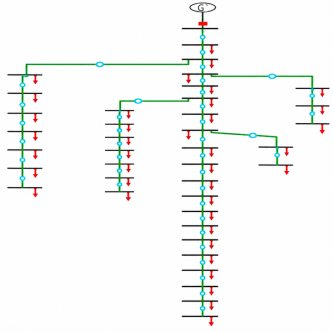
Figure 1. Practical 39-bus distribution system.
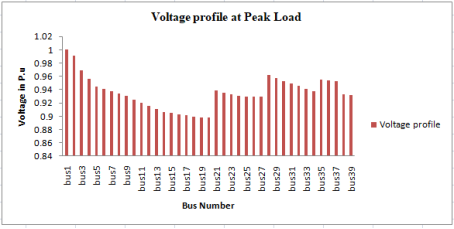
Figure 2. Volatge profile at peak load for practical distribution system.
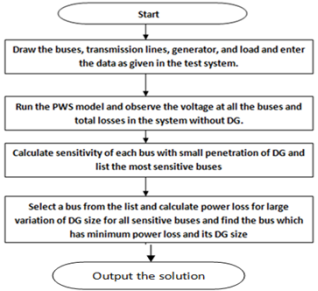
Figure 3. The Methods of Computation for the Suggested technique.
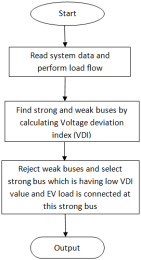
Figure 4. Flowchart to find strong and weak bus in the distribution system.
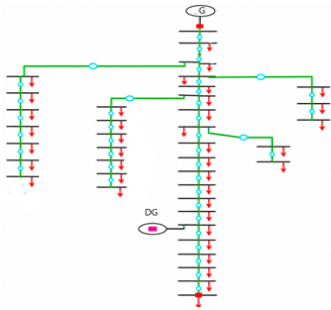
Figure 5. Practical 39-bus distribution system with DG.
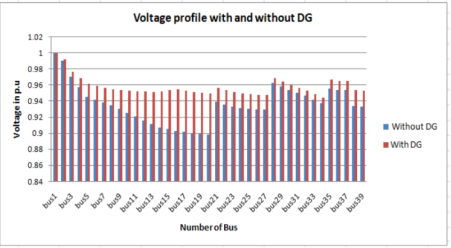
Figure 6. Voltage profile with and without DG in distribution system.
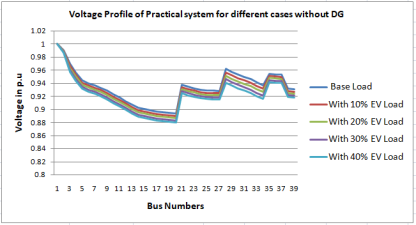
Figure 7. Voltage profile for various cases without DG.
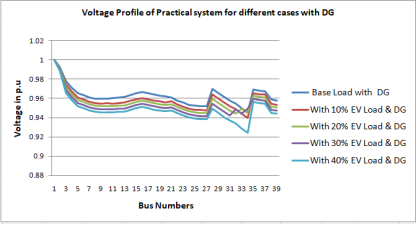
Figure 8. Voltage profile for various cases with DG.
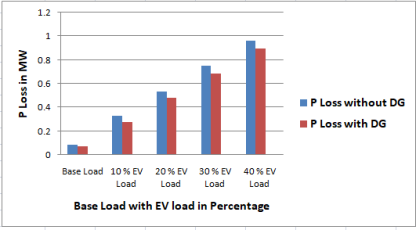
Figure 9. Active power loss for various cases with and without DG.
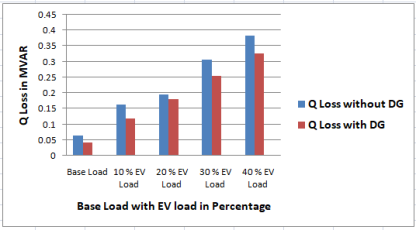
Figure 10. Reactive power loss for various cases with and without DG.

Information


 Share This Article
 Twitter
 Linked In
 Facebook

 Copy
 Download