Research Article | | Peer-Reviewed

Mechanical Performance and Sustainability Assessment of Construction Waste–Incorporated Concrete for Socio-Economic and Environmental Benefits

Received: 30 January 2026     Accepted: 9 February 2026     Published: 13 April 2026
Views:       Downloads:
Abstract

The rapid growth of construction activities has led to a significant increase in construction and demolition waste, posing serious environmental and socio-economic challenges. This study investigates the feasibility of incorporating multiple construction waste streams—plaster waste, recycled concrete, mortar waste, broken tiles, steel slag, and crushed blocks—into concrete as partial replacements for natural fine and coarse aggregates. Laboratory experiments were conducted to compare the mechanical properties of conventional concrete (CC) and construction waste incorporated concrete (CWICM). Concrete cubes and beams were cast and tested for compressive and flexural strengths at 7, 14, and 28 days of curing. Results show that while CC consistently achieved higher strength values, CWICM demonstrated progressive strength gain with age, reaching 10.00 N/mm² compressive strength and 2.56 N/mm² flexural strength at 28 days. Statistical regression analysis indicated that curing age and maximum crushing load were the most significant predictors of compressive strength. Although strength reduction was observed in waste-based mixes, the performance remains suitable for low-load structural and non-structural applications such as lintels and partition walls. The findings confirm that recycling construction waste in concrete can reduce landfill burden, conserve natural aggregates, lower environmental pollution, and contribute to sustainable construction practices, especially in developing economies.

Published in American Journal of Materials Synthesis and Processing (Volume 11, Issue 1)
DOI 10.11648/j.ajmsp.20261101.12
Page(s) 23-37
Creative Commons

This is an Open Access article, distributed under the terms of the Creative Commons Attribution 4.0 International License (http://creativecommons.org/licenses/by/4.0/), which permits unrestricted use, distribution and reproduction in any medium or format, provided the original work is properly cited.

Copyright

Copyright © The Author(s), 2026. Published by Science Publishing Group

Keywords

Construction Waste Recycling, Sustainable Concrete, Recycled Aggregates, Compressive Strength, Flexural Strength, Green Construction Materials, Environmental Sustainability

1. Introduction
The application of construction waste in concrete matrices represents a significant step toward addressing the pressing challenges of environmental degradation, resource depletion, and socio-economic inequality. Construction waste, which includes materials such as concrete, bricks, wood, glass, and metals, is one of the largest contributors to global waste generation. Improper disposal of this waste not only leads to environmental pollution but also results in the loss of valuable resources that could otherwise be repurposed .
Concrete, a vital construction material for infrastructure and development facilities, has the capacity for significant and beneficial environmental engagement . Waste materials can serve as replacements for cement or aggregates, as well as fillers or fibers. Given that cement is a major environmental pollutant, utilizing waste materials as substitutes for both cement and aggregates is advantageous. The environmental benefits of incorporating waste materials as a cement alternative can be explored in two ways: by reducing the amount of cement in concrete and by integrating waste materials that would otherwise be discarded. Considering the global cement consumption, a substantial quantity of waste could potentially be utilized in concrete production. From the perspective of decreasing cement use, employing pozzolans offers numerous advantages, including a reduction in greenhouse gas emissions, particularly carbon dioxide and nitrogen oxides. Despite the pressing need for eco-friendly construction practices, the potential for repurposing these specific types of construction waste into concrete matrices remains largely unexplored .
The cement market In Nigeria is booming. In the pandemic year the cement production increased by 14.9% to 26.2 Mt/a, of which 0.18 Mt/a were exported. However, with a population of 206.1 million and a cement consumption of 26.0 Mt/a, the PCC is only 126 kg, if 5% of concrete projects utilized 10 to 15% waste material as a cement substitute, a significant volume of waste generated in Nigeria could be repurposed within a year. Furthermore, if this level of cement consumption were to rise to 10% of the nation’s projects, the cumulative waste from previous years could be entirely recycled into concrete within a few years. This practice would conserve other national resources while simultaneously mitigating environmental pollution. Consequently, using waste materials as a cement substitute is advantageous for both reducing cement and waste consumption. While it is not feasible to rely solely on waste materials in construction, they can effectively be reused as aggregates. Aggregates constitute approximately 70% of concrete's volume, allowing for a substantial amount to be recycled. This approach is particularly essential for European countries facing shortages of raw materials, as it helps to minimize the use of already limited resources.
The advancement of a nation's economy is heavily reliant on the activities within the construction sector . This industry is a significant source of employment, economic gains, and foundational support for other sectors. Its contribution to the socio-economic fabric extends well beyond its direct economic output. Notably, construction projects, including building, civil, and extensive engineering works, are essential for national progress. In developing nations, the construction sector represents 80% of all capital assets, accounts for 10% of the GDP, and constitutes over half of the total investment in fixed assets.
Concurrently, the construction sector is a major consumer of natural resources and a predominant producer of solid waste. The escalation in construction waste, particularly from building sites, can be attributed to various factors . Notably, the volume of construction waste, including plaster waste, waste concrete or demolition concrete structure, waste mortar, broken tiles, and offcuts of reinforcement rods, is considerably higher compared to other waste types, accounting for approximately one-third of all waste produced. Recent research indicates that construction waste constitutes about 10–30% of the total waste deposited in landfills globally .
Estimates suggest that construction activities consume 60% of raw materials, with building projects alone accounting for 40% of this share. Moreover, the construction sector is responsible for generating roughly 35% of the world's total waste , utilizing 35% of energy and contributing to 40% of carbon dioxide emissions . This positions the sector as a substantial consumer of global energy and resources.
The focus on construction waste has garnered attention from both industry professionals and researchers, reflecting a rising global consciousness regarding waste management practices. Research highlights that construction waste undermines project efficiency and inflicts damage on the environment and economy. Other studies indicate that construction waste significantly affects energy efficiency, environmental sustainability, and overall sustainability. Furthermore, it impacts urban sustainability, economic value, environmental safety, and community welfare .
Construction waste, particularly from materials like plaster waste, concrete, broken block/rubbles and broken tiles, influences three critical areas: the environment, society, and the economy. Socially, it presents health hazards, contributes to traffic congestion, creates disputes with construction companies, blocks drainage systems leading to flooding, and spreads waste due to rainwater . Environmentally, it results in soil and water contamination, excessive consumption of energy and resources, environmental harm, and landscape degradation . Economically, construction waste imposes additional costs on projects, contributing to 30% of total material cost overruns and resulting in about 10–15% of materials purchased for construction projects ending up as waste. This waste is a leading cause of economic downturns and business failures within the construction industry
The detrimental effects of construction waste extend beyond developing countries and are also prevalent in developed nations. Construction projects worldwide, particularly in low and middle-income countries, continue to face challenges related to waste management, including plaster waste, waste concrete or demolished concrete structures, waste mortar, broken tiles, broken block/rubbles and offcuts of reinforcement rods. The repercussions of construction waste are significant, impacting not only the construction industry but also the broader economy of the countries involved.
In the context of global sustainability, construction waste has emerged as a significant barrier to progress . The concept of sustainability has gained traction among various organizations as they seek to address this pressing issue. Consequently, construction waste has become a prominent topic of scholarly research internationally .
Despite this growing interest, there remains a noticeable gap in research focusing on construction waste within low- and middle-income countries. In particular, the impact of construction waste in the Ethiopian capital, Addis Ababa, has not been extensively studied. Addressing the issues surrounding construction waste, particularly the limitations posed by specific types of waste such as plaster, concrete, mortar, broken tiles, and reinforcement rods, is crucial for achieving sustainable development in both developing and developed nations. Enhanced research and targeted strategies are needed to mitigate the impacts of construction waste on economics and the environment, especially in regions like Addis Ababa where the challenge remains under explored. These challenges necessitate innovative solutions to make concrete production more sustainable .
2. Materials and Methods
2.1. Materials
The materials used in this work include:
2.1.1. Plaster Waste
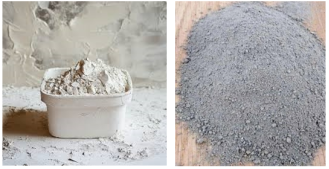
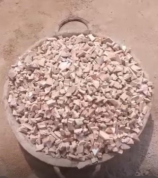
Plaster waste (PW), a by-product of construction and demolition (C&D) activities, will be used as partial substitute for fine aggregate (sand) in concrete. It will be crushed and sieve to achieve desire particle size similar to fine aggregate. The sample of the plaster waste is as shown in Figure 1.
Figure 1. The sample of the plaster waste.
2.1.2. Waste Concrete or Demolition Concrete Structure
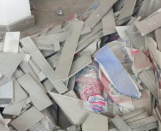
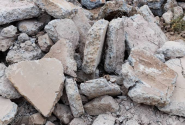
Recycle concrete aggregate obtain from crushed waste and demolished concrete will be use as partial replacement for traditional aggregate in concrete matrix. The waste concrete will be crushed, cleaned and graded to remove impunities such as wood, gypsum, glass aluminum and other debris that may be found. The picture of the broken pieces generated from the demolition of structures as shown in Figure 2.
Figure 2. Waste/Demolished Concrete.
2.1.3. Mortar Waste
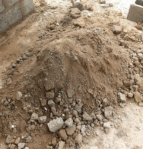
Mortar waste from construction/demolition or leftover fresh mortar will be crushed and reused as a partial substitute for natural fine aggregate (sand) in new concrete matrix mixes. The waste mortar will be crushed and sieved to achieve a particle size similar to natural aggregate. Contaminants such as wood, bricks, metal strands and other debris will be removed and may be washed to reduce dust. The picture is as shown in Figure 3.
Figure 3. Mortar Waste.
2.1.4. Broken Tiles
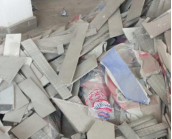
Broken waste tiles (ceramic or porcelain) from construction, demolition, or manufactural will be crushed, sieve to match conventional aggregate size and used as partial substitute for natural coarse aggregate in concrete matrix. Contaminant such as adhesive grout will be removed. discarded pieces from flooring or wall installations as shown in Figure 4. The recycling of tiles helps reduce landfill waste and promotes sustainable building practices.
Figure 4. Broken Titles.
2.1.5. Steel Slag
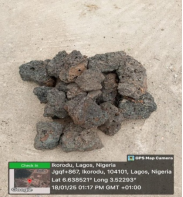
Slag is a by-product generated during the smelting or refining of metal ores, particularly in processes involving the extraction of metals like iron, copper, and lead. It is formed when impurities in the ore, such as silica, alumina, and other oxides, react with fluxes added to the furnace to facilitate the separation of metal from the ore as shown in Figure 5. During the smelting process, metal ores are subjected to high temperatures, causing the metal to melt and separate from the impurities. The flux, often made from limestone or other materials, combines with the impurities to form slag. This slag is typically harder and denser than natural aggregate, improved abrasion and resistance with granular shape, rough texture, high density that may vary in composition depending on the type of ore and the specific processing methods used. The slag will be use as partial replacement for coarse aggregate in concrete matrix. It will be crushed, grade and sieved to coarse aggregate size, and removed any impunities that may be found.
Figure 5. Steel slag.
2.1.6. Broken Blocks
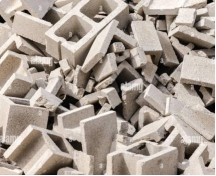
Broken blocks are damaged or surplus concrete blocks that are often generated during construction or demolition activities as shown in Figure 6. Similar to other concrete waste, these blocks will be crushed, sieved to size, removed impunities and repurposed as fine aggregate.
Figure 6. Broken Blocks.
2.1.7. Natural Coarse Aggregate
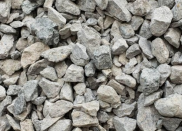
Coarse aggregate (CA) is a granular materials typically larger than 4.75mm used in concrete to provide structural strength, volume stability, and durability. It occupies 60-75% of concrete volume making it a critical component. It’s as shown in Figure 7. this coarse aggregate will be use to prepare a conventional concrete (CC) which will be used as a control to compare it mechanical property against construction waste in concrete matrix (CWICM).
Figure 7. Coarse Aggregate.
2.1.8. Fine Aggregate
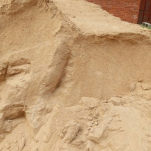
Fine aggregate refers to small particles of material, typically sand, that are used in construction and concrete production. It consists of particles that pass through a sieve with a mesh size of 4.75 mm (about 0.2 inches) as shown in Figure 8. Fine aggregates play a crucial role in making concrete and mortar, providing bulk, strength, filler and stability.
Figure 8. Fine Aggregate.
2.1.9. Cement
Ordinary Portland Cement (OPC) of grade 42.5 (Dangote brand) to be used as concrete matrix in according to BS EN 197-1:2011.
2.1.10. Water
Water used in concrete mixtures according to ASTM C1602 and IS 456 must be clean, portable, and free from harmful impurities such as organic matter, oils, acids, alkalis, salt, and sulfates as this can weaken the concrete or cause corrosion of reinforcement.
2.2. Methods
2.2.1. Gathering, Sorting and Categorizing of Construction Waste
Construction waste materials will be gathered from various construction sites, or Demolished structure site, ensuring a diverse selection of materials. The collection process will involve sorting through debris to identify usable waste, which will then be transported to a designated laboratory for further processing. Each type of waste will be documented, including its source and condition, to facilitate subsequent categorization and evaluation. The collected construction wastes are categorized based on its composition and suitability for reuse. Inert materials such as broken concrete, steel slag, and tiles is assessed for their physical properties, including size, shape, and texture. Binders like waste plaster, crushed broken blocks and waste mortar will be evaluated for their chemical composition and potential reactivity with cement. Steel slag will be inspected for structural integrity and corrosion. This categorization will ensure an efficient recycling process and optimal material selection for incorporation into concrete mixtures.
2.2.2. Incorporating Sorted and Categorized Waste Materials into Concrete Matrix
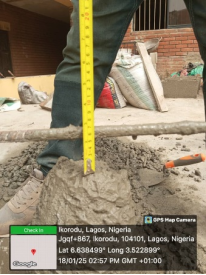
The categorized waste materials are been incorporated into concrete mixtures in different proportions. The broken blocks will be crushed to produce fine aggregate, which will be mixed with waste plaster and mortar. Standard concrete mix designs will be prepared, with varying percentages of waste materials replacing natural aggregates. Concrete mixtures will be prepared and cast into a well cleaned mould of 150x150x150mm and 100x100x500mm beams. The casting process will involve thorough mixing of the materials on a water tight surface, followed by placing the mould on vibrating table, poured the mixtures into molds in three layers and vibrate until the cement slurry appear on the top surface. These specimens were allowed to remain in the mould for the first 24 hours at ambient condition . After which mould was loose with care so that cube edges were not broken. Cube were placed in water tank for the period of 7, 14, and 28 days to allow curing.
2.2.3. Analyzing and Comparing of Mechanical Properties with and Without Construction Wastes
mechanical testing will be conducted in accordance with BS EN 12390-3:2019 to check the average compressive strength and BS EN 12390-5:2019 for average flexural strength using a standard testing machine. The results will be analyzed statistically to compare the performance of construction waste in concrete matrix (CWICM) with that of conventional concrete (CC). Differences in mechanical properties will be highlighted, emphasizing the sustainability benefits of using recycled materials in concrete production. The analysis will also include a discussion on the implications of these findings for future construction practices and waste management strategies.
2.3. Statistical Prediction Model
After collecting the relevant data, Subsequent analysis will employ multivariate regression to identify relationships between the waste characteristics and the performance of concrete mixtures.
3. Results and Discussion
The materials used in this study are gather and documented as follow:
Table 1. Materials and source location.

S/N

MATERIALS

DESCRIPTION

SOURCE

1

Cement

Ordinary Portland cement

Dangote brand – dealer store at Ikorodu Lagos

2

Sand

Clean sharp sand free of impurities

Ikorodu dredging site, Lagos

3

Coarse aggregate

20mm angular size coarse grain aggregate

Ijebu ode, igneous deposit quarry, Ogun state

4

water

Fresh, clean, portable water

LASUSTECH borehole, Ikorodu

5

Waste mortar

Waste mortar discarded after setting of block walls and cleaning operation

Construction site at LASUSTECH, Ikorodu

6

Plaster waste

Plaster waste from rendering of walls

Agbaje street, Bayeku Igbogbo, Ikorodu Lagos.

7

Waste broken block

Broken blocks from demolished wall

Agbaje street, Bayeku Igbogbo, Ikorodu Lagos.

8

Steel slag

Rubbles of steel slags

Top steel nig, ltd. Plot no. 478 Ikorodu industrial scheme, Ikorodu

9

Broken tiles

Discarded broken tiles, 40x40mm unglazed vitrified tiles.

Construction site LASUSTECH, Ikorodu Lagos

3.1. Materials Categorized Based on Suitability and Composition for Reuse
(a) Conventional Concrete Materials
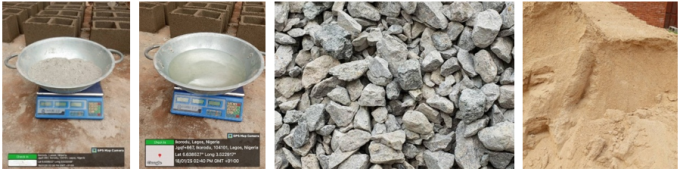
The conventional concrete mix utilized in this study consisted of the following materials:
1) Cement
2) Water
3) Fine Aggregate
4) Coarse Aggregate
Figure 9. Concrete materials.
(b) Construction Waste in Concrete Matrix
Construction waste materials collected and categorized based on their composition and suitability for reuse included:
1) Waste/Demolished Concrete: Used as coarse aggregate.
2) Broken Tiles: Broken down and sieved to 20mm size, also used as coarse aggregate.
3) Steel Slag: A by-product of steel production, utilized as coarse aggregate.
4) Broken Block: Crushed and sieved for use as fine aggregate (sand).
5) Plaster Waste: Incorporated as fine aggregate.
6) Mortar Waste: Also used as fine aggregate
This chapter present result of laboratory experiment carried out with the inference obtained in this research using the outlined methodologies in chapter three above.
(c) Calculation volume of concrete for laboratory work
The total volume of concrete required for the laboratory tests was calculated as follows:
1) Cubes: 18 (150x150x150mm) = 0.06075 m³
2) Beams: 6 (500x100x100mm) = 0.03 m³
3) Total Volume: 0.09075 m³
4) Materials Required for 1 m³ Using 1:2:4 Mix Ratio (M15)
(d) Selection of water cement ratio
Table 5 (BS 8500-1:2015- BS EN 206) maximum w/c for 20mm aggregate. =0.65
Min cement content=260kg/m3
For mix ratio 1:2:4 (M15) Water cement ratio is fixed at 0.6 and cement content calculated at 316.8kg/m3>260kg/m3
Materials require for 1m3 of concrete
1) Cement: 316.8 kg
2) Water: 190.08 kg
3) Fine Aggregate: 704 kg
4) Coarse Aggregate: 1,425 kg
(e) Quantity of materials required for laboratory work
1) For Conventional Concrete (CC)
a) Cement: 0.0454 x 316.8 = 14.383 kg (approx. 15 kg)
b) Natural Fine Aggregate: 0.0454 x 704 = 31.962 kg (approx. 32kg)
c) Natural Coarse Aggregate: 0.0454 x 1,425 = 64.695kg (approx. 65kg)
d) Water: water to cement ratio: 0.6x15 = 9kg
2) Proportion of Construction Wastes in Concrete Matrix (CWICM)
a) Cement: 15 kg
b) Water: Using water-cement ratio 0.6 = 15 x 0.6 = 9 kg
i. Fine Aggregate:
1) Recycled Broken Block: 33.3% of 32 = 10.66 kg
2) Recycled Plaster Waste: 33.3% of 32 = 10.66 kg
3) Recycled Mortar Waste: 33.3% of 32 = 10.66 kg
ii. Coarse Aggregate:
1) Recycled Waste/Demolished Concrete: 33.3% of 65 = 21.65 kg
2) Recycled Steel Slag: 33.3% of 65 = 21.65 kg
3) Broken Tiles: 33.3% of 65 = 21.65 kg
Figure 10. Broken tiles.
Figure 11. Recycled Broken tiles.
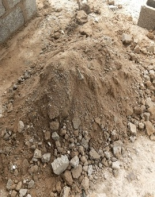
Figure 12. Mortar waste.
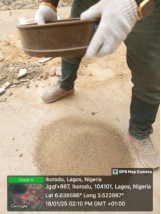
Figure 13. Recycled mortar waste.
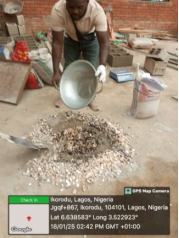
The sorted construction waste materials were incorporated into concrete mixtures, and mechanical tests were conducted to determine the difference in strength as shown in Table 1.
3.2 Compressive Strength Test Results Comparison (7 days)
Table 2. Compressive Strength Test Results Comparison (7 days).

PARAMETERS

Standard Cube

Construction Waste Cube

Area of Cube (mm²)

22500

22500

Volume of Cube (mm³)

3375000

3375000

Average Mass of Cube (Kg)

7.950

7.556

Average Density of Cube (Kg/cm³)

2.248

2.238

Average Max Crushing Load (KN)

230

140

Average Compressive Strength (N/mm²)

10.40

6.22

The average mass of the standard cubes is higher than that of the construction waste cubes, indicating a denser material composition. The average maximum crushing load for the standard cubes is significantly higher at 230 KN, compared to 140 KN for the construction waste cubes. The average compressive strength of the standard cubes is 10.00 N/mm², while the construction waste cubes have an average strength of 6.22 N/mm². The table provides a clear overview of the average performance differences between the two types of cubes in terms of mass, density, maximum crushing load, and compressive strength.
Figure 14. Concrete mixing.
Figure 15. Slump test.
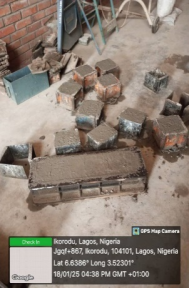
Figure 16. Cube and beam casting coarse aggregate.
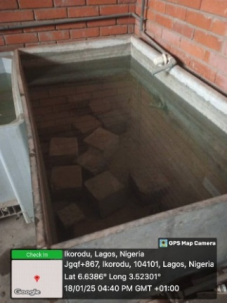
Figure 17. Curing of concrete.
3.3. Compressive Strength Test Results Comparison (14 days)
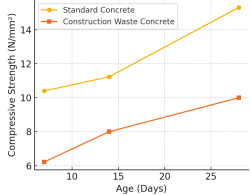
The average mass of the standard cubes is higher than that of the construction waste cubes, indicating a denser material composition. The average maximum crushing load for the standard cubes is significantly higher at 253.33 KN, compared to 180 KN for the construction waste cubes. The average compressive strength of the standard cubes is 11.23 N/mm2, while the construction waste cubes have an average strength of 8.00 N/mm2.
The table provides a clear overview of the average performance differences between the two types of cubes in terms of mass, density, maximum crushing load, and compressive strength.
Table 3. Compressive Strength Test Results Comparison (14 days).

PARAMETERS

Standard Cube

Construction Waste Cube

Area of Cube (mm²)

22500

22500

Volume of Cube (mm³)

3375000

3375000

Average Mass of Cube (Kg)

8.115

7.581

Average Density of Cube (Kg/cm³)

2.404

2.246

Average Max Crushing Load (KN)

253.33

180

Average Compressive Strength (N/mm²)

11.23

8.00

3.4. Compressive Strength Test Results Comparison (28 days)
Table 4. Compressive Strength Test Results Comparison (28 days).

PARAMETERS

Standard Cube

Construction Waste Cube

Area of Cube (mm2)

22500

22500

Volume of Cube (mm³)

3375000

3375000

Average Mass of Cube (Kg)

8.290

7.657

Average Density of Cube (Kg/cm³)

2.456

2.268

Average Max Crushing Load (KN)

343.33

225

Average Compressive Strength (N/mm2)

15.31

10.00

The average mass of the standard cubes is higher than that of the construction waste cubes, indicating a denser material composition. The average maximum crushing load for the standard cubes is significantly higher at 343.33 KN, compared to 225 KN for the construction waste cubes. The average compressive strength of the standard cubes is 15.31 N/mm2, while the construction waste cubes have an average strength of 10.00 N/mm2.
3.5. Strength Comparison
Table 5. Strength Comparison of Conventional Concrete (CC) and Construction Wastes in Concrete Matrix (CWICM).

AGE (Days)

Strength Type

Conventional Concrete (CC) (N/mm2)

Construction Wastes in Concrete Matrix (CWICM) (N/mm2)

7

Compressive Strength

10.40

6.22

14

Compressive Strength

11.23

8.00

28

Compressive Strength

15.31

10.00

7

Flexural Strength

2.56

1.98

14

Flexural Strength

3.65

2.48

28

Flexural Strength

4.20

2.56

Conventional Concrete consistently shows higher compressive strength compared to Construction Wastes in Concrete Matrix at all ages.
Similarly, the flexural strength of Conventional Concrete is greater than that of Construction Wastes in Concrete Matrix across all time periods. This table presents the regression coefficients used to model the compressive strength of concrete as the dependent variable. The predictors included are the age of the cube, maximum crushing load, and density. The age of the cube and maximum crushing load show statistically significant contributions (p < 0.05) to the model, with the cube age having the highest standardized coefficient (β = 0.941), indicating it is the strongest predictor. Density shows a weaker and statistically insignificant relationship (p > 0.05). The model suggests that compressive strength increases with both the age of the concrete and the load it can withstand.
Table 6. Sample Regression Coefficients (Dependent Variable: Compressive Strength).

Predictor

Unstandardized Coefficient (B)

Standard Error

Standardized Coefficient (Beta)

t

Sig.

(Constant)

1.120

0.512

2.188

0.047

Age of Cube (Days)

0.260

0.034

0.941

7.647

0.001

Max Crushing Load (KN)

0.030

0.009

0.730

3.333

0.015

Density (Kg/cm³)

0.850

0.650

0.315

1.308

0.225

Note: Regression model predicts compressive strength based on cube age, crushing load, and density.
The case-wise diagnostics table compares the observed and predicted values of compressive strength. It also includes the standardized residuals for each case. All residuals fall within ±2 standard deviations, indicating that there are no significant outliers and the model fits the data reasonably well across all cases.
Table 7. Case-wise Diagnostics.

Case

Observed Value (N/mm2)

Predicted Value (N/mm2)

Std. Residual

Outlier (±2 Std.)

1

6.22

6.50

-0.42

No

2

8.00

8.15

-0.25

No

3

10.00

9.60

0.40

No

4

10.40

10.00

0.52

No

5

11.23

11.50

-0.35

No

6

15.31

14.80

0.60

No

Note: No significant outliers detected; all residuals within ±2 SD.
This correlation matrix reveals strong positive relationships between all variables. Notably, compressive strength shows the highest correlations with age (r = 0.985) and max crushing load (r = 0.990), indicating these variables are highly predictive of compressive strength. Mass and density are also positively correlated but to a slightly lesser extent. The high inter-variable correlations support the inclusion of these variables in the regression model.
Table 8. Correlation Matrix.

Variable

Age (Days)

Mass (Kg)

Density (Kg/cm³)

Max Load (KN)

Compressive Strength (N/mm2)

Age (Days)

1.000

0.980

0.912

0.968

0.985

Mass (Kg)

0.980

1.000

0.926

0.951

0.973

Density (Kg/cm³)

0.912

0.926

1.000

0.887

0.905

Max Crushing Load (KN)

0.968

0.951

0.887

1.000

0.990

Compressive Strength

0.985

0.973

0.905

0.990

1.000

Note: Strong positive correlation exists between compressive strength and max crushing load.
The ANOVA table evaluates the overall significance of the regression model. The F-value of 41.580 with a significance level (p = 0.001) indicates that the regression model is statistically significant and explains a substantial portion of the variance in compressive strength. This validates the relevance of the predictors (age, max load, and density) in the model.
Table 9. ANOVA Summary for Regression Model.

Source

Sum of Squares

df

Mean Square

F

Sig.

Regression

72.143

3

24.048

41.580

0.001

Residual

2.893

5

0.579

Total

75.036

8

Note: The regression model is statistically significant (p < 0.01), indicating good model fit.
The incorporation of sorted construction waste materials into concrete mixtures has been assessed through various tests to evaluate their mechanical properties, particularly focusing on compressive and flexural strengths. Below is a detailed analysis based on the provided data.
3.6. Compressive Strength Comparison
Table 10. Compressive Strength Test Results.

Age (Days)

Standard Cube (N/mm2)

Construction Waste Cube (N/mm2)

7

10.40

6.22

14

11.23

8.00

28

15.31

10.00

The compressive strength of both types of concrete increases with age. However, the standard concrete consistently outperforms the construction waste concrete at all ages. At 28 days, the standard concrete achieves a compressive strength of 15.31 N/mm2, while the construction waste concrete reaches 10.00 N/mm2. This indicates a significant performance gap, suggesting that the construction waste materials may not provide the same structural integrity as conventional materials but at least would able to perform favorably in construction of some structural element that bear less load such as lintel, perimeter wall, bungalow etc. thereby reduces waste and contribute to socio-economic and environmental sustainability.
3.7. Flexural Strength Comparison
Table 11. Flexural Strength Test Results.

Age (Days)

Standard Cube (N/mm2)

Construction Waste Cube (N/mm2)

7

2.56

1.98

14

3.65

2.48

28

4.20

2.56

Similar to compressive strength, the flexural strength of both concrete types increases with age. The standard concrete shows a higher flexural strength at all ages. At 28 days, the flexural strength of standard concrete is 4.20 N/mm2, compared to 2.56 N/mm2 for construction waste concrete. This further emphasizes the superior performance of conventional concrete in terms of both compressive and flexural strengths.
Table 12. Summary of Mechanical Properties

PARAMETERS

Standard Cube

Construction Waste Cube

Average Mass (Kg)

8.290

7.657

Average Density (Kg/cm³)

2.635

2.421

Average Max Crushing Load (KN)

343.33

225

Average Compressive Strength (N/mm2)

15.11

10.22

Average Flexural Strength (N/mm2)

4.2

2.56

The analysis of mechanical properties reveals that Conventional Concrete (CC) consistently exhibits superior performance compared to Construction Wastes in Concrete Matrix (CWICM) across all tested parameters. The significant differences in compressive and flexural strengths indicate that while construction waste materials can be utilized in concrete mixtures, they may not provide the same structural reliability as conventional materials. This suggests that further research and optimization may be necessary to enhance the mechanical properties of concrete incorporating construction waste.
Table 13. Sample Regression Coefficients (Dependent Variable: Flexural Strength).

Predictor

Unstandardized Coefficient (B)

Standard Error

Standardized Coefficient (Beta)

t

Sig.

(Constant)

0.892

0.274

3.257

0.044

Age of Cube (Days)

0.064

0.010

0.980

6.400

0.008

Density (Kg/cm³)

0.950

0.422

0.672

2.250

0.092

Compressive Strength (N/mm2)

0.110

0.056

0.640

1.964

0.130

This table summarizes the regression coefficients for predicting average flexural strength based on cube age, density, and compressive strength. Among the predictors, the age of the cube shows the strongest and most statistically significant effect (p = 0.008), while density and compressive strength show moderate influence but do not reach statistical significance at the 0.05 level. The regression suggests that flexural strength increases with age and is also influenced by the density and compressive strength of the concrete.
Table 14. Case-wise Diagnostics.

Case

Observed Value (N/mm2)

Predicted Value (N/mm2)

Std. Residual

Outlier (±2 Std.)

1

1.98

2.00

-0.12

No

2

2.48

2.45

0.14

No

3

2.56

2.60

-0.08

No

4

2.56

2.60

-0.08

No

5

3.65

3.55

0.19

No

6

4.20

4.10

0.15

No

The case-wise diagnostics table compares observed versus predicted flexural strength values and assesses model residuals. All standardized residuals fall well within the ±2 standard deviation threshold, confirming that the model predictions are accurate and free from influential outliers.
Table 15. Correlation Matrix.

Variable

Age (Days)

Density (Kg/cm³)

Compressive Strength (N/mm2)

Flexural Strength (N/mm2)

Age (Days)

1.000

0.944

0.980

0.986

Density (Kg/cm³)

0.944

1.000

0.925

0.942

Compressive Strength

0.980

0.925

1.000

0.975

Flexural Strength

0.986

0.942

0.975

1.000

This correlation matrix shows strong positive relationships among all measured variables. Notably, flexural strength has a very high correlation with age (r = 0.986), compressive strength (r = 0.975), and density (r = 0.942). These relationships confirm that flexural strength can be predicted reliably from other mechanical properties and cube age.
Table 16. ANOVA Summary for Regression Model.

Source

Sum of Squares

df

Mean Square

F

Sig.

Regression

8.129

3

2.710

30.990

0.006

Residual

0.437

5

0.087

Total

8.566

8

The ANOVA results demonstrate that the regression model used to predict average flexural strength is statistically significant (p = 0.006). The high F-value indicates a strong model fit, meaning the independent variables (age, density, and compressive strength) collectively explain a significant portion of the variation in flexural strength.
This graph shows the increase in compressive strength over time for both standard concrete and concrete made with construction waste. The standard mix consistently shows higher strength at each curing period.
Figure 18. Compressive Strength vs. Age.
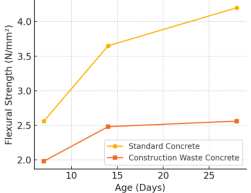
Figure 19. Flexural Strength vs Age.

This graph depicts the development of flexural strength over time for both concrete types. The standard concrete outperforms the construction waste mix in all curing durations, showing better bending resistance.
4. Conclusion
This study evaluated the mechanical performance of concrete produced with multiple categories of construction waste as partial replacements for natural aggregates. Experimental results revealed that although conventional concrete exhibited superior compressive and flexural strengths at all curing ages, construction waste–incorporated concrete demonstrated consistent strength development and acceptable performance for selected structural applications with lower load demands. At 28 days, the CWICM achieved approximately 65% of the compressive strength of conventional concrete, indicating its suitability for non-critical structural elements such as lintels, walkways, and low-rise residential components. Regression and correlation analyses further confirmed that curing age and crushing load significantly influence strength development, validating the reliability of the experimental outcomes. Beyond mechanical performance, the environmental and socio-economic implications are substantial. The reuse of construction waste reduces landfill pressure, minimizes extraction of natural aggregates, lowers construction costs, and decreases carbon emissions associated with cement and aggregate production. This approach supports circular economy principles and offers a practical pathway toward sustainable infrastructure development in resource-constrained regions.
Future research should focus on durability performance, long-term behavior, optimization of replacement ratios, and the use of chemical admixtures to enhance bonding and strength characteristics of waste-based concrete.
Abbreviations

CWICM

Construction Waste Incorporated Concrete

CC

Conventional Concrete

Author Contributions
Oguntuyi Abiola Solomon: Formal Analysis, Investigation
John Wasiu: Conceptualization, Resources, Supervision
Ibrahim Abdulrazaq Olayinka: Data curation, Methodology
Conflicts of Interest
The authors declare that there is no conflict of interest.
References
[1] Aboginije, A., Ajayi, S., & Akinwumi, I. (2020). Environmental and health implications of construction waste management. Journal of Environmental Management, 267, 110626.
[2] Ajayi, S. O. (2017). Design, procurement and construction strategies for minimizing waste in construction projects. Resources, Conservation and Recycling, 120, 55–64.
[3] Anderson, J., & Thornback, J. (2019). A guide to understanding the embodied impacts of construction products. RICS.
[4] Aslam, M., Huang, B., & Cui, L. (2020). Review of construction and demolition waste management in China and USA. Journal of Environmental Management, 264, 110445.
[5] BS EN 12390-3. (2019). Testing hardened concrete – Compressive strength of test specimens. British Standards Institution.
[6] BS EN 12390-5. (2019). Testing hardened concrete – Flexural strength of test specimens. British Standards Institution.
[7] Husnain, M., Javed, A., & Ali, R. (2019). Economic contribution of the construction industry in developing countries. International Journal of Construction Management, 19(3), 234–245.
[8] Luangcharoenrat, C., Intrachooto, S., Peansupap, V., & Sutthinarakorn, W. (2019). Factors influencing construction waste generation in building construction. Sustainability, 11(13), 3631.
[9] Milad, A., & Sungjin, K. (2020). Sustainable management of construction waste: A review. Sustainability, 12(10), 4120.
[10] Polat, G., Ballard, G., & Eray, E. (2019). Waste in construction: A systematic review. Waste Management & Research, 37(3), 1–12.
[11] Sormunen, P., & Kärki, T. (2019). Recycled construction and demolition waste as a raw material for innovative construction products. Construction and Building Materials, 198, 363–373.
[12] Tavakoli, M., Soroushian, P., & Ghafoori, N. (2012). Strength and durability of concrete with recycled aggregate. ACI Materials Journal, 109(3), 285–292.
[13] Yuan, H., Chini, A., & Lu, Y. (2022). A review of construction and demolition waste management. Waste Management, 142, 1–15.
[14] Abera, Y. (2024). Sustainable building materials: A comprehensive study on eco-friendly alternatives for construction. Composites and Advanced Materials. 33.
[15] Babor, Dan & Plian, Diana & Judele, Loredana. (2019). Environmental Impact of Concrete. Bulletin of the Polytechnic Institute of Jassy, CONSTRUCTIONS. ARCHITECTURE Section, Tomme LV (LIX), Fascicle 4, pages 27-36 (2019). LV (LIX).
Cite This Article
  • APA Style

    Solomon, O. A., Wasiu, J., Olayinka, I. A. (2026). Mechanical Performance and Sustainability Assessment of Construction Waste–Incorporated Concrete for Socio-Economic and Environmental Benefits. American Journal of Materials Synthesis and Processing, 11(1), 23-37. https://doi.org/10.11648/j.ajmsp.20261101.12

    Copy | Download

    ACS Style

    Solomon, O. A.; Wasiu, J.; Olayinka, I. A. Mechanical Performance and Sustainability Assessment of Construction Waste–Incorporated Concrete for Socio-Economic and Environmental Benefits. Am. J. Mater. Synth. Process. 2026, 11(1), 23-37. doi: 10.11648/j.ajmsp.20261101.12

    Copy | Download

    AMA Style

    Solomon OA, Wasiu J, Olayinka IA. Mechanical Performance and Sustainability Assessment of Construction Waste–Incorporated Concrete for Socio-Economic and Environmental Benefits. Am J Mater Synth Process. 2026;11(1):23-37. doi: 10.11648/j.ajmsp.20261101.12

    Copy | Download

  • @article{10.11648/j.ajmsp.20261101.12,
      author = {Oguntuyi Abiola Solomon and John Wasiu and Ibrahim Abdulrazaq Olayinka},
      title = {Mechanical Performance and Sustainability Assessment of Construction Waste–Incorporated Concrete for 
    Socio-Economic and Environmental Benefits},
      journal = {American Journal of Materials Synthesis and Processing},
      volume = {11},
      number = {1},
      pages = {23-37},
      doi = {10.11648/j.ajmsp.20261101.12},
      url = {https://doi.org/10.11648/j.ajmsp.20261101.12},
      eprint = {https://article.sciencepublishinggroup.com/pdf/10.11648.j.ajmsp.20261101.12},
      abstract = {The rapid growth of construction activities has led to a significant increase in construction and demolition waste, posing serious environmental and socio-economic challenges. This study investigates the feasibility of incorporating multiple construction waste streams—plaster waste, recycled concrete, mortar waste, broken tiles, steel slag, and crushed blocks—into concrete as partial replacements for natural fine and coarse aggregates. Laboratory experiments were conducted to compare the mechanical properties of conventional concrete (CC) and construction waste incorporated concrete (CWICM). Concrete cubes and beams were cast and tested for compressive and flexural strengths at 7, 14, and 28 days of curing. Results show that while CC consistently achieved higher strength values, CWICM demonstrated progressive strength gain with age, reaching 10.00 N/mm² compressive strength and 2.56 N/mm² flexural strength at 28 days. Statistical regression analysis indicated that curing age and maximum crushing load were the most significant predictors of compressive strength. Although strength reduction was observed in waste-based mixes, the performance remains suitable for low-load structural and non-structural applications such as lintels and partition walls. The findings confirm that recycling construction waste in concrete can reduce landfill burden, conserve natural aggregates, lower environmental pollution, and contribute to sustainable construction practices, especially in developing economies.},
     year = {2026}
    }
    

    Copy | Download

  • TY  - JOUR
    T1  - Mechanical Performance and Sustainability Assessment of Construction Waste–Incorporated Concrete for 
    Socio-Economic and Environmental Benefits
    AU  - Oguntuyi Abiola Solomon
    AU  - John Wasiu
    AU  - Ibrahim Abdulrazaq Olayinka
    Y1  - 2026/04/13
    PY  - 2026
    N1  - https://doi.org/10.11648/j.ajmsp.20261101.12
    DO  - 10.11648/j.ajmsp.20261101.12
    T2  - American Journal of Materials Synthesis and Processing
    JF  - American Journal of Materials Synthesis and Processing
    JO  - American Journal of Materials Synthesis and Processing
    SP  - 23
    EP  - 37
    PB  - Science Publishing Group
    SN  - 2575-1530
    UR  - https://doi.org/10.11648/j.ajmsp.20261101.12
    AB  - The rapid growth of construction activities has led to a significant increase in construction and demolition waste, posing serious environmental and socio-economic challenges. This study investigates the feasibility of incorporating multiple construction waste streams—plaster waste, recycled concrete, mortar waste, broken tiles, steel slag, and crushed blocks—into concrete as partial replacements for natural fine and coarse aggregates. Laboratory experiments were conducted to compare the mechanical properties of conventional concrete (CC) and construction waste incorporated concrete (CWICM). Concrete cubes and beams were cast and tested for compressive and flexural strengths at 7, 14, and 28 days of curing. Results show that while CC consistently achieved higher strength values, CWICM demonstrated progressive strength gain with age, reaching 10.00 N/mm² compressive strength and 2.56 N/mm² flexural strength at 28 days. Statistical regression analysis indicated that curing age and maximum crushing load were the most significant predictors of compressive strength. Although strength reduction was observed in waste-based mixes, the performance remains suitable for low-load structural and non-structural applications such as lintels and partition walls. The findings confirm that recycling construction waste in concrete can reduce landfill burden, conserve natural aggregates, lower environmental pollution, and contribute to sustainable construction practices, especially in developing economies.
    VL  - 11
    IS  - 1
    ER  - 

    Copy | Download

Author Information
  • Abstract
  • Keywords
  • Document Sections

    1. 1. Introduction
    2. 2. Materials and Methods
    3. 3. Results and Discussion
    4. 4. Conclusion
    Show Full Outline
  • Abbreviations
  • Author Contributions
  • Conflicts of Interest
  • References
  • Cite This Article
  • Author Information