
Coal is said to be the foundation and the dirty secret of the world’s economy, it is cheap, abundant and reliable source of energy that powers electricity, drives industrial production processes, sustains economic growth, create jobs and exports for many countries across the world. Despite the impressive contribution of the mining sector to national government revenue, foreign reserves and other infrastructural development many stakeholders still argue that the adverse effects of mining erodes the benefits of mining. This study seeks to investigate the economic effects of coal mining activities in Iwollo communities, Ezeagu Local Government of Enugu State. The study employed both primary and secondary sources of data collection to elicit information for the study. The study population comprised of the household heads, community leaders, women leaders, youth leaders and market leaders. Information from the questionnaire survey and interview sessions revealed that the people of Iwollo communities are predominantly farmers with major interests in cassava farming. The study also revealed that in recent times (2025), there have been 75% reductions in farming activities which have significantly affected the volume of cassava outputs within the area and that factors such as cattle rustling, coal mining activities, insecurity challenges were the main reasons for the observed reduction in farming activities and farmers outputs within the area. The result revealed that 72% of residents were engaged in farming in 2021, which dropped to 28% by 2025, 97% of respondents indicated that mining depleted the natural environment, 100% reported that coal mining reduced agricultural yield, 92% indicated no improvement in infrastructural development due to mining, 88% of the respondents agreed that coal mining displaced traditional farmers and livelihoods. Further investigations revealed that coal mining activities within the area had the highest negative impacts on the economy of the local people as most of the local people had lost their farmlands to the mining activities and hence lost their major source of livelihood. Based on the findings, the study suggests that adequate livelihood alternative such as greenhouse farming should be put in place for the host communities to help sustain the traditional and primary livelihood of the people.
| Published in | American Journal of Ecology (Volume 1, Issue 1) |
| DOI | 10.11648/j.ajoe.20260101.16 |
| Page(s) | 52-62 |
| Creative Commons |
This is an Open Access article, distributed under the terms of the Creative Commons Attribution 4.0 International License (http://creativecommons.org/licenses/by/4.0/), which permits unrestricted use, distribution and reproduction in any medium or format, provided the original work is properly cited. |
| Copyright |
Copyright © The Author(s), 2026. Published by Science Publishing Group |
Economy, Host Communities, Farming Activities, Natural Resources, Enugu State
Occupation/Year | 2021 | (%) | 2025 | (%) | Total |
|---|---|---|---|---|---|
Traders | 45 | 31 | 98 | 69 | 143 |
Transporters | 36 | 38 | 59 | 62 | 95 |
White cola jobs | 16 | 16 | 82 | 84 | 98 |
Farmers | 262 | 72 | 102 | 28 | 364 |
Palm-wine Tapper | 12 | 67 | 6 | 33 | 18 |
Hunters | 12 | 67 | 6 | 33 | 18 |
Artisans | 28 | 37 | 48 | 63 | 76 |
Security men | 10 | 36 | 18 | 64 | 28 |
Total | 421 | 50 | 419 | 50 | 840 |
Occupation/Year | 2021 | (%) | 2025 | (%) | Total |
|---|---|---|---|---|---|
Land-based economic activities | |||||
Farmers | 262 | 72 | 102 | 28 | 364 |
Palm-wine tappers | 12 | 67 | 6 | 33 | 18 |
Hunters | 12 | 67 | 6 | 33 | 18 |
Total | 286 | 72 | 114 | 28 | 400 |
Non-land-based economic activities | |||||
Traders | 45 | 31 | 98 | 69 | 143 |
Transporters | 36 | 38 | 59 | 62 | 95 |
White-collar jobs | 16 | 16 | 82 | 84 | 98 |
Artisans | 28 | 37 | 48 | 63 | 76 |
Security men | 10 | 36 | 18 | 64 | 28 |
Total | 135 | 31 | 305 | 69 | 440 |
Land-based occupation | 286 | 68 | 114 | 27 | 400 (47) |
Non-land occupation | 135 | 32 | 305 | 73 | 440 (53) |
Grand total | 421 | 100 | 419 | 100 | 840 |
Occupation/Year | 2021 | 2025 |
|---|---|---|
Farmers | 262 | 102 |
Palm-wine tappers | 12 | 6 |
Hunters | 12 | 6 |
Total (%) | 286 (72) | 114 (28) |
S/N | Effects of coal mining activities on the study area | Responses | |
|---|---|---|---|
Yes (320) (%) | No (320) (%) | ||
1 | Coal mining have displaced the traditional rural livelihood of the host communities | 280 (88) | 40 (12) |
2 | Coal mining have depleted the environment of the area | 310 (97) | 10 (3) |
3 | Coal mining have increased the economic activities in the area | 80 (25) | 240 (75) |
4. | Coal mining have improved the local people’s standard of living | 82 (26) | 238 (74) |
5. | Coal mining activities have increased agricultural yield of the people | 0 (0) | 320 (100) |
6. | Coal mining have brought economic growth to the area | 12 (4) | 308 (96) |
7 | Coal mining have attracted much infrastructural projects to the area | 26 (8) | 294 (92) |
8 | Coal mining activities have introduced some community development projects in the host communities | 48 (15) | 272 (85) |
S/N | Reason | Yes (%) | No (%) |
|---|---|---|---|
1 | Kidnapping | 240 (75) | 80 (25) |
2 | Cattle herders attack | 240 (75) | 80 (25) |
3 | Displacement by coal mining | 310 (97) | 10 (3) |
4 | Migration to the city by young men | 100 (31) | 220 (59) |
5 | Business opportunities | 180 (56) | 140 (44) |
NPC | National Population Commission |
LGA | Local Government Area |
CSR | Corporate Social Responsibility |
| [1] | Amalu, T. E, Takon, T. J., & Okpara, D. E. (2013). Assessment of local people’s attitude towards natural resource conservation in Boki Local Government Area of Cross River state, Nigeria. Research Journal in Organizational Psychology & Educational Studies, 2(1), 32–38. |
| [2] | Ajake, A. O., Enang, I. A., Amalu, T. E., & Ojugbo, P. (2016). Assessment of cultural and museum landscapes for tourism development: The Calabar museum scenario, Cross River State, Nigeria. Journal of Tourism and Management Research, 1(1), 119-134. |
| [3] | Amalu, T. E., & Ajake, A. O. (2012). An assessment of the employment structure in the tourism industry of Obudu Mountain resort, Cross River state, Nigeria. Geo-Journal of Tourism and Geosites, 9(1), 35–56. |
| [4] | Amalu, T. E., & Onwudinjo, L. E. (2023). Agriculture and rural economic development: Evidence from Enugu State, Nigeria. Espoly Journal of Functional Education (JoFE), 1(1), 9–23. |
| [5] | Amalu, T. E. (2013). Ezeagu: A potential tourism destination. Oghe Writers Association Journal, 1(1), 65–73. |
| [6] | Amalu, T. E. & Amalu, F. C. (2015). Assessment of crime rates in the South-Eastern Region of Nigeria: A case of Iwollo. Oghe Writers Association Journal, 1(3), 30–41. |
| [7] | Amalu, T. E., Ajake, A. O., & Obi, P. O. (2016). Impact of royalties from forest resources on community development in Boki Local Government in Cross River state, Nigeria. GeoJournal, 81(3), 475–487. |
| [8] | Amalu, T. E, & Aniodoh, C. H. (2024). Impacts of education in agricultural development in Enugu State: Evidence from Iwollo community in Ezeagu Local Government Area. Espoly Journal of Functional Education (JoFE), 2(1), 1-11. |
| [9] | Abaje, I. B, Achiebo, P. J & Matazu, M. B. (2018). Spatio‐Temporal Analysis of Rainfall Distribution in Kaduna State, Nigeria. Ghana Journal of Geography Vol. 10(1): 1–21. |
| [10] | Adejoke C. O., Paul, O. B. & Andile M. (2018). Conflict Implication of Coal Mining and Environmental Pollution in South Africa. African Journal on Conflict Resolution, 18(1): 1-16. |
| [11] | Alhaji, M. I. & Kanayochukwu, E. C. (2020). Spatial Location of Artisanal Mining activities in Niger State and its Implication to the Environment. International Journal of Engineering Applied Sciences and Technology, 2020 vol. 5, issue 1, ISSN no. 2455-2143, pages 711-719. |
| [12] | Ango, M, Blessing, M, Choquette, B, Erdenebat, B, Jagdish, S, Kamara, A. M, Tang, K. Y, Wideroth, A. & Worthington, J. (2019). Creation of a Sustainable Mining Program through Formalization of Artisanal and Small Scale Miners. Government of Nigeria Capestone Report, Columbia University in the City of New York. |
| [13] | Arthur, F. Agyemang-Duah, W. Gyasi, R. M, Yeboah, Y. J & Otieku, E. (2016). Nexus between Artisanal and Small-Scale Gold Mining and Livelihood in Prestea Mining Region, Ghana. Geography Journal, Vol. (2016) 1- 18. |
| [14] | Assan, J. K. & Muhammed, A. (2018). The impact of mining on farming as a livelihood strategy and its implications for poverty reduction and household well-being in Ghana. International Journal of Development and Sustainability. Volume 7 Number 1 (2018): Pages 1-20. |
| [15] | Awalla, C. O. C (2014). Environmental Impact Assessment of Coal Mining Activity in Enugu Metropolis, Enugu State, Nigeria. Journal of Software Engineering and Simulation, 2(5): 1-5. |
| [16] | Bansah, K. J. Dumakor-Dupey, N. K. Kansake, B. A. Assan, E. & Bekui, P. (2018). Socioeconomic and environmental assessment of informal artisanal and small-scale mining in Ghana. Journal of Cleaner Production 202 (2018) 465-475. |
| [17] | Buba, T. (2015). Impact of Different Species of Different Sizes on Spatial Distribution of Hebaceous Plants in the Nigeria Guinea Savanna Ecological Zone. Journal of Sceintifica Research Vol 2015. |
| [18] | Chen, J., Liu, G. Kang, Y., Wu, B., Sun, R., Zhou, C. & Wu, D. (2014). Coal Utilization in China: Environmental Impacts and Human Health, Environmental Geochemistry Health, 36, 735-753. |
| [19] | Chibuisi, S. I. (2017). “Environmental and Health Implications of Coal Mining at Maiganga, Gombe State, Nigeria.” Journal of Environment Pollution and Human Health, vol. 5, no. 1, 5-14. |
| [20] | Ćujić, M., Dragović, S., Dordević, M., Dragović, R. & Gajić, B. (2016). Environmental Assessment of Heavy Metals around the Largest Coal Fired Power Plant in Serbia, Catena, 139, 44-52. |
| [21] | Din, S. A., Yahya, N. N. & Abdullah, A. (2013). Fine Particulates Matter (PM2.5 from Coal-Fired Power Plant in Manjung and its Health Impacts”, Procedia-Socio and Behavioral. Science, 85, 92-99. |
| [22] | Donkor, A. K.; Ghoveisi, H. & Bonzongo, J. C. J. (2024). Use of Metallic Mercury in Artisanal Gold Mining by Amalgamation: A Review of Temporal and Spatial Trends and Environmental Pollution. Minerals 2024, 14, 555. |
| [23] | Eze, S. O. & Chigbu, G. S. (2015). Physical, Chemical, and Microbiological Parameters of IyiOkai Stream in Abiriba, Ohafa Local Government Area, Abia State, Nigeria. European Journal of Pure and Applied Chemistry, 2(1): 7- 22. |
| [24] | Fagariba, C. J, Sumani, J. B. B. & Mohammed, A. S. (2024). Artisanal and Small-Scale Gold Mining Impact on Soil and Agriculture: Evidence from Upper Denkyira East Municipality, Ghana. European Journal of Environment and Earth Sciences Vol. 5 | Issue 3 | May 2024. |
| [25] | Gadzama, I. U. (2015). Effect of Participation in Artisanal and Small-Scale Mining on the Output, Income and Standard of Living of Farmers in Kaduna State, Nigeria: An Unpublished Ph. D Thesis Submitted to the School of Postgraduate Studies Ahmadu Bello University, Zaria, Kaduna State, Nigeria. |
| [26] | Gilbert, G. & Albert, O. (2016). Illegal Small-Scale Gold Mining in Ghana: A Threat to Food Security. Journal of Food Security, 2016, Vol. 4, No. 5, 112-119 |
| [27] | Girard, V. Molina-Millan, T. & Vic, G. (2022). Artisanal Mining in Africa. NOVAFRICA Working Paper Series. |
| [28] | Goswami, S. (2015). Impact of Coal Mining on Environment. Academic Publishing House Researcher, Vol. 92, 3 (2015), 85-96. |
| [29] | Hendryx, M. (2015). The Public Health Impacts of Surface Coal Mining. The Extractive Industry. Society, 2, 820-826. |
| [30] | Hossain, M. N., Paul, S. K. & Hasan, M. M. (2015). Environment Impacts of Coal Mine and Thermal Power Plant to the Surroundings of Barapukuria, Dinajpur, Bangladesh, Environment Monitoring Assesment, 187, 1-11. |
| [31] | Hota, P., & Behera, B. (2015). Coal Mining in Odisha: An Analysis of Impacts on Agricultural Production and Human Health. The Extractive Industry and Society, 2, 2015, 683-693. |
| [32] | Idris-Nda, A.. Waziri, N. M. Bida, A. D. & Abdullahi, S. (2018). Socio-Economic Impacts of Artisanal and Small-Scale Mining in Parts of Niger State, Central Nigeria. International Journal of Mining Science (IJMS) Volume 4, Issue 3, 2018, PP 21-30. |
| [33] | Intergovernmental Forum on Mining, Minerals, Metals and Sustainable Development (IGF, 2018). Global Trends in Artisanal and Small-Scale Mining (ASM): A review of key numbers and issues. Report prepared by the International Institute for Environment and Development (IIED) for the Intergovernmental Forum on Mining, Minerals and Sustainable Development (IGF), Winnipeg. |
| [34] | Jin, D. & Bian, Z. (2015). Quantifying the Emission’s Impact of Coal Mining Activities on the Environment and Human Health in Process, Journal of Coal Science. & Engineering, 19, 421- 426. |
| [35] | Keita, M. M. (2018). Environmental and Socio-Economic Impacts of Artisanal Gold Mining on Agricultural Production in Sikasso Region, Mali. An Unpublished Ph. D Thesis Submitted to the Department of Environmental Science of Egerton University. |
| [36] | Kumi-Boateng, B. & Stemn, E. (2020). “Spatial Analysis of Artisanal and Small-Scale Mining in the Tarkwa-Nsuaem Municipality of Ghana”, Ghana Mining Journal, Vol. 20, No. 1, pp. 66 - 74. |
| [37] | Kurth, L., Kolker, A., Engle, M., Geboy, N., Hendryx, M., Orem, W., McCawley, M., Crosby, L., Tatu, C., Maronka, M. & DeVera, C. (2015). Atmospheric Particulate Matter in Proximity to Mountaintop Coal Mines: Source and Potential Environmental and Human Health Impacts, Environmental Geochemistry Health, 37, 529-544. |
| [38] | Landrigan, P, Bose-O’Reilly, S, Elbel, J, Nordberg, G, Lucchini, R, Bartrem, C, Grandjean, P, Mergler, D, Moyo, D, Nemery, B, von Braun, M & Nowak, D. (2022). Reducing Disease and death from Artisanal and Small-Scale Mining (ASM) - the urgent need for responsible mining in the context of growing global demand for minerals and metals for climate change mitigation. Environmental Health volume 21, 78. |
| [39] | Lavrinenko, A. A. & Yu, G. (2015). Golberg, Reasons Causing Difficulty of Improvement of Coal Preparation Environmental Efficiency. Part 1, Coke and Chemistry 58, 362-366. |
| [40] | Li, L., Lei, Y. & Pan, D. (2015). Economic and Environmental Evaluation of Coal Production in China and Policy Implications, Natural Hazards, 77, 1125-1141. |
| [41] | Mancini, L & Sala, S. (2018). Social Impact Assessment in the Mining Sector: Review and Comparison of Indicators Frameworks. Resources Policy 57 (2018) 98–111. |
| [42] | Matthews, A., Omono, C. & Kakulu, S. (2012). Impact of Mining and Agriculture on Heavy Metal Levels in Environmental Samples in Okehi Local Government Area of Kogi State International Journal of Pure Applied Science Technology. 12(2): 66-77. |
| [43] | Mensah, A. K and Tuokuu F. X. D. (2023). Polluting our rivers in search of gold: how sustainable are reforms to stop informal miners from returning to mining sites in Ghana? Front. Environ. Sci. 11: 1154091. |
| [44] | Mensah, A. K. Mahiri, I. O, Owusu, O, Mireku, O. D, Wireko, I. & Kissi, E. A. (2015). Environmental Impacts of Mining: A Study of Mining Communities in Ghana. Applied Ecology and Environmental Sciences, Vol. 3, 3(2015) 81-94. |
| [45] | Milivojević, J., Krstić D., Šmit B. & Djekić V. (2016). Assessment of Heavy Metal Contamination and Calculation of Its Pollution Index for Uglješnica River, Serbia. Bull Environ ContamToxicol, 97: 737–742. |
| [46] | Mokhtar, M. M., Hassim, H. M. & Taib, R. M. (2014). Health Risk Assessment of Emissions from a Coal-Fired Power Plant Using AERMOD Modelling, Processing Safety and Environmental Protection, 92, 476-485. |
| [47] | Morman, S. A. & Plumlee, G. S. (2014). Dust and Human Health, in P. Knippertz and J. B. W. Stuut (eds), Mineral Dust: A key Player in the Earth System, Springer Science, 385-409. |
| [48] | Morrice E. & Colagiuri, B. (2013). Coal Mining, Social Injustice and Health: A Universal Conflict of Power and Priority”, Health & Place, 19, 74-79. |
| [49] | Mwango, O, K. (2014). Impact of open pit artisanal gold mining in Rongo Constituency. Being an undergraduate Research Project Submitted in Partial Fulfillment of the Requirements for the Degree of Bachelor of Environmental Planning and Management of Kenyatta University. |
| [50] | Ncube-Phiri, S, Ncube, A, Mucherera, B. & Ncube, M. (2015). ‘Artisanal small-scale mining: Potential ecological disaster in Mzingwane District, Zimbabwe’, Jàmbá. Journal of Disaster Risk Studies, Vol 7, 1(2015) 1-11. |
| [51] | Ndinwa, G. C. C. & Ohwona, C. O. (2014). Environmental and Health Impact of Solid Mineral Exploration and Exploitation in South-Northern Nigeria: A Case Study of Igarra in Edo State. Review of Environment and Earth Sciences, Vol 1, No1 (2014) 24-36. |
| [52] | Nigeria Mining and Metal Sector. (NMMS, 2017). Investment Promotion Brochure October 2017. Ministry of Steel and Development. |
| [53] | Ontoyi, J. & Agyemang, I. (2014). Environmental and Rural Livelihoods Implication of Small-scale Gold Minng in Talensi-Nabdam District of Northern Ghana. Journal of Geography and Regional Planning, Vol. 7, 8(2014) 150-159. |
| [54] | Onwuka, S. U, Duluora, J. O. & Okoye C. O. (2013). Socio-Economic Impacts of Tin Mining in Jos, Plateau State, Nigeria. International Journal of Engineering Science Invention, Vol. 2, No 7(2013) 30-34. |
| [55] | Papworth, S, Rao, M, Myint, M. O, Latt, T. T, Tizard, R, Pienkowski, T. & Carrasco, L. R. (2017). The Impact of Gold Mining and Agricultural Concessions on the Tree cover and local Communities in Northern Myanmar. Scientific Reports. |
| [56] | Saini, V., Gupta, R. P. & Arora, M. K. (2016). Environmental Impact Studies in Coalfields in India: A Case Study from Jharia Coal-field, Renewable and Sustainable Energy Review, 53, 1222-1239. |
| [57] | Shahbaz, M., Farhani, S. & Ozturk, I. (2015). Do Coal Consumption and Industrial Development Increase Environmental Degradation in China and India”, Environment Science Pollution Research, 22, 3895-3907. |
| [58] | Sheriff, I., Gogra, A. B. & Koroma, B. M. (2018). Investigation into the Impacts of Artisanal Gold Mining on the Livelihood Foundation of Baomahun Community in Southern Sierra Leone. Natural Resources, 9, (2018) 42-54. |
| [59] | Stolboushkino A., Ivanova A. & Fomina O. A. (2016). Use of Coal-Mining and Processing Wastes in Production of Bricks and Fuel for Their Burning. Procedia Engineering 150: 1496 – 1502. |
| [60] | Tutmez, B., Hozatli, B. & Cengiz, A. K. (2013). An Overview of Turkish Lignite Qualities by Logistic Analysis, Journal of Coal Science, & Engineering, 19, 113-118. |
| [61] | United Nation Development Project, (UNDP, 2017). Strategic Environmental Assessment (SEA) for the Mining Sector in Kenya. Draft SEA Report for the Mining Sector in Kenya. |
| [62] | Wang, L. Jia, Y. Yao, Y and Xu, D. (2019). Identification and evaluation of land use vulnerability in a coal mining area under the coupled human-environment. Open Geosci. 2019; 11: 64–76. |
| [63] | World Bank, (2014). Sustainable and Responsible Mining in Africa: A getting Started Guide. International Finance Corporation. World Bank Group. |
| [64] |
World Bank, (2016). Women and Artisanal and Small-Scale Mining (ASM). Accessed on 18/01/ 2020.
www.worldbank.org/en/topic/extractiveindustries/brief/gender-in extractive-industries |
| [65] | Xuejiao, Xiao, Zhao, Zhang, Li & Sun. D., (2019). Drivers of Spatio-temporal ecological Vulnerability in an Arid Coal Mining Region in Western China. Ecological Indicators. Vol. 106, 105475. |
| [66] | Yunana, M. A. and Banta, A. L. (2014). Socio-economic Effects of Illegal Mining Activities in Antang District of Jema‟a Local Government Area, Kaduna State. Journal of Environmental Sciences and Resources Management. 6(2): 12 - 21. |
| [67] | Zankan J. A. A., Abdul I., Mande A. J., and Abdul H. A. (2022). Livelihood Implication of Artisanal Mining on Herders in Jema’a and Sanga Local Government Areas of Kaduna State, Nigeria. African Journal of Social Sciences and Humanities Research 5(5), 27-47. |
| [68] | Zankan, J. A. A, Isah, M. N, and Abubukar, M. Y. (2020). Environmental Implications of Commercial Woodfuel Harvesting in Jema’a Local Government, Kaduna State, Nigeria. Ethiopian Journal of Environmental Studies & Management 13(3): 364 – 375, 2020. |
APA Style
Amalu, T. (2026). Effects of Coal Mining on Agriculture and Rural Livelihood: Evidence from Iwollo Communities in Enugu State, Nigeria. American Journal of Ecology, 1(1), 52-62. https://doi.org/10.11648/j.ajoe.20260101.16
ACS Style
Amalu, T. Effects of Coal Mining on Agriculture and Rural Livelihood: Evidence from Iwollo Communities in Enugu State, Nigeria. Am. J. Ecol. 2026, 1(1), 52-62. doi: 10.11648/j.ajoe.20260101.16
@article{10.11648/j.ajoe.20260101.16,
  author = {Titus Amalu},
  title = {Effects of Coal Mining on Agriculture and Rural Livelihood: Evidence from Iwollo Communities in Enugu State, Nigeria},
  journal = {American Journal of Ecology},
  volume = {1},
  number = {1},
  pages = {52-62},
  doi = {10.11648/j.ajoe.20260101.16},
  url = {https://doi.org/10.11648/j.ajoe.20260101.16},
  eprint = {https://article.sciencepublishinggroup.com/pdf/10.11648.j.ajoe.20260101.16},
  abstract = {Coal is said to be the foundation and the dirty secret of the world’s economy, it is cheap, abundant and reliable source of energy that powers electricity, drives industrial production processes, sustains economic growth, create jobs and exports for many countries across the world. Despite the impressive contribution of the mining sector to national government revenue, foreign reserves and other infrastructural development many stakeholders still argue that the adverse effects of mining erodes the benefits of mining. This study seeks to investigate the economic effects of coal mining activities in Iwollo communities, Ezeagu Local Government of Enugu State. The study employed both primary and secondary sources of data collection to elicit information for the study. The study population comprised of the household heads, community leaders, women leaders, youth leaders and market leaders. Information from the questionnaire survey and interview sessions revealed that the people of Iwollo communities are predominantly farmers with major interests in cassava farming. The study also revealed that in recent times (2025), there have been 75% reductions in farming activities which have significantly affected the volume of cassava outputs within the area and that factors such as cattle rustling, coal mining activities, insecurity challenges were the main reasons for the observed reduction in farming activities and farmers outputs within the area. The result revealed that 72% of residents were engaged in farming in 2021, which dropped to 28% by 2025, 97% of respondents indicated that mining depleted the natural environment, 100% reported that coal mining reduced agricultural yield, 92% indicated no improvement in infrastructural development due to mining, 88% of the respondents agreed that coal mining displaced traditional farmers and livelihoods. Further investigations revealed that coal mining activities within the area had the highest negative impacts on the economy of the local people as most of the local people had lost their farmlands to the mining activities and hence lost their major source of livelihood. Based on the findings, the study suggests that adequate livelihood alternative such as greenhouse farming should be put in place for the host communities to help sustain the traditional and primary livelihood of the people.},
 year = {2026}
}
TY  - JOUR
T1  - Effects of Coal Mining on Agriculture and Rural Livelihood: Evidence from Iwollo Communities in Enugu State, Nigeria
AU  - Titus Amalu
Y1  - 2026/11/12
PY  - 2026
N1  - https://doi.org/10.11648/j.ajoe.20260101.16
DO  - 10.11648/j.ajoe.20260101.16
T2  - American Journal of Ecology
JF  - American Journal of Ecology
JO  - American Journal of Ecology
SP  - 52
EP  - 62
PB  - Science Publishing Group
UR  - https://doi.org/10.11648/j.ajoe.20260101.16
AB  - Coal is said to be the foundation and the dirty secret of the world’s economy, it is cheap, abundant and reliable source of energy that powers electricity, drives industrial production processes, sustains economic growth, create jobs and exports for many countries across the world. Despite the impressive contribution of the mining sector to national government revenue, foreign reserves and other infrastructural development many stakeholders still argue that the adverse effects of mining erodes the benefits of mining. This study seeks to investigate the economic effects of coal mining activities in Iwollo communities, Ezeagu Local Government of Enugu State. The study employed both primary and secondary sources of data collection to elicit information for the study. The study population comprised of the household heads, community leaders, women leaders, youth leaders and market leaders. Information from the questionnaire survey and interview sessions revealed that the people of Iwollo communities are predominantly farmers with major interests in cassava farming. The study also revealed that in recent times (2025), there have been 75% reductions in farming activities which have significantly affected the volume of cassava outputs within the area and that factors such as cattle rustling, coal mining activities, insecurity challenges were the main reasons for the observed reduction in farming activities and farmers outputs within the area. The result revealed that 72% of residents were engaged in farming in 2021, which dropped to 28% by 2025, 97% of respondents indicated that mining depleted the natural environment, 100% reported that coal mining reduced agricultural yield, 92% indicated no improvement in infrastructural development due to mining, 88% of the respondents agreed that coal mining displaced traditional farmers and livelihoods. Further investigations revealed that coal mining activities within the area had the highest negative impacts on the economy of the local people as most of the local people had lost their farmlands to the mining activities and hence lost their major source of livelihood. Based on the findings, the study suggests that adequate livelihood alternative such as greenhouse farming should be put in place for the host communities to help sustain the traditional and primary livelihood of the people.
VL  - 1
IS  - 1
ER  -
Department of Social Sciences and Humanities, School of General Studies, Enugu State Polytechnic, Iwollo, Nigeria
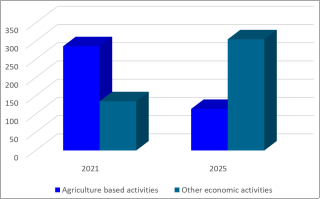
Figure 1. Analysis of involvement in farming and other economic activities between 2021 and 2025.
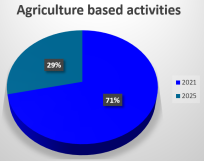
Figure 2. Difference in participation in agricultural activities between 2021 and 2025 in the area.
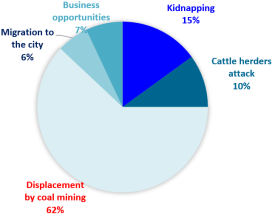
Figure 3. Specific reasons for the shift from the people’s traditional livelihood pattern (2021-2025).

Information



 Share This Article
 Twitter
 Linked In
 Facebook

 Copy
 Download