Seasonal water stress is increasingly recognised as a major constraint to livestock productivity in sub-Saharan Africa, particularly in smallholder dairy goat production systems that depend on rain-fed resources. This study assessed the influence of seasonal water stress on direct water use and milk production performance of dairy goats under contrasting highland and lowland ecosystems in Embu County, Kenya. The study employed a cross-sectional survey involving 196 smallholder dairy goat farms, which was conducted in the Runyenjes (highland) and Mbeere North (lowland) sub-counties. Data on direct water use volume, water costs, and milk production during normal, prolonged drought, and excessive rainfall seasons were collected using structured questionnaires. Effects of season, production system, ecosystem, and their interactions were analysed using General Linear Models. The results of the study showed substantial variation in direct water use among farms, ranging from approximately 22.7 to 41.8 litres per farm per day. Seasonal effects on water volume used were not significant (P > 0.05), whereas the ecosystem significantly influenced water use (P < 0.05), with farms in the highland ecosystem using more water than those in the lowland ecosystem. Water costs differed significantly across seasons and production systems (P < 0.05), with costs being highest during normal seasons. Milk yield varied according to ecosystem and stage of lactation. Goats reared in the lowland ecosystem produced significantly more milk than those in the highland ecosystem (P < 0.05). Seasonal effects on milk production were not significant, although prolonged drought and excessive rainfall tended to influence production patterns. The findings demonstrate that ecosystem characteristics exert a stronger influence on dairy goat water use and productivity than seasonal conditions alone. Strengthening climate-smart water management interventions and ecosystem-specific dairy goat production strategies will enhance the resilience and sustainability of smallholder dairy goat farming under increasing climate variability.
This is an Open Access article, distributed under the terms of the Creative Commons Attribution 4.0 International License (http://creativecommons.org/licenses/by/4.0/), which permits unrestricted use, distribution and reproduction in any medium or format, provided the original work is properly cited.
Seasonal, Water Stress, Embu County, Milk Yield, Dairy Goat
1. Introduction
Water is a fundamental resource for livestock production, playing a critical role in maintaining physiological processes, feed digestion, thermoregulation, growth, reproduction, and milk synthesis. However, increasing climate variability, characterised by rising temperatures, erratic rainfall patterns, prolonged droughts, and extreme weather events, has intensified seasonal water stress globally, particularly in arid and semi-arid regions
Zhang, X., Dong, L., Huang, Y., Xu, Y., Qin, H., & Qiao, Z. (2021). Equilibrium Relationship between Ecosystem Service Supply and Consumption Driven by Economic Development and Ecological Restoration. Sustainability, 13(3), 1486.
. Seasonal water stress has significant implications for direct water use in dairy goat farming, particularly under increasing temperatures and rainfall variability. Goats require higher water intake during periods of extreme heat to maintain thermoregulation and metabolic functions, thereby placing additional pressure on already limited water resources
[3]
Kumalo, & Manyani. (2023). Fodder Preparation Practices Adopted by Community Subsistence Farmers in Zimbabwe in the Face of Climate Change: A Case Study of the Garanyemba Community Ward 13 in the Gwanda District, Matabeleland South Province. Advances in Image and Video Processing, 11(2).
. Goat production is an important livelihood activity among smallholder farming households due to its contribution to household income, nutrition, and resilience under harsh environmental conditions. Compared with larger ruminants, goats possess physiological and behavioural adaptations that enable them to survive under water-limited conditions, including efficient water conservation mechanisms and the ability to utilize low-quality feed resources
[4]
Akinmoladun, O. F., Muchenje, V., Fon, F. N., & Mpendulo, C. T. (2019). Small Ruminants: Farmers’ Hope in a World Threatened by Water Scarcity. Animals, 9(7), 456.
Phiri, B. S. J., Hang’ombe, B. M., Mulenga, E., Mubanga, M., Maurischat, S., Wichmann-Schauer, H., Schaarschmidt, S., & Fetsch, A. (2022). Prevalence and diversity of Staphylococcus aureus in the Zambian dairy value chain: A public health concern. International Journal of Food Microbiology, 375, 109737.
, water scarcity also affects the water requirements for dairy goats, which are also closely linked to feed intake, with goats consuming approximately 3-6% of their body weight depending on production purpose, which further increases water demand under intensive dairy systems
[6]
Sejian, V., Silpa, M. V., Reshma Nair, M. R., Devaraj, C., Krishnan, G., Bagath, M., Chauhan, S. S., Suganthi, R. U., Fonseca, V. F. C., König, S., Gaughan, J. B., Dunshea, F. R., & Bhatta, R. (2021a). Heat Stress and Goat Welfare: Adaptation and Production Considerations. Animals, 11(4), 1021.
. Seasonal fluctuations in water availability also influence forage quantity and quality, creating additional production constraints that compromise animal performance and farm profitability
[7]
Nalianya, G. W., W. Wakhungu, J., & O. Nyandiko, Dr. N. (2020). Impacts of Climate Change and Variability on Smallholder Dairy Cattle Production in Bungoma, Kenya. International Journal of Scientific and Research Publications (IJSRP), 10(12), 725-744.
In Kenya, climate change has increased the frequency and intensity of droughts, floods, and irregular rainfall patterns, resulting in significant challenges for livestock production systems
[8]
Machado, G. (2018). Mastitis-in-small-ruminants. Animal Husbandry, Dairy and Veterinary Science, 2(4).
. Dairy goat farmers in semi-arid areas of the county face recurrent challenges, including feed shortages, limited access to water, and increased disease incidence during dry periods. These effects are particularly pronounced in counties characterised by contrasting agroecological conditions, where the impacts of seasonal water stress vary according to ecosystem characteristics. Highland ecosystems generally receive higher rainfall and possess relatively reliable water resources, whereas lowland ecosystems are more susceptible to drought and water shortages
[9]
Tomalka, J., Lange, S., Rohrig, F., & Gornott, C. (2021). Climate Risk Profile: Kenya.
[9]
. Consequently, differences in water availability between ecosystems may influence livestock management practices, direct water use, and production outcomes.
Direct water use is an important indicator of livestock resource utilisation and production efficiency. Adequate water availability supports feed digestion, nutrient absorption, thermoregulation, and milk synthesis, whereas inadequate access to water increases production costs and reduces production levels
[10]
Leweri, C. M. (2022). Herding Strategies Under Shifting Rainfall Implication for Rangeland Conservation and Pastoralist Livelihoods.
[10]
. Previous studies have demonstrated that water scarcity can increase labour requirements for water acquisition, elevate production costs, and reduce milk yield in dairy livestock systems
[11]
Nipane, S., Kawitkar, S., Dhok, A., Chopde, S., Jawale, M., & Lende, S. (2022). Nutritional Effect on Immunity in Animals. International Journal of Livestock Research, 12(4), 1.
. However, empirical evidence on how seasonal water stress influences direct water use among dairy goat farms under contrasting ecological conditions remains limited.
Milk production is among the most important indicators of dairy goat performance and is highly sensitive to environmental conditions. Seasonal water stress affects milk yield through both direct and indirect pathways, including reduced drinking water availability, declining forage quality, increased heat stress, and impaired physiological functioning
[12]
Abbas, Q., Han, J., Adeel, A., & Ullah, R. (2019). Dairy Production under Climatic Risks: Perception, Perceived Impacts and Adaptations in Punjab, Pakistan. International Journal of Environmental Research and Public Health, 16(20), 4036.
Mugoti, A., Nyamukanza, C., Munengwa, A., Moyo, S., & Chikumba, N. (2025). Effects of climate change on goat production and mitigatory measures in semiarid savanna ecosystems. Journal of Integrative Environmental Sciences, 22(1), 2513899.
. Although several studies have examined the effects of climate variability on dairy cattle production, information regarding dairy goats under smallholder production systems remains inadequate, particularly within the contrasting highland and lowland ecosystems of Kenya
[14]
Bhimte, A. (2024). A mini review on climate change impacts on goat farming. Farming & Management, VOLUME 9(ISSUE 2 (DEC) 2024).
Embu County provides a suitable setting for investigating these relationships because it encompasses both highland and lowland ecosystems that differ markedly in rainfall patterns, water availability, and livestock production conditions. Understanding how seasonal water stress affects direct water use and milk production performance is essential for developing climate-smart interventions that enhance the resilience and sustainability of dairy goat production systems. Therefore, this study aimed to assess the influence of seasonal water stress on direct water use and milk production performance among dairy goat farms in the highland and lowland ecosystems of Embu County, Kenya.
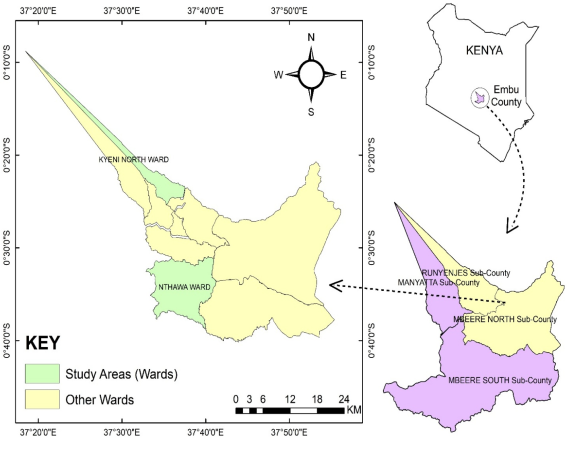
Figure 1. Study Area Map of Embu County: Mbeere North and Runyenjes Sub-county.
2. Material and Methods
2.1. Study Area
The study was conducted among dairy goat farmers in Runyenjes Sub-County (highland ecosystem) and Mbeere North Sub-County (lowland ecosystem) of Embu County, Kenya. The County is among the 47 counties created by the 2010 Constitution of Kenya. Embu County is located in the Eastern region of Kenya between latitudes 0°10′ and 0°55′ South and longitudes 37°15′ and 37°55′ East, covering approximately 2,818 km2 with an estimated population of 641,769 people. The County is divided into four constituencies, namely: Runyenjes, Manyatta, Mbeere South and Mbeere North. The County's major towns are Embu, Runyenjes, Kiritiri, Siakago, Manyatta, Ishiara, Kiajokoma, Kanyuambora, and Karaba
[15]
Embu County Government. (2019). Embu County Government County Integrated Development Plan 2018-2022.
[15]
, as illustrated in Figure 1. Temperatures vary considerably across the county due to differences in altitude, ranging from a minimum of about 12°C in July to a maximum of 30°C in March, with a mean annual temperature of approximately 21°C. The rainfall pattern is bimodal with two distinct rain seasons. Long rains occur between March and June, while the short rains fall between October and December. Rainfall quantity received varies with altitude, averaging about 1,067.5 mm annually. Annual rainfall ranges from about 640 mm in the lowland areas to approximately 1,495 mm in the highland regions bordering Mount Kenya
[16]
Embu County Integrated Development Plans 2018-2022. (n.d.).
[16]
. The inhabitants of the county depend on agriculture for their livelihood, with approximately 70 per cent of the population deriving their livelihood from crop production and livestock keeping.
2.2. Sample Design and Sampling Process
This study employed a descriptive cross-sectional survey design, which is appropriate for capturing data at a specific point and at a one given time to understand prevailing conditions and relationships between variables. A random sampling technique was employed to ensure that each smallholder dairy farm in the sampling frame has an equal chance of being selected. A total of 196 smallholder dairy goat farmers were captured between the two ecosystems.
2.3. Data Collection
A structured questionnaire was administered to the farm owner during the farm visit. The questionnaire consisted of closed-ended questions, which were organised into the thematic areas aligned with the objectives of the study. Farmers provided information on water use, water acquisition costs, milk production, and seasonal production conditions during normal, prolonged drought, and excessive rainfall seasons.
2.4. Data Analysis
Data were analysed using Statistical Package for Social Sciences SPSS and STATA version 19. A General Linear Model was fitted to estimate the main and interaction effects of season, production system, and ecosystem on seasonal water stress on direct water use among dairy goat farms in the highland and lowland ecosystems of Embu County. Least square means (LSM) estimates from the fitted General Linear Model were compared at a significance level of P< 0.05.
3. Results
3.1. Sample Description
The summary distribution of sample farmers in Table 1. Gender, the majority of respondents were male (54.08%, n=106), while females accounted for (45.92%, n=90). Educational level, most respondents had attained secondary school (42.81%, n =84), followed by primary education (34.18%, n=67), while very few had attained no formal education (4.59%, n=9) or adult education (0.51%, n=1). In terms of the production system, zero-grazing was more common (58.16%, n=114), compared to the grazing system (41.84%, n=82). Ecosystem: the distribution across ecosystems was equal and evenly split between highland (50.00%, n=98) and lowland (50.00%, n=98).
Table 1. Sample farmers and farms description.
Variables
Frequency
Percent
Gender
Female
90
45.92
Male
106
54.08
Educational Level
Primary
67
34.18
Secondary
84
42.81
Tertiary
35
17.86
Adult education
1
0.51
None
9
4.59
Production system
Grazing
82
41.84
Zero-Grazing
114
58.16
Ecosystem
Highland
98
50.00
Lowland
98
50.00
3.2. Influence of Seasonal Water Stress on Direct Water Use in Volume
The least square means of direct water use in volume are presented in Table 2. Direct water use in volume differed significantly between ecosystems (P < 0.05), with farms in the highland recording higher values (41.78 ± 2.13 L/d/farm) than those in the lowland (22.66 ± 2.27 L/d/farm). In contrast, the production system had no significant effect on direct water use in volume (P > 0.05), as the grazing (32.46 ± 3.15 L/d/farm) and zero-grazing systems (34.02 ± 1.85 L/d/farm) showed comparable levels. Similarly, seasonal variation did not significantly influence the volume of direct water use (P > 0.05), although relatively higher values were observed during the drought season (37.06 ± 2.79 L/d/farm) than during the normal (34.70 ± 1.70 L/d/farm) and excessive rainfall seasons (29.15 ± 2.10 L/d/farm). Overall, these results indicate that the ecosystem is the primary determinant of direct water use in volume in the study area, whereas the production system and seasonal variation have limited influence. Seasonal, ecosystem, and production system interactions impact the amount of direct water use, which can determine whether the impact of one factor varies with a different factor.
Seasonal variation did not significantly influence direct water use volume (P > 0.05), although farms tended to use more water during prolonged drought (37.06 ± 2.79 L/day/farm) than during normal (34.70 ± 1.70 L/day/farm) and excessive rainfall seasons (29.15 ± 2.10 L/day/farm). The superscript letters indicate pairwise comparisons of least square means, where means sharing the same superscript did not differ significantly (P > 0.05), while means with different superscripts differed significantly (P < 0.05). In this study, only the ecosystem effect showed significant differences, with the highland and lowland ecosystems having different superscripts. The significant interaction between season and ecosystem (P = 0.0124) indicated that seasonal changes in water use differed between the highland and lowland ecosystems. However, interactions between season and production system (P = 0.9028), production system and ecosystem (P = 0.7081), and the three-way interaction among season, ecosystem and production system (P = 0.6402) were not significant. These findings suggest that ecosystem characteristics were the primary determinants of direct water use among dairy goat farms.
Table 2. Least square means with their standard errors for direct water use volume (L/day/farm) by season, production system, and ecosystem.
Volume (Litres)
Fixed factor effects
Levels
Least square means
Standard error
Seasons
Normal
34.70a
1.70
Drought
37.06a
2.79
Excessive
29.15a
2.10
Production systems
Grazing
32.46a
3.15
Zero-grazing
34.02a
1.85
Ecosystems
Highland
41.78a
2.13
Lowland
22.66b
2.27
Least square means within a fixed factor with different letter superscripts differ at p<0.05,2-way interactions: season × ecosystem, p=0.0124; Season × production systems, p=0.9028; production systems × ecosystems, p=0.7081,3-way interaction: seasons × ecosystems × production systems, p=0.6402.
3.3. Influence of Seasonal Water Stress on Direct Water Use Cost
The least square means for direct water use cost are shown in Table 3. Water acquisition costs differed significantly across seasons (P < 0.05). Farms incurred the highest costs during normal seasons (KES 512.27 ± 23.76/day/farm), followed by prolonged drought seasons (KES 499.87 ± 14.44/day/farm), while the lowest costs were recorded during excessive rainfall seasons (KES 458.48 ± 17.79/day/farm). Production system significantly influenced water use costs (P < 0.05), with zero-grazing farms incurring higher costs (KES 513.15 ± 15.66/day/farm) compared with grazing farms (KES 401.28 ± 26.70/day/farm). The ecosystem had no significant effect on water use costs (P > 0.05), although farms in the lowland ecosystem recorded slightly higher costs (KES 480.73 ± 19.25/day/farm) than those in the highland ecosystem (KES 468.18 ± 18.06/day/farm). Means with different superscript letters differed significantly (P < 0.05), whereas those with the same superscript were not significantly different. Significant differences were observed among seasons and production systems, but not between ecosystems.
There was a significant interaction between production system and ecosystem (P = 0.0478), indicating that differences in water costs between grazing and zero-grazing systems varied across ecosystems. However, interactions between season and ecosystem (P = 0.4863), season and production system (P = 0.3238), and the three-way interaction among season, ecosystem and production system (P = 0.4546) were not significant.
Table 3. Least square means with their standard errors for direct water use cost (Shillings/day/farm) by season, production system, and ecosystem.
Cost (Kenyan Shillings) Fixed Factor Effect Levels Least Square Means Standard Error
Fixed factor effect
Levels
Least square means
Standard error
Seasons
Normal
512.27a
23.76
Drought
499.87a
14.44
Excessive
458.48b
17.79
Production systems
Grazing
401.28b
26.70
Zero-grazing
513.15a
15.66
Ecosystems
Highland
468.18a
18.06
Lowland
480.73a
19.25
Least square means within a fixed factor with different letter superscripts differ at p<0.05. Two-way interactions: seasons × ecosystem, p=0.4863; seasons × production systems, p=0.3238; production systems × ecosystems, p=0.0478; Three-way interaction: seasons × ecosystems × production systems, p=0.4546.
3.4. Influence of Seasonal Water Stress on Milk Production Performance
The least square means for milk production are presented in Table 4. Milk yield did not differ significantly among seasons (P > 0.05), although goats produced slightly higher milk yields during prolonged drought seasons (2.31 ± 0.08 L/doe/day) compared with excessive rainfall (2.26 ± 0.06 L/doe/day) and normal seasons (2.21 ± 0.05 L/doe/day). Similarly, production system had no significant effect on milk yield (P > 0.05). Goats managed under grazing systems produced 2.33 ± 0.09 L/doe/day compared with 2.25 ± 0.05 L/doe/day under zero-grazing systems. Means with different superscript letters indicate significant differences at P < 0.05. Accordingly, milk yield differed significantly between the highland and lowland ecosystems, whereas seasonal and production system means shared the same superscript, indicating no significant differences.
Ecosystem significantly influenced milk production (P < 0.05), with goats reared in the lowland ecosystem producing higher milk yields (2.56 ± 0.06 L/doe/day) than those in the highland ecosystem (2.06 ± 0.06 L/doe/day). None of the interaction effects was significant, including season × ecosystem (P = 0.2040), season × production system (P = 0.4075), production system × ecosystem (P = 0.0598), and the three-way interaction among season, ecosystem and production system (P = 0.5109). These results indicate that ecosystem differences had a greater influence on milk production performance than seasonal variation or production system.
Table 4. Least square means with their standard errors for milk production (litres/doe/farm) by season, production systems and Ecosystem.
Volume of milk production (Litres)
Fixed factor effects
Levels
Least square means
Standard error
Seasons
Normal
2.21a
0.05
Prolonged drought
2.31a
0.08
Excessive rainfall
2.26a
0.06
Production systems
Grazing
2.33a
0.09
Zero-grazing
2.25a
0.05
Ecosystems
Highland
2.06a
0.06
Lowland
2.56b
0.06
Least square means within a fixed factor with different letter superscripts differ at p<0.05; 2-way interactions: seasons × ecosystem, p=0.2040; seasons× production systems, p=0.4075; production systems × ecosystems, p=0.0598; 3-way interaction: seasons × ecosystems × production system, p=0.5109.
4. Discussion
The study demonstrated that seasonal water stress had limited influence on direct water use volume and milk production performance among dairy goat farms in Embu County, while ecosystem characteristics exerted a greater influence on both variables. Although dairy goat farms in the highland ecosystem used significantly more water than those in the lowland ecosystem, water use did not differ significantly across seasons. Farms located in the highland ecosystem used significantly more water than farms in the lowland ecosystem, with average daily water use being approximately 1.8 times greater in the highlands. This suggests that agro-ecological conditions play a major role in determining water use patterns in dairy goat farming. The observed differences likely reflect variations in water availability, rainfall distribution, and access to water resources between the two ecosystems. Similar observations have been reported in livestock production systems where environmental conditions strongly influence the availability and utilisation of water resources
[9]
Tomalka, J., Lange, S., Rohrig, F., & Gornott, C. (2021). Climate Risk Profile: Kenya.
[9]
. The higher water use observed in highland farms may be attributed to relatively reliable water availability throughout the year. Highland areas generally experience higher rainfall and possess more stable water sources, allowing farmers to utilise water not only for animal drinking but also for management activities such as cleaning animal houses, washing equipment, and maintaining farm hygiene. Improved access to water has been associated with better livestock management practices and enhanced animal productivity in several studies
[17]
Mutunga, T. K., Musalia, L. M., Gichimu, B. M., & Migose, S. A. (2023). Dairy goat production in Kenya: A review. African Journal of Food, Agriculture, Nutrition and Development, 23(7), 23898-23922.
. Seasonal variation did not significantly influence direct water use volume, despite numerical differences among seasons. Although water use tended to be higher during prolonged drought periods and lower during excessive rainfall periods, these differences were not statistically significant. During drought periods, farmers may have adjusted water allocation, sourced water from alternative locations, or reduced non-essential water uses to cope with scarcity. Similar adaptive responses have been reported among livestock producers operating under water-stressed conditions
[18]
Amenu, K., Markemann, A., Roessler, R., Siegmund-Schultze, M., Abebe, G., & Valle Zárate, A. (2013). Constraints and challenges of meeting the water requirements of livestock in Ethiopia: Cases of Lume and Siraro districts. Tropical Animal Health and Production, 45(7), 1539-1548.
. A significant interaction between season and ecosystem was observed for direct water use volume, indicating that the effect of seasonal conditions depended on the ecosystem in which farms were located. This finding suggests that seasonal water stress does not affect all production environments equally. In lowland ecosystems, where water resources are highly dependent on rainfall and are often limited, seasonal changes may have a greater impact on water availability and use. Conversely, highland ecosystems may be buffered against seasonal fluctuations because of more reliable water sources. Similar findings have been reported in studies showing that ecosystem characteristics strongly influence the effects of climatic variability on livestock water availability
[9]
Tomalka, J., Lange, S., Rohrig, F., & Gornott, C. (2021). Climate Risk Profile: Kenya.
[9]
. In contrast to water use volume, the cost of water use was significantly influenced by season and production system but not by ecosystem. Farms incurred significantly higher water costs during the normal season than during excessive rainfall periods, while costs during prolonged drought did not differ significantly from those recorded during normal conditions. The lower costs observed during excessive rainfall may be attributed to increased availability of rainwater and temporary water sources, reducing farmers’ dependence on purchased, transported, or pumped water. Rainfall may therefore provide an economic benefit by lowering the financial burden associated with water acquisition. Similar findings have been reported in smallholder livestock systems where rainfall contributes substantially to reducing water procurement costs
[11]
Nipane, S., Kawitkar, S., Dhok, A., Chopde, S., Jawale, M., & Lende, S. (2022). Nutritional Effect on Immunity in Animals. International Journal of Livestock Research, 12(4), 1.
Thakur, R. (2024). The Impacts of Climate Change on Water Resources in the Anthropocene: Mitigation and Adaptation Strategies in Southern Africa. In J. C. K. Kiyala & N. Chivasa (Eds.), Climate Change and Socio-political Violence in Sub-Saharan Africa in the Anthropocene (Vol. 37, pp. 77-90). Springer Nature Switzerland.
. Lowland farmers may incur relatively high costs in accessing limited water resources despite using smaller volumes, while highland farmers may benefit from easier access to larger quantities of water at lower unit costs. Consequently, differences in water consumption do not necessarily translate into proportional differences in expenditure. Production system significantly influenced water costs, with zero-grazing farms incurring approximately 28% higher daily water expenditure than grazing farms. This finding likely reflects the additional management requirements associated with intensified dairy goat production. Zero-grazing systems typically require water for cleaning housing units, washing feeding equipment, feed preparation, manure management, and maintaining sanitary conditions. Similar observations have been reported in intensive livestock production systems where improved housing and management practices increase indirect water-related expenditures
[3]
Kumalo, & Manyani. (2023). Fodder Preparation Practices Adopted by Community Subsistence Farmers in Zimbabwe in the Face of Climate Change: A Case Study of the Garanyemba Community Ward 13 in the Gwanda District, Matabeleland South Province. Advances in Image and Video Processing, 11(2).
Akinmoladun, O. F., Muchenje, V., Fon, F. N., & Mpendulo, C. T. (2019). Small Ruminants: Farmers’ Hope in a World Threatened by Water Scarcity. Animals, 9(7), 456.
. The present study found that milk production was not significantly affected by seasonal water stress or production system, although slightly higher milk yields were observed during prolonged drought seasons and under grazing systems. The lack of significant seasonal effects suggests that dairy goats were able to maintain relatively stable milk production despite fluctuations in water availability. This may be attributed to the inherent adaptability of goats to harsh environmental conditions, including their ability to tolerate moderate water shortages and efficiently utilise available feed resources. Similar findings have also been observed that goats possess physiological and behavioural adaptations that enable them to sustain productivity under water-limited conditions
[5]
Phiri, B. S. J., Hang’ombe, B. M., Mulenga, E., Mubanga, M., Maurischat, S., Wichmann-Schauer, H., Schaarschmidt, S., & Fetsch, A. (2022). Prevalence and diversity of Staphylococcus aureus in the Zambian dairy value chain: A public health concern. International Journal of Food Microbiology, 375, 109737.
Abbas, Q., Han, J., Adeel, A., & Ullah, R. (2019). Dairy Production under Climatic Risks: Perception, Perceived Impacts and Adaptations in Punjab, Pakistan. International Journal of Environmental Research and Public Health, 16(20), 4036.
. The significantly higher milk yield recorded in the lowland ecosystem compared with the highland ecosystem indicates that ecosystem characteristics exert a greater influence on milk production than seasonal conditions. This finding may reflect differences in breed composition, feeding strategies, and farmer adaptation practices between the two ecosystems. Farmers in lowland areas are frequently exposed to drought and water scarcity and may therefore adopt more resilient goat genotypes and management interventions that enhance productivity under stressful conditions. Comparable observations have been reported in small-ruminant production systems where animals reared in challenging environments develop adaptive traits that improve resource-use efficiency and productive performance
[6]
Sejian, V., Silpa, M. V., Reshma Nair, M. R., Devaraj, C., Krishnan, G., Bagath, M., Chauhan, S. S., Suganthi, R. U., Fonseca, V. F. C., König, S., Gaughan, J. B., Dunshea, F. R., & Bhatta, R. (2021a). Heat Stress and Goat Welfare: Adaptation and Production Considerations. Animals, 11(4), 1021.
. The absence of significant interaction effects among season, production system, and ecosystem further suggests that the influence of seasonal water stress on milk production was relatively consistent across production environments. These findings imply that dairy goat productivity in Embu County is largely determined by ecosystem-specific factors and management practices rather than seasonal variation alone. Consequently, interventions aimed at improving milk production should focus on enhancing feeding strategies, genetic improvement, and climate-resilient management practices tailored to specific ecological conditions
This study demonstrated that ecosystem characteristics had a greater influence on direct water use and milk production performance of dairy goats than seasonal water stress. Farms in the highland ecosystem used significantly more water, whereas goats in the lowland ecosystem produced higher milk yields. Seasonal water stress significantly affected water acquisition costs but had limited effects on water use volume and milk production. These findings highlight the importance of ecosystem-specific climate adaptation strategies to improve water-use efficiency, strengthen water-harvesting technologies, and enhance dairy goat productivity amid increasing climate variability.
Abbreviations
GLM
General Linear Model
SPSS
Statistical Package of Social Sciences
KES
Kenyan Shillings
L/d/farm
Litres Per Day Per Farm
Acknowledgments
The Research was funded by the Climate Smart Agri-food project of the European Union. The materials and procedures used in this Research were approved by the Egerton Research Ethics Committee, approval number EUISERC/APP/551/2026 and the National Commission for Science, Technology and Innovation.
Zhang, X., Dong, L., Huang, Y., Xu, Y., Qin, H., & Qiao, Z. (2021). Equilibrium Relationship between Ecosystem Service Supply and Consumption Driven by Economic Development and Ecological Restoration. Sustainability, 13(3), 1486.
Kumalo, & Manyani. (2023). Fodder Preparation Practices Adopted by Community Subsistence Farmers in Zimbabwe in the Face of Climate Change: A Case Study of the Garanyemba Community Ward 13 in the Gwanda District, Matabeleland South Province. Advances in Image and Video Processing, 11(2).
Akinmoladun, O. F., Muchenje, V., Fon, F. N., & Mpendulo, C. T. (2019). Small Ruminants: Farmers’ Hope in a World Threatened by Water Scarcity. Animals, 9(7), 456.
Phiri, B. S. J., Hang’ombe, B. M., Mulenga, E., Mubanga, M., Maurischat, S., Wichmann-Schauer, H., Schaarschmidt, S., & Fetsch, A. (2022). Prevalence and diversity of Staphylococcus aureus in the Zambian dairy value chain: A public health concern. International Journal of Food Microbiology, 375, 109737.
Sejian, V., Silpa, M. V., Reshma Nair, M. R., Devaraj, C., Krishnan, G., Bagath, M., Chauhan, S. S., Suganthi, R. U., Fonseca, V. F. C., König, S., Gaughan, J. B., Dunshea, F. R., & Bhatta, R. (2021a). Heat Stress and Goat Welfare: Adaptation and Production Considerations. Animals, 11(4), 1021.
Nalianya, G. W., W. Wakhungu, J., & O. Nyandiko, Dr. N. (2020). Impacts of Climate Change and Variability on Smallholder Dairy Cattle Production in Bungoma, Kenya. International Journal of Scientific and Research Publications (IJSRP), 10(12), 725-744.
Tomalka, J., Lange, S., Rohrig, F., & Gornott, C. (2021). Climate Risk Profile: Kenya.
[10]
Leweri, C. M. (2022). Herding Strategies Under Shifting Rainfall Implication for Rangeland Conservation and Pastoralist Livelihoods.
[11]
Nipane, S., Kawitkar, S., Dhok, A., Chopde, S., Jawale, M., & Lende, S. (2022). Nutritional Effect on Immunity in Animals. International Journal of Livestock Research, 12(4), 1.
Abbas, Q., Han, J., Adeel, A., & Ullah, R. (2019). Dairy Production under Climatic Risks: Perception, Perceived Impacts and Adaptations in Punjab, Pakistan. International Journal of Environmental Research and Public Health, 16(20), 4036.
Mugoti, A., Nyamukanza, C., Munengwa, A., Moyo, S., & Chikumba, N. (2025). Effects of climate change on goat production and mitigatory measures in semiarid savanna ecosystems. Journal of Integrative Environmental Sciences, 22(1), 2513899.
Embu County Government. (2019). Embu County Government County Integrated Development Plan 2018-2022.
[16]
Embu County Integrated Development Plans 2018-2022. (n.d.).
[17]
Mutunga, T. K., Musalia, L. M., Gichimu, B. M., & Migose, S. A. (2023). Dairy goat production in Kenya: A review. African Journal of Food, Agriculture, Nutrition and Development, 23(7), 23898-23922.
Amenu, K., Markemann, A., Roessler, R., Siegmund-Schultze, M., Abebe, G., & Valle Zárate, A. (2013). Constraints and challenges of meeting the water requirements of livestock in Ethiopia: Cases of Lume and Siraro districts. Tropical Animal Health and Production, 45(7), 1539-1548.
Thakur, R. (2024). The Impacts of Climate Change on Water Resources in the Anthropocene: Mitigation and Adaptation Strategies in Southern Africa. In J. C. K. Kiyala & N. Chivasa (Eds.), Climate Change and Socio-political Violence in Sub-Saharan Africa in the Anthropocene (Vol. 37, pp. 77-90). Springer Nature Switzerland.
Njie, O., Bebe, B. O., Kemboi, F. (2026). Influence of Seasonal Water Stress on Direct Water Use and Milk Production Performance of Dairy Goats in Contrasting Ecosystems of Embu County, Kenya. Animal and Veterinary Sciences, 14(5), 129-136. https://doi.org/10.11648/j.avs.20261405.11
Njie, O.; Bebe, B. O.; Kemboi, F. Influence of Seasonal Water Stress on Direct Water Use and Milk Production Performance of Dairy Goats in Contrasting Ecosystems of Embu County, Kenya. Anim. Vet. Sci.2026, 14(5), 129-136. doi: 10.11648/j.avs.20261405.11
Njie O, Bebe BO, Kemboi F. Influence of Seasonal Water Stress on Direct Water Use and Milk Production Performance of Dairy Goats in Contrasting Ecosystems of Embu County, Kenya. Anim Vet Sci. 2026;14(5):129-136. doi: 10.11648/j.avs.20261405.11
@article{10.11648/j.avs.20261405.11,
  author = {Ousainou Njie and Bockline Omedo Bebe and Fred Kemboi},
  title = {Influence of Seasonal Water Stress on Direct Water Use and Milk Production Performance of Dairy Goats in Contrasting Ecosystems of Embu County, Kenya},
  journal = {Animal and Veterinary Sciences},
  volume = {14},
  number = {5},
  pages = {129-136},
  doi = {10.11648/j.avs.20261405.11},
  url = {https://doi.org/10.11648/j.avs.20261405.11},
  eprint = {https://article.sciencepublishinggroup.com/pdf/10.11648.j.avs.20261405.11},
  abstract = {Seasonal water stress is increasingly recognised as a major constraint to livestock productivity in sub-Saharan Africa, particularly in smallholder dairy goat production systems that depend on rain-fed resources. This study assessed the influence of seasonal water stress on direct water use and milk production performance of dairy goats under contrasting highland and lowland ecosystems in Embu County, Kenya. The study employed a cross-sectional survey involving 196 smallholder dairy goat farms, which was conducted in the Runyenjes (highland) and Mbeere North (lowland) sub-counties. Data on direct water use volume, water costs, and milk production during normal, prolonged drought, and excessive rainfall seasons were collected using structured questionnaires. Effects of season, production system, ecosystem, and their interactions were analysed using General Linear Models. The results of the study showed substantial variation in direct water use among farms, ranging from approximately 22.7 to 41.8 litres per farm per day. Seasonal effects on water volume used were not significant (P > 0.05), whereas the ecosystem significantly influenced water use (P < 0.05), with farms in the highland ecosystem using more water than those in the lowland ecosystem. Water costs differed significantly across seasons and production systems (P < 0.05), with costs being highest during normal seasons. Milk yield varied according to ecosystem and stage of lactation. Goats reared in the lowland ecosystem produced significantly more milk than those in the highland ecosystem (P < 0.05). Seasonal effects on milk production were not significant, although prolonged drought and excessive rainfall tended to influence production patterns. The findings demonstrate that ecosystem characteristics exert a stronger influence on dairy goat water use and productivity than seasonal conditions alone. Strengthening climate-smart water management interventions and ecosystem-specific dairy goat production strategies will enhance the resilience and sustainability of smallholder dairy goat farming under increasing climate variability.},
 year = {2026}
}
TY  - JOUR
T1  - Influence of Seasonal Water Stress on Direct Water Use and Milk Production Performance of Dairy Goats in Contrasting Ecosystems of Embu County, Kenya
AU  - Ousainou Njie
AU  - Bockline Omedo Bebe
AU  - Fred Kemboi
Y1  - 2026/09/18
PY  - 2026
N1  - https://doi.org/10.11648/j.avs.20261405.11
DO  - 10.11648/j.avs.20261405.11
T2  - Animal and Veterinary Sciences
JF  - Animal and Veterinary Sciences
JO  - Animal and Veterinary Sciences
SP  - 129
EP  - 136
PB  - Science Publishing Group
SN  - 2328-5850
UR  - https://doi.org/10.11648/j.avs.20261405.11
AB  - Seasonal water stress is increasingly recognised as a major constraint to livestock productivity in sub-Saharan Africa, particularly in smallholder dairy goat production systems that depend on rain-fed resources. This study assessed the influence of seasonal water stress on direct water use and milk production performance of dairy goats under contrasting highland and lowland ecosystems in Embu County, Kenya. The study employed a cross-sectional survey involving 196 smallholder dairy goat farms, which was conducted in the Runyenjes (highland) and Mbeere North (lowland) sub-counties. Data on direct water use volume, water costs, and milk production during normal, prolonged drought, and excessive rainfall seasons were collected using structured questionnaires. Effects of season, production system, ecosystem, and their interactions were analysed using General Linear Models. The results of the study showed substantial variation in direct water use among farms, ranging from approximately 22.7 to 41.8 litres per farm per day. Seasonal effects on water volume used were not significant (P > 0.05), whereas the ecosystem significantly influenced water use (P < 0.05), with farms in the highland ecosystem using more water than those in the lowland ecosystem. Water costs differed significantly across seasons and production systems (P < 0.05), with costs being highest during normal seasons. Milk yield varied according to ecosystem and stage of lactation. Goats reared in the lowland ecosystem produced significantly more milk than those in the highland ecosystem (P < 0.05). Seasonal effects on milk production were not significant, although prolonged drought and excessive rainfall tended to influence production patterns. The findings demonstrate that ecosystem characteristics exert a stronger influence on dairy goat water use and productivity than seasonal conditions alone. Strengthening climate-smart water management interventions and ecosystem-specific dairy goat production strategies will enhance the resilience and sustainability of smallholder dairy goat farming under increasing climate variability.
VL  - 14
IS  - 5
ER  -
Department of Animal Sciences, Egerton University, Njoro, Kenya
Research Fields:
Livestock Production Systems, Animal Health/Welfare Status, Antimicrobial Use in Livestock Production, Livestock Management Practices, Animal Nutrition, Animal Breeding
Njie, O., Bebe, B. O., Kemboi, F. (2026). Influence of Seasonal Water Stress on Direct Water Use and Milk Production Performance of Dairy Goats in Contrasting Ecosystems of Embu County, Kenya. Animal and Veterinary Sciences, 14(5), 129-136. https://doi.org/10.11648/j.avs.20261405.11
Njie, O.; Bebe, B. O.; Kemboi, F. Influence of Seasonal Water Stress on Direct Water Use and Milk Production Performance of Dairy Goats in Contrasting Ecosystems of Embu County, Kenya. Anim. Vet. Sci.2026, 14(5), 129-136. doi: 10.11648/j.avs.20261405.11
Njie O, Bebe BO, Kemboi F. Influence of Seasonal Water Stress on Direct Water Use and Milk Production Performance of Dairy Goats in Contrasting Ecosystems of Embu County, Kenya. Anim Vet Sci. 2026;14(5):129-136. doi: 10.11648/j.avs.20261405.11
@article{10.11648/j.avs.20261405.11,
  author = {Ousainou Njie and Bockline Omedo Bebe and Fred Kemboi},
  title = {Influence of Seasonal Water Stress on Direct Water Use and Milk Production Performance of Dairy Goats in Contrasting Ecosystems of Embu County, Kenya},
  journal = {Animal and Veterinary Sciences},
  volume = {14},
  number = {5},
  pages = {129-136},
  doi = {10.11648/j.avs.20261405.11},
  url = {https://doi.org/10.11648/j.avs.20261405.11},
  eprint = {https://article.sciencepublishinggroup.com/pdf/10.11648.j.avs.20261405.11},
  abstract = {Seasonal water stress is increasingly recognised as a major constraint to livestock productivity in sub-Saharan Africa, particularly in smallholder dairy goat production systems that depend on rain-fed resources. This study assessed the influence of seasonal water stress on direct water use and milk production performance of dairy goats under contrasting highland and lowland ecosystems in Embu County, Kenya. The study employed a cross-sectional survey involving 196 smallholder dairy goat farms, which was conducted in the Runyenjes (highland) and Mbeere North (lowland) sub-counties. Data on direct water use volume, water costs, and milk production during normal, prolonged drought, and excessive rainfall seasons were collected using structured questionnaires. Effects of season, production system, ecosystem, and their interactions were analysed using General Linear Models. The results of the study showed substantial variation in direct water use among farms, ranging from approximately 22.7 to 41.8 litres per farm per day. Seasonal effects on water volume used were not significant (P > 0.05), whereas the ecosystem significantly influenced water use (P < 0.05), with farms in the highland ecosystem using more water than those in the lowland ecosystem. Water costs differed significantly across seasons and production systems (P < 0.05), with costs being highest during normal seasons. Milk yield varied according to ecosystem and stage of lactation. Goats reared in the lowland ecosystem produced significantly more milk than those in the highland ecosystem (P < 0.05). Seasonal effects on milk production were not significant, although prolonged drought and excessive rainfall tended to influence production patterns. The findings demonstrate that ecosystem characteristics exert a stronger influence on dairy goat water use and productivity than seasonal conditions alone. Strengthening climate-smart water management interventions and ecosystem-specific dairy goat production strategies will enhance the resilience and sustainability of smallholder dairy goat farming under increasing climate variability.},
 year = {2026}
}
TY  - JOUR
T1  - Influence of Seasonal Water Stress on Direct Water Use and Milk Production Performance of Dairy Goats in Contrasting Ecosystems of Embu County, Kenya
AU  - Ousainou Njie
AU  - Bockline Omedo Bebe
AU  - Fred Kemboi
Y1  - 2026/09/18
PY  - 2026
N1  - https://doi.org/10.11648/j.avs.20261405.11
DO  - 10.11648/j.avs.20261405.11
T2  - Animal and Veterinary Sciences
JF  - Animal and Veterinary Sciences
JO  - Animal and Veterinary Sciences
SP  - 129
EP  - 136
PB  - Science Publishing Group
SN  - 2328-5850
UR  - https://doi.org/10.11648/j.avs.20261405.11
AB  - Seasonal water stress is increasingly recognised as a major constraint to livestock productivity in sub-Saharan Africa, particularly in smallholder dairy goat production systems that depend on rain-fed resources. This study assessed the influence of seasonal water stress on direct water use and milk production performance of dairy goats under contrasting highland and lowland ecosystems in Embu County, Kenya. The study employed a cross-sectional survey involving 196 smallholder dairy goat farms, which was conducted in the Runyenjes (highland) and Mbeere North (lowland) sub-counties. Data on direct water use volume, water costs, and milk production during normal, prolonged drought, and excessive rainfall seasons were collected using structured questionnaires. Effects of season, production system, ecosystem, and their interactions were analysed using General Linear Models. The results of the study showed substantial variation in direct water use among farms, ranging from approximately 22.7 to 41.8 litres per farm per day. Seasonal effects on water volume used were not significant (P > 0.05), whereas the ecosystem significantly influenced water use (P < 0.05), with farms in the highland ecosystem using more water than those in the lowland ecosystem. Water costs differed significantly across seasons and production systems (P < 0.05), with costs being highest during normal seasons. Milk yield varied according to ecosystem and stage of lactation. Goats reared in the lowland ecosystem produced significantly more milk than those in the highland ecosystem (P < 0.05). Seasonal effects on milk production were not significant, although prolonged drought and excessive rainfall tended to influence production patterns. The findings demonstrate that ecosystem characteristics exert a stronger influence on dairy goat water use and productivity than seasonal conditions alone. Strengthening climate-smart water management interventions and ecosystem-specific dairy goat production strategies will enhance the resilience and sustainability of smallholder dairy goat farming under increasing climate variability.
VL  - 14
IS  - 5
ER  -





 Share This Article
 Twitter
 Linked In
 Facebook
 Copy
Copy Download