Research Article | | Peer-Reviewed

Effects of Different Doses of Organic Manure on the Agronomic Performance of Field-grown Mung Bean (Vigna Radiata (L.) R. Wilczek

Received: 14 October 2026     Accepted: 31 October 2026     Published: 13 November 2026
Views:       Downloads:
Abstract

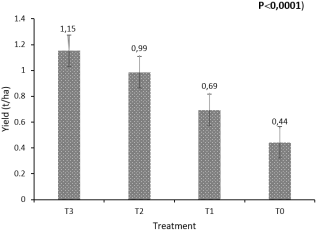
This study was initiated with the aim of evaluating the influence of cow dung doses on the morphological, physiological, and agronomic parameters of the mung bean grown in the field. The trial was conducted using a completely randomized block experimental design with four treatments (T0= controls; T1= 2 tonnes/ha cow dung; T2= 3 tonnes/ha cow dung; T3= 4 tonnes/ha cow dung) and four replicates. The results showed that cow dung had a very highly significant positive effect on the morphological, physiological and agronomic parameters of the mung bean, except for the weight of 100 seeds where the effect was not significant. Treatment 3 (T3) had more effects on the grain yield of the mung bean (1.15 t/ha) compared to the T2, T1, T0 treatments (respectively 0.99 t/ha; 0.69 t/ha; 0.44 t/ha). This corresponds to yield increases of 163% (T3), 125% (T2) and 56% (T1) compared to the unfertilized T0 control. From these results, it appears that the tonnes/ha dose had significant effects on the parameters studied compared to the other treatments. The contribution of cow dung in the production of mung bean is therefore highly recommended to producers in order to optimize yields.

Published in American Journal of Bioscience and Bioengineering (Volume 14, Issue 6)
DOI 10.11648/j.bio.20261406.11
Page(s) 110-119
Creative Commons

This is an Open Access article, distributed under the terms of the Creative Commons Attribution 4.0 International License (http://creativecommons.org/licenses/by/4.0/), which permits unrestricted use, distribution and reproduction in any medium or format, provided the original work is properly cited.

Copyright

Copyright © The Author(s), 2026. Published by Science Publishing Group

Keywords

Agronomic, Cow Dung, Dose, Mung Bean, Morphological

1. Introduction
In Burkina Faso, agriculture occupies a predominant place in the economy. Indeed, it employs 84.5% of the population and contributes 33% to the Gross Domestic Product . However, this agriculture is essentially subsistence agriculture and is based on food crops (sorghum, millet, maize, rice, cowpeas, and fonio), with average yields of less than 850 kg/ha . It is characterized by the poor management of basic resources such as land, water and forests, which often results in irreversible degradation .
Anthropogenic pressure also contributes to negatively influencing the ability of soils to provide better yields in order to meet increasingly growing food needs. In such a context, producers are no longer able to maintain fallow land over long periods of time and proceed to cultivate marginal areas, thus exacerbating the phenomenon of soil degradation. In addition, climate change increases rainfall variability and weakens ecosystems, thus posing a potential risk to food security . In this dynamic, the diversification of agricultural production with the promotion of short-cycle species with high nutritional value is becoming a necessity.
It is in this sense that a legume with high potential, called mung bean (Vigna radiata L. Wilczek), has been introduced into Burkinabe agriculture. It has been disseminated thanks to its promotion by Larlé Naaba Tigré, a customary chief of Ouagadougou .
Mung bean produces protein-rich seeds that can help limit malnutrition problems . Mung bean seeds are high in dietary fibers and proteins and are also a source of iron, magnesium, potassium, and a numerous of essential amino acids. It has interesting potential for smallholders in semi-arid areas of Africa given its hardiness and drought tolerance . In addition to being the main source of food and feed, it plays an important role in maintaining soil fertility by improving the physical properties of the soil and fixing atmospheric nitrogen.
In addition, the average yields of mung bean are very low in some areas , such as Burkina Faso. This can be explained by the poverty of the soil and the vagaries of the climate. To cope with these constraints, producers use mineral fertilizers.
Nowadays, with the high cost of mineral fertilizers as well as the dangers associated with their use, it is therefore becoming imperative to use organic manure . The use of organic manure influences agricultural sustainability by improving the physical, chemical and biological properties of soils . Studies on the beneficial effect of cow dung on mung bean growth and yield have not been sufficiently in-depth. It is with this in mind that cow dung was chosen as an organic manure in order to increase the agronomic potential of mung bean. The objective of our study is to evaluate the effects of organic manure doses (cow dung) on the physiological, morphological and agronomic parameters of field-grown mung bean. The interest of this study is based on the knowledge on organic fertilization that can contribute to a better management of soil fertility for mung bean production in Burkina Faso.
2. Materials and Methods
2.1. Presentation of the Study Environment
The trial was conducted during the 2023 winter season, on the site of the Tenkodogo University Center (11°48'37'' North and 0°22'19'' West). This site is located in the province of Boulgou, more precisely in the urban commune of Tenkodogo. The commune of Tenkodogo is located in the northern part of the province of Boulgou, in the Centre-Est region of Burkina Faso. It covers an area of 1147 km2. The commune of Tenkodogo occupies a geostrategic position that promotes trade with Togo and Ghana .
The climate of Tenkodogo is of the Sudano-Sahelian type. It is characterized by the alternation of two (02) very contrasting seasons : a dry season extending from November to May, during which the area is subject to the continental trade wind or harmattan regime, and a rainy season or wintering season whose rainfall extends from June to October . Rainfall is characterized by its irregularity and poor distribution.
The physical characterization of the soil of the study site shows that it belongs to the class of iron and manganese sesqui-oxide soils. It is a shallow indurated leached ferruginous tropical soil (FTLIPP) according to the French classification . Its texture is sandy in the 0-16 cm layers and sandy-clayey in the 16-36 cm layers resting on a ferruginous shell. In terms of chemical characteristics, the soil is poor in mineral elements and organic matter.
2.2. Plant Material
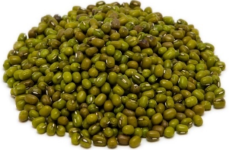
The plant material used is a variety of mung bean (Vigna radiata (L.) Wilczek) from the Institute of the Environment and Agricultural Research (INERA) called BENG TIGRE which means in English "bean that satisfies". The choice of this variety is due to the fact that it has an early semi-maturity cycle (50 days) and that it adapts to precarious climatic conditions and gives good yields. The mung bean adapts to areas with rainfall greater than 400 mm and is tolerant of drought and excess humidity. It has a potential yield of 1.4 t/ha in a farm and 1 t/ha in a farming environment. The color of mung bean seeds is generally green (Figure 1).
Figure 1. Mung bean seeds.
2.3. Fertilizer Used
For the trial, only one type of organic manure was used: cow dung. Cow dung, as its name suggests, is the feces of oxen. It has chemical properties that are favorable to the proper development of plants (Table 1).
Table 1. Cow dung chemical components.

Constituent

(%)

Tradable Bases

(g/kg)

Trace metal elements

(meq/100g)

CEC

pH

Organic matter

15,03

Ca2+

7,6

Fe2+

0,329

17

9,3

Organic carbon

8,72

Mg2+

2,99

Zn2+

0,066

Total Nitrogen

0,88

K+

2,4

Pb2+

0

Assimilable Phosphorus

0,015

Na+

0,89

(Source: ).
2.4. Experimental Design
The experimental design used is a completely randomized Fisher block with 4 treatments and 4 replicates, with 16 elementary plots. The elementary plot consists of 4 lines with 5 pockets each. The spacing is 0.5 m between the lines and 0.4 m between the pockets. Each elementary plot is 2.6 m long and 2 m wide, i.e. an area of 5.2 m2. The blocks are separated from each other by 0.5 m and the elementary plots by 0.4 m. The total area of the trial is 110.2 m2 (11.6 m x 9.5 m). Cow dung was applied to the plots at a rate of 2 tonnes/ha, 3 tonnes/ha, and 4 tonnes/ha, respectively.
The different treatments are:
1) Treatment 0 (T0): unfertilized control plots;
2) Treatment 1 (T1): plots fertilized with cow dung at the rate of 2 tonnes/ha;
3) Treatment 2 (T2): plots fertilized with cow dung at the rate of 3 tonnes/ha;
4) Treatment 3 (T3): plots fertilized with cow dung at the rate of 4 tonnes/ha.
2.5. Conduct of the Experiment
A flat ploughing was carried out on 06/07/2023 using the bovine plough. After ploughing, the staking was done of a few centimeters and labels were used to delimit the plots in accordance with the experimental set-up.
With the help of the hoe, harrowing and levelling made it possible to prepare the seedbed.
Sowing was carried out on 11/07/2023 at spacings of 40 cm x 50 cm according to the protocol at a rate of 20 kg/ha. Each elementary plot includes four rows of twenty (20) pockets, i.e. three hundred and twenty (320) pockets for all the plots. Weed control was ensured by manual weeding. Three (03) weedings were carried out, the first at 10 days, the second at 26 days and the third at 41 days after sowing (DAS). Demarriage was carried out at 20 DAS at one plant per pocket, eliminating stunted plants. Three fertilizations with decomposed cow dung were carried out respectively at 15, 30, 45 DAS. Cow dung was applied to the feet of the plants at a rate of 50 g per pocket for T1 (1 kg per plot or 2 tonnes/ha), 75 g per pocket for T2 (1,5 kg per plot or 3 tonnes/ha) and 100 g per pocket for T3 (2 kg per plot or 4 tonnes/ha).
A Neem extract solution was sprayed on the plants on 50 DAS to prevent pest threats. The solution was prepared and deposited for 24 h before application. We carried out four (04) harvests. The first harvest took place on 60 JAS, the second at 75 DAS, the third 83 DAS and the last one on 91 DAS.
Harvesting was done according to the ripening of the pods. Harvesting is done when the mature pods turn brown and black. The harvest was done by hand and the pods placed in polyethylene bags. These harvested pods are dried in the sun, threshed and then winnowed.
2.6. Data Collection
The data collection based on observations is focused on physiological, morphological and agronomic parameters.
2.6.1. Morphological Parameters
1) Plant Height (PH): Plant height expressed in centimeters (cm) was measured from the crown to the terminal bud using a ruler.
2) Diameter at the Collar of the plants (DC): The diameter at the crown of the stems in millimeters (mm) was measured using an electronic caliper.
3) Number of Leaves per plant (NL): The leaves of the plants selected in each elementary plot were counted manually.
All these parameters were measured at the 20th, 40th and 60th DAS, i.e. 10 days after fertilization. Measurements were taken on 4 randomly selected individuals from each elementary plot and averages determinate.
2.6.2. Physiological Parameters
1) Beginning of flowering (BFlo): This is the date of appearance of the first flower in each elementary plot. The plots were observed until the appearance of the first flower and the different dates recorded.
2) Date of 50% flowering (Flo50): This is the date on which 50% of the plants have at least one flower. Thus, the flowering plants were observed every day until 50% of the plants bore flowers.
3) Beginning of maturity (BMat): This is the date on which at least one plant in each elementary plot bears a mature pod. The plots were followed until the appearance of mature pods and the various corresponding dates noted.
4) Date of 50% maturity (Mat50): This is the date when 50% of the plants bear mature pods. The elementary plots were monitored until 50% of the plants bore mature pods.
All these parameters were determined in each elementary plot for each treatment. Averages are expressed in numbers of days after sowing (DAS).
2.6.3. Agronomic Parameters
1) Pod Length (PL): After harvest, four (04) pods of the four plants were selected from each elementary plot and then measured using a ruler graduated in centimeters.
2) Average seed Diameter (ASD): After harvest, the kernel diameter in millimeters (mm) was measured using an electronic caliper for the four (04) plants retained in each plot.
3) Number of Pods per Plant (NP/P): The number of pods was counted during the four harvests. The pod count was for the four individuals initially selected from each elementary plot.
4) Number of Seeds Per Plant (NS/P): After drying, the seeds of each plant were counted and stored in poly bags.
5) Pod Dry Mass per Plant (PDM/P): The pods of each plant were weighed using a scale after drying in the sun.
6) Dry Seed Mass Per Plant (DSM/P): After threshing and winnowing, the seeds of each elementary plot were weighed using an electronic scale to determine the total weight of seeds per plot.
7) Mass of 100 Seeds per plant (M100S): After winnowing, 100 seeds were selected from the total seeds of each plant. They were weighed using an electronic scale.
8) Mass of Dry Above-ground Biomass per Plant (MDAB/P): After harvesting, the whole plants were dug up and then spread out in the sun for two (02) weeks for drying. The biomass of each plant was weighed on the electronic scale after drying.
9) Grain yield per hectare: The seeds of each elementary plot were weighed for the evaluation of the seed yield. The yield in tonnes per hectare is obtained by the following formula:
Yield (t/ha) = Seed mass (kg) x 10000 m2(1)
Plot area (m2) x 1000
2.7. Data Statistical Analysis
The Excel 2016 spreadsheet was used for our data entry and graphs. Statistical analyses were performed with the XLSTAT 2023 software version 2.1414.1414. An analysis of variance (ANOVA) was performed to detect significant differences between the different treatments. The Newmann and Keuls test at the 5% threshold was used to separate the means.
3. Results
3.1. Effects of Different Doses of Cow Dung on the Morphological Parameters of the Mung Bean
3.1.1. Effects of Different Doses of Cow Dung on the Number of Leaves of the Mung Bean
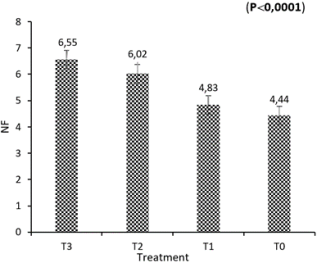
Figure 2 shows the results on the number of mung bean leaves according to the different treatments. The analysis of variance showed a very highly significant difference (p0.0001) in the treatments on the number of mung bean leaves. Figure 2 also shows that T3 (4 tonnes/ha cow dung) and T2 (3 tonnes/ha cow dung) have the highest averages (6.56 and 6.02 leaves, respectively), compared to T1 (2 tonnes/ha cow dung) and T0 (control) treatments, which obtained 4.83 and 4.44 leaves, respectively.
T3 has the highest average, followed by T2, T1 and T0 respectively. This shows that the T3 treatment (4 tonnes/ha of cow dung) is most suitable for the development of Mung bean leaves.
Figure 2. Mung bean Number of leaves (NL) depending on the treatments.
T0: control treatment; T1: treatment 1 (2 tonnes/ha cow dung); T2: treatment 2 (3 tonnes/ha cow dung); T3: treatment 3 (4 tonnes/ha cow dung).
3.1.2. Effects of Different Doses of Cow Dung on the Height of Mung Bean Plants
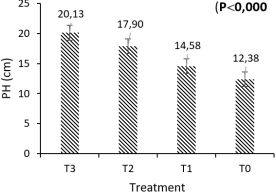
Figure 3 shows the results of the treatments on mung bean plant height. The analysis of variance indicated a very highly significant difference (p0.0001) in the treatments on plant height. Figure 3 shows that treatment 3 (T3) obtained the highest average in plant height (20.13 cm) followed by T2 (17.9 cm); T1 (14.58 cm); T0 (12.38 cm). This means that treatment 3 (T3) is most suitable for the tall development of mung bean plants.
Figure 3. Plant height (PH) of mung bean depending on the treatments.
T0: control treatment; T1: treatment 1 (2 tonnes/ha cow dung); T2: treatment 2 (3 tonnes/ha cow dung); T3: treatment 3 (4 tonnes/ha cow dung).
3.1.3. Effect of Different Doses of Cow Dung on the Crown Diameter of Mung Bean Plants
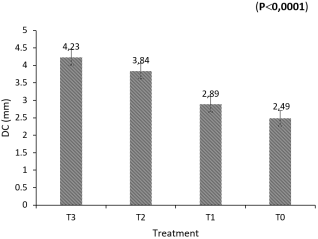
Figure 4 shows the results of the different treatments on the crown diameter of mung bean plants. The analysis of variance revealed that the treatments have a very highly significant difference (p0.0001) on the crown diameter of the plants. Figure 4 also shows that T3 obtained the highest average crown diameter (4.23 cm) compared to the other treatments (respectively 3.84 cm, 2.89 cm, 2.49 cm for T2, T1, T0). Treatment 3 (T3) is therefore most suitable for the good development of the crown of mung bean plants.
Figure 4. Diameter at the Collar (DC) of Mung bean plants as a function of treatments.
T0: control treatment; T1: treatment 1 (2 tonnes/ha cow dung); T2: treatment 2 (3 tonnes/ha cow dung); T3: treatment 3 (4 tonnes/ha cow dung).
3.2. Effects of Different Doses of Cow Dung on the Physiological Parameters of the Mung Bean
The statistical analysis (Table 2) shows that the cow dung doses had a very highly significant effect (p<0.0001) on all the physiological parameters of the mung bean studied. The results reveal that the plants subjected to treatment 3 (T3) took a minimum of days after sowing (32.5 DAS) for flowering, 50% flowering, maturity, and 50% maturity followed by those of T2 and T1. However, the flowering of the plants of the control treatment (T0) was late (37.25 DAS).
For the T0 control treatment, the 50% flowering date was late (46 DAS).
The maximum number of days of maturity (55.25 DAS) was recorded with T0.
Table 2. Analysis of variance of physiological parameters of the mung bean.

Treatment

BFlo (DAS)

Flo50 (DAS)

BMat (DAS)

Mat50 (DAS)

T0

37,25±0,50b

46,00±0,00b

55,25±0,50b

62,00±0,00b

T1

34,25±0,50a

40,00±0,00a

53,75±0,50a

58,25±0,50a

T2

33,75±0,50a

40,00±0,00a

53,00±0,00a

58,00±0,00a

T3

32,50±0,58a

39,75±0,50a

53,00±0,00a

58,00±0,00a

Pr > F

<0,0001

<0,0001

<0,0001

<0,0001

Significance

VHS

VHS

VHS

VHS

BFlo: Beginning of Flowering; Flo50: Date of 50% Flowering; BMat: Beginning of Maturity; Mat50: Date of 50% maturity; T0: control treatment; T1: treatment 1 (2 tonnes/ha cow dung); T2: treatment 2 (3 tonnes/ha cow dung); T3: treatment 3 (4 tonnes/ha cow dung); VHS: Very Highly Significant. In the same column, the values bearing the same letter are not significantly different at the 5% threshold.
3.3. Effects of Different Doses of Cow Dung on the Agronomic Parameters of Mung Bean
3.3.1. Effects of Different Doses of Cow Dung on the Agronomic Performance of Mung Bean
Table 3 presents the results of the treatments on the agronomic performance of the mung bean. The analysis of variance shows a very highly significant difference in the number of pods per plant, the weight of pods per plant, the number of seeds per plant, the weight of seeds per plant and the weight of biomass per plant (p<0.0001). However, treatment 3 (T3) performs better on these parameters in terms of average compared to the others.
As for the weight of 100 seeds per plant, the analysis shows no significant difference at the 5% threshold (p = 0.104). However, the control treatment (T0) is illustrated by a low average of 5.88 g compared to T3, T2, T1 which have 6 g each.
For the mean seed diameter, the analysis at the 5% threshold shows a significant difference between the treatments (p = 0.01). Treatment 3 (T3) has the highest average (3.78 mm).
The analysis shows a highly significant difference between the treatments in terms of pod length (p = 0.001). Treatment 3 (T3) is illustrated by a high average (9.81 cm).
3.3.2. Effect of Different Cow Dung Rates on the Grain Yield of the Mung Bean
Figure 5 presents the results of the different treatments on the yield of mung bean grains. The analysis of variance showed a very highly significant difference (p<0.0001) between the treatments. The results show that treatment 3 (T3) had more effects on the grain yield of the mung bean (1.15 t/ha) compared to T2, T1 and T0 (respectively 0.99 t/ha; 0.69 t/ha; 0.44 t/ha).
Figure 5. Mung bean grain yield as a function of treatments.
T0: control treatment; T1: treatment 1 (2 tonnes/ha cow dung); T2: treatment 2 (3 tonnes/ha cow dung); T3: treatment 3 (4 tonnes/ha dung).
Table 3. Agronomic parameters of mung bean according to treatments.

Treatment

NP/P

DMP/P (g)

NS/P

DMS/P (g)

M100S (g)

MDAB/P (g)

ASD (mm)

PL (cm)

T3

57,31±5,40d

43,93±5,94c

745,06±70,23d

30,13±3,44c

6,00±0,00b

14,31±1,46c

3,78±0,03b

9,81±0,16c

T2

47,94±4,18c

39,06±3,06c

623,19±54,36c

25,75±1,83c

6,00±0,00b

12,63±1,39c

3,73±0,03ab

9,56±0,18bc

T1

33,63±2,42b

27,19±1,46b

437,13±31,51b

18,75±2,27b

6,00±0,00b

8,25±2,12b

3,71±0,01ab

9,31±0,04ab

T0

20,50±3,46a

18,44±2,45a

266,50±60,04a

11,56±1,70a

5,88±0,25a

5,44±1,74a

3,67±0,03a

9,03±0,21a

Pr > F

<0,0001

<0,0001

<0,0001

<0,0001

0,104

<0,0001

0,01

0,001

Significance

VHS

VHS

VHS

VHS

NS

VHS

S

HS

NP/P: Number of Pods per Plant; DMP/P: Dry Mass of Pods per Plant; NS/P: Number of Seeds per Plant; DMS/P: Dry Mass of Seeds per Plant; M100S: Mass of 100 Seeds per plant; MDAB/P: Mass of Dry Above-ground Biomass; ASD: Average Seed Diameter; PL: Pod Length per plant; T0: control treatment; T1: treatment 1 (25 kg/ha cow dung); T2: treatment 2 (3 tonnes/ha cow dung); T3: treatment 3 (4 tonnes/ha cow dung); NS: Not Significant; S: Significant; HS: Highly Significant; VHS: Very Highly Significant. In the same column, the values bearing the same letter are not significantly different at the 5% threshold.
4. Discussion
4.1. Effects of Cow Dung Doses on the Morphological Parameters of the Mung Bean
The results show that the doses of cow dung had a very highly significant effect on the morphological parameters of the mung bean. Indeed, the height of the plants, the number of leaves and the diameter at the collar increase with increasing doses of cow dung. The plots fertilized with the 4 tonnes/ha dose provided the best morphological performance in contrast to the unfertilized plots. These results could be explained by the fact that high doses of cow dung would have improved the physicochemical properties of the soil in nutrients as described by , on cassava cultivation. According to , phosphorus and nitrogen are major elements that ensure good performance for plant growth and yield. Studies by and have shown that potassium is involved in stimulating growth via leaf elongation. , emphasize that the growth of a crop depends on the availability of nutrients provided by fertilizers. Thus, organic fertilizers modify the characteristics of the soil by increasing its capacity in the field and cation exchange, leading to the stability of aggregates, water infiltration and air distribution. In addition, the work of , showed that the increasing availability of soil nutrients, provided by organic manure, also increases their absorption by plant roots.
The poor results observed in the control plots may be due to the physicochemical conditions of the soil. According to , plant growth can be attributed to characteristic factors of the soil, including pH and nutrient deficiencies.
4.2. Effects of Cow Dung Doses on the Physiological Parameters of the Mung Bean
The analysis of variance at the 5% threshold revealed that the doses of cow dung had a very highly significant effect on the physiological parameters of the Mung bean. The increasing doses led to an early appearance of flower buds as well as mature pods. Late dates were recorded in the control plots. These results could be explained by the fact that the mineralization of cow dung provided essential nutrients (especially phosphorus) for the flowering of the plants and the maturation of the pods. According to the , phosphorus is an essential element that would promote flower initiation and fruit ripening. In addition, these results showed that the use of cow dung at relatively high doses would promote significant flowering and fruiting ranging from floral initiation to fruit size.
Our results are consistent with those obtained by . By applying organic manure (vermicompost, cow dung, poultry manure) to mung bean varieties, they observed an 80% precocity of flowering and maturity of the pods compared to control plots and plots fertilized with inorganic manure. For these authors, the flowering and maturity of the early pods of the mung bean are due to the absorption of the quantities of nutrients (N, P and K) provided by these different organic manures. Organic fertilizers give the mung bean plant favorable conditions for nutrient absorption. Similar results have been reported by .
4.3. Effects of Cow Dung Doses on the Agronomic Parameters of Mung Bean
The results show a positive effect of cow dung on yield components. The analysis of variance at the 5% threshold reveals a very highly significant effect of cow dung doses on the number of pods per plant, the total pod weight per plant, the number of seeds per plant, the total seed weight and dry biomass. As for pod lengths and mean seed diameter, the rates showed highly significant and significant differences respectively. Our results are consistent with those obtained by . By applying organic manure (vermicompost) on the mung bean, they found a considerable increase in yield attributes. Indeed, the application of fertilizer has caused a gradual increase in yield components and confirms the work of . They showed that eggplant agronomic parameters improved with increasing cow dung doses. Also in some authors such as , increasing organic manure rates led to an increase in agronomic parameters in maize. Rates ranging from 3 to 4 tonnes/ha had greater effects on agronomic parameters compared to the control. This could be explained by the fact that these rates met the nutrient requirements (N, P and K) of the soil. In addition to providing essential nutrients, they improve the physical (mineral and water retention capacity), chemical (cation exchange capacity) and biological properties of the soil. However, our results are contrary to those of . Indeed, these researchers have shown that tomato yield and its components decrease with increasing doses. This situation could be explained by the difference in organic fertilizers, the dose and the plants used in our trial. According to them, the mineral elements provided by maximum doses (30 t/ha) of organic manure are beyond the plant's needs and would lead to antagonistic effects.
For the weight of 100 seeds per plant, there is no significant difference at the 5% threshold. The high weight (6 g) was recorded with the doses of 4 tonnes/ha, 3 tonnes/ha and 2 tonnes/ha of cow dung and the low weight (5.88g) observed at the control level. This is consistent with the results of . These authors, when applying phosphate fertilizers and oil palm ash to the mung bean, did not find a significant difference in terms of weight of 100 seeds per plant. For the latter, this would be explained by the high phosphorus content and acidity of the soil, which make phosphorus remain bound and difficult for plants to absorb. also reported that generally in acidic soils, the dominant micronutrients are higher than the macronutrients. The low weights of 100 seeds per plant at the control level could also be due to the high temperatures (scalding).
At the 5% threshold, the analyses revealed a very highly significant difference in cow dung doses on the grain yield of the mung bean. The 4 tonnes/ha dose gave high yields (1.15 t/ha) unlike the control (0.44 t/ha). This yield is higher than the potential yield in a farmer environment (1 t/ha) in Burkina Faso. The high seed yield would be explained by the number of pods and the large above-ground dry biomass. This is consistent with the results of who showed that there is a correlation between yield and above-ground dry biomass. According to , morphological and agronomic parameters are determining variables in cowpea yield. These authors have also demonstrated that organic manure has the ability to enhance the development of morphological and agronomic components that predict cowpea yield. Authors who have worked on mung bean have shown a correlation between yield attributes and seed yield.
5. Conclusions
The results of the study showed that the different parameters of mung bean vary according to the doses applied. The plants that received the 4 tonnes/ha dose of cow dung gave the best performance compared to the others. Thus, the dose of 4 tonnes/ha of cow dung appears to be an optimal dose for the good growth and production of the mung bean. The contribution of cow dung in the production of the mung bean seems innovative and beneficial for producers.
This study deserves to be continued over several seasons and in different areas in order to evaluate maximum doses of cow dung on the mung bean and to evaluate the medium and long-term effects of cow dung on the physical and chemical properties of the soil.
Limitations of the study
The results of this study are preliminary and are realized in single-season. They cannot be generalized.
Abbreviations

ANOVA

Analyze of Variance

ASD

Average Seed Diameter

BFlo

Beginning of Flowering

Bmat

Beginning of Maturity

DAS

Days After Sowing

DC

Diameter at the Crown

DSM/P

Dry Seed Mass Per Plant

Flo50

Date of 50% Flowering

HS

Highly Significant

INSD

National Institute of Statistics and Demography

M100S

Mass of 100 Seeds

Mat50

Date of 50% Maturity

MDAB/P

Mass of Dry Above-ground Biomass Per Plant

NL

Number of Leaves

NP/P

Number of Pods Per Plant

NS

No Significant

NS/P

Number of Seeds Per Plant

PDM/P

Pod Dry Mass Per Plant

PH

Plant Height

PL

Pod Length

S

Significant

VHS

Very Highly Significant

Author Contributions
Zeya Kabore: Conceptualization, Data curation, Formal Analysis, Investigation, Methodology, Project administration, Resources, Software, Supervision, Validation, Visualization, Writing – original draft, Writing – review & editing
Omar Kabore: Data curation, Formal Analysis, Investigation, Methodology, Project administration, Software, Writing – original draft
Conflicts of Interest
The authors declare no conflicts of interest.
References
[1] INSD, 2008. 2006 General Population and Housing Census. Burkina Faso, 52p.
[2] DPSAA, 2011. Directorate of Agricultural and Food Forecasting and Statistics: Paper by the SPFS Directorate at scientific conferences. Burkina Faso, 211p.
[3] Maldague M., 2010. The forest, the last hope for our earth? International Council for Mesologic Education (ICES), Copy of the Capital, Quebec, Canada, 112p.
[4] Taonda S. J. B., 1995. Evolution of soil fertility on a pioneer front in the northern Soudanian zone of Burkina Faso. PhD thesis, Nancy. France, 133p.
[5] Badolo M., 2008. Indications on the potential impacts of climate change on food security in the Sahel. Climate Change Notebook. Monthly Climate Change Information Bulletin of the Institute for Application and Popularization in Science. 1-9p.
[6] Douce S., 2018. In Burkina Faso, Her Majesty's Magic Beans. The World Africa. 58-88. Available on:
[7] Nair R. M., Thavarajah D., Giri R. R., Ledesma D, Yang R. Y., 2015. Mineral and phenolic concentrations of mung bean (Vigna radiata L.) grown in semi-arid tropical India. Journal of Food Composition and Analysis, 39: 23-32.
[8] Keatinge J. D. H., Easdown W. J., Yang R. Y., Chadha M. L., Shanmuga-Sundaram S., 2011. Overcoming chronic malnutrition in a future warning world: the key importance of Mung bean and vegetable soybean. Euphytica 180 (1): 129-141.
[9] Hassan R., 1997. Growth and yield response of mung bean to different seeding rates and phosphorus levels. M. Sc. Thesis, Department of Agronomy, Faisalabad University of Agriculture, Pakistan, 212p.
[10] Hien E., Masse D., Kabore W. T., Dugué P. and Lepage M., 2011. Soil organic inputs and water conservation practices are the sustainable farming systems in the sub-Sahelian zone of Burkina Faso. 23p.
[11] Saha S., Mina B. L., Gopinath K. L., Kundu S., Gupta H., 2008. Relative changes in phosphatase activities influenced by the source and rate of application of organic composts in field crops. Bioresources Technology. 99: 1750-1757.
[12] Guelbeogo S., 2022. Environmental and social impact notice of the project to build a CEG in the commune of Tenkodogo, Province of Boulgou, Centre Region within the framework of the PAAQE-FA. Ministry of National Education, Literacy and Promotion of National Languages. Project to improve access to and quality of education (PAAQE-FA), 32-47.
[13] Fontes J. and Guinko S., 1995. Map of the vegetation and land cover of Burkina Faso. Explanatory note. Toulouse, Institute of the International Vegetation Map, Institute of Rural Development, Faculty of Science and Technology, University of Ouagadougou, Burkina Faso, 67p.
[14] CPCS, 1967. Pedology and Soil Mapping Committee French. Classification of Soils. 1967 edition, 87p.
[15] Guei A. M., Zro R. G., Kouassi K. P., 2020. Study of the effect of different doses of cattle strawberry dung on the productivity of a sandy soil used in market gardening in Daloa, Centre-West of Ivory Coast. Afrique Science. 16(1): 92-105.
[16] Ognalaga M., Daglih M. M., Samson D. M. M., Paul O. O., 2017. Effects of cow dung, NPK 15 15 15 and 46% urea on the growth and production of cassava (Manihot esculenta creantz var 0018) in southeastern Gabon (Franceville). Journal of Animal and plant Science, 31(3): 5063-5073.
[17] Ognalaga M., Odjogui P., Lekambou J., Poligui R., 2015. Effect of sugarcane scum, powder and compost based on Chromolaena odorata (L.) King R. M. and H. E. Rob on the growth of Guinea sorrel Hibiscus sabdariffa L.). Int. J. BioL. Chem. Sci., 9(5): 2507-2519.
[18] Hopkins W., 2003. Plant Physiology. Boeck's Edition, University of Brussels: Belgium, 532p. 45 48 93 65.
[19] Mollier A., 1999. Root growth of maize (Zea mays L.) under phosphorus deficiency. Experimental study and modeling. PhD thesis. University of Paris XI Orsay. Paris, France. 200p.
[20] Mukendi T. R., Mutamba N. B., Kabongo M. D., Tshilumba M. T., Mpoyi B. M, et Munyuli M. T., 2017. Varietal evaluation of some cowpea (Vigna unguiculata L. Walp) genotypes under agro-ecological conditions in Kabinda, province of Lomami, Democratic Republic of Congo. Afrique Science, 13(2): 34-31.
[21] Yerima B. P. K., Tiamgne A. Y., Rans V. E., 2014. Response of two sunflower varieties (Helianthus sp) to chicken droppings fertilization on a Hapli-Humic Ferasol from Yongka Western Highlands Research Garden Park (YWHRGP), Nkwen-Bamenda, Cameroon, Central Africa. Tropicultura. 32(4): 168-176.
[22] Mukalay M. J., Shytcha M. N., Shomba J. K., Mulowayi K. A., Kamb C. F. and Ngongo M. L., 2008. Causes of a strong heterogeneity of plants in a maize field in the pedoclimatic conditions of Lubumbashi. University Press of Lubumbashi, Annals of the Faculty of Agricultural Sciences, 1(2) 441-436.
[23] FAO, 2012. The state of food security in the world, the economic growth necessary but not sufficient to accelerate the reduction of hunger and malnutrition, 73p.
[24] Hossain E. M., Maryland S. I., et Rahaman S. D. M., 2018. Growth performance and development attributes of Mungbean (Vigna radiata L.) influenced by organic manure and inorganic fertilizers. Asian Journal of Advances in Agricultural Research, 7(2): 1-13.
[25] Ali M. E., Khanam D., Bhuiyan M. A. H., Khan M. S., 2005. Effect of Rhizobium inoculation to different varieties of mung bean (Vigna radiata L. Wilczek). BARI, Annual Report.
[26] Kumawat N., Sharma O. O., et Kumar R., 2009. Effect of Organic manures, PSP and phosphorus fertilization on yield and economics of mung bean (Vigna radiata L. Wilczek). Environmnent and Ecolygy, 27(1): 5-7.
[27] Djinet I. A., Ganon F., Nguinambaye M. M., Roh J., 2023. Test for the evaluation of agromorphological parameters of eggplant (Solanum aethiopicum L.) subjected to organic treatment. International Journal of Advanced Research (IJAR), 11(09): 582-591.
[28] Bakayoko S., Adobi A. H., Konaté Z., Touré N. U., 2019. Comparative Effect of Dried Cow Dung and Sawdust on Maize Growth and Yield (Zea mays L.). Agronomie Africaine, 8(1), 63-72.
[29] Kitabala M, Tshala U, Kasangip K, Mulang T, Kammana N, Nyembo K., 2016. Integration and exploitation of the after-effects of human faeces for the improvement of soil chemical fertility and production of maize (Zea mays L.) cultivation in Lubumbashi, DRC. Journal of Applied Biosciences, 108(1): 10480.
[30] Muhammad N. F., Hasanah Y., and Mariati., 2020. Production response of mung bean (Vigna radiata L. Wilczek) on the application of phosphorus fertilizer and oil palm bunch ash. Indonesian Journal of Agricultural Research, 3(1): 48-55.
[31] Mitran T., Meena R. S., Lal R., Kumar S, et Diatta R., 2018. Role of soil phosphorus on legume production. In Legumes for Soil Health and sustainable Management, R. S. Meena, A. Das, G. S. Yadav, and R. Lal; Ed. Springer. 30-45.
[32] Kabore Z., Kabore S. A., Ouedraogo F. R., Kihindo A. P., Dondasse E., Silga A., Bazie R. H., Dianou D., and Zombre G., 2023. Effects of three types of organic manure on the agro-morphological parameters of cowpea cultivated in Burkina Faso. International Journal of Innovation and Applied Studies, 41(2): 428-436.
Cite This Article
  • APA Style

    Kabore, Z., Kabore, O. (2026). Effects of Different Doses of Organic Manure on the Agronomic Performance of Field-grown Mung Bean (Vigna Radiata (L.) R. Wilczek. American Journal of Bioscience and Bioengineering, 14(6), 110-119. https://doi.org/10.11648/j.bio.20261406.11

    Copy | Download

    ACS Style

    Kabore, Z.; Kabore, O. Effects of Different Doses of Organic Manure on the Agronomic Performance of Field-grown Mung Bean (Vigna Radiata (L.) R. Wilczek. Am. J. BioSci. Bioeng. 2026, 14(6), 110-119. doi: 10.11648/j.bio.20261406.11

    Copy | Download

    AMA Style

    Kabore Z, Kabore O. Effects of Different Doses of Organic Manure on the Agronomic Performance of Field-grown Mung Bean (Vigna Radiata (L.) R. Wilczek. Am J BioSci Bioeng. 2026;14(6):110-119. doi: 10.11648/j.bio.20261406.11

    Copy | Download

  • @article{10.11648/j.bio.20261406.11,
      author = {Zeya Kabore and Omar Kabore},
      title = {Effects of Different Doses of Organic Manure on the Agronomic Performance of Field-grown Mung Bean (Vigna Radiata (L.) R. Wilczek},
      journal = {American Journal of Bioscience and Bioengineering},
      volume = {14},
      number = {6},
      pages = {110-119},
      doi = {10.11648/j.bio.20261406.11},
      url = {https://doi.org/10.11648/j.bio.20261406.11},
      eprint = {https://article.sciencepublishinggroup.com/pdf/10.11648.j.bio.20261406.11},
      abstract = {This study was initiated with the aim of evaluating the influence of cow dung doses on the morphological, physiological, and agronomic parameters of the mung bean grown in the field. The trial was conducted using a completely randomized block experimental design with four treatments (T0= controls; T1= 2 tonnes/ha cow dung; T2= 3 tonnes/ha cow dung; T3= 4 tonnes/ha cow dung) and four replicates. The results showed that cow dung had a very highly significant positive effect on the morphological, physiological and agronomic parameters of the mung bean, except for the weight of 100 seeds where the effect was not significant. Treatment 3 (T3) had more effects on the grain yield of the mung bean (1.15 t/ha) compared to the T2, T1, T0 treatments (respectively 0.99 t/ha; 0.69 t/ha; 0.44 t/ha). This corresponds to yield increases of 163% (T3), 125% (T2) and 56% (T1) compared to the unfertilized T0 control. From these results, it appears that the tonnes/ha dose had significant effects on the parameters studied compared to the other treatments. The contribution of cow dung in the production of mung bean is therefore highly recommended to producers in order to optimize yields.},
     year = {2026}
    }
    

    Copy | Download

  • TY  - JOUR
    T1  - Effects of Different Doses of Organic Manure on the Agronomic Performance of Field-grown Mung Bean (Vigna Radiata (L.) R. Wilczek
    AU  - Zeya Kabore
    AU  - Omar Kabore
    Y1  - 2026/11/13
    PY  - 2026
    N1  - https://doi.org/10.11648/j.bio.20261406.11
    DO  - 10.11648/j.bio.20261406.11
    T2  - American Journal of Bioscience and Bioengineering
    JF  - American Journal of Bioscience and Bioengineering
    JO  - American Journal of Bioscience and Bioengineering
    SP  - 110
    EP  - 119
    PB  - Science Publishing Group
    SN  - 2328-5893
    UR  - https://doi.org/10.11648/j.bio.20261406.11
    AB  - This study was initiated with the aim of evaluating the influence of cow dung doses on the morphological, physiological, and agronomic parameters of the mung bean grown in the field. The trial was conducted using a completely randomized block experimental design with four treatments (T0= controls; T1= 2 tonnes/ha cow dung; T2= 3 tonnes/ha cow dung; T3= 4 tonnes/ha cow dung) and four replicates. The results showed that cow dung had a very highly significant positive effect on the morphological, physiological and agronomic parameters of the mung bean, except for the weight of 100 seeds where the effect was not significant. Treatment 3 (T3) had more effects on the grain yield of the mung bean (1.15 t/ha) compared to the T2, T1, T0 treatments (respectively 0.99 t/ha; 0.69 t/ha; 0.44 t/ha). This corresponds to yield increases of 163% (T3), 125% (T2) and 56% (T1) compared to the unfertilized T0 control. From these results, it appears that the tonnes/ha dose had significant effects on the parameters studied compared to the other treatments. The contribution of cow dung in the production of mung bean is therefore highly recommended to producers in order to optimize yields.
    VL  - 14
    IS  - 6
    ER  - 

    Copy | Download

Author Information
  • Tenkodogo University Center (CUT), Thomas Sankara University (UTS), Tenkodogo, Burkina Faso

    Biography: Zeya Kabore is an Assistant Professor in Plant Physiology, teacher-researcher at the University Center of Tenkodogo attached to the Thomas SANKARA University in BURKINA FASO. In addition to teaching tasks, she is involved in the training and supervision of students of the Professional Bachelor's degree in Plant Production and Agronomy at the University Center of Tenkodogo. The research activities it has carried out so far have focused on the determination of the various responses of legumes (cowpeas, soybeans, groundnuts, mung bean) to water deficit and organic fertilizers, in particular on morphological, physiological, biochemical and agronomic responses. After her recruitment at the Tenkodogo University Center, she taught this discipline and supervised about twenty students as part of their practical internship in Plant Production and Agronomy on various themes.

    Research Fields: Organic Farming, Soilless Agriculture, Water and Soil Conservation Techniques, Simplified Cultivation Techniques, Biofertilizers, Biopesticides

  • Tenkodogo University Center (CUT), Thomas Sankara University (UTS), Tenkodogo, Burkina Faso

  • Abstract
  • Keywords
  • Document Sections

    1. 1. Introduction
    2. 2. Materials and Methods
    3. 3. Results
    4. 4. Discussion
    5. 5. Conclusions
    Show Full Outline
  • Abbreviations
  • Author Contributions
  • Conflicts of Interest
  • References
  • Cite This Article
  • Author Information