Abstract
Background: The organization of health systems has been largely disrupted by the COVID-19 pandemic. Due to the role of hospitals in the management of serious cases, front-line services have been particularly affected. This study aims to provide information on the capacities and response needs of the health system during COVID-19 pandemic in Senegal. Methods: A cross-sectional survey was carried in 86 facilities at national level and 74 key informants from communities. Three domains were targeted: capacity of health services to maintain essential health services; capacity to manage COVID-19 cases in epidemic treatment centers; community needs and perceptions regarding the use of essential services. Data collection was done by phone. Data analysis included the estimation of tracer indicators using percentages and numbers. Results: The assessment of the capacity of first-line services showed a discontinuity of certain essential services. Concerning the management of suspected and confirmed cases of COVID-19, only one in 2 structures is equipped to perform Rapid Diagnostics Tests. The overall availability of medicines is noted in majority of facilities, while a tiny part has all the tracer medicines. The level of application of barrier measures in facilities, and compliance with guidelines for COVID-19 prevention is low (less than 1 in 5 facilities). Despite communities raised concerns about COVID-19, there was a distrust regarding COVID-19 vaccine. Conclusion: This pilot system demonstrated the possibility of providing tracer indicators during a response to an epidemic, in a diligent and systematic way, through an electronic and telephone data collection, thus helping fast informed decisions making.
Keywords
COVID-19, Essential Health Services, Communities, Health System, Senegal
1. Introduction
On January 30, 2020, WHO (World Health Organization) declared the COVID-19 outbreak as a public health emergency of international concern and a pandemic in March 2020. As of July 2025, the global and African landscapes of the COVID-19 pandemic have evolved significantly since mid-2022. Globally, over 775 million confirmed COVID-19 cases and approximately 7 million deaths have been reported across 232 countries and territories, resulting in a case fatality rate of about 1%
. In Africa, the cumulative number of confirmed COVID-19 cases has surpassed 9.5 million, with over 175,000 deaths reported. In Senegal the first imported case of COVID-19 was reported on March 2, 2020 and three waves were observed as of December 29, 2022, causing a total of 88,900 confirmed cases of COVID-19, including 86,915 cured and 1,968 deaths
. A Response Plan had defined a health component which revolves around 4 main dimensions: epidemiological surveillance, case management in Epidemic Treatment Centers (ETCs), prevention and control of infections (PCI), risk communication and community engagement (RCCE)
| [3] | Ministry of Health and Social Action, (2020). Senegal. Multisectoral Contingency Plan against COVID-19 : A National Strategy. |
[3]
. Vaccination has been added to these measures to reduce the transmission of the virus and improve the prognosis of cases of COVID-19. The COVID-19 pandemic has continued to highlight the fragility of health services and public health systems around the world. It revealed that even strong health systems can be quickly overwhelmed and jeopardized by an epidemic. Many routine and optional services have been postponed or suspended
| [4] | Chippaux, J. P. (2023). Impact of COVID-19 on public health in sub-Saharan Africa. Bull Acad Natl Med, 207(2), 150–64. |
[4]
. Existing delivery arrangements have been subject to adaptation, given that the risk-benefit analyzes of any given activity or service have evolved in the current context of the pandemic
| [5] | Ba I, Desclaux A, Diop M, Ndiaye I, Thiam, M.H. (2021). Ensuring continuity of care at the time of COVID-19: challenges for the Dakar Integrated Support Center for Addictions. Med Trop sante Int, 18, 1(1). |
| [6] | Capdevila, X. (2020). The outstanding adaptability of the French caregivers facing the SARS-CoV-2 pandemic. Anaesthesia and critical care, 6, 281–2. |
[5, 6]
.
Countries, particularly those with Low and Middle Income, continue to face challenges in the availability of prompt, accurate and up-to-date data on response capacities against COVID-19
| [7] | WHO, (2020). SCORE Technical Tool for health data: Global Report on countries’ capacity to produce health Data. |
[7]
. These inadequacies have harmful effects on the quality of responses to the problems generated by the pandemic. Indeed, effective support for system resilience relies on good control of monitoring data on the scale and specificity of disruptions to essential health services. This helps inform mitigation strategies and guide responses to changing community needs and barriers to accessing care. Thus, WHO has initiated for the benefit of countries a rapid and sequential evaluation system of response capacities to COVID-19. An approach has been defined and generic tools have been developed
| [8] | WHO. (2021). Capacity to Manage COVID-19 Cases: Diagnostic Products, Treatments, Vaccination Preparedness, and Other Health Products—Facility Assessment Tool. |
[8]
. The approach consists of using 3 questionnaires to be administered to the respondents. Data are entered using an electronic application and uploaded in online database. The data collection tools cover:
1.1. Continuity of Essential Health Services
This tool aims to help identify bottlenecks within health systems in order to ensure monitoring and surveillance of the continuity of essential health services. It is administered at health centers and health posts.
1.2. Capacities for Managing COVID-19 Cases
This tool was designed to assess current and future COVID-19 treatment capacities in health facilities that house Epidemic Treatment Centers, with a focus on the availability of diagnostic products, treatments and other health products, vaccine preparedness, bed availability and reception capacities.
This tool helps assess current and future COVID-19 treatment capacities in health facilities that house ETCs, with a focus on the availability of diagnostic products, treatments and other health products, vaccine preparedness, bed availability and reception capacities.
1.3. Needs, Perceptions and Demands for Use by Communities
This tool aims to help stakeholders identify the constraints of health systems in order to monitor the needs and behaviors of communities and to highlight obstacles to access to care in the context of the COVID-19 pandemic.
The general objective of this study is to provide information on the capacities and response needs of the health system in the face of COVID-19. Specifically, it is:
1) Conduct a rapid assessment of the capacity of health services to maintain delivery of essential health services during the COVID-19 pandemic
2) Evaluate the capacity to manage COVID-19 cases in epidemic treatment centers (ETCs)
3) Conduct a rapid assessment of community health needs and perceptions regarding effective use of essential health services during the COVID-19 outbreak
4) Propose recommendations for corrective actions
2. Methods
2.1. Theoretical Frame
The approach conceptualized by the WHO in the fight against the COVID-19 pandemic consists of capturing and analyzing health system data in a sequential manner with a view to producing evidence likely to be used in decision-making, particularly during shocks impacting health services (pandemic, natural disaster, riots, etc.).
2.2. Type of Study
The study is a rapid evaluation through a cross-sectional survey using a quantitative approach.
Study sites and population:
The targets composed of public health structures and users of the health system were selected in the 14 regions of Senegal. Data collection occurred from 2 to 12 November 2021.
1) For this first phase, the inclusion criteria are:
2) For health centers and posts: at each level of technical platform, the choice was made on the structure(s) which have the greatest volume of activities;
3) For PUBLIC HOSPITAL, only those who had a ETC at the time of the survey were selected;
4) For health structures: take into account the geographical dispersion and the prevalence of COVID-19 in the area;
5) Obtain the agreement of a key informant for any selected structure;
6) For the community: the key informant must be among the five targeted actors and reside in the area of responsibility of a selected health structure.
The non-inclusion criteria are:
1) Health structures not being available to respond to the questionnaire and those not functional at the time of the survey;
2) Key informants unavailable at the time of the survey.
2.3. Sampling and Sample Size
The selection of structures and key informants was made, respectively, by stratified sampling and purposive choice.
At the end of this process inspired by the WHO guide
| [9] | WHO. (2020. Harmonized Assessments of Health Services Capacity in the Context of the COVID-19 Pandemic: Interim Guidance. |
[9]
, (i) 86 public structures were selected for the continuity of services: 16 epidemic treatment centers (ETCs), 40 health centers and 30 health posts. health and (ii) 74 key informants with the following profiles: Community leader among the following profiles: Village chief, neighborhood delegate, neighborhood council representative, community-based organization manager, religious leader and customary leader; Representative of civil society organization (local NGOs); Representative of the Health Development Councils and 2 community health workers (Bajenu gox, relays, homebased management agents, matrons).
2.4. Data Collection Tools
The collection tools are divided into 3 modules:
1) Module 1: Continuity of essential health services
This module aims to identify bottlenecks within health systems in order to monitor the continuity of essential health services. It is applied particularly at the level of health centers and posts.
2) Module 2: Capacities for handling COVID-19 cases
This module helps assess current and future COVID-19 treatment capacities in health facilities that house ETCs, with a focus on the availability of diagnostic products, treatments and other health products, vaccine preparedness, bed availability and reception capacities.
3) Module 3: Needs, perceptions and demands for use by communities
This module aims to identify the specific needs, perceptions and demands of the community in relation to the constraints of health systems in order to monitor and ensure the traceability of the needs and behaviors of the communities and to highlight the obstacles to their access to care in the context of the COVID-19 pandemic.
2.5. Data Collection
These different tools are configured in a digital system allowing remote collection. The collection agent thus has an electronic platform and a telephone which allows him to contact the key informant to apply the questionnaire or the interview guide. This collection work is coordinated by supervisors who validate the data before their transmission to the server set up by WHO/AFRO.
2.6. Data Analysis
A descriptive analysis of the data was carried out with the R software to generate the tracer indicators using percentages numbers as defined by guidelines for the 3 modules. For the community component, the analysis focuses on the trends in the speeches produced by the respondents. The results are presented into tables and figures to meet the objectives of the survey.
2.7. Ethical Considerations
The ethical considerations to be taken into account in this investigation are respect for the person, beneficence, non-maleficence and justice. The first principle was taken into account through an information letter and a consent form attached to the collection tool. The 2nd and 3rd principles are integrated into the objectives of the survey which aim to improve care. The 4th principle is taken into account in the methodology for selecting targets and sharing results for decision-making purposes.
3. Results
The approach used made it possible to generate the following results:
3.1. Continuity of Essential Health Services
The survey reveals that 66% of Health Facilities provide hospitalization services, 54% of emergency services and 99% of Health Facilities offer vaccination services. It also appeared that 84% of structures required user fees to offer a service.
Concerning outpatient visits at the Health Facilities level, the survey revealed an increase of 10% in family planning services and contraceptive measures, 19% in pediatric care, 22% for prenatal care and 37% for diagnosis and treatment. treatment of diabetes. On the other hand, in certain services, attendance has fallen sharply, ranging between -3% (HIV) and -6% (cardiovascular diseases).
Concerning prevention, infection control and the use of personal protective equipment, the survey reveals that 17% of Health Facilities have applied the 9 identified measures retained for a safe environment against COVID19. For individual measures, the level of execution varies between 49 and 90%.
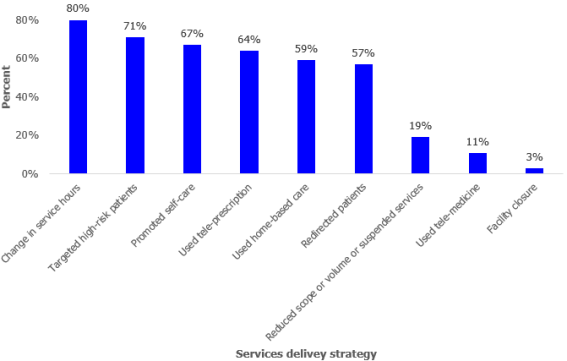
To increase the use of services, 80% of Health Facilities declare having modified their hours of service, 57% opted for referral to other Health Facilities, 59% chose home care and 64% used health resources by teleconsultation (
Figure 1). For appointments, 94% of Health Facilities declared having made a rescheduling for childhood vaccinations, 73% for antenatal consultations (ANC) and 56% for patients with non-communicable diseases.
Figure 1. Percentage of health facilities that changed their service delivery strategies in the last three months preceding the survey (N=70), (Senegal, 2021).
The overall availability of medicines and other pharmaceutical products is 90% in health facilities. However, only 4% of health facilities have all the tracer drugs.
3.2. Management of COVID-19 Cases
The survey reveals that 53% of health facilities are capable of collecting samples and carrying out Rapid Diagnostic Tests (RDT) and 29% can carry out PCR tests. In addition, the survey reveals that 11% of health facilities cannot collect samples and 7% collect samples without being able to carry out either PCR or RDT. Health Facilities with reference facilities and adapted transport represent 56%, compared to 25% with only reference facilities without transport. In addition, over the last 3 months, 77% of Health Facilities received COVID-19 patients and 94% carried out a check for symptoms related to COVID-19.
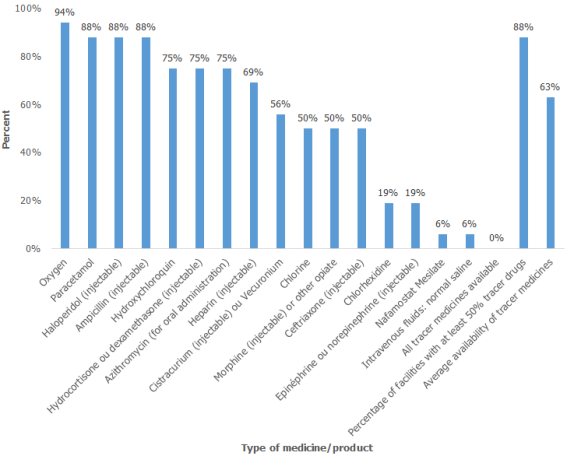
The survey shows that 88% of health facilities have at least 50% of tracer drugs. Furthermore, the availability of oxygen is effective in 94% of Health Facilities (
Figure 2).
Figure 2. Percentage of Epidemic Treatment Centers (ETCs) that have selected tracer drugs (n=16), (Senegal, 2021).
Concerning patient care, 87% resorted to self-isolation, 74% carried out a COVID-19 test and 63% the Oxygen (O2) saturation test. The Health Facilities which applied the isolation of patients at home in the event of simple COVID-19 represent 77%. Those who used remote consultation are 57%.
Home care (PECADOM_COVID-19) is provided by 94% of Health Facilities. As for the assessment of compliance with self-isolation, 74% of Health Facilities used it.
The availability of diagnostic tools is 100% for urine pregnancy tests, strips for proteinuria, glycosuria and blood sugar. We also see a variation of 70 to 95% in the health facility of other tracer tests, respectively blood grouping tests and hemoglobin level (blood count).
For operational vaccination capacity at the time of the survey, the availability of functional vaccine carriers with the necessary accessories was effective in 48% health facility; that of vaccine coolers was in 49% of Health Facilities and that of refrigerators was 94%.
3.3. Community Needs, Perceptions and Attitudes
Barriers to finding essential health services in communities
According to respondents, before the COVID-19 pandemic, people faced difficulties accessing essential health services when they needed them. This is due to several reasons including: financial accessibility (73%), geographic accessibility (41%), demand for services (45%) and information (39%). The existence of such barriers predates the COVID-19 pandemic, according to key informants.
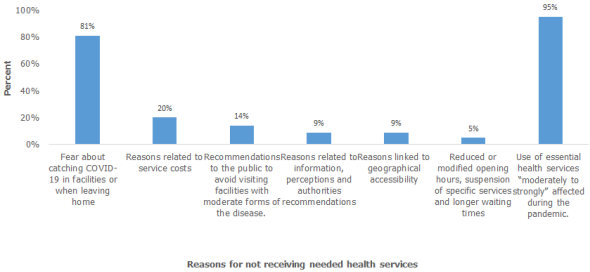
The survey reveals that 95% of respondents believe that the use of essential health services by communities has been affected during the COVID-19 pandemic. The main reasons are linked to fear of contracting the disease (81%) and the costs of services (20%) (
Figure 3).
Figure 3. Percentage of key informants who give the main reasons during the COVID-19 pandemic why the community is not receiving the health services it needs (n=74), (Senegal, 2021).
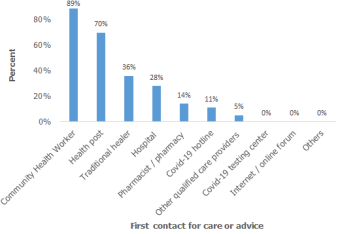
According to respondents, if an episode of illness occurs, community members first turn to community health workers (89%), the health post (70%), traditional healers (36%) and the hospital (28%). In addition, key informants (66%) believe that, in their community, there are disadvantaged groups of people (poor, people with disabilities, unemployed and informal sector workers) in accessing health care for economic, social or cultural reasons.
3.4. Attitude Towards the COVID-19 Vaccine
Key informants (45%) believe that only some people are concerned about the spread of COVID-19 in the community compared to 36% who consider that most people are worried about the spread of the disease. Key informants (81%) believe that people are concerned about the disease and that most adults would be vaccinated as would their children (63%). According to key informants, the main reasons for community non-adherence to COVID-19 vaccination are uncertainty about the effectiveness of the vaccine (54%), general distrust or rejection of any vaccine (52%), a fear of vaccine side effects (35%) (
Figure 4).
Figure 4. When community members are sick, who do they contact first for advice or care?, (Senegal, 2021).
4. Discussion
The assessment of the capacity of first-line services showed a dysfunction of the service offering platforms leading to a discontinuity of certain essential services, particularly the management of HIV and cardiovascular diseases. Concerning the management of suspected and confirmed cases of COVID-19, only one in 2 structures is equipped to carry out Rapid Diagnostics Tests. The overall availability of medicines is noted in the majority of Health Facilities, while a tiny part has all the tracer medicines. The level of application of barrier measures in Health Facilities, and compliance with guidelines on the prevention of COVID-19 is low (less than 1 in 5 Health Facilities).
The respondents indicate that the communities are concerned about the disease. Despite this, there was a distrust regarding the COVID-19 vaccine.
The data collection phase is scheduled for one week and makes it possible to cover the entire health system level. Considering the existing monitoring system, this approach remains a major innovation in terms of speed and reliability of data. The District Health Information System 2 (DHIS2), in its current state, constitutes the electronic collection system which covers the maximum number of health structures but the data is still fragmented and institutional due to the non-inclusion of PUBLIC HOSPITAL, the private sector (apart from data from the malaria,
| [10] | Muhoza, P., Tine, R., Faye, A, Gaye, I., Zeger, S. L., Diaw A., et al. (2022). A data quality assessment of the first four years of malaria reporting in the Senegal DHIS2, 2014–2017. BMC Health Serv Res, 22(1), 18. Available from:
https://doi.org/10.1186/s12913-021-07364-6 |
[10]
and the community. Although DHIS2 allows for rapid assessments of health problems, the level of timeliness and completeness offered by this rapid telephone surveillance system is, by far, higher.
The quantitative method with the use of stratified sampling with a view to longitudinal evaluation makes it possible to carry out repeated and sequential capture of data to provide indicators that should inform decisions relating to the response. The particularity of this approach is the use of the sampling frame of health structures and community actors involved in the implementation of the response. This method of data capture used as part of the management of the response to epidemics is not yet integrated into the health sector surveillance system. Indeed, the epidemiological surveillance system operates with sentinel sites whose statistical representativeness is not at the same level of significance as that used by this method. The DHIS2 has national coverage but has limitations in completeness and exhaustiveness. Compared to the two health surveillance and information systems currently operational in the sector, this new method is particularized by the subject matter, which is to monitor the response capacity of the health system to an epidemic.
The collection of data through remote mode combining the telephone and the internet to assess the response capacity of the health system is an innovation never before experienced in Senegal with this level of coverage and integration of care, resilience and community responsiveness. In fact, around twenty investigators equipped with tablets used the telephone to administer questionnaires to 16 PUBLIC HOSPITAL respondents, 40 health centers, 30 health posts and 74 respondents from the community. This collection was supervised by a national committee composed of coordinators and supervisors set up by the Ministry of Health and Social Action. This sample selected from the database covering the 14 regions and representative with regard to the application of the method proposed by WHO.
As part of this approach, a focal point is identified at each collection site responsible for completing the questionnaire administered by the investigator via telephone. Apart from the Continuous Surveys on the Provision of Health Care Services
| [11] | National Agency for Statistics and Demography of Senegal (ANSD) (2019). Continuous Survey on Health Care Service Delivery (ECPSS). |
[11]
, there is no national collection system in Senegal that helps provide information on essential health service capacities.
With the WHO method, the Ministry of health managed to provide tracer indicators of care capacity, resilience and community responsiveness in the space of a week. These indicators, through their relevance, give the response governance system the possibility of taking measures to readjust the interventions deployed to deal with the epidemic.
Some health services in several countries have experienced partial or sometimes total interruptions. The causes of these findings could be linked to a reduction in demand for financial reasons or to an unavailability of supply
. These results contrast with those of the present investigation which only reveal partial stops. This confirms the resilience of the system in the face of the COVID-19 pandemic. This performance could be due to the early responsiveness of the Ministry of Health with the development of preparation and contingency plans to combat the spread of the virus and support the continuity of essential health services.
| [3] | Ministry of Health and Social Action, (2020). Senegal. Multisectoral Contingency Plan against COVID-19 : A National Strategy. |
[3]
. A study comparing 4 countries in West and Central Africa showed differences in accessibility to essential health services according to gender, geographic area and income level
. In the same study, Senegal experienced a small variation (3%) in access to essential health services between 2020 and 2021 unlike Nigeria which experienced an increase of 50% for the same period. In the same way as the WHO which recommends the provision of PPE and EPC for the benefit of health structures and their staff, Senegal has included these investments in this area to improve the prevention of the transmission of COVID -19 in health structures
. However, the survey showed poor performance at this level with only 17% of Health Facilities having to apply preventive measures.
Contrary to WHO recommendations which stipulate the provision of RDTs to all health structures, the survey showed that only 50% of health facilities have them. Relative to tracer drugs as defined by the WHO
| [9] | WHO. (2020. Harmonized Assessments of Health Services Capacity in the Context of the COVID-19 Pandemic: Interim Guidance. |
[9]
, the survey reveals exhaustive availability in 4% of Health Facilities. This demonstrates the urgency of putting in place an allocation procedure to fill the deficit.
Concerning vaccination against COVID-19, the results showed a general distrust of communities (52%) towards the vaccine. This observation is corroborated by a study on the determinants of vaccine acceptability in communities in Senegal which revealed that 46.9% of respondents are undecided (vaccine hesitancy) regarding the vaccine
| [14] | Fall, A.S., Soufianou, M., Cisse, R., Leye, I., Fall, M. O. Cisse, N. S. (2021). Community Acceptance of COVID-19 Vaccines in Senegal. From: https://lartes-ifan.org/fr/lacceptabilite-vaccins-contre-covid-19-sein-communautes-senegal |
[14]
. Another study on vaccine hesitancy covering Guinea, Senegal and Sierra Leone revealed a vaccine acceptance rate of only 11% for Senegal,
| [15] | Faye, S. L.B., Krumkamp, R, Doumbia, S., Tounkara, M., Strauss, R., Ouedraogo, H. G., et al. (2022). Factors influencing hesitancy towards adult and child COVID-19 vaccines in rural and urban West Africa: a cross-sectional study. BMJ Open, 12(4): e059138. |
[15]
.
In the face of an ongoing threat that could overwhelm the healthcare system, Senegal has a health information system (DHIS2) that provides routine data from most healthcare facilities, in addition to a large number of community health workers spread across the entire country. Nevertheless, a persistent challenge remains: the availability of high-quality, real-time data to improve decision-making. Furthermore, hospitals operate a parallel data collection system, which leads to fragmented information, a lack of coordination, and delayed decision-making. To ensure continuity of services—in addition to strengthening human resources, ensuring the availability of medicines and health products, and securing sufficient financial resources—it is essential to have evidence-based data that can detect public health threats, predict disease outbreaks, and track changes in service utilization by the population. The availability of a platform that comprehensively and representatively accounts for all types of health facilities will enable the generation of evidence-based data for decision-making regarding the readiness of health services. This must be achieved by establishing database interoperability through comprehensive digitization and by strengthening community-based surveillance.
In Senegal, private sector health structures represent around 50% of the overall healthcare offering
, thus covering a large segment of the population. This shows the importance of having information from these structures in order to capitalize on it in the country's health and social information system and thus improve the completeness of the data.
The ultimate goal of the evaluation is to provide the authority with quality data in real time to inform decision-making. Indeed, for this pilot phase there was a delay of 2 months between the end of data collection and the provision of the results from the data analysis.
5. Conclusion
This pilot study made it possible to operationalize the rapid monitoring system for the response by telephone. Through this system, major decisions to organize the response were taken based on evidence. However, the non-enrollment of the private sector constituted an objective limitation for the external validity of the data. This first phase of collection and analysis revealed the need to broaden the target and adapt the tools to the evolution of shocks related to pandemics.
What is known about this subject?
The weakness of informative data on response and resilience capacities.
The availability of data at the level of production sites (health structures, communities).
What's new in your study?
1) The feasibility of a rapid monitoring system by phone.
2) Better targeting of interventions informed by data from capacity monitoring
Abbreviations
ANC | Antenatal Consultations |
DHIS2 | District Health Information System 2 |
EPC | Equipment for Collective Protection |
ETCs | Epidemic Treatment Centers |
HIV | Human Immunodeficiency Virus |
PCI | Prevention and Control of Infections |
PCR | Polymerase Chain Reaction |
PPE | Personal Protective Equipment |
RCCE | Risk Communication and Community Engagement |
RDT | Rapid Diagnostic Tests |
WHO/AFRO | World Health Organization Regional Office for Africa |
WHO | World Health Organization |
Acknowledgments
We thank the World Health Organization, the Catalyze project (IDRC), the participants, the health staff officers, community stakeholders and data collection team.
Author Contributions
Abdoulaye Diallo: Conceptualization, Data curation, Formal Analysis, Investigation, Methodology, Supervision, Validation, Writing – original draft, Writing – review & editing
Zeyni El Abidine Sy: Conceptualization, Data curation, Formal Analysis, Investigation, Methodology, Supervision, Validation, Writing – original draft, Writing – review & editing
Abib Ndiaye: Conceptualization, Data curation, Formal Analysis, Investigation, Methodology, Supervision, Validation, Writing – original draft, Writing – review & editing
Viviane Marie Solange Mbengue: Data curation, Formal Analysis, Investigation
Aissatou Nomokho: Data curation, Formal Analysis, Investigation
Mame Omar Gueye: Data curation, Formal Analysis, Investigation
Papa Ibrahima Ndour: Data curation, Formal Analysis, Investigation
Abdoulaye Diaw: Writing – review & editing
Fatoumata Zahra Mboup: Data curation, Formal Analysis, Investigation
Tidiane Gadiaga: Writing – review & editing
Fatoumata Ly: Data curation, Formal Analysis, Investigation
Fanding Badji: Data curation, Formal Analysis, Investigation
Moussa Traore: Methodology, Software, Supervision, Validation, Visualization
Jeff Kabinda: Conceptualization,, Project administration
Davy Audrey Liboko: Methodology, Software, Supervision, Validation, Visualization
Babacar Gueye: Conceptualization,, Project administration
Kamadore Toure: Writing – review & editing
Youssoupha Ndiaye: Conceptualization, Project administration
Samba Cor Sarr: Conceptualization, Supervision, Writing – review & editing
Conflicts of Interest
The authors declare no conflicts of interest.
References
| [1] |
WHO Coronavirus (COVID-19) dashboard [Internet]. 2025 [cited 2025 Jul 31]. Available from:
https://data.who.int/dashboards/covid19/more-resources
|
| [2] |
Ministry of Health and Social Action. (2022). COVID-19 Pandemic Senegal Press Release No. 1032, Available from:
https://www.sante.gouv.sn/sites/default/files/
|
| [3] |
Ministry of Health and Social Action, (2020). Senegal. Multisectoral Contingency Plan against COVID-19 : A National Strategy.
|
| [4] |
Chippaux, J. P. (2023). Impact of COVID-19 on public health in sub-Saharan Africa. Bull Acad Natl Med, 207(2), 150–64.
|
| [5] |
Ba I, Desclaux A, Diop M, Ndiaye I, Thiam, M.H. (2021). Ensuring continuity of care at the time of COVID-19: challenges for the Dakar Integrated Support Center for Addictions. Med Trop sante Int, 18, 1(1).
|
| [6] |
Capdevila, X. (2020). The outstanding adaptability of the French caregivers facing the SARS-CoV-2 pandemic. Anaesthesia and critical care, 6, 281–2.
|
| [7] |
WHO, (2020). SCORE Technical Tool for health data: Global Report on countries’ capacity to produce health Data.
|
| [8] |
WHO. (2021). Capacity to Manage COVID-19 Cases: Diagnostic Products, Treatments, Vaccination Preparedness, and Other Health Products—Facility Assessment Tool.
|
| [9] |
WHO. (2020. Harmonized Assessments of Health Services Capacity in the Context of the COVID-19 Pandemic: Interim Guidance.
|
| [10] |
Muhoza, P., Tine, R., Faye, A, Gaye, I., Zeger, S. L., Diaw A., et al. (2022). A data quality assessment of the first four years of malaria reporting in the Senegal DHIS2, 2014–2017. BMC Health Serv Res, 22(1), 18. Available from:
https://doi.org/10.1186/s12913-021-07364-6
|
| [11] |
National Agency for Statistics and Demography of Senegal (ANSD) (2019). Continuous Survey on Health Care Service Delivery (ECPSS).
|
| [12] |
Exemplars in Global Health. (2021). A synthesis of studies on four sub-Saharan African countries, the DRC, Nigeria, Uganda, and Senegal, focusing on the maintenance of essential health services. Available from:
https://www.exemplars.health/emerging-topics/epidemic-preparedness-and-response/testing-and-surveillance/senegal
|
| [13] |
WHO, (2022). Policy Brief: Maintaining infection prevention and control measures for COVID-19 in health care facilities. Available from:
https://iris.who.int/bitstream/handle/10665/362669/WHO-2019-nCoV-Policy-Brief-IPC-2022.1-eng.pdf?sequence=1
|
| [14] |
Fall, A.S., Soufianou, M., Cisse, R., Leye, I., Fall, M. O. Cisse, N. S. (2021). Community Acceptance of COVID-19 Vaccines in Senegal. From:
https://lartes-ifan.org/fr/lacceptabilite-vaccins-contre-covid-19-sein-communautes-senegal
|
| [15] |
Faye, S. L.B., Krumkamp, R, Doumbia, S., Tounkara, M., Strauss, R., Ouedraogo, H. G., et al. (2022). Factors influencing hesitancy towards adult and child COVID-19 vaccines in rural and urban West Africa: a cross-sectional study. BMJ Open, 12(4): e059138.
|
| [16] |
Diop, I. L., Diop-Toure, I., Koita, M., Diop, M., El-Khoury, M. (2018). Mapping the Private Healthcare Sector in Senegal 2016-2017. From:
https://www.sante.gouv.sn/publications/cartographie-du-secteur-prive-de-la-sante-2016-2017
|
Cite This Article
-
APA Style
Diallo, A., Sy, Z. E. A., Ndiaye, A., Mbengue, V. M. S., Nomokho, A., et al. (2026). Capacities of Frontline Health Services During COVID-19 Pandemic: A Pilot Study in Senegal. Central African Journal of Public Health, 12(5), 261-269. https://doi.org/10.11648/j.cajph.20261205.11
 Copy
|
Copy
|
 Download
ACS Style
Diallo, A.; Sy, Z. E. A.; Ndiaye, A.; Mbengue, V. M. S.; Nomokho, A., et al. Capacities of Frontline Health Services During COVID-19 Pandemic: A Pilot Study in Senegal. Cent. Afr. J. Public Health 2026, 12(5), 261-269. doi: 10.11648/j.cajph.20261205.11
Copy
|
Download
AMA Style
Diallo A, Sy ZEA, Ndiaye A, Mbengue VMS, Nomokho A, et al. Capacities of Frontline Health Services During COVID-19 Pandemic: A Pilot Study in Senegal. Cent Afr J Public Health. 2026;12(5):261-269. doi: 10.11648/j.cajph.20261205.11
Copy
|
Download
-
@article{10.11648/j.cajph.20261205.11,
  author = {Abdoulaye Diallo and Zeyni El Abidine Sy and Abib Ndiaye and Viviane Marie Solange Mbengue and Aissatou Nomokho and Mame Omar Gueye and Papa Ibrahima Ndour and Abdoulaye Diaw and Fatoumata Zahra Mboup and Tidiane Gadiaga and Fatoumata Ly and Fanding Badji and Moussa Traore and Jeff Kabinda and Davy Audrey Liboko and Babacar Gueye and Kamadore Toure and Youssoupha Ndiaye and Samba Cor Sarr},
  title = {Capacities of Frontline Health Services During COVID-19 Pandemic: A Pilot Study in Senegal},
  journal = {Central African Journal of Public Health},
  volume = {12},
  number = {5},
  pages = {261-269},
  doi = {10.11648/j.cajph.20261205.11},
  url = {https://doi.org/10.11648/j.cajph.20261205.11},
  eprint = {https://article.sciencepublishinggroup.com/pdf/10.11648.j.cajph.20261205.11},
  abstract = {Background: The organization of health systems has been largely disrupted by the COVID-19 pandemic. Due to the role of hospitals in the management of serious cases, front-line services have been particularly affected. This study aims to provide information on the capacities and response needs of the health system during COVID-19 pandemic in Senegal. Methods: A cross-sectional survey was carried in 86 facilities at national level and 74 key informants from communities. Three domains were targeted: capacity of health services to maintain essential health services; capacity to manage COVID-19 cases in epidemic treatment centers; community needs and perceptions regarding the use of essential services. Data collection was done by phone. Data analysis included the estimation of tracer indicators using percentages and numbers. Results: The assessment of the capacity of first-line services showed a discontinuity of certain essential services. Concerning the management of suspected and confirmed cases of COVID-19, only one in 2 structures is equipped to perform Rapid Diagnostics Tests. The overall availability of medicines is noted in majority of facilities, while a tiny part has all the tracer medicines. The level of application of barrier measures in facilities, and compliance with guidelines for COVID-19 prevention is low (less than 1 in 5 facilities). Despite communities raised concerns about COVID-19, there was a distrust regarding COVID-19 vaccine. Conclusion: This pilot system demonstrated the possibility of providing tracer indicators during a response to an epidemic, in a diligent and systematic way, through an electronic and telephone data collection, thus helping fast informed decisions making.},
 year = {2026}
}
Copy
|
Download
-
TY  - JOUR
T1  - Capacities of Frontline Health Services During COVID-19 Pandemic: A Pilot Study in Senegal
AU  - Abdoulaye Diallo
AU  - Zeyni El Abidine Sy
AU  - Abib Ndiaye
AU  - Viviane Marie Solange Mbengue
AU  - Aissatou Nomokho
AU  - Mame Omar Gueye
AU  - Papa Ibrahima Ndour
AU  - Abdoulaye Diaw
AU  - Fatoumata Zahra Mboup
AU  - Tidiane Gadiaga
AU  - Fatoumata Ly
AU  - Fanding Badji
AU  - Moussa Traore
AU  - Jeff Kabinda
AU  - Davy Audrey Liboko
AU  - Babacar Gueye
AU  - Kamadore Toure
AU  - Youssoupha Ndiaye
AU  - Samba Cor Sarr
Y1  - 2026/09/08
PY  - 2026
N1  - https://doi.org/10.11648/j.cajph.20261205.11
DO  - 10.11648/j.cajph.20261205.11
T2  - Central African Journal of Public Health
JF  - Central African Journal of Public Health
JO  - Central African Journal of Public Health
SP  - 261
EP  - 269
PB  - Science Publishing Group
SN  - 2575-5781
UR  - https://doi.org/10.11648/j.cajph.20261205.11
AB  - Background: The organization of health systems has been largely disrupted by the COVID-19 pandemic. Due to the role of hospitals in the management of serious cases, front-line services have been particularly affected. This study aims to provide information on the capacities and response needs of the health system during COVID-19 pandemic in Senegal. Methods: A cross-sectional survey was carried in 86 facilities at national level and 74 key informants from communities. Three domains were targeted: capacity of health services to maintain essential health services; capacity to manage COVID-19 cases in epidemic treatment centers; community needs and perceptions regarding the use of essential services. Data collection was done by phone. Data analysis included the estimation of tracer indicators using percentages and numbers. Results: The assessment of the capacity of first-line services showed a discontinuity of certain essential services. Concerning the management of suspected and confirmed cases of COVID-19, only one in 2 structures is equipped to perform Rapid Diagnostics Tests. The overall availability of medicines is noted in majority of facilities, while a tiny part has all the tracer medicines. The level of application of barrier measures in facilities, and compliance with guidelines for COVID-19 prevention is low (less than 1 in 5 facilities). Despite communities raised concerns about COVID-19, there was a distrust regarding COVID-19 vaccine. Conclusion: This pilot system demonstrated the possibility of providing tracer indicators during a response to an epidemic, in a diligent and systematic way, through an electronic and telephone data collection, thus helping fast informed decisions making.
VL  - 12
IS  - 5
ER  -
Copy
|
Download





 Share This Article
 Twitter
 Linked In
 Facebook