Research Article | | Peer-Reviewed

Motivation for HIV Screening Among Men in the Djidja-Abomey-Agbangnizoun Health Zone, Benin, in 2025

Received: 26 August 2026     Accepted: 9 September 2026     Published: 24 September 2026
Views:       Downloads:
Abstract

Introduction: Screening is a major challenge for achieving the 95-95-95 target in the fight against HIV/AIDS. In 2022 in Benin, the HIV screening rate among men was 62.00% compared with 4.59% in the Djidja-Abomey-Agbangnizoun Health Zone of Zou department; hence the present study, which aimed to identify the factors associated with HIV screening among men in Djidja-Abomey-Agbangnizoun in 2025. Methods: This was an analytical cross-sectional study involving men aged 15 to 49 years, selected by five-stage cluster sampling, and health workers from HIV screening centers, selected by purposive sampling. Associated factors were identified by multiple logistic regression, using a backward stepwise procedure, at a significance threshold of 5%. Results: Among the 185 men surveyed, 27.05% knew their HIV serostatus, of whom 12.00% were able to show their result. Associated factors were Yoruba ethnicity (OR = 10.55, p = 0.018), non-participation in awareness sessions (OR = 5.08; p = 0.005), average monthly income below 50 000 FCFA (OR = 0.25; p = 0.006), awareness that screening is free of charge (OR = 0.05; p = 0.003), and awareness of the existence of a law on HIV (OR = 0.24; p = 0.009). Conclusion: It is essential that the health program to combat HIV/AIDS strengthen communication strategies around HIV screening.

Published in Central African Journal of Public Health (Volume 12, Issue 5)
DOI 10.11648/j.cajph.20261205.13
Page(s) 283-292
Creative Commons

This is an Open Access article, distributed under the terms of the Creative Commons Attribution 4.0 International License (http://creativecommons.org/licenses/by/4.0/), which permits unrestricted use, distribution and reproduction in any medium or format, provided the original work is properly cited.

Copyright

Copyright © The Author(s), 2026. Published by Science Publishing Group

Keywords

Screening, HIV, Men, Associated Factors, Benin

1. Introduction
Human Immunodeficiency Virus (HIV) infection is a priority disease that constitutes a public health problem, owing to its scale, its co-infection with tuberculosis, and drug resistance. In 2023 worldwide, 1.3 million people newly contracted the virus , and approximately 39 million people were living with HIV (PLHIV), more than two-thirds of them in Africa . Statistics show a 32% decline in new HIV infections globally, from 2.2 million new cases in 2010 to 1.5 million in 2021 . HIV-related mortality in 2023 was estimated at approximately 630 000 people, equivalent to one death every minute worldwide, compared with 2.1 million recorded in 2004 and 1.3 million in 2010 . In Benin, between 2010 and 2022, the prevalence of HIV infection fell from 1.2% to 0.8%, and its incidence over the same period decreased by 0.4 per 1 000 healthy inhabitants .
It is important to maintain, and even accelerate, progress in the fight against HIV infection, with a view to achieving the Sustainable Development Goals (SDGs), specifically target 3.3, which aims to end epidemics, particularly that of HIV infection, by strengthening prevention, screening, and treatment efforts worldwide by the year 2030 .
In the prevention of HIV infection, United Nations Programme on HIV/AIDS (UNAIDS) initiated in 2021 the “95-95-95” strategy, which provided that 95% of people living with HIV should know their serostatus, that 95% of these should receive antiretroviral treatment, and that 95% of people on treatment should have an undetectable viral load by 2030 .
The 95-95-95 strategy has proven essential to an effective fight against HIV infection. Yet 14% of the 39.9 million people living with HIV in 2023 did not know their serostatus . It is therefore important to strengthen access to screening. Among under-screened groups, men represent a significant share. Indeed, in Benin in 2020, 62% of men aged 15 and over knew their status, compared with 86% of women . In Zou department, the screening rate among men was 4.59% in 2024. It is to explore this low screening rate in the department that the present study was initiated in one of the Health Zones, the Djidja-Abomey-Agbangnizoun Health Zone, which is home to the department's capital. The study aimed to determine the factors associated with HIV screening among men in the Djidja-Abomey-Agbangnizoun Health Zone. Its results will help guide stakeholders in the fight against HIV in Benin.
2. Material and Methods
2.1. Study Setting
The study was conducted in the Djidja-Abomey-Agbangnizoun Health Zone (DAA HZ), in Zou department, Benin. The DAA HZ comprises three municipalities: Abomey, Djidja, and Agbangnizoun, subdivided into 29 districts and 189 villages or town wards . Its population of 371 946 in 2024, of whom 48.73% were men, is served by 20 private health facilities, 35 public health facilities, a Departmental Hospital Center based in Abomey, and a zone hospital based in Djidja. As part of the fight against HIV, the DAA HZ has ten fixed voluntary HIV counseling and testing posts, five of which are in Abomey municipality, three in Agbangnizoun, and two in Djidja .
2.2. Study Design
This was an analytical cross-sectional study with a qualitative component, conducted from February 25 to April 15, 2025.
2.3. Study Population
The primary target population consisted of men aged 15 to 49 years, residing in the DAA HZ for at least six months and who had consented to participate in the study.
The secondary target population consisted of staff from the HIV counseling and testing centers of the DAA HZ who had given their free and informed consent.
2.4. Sampling
2.4.1. Primary Targets
The primary target population was selected using a five-stage cluster sampling technique, as follows:
1) 1st stage: selection of two districts per municipality, by simple random selection, for a total of six districts;
2) 2nd stage: identification of 20 clusters proportional to the population weight of the villages in the six previously selected districts;
3) 3rd stage: selection of compounds: in each cluster, the first compound was selected by simple random selection among those located in the direction indicated by a spun pen. The other compounds in the cluster were then identified one after another;
4) 4th stage: selection of households: when a compound contained several households, only one was selected by simple random selection;
5) 5th stage: selection of statistical units: in households where several men met the selection criteria, only one was retained by simple random selection.
The sample size, calculated using the Schwartz formula, with an HIV screening rate of 4.6% among men in Zou department in 2024 , a power of 5%, a cluster effect of 1.5, and a 10% adjustment for non-response, was 111, i.e., six men per cluster.
2.4.2. Secondary Targets
They were selected using a non-probability sampling method and a purposive selection technique, with one health worker selected per HIV counseling and testing center in the DAA HZ.
2.5. Study Variables
The dependent variable was HIV screening, defined as the respondent having undergone an HIV screening test, either by self-report or by presenting the test result.
The independent variables were grouped into several categories of factors, namely:
1) Sociodemographic characteristics (age, education level, ethnicity, religion, occupation);
2) Behavioral factors (age at first sexual intercourse, multiple sexual partnerships, condom use);
3) Psychosocial factors (fear of a positive result, discrimination, shame, loss of self-esteem);
4) Factors related to the family environment (parent-child communication about HIV, spouse's pregnancy status, partners' serostatus);
5) Medical factors: history of Sexually Transmitted Infections (STI), blood exposure accidents, blood transfusion);
6) Knowledge-related factors (awareness that testing is free, awareness of laws on HIV);
7) Health-system-related factors (accessibility of screening centers, HIV awareness activities, quality of pre-test counseling).
2.6. Data Collection Techniques and Tools
Data were collected through the administration of a digital questionnaire in KoboCollect and through individual interviews using an interview guide.
2.7. Data Processing and Analysis
After collection, quantitative data were exported from KoboCollect to Excel for data cleaning, then into STATA version 14 software for analysis. They were analyzed in a descriptive phase and an analytical phase.
The description was carried out using measures of central tendency and dispersion. In the analytical phase, associated factors were identified by bivariate analysis (Pearson's chi2 tests) followed by multiple backward stepwise logistic regression, at a significance threshold of 5%.
As for the qualitative data, they were subjected to thematic analysis.
2.8. Ethical Considerations
The study obtained prior authorization from the Ministry of Health and the health authorities of Zou. An information sheet was presented to participants before they gave their free and informed consent by signing the consent form. The confidentiality and anonymity of the data collected were respected during data collection and analysis.
3. Results
3.1. Description of the Sample
In total, 200 men were surveyed, 185 by questionnaire administration and 15 by individual interview. Five staff members were interviewed at the HIV counseling and testing centers.
3.1.1. Characteristics of the Men Surveyed
The mean age (SD) of the 185 men interviewed was 28 (8.9) years. Their sociodemographic characteristics are presented in Table 1 below. It shows that they were predominantly in the 25-49 age bracket (54.59%), had a secondary education level (48.11%), were artisans (49.19%), were married or in a common-law union (53.51%), and were of the Christian religion (45.95%).
Table 1. Sociodemographic characteristics of the men surveyed in the DAA HZ in 2025 (n = 185).

Variables

Djidja

Abomey

Agbangnizoun

DAA HZ

n (%)

n (%)

n (%)

n (%)

Age (in years)

15 to 24

8 (9.52)

46 (54.76)

30 (35.71)

84 (45.41)

25 to 49

7 (6.93)

48 (47.52)

46 (45.54)

101 (54.59)

Religion

Christian

3 (20)

47 (50)

35 (46.05)

85 (45.95)

Muslim

-

7 (7.45)

-

7 (3.78)

Traditional

9 (60)

24 (25.53)

36 (47.37)

69 (37.30)

Other

3 (20)

16 (17.02)

5 (6.58)

24 (12.97)

Education level

None

4 (26.67)

9 (9.57)

31 (40.79)

44 (23.78)

Primary

4 (26.67)

18 (19.15)

18 (23.68)

40 (21.62)

Secondary

6 (40)

59 (62.77)

24 (31.58)

89 (48.11)

Higher

1 (6.67)

8 (8.51)

3 (3.95)

12 (6.49)

Occupation

Unemployed

3 (20)

11 (11.70)

11 (14.47)

25 (13.51)

Student

1 (6.67)

6 (6.38)

4 (5.26)

8 (4.32)

Artisan

4 (26.27)

57 (60.64)

30 (39.47)

91 (49.19)

Farmer

5 (33.33)

2 (2.13)

17 (22.37)

24 (12.97)

Zemidjan (motorcycle-taxi driver)

-

4 (4.26)

2 (2.63)

6 (3.24)

Civil servant

-

4 (4.26)

1 (1.32)

5 (2.70)

Other

2 (13.33)

10 (10.64)

12 (14.48)

26 (14.04)

Income level (FCFA)

≤ 50,000

5 (41.67)

51 (61.45)

43 (66.15)

99 (61.88)

> 50,000

7 (58.33)

32 (38.55)

22 (33.85)

61 (38.13)

Marital status

Single

7 (8.33)

49 (58.33)

28 (33.33)

84 (45.41)

Common-law union/Married

8 (7.92)

45 (44.55)

48 (47.52)

101 (54.59)

Father of children

Yes

8 (53.33)

43 (45.74)

47 (61.84)

98 (52.97)

No

7 (46.67)

51 (54.26)

29 (38.16)

47.03)

3.1.2. Characteristics of the Men Interviewed
The 15 men interviewed were aged 28.87 ± 10 years; 53.33% were Christian, 53.33% were married or in a common-law union, and 26.367% had been screened for HIV. In terms of education level, three had never attended school, and the rest were evenly distributed among primary, secondary, and university levels.
3.1.3. Characteristics of the Staff Interviewed at the HIV Counseling and Testing Centers
Among the five staff members interviewed, there were four midwives and one laboratory technician (a man). All had been trained in HIV screening and counseling approaches. Continuing education sessions are periodically organized for them.
3.2. HIV Screening Among Men in the DAA HZ in 2025
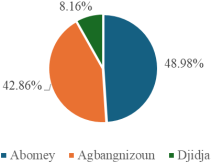
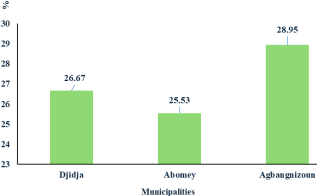
Of the 185 men who responded to the questionnaire, 27.05% reported knowing their HIV serostatus, i.e., 50 men. Among them, 12.00% were able to present their result, i.e., six men. Figures 1 and 2 below show, respectively, the HIV screening rate and the rate of receiving results by municipality in the DAA HZ in 2025.
Figure 1. Voluntary HIV screening rate in the DAA HZ in 2025 (n = 185).
Figure 2. Rate of receipt of HIV screening results in the DAA HZ in 2025 (n = 50).
This figure shows that approximately half of the men screened in Abomey municipality had received their result, and that Djidja municipality recorded the lowest proportion of result receipt.
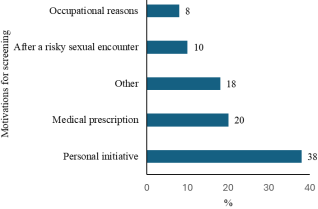
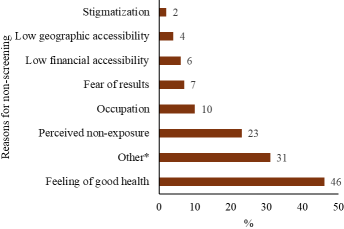
The motivations for screening and the reasons for non-screening are presented in Figures 3 and 4 below, respectively.
Figure 3. Motivations for HIV screening among men in the DAA HZ in 2025 (n = 50).
It shows that in most cases, HIV screening was carried out on personal initiative or by medical prescription.
Figure 4. Reasons for non-screening for HIV among men in the DAA HZ in 2025 (n = 135).
Non-screening was mainly explained by a perception of apparent good health and non-exposure to HIV.
3.3. Factors Associated with HIV Screening Among Men in the DAA HZ in 2025
3.3.1. Results of the Bivariate Analysis
Table 2 below presents the factors associated with HIV screening, from the bivariate analysis.
Table 2. Factors associated with HIV screening among men in the DAA HZ in 2025, bivariate analysis (n = 185).

Screening

OR

95% CI

p-value

Yes n (%)

No n (%)

Age (in years)

15 to 24

14 (16.67)

70 (83.33)

0.32

0.18-0.73

0.005

25 to 49

36 (35.64)

65 (64.36)

1

--

--

Average monthly income (FCFA)

≤ 50,000

18 (41.86)

81 (69.23)

0.32

0.16-0.66

0.002

> 50,000

25 (58.14)

36 (30.77)

1

--

--

Marital status

Single

14 (28)

70 (51.85)

0.36

0.18-0.73

0.005

Married/In a relationship

36 (72)

65 (48.15)

1

--

--

Father of children

Yes

15 (30)

72 (53.33)

1

--

-

No

35 (70)

63 (46.67)

2.67

1.33-5.33

0.006

Awareness of the existence of a law on HIV

Yes

18 (36)

17 (13.28)

1

--

-

No

32 (64)

111 (86.72)

0.27

0.13-0.59

0.001

Awareness of the existence of MSM*

Yes

45 (90)

96 (71.11)

1

--

-

No

5 (10)

39 (28.89)

0.27

0.10-0.74

0.011

Awareness that HIV screening is free of charge

Yes

41 (82)

29 (22.66)

1

--

--

No

2 (4)

20 (15.63)

0.07

0.02-0.33

0.001

Don't know

7 (14)

79 (61.72)

0.63

0.03-0.16

0.000

Awareness of an HIV screening location

Yes

46 (92)

93 (72.66)

1

--

-

No

4 (8)

35 (27.34)

0.23

0.08-0.69

0.009

Partner's screening status

Yes

23 (63.89)

17 (26.45)

1

--

--

No

5 (13.89)

26 (40)

1.14

0.05-0.45

0.001

Don't know

8 (22.22)

22 (33.85)

0.27

0.10-0.75

0.012

* MSM = Men who have sex with men
The bivariate analysis showed that nine factors were associated with HIV screening among men in the DAA HZ.
3.3.2. Results of the Multivariate Analysis
The final logistic regression model is summarized in Table 3 below.
Table 3. Factors associated with HIV screening among men in the DAA HZ in 2025, final model (n = 185).

Screening

OR

95% CI

p-value

Yes n (%)

Ethnicity

Fon

44 (88)

1

--

-

Yoruba and related groups

6 (12)

10.55

1.49-74.34

0.018

Average monthly income (FCFA)

≤ 50,000

18 (41.86)

0.25

0.09-0.68

0.006

> 50,000

25 (58.14)

1

--

-

HIV screening free of charge

Yes

41 (82)

1

--

-

No

2 (4)

0.05

0.01-0.38

0.003

Don't know

7 (14)

0.03

0.01-0.13

< 0.001

HIV awareness sessions

Yes

29 (58)

1

--

-

No

21 (42)

5.08

1.62-15.89

0.005

Awareness of the existence of a law on HIV

Yes

18 (36)

1

--

--

No

32 (64)

0.24

0.08-0.71

0.009

This table shows that, after adjustment for other variables,
1) men of Yoruba and related ethnicity were 10.55 times more likely to be screened for HIV than men of Fon ethnicity;
2) men with an average monthly income of 50 000 FCFA or less were 0.25 times less likely to be screened than those with an income above 50 000 FCFA;
3) men who were not aware that HIV screening is free of charge were 0.05 times less likely to be screened than those who were aware of it;
4) men who had not received HIV awareness sessions were 5.08 times more likely to be screened than those who had been reached by awareness activities;
5) men who were not aware of the existence of a law on HIV were 0.24 times less likely to be screened than those who were aware of it.
The final model showed adequate fit, with a Hosmer-Lemeshow test p-value of 0.818 > 0.05.
3.4. Qualitative Aspects
3.4.1. Barriers to HIV Screening
The interviews showed that several obstacles hinder HIV screening among men in the DAA HZ. These barriers included, among others, confidence in apparent good health, underestimation of exposure risk, fear of a positive result, fear of result disclosure, and stigmatization, as shown by the following statements:
“I don't feel sick, so there's no need to get tested,” Single, 20 years old;
“The reason is that I don't sleep around with different women.” Polygamous, 40 years old;
“I'm faithful to my girlfriend, no need to get tested,” Single, artisan, 24 years old;
“I'm already 40 years old and I already have children. So if I had this disease, I would already know.” Pastor, 40 years old;
“It's fear. They say, what if I go get tested and they tell me I have the disease? Fear of being positive,” married, 30 years old;
“I'm not aware of this AIDS of yours [.], screening means nothing to me,” pupil, 18 years old.
“They think that after the test, their results will be disclosed.” Married, 35 years old.
“Did you hear that the other brother has HIV?” “[.] are behind the reluctance to get screened,” married, 44 years old.
3.4.2. Perspective of the Staff at the HIV Counseling and Testing Centers
According to these staff members, awareness-raising is carried out through radio broadcasts of key messages about HIV and the importance of screening: “Practically every day, the radio broadcasts a message about it. [.]”, Midwife;
They unanimously acknowledged that the obstacles to HIV screening among men were fear of stigmatization and social rejection: “[.] some do it secretly, preferring to go elsewhere to get tested rather than stay in their home area, in order to avoid stigmatization”; “It's mainly because they are ashamed to go get tested and discover a positive result that they don't go; whereas women, during antenatal consultations, can be compelled to do it. ”.
4. Discussion
4.1. Voluntary HIV Screening Rate
The screening rate of 27.05% in the present study is better than the 4.59% reported in the health statistics of Zou department , but this large difference could reflect a desirability bias. Indeed, while 27.05% of respondents claimed to have been screened, only 3.24% were able to present the result. This proportion is close to the department's administrative data, but very low compared with the national average of 62.00% and with several studies in the African region. Indeed, the HIV screening rate among men was 60.5% in 2022 in East Africa , and 65.5% in Uganda . These differences could be explained by the health policies in place or a favorable sociocultural environment in these countries. Despite these better screening rates in these countries, they remain low compared with those of women .
4.2. Factors Associated with HIV Screening Among Men
4.2.1. Ethnicity
The fact that men of Yoruba and related ethnicity are more likely to be screened for HIV than men of Fon ethnicity may reflect codes of masculine honor specific to Fon culture, which is dominant in the DAA HZ. Indeed, Fon men embody a strong sense of pride, sometimes perceived as stubbornness or a strong concern for preserving appearances and dignity. Going to a screening center can therefore be experienced as a public exposure likely to raise suspicion of possible infection, and consequently stigmatization compromising one's image as head of the family. This social pressure is even stronger in rural communities, where news travels fast. This statement from one of the staff at the screening centers supports this hypothesis: “Some do it secretly, preferring to go elsewhere to get tested rather than stay in their home area, in order to avoid stigmatization”. Sileo et al, in their literature review, concluded that reluctance to express emotions, gender-conditioned communication, and social pressures to appear strong and self-reliant constitute barriers to HIV screening among men . Kobena et al. also raised this fear of stigmatization in their study in Bouaké in 2023 . Fleming et al., in their research in sub-Saharan Africa, clearly established that fear of stigmatization limits the effectiveness of HIV screening programs in sub-Saharan Africa, because in most villages, everyone sooner or later knows who visits screening sites . This perceived lack of confidentiality, along with stigmatization and concerns related to masculinity, have also been described in other studies as barriers to HIV screening . These results imply the need to strengthen respect for confidentiality at screening centers, to make it a key focus of awareness sessions, and to promote HIV self-testing.
4.2.2. Knowledge-related Factors on HIV
The fact that men unaware that HIV screening is free of charge are less likely to be screened than those who are aware of this may serve as a proxy indicator of cost perception as a barrier to HIV screening. This result could be explained by the belief that a health service such as a laboratory test always involves a fee, particularly in a context where health costs are a barrier to the use of health services.
This hypothesis could also explain why men with an average monthly income of 50 000 FCFA or less are less likely to be screened than those with an income above 50 000 FCFA. This result is consistent with those of Inghels et al. in Côte d'Ivoire in 2020, who found that “among men, despite screening being free of charge, low economic status appears to be a barrier to getting tested” , and with those of Pearl et al. in 2020, who point out that despite an overall increase in HIV screening in sub-Saharan Africa, the poorest populations have much less access to it than the wealthy . This result reveals a communication problem and, therefore, the need to make information reliable, complete, and accessible to all, as Inghels et al. also concluded. Accordingly, people who have received HIV awareness activities are assumed to have more knowledge and would be expected to get screened more often.
However, in the present study, men who had not been exposed to awareness activities were 5.08 times more likely to be screened than those who had been. This result, contrary to that of Musheke et al. in Zambia , could be explained by a sense of overconfidence in the knowledge gained during awareness sessions. Indeed, men who have received awareness messages may develop a sense of mastery (such as “I know everything I need to know to protect myself, so there's no need to get tested”), creating a false sense of security that reduces their perceived personal risk. This is reflected in several statements from respondents, such as: “I'm faithful to my girlfriend, no need to get tested,” “I don't sleep around with different women,” “I don't feel sick, so there's no need to get tested”. These statements reflect an overestimation of one's ability to control risk, or a poor perception of risk exposure, as also shown by Inghels et al. and Massari et al. . It could also be a matter of trivializing or denying the disease. It would be important to ensure the quality of the information received and its sources, as such behaviors may result from misinformation spread through social media.
Beyond awareness that screening is free of charge, sensitization efforts should also inform men of the existence of a law on HIV. In Benin, Law No. 2005-31 of April 10, 2006, sets the rules for the prevention, care, and control of HIV/AIDS and aims to i) protect the rights of people living with HIV, ii) prohibit any form of rejection or exclusion (i.e., stigmatization), and iii) organize prevention and medical follow-up . Thus, men informed of this legal protection put in place by the state would probably feel more confident about accessing screening services, with some assurance of confidentiality and non-stigmatization. This could explain why, in the present study, men unaware of the existence of a law on HIV were less likely to be screened than those who were aware of it. Mechanisms for popularizing this law should be considered in order to achieve the 95-95-95 target.
The present study may be subject to certain biases, notably information biases related to untruthful answers, recall, and double translation. Indeed, since HIV is a sensitive topic involving questions that touch on private life, respondents may be tempted to give socially acceptable answers, thereby introducing a social desirability bias. In addition, due to the time elapsed since the screening test, some respondents may have forgotten certain details. Finally, translating the questions into the local language on one hand, and the answers into French on the other, may distort information in both directions.
Another limitation of this study is that the sources of the information received about HIV were not explored. Documenting these information sources would have made it possible to cross-reference them with HIV screening behaviors. Despite these limitations, we believe that the results of the present study are usable and merit further investigation.
5. Conclusion
The study confirmed the low rate of HIV screening among men in the DAA HZ. It shows that the decision to get screened results from a complex interaction of socioeconomic barriers (ethnicity, income), psychological barriers (fear of results, stigmatization, and misconceptions), and informational barriers (HIV awareness, knowledge that screening is free of charge, and awareness of the HIV law). These results call for an evaluation of the HIV communication system with a view to strengthening it, in order to bring about the desired behavior change with respect to HIV, including screening.
Abbreviations

AIDS

Acquired Immunodeficiency Syndrome

CI

Confidence Interval

DAA HZ

Djidja-Abomey-Agbangnizoun Health Zone

HIV

Human Immunodeficiency Virus

OR

Odds Ratio

PLHIV

People Living with HIV

SD

Standard Deviation

SDG

Sustainable Development Goals

STI

Sexually Transmitted Infections

UNAIDS

United Nations Programme on HIV/AIDS

WHO

World Health Organization

Author Contributions
Mongbo Virginie: Conceptualization, Methodology, Writing – review & editing
Guedegbe Suzette Anaïs: Conceptualization, Formal Analysis, Investigation, Methodology, Writing – original draft
Metonnou Clemence: Conceptualization, Formal Analysis, Methodology
Behanzin Luc: Data curation, Formal Analysis
Sopoh Ghislain Emmanuel: Supervision, Validation, Writing – review & editing
Ouendo Edgard-Marius: Supervision, Validation, Writing – review & editing
Conflicts of Interest
The authors declare no conflicts of interest.
References
[1] The Joint United Nations Programme on HIV/AIDS (UNAIDS). UNAIDS_FactSheet_fr.pdf [Internet]. [cited 24 Feb 2025]. Available from:
[2] World Health Organization (WHO). HIV/AIDS key facts [Internet]. [cited 24 Feb 2025]. Available from:
[3] The Joint United Nations Programme on HIV/AIDS (UNAIDS). HIV estimates with uncertainty bounds 1990-Present [Internet]. [cited 24 Feb 2025]. Available from:
[4] United Nations Global Compact. The 17 Sustainable Development Goals and their 169 targets. [Available from:
[5] UNAIDS. 2021 Political Declaration on HIV and AIDS: Ending Inequalities and Getting on Track to End AIDS by 2030. [Available from:
[6] UNAIDS. Global HIV Statistics, Fact Sheet 2025. [Available from:
[7] Joint United Nations Programme on HIV/AIDS (UNAIDS). Global AIDS Monitoring Report 2020,
[8] National Institute of Statistics and Demography (INSTAD). Register of villages and town wards of Zou, Available from:
[9] Ministry of Health of Benin. Health Statistics Yearbook, 2023. 2024. [Available from:
[10] Adugna DG, Worku MG. HIV testing and associated factors among men (15-64 years) in Eastern Africa: a multilevel analysis using the recent demographic and health survey. BMC Public Health. 24 Nov 2022; 22(1): 2170.
[11] Nangendo, J., Katahoire, A. R., Armstrong-Hough, M., Kabami, J., Obeng-Amoako, G. O., Muwema, M.,. & Kalyango, J. N. (2020). Prevalence, associated factors, and perspectives on HIV screening among men in Uganda. PloS one, 15(8), e0237402.
[12] Sileo KM, Fielding‑Miller R, Dworkin SL, Fleming PJ. What Role Do Masculine Norms Play in Men's HIV Testing in Sub‑Saharan Africa?: A Scoping Review. AIDS Behav. Aug 2018; 22(8): 2468‑79.
[13] Kobena K A, Bile A M P. Analysis of the social determinants of resistance to voluntary HIV/AIDS testing among young people aged 18-35 in the Habitat-Nimbo neighborhood (Bouaké). American Journal of Humanities and Social Sciences Research. 2023; 7(07), 224-33.
[14] Fleming PJ, Barrington C, Perez M, Donastorg Y, Kerrigan D. Strategies for recruiting steady male partners of female sex workers for HIV research. AIDS Behav 2015; 19: 362-368.
[15] Okal J, Lango D, Matheka J, Obare F, Ngunu-Gituathi C, Mugambi M, et al. “It is always better for a man to know his HIV status” - A qualitative study exploring the context, barriers and facilitators of HIV testing among men in Nairobi, Kenya. PLoS One. 2020; 15(4): e0231645.
[16] Barriers to HIV testing uptake among men in sub-Saharan Africa: a scoping review [Internet]. [cited 12 June 2025]. Available from:
[17] 13. Weiser SD, Heisler M, Leiter K, Percy-de Korte F, Tlou S, DeMonner S, et al. Routine HIV Testing in Botswana: A Population-Based Study on Attitudes, Practices, and Human Rights Concerns. Lange J, editor. PLoS Med. 18 Jul 2006; 3(7): e261.
[18] Inghels, M., Kouassi, A. K., Niangoran, S., Bekelynck, A., Carillon, S., Sika, L et al. Practices and factors associated with recent HIV testing in the general population, Côte d'Ivoire: results of the ANRS12323 DOD-CI study. Bulletin de la Société de Pathologie Exotique. 2020, 113(5).
[19] Ante-Testard PA, Benmarhnia T, Bekelynck A, Baggaley R, Ouattara E, Temime L et al. Temporal trends in socioeconomic inequalities in HIV testing: an analysis of cross-sectional surveys from 16 sub-Saharan African countries. The Lancet Global Health 2020; 8: e808-e818.
[20] Musheke M, Ntalasha H, Gari S, McKenzie O, Bond V, Martin-Hilber A, et al. A systematic review of qualitative findings on factors enabling and deterring uptake of HIV testing in Sub-Saharan Africa. BMC Public Health. 2013; 13: 220.
[21] Massari V, Lapostolle A, Grupposo M C, Dray-Spira R, Costagliola D, Chauvin P. Barriers to HIV screening in the Paris metropolitan area in 2010: a multilevel cross-sectional analysis of the SIRS cohort. Revue d'Épidémiologie et de Santé Publique. 2014; 62, S174-S175.
[22] National Assembly _Republic of Benin. Law No. 2005-31 on the prevention, care, and control of HIV/AIDS in the Republic of Benin.pdf. Available from:
Cite This Article
  • APA Style

    Virginie, M., Anaïs, G. S., Clemence, M., Luc, B., Emmanuel, S. G., et al. (2026). Motivation for HIV Screening Among Men in the Djidja-Abomey-Agbangnizoun Health Zone, Benin, in 2025. Central African Journal of Public Health, 12(5), 283-292. https://doi.org/10.11648/j.cajph.20261205.13

    Copy | Download

    ACS Style

    Virginie, M.; Anaïs, G. S.; Clemence, M.; Luc, B.; Emmanuel, S. G., et al. Motivation for HIV Screening Among Men in the Djidja-Abomey-Agbangnizoun Health Zone, Benin, in 2025. Cent. Afr. J. Public Health 2026, 12(5), 283-292. doi: 10.11648/j.cajph.20261205.13

    Copy | Download

    AMA Style

    Virginie M, Anaïs GS, Clemence M, Luc B, Emmanuel SG, et al. Motivation for HIV Screening Among Men in the Djidja-Abomey-Agbangnizoun Health Zone, Benin, in 2025. Cent Afr J Public Health. 2026;12(5):283-292. doi: 10.11648/j.cajph.20261205.13

    Copy | Download

  • @article{10.11648/j.cajph.20261205.13,
      author = {Mongbo Virginie and Guedegbe Suzette Anaïs and Metonnou Clemence and Behanzin Luc and Sopoh Ghislain Emmanuel and Ouendo Edgard-Marius},
      title = {Motivation for HIV Screening Among Men in the 
    Djidja-Abomey-Agbangnizoun Health Zone, Benin, in 2025},
      journal = {Central African Journal of Public Health},
      volume = {12},
      number = {5},
      pages = {283-292},
      doi = {10.11648/j.cajph.20261205.13},
      url = {https://doi.org/10.11648/j.cajph.20261205.13},
      eprint = {https://article.sciencepublishinggroup.com/pdf/10.11648.j.cajph.20261205.13},
      abstract = {Introduction: Screening is a major challenge for achieving the 95-95-95 target in the fight against HIV/AIDS. In 2022 in Benin, the HIV screening rate among men was 62.00% compared with 4.59% in the Djidja-Abomey-Agbangnizoun Health Zone of Zou department; hence the present study, which aimed to identify the factors associated with HIV screening among men in Djidja-Abomey-Agbangnizoun in 2025. Methods: This was an analytical cross-sectional study involving men aged 15 to 49 years, selected by five-stage cluster sampling, and health workers from HIV screening centers, selected by purposive sampling. Associated factors were identified by multiple logistic regression, using a backward stepwise procedure, at a significance threshold of 5%. Results: Among the 185 men surveyed, 27.05% knew their HIV serostatus, of whom 12.00% were able to show their result. Associated factors were Yoruba ethnicity (OR = 10.55, p = 0.018), non-participation in awareness sessions (OR = 5.08; p = 0.005), average monthly income below 50 000 FCFA (OR = 0.25; p = 0.006), awareness that screening is free of charge (OR = 0.05; p = 0.003), and awareness of the existence of a law on HIV (OR = 0.24; p = 0.009). Conclusion: It is essential that the health program to combat HIV/AIDS strengthen communication strategies around HIV screening.},
     year = {2026}
    }
    

    Copy | Download

  • TY  - JOUR
    T1  - Motivation for HIV Screening Among Men in the 
    Djidja-Abomey-Agbangnizoun Health Zone, Benin, in 2025
    AU  - Mongbo Virginie
    AU  - Guedegbe Suzette Anaïs
    AU  - Metonnou Clemence
    AU  - Behanzin Luc
    AU  - Sopoh Ghislain Emmanuel
    AU  - Ouendo Edgard-Marius
    Y1  - 2026/09/24
    PY  - 2026
    N1  - https://doi.org/10.11648/j.cajph.20261205.13
    DO  - 10.11648/j.cajph.20261205.13
    T2  - Central African Journal of Public Health
    JF  - Central African Journal of Public Health
    JO  - Central African Journal of Public Health
    SP  - 283
    EP  - 292
    PB  - Science Publishing Group
    SN  - 2575-5781
    UR  - https://doi.org/10.11648/j.cajph.20261205.13
    AB  - Introduction: Screening is a major challenge for achieving the 95-95-95 target in the fight against HIV/AIDS. In 2022 in Benin, the HIV screening rate among men was 62.00% compared with 4.59% in the Djidja-Abomey-Agbangnizoun Health Zone of Zou department; hence the present study, which aimed to identify the factors associated with HIV screening among men in Djidja-Abomey-Agbangnizoun in 2025. Methods: This was an analytical cross-sectional study involving men aged 15 to 49 years, selected by five-stage cluster sampling, and health workers from HIV screening centers, selected by purposive sampling. Associated factors were identified by multiple logistic regression, using a backward stepwise procedure, at a significance threshold of 5%. Results: Among the 185 men surveyed, 27.05% knew their HIV serostatus, of whom 12.00% were able to show their result. Associated factors were Yoruba ethnicity (OR = 10.55, p = 0.018), non-participation in awareness sessions (OR = 5.08; p = 0.005), average monthly income below 50 000 FCFA (OR = 0.25; p = 0.006), awareness that screening is free of charge (OR = 0.05; p = 0.003), and awareness of the existence of a law on HIV (OR = 0.24; p = 0.009). Conclusion: It is essential that the health program to combat HIV/AIDS strengthen communication strategies around HIV screening.
    VL  - 12
    IS  - 5
    ER  - 

    Copy | Download

Author Information
  • Department of policies and health systems, University of Abomey-Calavi, Ouidah, Benin
  • Department of policies and health systems, University of Abomey-Calavi, Ouidah, Benin

  • Department of health’s promotion, University of Abomey-Calavi, Ouidah, Benin,

  • National Training School for Senior Technicians in Public Health and Epidemiological Surveillance (ENATSE), University of Parakou, Parakou, Benin

  • Department of Health and environnement, University of Abomey-Calavi, Ouidah, Benin

  • Department of policies and health systems, University of Abomey-Calavi, Ouidah, Benin

  • Abstract
  • Keywords
  • Document Sections

    1. 1. Introduction
    2. 2. Material and Methods
    3. 3. Results
    4. 4. Discussion
    5. 5. Conclusion
    Show Full Outline
  • Abbreviations
  • Author Contributions
  • Conflicts of Interest
  • References
  • Cite This Article
  • Author Information