Polycystic Ovary Syndrome (PCOS) is a complex endocrine disorder affecting women of reproductive age, characterized by hyperandrogenism, ovulatory dysfunction, and polycystic ovarian morphology. Despite its high prevalence and significant reproductive and metabolic consequences, data on PCOS in Afghanistan are limited. This hospital-based descriptive cross-sectional study was conducted at Nangarhar University Teaching Hospital. A total of 100 women aged 18-45 years with a confirmed diagnosis of PCOS based on the Rotterdam criteria were included. Data were collected using a structured questionnaire, clinical examination, and pelvic ultrasonography. Descriptive statistics were used to analyze demographic, clinical, and metabolic characteristics. Most participants were aged 26-35 years (46%). Menstrual irregularities were reported in 68%, with oligomenorrhea (48%) and amenorrhea (20%) being most common. Infertility was present in 44% of participants. Overweight and obesity were observed in 42% and 30% of women, respectively. Clinical hyperandrogenism was common, with moderate to severe hirsutism identified in 40%, acne in 54%, and alopecia in 18% of participants. Ultrasonography revealed polycystic ovarian morphology in 70% of participants, predominantly bilateral. The findings indicate that PCOS is common among reproductive-age women in eastern Afghanistan. Early recognition, improved diagnostic facilities, and comprehensive management strategies are essential to reduce long-term complications associated with PCOS.
This is an Open Access article, distributed under the terms of the Creative Commons Attribution 4.0 International License (http://creativecommons.org/licenses/by/4.0/), which permits unrestricted use, distribution and reproduction in any medium or format, provided the original work is properly cited.
Polycystic Ovary Syndrome (PCOS), also referred to as Stein-Leventhal syndrome, is a complex endocrine disorder that affects women of reproductive age. It is characterized by a combination of hyperandrogenism, ovulatory dysfunction, and polycystic ovarian morphology. The exact cause of PCOS remains unclear; however, it is widely recognized as a multifactorial condition involving genetic, hormonal, and environmental influences
[4]
Patel S. PCOS, an inflammatory, systemic, lifestyle endocrinopathy. J Steroid Biochem Mol Biol. 2018; 182: 27-36.
PCOS affects multiple organ systems, including the ovaries, pancreas, adrenal glands, and the hypothalamic-pituitary axis. Elevated androgen levels interfere with normal follicular development, resulting in anovulation or oligo-ovulation. Experimental and clinical research has examined the effects of androgen excess and androgen signalling in PCOS
[7]
Liao B, et al. Effects of androgen excess on granulosa cell function. Front Endocrinol (Lausanne). 2022; 13: 815968.
Two major diagnostic criteria are commonly used. The National Institutes of Health (NIH) criteria (1990) require the presence of hyperandrogenism and chronic anovulation after excluding other causes. In contrast, the Rotterdam criteria (2003) allow diagnosis when any two of the following are present: hyperandrogenism, ovulatory dysfunction, or polycystic ovarian morphology on ultrasound
[20]
Teede HJ, Tay CT, Laven J, et al. Recommendations from the 2023 International Evidence-based Guideline for the Assessment and Management of Polycystic Ovary Syndrome. Hum Reprod. 2023; 38(9): 1655-1679.
Insulin resistance is considered a key mechanism in the development of PCOS. Increased insulin levels stimulate androgen production in ovarian theca cells and reduce the production of sex hormone-binding globulin (SHBG), leading to elevated levels of free androgens. This hormonal imbalance contributes to clinical manifestations such as hirsutism, acne, menstrual irregularities, and infertility. Metabolic and immunological factors have also been implicated in infertility associated with PCOS
[6]
Kicińska AM, et al. Immunological and metabolic causes of infertility in PCOS. Biomedicines. 2023; 11: 1567.
PCOS represents a significant public health concern due to its reproductive, metabolic, and psychological consequences. Women with PCOS may experience reduced quality of life due to infertility, cosmetic concerns, and long-term health risks such as type 2 diabetes and cardiovascular disease. Infertility is an important reproductive-health concern, and research has described its global burden and management, including infertility attributable to PCOS
[1]
Nik Hazlina N, Norhayati MN, Shaiful Bahari I, Nik Muhammad Arif NA. Worldwide prevalence, risk factors, and psychological impact of infertility among women: a systematic review and meta-analysis. BMJ Open. 2022; 12.
Huo M, et al. Changing trends in the global burden of polycystic ovarian syndrome-related infertility over the past 30 years: retrospective data analysis of the Global Burden of Disease Study 2019. BMC Womens Health. 2025; 25: 35.
In Afghanistan, particularly in Nangarhar Province, awareness and diagnostic capacity for PCOS remain limited. Many women are either undiagnosed or present late with complications. Sociocultural barriers, limited healthcare access, and lack of routine screening further contribute to delayed diagnosis and poor disease management.
Despite extensive global research, there is a lack of locally relevant data on PCOS in Afghanistan. Differences in genetics, lifestyle, nutrition, and cultural practices highlight the need for region-specific studies. Therefore, this study aims to describe the clinical characteristics of women with PCOS attending a tertiary care hospital in eastern Afghanistan.
2. Methods and Materials
2.1. Study Design
This was a facility-based descriptive cross-sectional study conducted at Nangarhar University Teaching Hospital, Afghanistan.
2.2. Study Population
The study included women aged 18-45 years who were diagnosed with PCOS and attended the gynecology outpatient department during the study period.
2.3. Sampling Technique and Sample Size
A total of 100 participants were selected using convenience sampling based on availability during the study period.
2.4. Inclusion Criteria
1) Women aged 18-45 years
2) Confirmed diagnosis of PCOS based on Rotterdam criteria
3) Willingness to participate with informed consent
2.5. Exclusion Criteria
1) Pregnant women
2) Thyroid disorders
3) Hyperprolactinemia
4) Congenital adrenal hyperplasia
5) Cushing’s syndrome
6) Use of hormonal medications
2.6. Study Variables
2.6.1. Independent Variables
1) Age
2) Body Mass Index (BMI)
3) Clinical features of hyperandrogenism (hirsutism, acne, alopecia)
2.6.2. Dependent Variables:
1) Menstrual irregularities
2) Infertility
3) Ultrasonographic findings
2.7. Data Collection and Analysis
Data were collected using a structured questionnaire and clinical examination. Ultrasonography findings were recorded where available. Data were analyzed using SPSS software and presented as frequencies and percentages.
2.8. Ethical Considerations
Ethical approval was obtained, and informed consent was secured from all participants prior to inclusion in the study.
3. Results
Most women with PCOS were aged 26-35 years (46%), followed by 18-25 years (34%).
Table 1. Age characteristics of women with PCOS.
Category
Number
Age group (years)
18-25
34
26-35
46
36-45
20
Menstrual irregularities were present in 68% of women, including oligomenorrhea (48%) and amenorrhea (20%). Infertility was reported by 44%.
Table 2. Clinical and menstrual characteristics of participants.
Variable
Category
Number
Menstrual pattern
Regular
32
Oligomenorrhea
48
Amenorrhea
20
Infertility
Present
44
Absent
56
Regarding anthropometric and metabolic characteristics, 42% of participants were overweight and 30% were obese. Diabetes mellitus and hypertension were present in 16% and 12%, respectively.
Table 3. Anthropometric and metabolic characteristics.
Variable
Category
Number
Body mass index
Normal weight
28
Overweight
42
Obese
30
Comorbidities
Diabetes mellitus
16
Hypertension
12
Both DM and HTN
6
None
66
*DM, Diabetes Mellitus; HTN, Hypertension.
Clinical hyperandrogenism was common. Based on Ferriman-Gallwey scoring, 40% of participants had moderate to severe hirsutism (score ≥10). Acne was observed in 54%, and alopecia in 18%.
Table 4. Clinical features among women with PCOS.
Feature
Category
Number
Ferriman-Gallwey score
<8 (No hirsutism)
38
8-9 (Mild)
22
10-14 (Moderate)
26
≥15 (Severe)
14
Other features
Acne
54
Alopecia
18
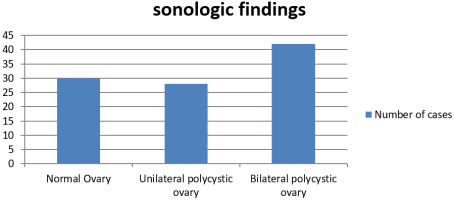
Pelvic ultrasonography revealed polycystic ovarian morphology in 70% of participants, with bilateral involvement being more frequent than unilateral involvement.
The present hospital-based descriptive study describes the clinical manifestations of PCOS among adult women attending a tertiary care hospital in eastern Afghanistan. The findings indicate that menstrual irregularities, hyperandrogenism, obesity, and polycystic ovarian morphology are the predominant clinical manifestations among women with PCOS. The clinical features of polycystic ovary syndrome (PCOS) in this study show similarities with findings from Indian populations, where hormonal and metabolic abnormalities are also prominent. In a study from Northeast India, clinical hyperandrogenism manifested as acne in 49.05% of participants and hirsutism in 43.39%, while menstrual issues such as oligomenorrhea and amenorrhea were frequent
[13]
Yasmin A, et al. Prevalence of PCOS and risk factors in Northeast India. Ther Adv Reprod Health. 2025; 19: 26334941251384195.
. These results align with our observation of menstrual irregularities and hyperandrogenism as predominant features, emphasizing common reproductive symptomatology across South Asian settings.
In medical student populations from the UAE and Oman, the prevalence and presentation of PCOS varied notably by region, supporting the influence of lifestyle and ethnic factors on clinical expression. The study reported irregular periods and acne as the most common clinical symptoms, with a higher prevalence of hirsutism in Emirati students compared to their Omani counterparts, and obesity was a strong predictor of PCOS symptoms across both groups
[14]
Begum GS, et al. Prevalence and risk factors of PCOS in UAE and Oman medical students. Int J Environ Res Public Health. 2024; 21(9): 1165.
. These findings reinforce the role of lifestyle and environmental factors seen in this study, where overweight or obesity was observed in 72% of participants (42% were overweight and 30% were obese).
Research from Pakistan further substantiates the overlap in clinical presentations of PCOS across South Asia. In a tertiary hospital setting in Karachi, menstrual irregularity was the most common presentation, followed by hirsutism in over half of the women, and metabolic syndrome components such as high obesity and dyslipidemia were frequent. These patterns mirror the high prevalence of overweight/obesity and hyperandrogenic features in our study, highlighting shared clinical profiles in neighboring populations
[15]
Anjum S, et al. Clinical presentation of PCOS and metabolic syndrome in Pakistan. Cureus. 2020; 12.
. Studies from Kuwait demonstrate that PCOS prevalence in Middle Eastern populations is linked with key reproductive symptoms. Among female university students, menstrual irregularities and hirsutism were significantly associated with PCOS status, with additional risk factors such as family history influencing prevalence
[16]
Alkhezi F, et al. Prevalence of PCOS among female university students in Middle East. Women’s Health Rep. 2024; 5(1): 579-587.
. This prevalence of core symptoms such as irregular menstruation and androgen excess is consistent with this study.
Meta-analytic evidence from the Gulf Cooperation Council (GCC) countries highlights that PCOS is a significant contributor to infertility and is often associated with higher BMI. The systematic review reported that nearly 30% of infertile women in four out of six GCC countries were diagnosed with PCOS, and older age and obesity were linked with higher prevalence
[17]
Alam Z, et al. PCOS prevalence among infertile women in GCC countries. Heliyon. 2024; 10.
. These results lend support to our observation of infertility among 44% of participants and underscore the importance of metabolic health in PCOS clinical outcomes.
Population-based research in Iran provides further insight into the prevalence and symptom distribution of PCOS. A meta-analysis reported that the prevalence of PCOS varied according to diagnostic criteria, with hirsutism present in 13%, acne in 26%, and menstrual disorders in 28% of Iranian women; overweight and obesity were also reported among the clinical characteristics
[18]
Jalilian A, et al. Prevalence of PCOS in Iranian women: meta-analysis. Int J Reprod Biomed. 2015; 13(10): 591-604.
[18]
. Although the prevalence figures differ from our findings, the symptom patterns are consistent with the clinical findings of menstrual irregularities and hyperandrogenism.
Further Iranian research on PCOS phenotypes shows that classical Rotterdam phenotypes, which include ovulatory dysfunction and hyperandrogenism, are prevalent in women diagnosed with the syndrome. The study identified phenotype A as the most common and linked it to increased infertility and irregular cycles, emphasizing the reproductive impact of this phenotype
[19]
Kheirollahi A, Hamidi H, Vatannejad A. Distribution of polycystic ovary syndrome (PCOS) phenotypes in Iranian women: a cross-sectional study. BMC Res Notes. 2025; 18(1): 215.
. These associations support our findings on infertility and underscore the significance of Rotterdam criteria in capturing clinical heterogeneity.
Several limitations should be considered when interpreting these findings. This was a hospital-based study with a relatively small sample size and convenience sampling, which may limit generalizability to the wider population. Biochemical hormonal assessments and lipid profiles were not included, restricting evaluation of biochemical hyperandrogenism and metabolic syndrome. In addition, the cross-sectional design does not allow assessment of causal relationships or long-term outcomes. Despite these limitations, the study provides valuable baseline data in a setting where local evidence on PCOS is scarce. Future studies should adopt larger, population-based designs to improve generalizability and better estimate the burden of PCOS in Afghanistan. Incorporation of biochemical investigations, including hormonal and metabolic profiles, is essential to comprehensively characterize the syndrome. Longitudinal studies are needed to assess long-term reproductive and metabolic outcomes among women with PCOS, while socioeconomic factors should also be considered in relation to disease recognition and management.
5. Conclusion
This study describes the clinical profile of polycystic ovary syndrome among adult women attending Nangarhar University Teaching Hospital. Most affected women were of reproductive age. Menstrual irregularities and clinical hyperandrogenism, particularly hirsutism and acne, were the most common presentations. Overweight, obesity, and associated metabolic comorbidities such as diabetes mellitus and hypertension were frequently observed. Polycystic ovarian morphology was commonly detected on ultrasonography, highlighting the importance of early diagnosis and comprehensive management of PCOS.
6. Recommendations
1. Early screening programs for PCOS should be strengthened in Afghanistan, particularly among women of reproductive age.
2. Public awareness campaigns and healthcare worker training are recommended to improve early diagnosis and management.
3. Future studies with larger sample sizes and biochemical investigations are needed to better understand the burden and clinical spectrum of PCOS in Afghanistan.
Abbreviations
BMI
Body Mass Index
DM
Diabetes Mellitus
HTN
Hypertension
NIH
National Institutes of Health
PCOS
Polycystic Ovary Syndrome
SHBG
Sex Hormone-Binding Globulin
Author Contributions
Rohullah Asady: Conceptualization, Methodology, Supervision, Writing – original draft
Nik Hazlina N, Norhayati MN, Shaiful Bahari I, Nik Muhammad Arif NA. Worldwide prevalence, risk factors, and psychological impact of infertility among women: a systematic review and meta-analysis. BMJ Open. 2022; 12.
Huo M, et al. Changing trends in the global burden of polycystic ovarian syndrome-related infertility over the past 30 years: retrospective data analysis of the Global Burden of Disease Study 2019. BMC Womens Health. 2025; 25: 35.
Jalilian A, et al. Prevalence of PCOS in Iranian women: meta-analysis. Int J Reprod Biomed. 2015; 13(10): 591-604.
[19]
Kheirollahi A, Hamidi H, Vatannejad A. Distribution of polycystic ovary syndrome (PCOS) phenotypes in Iranian women: a cross-sectional study. BMC Res Notes. 2025; 18(1): 215.
Teede HJ, Tay CT, Laven J, et al. Recommendations from the 2023 International Evidence-based Guideline for the Assessment and Management of Polycystic Ovary Syndrome. Hum Reprod. 2023; 38(9): 1655-1679.
Asady, R., Momand, N. (2026). Clinical Manifestations of Polycystic Ovary Syndrome Among Women Attending a Teaching Hospital in Afghanistan: A Cross-Sectional Study. Clinical Medicine Research, 15(6), 93-97. https://doi.org/10.11648/j.cmr.20261506.12
Asady, R.; Momand, N. Clinical Manifestations of Polycystic Ovary Syndrome Among Women Attending a Teaching Hospital in Afghanistan: A Cross-Sectional Study. Clin. Med. Res.2026, 15(6), 93-97. doi: 10.11648/j.cmr.20261506.12
Asady R, Momand N. Clinical Manifestations of Polycystic Ovary Syndrome Among Women Attending a Teaching Hospital in Afghanistan: A Cross-Sectional Study. Clin Med Res. 2026;15(6):93-97. doi: 10.11648/j.cmr.20261506.12
@article{10.11648/j.cmr.20261506.12,
  author = {Rohullah Asady and Noorina Momand},
  title = {Clinical Manifestations of Polycystic Ovary Syndrome Among Women Attending a Teaching Hospital in Afghanistan: A Cross-Sectional Study},
  journal = {Clinical Medicine Research},
  volume = {15},
  number = {6},
  pages = {93-97},
  doi = {10.11648/j.cmr.20261506.12},
  url = {https://doi.org/10.11648/j.cmr.20261506.12},
  eprint = {https://article.sciencepublishinggroup.com/pdf/10.11648.j.cmr.20261506.12},
  abstract = {Polycystic Ovary Syndrome (PCOS) is a complex endocrine disorder affecting women of reproductive age, characterized by hyperandrogenism, ovulatory dysfunction, and polycystic ovarian morphology. Despite its high prevalence and significant reproductive and metabolic consequences, data on PCOS in Afghanistan are limited. This hospital-based descriptive cross-sectional study was conducted at Nangarhar University Teaching Hospital. A total of 100 women aged 18-45 years with a confirmed diagnosis of PCOS based on the Rotterdam criteria were included. Data were collected using a structured questionnaire, clinical examination, and pelvic ultrasonography. Descriptive statistics were used to analyze demographic, clinical, and metabolic characteristics. Most participants were aged 26-35 years (46%). Menstrual irregularities were reported in 68%, with oligomenorrhea (48%) and amenorrhea (20%) being most common. Infertility was present in 44% of participants. Overweight and obesity were observed in 42% and 30% of women, respectively. Clinical hyperandrogenism was common, with moderate to severe hirsutism identified in 40%, acne in 54%, and alopecia in 18% of participants. Ultrasonography revealed polycystic ovarian morphology in 70% of participants, predominantly bilateral. The findings indicate that PCOS is common among reproductive-age women in eastern Afghanistan. Early recognition, improved diagnostic facilities, and comprehensive management strategies are essential to reduce long-term complications associated with PCOS.},
 year = {2026}
}
TY  - JOUR
T1  - Clinical Manifestations of Polycystic Ovary Syndrome Among Women Attending a Teaching Hospital in Afghanistan: A Cross-Sectional Study
AU  - Rohullah Asady
AU  - Noorina Momand
Y1  - 2026/11/27
PY  - 2026
N1  - https://doi.org/10.11648/j.cmr.20261506.12
DO  - 10.11648/j.cmr.20261506.12
T2  - Clinical Medicine Research
JF  - Clinical Medicine Research
JO  - Clinical Medicine Research
SP  - 93
EP  - 97
PB  - Science Publishing Group
SN  - 2326-9057
UR  - https://doi.org/10.11648/j.cmr.20261506.12
AB  - Polycystic Ovary Syndrome (PCOS) is a complex endocrine disorder affecting women of reproductive age, characterized by hyperandrogenism, ovulatory dysfunction, and polycystic ovarian morphology. Despite its high prevalence and significant reproductive and metabolic consequences, data on PCOS in Afghanistan are limited. This hospital-based descriptive cross-sectional study was conducted at Nangarhar University Teaching Hospital. A total of 100 women aged 18-45 years with a confirmed diagnosis of PCOS based on the Rotterdam criteria were included. Data were collected using a structured questionnaire, clinical examination, and pelvic ultrasonography. Descriptive statistics were used to analyze demographic, clinical, and metabolic characteristics. Most participants were aged 26-35 years (46%). Menstrual irregularities were reported in 68%, with oligomenorrhea (48%) and amenorrhea (20%) being most common. Infertility was present in 44% of participants. Overweight and obesity were observed in 42% and 30% of women, respectively. Clinical hyperandrogenism was common, with moderate to severe hirsutism identified in 40%, acne in 54%, and alopecia in 18% of participants. Ultrasonography revealed polycystic ovarian morphology in 70% of participants, predominantly bilateral. The findings indicate that PCOS is common among reproductive-age women in eastern Afghanistan. Early recognition, improved diagnostic facilities, and comprehensive management strategies are essential to reduce long-term complications associated with PCOS.
VL  - 15
IS  - 6
ER  -




 Share This Article
 Twitter
 Linked In
 Facebook

 Copy
 Download