
 ,
Barmo Hamza Nana Latifa,
Salifou Abdou Mahamane Mobarak,
Ben Adji Mamadou Djibrilla Wazir,
Ousseini Zika Oumou,
Adehossi Eric,
,
Barmo Hamza Nana Latifa,
Salifou Abdou Mahamane Mobarak,
Ben Adji Mamadou Djibrilla Wazir,
Ousseini Zika Oumou,
Adehossi Eric,
Objective: This study aimed to assess the prevalence, clinical features, frequency, severity, duration, and functional impact of migraine among medical students at Abdou Moumouni University in Niamey. Methods: We conducted a descriptive cross-sectional study involving 334 medical students. Data were collected using a structured questionnaire inspired by the ID-Migraine tool, focusing on headache characteristics and their impact. A gender-based comparative analysis was also performed. Results: Out of the 334 students who participated, 141 met the IHS diagnostic criteria for migraine, corresponding to a prevalence of 42.2% (95% Confidence Interval: 36.9% to 47.5%). The most common symptoms included phonophobia (97.2%), pulsatile headache (89.4%), and photophobia (73%). The average attack frequency was 13.6 days over 3 months, with a mean pain intensity of 6.3/10. Among treated students, 83.7% reported episodes lasting less than 4 hours. The functional impact was significant, with an average of 3.8 days of complete activity interruption and 4.2 days of reduced social engagement. Women reported a higher frequency of attacks (14.5 days) compared to men (11.9 days). Conclusion: This study highlights a high prevalence of migraine among medical students in Niamey, along with a considerable functional burden. These findings call for targeted interventions and support strategies to mitigate academic and social consequences in this vulnerable population.
| Published in | Clinical Neurology and Neuroscience (Volume 10, Issue 1) |
| DOI | 10.11648/j.cnn.20261001.14 |
| Page(s) | 20-27 |
| Creative Commons |
This is an Open Access article, distributed under the terms of the Creative Commons Attribution 4.0 International License (http://creativecommons.org/licenses/by/4.0/), which permits unrestricted use, distribution and reproduction in any medium or format, provided the original work is properly cited. |
| Copyright |
Copyright © The Author(s), 2026. Published by Science Publishing Group |
Migraine, Headache, Medical Students, Prevalence, Africa, Functional Impact
EM | Medical Student |
GRIM | Research Group on Migraine |
MIDAS | Migraine Disability Assessment |
| [1] | Zebenholzer K, Wöber C. Diagnosing and classifying headache disorders. Neurol Clin. 2024; 42(1): 23–38. |
| [2] | Diouf M, Diallo I, Diop AG. Prévalence de la migraine chez des étudiants en médecine à Dakar. Rev Neurol Psychiatr. 2023; 74(4): 225–230. |
| [3] | Lipton RB, Bigal ME. Migraine: epidemiology, impact, and risk factors. Eur Neurol. 2013; 70(5–6): 312–319. |
| [4] | Burch RC, Buse DC, Lipton RB. Migraine and severe headache in the United States: prevalence and disability. Headache Med. 2022; 12(2): 101–109. |
| [5] | Kulkarni GB, Rao GN. Headache disorders: burden and management in India. Ann Indian Acad Neurol. 2013; 16(2): 221–225. |
| [6] | Nasreldein A, Elsadig A, Ahmed ME. Headache prevalence among Sudanese medical students. Egypt J Neurol Psychiatr Neurosurg. 2021; 57: 92. |
| [7] | Santos EM, de Oliveira N, Rocha-Filho PAS. Migraine and hormonal influences. Arq Neuropsiquiatr. 2011; 69(4): 622–626. |
| [8] | Lanteri-Minet M, Duru G, Mudge M. Impact of migraine on academic performance. J Headache Pain. 2015; 15: 26. |
| [9] | Huguet A, Mazo C, Mallet J. The burden of migraine in adolescence: a European perspective. Eur J Pain. 2017; 21(8): 1395–1403. |
| [10] | Tokunaga Y, Miyake H, Koga Y. Characteristics of headache among Japanese university students. Tohoku J Exp Med. 2006; 208(1): 87–92. |
| [11] | Lipton RB, Stewart WF. Prevalence and burden of migraine in the United States. Headache. 2009; 49(9): 1236–1245. |
| [12] | Cousins G, Hijazze S, Van de Laar FA, Fahey T. Diagnostic accuracy of the ID Migraine: a systematic review and meta-analysis. BMC Neurol. 2011; 11: 103. |
| [13] | Stewart WF, Lipton RB, Simon D. Work-related disability from migraine. Headache. 1996; 36(5): 316–321. |
| [14] | Bendtsen L, Birk S, Kasch H, et al. Management of migraine in primary care. J Headache Pain. 2012; 13(5): 373–390. |
| [15] | Bigal ME, Lipton RB. The classification of chronic migraine: practical implications. J Neurol Sci. 2013; 331(1–2): 50–56. |
| [16] | Steiner TJ, Stovner LJ, Birbeck GL. Migraine: the seventh disabler. Headache. 2011; 51(1): 1–3. |
| [17] | Araújo Filho GM, Ciciarelli Júnior JC, Nascimento OJM. Epidemiology of headache in Africa. Arq Neuropsiquiatr. 2010; 68(6): 862–866. |
| [18] | Sarr DO, Ka MM, Ndiaye M. Migraine chez les étudiants à Dakar. Dakar Méd. 2019; 19(1): 45–49. |
| [19] | Souza JA, Silva MT, Martins EA. Prevalence of headache among undergraduates in Brazil. Rev Neurociências. 2021; 22: 142–149. |
| [20] | Mathew NT. Migraine and its relation to gender. Headache. 1984; 24(3): 127–131. |
| [21] | Prasad M, George J, Pawar S. Clinical profile of migraine in a tertiary care center. Natl J Physiol Pharm Pharmacol. 2018; 8(11): 1555–1560. |
| [22] | Nisar YB, Qadri MH, Fatima K. Prevalence and patterns of migraine among medical students in Pakistan. Pak J Med Sci. 2017; 33(2): 295–299. |
| [23] | Elsayed AE, Alharthi B, Alghamdi A. Migraine among Saudi university students: a cross-sectional study. J Clin Neurosci. 2022; 98: 204–209. |
| [24] | Nasreldin A, Omar A, Elsadig A. Migraine-related disability among medical students in Egypt. Egypt J Neurol Psychiatr Neurosurg. 2022; 58(1): 87. |
| [25] | Asiri SA, Alraddadi RM, Alnakhli AM. Migraine prevalence and triggers among medical students in Jeddah. Int J Med Dev Ctries. 2019; 5(1): 21–27. |
| [26] | Esene IN, El Zoghby M, Ndoumbe A. Burden of migraine in Cameroon. Can J Neurol Sci. 2016; 43(6): 843–846. |
| [27] | Ferrari MD, Goadsby PJ. Burden and management of migraine globally. Int J Neurosci. 2013; 123(12): 877–886. |
| [28] | Blumenfeld AM, Varon SF, Wilcox TK, et al. Disability, HRQoL and resource use among chronic migraine patients. J Pain Res. 2018; 11: 2439–2449. |
| [29] | Aypak C, Turan H, Gorpelioglu S. Migraine prevalence among university students and its impact on daily activities and academic performance. Headache. 2012; 52(5): 875–882. |
| [30] | Ibrahim NK, Alotaibi AK, Alhazmi AM, Alshehri RZ, Saimaldaher RM, Murad MA. Prevalence, predictors and triggers of migraine headache among medical students and interns in King Abdulaziz University, Jeddah, Saudi Arabia. Saudi Pharm J. 2017; 25(2): 233–237. |
| [31] | Manandhar K, Risal A, Steiner TJ, Holen A, Linde M. The prevalence of primary headache disorders in Nepal: a nationwide population-based study. Kathmandu Univ Med J. 2015; 13(49): 33–36. |
| [32] | Ojini FI, Okubadejo NU, Danesi MA. Prevalence and clinical characteristics of headache in medical students of the University of Lagos, Nigeria. Cephalalgia. 2004; 24(1): 29–34. |
| [33] | Zafar MS, Irfan A, Qayyum H, Shah SA. Prevalence and characteristics of migraine among medical and dental students of Lahore, Pakistan. J Coll Physicians Surg Pak. 2020; 30(5): 514–518. |
APA Style
Soumaila, B., Latifa, B. H. N., Mobarak, S. A. M., Wazir, B. A. M. D., Oumou, O. Z., et al. (2026). Prevalence, Clinical Features, and Functional Impact of Migraine Among Medical Students in Niamey. Clinical Neurology and Neuroscience, 10(1), 20-27. https://doi.org/10.11648/j.cnn.20261001.14
ACS Style
Soumaila, B.; Latifa, B. H. N.; Mobarak, S. A. M.; Wazir, B. A. M. D.; Oumou, O. Z., et al. Prevalence, Clinical Features, and Functional Impact of Migraine Among Medical Students in Niamey. Clin. Neurol. Neurosci. 2026, 10(1), 20-27. doi: 10.11648/j.cnn.20261001.14
AMA Style
Soumaila B, Latifa BHN, Mobarak SAM, Wazir BAMD, Oumou OZ, et al. Prevalence, Clinical Features, and Functional Impact of Migraine Among Medical Students in Niamey. Clin Neurol Neurosci. 2026;10(1):20-27. doi: 10.11648/j.cnn.20261001.14
@article{10.11648/j.cnn.20261001.14,
  author = {Boubacar Soumaila and Barmo Hamza Nana Latifa and Salifou Abdou Mahamane Mobarak and Ben Adji Mamadou Djibrilla Wazir and Ousseini Zika Oumou and Brah Souleymane and Adehossi Eric and Douma Maiga Djibo},
  title = {Prevalence, Clinical Features, and Functional Impact of Migraine Among Medical Students in Niamey},
  journal = {Clinical Neurology and Neuroscience},
  volume = {10},
  number = {1},
  pages = {20-27},
  doi = {10.11648/j.cnn.20261001.14},
  url = {https://doi.org/10.11648/j.cnn.20261001.14},
  eprint = {https://article.sciencepublishinggroup.com/pdf/10.11648.j.cnn.20261001.14},
  abstract = {Objective: This study aimed to assess the prevalence, clinical features, frequency, severity, duration, and functional impact of migraine among medical students at Abdou Moumouni University in Niamey. Methods: We conducted a descriptive cross-sectional study involving 334 medical students. Data were collected using a structured questionnaire inspired by the ID-Migraine tool, focusing on headache characteristics and their impact. A gender-based comparative analysis was also performed. Results: Out of the 334 students who participated, 141 met the IHS diagnostic criteria for migraine, corresponding to a prevalence of 42.2% (95% Confidence Interval: 36.9% to 47.5%). The most common symptoms included phonophobia (97.2%), pulsatile headache (89.4%), and photophobia (73%). The average attack frequency was 13.6 days over 3 months, with a mean pain intensity of 6.3/10. Among treated students, 83.7% reported episodes lasting less than 4 hours. The functional impact was significant, with an average of 3.8 days of complete activity interruption and 4.2 days of reduced social engagement. Women reported a higher frequency of attacks (14.5 days) compared to men (11.9 days). Conclusion: This study highlights a high prevalence of migraine among medical students in Niamey, along with a considerable functional burden. These findings call for targeted interventions and support strategies to mitigate academic and social consequences in this vulnerable population.},
 year = {2026}
}
TY  - JOUR
T1  - Prevalence, Clinical Features, and Functional Impact of Migraine Among Medical Students in Niamey
AU  - Boubacar Soumaila
AU  - Barmo Hamza Nana Latifa
AU  - Salifou Abdou Mahamane Mobarak
AU  - Ben Adji Mamadou Djibrilla Wazir
AU  - Ousseini Zika Oumou
AU  - Brah Souleymane
AU  - Adehossi Eric
AU  - Douma Maiga Djibo
Y1  - 2026/03/05
PY  - 2026
N1  - https://doi.org/10.11648/j.cnn.20261001.14
DO  - 10.11648/j.cnn.20261001.14
T2  - Clinical Neurology and Neuroscience
JF  - Clinical Neurology and Neuroscience
JO  - Clinical Neurology and Neuroscience
SP  - 20
EP  - 27
PB  - Science Publishing Group
SN  - 2578-8930
UR  - https://doi.org/10.11648/j.cnn.20261001.14
AB  - Objective: This study aimed to assess the prevalence, clinical features, frequency, severity, duration, and functional impact of migraine among medical students at Abdou Moumouni University in Niamey. Methods: We conducted a descriptive cross-sectional study involving 334 medical students. Data were collected using a structured questionnaire inspired by the ID-Migraine tool, focusing on headache characteristics and their impact. A gender-based comparative analysis was also performed. Results: Out of the 334 students who participated, 141 met the IHS diagnostic criteria for migraine, corresponding to a prevalence of 42.2% (95% Confidence Interval: 36.9% to 47.5%). The most common symptoms included phonophobia (97.2%), pulsatile headache (89.4%), and photophobia (73%). The average attack frequency was 13.6 days over 3 months, with a mean pain intensity of 6.3/10. Among treated students, 83.7% reported episodes lasting less than 4 hours. The functional impact was significant, with an average of 3.8 days of complete activity interruption and 4.2 days of reduced social engagement. Women reported a higher frequency of attacks (14.5 days) compared to men (11.9 days). Conclusion: This study highlights a high prevalence of migraine among medical students in Niamey, along with a considerable functional burden. These findings call for targeted interventions and support strategies to mitigate academic and social consequences in this vulnerable population.
VL  - 10
IS  - 1
ER  -
Department of Neurology, Amirou Boubacar Diallo National Hospital, Niamey, Niger
Department of Neurology, Amirou Boubacar Diallo National Hospital, Niamey, Niger
Department of Psychiatry, National Hospital of Niamey, Niamey, Niger
Department of Medicine and Specialties, Dan Dicko Dankoulodo University of Maradi, Maradi,Niger
Department of Psychiatry, National Hospital of Niamey, Niamey, Niger
Department of Medicine and Specialties, Abdou Moumouni University of Niamey, Niamey, Niger
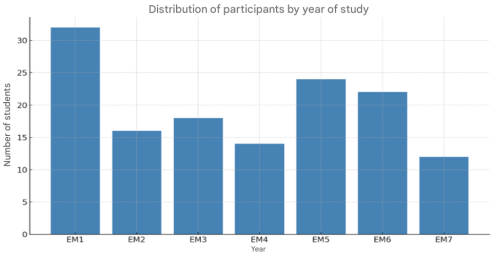
Figure 1. Distribution of participants by year of study.
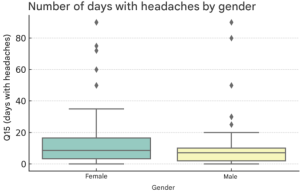
Figure 2. Number of days with headaches by gender.
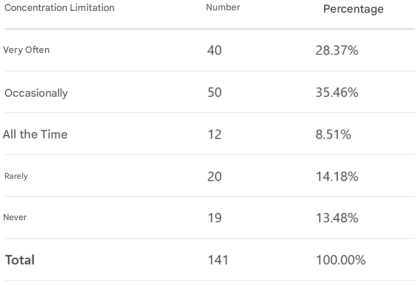
Figure 3. Distribution according to concentration limitation. This distribution shows that the majority of participants (64.54%) experience concentration limitations at least "from time to time", which highlights the significant impact of migraines or headaches on cognitive functions.
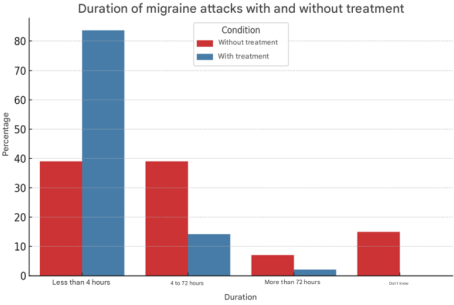
Figure 4. Duration of Migraine attacks and without treatment.
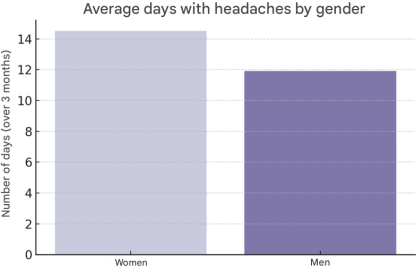
Figure 5. Average days with headaches by gender.
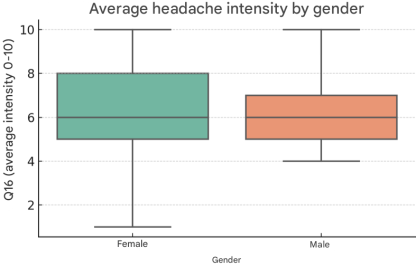
Figure 6. Average headache intensity by gender.
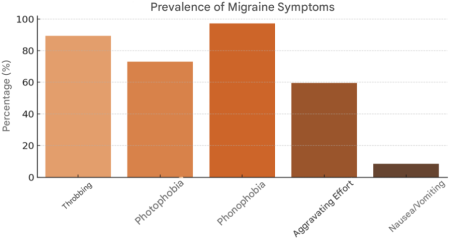
Figure 7. Prevalence of Migraine symptoms.
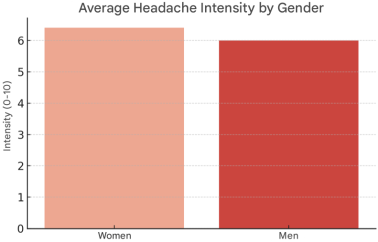
Figure 8. Average headache intensity by gender.
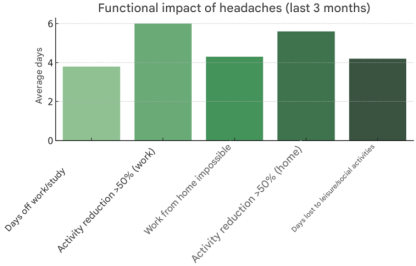
Figure 9. Functional impact of headaches (last 3 months).

Information


 Share This Article
 Twitter
 Linked In
 Facebook
 Copy
Copy Download