
The remediation of low-permeability clay soils co-contaminated with Polycyclic Aromatic Hydrocarbons (PAHs) and Total Petroleum Hydrocarbons (TPH) remains a significant environmental challenge. Traditional Electrokinetic Remediation (EKR) is fundamentally constrained by the high hydrophobicity of these contaminants and strong matrix adsorption, which severely limit their aqueous solubility and mobility. This study systematically investigated the combined effects of critical operating parameters, chemical amendments, and physical constraints on the efficiency of Surfactant-Enhanced EKR (SE-EKR) for a highly contaminated clay matrix. A suite of batch tests was performed to optimize EKR conditions. Key findings demonstrated that operating parameters exert a crucial influence on both current dynamics and contaminant removal. Acidic conditions (pH 4.5) were optimal, yielding the highest average removal rate of 70.97% for 12 target contaminants, primarily driven by the high mobility of H+ ions which significantly boosted electrical current. This elevated current led to increased Joule heating (accelerating VOC volatilization) and enhanced oxidative capacity (improving PAH degradation). The use of the composite electrolyte EDTA further improved performance, achieving 69.29% removal by increasing overall conductivity and effectively solubilizing and desorbing highly adsorbed SVOCs (e.g., Benzo[a]anthracene removal reached 82.41%). Furthermore, increasing the voltage gradient to 2.0 V/cm maximized removal at 73.42%, confirming the importance of electromigration and electrochemical oxidation for persistent pollutants. The incorporation of Activated Carbon (AC) increased the system current by 14.3% and enhanced PAH removal, functioning as a 3D particulate electrode that established internal electron conduction pathways and localized redox reaction sites within the low-conductivity clay. Comparing chemical enhancers, SDBS demonstrated superior solubilization and removal efficiency over Alpha Olefin Sulfonate (AOS), likely due to favorable π-π stacking interactions with PAHs. Finally, the simulation of non-conductive subsurface infrastructure demonstrated its role as a physical constraint, disrupting electroosmotic flow pathways, reducing current, and successfully preventing the severe local contaminant accumulation observed in the EKR control. This research provides essential insights into developing robust, field-applicable strategies for EKR by emphasizing the combined necessity of optimized chemical control and mitigation of physical constraints.
| Published in | Earth Sciences (Volume 14, Issue 6) |
| DOI | 10.11648/j.earth.20251406.17 |
| Page(s) | 290-300 |
| Creative Commons |
This is an Open Access article, distributed under the terms of the Creative Commons Attribution 4.0 International License (http://creativecommons.org/licenses/by/4.0/), which permits unrestricted use, distribution and reproduction in any medium or format, provided the original work is properly cited. |
| Copyright |
Copyright © The Author(s), 2025. Published by Science Publishing Group |
Electrokinetic Remediation, Surfactant-Enhanced, Polycyclic Aromatic Hydrocarbons, Total Petroleum Hydrocarbons, Low-Permeability Soil
Contaminants | Detection Limit | 1#Sample | 2#Sample |
|---|---|---|---|
Ethylbenzene | 0.0012 | 12.1 | 14.6 |
Styrene | 0.0011 | 16.5 | 18.8 |
Toluene | 0.0013 | 37.3 | 51.3 |
m-Xylene + p-Xylene | 0.0012 | 70.1 | 94.3 |
o-Xylene | 0.0012 | 28.7 | 38 |
Naphthalene | 0.09 | 775 | 529 |
Benzo[a]anthracene | 0.10 | 44.4 | 17.3 |
Chrysene | 0.10 | 37.7 | 13.1 |
Benzo[b]fluoranthene | 0.20 | 43.2 | 11.4 |
Benzo[k]fluoranthene | 0.10 | 16.5 | 5.36 |
Benzo[a]pyrene | 0.10 | 37.9 | 11.5 |
Indeno[1,2,3-cd]pyrene | 0.10 | 17.6 | 4.53 |
Dibenzo[a, h]anthracene | 0.10 | 4.39 | 0.62 |
Di(2-ethylhexyl) phthalate (DEHP) | 0.10 | 1.17 | <0.10 |
TPH(C10-C40) | 6 | 5310 | 3160 |
Test No. | Electrolyte/Modifier | Initial pH | Voltage Gradient (V/cm) |
|---|---|---|---|
1# | - | - | - |
2# | 0.1M NaCl | 4.5 | 0.5 |
3# | 0.1M NaCl | 7.0 | 0.5 |
4# | 0.1M NaCl | 8.5 | 0.5 |
5# | 0.1M KCl | 7.0 | 0.5 |
6# | 0.05M NaCl+0.05M EDTA | 7.0 | 0.5 |
7# | 0.1M NaCl | 7.0 | 1.0 |
8# | 0.1M NaCl | 7.0 | 2.0 |
9# | - | - | 0.5 |
10# | Activated Carbon | - | 0.5 |
Test No. | Test Description | Concentration | Voltage Gradient (V/cm) |
|---|---|---|---|
1# | Clay Blank Control | - | - |
2# | Clay Solubilization Blank | - | 0.5 |
3# | Clay with Alpha Olefin Sulfonate (AOS) | Approximately 5 times CMC | 0.5 |
4# | Clay with SDBS | Approximately 5 times CMC | 0.5 |
5# | Clay with Simulated Pipeline Storage Tank | - | 0.5 |
Parameter | Test Method | Instrument | Model No. |
|---|---|---|---|
VOC | "Soil and Sediment -Determination of Volatile Organic Compounds -Purge-and-Trap/Gas Chromatography-Mass Spectrometry"(HJ 605-2011) | Gas Chromatography-Mass Spectrometry (GC-MS) / Fully Automated Purge-and-Trap Sampler | Agilent7890/5977B/Atomx-XYZ |
SVOCs | "Soil and Sediment -Determination of Semi-Volatile Organic Compounds - Gas Chromatography-Mass Spectrometry"(HJ 834-2017) | Gas Chromatography-Mass Spectrometry (GC-MS) | Agilent7890B/5977B |
TPH | "Soil and Sediment -Determination of Petroleum Hydrocarbons(C10-C40)- Gas Chromatography"(HJ 1021-2019) | Gas Chromatograph (GC) | Agilent8890 |
EKR | Electrokinetic Remediation |
SE-EKR | Surfactant-Enhanced Electrokinetic Remediation |
PAHs | Polycyclic Aromatic Hydrocarbons |
TPH | Total Petroleum Hydrocarbons |
HOCs | Hydrophobic Organic Compounds |
EOF | Electroosmotic Flow |
CMC | Critical Micelle Concentration |
AOS | Alpha Olefin Sulfonate |
SDBS | Sodium Dodecylbenzenesulfonate |
AC | Activated Carbon |
EDTA | Ethylenediaminetetraacetic acid |
VOCs | Volatile Organic Compounds |
SVOCs | Semi-Volatile Organic Compounds |
LNAPL | Light Non-Aqueous Phase Liquid |
| [1] | Reddy, Krishna R., and Claudio Cameselle. Electrochemical remediation technologies for polluted soils, sediments and groundwater; 2009. John Wiley & Sons. |
| [2] | Maturi, Kranti, Krishna R. Reddy, and Claudio Cameselle. "Surfactant-enhanced electrokinetic remediation of mixed contamination in low permeability soil." Separation Science and Technology 44.10 (2009): 2385-2409. |
| [3] | Saini, Anish, et al. "Electrokinetic remediation of petroleum hydrocarbon contaminated soil (I)." Environmental Technology & Innovation 23 (2021): 101585. |
| [4] | Boulakradeche, Mohamed Oualid, et al. "Enhanced electrokinetic remediation of hydrophobic organics contaminated soils by the combination of non-ionic and ionic surfactants." Electrochimica Acta 174 (2015): 1057-1066. |
| [5] | Kim, Jaesup, and Kisay Lee. "Effects of electric field directions on surfactant enhanced electrokinetic remediation of diesel‐contaminated sand column." Journal of Environmental Science & Health Part A 34.4 (1999): 863-877. |
| [6] | Bhattacharya, Sujan Kumar. Surfactant enhanced electrokinetic remediation of gasoline contaminated soils. University of Wyoming, 1996. |
| [7] | Fan, Guangping, et al. "Surfactant and oxidant enhanced electrokinetic remediation of a PCBs polluted soil." Separation and Purification Technology 123 (2014): 106-113. |
| [8] | Han, Ding, et al. "Critical review of electro-kinetic remediation of contaminated soils and sediments: mechanisms, performances and technologies." Water, Air, & Soil Pollution 232.8 (2021): 335. |
| [9] | Gidudu, Brian, and Evans MN Chirwa. "The role of pH, electrodes, surfactants, and electrolytes in electrokinetic remediation of contaminated soil." Molecules 27.21 (2022): 7381. |
| [10] | Lee, Hyun-Ho, and Ji-Won Yang. "A new method to control electrolytes pH by circulation system in electrokinetic soil remediation." Journal of Hazardous Materials 77.1-3 (2000): 227-240. |
| [11] | Mena, Esperanza, et al. "Electrokinetic remediation of soil polluted with insoluble organics using biological permeable reactive barriers: effect of periodic polarity reversal and voltage gradient." Chemical Engineering Journal 299 (2016): 30-36. |
| [12] | Cang, Long, et al. "Enhanced-electrokinetic remediation of copper–pyrene co-contaminated soil with different oxidants and pH control." Chemosphere 90.8 (2013): 2326-2331. |
| [13] | Rozas, F., and Marta Castellote. "Electrokinetic remediation of dredged sediments polluted with heavy metals with different enhancing electrolytes." Electrochimica Acta 86 (2012): 102-109. |
| [14] | Karagunduz, Ahmet, Aras Gezer, and Gulden Karasuloglu. "Surfactant enhanced electrokinetic remediation of DDT from soils." Science of the total environment 385.1-3 (2007): 1-11. |
| [15] | Saichek, R. E., and K. R. Reddy. "Effects of system variables on surfactant enhanced electrokinetic removal of polycyclic aromatic hydrocarbons from clayey soils." Environmental technology 24.4 (2003): 503-515. |
| [16] | Li, Yunlong, and Liguo Jiang. "Comparison of the crude oil removal effects of different surfactants in electrokinetic remediation of low-permeability soil." Journal of Environmental Chemical Engineering 9.4 (2021): 105190. |
| [17] | Acar, Yalcin B., and Akram N. Alshawabkeh. "Principles of electrokinetic remediation." Environmental science & technology 27.13 (1993): 2638-2647. |
| [18] | Gu, Yingying, Albert T. Yeung, and Hongjiang Li. "Enhanced electrokinetic remediation of cadmium-contaminated natural clay using organophosphonates in comparison with EDTA." Chinese Journal of Chemical Engineering 26.5 (2018): 1152-1159. |
| [19] | Han, Hyoyeol, et al. "Electrokinetic remediation of soil contaminated with diesel oil using EDTA–Cosolvent solutions." Separation Science and Technology 44.10 (2009): 2437-2454. |
| [20] | Fan, Guangping, et al. "Review of chemical and electrokinetic remediation of PCBs contaminated soils and sediments." Environmental Science: Processes & Impacts 18.9 (2016): 1140-1156. |
| [21] | Shu, Jiancheng, et al. "Enhanced electrokinetic remediation of manganese and ammonia nitrogen from electrolytic manganese residue using pulsed electric field in different enhancement agents." Ecotoxicology and Environmental Safety 171 (2019): 523-529. |
APA Style
Huang, S. (2025). Investigation of Chemical Enhancers and Physical Constraints in Electrokinetic Remediation of Low-Permeability Soil Contaminated by PAHs and TPH. Earth Sciences, 14(6), 290-300. https://doi.org/10.11648/j.earth.20251406.17
ACS Style
Huang, S. Investigation of Chemical Enhancers and Physical Constraints in Electrokinetic Remediation of Low-Permeability Soil Contaminated by PAHs and TPH. Earth Sci. 2025, 14(6), 290-300. doi: 10.11648/j.earth.20251406.17
AMA Style
Huang S. Investigation of Chemical Enhancers and Physical Constraints in Electrokinetic Remediation of Low-Permeability Soil Contaminated by PAHs and TPH. Earth Sci. 2025;14(6):290-300. doi: 10.11648/j.earth.20251406.17
@article{10.11648/j.earth.20251406.17,
  author = {Sheng Huang},
  title = {Investigation of Chemical Enhancers and Physical Constraints in Electrokinetic Remediation of Low-Permeability Soil Contaminated by PAHs and TPH},
  journal = {Earth Sciences},
  volume = {14},
  number = {6},
  pages = {290-300},
  doi = {10.11648/j.earth.20251406.17},
  url = {https://doi.org/10.11648/j.earth.20251406.17},
  eprint = {https://article.sciencepublishinggroup.com/pdf/10.11648.j.earth.20251406.17},
  abstract = {The remediation of low-permeability clay soils co-contaminated with Polycyclic Aromatic Hydrocarbons (PAHs) and Total Petroleum Hydrocarbons (TPH) remains a significant environmental challenge. Traditional Electrokinetic Remediation (EKR) is fundamentally constrained by the high hydrophobicity of these contaminants and strong matrix adsorption, which severely limit their aqueous solubility and mobility. This study systematically investigated the combined effects of critical operating parameters, chemical amendments, and physical constraints on the efficiency of Surfactant-Enhanced EKR (SE-EKR) for a highly contaminated clay matrix. A suite of batch tests was performed to optimize EKR conditions. Key findings demonstrated that operating parameters exert a crucial influence on both current dynamics and contaminant removal. Acidic conditions (pH 4.5) were optimal, yielding the highest average removal rate of 70.97% for 12 target contaminants, primarily driven by the high mobility of H+ ions which significantly boosted electrical current. This elevated current led to increased Joule heating (accelerating VOC volatilization) and enhanced oxidative capacity (improving PAH degradation). The use of the composite electrolyte EDTA further improved performance, achieving 69.29% removal by increasing overall conductivity and effectively solubilizing and desorbing highly adsorbed SVOCs (e.g., Benzo[a]anthracene removal reached 82.41%). Furthermore, increasing the voltage gradient to 2.0 V/cm maximized removal at 73.42%, confirming the importance of electromigration and electrochemical oxidation for persistent pollutants. The incorporation of Activated Carbon (AC) increased the system current by 14.3% and enhanced PAH removal, functioning as a 3D particulate electrode that established internal electron conduction pathways and localized redox reaction sites within the low-conductivity clay. Comparing chemical enhancers, SDBS demonstrated superior solubilization and removal efficiency over Alpha Olefin Sulfonate (AOS), likely due to favorable π-π stacking interactions with PAHs. Finally, the simulation of non-conductive subsurface infrastructure demonstrated its role as a physical constraint, disrupting electroosmotic flow pathways, reducing current, and successfully preventing the severe local contaminant accumulation observed in the EKR control. This research provides essential insights into developing robust, field-applicable strategies for EKR by emphasizing the combined necessity of optimized chemical control and mitigation of physical constraints.},
 year = {2025}
}
TY  - JOUR
T1  - Investigation of Chemical Enhancers and Physical Constraints in Electrokinetic Remediation of Low-Permeability Soil Contaminated by PAHs and TPH
AU  - Sheng Huang
Y1  - 2025/12/27
PY  - 2025
N1  - https://doi.org/10.11648/j.earth.20251406.17
DO  - 10.11648/j.earth.20251406.17
T2  - Earth Sciences
JF  - Earth Sciences
JO  - Earth Sciences
SP  - 290
EP  - 300
PB  - Science Publishing Group
SN  - 2328-5982
UR  - https://doi.org/10.11648/j.earth.20251406.17
AB  - The remediation of low-permeability clay soils co-contaminated with Polycyclic Aromatic Hydrocarbons (PAHs) and Total Petroleum Hydrocarbons (TPH) remains a significant environmental challenge. Traditional Electrokinetic Remediation (EKR) is fundamentally constrained by the high hydrophobicity of these contaminants and strong matrix adsorption, which severely limit their aqueous solubility and mobility. This study systematically investigated the combined effects of critical operating parameters, chemical amendments, and physical constraints on the efficiency of Surfactant-Enhanced EKR (SE-EKR) for a highly contaminated clay matrix. A suite of batch tests was performed to optimize EKR conditions. Key findings demonstrated that operating parameters exert a crucial influence on both current dynamics and contaminant removal. Acidic conditions (pH 4.5) were optimal, yielding the highest average removal rate of 70.97% for 12 target contaminants, primarily driven by the high mobility of H+ ions which significantly boosted electrical current. This elevated current led to increased Joule heating (accelerating VOC volatilization) and enhanced oxidative capacity (improving PAH degradation). The use of the composite electrolyte EDTA further improved performance, achieving 69.29% removal by increasing overall conductivity and effectively solubilizing and desorbing highly adsorbed SVOCs (e.g., Benzo[a]anthracene removal reached 82.41%). Furthermore, increasing the voltage gradient to 2.0 V/cm maximized removal at 73.42%, confirming the importance of electromigration and electrochemical oxidation for persistent pollutants. The incorporation of Activated Carbon (AC) increased the system current by 14.3% and enhanced PAH removal, functioning as a 3D particulate electrode that established internal electron conduction pathways and localized redox reaction sites within the low-conductivity clay. Comparing chemical enhancers, SDBS demonstrated superior solubilization and removal efficiency over Alpha Olefin Sulfonate (AOS), likely due to favorable π-π stacking interactions with PAHs. Finally, the simulation of non-conductive subsurface infrastructure demonstrated its role as a physical constraint, disrupting electroosmotic flow pathways, reducing current, and successfully preventing the severe local contaminant accumulation observed in the EKR control. This research provides essential insights into developing robust, field-applicable strategies for EKR by emphasizing the combined necessity of optimized chemical control and mitigation of physical constraints.
VL  - 14
IS  - 6
ER  -
Shanghai Municipal Engineering Design Institute (Group) Co., Ltd., Shanghai, China
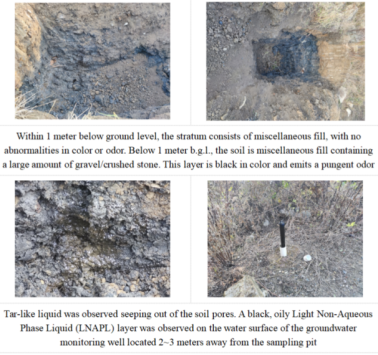
Figure 1. Sampling Pit Profile and Observations.
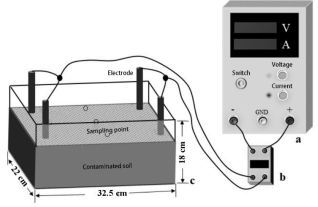
Figure 2. Experimental Setup.
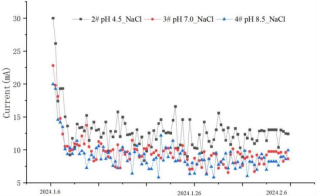
Figure 3. Effect of pH on Current.
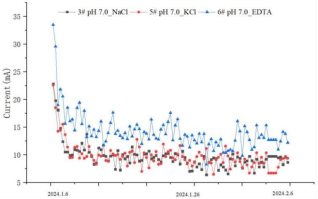
Figure 4. Effect of electrolyte composition on Current.
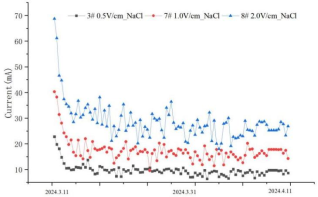
Figure 5. Effect of voltage gradient on Current.
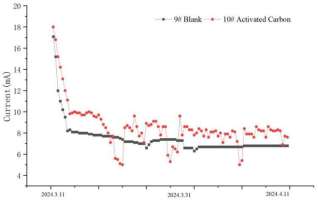
Figure 6. Effect of activated carbon on Current.
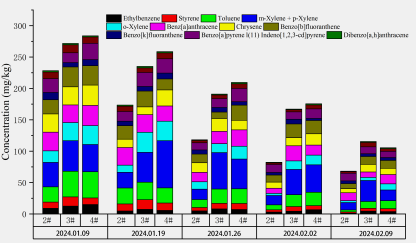
Figure 7. Effect of pH on Removal Rate of PAHs.
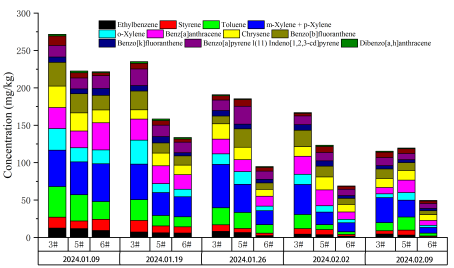
Figure 8. Effect of electrolyte composition on Removal Rate of PAHs.
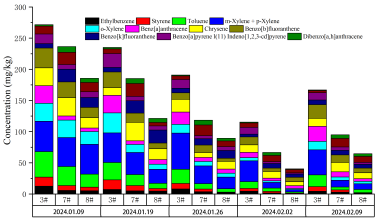
Figure 9. Effect of voltage gradient on Removal Rate of PAHs.
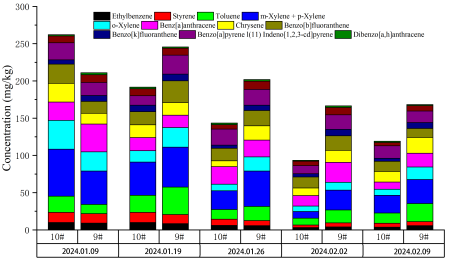
Figure 10. Effect of activated carbon on Removal Rate of PAHs.
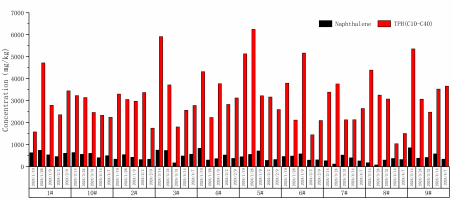
Figure 11. Effect of activated carbon on Removal Rate of Naphthalene and TPH.
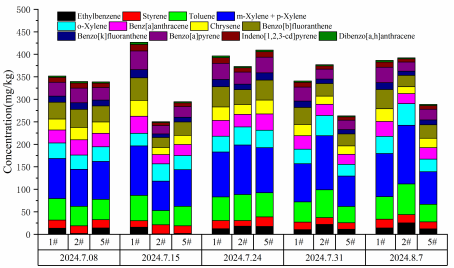
Figure 12. Effectiveness of Electrochemically Enhanced Solubilization Remediation of PAHs.
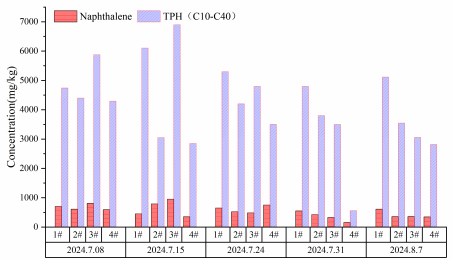
Figure 13. Effectiveness of Electrochemically Enhanced Solubilization Remediation of Naphthalene and TPH.

Information



 Share This Article
 Twitter
 Linked In
 Facebook
 Copy
Copy Download