
For power systems to be stable and reliable, an accurate prediction of electrical load demand is crucial. Electric utilities rely on short-term load forecasting to effectively manage the generation, transmission, and distribution of power to satisfy customer demand. Artificial Neuro-Fuzzy Inference System (ANFIS) is utilized in this work for short-term load forecasting due to its propensity to manage non-linear relationships and uncertainty. ANFIS method has been used in the past for short-term load forecasting, there are certain conditions and issues that need to be resolved. Data normalization, choice of optimization technique, and choice of membership function can greatly influence short-term load forecast using ANFIS. Thus, this paper explored the different choices available and recommended the best choices based on the results obtained. Hourly electrical load data from 24th November 2021 to 4th January 2022, sourced from University of Lagos Power Station, and relevant temperature data within the same range sourced from National Solar Irradiation Database (NSRDB) were used to train and test the various ANFIS architectures. Different ANFIS models, including different membership functions and sets of input data, were simulated on MATLAB, and the performance of the models was evaluated using standard matrices such as root mean square error (RMSE) and mean absolute percentage error (MAPE). The result of this study showed that the inclusion of temperature as an exogenous variable and the use of Gaussian membership function yielded a higher forecast accuracy with MAPE 0.05754% and RMSE 0.56614. This implies that using temperature as an input variable and Gaussian membership functions can improve forecasting accuracy.
| Published in | American Journal of Electrical Power and Energy Systems (Volume 15, Issue 3) |
| DOI | 10.11648/j.epes.20261503.11 |
| Page(s) | 34-44 |
| Creative Commons |
This is an Open Access article, distributed under the terms of the Creative Commons Attribution 4.0 International License (http://creativecommons.org/licenses/by/4.0/), which permits unrestricted use, distribution and reproduction in any medium or format, provided the original work is properly cited. |
| Copyright |
Copyright © The Author(s), 2026. Published by Science Publishing Group |
Short-term Load Forecasting, Artificial Neuro-Fuzzy Inference System (ANFIS), Artificial Intelligence
Membership function | No of membership function | No of Epoch | Input | Training Error | Average Testing error |
|---|---|---|---|---|---|
Gaussian | 3,3,4 | 60 | Hour of the day, Temperature, Previous hour load demand | 0.054336 | 0.56614 |
Gaussian | 3,4 | 60 | Hour of the day, Previous hour load demand | 0.079511 | 0.04101 |
Generalized Bell | 3,3,4 | 60 | Hour of the day, Temperature, Previous hour load demand | 0.055509 | 0.21808 |
Generalized Bell | 3,4 | 60 | Hour of the day, Previous hour load demand | 0.080036 | 0.042776 |
Time (Hour) | Actual Demand | Predicted Load Demand (MW) | |||
|---|---|---|---|---|---|
Gaussian (No temperature) | Gaussian (With temperature) | Generalized bell (With Temperature) | Generalized bell (No temperature) | ||
0 | 0.1901 | 0.193853253 | 0.18399742 | 0.183997 | 0.1819 |
1 | 0.1795 | 0.186580561 | 0.17318745 | 0.173187 | 0.1697 |
2 | 0.1715 | 0.177925093 | 0.16479462 | 0.164795 | 0.1669 |
3 | 0.1642 | 0.172624272 | 0.16590908 | 0.165909 | 0.1688 |
4 | 0.1622 | 0.164719118 | 0.17263393 | 0.172634 | 0.1745 |
5 | 0.2052 | 0.170198372 | 0.09554178 | 0.095542 | 0.1606 |
6 | 0.2829 | 0.229729261 | 0.21811452 | 0.218115 | 0.234 |
7 | 0.3178 | 0.347315273 | 0.31803409 | 0.318034 | 0.3091 |
8 | 0.3626 | 0.388065952 | 0.37944162 | 0.379442 | 0.3877 |
9 | 0.4070 | 0.439584603 | 0.4526625 | 0.452663 | 0.4572 |
10 | 0.5104 | 0.480358751 | 0.49776024 | 0.49776 | 0.4971 |
11 | 0.5166 | 0.530120607 | 0.52179047 | 0.52179 | 0.5283 |
12 | 0.4964 | 0.528422254 | 0.5018063 | 0.501806 | 0.4958 |
13 | 0.4763 | 0.493998242 | 0.47688203 | 0.476882 | 0.493 |
14 | 0.3718 | 0.455410984 | 0.46062583 | 0.460626 | 0.4846 |
15 | 0.3944 | 0.359091114 | 0.38599388 | 0.385994 | 0.3869 |
16 | 0.3369 | 0.375470032 | 0.36752281 | 0.367523 | 0.3695 |
17 | 0.3340 | 0.331701938 | 0.32722003 | 0.32722 | 0.3277 |
18 | 0.3289 | 0.328466942 | 0.34668149 | 0.346681 | 0.3448 |
19 | 0.3053 | 0.319004379 | 0.34067704 | 0.340677 | 0.3444 |
20 | 0.2994 | 0.289255126 | 0.30773516 | 0.307735 | 0.3148 |
21 | 0.2758 | 0.278276272 | 0.28746318 | 0.287463 | 0.2924 |
22 | 0.2658 | 0.253127219 | 0.25749106 | 0.257491 | 0.2588 |
23 | 0.2037 | 0.243624875 | 0.23612053 | 0.236121 | 0.2347 |
Membership function | Input | MAPE | RMSE |
|---|---|---|---|
Gaussian | Hour of the day, Temperature, Previous hour load demand | 0.05754 | 0.56614 |
Gaussian | Hour of the day, Previous hour load demand | 0.07835 | 0.04101 |
Generalized Bell | Hour of the day, Temperature, Previous hour load demand | 0.07693 | 0.21808 |
generalized Bell | Hour of the day, Previous hour load demand | 0.0975 | 0.042776 |
ANFIS | Artificial Neuro-Fuzzy Inference System |
MAPE | Mean Absolute Percentage Error |
NSRDB | National Solar Irradiation Database |
LTLF | long-term Load Forecasting |
MTLF | Medium-term Load Forecasting |
STLF | Short-term Load Forecasting |
| [1] | C.-W. Ten and A. Mehrizi-Sani, Electric Power Distribution Engineering, 4th ed. CRC Press, 2024. |
| [2] | H. Habbak, M. Mahmoud, K. Metwally, M. M. Fouda, and M. I. Ibrahem, “Load Forecasting Techniques and Their Applications in Smart Grids,” Energies, vol. 16, no. 3, pp. 1–33, Feb. 2023, |
| [3] | M. Hasan et al., “A state-of-the-art comparative review of load forecasting methods: Characteristics, perspectives, and applications,” Energy Convers. Manag. X, vol. 26, pp. 1–27, Apr. 2025, |
| [4] | K. Padmanandam, S. Thangaraj, and R. Khilar, “Smart power systems: an eyeview,” in Smart Energy and Electric Power Systems: Current Trends and New Intelligent Perspectives, Elsevier, 2023, pp. 1–18. |
| [5] | I. Samuel, T. Ojewola, A. Awelewa, and P. Amaize, “Short-Term Load Forecasting Using The Time Series And Artificial Neural Network Methods,” IOSR J. Electr. Electron. Eng., vol. 11, no. 1, pp. 72–81, 2016, |
| [6] | K. G. Tay, H. Muwafaq, W. K. Tiong, and Y. Y. Choy, “Electricity Consumption Forecasting Using Adaptive Neuro-Fuzzy Inference System (ANFIS),” Univers. J. Electr. Electron. Eng., vol. 6, no. 5B, pp. 37–48, Dec. 2019, |
| [7] | M. G. Pinheiro, S. C. Madeira, and A. P. Francisco, “Short-term electricity load forecasting—A systematic approach from system level to secondary substations,” Appl. Energy, vol. 332, pp. 1–20, Feb. 2023, |
| [8] | D. Ramos, P. Faria, and Z. Vale, “Linking short-term electricity demand forecasting and explainable AI: A review for building energy applications,” Appl. Energy, vol. 412, pp. 1–16, Jun. 2026, |
| [9] | B. Brailey, “Transforming grid operations with accurate short-term energy predictions,” DNV Expert Energy Forcasting. Accessed: May 11, 2026. Available: |
| [10] | N. Fose, A. R. Singh, S. Krishnamurthy, M. Ratshitanga, and P. Moodley, “Empowering distribution system operators: A review of distributed energy resource forecasting techniques,” Heliyon, vol. 10, no. 15, pp. 1–27, Aug. 2024, |
| [11] | M. S. U. Miah, J. Sulaiman, M. I. Islam, M. Masuduzzaman, M. S. H. Lipu, and R. Nugraha, “REDf: a deep learning model for short-term load forecasting to facilitate renewable integration and attaining the SDGs 7, 9, and 13,” PeerJ Comput. Sci., vol. 11, pp. 1–42, 2025, |
| [12] | J. Liu, X. He, K. Li, and W. Xue, “A Review of State-of-the-Art AI and Data-Driven Techniques for Load Forecasting,” Energies, vol. 18, no. 16, pp. 1–27, Aug. 2025, |
| [13] | V. Arumugam and V. Natarajan, “Time Series Modeling and Forecasting Using Autoregressive Integrated Moving Average and Seasonal Autoregressive Integrated Moving Average Models,” Instrumentation, Mes. Métrologies, vol. 22, no. 4, p. 161, Aug. 2023, |
| [14] | A. Ajiono and T. Hariguna, “Comparison of Three Time Series Forecasting Methods on Linear Regression, Exponential Smoothing and Weighted Moving Average,” Int. J. Informatics Inf. Syst., vol. 6, no. 2, pp. 89–102, Mar. 2023, |
| [15] | K. Ullah et al., “Short-Term Load Forecasting: A Comprehensive Review and Simulation Study with CNN-LSTM Hybrids Approach,” IEEE Access, vol. 12, pp. 111858–111881, 2024, |
| [16] |
I. Keka and B. Çiço, “Comparing Linear and Nonlinear Models for Load Profile Data Using ANOVA, AIC, and BIC,” SAGE Open, vol. 15, no. 1, pp. 1–22, Jan. 2025,
https://doi.org/10.1177/21582440251326389 PAGEGROUP: STRING: PUBLICATION. |
| [17] | M. Dali, J. Belhadj, and X. Roboam, “Hybrid solar-wind system with battery storage operating in grid-connected and standalone mode: Control and energy management - Experimental investigation,” Energy, vol. 35, no. 6, pp. 2587–2595, 2010, |
| [18] | D. Mhlanga, “Artificial Intelligence and Machine Learning for Energy Consumption and Production in Emerging Markets: A Review,” Energies, vol. 16, no. 2, pp. 1–17, Jan. 2023, |
| [19] | F. Wang and Z. Nishter, “Real-Time Load Forecasting and Adaptive Control in Smart Grids Using a Hybrid Neuro-Fuzzy Approach,” Energies, vol. 17, no. 11, pp. 1–24, May 2024, |
| [20] | A. Alwosheel, S. van Cranenburgh, and C. G. Chorus, “Is your dataset big enough? Sample size requirements when using artificial neural networks for discrete choice analysis,” J. Choice Model., vol. 28, pp. 167–182, Sep. 2018, |
| [21] | K. T. Kabengele, I. O. Olayode, and L. K. Tartibu, “Analysis of the Performance of a Hybrid Thermal Power Plant Using Adaptive Neuro-Fuzzy Inference System (ANFIS)-Based Approaches,” Appl. Sci., vol. 13, no. 21, pp. 1–22, Oct. 2023, |
| [22] | A. G. Ismail, S. H. A. Elbanna, and H. S. Mohamed, “Prediction of electrical load demand using combined LHS with ANFIS,” PLoS One, vol. 20, no. 6, pp. 1–29, Jun. 2025, |
| [23] | C. Wu, J. Li, W. Liu, Y. He, and S. Nourmohammadi, “Short-term electricity demand forecasting using a hybrid ANFIS–ELM network optimised by an improved parasitism–predation algorithm,” Appl. Energy, vol. 345, p. 121316, Sep. 2023, |
| [24] | Z. Zhao et al., “Short-Term Load Forecasting Based on the Transformer Model,” Inf., vol. 12, no. 12, pp. 1–22, Dec. 2021, |
| [25] | M. U. Fahad and N. Arbab, “Factor Affecting Short Term Load Forecasting,” J. Clean Energy Technol., vol. 2, no. 4, pp. 305–309, 2014, Accessed: May 11, 2026. Available: |
| [26] | A. E. Okoye and T. C. Madueme, “A Theoretical Framework for Enhanced Forecasting of Electrical Loads,” Int. J. Sci. Res. Publ., vol. 6, no. 6, pp. 554–560, 2016, Accessed: May 11, 2026. [Online]. Available: |
| [27] | A. Diaz-Iglesias, X. Belaunzaran, and A. M. Florez-Tapia, “Short-Term Power Demand Forecasting for Diverse Consumer Types to Enhance Grid Planning and Synchronisation,” arxiv, pp. 1–32, Jun. 2025, Accessed: May 11, 2026. Available: |
| [28] | A. Sallam and O. Malik, “Load Forecasting,” in Electric Distribution Systems, Second Edition, John Wiley & Sons, Inc., 2018, pp. 41–71. |
| [29] | H. Álvarez-Chaves, I. Maseda-Zurdo, P. Muñoz, and M. D. R-Moreno, “Evaluating the impact of exogenous variables for patients forecasting in an Emergency Department using Attention Neural Networks,” Expert Syst. Appl., vol. 240, pp. 1–14, Apr. 2024, |
| [30] | X. Zheng et al., “Exploring the influence of environmental indicators and forecasting influenza incidence using ARIMAX models,” Front. Public Heal., vol. 12, pp. 1–11, 2024, |
| [31] | J. Sowinski, “The Impact of the Selection of Exogenous Variables in the ANFIS Model on the Results of the Daily Load Forecast in the Power Company,” Energies, vol. 14, no. 2, pp. 1–18, Jan. 2021, |
| [32] | Ö. Ö. Bozkurt, G. Biricik, and Z. C. Taysi, “Artificial neural network and SARIMA based models for power load forecasting in Turkish electricity market,” PLoS One, vol. 12, no. 4, pp. 1–24, Apr. 2017, |
| [33] |
E. Weyermuller, H. J. Vermeulen, and M. Groch, “Short-term load forecasting using minimalistic adaptive neuro fuzzy inference systems,” 2020 Int. SAUPEC/RobMech/PRASA Conf. SAUPEC/RobMech/PRASA 2020, pp. 1–6, Jan. 2020,
https://doi.org/10.1109/SAUPEC/ROBMECH/PRASA48453.2020.9041124 |
| [34] | J. S. R. Jang, “ANFIS: Adaptive-Network-Based Fuzzy Inference System,” IEEE Trans. Syst. Man Cybern., vol. 23, no. 3, pp. 665–685, 1993, |
| [35] | H. M. A., J. Borut, R. Bojan, and D. Dejan, “Methods and Models for Electric Load Forecasting: A Comprehensive Review,” Logist. Supply Chain. Sustain. Glob. Challenges, vol. 11, no. 1, pp. 51–76, Feb. 2020, |
| [36] | C. Ghenai, O. A. A. Al-Mufti, O. A. M. Al-Isawi, L. H. L. Amirah, and A. Merabet, “Short-term building electrical load forecasting using adaptive neuro-fuzzy inference system (ANFIS),” J. Build. Eng., vol. 52, p. 104323, Jul. 2022, |
| [37] | K. O. Adebunmi, T. M. Adepoju, G. A. Adepoju, and A. O. Bisiriyu, “Hybrid Based Artificial Intelligence Short–Term Load Forecasting,” J. Eng. Res. Reports, pp. 75–87, May 2021, |
| [38] | Y. R. Sampath Kumar and H. N. Champa, “An energy aware data scheduling approach in cloud using GK-ANFIS,” Int. J. Comput. Networks Appl., vol. 8, no. 5, pp. 490–506, 2021, |
| [39] | M. Mustapha, M. W. Mustafa, S. Salisu, I. Abubakar, and A. Y. Hotoro, “A Statistical Data Selection Approach for Short-Term Load Forecasting Using Optimized ANFIS,” IOP Conf. Ser. Mater. Sci. Eng., vol. 884, no. 1, pp. 1–7, Jul. 2020, |
APA Style
Omeje, O., Edwards, F., Idoko, L. (2026). Optimization of ANFIS Model for Improved Short-term Electrical Load Forecasting. American Journal of Electrical Power and Energy Systems, 15(3), 34-44. https://doi.org/10.11648/j.epes.20261503.11
ACS Style
Omeje, O.; Edwards, F.; Idoko, L. Optimization of ANFIS Model for Improved Short-term Electrical Load Forecasting. Am. J. Electr. Power Energy Syst. 2026, 15(3), 34-44. doi: 10.11648/j.epes.20261503.11
@article{10.11648/j.epes.20261503.11,
  author = {Osita Omeje and Favour Edwards and Linus Idoko},
  title = {Optimization of ANFIS Model for Improved Short-term Electrical Load Forecasting},
  journal = {American Journal of Electrical Power and Energy Systems},
  volume = {15},
  number = {3},
  pages = {34-44},
  doi = {10.11648/j.epes.20261503.11},
  url = {https://doi.org/10.11648/j.epes.20261503.11},
  eprint = {https://article.sciencepublishinggroup.com/pdf/10.11648.j.epes.20261503.11},
  abstract = {For power systems to be stable and reliable, an accurate prediction of electrical load demand is crucial. Electric utilities rely on short-term load forecasting to effectively manage the generation, transmission, and distribution of power to satisfy customer demand. Artificial Neuro-Fuzzy Inference System (ANFIS) is utilized in this work for short-term load forecasting due to its propensity to manage non-linear relationships and uncertainty. ANFIS method has been used in the past for short-term load forecasting, there are certain conditions and issues that need to be resolved. Data normalization, choice of optimization technique, and choice of membership function can greatly influence short-term load forecast using ANFIS. Thus, this paper explored the different choices available and recommended the best choices based on the results obtained. Hourly electrical load data from 24th November 2021 to 4th January 2022, sourced from University of Lagos Power Station, and relevant temperature data within the same range sourced from National Solar Irradiation Database (NSRDB) were used to train and test the various ANFIS architectures. Different ANFIS models, including different membership functions and sets of input data, were simulated on MATLAB, and the performance of the models was evaluated using standard matrices such as root mean square error (RMSE) and mean absolute percentage error (MAPE). The result of this study showed that the inclusion of temperature as an exogenous variable and the use of Gaussian membership function yielded a higher forecast accuracy with MAPE 0.05754% and RMSE 0.56614. This implies that using temperature as an input variable and Gaussian membership functions can improve forecasting accuracy.},
 year = {2026}
}
TY  - JOUR
T1  - Optimization of ANFIS Model for Improved Short-term Electrical Load Forecasting
AU  - Osita Omeje
AU  - Favour Edwards
AU  - Linus Idoko
Y1  - 2026/06/02
PY  - 2026
N1  - https://doi.org/10.11648/j.epes.20261503.11
DO  - 10.11648/j.epes.20261503.11
T2  - American Journal of Electrical Power and Energy Systems
JF  - American Journal of Electrical Power and Energy Systems
JO  - American Journal of Electrical Power and Energy Systems
SP  - 34
EP  - 44
PB  - Science Publishing Group
SN  - 2326-9200
UR  - https://doi.org/10.11648/j.epes.20261503.11
AB  - For power systems to be stable and reliable, an accurate prediction of electrical load demand is crucial. Electric utilities rely on short-term load forecasting to effectively manage the generation, transmission, and distribution of power to satisfy customer demand. Artificial Neuro-Fuzzy Inference System (ANFIS) is utilized in this work for short-term load forecasting due to its propensity to manage non-linear relationships and uncertainty. ANFIS method has been used in the past for short-term load forecasting, there are certain conditions and issues that need to be resolved. Data normalization, choice of optimization technique, and choice of membership function can greatly influence short-term load forecast using ANFIS. Thus, this paper explored the different choices available and recommended the best choices based on the results obtained. Hourly electrical load data from 24th November 2021 to 4th January 2022, sourced from University of Lagos Power Station, and relevant temperature data within the same range sourced from National Solar Irradiation Database (NSRDB) were used to train and test the various ANFIS architectures. Different ANFIS models, including different membership functions and sets of input data, were simulated on MATLAB, and the performance of the models was evaluated using standard matrices such as root mean square error (RMSE) and mean absolute percentage error (MAPE). The result of this study showed that the inclusion of temperature as an exogenous variable and the use of Gaussian membership function yielded a higher forecast accuracy with MAPE 0.05754% and RMSE 0.56614. This implies that using temperature as an input variable and Gaussian membership functions can improve forecasting accuracy.
VL  - 15
IS  - 3
ER  -
Department of Electrical & Electronics Engineering, University of Lagos, Yaba, Nigeria
Department of Electrical Engineering, Nigeria Maritime University, Okerenkoko, Nigeria
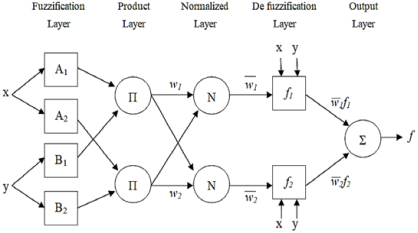
Figure 1. ANFIS Architecture with two inputs and an output.
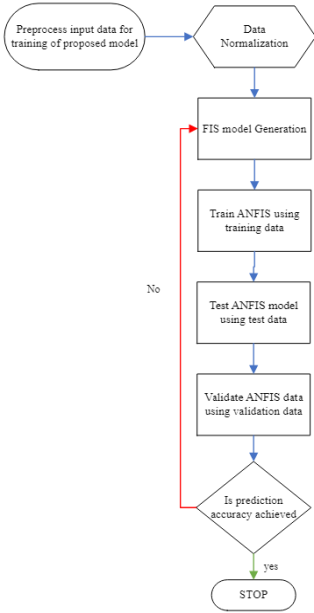
Figure 2. Flowchart for training of proposed models.
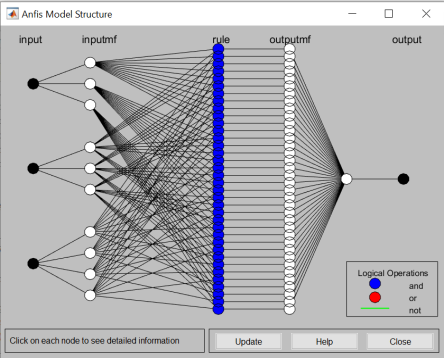
Figure 3. ANFIS Structure With 3 Input Layers And 3 3 4 Membership Function.
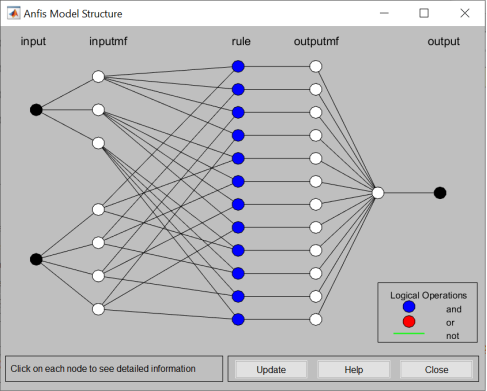
Figure 4. ANFIS Structure With 2 Input Layers And 3 4 Membership Function.
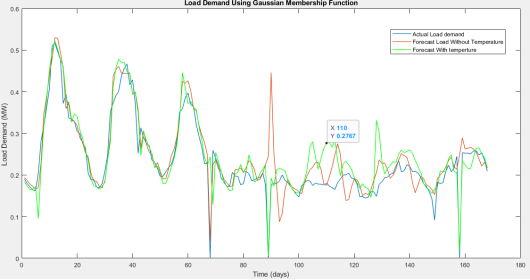
Figure 5. Plot of Actual Load demand & Forecasted demand Using generalized Bell Membership Function (22nd December to 28th December, 2022).
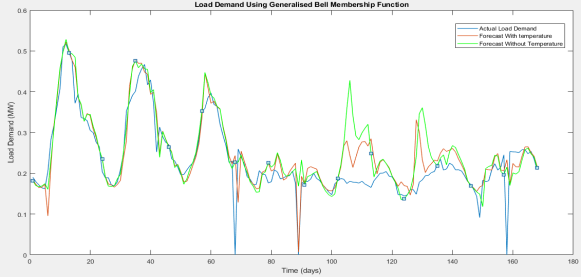
Figure 6. Plot of Actual Load demand & Forecasted demand Using Gaussian Membership Function (22nd December to 28th December, 2022).

Information



 Share This Article
 Twitter
 Linked In
 Facebook
 Copy
Copy Download