
Modernized potato harvesters are designed to deliver the required level of productivity under specified operating conditions and within different soil environments. However, in present-day field conditions, the effectiveness of these machines does not always meet expectations. In particular, the degree of complete separation of potato tubers from the soil mixture tends to decrease, which in turn leads to an increase in both quantitative losses and mechanical damage to the harvested tubers. These negative outcomes are largely associated with the insufficient efficiency and imperfect operation of the separating components that form a key part of the potato harvester’s working system. When the separating elements do not perform optimally, the soil–tuber mixture is not adequately processed, and this results in reduced harvesting quality and lower overall efficiency. The overall performance of a potato harvester is closely linked to the permeability and effectiveness of its separating elements. These components are responsible for allowing soil and smaller particles to pass through while retaining and transporting the potato tubers with minimal damage. If the permeability of these elements is not properly matched to the characteristics of the soil and crop, the machine’s performance deteriorates. Therefore, understanding and optimizing the parameters of the separating system is essential for improving the operational efficiency of modern potato harvesters. This study focuses on analyzing how the parameters of the elevator working elements depend on the structural design of the potato harvester. The elevator plays a crucial role in transporting the soil–tuber mixture through the separating system and facilitating the removal of soil from the harvested crop. By examining the relationship between the design features of the harvester and the operational parameters of the elevator working element, the research aims to identify ways to improve separation quality and reduce tuber losses and damage. To investigate these relationships, continuous variations in the mass, volume, and weight of soil entering the separating element were considered. These changing conditions simulate real harvesting scenarios in which the amount and properties of soil entering the machine vary over time. By analyzing how these variables influence the performance of the separating system, the study evaluates the dependence of the separating element length on the operational effectiveness of the potato harvester. The results provide insight into how design and parameter adjustments can enhance separation efficiency, improve permeability, and ultimately increase the overall productivity and reliability of potato harvesting machines under modern agricultural conditions.
| Published in | International Journal of Applied Agricultural Sciences (Volume 12, Issue 2) |
| DOI | 10.11648/j.ijaas.20261202.11 |
| Page(s) | 23-27 |
| Creative Commons |
This is an Open Access article, distributed under the terms of the Creative Commons Attribution 4.0 International License (http://creativecommons.org/licenses/by/4.0/), which permits unrestricted use, distribution and reproduction in any medium or format, provided the original work is properly cited. |
| Copyright |
Copyright © The Author(s), 2026. Published by Science Publishing Group |
Separation, Potato Digger, Technical Design, Elevator, Correlation Coefficient, Determination Coefficient, Linear Regression, Autocorrelation, Autoregression, Parameter Estimation
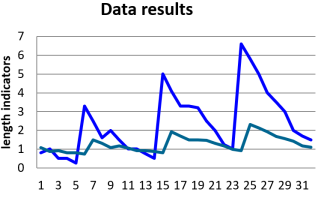
N | Q, kg | q, kg/m 2 | m, kg | L, m |
|---|---|---|---|---|
1 | 100 | 30 | 5 | 1.6 |
2 | 100 | 30 | 7.5 | 0.8 |
3 | 100 | 50 | 5 | 1 |
4 | 100 | 50 | 7.5 | 0.5 |
5 | 100 | 100 | 5 | 0.5 |
6 | 100 | 100 | 7.5 | 0.25 |
7 | 150 | 30 | 5 | 3.3 |
8 | 150 | 30 | 7.5 | 2.5 |
9 | 150 | 30 | 10 | 1.6 |
10 | 150 | 50 | 5 | 2 |
11 | 150 | 50 | 7.5 | 1.5 |
12 | 150 | 50 | 10 | 1 |
13 | 150 | 100 | 5 | 1 |
14 | 150 | 100 | 7.5 | 0.75 |
15 | 150 | 100 | 10 | 0.5 |
16 | 200 | 30 | 5 | 5 |
17 | 200 | 30 | 7.5 | 4.1 |
18 | 200 | 30 | 10 | 3.3 |
19 | 200 | 50 | 5 | 3.3 |
20 | 200 | 50 | 7.5 | 3.2 |
21 | 200 | 50 | 10 | 2.5 |
22 | 200 | 100 | 5 | 2 |
23 | 200 | 100 | 7.5 | 1.25 |
24 | 200 | 100 | 10 | 1 |
25 | 250 | 30 | 5 | 6.6 |
26 | 250 | 30 | 7.5 | 5.8 |
27 | 250 | 30 | 10 | 5 |
28 | 250 | 50 | 5 | 4 |
29 | 250 | 50 | 7.5 | 3.5 |
30 | 250 | 50 | 10 | 3 |
31 | 250 | 100 | 5 | 2 |
32 | 250 | 100 | 7.5 | 1.7 |
33 | 250 | 100 | 10 | 1.5 |
Lag (order) | r t,t -L | Correlogram | |
|---|---|---|---|
1 | 0.5872 | *** | Noticeable |
2 | 0.274 | ** | Weak |
3 | 0.0937 | * | Weak |
4 | -0.04541 | * | Weak |
Lt | The Second-order Autoregressive Equation |
| [1] | N. G. Baiboboev, A. L. Muminov, Statistical analysis of sizes elevator based on observations of the technological process of the mechanism potato harvester. Scientific journal Mechanics and Technology. NamISI. No. 1(10), 2023. |
| [2] | N. G. Baiboboev, A. L. Muminov, Kh. T. Rakhmanov Study of separation soil as a random Markov process. Scientific and technical journal FerPI. 2023. Vol. 27. No. 4. Pp. 93-97. |
| [3] | N. G. Bayboboyev, A. L. Muminov Analysis of Studies of the Distribution of Input Disturbances of Potato Harvesting Machines and Evaluation of Moment Functionals in a Competing Risk Model using an Empirical Bayesian Approach. AMERICAN Journal of Library And Information Science Innovation Volume 3, Issue 2, 2025. p. 8-14. |
| [4] | O. A. Demidova Lecture on econometrics. Higher school of Economics No. 3, Module 4. |
| [5] | Burlakov, G. S. Technology of Products Made of Lightweight Concrete. Moscow, 1986. |
| [6] | Buzhevich, G. A. Lightweight Concretes with Porous Aggregates. Moscow, 1970. |
| [7] | Matyokubov, B. P., & Saidmurodova, S. M. (2022, August). Application of Technology of Vermiculite Lightweight Concretes Based on Low Water Demand Binders. In International Conferences (Vol. 1, No. 15, pp. 103–109). |
| [8] | Matyokubov, B. P., & Saidmurodova, S. M. (2022). Methods for Investigation of Thermophysical Characteristics of Underground External Barrier Structures of Buildings. Research and Education, 1(5), 49–58. |
| [9] | Pulatovich, M. B., & Muzaffarovna, S. S. (2022). Methods for Investigation of Thermophysical Characteristics of Underground External Barrier Structures of Buildings. Volume 1, Issue 5, August 2022, Article No. 202259. |
| [10] | Karimov, G. U. (2021). Energy-Efficient Binder of Low Water Demand with Modified Mineral Additives Based on Locally Available Components. In Euro-Asia Conferences (Vol. 4, No. 1, pp. 106–109). |
| [11] | Karimov, G., & Bakhriyev, N. (2018). Research on the Development of Energy-Efficient Binders for Modern Construction. Problems of Architecture and Construction, 1(2), 61–63. |
| [12] | Yusupov, H. V., Karimov, G. U., Saidmurodova, S. M., & Zayniyevich, I. F. (2024). Modern Problems of Low Water Demand Cements. Miasto, 44, 231–234. |
| [13] | Yusupov, H. V., Karimov, G. U., & Saidmurodova, S. M. Increasing the Efficiency of Vermiculite Concrete Based on Low Water Demand Cement. International Scientific and Practical Conference “Architecture Is the Abode of Time”, Samarkand State Architecture and Construction University, May 23–24, 2024. |
| [14] | Saidmurodova, S. M., & Yusupov, H. V. Technology for the Production of Lightweight Concrete Blocks Based on Multi-Tempered Vermiculite and Low-Grade Cement. International Scientific and Technical Conference “Innovative Technologies in Environmental Protection” May 1–2, 2025. |
| [15] | Sokolov A. V. Distribution of nutrients in the soil and crop yield – Moscow, Publishing House of the Russian Academy of Sciences, 1997 – 328 p. |
APA Style
Gulomovich, B. N., Latifxonovich, M. A. (2026). Analysis of the Autoregressive Equation of the Dependence of Soil Separation in Potato Harvesters on the Length of the Elevator. International Journal of Applied Agricultural Sciences, 12(2), 23-27. https://doi.org/10.11648/j.ijaas.20261202.11
ACS Style
Gulomovich, B. N.; Latifxonovich, M. A. Analysis of the Autoregressive Equation of the Dependence of Soil Separation in Potato Harvesters on the Length of the Elevator. Int. J. Appl. Agric. Sci. 2026, 12(2), 23-27. doi: 10.11648/j.ijaas.20261202.11
@article{10.11648/j.ijaas.20261202.11,
  author = {Bayboboev Nabijan Gulomovich and Muminov A'zam Latifxonovich},
  title = {Analysis of the Autoregressive Equation of the Dependence of Soil Separation in Potato Harvesters on the Length of the Elevator},
  journal = {International Journal of Applied Agricultural Sciences},
  volume = {12},
  number = {2},
  pages = {23-27},
  doi = {10.11648/j.ijaas.20261202.11},
  url = {https://doi.org/10.11648/j.ijaas.20261202.11},
  eprint = {https://article.sciencepublishinggroup.com/pdf/10.11648.j.ijaas.20261202.11},
  abstract = {Modernized potato harvesters are designed to deliver the required level of productivity under specified operating conditions and within different soil environments. However, in present-day field conditions, the effectiveness of these machines does not always meet expectations. In particular, the degree of complete separation of potato tubers from the soil mixture tends to decrease, which in turn leads to an increase in both quantitative losses and mechanical damage to the harvested tubers. These negative outcomes are largely associated with the insufficient efficiency and imperfect operation of the separating components that form a key part of the potato harvester’s working system. When the separating elements do not perform optimally, the soil–tuber mixture is not adequately processed, and this results in reduced harvesting quality and lower overall efficiency. The overall performance of a potato harvester is closely linked to the permeability and effectiveness of its separating elements. These components are responsible for allowing soil and smaller particles to pass through while retaining and transporting the potato tubers with minimal damage. If the permeability of these elements is not properly matched to the characteristics of the soil and crop, the machine’s performance deteriorates. Therefore, understanding and optimizing the parameters of the separating system is essential for improving the operational efficiency of modern potato harvesters. This study focuses on analyzing how the parameters of the elevator working elements depend on the structural design of the potato harvester. The elevator plays a crucial role in transporting the soil–tuber mixture through the separating system and facilitating the removal of soil from the harvested crop. By examining the relationship between the design features of the harvester and the operational parameters of the elevator working element, the research aims to identify ways to improve separation quality and reduce tuber losses and damage. To investigate these relationships, continuous variations in the mass, volume, and weight of soil entering the separating element were considered. These changing conditions simulate real harvesting scenarios in which the amount and properties of soil entering the machine vary over time. By analyzing how these variables influence the performance of the separating system, the study evaluates the dependence of the separating element length on the operational effectiveness of the potato harvester. The results provide insight into how design and parameter adjustments can enhance separation efficiency, improve permeability, and ultimately increase the overall productivity and reliability of potato harvesting machines under modern agricultural conditions.},
 year = {2026}
}
TY  - JOUR
T1  - Analysis of the Autoregressive Equation of the Dependence of Soil Separation in Potato Harvesters on the Length of the Elevator
AU  - Bayboboev Nabijan Gulomovich
AU  - Muminov A'zam Latifxonovich
Y1  - 2026/03/16
PY  - 2026
N1  - https://doi.org/10.11648/j.ijaas.20261202.11
DO  - 10.11648/j.ijaas.20261202.11
T2  - International Journal of Applied Agricultural Sciences
JF  - International Journal of Applied Agricultural Sciences
JO  - International Journal of Applied Agricultural Sciences
SP  - 23
EP  - 27
PB  - Science Publishing Group
SN  - 2469-7885
UR  - https://doi.org/10.11648/j.ijaas.20261202.11
AB  - Modernized potato harvesters are designed to deliver the required level of productivity under specified operating conditions and within different soil environments. However, in present-day field conditions, the effectiveness of these machines does not always meet expectations. In particular, the degree of complete separation of potato tubers from the soil mixture tends to decrease, which in turn leads to an increase in both quantitative losses and mechanical damage to the harvested tubers. These negative outcomes are largely associated with the insufficient efficiency and imperfect operation of the separating components that form a key part of the potato harvester’s working system. When the separating elements do not perform optimally, the soil–tuber mixture is not adequately processed, and this results in reduced harvesting quality and lower overall efficiency. The overall performance of a potato harvester is closely linked to the permeability and effectiveness of its separating elements. These components are responsible for allowing soil and smaller particles to pass through while retaining and transporting the potato tubers with minimal damage. If the permeability of these elements is not properly matched to the characteristics of the soil and crop, the machine’s performance deteriorates. Therefore, understanding and optimizing the parameters of the separating system is essential for improving the operational efficiency of modern potato harvesters. This study focuses on analyzing how the parameters of the elevator working elements depend on the structural design of the potato harvester. The elevator plays a crucial role in transporting the soil–tuber mixture through the separating system and facilitating the removal of soil from the harvested crop. By examining the relationship between the design features of the harvester and the operational parameters of the elevator working element, the research aims to identify ways to improve separation quality and reduce tuber losses and damage. To investigate these relationships, continuous variations in the mass, volume, and weight of soil entering the separating element were considered. These changing conditions simulate real harvesting scenarios in which the amount and properties of soil entering the machine vary over time. By analyzing how these variables influence the performance of the separating system, the study evaluates the dependence of the separating element length on the operational effectiveness of the potato harvester. The results provide insight into how design and parameter adjustments can enhance separation efficiency, improve permeability, and ultimately increase the overall productivity and reliability of potato harvesting machines under modern agricultural conditions.
VL  - 12
IS  - 2
ER  -
The Department of Mechanization Agriculture, Namangan State Technical University, Namangan, Uzbekistan
Biography: Bayboboev Nabijan Gulomovich is a highly respected Doctor of Technical Sciences and a professor, renowned for his extensive contributions to the field. He has conducted extensive research in the field of agricultural machinery, particularly in fertilizer application and potato cultivation technologies. Currently, he works as a professor at the Department of Agricultural Mechanization at the Namangan State Technical University He is also the chairman of the specialized academic council for doctoral dissertations in technical sciences. Bayboboev is the author of more than 100 scientific publications, including monographs, articles, and teaching manuals. He holds several patents for inventions that have been practically implemented in Uzbekistan’s agricultural sector.
Research Fields: Agricultural mechanization, design of fer-tilizer application systems, potato harvesting technologies, devel-opment of resource-efficient machinery for soil cultivation

The Department of Business, University of Business and Science, Namangan, Uzbekistan
Biography: Muminov A'zam Latifxonovich is an Uzbek professional known for her dedication to professional development and continuous learning. She has built her experience through education and practical activities, demonstrating responsibility, accuracy, and a strong work ethic.
Research Fields: Engineering and Applied Sciences, Agricultural mechanization Construction Engineering and Management, Building Materials and Technologies, Sustainable Construction and Development, Quality Control and Safety in Construction


Information



 Share This Article
 Twitter
 Linked In
 Facebook
 Copy
Copy Download