Falls among older adults lead to severe outcomes, including injury, reduced activity, diminished quality of life, heightened fear of falling, and even mortality. Standard clinical tests such as the Berg Balance Scale (BBS) and Performance-Oriented Mobility Assessment (POMA) evaluate fall risk but are multi-component and time-intensive. The 10-Meter Walk Test (10MWT) offers a quick and feasible alternative, though a validated cut-off value for fall risk in older adults remains unestablished. Sixty-eight older adults were included based on predefined criteria. Informed consent, demographic information, and physical assessments (height, weight for Body Mass Index- BMI calculation) were collected. The 10MWT and BBS were administered to evaluate walking speed and fall risk. Statistical analysis was done using Statistical Package for Social Sciences (SPSS) v20.0 the demographic data were represented as their mean and standard deviation. The association between 10MWT and BBS was discovered using Pearson's correlation test. The optimal cut-off point for the 10MWT speed that predicts fall risk in older individuals was found using Receiver Operating Characteristic (ROC) Curve Analysis. The average age of the participants was found to be 73.43 years. A significant moderate correlation was observed between 10MWT and BBS scores, with Pearson’s coefficient r=0.418 (p = 0.000). The optimal walking speed cut-off for fall risk was identified at 1.24 m/s, with sensitivity and specificity values of 71.4% and 68.1%, respectively.
This is an Open Access article, distributed under the terms of the Creative Commons Attribution 4.0 International License (http://creativecommons.org/licenses/by/4.0/), which permits unrestricted use, distribution and reproduction in any medium or format, provided the original work is properly cited.
Fall Risk, Psychometrics, Walking Speed, Geriatric Individuals
1. Introduction
With rising life expectancy and falling death rates, the world's elderly population is growing at an unprecedented rate.
[1]
Bergen, G., Stevens, M. R., Burns, E. R. Falls and fall injuries among adults aged ≥65 years—United States, 2014. MMWR. Morbidity and Mortality Weekly Report. 2016, 65(37), 993-998.
Nabavi, S. H., Hatami, S. T., Norouzi, F., Gerivani, Z., Hatami, S. E., Monadi Ziarat, H., et al. Prevalence of fall and its related factors among older people. Salmand: Iranian Journal of Ageing. 2016, 11(2), 276-285.
Falls in elderly can lead to serious injuries and societal challenges. Nearly half of persons over 65 fall more than once, and over 30% of them fall annually.
[3]
Means, K. M., Rodell, D. E., O’Sullivan, P. S. Balance, mobility, and falls among community-dwelling elderly persons: Effects of a rehabilitation exercise program. American Journal of Physical Medicine & Rehabilitation. 2005, 84(4), 238-250.
Howcroft, J., Kofman, J., Lemaire, E. D. Review of fall risk assessment in geriatric populations using inertial sensors. Journal of NeuroEngineering and Rehabilitation. 2013, 10, 91.
These incidents not only cause physical injuries but also affects quality of life by increasing dependence. Therefore, it is essential to address fall risk to determine older individuals' independence and health.
[5]
Srivastava, S., Muhammad, T. Prevalence and risk factors of fall-related injury among older adults in India: Evidence from a cross-sectional observational study. BMC Public Health. 2022, 22, 784.
While traditional assessments like the Berg Balance Scale (BBS) and Performance-Oriented Mobility Assessment (POMA) provide comprehensive evaluations for fall risks, their multi-component structure and longer administration times are challenging in fast-paced clinical settings.
[6]
Lima, C. A., Ricci, N. A., Nogueira, E. C., Perracini, M. R. The Berg Balance Scale as a clinical screening tool to predict fall risk in older adults: A systematic review. Physiotherapy. 2018, 104(4), 383-394.
Berg, K. O., Wood-Dauphinée, S., Williams, J. I., Gayton, D. Measuring balance in the elderly: Preliminary development of an instrument. Physiotherapy Canada. 1989, 41(6), 304-311.
The 10-Meter Walk Test (10MWT), a simpler measure of walking speed, has been shown to be associated with fall risk and functional mobility, making it a promising alternative.
[8]
Steffen, T. M., Hacker, T. A., Mollinger, L. Age- and gender-related test performance in community-dwelling elderly people: Six-Minute Walk Test, Berg Balance Scale, Timed Up & Go Test, and gait speeds. Physical Therapy. 2002, 82(2), 128-137.
However, without a validated cut-off speed, the 10MWT’s utility in assessing fall risk remains limited.
The primary aim of this study was to establish a cut-off value for the 10MWT that could effectively identify fall risk in older adults. The study also aimed to assess the sensitivity and specificity of the 10MWT cut-off to ensure its validity and usefulness in accurately identifying individuals at risk for falls. This threshold would enhance clinicians' ability to perform rapid and reliable fall risk assessments in settings where time and resources are constrained.
2. Materials and Methods
The Data for the study was obtained from four geriatric facilities in Gujarat's Surat city. Using convenience sampling, 68 older individuals with more than 65 years of age were included in this cross-sectional study who satisfied the inclusion requirements—walking 20 meters on their own or with an assistance device, and following two-step instructions were included in the sample. Exclusion criteria included any neurological or orthopedic disorders that limited participation, visual impairments that limited ambulation, and significant pain (rated 5/10 on the visual analogue pain scale).
2.1. Materials Used
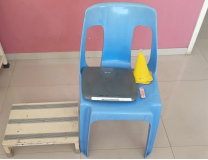
A stopwatch, standardized chairs (with and without armrests), a step stool, ruler, weighing scale, measuring tape, and data collection sheets. (Figure 1)
Six old-age homes were initially approached; of these, four agreed to participate. Out of 80 individuals screened, 4 declined participations, 6 had severe visual impairments, and 2 were non-ambulatory, resulting in a final sample of 68 eligible participants who provided informed consent. Data collected included demographic details, Body Mass Index (BMI), and assessments using the Berg Balance Scale (BBS) and the 10-Meter Walk Test (10MWT).
2.3. Procedure
For BMI, participants’ weight was measured in kilograms using a standardized weighing scale, and height in centimeters using an inch tape fixed to a wall. BMI was then calculated by dividing weight by the square of height in meters. The 10MWT required participants to walk a 10-meter course at a self-selected comfortable pace, timing only the central 6 meters to eliminate acceleration and deceleration effects.
[8]
Steffen, T. M., Hacker, T. A., Mollinger, L. Age- and gender-related test performance in community-dwelling elderly people: Six-Minute Walk Test, Berg Balance Scale, Timed Up & Go Test, and gait speeds. Physical Therapy. 2002, 82(2), 128-137.
The BBS was used to identify fall risk and participants scoring below 45 on BBS were identified as having a fall risk.
[7]
Berg, K. O., Wood-Dauphinée, S., Williams, J. I., Gayton, D. Measuring balance in the elderly: Preliminary development of an instrument. Physiotherapy Canada. 1989, 41(6), 304-311.
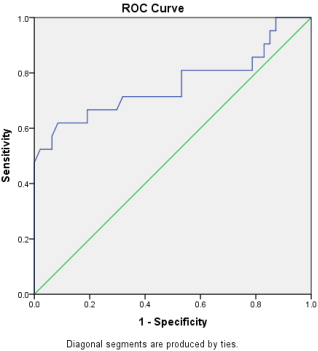
Statistical analysis was conducted using SPSS v20.0 to assess the data collected from 68 older adults residing in four old-age homes. According to descriptive statistics, the average height of the participants was 1.59 meters (Standard Deviation SD 0.13), their weight was 66.52 kilograms (SD 9.48), and their average age was 73.43 years (SD 8.32) (Table 1). The correlation analysis revealed a moderate positive correlation between BBS scores and time taken during 10MWT (r = 0.418, p < 0.000) and a weak correlation was found with height of participants and 10MWT (r = 0.348, p < 0.002) (Table 2). The Area Under the Curve (AUC) for the 10MWT was 0.759 (95% CI 0.613-0.906; p < 0.005), indicating good diagnostic accuracy for predicting fall risk among older adults (Table 3). The optimal cut-off point for walking speed was identified at 1.24 m/s, with a sensitivity of 71.4% and specificity of 68.1% (Figure 2).
Table 2. Correlation between height, BBS score & 10MWT. Correlation between height, BBS score & 10MWT. Correlation between height, BBS score & 10MWT.
10 MWT
Pearson’s coefficient
P value
BBS Score
r=0.418**
0.000
Height
r=0.348**
0.002
** Correlation is significant at 0.01 level
Table 3. AUC to determine the accuracy of 10MWT to determine fall risk in older adults. AUC to determine the accuracy of 10MWT to determine fall risk in older adults. AUC to determine the accuracy of 10MWT to determine fall risk in older adults.
Test Variable: Speed (m/s)
Area
Asymptotic sig.
Asymptomatic 95% Confidence Interval
Lower bound
Upper bound
0.759
0.001
0.631
0.906
4. Discussion
The present study aimed to establish a cut-off value for the 10-Meter Walk Test (10-MWT) as a predictor of fall risk among older adults. The sample consisted of 68 people, mostly men, with an average age of 73.43 years. The demographic profile is in line with national studies, which strengthens the findings' generalizability.
It is suggested from the result of the study, that the multistep nature of the BBS standardized instructions be reviewed. For example, the BBS task "Turn 360°" has a scoring system that deducts points if cueing is necessary. This raises validity concerns because a person who needs cueing for this task might not always exhibit poorer balance during everyday activities when cues are internal and environmental. This difficulty with BBS's multi-step standardized instructions can be eliminated with use of single task activity of 10-MWT if the validated cut off values are determined which was the aim of the study. Notably, participants struggled with completing specific components of the Berg Balance Scale (BBS), particularly those requiring advanced balance, such as tandem stance and single-leg standing.
The correlation between scores of 10 MWT and BBS was found to be r=0.418 (p=0.000) signifying moderate correlation & good concurrent validity between two measures. A significant moderate association between BBS and 10MWT was observed (r = 0.710, P = .000) in a previous study by Lee NG et al.,
[8]
Steffen, T. M., Hacker, T. A., Mollinger, L. Age- and gender-related test performance in community-dwelling elderly people: Six-Minute Walk Test, Berg Balance Scale, Timed Up & Go Test, and gait speeds. Physical Therapy. 2002, 82(2), 128-137.
Chan, W., Pin, T. W. Reliability, validity and minimal detectable change of 2-minute walk test, 6-minute walk test and 10-meter walk test in frail older adults with dementia. Experimental Gerontology. 2018, 102, 9-16.
(r=0.49, p=0.00). These disparities in the strength of correlation can be associated to the distance measured for assessing walking speed (meters/second) which was taken to be 6 m in the current study & varied by 10 m been taken in the previous study & the variance in the walking speed where individuals were instructed to walk at their own pace rather than fast pace in the present study.
An AUC of 0.8 has been stated to represent a reasonably powerful model. The AUC for the outcome of fall risk was found to be 0.75 in the current study; this value indicated that the test provides moderate discriminative value for fall risk and that fall risk should be the outcome of interest when the 10 MWT is used in older adults. Based on the coordinates of ROC curve in the present study, Values (m/s) associated with the highest Youden index (sensitivity + specificity − 1) were estimated as the optimal cut-off points to discriminate between those with and without fall risk. Cut off point of walking speed was identified to be 1.24 m/s with the sensitivity of 71.4% & specificity of 68.1% in the present study. Based on this cut off score, if the calculated walking speed is found to be less than 1.24 m/s the older individual is at a risk of fall, owing to which the fall risk can be estimated.
5. Conclusion and Limitations
The proposed cut-off scores of 1.24 m/s for the 10-MWT can aid clinicians in efficiently identifying fall risk, providing a straightforward and time-efficient assessment tool in older adults.
This study faced several limitations. First, the cross-sectional design only evaluated fall risk through BBS scores without tracking actual fall occurrences using a longitudinal model. Second, the small sample size limits the robustness of the findings. Lastly, subjective measures related to factors such as balance confidence or fear of falling were not assessed in the study.
Abbreviations
BMI
Body Mass Index
10MWT
10 Meter Walk Test
BBS
Berg Balance Scale
AUC
Area Under Curve
ROC
Receiver Operating Characteristics
Acknowledgments
This work would not have been possible without the guidance and support of Shrimad Rajchandra College of Physiotherapy and Uka Tarsadia University, whose resources and academic environment greatly contributed to the completion of this study.
Aditi Tiwari: Writing – original draft, Data curation
Unnati Desai: Writing – original draft, Data curation
Jagtap Binita: Writing – original draft, Data curation
Mangroliya Khushi: Writing – original draft, Data curation
Patil Krutika: Writing – original draft, Data curation
Funding
This work is not supported by any external funding.
Data Availability Statement
The data is available from the corresponding author upon reasonable request.
Conflicts of Interest
The authors declare no conflicts of interest.
References
[1]
Bergen, G., Stevens, M. R., Burns, E. R. Falls and fall injuries among adults aged ≥65 years—United States, 2014. MMWR. Morbidity and Mortality Weekly Report. 2016, 65(37), 993-998.
Nabavi, S. H., Hatami, S. T., Norouzi, F., Gerivani, Z., Hatami, S. E., Monadi Ziarat, H., et al. Prevalence of fall and its related factors among older people. Salmand: Iranian Journal of Ageing. 2016, 11(2), 276-285.
Means, K. M., Rodell, D. E., O’Sullivan, P. S. Balance, mobility, and falls among community-dwelling elderly persons: Effects of a rehabilitation exercise program. American Journal of Physical Medicine & Rehabilitation. 2005, 84(4), 238-250.
Howcroft, J., Kofman, J., Lemaire, E. D. Review of fall risk assessment in geriatric populations using inertial sensors. Journal of NeuroEngineering and Rehabilitation. 2013, 10, 91.
Srivastava, S., Muhammad, T. Prevalence and risk factors of fall-related injury among older adults in India: Evidence from a cross-sectional observational study. BMC Public Health. 2022, 22, 784.
Lima, C. A., Ricci, N. A., Nogueira, E. C., Perracini, M. R. The Berg Balance Scale as a clinical screening tool to predict fall risk in older adults: A systematic review. Physiotherapy. 2018, 104(4), 383-394.
Berg, K. O., Wood-Dauphinée, S., Williams, J. I., Gayton, D. Measuring balance in the elderly: Preliminary development of an instrument. Physiotherapy Canada. 1989, 41(6), 304-311.
Steffen, T. M., Hacker, T. A., Mollinger, L. Age- and gender-related test performance in community-dwelling elderly people: Six-Minute Walk Test, Berg Balance Scale, Timed Up & Go Test, and gait speeds. Physical Therapy. 2002, 82(2), 128-137.
Chan, W., Pin, T. W. Reliability, validity and minimal detectable change of 2-minute walk test, 6-minute walk test and 10-meter walk test in frail older adults with dementia. Experimental Gerontology. 2018, 102, 9-16.
Pathan, S., Tiwari, A., Desai, U., Binita, J., Khushi, M., et al. (2026). Determining the Cut off Value of 10 Meter Walk Test for Fall Risk in Older Adults. International Journal of Data Science and Analysis, 12(4), 64-68. https://doi.org/10.11648/j.ijdsa.20261204.11
Pathan, S.; Tiwari, A.; Desai, U.; Binita, J.; Khushi, M., et al. Determining the Cut off Value of 10 Meter Walk Test for Fall Risk in Older Adults. Int. J. Data Sci. Anal.2026, 12(4), 64-68. doi: 10.11648/j.ijdsa.20261204.11
Pathan S, Tiwari A, Desai U, Binita J, Khushi M, et al. Determining the Cut off Value of 10 Meter Walk Test for Fall Risk in Older Adults. Int J Data Sci Anal. 2026;12(4):64-68. doi: 10.11648/j.ijdsa.20261204.11
@article{10.11648/j.ijdsa.20261204.11,
  author = {Suhanabanu Pathan and Aditi Tiwari and Unnati Desai and Jagtap Binita and Mangroliya Khushi and Patil Krutika},
  title = {Determining the Cut off Value of 10 Meter Walk Test for Fall Risk in Older Adults},
  journal = {International Journal of Data Science and Analysis},
  volume = {12},
  number = {4},
  pages = {64-68},
  doi = {10.11648/j.ijdsa.20261204.11},
  url = {https://doi.org/10.11648/j.ijdsa.20261204.11},
  eprint = {https://article.sciencepublishinggroup.com/pdf/10.11648.j.ijdsa.20261204.11},
  abstract = {Falls among older adults lead to severe outcomes, including injury, reduced activity, diminished quality of life, heightened fear of falling, and even mortality. Standard clinical tests such as the Berg Balance Scale (BBS) and Performance-Oriented Mobility Assessment (POMA) evaluate fall risk but are multi-component and time-intensive. The 10-Meter Walk Test (10MWT) offers a quick and feasible alternative, though a validated cut-off value for fall risk in older adults remains unestablished. Sixty-eight older adults were included based on predefined criteria. Informed consent, demographic information, and physical assessments (height, weight for Body Mass Index- BMI calculation) were collected. The 10MWT and BBS were administered to evaluate walking speed and fall risk. Statistical analysis was done using Statistical Package for Social Sciences (SPSS) v20.0 the demographic data were represented as their mean and standard deviation. The association between 10MWT and BBS was discovered using Pearson's correlation test. The optimal cut-off point for the 10MWT speed that predicts fall risk in older individuals was found using Receiver Operating Characteristic (ROC) Curve Analysis. The average age of the participants was found to be 73.43 years. A significant moderate correlation was observed between 10MWT and BBS scores, with Pearson’s coefficient r=0.418 (p = 0.000). The optimal walking speed cut-off for fall risk was identified at 1.24 m/s, with sensitivity and specificity values of 71.4% and 68.1%, respectively.},
 year = {2026}
}
TY  - JOUR
T1  - Determining the Cut off Value of 10 Meter Walk Test for Fall Risk in Older Adults
AU  - Suhanabanu Pathan
AU  - Aditi Tiwari
AU  - Unnati Desai
AU  - Jagtap Binita
AU  - Mangroliya Khushi
AU  - Patil Krutika
Y1  - 2026/07/24
PY  - 2026
N1  - https://doi.org/10.11648/j.ijdsa.20261204.11
DO  - 10.11648/j.ijdsa.20261204.11
T2  - International Journal of Data Science and Analysis
JF  - International Journal of Data Science and Analysis
JO  - International Journal of Data Science and Analysis
SP  - 64
EP  - 68
PB  - Science Publishing Group
SN  - 2575-1891
UR  - https://doi.org/10.11648/j.ijdsa.20261204.11
AB  - Falls among older adults lead to severe outcomes, including injury, reduced activity, diminished quality of life, heightened fear of falling, and even mortality. Standard clinical tests such as the Berg Balance Scale (BBS) and Performance-Oriented Mobility Assessment (POMA) evaluate fall risk but are multi-component and time-intensive. The 10-Meter Walk Test (10MWT) offers a quick and feasible alternative, though a validated cut-off value for fall risk in older adults remains unestablished. Sixty-eight older adults were included based on predefined criteria. Informed consent, demographic information, and physical assessments (height, weight for Body Mass Index- BMI calculation) were collected. The 10MWT and BBS were administered to evaluate walking speed and fall risk. Statistical analysis was done using Statistical Package for Social Sciences (SPSS) v20.0 the demographic data were represented as their mean and standard deviation. The association between 10MWT and BBS was discovered using Pearson's correlation test. The optimal cut-off point for the 10MWT speed that predicts fall risk in older individuals was found using Receiver Operating Characteristic (ROC) Curve Analysis. The average age of the participants was found to be 73.43 years. A significant moderate correlation was observed between 10MWT and BBS scores, with Pearson’s coefficient r=0.418 (p = 0.000). The optimal walking speed cut-off for fall risk was identified at 1.24 m/s, with sensitivity and specificity values of 71.4% and 68.1%, respectively.
VL  - 12
IS  - 4
ER  -
Shrimad Rajchandra College of Physiotherapy, Uka Tarsadia University, Surat, India
Biography:
Suhanabanu Pathan an Assistant Professor at Uka Tarsadia University with over four years of teaching experience in physiotherapy. She holds a Master’s degree in Neurological Science of Physiotherapy and has a keen interest in neurorehabilitation. Passionate about advancing knowledge in neurological recovery, she combines academic rigor with practical insights to inspire and guide her students in the field of neuro physiotherapy.
Pathan, S., Tiwari, A., Desai, U., Binita, J., Khushi, M., et al. (2026). Determining the Cut off Value of 10 Meter Walk Test for Fall Risk in Older Adults. International Journal of Data Science and Analysis, 12(4), 64-68. https://doi.org/10.11648/j.ijdsa.20261204.11
Pathan, S.; Tiwari, A.; Desai, U.; Binita, J.; Khushi, M., et al. Determining the Cut off Value of 10 Meter Walk Test for Fall Risk in Older Adults. Int. J. Data Sci. Anal.2026, 12(4), 64-68. doi: 10.11648/j.ijdsa.20261204.11
Pathan S, Tiwari A, Desai U, Binita J, Khushi M, et al. Determining the Cut off Value of 10 Meter Walk Test for Fall Risk in Older Adults. Int J Data Sci Anal. 2026;12(4):64-68. doi: 10.11648/j.ijdsa.20261204.11
@article{10.11648/j.ijdsa.20261204.11,
  author = {Suhanabanu Pathan and Aditi Tiwari and Unnati Desai and Jagtap Binita and Mangroliya Khushi and Patil Krutika},
  title = {Determining the Cut off Value of 10 Meter Walk Test for Fall Risk in Older Adults},
  journal = {International Journal of Data Science and Analysis},
  volume = {12},
  number = {4},
  pages = {64-68},
  doi = {10.11648/j.ijdsa.20261204.11},
  url = {https://doi.org/10.11648/j.ijdsa.20261204.11},
  eprint = {https://article.sciencepublishinggroup.com/pdf/10.11648.j.ijdsa.20261204.11},
  abstract = {Falls among older adults lead to severe outcomes, including injury, reduced activity, diminished quality of life, heightened fear of falling, and even mortality. Standard clinical tests such as the Berg Balance Scale (BBS) and Performance-Oriented Mobility Assessment (POMA) evaluate fall risk but are multi-component and time-intensive. The 10-Meter Walk Test (10MWT) offers a quick and feasible alternative, though a validated cut-off value for fall risk in older adults remains unestablished. Sixty-eight older adults were included based on predefined criteria. Informed consent, demographic information, and physical assessments (height, weight for Body Mass Index- BMI calculation) were collected. The 10MWT and BBS were administered to evaluate walking speed and fall risk. Statistical analysis was done using Statistical Package for Social Sciences (SPSS) v20.0 the demographic data were represented as their mean and standard deviation. The association between 10MWT and BBS was discovered using Pearson's correlation test. The optimal cut-off point for the 10MWT speed that predicts fall risk in older individuals was found using Receiver Operating Characteristic (ROC) Curve Analysis. The average age of the participants was found to be 73.43 years. A significant moderate correlation was observed between 10MWT and BBS scores, with Pearson’s coefficient r=0.418 (p = 0.000). The optimal walking speed cut-off for fall risk was identified at 1.24 m/s, with sensitivity and specificity values of 71.4% and 68.1%, respectively.},
 year = {2026}
}
TY  - JOUR
T1  - Determining the Cut off Value of 10 Meter Walk Test for Fall Risk in Older Adults
AU  - Suhanabanu Pathan
AU  - Aditi Tiwari
AU  - Unnati Desai
AU  - Jagtap Binita
AU  - Mangroliya Khushi
AU  - Patil Krutika
Y1  - 2026/07/24
PY  - 2026
N1  - https://doi.org/10.11648/j.ijdsa.20261204.11
DO  - 10.11648/j.ijdsa.20261204.11
T2  - International Journal of Data Science and Analysis
JF  - International Journal of Data Science and Analysis
JO  - International Journal of Data Science and Analysis
SP  - 64
EP  - 68
PB  - Science Publishing Group
SN  - 2575-1891
UR  - https://doi.org/10.11648/j.ijdsa.20261204.11
AB  - Falls among older adults lead to severe outcomes, including injury, reduced activity, diminished quality of life, heightened fear of falling, and even mortality. Standard clinical tests such as the Berg Balance Scale (BBS) and Performance-Oriented Mobility Assessment (POMA) evaluate fall risk but are multi-component and time-intensive. The 10-Meter Walk Test (10MWT) offers a quick and feasible alternative, though a validated cut-off value for fall risk in older adults remains unestablished. Sixty-eight older adults were included based on predefined criteria. Informed consent, demographic information, and physical assessments (height, weight for Body Mass Index- BMI calculation) were collected. The 10MWT and BBS were administered to evaluate walking speed and fall risk. Statistical analysis was done using Statistical Package for Social Sciences (SPSS) v20.0 the demographic data were represented as their mean and standard deviation. The association between 10MWT and BBS was discovered using Pearson's correlation test. The optimal cut-off point for the 10MWT speed that predicts fall risk in older individuals was found using Receiver Operating Characteristic (ROC) Curve Analysis. The average age of the participants was found to be 73.43 years. A significant moderate correlation was observed between 10MWT and BBS scores, with Pearson’s coefficient r=0.418 (p = 0.000). The optimal walking speed cut-off for fall risk was identified at 1.24 m/s, with sensitivity and specificity values of 71.4% and 68.1%, respectively.
VL  - 12
IS  - 4
ER  -






 Share This Article
 Twitter
 Linked In
 Facebook
 Copy
Copy Download