Research Article | | Peer-Reviewed

The Impact of Polycyclic Aromatic Hydrocarbon (PAHs) on Some Selected Soil Chemical Properties in Umudike, Abia State, Nigeria

Received: 29 July 2026     Accepted: 10 August 2026     Published: 23 November 2026
Views:       Downloads:
Abstract

Polycyclic Aromatic Hydrocarbons (PAHs) are organic compounds produced through incomplete combustion of industrial wastes, wood, fossil fuel, tobacco e.t.c. They are commonly found in urban areas, agricultural land and industrial areas where frequent waste burning occur and pose toxic threats to agricultural soils by altering their chemical levels. In this study, soil samples were collected from dumpsites in Michael Okpara University of Agriculture Umudike, Abia State, Nigeria, where wastes are burned on weekly basis and also from a control site with the aim of investigating the effects of the generated PAHs levels on the soil chemical properties. Contaminated soils (LA and LB) showed 67.2% and 60.2% increase in Organic carbon (OC), respectively and 66.9% and 59.7% increase in Organic Matter (OM) contents, respectively. The Phosphorous and potassium levels of the contaminated soils were lower than that of the control soils, while the nitrogen levels of the contaminated soils were higher than the control. The Electrical Conductivity (EC) of LA and LB soils increased by 54.8% and 26.9% when compared to the control. The post Hoc comparison analysis showed that there were significant differences in the results within the groups for all the parameters tested except for Potassium (K).

Published in International Journal of Ecotoxicology and Ecobiology (Volume 11, Issue 4)
DOI 10.11648/j.ijee.20261104.12
Page(s) 74-82
Creative Commons

This is an Open Access article, distributed under the terms of the Creative Commons Attribution 4.0 International License (http://creativecommons.org/licenses/by/4.0/), which permits unrestricted use, distribution and reproduction in any medium or format, provided the original work is properly cited.

Copyright

Copyright © The Author(s), 2026. Published by Science Publishing Group

Keywords

PAHs, Organic Carbon, Organic Matter, Nitrogen, Potassium

1. Introduction
Rapid industrialization and its resultant urbanization have been the major accelerants of production of household and municipal wastes. In Nigeria, there are several refuse dumpsites both inside and outside of cities. Burning these dumps in the open is a regular practice, primarily to reduce waste and odors. Hazardous gasses are released into the atmosphere when garbage is burned outdoors. In most parts of Nigeria, the risks to the environment and human health posed by open burning of rubbish dumps are frequently disregarded . With the non-existence of government policies on solid waste management or its ineffectiveness where it does exist, unabated open burning has become the main method of disposing of municipal solid trash in Nigeria. One of the main causes of anthropogenic air emissions is the open burning of municipal rubbish, which releases significant amounts of pollutants into the atmosphere each year, including volatile organic compounds (VOCs), polycyclic aromatic hydrocarbons (PAHs), polychlorinated biphenyls (PCBs), and others .
Polycyclic aromatic hydrocarbons (PAHs) are aromatic substances with two or more fused benzene rings in their structural configurations . Extremely hydrophobic and resistant to biological breakdown, polycyclic aromatic hydrocarbons (PAHs) are environmental contaminants that cause cancer . PAHs are resistant and extremely durable in the environment due to their intrinsic characteristics, which include hydrophobicity, thermostability, and heterocyclic aromatic ring structures. Numerous living forms have been found to be extremely hazardous, mutagenic, carcinogenic, teratogenic, and immunotoxic to PAH pollution . The primary source of polycyclic aromatic hydrocarbons (PAHs), which are highly significant in materials science and astrochemistry, is incomplete combustion of organic materials. These persistent, carcinogenic organic pollutants are also necessary for the production of particles produced by combustion . PAHs are also found naturally in crude oil, coal and gasoline and are produced by burning coal, oil, garbage, wood and tobacco . While the processes of PAHs production are diverse, the most domestic and directly hazardous production of PAHs is the burning of garbage; for households or municipalities. Although anthropogenic activities account for the majority of emissions, open burning, natural losses or seepage of coal or petroleum reserves, and volcanic activity are some of the natural sources of PAHs in the environment. Residential heating, coal gasification and liquefying facilities, carbon black, coal-tar pitch and asphalt manufacture, coke and aluminum production, catalytic cracking towers and associated operations in petroleum refineries, and motor vehicle exhaust are the main human-caused sources of PAHs . Due to their potentially harmful nature and environmental bioavailability, these organic chemicals which are present practically everywhere pose a risk to human health . Although they are found in all parts of the environment, polycyclic aromatic hydrocarbons (PAHs) are more common in economies that rely heavily on natural resources, where the daily release of these chemicals into the environment is caused by the burning of fossil fuels and exploration activities . The body breaks down PAHs into reactive intermediates, which can damage DNA and accelerate the onset of a number of illnesses, especially in high-exposure circumstances. Prolonged exposure to PAHs has been associated with immune system suppression, cardiovascular issues, and respiratory disorders. PAHs affect the quality of sperm in males and alter ovarian function in females, which can result in birth abnormalities, miscarriages, and infertility. Neurodevelopmental problems are also linked to fetal exposure to PAHs . Short-term exposure to PAHs at concentrations higher than the maximum contaminant level damages red blood cells, resulting in anemia and immune system suppression. Cancer and developmental and reproductive abnormalities may result from prolonged exposure to benzo(a)pyrene at concentrations higher than the maximum contaminant level .
Soil, as a vital component of terrestrial ecosystems, plays an indispensable role in supporting plant growth, sustaining microbial life, and regulating water and nutrient cycles. It provides the structural foundation for plant roots and serves as a reservoir for essential nutrients and water. Soil organisms, including bacteria, fungi, earthworms, and other microorganisms, facilitate the breakdown of organic matter and the recycling of nutrients necessary to maintain soil fertility. In this way, soil is not merely a passive substrate but an active participant in sustaining ecosystems by ensuring a stable environment for plant life. Its role in providing anchorage, water, essential nutrients, makes it indispensable for plant growth, while its function in organic matter decomposition, nutrient cycling and carbon sequestration makes it critical for global environmental balance . PAHs' non-polar properties allow them to adhere firmly to organic materials in soils and sediments, making extraction more challenging . After being discharged into the environment, PAHs build up in soils, where microbial activity, soil characteristics, and organic matter content all affect how they behave. Long-term persistence brought on by their potent hydrophobicity raises the possibility of groundwater pollution and food chain transfer . The presence of PAHs in the soil not only increases the risk of its uptake through the roots of the plants but also destabilizes the physical and chemical balances/properties of the soil. Polycyclic aromatic hydrocarbons have an impact on soil microorganism development, metabolism and morphology by causing functional disruptions, cell membrane integrity degradation and protein denaturation. They also affect the soil's ability to function as a vital system and support biological productivity . The presence of PAHs in soils have been found to vary with depth; the top soil (0-10cm) being the most affected compared to depths of 10-20cm, 20-30cm, e.t.c. . PAH pollution has an equivalent impact on the soil's chemical characteristics. Because PAHs are hydrophobic, they tend to build up in the soil's tiny particles and organic materials. The soil's cation exchange capacity (CEC), a gauge of its potential to retain vital nutrients, may vary as a result of this buildup. Significant quantities of PAHs have the potential to dispense with vital nutrients in the soil, rendering them inaccessible to plants. Additionally, PAHs can combine with other elements, including metals, to produce complexes that can make harmful metals like arsenic, cadmium, and lead more bioavailable. These interactions have the potential to worsen PAHs' harmful effects on plants and soil organisms .
In Michael Okpara University of Agriculture, Umudike, Abia State, there are disturbingly growing incidents of waste burning, with these wastes ranging from trashed office papers to “nylon satchets” that are assembled after the daily sweeping. This research is aimed at investigating the effects of PAHs on the physiochemical properties of the soil in Michael Okpara university of Agriculture, Umudike, as well as the effects of PAHs on soil microbial communities, changes in microbial diversity, population and metabolic activity.
2. Materials and Methods
2.1. Research Methodology
This study adopted a comparative and analytical research design to evaluate the effects of PAHs on soil fertility. By comparing bush-burnt soils with non-burnt control soils, the study assessed variations in PAH concentrations and key soil fertility indicators. The comparative aspect enabled direct observation of differences between the two conditions, while the analytical component involved detailed quantitative measurements obtained through laboratory testing. Additionally, the research incorporated both descriptive analysis, to document the current state of soil fertility, and inferential analysis, to examine statistical relationships between PAH levels and fertility parameters such as nitrogen, phosphorus, pH, organic carbon, and microbial activity. Field observations were reinforced with systematic laboratory procedures focused on the chemical and biological properties of the sampled soil.
2.2. Research Area
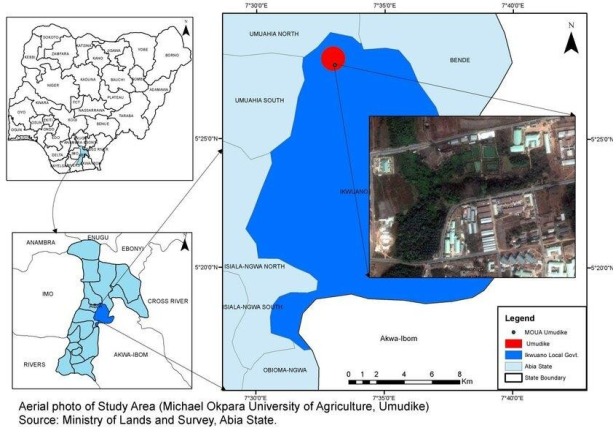
This study was carried out in and around Michael Okpara University of Agriculture, Umudike, located in Abia State, Southeastern Nigeria. The university is situated at approximately latitude 5°28′35″ N and longitude 7°32′03″ E, within the tropical rainforest zone of Southeastern Nigeria and is characterized by two major seasons: the rainy season (April–October) and the dry season (November–March), during which bush burning is commonly practiced for land preparation.The area features predominantly ferrallitic soils, which are naturally acidic, low in organic matter, and prone to nutrient leaching. These properties make the soils highly susceptible to degradation— particularly under anthropogenic pressures such as bush burning. The university and its surrounding farming communities engage in intensive agricultural activities, including cultivation of cassava, maize, vegetables, and yam. This makes Umudike a suitable location for assessing the impact of polycyclic aromatic hydrocarbons (PAHs) from bush burning on soil fertility under real-life farming situations.
Figure 1. Aerial Photo of the study Area (Michael Okpara University of Agriculture, Umudike, Abia State, Nigeria).
Table 1. List of Materials, Reagents and Laboratory Equipments used.

Materials

Sample soils: (PAH contaminated soil and Control soil), Sample tools like Trowels, Sampling containers, Labeling materials, stainless steel coops

Reagents

PAH standards and solvents(naphthalene, acenaphthene), Purity solvents for extraction and analysis (n-hexane, dichloromethane)

Laboratory Equipments

Gas chromatograph-mass spectrometer(GC-MS), Accelerated solvent extractor or Soxhlet extractor, Rotary evaporator for solvent removal, Analytical balance, Oven (dry soil samples), PH meter, Conductivity meter, Textural Analytic equipment Sieves, Hydrometer, Equipment for measuring soil nutrients (Spectrophotometer), Equipment for measuring soil organic matter, Equipment for measuring microbial activity, Fertility Assessment Materials: materials for measuring soil pH, nutrient content and microbial activity

Parameters Analyzed: The study evaluated a range of soil fertility indicators, as well as the concentration of polycyclic aromatic hydrocarbons (PAHs). The selected parameters were chosen because they are fundamental to assessing the physical, chemical, and biological quality of soil.
Table of Parameters Analyzed.

Parameter

Unit

Method of Analysis

Soil Ph

–

Determined using a glass electrode in a 1:1 soil water suspension, as described by

.

Organic Carbon (OC)

M

Measured by the Walkley and Black wet oxidation method, which involves dichromate oxidation of organic matter.

Organic Matter (OM)

g/kg

Calculated indirectly from OC values.

Calcium (Ca)

Mg/kg

Determined by complexometric titration with EDTA.

Magnesium(Mg)

Mg/kg

Measured alongside Ca using EDTA titration.

Sodium (Na)

Mg/kg

Determined using a flame photometer for precise quantification

Nitrogen (N)

Mg/kg

Measured by the Kjeldahl digestion method, which involves conversion of organic nitrogen to ammonium, followed by distillation and titration.

Phosphorous (P)

Mg/kg

Determined using the Bray-I extraction method suitable for acidic soils

Potassium (K)

Mg/kg

Measured by flame photometry to assess available plant potassium

Electrical Conductivity (EC)

µs/cm

Determined in a 1:2.5 soil-water extract using an EC meter to evaluate soluble salt concentration

Cation Exchange Capacity (CEC)

Cmol/kg

Measured using ammonium acetate extraction, which quantifies the soil’s capacity to retain and exchange cations.

Polycyclic Aromatic Hydrocarbons (PAHs)

µg/kg

Determined using Soxhlet Extraction followed by GC-MS analysis.

2.3. Sample Collection and Preparation
Soil samples were collected from two distinct locations: contaminated soils from a popular waste burning site behind the College of Engineering and Engineering Technology and control soils from a “clear” site in the surroundings of the Agricultural Engineering Workshop; all in Michael Okpara University of Agriculture, Umudike. The collection sites, were selected based on specific criteria, including consistent bush burning over at least the past two seasons, and accessibility for sampling. The first set of soil samples (LA1-3) were taken from the middle of the burning site where contamination is highest, while the second set of soil samples (LB1-3) were taken 15ft from the first, a location where pollution is minimal and the third set of soil samples (NP1-3) are the control soil samples, taken from an area of zero PAHs contamination. Samples were obtained at three depths, 0–10 cm (surface soil), 10–20 cm, and 20–30 cm, to assess the vertical distribution of PAHs and their potential impact across soil layers. A total of nine samples were collected from the study area, comprising six samples from two polluted locations and three from a non-polluted control site. Sampling was conducted using a soil auger to ensure representative subsamples. Each collected sample was placed in clean, airtight containers and transported promptly to the laboratory for analysis. At the laboratory, soil samples were air-dried at room temperature to prevent thermal degradation of heat-sensitive organic compounds, including PAHs . Air-drying also reduced the moisture content, thereby enhancing subsequent extraction efficiency. The dried soils were gently ground using a clean agate mortar and pestle to achieve a uniform particle size, ensuring even distribution of PAHs within the matrix. The homogenized soils were then sieved through a 2 mm stainless steel mesh to remove coarse debris such as stones, roots, and other extraneous materials. This mesh size conforms to standard soil analysis protocols and retains the fine fraction where organic pollutants including PAHs tend to accumulate due to their high surface area and affinity for organic matter. The processed samples were stored in clean, airtight amber glass containers to minimize photodegradation and volatilization before undergoing chemical extraction.
2.4. Laboratory Analysis
The soil samples were air-dried and finely ground to increase their surface area, thereby enhancing solvent penetration and facilitating the release of PAHs. Organic solvents such as dichloromethane (DCM), n-hexane, or methanol are commonly employed for PAH extraction because of their strong solvating capacity for hydrophobic organic compounds. The mixture of soil and solvent may be subjected to different extraction techniques, including Soxhlet extraction, ultrasonic extraction, or accelerated solvent extraction (ASE), where heating, agitation, or pressure are used to promote the transfer of PAHs from the soil matrix into the solvent. For this research, PAHs were extracted using a Soxhlet apparatus with dichloromethane (DCM) as the extraction solvent. DCM was chosen due to its high efficiency in dissolving hydrophobic organic pollutants, including PAHs, as well as its relatively low boiling point, which enables efficient recovery without significant thermal degradation . Approximately 10 g of the prepared soil sample was placed in a cellulose extraction thimble and subjected to continuous solvent reflux for 16 hours. This extended extraction time ensured prolonged interaction between the soil particles and solvent, facilitating the dissolution of PAHs tightly bound to soil organic matter and clay minerals. The resulting raw extracts were filtered to remove solid particles and concentrated using a rotary evaporator to remove excess solvent. A cleanup process was then carried out by passing the concentrated extracts through a silica gel column, which effectively removed potential interfering compounds such as pigments, lipids, and humic substances. The quantification of PAHs was conducted using Gas Chromatography–Mass Spectrometry (GC-MS) in accordance with USEPA Method 8270D. This method provides high sensitivity and specificity, enabling precise detection of selected target PAHs, including naphthalene, fluorene, anthracene, phenanthrene, and benzo[a]pyrene. The concentrations were reported in micrograms per kilogram (µg/kg) of dry soil.
2.5. Data Analysis
The results from laboratory analysis were compiled and analyzed using SPSS and Microsoft Excel.The following statistical tests were used:
1) Descriptive statistics: Mean, standard deviation, and range
2) T-tests/ANOVA: To compare polluted vs. control soil parameters
3) Correlation analysis: To explore relationships between PAH concentration and soil fertility indicators.
4) Regression analysis: To evaluate the predictive impact of PAH on fertility loss.
2.6. Ethical Considerations
All sampling activities were conducted with due regard for ethical research practices and environmental protection. Permission was obtained from local landowners before collecting soil samples, and the purpose of the study was clearly explained to them to ensure informed consent. Fieldwork was carried out under safe and environmentally responsible conditions, avoiding unnecessary disturbance to surrounding ecosystems. During laboratory analyses, all procedures adhered to established environmental safety guidelines, and no harmful chemicals or residues were released into the environment. Waste solvents and other by- products generated during PAH extraction were collected and disposed of in accordance with institutional and environmental regulations.The findings from this research are intended solely for academic purposes and to contribute to scientific understanding of PAH contamination and soil fertility management. Results will also be used to inform sustainable agricultural and land management practices without causing harm to communities, the environment, or future land use potential.
3. Results
Table 3. Statistical analysis of the effect on PAHs some chemical parameters of the soil.

Parameters

Location A

Location B

Not-affected

PH

5.847 a ± 0.42

5.937 b± 0.15

6.063 c± 0.45

O.C

14.033a ± 0.28

11.567b± 1.16

4.66 b± 0.51

O.M

24.180a ± 0.41

19.920 b ± 2.04

8.023 b± 0.86

CA

4.587a ± 0.95

5.567b ± 0.34

6.673 b± 0.22

MG

1.340 a ± 0.12

2.093b ± 0.16

2.397 b± 0.07

NA

0.429 b ±0.15

0.321b ±0.03

0.235 b± 0.03

N

0.620a ± 0.02

0.553a ± 0.01

0.385 b± 0.01

P

10.816a± 0.03

16.180a ± 0.02

21.230 b± 0.11

K

2.23 a± 0.03

3.40a± 0.02

5.50 b± 0.02

EC

378.450 a ± 13.25

236.847 b ± 2.41

172.907 b± 5.21

PAH

2.467 a ± 0.03

1.983 b ± 0.15

0.489 b± 0.00

a –c Values with different superscripts in each row are significantly different from each other (P > 0.05); N = 3;
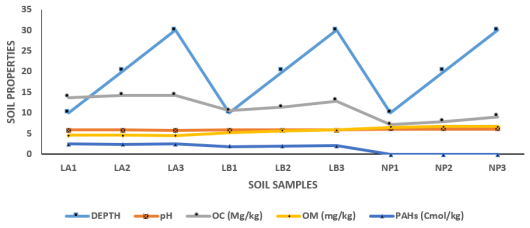
Figure 2. The PAHs levels for the three locations (LA, LB and NP) with their corresponding PH, Organic Carbon (OC) and Organic Matter (OM) levels.
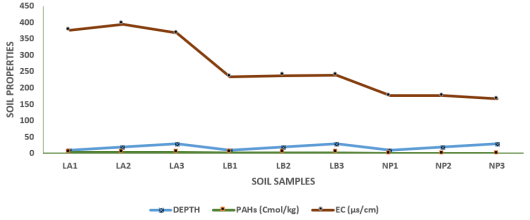
Figure 3. The PAHs levels for the three locations (LA, LB and NP) with their corresponding Electrical Conductivity (EC) levels.
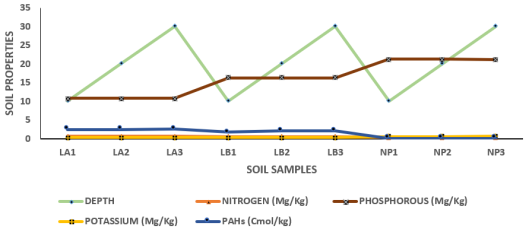
Figure 4. The PAHs levels for the three locations (LA, LB and NP) with their corresponding Nitrogen, Phosphorous and Potassium levels.
4. Discussions
The results show that location A (LA1, LA2 and LA3) has higher average concentration of polycyclic aromatic hydrocarbons PAH (2.467 Cmol/kg) compared to that of location B (1.983 Cmol/kg) while the control soil (not affected soil) has the least average value (0.489 Cmol/kg) which could be attributed to transference of the contaminants through air or water. The results of the pH values for location A (LA) range from 5.80 to 5.88 and that of location B (LB) ranges from 5.92 to 5.95 while the non-affected soil area has the highest pH values ranging from 6.02 tom 6.11. This agrees with the results of studies on oilfields in China by , which showed high levels of PAH with corresponding decreased PH levels and is also in line with the work of which recorded high PAHs values alongside low pH values, further confirming the assertion that PAHs lower soil PH.This could be attributed to oxidation processes or their interaction with micro community. Figure 2, also shows higher soil Organic carbon (OC) (10.5mg/kg -14.2 mg/kg) and Organic matter (OM) (18.06mg/kg – 24.42mg/kg) values in the PAHs polluted soils compared to the non-polluted soil. This aligns with the findings of who recorded increase in soil organic carbon and organic matter in PAHs contaminated soils. These findings also agree with assertions, (although in reverse-effect style), that the presence of PAHs in soil increases OC and OM levels. The high OC and OM levels, which is described by in turn delay the PAHs degradation time and causes a “stay time” in the soil.
The concentrations of Phosphorus (P) in the soils of the polycyclic aromatic hydrocarbons PAH contaminated soils were lower than that in the non-affected (control) soil as also seen in Figure 4. The results of previous studies showed that PAH contamination decreased P concentration by various degrees . The experiment also recorded slightly higher amounts of soil nitrogen in LA and LB soils compares to NP soils but reduced soil potassium levels in LA and LB soils, compared to NP soils. Figure 3 shows the effects of the presence of PAHs on soil electrical conductivity (EC). The EC values for the contaminated soils (234.32 – 392.87 µs/cm) remained within the optimal range of 200 – 600µs/cm while the EC values for the non-polluted soils had a range of 166.9 -176.22 µs/cm through the depths considered.
The results of the statistical analysis of variance (ANOVA), presented in Table 3, show that PAHs significantly increased the soil organic content and consequently increased the organic matter content but decreased the total phosphorus concentration (P< 0.05). This agrees with the findings of , which state that PAHs in a wetland area of China significantly increased the soil organic content and consequently increased the organic matter content but decreased the total phosphorus concentration (P< 0.02). The result also shows that there was significant difference in the results of all the other chemical properties analysed at P< 0.05. The post Hoc comparison analysis using Duncans (P< 0.05) reveals the level of difference within the groups. The results show that there were significant different in the results within the groups for all the parameters tested except K where there was no significant difference between location A and location B.
5. Conclusion
Polycyclic aromatic hydrocarbons (PAHs) are aromatic substances with two or more fused benzene rings in their structural configurations and are commonly produced through incomplete combustion of industrial wastes, wood, fossil fuel, tobacco e.t.c. They are commonly found in urban areas, agricultural land and industrial areas where frequent waste burning occur and pose toxic threats to agricultural soils by altering the chemical levels of the soil. In this study, soil samples were collected from dumpsites where waste burning is as frequent as a weekly/bi-weekly process and also from a control site with the am of investigating the effects of PAHs levels on the soil properties. Contaminated soils (LA and LB) showed 67.2% and 60.2% increase in Organic carbon (OC), respectively and 66.9% and 59.7% increase in Organic Matter (OM) contents, respectively. The Phosphorous and potassium levels of the contaminated soils were lower than that of the control soils, while the nitrogen levels of the contaminated soils were higher than the control. The Electrical Conductivity (EC) of LA and LB soils increased by 54.8% and 26.9% when compared to the control. The statistical analysis showed that that there was significant difference in the results of all the other chemical properties analysed at P< 0.05. The post Hoc comparison analysis using Duncans (P< 0.05) reveals the level of difference within the groups of the analyzed soil properties and also show that there were significant differences in the results within the groups for all the parameters tested except for Potassium (K) where there was no significant difference between locations A and B. These findings are essential to determining the toxicity of the current methods of waste disposal in Michael Okpara University of Agriculture, Umudike and form the basis for the projection of the mutagenic and carcinogenic implications of PAHs in the environment.
6. Recommendations
It is recommended that, since the production of PAHs increase Organic Carbon (OC), Organic Matter (OM), Nitrogen, Potassioum and phosphorous levels in the soil, adding organic compost to the soil will aid in balancing the carbon to nitrogen ratios. Phytoremediation is also recommended to encourage microbial breakdown of toxic compounds in the root zone.
Abbreviations

PAHs

Polycyclic Aromatic Hydrocarbons

DCM

Dichloromethane

ASE

Accelerated Solvent Extraction

GC-MS

Gas Chromatography – Mass Spectrometry

DNA

Deoxyribonucleic Acid

VOC

Volatile Organic Compounds

PCBs

Polycyclic Biphenyls

Author Contributions
Ikechukwu-Edeh Chidinma Evelyn: Supervision, Formal analysis, Data Curation, Methodology, Resources, Software, Writing – review and editing and validaton.
Omovon Joan Omozee: Conceptualization, Investigation, Project Administration, Visualization, Writing – Original document.
Conflicts of Interest
The authors declare no conflicts of interest.
References
[1] Abdel-Shafy, H. I., & Mansour, M. S. (2016). A Review on Polycyclic Aromatic Hydrocarbons: Source, environmental impact, effect on human health and remediation. Egyptian Journal of Petroleum, 25(1), 107-123.
[2] Akinpelumi, V. K., Kumi, K. G., Onyena, A. P., Kabari, S., Ezejiofor, A. N., Frazzoli, C., Orisakwe, O. E. (2023). A comparative study of the impacts of polycyclic aromatic hydrocarbons in water and soils in Nigeria and Ghana: Towards a framework for public health protection. Journal of Hazardous MAterial Advances, 11(2023), 54-76.
[3] Alaekwe, O., & Abba, O. (2022). Polycyclic Aromatic Hydrocarbons in Water: A Review of the Sources, Properties, Exposure Pathways, Bionetwork and Strategies for Remediation. Journal of Geoscience and Environment Protection, 10(8), 1-10.
[4] Biswan, M. S., RAvi Kumar, B. V., Bimal, K. B., & Borah, P. (2020). Polyaromatic Hydrocarbons (PAHs): Structures, Synthesis and their Biological Profile. Current Organic Synthesis, 17(8).
[5] Brady, N. C., & Weil, R. R. (2017). The Nature and Properties of Soils (15th ed.). Pearson Education.
[6] CDC. (2009). Polycyclic Aromatic Hydrocarbon (PAHs). USA: Center for Disease Control and Prevention.
[7] Daffi, R., Chiamang, A. N., & Alfa, M. I. (2020). Environmental Impact of Open Burning of Municipal Solid Wastes Dumps in Parts of Jos Metropolis, Nigeria. Journal of Engineering Research and Reports, 12(3), 30-43.
[8] Elehinafe, F. B., Okedere, O. B., Ayeni, A. O., & Ajewole, T. O. (2022). Hazardous Organic Pollutants from Open Burning of Municipal. Journal of Ecological Engineering, 23(9), 288-296.
[9] Eneje, R. C., Lemo, E., & Chukwu, L. I. (2012). Effect of crude oil and refined petroleum products contamination on phosphorus fractions of Inceptisols. Journal of Emerging Trends in Engineering and Applied Sciences, 3(2), 291-295.
[10] Ibe, F. C., Duru, C. E., Isiuku, B. O., & Akalazu, J. N. (2021). Ecological risk assessment of the levels of polycyclic aromatic hydrocarbons in soils of the abandoned sections of Orji Mechanic, Owerri, Imo State, Nigeria. Buletin of National REsource Center, 45(18), 1-16.
[11] Imasuen, O. I., Tafamel, G. E., & Akhidenor, E. (2014). Polycyclic Aromatic Hydrocarbons (PAHs) in soils around petroleum product storage facilities in Edo State, Nigeria. International Journal of Physical Sciences, 9(3), 42-51.
[12] ISO 11464. (2006). Soil Quality — Pretreatment of Samples for Physico-Chemical Analysis. International Organization for Standardization.
[13] Jackson, M. L. (1958). Soil Chemical Analysis. Prentice Hall.
[14] Jia, J., Bi, C., Zhang, J., Jin, X., & Chen, Z. (2009). Characterization of polycyclic aromatic hydrocarbons (PAHs) in urban soils in Shanghai, China. Environmental Pollution, 157(5), 1379-1385.
[15] Juhasz, A. L., Smith, E., Weber, J., Rees, M., Rofe, A., Kuchel, T.,... Naidu, R. (2009). In vivo assessment of arsenic bioavailability in rice and its significance for human health risk assessment. Environmental Health Perspectives, 114(12), 1826-1831.
[16] Kariyawasam, T., Doran, G. S., Howitt, J. A., & Prenzler, P. D. (2022). Polycyclic aromatic hydrocarbon contamination in soils and sediments: Sustainable approaches for extraction and remediation. Chemosphere, 291(3), 10 - 31.
[17] Lal, R. (2020). Soil organic matter content and crop yield. Journal of Soil and Water Conservation, 75(2), 27A-32A.
[18] Montano, L., Baldini, M. G., Piscopio, M., Liguori, G., Lombardi, L., Ricciardi, M.,... Fontanarosa, C. (2025). Polycyclic Aromatic Hydrocarbons (PAHs) in the Environment: Occupational Exposure, Health Risks and Fertility Implications. Toxics, 13(3), 151-180.
[19] Paneerselvam, P., Mitra, D., Mohanty, B., Mondal, R., & Shadangi, S. (2022). Environmental Pollution: A Life Threat (Third Edition ed.). Bengal, India: AZRA.
[20] Patel, A. B., Shaikh, S., Jain, K. R., Desai, C., & MAdamwar, D. (2020). Polycyclic Aromatic Hydrocarbons: Sources, Toxicity, and Remediation Approaches. Frontiers in Microbiology, 11(2020), 11-34.
[21] Qi, Y., Wu, Y., Zhi, Q., Zhang, Z., Zhao, Y., & Fu, G. (2024). Effects of Polycyclic Aromatic Hydrocarbons on the Composition of the Soil Bacterial Communities in the Tidal Flat Wetlands of the Yellow River Delta of China. Microorganisms, 12(1), 1-10.
[22] Reizer, E., Viskolcz, B., & Fiser, B. (2022). Formation and growth mechanisms of polycyclic aromatic hydrocarbons: A mini-review. Chemisphere, 292(1), 1-15.
[23] Sporring, S., Bøwadt, S., Svensmark, B., & Bjørklund, E. (2005). Comprehensive comparison of classic Soxhlet extraction with Soxtec extraction, ultrasonication extraction, supercritical fluid extraction, microwave assisted extraction and accelerated solvent extraction for the determination of polychlorinated biphenyls in soil. Journal of Chromatography A, 1090(1-2), 1-9.
[24] Ukalska-Jaruga, A., & Smreckzac, B. (2020). The Impact of Organic Matter on Polycyclic Aromatic Hydrocarbon (PAH) Availability and Persistence in Soils. Molecules, 25(11), 2463 -2470.
[25] Wang, C., Wu, S., Zhou, S., Wang, H., Li, B., Chen, H., Shi, Y. (2009). Polycyclic aromatic hydrocarbons in soils from urban to rural areas in Nanjing: Concentration, source, spatial distribution, and assessment of potential human health risk. Science of the Total Environment, 610–611, 312-320.
[26] Wang, Z., Chen, J., Qiao, X., Yang, P., Tian, F., & Huang, J. (2008). Distribution and sources of polycyclic aromatic hydrocarbons from urban to rural soils: A case study in Dalian, China. Chemosphere, 71(7), 1379-1386.
[27] Wang, Z., Zeng, X., Ma, Y., Zhou, J., & Song, J. (2010). Effect of polycyclic aromatic hydrocarbon pollution on soil pH and microbial activity in an oilfield in China. Environmental Monitoring and Assessment, 163(1-4), 67-76.
[28] Yusuf, M. D., Abdul Azeez, T., Ibe, B. O., Asem, T. K., Salaudeen, A. T., Eberechukwu, T. E.,... Oke, K. O. (2025). Polycyclic Aromatic Hydrocarbons (PAHs) in Soil: Sources, Analytical Techniques, Environmental Impact, and Remediation Strategies. International Journal of Advanced Biological and Biomedical Resources, 13(5), 616-640.
Cite This Article
  • APA Style

    Evelyn, I. C., Omozee, O. J. (2026). The Impact of Polycyclic Aromatic Hydrocarbon (PAHs) on Some Selected Soil Chemical Properties in Umudike, Abia State, Nigeria. International Journal of Ecotoxicology and Ecobiology, 11(4), 74-82. https://doi.org/10.11648/j.ijee.20261104.12

    Copy | Download

    ACS Style

    Evelyn, I. C.; Omozee, O. J. The Impact of Polycyclic Aromatic Hydrocarbon (PAHs) on Some Selected Soil Chemical Properties in Umudike, Abia State, Nigeria. Int. J. Ecotoxicol. Ecobiol. 2026, 11(4), 74-82. doi: 10.11648/j.ijee.20261104.12

    Copy | Download

    AMA Style

    Evelyn IC, Omozee OJ. The Impact of Polycyclic Aromatic Hydrocarbon (PAHs) on Some Selected Soil Chemical Properties in Umudike, Abia State, Nigeria. Int J Ecotoxicol Ecobiol. 2026;11(4):74-82. doi: 10.11648/j.ijee.20261104.12

    Copy | Download

  • @article{10.11648/j.ijee.20261104.12,
      author = {Ikechukwu-Edeh Chidinma Evelyn and Omovon Joan Omozee},
      title = {The Impact of Polycyclic Aromatic Hydrocarbon (PAHs) on Some Selected Soil Chemical Properties in Umudike, Abia State, Nigeria},
      journal = {International Journal of Ecotoxicology and Ecobiology},
      volume = {11},
      number = {4},
      pages = {74-82},
      doi = {10.11648/j.ijee.20261104.12},
      url = {https://doi.org/10.11648/j.ijee.20261104.12},
      eprint = {https://article.sciencepublishinggroup.com/pdf/10.11648.j.ijee.20261104.12},
      abstract = {Polycyclic Aromatic Hydrocarbons (PAHs) are organic compounds produced through incomplete combustion of industrial wastes, wood, fossil fuel, tobacco e.t.c. They are commonly found in urban areas, agricultural land and industrial areas where frequent waste burning occur and pose toxic threats to agricultural soils by altering their chemical levels. In this study, soil samples were collected from dumpsites in Michael Okpara University of Agriculture Umudike, Abia State, Nigeria, where wastes are burned on weekly basis and also from a control site with the aim of investigating the effects of the generated PAHs levels on the soil chemical properties. Contaminated soils (LA and LB) showed 67.2% and 60.2% increase in Organic carbon (OC), respectively and 66.9% and 59.7% increase in Organic Matter (OM) contents, respectively. The Phosphorous and potassium levels of the contaminated soils were lower than that of the control soils, while the nitrogen levels of the contaminated soils were higher than the control. The Electrical Conductivity (EC) of LA and LB soils increased by 54.8% and 26.9% when compared to the control. The post Hoc comparison analysis showed that there were significant differences in the results within the groups for all the parameters tested except for Potassium (K).},
     year = {2026}
    }
    

    Copy | Download

  • TY  - JOUR
    T1  - The Impact of Polycyclic Aromatic Hydrocarbon (PAHs) on Some Selected Soil Chemical Properties in Umudike, Abia State, Nigeria
    AU  - Ikechukwu-Edeh Chidinma Evelyn
    AU  - Omovon Joan Omozee
    Y1  - 2026/11/23
    PY  - 2026
    N1  - https://doi.org/10.11648/j.ijee.20261104.12
    DO  - 10.11648/j.ijee.20261104.12
    T2  - International Journal of Ecotoxicology and Ecobiology
    JF  - International Journal of Ecotoxicology and Ecobiology
    JO  - International Journal of Ecotoxicology and Ecobiology
    SP  - 74
    EP  - 82
    PB  - Science Publishing Group
    SN  - 2575-1735
    UR  - https://doi.org/10.11648/j.ijee.20261104.12
    AB  - Polycyclic Aromatic Hydrocarbons (PAHs) are organic compounds produced through incomplete combustion of industrial wastes, wood, fossil fuel, tobacco e.t.c. They are commonly found in urban areas, agricultural land and industrial areas where frequent waste burning occur and pose toxic threats to agricultural soils by altering their chemical levels. In this study, soil samples were collected from dumpsites in Michael Okpara University of Agriculture Umudike, Abia State, Nigeria, where wastes are burned on weekly basis and also from a control site with the aim of investigating the effects of the generated PAHs levels on the soil chemical properties. Contaminated soils (LA and LB) showed 67.2% and 60.2% increase in Organic carbon (OC), respectively and 66.9% and 59.7% increase in Organic Matter (OM) contents, respectively. The Phosphorous and potassium levels of the contaminated soils were lower than that of the control soils, while the nitrogen levels of the contaminated soils were higher than the control. The Electrical Conductivity (EC) of LA and LB soils increased by 54.8% and 26.9% when compared to the control. The post Hoc comparison analysis showed that there were significant differences in the results within the groups for all the parameters tested except for Potassium (K).
    VL  - 11
    IS  - 4
    ER  - 

    Copy | Download

Author Information
  • Department of Agricultural and Bio-resources Engineering, Michael Okpara University of Agriculture, Umudike, Nigeria
  • Department of Agricultural and Bio-resources Engineering, Michael Okpara University of Agriculture, Umudike, Nigeria