
Currently the rate of soil erosion is severe in the low lands of Ethiopia. Identification of hot-spot areas of erosion and prioritizing areas of intervention is extremely important for reducing further degradation, reclaiming the degraded areas and improving the land productivity of the watershed. The RUSLE model with GIS environment helps watershed management in assessing and identifying erosion hotspot areas for undertaking required conservation measures. Erer watershed is found in Ethiopian Wabishebele basin. The objective of this study was to Characterize soil erosion and prioritize sub watersheds in Erer watershed in eastern Hararghe. The Revised Universal Soil Loss Equation (RUSLE) integrated with satellite remote sensing and geographical information systems (GIS) as a useful tool for conservation planning was used. Mean annual precipitation, soil map, a 30m digital elevation model, land-cover and management map, land use types and slope length and slope steepness were used to determine the RUSLE values. Homogeneity and consistency test were undertake before each analysis. Homogeneity test for the collected data was homogeneous that the observation was from the same population and the consistency of the rainfall was linear. Mainly the practice of removing plant residues, poor physical soil conservation measures, lack of conservation practice and ploughing the land several times may be the reasons for the high soil loss in the study area. Moreover, the total soil loss in the study area was 7,895,824.22 metric tons per year from 216,762.2ha of land with mean soil loss of 24.61 t/ha/yr. The very high soil loss was observed in steep dissected to mountainous terrain of the upstream of watershed. Out of the 11 SWs, six sub watersheds SW6, SW8, SW9, SW11, SW7 and SW4 were existed under very high erosion rate with mean soil loss ranges from 32.33 to 38.92 t/ha/yr which cover 24 percent of the total land and high soil loss rate was estimated. Soil loss ranges from 21.58 to 27.1 and covers 50 percent of the total land. The watershed has a range of the erosion severity classes of extremely severe, very sever and sever. The steep slope of upstream watershed have contribute high soil loss are more critical and should be given first priority during intervention measures. The poor vegetation cover management and the lack of conservation practice of the area should be improved to reduce the high soil loss throughout of the watershed.
| Published in | International Journal of Environmental Protection and Policy (Volume 14, Issue 1) |
| DOI | 10.11648/j.ijepp.20261401.12 |
| Page(s) | 18-29 |
| Creative Commons |
This is an Open Access article, distributed under the terms of the Creative Commons Attribution 4.0 International License (http://creativecommons.org/licenses/by/4.0/), which permits unrestricted use, distribution and reproduction in any medium or format, provided the original work is properly cited. |
| Copyright |
Copyright © The Author(s), 2026. Published by Science Publishing Group |
Slope, Watershed, Erosion, Soil Loss
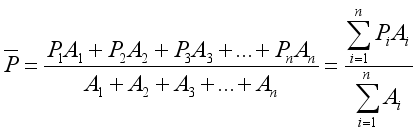 (1)
(1)  is the weighted average, P’s are rainfall amount recorded at different station and A’s are areas of each polygon.
 Major soil types | Area (ha) | Area (%) |
|---|---|---|
Cambisols | 33,923 | 74.23 |
Leptosols | 8,867 | 19.40 |
Glyesols | 1,989 | 4.35 |
Luvisols | 778 | 1.70 |
Nitisols | 146 | 0.32 |
Total | 45,703 | 100 |
Sub-watersheds | Area (ha) | Area (%) |
|---|---|---|
1 | 24.10 | 2.69 |
2 | 1003.04 | 6.57 |
3 | 1067.46 | 0.04 |
4 | 2606.85 | 2.53 |
5 | 2917.75 | 11.83 |
6 | 1005.07 | 2.53 |
7 | 1195.44 | 3.01 |
8 | 3614.62 | 9.10 |
9 | 4697.83 | 7.35 |
A10 | 2928.52 | 4.86 |
11 | 1029.22 | 2.59 |
Total | 22089.9 | 53.1 |
No | Land use | C-value | References |
|---|---|---|---|
1 | Cultivated Land | 0.17 | Hurni (1988) |
2 | Settlement | 0.03 | SWCS, 2003 |
3 | Woodland | 0.06 | FAO (1986) |
4 | Bare land | 0.6 | BCEON (1998) |
5 | Shrub and bush land | 0.014 | Wischmer and Smith (1978) |
Cultivation and slope. Slope (%) | Contouring | Strip Cropping | Terracing |
|---|---|---|---|
0.0 - 7.0 | 0.55 | 0.27 | 0.10 |
7.0 - 11.3 | 0.60 | 0.30 | 0.12 |
11.3 - 17.6 | 0.80 | 0.40 | 0.16 |
17.6 - 26.8 | 0.90 | 0.45 | 0.18 |
>26.8 | 1.00 | 0.50 | 0.20 |
No | Soil loss rates ton/ha/yr. | Severity Class | Area (ha) | Area (%) |
|---|---|---|---|---|
1 | 0 – 10 | Low | 199533 | 62.95 |
2 | 10-20 | Moderate | 27550.89 | 8.76 |
3 | 20 – 30 | High | 20038.74 | 6.32 |
4 | 30 – 45 | Very high | 20440.21 | 6.45 |
5 | 45 – 60 | Sever | 11837.52 | 3.73 |
6 | 60 – 80 | Very Sever | 4294.97 | 1.35 |
7 | > 80 | Extremely sever | 33066.86 | 10.43 |
Total | 316762.2 | 100.00 | ||
Rank (priority) | Sub-watersheds | Area (ha) | Area (%) | Mean (ton/ha/yr.) |
|---|---|---|---|---|
1 | 6 | 14717.60 | 4.65 | 39.81 |
2 | 1 | 15273.20 | 4.82 | 38.91 |
3 | 2 | 11302.24 | 3.57 | 35.97 |
4 | 11 | 10221.95 | 3.23 | 34.53 |
5 | 7 | 14464.10 | 4.57 | 34.19 |
6 | 3 | 7289.54 | 2.30 | 33.26 |
7 | 16 | 11647.00 | 3.68 | 28.20 |
8 | 19 | 15528.00 | 4.90 | 27.76 |
9 | 18 | 11899.00 | 3.76 | 26.40 |
10 | 8 | 15428.80 | 4.87 | 24.47 |
11 | 5 | 12273.00 | 3.87 | 23.69 |
RUSLE | Revised Universal Soil Loss Equation |
SW | Sub-watershed |
| [1] | Bobe B. 2004. Evaluation of soil erosion in Harerge region of Ethiopia using soil loss models, rainfall simulation and field trials. Submitted in partial fulfillment of the requirements for degree Doctor of Philosophy, University of Pretoria. 191 p. |
| [2] | Chandra et al., 2016. Landscape dynamics and soil erosion process modeling in the north wester Ethiopia highlands, African studies series A16, Geographical Bernensisia, Berne. |
| [3] | Durbue, 2015;. 2014. Slope Length and Steepness factors (LS), Chapter 4, pp. 101-141 in Renardet al. 1997. |
| [4] | Eswaran, et al., 2001. Automatic calibration of a distributed catchment model, Journal of Hydrology, vol. 251, no. ½, pp. 103-109. |
| [5] | FAO. 1986. Ethiopia Highlands Reclamation Study. Final Report, Volume 1. FAO, Rome. |
| [6] | FAO. 2006. Guidelines for soil description. Rome. |
| [7] | Hudek et al., 2014; Identification of Conservation Priority Area in Erer Watershed based on Erosion Risk Using RUSLE Model, Eastern Hararghe Zone, Ethiopia. M.Sc. Thesis Presented to the school of Graduate Studies of Haramaya University. |
| [8] | kumar et al., 2012)..“Estimation of Soil Erosion for a Himalayan watershed using GIS technique, ”Water Resource Management, vol. 15, pp. 41–54. |
| [9] | Klute, A. 1965. Laboratory measurements of hydraulic conductivity of saturated soil. P. 253-261. In C. A. Blacket al.(ed) ethods of soil analaysis. Part 1. Agron. Monogr. 9. ASA, Madison, WI. |
| [10] | Lakew Desta (2005). Soil Erosion Studies in Northern Ethiopia. SpringerScienceBusiness Media B. V. |
| [11] | Morgan, 1994. Land Degradation Development, vol. 12, pp. 519-539. |
| [12] | Nyssen, 2001 Automated delineation of drainage netwok and elementary catchments from digital elevation models. ITCJournal ¾, 198- 208. |
| [13] | Renard., (1997) Predicting rainfall erosion losses a guide to conservation planning. Agric. Hand B. No. 537, US Department of Agriculture, Washington, DC. |
| [14] | Tripathi., 2003. Visual Soil Assessment Volume 1 Field guide for cropping and grazing on flat to rolling country. Horizons and Landcare Research. Palmerson, New Zealand. P 84. |
| [15] | Zelalem 2006. Review of Remote Sensing applications to soils and agriculture. Proc. Silver Jubilee Seminar, IIRS, Dehra Dun. |
APA Style
Yemane, F. (2026). Characterization of Soil Erosion Using RUSLE Model and GIS at Erer Watershed Babile District, East Hararghe Zone, Ethiopia. International Journal of Environmental Protection and Policy, 14(1), 18-29. https://doi.org/10.11648/j.ijepp.20261401.12
ACS Style
Yemane, F. Characterization of Soil Erosion Using RUSLE Model and GIS at Erer Watershed Babile District, East Hararghe Zone, Ethiopia. Int. J. Environ. Prot. Policy 2026, 14(1), 18-29. doi: 10.11648/j.ijepp.20261401.12
@article{10.11648/j.ijepp.20261401.12,
  author = {Frezer Yemane},
  title = {Characterization of Soil Erosion Using RUSLE Model and GIS at Erer Watershed Babile District, East Hararghe Zone, Ethiopia},
  journal = {International Journal of Environmental Protection and Policy},
  volume = {14},
  number = {1},
  pages = {18-29},
  doi = {10.11648/j.ijepp.20261401.12},
  url = {https://doi.org/10.11648/j.ijepp.20261401.12},
  eprint = {https://article.sciencepublishinggroup.com/pdf/10.11648.j.ijepp.20261401.12},
  abstract = {Currently the rate of soil erosion is severe in the low lands of Ethiopia. Identification of hot-spot areas of erosion and prioritizing areas of intervention is extremely important for reducing further degradation, reclaiming the degraded areas and improving the land productivity of the watershed. The RUSLE model with GIS environment helps watershed management in assessing and identifying erosion hotspot areas for undertaking required conservation measures. Erer watershed is found in Ethiopian Wabishebele basin. The objective of this study was to Characterize soil erosion and prioritize sub watersheds in Erer watershed in eastern Hararghe. The Revised Universal Soil Loss Equation (RUSLE) integrated with satellite remote sensing and geographical information systems (GIS) as a useful tool for conservation planning was used. Mean annual precipitation, soil map, a 30m digital elevation model, land-cover and management map, land use types and slope length and slope steepness were used to determine the RUSLE values. Homogeneity and consistency test were undertake before each analysis. Homogeneity test for the collected data was homogeneous that the observation was from the same population and the consistency of the rainfall was linear. Mainly the practice of removing plant residues, poor physical soil conservation measures, lack of conservation practice and ploughing the land several times may be the reasons for the high soil loss in the study area. Moreover, the total soil loss in the study area was 7,895,824.22 metric tons per year from 216,762.2ha of land with mean soil loss of 24.61 t/ha/yr. The very high soil loss was observed in steep dissected to mountainous terrain of the upstream of watershed. Out of the 11 SWs, six sub watersheds SW6, SW8, SW9, SW11, SW7 and SW4 were existed under very high erosion rate with mean soil loss ranges from 32.33 to 38.92 t/ha/yr which cover 24 percent of the total land and high soil loss rate was estimated. Soil loss ranges from 21.58 to 27.1 and covers 50 percent of the total land. The watershed has a range of the erosion severity classes of extremely severe, very sever and sever. The steep slope of upstream watershed have contribute high soil loss are more critical and should be given first priority during intervention measures. The poor vegetation cover management and the lack of conservation practice of the area should be improved to reduce the high soil loss throughout of the watershed.},
 year = {2026}
}
TY  - JOUR
T1  - Characterization of Soil Erosion Using RUSLE Model and GIS at Erer Watershed Babile District, East Hararghe Zone, Ethiopia
AU  - Frezer Yemane
Y1  - 2026/03/14
PY  - 2026
N1  - https://doi.org/10.11648/j.ijepp.20261401.12
DO  - 10.11648/j.ijepp.20261401.12
T2  - International Journal of Environmental Protection and Policy
JF  - International Journal of Environmental Protection and Policy
JO  - International Journal of Environmental Protection and Policy
SP  - 18
EP  - 29
PB  - Science Publishing Group
SN  - 2330-7536
UR  - https://doi.org/10.11648/j.ijepp.20261401.12
AB  - Currently the rate of soil erosion is severe in the low lands of Ethiopia. Identification of hot-spot areas of erosion and prioritizing areas of intervention is extremely important for reducing further degradation, reclaiming the degraded areas and improving the land productivity of the watershed. The RUSLE model with GIS environment helps watershed management in assessing and identifying erosion hotspot areas for undertaking required conservation measures. Erer watershed is found in Ethiopian Wabishebele basin. The objective of this study was to Characterize soil erosion and prioritize sub watersheds in Erer watershed in eastern Hararghe. The Revised Universal Soil Loss Equation (RUSLE) integrated with satellite remote sensing and geographical information systems (GIS) as a useful tool for conservation planning was used. Mean annual precipitation, soil map, a 30m digital elevation model, land-cover and management map, land use types and slope length and slope steepness were used to determine the RUSLE values. Homogeneity and consistency test were undertake before each analysis. Homogeneity test for the collected data was homogeneous that the observation was from the same population and the consistency of the rainfall was linear. Mainly the practice of removing plant residues, poor physical soil conservation measures, lack of conservation practice and ploughing the land several times may be the reasons for the high soil loss in the study area. Moreover, the total soil loss in the study area was 7,895,824.22 metric tons per year from 216,762.2ha of land with mean soil loss of 24.61 t/ha/yr. The very high soil loss was observed in steep dissected to mountainous terrain of the upstream of watershed. Out of the 11 SWs, six sub watersheds SW6, SW8, SW9, SW11, SW7 and SW4 were existed under very high erosion rate with mean soil loss ranges from 32.33 to 38.92 t/ha/yr which cover 24 percent of the total land and high soil loss rate was estimated. Soil loss ranges from 21.58 to 27.1 and covers 50 percent of the total land. The watershed has a range of the erosion severity classes of extremely severe, very sever and sever. The steep slope of upstream watershed have contribute high soil loss are more critical and should be given first priority during intervention measures. The poor vegetation cover management and the lack of conservation practice of the area should be improved to reduce the high soil loss throughout of the watershed.
VL  - 14
IS  - 1
ER  -
Fedis Agricultural Research Center, Oromia Agricultural Research Institute, Harar, Ethiopia

Figure 1. Location map of the study area.

Figure 2. Slope class of Erer watershed.

Figure 3. Major soil types of Erer watershed.

Figure 4. landuse/cover types of Erer watershed.

Figure 5. Rainfall erosivity map of study area.

Figure 6. Soil erodability map of Erer watershed.

Figure 7. Topographic map of Erer watershed.

Figure 8. Distribution of C- factor in Erer watershed.

Figure 9. Conservation practice map of Erer watershed.

Figure 10. Sub Watershed.

Figure 11. Soil loss intensity map of Erer watershed.

Information


 Share This Article
 Twitter
 Linked In
 Facebook
 Copy
Copy Download