
Pomegranate (Punica granatum L.) peel is a crucial agro-industrial by-product that has about 30-40% of total fruit weight, is a rich reservoir of punicalagins, ellagic acid, phenolic, tannins, and dietary fibre. Apart from this, Finger millet flour is also nutritionaly valuable and contains dietary fibre, minerals, proteins, and bioactive compounds. This paper focuses on the health benefits and betterment in the nutritional and functional properties of bakery products (biscuits) containing the richness of pomegranate peel powder (PPP) and finger millet flour (MF). These are evaluated across three fortification stages: sample 1 (5% PPP-MF), sample 2 (10% PPP-MF), and sample 3 (15% PPP-MF), alongside a control (0% PPP-MF). The proximate composition is estimated under the regulatory framework of FSSAI (Food safety and Standard Authority of India) notified, ISO (International Organization for Standardization) -certified laboratory and obtained results, carbohydrate 61.33 g/100g, protein 7.39 g/100g, fat 18.84 g/100g, ash 1.74 g/100g, and energy 444.44 Kcal/100g. The six microbiological indicators were performed with FSSR (Food Safety and Standards Regulations) specifications. Salmonella and Listeria monocytogenes were absent in 25 g samples. Sensory evaluations conducted by a semi-trained panel (n=20), using a 9-point hedonic scale, confirmed that the 5% PPP-MF formulation was the standard fortification level to obtain an overall acceptability score of 8.1/10; therefore, the developed PPP-MF biscuit exhibited the highest nutritional profile, microbial safety, and sensory stability for commercial-scale production.
| Published in | International Journal of Food Engineering and Technology (Volume 10, Issue 2) |
| DOI | 10.11648/j.ijfet.20261002.14 |
| Page(s) | 67-76 |
| Creative Commons |
This is an Open Access article, distributed under the terms of the Creative Commons Attribution 4.0 International License (http://creativecommons.org/licenses/by/4.0/), which permits unrestricted use, distribution and reproduction in any medium or format, provided the original work is properly cited. |
| Copyright |
Copyright © The Author(s), 2026. Published by Science Publishing Group |
Pomegranate Peel Powder, Millet Flour, Functional Biscuit, Proximate Composition, Microbiological Safety
S.No | Ingredient | Control (g) | Sample 1 (5% PPP) | Sample 2 (10% PPP) | Sample 3 (15% PPP) |
|---|---|---|---|---|---|
1 | Millet Flour | 100 | 95 | 90 | 85 |
2 | Pomegranate Peel Powder | 0 | 5 | 10 | 15 |
3 | Sugar | 30 | 30 | 30 | 30 |
4 | Butter | 50 | 50 | 50 | 50 |
5 | Baking Powder | 2 | 2 | 2 | 2 |
6 | Salt | 1 | 1 | 1 | 1 |
7 | Water (as needed) | q.s. | q.s. | q.s. | q.s. |
S.No. | Parameter | Units | Result |
|---|---|---|---|
1 | Moisture | g/100g | 10.70 |
2 | Protein | g/100g | 7.39 |
3 | Carbohydrate | g/100g | 61.33 |
4 | Energy | Kcal/100g | 444.44 |
5 | Sodium | mg/100g | 477.17 |
6 | Sugar as Sucrose | g/100g | 7.14 |
7 | Ash | g/100g | 1.74 |
8 | Fat | g/100g | 18.84 |
9 | Total Sugar | g/100g | 10.75 |
Nutrient | Present Study (g/100g) | Wheat Biscuit (g/100g) | Millet Biscuit (g/100g) |
|---|---|---|---|
Moisture | 10.70 | 5.50 | 9.80 |
Protein | 7.39 | 6.10 | 7.20 |
Carbohydrate | 61.33 | 70.20 | 65.40 |
Fat | 18.84 | 15.80 | 17.10 |
Ash | 1.74 | 1.30 | 1.60 |
Energy (Kcal/100g) | 444.44 | 430.00 | 438.00 |
S.No. | Test Parameter | Units | Result | Test Method | FSSR Spec. |
|---|---|---|---|---|---|
1 | Aerobic Plate Count | Cfu/gm | <10 (Absent) | IS 5402-1: 2021 | NA |
2 | Yeast and Mold Count | Cfu/gm | <10 (Absent) | IS 5403: 1999 RA 2018 | NA |
3 | Enterobacteriaceae | Cfu/gm | <10 (Absent) | IS 17112 Part 2: 2019 | NMT 10 Cfu/gm |
4 | Staphylococcus aureus | Cfu/gm | <10 (Absent) | IS 5887 Part 3 Sec 1: 2020 | NA |
5 | Salmonella | Per 25gm | Absent | ISO 6579-1: 2017 | Absent/25gm |
6 | Listeria monocytogenes | Per 25gm | Absent | IS 14998-1: 2020 | Absent/25gm |
Sensory Attribute | Control (0% PPP) | Sample 1 (5% PPP) | Sample 2 (10% PPP) | Sample 3 (15% PPP) | Maximum Score |
|---|---|---|---|---|---|
Colour | 8.5 ± 0.3 | 8.2 ± 0.4 | 7.8 ± 0.5 | 7.2 ± 0.6 | 10 |
Aroma | 8.1 ± 0.4 | 8.0 ± 0.3 | 7.5 ± 0.6 | 6.9 ± 0.5 | 10 |
Taste | 8.3 ± 0.5 | 8.1 ± 0.4 | 7.2 ± 0.7 | 6.5 ± 0.8 | 10 |
Texture | 8.0 ± 0.3 | 7.9 ± 0.4 | 7.0 ± 0.5 | 6.6 ± 0.6 | 10 |
Overall Acceptability | 8.2 ± 0.4 | 8.1 ± 0.3 | 7.4 ± 0.6 | 6.8 ± 0.7 | 10 |
PPP | Pomegranate Peel Powder |
MF | Millet Flour |
FSSAI | Food Safety and Standard Authority of India |
ISO | International Organization for Standardization |
FSSR | Food Safety and Standards Regulations |
| [1] | Rehman, S., & Jianglin, Z. (2022). Micronutrient deficiencies and cardiac health. Frontiers in Nutrition, 9. |
| [2] | Hackett, C., Stonawski, M., Tong, Y., Kramer, S., Shi, A., & Fahmy, D. (2025). How the global religious landscape changed from 2010 to 2020. Pew Research Center, 9. |
| [3] | Dega, V., & Barbhai, M. D. (2023). Exploring the underutilized novel foods and starches for formulation of low glycemic therapeutic foods: A review. Frontiers in Nutrition. |
| [4] | Olagunju, A. I., Arigbede, T. I., Oyeleye, I. S., Makanjuola, S. A., Oyebode, E. T., & Enikuomehin, A. C. (2024). High-protein, low glycemic index snack from optimized blend of three wholegrains exhibits nutraceutical quality and elicits low glycemic response in diabetic human subjects. Food Production, Processing and Nutrition, 6(1), 32. |
| [5] | Esposito, L., Casolani, N., Ruggeri, M., Spizzirri, U. G., Aiello, F., Chiodo, E.,. & Mastrocola, D. (2024). Sensory evaluation and consumers’ acceptance of a low glycemic and gluten-free carob-based bakery product. Foods. |
| [6] | Rifna, E. J., Misra, N. N., & Dwivedi, M. (2023). Recent advances in extraction technologies for recovery of bioactive compounds derived from fruit and vegetable waste peels: A review. Critical Reviews in Food Science and Nutrition. |
| [7] | Schmidt, A., Briceno-Mena, L., Rajagopalan, S., Ma, K., Reiner, B., & Braun, B. (2024). Introduction to Formulation Optimization. In The Digital Transformation of Product Formulation (pp. 207-235). CRC Press. |
| [8] | Mi, J., Guo, Z., Qian, H., Birch, W. R., Srinivas, V., & Zhou, W. (2025). Sustainable food-grade serum-reducing biomaterial: plant protein hydrolysates for scalable cultivated meat manufacturing. Chemical Engineering Journal. |
| [9] | Shaikh, A., Berrouane, M. T., Bottaro, C., & Bazan, C. (2024, March). Lab-to-Market Product Innovation: Implications of Using a Translational Research & Development Model and Methodology. In International Conference on Smart Technology (pp. 99-113). Cham: Springer Nature Switzerland. |
| [10] | Singh, S., Kumari, R., & Kamble, Z. (2026). Bridging the Gap Between Laboratory Research and Industrial Implementation of Green Composite Technologies: A Review. Polymer Composites. |
| [11] | Roy, P., Mohanty, A. K., Dick, P., & Misra, M. (2023). A review on the challenges and choices for food waste valorization: environmental and economic impacts. ACS environmental Au, 3(2), 58-75. |
| [12] | Bendaoud, S., Belkacemi, L., Tüğen, A., Ozgolet, M., Arici, M., & Bouchama, A. (2026). Enhancing Nutritional Composition and Glycemic Index of Traditional Wheat Couscous Through Agglomeration with Algerian‐Grown Quinoa Semolina. Journal of Food Science. |
| [13] | Canfell, O. J., Davidson, K., Woods, L., Sullivan, C., Cocoros, N. M., Klompas, M.,. & Burton-Jones, A. (2022). Precision public health for non-communicable diseases: an emerging strategic roadmap and multinational use cases. Frontiers in Public Health. |
| [14] | Coordination, G., World Health Organization, & World Health Organization. (2022). WHO fungal priority pathogens list to guide research, development and public health action. Organización Mundial de la Salud (OMS). |
| [15] | Sundaresan, T., Kamdi, H. S., Singh, S. M., Prashanth, P., Jayasree Joshi, T., & Rao, P. S. (2026). Finger Millet Processing: A Circular Economy Approach to Sustainable Processing, Value Addition and Market Integration. Food and Bioprocess Technology, 19(2), 69. |
| [16] | Monsalve, F. A., Delgado-López, F., Fernández-Tapia, B., & González, D. R. (2023). Adipose tissue, non-communicable diseases, and physical exercise: an imperfect triangle. International Journal of Molecular Sciences. |
| [17] | Singh, K. A., Rai, R., & Nair, S. S. (2022). Review on development of assigned value microbiological reference materials used in food testing. Food Microbiology. |
| [18] | Mohamed, S. A., El-Sakhawy, M., & Diab, M. A. (2025). Enhancement of Bagasse Paper Properties for Sustainable Packaging via Bentonite and Alginate Loading in Shellac coatings. Scientific Reports. |
| [19] | Awol, S. M., Kuyu, C. G., Bereka, T. Y., & Abamecha, N. (2024). Physicochemical stability, microbial growth and sensory quality of refined wheat flour as affected by packaging materials during storage. Journal of Stored Products Research. |
| [20] | Omorodion, N. J., & Marycynthia, C. O. (2026). Influence of Different Packaging Materials on the Shelf Life and Microbial Quality of Bread and Cookies. RADS Journal of Biological Research & Applied Sciences, 17(1). |
| [21] | McCleary, B. V. (2023). Measurement of dietary fiber: Which AOAC Official Method of Analysis SM to use. Journal of AOAC International, |
| [22] | Jha, P., & Singh, A. K. (2025). Regulatory compliance and food safety standards. In Engineering solutions for sustainable food and dairy production: innovations and techniques in food processing and dairy engineering (pp. 463-487). Cham: Springer Nature Switzerland. |
| [23] | Duggineni, S. (2023). Impact of controls on data integrity and information systems. Science and technology, 13(2), 29-35. |
| [24] | Abbas, R., Aamir, M., Saeed, F., Shankar, A., Kaur, J., Nadeem, R.,. & Kinki, A. B. (2025). Development and nutritional evaluation of pomegranate peel enriched bars. PloS one. |
| [25] | Tennakoon, T. M. P. M., Somaratne, G. M., Jayawardhane, M. R. M. P., Dilrukshi, S. A. D. A., & Prasantha, B. D. R. (2026). Evaluation of the nutritional, functional, and glycemic properties of commercially available white, finger millet, and multigrain breads in Sri Lanka. Tropical Agricultural Research and Extension. |
| [26] | Federici, G., Marcotrigiano, V., Bino, E., Lovat, A., Padoin, A., Salerno, G., & Cinquetti, S. (2024). Healthy snack project: improving healthy choices through multidisciplinary food education actions. Nutrients, |
| [27] | Rozan, M. A. A. G., & Boriy, E. G. (2022). Chemical composition, phytochemical Profile, antioxidant activity of Eruca sativa seeds, and utilization of defatted seeds in the production of functional biscuits. |
| [28] | Chauhan, P., Nayak, N. K., Singh, P. K., & Singh, R. P. (2025). Regulatory health and nutrition claim framework and recent legislative developments. In Handbook of Milk Production, Quality and Nutrition (pp. 347-356). Academic Press. |
| [29] | Kim, E. (2026). Producing Inevitability: Aesthetics, Materiality, and Temporalities of Billachon Redevelopment in Seoul. Geoforum, 173, 104669. |
| [30] | Jung, J., Lee, K., & Kim, B. (2024). Precision calibration and linearity assessment of thin film force-sensing resistors. Applied Sciences. |
| [31] | Shoukat, A., Randhawa, M. A., Rakha, A. et al. Development and characterization of functional cookies fortified with microencapsulated pomegranate peel extract powder. Food Measure 19, 1405–1419 (2025). |
APA Style
Masi, C., C, J. C., S, S., S, I., P, J. J. (2026). Nutritional Characterization and Microbiological Safety Assessment of Functional Biscuits Enriched with Pomegranate Peel Powder and Millet Flour. International Journal of Food Engineering and Technology, 10(2), 67-76. https://doi.org/10.11648/j.ijfet.20261002.14
ACS Style
Masi, C.; C, J. C.; S, S.; S, I.; P, J. J. Nutritional Characterization and Microbiological Safety Assessment of Functional Biscuits Enriched with Pomegranate Peel Powder and Millet Flour. Int. J. Food Eng. Technol. 2026, 10(2), 67-76. doi: 10.11648/j.ijfet.20261002.14
AMA Style
Masi C, C JC, S S, S I, P JJ. Nutritional Characterization and Microbiological Safety Assessment of Functional Biscuits Enriched with Pomegranate Peel Powder and Millet Flour. Int J Food Eng Technol. 2026;10(2):67-76. doi: 10.11648/j.ijfet.20261002.14
@article{10.11648/j.ijfet.20261002.14,
  author = {Chandran Masi and Jebina Caroline C and Sathya S and Iswarya S and Jennita Jacqueline P},
  title = {Nutritional Characterization and Microbiological Safety Assessment of Functional Biscuits Enriched with Pomegranate Peel Powder and Millet Flour},
  journal = {International Journal of Food Engineering and Technology},
  volume = {10},
  number = {2},
  pages = {67-76},
  doi = {10.11648/j.ijfet.20261002.14},
  url = {https://doi.org/10.11648/j.ijfet.20261002.14},
  eprint = {https://article.sciencepublishinggroup.com/pdf/10.11648.j.ijfet.20261002.14},
  abstract = {Pomegranate (Punica granatum L.) peel is a crucial agro-industrial by-product that has about 30-40% of total fruit weight, is a rich reservoir of punicalagins, ellagic acid, phenolic, tannins, and dietary fibre. Apart from this, Finger millet flour is also nutritionaly valuable and contains dietary fibre, minerals, proteins, and bioactive compounds. This paper focuses on the health benefits and betterment in the nutritional and functional properties of bakery products (biscuits) containing the richness of pomegranate peel powder (PPP) and finger millet flour (MF). These are evaluated across three fortification stages: sample 1 (5% PPP-MF), sample 2 (10% PPP-MF), and sample 3 (15% PPP-MF), alongside a control (0% PPP-MF). The proximate composition is estimated under the regulatory framework of FSSAI (Food safety and Standard Authority of India) notified, ISO (International Organization for Standardization) -certified laboratory and obtained results, carbohydrate 61.33 g/100g, protein 7.39 g/100g, fat 18.84 g/100g, ash 1.74 g/100g, and energy 444.44 Kcal/100g. The six microbiological indicators were performed with FSSR (Food Safety and Standards Regulations) specifications. Salmonella and Listeria monocytogenes were absent in 25 g samples. Sensory evaluations conducted by a semi-trained panel (n=20), using a 9-point hedonic scale, confirmed that the 5% PPP-MF formulation was the standard fortification level to obtain an overall acceptability score of 8.1/10; therefore, the developed PPP-MF biscuit exhibited the highest nutritional profile, microbial safety, and sensory stability for commercial-scale production.},
 year = {2026}
}
TY  - JOUR
T1  - Nutritional Characterization and Microbiological Safety Assessment of Functional Biscuits Enriched with Pomegranate Peel Powder and Millet Flour
AU  - Chandran Masi
AU  - Jebina Caroline C
AU  - Sathya S
AU  - Iswarya S
AU  - Jennita Jacqueline P
Y1  - 2026/09/30
PY  - 2026
N1  - https://doi.org/10.11648/j.ijfet.20261002.14
DO  - 10.11648/j.ijfet.20261002.14
T2  - International Journal of Food Engineering and Technology
JF  - International Journal of Food Engineering and Technology
JO  - International Journal of Food Engineering and Technology
SP  - 67
EP  - 76
PB  - Science Publishing Group
SN  - 2640-1584
UR  - https://doi.org/10.11648/j.ijfet.20261002.14
AB  - Pomegranate (Punica granatum L.) peel is a crucial agro-industrial by-product that has about 30-40% of total fruit weight, is a rich reservoir of punicalagins, ellagic acid, phenolic, tannins, and dietary fibre. Apart from this, Finger millet flour is also nutritionaly valuable and contains dietary fibre, minerals, proteins, and bioactive compounds. This paper focuses on the health benefits and betterment in the nutritional and functional properties of bakery products (biscuits) containing the richness of pomegranate peel powder (PPP) and finger millet flour (MF). These are evaluated across three fortification stages: sample 1 (5% PPP-MF), sample 2 (10% PPP-MF), and sample 3 (15% PPP-MF), alongside a control (0% PPP-MF). The proximate composition is estimated under the regulatory framework of FSSAI (Food safety and Standard Authority of India) notified, ISO (International Organization for Standardization) -certified laboratory and obtained results, carbohydrate 61.33 g/100g, protein 7.39 g/100g, fat 18.84 g/100g, ash 1.74 g/100g, and energy 444.44 Kcal/100g. The six microbiological indicators were performed with FSSR (Food Safety and Standards Regulations) specifications. Salmonella and Listeria monocytogenes were absent in 25 g samples. Sensory evaluations conducted by a semi-trained panel (n=20), using a 9-point hedonic scale, confirmed that the 5% PPP-MF formulation was the standard fortification level to obtain an overall acceptability score of 8.1/10; therefore, the developed PPP-MF biscuit exhibited the highest nutritional profile, microbial safety, and sensory stability for commercial-scale production.
VL  - 10
IS  - 2
ER  -
Department of Food Technology, Dhanalakshmi Srinivasan Engineering College, Tamil Nadu, India
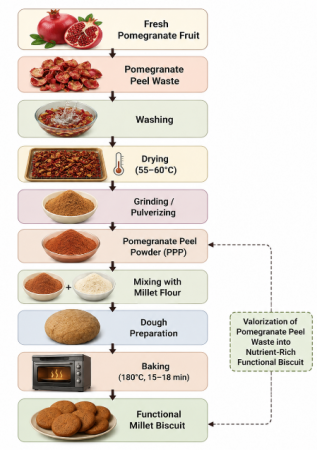
Figure 1. Valorization of pomegranate peel waste into functional millet biscuits.
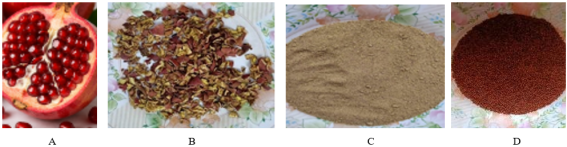
Figure 2. Raw materials used for biscuit preparation: (A) Fresh pomegranate fruit, (B) Dried pomegranate peel, (C) Millet flour, and (D) Pomegranate peel powder (PPP).
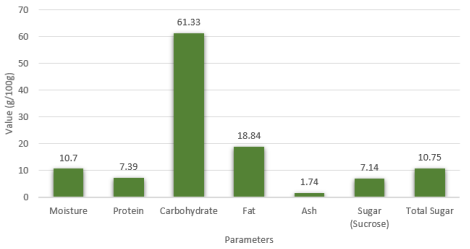
Figure 3. Proximate composition parameters of the developed PPM biscuit (g/100g).
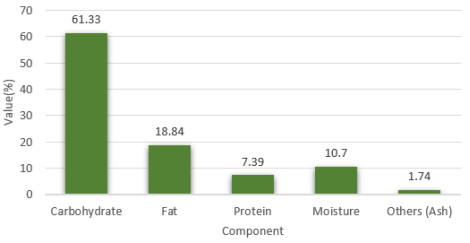
Figure 4. Macronutrient distribution in pomegranate peel millet biscuit (proportional composition).
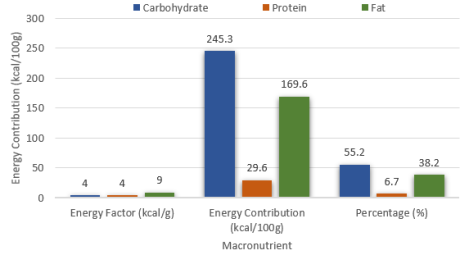
Figure 5. Energy contribution by macronutrients in the developed PPM biscuit (kcal/100g).
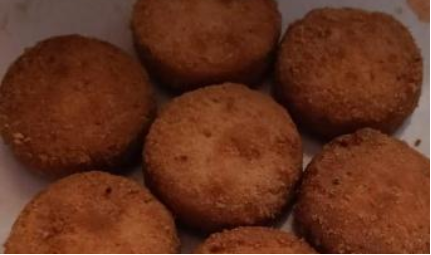
Figure 6. Developed pomegranate peel millet biscuits with different levels of PPP-MF incorporation.
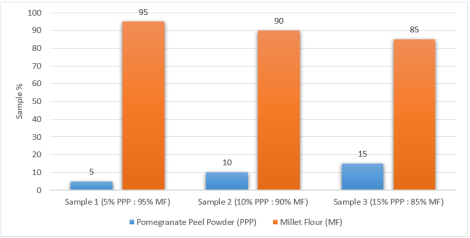
Figure 7. Biscuit formulation ratios—Pomegranate peel powder (PPP) to millet flour (MF) for Samples 1, 2, and 3.
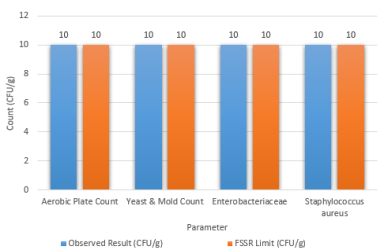
Figure 8. Microbiological analysis results against FSSR limits for the developed PPM biscuit.

Information



 Share This Article
 Twitter
 Linked In
 Facebook
 Copy
Copy Download