
This study aimed to evaluate the whitening potential of various parts of Taiwanese mahogany (Swietenia macrophylla) through both extracellular and intracellular assays. The inhibitory effects on tyrosinase activity and the impact on B16F10 melanoma cell viability and melanin content were systematically investigated using various extracts, including crude methanol extracts and partitioned fractions (ethyl acetate, n-butanol, and water). Extracellular results demonstrated that most large-leaf mahogany extracts at 100 ppm exhibited higher tyrosinase inhibition rates than the positive control, kojic acid (48.9%), particularly the hot water leaf (86.86%) and methanol peel (78.10%) extracts. Intracellularly, the n-butanol fraction of mahogany stones (50 ppm, 39.10%) and the water-soluble fraction (12.5-50 ppm, up to 50.13%) significantly reduced tyrosinase activity. Furthermore, methanol extracts from small-leaf mahogany leaves showed a superior ability to reduce cellular melanin content compared to large-leaf varieties. These findings suggest that specific parts and solvent fractions of Taiwanese mahogany possess significant whitening activities, supporting their potential application in cosmetic and therapeutic formulations.
| Published in | International Journal of Immunology (Volume 14, Issue 1) |
| DOI | 10.11648/j.iji.20261401.15 |
| Page(s) | 31-37 |
| Creative Commons |
This is an Open Access article, distributed under the terms of the Creative Commons Attribution 4.0 International License (http://creativecommons.org/licenses/by/4.0/), which permits unrestricted use, distribution and reproduction in any medium or format, provided the original work is properly cited. |
| Copyright |
Copyright © The Author(s), 2026. Published by Science Publishing Group |
Tyrosine Activity, Antioxidant, Anti-inflammation, Swietenia Macrophylla
HIV | Human Immunodeficiency Virus |
MDR | Multidrug Resistance |
α-MSH | α-Melanocyte-Stimulating Hormone |
| [1] | Chan KC, Tang TS, Toh HT. Isolation of swietenolide diacetate from Swieteniamacrophylla. Phytochemistry. 1976; 15: 429-430. |
| [2] | Chen JJ, Huan SS, Liao CH, et al. A new phragmalin-type limonoid and anti-inflammatory constituents from the fruits of Swieteniamacrophylla. Food Chem. 2009; 120: 379-384. |
| [3] | Kalaivanan K, Pugalendi KV. Antihyperglycemic effect of the alcoholic seed extract of Swieteniamacrophylla on streptozotocin-diabetic rats. Pharmacognosy Res. 2011; 3: 67-71. |
| [4] | Maiti A, Dewanjee S, Mandal SC. In vivo evaluation of antidiarrhoeal activity of the seeds of Swieteniamacrophylla King (Meliaceae). Trop J Pharm Res. 2007; 6: 711-716. |
| [5] | Guevara AP, Apilado A, Sakurai H, Kozuka M. Anti-inflammatory, antimutagenicity, and antitumor promoting-activities of mahogany seeds, Swieteniamacrophylla (Meliaceae). Philipp J Sci. 1996; 125: 271-277. |
| [6] | Soediro IPK, Wattimena JR, Rekita S. Study of the active antimalarial methanolic extract of Swieteniamacrophylla King (Meliaceae). Acta Pharm Indones. 1990; 15: 1-13. |
| [7] | Sahgal G, Ramanathan S, Sasidharan S, et al. In Vitro Antioxidant and Xanthine Oxidase Inhibitory Activities of MethanolicSwieteniamacrophylla Seed Extracts. Molecules. 2009; 14: 4476-4485. |
| [8] | Das A, Sunilson JAJ, Gopinath R, et al. Anti-nociceptive activity of fruits of Swieteniamacrophylla King. J Pharm Res. 2009; 2: 1367-1369. Goh BH, Abdul KH. In vitro cytotoxic potential of Swieteniamacrophylla King seeds against human Carcinoma cell lines. J Med Plants Res. 2011; 5: 1395-1404. |
| [9] | Goh, B. H.; Abdul, K. H. In vitro cytotoxic potential of Swietenia macrophylla King seeds against human Carcinoma cell lines. Journal of Medicinal Plants Research. 2011, 5(8), 1395-1404. |
| [10] | Moghadamtousi, S. Z.; Goh, B. H.; Chan, C. K.; et al. Biological activities and phytochemicals of Swietenia macrophylla King. Molecules. 2013, 18(9), 10465-10483. |
| [11] | Hashim, M. A.; Yam, M. F.; Hor, S. Y.; et al. Anti-hyperglycaemic activity of Swietenia macrophylla King (Meliaceae) seed extracts in normoglycaemic rats undergoing glucose tolerance tests. Chinese Medicine. 2013, 8, 11. |
| [12] | Kim EK, Kwon KB, Shin BC, et al. Scopoletin induces apoptosis in human promyeloleukemic cells, accompanied by activation of nuclear factor kappaB and caspase-3. Life Sciences. 2005; 77(7): 824-836. |
| [13] | Moumita D, Utpal R, Runu C, Debasish M. Role of diet and plants on diabetic patients—a critical appraisal. Sci Cult. 2011; 77: 3-4. |
| [14] | Zavitsanou A, Koutis C, Babatsikou F. Leishmaniasis: an overlooked public health concern. J Health Sci. 2008; 2: 196-205. |
| [15] | Bourdy G, DeWalt SJ, Chávez de Michel LR, et al. Medicinal plants uses of the tacana, an amazonianbolivian ethnic group. J Ethnopharmacol. 2000; 70: 87-109. |
| [16] | Tan SK, Osman H, Wong KC, Boey PL. Antimicrobial and antioxidant activities of Swietenia macrophylla leaf extracts. Asian J Food Agro-ind. 2009; 2: 181-188. |
| [17] | Peláez, J. A.; Niño, V.; Rodriguez, B.; et al. Inhibitory effects of Swietenia macrophylla on myotoxic phospholipases A2. Revista Brasileira de Farmacognosia. 2013, 23, 885-894. |
| [18] | Suzuki T, Falah S, Katayama T. Chemical constituents from Swieteniamacrophylla bark and their antioxidant activity. Pak J Biol Sci. 2008; 11: 761-795. |
| [19] | Krisnawati H, Varis EK, Maarit K, Kanninen M. Paraserianthesfalcataria (L.) Nielsen: ecology, silviculture and productivity. CIFOR, Bogor, Indonesia; 2011. |
| [20] | Wu SF, Lin CK, Chuang YS, et al. Anti-hepatitis C virus activity of 3-hydroxy caruilignan C from Swieteniamacrophylla stems. J Viral Hepat. 2012; 19: 364-370. |
| [21] | Hearing VJ, Tsukamoto K. Enzymatic control of pigmentation in mammals. FASEB J. 1991; 5: 2902-2909. |
| [22] | Bilodeau ML, Greulich JD, Hullinger RL, et al. BMP-2 stimulates tyrosinase gene expression and melanogenesis in differentiated melanocytes. Pigment Cell Res. 2001; 14: 328-336. |
| [23] | Aeschbach R, Löliger J, Scott BC, et al. Antioxidant actions of thymol, carvacrol, 6-gingerol, zingerone and hydroxytyrosol. Food and Chemical Toxicology. 1994; 32(1): 31-36. |
| [24] | Burnett CL, et al. Final report on the safety assessment of Kojic acid as used in cosmetics. Int J Toxicol. 2010; 29 (Suppl): 244S-73S. |
| [25] | Kong YM, Kim DH, Min BS, et al. Effects of Aspirin on Tyrosinase Activity and Melanin Synthesis in B16F10 Cells. Journal of the Society of Cosmetic Scientists of Korea. 2008; 34(4): 269-275. |
| [26] | Tomita K, Oda H, Kamon R, et al. Inhibitory effects of kojic acid and its derivatives on tyrosinase and melanogenesis. Nippon Hifuka Gakkai Zasshi (The Japanese Journal of Dermatology). 1980; 90(8): 801-807. |
| [27] | Hunt G, Todd C, Kyne S, et al. ACTH stimulates melanogenesis and tyrosinase activity in human melanocytes in vitro. Journal of Endocrinology. 1994; 140(S): S37. |
APA Style
Hong, K., Wu, M., Wu, H. (2026). Whitening Activity of Various Parts of Taiwanese Mahogany. International Journal of Immunology, 14(1), 31-37. https://doi.org/10.11648/j.iji.20261401.15
ACS Style
Hong, K.; Wu, M.; Wu, H. Whitening Activity of Various Parts of Taiwanese Mahogany. Int. J. Immunol. 2026, 14(1), 31-37. doi: 10.11648/j.iji.20261401.15
@article{10.11648/j.iji.20261401.15,
  author = {Kun-Yuan Hong and Meng-Ling Wu and Hsin-Hui Wu},
  title = {Whitening Activity of Various Parts of Taiwanese Mahogany},
  journal = {International Journal of Immunology},
  volume = {14},
  number = {1},
  pages = {31-37},
  doi = {10.11648/j.iji.20261401.15},
  url = {https://doi.org/10.11648/j.iji.20261401.15},
  eprint = {https://article.sciencepublishinggroup.com/pdf/10.11648.j.iji.20261401.15},
  abstract = {This study aimed to evaluate the whitening potential of various parts of Taiwanese mahogany (Swietenia macrophylla) through both extracellular and intracellular assays. The inhibitory effects on tyrosinase activity and the impact on B16F10 melanoma cell viability and melanin content were systematically investigated using various extracts, including crude methanol extracts and partitioned fractions (ethyl acetate, n-butanol, and water). Extracellular results demonstrated that most large-leaf mahogany extracts at 100 ppm exhibited higher tyrosinase inhibition rates than the positive control, kojic acid (48.9%), particularly the hot water leaf (86.86%) and methanol peel (78.10%) extracts. Intracellularly, the n-butanol fraction of mahogany stones (50 ppm, 39.10%) and the water-soluble fraction (12.5-50 ppm, up to 50.13%) significantly reduced tyrosinase activity. Furthermore, methanol extracts from small-leaf mahogany leaves showed a superior ability to reduce cellular melanin content compared to large-leaf varieties. These findings suggest that specific parts and solvent fractions of Taiwanese mahogany possess significant whitening activities, supporting their potential application in cosmetic and therapeutic formulations.},
 year = {2026}
}
TY  - JOUR
T1  - Whitening Activity of Various Parts of Taiwanese Mahogany
AU  - Kun-Yuan Hong
AU  - Meng-Ling Wu
AU  - Hsin-Hui Wu
Y1  - 2026/03/23
PY  - 2026
N1  - https://doi.org/10.11648/j.iji.20261401.15
DO  - 10.11648/j.iji.20261401.15
T2  - International Journal of Immunology
JF  - International Journal of Immunology
JO  - International Journal of Immunology
SP  - 31
EP  - 37
PB  - Science Publishing Group
SN  - 2329-1753
UR  - https://doi.org/10.11648/j.iji.20261401.15
AB  - This study aimed to evaluate the whitening potential of various parts of Taiwanese mahogany (Swietenia macrophylla) through both extracellular and intracellular assays. The inhibitory effects on tyrosinase activity and the impact on B16F10 melanoma cell viability and melanin content were systematically investigated using various extracts, including crude methanol extracts and partitioned fractions (ethyl acetate, n-butanol, and water). Extracellular results demonstrated that most large-leaf mahogany extracts at 100 ppm exhibited higher tyrosinase inhibition rates than the positive control, kojic acid (48.9%), particularly the hot water leaf (86.86%) and methanol peel (78.10%) extracts. Intracellularly, the n-butanol fraction of mahogany stones (50 ppm, 39.10%) and the water-soluble fraction (12.5-50 ppm, up to 50.13%) significantly reduced tyrosinase activity. Furthermore, methanol extracts from small-leaf mahogany leaves showed a superior ability to reduce cellular melanin content compared to large-leaf varieties. These findings suggest that specific parts and solvent fractions of Taiwanese mahogany possess significant whitening activities, supporting their potential application in cosmetic and therapeutic formulations.
VL  - 14
IS  - 1
ER  -
Forest Chemistry Division, Taiwan Forestry Research Institute, Taipei, Taiwan
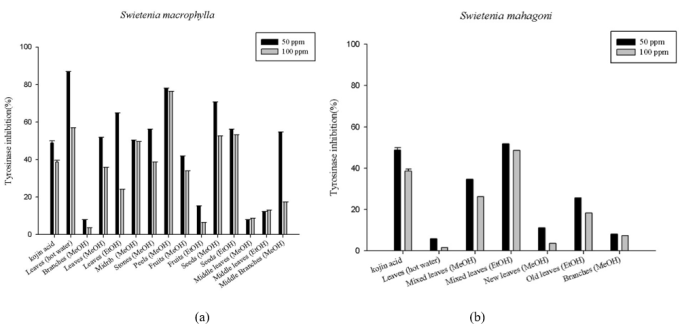
Figure 1. Analysis of the extracellular tyrosinase inhibitory activity in (a) crude large-leaf mahogany extract, and (b) crude small-leaf mahogany extract.
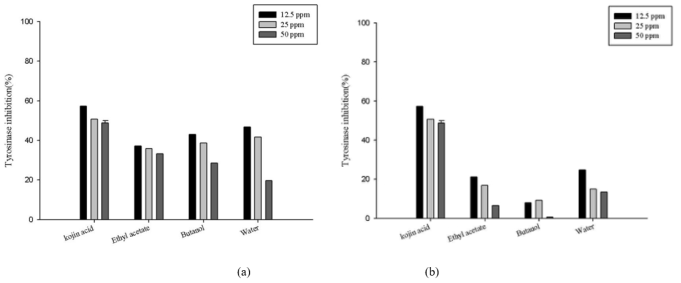
Figure 2. Analysis of the extracellular tyrosinase inhibitory activity in (a) stones and (b) seeds with different solubilities.
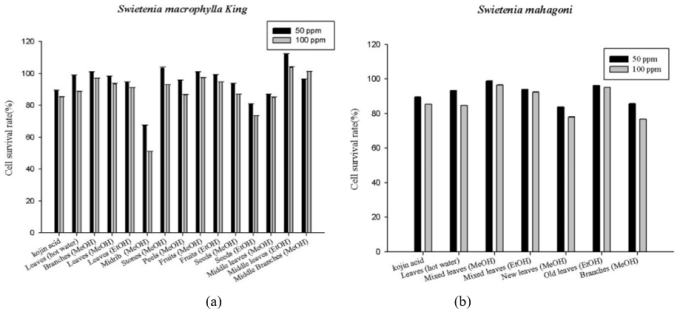
Figure 3. Viability rate of melanoma cells in different species and parts of crude mahogany extracts: (a) crude large-leaf, (b) crude small-leaf.
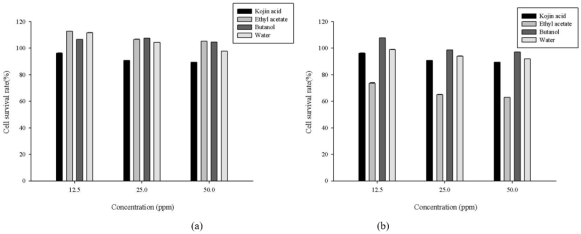
Figure 4. Viability rate of melanoma cells in (a) stones and (b) seeds with different solubilities.
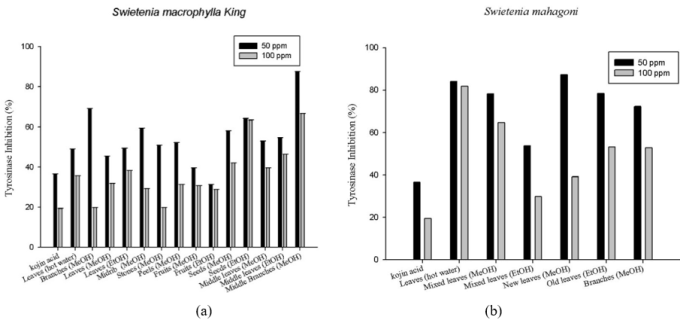
Figure 5. Intracellular tyrosinase inhibitory activity assay of crude large-leaf (a) and small-leaf (b) mahogany extracts.
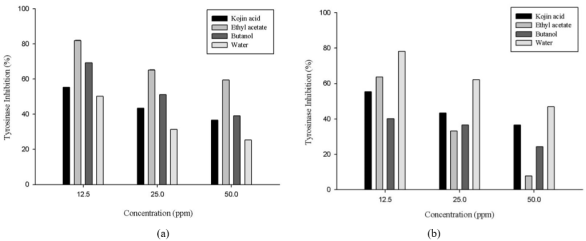
Figure 6. Intracellular tyrosinase inhibitory activity assay with different MeOHsolubilities in (a) mahogany stone and (b) seed.
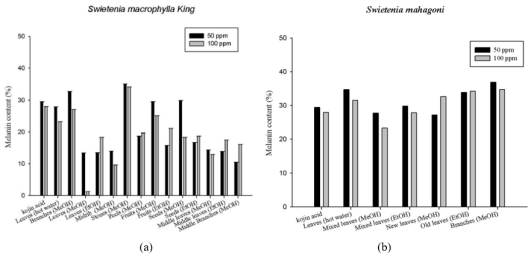
Figure 7. Intracellular melanin content assay: (a) crude large-leaf, (b) crude small-leaf mahogany extracts.
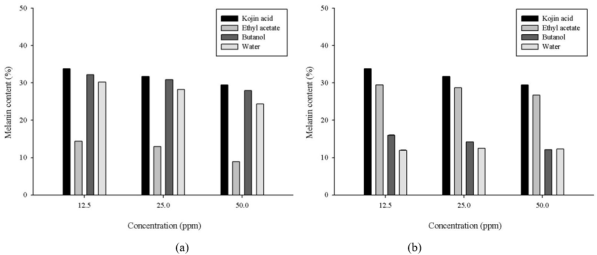
Figure 8. Intracellular melanin content assay with different MeOH solubilities in (a) mahogany stone and (b) seed.

Information



 Share This Article
 Twitter
 Linked In
 Facebook
 Copy
Copy Download