Research Article | | Peer-Reviewed

Development of an Intelligent SIWES Management Framework for Logbook Tracking

Received: 25 September 2026     Accepted: 21 October 2026     Published: 12 November 2026
Views:       Downloads:
Abstract

The Student Industrial Work Experience Scheme (SIWES) is an important component of tertiary education in Nigeria, providing students with practical industrial experience and exposing them to real-world professional practices. However, the continued use of paper-based logbooks creates challenges such as loss or damage of records, irregular submissions, delayed supervisor feedback, inconsistent assessment, and limited ability to monitor students’ activities in real time. This study focused on the development of an Electronic Logbook and Grading System for SIWES in Nigerian tertiary institutions, using Obafemi Awolowo University, Ile-Ife as the case study. Data were collected through structured questionnaires administered to 629 SIWES students across 200, 300, and 400 levels to identify challenges associated with the existing logbook process and determine user requirements for the proposed system. The system was designed using Figma and implemented as a web-based application using React.js and Next.js for the frontend, Node.js and Express.js for backend operations, and PostgreSQL for data storage. The system provides electronic recording of daily or weekly industrial activities, digital evidence uploads, supervisor feedback, real-time notifications, multiple supervisor access, electronic grading, and report export. Evaluation was conducted using usability, efficiency, and accuracy measures involving students and supervisors. The evaluation recorded an overall usability rating of 4.6 out of 5, a task completion rate of 95.45%, and a data accuracy rate of 98%. System response testing recorded an average read response time of 116 milliseconds and an average write response time of 300 milliseconds, while 147 out of 150 sampled records were stored and retrieved correctly. The findings demonstrate that the developed system provides a practical and reliable platform for improving SIWES documentation, supervision, electronic grading, feedback, and performance monitoring. The study concludes that replacing paper-based logbooks with an electronic platform can improve the efficiency, transparency, accessibility, and accountability of SIWES management in tertiary institutions.

Published in International Journal of Intelligent Information Systems (Volume 15, Issue 4)
DOI 10.11648/j.ijiis.20261504.12
Page(s) 85-95
Creative Commons

This is an Open Access article, distributed under the terms of the Creative Commons Attribution 4.0 International License (http://creativecommons.org/licenses/by/4.0/), which permits unrestricted use, distribution and reproduction in any medium or format, provided the original work is properly cited.

Copyright

Copyright © The Author(s), 2026. Published by Science Publishing Group

Keywords

Electronic Logbook, Grading System, Digital Transformation, SIWES (Student Industrial Work Experience Scheme), Industrial Training, Student Monitoring, Performance Assessment, Supervisor Feedback

1. Introduction
The fast development of digital technologies in higher education has put a high demand on innovative systems, which could be used to effectively open the gap between the classroom learning process and the process in the industry. Among such efforts in Nigeria is the Student Industrial Work Experience Scheme (SIWES), which was put in place to expose students to the real-life working conditions and enhance practical knowledge. In the past, the SIWES documentation and assessment have been very much paper-based where the logbooks used to capture the activities on a daily or weekly basis and also where the supervisors give feedback . Although the method is decades old, it presents a great challenge as it can lead to loss of records, slow feedback, grading as well as lack of accessibility to both students and supervisors . To overcome these constraints, the world has gone digital in terms of the industrial training documents and assessment systems on students. The digital logbooks have the advantage of being available in real time compared to the manual type, automated record keeping, improved security, and the possibility of incorporating multimedia evidence like images and geotagged entries . Electronic logbook systems have already been implemented in professional areas like medicine and engineering to facilitate the supervision process and enhance the learning outcome . Nevertheless, observing the above advantages, a significant portion of institutions in the country still use old fashions paper-based logbooks of SIWES, which prevents efficiency and effectiveness. This paper will attempt to overcome such issues by developing and introducing an electronic logbook marking system that is specifically made to suit SIWES in Nigerian tertiary institutions. The suggested system will also include automatic grading via predefined rubrics, supervisor feedback functions, alerting services, and standardized PDF reports exportation capacity. These characteristics are supposed to provide fairness, transparency, and efficiency in the evaluation process of SIWES, and minimize the workload of supervisors and maximize student accountability . Such a system is consistent with the overall digital transformation agenda of higher education in Nigeria, as universities are becoming more and more familiar with e-learning platforms, online grading platforms, and digital academic services. With the extrapolation of these developments into the administration of SIWES, the study would seek to render the industrial training documentation up to date and develop a more sustainable, transparent, and scalable student assessment model. By so doing, it has tackled the fundamental challenges of lack of access, delayed feedback and inconsistency in grading that have been a nightmare to the credibility of SIWES. Digital assessment technologies provide opportunities to support the evaluation of student performance and improve feedback practices in higher education . Digitally delivered instructional feedback can also support learning performance, although its effectiveness depends on the feedback content, learning context, and task .
2. Literature Review
The integration of digital technology into education has transformed teaching, learning, assessment, supervision, and administrative activities. Digital platforms provide opportunities for institutions to manage educational information efficiently, support communication, and improve access to academic records. The development of electronic systems has therefore become an important aspect of modern educational management, particularly where large amounts of student information must be recorded, monitored, and evaluated . Digital assessment and feedback technologies can further support the evaluation of student learning and provide opportunities to improve assessment practices in higher education .
The Student Industrial Work Experience Scheme (SIWES) was established to provide students with practical industrial experience and help bridge the gap between theoretical knowledge and workplace skills . A major component of SIWES is the logbook, through which students document their daily or weekly activities during industrial training. The traditional paper-based approach, however, is associated with problems including loss or damage of records, late entries, forgery, delayed feedback, and difficulties in monitoring students at different training locations. These challenges have encouraged the development of electronic logbook systems as an alternative to physical documentation .
An implemented mobile SIWES logbook application demonstrated how students could record industrial activities electronically while supervisors could review entries, provide comments, and monitor students remotely . Similarly, an electronic logbook system developed for students at Federal Polytechnic Ile-Oluji provided facilities for recording daily activities and achievements and storing the information electronically for later retrieval . These implementations demonstrate that electronic logbooks can improve the accessibility and management of SIWES records. However, their main focus was on digitizing logbook activities rather than providing a comprehensive combination of electronic documentation and grading functions.
Electronic logbooks are also useful in the assessment of practical learning because they provide records of activities performed during training. Research on electronic logbooks has shown their potential for supporting educational objectives and evaluating learning activities . Work-integrated learning literature further identifies learning logs, supervisor evaluations, reports, and other forms of documented evidence as important approaches to assessing students' workplace learning . This supports the need for an SIWES system in which students' electronic records can be reviewed and assessed by authorized supervisors within the same platform.
Digital transformation in education has increased the importance of electronic communication and information management. Digital platforms can support interaction between learners and supervisors while reducing dependence on physical documentation . The increased adoption of digital educational systems has also demonstrated the importance of technology for maintaining communication, accessing information, and supporting educational activities . Research on digital assessment and feedback further reinforces the relevance of technology in improving how student performance is evaluated and feedback is delivered . These developments provide a foundation for applying electronic technologies to SIWES supervision and assessment.
Existing SIWES-related systems have addressed several problems associated with manual logbooks, but important gaps remain. Some systems focus mainly on electronic activity recording, while others provide placement management, supervision, or reporting functions without fully integrating electronic grading. The project literature specifically identifies the absence of electronic grading in some existing systems and also points to limitations involving real-time notifications and exportable reports .
Compared with previous electronic SIWES logbook systems, the proposed system focuses on integrating electronic logbook submission with electronic grading, supervisor feedback, notifications, and PDF report export within a single platform . Electronic logbooks have demonstrated their usefulness in continuous assessment and monitoring students' skill development , while digital assessment and feedback technologies provide opportunities to improve the evaluation of students' learning . Research on authentic assessment also highlights the importance of evaluating students' practical competencies through meaningful learning activities . However, the proposed system brings these assessment-related functions together specifically for SIWES students at Obafemi Awolowo University. Its electronic grading function allows authorized supervisors to record students' assessment scores and grades digitally, while grading decisions remain with the supervisors rather than being automatically generated by the system. The integration of daily and weekly submissions, supervisor feedback, electronic grading, notifications, and PDF report export constitutes the main contribution of the proposed system.
The literature therefore indicates that digital SIWES systems can improve the recording, storage, monitoring, supervision, and assessment of students' industrial training activities . However, there remains a need for a more integrated system that combines electronic daily and weekly logbook submissions, supervisor feedback, electronic grading, notifications, and reporting facilities. The present study addresses this gap by developing an electronic logbook and grading system for SIWES, with the aim of improving the management and assessment of students' industrial training activities. The system will be evaluated using usability, efficiency, and accuracy metrics to assess its effectiveness in supporting SIWES documentation and assessment.
Digital assessment and feedback technologies have become increasingly relevant to higher education because they can support student assessment, provide feedback, and inform improvements in teaching and learning . Research on digitally delivered instructional feedback further indicates that feedback can positively influence learning performance, although the effects vary according to factors such as feedback focus, assessment type, and learner control . These findings support the inclusion of electronic supervisor feedback and grading records in the proposed SIWES system.
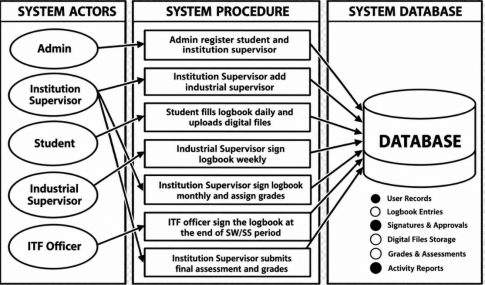
Figure 1. Proposed Model.
3. Materials and Methods
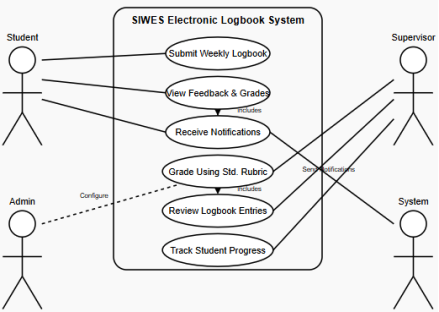
The This section discusses the methods used in this study. The requirements gathering involved collecting detailed data on the experiences, challenges, and expectations of SIWES students through a structured questionnaire administered to students of Obafemi Awolowo University, Ile-Ife from different departments and levels. A total of 629 participants, comprising 205 SIWES 200, 210 SIWES 300, and 214 SIWES 400 students, provided responses. The survey focused on students’ logbook entry patterns, submission practices, challenges with paper-based logbooks, supervisor feedback, grading practices, and expectations of an electronic logbook grading system. The responses revealed important insights into the existing SIWES process, including irregular logbook entries, loss or misplacement of logbooks, delayed supervisor feedback, and challenges associated with grading and monitoring students. The collected responses were distributed using Google Forms and exported to Microsoft Excel for sorting and preliminary analysis. These findings provided important requirements for the development of the proposed system, including electronic daily or weekly logbook submissions, digital evidence uploads, supervisor feedback, electronic grading, real-time notifications, and centralized record management. A system design was then developed to define how students, industry supervisors, school supervisors, and administrators interact with the major features of the platform. The evaluation recorded an overall usability rating of 4.6 out of 5, a task completion rate of 95.45%, and a data accuracy rate of 98%, demonstrating that the developed system provides a practical platform for improving SIWES documentation, supervision, feedback, and electronic grading. A use case diagram, as seen below in Figure 2, was created to define how users interact with key features such as submitting weekly logbook, viewing feedbacks and grades.
Figure 2. Use Case Diagram.
A cognitive walkthrough was conducted to understand the challenges associated with the existing SIWES logbook process in terms of ease of use, navigation, logbook submission, supervisor feedback, grading, accessibility, and overall user experience. A structured questionnaire was administered to SIWES students of Obafemi Awolowo University to gather information about their experiences with paper-based logbooks and their expectations of an electronic logbook and grading system. The findings from the requirements-gathering process provided useful insights into the major challenges faced by students and supervisors, including irregular logbook entries, loss or misplacement of logbooks, delayed feedback, and difficulties associated with monitoring and grading students.
Figma was used during the design and prototyping phase of the project to develop the user interface and demonstrate the major functionalities of the proposed system. The front end of the application was developed using React.js and Next.js to provide an interactive and responsive user interface. The backend was implemented using Node.js and Express.js, while PostgreSQL was used as the database system for securely storing student records, logbook entries, supervisor feedback, and grading information. The system was designed to support different categories of users, including students, industry supervisors, school supervisors, and administrators. Students can submit their daily and weekly activities electronically and upload supporting evidence, while supervisors can review submitted entries, provide feedback, and record grades electronically.
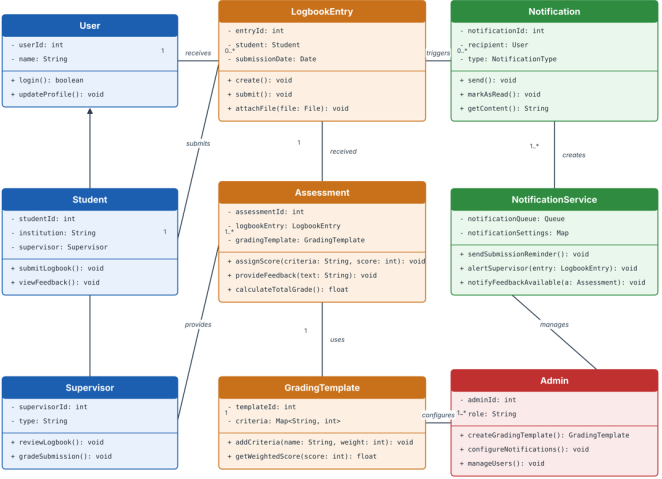
A usability evaluation was meticulously conducted to assess the overall effectiveness, efficiency, and satisfaction associated with the educational mobile application's user interface and experience. This evaluation was critical in determining how well the application performed in real-world scenarios and whether it met the intended usability goals. The evaluation process involved a series of structured tests where users were observed while interacting with the system. These tests were designed to simulate typical use cases, allowing for a comprehensive analysis of the application's performance. Users were asked to complete specific tasks within the application, and their interactions were closely monitored to identify any difficulties or inefficiencies they encountered. Key performance indicators such as task completion time, error rate, and user navigation paths were recorded and analyzed. These metrics provided quantitative data on the application's efficiency and effectiveness. In addition to these metrics, qualitative feedback was collected through post-interaction surveys and interviews, where users expressed their satisfaction levels and provided insights into their overall experience with the application. The class diagram, as shown in Figure 3, provided a detailed representation of the static structure of the educational mobile application. It illustrates the various classes that constitute the system, their attributes, methods, and the relationships between them. This diagram is essential as it serves as a blueprint for the system's architecture, offering a clear view of how the application's components are organized and how they interact to deliver the required functionalities. The main classes identified in the class diagram include user, student, supervisor, logbook entry, assessment, notification, notification service, grading template, and admin. Each of these classes is responsible for different aspects of the electronic SIWES logbook and grading system, ensuring that user accounts, student logbook submissions, supervisor assessments, electronic grading, notifications, and administrative functions are properly managed and executed.
Figure 3. Class Diagram.
4. Results
The section discusses the system's usability and performance. The student dashboard, SIWES logbook submission, industry supervisor dashboard, school supervisor dashboard, and electronic grading functionalities are clearly explained with supporting figures.
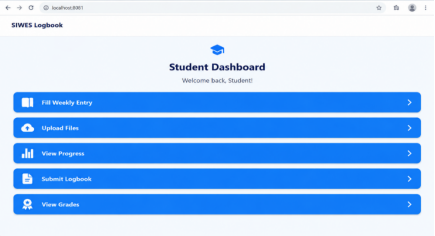
Student Dashboard: The student dashboard is the main interface through which students manage their SIWES activities. It provides students with an overview of their activities, notifications, and supervisor feedback. Figure 4 shows that students can access the SIWES logbook submission page, submit their logbook files, and check the status of their submitted entries. The dashboard is designed to make the process of recording industrial training activities simple and easy to navigate, without unnecessary complexity.
In practical terms, the dashboard serves as the student's control center. Instead of depending on a physical logbook, the student can use the dashboard to access the digital logbook, monitor submissions, and receive information from supervisors.
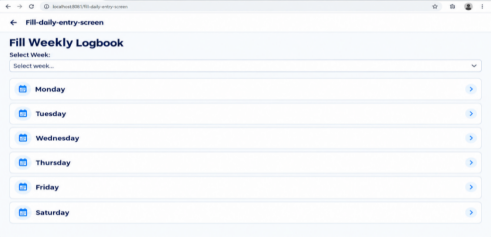
SIWES Logbook Submission: The SIWES Logbook Page is the main working module of the system. Figure 5 shows how students are able to document the daily activities they perform during their industrial training on a daily basis. The page supports text entry, file uploads, and activity summaries.
Figure 4. Student Dashboard.
When a student records an activity, the information is stored in the PostgreSQL database and associated with the student's profile. The entries are also time-stamped, making them traceable. This provides a centralized digital record of the student's industrial training activities and addresses problems associated with losing or damaging physical logbooks.
Therefore, the logbook submission functionality changes the traditional process from writing activities in a physical logbook to entering and submitting activities electronically.
Figure 5. SIWES Logbook Page.
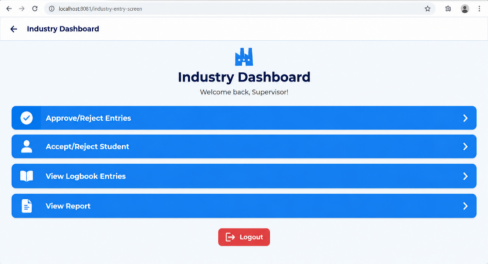
Industry Supervisor Dashboard: The Industry Supervisor Dashboard is designed for supervisors at the student's place of industrial attachment. Figure 6 shows the industry supervisor that is allowed to review the student's submitted logbook entries and monitor the student's progress over time. Supervisors can view submissions, add comments, and provide approval or rejection feedback directly through the system.
This means that the industry supervisor does not have to depend entirely on the student's physical logbook to determine what activities have been performed. The supervisor can access the student's electronic records and communicate feedback through the platform.
The dashboard therefore supports monitoring, review, feedback, and communication between the student and the industry supervisor.
Figure 6. Industry Supervisor Dashboard.
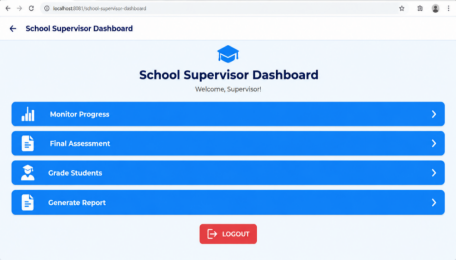
School Supervisor Dashboard: The School Supervisor Dashboard is intended for the academic or school supervisor responsible for monitoring students during SIWES. According to your project document, the dashboard, shown in Figure 7, allows school supervisors to monitor students remotely, view their logbook records, track their progress, and measure their performance across multiple students.
The dashboard provides both summarized and detailed information about student performance. This is particularly useful because students may be undertaking their industrial training at different organizations and locations. The school supervisor can therefore use the centralized system to follow the progress of several students without having to rely only on physical visits or manually collected logbooks.
Figure 7. School Supervisor Dashboard.
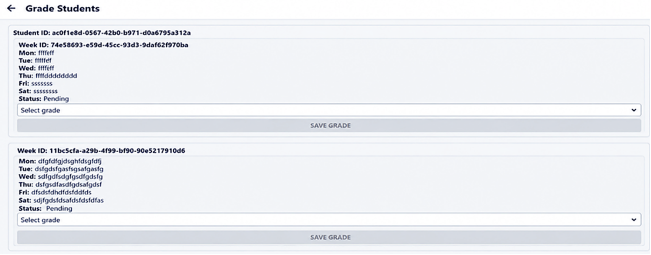
Electronic Grading Functionality: The electronic grading functionality is provided through the School Supervisor Grading Page. This, as shown in Figure 8, is an important part of the project because the system does not only digitize the logbook; it also provides a way for supervisors to record student grades electronically.
Through the grading page, the school supervisor can view the student's submitted logbook entries, assess the student's performance according to the relevant institutional standards, enter the appropriate scores, and provide comments explaining the assessment.
Once the supervisor enters the grade, it is recorded in the database and associated with the student's profile for subsequent reporting. This means that the assessment is maintained as a centralized electronic record rather than being written separately on paper.
Figure 8. The Electronic Grading Functionality.
The usability testing of the developed Electronic SIWES Logbook and Grading System was carried out to determine how easy, understandable, and satisfactory the system was for its intended users. The evaluation involved 10 respondents, representing students, industry supervisors, and academic supervisors. The participants were required to interact with the system under conditions designed to represent its actual use. During the evaluation, users performed activities such as accessing the system, filling and submitting logbook entries, reviewing weekly reports, providing or reading feedback, and grading students electronically. Their interactions were observed and recorded, with particular attention given to task completion, time taken to perform activities, errors, and the overall user experience.
The usability evaluation was based on three main indicators: ease of use, user satisfaction, and task completion rate. Ease of use was used to determine how easily users could understand and navigate the system, while user satisfaction measured how positively users felt about their experience with the system. Task completion rate was used to determine whether participants could successfully carry out the activities assigned to them. These measures provided a basis for assessing the usability of the developed system from the perspective of its actual users.
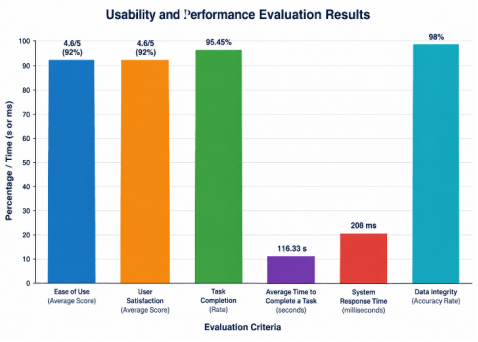
For the ease-of-use assessment, each participant rated the system on a scale of 1 to 5, where 1 represented very difficult and 5 represented very easy. The assessment considered aspects such as the intuitiveness of the interface, ease of navigation, and clarity of information displayed on the system. The ten participants recorded scores of 5, 4, 5, 4, 5, 5, 4, 5, 4, and 5, giving a total score of 46. The average score was obtained by dividing the total score by the number of participants, resulting in 4.6 out of 5. This result shows that the participants generally found the system easy to understand and navigate.
The user satisfaction assessment was conducted to determine the participants' level of satisfaction after interacting with the system. The participants provided satisfaction scores of 5, 4, 5, 5, 4, 5, 4, 5, 4, and 5, producing a total score of 46. When the total score was divided by the 10 participants, the resulting average satisfaction score was 4.6 out of 5. This indicates that the users generally expressed a high level of satisfaction with their experience of the developed system.
The task completion rate was also considered as part of the usability evaluation. A total of 22 tasks were assigned to the participants during the testing process, out of which 21 tasks were successfully completed. The task completion rate was calculated using the formula: Task Completion Rate = (Successful Tasks ÷ Total Tasks) × 100. Therefore, the result was (21 ÷ 22) × 100 = 95.45%. The result demonstrates that 21 out of the 22 assigned activities were successfully performed by the participants.
The system response time was evaluated to determine how quickly the system communicated between the frontend and backend during read and write operations. The read operations recorded response times of 110, 120, 130, 100, and 120 milliseconds, giving an average of 116 milliseconds. The write or submission operations recorded 200, 350, 300, 250, and 400 milliseconds, resulting in an average of 300 milliseconds. These measurements were used to assess the responsiveness of the database and API operations.
The data integrity or accuracy evaluation was conducted to determine whether information entered into the system was correctly stored and retrieved from the database. A total of 150 records, consisting of logbook entries, supervisor comments, and grades, were randomly selected and compared with their corresponding original inputs. Of the 150 records examined, 147 were stored and retrieved correctly, while 3 records contained small inconsistencies. The accuracy was calculated as (147 ÷ 150) × 100 = 98%. The document attributes the 2% deviation to multiple submissions and periods of unstable network connectivity. Therefore, the data integrity evaluation recorded an accuracy rate of 98%. Figure 9 shows the graph of the usability metrics.
Figure 9. Usability Metrics from Evaluation Test.
5. Conclusions
The development of an electronic SIWES logbook and grading system addressed the major challenges associated with the traditional paper-based management of Student Industrial Work Experience Scheme activities in Nigerian tertiary institutions. The study identified key problems, including loss or misplacement of logbooks, irregular submission of industrial training activities, delayed supervisor feedback, limited monitoring of students, and insufficient transparency in the grading process. The survey findings supported the need for an electronic approach, with 84% of respondents agreeing or strongly agreeing that an electronic logbook could improve feedback, transparency, and accountability.
The developed system provides a centralized platform through which students can record and submit their daily or weekly SIWES activities, while industry and school supervisors can review submissions, provide feedback, monitor progress, and carry out electronic grading. The system also provides structured dashboards for the different categories of users and maintains logbook entries, supervisor comments, and grades electronically. These features provide an organized means of managing SIWES records and support communication between students, industry supervisors, and academic supervisors.
The performance evaluation demonstrated that the developed system was usable and capable of supporting the major activities required during SIWES. The usability assessment produced an average ease-of-use score of 4.6 out of 5 and an average user satisfaction score of 4.6 out of 5, while 21 out of 22 assigned tasks were successfully completed, representing a task completion rate of 95.45%. The efficiency assessment recorded task completion times that varied according to the activities performed, with login averaging 10.8 seconds, logbook submission 143.33 seconds, supervisor review 105 seconds, and electronic grading 105 seconds. The system also recorded an average read response time of 116 milliseconds and a write response time of 300 milliseconds.
The accuracy evaluation further showed that 147 out of 150 examined records were correctly stored and retrieved, resulting in a 98% data accuracy rate. The three inconsistent records represented a 2% deviation, which the study associated with multiple submissions and periods of unstable network connectivity. These findings indicate that the developed platform achieved a high rate of correct record storage and retrieval during testing.
Overall, this study demonstrated that the developed electronic SIWES logbook and grading system could support the management of SIWES documentation, supervision, feedback, monitoring, and grading within Nigerian tertiary institutions. By providing centralized electronic records and tools for supervisors to review activities and enter grades electronically, the system offers a structured approach to SIWES administration. The findings indicate that the developed system met its intended objectives in terms of usability, measured efficiency, and data accuracy under the evaluation conditions. However, since no direct comparison with the previous paper-based process was conducted, improvements in efficiency, transparency, and accountability cannot be conclusively established.
Abbreviations

SIWES

Student Industrial Work Experience Scheme

API

Application Programming Interface

SPSS

Statistical Package for the Social Sciences

PDF

Portable Document Format

Author Contributions
Temitope Folasade Sholanke: Conceptualization, Project administration, Supervision, Writing – original draft
Oyebamiji Dolapo Michael: Conceptualization, Data curation, Investigation, Methodology, Project administration, Visualization
Emmanuel Oladimeji Ayodele: Data curation, Formal Analysis, Methodology, Visualization, Writing – review & editing
Hassan Jimoh Akanji: Conceptualization, Formal Analysis, Methodology, Visualization, Writing – review & editing
Data Availability Statement
The data supporting the outcome of this research work has been reported in this manuscript.
Conflicts of Interest
The authors declare no conflicts of interest.
References
[1] Adegbite, W. M., Ayodele, A. S., Dagunduro, A. O., Omokanye, S. A., & Adeosun, O. T. (2025). Competence development and the drive towards labour market demand for tertiary education graduates: Impact of the Students’ Industrial Work Experience Scheme (SIWES). Modern Management Review, 30(1), 7–20.
[2] Ibrahim, K., Adebowale, O. J., Dodo, M., Zailani, B. M., Lukman, O., & Kajimo-Shakantu, K. (2023). SIWES implementation and outcomes: A national review. Nigerian Journal of Technical Education, 5(1), 22-37.
[3] Adekunle, K. O., Ganiyu, M., & Enigbokan, O. Y. (2024). Development of electronic logbook system for Students’ Industrial Work Experience Scheme (Case Study: Federal Polytechnic Ile-Oluji, Ondo State). In ternational Journal of Computer Science and Mobile Computing, 13(8), 32-40.
[4] Klein, M. R., Loke, D. E., Mitchell, M. E., Barsuk, J. H., McGaghie, W. C., & Salzman, D. H. (2025). Developing simulation-based mastery learning curricula for emergency medicine skills training. AEM Education and Training, 9(3), e70058.
[5] Afolayan, A. H., & Onoriode, T. M. (2025). Development of a web-based SIWES logbook management system with secure authentication and role-based access: A case study of Federal University of Technology, Akure, Ondo State. Journal of Science, Technology and Innovation Research, 1(Special Issue), 112–122.
[6] UNESCO. (2023). Global education monitoring report 2023: Technology in education—A tool on whose terms? UNESCO.
[7] UNESCO Institute for Information Technologies in Education. (2022). Analytical report on the use of advanced ICT/AI for digital transformation of education. UNESCO IITE.
[8] Paydar, S., Esmaeeli, E., Ameri, F., Sabahi, A., & Meraji, M. (2023). Investigating the advantages and disad vantages of electronic logbooks for education goals promo tion in medical sciences students: A systematic review. Health Science Reports, 6(12), e1776.
[9] Luk and Chan, (2024). Assessing student learning in work-in tegrated learning (WIL): A systematic review on as sessment methods and purposes. Studies in Educational Evaluation, 81, 101345.
[10] Organization for Economic Co-operation and Development, UNESCO Institute for Statistics, UNICEF, & World Bank. (2022). From learning recovery to education transformation: Insights and reflections from the 4th survey of national edu cation responses to COVID 19 school closures. OECD Publishing.
[11] Zhu, X., and Liu, J. (2020). Education in and after COVID-19: Immediate responses and long-term visions. Post-digital Science and Education, 2(3), 695-699.
[12] Adebayo, O. S., Adebayo, B. S., Abdullah, M. J., Enemona, O. S., & Abdulazeez, L. (2022). Development of an electronic secure Students’ Industrial Works Experience Scheme placement system. International Journal of Information Technology and Computer Science, 14(2), 31-44.
[13] Barteit, S., Schmidt, J., Kakusa, M., Syakantu, G., Shanzi, A., Ahmed, Y., Malunga, G., Blass, K., Nieder, J., Andreadis, P., & Neuhann, F. (2022). Electronic logbooks (e-logbooks) for the continuous assessment of medical licentiates and their medical skill development in the low-resource context of Zambia: A mixed-methods study. Frontiers in Medicine, 9, Article 943971.
[14] Sembey, R., Hoda, R., & Grundy, J. (2024). Emerging technologies in higher education assessment and feedback practices: A systematic literature review. Journal of Systems and Software, 211, Article 111988.
[15] Vlachopoulos, D., & Makri, A. (2024). A systematic literature review on authentic assessment in higher education: Best practices for the development of 21st century skills, and policy considerations. Studies in Educational Evaluation, 83, Article 101425.
[16] Brummer, L., de Boer, H., Mouw, J. M., & Strijbos, J. W. (2024). A meta-analysis of the effects of context, content, and task factors of digitally delivered instructional feedback on learning performance. Learning Environments Research, 27(3), 453–476.
Cite This Article
  • APA Style

    Sholanke, T. F., Michael, O. D., Ayodele, E. O., Akanji, H. J. (2026). Development of an Intelligent SIWES Management Framework for Logbook Tracking. International Journal of Intelligent Information Systems, 15(4), 85-95. https://doi.org/10.11648/j.ijiis.20261504.12

    Copy | Download

    ACS Style

    Sholanke, T. F.; Michael, O. D.; Ayodele, E. O.; Akanji, H. J. Development of an Intelligent SIWES Management Framework for Logbook Tracking. Int. J. Intell. Inf. Syst. 2026, 15(4), 85-95. doi: 10.11648/j.ijiis.20261504.12

    Copy | Download

    AMA Style

    Sholanke TF, Michael OD, Ayodele EO, Akanji HJ. Development of an Intelligent SIWES Management Framework for Logbook Tracking. Int J Intell Inf Syst. 2026;15(4):85-95. doi: 10.11648/j.ijiis.20261504.12

    Copy | Download

  • @article{10.11648/j.ijiis.20261504.12,
      author = {Temitope Folasade Sholanke and Oyebamiji Dolapo Michael and Emmanuel Oladimeji Ayodele and Hassan Jimoh Akanji},
      title = {Development of an Intelligent SIWES Management Framework for Logbook Tracking},
      journal = {International Journal of Intelligent Information Systems},
      volume = {15},
      number = {4},
      pages = {85-95},
      doi = {10.11648/j.ijiis.20261504.12},
      url = {https://doi.org/10.11648/j.ijiis.20261504.12},
      eprint = {https://article.sciencepublishinggroup.com/pdf/10.11648.j.ijiis.20261504.12},
      abstract = {The Student Industrial Work Experience Scheme (SIWES) is an important component of tertiary education in Nigeria, providing students with practical industrial experience and exposing them to real-world professional practices. However, the continued use of paper-based logbooks creates challenges such as loss or damage of records, irregular submissions, delayed supervisor feedback, inconsistent assessment, and limited ability to monitor students’ activities in real time. This study focused on the development of an Electronic Logbook and Grading System for SIWES in Nigerian tertiary institutions, using Obafemi Awolowo University, Ile-Ife as the case study. Data were collected through structured questionnaires administered to 629 SIWES students across 200, 300, and 400 levels to identify challenges associated with the existing logbook process and determine user requirements for the proposed system. The system was designed using Figma and implemented as a web-based application using React.js and Next.js for the frontend, Node.js and Express.js for backend operations, and PostgreSQL for data storage. The system provides electronic recording of daily or weekly industrial activities, digital evidence uploads, supervisor feedback, real-time notifications, multiple supervisor access, electronic grading, and report export. Evaluation was conducted using usability, efficiency, and accuracy measures involving students and supervisors. The evaluation recorded an overall usability rating of 4.6 out of 5, a task completion rate of 95.45%, and a data accuracy rate of 98%. System response testing recorded an average read response time of 116 milliseconds and an average write response time of 300 milliseconds, while 147 out of 150 sampled records were stored and retrieved correctly. The findings demonstrate that the developed system provides a practical and reliable platform for improving SIWES documentation, supervision, electronic grading, feedback, and performance monitoring. The study concludes that replacing paper-based logbooks with an electronic platform can improve the efficiency, transparency, accessibility, and accountability of SIWES management in tertiary institutions.},
     year = {2026}
    }
    

    Copy | Download

  • TY  - JOUR
    T1  - Development of an Intelligent SIWES Management Framework for Logbook Tracking
    AU  - Temitope Folasade Sholanke
    AU  - Oyebamiji Dolapo Michael
    AU  - Emmanuel Oladimeji Ayodele
    AU  - Hassan Jimoh Akanji
    Y1  - 2026/11/12
    PY  - 2026
    N1  - https://doi.org/10.11648/j.ijiis.20261504.12
    DO  - 10.11648/j.ijiis.20261504.12
    T2  - International Journal of Intelligent Information Systems
    JF  - International Journal of Intelligent Information Systems
    JO  - International Journal of Intelligent Information Systems
    SP  - 85
    EP  - 95
    PB  - Science Publishing Group
    SN  - 2328-7683
    UR  - https://doi.org/10.11648/j.ijiis.20261504.12
    AB  - The Student Industrial Work Experience Scheme (SIWES) is an important component of tertiary education in Nigeria, providing students with practical industrial experience and exposing them to real-world professional practices. However, the continued use of paper-based logbooks creates challenges such as loss or damage of records, irregular submissions, delayed supervisor feedback, inconsistent assessment, and limited ability to monitor students’ activities in real time. This study focused on the development of an Electronic Logbook and Grading System for SIWES in Nigerian tertiary institutions, using Obafemi Awolowo University, Ile-Ife as the case study. Data were collected through structured questionnaires administered to 629 SIWES students across 200, 300, and 400 levels to identify challenges associated with the existing logbook process and determine user requirements for the proposed system. The system was designed using Figma and implemented as a web-based application using React.js and Next.js for the frontend, Node.js and Express.js for backend operations, and PostgreSQL for data storage. The system provides electronic recording of daily or weekly industrial activities, digital evidence uploads, supervisor feedback, real-time notifications, multiple supervisor access, electronic grading, and report export. Evaluation was conducted using usability, efficiency, and accuracy measures involving students and supervisors. The evaluation recorded an overall usability rating of 4.6 out of 5, a task completion rate of 95.45%, and a data accuracy rate of 98%. System response testing recorded an average read response time of 116 milliseconds and an average write response time of 300 milliseconds, while 147 out of 150 sampled records were stored and retrieved correctly. The findings demonstrate that the developed system provides a practical and reliable platform for improving SIWES documentation, supervision, electronic grading, feedback, and performance monitoring. The study concludes that replacing paper-based logbooks with an electronic platform can improve the efficiency, transparency, accessibility, and accountability of SIWES management in tertiary institutions.
    VL  - 15
    IS  - 4
    ER  - 

    Copy | Download

Author Information
  • Department of Computer Science and Cybersecurity, Obafemi Awolowo University, Ile-Ife, Nigeria

    Biography: Temitope Folasade Sholanke is a Lecturer at the Department of Computer Science and Cybersecurity, Obafemi Awolowo University, Ile-Ife, Nigeria. She completed her PhD in Computer Science at Obafemi Awolowo University, Ile-Ife, Nigeria in the year 2024 and Master of Computer Science from the same institution in 2015. Dr. Temitope is a member of the Nigeria Computer Society (NCS) and Nigerian Women in Information Technology (NIWIT). She had published some of her work in both local and international journals and presented in several conferences.

    Research Fields: Artificial Intelligence (AI), Machine Learning, Deep Learning, Intelligent User Interfaces, Computer Vision, AI Personalized Learning Systems, Pattern Recognition and Intelligent Systems, Data Mining and Knowledge Discovery, AI for Identity Management and Human-Centered Educational Technology

  • Department of Computer Science and Cybersecurity, Obafemi Awolowo University, Ile-Ife, Nigeria

    Biography: Oyebamiji Dolapo Michael Oyebamiji Dolapo Micheal is a graduate of Obafemi Awolowo University. He completed his BSc in Computer Science with Economics. He is a UI/UX Designer passionate about creating clean, intuitive, and user-centered digital experiences. He focuses on usability, visual consistency, and solving real user problems through thoughtful design.

    Research Fields: Human-Computer Interaction (HCI), User Interface (UI) and User Experience (UX) Design, Educational Technology, Information Systems, Web and Mobile Application Development, Software Engineering, and Usability Testing and Evaluation

  • Department of Intelligent Systems Engineering, Obafemi Awolowo University, Ile-Ife, Nigeria

    Biography: Emmanuel Oladimeji Ayodele holds a M. Sc. in Computer Science from Obafemi Awolowo University, Ile-Ife, Nigeria, where he is currently having his Ph. D. in the Department of Computer Science and Cybersecurity. He is a Lecturer in Computer Science Program at Bowen University, Iwo, and has over 14 years of professional experiences in fintech and healthcare technology. He has a number of peer-reviewed journal publications in both international and local journals. He is a member of Computer Professionals Registration Council of Nigeria (CPN).

    Research Fields: Data Science, Data Mining, Data Analytics, Artificial Intelligence, Applied Machine Learning for healthcare and finance, Explainable AI (XAI), Recommender Systems, Digital Transformation

  • Department of Intelligent Systems Engineering, Obafemi Awolowo University, Ile-Ife, Nigeria

    Biography: Hassan Jimoh Akanji is a Lecturer in the Department of Intelligent Systems Engineering, Obafemi Awolowo University, Ile-Ife, Nigeria. He holds a PhD in Intelligent Systems Engineering (2023) and an MSc in Computer Science (2013), both from Obafemi Awolowo University Dr. Hassan is a member of the Nigeria Computer Society (NCS) and a Chartered Information Technology Professional and Member of the Computer Professionals Registration Council of Nigeria (MCPN). His research focuses on Society 5.0 and Industry 5.0 applications of Artificial Intelligence.

    Research Fields: Artificial Intelligence (AI) applications in Society 5.0 and Industry 5.0, Precision agriculture, Explainable AI (XAI), and Responsible and ethical AI, with an emphasis on human-centred, trustworthy, transparent, and socially sustainable AI systems