Research Article | | Peer-Reviewed

Assessment of the Nutritional Value of Winged Termites (Macrotermes bellicosus) in the City of Man

Received: 3 August 2026     Accepted: 4 September 2026     Published: 30 September 2026
Views:       Downloads:
Abstract

This study, conducted on winged termites (Macrotermes bellicosus) collected in the Man region, assessed their mineral, lipid and protein composition in order to highlight their nutritional value. The results showed a high content of essential minerals, notably iron, calcium, potassium, magnesium and phosphorus, confirming the nutritional potential of these insects in combating dietary deficiencies and iron-deficiency anaemia. Trace elements such as zinc, copper, manganese and iodine were also detected in low concentrations but remain important for the body’s physiological functions. Lipid analysis of the extracted oil revealed a predominance of monounsaturated and saturated fatty acids, with a notable presence of polyunsaturated fatty acids and omega-3s, which are beneficial for cardiovascular health and neurological development. Analysis of the amino acid profile highlighted the presence of several essential amino acids, notably lysine, threonine, leucine and tryptophan, demonstrating the high biological value of the proteins in winged termites. These results confirm that Macrotermes bellicosus constitutes an alternative food resource of high nutritional value that can contribute to dietary diversification and improved food security for populations in West Africa, particularly in areas affected by malnutrition.

Published in International Journal of Nutrition and Food Sciences (Volume 15, Issue 5)
DOI 10.11648/j.ijnfs.20261505.20
Page(s) 268-276
Creative Commons

This is an Open Access article, distributed under the terms of the Creative Commons Attribution 4.0 International License (http://creativecommons.org/licenses/by/4.0/), which permits unrestricted use, distribution and reproduction in any medium or format, provided the original work is properly cited.

Copyright

Copyright © The Author(s), 2026. Published by Science Publishing Group

Keywords

Macrotermes bellicosus, Mineral Composition, Essential Amino Acids, Human Nutrition

1. Introduction
Insects represent the most species-rich group of animals on the planet. They constitute one of the most diverse groups of animals, as a single class contains far more species than all other animal groups combined . They are of extraordinary value as they play several roles that are essential to the functioning of the ecosystem. For example, insects are involved in plant pollination, soil enrichment and the decomposition of organic matter. More recently, their use has extended to biological control, where they help manage pests. Finally, insects have long been a food source for humans. According to Ponzetta , insects form part of the dietary habits of traditional populations, highlighting the importance of the various species of edible insects consumed over time. This dietary practice should be encouraged, particularly as insects form part of the traditional diets of at least 2 billion people worldwide . Moreover, the number of edible species recorded worldwide varies significantly depending on the author, reaching as many as 2,000 .
In French-speaking West Africa, despite varying levels of knowledge about edible insects from country to country , they are consumed as an alternative food source to combat malnutrition . Thus, insects play a role in food security worldwide. Indeed, sales of edible insects rose from 33 million in 2015 to 55 million USD in 2019 . Indeed, edible insects constitute a sustainable alternative source of proteins, lipids, essential amino acids, vitamins, and minerals such as calcium, iron, phosphorus, manganese and zinc for human nutrition . The nutrient composition of edible insects depends on the insect’s stage of development and its habitat . Furthermore, the edible portion of insects accounts for over 80%, compared to 55% for beef and 55% for chicken .
In Côte d’Ivoire, people eat insects. Surveys conducted by Boko in the town of Man revealed that the rate of insect consumption stands at 63.7%. During periods of food scarcity in these regions, these insects generally provide an alternative source of animal protein for the local population. In fact, these insects are rich in protein and contain iron as well as vitamin A. For this reason, these insects, consisting mainly of Macrotermes bellicosus, could therefore provide a solution to the nutritional deficiencies faced by certain populations. However, the numerous studies conducted by researchers on Macrotermes bellicosus have been limited to determining protein, lipid and mineral content . Yet the quality of proteins and even lipids depends on the quality of fatty acids and amino acids, particularly essential ones. Knowledge of the amino acid profile of Macrotermes bellicosus winged termites would help to correct unbalanced diets and combat malnutrition, particularly in children. The aim of this study is therefore to assess the nutritional value of winged termites by determining their mineral, fatty acid and amino acid profiles.
2. Introduction to the Town of Man
2.1. Geographical Location
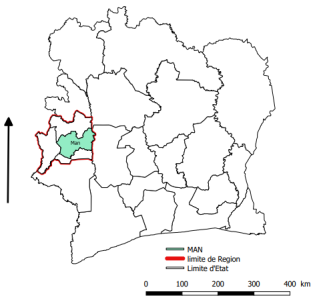
With an area of 4,140.7 km², the town of Man is one of the largest in western Côte d’Ivoire. It is situated at 7°24’0’’N and 7°33’0’’W in DMS (degrees, minutes, seconds) (GPS coordinates), in a basin formed by mountain ranges that surround it. Man is the administrative centre of the Tonkpi region and the capital of the Montagnes district, which comprises not only the Tonkpi region but also the Guemon and Cavally regions (Figure 1). The Tonkpi region comprises five (5) departments: Man, Sipilou, Danané, Biankouma and Zouan-Hounien. Man borders the departments of Biankouma and Danané. It comprises eleven (11) sub-prefectures, namely: Bogouiné, Fagnampleu, Gbangbégouiné-Yati, Logoualé, Man (administrative centre), Podiagouiné, Sabdougou-Soba, Sangouiné, Yapleu, Zagoué and Ziongouiné.
Figure 1. Geographical and administrative location of the Department of Man .
2.2. Population, Climate and Vegetation
The population of the Department of Man is estimated at 1,387,909 inhabitants according to the General Population and Housing Census . The indigenous peoples are the Dan, also known as the Yacouba. In addition to the indigenous peoples, there are non-indigenous groups such as the Gobé, Gueré, Toura, Mahoka, Senoufo, Malinké and Baoulé, amongst others. There are also nationals from neighbouring countries, namely Guineans, Liberians, Malians, Burkinabés and Nigeriens.
The climate of Man, and by extension that of our study site, is a mountain climate where temperatures decrease with altitude (down to 8°C in January) and rainfall reaches up to 1,770 mm . It is characterised by two seasons, including a rainy season that runs from November to January, with a month and a half of the Harmattan (December to mid-January).
The vegetation of the Department of Man consists of 80% tropical rainforest, part of which has been converted into fallow land planted with Chromolaena odorata (Sekou Toure), whilst another part is used for agro-industrial plantations of coffee, cocoa or rubber, not to mention food crops such as cassava, rice and yams .
2.3. Topography
The topography of Man District, as in the whole of the western part of the country, consists of a series of low plateaus which, in places, give way to very rugged terrain, ranging from gentle slopes to elevations sometimes exceeding 1,000 m, such as Mount Nimba (1,752 m) and Mount Tonkpi (1,293 m). This terrain, whose mountainous character is accentuated by Mount Dan and Mount Toura, consists of a succession of domes and hills separated by deep valleys. It is rugged across one-third of its area .
3. Materials and Methods
3.1. Biological Material
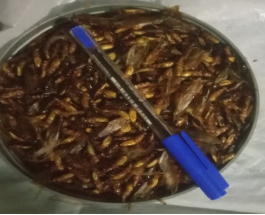
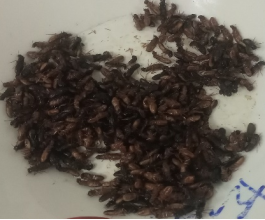
The biological material consists of fresh (Figure 2) and dried (Figure 3) winged termites (Macrotermes bellicosus).
Figure 2. Macrotermes bellicosus fresh.
Figure 3. Macrotermes bellicosus dried.
3.2. Methods
3.2.1. Study Area and Period
Winged termites were collected in March 2025 in four (4) villages (Tiakoupleu, Kagui, Kouitongouie I and Seipleu) and at the Polytechnic University of Man (UMAN). To capture the termites, containers were filled with water and then placed under floodlights between 1 am and 2 am. As the termites are attracted to the light, they eventually fall into the water container and are trapped there.
3.2.2. Sample Preparation and Packaging
The captured winged termites (Macrotermes bellicosus) were kept at 4°C in a cool box containing ice to preserve their freshness and then transported to the laboratory. At the laboratory, the termites were cleaned with tap water and rinsed. They were then stripped of their wings and ground in a blender. Part of this ground material was used for a number of analyses, including moisture, protein and ash content, whilst another part was placed on trays and dried in an oven at 65°C for 72 hours, then sieved to obtain Macrotermes bellicosus flour, which was used for lipid extraction.
3.2.3. Mineral Analysis
(i). Analysis of Calcium, Potassium and Sodium
The calcium, potassium and sodium contents were determined using the AOAC method . Five (5) grams of winged termites, incinerated at 550°C for 8 hours in a muffle furnace, were dissolved in 20 mL of a 0.5 N hydrochloric acid solution. After standing for one hour, the mixture was filtered and made up to 100 mL with distilled water in a flask. Subsequently, 1 mL of this 1: 100 diluted solution was used for the determination of these minerals. The flame photometer was calibrated with a standard solution of calcium, sodium and potassium for the respective determination of calcium ions, sodium ions and potassium ions. An optical density (OD) value for each element was obtained for wavelengths between 279.5 and 321.7 nm. The analyses were carried out in triplicate.
The content of the analysed mineral is given by the following formula:
Mineral content=M xDOxVa x Pe
Where,
OD: Optical Density
a: Slope of the calibration curve
M: Molar mass of calcium/potassium/sodium (g/mol)
Pe: Sample volume (mL)
V: Volume of distilled water (mL)
(ii). Determination of Magnesium and Iron
The magnesium and iron contents were measured by atomic absorption spectrometry (Perkin-Elmer, Model 1100, France) on the ash dissolved in a 37% concentrated HCl solution (diluted 1: 100) for the iron determination. For the magnesium analysis, 1 g of ash was dissolved in a solution containing 10% lanthanum chloride (LaCl3) as an interaction corrector. The mineral analysis required the prior establishment of a calibration curve.
(iii). Phosphorus Determination
The phosphorus determination was carried out according to the method of Tausky and Shorr . Ten millilitres of distilled water were added to five (5) grams of ash. Subsequently, 0.1 mL of this solution was transferred to various tubes and made up to 1 mL with distilled water. Three (3) mL of the molybdate-vanadate reagent were added to each tube. The optical densities were read on a spectrophotometer at 430 nm against the blank. The calibration curve was prepared under the same conditions using a hydrogen phosphate solution (2 mM). The analyses were carried out in triplicate.
The phosphorus concentration is calculated using the following formula:
Phosphorus content=Mp xDOxVa x Pe
Mp: molar mass of phosphorus (g/mol);
OD: optical density;
a: slope of the calibration line;
Pe: sample volume (mL);
V: volume of distilled water (mL)
3.2.4. Analysis of the Oil’s Fatty Acid Profile
(i). Preparation of Methyl Esters
Fatty acid methyl esters were prepared using boron trifluoride reagent at a concentration of 8% in methanol (BF3 / MetOH). One hundred (100) mg of sample was weighed into a 10 mL screw-cap test tube. To this were added 1.5 mL of hexane and 1.5 mL of BF3 / MetOH. The tube was sealed tightly under nitrogen, shaken vigorously, then heated to 100°C for 1 hour. After cooling to room temperature, 1 mL of hexane and 2 mL of distilled water were added, followed by shaking under nitrogen. Two phases separated after standing. The upper phase was collected in another tube and placed under nitrogen. The lower phase was extracted twice with 1 mL of hexane. All the collected phases (methyl esters) were washed with 2 mL of distilled water, then dried over anhydrous sodium sulphate. The solvent was evaporated under nitrogen. Hexane was added to adjust the concentration of the methyl esters for analysis by gas chromatography.
(ii). Gas Chromatography Analysis
The analysis of methyl esters is carried out on a Peri 2000 chromatograph (Perichrom, Saulx-le-Chartreux, France) fitted with a flame ionisation detector. They are separated on a capillary column (0.25 m long, 250 µm in diameter, with a film thickness of 0.5 µm) packed with polyethylene glycol doped with terephthalic acid (Perichrom). The detector and injector temperatures are set at 260°C. The programme used for the analysis is as follows: initially held at 70°C for 2 min, the column was raised to 180°C (39.9°C/min) and held at this temperature for 8 min, then underwent a second heating phase up to 220°C (3°C/min) for 45 min. Cooling was carried out at 39.9°C/min. Peak identification was performed using two fatty acid standards supplied by Supelco (Bellefonte, USA): PUFA 1 (marine source) and PUFA 2 (animal source).
3.2.5. Amino Acid Analysis
The amino acids in the initial proteins of winged termites were analysed using reverse-phase high-performance liquid chromatography (PTC RP-18 column, 220 mm long, 2.1 mm internal diameter, and a precolumn, Applied Biosystems, Applera Corp, Foster City, CA, USA). The samples were then diluted in deionised water to a concentration of approximately 0.8 g/L, and subsequently filtered through a 0.22 μm Millipore filter. The samples were hydrolysed under vacuum at 150°C for 60 min in a Pico-Tag station (Waters, Milford, MA, USA) in the presence of 6 N HCl containing 1% phenol. They were then transferred to ultrapure water and automatically derivatised using an Auto Derivatiser-Analyser 420a (Applied Biosystems, Applera Corp, Foster City, CA, USA). The amino acid derivatives in the form of phenyl isothiocyanates (PITC) were separated using buffer A (45 mM sodium acetate at pH 5.9) and buffer B (30% 105 mM sodium acetate, pH 4.6; 70% acetonitrile) under an elution gradient. Detection was set at 254 nm and the total run time was 31 minutes. Data acquisition and analysis were performed using the ‘Model 600 Data Analysis System’ software (Applied Biosystems, Applera Corp, Foster City, CA, USA).
4. Results
4.1. Mineral Composition of Macrotermes Bellicosus Flour
The Table 1 summarises the mineral content of Macrothermess bellicosus flour. Analysis of the ash from dried winged termites shows that it contains minerals such as potassium, calcium, magnesium and phosphorus, which constitute the macronutrients, as well as micronutrients such as iron, copper, zinc, iodine and manganese. There is significant variability in the levels of the minerals studied, ranging from 109.30 mg/100g to 191.78 mg/100g for macronutrients and from 0.02 to 3.00 mg/100g for micronutrients.
Table 1. Mineral content of dried Macrotermes bellicosus.

Minerals

Content (mg/100g of dry matter (DM))

Potassium (K)

169.88±0.001

Sodium (Na)

109.3±0.001

Magnesium (Mg)

159.28±0.001

Calcium (Ca)

191.78±0.002

Phosphorus (P)

127.08±0.001

Iron (Fe)

297.1±0.001

Copper (Cu)

2.00±0.001

Zinc (Zn)

3.00±0.001

Manganese (Mn)

0.02±0.001

Iodine (I)

0.46±0.001

The values are the average of three sample tests (n=3) / DM = Dry Matter. JASP 0.19
4.2. Fatty Acid Profile of Oil Extracted From Winged Termites (Macrotermes Bellicosus)
The fatty acid profile determined by chromatography shows that the oil from winged termites captured in the city of Man consists of saturated fatty acids (42.38±0.02%), monounsaturated fatty acids (49.52±0.04%) and polyunsaturated fatty acids (8.10±0.05%). Furthermore, the saturated fatty acid composition is dominated to a greater extent by palmitic acid (30.98±0.01%) and to a lesser extent by stearic acid (9.86±0.05%). As for the monounsaturated fatty acid composition, it is richer in oleic acid, with a content of 46.95±0.08%. The oil from winged termites also consists of linoleic and linolenic fatty acids, with respective values of 7.55±0.02% and 0.55±0.01%. All this data is set out in Table 2.
Table 2. Fatty acid profile of oil from winged termites captured in Man’s town.

Fatty acids

Content (%)

Palmitic acid (C16: 0)

30.98±0.01

Lauric acid (C12: 0)

0.2±0.01

Pentadecanoic acid (C15: 0)

0.18±0.07

Myristic acid (C14: 0)

0.89±0.02

Heptadecanoic acid (C17: 0)

0.27±0.03

Stearic acid (C18: 0)

9.86±0.05

∑ Saturated Fatty Acids (SFA)

42.38±0.02

Oleic acid (C18: 1n9)

46.95±0.08

Gadoleic acid (C20: 1n9)

0.32±0.01

Hexadecenoic acid (C16: 1n9)

0.17±0.06

Palmitoleic acid (C16: 1n7)

1.9±0.04

Heptadecenoic acid (C17: 1n10)

0.18±0.01

∑ Monounsaturated fatty acids (AGMI)

49.52±0.04

Linoleic acid (C18: 2n6)

7.55±0.02

Linolenic acid (C18: 3n3)

0.55±0.01

Total polyunsaturated fatty acids (PUFAs)

8.10±0.05

n-6/n-3 ratio

13.73

PUFAs/SFAs

0.20

4.3. Amino Acid Profile of the Protein From Winged Termites (Macrotermes Bellicosus)
The results of the amino acid profile analysis of the termite meal are presented in Table 3. They show that the proteins from Macrotermes bellicosus contain 20 amino acids, with a protein content of 1,022 mg/g. Of these 20 amino acids, 510 mg/g are so-called essential amino acids. The essential amino acids (essential AAs) have levels ranging from 19 mg/g (tryptophan) to 101.7 mg/g (phenylalanine + tyrosine). Essential amino acids such as phenylalanine + tyrosine (101.7 mg/g), lysine (79.9 mg/g), threonine (77.5 mg/g), leucine (62.5 mg/g), valine (58.9 mg/g) and isoleucine (56.8%) are present in greater quantities than histidine (29.8 mg/g), methionine + cysteine and tryptophan (19 mg/g). The other amino acids are aspartic acid + asparagine, glutamic acid + glutamine, glycine, arginine, serine, proline and alanine, with levels ranging from 51 to 100.8 mg/g.
Table 3. Amino Acid profile (mg/g of protein) of Macrotermes bellicosus.

Amino acids (AA)

mg/g of protein

Threonine

77.5

Phenylalanine + Tyrosine

101.7

Tryptophan

19

Lysine

79.9

Isoleucine

56.8

Leucine

62.5

Methionine + Cysteine

23.9

Valine

58.9

Histidine

29.8

∑Essential amino acids (essential AA)

510

Aspartic acid + Asparagine

100.8

Glutamic acid + Glutamine

102.3

Glycine

73.6

Arginine

51.4

Serine

59.1

Proline

58.6

Alanine

66.2

Total Amino Acids

1022

5. Discussion
The results obtained for the powder of winged termites collected in Man reveal a mineral composition dominated by iron (297.1 mg/100 g), calcium (191.78 mg/100 g), potassium (169.88 mg/100 g) and magnesium (159.28 mg/100 g), followed by phosphorus (127.08 mg/100 g) and sodium (109.3 mg/100 g). Trace elements such as zinc, copper, manganese and iodine are present in lower concentrations. This nutritional profile is consistent with data in the literature describing edible termites as excellente source of essential micronutrients, particularly in tropical regions where nutritional deficiencies remain common.
5.1. Mineral Composition and Nutritional Value
The high calcium and phosphorus contents observed in this study suggest that powdered winged termites could contribute to bone mineralisation and the maintenance of skeletal health. Research by Van Huis et al. , published by the Food and Agriculture Organization of the United Nations (FAO), indicate that several species of edible insects have calcium contents comparable to, or even higher than, those of certain conventional animal proteins. More recent studies also confirm the nutritional value of edible insects as alternative sources of essential minerals in sustainable food systems . The high concentrations of potassium and magnesium also confirm the nutritional potential of winged termites in regulating neuromuscular functions, electrolyte balance and energy metabolism. According to Anankware et al. , edible insects represent a promising nutritional resource, providing high-quality proteins and essential micronutrients that may contribute to improving food and nutrition security in West Africa.
The particularly high iron content is one of the key findings of this study. Termites of the genus Macrotermes are recognised as being among the insects richest in bioavailable iron. Christensen et al. had already shown that several insects consumed in Africa contribute significantly to the prevention of iron-deficiency anaemia. This observation was reinforced by the work of Mwangi et al. , who demonstrated that edible insects can represent a sustainable source of iron for vulnerable populations. In Côte d’Ivoire, where iron deficiency remains a public health problem, the use of winged termites could thus contribute to improving the nutritional quality of diets.
However, the bioavailability of iron depends on numerous factors, notably the presence of compounds that inhibit or facilitate intestinal absorption . Recent research also indicates that the technological processing of insects can positively influence the absorption of micronutrients .
The low concentrations of zinc, copper, manganese and iodine observed in this study are consistent with the mineral profiles generally reported for edible insects. Although present in relatively small amounts, these elements play essential physiological roles in enzymatic, immune and endocrine functions. Zinc is particularly involved in immune function, while copper contributes to iron metabolism. Iodine, even at low concentrations, is essential for the synthesis of thyroid hormones. These findings are consistent with previous reports highlighting edible insects as potential sources of a wide range of essential micronutrients .
The variations observed in mineral content may be linked to environmental conditions, the food substrate, and the ecological characteristics of the Man region. Forest soils rich in organic matter are thought to promote the accumulation of certain minerals, particularly iron and calcium, in M. bellicosus tissus. Several authors have shown that the nutritional composition of insects varies according to the environment, physiological stage, diet and harvesting season .
Thus, powdered winged termites appear to be a food resource with great potential for combating nutritional deficiencies and improving food security in West Africa.
5.2. Lipid Composition and Nutritional Quality of the Oil
Analysis of the oil extracted from Macrotermes bellicosus reveals a predominance of monounsaturated fatty acids (49.52%) and saturated fatty acids (42.38%), whilst polyunsaturated fatty acids account for 8.10%. These results are similar to those reported by Badanaro et al. in Togo, who observed a monounsaturated fatty acid content of 51.66% in the same species.
The proportion of polyunsaturated fatty acids obtained in this study is similar to that reported by Niaba et al. for Macrotermes subhyalinus in Côte d’Ivoire, but higher than the values observed by John et al.; Badanaro et al. . These differences could be attributed to several factors, including environmental conditions, seasonal variations, the physiological stage of the insects, and the susceptibility of polyunsaturated fatty acids to oxidation .
The n-6/n-3 ratio obtained (13.75) falls within the range reported in some nutritional guidelines, although the optimal ratio remains a subject of debate. Similarly, the PUFA/SFA ratio of 0.20 indicates a relatively low proportion of polyunsaturated relative to saturated fatty acids and should be interpreted cautiously in terms of lipid nutritional quality . These observations are consistent with the findings of Oyarzun et al. on termites of the genus Nasutitermes, which also reported appreciable levels of unsaturated fatty acids.
The presence of α-linolenic acid (omega-3) also confirms the nutritional value of Macrotermes bellicosus oil. Omega-3 fatty acids play a fundamental role in neurological development, immune function and the prevention of cardiovascular disease .
5.3. Protein Quality and Amino Acid Profile
Analysis of the amino acid profile reveals the presence of several essential amino acids, notably threonine, phenylalanine, tyrosine, tryptophan, lysine, isoleucine, leucine, methionine, cysteine, valine and histidine. The proteins in winged termites appear to be particularly rich in lysine and threonine, but relatively lower in methionine and cysteine.
These results corroborate the observations of DeFoliart , according to which insect proteins generally have high lysine and threonine contents. The high lysine content constitutes a significant nutritional advantage, particularly for fortifying cereal-based diets, which are often deficient in this essential amino acid . Lysine also plays a role in protein synthesis and the assimilation of other amino acids .
Furthermore, the significant arginine content could promote children’s growth and development, as arginine plays a key role in cellular growth mechanisms and immune functions . Finally, the overall content of essential amino acids (510 mg/g of protein) meets the nutritional recommendations established for human consumption, thereby confirming the value of winged termites as an alternative protein source of high biological value.
6. Conclusion
Several scientific studies have addressed the utilisation of winged termites in general. This study examined the same topic, focusing specifically on winged termites from the Man departmental region. It also assessed the quality of the proteins and fats in these insects by analysing their respective profiles. Indeed, geographical location and climate are likely to be factors influencing variation. The results have indeed shown that Macrotermes bellicosus contains essential macro- and micronutrients, and is therefore of recognised nutritional value. These significant nutritional qualities may help to provide high-quality diets in areas affected by deficiency-related malnutrition. Furthermore, analysis of the amino acid and fatty acid profiles showed that these are present in significant proportions. Macrotermes bellicosus is therefore an unconventional food resource that could serve as a means of dietary diversification for local populations. It would therefore be necessary to investigate the form of consumption that would allow for the maximum benefit from the valuable nutrients they contain.
Abbreviations

AOAC

Association of Official Analytical Chemists

WHO

World Health Organization

PICI

Projet De Renaissance Des Infrastructures De Côte d’Ivoire

INS

Agence National De La Statistique

Author Contributions
Oulai Tokpa Louya: Conceptualization, data curation, Ressources
Yao N’guessan Firmin: Supervision, Validation
Akpro Lathro Anselme: Writing-original draft, Writing-review and editing
Ochou Germain Cynthia Epse Lékadou: Software
Conflicts of Interest
The authors declare that there are no conflicts of interest.
References
[1] Premalatha M., Abbasi T. and Abbasi S. A., (2011). Energy-efficient food production to reduce global warming and ecodegradation: The use of edible insects. Renewable and Sustainable Energy Rev., 15: 4357-4360.
[2] Ponzetta M. T., (2016). Les insectes, une ressource nutritionnelle pour l’évolution humaine. In E. Motte-Florac & P. Le Gall. (Dir.), « Savoureux insectes. De l’aliment traditionnel à l’innovation gastronomique ». Table des Hommes, Tours (France), Presses universitaires François Rabelais de Tours / Rennes (France), Presses universitaires de Rennes / Marseille (France) Institut de Recherche pour le Développement, 43-72.
[3] FAO (2013). Edible insects: Future prospects for food and feed security. FAO Forestry Paper No. 171. Rome, Food and Agriculture Organization of the United Nations, 187 p.
[4] Motte-Florac É. 2016. Introduction. L’entomophagie: diversités culturelles, ressources biologiques et défis contemporains. In: Motte-Florac Éd, Le Gall P, editors. Savoureux insectes. De l’aliment traditionnel à l’innovation gastronomique. Tours: Presses universitaires François-Rabelais de Tours; p. 13-40.
[5] Tchibozo S., Malaise F., Mergen P. (2016). Insectes consommés par l’Homme en Afrique occidentale francophone. Geo-Eco-Trop, 40 (2), 105-114.
[6] Ahuja, K., Mamtani, K. 2020. Edible insects market size by product (beetles, caterpillars, grasshoppers, bees, wasps, ants, scale insects and bugs), by application (flour, protein bars, snacks), industry analysis report, regional outlook, application potential, price trends, competition. In Edible Insects Market Analysis 2020-2026/ Industry Forecasts. GMI Insights. Retrieved from
[7] Mabossy-Mobouna G, et Malaisse F. (2020). Caractérisation de la valeur nutritive des Orthoptères consommés par l’homme en République du Congo. Geo-Eco-Trop; 44(2): 255-267.
[8] Moruzzo, R., Mancini, S., Guidi, A. (2021). Edible Insects and Sustainable Development Goals. Insects, 12(6), 557.
[9] Shah, A. A., Totakul, P., Matra, M., Cherdthong, A., Hanboonsong, Y., Wanapat, M. (2022). Nutritional composition of various insects and potential uses as alternative proteins in animal diets. Animal Bioscience, 35(2), 317-331.
[10] Van Huis, A. (2013). Potential of insects as foods and feed in assuring food security. Annual Review of Entomology, 58, 563-583.
[11] Boko, A. C. E., Angaman, D. M., Blei, S. H. (2020). Entomophagy evaluation and nutritional potential of two edible insects sold in the market of the city of Man (Côte d’Ivoire). International Journal of Food and Nutritional Science, 9, 10-15.
[12] Badanaro F., Houndji B. V. S., Melila M., Amevoin K., Amouzou S. K. E. 2018. Potentiel nutritionnel de macrotermes bellicosus (smeathman, 1781) (isoptera: termitidae), une des especes d’insectes comestibles les plus commercialisées au togo. J. Rech. Sci. Univ. Lomé (Togo), 20(3), 41-50.
[13] Zahui, F. M., N’Da, A. A. K.-K., Ouattara, J.-M. P., Beda, A. J. C., Coulibaly, L. S., Sangaré, D., Kamagaté, M., & Coulibaly, L. (2025). Water, sanitation and hygiene situation in public primary schools in the Department of Man, Western Côte d’Ivoire. Journal of Water, Sanitation and Hygiene for Development, 15(7), 565–580.
[14] INS, (2021). Recensement Général de la Population et de l’Habitat 2 (RGPH 2021) - Résultats globaux. République de Côte d’Ivoire. 3 Disponible sur:
[15] PRICI (2016). Projet de renaissance des infrastructures de côte d’ivoire. Rapport final du 30 cadre de gestion environnementale et sociale, côte d’ivoire, 200 pages.
[16] AOAC International. 1995. Official methods of analysis of AOAC International (16th ed.). AOAC International.
[17] Tausky, H. H., & Shorr, E. (1953). A microcolorimetric method for the determination of inorganic phosphorus. Journal of Biological Chemistry, 202(2), 675–685.
[18] Adámek M, Adámková A, Mlček J, Borkovcová M, Bednářová M. (2024). Minerals in edible insects: A review of content and potential for sustainable sourcing. Food Sci Hum Wellness. 2024; 13(1): 65–74.
[19] Payne CLR, Scarborough P, Rayner M, Nonaka K. 2016. Are edible insects more or less ‘healthy’ than commonly consumed meats? A comparison using two nutrient profiling models developed to combat over- and undernutrition. European Journal of Clinical Nutrition; 70(3): 285-291.
[20] Kouřimská L, Adámková A. 2016. Nutritional and sensory quality of edible insects. NFS Journal, 4: 22-26.
[21] Anankware, J. P., Roberts, B. J., Cheseto, X., Osuga, I., Savolainen, V., & Collins, C. M. (2021). The nutritional profiles of five important edible insect species from West Africa—An analytical and literature synthesis. Frontiers in Nutrition, 8, 792941.
[22] Christensen, D. L., Orech, F. O., Mungai, M. N., Larsen, T., Friis, H., & Aagaard-Hansen, J. (2006). Entomophagy among adolescent boys in western Kenya: A potential strategy for increasing dietary iron intake. Public Health Nutrition, 9(5), 658–664.
[23] Mwangi, M. N., Oonincx, D. G. A. B., Stouten, T., Veenenbos, M., Melse-Boonstra, A., Dicke, M., & van Loon, J. J. A. (2018). Insects as sources of iron and zinc in human nutrition. Nutrition Research Reviews, 31(2), 248–255.
[24] Hallberg, L., & Hulthén, L. (2000). Prediction of dietary iron absorption: An algorithm for calculating absorption and bioavailability of dietary iron. The American Journal of Clinical Nutrition, 71(5), 1147–1160.
[25] Orkusz, A. (2021). Edible insects versus meat—Nutritional comparison: Knowledge of their composition is the key to good health. Nutrients, 13(4), 1207.
[26] Vantomme, P. (2015). Way forward to bring insects in the human food chain. Journal of Insects as Food and Feed, 1(2), 121–129.
[27] Gravel, A., & Doyen, A. (2020). The use of edible insect proteins in food: Challenges and issues related to their functional properties. Innovative Food Science & Emerging Technologies, 59, 102272.
[28] Rumpold, B. A. et Schlüter, O. K. 2013. Nutritional composition and safety aspects of edible insects. Molecular Nutrition & Food Research, 57(5), 802-823.
[29] Liceaga AM. 2021. Processing insects for use in the food and feed industry. Current Opinion Insect Sciences; 48: 32-36.
[30] Niaba KPV, Gbogouri GA, Beugré AG, Ocho-Anin ATAL, Gnakri D. 2011. Potentialités nutritionnelles du reproducteur ailé du termite Macrotermes subhyalinus capturé à Abobo-doumé, Côte d’Ivoire. Journal of Applied and Biosciences; 40: 2706-2714.
[31] John N. Kinyuru, Bethwell O. Owuor, Silvenus O. Konyole, Nanna Roos Christine Onyango Victor O. Owino Benson Estambale Henrik Friis, Jens Aagaard-Hansen Glaston M. Kenji. (2013). Nutrient Composition of Four species of winged termites consumed in western Kenya. Journal of Food Composition and Analysis 30(2): 120-124.
[32] Womeni, H. M., Linder, M., Tiencheu, B., Mbiapo, F. T., Villeneuve, P., Fanni, J., & Parmentier, M. 2022. Lipid quality and fatty acid profile of edible insects. Food Chemistry, 374, 131756.
[33] Perez-Santaescolastica, C., de Pril, I., van de Voorde, I., & Fraeye, I. (2023). Fatty acid and amino acid profiles of seven edible insects: Focus on lipid class composition and protein conversion factors. Foods, 12(22), 4090.
[34] Simopoulos, A. P. (2008). The importance of the omega-6/omega-3 fatty acid ratio in cardiovascular disease and other chronic diseases. Experimental Biology and Medicine, 233(6), 674–688.
[35] Oyarzun, S. E., Crawshaw, G. J., & Valdes, E. V. (1996). Nutrition of the tamandua: I. Nutrient composition of termites (Nasutitermes spp.) and stomach contents from wild tamanduas (Tamandua tetradactyla). Zoo Biology, 15(5), 509–524.
[36] Calder PC. 2010. Omega-3 fatty acids and inflammatory processes. Nutrients. 2010; 2(3): 355-374.
[37] DeFoliart, G. R. (1999). Insects as food: Why the Western attitude is important. Annual Review of Entomology, 44, 21–50.
[38] Matthews, D. E. (2020). Review of lysine metabolism with a focus on humans. The Journal of Nutrition, 150(Supplement 1), 2548S–2555S.
[39] Tomé, D., & Bos, C. (2007). Lysine requirement through the human life cycle. The Journal of Nutrition, 137(6 Suppl. 2), 1642S–1645S.
[40] Voet D., Voet J. G., Pratt C. W. (2006). Fundamentals of Biochemistry: Life at the Molecular level. 2nd level Biochemistry: Edn. John Wiley and sons, Asia.
Cite This Article
  • APA Style

    Louya, O. T., Firmin, Y. N., Anselme, A. L., Lékadou, O. G. C. E. (2026). Assessment of the Nutritional Value of Winged Termites (Macrotermes bellicosus) in the City of Man. International Journal of Nutrition and Food Sciences, 15(5), 268-276. https://doi.org/10.11648/j.ijnfs.20261505.20

    Copy | Download

    ACS Style

    Louya, O. T.; Firmin, Y. N.; Anselme, A. L.; Lékadou, O. G. C. E. Assessment of the Nutritional Value of Winged Termites (Macrotermes bellicosus) in the City of Man. Int. J. Nutr. Food Sci. 2026, 15(5), 268-276. doi: 10.11648/j.ijnfs.20261505.20

    Copy | Download

    AMA Style

    Louya OT, Firmin YN, Anselme AL, Lékadou OGCE. Assessment of the Nutritional Value of Winged Termites (Macrotermes bellicosus) in the City of Man. Int J Nutr Food Sci. 2026;15(5):268-276. doi: 10.11648/j.ijnfs.20261505.20

    Copy | Download

  • @article{10.11648/j.ijnfs.20261505.20,
      author = {Oulai Tokpa Louya and Yao N’guessan Firmin and Akpro Lathro Anselme and Ochou Germain Cynthia Epse Lékadou},
      title = {Assessment of the Nutritional Value of Winged Termites (Macrotermes bellicosus) in the City of Man},
      journal = {International Journal of Nutrition and Food Sciences},
      volume = {15},
      number = {5},
      pages = {268-276},
      doi = {10.11648/j.ijnfs.20261505.20},
      url = {https://doi.org/10.11648/j.ijnfs.20261505.20},
      eprint = {https://article.sciencepublishinggroup.com/pdf/10.11648.j.ijnfs.20261505.20},
      abstract = {This study, conducted on winged termites (Macrotermes bellicosus) collected in the Man region, assessed their mineral, lipid and protein composition in order to highlight their nutritional value. The results showed a high content of essential minerals, notably iron, calcium, potassium, magnesium and phosphorus, confirming the nutritional potential of these insects in combating dietary deficiencies and iron-deficiency anaemia. Trace elements such as zinc, copper, manganese and iodine were also detected in low concentrations but remain important for the body’s physiological functions. Lipid analysis of the extracted oil revealed a predominance of monounsaturated and saturated fatty acids, with a notable presence of polyunsaturated fatty acids and omega-3s, which are beneficial for cardiovascular health and neurological development. Analysis of the amino acid profile highlighted the presence of several essential amino acids, notably lysine, threonine, leucine and tryptophan, demonstrating the high biological value of the proteins in winged termites. These results confirm that Macrotermes bellicosus constitutes an alternative food resource of high nutritional value that can contribute to dietary diversification and improved food security for populations in West Africa, particularly in areas affected by malnutrition.},
     year = {2026}
    }
    

    Copy | Download

  • TY  - JOUR
    T1  - Assessment of the Nutritional Value of Winged Termites (Macrotermes bellicosus) in the City of Man
    AU  - Oulai Tokpa Louya
    AU  - Yao N’guessan Firmin
    AU  - Akpro Lathro Anselme
    AU  - Ochou Germain Cynthia Epse Lékadou
    Y1  - 2026/09/30
    PY  - 2026
    N1  - https://doi.org/10.11648/j.ijnfs.20261505.20
    DO  - 10.11648/j.ijnfs.20261505.20
    T2  - International Journal of Nutrition and Food Sciences
    JF  - International Journal of Nutrition and Food Sciences
    JO  - International Journal of Nutrition and Food Sciences
    SP  - 268
    EP  - 276
    PB  - Science Publishing Group
    SN  - 2327-2716
    UR  - https://doi.org/10.11648/j.ijnfs.20261505.20
    AB  - This study, conducted on winged termites (Macrotermes bellicosus) collected in the Man region, assessed their mineral, lipid and protein composition in order to highlight their nutritional value. The results showed a high content of essential minerals, notably iron, calcium, potassium, magnesium and phosphorus, confirming the nutritional potential of these insects in combating dietary deficiencies and iron-deficiency anaemia. Trace elements such as zinc, copper, manganese and iodine were also detected in low concentrations but remain important for the body’s physiological functions. Lipid analysis of the extracted oil revealed a predominance of monounsaturated and saturated fatty acids, with a notable presence of polyunsaturated fatty acids and omega-3s, which are beneficial for cardiovascular health and neurological development. Analysis of the amino acid profile highlighted the presence of several essential amino acids, notably lysine, threonine, leucine and tryptophan, demonstrating the high biological value of the proteins in winged termites. These results confirm that Macrotermes bellicosus constitutes an alternative food resource of high nutritional value that can contribute to dietary diversification and improved food security for populations in West Africa, particularly in areas affected by malnutrition.
    VL  - 15
    IS  - 5
    ER  - 

    Copy | Download

Author Information
  • Department of Agricultural & Forestry and Environmental Engineering, Polytechnic University of Man, Cote d’Ivoire

  • Department of Agricultural & Forestry and Environmental Engineering, Polytechnic University of Man, Cote d’Ivoire

  • Marc Delorme Station, Coconut Research Station; National Centre for Agricultural Research, Port-Bouêt, Abidjan, Côte d’Ivoire

  • Marc Delorme Station, Coconut Research Station; National Centre for Agricultural Research, Port-Bouêt, Abidjan, Côte d’Ivoire

  • Abstract
  • Keywords
  • Document Sections

    1. 1. Introduction
    2. 2. Introduction to the Town of Man
    3. 3. Materials and Methods
    4. 4. Results
    5. 5. Discussion
    6. 6. Conclusion
    Show Full Outline
  • Abbreviations
  • Author Contributions
  • Conflicts of Interest
  • References
  • Cite This Article
  • Author Information