Research Article | | Peer-Reviewed

Evaluation of Glycaemic Index of LowCarb Multiseed Cranberry Sourdough Bagel

Received: 24 September 2026     Accepted: 20 October 2026     Published: 24 November 2026
Views:       Downloads:
Abstract

Background: Glycaemic index (GI) is a scale that ranks carbohydrate food on how much they elevate blood glucose. It is useful in dietary planning because it provides an indication of how to make informed decisions about carbohydrate choices to control post-prandial blood glucose level, simultaneously being advantageous for the management of type 2 diabetes mellitus (T2DM). Objective: This study aimed to determine the glycaemic index of the latest bakery product, LowCarb Multiseed Cranberry Sourdough Bagel. Methodology: A total of ten (10) healthy participants aged 24 to 36 (mean 28.8 ± 4.5) years old were involved. The participants fasted overnight for 10-12 hours and consumed 50 grams of carbohydrate portions of reference and test food i.e. the wholemeal bread and the bagel. Next, finger capillary blood glucose data were collected at fasting (0 minute), 15, 30, 45, 60, 90 and 120 minutes respectively after consumption of the tested food. The GI was determined using the ratio of incremental area under curve to reference food i.e. Glucolin®. Result: The recently produced bagel has a GI of 45, categorized as low and it is lower than the commercial brand wholemeal bread, GI=62 (p<0.01). Conclusion: Evaluation of GI renders fundamental data that may intensify better dietary advocacy for T2DM as well as general health. The availability of such information is crucial for securing the quality of a bakery product predominantly for healthcare professionals and at consumers’ end. The development of this low GI bagel may also broaden the range of bakery options for Malaysian consumers seeking for healthier carbohydrate option.

Published in International Journal of Nutrition and Food Sciences (Volume 15, Issue 6)
DOI 10.11648/j.ijnfs.20261506.14
Page(s) 339-346
Creative Commons

This is an Open Access article, distributed under the terms of the Creative Commons Attribution 4.0 International License (http://creativecommons.org/licenses/by/4.0/), which permits unrestricted use, distribution and reproduction in any medium or format, provided the original work is properly cited.

Copyright

Copyright © The Author(s), 2026. Published by Science Publishing Group

Keywords

Glycaemic Index (GI), Malaysia, Postprandial Blood Glucose, Type 2 Diabetes Mellitus, Sourdough

1. Introduction
Malaysia is experiencing a growing burden of non-communicable diseases (NCD), particularly type 2 diabetes mellitus (T2DM). According to the National Health Morbidity Survey (NHMS) 2023, 15.6% of Malaysian adults were reported to have T2DM . The previous NHMS in 2019 reported higher prevalence of T2DM, 18.3% , and this highlights the importance of preventive as well as dietary strategies that can reduce the risk of diabetes complications among the Malaysian population.
One of the most important roles in prevention and management of T2DM is dietary intake. Other than the total amount of carbohydrate, its effect on postprandial glucose is of pivotal importance. The glycaemic index (GI) is a scale that ranks how much a food increases blood glucose level, relative to a reference food, with the value of 1-55 (low), 56-69 (medium) or 70 or higher (high). Lower GI dietary pattern has been associated with improved glycated haemoglobin (HbA1c) and fasting blood glucose level among T2DM individuals . Meanwhile, higher GI has been associated with an increased risk of developing T2DM . Therefore, the assessment of GI of carbohydrate-containing foods is a useful tool for dietary planning specifically for T2DM and for health purposes in general.
It is remarkably relevant for the Malaysian population where carbohydrate is a component of habitual daily diet. Although rice remains a major staple, bread and other bakery products are increasingly consumed as breakfast, snacks and meal options . Thus, the glycaemic characteristics of bakery products warrant a greater consideration in relation to combating the rise in the prevalence of T2DM. In accordance with the Malaysian Clinical and Practice Guideline for T2DM management, dietary modification and carbohydrate management is essential in diabetes care at the same time combating the alarming need for other related NCD.
The glycaemic response of bakery products is influenced not only by their carbohydrate content, but also by formulation and manufacturing process. A review by Stamataki et al. (2017) reported that different bread manufacturing processes can influence blood glucose and insulin response, with sourdough fermentation showing potential to modulate glycaemic response. Evidence from a systematic review indicated that consumption of sourdough bread was associated with a lower postprandial glucose response compared with commercial bread or glucose . Nevertheless, the glycaemic response may differ among sourdough products depending on flour type, fermentation conditions, fibre content and other processing factors . Therefore, the GI of a bakery product cannot be inferred from the sourdough ingredient alone.
The potential influence of sourdough fermentation on the GI of bakery products has been attributed to biochemical and structural changes occurring during fermentation. The presence and metabolic activity of lactic acid bacteria in sourdough contributes to the increased nutritional value of bread and starch digestibility . Sourdough not only alters the flavor but also enhances its texture and provides beneficial effects on health . Aside from that, sourdough fermentation also leads to an increment in the phenolic compounds, protein digestibility and dietary fibre of the final bread thus collectively, these mechanisms provide explanations for the potentially attenuated postprandial glycaemic responses observed with certain sourdough breads . Nevertheless, the magnitude and direction of these effects also depend on other factors such as flour composition, microbial cultures, fermentation duration, acidity, dough hydration and baking conditions. A systematic review and meta-analysis by Rolim et al., (2024) reported lower postprandial glucose concentrations following sourdough bread consumption compared with industrially fermented bread or glucose, although the certainty of the evidence was low to very low . Similarly, a systematic review of sourdough fermentation highlighted considerable variation in the nutritional and glycaemic outcomes of different sourdough products, indicating that sourdough fermentation alone does not guarantee a lower GI . Therefore, the glycaemic properties of sourdough bakery products should be established through direct evaluation of the finished product rather than inferred from the fermentation method alone.
The incorporation of seeds into bakery products represents another formulation strategy that may influence their glycaemic properties. Seeds such as flaxseed, chia seed, sunflower seed and sesame provide varying proportions of dietary fibre, protein, lipids and bioactive compounds . Dietary fibre, particularly soluble fibre in chia seed and flaxseed, may increase viscosity and restrict the accessibility of digestive enzymes to starch . Meanwhile, the lipid and protein fractions of seeds may modify interactions among food components and influence gastric emptying and carbohydrate digestion. These mechanisms suggest that seed incorporation may contribute to changes in the rate of glucose absorption following consumption of bakery products.
LowCarb Multiseed Cranberry Sourdough Bagel is a carbohydrate source incorporating ingredients such as sourdough, multiple seeds (brown flaxseed, chia seed, sunflower seed, white sesame, black sesame) and dried cranberry as the main components. The inclusion of multiple seeds and dried cranberry contribute to dietary fibre while the sourdough fermentation process may influence the digestibility and glucose response. Despite the potential nutritional advantage, the actual GI requires evaluation, and the determination should involve human testing rather than testing the individual ingredients alone .
Evaluation of GI of this latest product is relevant from a nutritional and health perspective and it may provide important information regarding the postprandial glucose characteristics that may assist consumers and health professionals in making food choices. Such evidence is particularly crucial in our nation's population where high and increasing prevalence of T2DM underline the need for a more practical approach for daily dietary patterns.
Therefore, this study aimed to evaluate the glycaemic index of LowCarb Multiseed Cranberry Sourdough Bagel among healthy human participants using a standardised glycaemic response methodology. The findings will provide evidence on the glycaemic characteristics of the product and contribute to the growing body of evidence on the role of formulated bakery products in dietary strategies for T2DM or general health in the Malaysian context.
2. Methodology
2.1. Participants
A total of ten (10) healthy individuals were enrolled from volunteers recruited for the study. Participants were screened for body weight, body mass index (BMI), HbA1c and fasting capillary blood glucose. Inclusion criteria were: (1) normal BMI (BMI ≤24.9 kg/m2), (2) HbA1c level <5.7% (Malaysia CPG for Diabetes, MOH 2020), (3) normal fasting glucose level (4.4-7.0 mmol/L), (4) non-smoker, (5) not taking any medication that can affect glucose metabolism and (6) did not practise any special diet or physical activity at least a month prior data collection. Exclusion criteria were: (1) pregnant or lactating females.
2.2. Study Design and Experimental Procedures
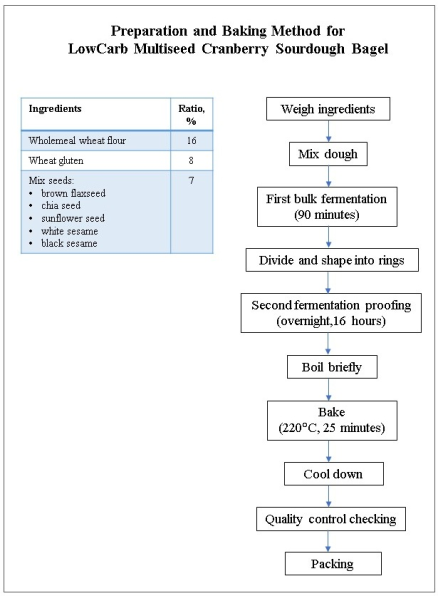
In this open label study, glucose (Glucolin®) is the reference food against the tested foods: commercial brand wholemeal and LowCarb Multiseed Cranberry Sourdough Bagel. This study took place in Alpro Academy Laboratory and participants reported attendance at 8.00 am to 9.00 am in the morning after at least 10-12 hours of overnight fasting. Prior to the recruitment, data was collected using a questionnaire form, fasting blood glucose and HbA1c (RT-100, Greencare A1c analyzer, MT Promedt Consulting GmbH, Germany) were also tested. Next, each subject was required to consume an equivalent of 50 g available carbohydrate of reference and test food within 10-15 minutes, with a washout period of two days for each test food. The participants were instructed to maintain their usual daily food intake and physical activity throughout the study period. The glucose powder was dissolved with 200 ml of water. Finger-prick capillary blood samples were collected using Microlet® lancet and blood glucose was evaluated using Contour® Plus One glucometer (Ascensia, Switzerland). The blood samples were collected after fasting (0 minute) and at 15, 30, 45, 60, 90 and 120 minutes respectively after the consumption of reference and test food. The nutrient content of the tested food is indicated in Table 1 while the preparation and baking method of the tested bagel is illustrated in Figure 1.
Figure 1. Preparation and baking method of the tested bagel.
Table 1. Amount of energy and nutrients of the test food for each 50 g available carbohydrate consumed.

Nutrient

Whole-meal bread

LowCarb Multiseed Cranberry Sourdough Bagela

Weight (g)

152.0

217.4

Energy (kcal)

358.7

569.6

Available carbohydrate (g)

50.0

50.0

Protein (g)

21.1

38.0

Fat (g)

4.3

17.4

Dietary fibre (g)

8.4

30.0

aThe nutrient analyses were carried out by the approved laboratory and samples were analysed using Method of Analysis for Nutrition Labelling, Chapter 1, 1993. Carbohydrate was determined by proximate analysis.
2.3. Statistical Analysis
Data were analyzed using SPSS (IBM SPSS Statistic v.27, Chicago, IL, USA). Descriptive statistics are presented as mean ± standard deviation. The Kruskal-Wallis H test was used to assess significant differences in non-parametric data, with a significant value set at P<0.05.
2.4. Glycaemic Index Determination
The area under curve (AUC) was calculated as the incremental area under the curve (iAUC) which was plotted and determined using trapezoidal methods in Microsoft Excel 2021. All AUC below the baseline value were eliminated in the summation. The average iAUC for the tested food, LowCarb Multiseed Cranberry Sourdough Bagel, were calculated over reference food, Glucolin® (GI=100).
2.5. Ethics
This study had been approved by the ethics committee of Alpro Academy. The purpose and protocol of the study were explained to the participants and informed consent was obtained before enrolment.
3. Results
3.1. Participants’ Characteristics
A total of 19 volunteers were involved in the study, of whom seven (7) were unable to comply with the study protocol, and another two (2) were excluded for being discovered to have higher HbA1c level, leaving a total of ten (10) participants in the final analysis. Among the 10 participants, the age range is between 24 to 36 years old with mean age of 28.8 ± 4.5 years old. All participants have normal body mass index (BMI) with a mean of 21.3 ± 1.8 kg/m2. Participants included have normal HbA1c in the range of 4.7 - 5.6% with a mean of 5.13 ± 0.1%. Table 2 presents the characteristics of the participants and all of them did not take any prescribed medication or practise any variations on daily diet as well as physical activity in the past three (3) months.
Table 2. Background characteristics of the participants.

Characteristics

Mean ± s.d.

Range

Age (years)

28.8 ± 4.5

24 - 36

Weight (kg)

58.4 ± 5.7

48.0 - 66.8

Height (cm)

165.5 ± 5.9

157.0 - 173.0

BMI (kg/m2)

21.3 ± 1.8

19.5 - 24.8

HbA1c (%)

5.13 ± 0.1

4.7 - 5.6

3.2. Blood Glucose Response and GI Value
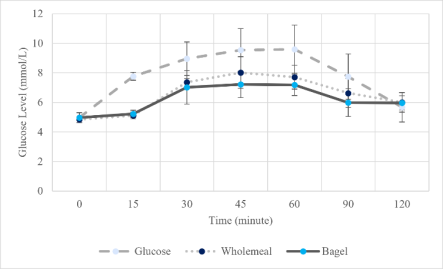
Figure 2 represents the blood glucose response at various time points after consuming the test food with reference to glucose. As presented in Table 3, the baseline of fasting blood glucose did not differ significantly (P>0.05), however, the glucose level changes started to show significant difference (P<0.01) at every point of time tested afterwards. The largest difference in blood glucose level was marked at 45 minutes for the test food (wholemeal 8.0 ± 0.8 mmol/L; bagel 7.2 ± 0.9 mmol/L) which recorded 0.8 mmol/L difference (P<0.01).
Figure 2. Blood glucose responses at various time points after consuming reference and test food.
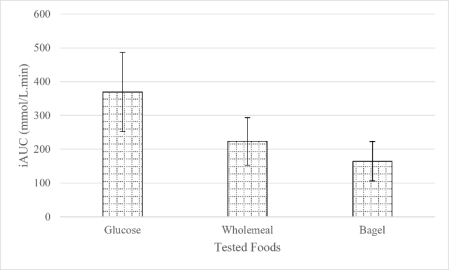
The trapezoidal method was used to calculate the area under curve (AUC) for the reference food and then being used to determine the GI. Next, Figure 3 exemplifies the iAUC comparison of the food in this study. The iAUC portrays the changes occurring in the blood glucose levels over the 120 minutes (2 hours) post-prandial to the test food consumption. As shown in Table 4, the mean AUC was higher for the wholemeal bread than the bagel. Accordingly, the GI of bagel was evaluated as the lowest which was 45.4, classified as low GI. The GI value difference was found to be significant (P<0.05).
Table 3. Blood glucose response in mmol/L of participants (presented as mean ± s.d.).

aTime

0

15

30

45

60

90

120

G

5.0 ± 0.3

7.8 ± 1.1

9.0 ± 1.5

9.5 ± 1.6

9.6 ± 1.5

7.7 ± 1.0

5.7 ± 1.1

WM

4.9 ± 0.2

5.1 ± 0.2

7.4 ± 1.1

8.0 ± 0.8

7.7 ± 1.0

6.6 ± 0.7

6.0 ± 1.0

B

5.0 ± 0.3

5.2 ± 0.2

7.0 ± 1.1

7.2 ± 0.9

7.2 ± 0.7

6.0 ± 0.9

6.0 ± 0.5

a- Time in minute; G - Glucose; WM – whole-meal bread; B - LowCarb Multiseed Cranberry Sourdough Bagel.
Figure 3. Comparison of iAUC mean value between tested food.
Table 4. AUC and GI of tested and reference food.

Test foods

iAUC (mmol/L.min)

GI (%)

P value

Glucose

369.3 ± 117.6

100.0 ± 0.0

Wholemeal

223.4 ± 70.6

62.0 ± 15.2

*0.001

Bagel

164.2 ± 58.3

45.4 ± 15.9

*P<0.01 using Kruskal-Wallis H test.
4. Discussion
This study aimed to evaluate the GI of a bakery product, LowCarb Multiseed Cranberry Sourdough Bagel. The present study found that it had a low GI (GI=45), which is within the low category (GI≤ 55). The value is substantially lower than the commercial brand wholemeal bread (GI=62) tested, which falls in the medium GI category. Following this finding, the bagel may trigger a slower postprandial glycaemic response as compared to the commercial wholemeal bread despite both being carbohydrate-containing food.
Bagel is a type of bread roll which follows a basic formulation or recipe of a bread (i.e. flour, salt, yeast and water). However, variation in bagel characteristics depends on flour quality and the process in the bagel production, namely the duration, temperature and fermentation of the dough and they are often produced with high protein (13-16%) wheat flour which contributes to the characteristic chewy textures . The lower GI observed in the present tested bagel may be associated with its relatively higher protein content, which is 38.0g which encompasses 17.5% of the total weight. Protein has been reported to attenuate postprandial glycaemic response when consumed with carbohydrate-containing food, through delayed gastric emptying, modulation of gastrointestinal hormone secretion thus reducing availability of carbohydrate for rapid digestion and absorption . Similarly, a systematic review of breads reported that higher protein content may contribute to lower GI values, although the finding is also affected by the formulation and the manufacturing process .
More importantly, the quality of bagel is usually defined by its formulation or recipe that imparts volume, texture, colour and flavour . With public awareness on nutrition and health rising nowadays, sourdough is getting more attention for its health benefits at the same time improving the quality of bakery products . Hence, sourdough is being used in this bagel formulation. The lower GI observed for this bagel may be attributed to several characteristics of the product, particularly the sourdough fermentation. Nutritional properties of food products are typically associated with their final chemical composition and their bioactive constituents . In this case, during sourdough fermentation, microbial activity can lead to the production of organic acids, which influence starch digestion hence the glucose availability . Consequently, sourdough fermentation has been proposed as a potential means for the attenuation of post-prandial blood glucose level.
Additionally, the incorporation of multiple seeds (brown flaxseed, chia seed, sunflower seed, white sesame, black sesame) and cranberry may have further contributed to the relatively lower GI of the bagel. When sourdough fermentation is combined with the inclusion of dietary fibre in total of 5-10%, the GI can drop below 55 . In the present study, the tested bagel contains 30g of dietary fibre out of the 217.39 g of the bagel’s weight which specifically contains higher (13.8%) dietary fibre than the suggested range, which confers the desired slower glycaemic response. Meanwhile, compared to the tested commercial wholemeal bread, it contains a lower dietary fibre, which is 8.4g, which constitutes 5.5% of the total weight of 152.0g. This explains the lower GI value of the bagel and it aligns with a previous study by Giuntini et al. (2022) that demonstrates dietary fibre increases the viscosity of the gastrointestinal content and potentially delays carbohydrate digestion and absorption.
The difference between the bagel and the commercial wholemeal bread also highlights that the wholemeal characteristic alone does not predict a lower glycaemic response . Although wholemeal bread generally contains more fibre, the GI can vary considerably depending on the specific bread volume, formula or recipe, starch characteristics as well as manufacturing process . The commercial wholemeal bread may contain ingredients and processing that result in more rapid starch digestion. Therefore, the lower GI observed for the bagel may reflect the combined effect of its formulation and processing rather than the sourdough fermentation alone.
From another perspective, a GI of 45 indicates that the LowCarb Multiseed Cranberry Sourdough Bagel is a low GI food based on the GI classification system. A lower GI product is a useful component for dietary strategies aimed at moderating post-prandial glucose level, particularly when planning for a diet appropriate for T2DM patients or individuals who are concerned with glycaemic control. However, the present findings should also be interpreted within its limitations. A key limitation is the absence of a control sample, particularly a conventional non-sourdough bagel, tested under the same experimental conditions. Including wholemeal bread as a comparator would have provided a more direct assessment of the glycaemic response to the LowCarb Multiseed Cranberry Sourdough Bagel relative to a commonly consumed bread product. Nevertheless, differences in their nutritional composition, including carbohydrate content, dietary fibre, protein, and fat, as well as their physical structure and processing methods, may independently influence GI. Therefore, a comparison with wholemeal bread alone would not allow the observed GI to be attributed specifically to sourdough fermentation or the inclusion of multiple seeds and cranberries. Ideally, future studies should incorporate compositionally matched control breads, including a non-sourdough bagel with a similar formulation and controls with and without multiple seeds and cranberries, to distinguish the respective contributions of fermentation, ingredient composition, and processing characteristics to the glycaemic response. Furthermore, comparing the bagel directly with conventional wholemeal bread would help establish its glycaemic performance against an established food. Such comparisons would strengthen the interpretation of the findings and provide more robust evidence regarding the potential role of the LowCarb Multiseed Cranberry Sourdough Bagel in dietary strategies for glycaemic management.
5. Conclusion
In the present study, the LowCarb Multiseed Cranberry Sourdough Bagel, demonstrated a low GI of 45. The low GI is relatively due to the combined effect of sourdough and other ingredients namely high protein and dietary fibre. Further research is warranted using controlled formulations or recipes, and a larger sample size that would be more constructive to establish the contribution for each component on the glycaemic response. From the Malaysian dietary perspective, the development of this bagel is relevant to add more health-conscious options for bakery products. It is also suggested that products with a low GI are considered in daily diet for its benefits for health, distinctly in managing and preventing T2DM as well as other NCD such as obesity and cardiovascular diseases.
Abbreviations

BMI

Body Mass Index

iAUC

Incremental Area Under the Curve

GI

Glycaemic Index

Acknowledgments
The authors would like to extend this acknowledgement for Yooky Bakery Sdn. Bhd., research enumerators and all volunteers for their participation.
Author Contributions
Sa’ida Munira Johari: Conceptualization, Formal Analysis, Writing – original draft, Writing – review & editing
Caleb Mok Jun Wen: Data curation, Investigation, Methodology, Project administration, Resources
Chua Kai Jia: Conceptualization, Methodology, Resources, Supervision
Data Availability Statement
The data is available from the corresponding author upon reasonable request.
Conflicts of Interest
The authors declare no conflicts of interest.
References
[1] Ministry of Health, Malaysia. National Health & Morbidity Survey (NHMS) 2023: Non-communicable diseases and healthcare demand. 2023, MOH/S/IKU 221.24(IL)-e: 1-38.
[2] Ministry of Health Malaysia. National Health & Morbidity Survey (NHMS) 2019: Non-communicable diseases: Risk factors and other health problems. 2019. National Health Morbidity Survey.
[3] Zafar, M. I., Mills, K. E., Zheng, J., Regmi, A., Hu, S. Q., Gou, L., & Chen, L. L. Low-glycaemic index diets as an intervention for diabetes: a systematic review and meta-analysis. The American journal of clinical nutrition. 2019, 110(4), 891-902.
[4] Ojo, O., Ojo, O. O., Adebowale, F., & Wang, X. H. The effect of dietary glycaemic index on glycaemia in patients with type 2 diabetes: a systematic review and meta-analysis of randomized controlled trials. Nutrients. 2018, 10(3), 373.
[5] Song, S. J., Lee, J. E., Paik, H. Y., Park, M. S., & Song, Y. J. Dietary patterns based on carbohydrate nutrition are associated with the risk for diabetes and dyslipidemia. Nutrition research and practice. 2012, 6(4), 349-356.
[6] Poulain, J. P., Mognard, E., Kong, J., Yuen, J. L., Tibère, L., Laporte, C., & Noor, I. M. Much more than food: The Malaysian breakfast, a socio-cultural perspective. Sustainability. 2023, 15(3), 2815.
[7] Ministry of Health Malaysia. Clinical Practice Guidelines: Management of type 2 diabetes mellitus. 6th ed. Putrajaya: Ministry of Health Malaysia; 2020.
[8] Stamataki, N. S., Yanni, A. E., & Karathanos, V. T. Bread making technology influences postprandial glucose response: a review of the clinical evidence. British Journal of Nutrition. 2017, 117(7), 1001-1012.
[9] Rolim, M. E., Fortes, M. I., Von Frankenberg, A., & Duarte, C. K. Consumption of sourdough bread and changes in the glycaemic control and satiety: A systematic review. Critical Reviews in Food Science and Nutrition. 2024, 64(3), 801-816.
[10] Ribet, L., Dessalles, R., Lesens, C., Brusselaers, N., & Durand-Dubief, M. Nutritional benefits of sourdoughs: A systematic review. Advances in Nutrition. 2023, 14(1), 22-29.
[11] Demirkesen-Bicak, H., Arici, M., Yaman, M., Karasu, S., & Sagdic, O. Effect of different fermentation condition on estimated glycaemic index, in vitro starch digestibility, and textural and sensory properties of sourdough bread. Foods. 2021, 10(3), 514.
[12] Arora, K., Ameur, H., Polo, A., Di Cagno, R., Rizzello, C. G., & Gobbetti, M. Thirty years of knowledge on sourdough fermentation: A systematic review. Trends in Food Science & Technology. 2021, 108, 71-83.
[13] Alasalvar, C., Chang, S. K., Bolling, B., Oh, W. Y., & Shahidi, F. Specialty seeds: Nutrients, bioactives, bioavailability, and health benefits: A comprehensive review. Comprehensive Reviews in Food Science and Food Safety. 2021, 20(3), 2382-2427.
[14] Chi, C., Shi, M., Zhao, Y., Chen, B., He, Y., & Wang, M. Dietary compounds slow starch enzymatic digestion: A review. Frontiers in Nutrition. 2022, 9, 1004966.
[15] Brouns, F., Bjorck, I., Frayn, K. N., Gibbs, A. L., Lang, V., Slama, G., & Wolever, T. M. S. Glycaemic index methodology. Nutrition research reviews. 2005, 18(1), 145-171.
[16] Lasekan, O., Dabaj, F., Muniandy, M. et al. Characterization of the key aroma compounds in three types of bagels by means of the sensomics approach. BMC Chemistry. 2021, 15, 16.
[17] Meng, H., Matthan, N. R., Ausman, L. M., & Lichtenstein, A. H. Effect of macronutrients and fiber on postprandial glycemic responses and meal glycemic index and glycemic load value determinations. The American journal of clinical nutrition. 2017, 105(4), 842-853.
[18] Romao, B., Falcomer, A. L., Palos, G., Cavalcante, S., Botelho, R. B. A., Nakano, E. Y., & Zandonadi, R. P. Glycemic index of gluten-free bread and their main ingredients: A systematic review and meta-analysis. Foods. 2021, 10(3), 506.
[19] Montemurro, M., Coda, R., Rizzello, C. G. Recent advances in the use of sourdough biotechnology in pasta making. Foods. 2019, 8, 129.
[20] Alkay, Z., Falah, F., Cankurt, H., & Dertli, E. Exploring the Nutritional Impact of Sourdough Fermentation: Its Mechanisms and Functional Potential. Foods. 2024, 13(11), 1732.
[21] Wolter, A., Hager, A. S., Zannini, E., & Arendt, E. K. In vitro starch digestibility and predicted glycemic indexes of buckwheat, oat, quinoa, sorghum, teff and commercial gluten-free bread. Journal of Cereal Science. 2013, 58(3), 431-436.
[22] Giuntini, E. B., Sardá, F. A. H., & de Menezes, E. W. The effects of soluble dietary fibers on glycemic response: an overview and futures perspectives. Foods. 2022, 11(23), 3934.
[23] Verdonck, C., Lambrechts, E., Pradal, I., De Vuyst, L., Verté, F., Hellemans, T., & Courtin, C. M. Sourdough starter culture and breadmaking process impact wholemeal bread characteristics associated with starch digestibility. Current Research in Food Science, 2025, 101208.
[24] Lau, E., Soong, Y. Y., Zhou, W., & Henry, J. Can bread processing conditions alter glycemic response?. Food Chemistry. 2015, 173, 250-256.
Cite This Article
  • APA Style

    Johari, S. M., Wen, C. M. J., Jia, C. K. (2026). Evaluation of Glycaemic Index of LowCarb Multiseed Cranberry Sourdough Bagel. International Journal of Nutrition and Food Sciences, 15(6), 339-346. https://doi.org/10.11648/j.ijnfs.20261506.14

    Copy | Download

    ACS Style

    Johari, S. M.; Wen, C. M. J.; Jia, C. K. Evaluation of Glycaemic Index of LowCarb Multiseed Cranberry Sourdough Bagel. Int. J. Nutr. Food Sci. 2026, 15(6), 339-346. doi: 10.11648/j.ijnfs.20261506.14

    Copy | Download

    AMA Style

    Johari SM, Wen CMJ, Jia CK. Evaluation of Glycaemic Index of LowCarb Multiseed Cranberry Sourdough Bagel. Int J Nutr Food Sci. 2026;15(6):339-346. doi: 10.11648/j.ijnfs.20261506.14

    Copy | Download

  • @article{10.11648/j.ijnfs.20261506.14,
      author = {Sa’ida Munira Johari and Caleb Mok Jun Wen and Chua Kai Jia},
      title = {Evaluation of Glycaemic Index of LowCarb Multiseed Cranberry Sourdough Bagel},
      journal = {International Journal of Nutrition and Food Sciences},
      volume = {15},
      number = {6},
      pages = {339-346},
      doi = {10.11648/j.ijnfs.20261506.14},
      url = {https://doi.org/10.11648/j.ijnfs.20261506.14},
      eprint = {https://article.sciencepublishinggroup.com/pdf/10.11648.j.ijnfs.20261506.14},
      abstract = {Background: Glycaemic index (GI) is a scale that ranks carbohydrate food on how much they elevate blood glucose. It is useful in dietary planning because it provides an indication of how to make informed decisions about carbohydrate choices to control post-prandial blood glucose level, simultaneously being advantageous for the management of type 2 diabetes mellitus (T2DM). Objective: This study aimed to determine the glycaemic index of the latest bakery product, LowCarb Multiseed Cranberry Sourdough Bagel. Methodology: A total of ten (10) healthy participants aged 24 to 36 (mean 28.8 ± 4.5) years old were involved. The participants fasted overnight for 10-12 hours and consumed 50 grams of carbohydrate portions of reference and test food i.e. the wholemeal bread and the bagel. Next, finger capillary blood glucose data were collected at fasting (0 minute), 15, 30, 45, 60, 90 and 120 minutes respectively after consumption of the tested food. The GI was determined using the ratio of incremental area under curve to reference food i.e. Glucolin®. Result: The recently produced bagel has a GI of 45, categorized as low and it is lower than the commercial brand wholemeal bread, GI=62 (pConclusion: Evaluation of GI renders fundamental data that may intensify better dietary advocacy for T2DM as well as general health. The availability of such information is crucial for securing the quality of a bakery product predominantly for healthcare professionals and at consumers’ end. The development of this low GI bagel may also broaden the range of bakery options for Malaysian consumers seeking for healthier carbohydrate option.},
     year = {2026}
    }
    

    Copy | Download

  • TY  - JOUR
    T1  - Evaluation of Glycaemic Index of LowCarb Multiseed Cranberry Sourdough Bagel
    AU  - Sa’ida Munira Johari
    AU  - Caleb Mok Jun Wen
    AU  - Chua Kai Jia
    Y1  - 2026/11/24
    PY  - 2026
    N1  - https://doi.org/10.11648/j.ijnfs.20261506.14
    DO  - 10.11648/j.ijnfs.20261506.14
    T2  - International Journal of Nutrition and Food Sciences
    JF  - International Journal of Nutrition and Food Sciences
    JO  - International Journal of Nutrition and Food Sciences
    SP  - 339
    EP  - 346
    PB  - Science Publishing Group
    SN  - 2327-2716
    UR  - https://doi.org/10.11648/j.ijnfs.20261506.14
    AB  - Background: Glycaemic index (GI) is a scale that ranks carbohydrate food on how much they elevate blood glucose. It is useful in dietary planning because it provides an indication of how to make informed decisions about carbohydrate choices to control post-prandial blood glucose level, simultaneously being advantageous for the management of type 2 diabetes mellitus (T2DM). Objective: This study aimed to determine the glycaemic index of the latest bakery product, LowCarb Multiseed Cranberry Sourdough Bagel. Methodology: A total of ten (10) healthy participants aged 24 to 36 (mean 28.8 ± 4.5) years old were involved. The participants fasted overnight for 10-12 hours and consumed 50 grams of carbohydrate portions of reference and test food i.e. the wholemeal bread and the bagel. Next, finger capillary blood glucose data were collected at fasting (0 minute), 15, 30, 45, 60, 90 and 120 minutes respectively after consumption of the tested food. The GI was determined using the ratio of incremental area under curve to reference food i.e. Glucolin®. Result: The recently produced bagel has a GI of 45, categorized as low and it is lower than the commercial brand wholemeal bread, GI=62 (pConclusion: Evaluation of GI renders fundamental data that may intensify better dietary advocacy for T2DM as well as general health. The availability of such information is crucial for securing the quality of a bakery product predominantly for healthcare professionals and at consumers’ end. The development of this low GI bagel may also broaden the range of bakery options for Malaysian consumers seeking for healthier carbohydrate option.
    VL  - 15
    IS  - 6
    ER  - 

    Copy | Download

Author Information
  • Alpro Academy, Negeri Sembilan, Malaysia

    Biography: Sa’ida Munira Johari is a dedicated community dietitian at Alpro Pharmacy with a strong academic background and a passion for advancing nutrition and dietetics. She earned her Bachelor of Dietetics (Hons) in 2009 and completed her Master of Health Sciences (Dietetics) in 2012, both from Universiti Kebangsaan Malaysia. Motivated by a commitment to deepen her knowledge and make a meaningful impact, Sa’ida has been actively engaged in various research initiatives. Her work primarily focuses on community nutrition, dietary interventions for managing chronic diseases, and promoting sustainable dietary practices. Through her combined clinical expertise and research experience, she strives to improve health outcomes and encourage healthier lifestyles in the communities she serves.

  • Alpro Academy, Negeri Sembilan, Malaysia

    Biography: Caleb Mok Jun Wen is a nutritionist at Alpro Pharmacy. He earned his BSc (Hons) in Nutrition with Wellness from UCSI University in 2022. At Alpro Pharmacy, he is involved in the research and development of nutrition-focused products, contributing to product formulation, nutritional evaluation, and product management. His work involves translating scientific evidence into practical product development and evaluating the nutritional attributes of foods to support informed dietary choices. With a strong interest in nutrition research, product innovation, and metabolic health, he is committed to applying evidence-based nutrition to the development of accessible food products that support better health outcomes.

  • Alpro Academy, Negeri Sembilan, Malaysia

    Biography: Chua Kai Jia graduated from International Medical University (IMU) in year 2013 and started her career as a Dietitian in the hospital setting. She then pursued an MBA and continue her career as a community dietitian at Alpro Pharmacy. She is a member of Malaysian Dietitian’s Association (MDA) and recently received the Special Recognition Award from MDA. She has a special passion in Diabetes Management which ended her in the SugO365 team. SugO365 is a program to help Diabetic community achieve their health target through sustainable lifestyle changes.