2. Literature Review
2.1. Concept of Culture
From service standards to customer innovativeness, culture has an effect on many facets of consumer behaviour. It was argued that there could also be cultural variations at an ethnic level
| [10] | Şahin, F Taras, V, Çetin, F, Tavoletti, E, Askun, D., & Florea, L. (2024). A configurational approach for analyzing cultural values and performance in Global Virtual Teams. International Business Review, 33 (1), 102 – 107. |
[10]
. This is reflected in the increased interest of both researchers and practitioners in ethnic marketing
| [11] | Salleh, S. S. M. M., Fareed, M., Mustafa, A. & Laeeq, H. (2018). Customer Satisfaction and Loyalty Intention through Brand Image Benefit in the Context of Malaysian Cosmetic Products. International Journal of Organization & Business Excellence, 3(1), 1-12. |
| [12] | Van Everdingen Y, Waarts E. (2003). The effect of national culture on the adoption of innovations. Marketing Lett; 14(3): 217-32. |
[11, 12]
. There is, however, little empirical research focusing on the cultural effect of consumer product marketing and its impact on the volume of sales. Tylor
| [13] | Taylor, T. (2006). An analysis of the cultural characteristics of the emerging black tourist market in Vanderbijlpark. M. Tech. dissertation, Vaal University of Technology, Vanderbijlpark. |
[13]
gives one of the earliest descriptions of culture as "the complex whole that includes knowledge, belief, art, morals, customs and any other abilities and habits acquired by man as a member of society." As facets of human life in a society are influenced, subsequent contributions share the all-inclusive essence of community. The difficulty of separating purely cultural variables from other factors on the macro level further complicates the concept of culture. Culture is intrinsically distinct from other macro-environmental considerations.
Cultural impacts on consumer goods marketing significantly drive sales volume by shaping consumer perceptions, needs, and buying behaviors, requiring tailored strategies (localization, adapting messaging) to resonate with local values (religion, family, social norms), leading to higher engagement, brand loyalty, and ultimately, greater market success, as seen with global brands adapting products
| [6] | Bensalem, S. & Benouhiba, N. (2024). The Impact of Marketing Strategy on Cultural Values: Analyzing the Consumer-Brand Relationship from a Socioeconomic and Cultural Perspective. Journal for Educators, Teachers and Trainers, 16 (1), 166 – 175. |
[6]
. Understanding these cultural nuances from beliefs about life and individuality to digital preferences allows marketers to effectively connect, boosting sales by aligning promotions with specific cultural contexts, rather than using a "one-size-fits-all" approach.
The cultural impact of marketing consumer goods significantly influences the sales volume of beverage drinks by shaping consumer preferences, purchasing habits, brand perception, and overall market reception. Effectively tailored marketing campaigns that resonate with local cultures can directly boost sales and brand loyalty, while ignoring cultural nuances can lead to campaign failure and reduced sales
| [10] | Şahin, F Taras, V, Çetin, F, Tavoletti, E, Askun, D., & Florea, L. (2024). A configurational approach for analyzing cultural values and performance in Global Virtual Teams. International Business Review, 33 (1), 102 – 107. |
[10]
.
The definition of culture, as Tylor gave in the earliest period, is "the complex whole that includes knowledge, morality, custom, belief, art or any other ability and habit acquired by man as a member of society"
| [7] | Soares, A. M, Farhangmehr M, and Shoham, A. (2017). Hofstede's dimensions of culture in international marketing studies. Journal of Business Research, 277-284. |
[7]
. Tylor's contributions share how culture in an all-inclusive way affects various aspects of human life in a society. Defining culture is further complicated and made difficult by the need to clearly distinguish cultural variables from other influences at the macro level. In the economic, political, legal, social, linguistic, educational, technological and industrial environments in which individuals reside, cultural activities differ
| [14] | Sekaran U. (2013). Methodological and theoretical issues and advancements in cross-cultural research. Journal of International Business Studies; 14: 61-73. |
[14]
. Therefore, culture differs intrinsically from other macro-environmental factors influencing human activities and practices of society. However, as it may be difficult to discern only cultural influences from other macro-environmental influences, there are no clear distinctions between these interrelated cultural and macro environmental factors.
Cultural actions and perceptions of socialization could be derived, or a mixture of these attributes, from religious beliefs, economic and political demands, etc. Sekaran
| [14] | Sekaran U. (2013). Methodological and theoretical issues and advancements in cross-cultural research. Journal of International Business Studies; 14: 61-73. |
[14]
noted that figuring out these variables in a clear-cut manner would not only be extremely difficult, but it could be totally impossible. This means that what a person sees as taboo is seen as a social way of life by some other people. With this in mind and knowledge available, foreign marketers need to identify possibilities and risks in the business segments of interest. Although definitional challenges present a challenge to cross-cultural study, the impact of culture on consumption and marketing has attracted rising attention in recent years. In order to allow cultural inclusion in scientific research, Lenartowicz and Roth
| [15] | Lenartowicz T, and Roth K. (2011). Culture assessment revisited: the selection of key informants in IB cross-cultural studies. Annual meeting of the Academy of International Business. |
[15]
indicated that a variety of methods have been used to identify and operationalize culture.
While definitional difficulties pose a challenge to cross-cultural analysis, in recent years the influence of culture on consumption and marketing has increased
| [4] | Yusof, A. Q. M., Harnam, B. H. M. H., & Idrus, S. (2025). The Impact of Cultural Dimensions and Cultural Adaptations on Marketing Performance of Global Firm. The International Journal of Research and Innovation in Social Science (IJRISS), IX (XIII), 490 – 497. |
[4]
Language offers 'an interpretative code or framework for environmental organization and presentation,' but it is not a good ethnicity indicator and cannot be used on its own to explain different behaviors across subcultures and cultures. Possessions/artefacts make it possible for culture to function more tangibly, as goods embody tangible evidence of cultural value
| [4] | Yusof, A. Q. M., Harnam, B. H. M. H., & Idrus, S. (2025). The Impact of Cultural Dimensions and Cultural Adaptations on Marketing Performance of Global Firm. The International Journal of Research and Innovation in Social Science (IJRISS), IX (XIII), 490 – 497. |
[4]
. Finally, values/credulity systems (e.g., fatalism, materialism, and relationships with others) as operational principles of culture were considered to be instrumental in understanding cross-cultural consumer behaviour.
2.1.1. Cultural Effects on the Pattern of Consumption
Consumption and production are organized in an unequal balance according to the patterns of consumption under Foucauldian thinking. Consumption is mainly a private practice that takes place at home or during play, and does not generate any benefit for community or culture
| [16] | Yaveroglu I, Donthu N. (2002). Cultural influences on the diffusion of new products. Journal of International Consumer Market; 14(4): 49-63. |
[16]
. The sole purpose of consumption was to replenish the individual, allowing them to resume their role as producers. This production was the only truly meaningful activity in the public domain, giving meaning and importance to human life. However, as the transition from modernism to post-modernism took place, the value of consumption began to change. The act of consumption itself has become beneficial to society; the "working family" has begun to become a "consuming family" and the act of consumption has changed from one of pure use and personal gratification to an act which has a direct effect on society as a whole
| [17] | Firat, A. F. and Venkatesh, A. (1995). Liberatory postmodernism and the re-enchantment of consumption, Journal of Consumer Research, 22(3), 239-267. |
[17]
. This change in the cultural sense of consumption was reflected in the growing awareness of the individual meaning(s) expressed in the act of consumption.
Consumption itself has become a powerful way of indoctrinating people into society as well as a mechanism through which they make sense of culture and regulate it by adding individual meanings to the goods they consume
| [8] | Osakwe, C. N., Ogunmokun, O. A., Adeola, O., & Jibril, A. B. (2024). Cultural values and voice as determinants of customers' marketing research cooperation: Afuzzy set perspective. Internationa Journal of Consumer Studies, 48(3), e13055. |
| [18] | Steenkamp J, Hofstede F, and Wedel M. (2001). A cross-national investigation into the individual and national cultural antecedents of consumer innovativeness. Journal of Marketing; 63: 55-69 [April]. |
[8, 18]
. As these ideas moved from the individual to the level of society, goods became a means of conveying messages, values and symbols to the general public. This new symbolic definition of products in society is structured and gives structure to four different types of capital: economic, cultural, educational and symbolic. One sees an individual defined as a socially focused consumer at the intersection of these types of capital.
2.1.2. Nigeria's Growth of Culture
The multiple ethnic groups of Nigeria obviously influenced Nigerian culture
| [4] | Yusof, A. Q. M., Harnam, B. H. M. H., & Idrus, S. (2025). The Impact of Cultural Dimensions and Cultural Adaptations on Marketing Performance of Global Firm. The International Journal of Research and Innovation in Social Science (IJRISS), IX (XIII), 490 – 497. |
[4]
. The country has more than 521 languages and over 250 ethnic groups/dialects. The four largest ethnic groups are the Yoruba predominant in the southwest, the Igbo predominant in the southeast, the Edo/Niger Delta predominant in the region between Yorubaland and Igboland known as the Middle Belt People and the Hausa and Fulani predominant in the north. About 75 percent of the Edo/Niger Delta appears to be Christian while the remaining 25 percent worship deities, ‘Ogu’. This group is accompanied by the Ibibio/Annang/Efik people of the south-eastern coast of Nigeria and the Ijaw of the Niger Delta.
Adefuye
| [19] | Adefuye, A. (2011). Culture and making a new Nigeria. Annual lecture of the Centre for Black and African Arts and Culture (CBAAC), Abuja. |
[19]
further explained that the rest of Nigeria's ethnic groups (sometimes referred to as 'minorities') are found throughout the country, but especially in the center and north of the belt. The Fulani are traditionally nomadic and are predominantly culturally Muslim in western and central Africa. In addition to Efik, Ibibio, the Igbos are predominantly Christian, the Annangs are mainly Christian
| [4] | Yusof, A. Q. M., Harnam, B. H. M. H., & Idrus, S. (2025). The Impact of Cultural Dimensions and Cultural Adaptations on Marketing Performance of Global Firm. The International Journal of Research and Innovation in Social Science (IJRISS), IX (XIII), 490 – 497. |
[4]
, while the Hausas are predominantly Muslim. There is, on the other hand, a compromise between the Yoruba people who adhere to both Islam and Christianity. Nigeria's ethnic groups, whose views are frequently mixed up with Christian beliefs and Islam.
Nigerian food is embellished by a rich blend of traditionally African carbohydrates such as yam and cassava and vegetable soups made from native green leaves
| [20] | Eban, K. (2019). Bottle of lies: The inside story of the generic drug boom. New York City, NY: HarperCollins. |
[20]
. Garri is a fried powdered Cassava that can easily be eaten as a meal and is very inexpensive and praised for the strength it provides by Nigerians. Yam is either fried in oil or pounded to make a mashed potato such as Yam pottage. Nigerian beans, which are very different from green peas, are popular in general. In Nigerian dishes, Bush's wild game meat, including antelope and giraffes, is also a popular delicacy. According to Eban
| [20] | Eban, K. (2019). Bottle of lies: The inside story of the generic drug boom. New York City, NY: HarperCollins. |
[20]
, fermented palm products are used as fermented cassava for the development of traditional liquor, Palm Wine. As culture is dynamic, some Nigerians do not like spicy food, even though most Nigerian food in the western and southern parts of the country is spicy, even compared to Indian food. Traditional Nigerian dishes include eba, yam, iyan, fufu, etc. with soups such as okra, ogbon, egusi, and so on.
Other traditional cultural expressions are used in the different masquerades of Nigeria, such as the Eyo masquerades, the Ekpe and Ekpo Masquerades of the Efik/Ibibio/Annang/Igbo peoples of coastal southeastern Nigeria, and the Northern Edo Masquerades. A very significant source of information about modern Nigerian art is the Virtual Museum of Modern Nigerian Art, run by the Pan-Atlantic University of Lagos
| [20] | Eban, K. (2019). Bottle of lies: The inside story of the generic drug boom. New York City, NY: HarperCollins. |
[20]
. Information on the business culture of Nigeria is given in real time by the Nigerian Investment & Development Commission and Naija Invest Gateway.
De Mooij and Hofstede
| [21] | De Mooija, M. and Hofstede, G. (2002). Convergence and divergence in consumer behavior: implications for international retailing. Journal of Retailing 78 (2002) 61-69. |
[21]
noted that, as has recently been discussed in the context of retailing strategies, an understanding of culture can help in making marketing decisions on whether to follow standardized or regional strategies. Study of social science and management provides insights into the effect on consumer needs and the subsequent performance of brand image policies on global markets' cultural and socioeconomic characteristics.
2.1.3. Cultural Influence on Alcoholic and Non-alcoholic Drinks in Nigeria
Adedigba
| [22] | Adedigba, A. (2019). South-south leads Nigeria’s huge alcohol consumption, NBS data shows. Premium Times. June. 4: 13. |
[22]
asserted that alcohol consumption is a big business in Nigeria with consumers spending just less than a quarter of a trillion naira in 2016. According to the data from the nation’s statistics bureau, in 2016 alone, Nigerians spent at least N208 billion on alcohol - this amount was more than the budget of Ondo State for that year. Adedigba
| [22] | Adedigba, A. (2019). South-south leads Nigeria’s huge alcohol consumption, NBS data shows. Premium Times. June. 4: 13. |
[22]
lamented that a breakdown of the nation’s sobriety pattern shows the South South zone is the least restrained community of alcohol consumers. There, N74.4 billion was spent on alcohol, making the states of Delta, Edo, Bayelsa, Rivers, Akwa Ibom, and Cross Rivers the section of the country inhabiting the most enthusiastic drinkers in the year. The seven states of Jigawa, Kaduna, Katsina, Kebbi, Kano, Sokoto, and Zamfara, making up the North West zone, comparatively have the most restrained drinkers. But they still spent at least N2.6 billion to assuage the palate of alcohol drinkers
| [22] | Adedigba, A. (2019). South-south leads Nigeria’s huge alcohol consumption, NBS data shows. Premium Times. June. 4: 13. |
[22]
.
The rate of upsurge of these out-door drinking places may indicate that drinking is embedded in Nigerian subcultures such as the Yoruba people of the South-west and the Ijaw people, the Igbo people and the Ibibio people of the South-south of Nigeria, and like in some developed countries of the world, may be part of everyday life
| [23] | Lasebikan V. O. and Gureje O. (2015). Lifetime and 7-day alcohol consumption in the elderly, prevalence and correlates: reports from the Ibadan study of aging. Afr J Med Med Sci.; 44(1): 33-41. |
[23]
. Another factor could be the characteristic group-binging of alcohol consumption in Nigeria, which exemplifies one of the activities that might be more permissive in open and outdoor social places
| [24] | Gureje, O, and Lasebikan V. (2006). Alcohol beverages type, problem drinking and self-reported health status. Nigeria J Psychiatry. 2006; 4(1): 4-8. |
[24]
. There are indications that the context where drinking occurs may contribute to specific alcohol related problems, and one mechanism by which drinking contexts may contribute to alcohol use and alcohol related-problems is by self-selection of drinkers of a similar drinking pattern
| [25] | Lasebikan V. O, and Ola, B. A. (2016). Prevalence and correlates of alcohol use among a sample of Nigerian semirural community dwellers in Nigeria. J Addict. 2016; 2016: 6. |
| [26] | Lasebikan, V. O., Ayinde, O., Odunleye, M., Adeyefa, B., Adepoju, S. and Fakunle, S. (2018). Prevalence of alcohol consumption and alcohol use disorders among outdoor drinkers in public open places in Nigeria. Lasebikan et al. BMC Public Health (2018) 18: 400, 1 - 10. |
[25, 26]
.
2.1.4. Key Cultural Influences on Sales Volume
Religious beliefs or societal values dictate product acceptance and preference. Cultural norms around family, festivals, and social interactions influence purchasing decisions, driving demand for culturally relevant products or promotions
| [6] | Bensalem, S. & Benouhiba, N. (2024). The Impact of Marketing Strategy on Cultural Values: Analyzing the Consumer-Brand Relationship from a Socioeconomic and Cultural Perspective. Journal for Educators, Teachers and Trainers, 16 (1), 166 – 175. |
[6]
. Adapting messaging to local languages and communication styles ensures relevance and avoids misunderstandings, boosting engagement. Culture shapes how consumers perceive brand quality, price, and security, affecting trust and willingness to purchase. Cultural context influences online behaviors, from price sensitivity and security concerns to the path to purchase.
According to Abugu, Iheanacho and Igwe
| [27] | Abugu, J. O., Iheanacho, A. O. and Igwe, A., (2019). Evaluation of Students’ Consumption of Beer in Higher Institutions of Learning in Nigeria: Propelling Factors for Choice. Journal of Reviews on Global Economics, 8, 1097-1107. |
[27]
when marketing aligns with a consumer's cultural identity and values, it fosters a strong emotional connection, leading to enhanced brand loyalty and repeat purchases. Understanding subcultures (based on geography, ethnicity, or religion) allows for targeted marketing strategies that cater to specific needs and preferences, leading to more efficient resource allocation and higher conversion rates
| [27] | Abugu, J. O., Iheanacho, A. O. and Igwe, A., (2019). Evaluation of Students’ Consumption of Beer in Higher Institutions of Learning in Nigeria: Propelling Factors for Choice. Journal of Reviews on Global Economics, 8, 1097-1107. |
[27]
.
Yusof, Harnam and Idrus
| [4] | Yusof, A. Q. M., Harnam, B. H. M. H., & Idrus, S. (2025). The Impact of Cultural Dimensions and Cultural Adaptations on Marketing Performance of Global Firm. The International Journal of Research and Innovation in Social Science (IJRISS), IX (XIII), 490 – 497. |
[4]
asserted that companies that successfully adapt their products and promotions to local cultural nuances gain a significant competitive advantage over those with a standardized, one-size-fits-all approach. New beverage introductions are more successful when they consider cultural factors. Fadupin, Ogunkunle and Gabriel
| [28] | Fadupin G. T., Ogunkunle M. O. and Gabriel O. O (2014). Knowledge, Attitude and Consumption Pattern of Alcoholic and Sugar Sweetened Beverages among Undergraduates in a Nigerian Institution. African Journal of Biomedical Research. Vol. 17 (May, 2014); 75-82. |
[28]
cited that a shift toward healthier, non-sugary drinks in certain markets requires a marketing approach that emphasizes health benefits to align with changing consumer awareness and preferences.
In conclusion, Raj and Gupta
| [9] | Raj, A., & Gupta, D. (2023). Impact of Cultural Differences on International Marketing Strategies. International Journal of Research in Engineering and Science (IJRES), 11(4), 144-148. |
[9]
iterated that leveraging cultural insights in the marketing of beverage drinks is not merely a beneficial practice but a critical necessity for driving sales volume and ensuring long-term market success. Cultural factors significantly impact the marketing and sales of both alcoholic and non-alcoholic drinks by shaping consumer preferences, social norms, purchasing habits, and marketing effectiveness
| [4] | Yusof, A. Q. M., Harnam, B. H. M. H., & Idrus, S. (2025). The Impact of Cultural Dimensions and Cultural Adaptations on Marketing Performance of Global Firm. The International Journal of Research and Innovation in Social Science (IJRISS), IX (XIII), 490 – 497. |
[4]
. Marketing strategies must align with these cultural elements to effectively drive sales volume.
2.1.5. Cultural Impact on Sales Volume of Alcoholic Drinks
Marketing for alcoholic beverages often leverages and reinforces existing cultural norms to increase consumption and sales
| [28] | Fadupin G. T., Ogunkunle M. O. and Gabriel O. O (2014). Knowledge, Attitude and Consumption Pattern of Alcoholic and Sugar Sweetened Beverages among Undergraduates in a Nigerian Institution. African Journal of Biomedical Research. Vol. 17 (May, 2014); 75-82. |
[28]
. Marketing contributes to an "alcogenic" environment by portraying alcohol use as a normal and desirable part of social gatherings, events, and celebrations, which in turn boosts sales volume. The industry uses complex strategies targeting specific demographic or ethnic groups, such as marketing malt liquor in predominantly African-American neighborhoods or flavored alcoholic beverages to young women, aligning with existing sub-cultural preferences or creating new ones. This targeted approach has been linked to increased consumption within those groups.
In some cultures, specific alcoholic drinks are tied to national identity or important rituals (e.g., toasting in China). Marketing campaigns that tap into this cultural heritage can significantly influence consumer behavior and purchasing habits, thereby increasing sales. Historically, alcohol consumption was often perceived as a "masculine" behavior. Marketing has helped shift these perceptions in some cultures, and as gender roles have become more balanced in certain societies, marketing to women has increased, impacting sales patterns across genders.
2.1.6. Cultural Impact on Sales Volume of Non-Alcoholic Drinks
The rise of the non-alcoholic (NoLo) market is a direct response to a cultural shift towards health consciousness and well-being
| [1] | Vinh, T. (2024). An Empirical Study on the Impacts of Cultural Factors on the Demand for Fast-Moving Consumer Goods. Journal of System and Management Sciences, 14 (3), 3, 66-81. |
[1]
. Growing cultural interest in physical and mental wellness, particularly among younger generations like Gen Z, has fueled demand for non-alcoholic alternatives. Marketing campaigns for NoLo drinks emphasize health benefits (e.g., "mindful drinking movement") to attract these consumers, leading to an increase in sales. In regions with strong religious beliefs prohibiting alcohol, non-alcoholic drinks serve as a permissible and culturally acceptable alternative, creating high-growth markets where alcohol sales are limited. Adedigba
| [22] | Adedigba, A. (2019). South-south leads Nigeria’s huge alcohol consumption, NBS data shows. Premium Times. June. 4: 13. |
[22]
recalled that marketing efforts for NoLo beverages aim to create new "drinking moments" in contexts where alcohol would typically be avoided (e.g., during "Dry January" or on weeknights). This expands consumption opportunities and can normalize the act of drinking alcohol-like products in new settings, potentially driving overall beverage sales. Mattison et al
| [2] | Mattison, T. F. & Brouthers, K. D. (2021). Digital consumer engagement: National cultural differences and cultural tightness. Journal of International Marketing, 29(4), 22-44. |
[2]
stated that NoLo products often share similar branding, packaging, and appearance to their alcoholic counterparts to fit seamlessly into social drinking cultures, making them an easy substitute and thereby increasing their sales volume.
The cultural context is a critical determinant of success for marketing beverages. Marketers must understand and adapt to prevailing cultural values, social norms, and beliefs to effectively influence consumer behavior and, ultimately, increase sales volume for both alcoholic and non-alcoholic drinks.
Fadupin, Ogunkunle, and Gabriel
| [28] | Fadupin G. T., Ogunkunle M. O. and Gabriel O. O (2014). Knowledge, Attitude and Consumption Pattern of Alcoholic and Sugar Sweetened Beverages among Undergraduates in a Nigerian Institution. African Journal of Biomedical Research. Vol. 17 (May, 2014); 75-82. |
[28]
earlier warned that consumption pattern of alcohol and sugar sweetened beverages for pleasure and in many other social gathering may be considered normal in many African traditions if taken in moderation, especially during ceremonies, however, there is likelihood of taking them in excess which could lead to social and health hazards. Also, the quantity and reasons for consumption of alcohol is changing from the role of fostering social cohesion to socio-political and economic structures, a means of showing off in public places, to feel high and feel sociable, to enhance sexual pleasures and other harmful use
| [28] | Fadupin G. T., Ogunkunle M. O. and Gabriel O. O (2014). Knowledge, Attitude and Consumption Pattern of Alcoholic and Sugar Sweetened Beverages among Undergraduates in a Nigerian Institution. African Journal of Biomedical Research. Vol. 17 (May, 2014); 75-82. |
[28]
. All these have resulted in increased burden of alcohol- related problems which has been estimated to exceed those relating to tobacco consumption.
2.2. Theoretical Review
2.2.1. Cultural Aspects of Hofstede
The Hofstede model is the most widely used national cultural construct in psychology, sociology, marketing and management studies
| [18] | Steenkamp J, Hofstede F, and Wedel M. (2001). A cross-national investigation into the individual and national cultural antecedents of consumer innovativeness. Journal of Marketing; 63: 55-69 [April]. |
| [29] | Sondergaard M. (1994). Research note: Hofstede's consequences: a study of reviews, citations and replications. Organisational Studies; 15(3): 447-56. |
[18, 29]
. Hofstede used 116,000 questionnaires from over 60,000 participants in seventy countries in his observational studies
| [5] | Hofstede G. (2001). Culture's consequences. 2nd ed. Thousand Oaks: Sage Publications. |
[5]
. Hofstede created five dimensions, which linked the dimensions to a society's demographic, geographical, economic, and political aspects, and each index was assigned to all nations. It is the most informative and robust in terms of the number of national culture samples. In addition, the framework is useful in formulating hypotheses for comparative cross-cultural analysis. The dimensions of Hofstede indicate a high degree of consistency between approaches compared to other approaches to unpacking the idea of culture, supporting the Hofstede paradigm's theoretical validity, and clarifying further use of its dimensions. Hofstede argued that cultural change is important enough to invalidate country index scores.
Hawkins & Mothersbaugh
| [30] | Hawkins, D. I., & Mothersbaugh, D. L. (2010). Consumer behavior: Building Marketing Strategy (11th Ed.) McGraw-Hill International. |
[30]
argues that it is possible to predict consumer behavior using a scoring system on appropriate cultural variables that would allow particular foreign trends of consumer behavior to be established. The following set of variables was further proposed by Hawkins & Mothersbaugh
| [30] | Hawkins, D. I., & Mothersbaugh, D. L. (2010). Consumer behavior: Building Marketing Strategy (11th Ed.) McGraw-Hill International. |
[30]
: class structure, language, context (low/high), interpersonal relationships, hierarchy of needs, gender role, role of children, territoriality, temporality, learning, work ethics, need for privacy, resource misuse, use of resources, family role in decision-making, family size, religiosity, traditional orientation, and technology.
From the early days of the press and newspapers, the evolution of the mass media has had a dramatic effect on the social conditions of modern life. As the press grew into a capitalist enterprise, it took on the role of a cultural actor, informing and swaying public opinion, as opposed to a vehicle solely concerned with covering the events of the day, becoming one of the primary gateways through which corporate interests and powerful individuals could directly influence the entire public sphere
| [31] | Fernandez D, Carlson D, Stepina L, Nicholson J. (1997). Hofstede's country classification 25 years later. Journal of Social Psychology, 137(1): 43-54. |
[31]
.
2.2.2. Normative Model by Park, Jaworski, and Maclnnis (1986)
Three types of brand images were examined using the normative model suggested by Park, Jaworski, and Maclnnis
| [32] | Park, C. W., Bernard J. Jaworski. and Deborah J. Maclnnis (1986). Strategic Brand Concept- Image Management. Journal of Marketing. 50 (October). 135-45. |
[32]
: functional, social, and sensory images. These images are based on the fulfillment of basic consumer needs problem solving and problem prevention (functional), group membership and affiliation (social), and novelty, variety seeking, and sensory gratification (sensory) and are consistent with other descriptions of relationships involving persons, environment, and socio-cultural systems need hierarchy, frameworks of motivating forces driving consumer behavior, and a typology of consumer needs developed from a review of behavioral science research on needs and values. It is not rare for brands to be uniquely placed according to these types of needs within a category.
Although the normative model suggests that businesses should choose just one type of need when creating brand identities
| [32] | Park, C. W., Bernard J. Jaworski. and Deborah J. Maclnnis (1986). Strategic Brand Concept- Image Management. Journal of Marketing. 50 (October). 135-45. |
[32]
, research has shown that (1) companies prefer not to prioritize only one need, and (2) strategies that emphasize one need do not necessarily lead to better financial results than those focused on multiple needs. The results suggest that managers agree that diversifying their brand image strategies through two or more needs is important and/or beneficial
| [33] | Kotler P. and Armstrong, G. (2010). Principles of Marketing, Pearson Prentice Hall. |
[33]
. The pace at which businesses strive to be "many things to many people" suggests that the relations between business conditions and customer desires need to be better understood. Managers would be able to choose the brand image strategies with the greatest market value by recognizing environmental variables that benefit one form of customer need over another.
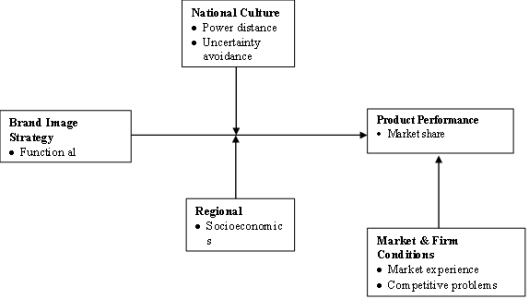
Figure 1. Impact of cultural and socio-economic factors on the success of brand image strategies.
A conceptual model of the possible moderating impact of culture and socioeconomics on the success of brand image strategies is presented in
Figure 1. In foreign markets, the relationship between picture and output is likely to be moderated by environmental characteristics. As has been shown, two characteristics (1) national culture and (2) regional socio-economic conditions have an effect on the output of functional, social and sensory brand images
| [34] | Hofstede G. (1991). Cultures and organizations - software of the mind. New York: McGraw Hill. |
[34]
. In addition, since business and firm conditions can also influence performance, the model shows probable covariates that should be controlled when analyzing the effects of environmental variables and brand image on performance, i.e. market experience, level of competition, and marketing mix implementation issues
| [35] | Gannon M. (2001). Understanding global cultures. 2nd ed. Thousand Oaks: Sage Publications. |
[35]
. The seminal work of Hofstede
| [5] | Hofstede G. (2001). Culture's consequences. 2nd ed. Thousand Oaks: Sage Publications. |
[5]
on cross-cultural value systems describes three facets of culture that can be attributed to the distance of control, ambiguity avoidance, and individualism of customer needs and brand images. While Hofstede's research was carried out in organizational environments, the principles he recognizes are connected to consumer behavior and work-related activities.
2.3. Empirical View of Literatures
It has been long recognized that individuals living in countries where there is a high prevalence of individualism culture, which is analogous to the cultural dimension of independence, tend to place greater priority on functional and most probably transactional, rather than relational, aspects on business relationships). This suggests that the cultural value of independence may hinder customer-firm marketing research collaboration, as individuals with a strong orientation toward independence may show reduced commitment in this context. On the other hand, recent research in the restaurant setting that adopts an asymmetrical approach has found that individualism (or independence, in this case) is associated with customers' tipping behavior
| [8] | Osakwe, C. N., Ogunmokun, O. A., Adeola, O., & Jibril, A. B. (2024). Cultural values and voice as determinants of customers' marketing research cooperation: Afuzzy set perspective. Internationa Journal of Consumer Studies, 48(3), e13055. |
[8]
.
Similarly, it has been found at the individual level that collectivism is a necessary condition for high team performance in the context of global virtual teams and that the presence of collectivism value, along with other cultural values, is sufficient to explain the desirable outcome of team performance
| [10] | Şahin, F Taras, V, Çetin, F, Tavoletti, E, Askun, D., & Florea, L. (2024). A configurational approach for analyzing cultural values and performance in Global Virtual Teams. International Business Review, 33 (1), 102 – 107. |
[10]
. Against this backdrop, the study aims, among others, to comprehend how consumers categorized as high or low in independence orientation, respond to marketing research cooperation with the firm under varying conditions. Masculinity orientation: Based on the works of Hofstede
| [34] | Hofstede G. (1991). Cultures and organizations - software of the mind. New York: McGraw Hill. |
[34]
; De Mooij and Hofstede,
| [21] | De Mooija, M. and Hofstede, G. (2002). Convergence and divergence in consumer behavior: implications for international retailing. Journal of Retailing 78 (2002) 61-69. |
[21]
, in masculine societies, money and material possessions, which are understood to be driven by ambition, aggression, and competition, take center stage in these societies and may be detrimental to the nurturing of cordial relationships with others.
Corroborating Hofstede's research, Sharma observed that masculinity reflects the degree to which a person is seen as assertive, ambitious, self-confident, and aggressive in his/her goal pursuits. At a macro-level, there is evidence to suggest that in societies characterized by masculinity, individuals are less cooperative in nature
| [5] | Hofstede G. (2001). Culture's consequences. 2nd ed. Thousand Oaks: Sage Publications. |
| [34] | Hofstede G. (1991). Cultures and organizations - software of the mind. New York: McGraw Hill. |
[5, 34]
. Therefore, individuals with high masculinity orientation may be less likely to participate in marketing research initiatives of the firm. Prior international marketing research by Mattison and Brouthers
| [2] | Mattison, T. F. & Brouthers, K. D. (2021). Digital consumer engagement: National cultural differences and cultural tightness. Journal of International Marketing, 29(4), 22-44. |
[2]
has shown that national markets can differ significantly in customer outcomes, such as content clicking and sharing behavior, and that these differences may be partially explained by the prevailing masculinity culture. Conversely, evidence suggests that individuals from masculine cultural contexts may be more likely to engage in co-creation activities with firms
| [36] | Chepurna, M. & Criado, J. R. (2018) "Identification of barriers to co-create on-line: the perspectives of customers and companies", Journal of Research in Interactive Marketing, 12(4), 452-471, https://doi.org/10.1108/JRIM-01-2018-0018 |
[36]
.
To understand the cultural background and develop localized marketing strategies that appeal to local consumers, companies should conduct thorough market research. According to Raj and Gupta,
| [9] | Raj, A., & Gupta, D. (2023). Impact of Cultural Differences on International Marketing Strategies. International Journal of Research in Engineering and Science (IJRES), 11(4), 144-148. |
[9]
investigation, ongoing vigilance to cultural trends is paramount for the timely relevance of program changes and the neglecting of these trends costs businesses a higher cost to cover on wrong advertising campaigns and messages that are delivered to consumers. Moreover, strategies in international marketing are vital for companies wishing to gain competitive advantage by providing improved performance in various underdeveloped and developing countries since they have to adapt to different cultural, social, and financial environments. It is well known that cultural factors include values, social norms, consumer dispositions, and cultural symbols. Knowledge of a culture can influence how marketing messages are constructed. For instance, adverts that emphasize self-independence may be more appealing to individualistic societies, whereas messages that stress community and social cohesion will be more acceptable in collectivist cultures. Furthermore, social standards define the extent to which acceptable behavior and consumer choices are tolerated by marketers in contemporary societies. Thus, marketers must adjust their strategies to meet local standards
| [37] | Wuryantini, A. (2024). The Influence of Cultural Factors on Global Marketing Strategies: A Comprehensive Review. Management Studies and Business Journal (Productivity), 1(7): 1174-1194. |
[37]
.
Research on the influence of culture on organizational success by Odunlami and Ogunsiji
| [38] | Odunlami I. B, Ogunsiji A (2011). Effect of sales promotion as a tool on organizational performance. J. Emerg. Trends in Econ. And manage. Sci. (JETEMS). 2(1): 9-13. |
[38]
concluded that successful implementation of cultural strategy contributes to an increase in sales volume. In addition, Odunlami and Ogunsiji found a link between cultural dimensions and product research that ultimately contributed to an increase in the volume of sales.
Previous research is inconclusive as to the impact of cultural aspects on sales volume. Most researchers accepted that cultural dimensions do not have a substantial impact on the volume of sales, while some researchers claimed that cultural dimensions had a positive impact on the volume of sales
| [40] | Oyedapo W. O, Akinlabi B. H and Sufian J. B (2012). The impact of sales promotion on organization effectiveness in Nigeria manufacturing industry. Universal journal of marketing and business research. Vol 14. pp. 128-131. |
| [39] | Bamiduro J. A. (2001). An Analysis of Sales Promotion on Sales Volume in the Beverage Industry: The case Study Nigeria Bottling Company Plc. Journal of Intellectual Scientist and Cultural Interest. |
[40, 39]
. Bamiduro's
| [39] | Bamiduro J. A. (2001). An Analysis of Sales Promotion on Sales Volume in the Beverage Industry: The case Study Nigeria Bottling Company Plc. Journal of Intellectual Scientist and Cultural Interest. |
[39]
results indicated that there is a positive significant relationship between the cultural component and the beverage industry's sales volume. A study on the influence of culture on organizational efficiency in the Nigerian manufacturing industry was conducted by Oyedapo et al,
| [40] | Oyedapo W. O, Akinlabi B. H and Sufian J. B (2012). The impact of sales promotion on organization effectiveness in Nigeria manufacturing industry. Universal journal of marketing and business research. Vol 14. pp. 128-131. |
[40]
and their findings showed that the organizational culture has a major impact on the efficiency of the beverage drink industry. Organizations have a positive long-term influence on revenue, according to Ailawadi and Neslin
| [41] | Ailawadi K., Neslin S (2001). The Effect of Production on Consumption: Buying More and Consuming it Faster. Journal of Social Science. 6(4): 82-84. |
[41]
, because culture has an impact on individual and group consumption and customers change products and purchase in greater quantities.
Osakwe, Ogunmokun, Adeola and Jibril
| [8] | Osakwe, C. N., Ogunmokun, O. A., Adeola, O., & Jibril, A. B. (2024). Cultural values and voice as determinants of customers' marketing research cooperation: Afuzzy set perspective. Internationa Journal of Consumer Studies, 48(3), e13055. |
[8]
research show that consumers are increasingly holding brands accountable for their role in promoting cultural sensitivity and inclusivity. A brand that does not recognize or respect local cultural values may risk alienating potential customers. For instance, H&M has faced backlash in the past for insensitive marketing campaigns that did not account for local cultural sensibilities. In contrast, brands that engage in cultural dialogue, respect local customs, and promote inclusivity are seen as more socially responsible and trustworthy. Consumers expect brands to respect cultural differences and incorporate diverse perspectives into their brand identity. Lastly, consumer expectations also extend to a brand’s stance on social and environmental issues. Global-local integration involves not just catering to cultural tastes but also being socially responsible. Brands that align with global movements such as environmental sustainability, gender equality, and social justice resonate with modern consumers, who are increasingly making purchasing decisions based on a brand’s ethical stance
| [8] | Osakwe, C. N., Ogunmokun, O. A., Adeola, O., & Jibril, A. B. (2024). Cultural values and voice as determinants of customers' marketing research cooperation: Afuzzy set perspective. Internationa Journal of Consumer Studies, 48(3), e13055. |
[8]
. For example, Ben & Jerry’s is globally known for its commitment to social justice, using its platform to advocate for causes like climate change awareness and racial equality, which enhances its appeal to ethically minded consumers worldwide.
3. Research Methods
The research methodology discusses the study population, the sample size and sampling process, the instrument for data collection, the analytical procedures and the instrument coding.
3.1. Population of the Study
Population shall determine the aggregate of items or persons from which data relevant to the analysis have been obtained. The population of this study comprises of manufacturers, wholesalers and retailers of Nigerian Breweries Plc (marketers/sale representatives of NB Plc products) in Surulere and Ignamu, Lagos. The population of Nigerian Breweries Plc marketers/sale representatives (i.e. manufacturers, wholesalers and retailers) in the chosen region is three hundred and twenty (320). Lagos is selected for this study because of its heavy density population over other states in Nigeria, the state as a major commercial city in Nigeria hosts all tribes and ethnic groups in Nigeria in a significant large number and is often as referred to as “No man’s Land’ even though the Yorubas claim the indigene. Iganmu and Surulere host the headquarters of Nigeria Breweries Plc in Nigeria. Iganmu is congested with the population of the three (3) major ethnic groups in Nigeria, (i.e, Yorubas, Hausas, and Igbos) who exhibited different social, cultural and religious life, while Surulere area hosts the same population of the 3 major tribes among other with middle and higher social class.
Table 1. Population Size of Nigerian Breweries Plc products Consumers are.
S/N | Stratum | Sale representatives (Dealers) |
a. | Distributors | 93 |
b. | Wholesalers | 106 |
c. | Retailers | 121 |
| Total | 320 |
3.2. Sampling Techniques and Determination of Sample Size
The population of NB Plc Products dealers was categorized into Distributors, Wholesalers and Retailers. Based on these strata, a sample was chosen in proportion to the size of each stratum. It was done as follows:
a) Distributors = 93/320 = 29.1%
b) Wholesalers = 106/320 = 33.1%
c) Retailers = 121/320 = 37.8%
The sample frame of both Nigerian Breweries Plc workers and consumers was used to pick the sample from the analysis. The proportionate stratified sampling approach was applied to select 178 marketers/sale representatives of Nigerian Breweries Plc products from the location in Lagos state, Nigeria. They are dealers who have demonstrated willingness to engage in the study exercise. The simplified formula for proportions was used by Yamane
| [42] | Yamane, Taro. (1967): Statistics: An Introductory Analysis, 2nd Ed., New York: Harper and Row. |
[42]
to measure the sample size of marketer/sales presentative. The simplified formula is as follows:
Where:
n = Sample Size
N = Population of the study
e = Precision estimate
Confidence level is 95% and +.5% precision estimates.
Therefore:
n=
n=
n=77.7178
Consequently, the sample size of the study is one hundred and seventy eight (178) marketers/sale representatives. The choice of the sample size was based on number of dealers that have the experience on cultural of impact of marketing consumers’ goods and its effect on sales volume who show interest to participate in the study. This covers all cadres of NB Plc products consumers.
3.3. Research Instruments
The instruments used for data collection were questionnaire. Questionnaire was used because it enhances the use of standardized questions. Five point likert scale measurements as well as open ended responses were used to design the questionnaire. Copies of the questionnaire were administered by hand and collected on a scheduled days and time. The responses to the Likert-type statements are on five point scales, which range from “Strongly Agree” to “Strongly Disagree”. The points awarded to each are as follows: Strongly Agree (SA) - 5 points; Agree (A) - 4 points; Fairly Agree (FA) - 3 points; Disagree (D) - 2 points; Strongly Disagree (SD) -1 point.
3.4. Analytical Procedure
The completed copies of questionnaire were coded and analysed sequentially according to the research question. The procedures for the analysis of data include the use of simple percentages, mean, standard deviations. Frequency Tables showing percentage, mean and standard deviation of responses to question in the questionnaire were used to provide information to facilitate analysis.
4. Data Analysis and Results
The response to the research tool was given on a Likert-type scale of 5 points. The "Strongly Agree" and "Agree" responses have five (5) and four (4) points and are rated as high, respectively. A total of one hundred and seventy eight (178) copies of the questionnaire were administered on the consumers of NB Plc beverage products in line with the sample size selected for the study. However, one hundred and forty one (141) copies of the instrument was retrieved and adjudged useable for the analysis. The rest was either not properly completed or ignored.
4.1. Analysis of Demographic Data
Demographic data (section A of the questionnaire) is analyzed using a basic percentage and frequency distribution. They are as shown below in the Table:
Table 2. Analysis of Demographic Data.
| Products marketers / sale reps. | Percent |
Sex | | |
Male | 64 | 45.3 |
Female | 77 | 54.7 |
Total | 141 | 100 |
Age Group | | |
21-30 | 69 | 47.6 |
31-40 | 63 | 45.2 |
41-50 | 6 | 4.8 |
51 and above | 3 | 2.4 |
Total | 141 | 100 |
Marital Status | | |
Single | 77 | 53.9 |
Married | 64 | 46.1 |
Divorced | 0 | 0 |
Total | 141 | 100 |
Academic Qualification | | |
SSCE/GCE | 6 | 4.8 |
OND/NCE | 14 | 9.5 |
HND/B. Sc | 78 | 54.7 |
M. Sc/MBA/MA | 37 | 26.2 |
Professional | 6 | 4.8 |
Total | 141 | 100 |
Source: Field Survey 2025
In
Table 2, the gender distribution of respondents indicates that 45.3 percent of our respondents were male and 54.7 percent of them were female buyers of goods (dealers). This means that there are more female respondents from customers of business products.
Table 2 indicates that 31.6 per cent of respondents in Nigerian Breweries Plc goods customers were between 21 and 30 years of age, 45.2 per cent were between 31 and 40 years of age, 4.8 per cent were between 41 and 50 years of age and 2.4 per cent and 51 years of age and older. This indicates that most of the respondents are mature employees in our survey.
In terms of marital status products consumers where 53.9% of the respondents were single and 46.1% of them were married.
In terms of academic qualifications the respondents from NB. Plc products consumers, 4.8% are SSCE/GCE holders, 9.5% are OND/NCE holders, 54.7% are B. Sc/HND holders and 26.3% hold M. Sc/MBA/MA certificate while 4.8% of them hold professional certificate. Based on the analysis above, it can be inferred that majority of respondents are educated enough to provide reasonable answer to the questions.
4.2. Analysis of Other Data (Section B of the Questionnaire)
The questionnaires in Section B were analyzed using means, standard deviations, distributions of frequencies and simple percentages, where possible. The Means (x) analysis was interpreted as follows:
Code: Interpretation
Below 1.45 = Strongly Disagree
1.45 - 2.44 = Disagree
2.45 - 3.44 = Fairly Agree
3.45 - 4.44 = Agree
4.45 and above = Strongly Agree
I. What are the effects of individual beliefs on sales volume of consumers’ products?
Table 3. Mean and Standard Deviation of the Respondents’ views in the Questionnaire (Questions 1 - 5).
Nos. | Statement | NB. Products’ Consumers |
Mean (X) | STD Dev. |
1 | Individuals religious belief increases the sales of NB Plc products | 4.03 | 1.24 |
2 | Individual perception about a brand of drink increases the sales of NB Plc products in beverage market | 4.01 | 1.21 |
3 | People superstitious belief about a particular brand of product increases sales volume of NB Plc‘s consumer goods. | 4.37 | 0.77 |
4 | Individual opinion (or belief) about the benefit of product increases the sales volume of NB Plc’s consumer goods. | 4.46 | 0.74 |
5 | Belief about satisfaction derived from the product increases the sales volume of NB Plc’s consumer goods. | 4.10 | 1.29 |
Source: Field Survey 2025
Table 3 shows that respondents from Nigeria Breweries Plc Products’ consumers respondents agreed that Individuals religious belief increases the sales of NB Plc products, Individual perception about a brand of drink increases the sales of NB Plc products in beverage market, People superstitious belief about a particular brand of product increases sales volume of NB Plc ‘s consumer goods and that belief about satisfaction derived from the product increases the sales volume of NB Plc’s consumer goods, while they strongly agreed that individual opinion (or belief) about the benefit of product increases the sales volume of NB Plc’s consumer goods with means of 4.03, 4.01, 4.37, 4.10, 4.46 and standard deviations of 1.24, 1.21, 0.77, 1.29, 0.74 respectively.
Table 4. Distribution of Respondents According to other effects of individual beliefs on sales of consumers’ goods in NB Plc (Questionnaire 6).
Response Individual beliefs effects | Number of Respondents |
Products Consumers | Percent |
Affect the way consumers behave towards NB Plc Products | 48 | 33.9 |
Affects individual assessment of a brand purchase | 39 | 27.5 |
Influence consumers to buy or not buy NB Plc Products | 35 | 24.7 |
Affects perception about consumers goods quality | 19 | 13.7 |
Total | 141 | 100 |
Source: Field Survey 2025
Table 4, shows that 33.9% of Consumers of NB. Plc products stated that other effects of individual beliefs on sales of consumers’ good in NB. Plc is that individual beliefs affect the way consumers behave towards NB Plc Products, 27.5% of them indicated that individual beliefs influence consumers to buy or not buy NB Plc Products, 24.7% of the respondents indicated that individual beliefs affects individual assessment of a brand purchase and 13.7% of them stated that individual beliefs affects perception about consumers goods quality.
II. What is the impact of family values on preference of consumers’ goods in Beverage Market?
Table 5. Mean and Standard Deviation of the Respondents Views in the Questionnaire (Questions 7 - 11).
Nos. | Statement | NB. Products’ Consumers |
Mean (X) | STD Dev. |
7 | Family standards, has positive impact on preference of NB Plc’s consumer goods. | 4.31 | 1.23 |
8 | Social class lifestyle has positive impact on preference of NB Plc’s consumer goods. | 4.37 | 1.24 |
9 | Norms of a group has positive impact on NB Plc’s consumer goods. | 4.19 | 1.40 |
10 | Heritage of a people has positive impact on preference of NB Plc’s consumer goods. | 4.22 | 1.16 |
11 | Society tradition and belief have positive impact on consumers’ preference of NB Plc’s consumer goods. | 3.42 | 1.87 |
Source: Field Survey 2025
Table 5 shows that NB. Plc products consumers respondents agreed that family standards has positive impact on preference of NB Plc’s consumer goods, Social class lifestyle positive impact on preference of NB Plc’s consumer goods, norms of a group positive impact on NB Plc’s consumer goods, society tradition and belief positive impact on consumers’ preference of NB Plc’s consumer goods and fairly agreed that heritage of a people has significant impact on preference of NB Plc’s consumer goods with means of 4.31, 4.22, 4.19, 4.37, 4.42 and standard deviations of 1.23, 1.16, 1.40, 1.24 and 1.87 respectively.
Table 6. Distribution of Respondents according to other impact of family value on preference of NB Plc’s consumer goods (Questionnaire 12).
Response Family Values impact | Number of Respondents |
NB. Products Consumers | Percent |
Has influence on preference for specific category of NB. Plc product | 55 | 39.2 |
Has impact on preference for a brand quality of NB Plc products. | 44 | 31.2 |
Has impact on individual consumption level of NB products. | 42 | 29.6 |
Total | 141 | 100 |
Source: Field Survey 2025
Table 6, shows that 39.2% from NB Plc Products Consumers were of the opinion that family value has influence on preference for specific category of NB. Plc product, 31.2% of NB Plc Products Consumers said that family value has impact on preference for a brand quality of NB Plc products, and 29.6% of them stated that family value has impact on individual consumption level of NB products.
III. What is the influence of group customs on sales and consumption of NB Plc Products?
Table 7. Means and Standard Deviations of the Respondents views in the Questionnaire (Questions 13-17).
Nos. | Statement | NB. Products’ Consumers |
Mean (X) | STD Dev. |
13 | Reference group customs increases the sales and consumption of NB Plc’s products. | 4.57 | 0.72 |
14 | Religious practice of individual increases the sales and consumption of NB Plc’s products. | 4.48 | 0.85 |
15 | Consumers’ social class tradition increases the sales and consumption of NB Plc’s products. | 4.23 | 1.03 |
16 | Family values or behavior increases the sales and consumption of NB Plc’s products. | 4.57 | 0.72 |
17 | Demographic assimilation of people increases the sales and consumption of NB Plc’s products. | 4.48 | 0.85 |
Source: Field Survey 2025
Table 7 shows that NB. Plc products’ Consumers respondents strongly agreed that family standards has positive impact on preference of NB Plc’s consumer goods, Social class lifestyle positive impact on preference of NB Plc’s consumer goods, Heritage of a people has significant impact on preference of NB Plc’s consumer goods and Society tradition and belief positive impact on consumers’ preference of NB Plc’s consumer goods while they agreed that Norms of a group positive impact on NB Plc’s consumer goods with means of 4.57, 4.48, 4.57, 4.48, 4.23 and standard deviations of 0.72, 0.85, 0.72, 0.85, 1.03 respectively.
Table 8. Distribution of Respondents According to other influence of custom on consumption and sales of NB. Plc Products (Questionnaire 18).
Response Influence of Customs | Number of Respondents |
NB. Products Consumers | Percent |
Family tradition | 32 | 33.9 |
Occupation lifestyle | 23 | 24.7 |
Socio-cultural belief | 26 | 27.5 |
Association norms | 13 | 13.7 |
Total | 94 | 100 |
Source: Field Survey 2025
Table 8 shows that 33.9% of the NB. Nig. Plc product consumers were of the view that family tradition has influence on consumption and sales of NB Plc Products, 24.7% of them stated that occupational lifestyle has influence on consumption and sales of NB Plc Products, 27.5% of the respondents said that socio-cultural belief has influence on consumption and sales of NB Plc Products and 13.7% of them stated that association norms has influence on consumption and sales of NB Plc Products.

 ,
Aiwanehi Barbara Ofuani
,
Aiwanehi Barbara Ofuani


 Share This Article
 Twitter
 Linked In
 Facebook
 Copy
Copy Download