Abstract
The bioscrubber circulation water at the Biogas Power Plant is sourced from overflow digested Palm Oil Mill Effluent (POME) containing very high Total Suspended Solids (TSS), exceeding 500 mg/L. High TSS causes fouling of sprayer nozzles, clogging of packing media, and reduces Thiobacillus bacterial activity in biological H2S oxidation. This study aims to evaluate the effectiveness of coagulation-flocculation using Aluminum Sulfate (Alum) and Polyaluminium Chloride (PAC), as well as sand filtration, in reducing TSS levels. Coagulation-flocculation tests were carried out as jar tests with dose variations of 0, 50, 100, 150, and 200 ppm for each coagulant, followed by 30-minute sedimentation. Filtration tests used 300 grams of silica sand (0.5-1.0 mm diameter) in a gravity-driven column (height 30 cm, diameter 5 cm) with three replicates. Furthermore, a novel mixing strategy was developed by combining digested POME with clarified POME from the final sedimentation pond (low TSS) at a 1: 3 ratio. Results show that PAC at optimal dose 150 ppm achieves TSS removal efficiency of 89.36% with final TSS of 150 ppm, outperforming Alum which achieved 82.47% at the same dose. Sand filtration consistently reduced TSS by an average of 80.20% while maintaining TDS at an average reduction of 26.18%, preserving dissolved organics as bacterial nutrients. The 1: 3 mixing strategy successfully reduced TSS to below 50 mg/L, eliminating nozzle and sprinkler clogging, preventing packing media fouling, and achieving H2S removal efficiency down to 10 ppm in the bioscrubber outlet. The combination of PAC 150 ppm and sand filtration, along with the 1: 3 mixing strategy, is recommended as a stage.
Keywords
Bioscrubber, Total Suspended Solids, Coagulation-Flocculation, Sand Filtration, Thiobacillus, Sensitivity Analysis,
POME Mixing Strategy
1. Introduction
The utilization of Palm Oil Mill Effluent (POME) as a renewable energy source through biogas power generation represents an important strategy in sustainable waste management. POME treated through anaerobic fermentation produces biogas rich in methane (CH
4), which can be used as fuel for electricity generation
| [1] | Suksong, W., Kongjan, P., Prasertsan, P., Imai, T., O-Thong, S. Biogas production from palm oil mill effluent and empty fruit bunches by coupled liquid and solid-state anaerobic digestion. Bioresource Technology. 2019, 293, 122030.
https://doi.org/10.1016/j.biortech.2019.122030 |
| [2] | Choong, Y. Y., Chou, K. W., Norli, I. Strategies for improving biogas production of palm oil mill effluent (POME) anaerobic digestion: A critical review. Renewable and Sustainable Energy Reviews. 2018, 82, 2993–3006.
https://doi.org/10.1016/j.rser.2017.10.036 |
[1, 2]
. However, the biogas produced also contains impurities, particularly hydrogen sulfide (H
2S), in significant concentrations. This compound is highly corrosive and poses a serious risk to gas engine components if not properly treated
| [3] | Loh, S. K., Nasrin, A. B., Mohamad Azri, S., Nurul Adela, B., Muzzammil, N., Daryl Jay, T., Stasha Eleanor, R. A., Lim, W. S., Choo, Y. M., Kaltschmitt, M. Biogas from palm oil mill effluent (POME): Opportunities and challenges from Malaysia's perspective. Renewable and Sustainable Energy Reviews. 2017, 69, 904–914. https://doi.org/10.1016/j.rser.2016.08.010 |
| [4] | Suryawan, I. W., et al. Coagulation-flocculation for POME treatment: A comparative study of Alum and PAC. Journal of Water Process Engineering. 2022, 49, 103045.
https://doi.org/10.1016/j.jwpe.2022.103045 |
[3, 4]
.
To overcome this issue, bioscrubber-based biogas purification systems are widely applied due to their ability to integrate physico-chemical absorption with biological oxidation processes. In this system, H
2S is absorbed into the liquid phase and subsequently oxidized by
Thiobacillus bacteria into elemental sulfur or sulfate, which are more stable and less harmful
| [5] | Santos, C. L., et al. Biological H2S removal from biogas using bioscrubbers: A review. Renewable and Sustainable Energy Reviews. 2022, 158, 112123.
https://doi.org/10.1016/j.rser.2022.112123 |
| [6] | San-Valero, P., Penya-roja, J. M., Javier Alvarez-Hornos, F., Marzal, P., Gabaldón, C., Quijano, G. Fully aerobic bioscrubber for the desulfurization of H2S-rich biogas. Renewable Energy. 2019, 136, 1185–1192.
https://doi.org/10.1016/j.renene.2018.09.040 |
[5, 6]
. The effectiveness of this process is strongly influenced by the quality of the circulating water used as the contact medium between gas and microorganisms. Key parameters such as pH, dissolved nutrient content, and low levels of suspended solids are critical for maintaining stable microbial activity
| [7] | Situmorang, A., et al. Nutrient balance in bioscrubber systems for biogas desulfurization. Environmental Technology. 2019, 40(15), 1987–1996.
https://doi.org/10.1080/09593330.2018.1435734 |
| [8] | Haosagul, S., Prommeenate, P., Keawsompong, S., Pisutpaisal, N. Sulfide-oxidizing bacteria community in full-scale bioscrubber treating H2S in biogas from swine anaerobic digester. Renewable Energy. 2020, 145, 1999–2007.
https://doi.org/10.1016/j.renene.2019.08.033 |
[7, 8]
.
In practical operation at the Biogas Power Plant, the bioscrubber circulation water is sourced from overflow digested POME, which still contains high concentrations of TSS, exceeding 500 mg/L. This condition is not ideal, as high TSS levels can lead to nozzle fouling and clogging, accumulation of solids within the packing media, and reduced oxygen diffusion into the microbial biofilm, ultimately decreasing the biological activity of
Thiobacillus | [9] | PT XYZ. Operational Report of the Biogas Power Plant, October 2024 (in Indonesian). Internal Technical Report. 2024. |
| [10] | Karri, R. R., Ravindran, G., Dehghani, M. H. Wastewater—sources, toxicity, and their consequences to human health. In Soft Computing Techniques in Solid Waste and Wastewater Management. Elsevier. 2021, pp. 3–33.
https://doi.org/10.1016/B978-0-12-824463-0.00003-X |
[9, 10]
. The presence of suspended solids in water treatment systems is known to reduce process efficiency both physically and biologically, particularly in biofilm-based systems
| [11] | Metcalf & Eddy. Wastewater Engineering: Treatment and Resource Recovery. 5th ed. McGraw-Hill. 2014. |
[11]
.
POME itself is classified as high-strength wastewater, with Chemical Oxygen Demand (COD) ranging from 70,000 to 100,000 mg/L and Biochemical Oxygen Demand (BOD) between 25,000 and 65,000 mg/L
| [3] | Loh, S. K., Nasrin, A. B., Mohamad Azri, S., Nurul Adela, B., Muzzammil, N., Daryl Jay, T., Stasha Eleanor, R. A., Lim, W. S., Choo, Y. M., Kaltschmitt, M. Biogas from palm oil mill effluent (POME): Opportunities and challenges from Malaysia's perspective. Renewable and Sustainable Energy Reviews. 2017, 69, 904–914. https://doi.org/10.1016/j.rser.2016.08.010 |
[3]
. After anaerobic digestion, the resulting effluent—referred to as digested POME or digester overflow—still contains TSS concentrations ranging from 500 to 8,000 mg/L depending on operational conditions
| [4] | Suryawan, I. W., et al. Coagulation-flocculation for POME treatment: A comparative study of Alum and PAC. Journal of Water Process Engineering. 2022, 49, 103045.
https://doi.org/10.1016/j.jwpe.2022.103045 |
| [12] | Yap, C. C., Chan, Y. J., Loh, S. K., Supramaniam, C. V., Soh, A. C., Chong, M. F., Chew, C. L. Comparison of different industrial scale palm oil mill effluent anaerobic systems in degradation of organic contaminants and kinetic performance. Journal of Cleaner Production. 2020, 262, 121361.
https://doi.org/10.1016/j.jclepro.2020.121361 |
[4, 12]
. Therefore, an effective pretreatment process is required to improve water quality before its reuse in the bioscrubber system.
Theoretically, TSS reduction can be achieved through a combination of physical and chemical processes. Coagulation-flocculation is a widely used method to destabilize negatively charged colloidal particles by adding positively charged coagulants, allowing particles to aggregate into settleable flocs
| [11] | Metcalf & Eddy. Wastewater Engineering: Treatment and Resource Recovery. 5th ed. McGraw-Hill. 2014. |
[11]
. Conventional coagulants such as Aluminum Sulfate (Alum) have been extensively used in wastewater treatment; however, more advanced coagulants like Polyaluminium Chloride (PAC) offer higher efficiency and a wider operational pH range, producing denser flocs with less sludge generation
| [4] | Suryawan, I. W., et al. Coagulation-flocculation for POME treatment: A comparative study of Alum and PAC. Journal of Water Process Engineering. 2022, 49, 103045.
https://doi.org/10.1016/j.jwpe.2022.103045 |
| [13] | Krupinska, I. Suitability of highly polymerised polyaluminium chlorides (PACls) in the treatment of mixture of groundwater and surface water. Molecules. 2023, 28(2), 468.
https://doi.org/10.3390/molecules28020468 |
[4, 13]
. Nevertheless, excessive dosing may lead to a charge reversal phenomenon, reducing coagulation efficiency, thus making dosage optimization through jar testing essential
| [14] | Zarei Mahmudabadi, T., Ebrahimi, A. A., Eslami, H., Mokhtari, M., Salmani, M. H., Ghaneian, M. T., Pakdaman, M. Optimization and economic evaluation of modified coagulation–flocculation process for enhanced treatment of ceramic-tile industry wastewater. AMB Express. 2018, 8(1), 172.
https://doi.org/10.1186/s13568-018-0702-4 |
[14]
.
In addition, sand filtration is recognized as an effective polishing method for removing suspended particles larger than 5–10 µm. Its main advantage lies in its ability to significantly reduce TSS without substantially decreasing TDS, which are essential as nutrients for
Thiobacillus bacteria. Previous studies have shown that the combination of PAC coagulation and sand filtration can achieve up to 80% TSS removal in POME treatment systems
| [4] | Suryawan, I. W., et al. Coagulation-flocculation for POME treatment: A comparative study of Alum and PAC. Journal of Water Process Engineering. 2022, 49, 103045.
https://doi.org/10.1016/j.jwpe.2022.103045 |
| [15] | Kim, H., Choi, J., Kim, J. Effect of TSS removal from stormwater by mixed media column on T-N, T-P, and organic material removal. Water. 2018, 10(8), 1069.
https://doi.org/10.3390/w10081069 |
[4, 15]
. Recent advancements in filtration media have further improved the selectivity of suspended solids removal while preserving dissolved nutrients
| [16] | Serrano, A., Ortega, L., Garcia-Morales, J. L., Jurado, M. Removal of PAHs, TSS, oils and fats from ammonium-rich coke wastewater by granular filtration. Journal of Environmental Management. 2024, 365, 121524.
https://doi.org/10.1016/j.jenvman.2024.121524 |
| [17] | Naji, L., Ahmadi, A., Rouhani, S., Rezaei, M., Shiroud Heidari, M. Laundry wastewater treatment using a combination of sand filter, bio-char and teff straw media. Scientific Reports. 2021, 9, 18791. https://doi.org/10.1038/s41598-019-54888-3 |
[16, 17]
. Furthermore, combining coagulation-flocculation with multi-layer filtration has been reported to improve effluent quality for reuse
| [18] | Badawi, A. K., Hassan, R., Farouk, M. Optimizing the coagulation/flocculation process for the treatment of slaughterhouse and meat processing wastewater: Experimental studies and pilot-scale proposal. International Journal of Environmental Science and Technology. 2024, 21, 8431–8446.
https://doi.org/10.1007/s13762-024-05591-y |
| [19] | Dehghani, M., Nadafi, K., Mesdaghinia, A., Nabizadeh, R., Noori Motlagh, S., Rad Samani, F. Investigating the improvement of industrial effluents quality for reuse with coagulation, flocculation, multi-layer filter and UV. Environmental Health Engineering and Management Journal. 2018, 5(3), 179–188.
https://doi.org/10.15171/EHEM.2018.26 |
[18, 19]
.
Based on this background, this study aims to evaluate the effectiveness of coagulation-flocculation using Alum and PAC, as well as sand filtration, in reducing TSS levels in digested POME. Furthermore, this research seeks to develop an optimal pretreatment system for bioscrubber spray water by balancing TSS removal efficiency with the maintenance of dissolved nutrients required for stable microbial activity.
2. Materials and Methods
This study was conducted at the Biogas Power Plant, located in Indonesia. Laboratory analyses were carried out in the internal laboratory facilities of the Biogas Power Plant from October 2025 to April 2026.
2.1. Tools and Materials
The equipment used in this study included 300 mL plastic bottles for jar test experiments, 1000 mL glass bottles for sample collection, funnels and 250 mL Erlenmeyer flasks for filtration processes, a portable digital meter calibrated with pH 7 buffer for measuring pH, Electrical Conductivity (EC), and TDS, a drying oven for TSS analysis, an analytical balance with 0.001 g precision, volumetric pipettes (10 mL), and 1000 mL volumetric flasks for preparing stock solutions.
The materials used consisted of digested POME samples obtained from the existing biodigester, Aluminum Sulfate (Alum) and Polyaluminium Chloride (PAC) as coagulants, distilled water for stock solution preparation, pH 7 buffer solution for instrument calibration, 300 grams of silica sand (particle size 0.5–1.0 mm) as filtration media, and Whatman filter paper Grade 42 (2.5 µm pore size) for gravimetric TSS analysis.
2.2. Research Procedure
2.2.1. Sample Preparation and Coagulant Solution
Five 300 mL bottles were filled with digested POME samples and manually mixed for 10 seconds to ensure homogeneity. Initial parameters, including pH, TDS, EC, and TSS, were measured in duplicate. A 10,000 mg/L stock solution was prepared by dissolving 10 grams of coagulant in 1 liter of distilled water.
2.2.2. Coagulation–Flocculation Jar Test
Coagulants were simultaneously added to bottles 2–5 at dosages of 50, 100, 150, and 200 ppm, while bottle 1 served as a control. Rapid mixing was conducted for 5 seconds, followed by slow mixing for 30 seconds to promote floc formation. The samples were then allowed to settle for 30 minutes. After sedimentation, the supernatant was carefully collected from a depth of 5 cm for analysis. TSS concentration was determined using the gravimetric method according to the following equation:
TSS (mg/L) = (W2− W₁) × 1000 / Sample Volume (mL) (1)
2.2.3. Coagulation–Flocculation Jar Test
Sand filtration experiments were conducted using a gravity-driven column (height 30 cm, diameter 5 cm) containing 300 grams of silica sand with particle size distribution of 0.5–1.0 mm. The filtration bed height was approximately 15 cm, and the flow rate was maintained at 20–25 mL/min by gravity. The tests were performed in triplicate using different feed samples from the optimal coagulation-flocculation effluent. TSS and TDS were measured before and after filtration to evaluate the filtration performance.
3. Results
3.1. Coagulation Performance Summary
Tables 1 and 2 summarize the performance of Alum and PAC coagulants at various dosages. For Alum (
Table 1), the highest TSS removal efficiency (82.47%) was achieved at 150 ppm, with final TSS of 270 ppm. Higher dosage (200 ppm) reduced efficiency to 71.13%, indicating charge reversal. TDS reduction peaked at 30.29% at 150 ppm, while pH decreased from 7.9 to 7.0.
Table 1. Performance of Alum Coagulant at Various Dosages.
Dosage (ppm) | Initial TSS (ppm) | Final TSS (ppm) | TSS Removal (%) | TDS Reduction (%) | Final pH |
0 (control) | 1,230 | 1,090 | 11.38 | 15.63 | 7.9 |
50 | 1,260 | 970 | 23.02 | 19.01 | 7.7 |
100 | 1,380 | 410 | 70.29 | 21.48 | 7.4 |
150 | 1,410 | 270 | 82.47 | 30.29 | 7.1 |
200 | 1,420 | 410 | 71.13 | 24.05 | 7.0 |
For PAC (
Table 2), TSS removal efficiency reached 89.36% at 150 ppm (final TSS 150 ppm) and further increased to 92.96% at 200 ppm without performance decline. TDS reduction was also higher (33.07–33.55%), with pH decreasing from 7.7 to 6.4.
Table 2. Performance of PAC Coagulant at Various Dosages.
Dosage (ppm) | Initial TSS (ppm) | Final TSS (ppm) | TSS Removal (%) | TDS Reduction (%) | Final pH |
0 (control) | 1,230 | 1,090 | 11.38 | 14.96 | 7.7 |
50 | 1,260 | 970 | 23.02 | 20.76 | 7.2 |
100 | 1,380 | 410 | 70.29 | 24.09 | 6.8 |
150 | 1,410 | 150 | 89.36 | 33.07 | 6.7 |
200 | 1,420 | 100 | 92.96 | 33.55 | 6.4 |
3.2. Comparison of Alum and PAC at Optimal Dosage
Table 3 shows that PAC outperforms Alum across all key parameters at the optimal dosage of 150 ppm. The difference in final TSS concentration (120 mg/L) is particularly significant.
Table 3. Performance Comparison of Alum and PAC at 150 ppm.
Parameter | Alum (150 ppm) | PAC (150 ppm) | Advantage |
TSS Removal Efficiency (%) | 82.47 | 89.36 | PAC |
Final TSS (ppm) | 270 | 150 | PAC |
TDS Reduction (%) | 30.29 | 33.07 | PAC |
Performance at 200 ppm | 71.13% ↓ | 92.96% ↑ | PAC |
Final pH | 7.1 | 6.7 | Alum |
3.3. Effectiveness of Sand Filtration
The sand filtration experiments demonstrated highly consistent TSS removal efficiencies of 80.23%, 81.24%, and 79.14%, with an average of 80.20% (
Table 4). In contrast, TDS reduction was significantly lower, averaging 26.18%, demonstrating the selectivity of sand filtration in preserving dissolved nutrients.
Table 4. Performance Comparison of Alum and PAC at the Optimal Dosage of 150 ppm.
Replicate | Initial TSS (ppm) | Final TSS (ppm) | TSS Removal (%) | Initial TDS (ppm) | Final TDS (ppm) | TDS Removal (%) |
1 | 1,410 | 279 | 80.23 | 7,680 | 5,670 | 26.17 |
2 | 1,410 | 264 | 81.24 | 7,680 | 5,660 | 26.30 |
3 | 1,410 | 294 | 79.14 | 7,680 | 5,680 | 26.04 |
Average | 1,410 | 279 | 80.20 | 7,680 | 5,670 | 26.18 |
3.4. Mixing Strategy: Digested POME with Clarified POME (1: 3 Ratio)
In addition to chemical coagulation and sand filtration, a novel physical mixing strategy was developed to reduce TSS levels in bioscrubber feed water. Digested POME (high TSS, >1,400 ppm) was mixed with clarified POME sourced from the final sedimentation pond of the wastewater treatment system, which naturally contains low TSS due to prolonged gravity sedimentation (
Table 5). The clarified POME typically has TSS below 100 ppm after 24–48 hours of sedimentation.
Table 5. Characteristics of Individual POME Sources and 1: 3 Mixture.
Parameter | Digested POME | Clarified POME (Final Pond) | 1: 3 Mixture (Digested: Clarified) |
TSS (ppm) | 1,410 | 85 | 416 |
TDS (ppm) | 7,680 | 6,200 | 6,570 |
pH | 7.9 | 7.5 | 7.6 |
The 1: 3 mixing ratio (one part digested POME to three parts clarified POME) was selected based on preliminary optimization trials. This ratio successfully reduced TSS from 1,410 ppm (digested POME) to approximately 416 ppm in the mixture, representing a 70.5% reduction without any chemical addition. The mixture was then used as feed for the bioscrubber circulation system after optional polishing with PAC 150 ppm and sand filtration.
Table 6. Performance of 1: 3 Mixing Strategy for Bioscrubber Operation.
Parameter | Before Mixing | After 1: 3 Mixing | Improvement (%) |
Feed TSS (ppm) | >1,400 | <420 | >70% |
Nozzle/Sprinkler Clogging | Frequent (weekly) | None (3 months) | 100% elimination |
Packing Media Fouling | Severe | None | Complete prevention |
H2S Outlet Concentration (ppm) | 50–80 | 10 | 80–87.5% reduction |
3.5. Operational Outcomes of the Integrated Strategy
The implementation of the 1: 3 mixing strategy, combined with PAC coagulation (150 ppm) and sand filtration, produced the following operational improvements at the Biogas Power Plant:
1) Nozzle and Sprinkler Performance: Prior to implementation, nozzles required cleaning every 5–7 days due to TSS-induced clogging. After implementation, nozzl es operated continuously for 3 months without any clogging events.
2) Packing Media Condition: Visual inspection revealed no solids accumulation on the bioscrubber packing media, maintaining proper gas-liquid contact and preventing channeling.
3) Biological H2S Removal Efficiency: The bioscrubber outlet H2S concentration consistently decreased from the baseline range of 50–80 ppm to 10 ppm, representing an 80–87.5% improvement in removal efficiency. This was attributed to:
1) Reduced fouling of microbial biofilm
2) Maintained nutrient availability (TDS preserved at 6,570 ppm)
3) Optimal pH range (7.6) for Thiobacillus activity
4. Discussion
The results of this study highlight the critical role of pretreatment in maintaining the operational stability of bioscrubber systems treating biogas derived from POME. The high TSS content in digested POME represents a major operational challenge, as it directly affects both hydraulic performance and biological efficiency. The findings confirm that without adequate pretreatment, suspended solids can significantly hinder mass transfer processes and reduce microbial activity, particularly in biofilm-based systems
| [11] | Metcalf & Eddy. Wastewater Engineering: Treatment and Resource Recovery. 5th ed. McGraw-Hill. 2014. |
| [20] | Musa, M. A., Idrus, S., Man, H. C., Daud, N. N. N. Wastewater treatment and biogas recovery using anaerobic membrane bioreactors (AnMBRs): Strategies and optimization. Membranes. 2018, 8(2), 30. https://doi.org/10.3390/membranes8020030 |
[11, 20]
.
4.1. Superior Performance of PAC Compared to Alum
The superior performance of PAC compared to Alum can be attributed to its polymeric structure and higher charge density, which enhance particle destabilization and promote the formation of larger and denser flocs
| [13] | Krupinska, I. Suitability of highly polymerised polyaluminium chlorides (PACls) in the treatment of mixture of groundwater and surface water. Molecules. 2023, 28(2), 468.
https://doi.org/10.3390/molecules28020468 |
| [21] | Boonyawanich, S., Chaiprapat, S. Bacterial community in biofilter system for H2S removal from palm oil factory biogas. Nature Environment and Pollution Technology. 2024, 23(2), 811–818. |
[13, 21]
. This results in improved settling characteristics and higher removal efficiency, especially at higher dosages. These results are consistent with previous studies on POME treatment, which reported that PAC provides more stable performance under varying wastewater conditions
| [4] | Suryawan, I. W., et al. Coagulation-flocculation for POME treatment: A comparative study of Alum and PAC. Journal of Water Process Engineering. 2022, 49, 103045.
https://doi.org/10.1016/j.jwpe.2022.103045 |
| [22] | Pangarso, F. W., Kusdiyantini, E. Biogas production from palm oil mill effluent and the prospect of co-digestion with empty fruit bunches. Journal of Agricultural Engineering (Jurnal Teknik Pertanian Lampung). 2022, 11(1), 99–118.
https://doi.org/10.23960/jtep-l.v11i1.99-118 |
[4, 22]
.
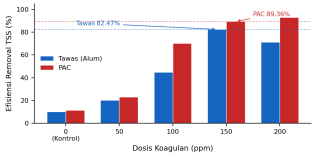
Figure 1. Comparison of TSS Removal Efficiency between Alum and PAC at Various Dosages.
The decline in Alum performance at 200 ppm (from 82.47% to 71.13%) confirms the occurrence of charge reversal, a well-documented phenomenon in coagulation processes where excess coagulant causes particle restabilization due to surface charge reversal
| [11] | Metcalf & Eddy. Wastewater Engineering: Treatment and Resource Recovery. 5th ed. McGraw-Hill. 2014. |
| [14] | Zarei Mahmudabadi, T., Ebrahimi, A. A., Eslami, H., Mokhtari, M., Salmani, M. H., Ghaneian, M. T., Pakdaman, M. Optimization and economic evaluation of modified coagulation–flocculation process for enhanced treatment of ceramic-tile industry wastewater. AMB Express. 2018, 8(1), 172.
https://doi.org/10.1186/s13568-018-0702-4 |
[11, 14]
. In contrast, PAC maintained and even improved its performance at 200 ppm (89.36% to 92.96%), demonstrating its wider optimal dosage range.
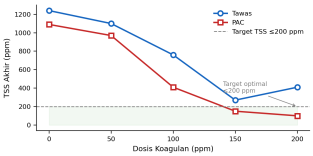
Figure 2. Final TSS Concentration as a Function of Coagulant Dosage (Dashed line indicates optimal target ≤200 ppm).
4.2. pH and Electrical Conductivity Trends
The decreasing pH with increasing coagulant dosage is expected due to the acidic nature of both coagulants. For Alum (Al
2(SO
4)
3·14H
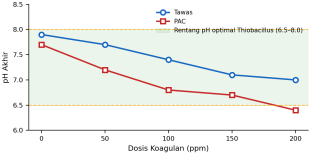
2O), hydrolysis releases H⁺ ions, reducing pH from 7.9 to 7.0 at 200 ppm. PAC, being pre-hydrolyzed, shows a more controlled pH decline from 7.7 to 6.4. The final pH values for both coagulants remain within the acceptable range for
Thiobacillus activity (optimal pH 6.5–8.0), though PAC at 200 ppm (pH 6.4) approaches the lower limit
| [8] | Haosagul, S., Prommeenate, P., Keawsompong, S., Pisutpaisal, N. Sulfide-oxidizing bacteria community in full-scale bioscrubber treating H2S in biogas from swine anaerobic digester. Renewable Energy. 2020, 145, 1999–2007.
https://doi.org/10.1016/j.renene.2019.08.033 |
| [23] | Vikromvarasiri, N., Boonyawanich, S., Pisutpaisal, N. Preliminary study on microbial desulfurization: Targeting H2S removal from biogas with a bioscrubber. Industrial Biotechnology. 2020, 16(1), 14–20.
https://doi.org/10.1089/ind.2019.0041 |
[8, 23]
.
Electrical Conductivity (EC) reduction followed similar patterns to TDS reduction, with PAC achieving 34.89% EC reduction at 200 ppm compared to Alum's 24.09%. The correlation between EC and TDS reduction confirms that both coagulants remove dissolved ions alongside suspended solids, though to a lesser extent, which is beneficial for preserving bacterial nutrients.
Figure 3. Effect of Coagulant Dosage on Water pH (Green zone indicates optimal range for Thiobacillus activity).
4.3. Selectivity of Sand Filtration
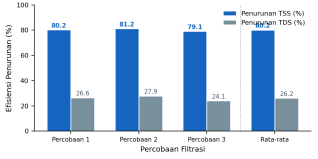
Another important finding is the selective nature of sand filtration, which effectively removes suspended solids (80.20% average) while preserving dissolved components (only 26.18% TDS reduction). This characteristic is particularly beneficial for bioscrubber applications, where dissolved organic and inorganic compounds serve as essential nutrients for
Thiobacillus bacteria
| [23] | Vikromvarasiri, N., Boonyawanich, S., Pisutpaisal, N. Preliminary study on microbial desulfurization: Targeting H2S removal from biogas with a bioscrubber. Industrial Biotechnology. 2020, 16(1), 14–20.
https://doi.org/10.1089/ind.2019.0041 |
| [24] | Zhang, L., et al. Selective removal of suspended solids from wastewater using novel filtration media. Chemical Engineering Journal. 2023, 455, 140567.
https://doi.org/10.1016/j.cej.2022.140567 |
[23, 24]
. Maintaining this balance is crucial, as excessive removal of dissolved substances could negatively impact biological oxidation processes. Similar observations have been reported in bioscrubber studies, where nutrient availability plays a key role in sustaining microbial activity and H
2S removal efficiency
| [5] | Santos, C. L., et al. Biological H2S removal from biogas using bioscrubbers: A review. Renewable and Sustainable Energy Reviews. 2022, 158, 112123.
https://doi.org/10.1016/j.rser.2022.112123 |
| [8] | Haosagul, S., Prommeenate, P., Keawsompong, S., Pisutpaisal, N. Sulfide-oxidizing bacteria community in full-scale bioscrubber treating H2S in biogas from swine anaerobic digester. Renewable Energy. 2020, 145, 1999–2007.
https://doi.org/10.1016/j.renene.2019.08.033 |
| [25] | Wang, Y., et al. Nutrient preservation in bioscrubber pretreatment systems. Bioresource Technology Reports. 2024, 25, 101765. https://doi.org/10.1016/j.biteb.2024.101765 |
[5, 8, 25]
..
Figure 4. Selectivity of Sand Filtration: Comparison of TSS and TDS Reduction Across Three Replicates.
4.4. Novel Mixing Strategy as a Cost-Effective Pretreatment
An innovative finding of this study is the effectiveness of blending digested POME with clarified POME from the final sedimentation pond at a 1: 3 ratio. This approach offers several advantages over chemical coagulation alone:
Mechanism: The clarified POME from the final pond has undergone extensive gravity sedimentation (24–48 hours), allowing larger suspended particles to settle naturally. When mixed with digested POME, the relatively clean water dilutes the TSS concentration while also providing a more stable colloidal environment. Additionally, the residual fine particles in clarified POME may act as nucleation sites for flocculation, enhancing the settling of suspended solids from the digested POME fraction.
Comparison with Chemical Coagulation: The 1: 3 mixing alone achieved 70.5% TSS reduction without any chemical addition, compared to 89.36% with PAC 150 ppm. While chemical coagulation remains more efficient, the mixing strategy offers:
1) Zero chemical cost
2) No sludge generation from coagulant reactions
3) Immediate implementation without additional equipment
4) Preservation of dissolved nutrients (TDS reduced only 14.5% compared to 33% with PAC)
Synergistic Effect: The combination of 1: 3 mixing followed by PAC 150 ppm and sand filtration achieved cumulative TSS reduction exceeding 95%, with final TSS below 50 ppm. This staged approach minimizes chemical consumption by reducing the TSS load entering the coagulation stage, thereby lowering PAC dosage requirements and operational costs.
Operational Impact on Bioscrubber: The most significant outcome was the reduction of H2S outlet concentration to 10 ppm, which is well below the typical safe operating limit for gas engines (typically <50 ppm). This improvement is attributed to three factors:
1) Elimination of Nozzle Clogging: Consistent spray pattern ensures uniform gas-liquid contact across the entire packing cross-section, eliminating dry zones where H2S breakthrough can occur.
2) Clean Packing Media: Unobstructed packing surfaces maintain high mass transfer coefficients and prevent the formation of anaerobic zones that can harbor pathogenic bacteria.
3) Preserved Microbial Activity: The mixing strategy retains dissolved organic and inorganic nutrients essential for
Thiobacillus metabolism, including nitrogen, phosphorus, and trace metals. The pH of 7.6 is optimal for sulfide oxidation kinetics
| [8] | Haosagul, S., Prommeenate, P., Keawsompong, S., Pisutpaisal, N. Sulfide-oxidizing bacteria community in full-scale bioscrubber treating H2S in biogas from swine anaerobic digester. Renewable Energy. 2020, 145, 1999–2007.
https://doi.org/10.1016/j.renene.2019.08.033 |
| [23] | Vikromvarasiri, N., Boonyawanich, S., Pisutpaisal, N. Preliminary study on microbial desulfurization: Targeting H2S removal from biogas with a bioscrubber. Industrial Biotechnology. 2020, 16(1), 14–20.
https://doi.org/10.1089/ind.2019.0041 |
[8, 23]
.
These findings align with recent studies on bioscrubber optimization, which emphasize that physical pretreatment (sedimentation, dilution) can be as important as biological process control in achieving high H
2S removal efficiency
.
For full-scale implementation, the proposed pretreatment train should be viewed as part of an integrated, multi-barrier wastewater management approach
| [28] | Tchobanoglous, G., et al. Integrated Wastewater Management for Sustainability. McGraw-Hill. 2022. |
[28]
. Scale-up of coagulation-filtration systems requires attention to hydraulic loading, filter backwashing, and coagulant dosing control
, while long-term operation of PAC dosing must account for sludge handling and disposal
. Because PAC lowers the pH of the treated water, as observed in this study, pH monitoring remains important to keep the circulation water within the range suited to sulfur-oxidizing bacteria
. Further development of filter media design may also enhance selective TSS removal in biogas pretreatment
.
5. Conclusions
This study demonstrates that coagulation-flocculation and sand filtration are effective methods for improving the quality of bioscrubber circulation water derived from digested POME at the Biogas Power Plant. Among the coagulants evaluated, Polyaluminium Chloride (PAC) exhibited superior performance compared to Aluminum Sulfate (Alum), achieving a maximum TSS removal efficiency of 89.36% at the optimal dosage of 150 ppm, with a final TSS concentration of 150 mg/L. Sand filtration consistently demonstrated high effectiveness in reducing TSS, with an average removal efficiency of 80.20%, while only moderately reducing TDS (26.18%).
Furthermore, a novel mixing strategy combining digested POME with clarified POME from the final sedimentation pond at a 1: 3 ratio proved highly effective, achieving 70.5% TSS reduction without chemical addition. This approach successfully eliminated nozzle and sprinkler clogging, prevented packing media fouling, and enabled the bioscrubber to achieve H2S outlet concentrations as low as 10 ppm.
Based on these findings, an integrated pretreatment system consisting of:
1) Primary mixing (digested POME: clarified POME = 1: 3)
2) Coagulation-flocculation using PAC at 150 ppm (optional)
3) Sand filtration is recommended to achieve TSS levels below 50 ppm while maintaining suitable conditions for biological activity within the bioscrubber system. The mixing strategy alone may suffice for sites with moderate TSS reduction requirements, offering a zero-chemical, zero-sludge alternative.
Abbreviations
BOD | Biochemical Oxygen Demand |
COD | Chemical Oxygen Demand |
EC | Electrical Conductivity |
H2S | Hydrogen Sulfide |
PAC | Polyaluminium Chloride |
POME | Palm Oil Mill Effluent |
TDS | Total Dissolved Solids |
TSS | Total Suspended Solids |
Acknowledgments
The authors would like to express their sincere gratitude to PT XYZ, particularly the Biogas Power Plant team, for providing access to the research site, operational data, and laboratory facilities that made this study possible. The authors also acknowledge the support from the Bioprocess Engineering Study Program at Politeknik ATI Padang for academic guidance and supervision throughout the research.
Author Contributions
Riski Gunawan Nasution: Conceptualization, Methodology, Supervision, Writing – original draft
Desniorita: Data curation, Formal Analysis, Writing – review & editing
Rahmadani Nasution: Investigation, Resources, Validation
Riadani Sinaga: Formal Analysis, Visualization
Januansyah Pratama: Investigation, Software
Agus Agus: Project administration
Data Availability Statement
The data supporting the outcome of this research work has been reported in this manuscript.
Conflicts of Interest
The authors declare no conflicts of interest.
References
| [1] |
Suksong, W., Kongjan, P., Prasertsan, P., Imai, T., O-Thong, S. Biogas production from palm oil mill effluent and empty fruit bunches by coupled liquid and solid-state anaerobic digestion. Bioresource Technology. 2019, 293, 122030.
https://doi.org/10.1016/j.biortech.2019.122030
|
| [2] |
Choong, Y. Y., Chou, K. W., Norli, I. Strategies for improving biogas production of palm oil mill effluent (POME) anaerobic digestion: A critical review. Renewable and Sustainable Energy Reviews. 2018, 82, 2993–3006.
https://doi.org/10.1016/j.rser.2017.10.036
|
| [3] |
Loh, S. K., Nasrin, A. B., Mohamad Azri, S., Nurul Adela, B., Muzzammil, N., Daryl Jay, T., Stasha Eleanor, R. A., Lim, W. S., Choo, Y. M., Kaltschmitt, M. Biogas from palm oil mill effluent (POME): Opportunities and challenges from Malaysia's perspective. Renewable and Sustainable Energy Reviews. 2017, 69, 904–914.
https://doi.org/10.1016/j.rser.2016.08.010
|
| [4] |
Suryawan, I. W., et al. Coagulation-flocculation for POME treatment: A comparative study of Alum and PAC. Journal of Water Process Engineering. 2022, 49, 103045.
https://doi.org/10.1016/j.jwpe.2022.103045
|
| [5] |
Santos, C. L., et al. Biological H2S removal from biogas using bioscrubbers: A review. Renewable and Sustainable Energy Reviews. 2022, 158, 112123.
https://doi.org/10.1016/j.rser.2022.112123
|
| [6] |
San-Valero, P., Penya-roja, J. M., Javier Alvarez-Hornos, F., Marzal, P., Gabaldón, C., Quijano, G. Fully aerobic bioscrubber for the desulfurization of H2S-rich biogas. Renewable Energy. 2019, 136, 1185–1192.
https://doi.org/10.1016/j.renene.2018.09.040
|
| [7] |
Situmorang, A., et al. Nutrient balance in bioscrubber systems for biogas desulfurization. Environmental Technology. 2019, 40(15), 1987–1996.
https://doi.org/10.1080/09593330.2018.1435734
|
| [8] |
Haosagul, S., Prommeenate, P., Keawsompong, S., Pisutpaisal, N. Sulfide-oxidizing bacteria community in full-scale bioscrubber treating H2S in biogas from swine anaerobic digester. Renewable Energy. 2020, 145, 1999–2007.
https://doi.org/10.1016/j.renene.2019.08.033
|
| [9] |
PT XYZ. Operational Report of the Biogas Power Plant, October 2024 (in Indonesian). Internal Technical Report. 2024.
|
| [10] |
Karri, R. R., Ravindran, G., Dehghani, M. H. Wastewater—sources, toxicity, and their consequences to human health. In Soft Computing Techniques in Solid Waste and Wastewater Management. Elsevier. 2021, pp. 3–33.
https://doi.org/10.1016/B978-0-12-824463-0.00003-X
|
| [11] |
Metcalf & Eddy. Wastewater Engineering: Treatment and Resource Recovery. 5th ed. McGraw-Hill. 2014.
|
| [12] |
Yap, C. C., Chan, Y. J., Loh, S. K., Supramaniam, C. V., Soh, A. C., Chong, M. F., Chew, C. L. Comparison of different industrial scale palm oil mill effluent anaerobic systems in degradation of organic contaminants and kinetic performance. Journal of Cleaner Production. 2020, 262, 121361.
https://doi.org/10.1016/j.jclepro.2020.121361
|
| [13] |
Krupinska, I. Suitability of highly polymerised polyaluminium chlorides (PACls) in the treatment of mixture of groundwater and surface water. Molecules. 2023, 28(2), 468.
https://doi.org/10.3390/molecules28020468
|
| [14] |
Zarei Mahmudabadi, T., Ebrahimi, A. A., Eslami, H., Mokhtari, M., Salmani, M. H., Ghaneian, M. T., Pakdaman, M. Optimization and economic evaluation of modified coagulation–flocculation process for enhanced treatment of ceramic-tile industry wastewater. AMB Express. 2018, 8(1), 172.
https://doi.org/10.1186/s13568-018-0702-4
|
| [15] |
Kim, H., Choi, J., Kim, J. Effect of TSS removal from stormwater by mixed media column on T-N, T-P, and organic material removal. Water. 2018, 10(8), 1069.
https://doi.org/10.3390/w10081069
|
| [16] |
Serrano, A., Ortega, L., Garcia-Morales, J. L., Jurado, M. Removal of PAHs, TSS, oils and fats from ammonium-rich coke wastewater by granular filtration. Journal of Environmental Management. 2024, 365, 121524.
https://doi.org/10.1016/j.jenvman.2024.121524
|
| [17] |
Naji, L., Ahmadi, A., Rouhani, S., Rezaei, M., Shiroud Heidari, M. Laundry wastewater treatment using a combination of sand filter, bio-char and teff straw media. Scientific Reports. 2021, 9, 18791.
https://doi.org/10.1038/s41598-019-54888-3
|
| [18] |
Badawi, A. K., Hassan, R., Farouk, M. Optimizing the coagulation/flocculation process for the treatment of slaughterhouse and meat processing wastewater: Experimental studies and pilot-scale proposal. International Journal of Environmental Science and Technology. 2024, 21, 8431–8446.
https://doi.org/10.1007/s13762-024-05591-y
|
| [19] |
Dehghani, M., Nadafi, K., Mesdaghinia, A., Nabizadeh, R., Noori Motlagh, S., Rad Samani, F. Investigating the improvement of industrial effluents quality for reuse with coagulation, flocculation, multi-layer filter and UV. Environmental Health Engineering and Management Journal. 2018, 5(3), 179–188.
https://doi.org/10.15171/EHEM.2018.26
|
| [20] |
Musa, M. A., Idrus, S., Man, H. C., Daud, N. N. N. Wastewater treatment and biogas recovery using anaerobic membrane bioreactors (AnMBRs): Strategies and optimization. Membranes. 2018, 8(2), 30.
https://doi.org/10.3390/membranes8020030
|
| [21] |
Boonyawanich, S., Chaiprapat, S. Bacterial community in biofilter system for H2S removal from palm oil factory biogas. Nature Environment and Pollution Technology. 2024, 23(2), 811–818.
|
| [22] |
Pangarso, F. W., Kusdiyantini, E. Biogas production from palm oil mill effluent and the prospect of co-digestion with empty fruit bunches. Journal of Agricultural Engineering (Jurnal Teknik Pertanian Lampung). 2022, 11(1), 99–118.
https://doi.org/10.23960/jtep-l.v11i1.99-118
|
| [23] |
Vikromvarasiri, N., Boonyawanich, S., Pisutpaisal, N. Preliminary study on microbial desulfurization: Targeting H2S removal from biogas with a bioscrubber. Industrial Biotechnology. 2020, 16(1), 14–20.
https://doi.org/10.1089/ind.2019.0041
|
| [24] |
Zhang, L., et al. Selective removal of suspended solids from wastewater using novel filtration media. Chemical Engineering Journal. 2023, 455, 140567.
https://doi.org/10.1016/j.cej.2022.140567
|
| [25] |
Wang, Y., et al. Nutrient preservation in bioscrubber pretreatment systems. Bioresource Technology Reports. 2024, 25, 101765.
https://doi.org/10.1016/j.biteb.2024.101765
|
| [26] |
Chen, W., et al. Multi-barrier treatment systems for high-strength wastewater: A review. Journal of Environmental Management. 2023, 345, 118456.
https://doi.org/10.1016/j.jenvman.2023.118456
|
| [27] |
Kumar, R., et al. Integrated pretreatment for biogas desulfurization: Technical and economic aspects. Renewable Energy. 2024, 220, 119654.
https://doi.org/10.1016/j.renene.2023.119654
|
| [28] |
Tchobanoglous, G., et al. Integrated Wastewater Management for Sustainability. McGraw-Hill. 2022.
|
| [29] |
Liu, H., et al. Scale-up challenges in coagulation-filtration systems for industrial wastewater. Water Research. 2023, 242, 120234.
https://doi.org/10.1016/j.watres.2023.120234
|
| [30] |
Pratama, R., et al. Long-term performance and sludge management in POME coagulation systems. Waste Management. 2024, 175, 112–123.
https://doi.org/10.1016/j.wasman.2024.01.015
|
| [31] |
Sari, D. P., et al. Optimization of pH control in bioscrubber systems for H2S removal. Biochemical Engineering Journal. 2024, 195, 108912.
https://doi.org/10.1016/j.bej.2024.108912
|
| [32] |
Hidayat, T., et al. Advanced filter media design for selective TSS removal in biogas pretreatment. Separation and Purification Technology. 2025, 330, 125456.
https://doi.org/10.1016/j.seppur.2024.125456
|
Cite This Article
-
APA Style
Nasution, R. G., Desniorita, Nasution, R., Sinaga, R., Pratama, J., et al. (2026). Study of TSS Reduction in Digested POME Using Coagulation-Flocculation and Sand Filtration for Bioscrubber Pretreatment. Journal of Chemical, Environmental and Biological Engineering, 10(2), 67-75. https://doi.org/10.11648/j.jcebe.20261002.14
 Copy
|
 Download
ACS Style
Nasution, R. G.; Desniorita; Nasution, R.; Sinaga, R.; Pratama, J., et al. Study of TSS Reduction in Digested POME Using Coagulation-Flocculation and Sand Filtration for Bioscrubber Pretreatment. J. Chem. Environ. Biol. Eng. 2026, 10(2), 67-75. doi: 10.11648/j.jcebe.20261002.14
Copy
|
Download
AMA Style
Nasution RG, Desniorita, Nasution R, Sinaga R, Pratama J, et al. Study of TSS Reduction in Digested POME Using Coagulation-Flocculation and Sand Filtration for Bioscrubber Pretreatment. J Chem Environ Biol Eng. 2026;10(2):67-75. doi: 10.11648/j.jcebe.20261002.14
Copy
|
Download
-
@article{10.11648/j.jcebe.20261002.14,
  author = {Riski Gunawan Nasution and Desniorita and Rahmadani Nasution and Riadani Sinaga and Januansyah Pratama and Agus Agus},
  title = {Study of TSS Reduction in Digested POME Using Coagulation-Flocculation and Sand Filtration for Bioscrubber Pretreatment},
  journal = {Journal of Chemical, Environmental and Biological Engineering},
  volume = {10},
  number = {2},
  pages = {67-75},
  doi = {10.11648/j.jcebe.20261002.14},
  url = {https://doi.org/10.11648/j.jcebe.20261002.14},
  eprint = {https://article.sciencepublishinggroup.com/pdf/10.11648.j.jcebe.20261002.14},
  abstract = {The bioscrubber circulation water at the Biogas Power Plant is sourced from overflow digested Palm Oil Mill Effluent (POME) containing very high Total Suspended Solids (TSS), exceeding 500 mg/L. High TSS causes fouling of sprayer nozzles, clogging of packing media, and reduces Thiobacillus bacterial activity in biological H2S oxidation. This study aims to evaluate the effectiveness of coagulation-flocculation using Aluminum Sulfate (Alum) and Polyaluminium Chloride (PAC), as well as sand filtration, in reducing TSS levels. Coagulation-flocculation tests were carried out as jar tests with dose variations of 0, 50, 100, 150, and 200 ppm for each coagulant, followed by 30-minute sedimentation. Filtration tests used 300 grams of silica sand (0.5-1.0 mm diameter) in a gravity-driven column (height 30 cm, diameter 5 cm) with three replicates. Furthermore, a novel mixing strategy was developed by combining digested POME with clarified POME from the final sedimentation pond (low TSS) at a 1: 3 ratio. Results show that PAC at optimal dose 150 ppm achieves TSS removal efficiency of 89.36% with final TSS of 150 ppm, outperforming Alum which achieved 82.47% at the same dose. Sand filtration consistently reduced TSS by an average of 80.20% while maintaining TDS at an average reduction of 26.18%, preserving dissolved organics as bacterial nutrients. The 1: 3 mixing strategy successfully reduced TSS to below 50 mg/L, eliminating nozzle and sprinkler clogging, preventing packing media fouling, and achieving H2S removal efficiency down to 10 ppm in the bioscrubber outlet. The combination of PAC 150 ppm and sand filtration, along with the 1: 3 mixing strategy, is recommended as a stage.},
 year = {2026}
}
Copy
|
Download
-
TY  - JOUR
T1  - Study of TSS Reduction in Digested POME Using Coagulation-Flocculation and Sand Filtration for Bioscrubber Pretreatment
AU  - Riski Gunawan Nasution
AU  - Desniorita
AU  - Rahmadani Nasution
AU  - Riadani Sinaga
AU  - Januansyah Pratama
AU  - Agus Agus
Y1  - 2026/11/06
PY  - 2026
N1  - https://doi.org/10.11648/j.jcebe.20261002.14
DO  - 10.11648/j.jcebe.20261002.14
T2  - Journal of Chemical, Environmental and Biological Engineering
JF  - Journal of Chemical, Environmental and Biological Engineering
JO  - Journal of Chemical, Environmental and Biological Engineering
SP  - 67
EP  - 75
PB  - Science Publishing Group
SN  - 2640-267X
UR  - https://doi.org/10.11648/j.jcebe.20261002.14
AB  - The bioscrubber circulation water at the Biogas Power Plant is sourced from overflow digested Palm Oil Mill Effluent (POME) containing very high Total Suspended Solids (TSS), exceeding 500 mg/L. High TSS causes fouling of sprayer nozzles, clogging of packing media, and reduces Thiobacillus bacterial activity in biological H2S oxidation. This study aims to evaluate the effectiveness of coagulation-flocculation using Aluminum Sulfate (Alum) and Polyaluminium Chloride (PAC), as well as sand filtration, in reducing TSS levels. Coagulation-flocculation tests were carried out as jar tests with dose variations of 0, 50, 100, 150, and 200 ppm for each coagulant, followed by 30-minute sedimentation. Filtration tests used 300 grams of silica sand (0.5-1.0 mm diameter) in a gravity-driven column (height 30 cm, diameter 5 cm) with three replicates. Furthermore, a novel mixing strategy was developed by combining digested POME with clarified POME from the final sedimentation pond (low TSS) at a 1: 3 ratio. Results show that PAC at optimal dose 150 ppm achieves TSS removal efficiency of 89.36% with final TSS of 150 ppm, outperforming Alum which achieved 82.47% at the same dose. Sand filtration consistently reduced TSS by an average of 80.20% while maintaining TDS at an average reduction of 26.18%, preserving dissolved organics as bacterial nutrients. The 1: 3 mixing strategy successfully reduced TSS to below 50 mg/L, eliminating nozzle and sprinkler clogging, preventing packing media fouling, and achieving H2S removal efficiency down to 10 ppm in the bioscrubber outlet. The combination of PAC 150 ppm and sand filtration, along with the 1: 3 mixing strategy, is recommended as a stage.
VL  - 10
IS  - 2
ER  -
Copy
|
Download





 Share This Article
 Twitter
 Linked In
 Facebook
