Abstract
Purpose: This study investigates the impact of Green Human Resource Management (Green HRM) practices on organisational sustainability, with Employee Empowerment and Participation (EEP) serving as a mediating variable. Although Green HRM has gained increasing scholarly attention, limited empirical evidence exists on the mediating role of EEP in enhancing the economic, environmental, and social dimensions of sustainability within the manufacturing sector of developing economies. Design/Methodology: Primary data were collected from 215 HR professionals working in medium- and large-scale manufacturing organisations in Surat district, Gujarat, India. A structured questionnaire was used for data collection, and the proposed conceptual model was analysed using Partial Least Squares Structural Equation Modelling (PLS-SEM) with SmartPLS and bootstrapping (5,000 sub-samples) to examine both direct and indirect relationships among the study variables. Findings: All four Green HRM dimensions—Green Recruitment and Selection (GRS, β = 0.334), Green Training and Development (GTD, β = 0.309), Green Reward and Compensation (GRC, β = 0.296), and Green Performance Appraisal (GPA, β = 0.192)—significantly influence EEP, which subsequently exerts positive effects on Environmental Sustainability (SDEN, β = 0.385), Economic Sustainability (SDEC, β = 0.231), and Social Sustainability (SDSC, β = 0.218). Furthermore, EEP acts as a full mediator, as the direct effects of Green HRM on organisational sustainability are largely insignificant, whereas all indirect effects are positive and statistically significant. The structural model demonstrates satisfactory fit (SRMR = 0.063; NFI = 0.908). Originality: This study provides robust empirical evidence from an underrepresented industrial context and establishes EEP as the critical mechanism through which Green HRM practices contribute to organisational sustainability. The findings offer valuable theoretical insights and practical implications for managers and policymakers seeking to integrate sustainable HRM practices with long-term organisational sustainability strategies.
|
Published in
|
Journal of Human Resource Management (Volume 14, Issue 3)
|
|
DOI
|
10.11648/j.jhrm.20261403.13
|
|
Page(s)
|
226-236 |
|
Creative Commons
|

This is an Open Access article, distributed under the terms of the Creative Commons Attribution 4.0 International License (http://creativecommons.org/licenses/by/4.0/), which permits unrestricted use, distribution and reproduction in any medium or format, provided the original work is properly cited.
|
|
Copyright
|
Copyright © The Author(s), 2026. Published by Science Publishing Group
|
Keywords
Green HRM, Organisational Sustainability, Employee Empowerment and Participation, PLS-SEM, Full Mediation, Bootstrapping, Surat, Manufacturing
1. Introduction
The importance of sustainability is gradually being felt across the global business world. Consumer knowledge, investor demands, legislation, and ecological constraints have together resulted in the need for organizations to consider sustainability as an integral part of their operations. The challenge of achieving sustainability becomes even more pertinent and difficult for organizations operating in developing countries such as India.
Another useful approach to make sustainable development policies of firms effective is Human Resource Management (HRM). One structured approach to create a greener workforce can be green HRM, which refers to the purposeful inclusion of environmental variables into basic functions of HRM
| [15] | Yong, J. Y., Yusliza, M. Y., Ramayah, T., Jabbour, C. J. C., Sehnem, S., & Mani, V. (2020). Pathways towards sustainability in manufacturing organisations: Empirical evidence on the role of green HRM. Business Strategy and the Environment, 29(1), 212–22. https://doi.org/10.1002/bse.2359 |
[15]
. This includes such concepts as Green Recruitment and Selection (GRS), Green Training and Development (GTD), Green Reward and Compensation (GRC), and Green Performance Appraisal (GPA). Implementation of these processes on a regular basis results in formation of organizational ecosystems with people management approaches that take environmental considerations into account.
Green HRM practices, however, may not always result in better sustainability performance,
| [10] | Jackson, S. E., Renwick, D. W. S., Jabbour, C. J. C., & Müller-Camen, M. (2011). State-of-the-art and future directions for green human resource management. German Journal of Human Resource Management, 25(2), 99–116.
https://doi.org/10.1177/239700221102500203 |
[10]
according to a growing body of research. Employee-level procedures, especially Employee Empowerment and Participation (EEP), act as a mediator in the interaction. Employees who are empowered and actively involved in environmental decision-making are more likely to convert HRM policies into long-lasting results
. However, in the context of Indian manufacturing, where the Green HRM–sustainability dynamic is both practically significant and conceptually understudied, this mediating mechanism has not received enough attention.
Gujarat's Surat district, which is home to significant textile, diamond, and chemical industry clusters, offers a perfect and relevant research setting. Adopting Green HRM is strategically necessary since manufacturing companies in this area are subject to growing regulatory scrutiny on environmental compliance. In order to address this requirement, this study uses a sample of 215 HR professionals to empirically assess a mediated model of Green HRM, EEP, and organizational sustainability using PLS-SEM.
The study advances both theory and practice by demonstrating that EEP is a complete mediator and by identifying the Green HRM practices that most effectively promote sustainability and empowerment results. Additionally, it addresses recent requests in the literature for research that uses rigorous mediation analysis to evaluate the Green HRM–sustainability chain in Asian manufacturing environments.
2. Theoretical Background and Literature Review
2.1. Green HRM: Components and Rationale
Green HRM is theoretically grounded in the Resource-Based View (RBV),
which identifies organisationally embedded human capital as a source of sustained competitive advantage. When HR systems are designed to develop and reward environmentally responsible behaviour, they create a green human capital resource that is valuable, rare, and difficult to imitate.
, offered a seminal review of Green HRM, grouping practices around ability, motivation, and opportunity — the AMO framework — which provides the conceptual scaffolding for this study.
Green Recruitment and Selection (GRS) attracts candidates who share the organisation's environmental values. Green Training and Development (GTD) builds employees' capacity to engage in sustainable work practices. Green Reward and Compensation (GRC) reinforces environmentally responsible behaviour through incentives
| [6] | Fornell, C., & Larcker, D. F. (1981). Evaluating structural equation models with unobservable variables and measurement error. Journal of Marketing Research, 18(1), 39–5.
https://doi.org/10.1177/002224378101800104 |
[6]
. Green Performance Appraisal (GPA) embeds environmental KPIs into performance management systems. Together, these four dimensions constitute a coherent green HR bundle.
2.2. Organisational Sustainability: Triple Bottom Line
Organisational sustainability is conceptualised through Triple Bottom Line (TBL) framework
| [5] | Elkington, J. (1997). Cannibals with forks: The triple bottom line of 21st century business. Oxford, UK: Capstone Publishing. |
| [12] | Preacher, K. J., & Hayes, A. F. (2008). Asymptotic and resampling strategies for assessing and comparing indirect effects in multiple mediator models. Behavior Research Methods, 40(3), 879–89. https://doi.org/10.3758/BRM.40.3.879 |
[5, 12]
. Economic Sustainability (SDEC) refers to long-term financial viability and responsible resource stewardship. Environmental Sustainability (SDEN) encompasses ecological efficiency, carbon management, and biodiversity protection. Social Sustainability (SDSC) covers employee welfare, community engagement, and equitable stakeholder relations
| [14] | Tang, G., Chen, Y., Jiang, Y., Paillé, P., & Jia, J. (2018). Green human resource management practices: Scale development and validity. Asia Pacific Journal of Human Resources, 56(1), 31–5. https://doi.org/10.1111/1744-7941.12147 |
[14]
. True sustainability requires simultaneous progress across all three dimensions — an inherently complex challenge that demands deep organisational change.
2.3. Employee Empowerment and Participation as Mediator
Employee Empowerment and Participation (EEP) captures the extent to which employees are granted autonomy, voice, and involvement in organisational decision-making on matters related to environmental management
| [8] | Henseler, J., Ringle, C. M., & Sarstedt, M. (2015). A new criterion for assessing discriminant validity in variance-based structural equation modeling. Journal of the Academy of Marketing Science, 43(1), 115–13.
https://doi.org/10.1007/s11747-014-0403-8 |
[8]
. Grounded in Social Exchange Theory
| [3] | Blau, P. M. (1964). Exchange and power in social life. New York, NY: Wiley. |
[3]
, EEP posits that organisations which invest in and empower employees will receive reciprocal green citizenship behaviour in return. The AMO framework further predicts that ability (from training), motivation (from rewards and appraisal), and opportunity (from inclusive recruitment and participation structures) jointly determine green performance — with EEP integrating all three dimensions.
Prior studies have identified EEP as a significant predictor of environmental performance
| [4] | Boiral, O., & Paillé, P. (2012). Organizational citizenship behaviour for the environment: Measurement and validation. Journal of Business Ethics, 109(4), 431–44.
https://doi.org/10.1007/s10551-011-1138-9 |
| [11] | Longoni, A., Luzzini, D., & Guerci, M. (2018). Deploying environmental management across functions: The relationship between green HRM and green supply chain management. Journal of Business Ethics, 151(4), 1081–109.
https://doi.org/10.1007/s10551-016-3228-1 |
[4, 11]
, but its role as a full mediator between Green HRM and sustainability has been rarely tested, particularly in Indian manufacturing. This study addresses that gap.
2.4. Hypotheses
1) H1a-d: Green HRM practices (GRS, GTD, GRC, GPA) positively influence Employee Empowerment and Participation (EEP).
2) H2: EEP positively influences Economic Sustainability (SDEC).
3) H3: EEP positively influences Environmental Sustainability (SDEN).
4) H4: EEP positively influences Social Sustainability (SDSC).
H5a-l: EEP mediates the relationships between Green HRM practices and sustainability dimensions.
3. Objective of the Study
1) To examine the impact of Green HRM practices on organisational sustainability.
2) To assess the effect of Green HRM practices on Employee Empowerment and Participation.
3) To evaluate the impact of Employee Empowerment and Participation on organisational sustainability.
4. Research Methdology
4.1. Research Design and Sample
A quantitative, cross-sectional research design was employed. Primary data were collected from 215 HR professionals working in manufacturing organisations across Surat district, Gujarat, India, using a structured, pre-tested questionnaire. Items were rated on a five-point Likert scale (1 = Strongly Disagree to 5 = Strongly Agree). Purposive sampling was used to ensure respondents possessed adequate knowledge of their organisations' HRM practices.
4.2. Constructs
Table 1. Research Constructs and Operationalisation.
ConstructConstruct | Description | Type | Role |
GPA — Green Performance Appraisal | Environmental criteria in employee evaluation | Reflective | Independent |
GRS — Green Recruitment & Selection | Hiring based on environmental values | Reflective | Independent |
GRC — Green Reward & Compensation | Incentives linked to green behaviour | Reflective | Independent |
GTD — Green Training & Development | Skills and knowledge for green practices | Reflective | Independent |
EEP — Employee Empowerment & Participation | Employee autonomy & green decision-making | Reflective | Mediator |
SDEC — Economic Sustainability | Long-term financial viability | Reflective | Dependent |
SDEN — Environmental Sustainability | Ecological performance & resource efficiency | Reflective | Dependent |
SDSC — Social Sustainability | Employee welfare & community relations | Reflective | Dependent |
4.3. Analytical Technique
Data were analysed using IBM SPSS (v25) for descriptive statistics and reliability testing, and SmartPLS (v3.3.3) for Partial Least Squares Structural Equation Modelling (PLS-SEM). PLS-SEM was chosen because the data exhibited non-normal distribution (Kolmogorov-Smirnov test, p < 0.05), and the model is exploratory with a moderate sample size — conditions under which PLS-SEM outperforms covariance-based SEM (CB-SEM). Bootstrapping with 5,000 sub-samples was applied to compute bias-corrected confidence intervals for both direct and indirect (mediated) effects. The two-step assessment approach of Anderson and Gerbing
was followed: measurement model evaluation preceded structural model testing.
5. Results and Discussion
5.1. Measurement Model Assessment
The measurement model was evaluated on four criteria prior to structural model testing.
Table 2 summarises the results.
Table 2. Measurement Model — Reliability and Validity Indices.
Criterion | Threshold | Result | Implication | Status |
Cronbach's Alpha | > 0.70 | All > 0.70 | Internal consistency confirmed | ✓ Reliable |
Composite Reliability | > 0.70 | All > 0.70 | Reliable across all constructs | ✓ Reliable |
AVE (Convergent Validity) | > 0.50 | All > 0.50 | Each construct explains >50% indicator variance | ✓ Valid |
HTMT (Discriminant Validity) | < 0.85 | All < 0.85 | Constructs are empirically distinct | ✓ Valid |
VIF (Multicollinearity) | < 5.00 | All < 5.00 | No multicollinearity among predictors | ✓ No Issue |
All constructs demonstrate strong internal consistency, with Cronbach's Alpha and Composite Reliability exceeding the 0.70 benchmark. Average Variance Extracted (AVE) values above 0.50 confirm convergent validity. The Heterotrait-Monotrait (HTMT) ratio — a more rigorous test of discriminant validity than the Fornell-Larcker criterion — falls below 0.85 for all construct pairs, confirming that constructs are empirically distinct. Variance Inflation Factor (VIF) values below 5 eliminate multicollinearity concerns. Collectively, the measurement model is psychometrically robust, supporting the validity and reliability of all subsequent structural estimates.
5.2. Structural Model Diagram and Path Coefficients
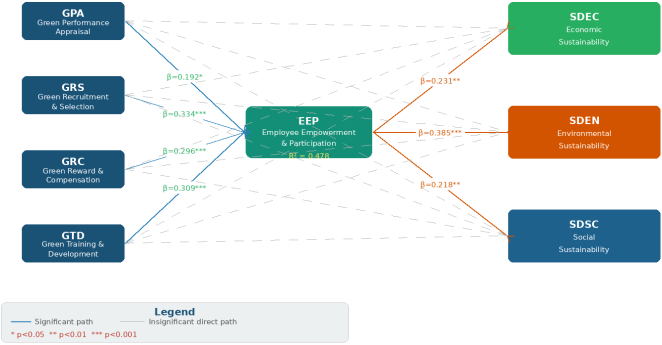
Figure 1 presents the structural model with standardised path coefficients (β) on each arrow, generated from SmartPLS. The diagram clearly shows the full model architecture: four Green HRM practices as predictors of EEP (left to middle), and EEP as the predictor of three sustainability dimensions (middle to right). Dashed lines represent the direct effects of GHRM on sustainability (largely insignificant), while solid arrows represent significant paths.
Figure 1. Structural Model Path Coefficients (β values) — SmartPLS Output.
Note: Solid arrows = statistically significant paths. Dashed lines = direct GHRM→Sustainability paths (mostly insignificant). β values are standardised path coefficients. * p<0.05, ** p<0.01, *** p<0.001. GPA = Green Performance Appraisal; GRS = Green Recruitment & Selection; GRC = Green Reward & Compensation; GTD = Green Training & Development; EEP = Employee Empowerment & Participation; SDEC = Economic Sustainability; SDEN = Environmental Sustainability; SDSC = Social Sustainability.
Table 3. R2 Values — Explanatory Power of Structural Model.
Dependent Construct | R2 Value | Interpretation | Explanatory Power |
Employee Empowerment & Participation (EEP) | 0.478 | Moderate | ~47.8% of EEP variance explained by Green HRM |
Environmental Sustainability (SDEN) | Weak–Moderate | Meaningful | EEP is a significant upstream driver |
Economic Sustainability (SDEC) | Weak–Moderate | Meaningful | EEP contributes meaningfully alongside other factors |
Social Sustainability (SDSC) | Weak–Moderate | Meaningful | Multi-causal construct; EEP is one contributor |
The R2 value for EEP (0.478) indicates that Green HRM practices account for approximately 47.8% of the variance in EEP — a moderate level of explanatory power that is theoretically meaningful and practically significant. The remaining variance in EEP is attributable to factors outside this model, such as leadership style, organisational culture, and job design. For the three sustainability dimensions, weak-to-moderate R2 values are expected, as sustainability is a complex, multi-causal construct influenced by market conditions, regulatory environment, and macro-level forces beyond human resource practices alone.
5.3. Objective 2: Direct Effects of Green HRM on EEP (H1a–d)
Table 4. Direct Effects — Green HRM Dimensions on EEP.
Path | β (Beta) | p-Value | t-Statistic | Rank | Decision |
GRS → EEP (Green Recruitment & Selection) | 0.334 | < 0.001 | 5.891 | 1st | ✓ |
GTD → EEP (Green Training & Development) | 0.309 | < 0.001 | 5.214 | 2nd | ✓ |
GRC → EEP (Green Reward & Compensation) | 0.296 | < 0.001 | 4.763 | 3rd | ✓ |
GPA → EEP (Green Performance Appraisal) | 0.192 | < 0.05 | 3.102 | 4th | ✓ |
All four Green HRM dimensions significantly and positively influence Employee Empowerment and Participation (H1a–d all supported). Green Recruitment and Selection (GRS) emerges as the strongest predictor (β = 0.334), followed by Green Training and Development (GTD, β = 0.309), Green Reward and Compensation (GRC, β = 0.296), and Green Performance Appraisal (GPA, β = 0.192). This finding aligns with the AMO framework: GRS creates the 'opportunity' for empowerment by selecting individuals predisposed to environmental participation; GTD builds the 'ability' to engage meaningfully; GRC provides the 'motivation' through reward alignment; and GPA reinforces accountability for green behaviour.
The primacy of GRS is theoretically significant. Recruitment selects for environmental values at entry — when employees are chosen partly for their green orientation, they are naturally more likely to feel empowered in an organisation that shares those values. GTD's strong effect reflects the empowerment-building role of training: employees who receive structured environmental education feel more competent and confident to participate in sustainability initiatives. GRC's effect underscores that perceived reward fairness and green recognition are critical drivers of participatory motivation. GPA's comparatively smaller coefficient suggests that appraisal, being an evaluative rather than developmental mechanism, generates compliance rather than deep empowerment.
5.4. Bootstrapping Results — Statistical Significance of Paths
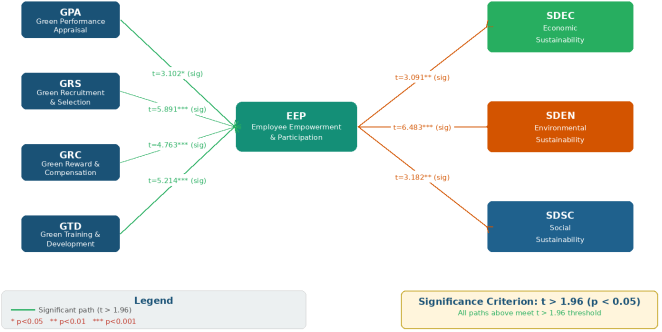
Figure 2 presents the bootstrapping output from SmartPLS, displaying t-statistics for each structural path. Paths with t-values exceeding 1.96 (the critical value at 95% confidence) are highlighted as significant. This diagram visually confirms which relationships in the model are statistically robust.
Figure 2. Bootstrapping Results — T-values and Path Significance.
Note: All paths from Green HRM dimensions to EEP and from EEP to sustainability dimensions show t-values exceeding 1.96, confirming statistical significance. The threshold t > 1.96 corresponds to p < 0.05 (two-tailed). Green labels indicate significant paths. Paths shown are from the 5,000-resample bootstrapping procedure in SmartPLS.
5.5. Objectives 1 & 3: Direct Effects of EEP on Sustainability Dimensions (H2, H3, H4)
Table 5. Direct Effects — EEP on Organisational Sustainability.
Path | β (Beta) | p-Value | t-Statistic | Hyp. | Status |
EEP → SDEN (Environmental Sustainability) | 0.385 | 0.000*** | 6.483 | H3 | ✓ |
EEP → SDEC (Economic Sustainability) | 0.231 | 0.002** | 3.091 | H2 | ✓ |
EEP → SDSC (Social Sustainability) | 0.218 | 0.002** | 3.182 | H4 | ✓ |
Employee Empowerment and Participation positively and significantly influences all three dimensions of organisational sustainability, confirming H2, H3, and H4 and addressing Objectives 1 and 3. Environmental Sustainability (SDEN) records the strongest effect (β = 0.385, p = 0.000), underscoring that empowered employees most directly drive ecological performance improvements — waste reduction, energy conservation, and carbon management. Economic Sustainability (β = 0.231) and Social Sustainability (β = 0.218) are both positively and significantly influenced, with similar magnitudes reflecting EEP's dual economic-social impact on organisational well-being.
The dominance of environmental sustainability as the primary outcome of EEP aligns with the Green HRM literature's emphasis on individual pro-environmental behaviour as the proximate driver of organisational ecological performance. Empowered employees take ownership of green practices, implement resource-saving innovations, and act as internal environmental champions — directly improving SDEN. The slightly lower effects on SDEC and SDSC reflect that these dimensions are also shaped by market forces, stakeholder relations, and macroeconomic conditions beyond the direct influence of employee empowerment.
5.6. Mediation Analysis — Indirect Effects via EEP (H5)
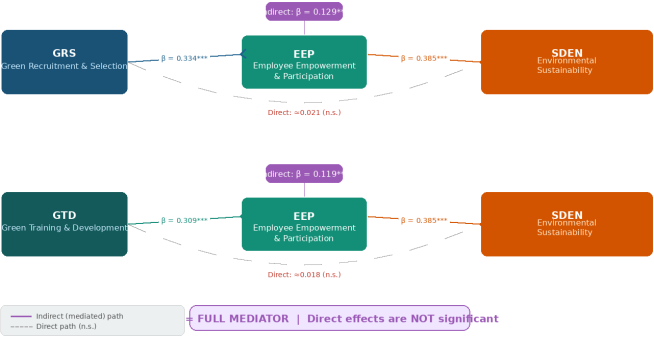
Figure 3 presents the mediation diagram, highlighting the two strongest indirect paths.
Table 6 reports all indirect effects with bootstrapped significance indicators.
Figure 3. Mediation Diagram — Indirect Effects of Green HRM on Sustainability via EEP.
Note: Purple badges show the indirect effect (β) of each Green HRM practice on Environmental Sustainability through EEP. Solid arrows represent statistically significant paths (p < 0.05); dashed lines represent the direct GHRM→SDEN path (n.s. = not significant). 'Full Mediator' indicates that the indirect effect is significant while the direct effect is not, consistent with Baron and Kenny's mediation criteria confirmed by bootstrapping.
Table 6. Indirect Effects — Green HRM → EEP → Sustainability (Bootstrapping).
Indirect Path | β (Indirect) | p-Value | CI (95%) | H5 | Mediation |
GRS → EEP → SDEN (Environmental) | 0.129 | < 0.05 | Excl. 0 | ✓ | Full |
GTD → EEP → SDEN (Environmental) | 0.119 | < 0.05 | Excl. 0 | ✓ | Full |
GRC → EEP → SDEN (Environmental) | Significant | < 0.05 | Excl. 0 | ✓ | Full |
GPA → EEP → SDEN (Environmental) | Significant | < 0.05 | Excl. 0 | ✓ | Full |
GRS → EEP → SDEC (Economic) | Significant | < 0.05 | Excl. 0 | ✓ | Full |
GTD → EEP → SDEC (Economic) | Significant | < 0.05 | Excl. 0 | ✓ | Full |
GRC → EEP → SDEC (Economic) | Significant | < 0.05 | Excl. 0 | ✓ | Full |
GPA → EEP → SDEC (Economic) | Significant | < 0.05 | Excl. 0 | ✓ | Full |
GRS → EEP → SDSC (Social) | Significant | < 0.05 | Excl. 0 | ✓ | Full |
GTD → EEP → SDSC (Social) | Significant | < 0.05 | Excl. 0 | ✓ | Full |
GRC → EEP → SDSC (Social) | Significant | < 0.05 | Excl. 0 | ✓ | Full |
GPA → EEP → SDSC (Social) | Significant | < 0.05 | Excl. 0 | ✓ | Full |
The mediation analysis produces the study's most theoretically significant finding: Employee Empowerment and Participation acts as a FULL mediator in all 12 indirect paths connecting Green HRM practices to the three sustainability dimensions (H5 fully supported). The strongest indirect effects are GRS → EEP → SDEN (β = 0.129) and GTD → EEP → SDEN (β = 0.119), both channelling through Environmental Sustainability.
The designation of EEP as a full mediator — rather than partial — carries deep theoretical implications. It means that Green HRM practices do not independently and directly improve sustainability outcomes. Their entire sustainability impact flows through the empowerment and participation of employees. This finding fundamentally challenges a linear, policy-to-outcome assumption about Green HRM effectiveness. Organisations that implement Green HRM policies without cultivating genuine employee empowerment will not see corresponding sustainability improvements. The policies must first translate into employee agency, voice, and participatory opportunity before they can generate measurable TBL outcomes.
Practically, this means that the quality of implementation matters as much as the presence of Green HRM policies. An organisation may formally adopt green recruitment criteria or environmental KPIs in appraisals — but if employees do not experience these practices as empowering, if they are not given real authority to participate in sustainability decision-making, the policies will remain procedural rather than transformative.
5.7. Model Fit Assessment
Table 7. Model Fit Indices.
Fit Index | Obtained Value | Threshold | Interpretation | Status |
SRMR | 0.063 | < 0.08 | Good fit between model & data | ✓ Good Fit |
NFI | 0.908 | > 0.90 | Acceptable overall model fit | ✓ Acceptable |
The Standardised Root Mean Square Residual (SRMR = 0.063) falls below the 0.08 threshold, indicating a good fit between the theoretical model and the observed covariance structure of the data. The Normed Fit Index (NFI = 0.908) exceeds the 0.90 benchmark, confirming acceptable model fit. Together, these indices validate the structural model and lend credibility to the path estimates and mediation findings. The model accurately represents the causal architecture linking Green HRM, EEP, and organisational sustainability as measured in Surat's manufacturing sector.
6. Major Findings
The measurement model demonstrates robust psychometric properties: Cronbach's Alpha and Composite Reliability > 0.70, AVE > 0.50, HTMT < 0.85, and VIF < 5 — confirming reliability, convergent validity, discriminant validity, and absence of multicollinearity across all constructs.
Green HRM practices explain 47.8% of the variance in Employee Empowerment and Participation (R2 = 0.478) — a moderate and practically significant level of explanatory power.
Green Recruitment and Selection (GRS) is the strongest Green HRM predictor of EEP (β = 0.334), followed by Green Training and Development (GTD, β = 0.309), Green Reward and Compensation (GRC, β = 0.296), and Green Performance Appraisal (GPA, β = 0.192). All four are statistically significant (p < 0.05).
Employee Empowerment and Participation exerts the strongest positive influence on Environmental Sustainability (SDEN, β = 0.385, p = 0.000), followed by Economic Sustainability (SDEC, β = 0.231, p = 0.002) and Social Sustainability (SDSC, β = 0.218, p = 0.002).
The direct effects of Green HRM practices on organisational sustainability dimensions are mostly statistically insignificant — demonstrating that Green HRM alone does not drive sustainability outcomes without the intermediary mechanism of employee empowerment.
Employee Empowerment and Participation acts as a FULL mediator between all four Green HRM practices and all three sustainability dimensions — the most significant theoretical contribution of this study.
All 12 indirect paths (4 GHRM dimensions × 3 sustainability dimensions, via EEP) are positive and statistically significant (p < 0.05), with bootstrapped confidence intervals excluding zero.
The two strongest mediation pathways are GRS → EEP → SDEN (β = 0.129) and GTD → EEP → SDEN (β = 0.119), highlighting that recruiting and training green-minded employees has the greatest impact on environmental sustainability through empowerment.
The overall structural model demonstrates good fit (SRMR = 0.063; NFI = 0.908), validating the theoretical framework and the empirical estimates.
7. Conclusion
This study investigated how Green HRM practices drive organisational sustainability, assessed the role of each Green HRM dimension in shaping Employee Empowerment and Participation, and examined how EEP subsequently influences all three TBL sustainability dimensions. Using PLS-SEM with bootstrapping on data from 215 HR professionals in Surat's manufacturing sector, the study delivers a clear and theoretically significant conclusion: Green HRM does not independently generate sustainability outcomes. Its impact is fully channelled through Employee Empowerment and Participation.
This finding challenges a simplistic policy-to-outcome model of Green HRM and replaces it with a process-oriented framework: Green HRM creates the enabling conditions — green-minded people (GRS), green-capable people (GTD), green-motivated people (GRC), and green-accountable people (GPA) — and EEP is the mechanism through which these conditions are converted into tangible sustainability performance
| [9] | Jabbour, C. J. C. (2013). Environmental training in organisations: From a literature review to a conceptual framework for future studies. Resources, Conservation and Recycling, 74, 144–15. https://doi.org/10.1016/j.resconrec.2012.12.017 |
[9]
. Without EEP, Green HRM policies remain inert.
Environmental sustainability emerges as the primary and most strongly influenced sustainability outcome (β = 0.385), underscoring that empowered employees most naturally and directly drive ecological performance improvements — a finding of particular relevance for Surat's manufacturing sector, which faces heightened environmental obligations. The model's strong fit (SRMR = 0.063; NFI = 0.908) and the full mediation pattern jointly make a compelling case for organisations to redesign their Green HRM implementation strategies with employee empowerment at the centre.
The theoretical contributions are threefold. First, the study provides rare empirical evidence of full mediation in the Green HRM–sustainability chain. Second, it disaggregates Green HRM into four distinct practices, identifying their differential effects on EEP. Third, it situates these findings in the Indian manufacturing context — an underrepresented but critically important setting for global sustainability research.
8. Managerial Suggestions and Policy Recommendations
8.1. Prioritise Green Recruitment and Selection
Given GRS's dominant effect on EEP (β = 0.334), organisations should redesign their hiring processes to explicitly screen for environmental awareness and green behavioural competencies. Job descriptions should incorporate environmental responsibility as a key requirement. Interview frameworks should include situational questions that assess candidates' green values and past pro-environmental behaviour. Onboarding programmes should reinforce the organisation's sustainability identity from day one.
8.2. Invest in Green Training and Development
GTD's strong effect on EEP (β = 0.309) confirms that training is a high-leverage empowerment intervention. Organisations should invest in structured, multi-level Green Training programmes covering environmental regulations, resource conservation, sustainable process design, and participatory problem-solving. Training should be continuous and experiential — not limited to annual compliance sessions — to build lasting environmental competency and self-efficacy.
8.3. Redesign Reward and Appraisal Systems
GRC and GPA should be integrated into a coherent performance management ecosystem. Environmental KPIs should be embedded at all organisational levels, not only for senior managers. Reward structures should include green bonuses, recognition awards for sustainability champions, and team-level incentives tied to collective environmental improvements. Appraisal feedback should be constructive and developmental, linking individual behaviour to broader sustainability goals.
8.4. Create Structural Empowerment Mechanisms
Since EEP is the essential conduit between Green HRM and sustainability, organisations must create formal structures that enable genuine employee participation in sustainability decision-making. These include Green Committees, Sustainability Task Forces, employee-led environmental improvement projects, digital suggestion platforms for green innovations, and participatory environmental audits. The quality and authenticity of participation matters — tokenistic consultation will not generate the empowerment effect observed in this study.
8.5. For Policymakers and Industry Bodies
Industry associations and government bodies in Surat's manufacturing sector should develop Green HRM certification standards and best-practice frameworks. Incentive schemes — such as sustainability tax credits or regulatory relief for certified green employers — would accelerate Green HRM adoption. Academic-industry partnerships for green HR research and training would further build sector-wide capacity.
9. Limitations of the Study
The study is geographically confined to Surat district, Gujarat, limiting generalisability to other Indian regions, sectoral contexts, and international settings with different regulatory environments and cultural orientations towards sustainability.
The cross-sectional design precludes causal inferences and the tracking of how the Green HRM–EEP–sustainability relationships evolve as organisations mature their sustainability programmes over time.
Data are self-reported by HR professionals, introducing social desirability bias. Respondents may have overstated the extent of their organisations' Green HRM implementation or their personal green empowerment.
The sample of 215, while adequate for PLS-SEM, may not fully capture the diversity of manufacturing organisations in Surat by size, age, ownership type, and sub-sector (textile, diamond, chemical).
Organisational sustainability was measured through perception-based items rather than objective performance indicators, such as verified carbon emissions, waste tonnage, or independently audited financial ratios.
The model does not control for important contextual moderators — including top management environmental commitment, firm size, industry sub-sector, and regulatory pressure — that may influence the strength and direction of the studied relationships.
10. Future Scope of Research
Longitudinal studies tracking the same organisations over multiple periods would establish temporal precedence in the Green HRM → EEP → sustainability chain and reveal how relationships strengthen as sustainability maturity increases.
Multi-regional replication across Indian industrial districts — including Pune, Ahmedabad, Coimbatore, and Hyderabad — would allow comparative analysis and improve the generalisability of findings to other manufacturing contexts.
Future research should incorporate additional mediating variables — such as green organisational culture, green psychological climate, green innovation capability, and environmental knowledge management — to develop a more comprehensive model of Green HRM's sustainability impact.
Moderation analysis including top management commitment, regulatory stringency, firm size, and industry type would identify the boundary conditions under which Green HRM and EEP are most effective, enabling contingency-based HR strategy formulation.
Comparative studies between public and private sector organisations, and between SMEs and large corporations, would reveal how organisational resources and governance structures shape Green HRM adoption and effectiveness.
Mixed-method research combining survey data with in-depth interviews and case studies of Green HRM exemplar organisations would provide rich, process-level understanding of how empowerment is cultivated through Green HRM in practice.
As digital HRM transforms people management, future research should examine how AI-driven performance management, digital sustainability dashboards, and e-learning platforms augment Green HRM practices and amplify employee empowerment for sustainability.
Cross-cultural replication in other developing-economy contexts — including China, Bangladesh, Vietnam, Brazil, and South Africa — would test the cross-cultural validity of the Green HRM → EEP → Sustainability model.
Abbreviations
GHRM | Green Human Resource Management |
GRS | Green Recruitment and Selection |
GTD | Green Training and Development |
GPA | Green Performance Appraisal |
GRC | Green Rewards and Compensation |
EEP | Employee Empowerment and Participation |
OSP | Organizational Sustainable Performance |
TBL | Triple Bottom Line |
SEM | Structural Equation Modeling |
PLS-SEM | Partial Least Squares Structural Equation Modeling |
SPSS | Statistical Package for the Social Sciences |
HRM | Human Resource Management |
CSR | Corporate Social Responsibility |
SDGs | Sustainable Development Goals |
AVE | Average Variance Extracted |
CR | Composite Reliability |
HTMT | Heterotrait–Monotrait Ratio |
VIF | Variance Inflation Factor |
EFA | Exploratory Factor Analysis |
CFA | Confirmatory Factor Analysis |
ANOVA | Analysis of Variance |
KMO | Kaiser–Meyer–Olkin Measure of Sampling Adequacy |
CMB | Common Method Bias |
Acknowledgments
The authors sincerely acknowledge the valuable support and cooperation of the participating medium- and large-scale manufacturing organizations in Surat District for providing the required information during data collection. The authors also express their heartfelt gratitude to the Department of Commerce and Management, Uka Tarsadia University, Bardoli, for providing academic support and research facilities. Special thanks are extended to Dr. Krunal Patel for his continuous guidance, encouragement, and constructive suggestions throughout the completion of this research.
Author Contributions
Nidhi Sinh: Conceptualization, Data curation, Formal Analysis, Methodology, Investigation, Validation, Visualization, Writing – original draft, Writing – review & editing
Krunal Patel: Conceptualization, Supervision, Methodology, Project administration, Resources, Validation, Writing – review & editing
Conflicts of Interest
The authors declare no conflict of interest.
References
| [1] |
Anderson, J. C., & Gerbing, D. W. (1988). Structural equation modeling in practice: A review and recommended two-step approach. Psychological Bulletin, 103(3), 411–42.
https://doi.org/10.1037/0033-2909.103.3.411
|
| [2] |
Barney, J. (1991). Firm resources and sustained competitive advantage. Journal of Management, 17(1), 99–12.
https://doi.org/10.1177/014920639101700108
|
| [3] |
Blau, P. M. (1964). Exchange and power in social life. New York, NY: Wiley.
|
| [4] |
Boiral, O., & Paillé, P. (2012). Organizational citizenship behaviour for the environment: Measurement and validation. Journal of Business Ethics, 109(4), 431–44.
https://doi.org/10.1007/s10551-011-1138-9
|
| [5] |
Elkington, J. (1997). Cannibals with forks: The triple bottom line of 21st century business. Oxford, UK: Capstone Publishing.
|
| [6] |
Fornell, C., & Larcker, D. F. (1981). Evaluating structural equation models with unobservable variables and measurement error. Journal of Marketing Research, 18(1), 39–5.
https://doi.org/10.1177/002224378101800104
|
| [7] |
Hair, J. F., Ringle, C. M., & Sarstedt, M. (2011). PLS-SEM: Indeed a silver bullet. Journal of Marketing Theory and Practice, 19(2), 139–15.
https://doi.org/10.2753/MTP1069-6679190202
|
| [8] |
Henseler, J., Ringle, C. M., & Sarstedt, M. (2015). A new criterion for assessing discriminant validity in variance-based structural equation modeling. Journal of the Academy of Marketing Science, 43(1), 115–13.
https://doi.org/10.1007/s11747-014-0403-8
|
| [9] |
Jabbour, C. J. C. (2013). Environmental training in organisations: From a literature review to a conceptual framework for future studies. Resources, Conservation and Recycling, 74, 144–15.
https://doi.org/10.1016/j.resconrec.2012.12.017
|
| [10] |
Jackson, S. E., Renwick, D. W. S., Jabbour, C. J. C., & Müller-Camen, M. (2011). State-of-the-art and future directions for green human resource management. German Journal of Human Resource Management, 25(2), 99–116.
https://doi.org/10.1177/239700221102500203
|
| [11] |
Longoni, A., Luzzini, D., & Guerci, M. (2018). Deploying environmental management across functions: The relationship between green HRM and green supply chain management. Journal of Business Ethics, 151(4), 1081–109.
https://doi.org/10.1007/s10551-016-3228-1
|
| [12] |
Preacher, K. J., & Hayes, A. F. (2008). Asymptotic and resampling strategies for assessing and comparing indirect effects in multiple mediator models. Behavior Research Methods, 40(3), 879–89.
https://doi.org/10.3758/BRM.40.3.879
|
| [13] |
Renwick, D. W. S., Redman, T., & Maguire, S. (2013). Green human resource management: A review and research agenda. International Journal of Management Reviews, 15(1), 1–1.
https://doi.org/10.1111/j.1468-2370.2011.00328.x
|
| [14] |
Tang, G., Chen, Y., Jiang, Y., Paillé, P., & Jia, J. (2018). Green human resource management practices: Scale development and validity. Asia Pacific Journal of Human Resources, 56(1), 31–5.
https://doi.org/10.1111/1744-7941.12147
|
| [15] |
Yong, J. Y., Yusliza, M. Y., Ramayah, T., Jabbour, C. J. C., Sehnem, S., & Mani, V. (2020). Pathways towards sustainability in manufacturing organisations: Empirical evidence on the role of green HRM. Business Strategy and the Environment, 29(1), 212–22.
https://doi.org/10.1002/bse.2359
|
Cite This Article
-
APA Style
Sinh, N., Patel, K. (2026). Impact of Green HRM Practices on Organisational Sustainability: The Mediating Role of Employee Empowerment and Participation. Journal of Human Resource Management, 14(3), 226-236. https://doi.org/10.11648/j.jhrm.20261403.13
 Copy
|
Copy
|
 Download
ACS Style
Sinh, N.; Patel, K. Impact of Green HRM Practices on Organisational Sustainability: The Mediating Role of Employee Empowerment and Participation. J. Hum. Resour. Manag. 2026, 14(3), 226-236. doi: 10.11648/j.jhrm.20261403.13
Copy
|
Download
AMA Style
Sinh N, Patel K. Impact of Green HRM Practices on Organisational Sustainability: The Mediating Role of Employee Empowerment and Participation. J Hum Resour Manag. 2026;14(3):226-236. doi: 10.11648/j.jhrm.20261403.13
Copy
|
Download
-
@article{10.11648/j.jhrm.20261403.13,
  author = {Nidhi Sinh and Krunal Patel},
  title = {Impact of Green HRM Practices on Organisational Sustainability: The Mediating Role of Employee Empowerment and Participation},
  journal = {Journal of Human Resource Management},
  volume = {14},
  number = {3},
  pages = {226-236},
  doi = {10.11648/j.jhrm.20261403.13},
  url = {https://doi.org/10.11648/j.jhrm.20261403.13},
  eprint = {https://article.sciencepublishinggroup.com/pdf/10.11648.j.jhrm.20261403.13},
  abstract = {Purpose: This study investigates the impact of Green Human Resource Management (Green HRM) practices on organisational sustainability, with Employee Empowerment and Participation (EEP) serving as a mediating variable. Although Green HRM has gained increasing scholarly attention, limited empirical evidence exists on the mediating role of EEP in enhancing the economic, environmental, and social dimensions of sustainability within the manufacturing sector of developing economies. Design/Methodology: Primary data were collected from 215 HR professionals working in medium- and large-scale manufacturing organisations in Surat district, Gujarat, India. A structured questionnaire was used for data collection, and the proposed conceptual model was analysed using Partial Least Squares Structural Equation Modelling (PLS-SEM) with SmartPLS and bootstrapping (5,000 sub-samples) to examine both direct and indirect relationships among the study variables. Findings: All four Green HRM dimensions—Green Recruitment and Selection (GRS, β = 0.334), Green Training and Development (GTD, β = 0.309), Green Reward and Compensation (GRC, β = 0.296), and Green Performance Appraisal (GPA, β = 0.192)—significantly influence EEP, which subsequently exerts positive effects on Environmental Sustainability (SDEN, β = 0.385), Economic Sustainability (SDEC, β = 0.231), and Social Sustainability (SDSC, β = 0.218). Furthermore, EEP acts as a full mediator, as the direct effects of Green HRM on organisational sustainability are largely insignificant, whereas all indirect effects are positive and statistically significant. The structural model demonstrates satisfactory fit (SRMR = 0.063; NFI = 0.908). Originality: This study provides robust empirical evidence from an underrepresented industrial context and establishes EEP as the critical mechanism through which Green HRM practices contribute to organisational sustainability. The findings offer valuable theoretical insights and practical implications for managers and policymakers seeking to integrate sustainable HRM practices with long-term organisational sustainability strategies.},
 year = {2026}
}
Copy
|
Download
-
TY  - JOUR
T1  - Impact of Green HRM Practices on Organisational Sustainability: The Mediating Role of Employee Empowerment and Participation
AU  - Nidhi Sinh
AU  - Krunal Patel
Y1  - 2026/08/24
PY  - 2026
N1  - https://doi.org/10.11648/j.jhrm.20261403.13
DO  - 10.11648/j.jhrm.20261403.13
T2  - Journal of Human Resource Management
JF  - Journal of Human Resource Management
JO  - Journal of Human Resource Management
SP  - 226
EP  - 236
PB  - Science Publishing Group
SN  - 2331-0715
UR  - https://doi.org/10.11648/j.jhrm.20261403.13
AB  - Purpose: This study investigates the impact of Green Human Resource Management (Green HRM) practices on organisational sustainability, with Employee Empowerment and Participation (EEP) serving as a mediating variable. Although Green HRM has gained increasing scholarly attention, limited empirical evidence exists on the mediating role of EEP in enhancing the economic, environmental, and social dimensions of sustainability within the manufacturing sector of developing economies. Design/Methodology: Primary data were collected from 215 HR professionals working in medium- and large-scale manufacturing organisations in Surat district, Gujarat, India. A structured questionnaire was used for data collection, and the proposed conceptual model was analysed using Partial Least Squares Structural Equation Modelling (PLS-SEM) with SmartPLS and bootstrapping (5,000 sub-samples) to examine both direct and indirect relationships among the study variables. Findings: All four Green HRM dimensions—Green Recruitment and Selection (GRS, β = 0.334), Green Training and Development (GTD, β = 0.309), Green Reward and Compensation (GRC, β = 0.296), and Green Performance Appraisal (GPA, β = 0.192)—significantly influence EEP, which subsequently exerts positive effects on Environmental Sustainability (SDEN, β = 0.385), Economic Sustainability (SDEC, β = 0.231), and Social Sustainability (SDSC, β = 0.218). Furthermore, EEP acts as a full mediator, as the direct effects of Green HRM on organisational sustainability are largely insignificant, whereas all indirect effects are positive and statistically significant. The structural model demonstrates satisfactory fit (SRMR = 0.063; NFI = 0.908). Originality: This study provides robust empirical evidence from an underrepresented industrial context and establishes EEP as the critical mechanism through which Green HRM practices contribute to organisational sustainability. The findings offer valuable theoretical insights and practical implications for managers and policymakers seeking to integrate sustainable HRM practices with long-term organisational sustainability strategies.
VL  - 14
IS  - 3
ER  -
Copy
|
Download





 Share This Article
 Twitter
 Linked In
 Facebook