
A double Roman dominating function (DRDF) f on a given graph G is a mapping from V(G) to {0, 1, 2, 3} in such a way that a vertex u for which f(u) = 0 has at least a neighbor labeled 3 or two neighbors both labeled 2 and a vertex u for which f(u) = 1 has at least a neighbor labeled 2 or 3. The weight of a DRDF f is the value w(f) = ∑u∈V(G) f(u). The minimum weight of a DRDF on a graph G is called the double Roman domination number γdR(G) of G. A Sunlet graph Sn is constructed from an n-cycle by attaching one pendant vertex to each vertex of the cycle. This paper investigates the double Roman domination of Sunlet graphs Sn for integer n≥3. Using three lemmas, we derive the exact formula γdR(Sn)=⌈7n/3⌉. We further analyze whether Sunlet graphs belong to the family of double Roman graphs. By comparing the domination number γ(Sn)=n with the known inequality 2γ(G)≤γdR(G)≤3γ(G) for double Roman graphs, we prove that Sn fails to satisfy the required inequality, which implies no Sunlet graph is a double Roman graph. The obtained result gives an explicit expression for the double Roman domination number of this class of unicyclic graphs and enriches the research achievements of double Roman domination theory for unicyclic graphs.
| Published in | Pure and Applied Mathematics Journal (Volume 15, Issue 4) |
| DOI | 10.11648/j.pamj.20261504.12 |
| Page(s) | 73-78 |
| Creative Commons |
This is an Open Access article, distributed under the terms of the Creative Commons Attribution 4.0 International License (http://creativecommons.org/licenses/by/4.0/), which permits unrestricted use, distribution and reproduction in any medium or format, provided the original work is properly cited. |
| Copyright |
Copyright © The Author(s), 2026. Published by Science Publishing Group |
Double Roman Domination, Double Roman Domination Number, Sunlet Graphs
 be a graph without loops and multiple edges, where
 and
 are the vertex set and edge set of
 , respectively. If
 , we say that vertices
 and
 are adjacent, and
 is a neighbor of
 . The open neighborhood of
 , denoted by
 , is a set
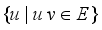 .And the close neighborhood of
 , denoted by
 , is a set
 .A function
 is a double Roman dominating function, shorted by DRDF, if a vertex
 for which
 has at least a neighbor labeled 3 or two neighbors both labeled 2 and a vertex
 for which
 has at least a neighbor labeled 2 or 3.The sum of the function values of all vertices in
 is
 , which is shortly denoted by
 . The weight of
 , denoted by
 , is the sum of the function values of all vertices in
 .The double Roman domination number, denoted by
 , equals the minimum weight of a DRDF on
 , and a DRDF of
 with weight
 is called a
 -function of
 .
 is NP-complete for bipartite and chordal graphs, undirected path graphs, chordal bipartite graphs, and circle graphs
 is obtained by taking a simple
 -gon, that is, a cycle with vertices
 ,...,
 , and attaching to each vertex
 a new pendant vertex
 , where
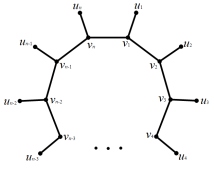
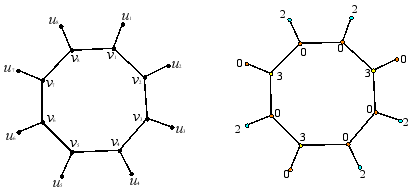
 . Figure 1 shows a Sunlet graph with
 vertices.
 with
 vertices. Sunlet graph with vertices.
 , no vertex needs to be assigned the value 1.
 be a DRDF on
 and
 is a leaf of
 . Then
 .
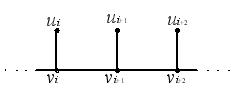
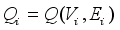 be a continuous local subgraph of
 .
 and
 ,
 , a continuous local component of . , a continuous local component of .
 be a
 -function of
 with no vertex assigned value 1. Then

 .
 .
 is impossible via proof by contradiction. Suppose for contradiction that
 . Since no vertex in
 is labeled with value 1, the non-zero labels assigned to vertices in
 can only take the form {2,2,2} or {3,3}.
 ,
 and
 must each receive label 2 exclusively. Under this configuration, vertex
 bears label 0, and its open neighborhood contains exactly one vertex with a non-zero label (value 2), which directly violates the labeling axiom.
 ,
 and
 , at least one pair is entirely assigned label 0. This configuration contradicts Proposition B.
 is invalid. Consequently, we derive
 , i.e.,
 .
 , where
 .Then
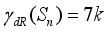 .
 specified in Table 1, where
 for indices and all subscripts are taken modulo n. Then, for every vertex labeled 0, there exists a vertex labeled 3 adjacent to it. Therefore,
 is a DRDF on
 and
 , which implies
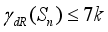 .
 .
Vertex | Label | Neighbors | Neighbors with Label 3 |
|---|---|---|---|
vi, i≡1(mod 3) | 0 | ui, vi-1, vi+1 | vi+1 |
vi, i≡2(mod 3) | 3 | ||
vi, i≡0(mod 3) | 0 | ui, vi-1, vi+1 | vi-1 |
ui, i≡1 (mod 3) | 2 | ||
ui, i≡2(mod 3) | 0 | vi | vi |
ui, i≡0(mod 3) | 2 |
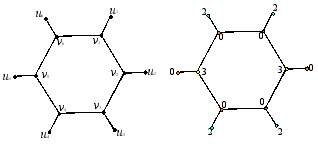
 .
 with
 The mappingwith
 be a
 -function of
 with no vertex assigned value 1. By Proposition C, we have
 .
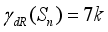 for
 .
 , where
 .Then
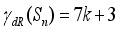 .
 specified in Table 2, where
 for indices and all subscripts are taken modulo n. Then, for every vertex labeled 0, there exists a vertex labeled 3 adjacent to it. Therefore,
 is a DRDF on
 and
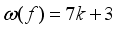 , which implies
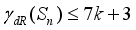 .
 .
Vertex | Label | Neighbors | Neighbors with Label 3 |
|---|---|---|---|
vi, i≡1(mod 3) and i≠n | 0 | ui, vi-1, vi+1 | vi+1 |
vi, i≡2(mod 3) | 3 | ||
vi, i≡0(mod 3) | 0 | ui, vi-1, vi+1 | vi-1 |
vn | 3 | ||
ui, i≡1(mod 3) and i≠n | 2 | ||
ui, i≡2(mod 3) | 0 | vi | vi |
ui, i≡0(mod 3) | 2 | ||
un | 0 | vn | vn |
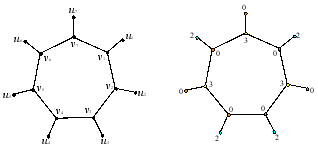
 . with
 . The mappingwith .
 be a
 -function of
 with no vertex assigned value 1. By Proposition B and Proposition C we have
 .
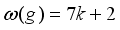 is unattainable via proof by contradiction. Assume for contradiction that
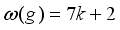 , which implies
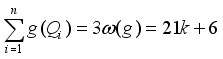 .
 . The sum of weights over the
 consecutive local subgraph configurations equals
 . By the pigeonhole principle, at least one of these configurations has weight less than 7. This contradicts Property C, which states that the weight of any consecutive local subgraph configuration is at least 7. Accordingly, we obtain
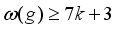 .
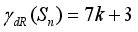 with
 .
 , where
 .Then
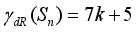 .
 specified in Table 3, where
 for indices and all subscripts are taken modulo n. Then, for every vertex labeled 0, there exists a vertex labeled 3 adjacent to it. Therefore,
 is a DRDF on
 and
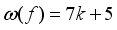 , which implies
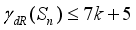 .
 .
Vertex | Label | Neighbors | Neighbor with Label 3 |
|---|---|---|---|
vi, i≡1 (mod 3) and i≠n | 0 | ui, vi-1, vi+1 | vi+1 |
vi, i≡2(mod 3) | 3 | ||
vi, i≡0(mod 3) | 0 | ui, vi-1, vi+1 | vi-1 |
vn-1 | 3 | ||
vn | 0 | un, vn-1, v1 | vn-1 |
ui, i≡1(mod 3) and i≠n | 2 | ||
ui, i≡2(mod 3) | 0 | vi | vi |
ui, i≡0(mod 3) | 2 | ||
un-1 | 0 | vn-1 | vn-1 |
un | 2 |
 . with
 . The mappingwith .
 be a
 -function of
 with no vertex assigned value 1. By Proposition B and Proposition C, we have

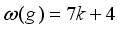 cannot hold. We proceed by proof by contradiction. Suppose for contradiction that
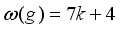 , which yields
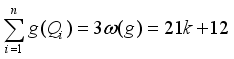
 . The sum of weights over the
 consecutive local subgraph configurations equals
 . By the pigeonhole principle, at least one of these configurations has weight less than 7. This contradicts Property C, which states that the weight of any consecutive local subgraph configuration is at least 7. Therefore,
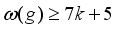 .
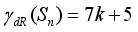 with
 .
 be a Sunlet graph where
 . Then
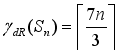 .
 with even order
 and no isolated vertices,
 if and only if the components of
 are the cycle
 or the corona
 for any connected graph
 .
 . Consequently,
 is not a double Roman graph for all integers
 .
 . We obtain the exact value
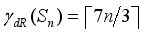 , and our results reveal that every Sunlet graph
 with
 fails to satisfy the required inequality for double Roman graphs, implying no Sunlet graph belongs to the family of double Roman graphs. Several directions deserve further exploration. First, it is worthwhile to extend the discussion to generalized Sunlet graphs with varied pendant structures. We aim to characterize the exact double Roman domination numbers of generalized Sunlet graphs and determine the parameter range under which generalized Sunlet graphs can be double Roman graphs. In deriving the double Roman domination number of Sunlet graphs, we employ local configuration decomposition based on their topological structure. For generalized Sunlet graphs, certain properties of path graphs may be required to handle their structural features. Second, one can establish tighter bounds relating the domination number and double Roman domination number for these graphs. Additionally, further research may develop universal criteria to judge whether unicyclic graphs, including generalized Sunlet graphs, are double Roman graphs.
DRDF | Double Roman Dominating Function |
| [1] | R. A. Beeler, T. W. Haynes, and S. T. Hedetniemi. Double Roman domination, Discrete Appl. Math., 2016, vol. 211, 23–29, Oct. 2016. |
| [2] | A. Klobucar; A. Klobucar. Properties of double Roman domination on cardinal products of graphs, Ars Math. Contemp., vol. 19, 337–349, 2020. |
| [3] | H. A. Ahangar, J. Amjadi, M. Atapour, M. Chellali, S. M Sheikholeslami. Double Roman trees, Ars Combin., vol. 145, 173–183, 2019. |
| [4] | H. A. Ahangar, M. Chellai, S. M. Sheikholeslam. On the double Roman domination in graphs, Discrete Appl. Math., vol. 232, 1–7, 2017. |
| [5] | S. Banerjee, M. A. Henning, D. Pradhan. Algorithmic results on double Roman domination in graphs, J. Comb. Opt., vol. 39, 90–114, 2020. |
| [6] | N. J. Rad, H. Rahbani. Some progress on the double Roman domination in graphs, Discuss. Math. Graph Theory, vol. 39, 41–53, 2019. |
| [7] | J. Meena, T. N. M. Malini Mai, M. L. Suresh, L. Rathour, L. N. Mishra. Double Roman domination in some graphs, Discrete Mathematics, Algorithms and Applications, vol. 18(1), 2550016, 2026. |
| [8] | S. M. Sheikholeslami, M. Esmaeili, J. J. Hamja., C. L. Armada, I. S. Aniversario. Independent double Roman domination stability in graphs, European Journal of Pure & Applied Mathematics, vol. 18, 1-16, 2025. |
| [9] | T. Zec, D. Matić, M. Djukanović. On double Roman domination problem for several graph classes, Aequationes mathematicae, vol. 99, 439-463, 2025. |
| [10] | D. P. Rupnik, J. Žerovnik. Double Roman domination: A Survey, Mathematics, vol. 11, 351, 2023. |
| [11] | S. Nazari-Moghaddam, M. Chellali, S. M. Sheikholeslami. Outer independent double Roman domination in unicyclic and bicyclic graphs. Ars Combinatoria, vol. 162, 51–70, 2025. |
| [12] | S. M. Sheikholeslami, M. Esmaeili, M. Chellali, Y. Shang. Lower bounds for signed double Roman k-domination in unicyclic graphs, Research in Mathematics, vol. 13(1), 2690319, 2026. |
| [13] | W. S. Li, Z. S. Huang, Z. F. Feng. On the double Roman domination in Spider graphs, Open Journal of Discrete Mathematics, vol. 16(2), 13-18, 2026. |
| [14] | T. W. Haynes, S. T. Hedetniemi, P. J. Slater. Fundamentals of Domination in Graphs, 1998. |
APA Style
Li, W. (2026). The Double Roman Domination Number of Sunlet Graphs Sn. Pure and Applied Mathematics Journal, 15(4), 73-78. https://doi.org/10.11648/j.pamj.20261504.12
ACS Style
Li, W. The Double Roman Domination Number of Sunlet Graphs Sn. Pure Appl. Math. J. 2026, 15(4), 73-78. doi: 10.11648/j.pamj.20261504.12
@article{10.11648/j.pamj.20261504.12,
  author = {Wensheng Li},
  title = {The Double Roman Domination Number of Sunlet Graphs Sn},
  journal = {Pure and Applied Mathematics Journal},
  volume = {15},
  number = {4},
  pages = {73-78},
  doi = {10.11648/j.pamj.20261504.12},
  url = {https://doi.org/10.11648/j.pamj.20261504.12},
  eprint = {https://article.sciencepublishinggroup.com/pdf/10.11648.j.pamj.20261504.12},
  abstract = {A double Roman dominating function (DRDF) f on a given graph G is a mapping from V(G) to {0, 1, 2, 3} in such a way that a vertex u for which f(u) = 0 has at least a neighbor labeled 3 or two neighbors both labeled 2 and a vertex u for which f(u) = 1 has at least a neighbor labeled 2 or 3. The weight of a DRDF f is the value w(f) = ∑u∈V(G) f(u). The minimum weight of a DRDF on a graph G is called the double Roman domination number γdR(G) of G. A Sunlet graph Sn is constructed from an n-cycle by attaching one pendant vertex to each vertex of the cycle. This paper investigates the double Roman domination of Sunlet graphs Sn for integer n≥3. Using three lemmas, we derive the exact formula γdR(Sn)=⌈7n/3⌉. We further analyze whether Sunlet graphs belong to the family of double Roman graphs. By comparing the domination number γ(Sn)=n with the known inequality 2γ(G)≤γdR(G)≤3γ(G) for double Roman graphs, we prove that Sn fails to satisfy the required inequality, which implies no Sunlet graph is a double Roman graph. The obtained result gives an explicit expression for the double Roman domination number of this class of unicyclic graphs and enriches the research achievements of double Roman domination theory for unicyclic graphs.},
 year = {2026}
}
TY  - JOUR
T1  - The Double Roman Domination Number of Sunlet Graphs Sn
AU  - Wensheng Li
Y1  - 2026/10/21
PY  - 2026
N1  - https://doi.org/10.11648/j.pamj.20261504.12
DO  - 10.11648/j.pamj.20261504.12
T2  - Pure and Applied Mathematics Journal
JF  - Pure and Applied Mathematics Journal
JO  - Pure and Applied Mathematics Journal
SP  - 73
EP  - 78
PB  - Science Publishing Group
SN  - 2326-9812
UR  - https://doi.org/10.11648/j.pamj.20261504.12
AB  - A double Roman dominating function (DRDF) f on a given graph G is a mapping from V(G) to {0, 1, 2, 3} in such a way that a vertex u for which f(u) = 0 has at least a neighbor labeled 3 or two neighbors both labeled 2 and a vertex u for which f(u) = 1 has at least a neighbor labeled 2 or 3. The weight of a DRDF f is the value w(f) = ∑u∈V(G) f(u). The minimum weight of a DRDF on a graph G is called the double Roman domination number γdR(G) of G. A Sunlet graph Sn is constructed from an n-cycle by attaching one pendant vertex to each vertex of the cycle. This paper investigates the double Roman domination of Sunlet graphs Sn for integer n≥3. Using three lemmas, we derive the exact formula γdR(Sn)=⌈7n/3⌉. We further analyze whether Sunlet graphs belong to the family of double Roman graphs. By comparing the domination number γ(Sn)=n with the known inequality 2γ(G)≤γdR(G)≤3γ(G) for double Roman graphs, we prove that Sn fails to satisfy the required inequality, which implies no Sunlet graph is a double Roman graph. The obtained result gives an explicit expression for the double Roman domination number of this class of unicyclic graphs and enriches the research achievements of double Roman domination theory for unicyclic graphs.
VL  - 15
IS  - 4
ER  -
School of Science, Langfang Normal University, Langfang, China
Biography: Wensheng Li received the B. S. degree in Information and Computing Science from the Hebei University of Technology, Hebei, China, in 2003. He obtained the M. S. degree in Computational Mathematics from the Dalian University of Technology, Dalian, China, in 2006. He worked as a lecturer in Department of Mathematics and Infor-mation Science, Langfang Teachers College. His research interest is in the area of graph theory.
Research Fields: Optimization, Computational mathematics, Mathematical Modelling, Graph Theory and Applied mathematics


Information



 Share This Article
 Twitter
 Linked In
 Facebook

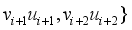 for
 , where subscripts are reduced modulo
 as shown in
 Copy
 Download