Abstract
The Architecture, Engineering, and Construction (AEC) industry is transitioning from a traditional 2D-based workflow into a digital multi-disciplinary process, and building information modeling has expedited this transition. This global divide in BIM education primarily arises from the disparities in educational offer. The objective of this study is to provide a rigorous, comprehensive, and structured analysis of the global BIM education trends, regional disparities, and curriculum gaps and to develop actionable response strategies to tackle this issue. This paper followed the PRISMA 2020 guidelines along with a systematic literature review of 144 peer-reviewed papers extracted from Scopus, Web of Science, ASCE Library, and Google Scholar. To strengthen the methodological quality assessment, the Mixed Methods Appraisal Tool (MMAT) was applied. The findings revealed a huge global divide, where resource-rich countries characterized by well-developed curricula, integrated, and industry collaboration, whereas resource-constrained countries specifically in Africa and Southeast Asia, suffer from disorganized curricula, poor institutional readiness, and ‘software-centric’ teaching processes. To harmonize these disparities, this study proposed the Global BIM Education Framework (GBEF) – which is centered around four pillars; Pedagogical Pivot, Methodological Standardization, Industry-Academia Symbiosis, and Unified Competency Benchmarking. The GBEF framework treats BIM as a socio-technical process and introduces multi-phase implementation procedures specifically tailored for low-resource institutions.
|
Published in
|
Research & Development (Volume 7, Issue 3)
|
|
DOI
|
10.11648/j.rd.20260703.16
|
|
Page(s)
|
131-140 |
|
Creative Commons
|

This is an Open Access article, distributed under the terms of the Creative Commons Attribution 4.0 International License (http://creativecommons.org/licenses/by/4.0/), which permits unrestricted use, distribution and reproduction in any medium or format, provided the original work is properly cited.
|
|
Copyright
|
Copyright © The Author(s), 2026. Published by Science Publishing Group
|
Keywords
Building Information Modeling, BIM Education, AEC Industry, Systematic Literature Review, Curriculum Integration, Competency Framework, Project-based Learning
1. Introduction
The Architecture, Engineering, and Construction (AEC) industry is undergoing a major transformational process through digital technologies such as Building Information Modelling (BIM). BIM facilitates the real-time integration of geometrical, semantic, and life-cycle information into a single data-rich model, where stakeholders can collaborate efficiently
| [1] | Alsofiani, M. A. Digitalization in infrastructure construction projects: A PRISMA-based review of benefits and obstacles. (2024), arXiv preprint arXiv: 2405.16875.
https://doi.org/10.48550/arXiv.2405.16875 |
[1]
. This multi-dimensional transformation has paved the way for real-time cross-disciplinary coordination, reducing life-cycle costs, mitigating site rework, and maximizing project sustainability across design and construction phases
| [2] | Pikas E., Sacks R., and Hazzan O., “Building Information Modeling Education for Construction Engineering and Management. II: Procedures and Implementation Case Study,” J. Constr. Eng. Manag., vol. 139, no. 11, p. 05013002, Nov. 2013, https://doi.org/10.1061/(ASCE)CO.1943-7862.0000765 |
[2]
. However, challenges still exist for effective implementation; the lack of skilled staff, resistance to change, inadequate infrastructure, and unavailability of standards are some to mention. This global issue has placed the responsibility on higher education institutions to produce graduates who can sustain the industry demand
.
To examine the existing hurdles in BIM education delivery it is important to analyze them from three perspectives (1) the industry skill gap, where the workforce characterized by proficient software skills but lacks the basic coordination and integrated workflow processes
. (2) The curriculum integration gap, where most institutions are used to standalone and isolated teaching mechanisms instead of collaborative and project-based learning. (3) The conceptual framework gap, as the existing literature lacks a well-defined guideline that can guide BIM education implementation within volatile and resource-constrained contexts.
Recent macro-regional literature highlights that HEIs in developed nations such as Australia, North America, China, and Europe benefit from a life-cycle oriented BIM frameworks integrated with collaborative studios, project-based learning
| [5] | K. Li, "BIM education - global – 2025 update report," NATSPEC Construction Information, Sydney, Australia, Rep., 2025. Available: https://bim.natspec.org/ |
[5]
. Meanwhile universities in developing contexts suffer from unstructured curriculum structure, particularly in Sub-Saharan Africa and parts of Southeast Asia, BIM education is impacted by poor institutional readiness, high software licensing costs, resistance to adapting new technology from faculty, and weak industry-academia partnership
| [6] | A. Ledda, A. De Montis, V. Serra, E. Usai, and G. Calia, “Integrating BIM Concepts in Academic Education: The Design of Rural Buildings and Landscapes,” Buildings, vol. 15, no. 13, p. 2276, Jun. 2025, https://doi.org/10.3390/buildings15132276 |
[6]
. This early divide in pedagogical approaches between resource rich and resource constraint universities necessitates the need to formulate a well-defined framework that can bridge this gap.
Existing studies extensively focused on localized and regional BIM implication studies, lacking a macro-level, comprehensive global analysis. To resolve this global BIM education disparity this study presents a rigorous systematic literature review incorporating 144 peer-reviewed academic publications. This study is carried out to achieve three main objectives: (a) to analyze the various curriculum design of BIM education; (b) to systematically group regional gaps, pedagogical procedures, and institutional blockages in different socio-economic context; and (c) to apply these empirical findings into a well-crafted Global BIM Education Framework (GBEF) to enhance curriculum transformation in both developed and developing context.
2. Materials and Methods
This study involves a critical examination of existing literature (SLR) is structured according to the preferred reporting mechanism for systematic reviews and meta-analysis (PRISMA 2020) guidelines. The study implements a transparent and highly reproducible scientific procedures to reduce selection bias, ensure accurate search parameters, and extraction and synthesis process.
2.1. Search Strategy and Information Sources
To ensure the maximum coverage of adequate literature across the Architecture, Engineering, and Construction management field, four broad journal databases were selected: Scopus, Web of Science (WoS), the American Society of Civil Engineers (ASCE) library, and Google scholar. The bulk extraction of literature from the mentioned databases were carried out on March 15,2026. A formal mechanism of filtering followed limiting publications within the range between (2016 and 2026) to have a better understanding of BIM workflow and advanced cloud-based education deliveries. To reduce selection bias of grey literature specifically from Google scholar, only the first 20 pages of queries were extracted based on predefined protocol such as the relevance to the topic in question by excluding all other sources (non-academic op-eds, and patent findings).
The search strings were prepared using Boolean operators (AND, OR) and strict wild cards tailored to the synthetic logic of each respective platform. The main keywords selected targets three domains: the core technology/Process (“Building Information Modeling”), the institutional domain (“Education”, “Curriculum”, “Pedagogical”, “Higher Education”, “University”), and the framework composition (“Competency”, “Framework”, “Model”, “Gaps”).
Table 1, explicitly enumerated the operational search strings, database specific filters, and the document counting procedure at the initial screening stage.
Table 1. Systematic Search Strategy, Boolean Formulations, and Database Yields (Search Date: March 15, 2026).
Database | Engineered Search Query / String | Applied Filters & Restrictions | Yield |
Scopus | TITLE-ABS-KEY (("Building Information Model*" OR "BIM") AND ("Education" OR "Curricul*" OR "Pedagog*") AND ("Framework" OR "Competenc*" OR "Gap")) | Years: 2016–2026; Language: English; Doc Type: Article, Review | 412 |
Web of Science | TS=(("Building Information Model*" OR "BIM") AND ("Education" OR "Curricul*" OR "Pedagog*") AND ("Framework" OR "Competenc*" OR "Gap")) | Years: 2016–2026; Language: English; Doc Type: Article, Review | 289 |
ASCE Library | (("Building Information Modeling" OR "BIM") AND ("Education" OR "Curriculum") AND ("Framework" OR "Competency")) | Years: 2016–2026; Language: English; Field: Civil Engineering / Construction | 134 |
Google Scholar | "Building Information Modeling" AND "Education" AND "Framework" AND "Gaps" | Years: 2016–2026; English; First 200 results screened; Excluded citations | 210 |
2.2. Inclusion and Exclusion Criteria
To ensure only educationally relevant, methodologically acceptable research was included in the final synthesis, transparent and clear procedure was followed. Content was evaluated across different parameters such as publication type, contextual suitability, and structural disclosure of curricular design.
Table 2 outlines the inclusion and exclusion parameters applied during full-text screening.
Table 2. Explicit Inclusion and Exclusion Criteria for Screening Eligibility.
Criterion Vector | Strict Inclusion Parameters (Eligible) | Strict Exclusion Parameters (Ineligible) |
Publication Type | Peer-reviewed journal articles, comprehensive academic review papers, fully indexed archival conference proceedings. | Trade magazine editorials, non-archival white papers, master’s theses, doctoral dissertations, textbook chapters, and commercial grey literature. |
Temporal & Language | Published between January 2016 and March 2026; written exclusively in English. | Published prior to 2016; non-English languages lacking validated academic translations. |
Substantive Focus | Direct empirical, qualitative, or conceptual focus on BIM education, undergraduate/postgraduate curriculum integration, pedagogical models, or professional competency framework design. | Studies detailing technical BIM software algorithms, structural or thermal engineering calculations, or purely commercial industry case studies lacking educational applications. |
Methodological Rigor | Clear explanation of educational context, research methodology, data collection tools, pedagogical implementation, or structural evaluation frameworks. | Anecdotal descriptions, institutional opinion pieces, or short project outlines lacking documented evaluation frameworks, empirical data, or research methods. |
Data Completeness | Provides clear information on regional/institutional setting, curriculum models, course delivery, teaching methods, or student assessment metrics. | Abstract-only entries, short extended abstracts, PowerPoint slides, or studies missing crucial qualitative or quantitative results. |
2.3. Screening and PRISMA Flow Architecture
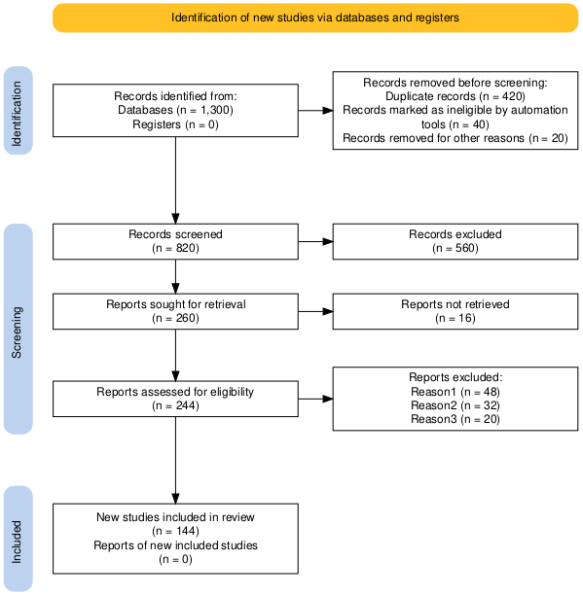
The filtration carried out using multi-stage process, First, initial database search across Scopus, Web of Science, ASCE Library, and Google Scholar produced a total of 1,045 documents. Second, the raw results from the first stage was subjected to automated duplication removal process leading to removal of 312 duplicate entries. Third, the remaining 733 records were further cleaned using a double-blind screening of titles and abstracts cross-checked against the established inclusion criteria, resulting in the exclusion of 415 records that was outside the educational scope.
Fourth, the full text evaluation of the remaining 318 articles was analyzed for eligibility. At this stage, 174 papers were excluded based on a predefined criterion: 62 had no methodological appropriateness, 54 purely focus on software proficiency rather than academic integration, 41 were conference abstracts or grey literature that does not present empirical data, and 17 were unavailable in full-text. Fifth, this rigorous filtration process has given a final set of 144 high-quality peer-reviewed papers for detailed data retrieval, quality check-up, and thematic analysis.
Figure 1. PRISMA 2020 flow diagram of the systematic literature search and screening across selected databases.
2.4. Data Extraction and Coding Synthesis Framework
Data extraction from the 144 validated studies was carried out using a system of digital matrix to ensure maximum consistency. The extraction process involved nine operational dimensions: (1) meta-information (author, year, journal, publication type); (2) Geographical and institutional backgrounds (continent, country, university, degree, discipline); (3) Curricular taxonomy (standalone courses vs integrated multi-course programs); (4) Instructional methodologies (project-based learning, traditional lectures, hybrid studios, advanced tech VR/AR platforms); (5) assessment mechanisms (performance-based, collaboration-based, peer-evaluations); (6) core-competency domains (technical authors, managerial administration, inter-disciplinary coordination); (7) mode of industry collaboration (formal internship placement, practitioner-led masterclass, design studio); (8) common structural barriers (institutional readiness, financial scarcity, software licensing difficulties, faculty skill gaps); (9) Methodological research classifications (qualitative case-study, quantitative survey, mixed-method, Systematic literature review).
The extracted datasets were analyzed using an inductive thematic analysis. Descriptive statistics (frequency and percentage) were summarized across years, regions, and curriculum types. Simultaneously, qualitative content analysis used to code text segments based on institutional barriers, regional barriers, pedagogical innovations. These coded data were used for discipline themes and analytical categories, providing the necessary foundation for developing the proposed Global BIM Education Framework (GBEF).
2.5. Methodological Quality Appraisal (MMAT)
To analyze the methodological validity of the included research and minimize reporting bias, every study was subjected to the modified version of the Mixed Methods Appraisal Tool (MMAT). This multi-criteria framework evaluates research designs across five foundational dimensions: Research objective clarity (Q1), methodological soundness (Q2), Transparency of Educational adoption (Q3), Outcome Measurement rigor (Q4), and validity of conclusions and limitations (Q5). Each dimension was scored on a 3-point scale: full adherence (1.0), partial adherence (0.5), or insufficient evidence (0). Summing these criteria’s yielded an overall quality score ranging from 0 to 5.0, which classify papers as High Quality (4.0-5.0), Moderate Quality (3.0-3.5), or Low Quality (<3.0).
To control evaluation bias two independent researchers, evaluate publications. Inter-rater discrepancies were systematically identified and checked for a formal reconciliation protocol, and involve another researcher to re-examine the consensus score. The results of the MMAT quality appraisal showed a high standard of evidence: 94 studies (65.3%) achieved High-Quality rating, 48 studies (33.3%) were classified as Moderate Quality, and only 2 studies (1.45) fall into the Low-Quality category. Consequently, the Low-Quality papers were discarded to keep the methodological rigor of the study.
3. Results and Analytical Synthesis
This section involves the comprehensive analytical synthesis of the findings extracted from the 144 studies included. It involves the analysis of quantitative distribution with qualitative thematic coding that uncovers the current status of global BIM education implementation.
3.1. Methodological Profiles and Quality Appraisal Metrics
The systematic categorization of the included 144 papers primarily categorized by research methodology which, indicates that mixed-method research accounts for the largest employed methodology at 39 papers (27.1%), Qualitative case-study studies at 31 papers (21.5%), and structured thematic literature reviews at 16 papers (11.1%). This distribution highlights a clear variety in the field, shifting from descriptive analogy towards rigorous, data-driven empirical evaluations.
Cross-tabulating these methodological profiles with the MMAT quality criteria gives a deep insight into current research strength and reporting limitations within the BIM education literature.
Table 3 explicitly shows how the 144 reviewed papers compliance with the MMAT core quality dimensions.
Table 3. Compliance and Fulfillment Distribution Across MMAT Quality Criteria (N=144).
MMAT Quality Dimension | Full Adherence [1.0] | Partial Adherence [0.5] | No Evidence / Fail [0] |
Q1: Research Objective Clarity | 131 (91.0%) | 11 (7.6%) | 2 (1.4%) |
Q2: Methodological Appropriateness | 118 (81.9%) | 22 (15.3%) | 4 (2.8%) |
Q3: Implementation Transparency | 98 (68.1%) | 37 (25.7%) | 9 (6.2%) |
Q4: Outcome Measurement Rigor | 76 (52.8%) | 51 (35.4%) | 17 (11.8%) |
Q5: Validity & Limitations Disclosure | 64 (44.4%) | 58 (40.3%) | 22 (15.3%) |
The quantitative data in
Table 3 depicts while the vast majority of studies clearly specifies the research objectives (Q1=91.0%), and carry out appropriate research designs (Q2=81.9%), scores drops significantly for student’s outcome measurement (Q4 = 52.8%) and the existing contextual limitations and validity threats (Q5=44.4%). This disparity clearly shows a critical gap in the literature. Many researchers tend to focus on theoretical pedagogical integration instead of carrying out a rigorous, empirical research.
3.2. Global Demographics and Regional Gap Analysis
A demographic analysis of the 144 included publications reveals an uneven geographical distribution of research. BIM education literature in Higher education institutions largely concentrated in the developed nation, with Europe leading at 48 papers (33.3%), followed by Asia (china takes the largest portion) at 36 papers (25%), North America at 28 papers (19.4%), and Australia at 14 papers (9.7%). In contrast, developing regions are almost absent from these geographical distribution: Sub-Saharan Africa accounts for only 11 papers (7.6%) and south-east Asia (excluding leading institutions) accounts for just 7 papers (4.9%).
The uneven distribution of BIM education reflects a deep socio-economic difference and systemic imbalance across regions. In developed contexts, Universities operate with mature, well-organized educational environment. For example, Australian institutions like RMIT University and the University of Canberra have integrated BIM courses across multiple advanced courses, linking geometric modeling directly with construction scheduling, cost estimation, and life-cycle sustainability metrics
| [6] | A. Ledda, A. De Montis, V. Serra, E. Usai, and G. Calia, “Integrating BIM Concepts in Academic Education: The Design of Rural Buildings and Landscapes,” Buildings, vol. 15, no. 13, p. 2276, Jun. 2025, https://doi.org/10.3390/buildings15132276 |
[6]
. Similarly, in China giant institutions such as Tongi University deploy complex, state-funded curricula that links academic and corporate industry in a unified digital model
| [7] | S. L. Arthur, C. B. Byaruhanga, and J. Mubiru, “Exploring BIM Implementation in Architectural, Engineering and Construction (AEC) Education in Uganda,” East Afr. J. Eng., vol. 8, no. 2, pp. 302–313, Nov. 2025,
https://doi.org/10.37284/eaje.8.2.3947 |
[7]
. In Europe, Master’s program at institutions like École nationale des ponts et chaussées (France) and the University of Minho (Portugal) offer advanced, multi-disciplinary workflows focusing on information management and collaborative project delivery
| [8] | N. M. Haziq Shamsul Anwar, W. F. W. M. Azmi, and L. A. Wahab, “Breaking the Barriers: BIM Adoption Challenges in Quantity Surveying Firms of Northern Malaysia,” Int. J. Res. Innov. Soc. Sci., vol. VIII, no. X, pp. 427–437, 2024, https://doi.org/10.47772/IJRISS.2024.8100036 |
[8]
.
Conversely, Universities in developing contexts faces major institutional bottlenecks. In sub-Saharan Africa, institutions like Kyambogo University in Uganda works under a fragmented implementation models where BIM instruction is heavily concentrated on basic 3D modeling, completely neglecting collaborative workflows
| [9] | Nikolic, S., Ros, M., Jovanovic, K., & Stanisavljevic, Z. Re
mote, simulation or traditional engineering teaching laboratory: a systematic literature review of assessment implementations to measure student achievement or learning, 2024, European Journal of Engineering Education, 46(6), 1141–1162.
https://doi.org/10.1080/03043797.2021.1990864 |
[9]
. South African HEIs possess similar challenges, characterized by low institutional readiness, lack of hardware, and weak curriculum integration
| [9] | Nikolic, S., Ros, M., Jovanovic, K., & Stanisavljevic, Z. Re
mote, simulation or traditional engineering teaching laboratory: a systematic literature review of assessment implementations to measure student achievement or learning, 2024, European Journal of Engineering Education, 46(6), 1141–1162.
https://doi.org/10.1080/03043797.2021.1990864 |
[9]
. In South-east Asia, institutions such as Universiti Teknologi MARA in Malaysia intensively built its BIM courses around theoretical bases lacking a practical curriculum integration due to high software licensing cost, technical infrastructure limitations and uneven distribution of technical skills among staffs
| [10] | D. E. Hagan, T. Aryanti, and I. Ilhamdaniah, “Barriers to BIM Adoption in Design Practice: A Systematic Review of Developing Countries,” Nat. Natl. Acad. J. Archit., vol. 12, no. 1, pp. 77–92, Jun. 2025, https://doi.org/10.24252/nature. v12i1a6 |
[10]
. As a result, Higher education institutions in developing countries faces major technological and organizational hurdles, creating environments where students will be isolated from the digital workflow
| [11] | D. Nikolic, F. Castronovo, and R. Leicht, “Teaching BIM as a collaborative information management process through a continuous improvement assessment lens: a case study,” Eng. Constr. Archit. Manag., vol. 28, no. 8, pp. 2248–2269, Oct. 2021,
https://doi.org/10.1108/ECAM-11-2020-1000 |
[11]
.
3.3. Curricular Typologies and Teaching Methodologies
The analysis of the literature reveals that the BIM education approach globally falls into two distinctive groups: Standalone BIM courses and Integrated curricular approaches. The data shows that 82 studies (56.9) report on standalone courses, where BIM is taught as isolated and elective courses
. Although, this model gives proficiency in basic BIM authoring tools, however it creates a huge knowledge gap in collaborative workflow
| [13] | O. Casasayas, M. R. Hosseini, D. J. Edwards, S. Shuchi, and M. Chowdhury, “Integrating BIM in Higher Education Programs: Barriers and Remedial Solutions in Australia,” J. Archit. Eng., vol. 27, no. 1, p. 05020010, Mar. 2021,
https://doi.org/10.1061/(ASCE)AE.1943-5568.0000444 |
| [14] | C. Boje, A. Guerriero, S. Kubicki, and Y. Rezgui, “Towards a semantic Construction Digital Twin: Directions for future research,” Autom. Constr., vol. 114, p. 103179, Jun. 2020,
https://doi.org/10.1016/j.autcon.2020.103179 |
[13, 14]
. On the contrary, integrated BIM teaching approach accounts for 62 studies (43.1%), where BIM processes are incorporated in design studios, project management, and estimating and scheduling
| [8] | N. M. Haziq Shamsul Anwar, W. F. W. M. Azmi, and L. A. Wahab, “Breaking the Barriers: BIM Adoption Challenges in Quantity Surveying Firms of Northern Malaysia,” Int. J. Res. Innov. Soc. Sci., vol. VIII, no. X, pp. 427–437, 2024, https://doi.org/10.47772/IJRISS.2024.8100036 |
[8]
. This multi-disciplinary approach helps to facilitate life-cycle thinking and cross-disciplinary coordination.
Regarding teaching methodologies, Project-Based Learning (PBL), emerges as the main alternative for efficient BIM education delivery, which exists predominantly in 98 studies (68.1%). PBL provides active environment where students collaborate on real-world construction projects, significantly improving cognitive and critical thinking skills
| [15] | A. Sotelino-Losada, E. Arbués-Radigales, L. García-Docampo, and J. L. González-Geraldo, “Service-Learning in Europe. Dimensions and Understanding from Academic Publication,” Front. Educ., vol. 6, p. 604825, Mar. 2021,
https://doi.org/10.3389/feduc.2021.604825 |
[15]
. PBL also integrated with advanced technologies such as Virtual Reality (VR), Extended Reality (XR), Construction digital twins, providing the platform for students to interact in a semantic project environment
| [16] | R. M. Nordin, N. S. Jafri, J. Brahim, and O. Fajarianto, "Implementation of Building Information Modelling (BIM) Education for Construction Management Students: The Case of Malaysia," Journal of Design and Built Environment, vol. Special Issue V, pp. 1–10, 2025. Available:
https://ejournal.um.edu.my/index.php/jdbe/article/view/60260 |
[16]
. Furthermore, 41 studies (28.1%) articulates the importance of collaboration for disciplines from different backgrounds such as: Architecture, Engineering, and Construction management
| [17] | C. Balasooriya, A. Olupeliyawa, and M. P. Iqbal, “Innovative Assessment That Combines Collaborative and Self-Directed Learning with Integration and Application of Knowledge: Teamwork Group Projects,” MedEdPORTAL, p. 10452, Sep. 2016, https://doi.org/10.15766/mep_2374-8265.10452 |
[17]
. However, when it comes to implementation the situation turns to be uneven, concentrated mostly to the wealthy and developed nations.
3.4. Student Assessment and Evaluation Modalities
Competency measurement for students has drastically shifted from simple classroom attendance to performance-based collaborative workflows. The extracted data shows that 84 studies (58.3%) utilizes performance-based evaluation metrics, which evaluates student’s overall skill using a series of practical design coordination tasks, model accuracy, clash detection tasks rather than random theoretical exams
| [18] | Sacks R. and Pikas E., “Building Information Modeling Education for Construction Engineering and Management. I: Industry Requirements, State of the Art, and Gap Analysis,” J. Constr. Eng. Manag., vol. 139, no. 11, p. 04013016, Nov. 2013, https://doi.org/10.1061/(ASCE)CO.1943-7862.0000759 |
[18]
. This approach ensures the exact verification of technical and analytical skills. Additionally, 52 studies (36.1%) implemented a collaboration-based assessment within interdisciplinary studios. This performance measurement helps to assess student’s overall skill in continuous team working, communication effectiveness, and information exchange speed
| [19] | E. Pikas, M. Tetik, O. Seppänen, and K.-R. Vendel, “Advancing AECO Education: A project-Based Lean IPD Design Process and Design Management Course,” Int. J. Constr. Educ. Res., pp. 1–33, Jul. 2025,
https://doi.org/10.1080/15578771.2025.2534334 |
[19]
.
3.5. Industry Collaboration and Academic Linkages
The synthesis of the literature has indicated that industry-academia partnership is essential for efficient BIM education realization. Out of 144 studies, 101 (70.1%) highlights, a continuous and structured industry placement is essential for students to know the BIM workflow and collaborative working environment
| [20] | L. Wang, M. Huang, X. Zhang, R. Jin, and T. Yang, “Review of BIM Adoption in the Higher Education of AEC Disciplines,” J. Civ. Eng. Educ., vol. 146, no. 3, p. 06020001, Jul. 2020,
https://doi.org/10.1061/(ASCE)EI.2643-9115.0000018 |
[20]
. Such kinds of platforms bridge the critical gap between theoretical knowledge and practical understanding helping students to build professional identity and collaborative mindset
. Similarly, 38 studies (26.4%) supports design studios and co-tech studios, to enhance student’s visualization and simulation skills
. Regionally, these collaborations show a huge variation as HEI in developed countries, maintains a strong relationship and funded by government as well as private institutions
| [6] | A. Ledda, A. De Montis, V. Serra, E. Usai, and G. Calia, “Integrating BIM Concepts in Academic Education: The Design of Rural Buildings and Landscapes,” Buildings, vol. 15, no. 13, p. 2276, Jun. 2025, https://doi.org/10.3390/buildings15132276 |
[6]
. On the contrary, Universities in developing nations lacks the basic structural framework to connect academia with industry resulting isolated academic programs, severe skill gap, and limited access to professional networks
.
4. Discussion and Conceptual Synthesis
The empirical findings from this systematic review has highlighted, although technology is advanced, the implementation rate of BIM education remains uneven, divided by a clear socio-economic disparity. This section critically examines the socio-economic, pedagogical, and collaborative dimensions of this divide, laying the critical foundation for the proposed framework.
4.1. The Socio-Economic Landscape of Educational Disparity
The global landscape of BIM education creates a deep socio-economic divide: students in developed nation enjoys a well matured curriculum, adequately funded internship and practical curriculum opportunities, free software and hardware accessibilities. In contrast, their peers in parts of Sub-Saharan Africa, and south-east Asia struggles with outdated teaching facilities, expensive software costs, shortage of trained faculty
| [9] | Nikolic, S., Ros, M., Jovanovic, K., & Stanisavljevic, Z. Re
mote, simulation or traditional engineering teaching laboratory: a systematic literature review of assessment implementations to measure student achievement or learning, 2024, European Journal of Engineering Education, 46(6), 1141–1162.
https://doi.org/10.1080/03043797.2021.1990864 |
[9]
. This difference not only creates a simple technical or institutional hurdle rather; it brings a regional systemic inequality that exclude graduates to compete in the global AEC market
| [6] | A. Ledda, A. De Montis, V. Serra, E. Usai, and G. Calia, “Integrating BIM Concepts in Academic Education: The Design of Rural Buildings and Landscapes,” Buildings, vol. 15, no. 13, p. 2276, Jun. 2025, https://doi.org/10.3390/buildings15132276 |
| [9] | Nikolic, S., Ros, M., Jovanovic, K., & Stanisavljevic, Z. Re
mote, simulation or traditional engineering teaching laboratory: a systematic literature review of assessment implementations to measure student achievement or learning, 2024, European Journal of Engineering Education, 46(6), 1141–1162.
https://doi.org/10.1080/03043797.2021.1990864 |
[6, 9]
.
This educational gap creates a clear professional imbalance on graduates as students graduated from HEIs of developed nations takes the role of automated clash detection, data management, and life-cycle information management. Meanwhile, their counterpart from Universities in developing nations will be limited to 2D drafting and basic 3D modeling. Such kinds of regional disparity will further impact the local construction industry and slow down the adoption of BIM, digital twin, and Smart city concepts on time when they are needed the most. To bridge this gap, there should be a unified global education framework which, can significantly reduce the fragmented regional strategies.
4.2. Pedagogical Transitions: Shifting from Tool-Centric to Process-Centric Learning
The review shows that tool-centric workflows dominates globally. This approach considers a simple software instruction and competency can be taken as BIM implementation, where students skills measured by mastering BIM authoring tools
| [13] | O. Casasayas, M. R. Hosseini, D. J. Edwards, S. Shuchi, and M. Chowdhury, “Integrating BIM in Higher Education Programs: Barriers and Remedial Solutions in Australia,” J. Archit. Eng., vol. 27, no. 1, p. 05020010, Mar. 2021,
https://doi.org/10.1061/(ASCE)AE.1943-5568.0000444 |
[13]
. This tool-centric approach limits student’s ability to develop professionally and creates gap to understand BIM’s systemic value, reducing multi-dimensional information management process
| [14] | C. Boje, A. Guerriero, S. Kubicki, and Y. Rezgui, “Towards a semantic Construction Digital Twin: Directions for future research,” Autom. Constr., vol. 114, p. 103179, Jun. 2020,
https://doi.org/10.1016/j.autcon.2020.103179 |
[14]
. To address this critical gap there needs to be a gradual shift from isolated software trainings to integrated, Project-based learning (PBL) and interdisciplinary simulations
| [24] | Barison, M. B., & Santos, E. T. BIM teaching strategies: An overview of the current approaches. (June, 2010), In Proceedings of the International Conference on Computing in Civil and Building Engineering (ICCCBE) (Vol. 577, pp. 577–584). Nottingham University Press. |
[24]
.
4.3. The Symbiosis of Industry-Academia Collaboration
The gap between theoretical studies in classroom and practical construction site is a big challenge for professional identity development. Although 70% of the reviewed literature suggests the importance of industry placement, but it’s becoming common to consider it as optional or selective course rather than core curricular integration. As BIM is a human-oriented process, it requires organized human coordination, open communication channels as well as collaborative problem-solving approach to deliver complex projects
| [20] | L. Wang, M. Huang, X. Zhang, R. Jin, and T. Yang, “Review of BIM Adoption in the Higher Education of AEC Disciplines,” J. Civ. Eng. Educ., vol. 146, no. 3, p. 06020001, Jul. 2020,
https://doi.org/10.1061/(ASCE)EI.2643-9115.0000018 |
[20]
. This study strongly recommends industry-academia collaboration as the main foundational pillar for curriculum development. In developed regions these partnerships are formalized through corporate sponsorships and collaborative studios. In contrast, developing regions faces a total fragmented protocol for industry-academia partnership creating a severe skill gap and blocks professional growth
.
5. The Proposed Global BIM Education Framework (GBEF)
To bridge global implementation gaps and transition academic models from tool-centric instruction to collaborative, process-oriented workflows, this study introduces the Global BIM Education Framework (GBEF). This framework accommodates the multi-dimensional socio and economic conditions of institutions in developing nations so that can build competencies comparable to international standards.
5.1. Macro-Pedagogical Process and the Four Pillars
The Global BIM Education Framework is structured around four pillars designed to systematically address the gaps identified in this review: Tabel-4 explicitly shows this pedagogical architecture:
Table 4. Comprehensive Structural Matrix and Evidence-Based Derivation of the GBEF Pillars.
GBEF Pillar | Supporting Literature | Identified Systemic Gap | Proposed Pedagogical Intervention | Measurable Outcome Indicator |
1. Pedagogical Pivot | | [8] | N. M. Haziq Shamsul Anwar, W. F. W. M. Azmi, and L. A. Wahab, “Breaking the Barriers: BIM Adoption Challenges in Quantity Surveying Firms of Northern Malaysia,” Int. J. Res. Innov. Soc. Sci., vol. VIII, no. X, pp. 427–437, 2024, https://doi.org/10.47772/IJRISS.2024.8100036 |
[8, | Dominance of isolated, tool-centric software instruction lacking lifecycle context. | Replace standalone software electives with multi-course curricular pathways that integrate BIM data across core design, estimating, and scheduling courses. | Successful student generation of multi-disciplinary models showing data continuity across design and project controls. |
2. Methodological Standardization | 16, 22] | Fragmented teaching methods; lack of hands-on active learning environments. | Deploy multi-disciplinary Project-Based Learning (PBL) supported by open-source tools and VR/AR data visualizations. | Comprehensive project portfolio containing student-led clash detection reports and model coordination matrix documentation. |
3. Industry-Academia Symbiosis | | [20] | L. Wang, M. Huang, X. Zhang, R. Jin, and T. Yang, “Review of BIM Adoption in the Higher Education of AEC Disciplines,” J. Civ. Eng. Educ., vol. 146, no. 3, p. 06020001, Jul. 2020,
https://doi.org/10.1061/(ASCE)EI.2643-9115.0000018 |
[20, | Absent academic-industry linkages, leading to professional isolation in developing countries. | Embed mandatory internship credits, practitioner-led masterclasses, and co-designed industry studio reviews into the core curriculum. | Validated internship completion certificates and joint evaluation scores from academic faculty and industry mentors. |
4. Unified Competency Benchmarking | | [7] | S. L. Arthur, C. B. Byaruhanga, and J. Mubiru, “Exploring BIM Implementation in Architectural, Engineering and Construction (AEC) Education in Uganda,” East Afr. J. Eng., vol. 8, no. 2, pp. 302–313, Nov. 2025,
https://doi.org/10.37284/eaje.8.2.3947 | | [24] | Barison, M. B., & Santos, E. T. BIM teaching strategies: An overview of the current approaches. (June, 2010), In Proceedings of the International Conference on Computing in Civil and Building Engineering (ICCCBE) (Vol. 577, pp. 577–584). Nottingham University Press. |
[7, 24] | Unstructured competency metrics focused on basic software execution rather than management. | Align student learning outcomes with international standards, structuring assessment rubrics around defined career tiers. | Student completion of rigorous, rubric-mapped project examinations aligned with professional credentialing standards. |
5.2. Tiered Implementation Pathways for Diverse Institutional Contexts
Recognizing that universities operate under highly unequal conditions, the GBEF rejects a one-size-fits-all approach. Instead, it provides three adaptive, resource-tiered pathways designed to allow incremental curriculum evolution based on local institutional capacity:
1) Minimum Level (Resource-Constrained Contexts): this option is prepared for intuitions that faces a significant financial and infrastructure barrier. The framework recommends to use open source tools such as (BlenderBIM, Free CAD) and OpenBIM protocols such as (IFC, BCF). Rather than expensive toolset that requires recurring subscription fees. Instruction focuses on building a collaborative mindset, data-rich 3D models, information-exchange protocols using existing computer laboratories. Such services could be facilitated through low cost initiatives like inviting guest lectures or experience sharing platforms.
2) Intermediate Level (Developing Contexts): is tailored for institutions with stable infrastructure laid and are eager to expand their digital education delivery. This level introduces commercial software’s through academic grants together with advance open source alternatives. It also involves linking the digital twin of a built asset to actual construction information’s such as scheduling (4D) and cost estimation (5D).
3) Advanced Level (Resource-Rich Contexts): Designed for well-funded institutions operating in highly mature digital ecosystems. This level features fully integrated, cross-disciplinary design and management studios supported by cloud-based common data environments (CDEs). The curriculum incorporates advanced technologies like immersive VR/AR platforms, automated clash detection algorithms, and real-time Construction Digital Twins. Industry linkage is fully integrated, featuring long-term corporate research partnerships, dedicated industrial laboratories, and globally synchronized student competency tracking.
5.3. Technical Mapping of the Competency Tiers
To ensure alignment with international professional standards, the GBEF links student progression to four distinct competency tiers, defining explicit technical, managerial, and collaborative skills for each level:
1) BIM Modeler: focuses primarily on core technical skills. Students will be capable of 3D parametric geometry creation, asset data propagation, and basic documentation creation in accordance with established modeling standards.
2) BIM Coordinator: intensively work on coordination of multi-disciplinary collaboration. Students will develop the skills necessary to perform multi-disciplinary model aggregation, managing automated clash detection workflows, and run conflict-resolution meetings.
3) BIM Manager: Focuses on project administration and management. Students learn to draft comprehensive BIM Execution Plans (BEPs), establish common data environments (CDEs), enforce quality assurance protocols, and align workflows with international information management standards like ISO 19650.
BIM Strategist: Focuses on macro-level lifecycle management and organizational governance. Students study corporate digital transformation strategies, lifecycle asset management integration, legal and contractual frameworks, and the deployment of advanced smart-city and digital twin technologies.
6. Conclusion, Limitation, and Future Horizon
This study presents a comprehensive systemic review of 144 peer-reviewed academic publications to map the global state of BIM education. The analysis uncovers a deep imbalance in socio-economic context from a review of 144 peer-reviewed academic publications to map the global state of BIM education. It shows the regional disparity between the resource-rich nations with mature and integrated life-cycle approach supported by active industry placement programs, whereas resource-constrained developing nations faces infrastructure deficit and tool-centric software instruction.
To address these systemic disparities, this study developed the Global BIM Education Framework (GBEF). Built upon four macro-pedagogical pillars—Pedagogical Pivot, Methodological Standardization, Industry-Academia Symbiosis, and Unified Competency Benchmarking—the GBEF reframes BIM as a socio-technical process. Crucially, the framework provides flexible, resource-tiered implementation pathways (Minimum, Intermediate, Advanced) that enable low-resource institutions to build core collaborative competencies using open-source tools, ensuring that a graduate's professional capability is not restricted by their geographic location.
Despite its contribution, this study has limitations. The systematic search protocol was limited to English-language academic journals indexed in Scopus, Web of Science, ASCE Library, and Google Scholar, which may disregard studies carried out in other language showing the local context. Additionally, the proposed framework is currently in Theoretical standing which lacks empirical validation in real academic setting.
Future research should focus on three critical areas to advance the field: (1) designing and implementing empirical pilot tests of the GBEF framework across different socio-economic regions to ensure practicability of the framework; (2) conducting rigorous, statistically fit competency measurement under open-source versus commercial instruction models; and (3) establishing validated, data-driven student assessment rubrics to objectively track the long-term career outcomes of graduates trained under tiered pedagogical pathways.
Abbreviations
AEC | Architecture, Engineering, and Construction |
BIM | Building Information Modeling |
PRISMA | Preferred Reporting Items for Systematic Reviews and Meta-Analysis |
SLR | Systematic Literature Review |
MMAT | Mixed Methods Appraisal Tool |
GBEF | Global BIM Education Framework |
ORCID | Open Researcher and Contributor ID |
HEIs | Higher Education Institutions |
WoS | Web of Science |
ASCE | American Society of Civil Engineers |
PBL | Project-Based Learning |
VR | Virtual Reality |
AR | Augmented Reality |
XR | Extended Reality |
BEPs | BIM Execution Plans |
CDEs | Common Data Environments |
Author Contributions
Abel Zenebe Negash: Conceptualization, Data curation, Formal Analysis, Investigation, Methodology, Writing – original draft, Writing – review & editing
Data Availability Statement
The data supporting the quantitative and thematic outcomes of this research work have been reported within this manuscript. De-identified interview transcripts and thematic coding matrices are available from the corresponding author upon reasonable request.
Conflicts of Interest
The authors declare no conflicts of interest.
References
| [1] |
Alsofiani, M. A. Digitalization in infrastructure construction projects: A PRISMA-based review of benefits and obstacles. (2024), arXiv preprint arXiv: 2405.16875.
https://doi.org/10.48550/arXiv.2405.16875
|
| [2] |
Pikas E., Sacks R., and Hazzan O., “Building Information Modeling Education for Construction Engineering and Management. II: Procedures and Implementation Case Study,” J. Constr. Eng. Manag., vol. 139, no. 11, p. 05013002, Nov. 2013,
https://doi.org/10.1061/(ASCE)CO.1943-7862.0000765
|
| [3] |
Tsai, Meng-Han. "A Peer Review System for BIM Learning", 2019 Sustainability 11, no. 20: 5747.
https://doi.org/10.3390/su11205747
|
| [4] |
Huang, Y. A review of approaches and challenges of BIM education in construction management, (2018). Journal of Civil Engineering and Architecture, 12(6), 401–407.
https://doi.org/10.17265/1934-7359/2018.06.001
|
| [5] |
K. Li, "BIM education - global – 2025 update report," NATSPEC Construction Information, Sydney, Australia, Rep., 2025. Available:
https://bim.natspec.org/
|
| [6] |
A. Ledda, A. De Montis, V. Serra, E. Usai, and G. Calia, “Integrating BIM Concepts in Academic Education: The Design of Rural Buildings and Landscapes,” Buildings, vol. 15, no. 13, p. 2276, Jun. 2025,
https://doi.org/10.3390/buildings15132276
|
| [7] |
S. L. Arthur, C. B. Byaruhanga, and J. Mubiru, “Exploring BIM Implementation in Architectural, Engineering and Construction (AEC) Education in Uganda,” East Afr. J. Eng., vol. 8, no. 2, pp. 302–313, Nov. 2025,
https://doi.org/10.37284/eaje.8.2.3947
|
| [8] |
N. M. Haziq Shamsul Anwar, W. F. W. M. Azmi, and L. A. Wahab, “Breaking the Barriers: BIM Adoption Challenges in Quantity Surveying Firms of Northern Malaysia,” Int. J. Res. Innov. Soc. Sci., vol. VIII, no. X, pp. 427–437, 2024,
https://doi.org/10.47772/IJRISS.2024.8100036
|
| [9] |
Nikolic, S., Ros, M., Jovanovic, K., & Stanisavljevic, Z. Re
mote, simulation or traditional engineering teaching laboratory: a systematic literature review of assessment implementations to measure student achievement or learning, 2024, European Journal of Engineering Education, 46(6), 1141–1162.
https://doi.org/10.1080/03043797.2021.1990864
|
| [10] |
D. E. Hagan, T. Aryanti, and I. Ilhamdaniah, “Barriers to BIM Adoption in Design Practice: A Systematic Review of Developing Countries,” Nat. Natl. Acad. J. Archit., vol. 12, no. 1, pp. 77–92, Jun. 2025,
https://doi.org/10.24252/nature.
v12i1a6
|
| [11] |
D. Nikolic, F. Castronovo, and R. Leicht, “Teaching BIM as a collaborative information management process through a continuous improvement assessment lens: a case study,” Eng. Constr. Archit. Manag., vol. 28, no. 8, pp. 2248–2269, Oct. 2021,
https://doi.org/10.1108/ECAM-11-2020-1000
|
| [12] |
Succar, B. Building Information Modelling Framework: A Research and Delivery Foundation for Industry Stakeholders, (2009). Automation in Construction, 18, 357-375.
https://doi.org/10.1016/j.autcon.2008.10.003
|
| [13] |
O. Casasayas, M. R. Hosseini, D. J. Edwards, S. Shuchi, and M. Chowdhury, “Integrating BIM in Higher Education Programs: Barriers and Remedial Solutions in Australia,” J. Archit. Eng., vol. 27, no. 1, p. 05020010, Mar. 2021,
https://doi.org/10.1061/(ASCE)AE.1943-5568.0000444
|
| [14] |
C. Boje, A. Guerriero, S. Kubicki, and Y. Rezgui, “Towards a semantic Construction Digital Twin: Directions for future research,” Autom. Constr., vol. 114, p. 103179, Jun. 2020,
https://doi.org/10.1016/j.autcon.2020.103179
|
| [15] |
A. Sotelino-Losada, E. Arbués-Radigales, L. García-Docampo, and J. L. González-Geraldo, “Service-Learning in Europe. Dimensions and Understanding from Academic Publication,” Front. Educ., vol. 6, p. 604825, Mar. 2021,
https://doi.org/10.3389/feduc.2021.604825
|
| [16] |
R. M. Nordin, N. S. Jafri, J. Brahim, and O. Fajarianto, "Implementation of Building Information Modelling (BIM) Education for Construction Management Students: The Case of Malaysia," Journal of Design and Built Environment, vol. Special Issue V, pp. 1–10, 2025. Available:
https://ejournal.um.edu.my/index.php/jdbe/article/view/60260
|
| [17] |
C. Balasooriya, A. Olupeliyawa, and M. P. Iqbal, “Innovative Assessment That Combines Collaborative and Self-Directed Learning with Integration and Application of Knowledge: Teamwork Group Projects,” MedEdPORTAL, p. 10452, Sep. 2016,
https://doi.org/10.15766/mep_2374-8265.10452
|
| [18] |
Sacks R. and Pikas E., “Building Information Modeling Education for Construction Engineering and Management. I: Industry Requirements, State of the Art, and Gap Analysis,” J. Constr. Eng. Manag., vol. 139, no. 11, p. 04013016, Nov. 2013,
https://doi.org/10.1061/(ASCE)CO.1943-7862.0000759
|
| [19] |
E. Pikas, M. Tetik, O. Seppänen, and K.-R. Vendel, “Advancing AECO Education: A project-Based Lean IPD Design Process and Design Management Course,” Int. J. Constr. Educ. Res., pp. 1–33, Jul. 2025,
https://doi.org/10.1080/15578771.2025.2534334
|
| [20] |
L. Wang, M. Huang, X. Zhang, R. Jin, and T. Yang, “Review of BIM Adoption in the Higher Education of AEC Disciplines,” J. Civ. Eng. Educ., vol. 146, no. 3, p. 06020001, Jul. 2020,
https://doi.org/10.1061/(ASCE)EI.2643-9115.0000018
|
| [21] |
F. Yang et al., “Project-Based Introduction to Computing in Construction Management Curriculum: A Case Study,” J. Civ. Eng. Educ., vol. 150, Jan. 2024,
https://doi.org/10.1061/JCEECD.EIENG-1905
|
| [22] |
Succar and W. Sher, “A Competency Knowledge-Base for BIM Learning,” Australas. J. Constr. Econ. Build. - Conf. Ser., vol. 2, no. 2, p. 1, Apr. 2014,
https://doi.org/10.5130/ajceb-cs.v2i2.3883
|
| [23] |
Kokotsaki, D., Menzies, V., & Wiggins, A. Project-based learning: A review of the literature. Improving Schools, 19(3), 267–277, (2016).
https://doi.org/10.1177/1365480216659733
|
| [24] |
Barison, M. B., & Santos, E. T. BIM teaching strategies: An overview of the current approaches. (June, 2010), In Proceedings of the International Conference on Computing in Civil and Building Engineering (ICCCBE) (Vol. 577, pp. 577–584). Nottingham University Press.
|
Cite This Article
-
APA Style
Negash, A. Z. (2026). BIM Education: Global Trends, Regional Gaps, and Proposed Framework. Research & Development, 7(3), 131-140. https://doi.org/10.11648/j.rd.20260703.16
 Copy
|
Copy
|
 Download
ACS Style
Negash, A. Z. BIM Education: Global Trends, Regional Gaps, and Proposed Framework. Res. Dev. 2026, 7(3), 131-140. doi: 10.11648/j.rd.20260703.16
Copy
|
Download
AMA Style
Negash AZ. BIM Education: Global Trends, Regional Gaps, and Proposed Framework. Res Dev. 2026;7(3):131-140. doi: 10.11648/j.rd.20260703.16
Copy
|
Download
-
@article{10.11648/j.rd.20260703.16,
  author = {Abel Zenebe Negash},
  title = {BIM Education: Global Trends, Regional Gaps, and Proposed Framework},
  journal = {Research & Development},
  volume = {7},
  number = {3},
  pages = {131-140},
  doi = {10.11648/j.rd.20260703.16},
  url = {https://doi.org/10.11648/j.rd.20260703.16},
  eprint = {https://article.sciencepublishinggroup.com/pdf/10.11648.j.rd.20260703.16},
  abstract = {The Architecture, Engineering, and Construction (AEC) industry is transitioning from a traditional 2D-based workflow into a digital multi-disciplinary process, and building information modeling has expedited this transition. This global divide in BIM education primarily arises from the disparities in educational offer. The objective of this study is to provide a rigorous, comprehensive, and structured analysis of the global BIM education trends, regional disparities, and curriculum gaps and to develop actionable response strategies to tackle this issue. This paper followed the PRISMA 2020 guidelines along with a systematic literature review of 144 peer-reviewed papers extracted from Scopus, Web of Science, ASCE Library, and Google Scholar. To strengthen the methodological quality assessment, the Mixed Methods Appraisal Tool (MMAT) was applied. The findings revealed a huge global divide, where resource-rich countries characterized by well-developed curricula, integrated, and industry collaboration, whereas resource-constrained countries specifically in Africa and Southeast Asia, suffer from disorganized curricula, poor institutional readiness, and ‘software-centric’ teaching processes. To harmonize these disparities, this study proposed the Global BIM Education Framework (GBEF) – which is centered around four pillars; Pedagogical Pivot, Methodological Standardization, Industry-Academia Symbiosis, and Unified Competency Benchmarking. The GBEF framework treats BIM as a socio-technical process and introduces multi-phase implementation procedures specifically tailored for low-resource institutions.},
 year = {2026}
}
Copy
|
Download
-
TY  - JOUR
T1  - BIM Education: Global Trends, Regional Gaps, and Proposed Framework
AU  - Abel Zenebe Negash
Y1  - 2026/07/30
PY  - 2026
N1  - https://doi.org/10.11648/j.rd.20260703.16
DO  - 10.11648/j.rd.20260703.16
T2  - Research & Development
JF  - Research & Development
JO  - Research & Development
SP  - 131
EP  - 140
PB  - Science Publishing Group
SN  - 2994-7057
UR  - https://doi.org/10.11648/j.rd.20260703.16
AB  - The Architecture, Engineering, and Construction (AEC) industry is transitioning from a traditional 2D-based workflow into a digital multi-disciplinary process, and building information modeling has expedited this transition. This global divide in BIM education primarily arises from the disparities in educational offer. The objective of this study is to provide a rigorous, comprehensive, and structured analysis of the global BIM education trends, regional disparities, and curriculum gaps and to develop actionable response strategies to tackle this issue. This paper followed the PRISMA 2020 guidelines along with a systematic literature review of 144 peer-reviewed papers extracted from Scopus, Web of Science, ASCE Library, and Google Scholar. To strengthen the methodological quality assessment, the Mixed Methods Appraisal Tool (MMAT) was applied. The findings revealed a huge global divide, where resource-rich countries characterized by well-developed curricula, integrated, and industry collaboration, whereas resource-constrained countries specifically in Africa and Southeast Asia, suffer from disorganized curricula, poor institutional readiness, and ‘software-centric’ teaching processes. To harmonize these disparities, this study proposed the Global BIM Education Framework (GBEF) – which is centered around four pillars; Pedagogical Pivot, Methodological Standardization, Industry-Academia Symbiosis, and Unified Competency Benchmarking. The GBEF framework treats BIM as a socio-technical process and introduces multi-phase implementation procedures specifically tailored for low-resource institutions.
VL  - 7
IS  - 3
ER  -
Copy
|
Download





 Share This Article
 Twitter
 Linked In
 Facebook