
Patna is the capital of Bihar. Residents of Patna used groundwater for their daily needs. Nowadays water pollution becomes a global concern and major cause of disease. Many factors involved in contaminating groundwater. One of the major factors for groundwater pollution is microbes, as water acts as a medium for their proliferation and growth. Open MSW dumping sites are source of microbial contamination, as leachate generated were laterally migrated into shallow aquifer. Present study investigates the microbiological quality of groundwater samples collected from 25 different houses situated near the municipal solid waste dumping site at Ramchak-Bairiya, Patna, Bihar, for three different seasons, i.e., pre-monsoon, monsoon and post-monsoon. Water samples were analysed by multiple tube fermentation tests to find out the total coliform count, and the results were shown in the MPN index. The result of MPN shows coliform contamination in almost all samples. Samples taken during monsoon season reveal maximum coliform concentration for all 25 locations. While for summer & winter seasons, coliform concentration became lower comparatively. Presence of coliform bacteria inside the groundwater sample clearly indicate percolation of contaminated leachate into shallow aquifers. Presence of coliform make these water unfit for drinking and domestic use. This study highlights that leachate from MSW dumping site at Ramchak-Bairiya percolates to the near aquifer. This leads to severe health risk and environmental issues.
| Published in | Science Discovery Environment (Volume 1, Issue 3) |
| DOI | 10.11648/j.sdenv.20260103.11 |
| Page(s) | 142-150 |
| Creative Commons |
This is an Open Access article, distributed under the terms of the Creative Commons Attribution 4.0 International License (http://creativecommons.org/licenses/by/4.0/), which permits unrestricted use, distribution and reproduction in any medium or format, provided the original work is properly cited. |
| Copyright |
Copyright © The Author(s), 2026. Published by Science Publishing Group |
Groundwater, Coliform, Most Probable Number, MSW, Leachate, Bacteriological, Bihar
Sample no. | MPN index | Total Coliform |
|---|---|---|
BSII01 | 5 5 5 | >1600 |
BSII02 | 5 2 2 | 94 |
BSII03 | 4 1 3 | 31 |
BSII04 | 4 1 0 | 17 |
BSII05 | 3 1 2 | 17 |
BSII06 | 2 3 1 | 14 |
BSII07 | 4 0 2 | 21 |
BSII08 | 2 3 1 | 14 |
BSII09 | 2 2 2 | 14 |
BSII10 | 3 4 1 | 24 |
BSII11 | 4 2 1 | 26 |
BSII12 | 2 2 2 | 14 |
BSII13 | 3 1 1 | 14 |
BSII14 | 4 1 1 | 21 |
BSII15 | 4 0 2 | 21 |
BSII16 | 2 3 0 | 12 |
BSII17 | 3 5 0 | 25 |
BSII18 | 4 2 2 | 32 |
BSII19 | 5 1 2 | 63 |
BSII20 | 5 0 3 | 58 |
BSII21 | 2 2 1 | 12 |
BSII22 | 2 2 2 | 14 |
BSII23 | 3 1 2 | 17 |
BSII24 | 4 0 2 | 21 |
BSII25 | 5 2 3 | 120 |
Sample no. | MPN index | Total Coliform |
|---|---|---|
BMII01 | 5 5 5 | >1600 |
BMII02 | 5 5 5 | >1600 |
BMII03 | 5 5 5 | >1600 |
BMII04 | 5 5 5 | >1600 |
BMII05 | 5 5 5 | >1600 |
BMII06 | 5 5 5 | >1600 |
BMII07 | 5 5 5 | >1600 |
BMII08 | 5 5 5 | >1600 |
BMII09 | 5 5 5 | >1600 |
BMII10 | 5 5 5 | >1600 |
BMII11 | 5 5 5 | >1600 |
BMII12 | 5 5 5 | >1600 |
BMII13 | 5 5 5 | >1600 |
BMII14 | 5 5 5 | >1600 |
BMII15 | 5 5 5 | >1600 |
BMII16 | 5 5 5 | >1600 |
BMII17 | 5 5 5 | >1600 |
BMII18 | 5 5 5 | >1600 |
BMII19 | 5 5 5 | >1600 |
BMII20 | 5 5 5 | >1600 |
BMII21 | 5 5 5 | >1600 |
BMII22 | 5 5 5 | >1600 |
BMII23 | 5 5 5 | >1600 |
BMII24 | 5 5 5 | >1600 |
BMII25 | 5 5 5 | >1600 |
Sample no. | MPN index | Total Coliform |
|---|---|---|
BWII01 | 3 0 0 | 8 |
BWII02 | 5 0 0 | 23 |
BWII03 | 5 1 0 | 33 |
BWII04 | 4 1 0 | 17 |
BWII05 | 4 0 0 | 13 |
BWII06 | 5 0 1 | 31 |
BWII07 | 4 1 0 | 34 |
BWII08 | 5 1 1 | 46 |
BWII09 | 5 0 0 | 23 |
BWII10 | 5 0 0 | 23 |
BWII11 | 4 0 0 | 17 |
BWII12 | 4 0 3 | 25 |
BWII13 | 5 5 0 | 240 |
BWII14 | 5 5 0 | 240 |
BWII15 | 5 4 0 | 130 |
BWII16 | 5 0 0 | 23 |
BWII17 | 4 0 0 | 13 |
BWII18 | 5 0 3 | 58 |
BWII19 | 5 5 5 | >1600 |
BWII20 | 5 5 0 | 270 |
BWII21 | 5 0 0 | 23 |
BWII22 | 5 1 1 | 46 |
BWII23 | 5 0 0 | 23 |
BWII24 | 5 0 0 | 23 |
BWII25 | 5 5 0 | 240 |
Combination of positives | MPN index/100 ml | 95% confidence limits | |
|---|---|---|---|
Lower | Upper | ||
0-0-0 | <2 | - | - |
0-0-1 | 2 | 1.0 | 10 |
0-1-0 | 2 | 1.0 | 10 |
0-2-0 | 4 | 1.0 | 13 |
1-0-0 | 2 | 1.0 | 11 |
1-0-1 | 4 | 1.0 | 15 |
1-1-0 | 4 | 1.0 | 15 |
1-1-1 | 6 | 2.0 | 18 |
1-2-0 | 6 | 2.0 | 18 |
2-0-0 | 4 | 1.0 | 17 |
2-0-1 | 7 | 2.0 | 20 |
2-1-0 | 7 | 2.0 | 21 |
2-1-1 | 9 | 3.0 | 24 |
2-2-0 | 9 | 3.0 | 25 |
2-3-0 | 12 | 5.0 | 29 |
3-0-0 | 8 | 3.0 | 24 |
3-0-1 | 11 | 4.0 | 29 |
3-1-0 | 11 | 4.0 | 29 |
3-1-1 | 14 | 6.0 | 35 |
3-2-0 | 14 | 6.0 | 35 |
3-2-1 | 17 | 7 | 40 |
4-0-0 | 13 | 5 | 38 |
4-0-1 | 17 | 7 | 45 |
4-1-0 | 17 | 7 | 46 |
4-1-1 | 21 | 9 | 55 |
4-1-2 | 26 | 12 | 63 |
4-2-0 | 22 | 9.0 | 56 |
4-2-1 | 26 | 12 | 65 |
4-3-0 | 27 | 12 | 67 |
4-3-1 | 33 | 15 | 77 |
4-4-0 | 34 | 16 | 80 |
5-0-0 | 23 | 9.0 | 86 |
5-0-1 | 30 | 10 | 110 |
5-0-2 | 40 | 20 | 140 |
5-1-0 | 30 | 10 | 120 |
5-1-1 | 50 | 20 | 150 |
5-1-2 | 60 | 30 | 180 |
5-2-0 | 50 | 20 | 170 |
5-2-1 | 70 | 30 | 210 |
5-2-2 | 90 | 40 | 250 |
5-3-0 | 80 | 30 | 250 |
5-3-1 | 110 | 40 | 300 |
5-3-2 | 140 | 60 | 360 |
5-3-3 | 170 | 80 | 410 |
5-4-0 | 130 | 50 | 390 |
5-4-1 | 170 | 70 | 480 |
5-4-2 | 220 | 100 | 580 |
5-4-3 | 280 | 120 | 690 |
5-4-4 | 350 | 160 | 820 |
5-5-0 | 240 | 70 | 940 |
5-5-1 | 300 | 100 | 1300 |
5-5-2 | 500 | 200 | 2000 |
5-5-3 | 900 | 300 | 2900 |
5-5-4 | 1600 | 600 | 5300 |
5-5-5 | ≥1600 | - | - |
Season | Mean | Standard Deviation (SD) |
|---|---|---|
Pre-monsoon | 92.64 | ± 315.15 |
Monsoon | 1600.0 | ± 0.00 |
Post-monsoon | 128.88 | ± 317.77 |
Unpiped water supplies | 10.0 | ± 0.00 |
WHO | World Health Organization |
BIS | Bureau of Indian Standards |
MSW | Municipal Solid Waste |
MPN | Most Probable Number |
| [1] | World Health Organization. (2014). Water quality and health: Drinking water chlorination—A review of disinfection practices and issues. World Health Organization. |
| [2] | Singh, V., & Mittal, A. K. (2011). Groundwater pollution by municipal solid waste landfill leachate: A case study of Okhla Landfill, Delhi. Proceedings of the IWRA World Water Congress, Pernambuco, Brazil. |
| [3] | Pandey, R. K. Tiwari, R. P., & Kirloskar, S. G. (2013). Impact of municipal solid waste on subsurface water quality near the landfill site. International Journal of Engineering Research and Technology (IJERT), 2(11), 3767-3772. |
| [4] | Longe, E. O., & Balogun, M. R. (2010). Groundwater quality assessment near a municipal landfill, Lagos, Nigeria. Research Journal of Applied Sciences, Engineering and Technology, 2(1), 39–44. |
| [5] | Al-Sabahi, E., Rahim, S. A., Wan Zuhairi, W. Y., Al-Nozaily, F. A., & Alshaebi, F. (2009). The characteristics of leachate and groundwater pollution at municipal solid waste landfill of Ibb City, Yemen. American Journal of Environmental Sciences, 5(3), 256–266. |
| [6] | Fatta, D., Papadopoulos, A., & Loizidou, M. (1999). A study on the landfill leachate and its impact on the groundwater quality of the greater area. Environmental Geochemistry and Health, 21(2), 175–190. |
| [7] | Aderemi, A. O., Oriaku, A. V., Adewumi, G. A., & Otitoloju, A. A. (2011). Assessment of groundwater contamination by leachate near a municipal solid waste landfill. African Journal of Environmental Science and Technology, 5(11), 933–940. |
| [8] | Bartram, J., & Pedley, S. (1996). Chapter 10: Microbiological analyses. In J. Bartram & R. Balance (Eds.), Water quality monitoring: A practical guide to the design and implementation of freshwater quality studies and monitoring programmes. United Nations Environment Programme and World Health Organization. |
| [9] |
Kanth, M. K., Singh, S. K., Kashyap, A., Gupta, V. K., Shalini, S., Kumari, S., Kumari, R., & Kumari, P. (2017). Microbial study of drinking water in the government hospitals of Patna District, Bihar, India. American Scientific Research Journal for Engineering, Technology, and Sciences, 38(2), 161–167.
https://asrjetsjournal.org/American_Scientific_Journal/article/view/3659 |
| [10] | Singh, S. K., Kanth, M. K., Kumar, D., Raj, R., Kashyap, A., Jha, P. K., Anand, A., Puja, K., Kumari, S., Ali, Y., Lokesh, R. S., & Kumar, S. (2017). Analysis of water quality of River Ganga from Digha Ghat to Gai Ghat in Patna District, Bihar, India. International Journal of Life Sciences Scientific Research, 3(5), 1350–1354. |
| [11] | Kanth, M. K., Singh, S. K., Kashyap, A., Gupta, V. K., Shalini, S., Kumari, S., Kumari, R., & Puja, K. (2018). Bacteriological assessment of drinking water supplied inside the government schools of Patna District, Bihar, India. International Journal of Current Microbiology and Applied Sciences, 7(2), 2706–2714. |
| [12] | Singh et al. Physicochemical and Bacterial Analysis of Drinking Water Samples from Urban Area of Patna District, Bihar, India. Int. J. Life. Sci. Scienti. Res., 2017; 3(5): 1355-1359. |
| [13] | APHA., Standard methods for the examination of the water and wastewater, 19th edition: American Public Health Association, Washington, 1992. |
| [14] | Tripathi, K. N., Roy, S. And Ansari, M. R., 2024. Assessment of Leaching Pollutants in Subsoil and Ground Water Quality near Municipal Solid Waste Dump Site in Lucknow. International Research Journal of Engineering and Technology (IRJET), 11(12). |
| [15] | Archana, Daoud, A., Mohammad, Y. And Dutta, V. (2014). “Assessment of the Status of Municipal Solid Waste Management (MSWM) in Lucknow - Capital city of Uttar Pradesh, India,” Journal of Environmental Science, Toxicology and Food Technology, 8(5), pp. 41-49. |
| [16] | Ananthimalini, V. C., Senthamilselvi, M. M., & Manikandan, S. (2018). Microbiological analysis of groundwater in some areas of Villupuram District, Tamil Nadu, India. International Journal of Research and Analytical Reviews, 5(4), 104–108. |
| [17] | Bureau of Indian Standards. (1991). Indian standard drinking water—Specification (first revision) (IS 10500: 1991). |
| [18] | Lone, I. U. H., Kumar, A., Khan, F., Saxena, S., & Dar, A. I. (2012). Evaluating the effect of landfill leachate on groundwater quality in relation to physicochemical and bacteriological characteristics. Journal of Chemical and Pharmaceutical Research, 4(12), 5202-5214. |
APA Style
Bharti, S., Singh, S. K., Shreyansh, Anand, A., Mishra, P. (2026). Bacteriological Assessment of Groundwater Around the M.S.W Dumping Site at Ramchak-Bairiya, Patna, Bihar, India, Using the MPN Technique. Science Discovery Environment, 1(3), 142-150. https://doi.org/10.11648/j.sdenv.20260103.11
ACS Style
Bharti, S.; Singh, S. K.; Shreyansh; Anand, A.; Mishra, P. Bacteriological Assessment of Groundwater Around the M.S.W Dumping Site at Ramchak-Bairiya, Patna, Bihar, India, Using the MPN Technique. Sci. Discov. Environ. 2026, 1(3), 142-150. doi: 10.11648/j.sdenv.20260103.11
@article{10.11648/j.sdenv.20260103.11,
  author = {Sweta Bharti and Sushil Kumar Singh and Shreyansh and Aparna Anand and Prem Mishra},
  title = {Bacteriological Assessment of Groundwater Around the M.S.W Dumping Site at Ramchak-Bairiya, Patna, Bihar, India, Using the MPN Technique},
  journal = {Science Discovery Environment},
  volume = {1},
  number = {3},
  pages = {142-150},
  doi = {10.11648/j.sdenv.20260103.11},
  url = {https://doi.org/10.11648/j.sdenv.20260103.11},
  eprint = {https://article.sciencepublishinggroup.com/pdf/10.11648.j.sdenv.20260103.11},
  abstract = {Patna is the capital of Bihar. Residents of Patna used groundwater for their daily needs. Nowadays water pollution becomes a global concern and major cause of disease. Many factors involved in contaminating groundwater. One of the major factors for groundwater pollution is microbes, as water acts as a medium for their proliferation and growth. Open MSW dumping sites are source of microbial contamination, as leachate generated were laterally migrated into shallow aquifer. Present study investigates the microbiological quality of groundwater samples collected from 25 different houses situated near the municipal solid waste dumping site at Ramchak-Bairiya, Patna, Bihar, for three different seasons, i.e., pre-monsoon, monsoon and post-monsoon. Water samples were analysed by multiple tube fermentation tests to find out the total coliform count, and the results were shown in the MPN index. The result of MPN shows coliform contamination in almost all samples. Samples taken during monsoon season reveal maximum coliform concentration for all 25 locations. While for summer & winter seasons, coliform concentration became lower comparatively. Presence of coliform bacteria inside the groundwater sample clearly indicate percolation of contaminated leachate into shallow aquifers. Presence of coliform make these water unfit for drinking and domestic use. This study highlights that leachate from MSW dumping site at Ramchak-Bairiya percolates to the near aquifer. This leads to severe health risk and environmental issues.},
 year = {2026}
}
TY  - JOUR
T1  - Bacteriological Assessment of Groundwater Around the M.S.W Dumping Site at Ramchak-Bairiya, Patna, Bihar, India, Using the MPN Technique
AU  - Sweta Bharti
AU  - Sushil Kumar Singh
AU  - Shreyansh
AU  - Aparna Anand
AU  - Prem Mishra
Y1  - 2026/07/30
PY  - 2026
N1  - https://doi.org/10.11648/j.sdenv.20260103.11
DO  - 10.11648/j.sdenv.20260103.11
T2  - Science Discovery Environment
JF  - Science Discovery Environment
JO  - Science Discovery Environment
SP  - 142
EP  - 150
PB  - Science Publishing Group
SN  - 3071-5431
UR  - https://doi.org/10.11648/j.sdenv.20260103.11
AB  - Patna is the capital of Bihar. Residents of Patna used groundwater for their daily needs. Nowadays water pollution becomes a global concern and major cause of disease. Many factors involved in contaminating groundwater. One of the major factors for groundwater pollution is microbes, as water acts as a medium for their proliferation and growth. Open MSW dumping sites are source of microbial contamination, as leachate generated were laterally migrated into shallow aquifer. Present study investigates the microbiological quality of groundwater samples collected from 25 different houses situated near the municipal solid waste dumping site at Ramchak-Bairiya, Patna, Bihar, for three different seasons, i.e., pre-monsoon, monsoon and post-monsoon. Water samples were analysed by multiple tube fermentation tests to find out the total coliform count, and the results were shown in the MPN index. The result of MPN shows coliform contamination in almost all samples. Samples taken during monsoon season reveal maximum coliform concentration for all 25 locations. While for summer & winter seasons, coliform concentration became lower comparatively. Presence of coliform bacteria inside the groundwater sample clearly indicate percolation of contaminated leachate into shallow aquifers. Presence of coliform make these water unfit for drinking and domestic use. This study highlights that leachate from MSW dumping site at Ramchak-Bairiya percolates to the near aquifer. This leads to severe health risk and environmental issues.
VL  - 1
IS  - 3
ER  -
Department of Botany, Patliputra University, Patna, India
Department of Botany, Anugrah Narayan College, Patna, India
Department of Biotechnology, Anugrah Narayan College, Patna, India
Department of Botany, Patliputra University, Patna, India
Department of Biotechnology, Anugrah Narayan College, Patna, India; Department of Biotechnology, Pondicherry University, Puducherry, India
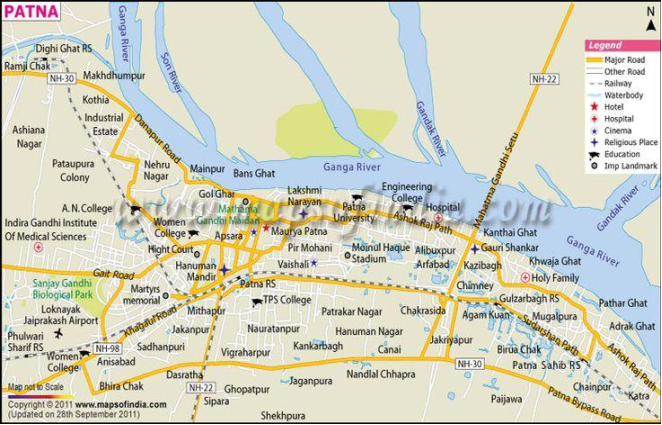
Figure 1. The map of Patna Municipal area.
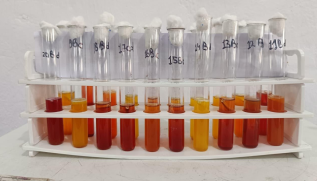
Figure 2. MPN tubes.
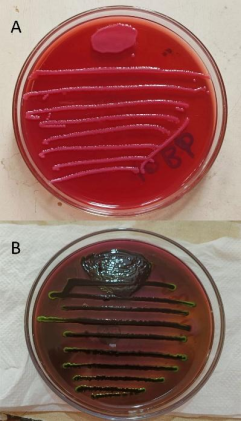
Figure 3. The culture plates of bacteria isolated form MPN tubes.
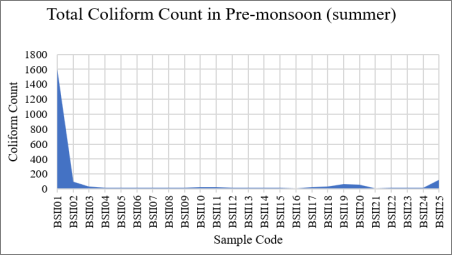
Figure 4. The graphical representation of total coliform count for pre monsoon season.
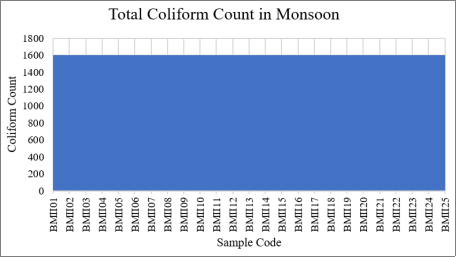
Figure 5. The graphical representation of total coliform count for monsoon season.
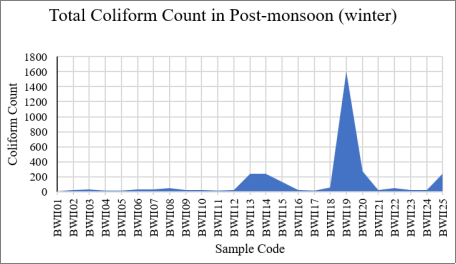
Figure 6. The graphical representation of total coliform count for post monsoon season.
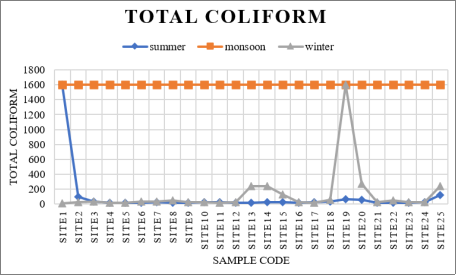
Figure 7. Comparative graph for total coliform for all three seasons.
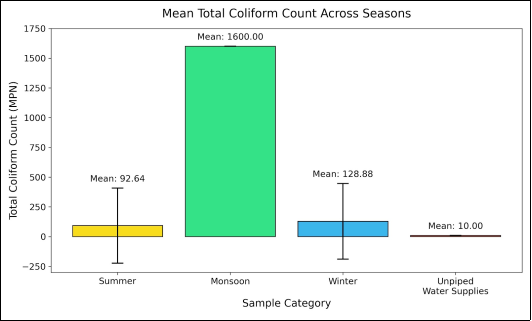
Figure 8. Comparative graph for total coliform for all three seasons analysing mean count ± SD (standard deviation) where the mean total coliform count for unpiped water supplies according to WHO is 10 ± 0.0.
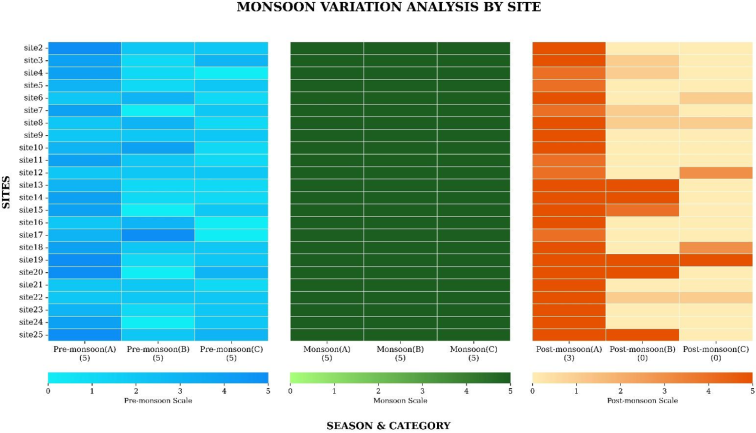
Figure 9. The heatmap showing the MPN count for all 3 sets of tests for all three seasons.

Information



 Share This Article
 Twitter
 Linked In
 Facebook
 Copy
Copy Download