Research Article | | Peer-Reviewed

Growth, Yield and Fruit Quality Response of Pepper (Capsicum Annuum L.) Varieties to Blended Fertilizer Rates in Western Ethiopia

Received: 25 January 2026     Accepted: 7 August 2026     Published: 2 September 2026
Views:       Downloads:
Abstract

Pepper (Capsicum annuum L.) is a vital spice and vegetable crop in Ethiopia, but its production is limited by soil nutrient depletion and lack of improved varieties. This study evaluated the effects of different levels of blended fertilizer on the growth, yield, and quality of three pepper varieties (Mareko-Fana, Bako local, and Oda haro) to identify the optimal fertilizer level for higher yields. The experiment used a Randomized Complete Block Design with three varieties and four fertilizer levels (0, 50, 100, and 150 kg/ha) arranged factorially and replicated three times. The results showed that fertilizer application affects the growth and yield parameters of the varieties. Oda haro well-maintained with 100 kg/ha had the tallest plants (68.25 cm), most branches (8.11), and longest fruits (9.04 cm). The highest marketable dry pod yield (1.99 t/ha) was attained by Oda haro with 150 kg/ha, comparable to Bako local under the same treatment. Similarly, Oda haro with 150 kg/ha produced the highest total dry pod yield (2.09 t/ha), which was not significantly different from Bako local with the same fertilizer level. The study concludes that applying 100 kg/ha of blended fertilizer to Oda haro or Bako local varieties significantly enhances marketable yield. However, since this research was conducted at one location in a single season, further studies are recommended across several locations and under variable conditions to confirm this result.

Published in Science Discovery Food (Volume 1, Issue 3)
DOI 10.11648/j.sdf.20260103.14
Page(s) 128-135
Creative Commons

This is an Open Access article, distributed under the terms of the Creative Commons Attribution 4.0 International License (http://creativecommons.org/licenses/by/4.0/), which permits unrestricted use, distribution and reproduction in any medium or format, provided the original work is properly cited.

Copyright

Copyright © The Author(s), 2026. Published by Science Publishing Group

Keywords

Blended Fertilizer, Marketable Dry Yield, Oda Haro Variety, Soil Nutrient Depletion

1. Introduction
Pepper is one of the most essential spices and with vegetable significance in tropical regions of the world. It is a member of the Solanaceae family and the genus Capsicum. The genus Capsicum is the second most significant vegetable crop of the family after tomato worldwide . Peppers are one of the most commonly grown crops under various environmental and climatic conditions. It is among the cash crops for smallholder farmers in developing countries such as Ethiopia, Nigeria, Ghana, China, India, Pakistan, Bhutan, Indonesia, Cambodia, and Thailand. Wide production of peppers exists in different parts of the country; small-scale farmers produce the largest proportion of hot peppers in the country . The fruits are consumed fresh or dried, serve as raw materials for the processing industry, and constitute an important cash crop for farmers, while also providing employment opportunities for both urban and rural populations . Regardless of the enormous importance of pepper as a vegetable, spice, medicine, and ornamental, production and productivity of hot pepper is very low. Worldwide, dry chilies and peppers are cultivated on approximately 1.8 million hectares, with a total production of 3.9 million tons, while green chilies and peppers occupy about 1.9 million hectares and produce approximately 34.5 million tons . Dry chilies and peppers produced 2.2 tonnes ha-1 and green chilies and peppers produced 17.8 tonnes ha-1 respectively, in a productive manner .
Soil fertility depletion or nutrient deficiency is one of the vital yield-limiting factors in vegetable-producing areas of the country as a result of intensive cultivation and very low and unbalanced nutrient supply. On the other hand, sources of plant nutrients for Ethiopian agriculture over the past five decades have been limited to urea and DAP fertilizers, which contain only nitrogen and phosphorus, which may not satisfy the nutrient requirements of crops, including pepper. In Ethiopian soils, lack most of the macro and micronutrients required to sustain optimal growth and development of crops. As a result, the yield and productivity of crops like pepper are much lower in the case of Ethiopia compared to others. In narrowing the yield gap, several options could be taken by applying newly introduced blended fertilizers on pepper varieties and determining the optimum fertilizer rate .
Capsicum species and variations, particularly the improved ones, are rare in the western Ethiopia area as of currently. As a result, there is narrow varietal information to improve the crop for high fruit yield and quality in the existing agro ecology. There has also been little research done on the effect of blended fertilizers rate on pepper varieties which enables the farmers to select the best performing varieties in the study area. Therefore, the main objective of this study was to determine the optimum fertilizer rate that maximizes yield and to evaluate the cost-benefit relationship of these fertilizer rates and their interaction with pepper growth, yield, and quality parameters in the study area.
2. Materials and Methods
2.1. Description of the Study Area
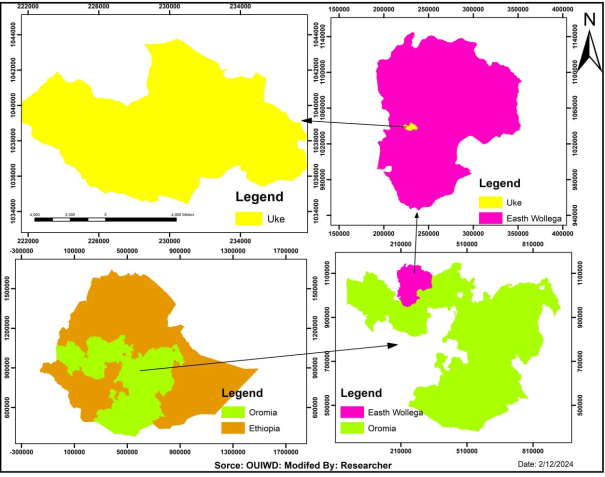
Figure 1. Map of the study area.
The experiment was conducted during the main cropping season of 2024 at the Uke Research and Demonstration Site in Guto Gida District, East Wallaga Zone, western Ethiopia. Geographically, Uke is located in the Guto Gida district of the East Wallaga zone along the main road from Nekemte to Bure. It is approximately 365 km from Addis Ababa and is 40 km away to the north direction from Nekemte town on the main road to Bure town. The area has received an average annual rainfall of 1780 mm recorded from the Nekemte meteorological station during the ten years 1996 to 2007 with its rainfall pattern, annual mean minimum and maximum monthly temperatures being 13.75 and 27.65°C, respectively.
2.2. Experimental Treatments and Design
The treatments consisted of a blended fertilizer, containing Nitrogen, Phosphorus, Sulfur, Zinc, and Boron, applied on three pepper varieties: Mareko Fana, Bako Local, and Oda Haro, obtained from the Bako Agricultural Research Center (BARC), using a local variety as a control. Pepper seedlings were raised in the nursery seedbed and later transplanted to a prepared field with 70 cm × 30 cm spacing after germination. The experiment was a RCBD 4×3 factorial with three replications; the three varieties of pepper and four levels of fertilizer application, namely 0, 50, 100, and 150 kg ha-1, respectively, were the treatments; and plots and blocks were arranged for convenience.
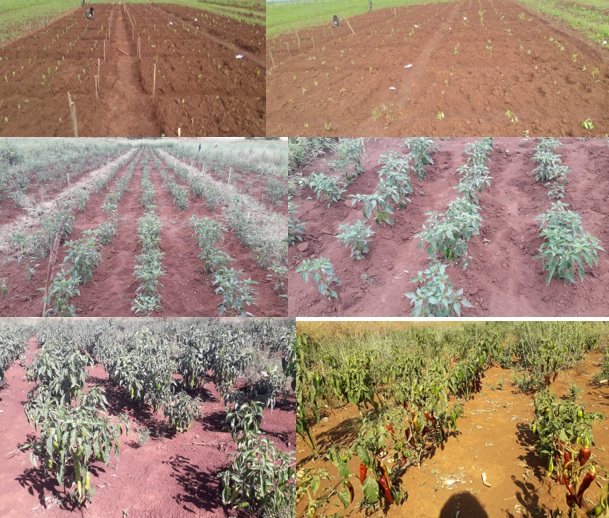
Figure 2. These are photos taken during the research activities.
2.3. Data Collected
Data were collected from the central three rows of each plot, removing border plants, to determine the phenological, growth, and yield parameters and subjected to analysis of variance (ANOVA) appropriate to factorial experiments in RCBD according to the General Linear Model (GLM) of SAS software version 9.2, and the interpretations were made following the procedure described by Gomez et al. (1984). Least Significance Difference (LSD) test at a 5% probability level was used for mean comparison when the ANOVA showed significant differences.
3. Result and Discussion
Analysis of variance showed that days to 50% flowering, days to maturity, plant height, number of branches per plant, number of fruits per plant, fruit length, marketable yield, and total dry pod yield showed significant differences (p < 0.05) between varieties and their interaction with blended fertilizer rates, whereas canopy diameter and unmarketable yield showed no significant difference.
3.1. Phenological Parameters
The earliest number of days to reach 50% flowering was observed from a variety of Bako local (67.93 days) with unfertilized plots. The longest (latest) days to attain 50% flowering was recorded from the Oda Haro (79.03 days) variety that was applied with 150 kg/ha fertilizers. This finding aligns with , who reported that the variation in days to 50% flowering could probably be due to their genetic factors.
The maximum date required to attain 75% maturity was recorded from the Oda haro (148.41 days) variety applied with the blended fertilizer at 150 kg/ha, which was not significantly different from the blended fertilizer applied at 100 kg/ha, while the shortest duration was recorded from the Bako local (132.06 days) variety with an unfertilized plot and non-significant differences of 133.26 days and 134.10 days that were recorded from the Bako local variety, which was applied with the blended fertilizer at 50 kg/ha and 100 kg/ha, respectively. Furthermore, this result was consistent with that of who found that pepper varietals had a substantial impact on days to maturity.
Table 1. The mean effect of the blended fertilizer rates on phenological parameters of pepper varieties at the Uke site during the 2024 cropping season in the East Wallaga zone.

Treatments

Phenological parameters

Varieties

NPSZnB kg/ha

DF

DM

Mareko fana

0

71.21de

134.16fg

50

73.23cd

136.50ef

100

74.98bc

138.66de

150

76.64b

141.33cd

Bako local

0

67.93f

132.06g

50

71.36de

133.26fg

100

72.86d

134.10fg

150

76.20b

142.93bc

Oda haro

0

70.53e

143.75bc

50

72.86d

144.50bc

100

75.53b

145.58ab

150

79.03a

148.41a

CV%

1.62

1.42

LSD 5%

2.01

3.35

Means within a column and rows sharing common letter(s) are not significantly different, CV=coefficient variance; LSD= List significance difference, Days to flowering (DF), Days to Maturity (DM)
3.2. Growth Parameters
The tallest plant height (68.25 cm) was recorded from the Oda haro variety with an application of blended fertilizer at 100 kg/ha, which is not significantly different from the Bako local and Mareko fana varieties applied at 150 kg/ha (Table 2). However, the shortest plant height (44.47 cm) was recorded from the Mareko fana variety with an unfertilized plot, which is not significant to the Bako local variety (48.42 cm) without fertilizer. This presents the role that blended fertilizers, which are a mixture of different nutrients, play in influencing plant growth and plant height of crops. The impact of blended fertilizers on the plant height of pepper varieties was a significant difference in the rate of application.
Similar to this pointed out that improved soil nutrient availability in growing regions, particularly nitrogen and phosphorus, may be the primary cause of the increase in plant height. These nutrients have a positive impact on the vegetative growth of plants by promoting cell division and elongation as well as varietal variability in nutrient absorption.
The widest canopy diameter was recorded from the Mareko fana variety (51.99 cm) but showed non-significant differences from the Bako local and Oda haro varieties, which received blended fertilizer at 50, 100, and 150 kg/ha. The narrowest canopy diameter of 37.78 cm was also recorded from the Mareko fana variety in plots that received no fertilizer.
The number of branches per plant showed significant differences with the interaction of blended fertilizer and pepper varieties. This implies that certain cultivars are more receptive to branching than others, and that this variation in response may be due to both genetics and the mixed fertilizers used. The maximum number of branches (8.11) was recorded in the Oda haro variety when treated with 100 kg/ha, while the minimum number of branches (4.65) was observed in the Mareko fana variety with no application of blended fertilizer (Table 2). This finding conform that, found that cultivars had a substantial impact on the number of branches per plant.
Table 2. The mean effect of the blended fertilizer rates on growth parameters of pepper varieties at the Uke site during the 2024 cropping season in the East Wallaga zone.

Treatments

Growth parameters

Varieties

NPSZnB kg/ha

Plant height

Canopy diameter

Number of branches per plant

Mareko fana

0

44.47e

37.78b

4.65d

50

58.75d

48.67a

6.90bc

100

61.35bcd

51.38a

7.23bc

150

64.68abc

51.99a

7.34b

Bako local

0

48.42e

40.16b

5.14d

50

59.26d

49.89a

6.60c

100

64.33abc

51.62a

6.87bc

150

66.75a

51.63a

7.38b

Oda haro

0

60.42cd

48.17a

6.87bc

50

64.33abc

48.83a

7.00bc

100

68.25a

49.32a

8.11a

150

65.49ab

49.60a

7.20bc

CV%

4.79

5.30

6.09

LSD 5%

4.89

4.31

0.70

Means within a column and rows sharing common letter(s) are not significantly different, CV=coefficient variance; LSD= List significance difference
3.3. Yield Parameters
In pepper varieties, the quantity of fruits produced per plant is significantly impacted by the use of blended fertilizer. The Oda Haro variety had the highest number of fruits (30.71), which is not significantly different from the Mareko Fana and Bako local varieties that were applied with blended fertilizers at 100 kg/ha or 150 kg/ha, whereas the smallest number of fruits per plant was recorded from the Mareko Fana variety, which had (13.71) with an unfertilized plot (Table 3). This demonstrates how soil and environmental factors affect the rates of appropriate nutrient application. This is in line with the findings of who stated that a nitrogen fertilizer rate of 150 kg ha-1 was used.
The longest fruit length was recorded from Oda Haro (9.04 cm) with the applied blended fertilizer of 100 kg/ha. While the shortest fruit length was recorded from the Mareko Fana (5.34 cm) variety, which had a non-significant difference from the Bako local (5.76 cm) variety that received an unfertilized plot and 50 kg/ha, respectively (Table 3). The longest pods were produced by increasing N to 100 kg/ha. However, increases from 100 to 150 kg/ha also reduce pod length because they promote the growth of vegetative plant parts, such as . This result suggests that fruit length is influenced by the combination of blended fertilizer and types.
Table 3. The mean effect of the blended fertilizer rates on yield parameters of pepper varieties at the Uke site during the 2024 cropping season in the East Wallaga zone.

Treatments

Yield parameters

Varieties

NPSZnB kg/ha

Number of fruit per plants

Fruit length

Mareko fana

0

13.71d

5.34e

50

24.93b

7.52d

100

29.81a

8.40b

150

29.21a

8.11bc

Bako local

0

16.93c

7.74cd

50

24.82b

5.76e

100

28.84a

7.77cd

150

29.87a

8.56ab

Oda haro

0

18.93c

7.74cd

50

25.94b

8.57ab

100

30.71a

9.04a

150

30.52a

8.58ab

CV%

6.15

4.52

LSD 5%

2.16

0.59

Means within a column and rows sharing common letter(s) are not significantly different, CV=coefficient variance; LSD= List significance difference
Variance analyses showed that the varieties have significantly different influences on marketable yield of pepper varieties. The number of fruits, average dry fruit weight, and number of seeds per fruit were all significantly impacted by the interaction between blended fertilizer rates and hot pepper cultivars.
According to this finding the highest dry marketable yield was recorded from the Oda Haro variety, which received 1.99 t/ha of application at 150 kg/ha with no significant difference from Bako local at 1.81 t/ha that received 150 kg/ha of blended fertilizer. Similarly, the least dry marketable yield was recorded from Mareko Fana with 1.02 t/ha; this had no difference with Bako local at 1.11 t/ha under an unfertilized plot (Table 4). The diversity in the marketable production of these varieties, which may result from variations in their genetic traits and agro-ecological adaptability, supports this conclusion .
The growth and yield characteristics are connected to plant height, plant canopy length, and the number of pods per plant, all of which were larger at the same fertilizer rate with total dry pod yield. The highest total dry pod yield was recorded from the Oda Haro (2.09 t/ha) variety with the applied blended fertilizer of 150 kg/ha and a non-significant difference from the Bako Local variety that applied the same amount of fertilizer rate.
This is consistent with the results of who found that the best dry yield of hot pepper was achieved at a rate of 150 NPSBZn + 44 N of blended fertilizer and nitrogen.
Table 4. The mean effect of the blended fertilizer rates on yield parameters of pepper varieties at the Uke site during the 2024 cropping season in the East Wallaga zone.

Treatments

Yield parameters

Varieties

NPSZnB Kg/ha

Marketable Dry Yield

Unmarketable Dry Yield

Total Dry Yield

Mareko fana

0

1.02e

0.116ab

1.13e

50

1.39d

0.11ab

1.50d

100

1.51cd

0.116ab

1.62cd

150

1.61bc

0.103ab

1.72bc

Bako local

0

1.11e

0.130a

1.20e

50

1.13e

0.133a

1.23e

100

1.51cd

0.090b

1.64cd

150

1.81a

0.103ab

1.94a

Oda haro

0

1.37d

0.116ab

1.48d

50

1.80ab

0.106ab

1.91ab

100

1.86a

0.100ab

1.96a

150

1.99a

0.106ab

2.09a

CV%

7.49

19.03

7.22

LSD 5%

0.19

0.035

0.19

Means within a column and rows sharing common letter(s) are not significantly different, CV=coefficient variance; LSD= List significance difference
4. Conclusion
Blended fertilizer rates applied to pepper varieties influenced the growth, yield, and quality of Oda Haro, Bako Local, and Mareko-Fana pepper varieties in western Ethiopia. The Oda Haro variety showed better production characteristics regarding the number of fruits per plant and fruit length, and better growth parameters like the tallest plant height with more branches per plant at a fertilizer rate of 100 kg/ha. Similarly, Bako Local varieties, the best growth and production performance was observed at a fertilizer rate of 100 kg/ha.
To improve the growth and productivity of Oda Haro and Bako Local types, farmers should apply 100 kg/ha of blended fertilizer. It is recommended to conduct further research across different locations to confirm these findings.
Abbreviations

ANOV

Analysis of Variance

BARC

Bako Agricultural Research Center

DM

Days to Maturity

DF

Days to Flowering

DM

Days to Maturity

CV

Coefficient Variance

GLM

General Linear Model

LSD

Least Significance Difference

NPSBZn

Nitrogen, Phosphorus, Sulfur, Boron, Zinc

RCBD

Randomized Complete Block Design

Author Contributions
Obsi File: Conceptualization, Resources, Methodology, Data curation, Formal analysis, Investigation, writing original draft, Writing review & editing
Milkinesh Tujuba: Data curation, Investigation, Supervision, Methodology, Writing review & editing
Conflicts of Interest
The authors declare no conflicts of interest.
References
[1] Berhanu Yadeta, Derbew Belew, W. G. and F. M. (2011). Variability, heritability and genetic advance in lettuce. Indian Journal of Horticulture, 67(SPEC. ISSUE), 193–196.
[2] Biratu, W., Belew, D., & Ettissa, E. (2021). Evaluation of hot pepper (Capsicum annuum L.) cultivars for growth and dry pod yields against different blended fertilizer and nitrogen rates in raya Azebo, Southern Tigray. International Journal of Research in Agronomy, 4(2), 15–22.
[3] El-Tohamy, W., El-Abagy, H., & El-Greadly, N. (2008). Studies on the effect of putrescine, yeast and vitamin C on growth, yield and physiological responses of eggplant (Solanum melongena L.) under sandy soil conditions. Australian Journal of Basic and Applied Sciences, 2(2), 296–300.
[4] Gebremeskel, H., Abebe, H., Biratu, W., & Jelato, K. (2015). Performance evaluation of hot pepper (Capsicum annum L.) varieties for productivity under irrigation at. 4(7), 211–216.
[5] Getahun, D., & Habtie, B. (2017). Growth and Yielding Potential of Hot Pepper Varieties under Rain-Fed Production at Woreta, Northwestern Ethiopia. International Journal of Research Studies in Agricultural Sciences, 3(3), 11–18.
[6] Kahsay, Y. (2013). Effect of intra-row spacing on yield and quality of some onion varieties (Allium cepa L.) at Aksum, Northern Ethiopia. African Journal of Plant Science, 7(12), 613–622.
[7] Kena, K., & Latera, A. (2024). Effect of NPS and Nitrogen Fertilizer Application Rates for Small Pod Hot Pepper Production (Capsicum annuum L.) Variety at Kellem and West Wallaga Zones. Agricultural Reviews, 45(1), 170–176.
[8] Marame, F., Desalegne, L., Singh, H., Fininsa, C., & Sigvald, R. (2008). Genetic Components and Heritability of Yield and Yield Related Traits in Hot Pepper. Research Joutnal of Agriculture and Biologicak Sciences, 4(6), 803–809.
[9] Mebratu A*, Dechassa N, Mulualem T, W. K. (2014). Effect of Inorganic Fertilizers on Yield and Physical Quality Parameters of Hot Journal of Plant and Pest Science Effect of Inorganic Fertilizers on Yield and Physical Quality Parameters of Hot Pepper (Capsicum annuum l.) in South-. 1(october 2014), 138–145.
[10] Nimona, F., & Girma, A. (2019). Effects of blended fertilizer types and rates on fruit yield and nutrient use efficiencies of hot pepper (Capsicum annuum L.) at Asossa, Western Ethiopia. African Journal of Agricultural Research, 14(33), 1737–1748.
[11] Teferi, M. F., Getie, A. T., Telila, L. B., & Fisseha Teferi, M. (2015). Adaptation Trail of Different Improved Hot Pepper (Capsicum species) Varieties under Gedeo Zone, Dilla, Ethiopia. CRDEEPJournals International Journal of Life Sciences Melaku F. Teferi et. Al, 4(4), 216–220.
[12] Tegbaru, B. (2015). Soil Fertility Mapping and Fertilizer Recommendation in Ethiopia : Update of EthioSIS project and status of fertilizer blending plants Tegbaru Bellete. Major Soil Health and Fertility Issues, November, 1–46.
[13] FAO (Food and Agriculture Organization), 2016. Crop harvested area, yield and production.
Cite This Article
  • APA Style

    File, O., Tujuba, M. (2026). Growth, Yield and Fruit Quality Response of Pepper (Capsicum Annuum L.) Varieties to Blended Fertilizer Rates in Western Ethiopia. Science Discovery Food, 1(3), 128-135. https://doi.org/10.11648/j.sdf.20260103.14

    Copy | Download

    ACS Style

    File, O.; Tujuba, M. Growth, Yield and Fruit Quality Response of Pepper (Capsicum Annuum L.) Varieties to Blended Fertilizer Rates in Western Ethiopia. Sci. Discov. Food 2026, 1(3), 128-135. doi: 10.11648/j.sdf.20260103.14

    Copy | Download

    AMA Style

    File O, Tujuba M. Growth, Yield and Fruit Quality Response of Pepper (Capsicum Annuum L.) Varieties to Blended Fertilizer Rates in Western Ethiopia. Sci Discov Food. 2026;1(3):128-135. doi: 10.11648/j.sdf.20260103.14

    Copy | Download

  • @article{10.11648/j.sdf.20260103.14,
      author = {Obsi File and Milkinesh Tujuba},
      title = {Growth, Yield and Fruit Quality Response of Pepper (Capsicum Annuum L.) Varieties to Blended Fertilizer Rates in Western Ethiopia},
      journal = {Science Discovery Food},
      volume = {1},
      number = {3},
      pages = {128-135},
      doi = {10.11648/j.sdf.20260103.14},
      url = {https://doi.org/10.11648/j.sdf.20260103.14},
      eprint = {https://article.sciencepublishinggroup.com/pdf/10.11648.j.sdf.20260103.14},
      abstract = {Pepper (Capsicum annuum L.) is a vital spice and vegetable crop in Ethiopia, but its production is limited by soil nutrient depletion and lack of improved varieties. This study evaluated the effects of different levels of blended fertilizer on the growth, yield, and quality of three pepper varieties (Mareko-Fana, Bako local, and Oda haro) to identify the optimal fertilizer level for higher yields. The experiment used a Randomized Complete Block Design with three varieties and four fertilizer levels (0, 50, 100, and 150 kg/ha) arranged factorially and replicated three times. The results showed that fertilizer application affects the growth and yield parameters of the varieties. Oda haro well-maintained with 100 kg/ha had the tallest plants (68.25 cm), most branches (8.11), and longest fruits (9.04 cm). The highest marketable dry pod yield (1.99 t/ha) was attained by Oda haro with 150 kg/ha, comparable to Bako local under the same treatment. Similarly, Oda haro with 150 kg/ha produced the highest total dry pod yield (2.09 t/ha), which was not significantly different from Bako local with the same fertilizer level. The study concludes that applying 100 kg/ha of blended fertilizer to Oda haro or Bako local varieties significantly enhances marketable yield. However, since this research was conducted at one location in a single season, further studies are recommended across several locations and under variable conditions to confirm this result.},
     year = {2026}
    }
    

    Copy | Download

  • TY  - JOUR
    T1  - Growth, Yield and Fruit Quality Response of Pepper (Capsicum Annuum L.) Varieties to Blended Fertilizer Rates in Western Ethiopia
    AU  - Obsi File
    AU  - Milkinesh Tujuba
    Y1  - 2026/09/02
    PY  - 2026
    N1  - https://doi.org/10.11648/j.sdf.20260103.14
    DO  - 10.11648/j.sdf.20260103.14
    T2  - Science Discovery Food
    JF  - Science Discovery Food
    JO  - Science Discovery Food
    SP  - 128
    EP  - 135
    PB  - Science Publishing Group
    SN  - 3143-6781
    UR  - https://doi.org/10.11648/j.sdf.20260103.14
    AB  - Pepper (Capsicum annuum L.) is a vital spice and vegetable crop in Ethiopia, but its production is limited by soil nutrient depletion and lack of improved varieties. This study evaluated the effects of different levels of blended fertilizer on the growth, yield, and quality of three pepper varieties (Mareko-Fana, Bako local, and Oda haro) to identify the optimal fertilizer level for higher yields. The experiment used a Randomized Complete Block Design with three varieties and four fertilizer levels (0, 50, 100, and 150 kg/ha) arranged factorially and replicated three times. The results showed that fertilizer application affects the growth and yield parameters of the varieties. Oda haro well-maintained with 100 kg/ha had the tallest plants (68.25 cm), most branches (8.11), and longest fruits (9.04 cm). The highest marketable dry pod yield (1.99 t/ha) was attained by Oda haro with 150 kg/ha, comparable to Bako local under the same treatment. Similarly, Oda haro with 150 kg/ha produced the highest total dry pod yield (2.09 t/ha), which was not significantly different from Bako local with the same fertilizer level. The study concludes that applying 100 kg/ha of blended fertilizer to Oda haro or Bako local varieties significantly enhances marketable yield. However, since this research was conducted at one location in a single season, further studies are recommended across several locations and under variable conditions to confirm this result.
    VL  - 1
    IS  - 3
    ER  - 

    Copy | Download

Author Information