Abstract
This study determined and compared the fatty acid profiles of seed oils, plant-based milks and plant-based cheeses produced from three Cucurbitaceae species: Cucurbita pepo, Citrullus lanatus and Lagenaria siceraria. Lipids were extracted using cyclohexane, converted into fatty acid methyl esters with trimethylsulfonium hydroxide, and analysed by gas chromatography coupled with flame ionisation detection. Results were expressed as relative percentages of identified fatty acids. Unsaturated fatty acids predominated in all matrices. Linoleic acid (C18: 2 n-6) was the major fatty acid in C. lanatus and L. siceraria seeds, accounting for 61.98 ± 0.37% and 57.44 ± 0.34%, respectively, whereas C. pepo was characterised by a higher oleic acid level (35.30 ± 0.01%) and a lower linoleic acid proportion (41.52 ± 0.16%). Plant-based milks generally preserved the lipid signature of their corresponding seeds, suggesting that aqueous extraction and milk formulation did not markedly alter the relative profile of major fatty acids. In optimised plant-based cheeses, the profiles remained dominated by oleic and linoleic acids, although slight redistribution was observed, particularly a relative decrease in linoleate in F(CL) and F(CP). UFA/SFA ratios remained above 2.4 in all matrices, indicating a strong contribution of unsaturated fatty acids. These results support the nutritional and technological relevance of Cucurbitaceae seeds as raw materials for developing plant-based dairy analogues.
|
Published in
|
Science Journal of Chemistry (Volume 14, Issue 3)
|
|
DOI
|
10.11648/j.sjc.20261403.13
|
|
Page(s)
|
109-117 |
|
Creative Commons
|

This is an Open Access article, distributed under the terms of the Creative Commons Attribution 4.0 International License (http://creativecommons.org/licenses/by/4.0/), which permits unrestricted use, distribution and reproduction in any medium or format, provided the original work is properly cited.
|
|
Copyright
|
Copyright © The Author(s), 2026. Published by Science Publishing Group
|
Keywords
Cucurbitaceae, Fatty Acids, GC-FID, Plant-based Milk, Plant-based Cheese, Linoleic Acid
1. Introduction
The Cucurbit seeds are oleaginous and protein-rich resources that remain underutilized in several tropical food systems. They are of particular interest for the formulation of plant-based foods rich in unsaturated lipids and proteins, especially plant-based beverages and cheese analogues. From a food-processing perspective, lipid quality is a key criterion because it influences the nutritional value, oxidative stability, texture, and sensory properties of the finished products. Vegetable oils rich in unsaturated fatty acids are sought after for their nutritional benefits; however, their high content of polyunsaturated fatty acids may also increase susceptibility to oxidation, particularly during thermal processing and storage
| [1] | Food and Agriculture Organization of the United Nations. Fats and fatty acids in human nutrition: report of an expert consultation. FAO Food and Nutrition Paper 91. Rome: FAO; 2010. |
| [2] | Gharby S, Asbbane A, Nid Ahmed M, Gagour J, Hallouch O, Oubannin S, et al. Vegetable oil oxidation: mechanisms, impacts on quality, and approaches to enhance shelf life. Food Chem X. 2025; 28: 102541.
https://doi.org/10.1016/j.fochx.2025.102541 |
[1, 2]
.
Reliable characterization of fatty acid profiles is commonly based on the conversion of lipids into fatty acid methyl esters (FAMEs), followed by gas chromatographic analysis. The ISO 12966 series provides guidance for FAME preparation and determination by capillary gas chromatography, including rapid transesterification using trimethylsulfonium hydroxide
| [3] | International Organization for Standardization. ISO 12966-2: 2017. Animal and vegetable fats and oils - Gas chromatography of fatty acid methyl esters - Part 2: Preparation of methyl esters of fatty acids. Geneva: ISO; 2017. |
| [4] | International Organization for Standardization. ISO 12966-3: 2016. Animal and vegetable fats and oils - Gas chromatography of fatty acid methyl esters - Part 3: Preparation of methyl esters using trimethylsulfonium hydroxide (TMSH). Geneva: ISO; 2016. |
| [5] | International Organization for Standardization. ISO 12966-4: 2015. Animal and vegetable fats and oils - Gas chromatography of fatty acid methyl esters - Part 4: Determination by capillary gas chromatography. Geneva: ISO; 2015. |
[3-5]
. This approach enables robust comparison of relative profiles among species and food matrices when analytical conditions are kept constant.
Seed oils from
Cucurbita spp. are generally reported to be rich in linoleic and oleic acids
| [6] | Stevenson DG, Eller FJ, Wang L, Jane JL, Wang T, Inglett GE. Oil and tocopherol content and composition of pumpkin seed oil in 12 cultivars. J Agric Food Chem. 2007; 55(10): 4005-4013. https://doi.org/10.1021/jf0706979 |
| [7] | Grajzer M, Kozłowska W, Zalewski I, Matkowski A, Wiland-Szymańska J, Rękoś M, et al. Nutraceutical prospects of pumpkin seeds: a study on the lipid fraction composition and oxidative stability across eleven varieties. Foods. 2025; 14(3): 354. https://doi.org/10.3390/foods14030354 |
| [8] | Loumouamou B. W, Kiminou Ngounga C., Biassala E. T, Guen-Koud Auckana Ngala C. U, Vouidibio Mbozo A. B, Binaki A. F, Nzikou J. M. Production of Mayonnaise from Lagenaria siceraria and Cucumeropsis mannii Seeds Oils Supplemented with Citrus sinensis and Cymbopogon citratus Essential Oils; International Journal of Nutrition and Food Sciences, 2024; 13(5): 185-198
https://doi.org/10.11648/j.ijnfs.20241305.14 |
[6-8]
. For
Lagenaria siceraria and other related Cucurbitaceae, recent studies have also reported a predominance of linoleic acid, followed by palmitic, stearic, and oleic acids, with variability depending on species, cultivar, environment, and extraction process
| [9] | Emmanuel SA, Oladiran JA, Olaleye MT. Fatty acids composition and seed oils quality of Lagenaria siceraria cultivars grown in Northern Nigeria. Int J Nat Prod Sci. 2013; 3(6): 1-8. |
| [10] | Chen J, Liu H. Nutritional indices for assessing fatty acids: a mini-review. Int J Mol Sci. 2020; 21(16): 5695.
https://doi.org/10.3390/ijms21165695 |
| [11] | Antunes I, Bexiga R, Pinto C, Gonçalves H, Roseiro C, Bessa R, et al. Lipid profile of plant-based milk alternatives (PBMAs) and cow’s milk: a comparison. J Agric Food Chem. 2024; 72(32): 18110-18120.
https://doi.org/10.1021/acs.jafc.4c03091 |
| [12] | Ait Nouisse A, Belmallam R, Ait Bouzid H, Ibourki M, Giuffrè AM, Devkota K, et al. Comprehensive evaluation of Lagenaria siceraria and Cucurbita species seeds: proximate composition, antioxidant potential, lipid profiling and oil properties. Int Agrophys. 2025; 39(4): 457-474.
https://doi.org/10.31545/intagr/207209. |
[9-12]
. In the case of plant-based milks and cheeses, the scientific issue is therefore not only to determine the lipid composition of the seed, but also to assess whether processing preserves or modifies the relative fatty acid signature.
The aim of this study was therefore to determine and compare the fatty acid profile of oils extracted from seeds, plant-based milks, and plant-based cheeses of C. pepo, C. lanatus, and L. siceraria, in order to assess the preservation of the lipid signature during processing and the potential nutritional value of the resulting products.
2. Materials and Methods
2.1. Analyzed Matrices and Coding
The analyzed matrices included seeds of C. pepo, C. lanatus, and L. siceraria; six plant-based milks. prepared using two seed mass loads, 100 g and 200 g; and three plant-based cheeses corresponding to the optimal thermal coagulation conditions selected for each species. The milks were coded as CL-100, CL-200, CP-100, CP-200, LS-100, and LS-200. The cheeses were coded as F(CL), F(CP), and F(LS), corresponding respectively to cheeses made from Citrullus lanatus, Cucurbita pepo, and Lagenaria siceraria. Fatty acid profiles were determined from the lipid extracts of each matrix.
2.2. Lipid Extraction
For the seeds, approximately 1 g of ground material wasextracted through three successive cycles using 10 mL ofcyclohexane. Each cycle consisted of vortex mixing for 30 s followed by centrifugation at 3000 × g for 5 min. The organic phases were pooled, and the solvent was subsequently removed under vacuum at 48°C using a Büchi Multivapor system.
For the plant-based milks, approximately 10 g of samplewere extracted using a liquid–liquid extraction approach through three cycles with 10 mL of cyclohexane. The organic phase was filtered through glass fiber in thepresence of anhydrous sodium sulfate prior to solvent evaporation.
For the cheeses, approximately 1 g of sample was subjected to a similar protocol adapted to semi-solid matrices.
2.3. Preparation of Fatty Acid Methyl Esters
The The lipid extracts were converted into fatty acid methyl esters (FAMEs) using trimethylsulfonium hydroxide (TMSH). For seed and milk extracts, approximately 15 mg of lipid extract were dissolved in 1 mL of tert-butylmethyl ether (TBME). A 100 µL aliquot was then mixed with 50 µL of 0.2 M TMSH in methanol priorto injection.
For cheese samples, when the lipid yield was low, 1 mL of TBME was added directly to the vial containing the lipid extract. A 100 µL aliquot was then mixed with 50 µL of TMSH. The use of TMSH is consistent with ISO 12966-3, which describes a rapid method for FAME preparation prior to chromatographic analysis
| [4] | International Organization for Standardization. ISO 12966-3: 2016. Animal and vegetable fats and oils - Gas chromatography of fatty acid methyl esters - Part 3: Preparation of methyl esters using trimethylsulfonium hydroxide (TMSH). Geneva: ISO; 2016. |
[4]
.
2.4. GC-FID Analysis
FAMEs were analyzed using a Varian 3900 GC-FID systemequipped with a CP-Select CB for FAME fused-silica WCOT column (50 m × 0.25 mm × 0.25 µm). Helium was used as the carrier gas at a flow rate of 1.2 mL/min.
The oven temperature program was as follows: 185°C held for 40 min, increased at 15°C/min to 250°C, and thenheld at 250°C for 10.68 min. The injector and detectortemperatures were maintained at 250°C. Injection was performed in split mode at a split ratio of 1: 100, with aninjection volume of 1 µL.
Fatty acid identification was carried out by comparing retention times with those of the Supelco 37 Component FAME Mix.
2.5. Expression of Results and Data Processing
Results were expressed as the percentage of each identified fatty acid withresoect to the total area of the selected peaks. Values are presented as mean± standard deviation.
Saturated fatty acids (SFA) were calculated as the sum of C14: 0, C16: 0, C18: 0, and C20: 0. Monounsaturated fatty acids (MUFA) were calculated as C18: 1n-9 + C18: 1n-7c, and polyunsaturated fatty acids (PUFA) as C18: 2n-6 +C18: 3n-3. The UFA/SFA, PUFA/SFA, and n-6/n-3 ratioswere calculated descriptively to facilitate nutritional interpretation. Calculations, table restructuring, and figure generation were performed using Python 3.11, mainly with the NumPy, pandas, and Matplotlib libraries
| [13] | Ismail BP, Nielsen SS, editors. Nielsen’s Food Analysis. 6th ed. Cham: Springer; 2024.
https://doi.org/10.1007/978-3-031-50643-7 |
| [14] | Harris CR, Millman KJ, van der Walt SJ, Gommers R, Virtanen P, Cournapeau D, et al. Array programming with NumPy. Nature. 2020; 585(7825): 357-362.
https://doi.org/10.1038/s41586-020-2649-2 |
| [15] | McKinney W. Data structures for statistical computing in Python. In: van der Walt S, Millman J, editors. Proceedings of the 9th Python in Science Conference. Austin: SciPy; 2010. p. 56-61. https://doi.org/10.25080/Majora-92bf1922-00a |
| [16] | Hunter JD. Matplotlib: a 2D graphics environment. Comput Sci Eng. 2007; 9(3): 90-95.
https://doi.org/10.1109/MCSE.2007.55 |
[13-16]
. Figures were generated from mean values, while standard deviations were retained in the tables to document analytical dispersion.
3. Results
The results are presented at four complementary levels.
Tables 1 to 3 describe the relative fatty acid profiles of seeds, plant-based milks, and optimized plant-based cheeses.
Table 4 summarizes fatty acid classes and descriptive lipid quality indices.
Figures 1 to 4 present these data graphically to facilitate comparison samong species and matrices.
Table 1 shows the relative profile of fatty acids identified in the oils extracted from the seeds of the three species. This initial comparison makes it possible to establish the lipid signature specific to the raw materials before anyprocessing into plant-based milk or cheese.
Table 1 shows that
C. lanatus and
L. siceraria seeds were dominated by linoleic acid, with values of 61.98 ± 0.37% and 57.44 ± 0.34%, respectively.
C. pepo displayed a different profile, characterized by a much higher proportion of oleic acid (35.30 ± 0.01%) and a lower proportion of linoleic acid (41.52 ± 0.16%). This contrast between a more polyunsaturated profile in
C. lanatus/
L. siceraria and a more monounsaturated profile in
C. pepo represents the first major finding of the study. Palmitic and stearic acids remained the main saturated fatty acids, whereas myristic, arachidic, and linolenic acids were present at low levels in all three species.
Table 1. Relative fatty acid profile of seed oils (% of identified fatty acids).
Fatty acid | CL seeds | CP seeds | LS seeds |
C14: 0 (Myristic acid) | 0.05 ± 0.01 | 0.15 ± 0.00 | 0.07 ± 0.01 |
C16: 0 (Palmitic acid) | 10.50 ± 0.13 | 13.98 ± 0.03 | 15.88 ± 0.22 |
C18: 0 (Stearic acid) | 11.81 ± 0.14 | 8.39 ± 0.14 | 11.67 ± 0.18 |
C18: 1 (Oleic acid+C18: 1 n-7c isomer) | 15.18 ± 0.11 | 35.30 ± 0.01 | 14.47 ± 0.05 |
C18: 2 n-6 (Linoleic acid) | 61.98 ± 0.37 | 41.52 ± 0.16 | 57.44 ± 0.34 |
C20: 0 (Arachidic acid) | 0.39 ± 0.00 | 0.52 ± 0.01 | 0.33 ± 0.01 |
C18: 3 n-3 (α-Linolenic acid) | 0.11 ± 0.00 | 0.15 ± 0.01 | 0.17 ± 0.01 |
Values are expressed as mean ± standard deviation.
Table 2 presents the profiles obtained for the plant-based milks prepared using two seed mass loads. This layout makes it possible to assess simultaneously the effect of species and that of the initial seed concentration on the relative composition of the extracted lipid fraction.
Table 2. Relative fatty acid profile of plant-based milks (% of identified fatty acids).
Fatty acid | CL-100 milk | CL-200 milk | CP-100 milk | CP-200 milk | LS-100 milk | LS-200 milk |
C14: 0 (Myristic acid) | 0.06 ± 0.01 | 0.05 ± 0.00 | 0.15 ± 0.00 | 0.15 ± 0.01 | 0.06 ± 0.00 | 0.06 ± 0.00 |
C16: 0 (Palmitic acid) | 10.53 ± 0.02 | 10.54 ± 0.03 | 14.24 ± 0.02 | 14.18 ± 0.01 | 12.80 ± 0.11 | 15.70 ± 0.04 |
C18: 0 (Stearic acid) | 11.75 ± 0.01 | 11.84 ± 0.01 | 8.28 ± 0.04 | 8.49 ± 0.03 | 11.80 ± 0.01 | 11.75 ± 0.00 |
C18: 1 (Oleic acid+C18: 1 n-7c isomer) | 15.28 ± 0.06 | 15.70 ± 0.00 | 35.60 ± 0.19 | 36.20 ± 0.00 | 15.85 ± 0.18 | 14.96 ± 0.02 |
C18: 2 n-6 (Linoleic acid) | 61.94 ± 0.01 | 61.41 ± 0.02 | 41.13 ± 0.18 | 40.37 ± 0.00 | 58.99 ± 0.34 | 57.06 ± 0.00 |
C20: 0 (Arachidic acid) | 0.36 ± 0.01 | 0.39 ± 0.01 | 0.52 ± 0.00 | 0.53 ± 0.01 | 0.37 ± 0.00 | 0.33 ± 0.00 |
C18: 3 n-3 (α-Linolenic acid) | 0.10 ± 0.01 | 0.09 ± 0.00 | 0.10 ± 0.01 | 0.10 ± 0.00 | 0.12 ± 0.01 | 0.16 ± 0.00 |
Table 2 indicates that processing the seeds into plant-based milks generally preserved the hierarchy observed in the seeds.
C. lanatus milks remained highly rich in linoleic acid, with values of 61.94 ± 0.01% for CL-100 and 61.41 ± 0.02% for CL-200, whereas
C. pepo milks retained a high oleic acid fraction, with values of 35.60 ± 0.19% for CP-100 and 36.20 ± 0.00% for CP-200.
L. siceraria milks remained dominated by linoleic acid; however, LS-200 showed a higher proportion of palmitic acid than LS-100. Increasing the seed mass load therefore did not substantially alter the qualitative lipid signature of each species, but it may influence certain relative proportions, probably through effects related to extraction yield, emulsion formation, or lipid partitioning.
CL, Citrullus lanatus; CP, Cucurbita pepo; LS, Lagenaria siceraria.
Table 3 presents the profiles of the plant-based cheeses obtained under the optimal thermal coagulation conditions. These results make it possible to assess whether coagulation and curd recovery preserved the lipid signature observed in the corresponding milks.
Table 3 shows that the optimized cheeses retained a predominance of unsaturated fatty acids. F(LS) remained strongly characterized by linoleic acid, with a value of 56.72 ± 0.02%, and was close to LS-200 milk. F(CP) preserved the characteristic signature of
C. pepo, with a high oleic acid fraction of 35.80 ± 0.14% and a linoleic acid fraction of 40.25 ± 0.26%. However, F(CL) showed a relative decrease in linoleic acid compared with
C. lanatus milks, together with a relative increase in stearic and oleic acids. This variation suggests that the thermal coagulation step and cheese recovery may modify the relative composition of the extracted lipid fraction, without reversing the overall predominance of unsaturated fatty acids.
F(CL), F(CP), and F(LS) correspond to cheeses obtained under the optimal production conditions.
Table 3. Relative fatty acid profile of optimized plant-based cheeses (% of identified fatty acids).
Fatty acid | F(CL) cheese | F(CP) cheese | F(LS) cheese |
C14: 0 (Myristic acid) | 0.05 ± 0.00 | 0.15 ± 0.01 | 0.07 ± 0.01 |
C16: 0 (Palmitic acid) | 12.36 ± 0.01 | 14.24 ± 0.16 | 15.85 ± 0.01 |
C18: 0 (Stearic acid) | 14.31 ± 0.14 | 8.92 ± 0.04 | 11.87 ± 0.04 |
C18: 1 (Oleic acid+C18: 1 n-7c isomer) | 17.42 ± 0.03 | 35.80 ± 0.14 | 15.04 ± 0.07 |
C18: 2 n-6 (Linoleic acid) | 55.31 ± 0.08 | 40.25 ± 0.26 | 56.72 ± 0.02 |
C20: 0 (Arachidic acid) | 0.47 ± 0.01 | 0.54 ± 0.00 | 0.33 ± 0.00 |
C18: 3 n-3 (α-Linolenic acid) | 0.07 ± 0.01 | 0.01 ± 0.01 | 0.15 ± 0.00 |
Table 4 groups fatty acids into functional classes and presents descriptive indices calculated from the relative percentages. These indices should not be considered nutritional claims, but they facilitate the overall comparison of the matrices.
Table 4 confirms that all matrices had UFA/SFA ratios above 2, indicating a clear predominance of unsaturated fatty acids. PUFA/SFA values were particularly high for
C. lanatus and
L. siceraria, consistent with their high linoleic acid content. In contrast, n-6/n-3 ratios were very high in most samples, as a direct consequence of the very low proportion of α-linolenic acid. These results support the technological and lipid-related potential of the matrices, but indicate that they cannot be considered balanced sources of omega-3 fatty acids without reformulation or combination with ingredients rich in α-linolenic acid.
These indices are descriptive because they are based on the relative percentages of the identified fatty acids.
Table 4. Descriptive lipid quality indices calculated from relative fatty acid profiles fatty.
Sample | SFA (%) | MUFA (%) | PUFA (%) | UFA/SFA | PUFA/SFA | n-6/n-3 |
CL seeds | 22.75 | 15.18 | 62.09 | 3.40 | 2.73 | 563.45 |
CP seeds | 23.04 | 35.30 | 41.67 | 3.34 | 1.81 | 276.80 |
LS seeds | 27.95 | 14.47 | 57.61 | 2.58 | 2.06 | 337.88 |
CL-100 milk | 22.70 | 15.28 | 62.04 | 3.41 | 2.73 | 619.40 |
CL-200 milk | 22.82 | 15.70 | 61.50 | 3.38 | 2.70 | 682.33 |
CP-100 milk | 23.19 | 35.60 | 41.23 | 3.31 | 1.78 | 411.30 |
CP-200 milk | 23.35 | 36.20 | 40.47 | 3.28 | 1.73 | 403.70 |
LS-100 milk | 25.03 | 15.85 | 59.11 | 2.99 | 2.36 | 491.58 |
LS-200 milk | 27.84 | 14.96 | 57.22 | 2.59 | 2.06 | 356.62 |
F(CL) cheese | 27.19 | 17.42 | 55.38 | 2.68 | 2.04 | 790.14 |
F(CP) cheese | 23.85 | 35.80 | 40.26 | 3.19 | 1.69 | 4025.00 |
F(LS) cheese | 28.12 | 15.04 | 56.87 | 2.56 | 2.02 | 378.13 |
Abbreviations: SFA, saturated fatty acids; MUFA, monounsaturated fatty acids; PUFA, polyunsaturated fatty acids; UFA, unsaturated fatty acids; CL, Citrullus lanatus; CP, Cucurbita pepo; LS, Lagenaria siceraria; F(CL), F(CP), and F(LS), optimized plant-based cheeses from C. lanatus, C. pepo, and L. siceraria, respectively.
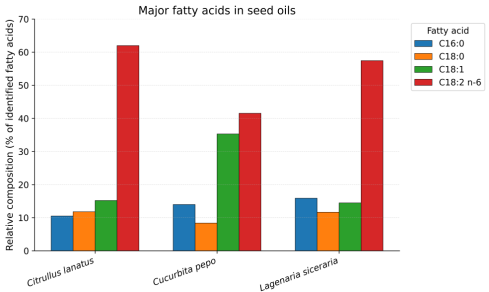
Figure 1 was added to visualize the major fatty acids in the seeds and to make the interspecies differences reported in
Table 1 easier to interpret.
Figure 1. Major fatty acids in seed oils from the three Cucurbitaceae species.
Figure 1 visually confirms the separation between
C. pepo, which is richer in oleic acid, and
C. lanatus/
L. siceraria, which are richer in linoleic acid. It also shows that minor fatty acids contribute little to the discrimination among species.
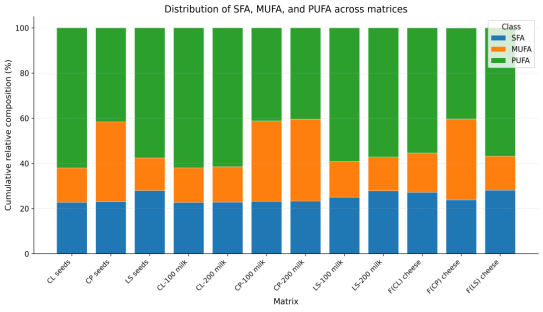
Figure 2 presents the SFA/MUFA/PUFA distribution across all matrices and complements the descriptive indices reported in
Table 4.
Figure 2. Relative distribution of saturated, monounsaturated, and polyunsaturated fatty acids in the studied matrices.
Abbreviations: SFA, saturated fatty acids; MUFA, monounsaturated fatty acids; PUFA, polyunsaturated fatty acids; CL, Citrullus lanatus; CP, Cucurbita pepo; LS, Lagenaria siceraria; F(CL), F(CP), and F(LS), optimized plant-based cheeses from C. lanatus, C. pepo, and L. siceraria, respectively.
Figure 2 shows that PUFA constituted the dominant fraction in most matrices, except for
C. pepo, in which the contribution of MUFA was higher. This representation confirms that processing into plant-based milk and then into cheese did not eliminate the predominance of unsaturated fatty acids.
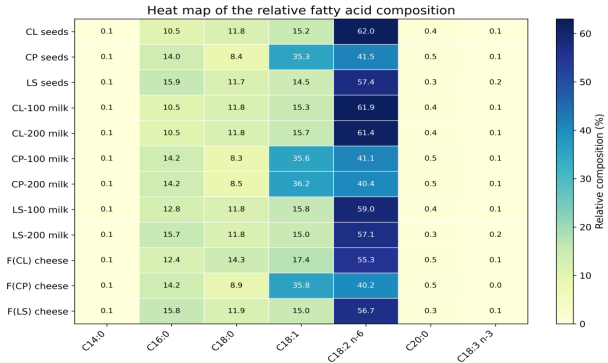
Figure 3 provides a heat map of individual fatty acids to rapidly identify similarities and contrasts in composition among matrices.
Figure 3. Heat map of the relative fatty acid composition of the studied matrices. (Values are expressed as relative percentages of identified fatty acids).
Figure 3 highlights two compositional clusters: a linoleic acid-rich cluster mainly including
C. lanatus and
L. siceraria, and a more oleic acid-rich cluster corresponding to
C. pepo and its derived products. The heat map also makes it possible to visualize specific variations in palmitic and stearic acids in some plant-based milks and cheeses.
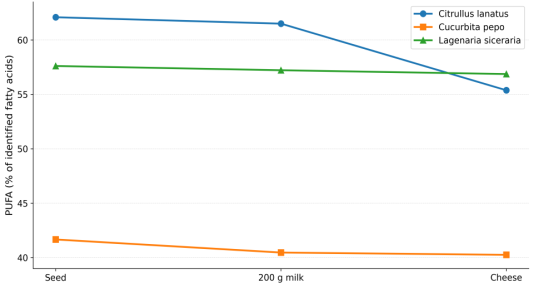
Figure 4 compares the changes in the polyunsaturated fatty acid fraction among seeds, 200 g plant-based milks, and optimized cheeses.
Figure 4. Evolution of the polyunsaturated fatty acid fraction during processing.
Note. PUFA, polyunsaturated fatty acids. Seed, 200 g plant-based milk, and cheese correspond respectively to the raw seeds, the milk prepared with a 200 g seed load, and the optimized plant-based cheese for each species.
Figure 4 shows a relative preservation of the polyunsaturated fatty acid fraction during processing, particularly for
L. siceraria and
C. pepo. The decrease observed in
C. lanatus cheese should be interpreted with caution, as it may result from a processing effect, lipid partitioning within the curd, and the low amount of lipid extract available for this matrix.
4. Discussion
4.1. Lipid Signature of the Seeds
Seed oils were characterized by a marked predominance of unsaturated fatty acids. In
C. lanatus, linoleic acid was the major fatty acid (61.98 ± 0.37%), followed by oleic acid (15.18 ± 0.11%), stearic acid (11.81 ± 0.14%), and palmitic acid (10.50 ± 0.13%). In
L. siceraria, a comparable profile was observed, with a high proportion of linoleic acid (57.44 ± 0.34%) and relatively high levels of palmitic acid (15.88 ± 0.22%) and stearic acid (11.67 ± 0.18%). These results are consistent with profiles generally reported for
L. siceraria oils, in which linoleic acid is often the dominant fatty acid
| [8] | Loumouamou B. W, Kiminou Ngounga C., Biassala E. T, Guen-Koud Auckana Ngala C. U, Vouidibio Mbozo A. B, Binaki A. F, Nzikou J. M. Production of Mayonnaise from Lagenaria siceraria and Cucumeropsis mannii Seeds Oils Supplemented with Citrus sinensis and Cymbopogon citratus Essential Oils; International Journal of Nutrition and Food Sciences, 2024; 13(5): 185-198
https://doi.org/10.11648/j.ijnfs.20241305.14 |
| [9] | Emmanuel SA, Oladiran JA, Olaleye MT. Fatty acids composition and seed oils quality of Lagenaria siceraria cultivars grown in Northern Nigeria. Int J Nat Prod Sci. 2013; 3(6): 1-8. |
[8, 9]
.
C. pepo was clearly distinguished by a higher oleic acid fraction (35.30 ± 0.01%) and a lower linoleic acid fraction (41.52 ± 0.16%) than those observed in
C. lanatus and
L. siceraria. This trend is consistent with the literature on pumpkin seed oils, which generally describes oils dominated by linoleic and oleic acids, with proportions varying according to cultivar and agroecological conditions
| [6] | Stevenson DG, Eller FJ, Wang L, Jane JL, Wang T, Inglett GE. Oil and tocopherol content and composition of pumpkin seed oil in 12 cultivars. J Agric Food Chem. 2007; 55(10): 4005-4013. https://doi.org/10.1021/jf0706979 |
| [7] | Grajzer M, Kozłowska W, Zalewski I, Matkowski A, Wiland-Szymańska J, Rękoś M, et al. Nutraceutical prospects of pumpkin seeds: a study on the lipid fraction composition and oxidative stability across eleven varieties. Foods. 2025; 14(3): 354. https://doi.org/10.3390/foods14030354 |
[6, 7]
. From a technological perspective, this relatively high oleic acid content may be favorable for improved oxidative stability compared with oils richer in polyunsaturated fatty acids, although this assumption should be confirmed through specific stability tests.
4.2. Effect of Processing into Plant-based Milks
The fatty acid profiles of the plant-based milks remained close to those of the corresponding seeds. For C. lanatus, CL-100 and CL-200 milks retained a very high proportion of linoleic acid, with values of 61.94 ± 0.01% and 61.41 ± 0.02%, respectively. For C. pepo, CP-100 and CP-200 milks maintained an oleic acid-rich profile, with values of 35.60 ± 0.19% and 36.20 ± 0.00%, respectively, associated with linoleic acid proportions of approximately 40–41%. For L. siceraria, LS-100 and LS-200 milks remained dominated by linoleic acid; however, LS-200 showed a higher palmitic acid fraction (15.70 ± 0.04%) than LS-100 (12.80 ± 0.11%).
This overall preservation of the lipid signature suggests that plant-based milk preparation did not result in a major modification of the relative profile of the identified fatty acids. However, relative profiles do not allow conclusions to be drawn regarding absolute lipid transfer yields, because the same relative composition may correspond to different total lipid contents. For a complete technological interpretation, it would be useful to combine these results with mass balances, total lipid contents of the milks, and extraction efficiency of the fat fraction.
4.3. Profile of the Optimized Plant-based Cheeses
The optimized cheeses also retained a predominance of unsaturated fatty acids. F(LS) showed a profile very close to that of LS-200, with 56.72 ± 0.02% linoleic acid and 15.04 ± 0.07% oleic acid. F(CP) preserved the characteristic signature of C. pepo, marked by a high oleic acid content (35.80 ± 0.14%) and a linoleic acid content of 40.25 ± 0.26%. In contrast, F(CL) showed a relative decrease in linoleic acid compared with C. lanatus seeds and milks, with a value of 55.31 ± 0.08%, together with a relative increase in stearic acid (14.31 ± 0.14%) and oleic acid (17.42 ± 0.03%).
These variations may reflect lipid partitioning phenomena during thermal coagulation, differences in extractability among matrices, or analytical variations related to the low amount of lipid extract available for some cheeses. The data do not allow these differences to be attributed to a direct chemical transformation of fatty acids, because GC-FID profiles express relative percentages rather than absolute quantities. A complementary approach based on lipid yield, mass balance, and oxidative stability would be necessary to distinguish concentration, extraction, and oxidation effects.
4.4. Nutritional Interpretation
The calculated UFA/SFA ratios were high in all matrices, ranging approximately from 2.45 to 3.57 depending on the sample. PUFA were particularly dominant in
C. lanatus and
L. siceraria, whereas
C. pepo showed a more balanced profile between MUFA and PUFA. PUFA/SFA ratios are often used as descriptive indicators of lipid quality in foods; however, they should be interpreted with caution because they do not account for fatty acid position on triacylglycerols, oxidizability, bioavailability, or the overall balance of the diet
| [10] | Chen J, Liu H. Nutritional indices for assessing fatty acids: a mini-review. Int J Mol Sci. 2020; 21(16): 5695.
https://doi.org/10.3390/ijms21165695 |
| [11] | Antunes I, Bexiga R, Pinto C, Gonçalves H, Roseiro C, Bessa R, et al. Lipid profile of plant-based milk alternatives (PBMAs) and cow’s milk: a comparison. J Agric Food Chem. 2024; 72(32): 18110-18120.
https://doi.org/10.1021/acs.jafc.4c03091 |
[10, 11]
.
The very low proportion of α-linolenic acid (C18: 3 n-3) resulted in high n-6/n-3 ratios, especially in matrices rich in linoleic acid. This does not undermine the lipid interest of these matrices, but it indicates that these products cannot be considered significant sources of omega-3 fatty acids. Their formulation could therefore be improved by combining them with ingredients richer in C18: 3 n-3 or by applying formulation strategies aimed at balancing the n-6/n-3 ratio.
5. Conclusions
Seeds, plant-based milks, and plant-based cheeses from C. lanatus, C. pepo, and L. siceraria exhibited lipid profiles dominated by unsaturated fatty acids. C. lanatus and L. siceraria were mainly characterized by their high linoleic acid content, whereas C. pepo showed a more oleic acid-rich signature. Processing into plant-based milks generally preserved the relative fatty acid profile of the seeds, and the optimized cheeses maintained a strong contribution of unsaturated fatty acids. These results support the potential of Cucurbitaceae seeds as raw materials for the formulation of plant-based dairy substitutes.
Abbreviations
SFA | Saturated Fatty Acids |
MUFA | Mono-unsaturated Fatty Acids |
PUFA | Poly-unsaturated Fatty Acids |
CL | Citrullus lanatus |
CP | Cucurbita pepo |
LS | Lagenaria siceraria |
F(CL) | Optimized Plant-based Cheeses from C. lanatus |
F(CP) | Optimized Plant-based Cheeses from C. pepo |
F(LS) | Optimized Plant-based Cheeses from L. siceraria |
Acknowledgments
The authors would like to express their gratitude and sincere thanks to the staff of the Agro-Industrial Chemistry Laboratory (LCA) in Toulouse, as well as to Ms. Christine Raynaud, for their contribution to the conduct of this work.
Author Contributions
Jadelphie Aldine Justicia Elenga: Formal analysis, Funding acquisition, Investigation, Resources, Writing – original draft
Anicet Frederic Binaki: Data curation, Methodology
Bob Wilfrid Loumouamou: Formal Analysis, Funding acquisition, Writing – review & editing
Chancel Moulolo Moukengue: Investigation, Visualization
Jean Mathurin Nzikou: Conceptualization, Funding acquisition, Project administration
Thomas Silou: Validation
Conflicts of Interest
The authors declare no conflicts of interest.
References
| [1] |
Food and Agriculture Organization of the United Nations. Fats and fatty acids in human nutrition: report of an expert consultation. FAO Food and Nutrition Paper 91. Rome: FAO; 2010.
|
| [2] |
Gharby S, Asbbane A, Nid Ahmed M, Gagour J, Hallouch O, Oubannin S, et al. Vegetable oil oxidation: mechanisms, impacts on quality, and approaches to enhance shelf life. Food Chem X. 2025; 28: 102541.
https://doi.org/10.1016/j.fochx.2025.102541
|
| [3] |
International Organization for Standardization. ISO 12966-2: 2017. Animal and vegetable fats and oils - Gas chromatography of fatty acid methyl esters - Part 2: Preparation of methyl esters of fatty acids. Geneva: ISO; 2017.
|
| [4] |
International Organization for Standardization. ISO 12966-3: 2016. Animal and vegetable fats and oils - Gas chromatography of fatty acid methyl esters - Part 3: Preparation of methyl esters using trimethylsulfonium hydroxide (TMSH). Geneva: ISO; 2016.
|
| [5] |
International Organization for Standardization. ISO 12966-4: 2015. Animal and vegetable fats and oils - Gas chromatography of fatty acid methyl esters - Part 4: Determination by capillary gas chromatography. Geneva: ISO; 2015.
|
| [6] |
Stevenson DG, Eller FJ, Wang L, Jane JL, Wang T, Inglett GE. Oil and tocopherol content and composition of pumpkin seed oil in 12 cultivars. J Agric Food Chem. 2007; 55(10): 4005-4013.
https://doi.org/10.1021/jf0706979
|
| [7] |
Grajzer M, Kozłowska W, Zalewski I, Matkowski A, Wiland-Szymańska J, Rękoś M, et al. Nutraceutical prospects of pumpkin seeds: a study on the lipid fraction composition and oxidative stability across eleven varieties. Foods. 2025; 14(3): 354.
https://doi.org/10.3390/foods14030354
|
| [8] |
Loumouamou B. W, Kiminou Ngounga C., Biassala E. T, Guen-Koud Auckana Ngala C. U, Vouidibio Mbozo A. B, Binaki A. F, Nzikou J. M. Production of Mayonnaise from Lagenaria siceraria and Cucumeropsis mannii Seeds Oils Supplemented with Citrus sinensis and Cymbopogon citratus Essential Oils; International Journal of Nutrition and Food Sciences, 2024; 13(5): 185-198
https://doi.org/10.11648/j.ijnfs.20241305.14
|
| [9] |
Emmanuel SA, Oladiran JA, Olaleye MT. Fatty acids composition and seed oils quality of Lagenaria siceraria cultivars grown in Northern Nigeria. Int J Nat Prod Sci. 2013; 3(6): 1-8.
|
| [10] |
Chen J, Liu H. Nutritional indices for assessing fatty acids: a mini-review. Int J Mol Sci. 2020; 21(16): 5695.
https://doi.org/10.3390/ijms21165695
|
| [11] |
Antunes I, Bexiga R, Pinto C, Gonçalves H, Roseiro C, Bessa R, et al. Lipid profile of plant-based milk alternatives (PBMAs) and cow’s milk: a comparison. J Agric Food Chem. 2024; 72(32): 18110-18120.
https://doi.org/10.1021/acs.jafc.4c03091
|
| [12] |
Ait Nouisse A, Belmallam R, Ait Bouzid H, Ibourki M, Giuffrè AM, Devkota K, et al. Comprehensive evaluation of Lagenaria siceraria and Cucurbita species seeds: proximate composition, antioxidant potential, lipid profiling and oil properties. Int Agrophys. 2025; 39(4): 457-474.
https://doi.org/10.31545/intagr/207209.
|
| [13] |
Ismail BP, Nielsen SS, editors. Nielsen’s Food Analysis. 6th ed. Cham: Springer; 2024.
https://doi.org/10.1007/978-3-031-50643-7
|
| [14] |
Harris CR, Millman KJ, van der Walt SJ, Gommers R, Virtanen P, Cournapeau D, et al. Array programming with NumPy. Nature. 2020; 585(7825): 357-362.
https://doi.org/10.1038/s41586-020-2649-2
|
| [15] |
McKinney W. Data structures for statistical computing in Python. In: van der Walt S, Millman J, editors. Proceedings of the 9th Python in Science Conference. Austin: SciPy; 2010. p. 56-61.
https://doi.org/10.25080/Majora-92bf1922-00a
|
| [16] |
Hunter JD. Matplotlib: a 2D graphics environment. Comput Sci Eng. 2007; 9(3): 90-95.
https://doi.org/10.1109/MCSE.2007.55
|
Cite This Article
-
APA Style
Elenga, J. A. J., Binaki, A. F., Loumouamou, B. W., Moukengue, C. M., Nzikou, J. M., et al. (2026). Fatty Acid Profiles of Seed Oils, Plant-based Milks and Plant-based Cheeses from Cucurbita pepo, Citrullus lanatus and Lagenaria siceraria. Science Journal of Chemistry, 14(3), 109-117. https://doi.org/10.11648/j.sjc.20261403.13
 Copy
|
Copy
|
 Download
ACS Style
Elenga, J. A. J.; Binaki, A. F.; Loumouamou, B. W.; Moukengue, C. M.; Nzikou, J. M., et al. Fatty Acid Profiles of Seed Oils, Plant-based Milks and Plant-based Cheeses from Cucurbita pepo, Citrullus lanatus and Lagenaria siceraria. Sci. J. Chem. 2026, 14(3), 109-117. doi: 10.11648/j.sjc.20261403.13
Copy
|
Download
AMA Style
Elenga JAJ, Binaki AF, Loumouamou BW, Moukengue CM, Nzikou JM, et al. Fatty Acid Profiles of Seed Oils, Plant-based Milks and Plant-based Cheeses from Cucurbita pepo, Citrullus lanatus and Lagenaria siceraria. Sci J Chem. 2026;14(3):109-117. doi: 10.11648/j.sjc.20261403.13
Copy
|
Download
-
@article{10.11648/j.sjc.20261403.13,
  author = {Jadelphie Aldine Justicia Elenga and Anicet Frederic Binaki and Bob Wilfrid Loumouamou and Chancel Moulolo Moukengue and Jean Mathurin Nzikou and Thomas Silou},
  title = {Fatty Acid Profiles of Seed Oils, Plant-based Milks and Plant-based Cheeses from Cucurbita pepo, Citrullus lanatus and Lagenaria siceraria},
  journal = {Science Journal of Chemistry},
  volume = {14},
  number = {3},
  pages = {109-117},
  doi = {10.11648/j.sjc.20261403.13},
  url = {https://doi.org/10.11648/j.sjc.20261403.13},
  eprint = {https://article.sciencepublishinggroup.com/pdf/10.11648.j.sjc.20261403.13},
  abstract = {This study determined and compared the fatty acid profiles of seed oils, plant-based milks and plant-based cheeses produced from three Cucurbitaceae species: Cucurbita pepo, Citrullus lanatus and Lagenaria siceraria. Lipids were extracted using cyclohexane, converted into fatty acid methyl esters with trimethylsulfonium hydroxide, and analysed by gas chromatography coupled with flame ionisation detection. Results were expressed as relative percentages of identified fatty acids. Unsaturated fatty acids predominated in all matrices. Linoleic acid (C18: 2 n-6) was the major fatty acid in C. lanatus and L. siceraria seeds, accounting for 61.98 ± 0.37% and 57.44 ± 0.34%, respectively, whereas C. pepo was characterised by a higher oleic acid level (35.30 ± 0.01%) and a lower linoleic acid proportion (41.52 ± 0.16%). Plant-based milks generally preserved the lipid signature of their corresponding seeds, suggesting that aqueous extraction and milk formulation did not markedly alter the relative profile of major fatty acids. In optimised plant-based cheeses, the profiles remained dominated by oleic and linoleic acids, although slight redistribution was observed, particularly a relative decrease in linoleate in F(CL) and F(CP). UFA/SFA ratios remained above 2.4 in all matrices, indicating a strong contribution of unsaturated fatty acids. These results support the nutritional and technological relevance of Cucurbitaceae seeds as raw materials for developing plant-based dairy analogues.},
 year = {2026}
}
Copy
|
Download
-
TY  - JOUR
T1  - Fatty Acid Profiles of Seed Oils, Plant-based Milks and Plant-based Cheeses from Cucurbita pepo, Citrullus lanatus and Lagenaria siceraria
AU  - Jadelphie Aldine Justicia Elenga
AU  - Anicet Frederic Binaki
AU  - Bob Wilfrid Loumouamou
AU  - Chancel Moulolo Moukengue
AU  - Jean Mathurin Nzikou
AU  - Thomas Silou
Y1  - 2026/06/27
PY  - 2026
N1  - https://doi.org/10.11648/j.sjc.20261403.13
DO  - 10.11648/j.sjc.20261403.13
T2  - Science Journal of Chemistry
JF  - Science Journal of Chemistry
JO  - Science Journal of Chemistry
SP  - 109
EP  - 117
PB  - Science Publishing Group
SN  - 2330-099X
UR  - https://doi.org/10.11648/j.sjc.20261403.13
AB  - This study determined and compared the fatty acid profiles of seed oils, plant-based milks and plant-based cheeses produced from three Cucurbitaceae species: Cucurbita pepo, Citrullus lanatus and Lagenaria siceraria. Lipids were extracted using cyclohexane, converted into fatty acid methyl esters with trimethylsulfonium hydroxide, and analysed by gas chromatography coupled with flame ionisation detection. Results were expressed as relative percentages of identified fatty acids. Unsaturated fatty acids predominated in all matrices. Linoleic acid (C18: 2 n-6) was the major fatty acid in C. lanatus and L. siceraria seeds, accounting for 61.98 ± 0.37% and 57.44 ± 0.34%, respectively, whereas C. pepo was characterised by a higher oleic acid level (35.30 ± 0.01%) and a lower linoleic acid proportion (41.52 ± 0.16%). Plant-based milks generally preserved the lipid signature of their corresponding seeds, suggesting that aqueous extraction and milk formulation did not markedly alter the relative profile of major fatty acids. In optimised plant-based cheeses, the profiles remained dominated by oleic and linoleic acids, although slight redistribution was observed, particularly a relative decrease in linoleate in F(CL) and F(CP). UFA/SFA ratios remained above 2.4 in all matrices, indicating a strong contribution of unsaturated fatty acids. These results support the nutritional and technological relevance of Cucurbitaceae seeds as raw materials for developing plant-based dairy analogues.
VL  - 14
IS  - 3
ER  -
Copy
|
Download

 ,
Anicet Frederic Binaki
,
Anicet Frederic Binaki



 Share This Article
 Twitter
 Linked In
 Facebook