Research Article | | Peer-Reviewed

Statistical Assessment of Food Safety Knowledge Among Consumers in Demerara-Mahaica, Guyana

Received: 6 March 2026     Accepted: 20 March 2026     Published: 2 April 2026
Views:       Downloads:
Abstract

Street foods constitute an essential component of urban food access in Guyana. Yet, empirical evidence on consumer food safety knowledge remains scarce, with existing research focused mainly on street food vendors. This study assessed consumer food safety knowledge in Demerara-Mahaica, Guyana, and examined demographic factors associated with high knowledge. A cross-sectional survey was conducted among 104 consumers using a structured questionnaire comprising demographic characteristics and 18 food safety knowledge items. Knowledge scores were derived from correct responses and categorized into low, moderate, and high levels. Descriptive analyses summarized overall and item-level knowledge, while Chi-square tests and odds ratios examined associations between knowledge and demographic variables. A multivariable binary logistic regression model was fitted to identify independent predictors of high food safety knowledge. Overall, most consumers demonstrated moderate food safety knowledge, with persistent deficiencies in technical and pathogen-related concepts despite relatively strong awareness of general hygiene practices. Item-level analyses showed significant associations between overall knowledge classification and understanding of microbial contamination, foodborne pathogens, reheating risks, and adverse health outcomes linked to foodborne disease. Bivariate analyses revealed no statistically significant associations between knowledge level and gender, age group, ethnicity, or place of education. In the multivariable model, educational attainment emerged as the only statistically significant independent predictor of high food safety knowledge (adjusted OR = 2.35), while age showed a positive but borderline association. The modest explanatory power of the model (8.8%, Cox & Snell R², and 12.4% Nagelkerke R²) suggests that factors beyond basic demographics alone shape consumer food safety knowledge. These findings indicate that improving consumer food safety in Guyana will require targeted, context-specific education to address technical knowledge gaps, implemented alongside vendor training, infrastructure support, and regulatory measures within informal food systems.

Published in Science Journal of Public Health (Volume 14, Issue 2)
DOI 10.11648/j.sjph.20261402.14
Page(s) 80-91
Creative Commons

This is an Open Access article, distributed under the terms of the Creative Commons Attribution 4.0 International License (http://creativecommons.org/licenses/by/4.0/), which permits unrestricted use, distribution and reproduction in any medium or format, provided the original work is properly cited.

Copyright

Copyright © The Author(s), 2026. Published by Science Publishing Group

Keywords

Consumer Food Safety, Food Safety Knowledge, Street Foods, Informal Food Sector, Public Health, Demerara-Mahaica, Guyana

1. Introduction
Foodborne disease is widely recognized as a significant global public health burden, with international assessments consistently identifying street-vended foods as an important exposure pathway, particularly in low- and middle-income urban settings . Street foods play a central role in urban food systems by providing affordable, accessible meals and contributing substantially to daily dietary intake for large segments of the population, especially among time-constrained consumers . Consequently, food-safety shortcomings within the street-food sector have implications not only for public health but also for food security, livelihoods, and equity . Empirical studies across diverse regions have documented multiple overlapping hazard pathways within street-food systems. Also widely reported is microbiological contamination, including elevated aerobic plate counts and the presence of pathogens such as Salmonella spp., Staphylococcus aureus, E. coli, and Campylobacter, has been widely reported . Risk assessments and product-specific studies further indicate that improper time-temperature control, cross-contamination between raw and cooked foods, inadequate storage, poor personal and environmental hygiene, and exposure to vectors due to deficient waste management are common contributors to contamination . Informal regulatory status and infrastructural constraints, including vendors’ limited access to potable water, sanitation, and waste-disposal services, are known to exacerbate these risks .
While vendors are often the focus of street-food safety research, consumers represent the final point of exposure within the street-food system. Consumer food safety knowledge shapes purchasing decisions, risk perception, post-purchase handling, and vulnerability to foodborne illness. Understanding consumer knowledge is therefore essential for interpreting exposure pathways and designing effective public health interventions. When considered alongside regulatory oversight, the literature suggests that consumer assume varying levels of risk according to their knowledge and purchasing environment . Consumers with low food-safety knowledge who purchased food from unregulated settings face particularly elevated risks.
Notwithstanding the risk involved, consumer-focused analyses remain comparatively limited, and many studies aggregate knowledge, attitudes, and practices into composite knowledge, attitude, and practice (KAP) indices, reducing the ability to isolate knowledge-specific gaps that may be amenable to targeted education interventions . The expanding KAP literature reveals several consistent patterns across contexts. Consumers often demonstrate awareness of visible hygiene cues, such as cleanliness of the vending environment or the presence of flies, but show weaker understanding of technical food-handling requirements and less visible hazards, including microbial growth linked to improper storage, reheating, or cross-contamination . Moreover, numerous studies highlight an attitude practice gap, whereby positive attitudes toward food safety do not consistently translate into safer consumer behaviors . Observational studies indicate discrepancies between self-reported and observed practices, suggesting social desirability bias and underscoring the need to validate KAP data empirically .
Studies also link variation in consumer knowledge and behavior to demographic and socio-economic factors. Higher levels of formal education and food-safety training are frequently associated with improved knowledge and, in some cases, safer practices . Age, experience, and gender have shown mixed but contextually relevant associations, influencing both consumer perceptions and vendor practices across settings . Importantly, lower socio-economic status is consistently associated with greater reliance on street foods, thereby heightening exposure even among knowledgeable consumers .
Geographically, the literature documents broadly similar hazard profiles across many low- and middle-income regions, while acknowledging contextual differences in infrastructure, regulation, and consumer typologies. African and Asian studies dominate the empirical evidence base, reporting persistent contamination risks and KAP deficits. Intervention-oriented studies converge on the conclusion that education alone is insufficient to address the risks posed by street food. Effective interventions typically combine targeted training, infrastructure provision, routine inspections adapted to informal contexts, and behaviorally informed messaging for consumers . These approaches are most effective when grounded in local empirical evidence that captures socio-economic realities, consumption patterns, and knowledge gaps specific to the population of interest.
The more proximate Caribbean evidence remains comparatively sparse , and focuses predominantly on vendor practices and microbiological outcomes . In Guyana specifically, despite widespread reliance on street foods and ongoing challenges with sanitation and regulatory enforcement, food safety research has primarily concentrated on microbial contamination and vendor-based studies, leaving consumer food safety knowledge under-examined .
A focused empirical assessment of consumer food safety knowledge in Guyana is warranted. This study assesses consumer knowledge in Demerara-Mahaica, Guyana, with emphasis on awareness of foodborne pathogens, contamination pathways, and consumer-relevant food-handling practices, including hygiene, storage, reheating, and sanitation. By providing context-specific evidence, the study seeks to inform public health education strategies and support integrated interventions that address both knowledge gaps and structural constraints within the street-food system.
2. Materials and Methods
2.1. Study Design and Area
This study employed a cross-sectional survey design to assess consumer food safety knowledge in the Demerara-Mahaica region of Guyana. Data were collected from April 1 to June 30, 2024, using a structured questionnaire administered to adult consumers (age 18+). Demerara-Mahaica, Guyana’s most populous and economically active region, was selected for its high concentration of food-purchasing activities and hotspots, including public markets, commercial districts, and transportation hubs. These settings provide frequent opportunities for consumer exposure to prepared and street-vended foods and therefore represent an appropriate context for evaluating consumer food safety knowledge .
2.2. Sampling Method
Food purchasing and consumption in Guyana primarily occur in informal and semi-formal settings, and there is no centralized consumer registry. Consequently, probability-based sampling was not feasible. A convenience sampling approach was therefore employed, consistent with established methodologies used in food safety knowledge studies conducted in informal food systems . Eligible participants were adults aged 18 years or older who reported purchasing or consuming street-vended foods. Individuals who consumed only sealed or pre-packaged foods were excluded. Consumers were approached in locations characterized by high food-purchasing activity, including markets, roadside vending areas, commercial corridors, and transportation terminals. The final sample consisted of all eligible consumers who consented to participate and completed the questionnaire during the data-collection period.
2.3. Instruments, Data Collection, and Procedure
This study used data from a 2024 consumer food safety survey conducted in the Demerara-Mahaica region of Guyana using the questionnaire instrument adopted from similar studies . The questionnaire approach was appropriate for assessing consumer food safety knowledge efficiently in public settings where food purchasing and consumption commonly occur. During data collection, questionnaires were distributed in person and completed independently by participants. Where participants requested clarification of item wording, neutral explanations were provided without influencing responses. No interviews or observational components were included in the data collection process.
The present study draws exclusively on two sections of the questionnaire: Participant Demographics and Food Safety Knowledge (see Tables 2 and 3). The Participant Demographics section include the following variables: gender, age, ethnicity, education, and whether the respondent received this education in Guyana. The data corresponding to these variables support subgroup comparisons, allowing for detecting associations between demographic characteristics and food safety knowledge.
The Food Safety Knowledge section consisted of 18 closed-ended items designed to measure consumers’ knowledge of foodborne illness risks, contamination pathways, and preventive food safety principles as they apply to everyday food purchasing and consumption. The items cater to capturing both accurate knowledge and common misconceptions regarding consumer exposure to foodborne hazards. They used a three-option response format (“Yes,” “No,” and “Don’t Know”), allowing differentiation between correct knowledge, incorrect beliefs, and uncertainty. This structure supports item-level analysis of misconceptions and knowledge gaps and provides a robust basis for subsequent scoring and statistical analysis.
2.4. Ethical Considerations
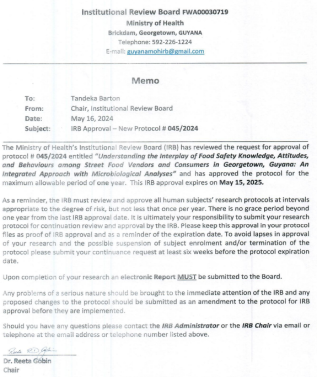
Ethical approval for this study was obtained from the relevant institutional review body (see Appendix, Figure 4). All participants were informed that their participation was voluntary and that they could withdraw at any stage without consequence. No identifying information was collected, and all data was stored securely with restricted access. The study adhered to established ethical principles governing research involving human participants.
2.5. Data Analysis
Completed questionnaires were screened and the data was entered into Microsoft Excel 2016 for further cleaning and subsequent analysis. The principal tool for analysis was the IBM SPSS Statistics software version 29. All statistical analyses involving hypothesis testing were conducted at a 5% level of significance (p < 0.05). Responses for the knowledge section were coded according to established food safety and public health principles. Correct responses were coded as 1, incorrect responses as 0, and “Don’t Know” responses were retained as a separate category to distinguish uncertainty from misinformation. For most items, a “Yes” response indicated correct knowledge. However, four items assessed common misconceptions and required reverse coding, whereby a “No” response represented correct knowledge. These were items 13 (AIDS transmission through food), 14 (equal susceptibility to food poisoning across population groups), 15 (food prepared in advance reduces contamination risk), and 18 (detergent use alone renders utensils contamination-free). Following reverse coding, all correct responses were consistently coded as 1. A total food safety knowledge score, ranging from 0 to 18, was computed for each participant by summing correct responses across the 18 items. Scores were converted to percentages and categorized to enhance interpretability and comparability with existing food safety knowledge studies: high knowledge (≥75%), moderate knowledge (50-74%), and low knowledge (<50%) .
Descriptive statistics, such as frequencies and percentages, were used to summarize participant demographics and outcomes of food safety knowledge. Overall knowledge scores were summarized using measures of central tendency and dispersion, including the mean, median, standard deviation, and range. Normality of knowledge score distributions was assessed using graphical methods and the Shapiro-Wilk test. Because the normality assumption was not met, knowledge scores were analyzed primarily categorically for inferential purposes.
Associations between categorized food safety knowledge levels (low, moderate, high) and demographic variables were examined using the Chi-square test of independence. Our analysis honored the critical assumptions of this test regarding the sample size: the expected value for each cell in the cross-tabulation must be at least 1, and no more than 20% of cells must have expected values less than 5. Violations of these assumptions are likely to reduce the reliability of chi-square estimates, limiting the validity of the conclusions that can be drawn. Furthermore, the likelihood ratio test and Fisher’s exact test were used to provide deeper insights into all cases, whether significant or not. Knowledge levels were further dichotomized into (high) and low-moderate knowledge, and odds ratios (ORs) were calculated. Furthermore, to identify demographic predictors of adequate food safety knowledge, a binary logistic regression model was fitted.
3. Results
Table 1 shows the demographic characteristics of the 104 consumers included in the study. The sample comprised 56 males (53.8%) and 48 females (46.2%), indicating a relatively balanced gender distribution. Participants represented a broad age range, with the most significant proportion in the 26-35 years group (31.7%), followed by those aged 18-25 years (25.0%) and 36-45 years (22.1%); smaller proportions were observed among respondents aged 46-55 years (14.4%), 56-60 years (5.8%), and those over 60 years (1.0%). In terms of ethnicity, nearly half of the respondents identified as African (48.1%), followed by those of Mixed ethnicity (26.9%) and East Indian (16.3%), with smaller proportions identifying as Spanish (6.7%) and Amerindian (1.9%). Educational attainment was predominantly at the secondary level (59.6%), while 32.7% of participants reported university-level education; fewer respondents reported primary education (6.7%) or nursery-level education (1.0%). Most participants (87.5%) indicated that they received their education in Guyana, while 12.5% received their education outside the country.
Table 1. Demographic characteristics of consumers included in the study.

Questionnaire Items

Options

Response n (%)

D1

Gender

Male

56 (53.8%)

Female

48 (46.2%)

D2

Age

18-25

26 (25.0%)

26-35

33 (31.7%)

36-45

23 (22.1%)

46-55

15 (14.4%)

56-60

6 (5.8%)

>60

1 (1.0%)

D3

Ethnicity

African

50 (48.1%)

Mixed

28 (26.9%)

East Indian

17 (16.3%)

Amerindians

2 (1.9%)

Spanish

7 (6.7%)

D4

Education

Nursery

1 (1.0%)

Primary

7 (6.7%)

Secondary

62 (59.6%)

University

34 (32.7%)

D5

Did you receive this education in Guyana?

No

13 (12.5%)

Yes

91 (87.5%)

Table 2 presents item-level responses to the 18 food safety knowledge questions and shows substantial variation in consumer knowledge across domains. High proportions of correct responses were observed for items related to basic hygiene and visible contamination risks, including washing hands before work (97.1%), using gloves while handling food (90.4%), recognizing that individuals with infectious skin diseases should take leave from work (88.5%), and awareness that swollen cans can contain microorganisms (71.2%). Knowledge of contamination mechanisms associated with eating and drinking in the workplace (64.4%) and the presence of microbes on the skin, nose, and mouth of healthy food handlers (68.9%) was moderately strong. In contrast, pathogen-specific knowledge was mixed, with just over half correctly identifying Salmonella as a foodborne pathogen (56.7%), fewer recognizing Staphylococcus as foodborne (43.3%), and exceptionally low awareness of hepatitis A as a foodborne pathogen, for which only 31.7% responded correctly, and 50.0% indicated uncertainty. Items assessing misconceptions and technical food safety concepts revealed notable gaps: only 33.7% correctly recognized that food prepared in advance does not reduce contamination risk, and responses regarding reheating cooked foods were divided, with 56.7% correct and 30.8% incorrect. Knowledge related to cleaning and sanitization was inconsistent, as 65.4% correctly rejected the belief that detergent alone renders utensils contamination-free. Yet only 33.7% correctly acknowledged the role of proper cleaning and sanitization, with nearly half indicating uncertainty. With respect to health outcomes and vulnerability, half of the respondents correctly identified adverse pregnancy outcomes as a possible consequence of foodborne disease, just over half correctly rejected foodborne transmission of AIDS (59.6%), and a large majority recognized that children, pregnant women, healthy adults, and older individuals are not equally at risk for food poisoning (78.8%). In general, the pattern indicates greater knowledge of visible hygiene practices and general contamination risks, alongside substantial uncertainty and misconceptions about pathogen-specific information, food preparation practices, and sanitization principles.
Table 2. Distribution of responses to food safety knowledge items among consumers.

Questionnaire Items

Response n (%)

Yes

No

Don’t Know

K1

Abortion in pregnant women can be induced by a food-borne disease.

52 (50.0%)

26 (25.0%)

26 (25.0%)

K2

Bloody diarrhea can be transmitted by food. [1 missing]

78 (75.7%)

10 (9.7%)

15 (14.6%)

K3

Swollen cans can contain microorganisms.

74 (71.2%)

12 (11.5%)

18 (17.3%)

K4

During infectious disease of the skin, it is necessary to take leave from work.

92 (88.5%)

8 (7.7%)

4 (3.8%)

K5

Eating and drinking in the work place increase the risk of food contamination.

67 (64.4%)

31 (29.8%)

6 (5.8%)

K6

Hepatitis A virus is a foodborne pathogen.

33 (31.7%)

19 (18.3%)

52 (50.0%)

K7

Microbes are in the skin, nose and mouth of healthy food handlers. [1 missing]

71 (68.9%)

9 (8.7%)

23 (22.3%)

K8

Salmonella is among the food-borne pathogens.

59 (56.7%)

8 (7.7%)

37 (35.6%)

K9

Staphylococcus is among the food-borne pathogens.

45 (43.3%)

8 (7.7%)

51 (49.0%)

K10

Influenza can be transmitted by aerosols rather than food.

73 (70.2%)

13 (12.5%)

18 (17.3%)

K11

Using gloves while handling food reduces the risk of food contamination.

94 (90.4%)

9 (8.7%)

1 (1.0%)

K12

Washing hands before work reduces the risk of food contamination.

101 (97.1%)

2 (1.9%)

1 (1.0%)

K13

AIDS can be transmitted by food.

18 (17.3%)

62 (59.6%)

24 (23.1%)

K14

Children, healthy adults, pregnant women, and older individuals are at equal risk for food poisoning.

82 (78.8%)

13 (12.5%)

9 (8.7%)

K15

Food prepared in advance reduces the risk of food contamination.

35 (33.7%)

53 (51.0%)

16 (15.4%)

K16

Proper cleaning and sanitization of utensils decreases the risk of food contamination.

95 (91.3%)

7 (6.7%)

2 (1.9%)

K17

Reheating cooked foods can contribute to food contamination.

59 (56.7%)

32 (30.8%)

13 (12.5%)

K18

Washing utensils with detergent leaves them free of contamination.

68 (65.4%)

31 (29.8%)

5 (4.8%)

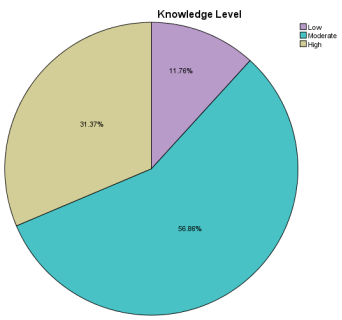
The overall knowledge score had a mean of 11.77 and a standard deviation of 2.95. Figure 1 shows the distribution of overall food safety knowledge level scores.
Figure 1. Distribution of overall food safety knowledge levels among consumers.
Based on the categorization of scores, 31.4% of consumers demonstrated high food safety knowledge, 56.9% moderate knowledge, and 11.8% low knowledge. This distribution is consistent with the item-level findings, which showed stronger performance on basic hygiene and visible contamination risks alongside weaker knowledge of technical food safety concepts and common misconceptions.
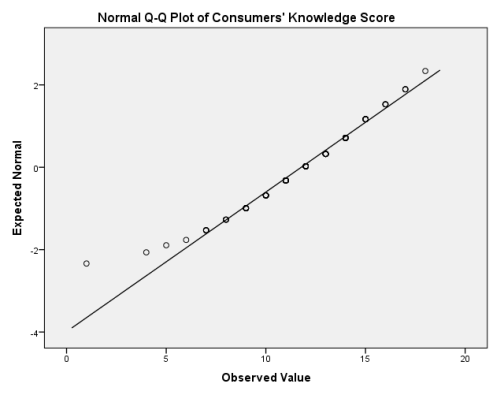
The Q-Q plot in Figure 2 shows that the distribution of these scores is close to normal. Visual inspection of the normal Q-Q plot revealed noticeable departures from the diagonal reference line, particularly at the lower and upper tails of the distribution, suggesting non-normality. This observation was confirmed by the Shapiro-Wilk test, which indicated a statistically significant departure from normality (p = 0.012). Consequently, the total knowledge score was found to be non-normally distributed, and therefore, the categorized knowledge levels were used for subsequent inferential analyses.
Figure 2. Normal Q-Q plot of the total food safety knowledge score among consumers.
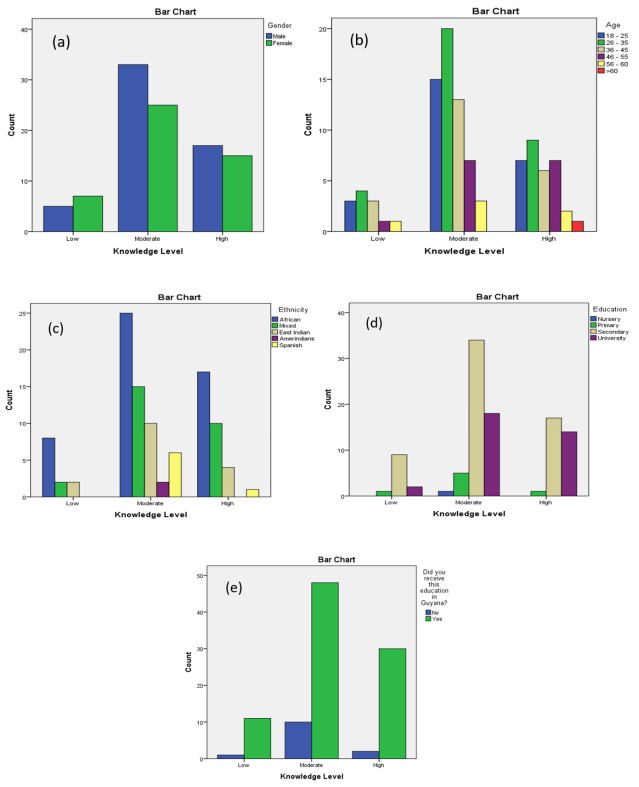
Figure 3. Distribution of food safety knowledge levels across demographic characteristics, (a) gender, (b) age, (c) ethnicity, (d) education, and (e) whether education was received in Guyana.
Bivariate associations between categorized food safety knowledge levels and selected demographic characteristics were examined using Chi-square analyses, with distributions illustrated in Figure 3. No statistically significant association was observed between food safety knowledge and gender (Pearson χ² = 0.94, df = 2, p = 0.625; likelihood ratio χ² = 0.94, df = 2, p = 0.625). Similarly, food safety knowledge did not differ significantly across age groups (Pearson χ² = 4.69, df = 10, p = 0.911; likelihood ratio χ² = 4.75, df = 10, p = 0.907), ethnic groups (Pearson χ² = 6.33, df = 8, p = 0.611; likelihood ratio χ² = 7.92, df = 8, p = 0.441), educational attainment (Pearson χ² = 4.55, df = 6, p = 0.602; likelihood ratio χ² = 5.17, df = 6, p = 0.523), or whether respondents received their education in Guyana (Pearson χ² = 2.48, df = 2, p = 0.290; likelihood ratio χ² = 2.66, df = 2, p = 0.265). Interpretation of associations involving age, ethnicity, and education was constrained by small, expected cell counts, with more than 20% of cells falling below the recommended threshold in several cross-tabulations; therefore, results were interpreted with caution. Likelihood ratio and Fisher’s exact tests were consulted in all cases and yielded conclusions consistent with the Pearson Chi-square results. Although the linear-by-linear association for education approached statistical significance (p = 0.071), this trend did not meet conventional thresholds for statistical significance at the bivariate level.
No statistically significant associations were observed between dichotomized knowledge level and gender, age group, ethnicity, or educational attainment (all p > 0.05). Odds ratios were therefore either close to unity or could not be reliably estimated due to sparse cell counts in several categories. The one demographic variable that stood out was whether education was attained in Guyana. Respondents who did not receive their education in Guyana are almost three times more likely to have high food safety knowledge compared with those educated locally (OR = 2.80, 95% CI: 0.58-13.44).
Table 3. Association between overall food safety knowledge levels (low-moderate, high) and significant knowledge items.

Knowledge item

Exp. Val. Assumption Satisfied

Pearson Chi-Square (P-value)

K1

Yes

0.001

K3

Yes

0.000

K6

Yes

0.000

K7

Yes

0.013

K8

Yes

0.003

K9

Yes

0.015

K10

Yes

0.002

K17

Yes

0.027

Relationship between overall food safety knowledge classification (high vs. low-moderate) and individual knowledge items identified several statistically significant associations. Consumers classified as having high overall food safety knowledge were significantly more likely to have provided correct responses to eight of the items as shown in Table 3. These items address serious foodborne health outcomes, indicators of microbial contamination, pathogen recognition, and food handling. In detail, high knowledge scores are significantly dependent on respondents’ awareness that foodborne disease can result in adverse pregnancy outcomes, recognition of swollen cans as indicators of microbial contamination, identification of hepatitis A, Salmonella, and Staphylococcus as foodborne pathogens, understanding that microbes may be present on healthy food handlers, correct differentiation of foodborne and non-foodborne transmission routes such as influenza, and awareness of contamination risks associated with reheating cooked foods. Across these items, respondents with high overall knowledge were also less likely to select “Don’t know” responses, indicating greater consistency and confidence in their understanding of these aspects of food safety.
The final fitted multivariable binary logistic regression model (likelihood-ratio χ² = 9.41, df = 3, p = 0.024) indicated that educational attainment was the only demographic variable that can significantly predict food safety knowledge scores. The model modestly explained (8.8% for Cox & Snell R² and 12.4% for Nagelkerke R²) the variation in food safety knowledge while correctly classifying 72.5% of the cases as either high or low-moderate. Age showed a positive but insignificant association with knowledge (adjusted OR = 1.43, p = 0.059), while gender, ethnicity, and whether education was obtained in Guyana were dropped from the final model at earlier steps. The fitted model is expressed as "logit (p)" = -3.925 + 0.853 ("Education"), indicating that higher educational attainment contributes to the likelihood of achieving high food safety knowledge among consumers. The modest explanatory power suggests that additional factors, not featured in this study, are likely to influence knowledge levels.
4. Discussion
This study provides empirical evidence on consumer food safety knowledge in Demerara-Mahaica, Guyana, addressing a documented gap in Caribbean street-food research highlighted in global scoping reviews . Overall, consumers demonstrated moderate levels of food safety knowledge, with substantial variation across specific knowledge domains. This finding is consistent with a wide body of literature from low- and middle-income settings, including Bangladesh , South Africa , Uganda , and Vietnam and China , where consumer knowledge is often uneven and domain-specific. The predominance of moderate knowledge levels observed in this study aligns with reports from Vietnam, Bangladesh, Jordan, and China, where consumers typically exhibit awareness of general hygiene practices but show weaker understanding of technical or pathogen-specific risks . Comparable patterns have also been observed among food handlers and vendors in Mauritius and Nigeria , suggesting that gaps in technical food safety knowledge are not limited to consumers but are pervasive across the informal food sector. These findings reinforce global evidence that food safety knowledge is often shaped by visible hygiene cues and public health messaging, rather than by deeper microbiological understanding .
The presence of a non-trivial proportion of respondents with low knowledge underscores the continued vulnerability of consumers to foodborne exposure, particularly in informal food environments. Similar concerns have been raised in studies from Ethiopia and Kenya, where inadequate knowledge among both vendors and consumers has been linked to increased contamination risks and unsafe food handling environments . Item-level analyses in the present study revealed statistically significant associations between overall knowledge level and correct responses to several core food safety concepts, including the role of pathogens such as Salmonella and Staphylococcus, the risks associated with reheating cooked foods, and the presence of microorganisms on healthy food handlers. Various studies have reported similar item-specific disparities among consumers, where misconceptions about pathogen transmission and food handling persist despite general awareness of hygiene practices . These findings suggest that knowledge deficits are not random, but cluster around less visible or more technical aspects of food safety, consistent with prior KAP studies . Contrary to expectations from some international studies, bivariate analyses showed no statistically significant associations between knowledge level and gender, age group, ethnicity, or education obtained in Guyana. This contrasts with findings from Vietnam and China, where education and age have been more strongly associated with food safety knowledge . However, when examined within a multivariable framework, educational attainment and age emerged as independent predictors of high food safety knowledge. This reinforces evidence from several settings that education plays a critical role in shaping consumers’ ability to interpret food safety information and recognize less obvious hazards . The inconsistency between bivariate and multivariable findings has also been observed in similar studies, suggesting that confounding and interaction effects may obscure relationships in simpler analyses. The modest explanatory power of the final logistic regression model indicates that demographic characteristics alone explain only a limited portion of variation in consumer knowledge. This finding is echoed by prior studies, which highlight the influence of contextual and behavioral factors, such as risk perception, previous exposure to foodborne illness, trust in vendors, and reliance on street foods for affordability and convenience . This supports the argument advanced in socio-ecological frameworks that knowledge is embedded within broader structural and environmental conditions .
From a public health perspective, the findings suggest that consumer education remains necessary but insufficient as a standalone intervention. While higher education levels are associated with greater knowledge, misconceptions among educated consumers. International evidence demonstrates that interventions combining consumer education with infrastructural improvements, vendor training, and regulatory oversight are more effective than isolated approaches . Studies in Bangladesh and Nigeria further highlight that improvements in infrastructure, such as access to clean water and sanitation, are critical complements to educational interventions in reducing food safety risks . In Guyana, where street foods play an essential role in food access and livelihoods, such integrated strategies are particularly relevant. Based on the findings, several practical recommendations emerge. First, consumer-focused food safety education should prioritize technical knowledge gaps identified in this study, including pathogen transmission, cross-contamination, and reheating practices. Second, public health messaging should be context-specific, delivered through community-based platforms and market-level engagement rather than relying solely on formal education channels . Third, consumer education initiatives should be implemented alongside vendor training and infrastructural support, such as access to potable water and waste management, to reduce exposure risk at multiple points in the food system . This study is subject to several limitations. The cross-sectional design precludes causal inference, and reliance on self-reported responses introduces the potential for social desirability bias , a limitation commonly reported in KAP studies . Additionally, the modest variance explained by the regression model suggests that future research should incorporate behavioral, contextual, and environmental variables, including risk perception, purchasing frequency, prior illness experience, and observed consumer behaviors. Evidence from mixed-methods studies in Africa and Asia suggests that combining quantitative and qualitative approaches can provide deeper insight into the relationship between knowledge and behavior . Mixed-methods approaches and longitudinal designs would further strengthen the understanding of how consumer knowledge translates into food safety practices in informal food environments.
5. Conclusions
This study provides empirical evidence on consumer food safety knowledge in Demerara-Mahaica, Guyana, addressing a documented gap in the Caribbean street-food safety literature. Overall, consumers demonstrated predominantly moderate levels of food safety knowledge, with notable gaps in technical and pathogen-related concepts, despite stronger awareness of general hygiene practices. These findings suggest that while basic food safety messages may be familiar, critical knowledge deficiencies persist that could elevate exposure to foodborne risks in informal food environments. Educational attainment emerged as the primary independent predictor of high food safety knowledge. However, the modest explanatory power of the multivariable model indicates that additional factors beyond basic demographics alone influence consumer knowledge. This highlights the complexity of food safety knowledge acquisition and the need to consider broader behavioral and environmental determinants.
The findings underscore the need for integrated food safety interventions that combine targeted consumer education with vendor training, infrastructural support, and regulatory oversight within the informal food sector. Future research should incorporate behavioral, environmental, and longitudinal approaches to better examine how consumer knowledge translates into safer food-handling practices and to support the development of targeted, evidence-based policy interventions in Guyana.
Abbreviations

KAP

Knowledge, Attitude, and Practice

ORs

Odds Ratio

Acknowledgments
The authors would like to thank the Government Analyst-Food and Drug Department (GA-FDD) of Guyana for their support in conducting the survey.
Author Contributions
Linda Francois: Conceptualization, Data curation, Formal Analysis, Investigation, Methodology, Project administration, Resources, Software, Visualization, Writing – original draft, Writing – review & editing
Dwayne Shorlon Renville: Formal Analysis, Investigation, Methodology, Resources, Validation, Writing – review & editing
Bunnel Bernard: Investigation, Resources, Software, Validation, Writing – review & editing
Tandeka Barton: Investigation, Methodology, Resources, Validation, Writing – review & editing
Data Availability Statement
The data is available from the corresponding author upon reasonable request.
Conflicts of Interest
The authors declare no conflicts of interest.
Appendix: IRB Approval Letter
Figure 4. Institutional Review Board (IRB) approval letter granting ethical clearance for the study.

References
[1] K. Abrahale, S. Sousa, G. Albuquerque, P. Padrão, and N. Lunet, “Street food research worldwide: a scoping review,” Journal of Human Nutrition and Dietetics, vol. 32, no. 2, pp. 152-174, Oct. 2018,
[2] Md. Khairuzzaman, F. M. Chowdhury, S. Zaman, A. Al Mamun, and Md. L. Bari, “Food Safety Challenges towards Safe, Healthy, and Nutritious Street Foods in Bangladesh,” International Journal of Food Science, vol. 2014, pp. 1-9, Apr. 2014,
[3] N. P. Steyn et al., “Nutritional contribution of street foods to the diet of people in developing countries: a systematic review,” Public Health Nutrition, vol. 17, no. 6, pp. 1363-1374, May 2013,
[4] N. P. Steyn, D. Labadarios, and J. H. Nel, “Factors which influence the consumption of street foods and fast foods in South Africa-a national survey,” Nutrition Journal, vol. 10, no. 1, Oct. 2011,
[5] B. S. Namugumya and C. Muyanja, “Contribution of street foods to the dietary needs of street food vendors in Kampala, Jinja and Masaka districts, Uganda,” Public Health Nutrition, vol. 15, no. 8, pp. 1503-1511, Oct. 2011,
[6] T. A. Tamenu Abera and M. A. Mogessie Ashenafi, “Food access vs food safety: The case of street food operation around Mexico Square, Addis Ababa, Ethiopia,” SINET: Ethiopian Journal of Science, vol. 46, no. 2, pp. 176-187, Nov. 2023,
[7] J. Hill, Z. Mchiza, T. Puoane, and N. P. Steyn, “The development of an evidence-based street food vending model within a socioecological framework: A guide for African countries,” PLOS ONE, vol. 14, no. 10, pp. 152-174, Oct. 2019,
[8] T. W. Bereda, Y. M. Emerie, M. A. Reta, and H. S. Asfaw, “Microbiological Safety of Street Vended Foods in Jigjiga City, Eastern Ethiopia,” Ethiopian Journal of Health Sciences, vol. 26, no. 2, p. 161, Mar. 2016,
[9] K. Alem, “Bacterial Load Assessment of some Food Items Sold in Street in Woldia Town, North-East Ethiopia,” Journal of Pure and Applied Microbiology, vol. 14, no. 3, pp. 1845-1854, Sep. 2020,
[10] B. J. Birgen, L. G. Njue, D. M. Kaindi, F. O. Ogutu, and J. O. Owade, “Determinants of Microbial Contamination of Street-Vended Chicken Products Sold in Nairobi County, Kenya,” International Journal of Food Science, vol. 2020, pp. 1-8, Feb. 2020,
[11] B. J. Birgen, L. G. Njue, D. M. Kaindi, and F. O. Ogutu, “Qualitative Risk Assessment of Campylobacter jejuni in Street Vended Poultry in Informal Settlements of Nairobi County,” European Journal of Nutrition & Food Safety, pp. 28-37, Nov. 2019,
[12] C. Muyanja, L. Nayiga, N. Brenda, and G. Nasinyama, “Practices, knowledge and risk factors of street food vendors in Uganda,” Food Control, vol. 22, no. 10, pp. 1551-1558, Oct. 2011,
[13] B. Huynh-Van et al., “Factors associated with food safety compliance among street food vendors in Can Tho city, Vietnam: implications for intervention activity design and implementation,” BMC Public Health, vol. 22, no. 1, Jan. 2022,
[14] J. K. Hassan and L. W. T. Fweja, “Food Hygienic Practices and Safety Measures among Street Food Vendors in Zanzibar Urban District,” eFood, vol. 1, no. 4, pp. 332-338, Feb. 2020,
[15] J. Mwove, S. Imathiu, I. Orina, and P. Karanja, “Multinomial Logistic Regression Analysis of Factors Influencing Food Safety, Hygiene Awareness and Practices Among Street Food Vendors in Kiambu County, Kenya.,” Current Research in Nutrition and Food Science Journal, vol. 8, no. 3, pp. 988-1000, Dec. 2020,
[16] L. Ma, H. Chen, H. Yan, L. Wu, and W. Zhang, “Food safety knowledge, attitudes, and behavior of street food vendors and consumers in Handan, a third tier city in China,” BMC Public Health, vol. 19, no. 1, Aug. 2019,
[17] A. T. L. Nguyen et al., “Customers’ Knowledge, Attitude, and Practices towards Food Hygiene and Safety Standards of Handlers in Food Facilities in Hanoi, Vietnam,” International Journal of Environmental Research and Public Health, vol. 15, no. 10, p. 2101, Sep. 2018,
[18] Md. H. Rahman, Md. M. Hasan, Md. K. Masud, Md. Moniruzzaman, S. Singha, and Md. S. Palash, “Exploring Consumer Perceptions and Value Addition in Street Cuisine: A Case of Kalai Ruti,” Asian journal of economics, business and accounting, vol. 24, no. 6, pp. 107-119, May 2024,
[19] T. T. A. Ngoc, N. T. M. Hang, D. K. Thanh, and L. V. Hoa, “Evaluation of microbial safety knowledge, attitude and practice of street food vendors and consumers in Can Tho City, Vietnam,” Food Research, vol. 4, no. 5, pp. 1802-1814, Jul. 2020,
[20] S. Mamun, S. Alam, M. A. Zaher, and A. O. Huq, “Food Safety Knowledge, Attitudes and Behavior of Street Food Vendors and Consumers in Dhaka City,” Bangladesh Journal of Microbiology, vol. 37, no. 2, pp. 48-51, Dec. 2020,
[21] N. A. Elsahoryi, A. Olaimat, H. Abu Shaikha, B. Tabib, and R. Holley, “Food safety knowledge, attitudes and practices (KAP) of street vendors: a cross-sectional study in Jordan,” British Food Journal, vol. 126, no. 11, pp. 3870-3887, Oct. 2024,
[22] L. A. Alhashim et al., “Food Safety Knowledge and Attitudes: A Cross-Sectional Study among Saudi Consumers from Food Trucks Owned by Productive Families,” International Journal of Environmental Research and Public Health, vol. 19, no. 7, p. 4322, Apr. 2022,
[23] O. T. Oladipo‐Adekeye and F. T. Tabit, “The Food Safety Knowledge of Street Food Vendors and the Sanitary Compliance of Their Vending facilities, Johannesburg, South Africa,” Journal of Food Safety, vol. 41, no. 4, May 2021,
[24] T. G. Nguyen Thi, K. Le Tri, T. Hoang Chi, T. Luu Quoc, and T. Hoang Minh, “Food-safety knowledge, attitudes and practices of street-vended food sellers in the city of Kontum, 2018,” Heavy metals and arsenic concentrations in water, agricultural soil, and rice in Ngan Son district, Bac Kan province, Vietnam, vol. 2, no. 3, pp. 90-97, Sep. 2019,
[25] P. J. Letuka, “Nutrition knowledge and attitudes of street food handlers in Mangaung Metro Municipality in free state, South Africa,” Environment social psychology, vol. 9, no. 5, Feb. 2024,
[26] A. H. Subratty, P. Beeharry, and M. Chan Sun, “A survey of hygiene practices among food vendors in rural areas in Mauritius,” Nutrition & Food Science, vol. 34, no. 5, pp. 203-205, Oct. 2004,
[27] O. O. Akinbule, I. H. Omonhinmin, C. A. Oladoyinbo, and A. T. Omidiran, "Food safety and hygiene practice of street food vendors in federal university of agriculture, Abeokuta", Journal of Natural Sciences Engineering and Technology, vol. 18, no. 1, pp. 176-186, Oct. 2020,
[28] R. K. Edeme and N. Nkalu C., “Operations of Street Food Vendors and Their Impact on Sustainable Life in Rural Nigeria,” American Economic & Social Review, vol. 4, no. 1, pp. 1-7, Nov. 2018,
[29] O. W. Alawode and F. T. Tabit, “An Investigation Into the Enforcement and Compliance of Food Safety Regulations at Street Food Vending Sites in Oyo State, Nigeria,” Environmental Health Insights, vol. 19, Oct. 2025,
[30] R. Tayco, V. Cañete, J. D. Bulfa, A. M. Ege, Ellah Noblefranca, and M. A. Remollo, “Assessing Food Safety Knowledge, Attitudes, and Practices of Street Food Vendors,” Journal of interdisciplinary perspectives, vol. 3, no. 7, pp. 376-387 Jun. 2025,
[31] A. B. Esteban, L. A. O, B. M, and A. T, “Food Safety and Hygienic Practices Among Street Food Vendors in Ife East Local Government Area Osun State, Nigeria,” International Journal of Research and Scientific Innovation, vol. XII, no. XV, pp. 468-477, Apr. 2025,
[32] T. Barton, M. O. Tomori, D. Renville, and L. Francois, “Food Safety Knowledge among Street Food Vendors: Case of Demerara-”, Texila Advanced Journal of Multidisciplinary Health Research, vol. 5, no. 1, May. 2025,
[33] W. N. F. Wan Nawawi, V. Ramoo, M. C. Chong, N. H. Zaini, P. L. Chui, and Z. Abdul Mulud, “The Food Safety Knowledge, Attitude and Practice of Malaysian Food Truck Vendors during the COVID-19 Pandemic,” Healthcare, vol. 10, no. 6, p. 998, May 2022,
[34] W.-L. Seow et al., “A Systematic Review on the Usability of Web-Based Applications in Advocating Consumers on Food Safety,” Foods, vol. 11, no. 1, p. 115, Jan. 2022,
[35] T. M. Osaili, B. A. Obeidat, D. O. Abu Jamous, and H. A. Bawadi, “Food safety knowledge and practices among college female students in north of Jordan,” Food Control, vol. 22, no. 2, pp. 269-276, Feb. 2011,
[36] J. Beaudette and T. Koch, “Restaurant Perspectives on the Effects of Point-of-Sale Tip Recommendations on Consumer Patronage,” Journal of Student Research, vol. 12, no. 4, Nov. 2023,
[37] M. L. McHugh, “The Chi-square Test of Independence,” Biochemia Medica, vol. 23, no. 2, pp. 143-149, Jun. 2013,
[38] N. W. Van Hise, R. M. Petrak, K. Shah, M. Diaz, V. Chundi, and M. Redell, "Oritavancin versus daptomycin for osteomyelitis treatment after surgical debridement", Infectious Diseases and Therapy, vol. 13, no. 3, p. 535-547, Feb. 2024,
[39] T. E. S. Charlesworth, M. Navon, Y. Rabinovich, N. Lofaro, and B. Kurdi, “The project implicit international dataset: Measuring implicit and explicit social group attitudes and stereotypes across 34 countries (2009-2019),” Behavior Research Methods, vol. 55, no. 3, pp. 1413-1440, Jun. 2022,
Cite This Article
  • APA Style

    Francois, L., Renville, D. S., Bernard, B., Barton, T. (2026). Statistical Assessment of Food Safety Knowledge Among Consumers in Demerara-Mahaica, Guyana. Science Journal of Public Health, 14(2), 80-91. https://doi.org/10.11648/j.sjph.20261402.14

    Copy | Download

    ACS Style

    Francois, L.; Renville, D. S.; Bernard, B.; Barton, T. Statistical Assessment of Food Safety Knowledge Among Consumers in Demerara-Mahaica, Guyana. Sci. J. Public Health 2026, 14(2), 80-91. doi: 10.11648/j.sjph.20261402.14

    Copy | Download

    AMA Style

    Francois L, Renville DS, Bernard B, Barton T. Statistical Assessment of Food Safety Knowledge Among Consumers in Demerara-Mahaica, Guyana. Sci J Public Health. 2026;14(2):80-91. doi: 10.11648/j.sjph.20261402.14

    Copy | Download

  • @article{10.11648/j.sjph.20261402.14,
      author = {Linda Francois and Dwayne Shorlon Renville and Bunnel Bernard and Tandeka Barton},
      title = {Statistical Assessment of Food Safety Knowledge Among Consumers in Demerara-Mahaica, Guyana},
      journal = {Science Journal of Public Health},
      volume = {14},
      number = {2},
      pages = {80-91},
      doi = {10.11648/j.sjph.20261402.14},
      url = {https://doi.org/10.11648/j.sjph.20261402.14},
      eprint = {https://article.sciencepublishinggroup.com/pdf/10.11648.j.sjph.20261402.14},
      abstract = {Street foods constitute an essential component of urban food access in Guyana. Yet, empirical evidence on consumer food safety knowledge remains scarce, with existing research focused mainly on street food vendors. This study assessed consumer food safety knowledge in Demerara-Mahaica, Guyana, and examined demographic factors associated with high knowledge. A cross-sectional survey was conducted among 104 consumers using a structured questionnaire comprising demographic characteristics and 18 food safety knowledge items. Knowledge scores were derived from correct responses and categorized into low, moderate, and high levels. Descriptive analyses summarized overall and item-level knowledge, while Chi-square tests and odds ratios examined associations between knowledge and demographic variables. A multivariable binary logistic regression model was fitted to identify independent predictors of high food safety knowledge. Overall, most consumers demonstrated moderate food safety knowledge, with persistent deficiencies in technical and pathogen-related concepts despite relatively strong awareness of general hygiene practices. Item-level analyses showed significant associations between overall knowledge classification and understanding of microbial contamination, foodborne pathogens, reheating risks, and adverse health outcomes linked to foodborne disease. Bivariate analyses revealed no statistically significant associations between knowledge level and gender, age group, ethnicity, or place of education. In the multivariable model, educational attainment emerged as the only statistically significant independent predictor of high food safety knowledge (adjusted OR = 2.35), while age showed a positive but borderline association. The modest explanatory power of the model (8.8%, Cox & Snell R², and 12.4% Nagelkerke R²) suggests that factors beyond basic demographics alone shape consumer food safety knowledge. These findings indicate that improving consumer food safety in Guyana will require targeted, context-specific education to address technical knowledge gaps, implemented alongside vendor training, infrastructure support, and regulatory measures within informal food systems.},
     year = {2026}
    }
    

    Copy | Download

  • TY  - JOUR
    T1  - Statistical Assessment of Food Safety Knowledge Among Consumers in Demerara-Mahaica, Guyana
    AU  - Linda Francois
    AU  - Dwayne Shorlon Renville
    AU  - Bunnel Bernard
    AU  - Tandeka Barton
    Y1  - 2026/04/02
    PY  - 2026
    N1  - https://doi.org/10.11648/j.sjph.20261402.14
    DO  - 10.11648/j.sjph.20261402.14
    T2  - Science Journal of Public Health
    JF  - Science Journal of Public Health
    JO  - Science Journal of Public Health
    SP  - 80
    EP  - 91
    PB  - Science Publishing Group
    SN  - 2328-7950
    UR  - https://doi.org/10.11648/j.sjph.20261402.14
    AB  - Street foods constitute an essential component of urban food access in Guyana. Yet, empirical evidence on consumer food safety knowledge remains scarce, with existing research focused mainly on street food vendors. This study assessed consumer food safety knowledge in Demerara-Mahaica, Guyana, and examined demographic factors associated with high knowledge. A cross-sectional survey was conducted among 104 consumers using a structured questionnaire comprising demographic characteristics and 18 food safety knowledge items. Knowledge scores were derived from correct responses and categorized into low, moderate, and high levels. Descriptive analyses summarized overall and item-level knowledge, while Chi-square tests and odds ratios examined associations between knowledge and demographic variables. A multivariable binary logistic regression model was fitted to identify independent predictors of high food safety knowledge. Overall, most consumers demonstrated moderate food safety knowledge, with persistent deficiencies in technical and pathogen-related concepts despite relatively strong awareness of general hygiene practices. Item-level analyses showed significant associations between overall knowledge classification and understanding of microbial contamination, foodborne pathogens, reheating risks, and adverse health outcomes linked to foodborne disease. Bivariate analyses revealed no statistically significant associations between knowledge level and gender, age group, ethnicity, or place of education. In the multivariable model, educational attainment emerged as the only statistically significant independent predictor of high food safety knowledge (adjusted OR = 2.35), while age showed a positive but borderline association. The modest explanatory power of the model (8.8%, Cox & Snell R², and 12.4% Nagelkerke R²) suggests that factors beyond basic demographics alone shape consumer food safety knowledge. These findings indicate that improving consumer food safety in Guyana will require targeted, context-specific education to address technical knowledge gaps, implemented alongside vendor training, infrastructure support, and regulatory measures within informal food systems.
    VL  - 14
    IS  - 2
    ER  - 

    Copy | Download

Author Information