Research Article | | Peer-Reviewed

Water, Sanitation, and Hygiene (WASH) Practices and Associated Factors Among Primary School Students

Received: 2 March 2026     Accepted: 18 March 2026     Published: 25 April 2026
Views:       Downloads:
Abstract

Water sanitation and hygiene practice are important aspect of Environmental and Public Health in disease prevention and control, particularly water and sanitation related diseases. Water serves as an important medium through which many illnesses are spread in the human population. To investigate water sanitation and hygiene practices in selected primary schools of Bule Hora Town. Observational checklists and questionnaires were used in an across-sectional study that used quantitative data collection techniques. Source population was four primary schools students in Bule Hora Town. The sample size of primary schools students and teachers were calculated to be 150. Students' knowledge, attitudes, and hygiene practices concerning WASH were evaluated using a systematic and pre-tested questionnaire, and the state of WASH was determined using an observational check list. SPSS was used to examine the data. There was a frequency table. Odd ratios (OR) and 95% confidence interval was calculated by using SPSS software. Out of four primary schools, two (50%) primary schools were classified as having good WASH status. The SPSS of all independent variables demonstrated that the kind of the pupils at the school in (COR=1.882, 95%CI= (1.270-2.587)), understanding the significance of using the restroom (COR= 2.018, 95%CI= (1.314-3.711)), attitude toward open defecation encourages the spread of pathogens (COR=1.527, 95%CI= (1.342-2.771)). The results of this study demonstrated that the types of schools, knowledge, and attitudes were related to WASH practices. The majority of elementary schools had inadequate WASH conditions, and the majority of the pupils practiced poor WASH habits.

Published in Science Journal of Public Health (Volume 14, Issue 2)
DOI 10.11648/j.sjph.20261402.17
Page(s) 114-128
Creative Commons

This is an Open Access article, distributed under the terms of the Creative Commons Attribution 4.0 International License (http://creativecommons.org/licenses/by/4.0/), which permits unrestricted use, distribution and reproduction in any medium or format, provided the original work is properly cited.

Copyright

Copyright © The Author(s), 2026. Published by Science Publishing Group

Keywords

Children, Disease, Health, WASH

1. Introduction
Environmental public health relies heavily on water sanitation and hygiene practices, especially when it comes to preventing and controlling diseases associated with water and sanitation. In the human population, water serves as a major conduit for the spread of numerous diseases. It cannot be stressed how important it is to human existence, particularly in terms of preserving life and improving health. Because water, sanitation, and hygiene have a significant impact on our health and general well-being, it is crucial to understand how these concerns are linked to life. Additionally, the United Nations recognizes these components as essential human rights .
The United Nations' Millennium Development Goals (MDGs), which sought to promote environmental sustainability by halving the number of people lacking sustainable access to safe drinking water and basic sanitation, included water sanitation and hygiene practices as a global concern. Disease transmission, as well as mortality and morbidity rates, were expected to decline as the percentage of the population using better sources of drinking water and improved sanitation facilities increased .
Hand washing is the process of cleaning hands with water and simple or antimicrobial soap in order to get rid of dirt, organic materials, and other pathogenic organisms. One of the best and least expensive ways to prevent infectious infections is to wash your hands with soap. 14 million children under five die each year from diarrhea and pneumonia . By reducing mortality from acute respiratory infections by approximately 25% and deaths from diarrhea by nearly half, this straightforward behavior can save lives. In addition to improving people's health, hand washing with soap lowers barriers to economic opportunity, fosters community development, and enables children to study and grow .
The CDC emphasizes that proper handwashing is essential for protecting individuals from illness. It should be practiced at key moments before, during, and after activities such as preparing or consuming food, treating injuries, caring for the sick, using the toilet, and handling animals. This simple practice is one of the most effective ways to prevent the spread of germs, which can easily pass from person to person and circulate within communities .
Communicable diseases contribute substantially to the global burden of illness . They account for approximately 62% of deaths in Africa and 31% in Southeast Asia . Inadequate water supply and sanitation place a heavy strain on both households and healthcare systems, with health-related costs estimated at around US$340 million for affected households and US$7 billion globally for national systems. Poor households are disproportionately impacted . The prevalence of these diseases is strongly linked to poverty, unsanitary environments, and limited access to healthcare services . In many developing countries, lack of safe drinking water, poor sanitation, and insufficient hygiene practices significantly increase the incidence of communicable diseases, including diarrheal illnesses, intestinal parasites, and respiratory infections. Notably, about 88% of diarrheal diseases are associated with unsafe water, inadequate sanitation, and poor hygiene practices .
Schools with adequate water, sanitation and hygiene (WASH) facilities have: reliable water system that provides safe and sufficient water, especially for hand-washing and drinking; sufficient number of toilets for students and teachers that are private, safe, clean, and culturally and gender appropriate; water-use and hand-washing facilities, including some close to toilets; and sustained hygiene promotion . Facilities should cater to all, including small children, girls of menstruation age, and children with disabilities. WASH conditions of schools in many low-income countries, however, are inadequate with associated detrimental effects on health and school attendance . An evaluation by UNICEF . found that in schools with low-income countries, only 51% of schools had access to adequate water sources and only 45% had adequate sanitation.
Access to safe water, sanitation, and hygiene (WASH) facilities is considered a basic human necessity for survival and well-being . Without these basic needs, the health conditions of millions of people especially children are at risk . However, 2.3 billion and 844 million people across the globe lack access to basic drinking water and sanitation facilities, respectively , causing 842,000 deaths every year , which is undoubtedly a major public health concern. WASH services are considered means of contacting and at the same time preventing diseases . It has been estimated that overall 9% of the global burden of disease could be prevented through improvement in adequate WASH facilities . Children are one of the most vulnerable groups affected by lack of water, sanitation, and hygiene facilities . In developing countries, the high mortality rate resulting from diarrheal among children under the age of five was majorly due to WASH challenges .
The consequences of poor water, sanitation and hygiene (WASH) on the primary education system go beyond the obvious health impact attributable to the WASH disease burden in the form of gastrointestinal infections. WHO has recently stipulated five positive effects of water supply, sanitation and hygiene in schools, namely: the disease burden among children, staff and their families is reduced, healthy children in healthy environments learn more effectively, there can be greater gender equity inaccess to education and meeting hygiene-related needs, educational opportunities are created to promote safe environments at home and in the community and School children can learn and practice life-long positive hygiene behaviors . Poor access to safe drinking water and inadequate sanitation impacts on learning and it also provides suitable conditions for the transmission of certain contagious infections and intestinal helminthes infections to school children . Schools with poor water, sanitation and hygiene conditions, and intense levels of person-to-person contact are high-risk environments for children and staff, and exacerbate children‘s particular susceptibility to environmental health hazards .
The CDC‘s recommendation of early closure of schools as a community mitigation measure in the event of a severe pandemic is a case in point. The extent to which schools embody effective hubs of faecal-oral disease transmission is a function of their level of adequate WASH facilities . From a public health perspective, the lack of access to water and sanitation infrastructure is disconcerting. Several studies have documented the significant positive effect of water and sanitation on reducing child diarrhoea. Moreover, improved access to water and sanitation has been shown to lower the health risks related to schistosomiasis, trachoma, intestinal helminthes and other water borne diseases. In addition, improved access to water and sanitation is likely to reduce the burden of disease related to other major health issues by reducing the average stress level for the immune system, and thus strengthening the immune response to new infections . This study examines hygiene employed in public primary schools and whether the approaches influence hygiene practices amongst pupils in public primary schools in Bule hora town.
Unsafe drinking water, inadequate sanitation, and poor hygiene practices remain major public health concerns in Ethiopia and are key contributors to diarrheal diseases and other communicable infections . Repeated diarrheal episodes and parasitic infections can impair children’s physical growth, cognitive development, and school performance . Although many WASH-related diseases are preventable, coverage of safe water supply and sanitation services in Ethiopia remains low, even by sub-Saharan African standards. National reports further indicate that only a small proportion of the population consistently follows the safe drinking water chain, and a large share of the country’s disease burden is attributed to poor water, sanitation, and hygiene conditions .
Schools are critical settings for promoting healthy behaviors; however, many primary schools face challenges such as inadequate water supply, insufficient sanitation facilities, and limited hygiene education. Overcrowding and poor infrastructure further increase the risk of disease transmission among students. Since schoolchildren are particularly vulnerable to infection and can contribute to the spread of communicable diseases within their communities, understanding their WASH practices and related health risks is essential. Therefore, this study aimed to assess water, sanitation, and hygiene practices and associated health conditions among primary school students.
2. Materials and Methods
2.1. Description of the Study Area
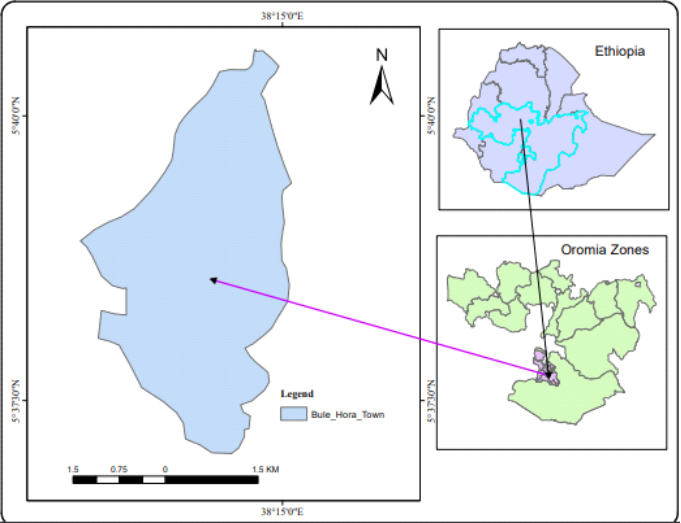
This study was conducted in Bule Hora town, West Guji Zone of Oromia regional state. The town lies between 5026’-5052’N latitude and 37056’-38052E longitude on the paved of Addis Ababa Moyale highway and the town is far away from Addis Ababa about 476 Km to the southern part of the country. The Bule Hora has 39 kebeles of which Bule Hora town is one woreda of zone. The total area of the town is about 420,754 hectares. It receives an annual rainfall ranging from 750-1500 mm and the annual mean temperature ranges between 15-25. The altitude of the town range between 500 and 2200 meters above sea level. The total population of the woreda is 265877 out of which the male and female accounted for 131,039 (49%) and 134838 (51%).
Figure 1. Map of the study area.
2.2. Study Design
Descriptive survey design was used that aimed to systematically describe a population, situation or phenomenon. Hence, facts and opinions of the study participants on Water, Sanitation and Hygiene (WASH) related disease among school children in Bule Hora town was examined using appropriate data collection tools viz. questionnaires and interviews.
2.3. Variables
2.3.1. Dependent Variables
The dependent variable in this study was: WASH related morbidity among school going children in Bule Hora town.
2.3.2. Independent Variables
The independent variable in this study was classified as; the level of WASH awareness, hygiene and sanitation practices and institutional factors (Availability of toilet facilities, reliable safe water supply, support and cooperation from teachers, guardians and peers and availability of hand washing agents).
2.4. Study Population
The study population included students, and teacher, selected from primary schools in the Bule Hora town. For confidential reasons, the names of the schools are not disclosed in the study. According to Colford , a population is a well-defined set of people, services, elements, and events, groups of things or households that are being investigated. This definition ensures that population of interest is homogeneous. The researcher was targeted Bule Hora town as the target population.
2.5. Sample Size Determination and Sampling Technique
In Bule Hora town, there are six private schools and three public schools. Hence, four schools (two private schools) and (two government schools) were selected randomly. The total number of students and teachers were obtained from the sample schools. Based on the total number of students and teachers at each selected schools, the sample size of the study participants (students and teachers) was determined usingYemaneh formula :
n=N1+Ne2
Where: n = Sample size, N= Population size and e = margin of error (0.05%).
n=2401+2400.052
n = 150
After the sample size is determined using the above formula, individual respondents were identified using systematic random sampling technique.
2.6. Data Collection
The data collection tool for the study was semi-structured interview and field observation. Hence, two different types of questionnaires were developed for student’s teachers and students parents. The prepared questionnaires were pre-tested in order to validate appropriateness. Field observation was carried out in order to collect data about students’ hand washing practice.
2.6.1. Audit of Water and Sanitation Facilities
An audit of water and sanitation facilities was conducted at each sample school that includes the number/condition of toilets, water sources and availability, hand washing facilities, and waste disposal. Teachers were also given questionnaire to fill about the overall sanitation facilities and practice in the school.
2.6.2. Observation of Student Handwashing
Observation of students’ hand washing following latrine use at each school was conducted. Teachers and principals were not told about the observation schedule in advance in order to avoid any biases during the study. The researcher unobtrusively observed whether, and how, students cleaned their hands after they left the toilet. For each observation, the materials used to clean hands (water, soap, and sanitizer) and students’ gender was recorded. A total of 100 observations were recorded at each school.
2.6.3. Student Survey of Hygiene Knowledge, Behaviours, and Diarrhoea Incidence
Student surveys were conducted with all children present at school on the day of data collection. In each classroom, students were provided with a questionnaire survey (translated into afan Oromo). The researcher systematically explained each question to the sample students. The survey was collect data on self-reported hygiene knowledge and behaviours as well as the presence of diarrhoea and diarrhoea-related school absence in previous seven days. The WHO case definition of diarrhoea was used to define diarrhoea (three or more loose/watery stools in 24 h).
2.6.4. Household Survey of Knowledge and Diarrhoea Incidence
A survey was conducted in parents of students attending schools. All students present on the day of the student survey were provided with a questionnaire (translated into afan Oromo) to give to their parents. The survey consisted of household demographic information, information about household water and sanitation facilities, information about hygiene behaviors among household members, cases of diarrhea, and so on.
2.7. Data Analysis
The data collected was organized and coded. Quantitative data was analyzed using Statistical Package for Social Sciences (SPSS) version 23. SPSS version 23 was used to establish the relationship between the dependent variable and a list of explanatory variables. Frequencies, percentages, mean and standard deviations were analyzed using descriptive statistics. Qualitative data was transcribed and analyzed using content analysis.
3. Results and Discussions
3.1. Characteristics of the Sampled Schools and Respondent
The goal of the study was to evaluate the state of WaSH services in four primary schools in Bule hora town that were selected from a sample of 50% private schools and 50% government schools. 10500 pupils attended the sampled schools, of which 54.2% were men and 45.2% were women. The total number of employees in the studied institutions was 645; with men making up 58.5% of that number and 41.5% were women. Three (75%) and one (25%) of the four school directors who responded were men, and woman respectively. Approximately from studied schools (four schools) 50% of schools lacked a budget, and 25% lacked a plan for maintaining their school WaSH facilities (Table 1).
Table 1. Details the sociodemographics of the study participants in Bule hora town's elementary schools, December, 2022 (n=150).

Socio-demographic Variables

Level

Frequency

Percent (%)

Students‘Gender

Male

80

53.33

Female

70

46.67

Number of student by school type

Private

75

50

Public

75

50

Educational status of Students

Grade seven

80

53.33

Grade eight

70

46.67

3.2. Primary Schools WASH Condition
Out of four primary schools, two (50%) had high WASH status of which one (25%) was a public school and one (25%) was a private school and two (50%) had bad WASH status of which one (25%) was a public school and one (25%) was a private school. 75 (or 50%) of the total study participants attended schools with good WASH status, and 75 (or 50%) attended schools with poor WASH quality.
All four (100%) primary schools had fencing, were in poor physical condition, and had water points more than five minutes' worth of walking from the class rooms. Water point to student ratio is 1: 109. Yet, the national guideline recommends a minimum of 1: 100 .
Just two (50%) of the primary schools had operable water fountains and enough safe drinking water. Out of four elementary schools, two (50%) had hand washing stations located about eight meters from the restroom. Out of these four, 50% of primary schools had working hand washing stations without soap, and the student-to-hand washing station ratio is 1: 120. Yet, a national regulation recommends one washing facility for every 100 students as a minimum (Table 2).
In three (75%) primary schools, simple pit latrines were the predominant method of handling human waste. Among these, two (50%) primary schools had toilets located less than 50 meters from the classroom, whereas only one (25%) primary school had flush toilets nearby.
In general, two (50%) of the primary schools had clean restrooms, and two (50%) of the schools had restrooms with separate bathrooms for boys and girls. One toilet seat per 109 students is the ratio in restrooms. National regulations, however, provide for one female restroom for every 25 to 30 girls and one male restroom including a urinal for every 50 boys . Just one (25%) of the four primary schools correctly disposed of solid waste, keeping both their interior and outside spaces free of trash. Only two (50%) of the four primary schools stated that they provided children with hygiene education (Table 2).
Table 2. Status of WASH among primary schools in Bule hora town December, 2022 (n=4).

Status of WASH in primaryschools

Level

Frequency

Percent

Availability enough safe water to drink

yes

2

50

No

2

50

Within ten minutes' round trip from the classroom are functional drinking water stations.

Yes

2

50

No

2

50

Sources of water for drinking are well covered

Yes

2

50

No

2

50

water source that is child-safe (no slippery cover, sluggish water, wastes, flood etc. around well)

Yes

3

75

No

1

25

Schools provide lessons in hygiene

yes

2

50

No

2

50

clean school courtyard/play grounds

Yes

1

25

No

3

75

Organize solid wastes properly

Yes

1

25

No

3

75

enough water supply available in all sinks for hand washing

Yes

1

25

No

3

75

Helpful facilities for hand washing

Yes

3

75

No

1

25

restrooms with separate sinks for men and women

Yes

1

25

No

3

75

10 meters or less separate hand washing stations from toilets

Yes

3

75

No

1

25

Availability hand washing facilities

Yes

2

50

No

2

50

Clean toilet

Yes

1

25

No

3

75

Toilets with door

Yes

1

25

No

3

75

toilets with less odor

Yes

1

25

No

3

75

Suitable toilet bowl size

Yes

3

75

No

1

25

Insects present in latrine

Yes

3

75

No

1

25

Toilet distance from class room

≥ 50m

1

25

≤ 50m

3

75

Functional toilet by type

Flush toilet

1

25

Simple latrine

3

75

Status category WASH

Good

1

25

Poor

3

75

3.3. Knowledge, Attitude and Practice of Student towards WASH
3.3.1. Knowledge of Student Towards WASH
Out of 150 study participants, 120 (80%) were classified as having high understanding of WASH, and 30 (20%) as having low knowledge (Table 3). 130 students (86.67%) said that engaging in hygienic practices helps to lower the prevalence of diseases linked to WASH. 80 (53.33%) of the students said that treating water to make it safe for drinking is crucial, while 90 (60%) said that using safe water is vital for preventing various WASH-related diseases. 85 (56.67%) of the students said that drinking water should never be touched by dirty hands.
Seventy (46.67%) of the students said that using the restroom properly is preferable to taking diarrhea medicine, and 65 (43.33%) said that using the restroom is helpful for preventing several WASH-related diseases (Table 3). A total of 125 students (83.33%) stated that hand washing is crucial for preventing some diseases associated with WASH. In terms of illness prevention, 110 students (74.4%) said that washing hands with soap is preferable to using just water, while 135 students (90%) said that cleaning hands is crucial before eating after eating, hand washing is crucial (reported by 140 students, or 93.33%), and after using the restroom, hand washing is crucial (reported by 125 students, or 83.33%) (Table 3).
Table 3. Students in Bule hora's primary schools are aware about WASH November, 2022 (n= 150).

Variable

Response

Frequency

Percent (%)

Certain WASH-related diseases must be prevented by using the restroom.

Yes

90

60

No

60

40

Using restrooms properly is preferable to taking diarrheal medication.

Yes

65

43.33

No

85

56.67

Hand washing is necessary to avoid certain WASH-related

Yes

132

88.00

No

18

12.00

Before to eating, it's crucial to wash your hands.

Yes

138

92.00

No

12

8.00

It's crucial to wash your hands after using the restroom.

Yes

140

93.33

No

10

6.67

In terms of sickness prevention, hand washing with soap is superior to simply using water.

Yes

120

80.00

No

30

20.00

Using hygienic practices lowers the prevalence of diseases linked to WASH.

Yes

130

86.67

No

20

13.33

Several WASH-related infections can be prevented by using protected water sources.

Yes

90

60.00

No

60

40.00

It is crucial to treat water in whatever way possible to make it safer to consume.

Yes

85

56.67

No

65

43.33

Never touch drinking water with a dirty hand.

Yes

85

56.67

No

65

43.33

understanding categories

Good

130

86.67

Poor

20

13.33

3.3.2. Students’ Attitude Towards WASH
Out of the total study participants, 120 students (80%) were rated as having a positive attitude toward WASH, and 30 students (20%) were rated as having a negative attitude toward WASH (Table 4). One hundred and fifteen students (76.67%) said that water containers need to be cleaned and covered, and 125 students (83.33%) said that boiling water kills bacteria. 95 students (63.33%) said that human feces contain germs, 85 students (56.67%) said that open defecation causes germs to spread, and 70 students (46.67%) said that germs can be transmitted from toilets directly, indirectly, via contaminated hands, or through insects. 95 students (63.33%) said that human feces contain germs, 85 students (56.67%) said that open defecation causes germs to spread, and 70 students (46.67%) said that germs can be transmitted from toilets directly, indirectly, via contaminated hands, or through insects (Table 4).
One hundred and twenty (80%) of the students reported that playing near waste disposal sites is hazardous to health, 138 (92.0%) reported that eating poorly prepared or washed food can have an adverse effect on health, and 110 (73.33%) reported that eating food from vending machines can cause diseases, 135 (90.0%) reported that fruits and vegetables that look clean needs to be washed before eating, and 110 (74.17%) of the student reported that drinking with shared cup can be transmitting diseases (Table 4).
Table 4. Primary school pupils' attitudes toward WASH in Bule Hora, southern Ethiopia January, 2023 (n= 150).

Variable

response

Frequency

%

Water container has to be covered and cleaned.

Yes

115

76.67

No

35

23.33

Water that has been heated to a boil will eliminate any bacteria.

Yes

125

83.33

No

25

16.67

Germs are found in human feces.

Yes

95

63.33

No

55

36.67

Germs may spread as a result of open defecation.

Yes

85

56.67

No

65

43.33

Insects, dirty hands, direct touch with them, or indirect contact with them can all spread germs from restrooms.

Yes

72

48.00

No

78

52.00

After defecating, wash your hands immediately to avoid spreading bacteria.

Yes

109

72.67

No

41

27.33

After defecating, wash your hands immediately to avoid spreading bacteria.

Yes

122

81.33

No

28

18.67

Health risks can result from playing near a garbage disposal site.

Yes

120

80

No

30

20

Health is impacted by eating poorly cooked or cleaned food

Yes

137

91.33

No

10

8.67

Eating food sold on street can leads to diseases

Yes

107

71.33

No

43

28.67

Before eating, wash any fruits or vegetables that appear to be in good condition.

Yes

140

93.33

No

10

6.67

Drinking with shared cup can be transmitting infections

Yes

110

73.33

No

40

26.67

Categories of attitudes

Yes

Good

140

No

Poor

10

3.3.3. Student’s Practice Towards WASH
95 (63.33%) of the 150 students were categorized as having good practice toward WASH, while 55 (36.67%) of the students were categorized as having poor practice toward WASH (Table 5). Among the school children, 58 (38.67%) said they never touched drinking water with dirty hands, 60 (40.0%) said they had ever cleaned and covered a water container, and 55 (36.67%) said they frequently use the restroom, 52 (34.67%) reported that boil their drinking water and 45 (30.0%) reported that add bleach to their drinking water but only 82 (54.67%) reported that usually use safe water (Table 5).
48 (32.0%) of the students said they always wash their hands after using the restroom, 52 (34.67%) said they always wash their hands after eating, and 55 (36.67%) said they always wash their hands before eating. Of the students, 58 (38.67%) said they never play near garbage cans, 75 (50%) said they never eat street food, 75 (50%) said they never eat fruits that appear to be clean but haven't been washed, and 60 (40.8%) said they never drink water from a shared cup or bottle (Table 5).
45 students (30.0%) said they always brushed their teeth, 111 (74.0%) said they took a bath at least once per week, 109 (72.67%) said they washed their clothes, and 104 (69.33%) said they cleaned their hair at least once per week. Only 50 of the study's participants (or 33.33%) claimed to have received training in sanitation and hygiene (Table 5).
Table 5. WASH habits of pupils in southern Ethiopia's Bule Hora primary schools, November, 2022 (n= 150).

Variable

response

Frequency

Percent

Typically use the bathroom

Yes

55

36.67

No

95

63.33

Only use safe water

Yes

60

40.00

No

90

60.00

sanitize and cover the water container

Yes

60

40.00

No

90

60.00

Never touched drinking water by dirty hand

Yes

58

38.67

No

92

61.33

Boil water for drinking

Yes

52

34.67

No

98

65.33

Add bleach to the water for drinking.

Yes

45

30.00

No

105

70.00

Always wash hands before eating

Yes

52

34.67

No

98

65.33

Wash your hands immediately after using the restroom.

Yes

48

32.00

No

102

68

Never go playing near a trash facility.

Yes

58

38.67

No

92

61.33

Never eat un cooked/un washed food

Yes

75

50.00

No

75

50.00

Never eat food sold on street

Yes

75

50.00

No

75

50.00

Never share a cup or bottle of alcohol.

Yes

60

40.80

No

90

59.20

Always brush your teeth

Yes

45

30.00

No

105

70.00

Take bath at least once a week

Yes

111

74.00

No

39

26.00

minimum once weekly hair cleaning

Yes

104

69.33

No

46

30.67

types of practice

Good

95

63.33

Poor

55

36.67

3.4. Student WASH Practices: Contributing Factors
Primarily variables that had p-value <0.05 at bivariate analysis were used to develop SPSS in order to identify factors which more strongly linked with the WASH practice result. Students' knowledge and attitudes were found to be substantially correlated with WASH practice on SPSS types of schools.
The Statistical Package for Social Sciences (SPSS) of all independent variables demonstrated that the kind of the pupils at the school‘s learn in (COR=1.882,95%CI=(1.270-2.587)), understanding the significance of using the restroom (COR= 2.018, 95%CI=(1.314-3.711)), attitude toward open defecation encourages the spread of pathogens (COR=1.527, 95%CI=(1.342-2.771)), attitude that pathogens are present in human feces (COR=1.726, 95%CI = (1.234-2.413)) and attitude on drinking with sharing cup can be transmitting infections (COR=1.500, 95%CI =(1.036-2.172)) and Water, Sanitation, and Hygiene were discovered to be significantly correlated (WASH) practice (Table 6).
In multinomial SPSS was used to detected types of schools, understanding of the significance of using the restroom as well as attitudes toward how open defecation spreads germs and how drinking from sharing cups can spread diseases are taught and It was shown that there is a substantial correlation between human feces and WASH practices. Compared to students who attend public schools, private school students are 2.545 times more likely to practice proper WASH (AOR=2.545, 95%CI=(1.208-3.575)). When compared to students who lack understanding, individuals who understand the value of using the restroom often are 3.177 times more likely to follow good WASH habits (AOR=3.177, 95%CI=(1.440-4.776)). Pupils with this belief are 1.361 times more likely to practice good WASH than those without it (AOR=1.361, 95%CI= (1.075-2.235)). Students who thought that open defecation spreads bacteria are 1.726 times more likely to have good WASH practice (AOR=1.726,95%CI=(1.771-2.865)), Pupils who believed that sharing a cup increases the risk of contracting infections were 1.68 times more likely to practice good WASH (AOR=1.680,95%CI=(1.072-2.407)) (Table 6).
Table 6. Factors influencing how pupils in Bule Hora's primary schools practice hygiene, Ethiopia, November 2022 (n=150).

Variables

WASH practice

COR (95%CI)

AOR (95%CI)

Good

poor

Type of school

Private

110 (73.33%)

40 (26.67%)

1.882 (1.270-2.587)

2.545 (1.208-3.575)**

Public

90 (60%)

60 (40%)

cleansing your hands before eating

Yes

95 (63.33%)

55 (36.67%)

1.672 (0.983-2.844)

2.234 (0.998-3.340)

No

76 (50.67%)

74 (49.33%)

Hand washing after defecation

Yes

93 (62%)

57 (38%)

0.952 (0.621-1.459)

2.034 (0.987-3.890)

No

95 (63.33%

55 (36.67%)

Water container has to be covered and cleaned.

Yes

96 (64%)

54 (36%)

1.075 (0.802-1.441)

2.491 (0.954-4.447)

No

92 (61.33%)

58 (38.67%)

Importance of using the restroom

Yes

86 (57.33%)

66 (42.67%)

2.018 (1.314-3.711)

3.277 (1.540-4.976)*

No

100 (66.67%)

50 (33.33%)

Warm water kills microbes

Yes

95 (63.33%)

55 (36.67%)

1.922 (1.178-3.134)

3.524 (0.814-4.254)

No

70 (46.67%)

80 (53.33%)

In public restrooms, pathogens can spread.

Yes

90 (60%)

60 (40%)

1.527 (1.342-2.771)

1.926 (1.971-2.765)*

No

100 (66.67%)

50 (33.33%)

Germs are found in human feces.

Yes

99 (66.0%)

51 (34.0%)

1.526 (1.234-2.413)

1.561 (1.095-2.225)*

No

80 (53.33%)

70 (46.67%)

Drinking with shared cup broadcastdiseases

Yes

96 (64%)

54 (36%)

1.300 (1.016-2.152)

1.580 (1.082-2.307)*

No

80 (53.33%)

70 (46.67%)

Before eating, wash any fruits or vegetables that appear to be in good condition.

Yes

95 (63.33%)

55 (36.67%)

.693 (1.032-2.777)

1.482 (0.869-2.526)

No

75 (50.0%)

75 (50.0%)

** Significant at P = < 0.001, * Significant at P = <0.03, COR = Crude odd ratio,
AOR=Adjusted odd ratio, CI= Confidence interval
4. Discussion
4.1. School Sanitation Facilities Status
Two (50%) primary schools had adequate water, sanitation, and hygiene (WASH) conditions; the other two (50%) primary schools had poor WASH conditions; one of the two was a public school and the other was a private school. Around 75% of elementary schools reported low WASH status, according to similar cross-sectional studies, from Ethiopia .
The national norm recommends having one water point per 100 students , yet all of the observed primary schools had accessible water points within ten minutes of walking, and two (50%) of the schools had functioning drinking water points with clean drinking water. This would appear to be superior to the research from Malawi and the research from Nigeria, where the ratio of water point to student was over 1: 600. This might be because, in contrast to the national research stated above, our study was conducted in a single area.
The overall ratio of latrines to students in schools was 1: 100, indicating that less of the sampled primary schools had latrines than was advised by our national standard (one latrine for 25 or 30 girls and one latrine plus one urinal for 50 boys. The low ratio is largely comparable with Malawi's national research, which found that 1: 100. But still, this ratio appears to be superior to the study from Nigeria that suggested a 1: 200 ratio (David, 2013). This could be because our study was conducted in a single area as opposed to the above-mentioned nation wide investigations.
4.2. Status of Hygiene Facilities in Schools
4.2.1. Status of the Hand-Washing Station
Conditions for the reopening of schools during the period included taking safe guards against the COVID-19 pandemic. Hence, the current sanitary and hygienic practices in schools might not accurately reflect the situation before the pandemic and, possibly, the situation once future measures are relaxed. Several private schools, and still, at public schools, soap was made accessible at hand washing stations every morning. Liquid hand soap was supplied as soon as it ran out. In one public school, water supply interruptions were so frequent that on some days, even the water in the storage tank ran out, leaving none of the faucets with water. Several schools also had water storage tanks, and when the water supply was temporarily interrupted, the tanks were filled again. Water was thus consistently supplied in the schools. At public schools, drinking water stations doubled as hand washing stations. Private school students bring their own bottled water with them from home. According to COVID-19 measures, all hand washing stations must have soap and there must be hand washing facilities at school entrances. Half of private schools and half of public schools met this standard .
The outcome in Bule Hora was also superior to the identical study conducted in secondary schools in Nepal, where sufficient hand washing facilities were present but no soap was readily available in any of the examined schools . Whereas a research conducted in Lahore, Islamabad, schools revealed that 86% of them lacked hand soap, making them less wealthy than Bule Hora schools. The study's findings showed that the quality of the water and soap hand washing facilities in Bule Hora schools was inferior to those found in research conducted elsewhere. 36% of schools had no hand washing facilities, 11% had simply water, and 53% had soap and water .
In three (75%) of the schools, there was a hand washing station close to the restrooms. This outcome outperformed a study conducted by South Wollo school facilities that lacked a nearby lavatory . The same survey conducted in North Shewa Kimbibit woreda schools revealed that just 6.3% of schools have hand washing stations near restrooms, which is inferior to Bule Hora. The study's findings regarding water with soap were superior to those of Nicaraguan schools, where 81% of institutions lacked facilities for handwashing; of those that had, 74% cleaned hands without soap, and 95% obtained soap from the children's parents .
4.2.2. The Accessibility of Facilities for Managing Both Liquid and Solid Waste
Nearly three out of four (75%) schools had liquid waste management facilities, and among them, one (25%) had a sewer line, two (50%) had a septic tank, and one (25%) had a liquid waste management practice at the school. Open dumping in these schools was unacceptable. Also, three (75%) schools possessed a solid waste disposal system. Of these three (75%) schools, one (25%) used incineration, one (25%) burnt on-site, and one (25%) used open dumping. Open dumping and on-site burning was two of the schools' methods for disposing of solid waste, and both were unacceptable.
4.2.3. Menstrual Hygiene Administration
Three (75%) schools had Menstrual Hygiene Adminstration (MHA) provisions, whereas one (25%) school required MHA conditions. One (25%) of the schools with a provision offered menstrual hygiene instruction. This study's findings were far less significant than those of a similar study conducted in South Wollo, which found that 92% of respondents had received menstrual hygiene education . Yet, this outcome was significantly higher than that of the Ugandan study. Just 7.1% had facilities for menstruation hygiene (Aid, 2013). Just two (50%) of the schools that provided Menstrual Hygiene management (MHM) facilities had protected changing rooms, and none of them had water with soap. The same study conducted in Kenyan schools for menstruation girls revealed that 60% had access to water for handwashing, 13% had water in their restrooms, and 2% had soap, which was an improvement over Bule Hora .
In some private schools, the girls' restrooms had simply water (no soap) provided for managing menstrual hygiene. Even the restrooms for girls in some public schools lacked sufficient water supply. For the disposal of menstrual hygiene waste, covered trash cans were not present in all schools' girls' restrooms. In contrast, all schools have additional methods of disposing of this trash. All schools had menstruation pads available, although one private school (BYA) only offered lessons on menstrual hygiene management (MHM). Because private school students typically come from middle-class or upper-class households, families tend to meet the personal needs of female students. Solid waste disposal: All schools used the municipal waste collection system to collect solid waste (garbage), with the exception of one public school, where garbage was burned on the school's property. In a state in Nigeria, all public primary schools used open dumping and burning as their only means of waste management .
4.2.4. Health Education
All most all schools in Bule Hora 4 (100%) had no trained health coordinator and 3 (75) had teaching program on health. The teaching program in Bule Hora was less than Benishangul Gumz region that 59% teachers mentioned that hygiene education was given to students . This study also revealed that only 20 (13.33%) get training and 14 (9.33%) mention they get training on hygiene and sanitation, when compared with studies in in Benishangul Gumz region 27% of teachers get training on school WaSH which was better than Bule Hora schools . This can be because there was a lack of funding, there was less NGO help at Bule Hora School, and not enough emphasis was placed on hygienic and sanitation instruction.
4.2.5. Incidence of Diarrhea
There were 22% more cases of diarrhea reported by school children in public and private schools. This might be explained by the insufficient supply of safe water at the school, the lack of hygienic restrooms, and the improper sanitation. The youngsters (22 percent, or 65 students) were aware of the diarrhoeal condition. Public schools provided some of the responses for this finding. Tefera Gebrehiwot investigated the prevalence of diarrhea in primary schools in 2020 and discovered 30.5% prevalence . The author also examined Jano's work and came to the conclusion that the number was larger. When compared to the current figure of 22%, the figure is rather lower. The poor WASH implementation in schools, however, may be a contributing factor in this outcome. While washrooms do exist, they may have been placed incorrectly, such as too far from the toilet, or they may not have had running water for the toilet at all.
4.3. Observed Youngsters at School Washing Their Hands
19.1% of students did not wash their hands after using the restroom or before eating, while 80.1% of students used hand washing facilities. There were significant differences between the government's 60% and the private sector's 40% of students who did not use the facilities for hand washing. 60% of students in private schools properly wash their hands, 40% of students in public schools do the same, and 17.8% use only water. In all private schools, during an interview with school administrators and club members, it was confirmed that instructors and school administration were being encouraged to use the facilities and properly wash their hands.
The ability to wash one's hands and take steps to ensure that water is safe to consume were used to gauge one's knowledge of water sanitation and hygiene. The majority of respondents (80–84%) from public and private schools were well-informed about the benefits of hand washing.
The use of adequate drinking vessels, appropriate hand washing methods, and appropriate water sources in restrooms were all considered while evaluating practices in hygiene and sanitation. In both public and private institutions, over 90% of students drank water with the proper utensils. The majority of students (93%) in private schools wash their hands with soap before eating, after using the restroom, and before taking a test. Primary schools reported a comparable high percentage of hand washing in South Africa (Sibiya and Gumbo, 2013) and Khartum, Sudan (Hussein et al., 2021). In this survey, less than half (55–65%) of students in public schools washed their hands with soap.
5. Conclusion and Recommendations
This study demonstrated parameters connected to WASH practices among students in Bule Hora town's primary schools. School type, toilet knowledge, open defecation causes germs to spread, attitude that human feces carry germs, and attitude that sharing a cup might spread diseases were all substantially linked to WASH practices.
According to the study's findings, 75 (50%) of the study participants had good WASH practices, while 75 (50%) of the study subjects had poor WASH practices. Also, this study revealed that of the sampled primary schools in Bule Hora town, two (50%) primary schools had good WASH quality and two (50%) primary schools had poor WASH status.
In general, school WaSH received very little attention from the school community and different administration levels of education. Due to the majority of schools' lack of funding for WaSH programs, there was insufficient stake holder participation. In order to achieve a healthy school learning environment, stake holders must focus on the water, sanitation, and hygiene aspects of the schools.
Abbreviations

CDC

Centre for Disease Control

HWWS

Hand Washing With Soap

IDA

Iron Deficiency Anemia

IRC

International Rescue Committee

KAPB

Knowledge Attitude Practice and Beliefs

MoEST

Ministry of Education, Science and Technology

MoH

Ministry of Health

MoW

Ministry of Water

MDGs

Millennium Development Goals

NGO

Non-Governmental Organization

SPSS

Statistical Package for Social Science

UNDP

United Nations Development Programme

UNESCO

United Nations Educational, Scientific and Cultural Organization

WASH

Water Sanitation and Hygiene

WHO

World Health Organization

WSP

Water Sanitation Programme

Author Contributions
Yakob Geda Debeli: Conceptualization, Data curation, Formal Analysis, Investigation, Methodology, Validation, Writing – original draft, Writing – review & editing
Gemechu Duguma Argessa: Conceptualization, Data curation, Formal Analysis, Investigation, Methodology, Validation, Writing – original draft, Writing – review & editing
Data Availability Statement
All data generated or analyzed during this study are included in this published article. Additional datasets, if required, are available from the corresponding author upon reasonable request.
Conflicts of Interest
The authors declare no competing interests.
References
[1] Argessa, G. D., Tilinti, B. Z., Boggale, W. R., & Mekonnen, K. T. (2025). Optimization and hexavalent chromium removal from aqueous solution using zero valent iron nano particles. Discover Chemistry, 2(1), 356.
[2] UNICEF (2008). A Training Manual on Good Water Sanitation and Environmental Hygiene Practices for Primary Schools, United Nations Children Fund.
[3] UNICEF. (2016). One is too many: Ending child deaths from pneumonia and diarrhoea. United Nations Children’s Fund.
[4] Curtis, V., and Cairncross, S. (2003). Effect of washing hands with soap on diarrhoea risk in the community: a systematic review. The Lancet infectious diseases, 3(5), 275-281.
[5] CDC, A. W. (2020). Centers for disease control and prevention.
[6] Vivas, A., Gelaye, B., Aboset, N., Kumie, A., Berhane, Y., & Williams, M. A. (2010). Knowledge, attitudes, and practices (KAP) of hygiene among school children in Angolela, Ethiopia. Journal of preventive medicine and hygiene, 51(2), 73.
[7] Hasan, A. M., & Abdulqadir, M. O. (2017). Assessment of knowledge, attitude and practices of personal and oral hygiene among undergraduate university students in Sulaimani city. Kurdistan Journal of Applied Research, 2(2), 71-77.
[8] Raji, T. A., Edzu, Y. U., Awosan, K. J., & Tahir, Y. (2022). Effect of health education on knowledge and practices of infectious disease prevention among primary school teachers in Kware, Sokoto, Nigeria. Annals of Clinical and Biomedical Research, 3(3).
[9] Bartram, J., &Cairncross, S. (2010). Hygiene, Sanitation, and Water: Forgotten Foundations of Health. PLoS Med, 7(11), e1000367.
[10] Ulukanligil, M., & Seyrek, A. (2003). Demographic and parasitic infection status of schoolchildren and sanitary conditions of schools in Sanliurfa, Turkey. BMC public health, 3(1), 29.
[11] World Health Organization. (2023). Burden of disease attributable to unsafe drinking-water, sanitation and hygiene, 2019 update. World Health Organization.
[12] Adams, J., Bartram, J., Sims, J., & Chartier, Y. (2009). Water, sanitation and hygiene standards for schools in low-cost settings. World Health Organization.
[13] Jasper, C., Le, T. T., & Bartram, J. (2012). Water and sanitation in schools: a systematic review of the health and educational outcomes. International journal of environmental research and public health, 9(8), 2772-2787.
[14] Adegoke, H. A., Solihu, H., & Bilewu, S. O. (2023). Analysis of sanitation and waterborne disease occurrence in Ondo State, Nigeria. Environment, Development and Sustainability, 25(10), 11885-11903.
[15] Unicef. (2019). Committing to child survival: a promise renewed. Progress report 2013. New York: UNICEF; 2013.
[16] Argessa, G. D. (2025). Development and Nutritional Optimization of a Healthy Snack Bar for Children Using Locally Available Ingredients. Science Frontiers, 6(3), 34-56.
[17] Yaya, S., Hudani, A., Udenigwe, O., Shah, V., Ekholuenetale, M., & Bishwajit, G. (2018). Improving water, sanitation and hygiene practices, and housing quality to prevent diarrhea among under-five children in Nigeria. Tropical medicine and infectious disease, 3(2), 41.
[18] WHO and JMP, “Launch version July 12 2017,” in Progress on Drinking Water, Sanitation and Hygiene—2017 Update and SDG Baselines, WHO Library Cataloguing-in-Publication Data, Geneva, Switzerland, 2017.
[19] Water, S. (2017). Hygiene: Transforming the Regional Agenda towards Equitable Access to Safe and Sustainable Services/WHO. Copenhagen: World Health Organization.
[20] Prüss-Ustün, A., Wolf, J., Bartram, J., Clasen, T., Cumming, O., Freeman, M. C. & Johnston, R. (2019). Burden of disease from inadequate water, sanitation and hygiene for selected adverse health outcomes: An updated analysis with a focus on low-and middle-income countries. International journal of hygiene and environmental health, 222(5), 765-777.
[21] WHO. (2011), “Water safety plans: risk-based preventive management of drinking-water supplies,” in Proceedings of the 3rd Municipal Water Quality Conference, Cape Town, South Africa, June.
[22] He, Z., Bishwajit, G., Zou, D., Yaya, S., Cheng, Z., & Zhou, Y. (2018). Burden of common childhood diseases in relation to improved water, sanitation, and hygiene (WASH) among Nigerian children. International journal of environmental research and public health, 15(6), 1241.
[23] Chukwu, H. O., Azuh, D., & Oladosun, M. (2026). Lack of access to clean water and its effects on health status of residents in border communities of Ogun State, Nigeria. Sustainable Environment, 12(1), 2615497.
[24] Ishaku, H. T., Majid, M. R., Ajayi, A. P., & Haruna, A. (2011). Water supply dilemma in Nigerian rural communities: looking towards the sky for an answer. Journal of Water Resource and Protection, 3(8), 598.
[25] Günther, I., & Fink, G. (2010). Water, sanitation and children's health: evidence from 172 DHS surveys. World Bank Policy Research Working Paper, (5275).
[26] Usman, M. A., Gerber, N., & von Braun, J. (2019). The impact of drinking water quality and sanitation on child health: evidence from rural Ethiopia. The Journal of Development Studies, 55(10), 2193-2211.
[27] Lorntz, B., Soares, A. M., Moore, S. R., Pinkerton, R., Gansneder, B., Bovbjerg, V. E., Guerrant, R. L. (2006). Early Childhood Diarrhea Predicts Impaired School Performance. The Pediatric Infectious Disease Journal, 25(6), 513-520.
[28] Ababa, A. (2003). Federal democratic republic of Ethiopia ministry of health. Ethiopia: Postnatal Care.
[29] Alemu, F., Kumie, A., Medhin, G., & Gasana, J. (2018). The role of psychological factors in predicting latrine ownership and consistent latrine use in rural Ethiopia: a cross-sectional study. BMC public health, 18(1), 229.
[30] Pai, M., Flores, L. L., Pai, N., Hubbard, A., Riley, L. W., & Colford, J. M. (2003). Diagnostic accuracy of nucleic acid amplification tests for tuberculous meningitis: a systematic review and meta-analysis. The Lancet infectious diseases, 3(10), 633-643.
[31] Adane, M., Tsegahun, N., Mulugeta, N., & Genanew, J. (2021). Community Participation in the Reduction of Land Degradation: The Case Study of Shebel Berenta District, Amhara National Region State. Вестник Российского университета дружбы народов. Серия: Государственное и муниципальное управление, 8(1), 59-71.
[32] Evans, R. R., & Sims, S. K. (2025). Health and physical education for elementary classroom teachers: An integrated approach. Human Kinetics.
[33] Aschale, A., Adane, M., Getachew, M., Faris, K., Gebretsadik, D., Sisay, T. & Kloos, H. (2021). Water, sanitation, and hygiene conditions and prevalence of intestinal parasitosis among primary school children in Dessie City, Ethiopia. PloS one, 16(2), e0245463.
[34] Seid, H., & Kumie, A. (2013). The status of school sanitation facilities in some selected primary and secondary schools in Dessie City Administration, South Wello Zone, Amhara Region. Ethiopian Journal of Health Development, 27(1), 80-84.
[35] Hespanhol, I., & Prost, A. M. E. (1994). WHO guidelines and national standards for reuse and water quality. Water Research, 28(1), 119-124.
[36] Wada, O. Z., & Oloruntoba, E. O. (2021). Safe reopening of schools during COVID-19: An evaluation of handwash facilities and students’ hand hygiene knowledge and practices. European Journal of Environment and Public Health, 5(2), em0072.
[37] Shrestha, A., Sharma, S., Gerold, J., Erismann, S., Sagar, S., Koju, R., & Cissé, G. (2017). Water quality, sanitation, and hygiene conditions in schools and households in Dolakha and Ramechhap districts, Nepal: results from a cross-sectional survey. International journal of environmental research and public health, 14(1), 89.
[38] Unicef. (2018). Drinking water, sanitation and hygiene in schools: global baseline report 2018.
[39] Bekele, T., & Leta, S. (2016). Water supply and health: drinking water and sanitation coverage in Ethiopia 1990-2015 review. International Journal of Environment, Agriculture and Biotechnology, 1(1), 238496.
[40] Jordanova, T., Cronk, R., Obando, W., Medina, O. Z., Kinoshita, R., & Bartram, J. (2015). Water, sanitation, and hygiene in schools in low socio-economic regions in Nicaragua: A cross-sectional survey. International journal of environmental research and public health, 12(6), 6197-6217.
[41] Alexander, E. K., Schorr, M., Klopper, J., Kim, C., Sipos, J., Nabhan, F., & Haugen, B. R. (2014). Multicenter clinical experience with the Afirma gene expression classifier. The Journal of Clinical Endocrinology & Metabolism, 99(1), 119-125.
[42] Sommer, M., Caruso, B. A., Torondel, B., Warren, E. C., Yamakoshi, B., Haver, J.,. & Phillips-Howard, P. A. (2021). Menstrual hygiene management in schools: midway progress update on the “MHM in Ten” 2014–2024 global agenda. Health research policy and systems, 19(1), 1.
[43] Olatunya, O. S., Oseni, S. B., Ogundele, O., & Oyelami, O. A. (2014). A study of the primary school environment in a local government area, South West Nigeria. J Community Med Health Educ, 4(321), 2161-0711.
[44] Alemu, H. (2011). Effectiveness of School Water Supply, Sanitation and Hygiene Program: In the Case of Assossa woreda Primary Schools, BGRS, Ethiopia (Doctoral dissertation, MSc Thesis, Addis Ababa University).
[45] Gebrehiwot, T., Geberemariyam, B. S., Gebretsadik, T., & Gebresilassie, A. (2020). Prevalence of diarrheal diseases among schools with and without water, sanitation and hygiene programs in rural communities of north-eastern Ethiopia: a comparative cross-sectional study. Rural and Remote Health, 20(4), 1-9.
Cite This Article
  • APA Style

    Debeli, Y. G., Argessa, G. D. (2026). Water, Sanitation, and Hygiene (WASH) Practices and Associated Factors Among Primary School Students. Science Journal of Public Health, 14(2), 114-128. https://doi.org/10.11648/j.sjph.20261402.17

    Copy | Download

    ACS Style

    Debeli, Y. G.; Argessa, G. D. Water, Sanitation, and Hygiene (WASH) Practices and Associated Factors Among Primary School Students. Sci. J. Public Health 2026, 14(2), 114-128. doi: 10.11648/j.sjph.20261402.17

    Copy | Download

    AMA Style

    Debeli YG, Argessa GD. Water, Sanitation, and Hygiene (WASH) Practices and Associated Factors Among Primary School Students. Sci J Public Health. 2026;14(2):114-128. doi: 10.11648/j.sjph.20261402.17

    Copy | Download

  • @article{10.11648/j.sjph.20261402.17,
      author = {Yakob Geda Debeli and Gemechu Duguma Argessa},
      title = {Water, Sanitation, and Hygiene (WASH) Practices and Associated Factors Among Primary School Students},
      journal = {Science Journal of Public Health},
      volume = {14},
      number = {2},
      pages = {114-128},
      doi = {10.11648/j.sjph.20261402.17},
      url = {https://doi.org/10.11648/j.sjph.20261402.17},
      eprint = {https://article.sciencepublishinggroup.com/pdf/10.11648.j.sjph.20261402.17},
      abstract = {Water sanitation and hygiene practice are important aspect of Environmental and Public Health in disease prevention and control, particularly water and sanitation related diseases. Water serves as an important medium through which many illnesses are spread in the human population. To investigate water sanitation and hygiene practices in selected primary schools of Bule Hora Town. Observational checklists and questionnaires were used in an across-sectional study that used quantitative data collection techniques. Source population was four primary schools students in Bule Hora Town. The sample size of primary schools students and teachers were calculated to be 150. Students' knowledge, attitudes, and hygiene practices concerning WASH were evaluated using a systematic and pre-tested questionnaire, and the state of WASH was determined using an observational check list. SPSS was used to examine the data. There was a frequency table. Odd ratios (OR) and 95% confidence interval was calculated by using SPSS software. Out of four primary schools, two (50%) primary schools were classified as having good WASH status. The SPSS of all independent variables demonstrated that the kind of the pupils at the school in (COR=1.882, 95%CI= (1.270-2.587)), understanding the significance of using the restroom (COR= 2.018, 95%CI= (1.314-3.711)), attitude toward open defecation encourages the spread of pathogens (COR=1.527, 95%CI= (1.342-2.771)). The results of this study demonstrated that the types of schools, knowledge, and attitudes were related to WASH practices. The majority of elementary schools had inadequate WASH conditions, and the majority of the pupils practiced poor WASH habits.},
     year = {2026}
    }
    

    Copy | Download

  • TY  - JOUR
    T1  - Water, Sanitation, and Hygiene (WASH) Practices and Associated Factors Among Primary School Students
    AU  - Yakob Geda Debeli
    AU  - Gemechu Duguma Argessa
    Y1  - 2026/04/25
    PY  - 2026
    N1  - https://doi.org/10.11648/j.sjph.20261402.17
    DO  - 10.11648/j.sjph.20261402.17
    T2  - Science Journal of Public Health
    JF  - Science Journal of Public Health
    JO  - Science Journal of Public Health
    SP  - 114
    EP  - 128
    PB  - Science Publishing Group
    SN  - 2328-7950
    UR  - https://doi.org/10.11648/j.sjph.20261402.17
    AB  - Water sanitation and hygiene practice are important aspect of Environmental and Public Health in disease prevention and control, particularly water and sanitation related diseases. Water serves as an important medium through which many illnesses are spread in the human population. To investigate water sanitation and hygiene practices in selected primary schools of Bule Hora Town. Observational checklists and questionnaires were used in an across-sectional study that used quantitative data collection techniques. Source population was four primary schools students in Bule Hora Town. The sample size of primary schools students and teachers were calculated to be 150. Students' knowledge, attitudes, and hygiene practices concerning WASH were evaluated using a systematic and pre-tested questionnaire, and the state of WASH was determined using an observational check list. SPSS was used to examine the data. There was a frequency table. Odd ratios (OR) and 95% confidence interval was calculated by using SPSS software. Out of four primary schools, two (50%) primary schools were classified as having good WASH status. The SPSS of all independent variables demonstrated that the kind of the pupils at the school in (COR=1.882, 95%CI= (1.270-2.587)), understanding the significance of using the restroom (COR= 2.018, 95%CI= (1.314-3.711)), attitude toward open defecation encourages the spread of pathogens (COR=1.527, 95%CI= (1.342-2.771)). The results of this study demonstrated that the types of schools, knowledge, and attitudes were related to WASH practices. The majority of elementary schools had inadequate WASH conditions, and the majority of the pupils practiced poor WASH habits.
    VL  - 14
    IS  - 2
    ER  - 

    Copy | Download

Author Information
  • Abstract
  • Keywords
  • Document Sections

    1. 1. Introduction
    2. 2. Materials and Methods
    3. 3. Results and Discussions
    4. 4. Discussion
    5. 5. Conclusion and Recommendations
    Show Full Outline
  • Abbreviations
  • Author Contributions
  • Data Availability Statement
  • Conflicts of Interest
  • References
  • Cite This Article
  • Author Information